Discover why the Langtang Valley Trek 2026 is great for trekkers seeking Himalayan scenery, Tamang culture, easy access from Kathmandu, and less crowded trails.
First, the Langtang Valley Trek in 2026 provides excellent convenience for trekkers wanting quick access to the Himalayas.The trail starts with a 7 to 8 hour drive from Kathmandu (1,400 m) to Syabrubesi (1,550 m), which makes travel easy. You can reach high mountains in a short time. You skip flights and enjoy a more budget-friendly start.
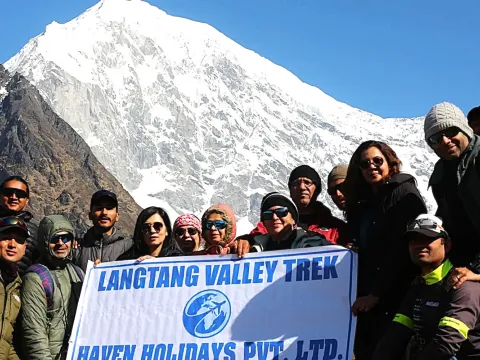
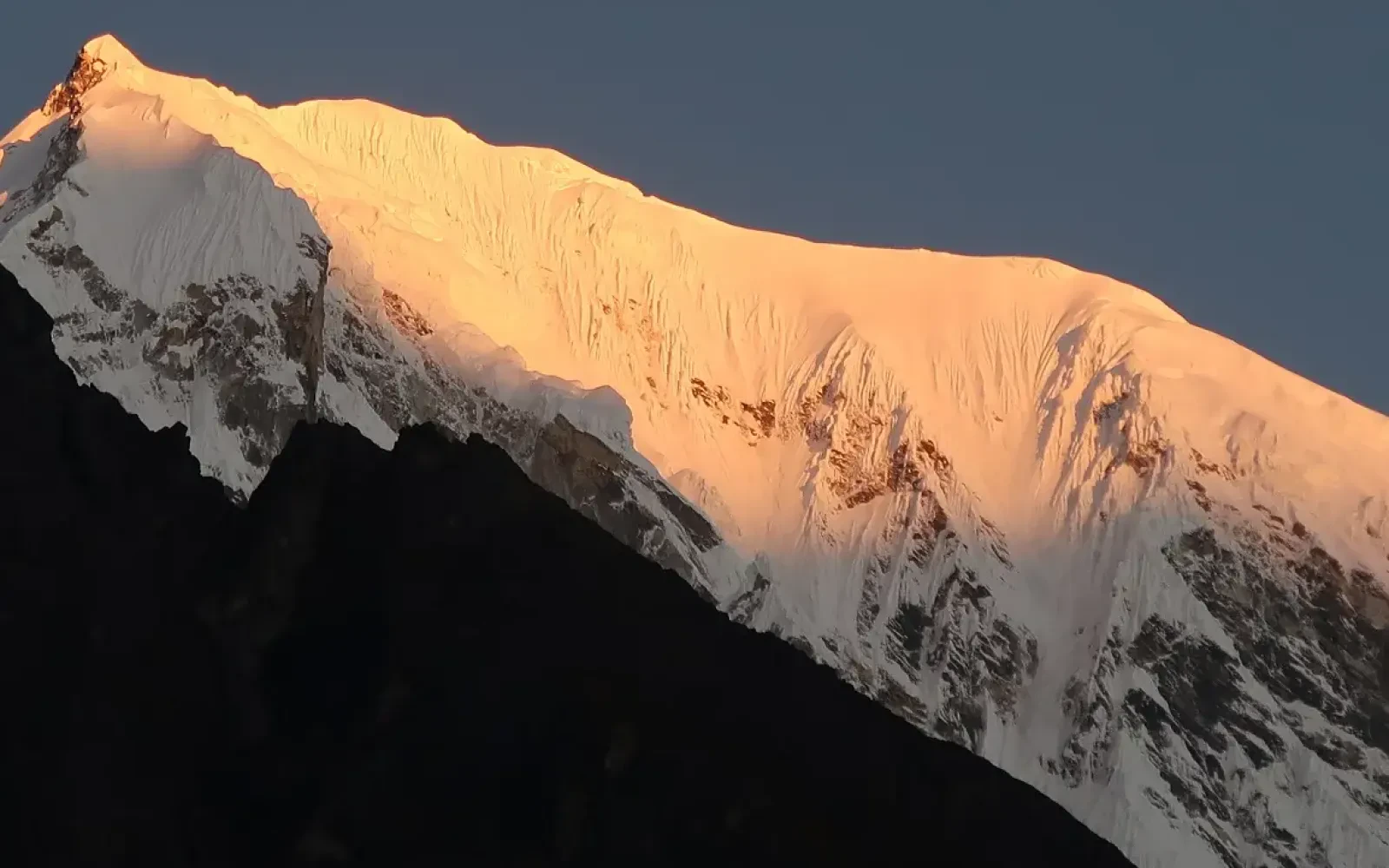
Also, the Langtang trek draws travelers who prefer a scenic route without heavy crowds. The trail remains quieter than Everest Base Camp or the Annapurna Circuit, especially in early spring and late autumn. You enjoy serene forests, open valleys, and close views of Langtang Lirung (7,227 m). You can walk at your own pace and avoid long lines at teahouse dining areas.
Furthermore, the Langtang valley trek 2026 showcases amazing natural diversity over a short distance. The route transitions from subtropical forests to alpine meadows in just two days. You walk through rhododendron forests, bamboo groves, and glaciated valleys. New scenery unfolds almost every hour as you approach Kyanjin Gompa (3,870 m).

Similarly, cultural richness makes the trek unique and genuine. The area is home to the Tamang community, whose traditions are influenced by Tibetan Buddhism. You can visit ancient monasteries like Kyanjin Gompa and see traditional stone houses in Langtang Village (3,430 m). You learn about local life through friendly lodge owners and yak herders.
Additionally, 2026 is a great year as the region continues to improve trail sections for better safety. The route after Ghodatabela (3,030 m) is stable and well-marked. Teahouses offer reliable rooms and meals. You benefit from stronger bridges, improved paths, and better communication systems.
Likewise, the Langtang trek 2026 is suitable for beginners who want a manageable altitude and flexible pacing. Daily distances are short, and the gradual ascent lowers altitude risks. You can add side trips like Kyanjin Ri (4,773 m) or Tsergo Ri (4,984 m) for summit-style views. You can adjust the itinerary to suit your fitness and comfort.
Moreover, Langtang offers great value for money in 2026. Permits costs NPR 3,000 for the Langtang National Park entry for foreigners and NPR 1500 for SAARC nationals and NPR 2,000 for the TIMS card. Accommodation is around NPR 500 to 800 per night. Meals cost NPR 600 to 900 per dish, keeping the total trip affordable.
Importantly, mountain scenery remains the main highlight for many trekkers. You can see Langtang II (6,596 m), Dorje Lakpa (6,966 m), Yala Peak (5,500 m), and numerous glaciers. The views expand as you approach the upper valley. Sunrise colors bring drama to the surrounding peaks.
In addition, wildlife sightings add excitement to the trek. You might spot red pandas in the bamboo forests between Lama Hotel (2,380 m) and Ghodatabela. You can also see Himalayan thar and various bird species. These encounters make the journey more memorable.
Finally, the Langtang Valley Trek in 2026 stands out because it balances beauty, culture, and accessibility. You reach high mountains with minimal logistics. You gain rich experiences in a short time. You return with strong memories and authentic Himalayan impressions.
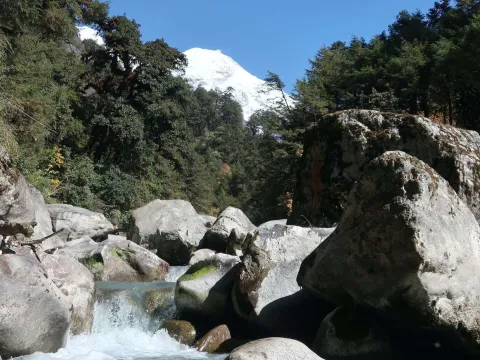
Learn the best season to trek Langtang in 2026 with clear tips on spring, autumn, winter, and monsoon weather, scenery, temperatures, and trail conditions.
Season Comparison Table for Langtang 2026
| Season | Temperature | Views | Trail Condition | Best For |
| Spring | Mild | Clear mornings | Stable | Flowers, comfortable trekking |
| Autumn | Ideal | Sharp and clear | Excellent | Photography, peak season |
| Winter | Cold | Crystal clear | Snowy | Solitude and crisp scenery |
| Monsoon | Warm | Cloudy | Wet and slippery | Adventure seekers |
First, spring offers one of the most colorful seasons for the Langtang Valley Trek 2026. Rhododendrons bloom from March to May, making forests glow in red and pink. Trails are moderate, and temperatures remain pleasant from lower areas to Kyanjin Gompa (3,870 m). You enjoy a mild climate that supports steady walking.
Also, spring brings long daylight hours and stable weather. Morning views of Langtang Lirung (7,227 m) are typically clear, with cloud buildup appearing only in the afternoon. You encounter fewer cold nights than in winter. You can enjoy high passes like Tsergo Ri (4,984 m) in comfortable conditions.
Furthermore, autumn is the most popular trekking season for Langtang. The skies become crystal clear after the monsoon, with sharp mountain views. Temperatures remain balanced with warm days and cool nights. Villages are lively with harvest celebrations, which add cultural charm.
Similarly, autumn provides reliable trail conditions for all levels of trekkers. The paths dry quickly after summer rains, and teahouse availability remains strong. You enjoy predictable weather in October and November. Storms are rare at higher altitudes.
In addition, winter offers a peaceful experience for those who enjoy solitude. Temperatures drop, especially at Kyanjin Gompa and higher viewpoints. Snowfall becomes common above 3,000 m, but lower areas stay accessible. You experience silent valleys, frozen rivers, and crisp morning views.

Likewise, winter trekking requires good preparation and gear. You need warm layers, microspikes, and proper sleeping bags. Trails may close temporarily after heavy snowfall. You can trek safely if you follow local advice and weather updates.
Moreover, the monsoon season creates a lush landscape in Langtang. Rainfall makes forests vibrant, and waterfalls become more powerful. The valley turns green and alive with plant life. You encounter fewer trekkers and experience a wilder atmosphere.
However, monsoon months require caution due to slippery trails. Landslides may occur between Syabrubesi (1,550 m) and Lama Hotel (2,380 m). Leeches also appear in forested areas. You should choose monsoon trekking only if you enjoy adventure and solitude.
Lastly, weather and visibility can vary significantly by altitude. Lower areas stay warm, while upper areas are cooler even in spring. High viewpoints like Kyanjin Ri (4,773 m) face quick weather shifts. You should prepare for layered clothing throughout all seasons.
Finally, each season offers unique benefits based on your preferences. Spring provides color and comfort. Autumn brings the best clarity. Winter offers silence and beauty. Monsoon provides greenery and deep solitude.
Learn the latest 2025/2026 permit rules for Langtang Valley Trek. TIMS card, Langtang National Park entry, and required guide regulations for safe trekking.
In summary:
First, you need to get a Langtang National Park Entry Permit to enter the Langtang region. Foreign nationals pay NPR 3,000 (≈ USD 23–25). SAARC nationals pay about NPR 1,500. Nepali citizens pay a small fee of around NPR 100. You can get this permit at the Nepal Tourism Board (NTB) headquarters in Kathmandu or at the park entry gates, such as Dhunche or Syabrubesi.
Next, you also have to get a Trekkers' Information Management System (TIMS) card. This card helps authorities track trekkers for safety and monitoring. For a group trek through a registered agency, TIMS costs about NPR 1,000 (≈ USD 8–10). For independent trekkers, the previous fee was NPR 2,000 (≈ USD 16–17).
However, there is a key change starting in 2025: solo or independent trekking in the Langtang region is no longer allowed. All trekkers, both foreign and Nepali, must have a licensed guide from a registered trekking agency.
So, you cannot get an individual TIMS card as a solo trekker. The licensed agency you trek with must register you and arrange a group TIMS card.
Many recent guides on trekking websites for 2025/2026 confirm this update, stating that a “licensed guide is mandatory.”
Additionally, you will need to carry the physical copies of both the Langtang National Park permit and the TIMS card during the trek. Officials often check these at the entrance (Dhunche or Syabrubesi) and along the trail.
If you cannot show valid permits or do not trek with a licensed guide, you risk being turned back at checkpoints or potentially fined.
Finally, since rules may change, you should double-check permit fees and guide regulations close to your trek date. Permit offices, trekking agencies, or NTB can give you the latest information.
Typical Itineraries: 7-Day, 9-Day & 11-Day Options
Explore three sample Langtang Trek itineraries — 7, 9, and 11 days — for Langtang Valley Trek 2026. See altitude profile, daily plan, and flexible trek ideas.
Then, here are three sample itineraries you can adapt.
7-Day Langtang Valley Express Trek
| Day | | From And To.. | Distance/Elevation |
| Day 1: | Drive from Kathmandu (1,338m) to Syabrubesi | 7/8 Hours/(1,550 m). |
| Day 2: | Trek from Syabrubesi to Lama Hotel | 5–6 hours walk/(2,380 m). |
| Day 3: | Trek from Lama Hotel to Langtang Village | 5–6 hours/(3,430 m). |
| Day 4: | Trek from Langtang Village to Kyanjin Gompa | 4–5 hours/(3,870 m). |
| Day 5: | Hike to Kyanjin Ri, early in the morning then return to Kyanjin Gompa or descend to Langtang Village | 4-5 hours/(4,773 m). |
| Day 6: | Trek down from Kyanjin Gompa/Langtang Village to Lama Hotel to Syabrubesi. Long day | (6–7 hours plus drive) |
| Day 7: | Drive back to Kathmandu. fro Syabrubensi | 7-8 Hours/(1,338 m) |
Best for :Trekkers with limited time, first-time visitors, those seeking a quick Himalayan experience.
9-Day Moderate Langtang Trek
| Day | From to Destination | Distance/Elevation |
| Day 1: | Kathmandu to Syabrubesi | 7-8 hours/(1,550 m) |
| Day 2: | Syabrubesi to Lama Hotel | 5-6 hours/(2,380 m). |
| Day 3: | Lama Hotel to Langtang Village | (3,430 m). |
| Day 4: | Langtang Village to Ghodatabela, Short descent for acclimatization | (3,030 m). |
| Day 5: | Ghodatabela to Kyanjin Gompa | (3,870 m). |
| Day 6: | Acclimatization day. Hike to Kyanjin Ri | (4,773 m) or explore nearby hills. |
| Day 7: | Trek from Kyanjin to Langtang Village | (3,430 m). |
| Day 8: | Langtang Village to Lama Hotel to Syabrubesi. |
| Day 9: | Return to Kathmandu. |
Best for: Balanced pace; suitable for acclimatization; better cultural experiences and rest.
11-Day Relaxed & Cultural Langtang Trek
| Day | From T0.. | Distance/Elevantion |
| Day 1: | Kathmandu to Syabrubesi | (1,550 m). |
| Day 2: | Syabrubesi to Lama Hotel | (2,380 m). |
| Day 3: | Lama Hotel to Bamboo or Fun Village | (about 2,600 m). Short day to start easy. |
| Day 4: | Bamboo/Fun Village to Langtang Village | (3,430 m). |
| Day 5: | Langtang Village to Ghodatabela | (3,030 m) for acclimatization descent. |
| Day 6: | Ghodatabela to Pitcher Rock or similar | (about 3,500 m). |
| Day 7: | Pitcher Rock to Kyanjin Gompa | (3,870 m). |
| Day 8: | Rest and explore the Kyanjin area; optional hike to Kyanjin Ri | (4,773 m) or Tsergo Ri (4,984 m) for panoramic views. |
| Day 9: | Descend from Kyanjin to Langtang Village. |
| Day 10: | Langtang Village to Lama Hotel to Syabrubesi. |
| Day 11: | Drive back to Kathmandu. |
Best for: Trekkers wanting a gentle pace, better acclimatization, deeper cultural experience, and optional hikes to high ridges and viewpoints.
Comparison: What changes with different itinerary lengths?
| Itinerary | Pace & Comfort | Acclimatization | Flexibility & Side-hikes | Best For |
| 7-Day | Fast, more walking per day | Limited | Minimal | Short holiday, tight schedule |
| 9-Day | Balanced pacing | Moderate | Some rest day and optional hikes | Medium time budget, moderate energy |
| 11-Day | Leisurely pace, extra rest | Good | Room for side hikes and |
Get a clear Langtang Valley Trek elevation profile, difficulty rating, altitudes, daily hiking hours, and fitness requirements for the 2026 trekking season.
Meanwhile, the Langtang Valley Trek 2026 follows a steady altitude progression from Syabrubesi (1,550 m) to Kyanjin Gompa (3,870 m). You will walk through forests, glacial valleys, and high Himalayan terrain as you gain elevation. You will also ascend to key viewpoints like Kyanjin Ri (4,773 m) and Tsergo Ri (4,984 m). Therefore, understanding the elevation profile is essential before you start your journey.
Actually, the Langtang trek 2026 begins with a drive from Kathmandu (1,400 m) to Syabrubesi (1,550 m). You will trek to Lama Hotel (2,380 m) on the first day, which includes steep climbs and long forest trails. On the next day, you will reach Langtang Village (3,430 m), which offers easier gradients. Consequently, you will notice altitude gain more from this point onward.
Next, the section from Langtang Village (3,430 m) to Kyanjin Gompa (3,870 m) features a gradual rise across open valleys. You will walk for about four to five hours on this day. Although you will feel thinner air, the trail remains manageable for most trekkers. Hence, acclimatization stops are important.
Further, you will also need to prepare for optional high-altitude side trips. You can climb Kyanjin Ri (4,773 m) to catch sunrise views over Langtang Lirung (7,227 m), Dorje Lakpa (6,966 m), and Yala Peak (5,500 m). Alternatively, you can hike Tsergo Ri (4,984 m) for a challenging yet rewarding summit experience. Therefore, these hikes demand strong fitness and early starts.
On descent days, you will trek for six to seven hours, which often feels easier but can be harder on your knees. You will return from high altitude to Syabrubesi within one or two long days, depending on your itinerary. You will lose altitude quickly, which reduces risks related to height. As a result, many trekkers enjoy this quick return phase.
summarized elevation profile
Elevation Chart (Simplified)
| Location | Elevation(m) | Notes |
| Kathmandu | 1,338 | Starting city |
| Syabrubesi | 1,550 | Trek start |
| Lama Hotel | 2,380 | Forest section |
| Langtang Village | 3,430 | Wide valley |
| Kyanjin Gompa | 3,870 | High village |
| Kyanjin Ri | 4,773 | Sunrise viewpoint |
| Tsergo Ri | 4,984 | Hard summit hike |
Here, the Langtang Valley Trek 2026 falls into the moderate difficulty category. You do not need technical skills, but you must handle long walking days at altitude. You must also tackle steep climbs, rocky paths, and thin mountain air. Therefore, being prepared contributes to a safer and more enjoyable trek.
In fact, you will face altitude risks above 3,000 m. You must ascend gradually, drink plenty of water, and rest whenever needed. Avoid rapid altitude increases when moving between Langtang Village (3,430 m) and Kyanjin Gompa (3,870 m). Consequently, acclimatization days help reduce headaches, fatigue, and dizziness.
Also, this trek is suitable for those with basic fitness. You should train for three to four weeks before your trek with hiking, leg strengthening, and cardio. You must also carry a small daypack when ascending. Proper fitness helps reduce exhaustion and prepares you for optional summits like Kyanjin Ri and Tsergo Ri.
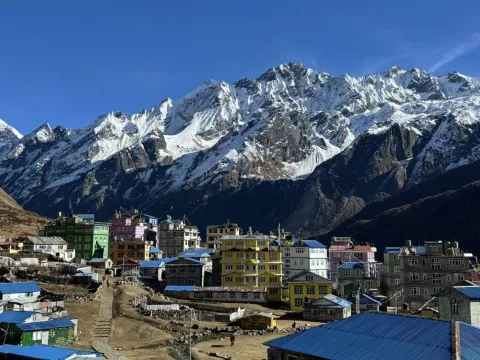
Understand teahouse accommodation on the Langtang Valley Trek—rooms, food, costs, showers, charging, Wi-Fi, and what to expect during your 2026 journey.
Teahouse Facilities (Typical),
| Facility | Availability | Notes |
| Rooms | Common | Simple twin rooms |
| Blankets | Common | Carry sleeping liner |
| Hot Shower | Partial | Paid service |
| Charging | Paid | Solar at high altitude |
| Wi-Fi | Limited | Available only in major settlements |
| Dining Hall | Everywhere | Warm central stove in evenings |
Meanwhile, teahouses along the Langtang Valley Trek offer simple yet comfortable lodging. You will find wooden rooms, shared dining areas, local meals, and warm hospitality in every settlement. You will sleep in twin-sharing rooms with basic mattresses and thick blankets. Carry your own sleeping liner for hygiene and warmth.
Actually, room prices are affordable throughout the region. You will usually pay NPR 500-800 per room if you eat meals at the same teahouse. You will often enjoy lower room rates when you order dinner and breakfast at the property. Thus, food orders help local families running these teahouses.
Further, you will enjoy reliable meals such as dal bhat, fried rice, noodles, soups, and Tibetan bread. You will also find dishes like momo, omelets, and porridge in many areas. Most main dishes cost NPR 600-900 at lower elevations and slightly more at Kyanjin Gompa (3,870 m). Hence, food prices go up with altitude and transport challenges.
Likewise, amenities are limited depending on the location. You can enjoy hot showers in Lama Hotel (2,380 m) and Langtang Village (3,430 m) for NPR 300-500. You might find gas-heated or solar-heated systems. Therefore, availability can vary with weather and season.
Also, electricity is generally accessible. You must pay NPR 200-400 to charge phones or batteries in most teahouses. Some areas use solar panels for power. Consequently, cloudy days can affect charging options.
Here, Wi-Fi remains limited along most of the trail. You may find paid Wi-Fi at Langtang Village (3,430 m) and Kyanjin Gompa (3,870 m). You can also buy NTC or Ncell data, but signals weaken after Lama Hotel. Therefore, be ready for less connectivity outside major areas.
Likewise, the dining hall becomes the heart of teahouse life. You will meet trekkers, guides, and locals around a warm stove in the evening. You will enjoy hot meals, tea, and friendly conversations while you relax. Therefore, these shared moments create lasting memories of Himalayan hospitality.
Moreover, teahouse life is a highlight of the Langtang Valley Trek. You will experience comfort, culture, and simplicity in every settlement. You will also support local families recovering from past challenges through your stay and meals. Thus, the teahouse system offers both warmth and meaningful cultural connection.
Learn about the best foods on the Langtang Valley Trek, including dal bhat, momos, yak cheese, nutrition tips, costs, and meal-planning advice for 2026.
Typical Food Costs (NPR) Along Langtang Trail
First, food on the Langtang Valley Trek provides both energy and a taste of local culture. You will eat meals made from local ingredients sourced from villages like Langtang (3,430 m) and Kyanjin Gompa (3,870 m). You will rely on simple but nutritious options suitable for high-altitude trekking. Thus, understanding menu options helps you prepare a healthy diet for your trek.
Second, dal bhat remains the most nutritious and dependable trekking meal. You will receive rice, lentil soup, vegetables, and sometimes pickles, which offer balanced energy. Many teahouses provide free refills, especially in lower areas like Lama Hotel (2,380 m). As a result, dal bhat supports long walking days with steady calories.
In addition, momos provide delicious comfort on chilly evenings. You can choose from vegetable, cheese, or meat versions based on altitude and supply levels. You will pay NPR 500–800 for steamed or fried momos. Therefore, momos add variety to your meals.
Moreover, yak cheese becomes a memorable part of Langtang cuisine. You will taste fresh yak cheese from local dairies in Kyanjin Gompa (3,870 m). You can also try dishes made with yak curd, which offer high protein and fat. Consequently, these items improve your nutrition at high altitudes.
Likewise, breakfast menus are simple and focused on energy. You will eat porridge, Tibetan bread, eggs, pancakes, and toast with jam or honey. Prices range from NPR 400–700, depending on location. So, breakfast fuels your early morning ascent.
Additionally, staying hydrated is crucial at high altitude. You should drink three to four liters daily, especially while climbing to Kyanjin Ri (4,773 m). You can buy boiled water for NPR 100–300 per liter. Therefore, you should avoid untreated stream water.
Likewise, snacks are also essential for long days. Bring energy bars, nuts, chocolate, and electrolyte powders from Kathmandu, as prices rise sharply at altitude. You may also pack dehydrated fruits for quick recovery. Thus, carrying snacks cuts costs and boosts energy levels.
Likewise, avoid heavy or greasy meals at higher altitudes. Light meals during the afternoon help prevent altitude discomfort. You can choose soups, vegetable dishes, or porridge for easier digestion. So, smart choices support safer acclimatization.

Finally, planning your diet ensures consistent energy throughout the trek. You must combine local meals, packaged snacks, and plenty of water. Listen to your body and don’t skip meals. Therefore, good nutrition becomes key to your Langtang Valley Trek experience.
Get a clear 2026 Langtang Valley Trek budget breakdown, including daily costs, full-trip estimates, and price ranges for budget, mid-range, and comfort trekkers.
Langtang Valley Trek Cost Breakdown (Approx.)
| Category | Cost Per Day(NPR) | Full Trek Estimate (7–10 days) | Notes |
| Budget | 3,000–4,000 | 25,000–35,000 | Basic meals and rooms |
| Mid-range | 6,000–8,000 | 55,000–80,000 | Guide and better meals |
| Comfort | 10,000–13,000 | 90,000–130,000 | Private transport and upgraded room |
First, the Langtang Valley Trek remains one of Nepal’s most affordable Himalayan adventures. You will find flexible spending options for every trekking style. You can trek on a budget, enjoy mid-range comfort, or select upgraded services. Thus, knowing cost categories helps you plan effectively.
Second, budget trekkers save money by choosing basic teahouses and simple meals. Rooms cost NPR 500–800 each night, while meals range from NPR 600–900. You will spend about NPR 25,000–35,000 for a full 7–10 day trek, excluding transport. Therefore, budget travel suits independent trekkers who prefer simple living.
Moreover, mid-range trekkers enjoy better food choices and warmer teahouse accommodations. You will spend NPR 1,200–1,800 daily for meals and NPR 800–1,200 for lodging. Hiring a guide will cost NPR 3,000–4,000 per day. Hence, mid-range trekking costs NPR 55,000–80,000 for the entire journey.
Additionally, comfort trekkers opt for upgraded services whenever possible. You may hire private jeeps from Kathmandu to Syabrubesi (1,550 m) for NPR 18,000–22,000 per vehicle. You can also book larger, better-insulated rooms in Langtang Village (3,430 m) or Kyanjin Gompa (3,870 m). As a result, comfort travel costs NPR 90,000–130,000 depending on your itinerary length.
Furthermore, permit fees increase your total budget. You will pay NPR 3,000 for the Langtang National Park Entry Permit. You will also need to pay NPR 2,000 for the TIMS Card. Therefore, permits add about NPR 5,000 to your budget.
Here, transport costs also affect your budgeting. A public bus from Kathmandu (1,400 m) to Syabrubesi (1,550 m) costs NPR 1,200. Alternatively, a shared jeep costs NPR 2,500–3,500 per person. Therefore, transportation costs vary based on comfort.
Further, personal expenses will also influence total spending. You might pay for snacks, drinks, Wi-Fi, charging fees, or hot showers. You may even rent trekking poles or jackets in Kathmandu before leaving. Hence, your personal habits shape the total cost.
Lastly, plan your budget for Langtang Valley Trek early for a smooth trekking experience. Choose your comfort level, estimate your expenses, and set aside extra funds for emergencies. Keep cash handy since ATMs rarely work in the mountains. Therefore, a well-balanced budget ensures an enjoyable trek.
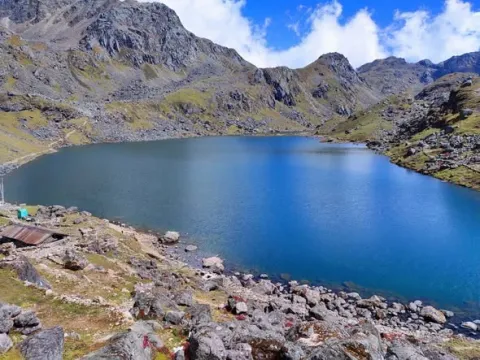
Essential Langtang Valley Trek 2026 packing list with warm layers, safety gear, water purification, and altitude essentials for a safe experience with Haven Holidays.
Essential Gear Checklist 2026:
Moreover, you prepare well when you carry the right clothing for the Langtang Valley Trek (2,860 m to 4,984 m).You pack warm layers because temperatures drop sharply above Langtang Village (3,430 m). You choose moisture-wicking base layers to keep sweat away during the early hours of walking. You also bring a durable down jacket for cold nights.
Furthermore, you select reliable trekking pants and insulation layers to face chilly mornings and evenings. You pick windproof and waterproof jackets to handle quick weather changes in Kyanjin Gompa (3,870 m). You wear light fleece jackets during daytime walks on moderate trails. You conclude this layer planning by ensuring comfort at all elevations.
Additionally, you choose sturdy footwear for consistent performance on rocky trails. You wear broken-in trekking boots with ankle support because uneven paths appear frequently between Ghodatabela (3,030 m) and Langtang Village (3,430 m). You add thermal socks and extra pairs for wet conditions. You always pack gaiters if you trek in early spring or late autumn.
Likewise, you pack essential accessories for added trail comfort.You bring warm gloves, a wool hat, and UV-protected sunglasses for long days in open valleys. You use a buff to shield against dust and cold winds near Tserko Ri (4,984 m). You carry a sun hat for sunny spots before reaching Lama Hotel (2,470 m).
In addition, you bring reliable sleeping gear for better rest at higher elevations. You pack a four-season sleeping bag since teahouse rooms can be cold during nights at Kyanjin Gompa (3,870 m). You add a sleeping bag liner for comfort and extra warmth. You keep everything in a compression sack for easy packing.
Similarly, you include hydration essentials because clean water is crucial on remote trails. You carry purification tablets or a filtration bottle for safe drinking water. You refill at teahouses while keeping your water safe from impurities. You maintain steady hydration up to the Tserko Ri viewpoint (4,984 m).
Furthermore, you pack power and charging equipment for uninterrupted connectivity. You include a 10,000 to 20,000 mAh power bank and a small solar charger. You expect limited electricity in Lama Hotel (2,470 m) and Langtang Village (3,430 m). You store your devices in waterproof bags.
In addition, you carry personal medical and first-aid items for safety. You bring band-aids, blister pads, headache medicine, and basic altitude medications if recommended by your doctor. You pack a small roll of tape for foot support. You also take hand sanitizer and wet wipes for hygiene.
Likewise, you bring essential trekking documents for a smooth experience with Haven Holidays Pvt. Ltd. You pack your TIMS card, Langtang National Park Permit, passport, and passport-sized photos. You keep them in a waterproof pouch. You also have digital copies as backups.
Learn how to prevent altitude sickness on the Langtang Valley Trek with proper acclimatization, safe pacing, hydration, and expert guidance from Haven Holidays Pvt. Ltd.
Supporting Table: AMS Risk by Elevation
| Elevation Range | AMS Risk Level | Suggested Action |
| 2,500 to 3,000 m | Low | Walk slowly and hydrate |
| 3,000 to 3,800 m | Moderate | Add acclimatization night |
| 3,800 to 4,800 m | High | Climb high, sleep low |
| 4,800 m and above | Very High | Descend if symptoms appear |
Moreover, you understand altitude sickness when you trek above 2,500 m on the Langtang Valley route. You face increasing risks after reaching Langtang Village (3,430 m). You recognize that altitude impacts your breathing and energy levels. You respond quickly to symptoms for safety.
Furthermore, you acclimatize properly because gradual ascent helps your body adjust. You spend an extra night at Langtang Village (3,430 m) or Kyanjin Gompa (3,870 m). This gives your body time to adapt to lower oxygen levels. You prepare well for Kyanjin Ri (4,773 m) and Tserko Ri (4,984 m).
Additionally, you learn to identify the main symptoms of Acute Mountain Sickness. You may notice headaches, nausea, fatigue, and loss of appetite above Lama Hotel (2,470 m). You keep an eye on these symptoms as you pass Ghodatabela (3,030 m). You seek immediate help if symptoms worsen. You avoid going higher if you feel unwell.
Similarly, you use simple safety practices to ease altitude challenges. You walk slowly since fast walking can cause breathlessness. You drink plenty of water to stay hydrated. You eat warm food to maintain energy in colder elevations. You sleep early for better recovery.
In addition, you follow the “climb high, sleep low” method for safe acclimatization. You hike to higher places like Kyanjin Ri (4,773 m) during the day. You return to Kyanjin Gompa (3,870 m) for the night. You repeat this practice to help your body adapt to lower oxygen levels. This significantly lowers your AMS risk.
Likewise, you avoid alcohol and smoking while acclimatizing on the trail. You know that alcohol interferes with oxygen absorption at higher elevations. You skip cigarettes to keep your lungs strong for steep climbs. You choose warm drinks instead for better support.
Furthermore, you consider carrying altitude medicines prescribed by your doctor. You might use Diamox if your physician agrees. You start it early for preventive care. You don't use it without medical advice since misuse can be dangerous.

Additionally, respond with confidence when serious symptoms arise.You descend to lower elevations like Lama Hotel (2,470 m) if headaches or dizziness become severe. You stop your trek until you feel better. You seek help from your Haven Holidays guide. Never ignore warning signs at altitude.
Likewise, you practice proper breathing techniques to maintain rhythm on long climbs. You inhale slowly through your nose for deeper oxygen intake. You exhale steadily to keep control of your pace. You maintain a calm walking pattern up to Kyanjin Gompa (3,870 m). You improve your efficiency with practice.
Finally, you finish your trek safely by respecting altitude limits. You schedule enough acclimatization nights. You stay hydrated. You listen to your body as you gain elevation. You confidently reach Langtang viewpoints with Haven Holidays Pvt. Ltd.
Learn about mobile networks, Wi-Fi reliability, charging options, and offline map use during the Langtang Valley Trek with Haven Holidays for 2026.
Connectivity Essentials for 2026:
Moreover, you are aware of the connectivity situation when you trek through the Langtang region (2,470 m to 4,984 m). You find mobile signals inconsistent as you walk north from Syabrubesi (1,550 m). You get better coverage from NTC than Ncell in most villages. You set realistic expectations for communication along the trail.
Furthermore, you use mobile networks wherever signals appear at lower elevations. You usually find a reliable signal at Syabrubesi (1,550 m) and Lama Hotel (2,470 m). You sometimes experience patchy coverage near Ghodatabela (3,030 m). You expect weaker signals as you move toward Langtang Village (3,430 m).
Additionally, you depend on Wi-Fi in teahouses when mobile networks fail. You can purchase affordable Wi-Fi packages in Lama Hotel (2,470 m), Langtang Village (3,430 m), and Kyanjin Gompa (3,870 m). You pay between NPR 300 and 600 for one-time access. You rely on these networks for important updates only.
Similarly, you manage battery power carefully because electricity is limited above Lama Hotel (2,470 m). You expect teahouses to charge devices with solar power. You often pay NPR 200 to 500 per charge. You carry backup power banks to avoid interruptions during long days of walking.
In addition, you use offline tools because digital navigation is important on remote trails. You download offline maps before leaving Syabrubesi (1,550 m). You keep GPX routes saved for use above Langtang Village (3,430 m). You depend on these maps when cloud cover reduces GPS accuracy. You benefit greatly during early morning ascents toward Kyanjin Ri (4,773 m).
Likewise, you understand that internet speed varies greatly in higher villages. You get slow and unstable connections at Kyanjin Gompa (3,870 m). You use them only for messages and updates. You avoid uploading large files or videos. You manage your expectations before reaching alpine zones.
Furthermore, you use communication support from Haven Holidays Pvt. Ltd for safety. You contact your guide whenever altitude or weather affects your pace. You rely on your guide’s knowledge of local networks. You follow instructions during difficult sections around Ghodatabela (3,030 m). You stay confident throughout the journey.
Additionally, you prepare your devices for cold temperatures at higher elevations. You keep your phone in insulated pockets around Kyanjin Gompa (3,870 m). You avoid exposing batteries to freezing air. You store power banks deep in your backpack. You extend overall battery performance for multi-day trekking.
Discover Langtang’s rich flora, rare wildlife, rhododendron forests, alpine meadows, and Himalayan scenery during your 2026 trek with Haven Holidays.
Flora & Fauna Zones by Elevation:
| Elevation Zone | Main Flora | Main Fauna | Landscape Type |
| 1,500 to 2,700 m | Pine, oak | Langur, birds | Forested hills |
| 2,700 to 3,500 m | Red panda | Mixed forest |
| 3,500 to 4,200 m | Alpine shrubs | Blue sheep | Meadows |
| 4,200 m and above | Sparse vegetation | Birds of prey | Glacial terrain |
Moreover, you enjoy remarkable biodiversity while trekking through the Langtang Valley (2,470 m to 4,984 m). You walk through dense forests below Lama Hotel (2,470 m). You notice how vegetation changes as the elevation increases. You see Himalayan landscapes becoming more dramatic after Ghodatabela (3,030 m).
Furthermore, you enter beautiful rhododendron forests as you slowly ascend toward Langtang Village (3,430 m). You see red and pink blooms during the spring months. You also walk through oak, pine, and hemlock forests. You enjoy refreshing shade and rich natural aromas along the route.
Additionally, you step into open meadows as you pass Ghodatabela (3,030 m). You see yak pastures spread across wide fields. You enjoy lush grasses that attract grazing animals. You notice how the landscape opens up toward the upper valley. You appreciate the shift from forest to alpine scenery.
Similarly, you observe Himalayan wildlife because Langtang lies within Langtang National Park. You may see Himalayan monal, pheasants, and red pandas near forested zones. You also spot langur monkeys, yaks, and blue sheep in higher meadows. You stay alert during early morning walks for the best sightings. You respect wildlife distance throughout your journey.
In addition, you watch for the region’s famous birdlife because the valley hosts many species. You hear melodic calls near Lama Hotel (2,470 m) and Ghodatabela (3,030 m). You might see vultures and eagles circling above Langtang Village (3,430 m). You enjoy clear opportunities for photography. You bring binoculars for better visibility.
Likewise, you admire dramatic Himalayan scenery as you approach Kyanjin Gompa (3,870 m). You see Langtang Lirung (7,227 m) rising magnificently above the valley. You observe glaciers, icefalls, and ridgelines shaping the alpine world. You notice how mountain shadows change throughout the day. You feel the valley’s powerful presence with each step.
Furthermore, you enjoy breathtaking viewpoints above Kyanjin Gompa. You climb Kyanjin Ri (4,773 m) for sweeping views of Langtang Himal. You continue to Tserko Ri (4,984 m) for even wider panoramas. You see rugged peaks stretching across the horizon. You feel the high-altitude wilderness surrounding you completely.
Additionally, you understand how seasons change the valley’s appearance. You enjoy flowers in spring, greenery in summer, and crystal views in autumn. You see snow-covered landscapes in winter near Kyanjin Gompa (3,870 m). You choose your trekking season carefully. You maximize the natural beauty on your Langtang journey.
Moreover, you get a real Himalayan cultural experience by walking through the Tamang villages of the Langtang Valley (2,470 m–3,870 m). You encounter societies that maintain the age-old Tibetan-influenced cultural practices. Besides, you see the stone houses that are decorated with the colorful prayer flags. You also witness the typical daily life which is determined by the mountain surroundings.
Furthermore, you bond with the locals on a deeper level while passing through villages like Lama Hotel (2,470 m) and Langtang Village (3,430 m). You see farmers working on their fields and yaks being herded. Along the trail you hear the softly spoken Tamang language. The hospitality with which you are treated in each teahouse you visit, is something that stays with you.
Also, through interaction with the villagers you become aware of the cultural resilience and spirit of those who have rebuilt Langtang after the 2015 earthquake. You are told how families not only rebuilt their homes but also retained the ancient architectural style. You also find that prayer wheels which are being restored alongside village paths. What's more, you get to know the emotional fortitude that is the reason for each smile.
Similarly, as you ascend to Kyanjin Gompa (3,870 m), you get to know the influence of Buddhism in the area. You tour the age-old monastery which is a spiritual center of the valley and is the most significant attraction there. You see monks performing their daily rituals. You also hear the sound of small bells attached to a window or door, which are part of the ritual, resonating throughout the valley.
Besides that, you observe mani walls and chortens scattered all over the path. You walk around them in a clockwise direction in order to show your respect. On the stones, you find carved words “Om Mani Padme Hum” which is the most revered Buddhist chant. You learn how spiritual signs serve as a guide for the locals' life.
On the other hand, daily routines that you see being followed by the villagers are influenced by agriculture and animal husbandry. You come across people who are raising yaks and are making butter, cheese, and yogurt out of milk. You see children helping the family by collecting firewood. You admire their bond with nature and the environment.
Moreover, you are served with local foods that are a perfect combination of tradition and simplicity. You are offered homemade dal bhat in every village which is a delicious and balanced meal. Yak cheese is given to you to taste when you are at Kyanjin Gompa (3,870 m). Moreover, you are made to taste buckwheat bread in remote teahouses. You take great pleasure in knowing that these meals are the products of high-altitude farming.
At the same time, you are educated in cultural etiquettes that facilitate respectful interactions. You don't take pictures of people without their consent. You salute elders with a kind smile. When entering homes or any religious place, you remove your shoes. By abiding to these etiquettes, you help in maintaining cultural balance during your trek.
Likewise, by choosing for Haven Holidays Pvt. Ltd., you become a benefactor to the local communities. You rest in the teahouses that are run by families and hence, the money you spend stays in the local community. When possible, you purchase hand-crafted products that are made by local people. You would also like to promote the practice of sustainable tourism. You become a positive contributor to the valley’s economy.
At last, you do not only exit the Langtang Valley physically but also mentally and emotionally with an understanding of the culture. You acknowledge the Tamang people's power and history. You see the combination of nature and culture. You respect the traditions that have developed this isolated Himalayan world. You keep these as your lifetime souvenirs.
Moreover, you greatly improve your Langtang Valley Trek (2,470 m–4,984 m) with the addition of some satisfying side hikes that are not only excellent for acclimatization but also provide you with breathtaking views and leave you with more memorable moments of your journey.
Likewise, one of the reasons why you take the Kyanjin Ri hike (4,773 m) is that it unveils an extensive view of the Himalayas. You leave early from Kyanjin Gompa (3,870 m), you follow a rugged trail that steadily goes upward and finally, you arrive at a lookout that offers the full view of Langtang Lirung (7,227 m).
As a matter of fact, you might want to experience a more challenging adventure by going to Tserko Ri (4,984 m). The idea of starting out before dawn so as to avoid the strong winds of the afternoon is the one you decide upon. Your path takes you across airy meadows and up steep ridges and at the end of the journey, you are rewarded with a panoramic view of 360 degrees.
Similarly, when you wish to take a less strenuous walk, you can do so by selecting the short hikes that are available around Kyanjin Gompa. Going to the local cheese factory is one of the options you have. You take a walk along the glacier viewing points and in addition to that, you may explore the nearby ridges which require a minimum of effort. Yet, you get to enjoy the stunning mountain landscape.
Moreover, you treat these side hikes as important acclimatization steps also. You go up to a high altitude during the day to allow your body to adjust to the lack of oxygen. For the night, you stay at Kyanjin Gompa (3,870 m) and rest. You are following the correct altitude practice and your risk of getting AMS is reduced way down.
Moreover, you extend the length of your trek if you still have some extra days and energy. There is a possibility that you might link your Langtang adventure to the Tamang Heritage Trail (1,700 m–3,000 m). Besides exploring the villages of Gatlang and Tatopani, you immerse yourself in the culture more deeply and you enrich your experience of the Himalayas by making it more diverse.
Besides that, you pick the Gosaikunda Trek extension (4,380 m) if you are after spiritual landscapes. The climb is toward the lakes that are considered the holiest places by both Hindu and Buddhist pilgrims. Besides, there are feel-good high-alpine trails that are very quiet and you can say almost deserted. On the way back, you take with you not only beautiful views but also the atmosphere of the temples.
Moreover, the Helambu Trek extension (2,600 m–3,600 m) is your choice if you are willing to walk through green forests and Sherpa villages. The terrain is moderate and thus, suitable for families. Easy access from the Langtang region is another plus. A complete Himalayan experience is what you finish with.
Similarly, this is what you are doing by planning these add-ons with Haven Holidays Pvt. Ltd. You get help regarding the distance, altitude, and weather. You choose the safest timings for each climb. For difficult summits, you have the expert support. What's more, you are securing a memorable adventure.
Stay safe on the Langtang Valley Trek 2026 with practical tips for weather, landslides, slippery trails, and altitude ricks from Haven Holidays Pvt.
Moreover, you prepare for rapidly changing weather on the Langtang Valley Trek (2,470 m-4,984 m). Mornings can be clear and sunny, then sudden rain or snow can come in the afternoon. You carry waterproof jackets and trekking poles. You change your clothing layers as the temperature varies between Ghodatabela (3,030 m) and Langtang Village (3,430 m).
Furthermore, you know that landslides and trail erosion can be symptoms of the monsoon season, especially at that time of the year. You focus on the slippery and loose parts above Lama Hotel (2,470 m), looking for places where the ground is safe. You check for loose rocks and do not walk under steep cliffs. You follow instructions from your Haven Holidays guide to reduce the risk.
Additionally, it is hard for you to cope with slippery trails because snow and ice are often found above Langtang Village (3,430 m) in early spring or late autumn. You are equipped with trekking poles and a boot with a firm grip. You walk on wet or mossy stones very carefully. You keep a pace that is slow enough to prevent falling.
Similarly, you take altitude-related risks seriously as you move up to Kyanjin Gompa (3,870 m) and Kyanjin Ri (4,773 m). You acclimatize by sticking to the "climb high, sleep low" rule. You check for symptoms of AMS, such as headache and nausea. You never racing higher up places.
In addition, you get ready for cold nights because temperature drops can be expected to be below zero near Kyanjin Ri (4,773 m). You have a four-season sleeping bag and insulated clothing. You keep away from alcohol and excessive caffeine. You are performing warming-up exercises at the times of rest.
Likewise, you implement sensible measures in case of emergencies. Along with a small first-aid kit, you also have an emergency whistle. A power bank and a mobile phone that are fully charged are always with you. Your Haven Holidays Pvt. Ltd. guide is the one to whom you give your itinerary. You know where the evacuation points are in case the situation gets worse.
Moreover, you are always aware of and keep an eye on the condition of the trail on a daily basis. You check for updates from tea houses at Lama Hotel (2,470 m) and Langtang Village (3,430 m). You change your plan if snow, heavy rain or debris make paths unsafe. You accept the advisories for closures or reroutes given by locals or authorities.
Additionally, you take care of yourself against sunburn and dehydration. You wear sunscreen, sunglasses, and a hat while hiking in the open alpine meadows above Ghodatabela (3,030 m). You do not wait long between drinks of water in order to keep your energy levels up. You've got a water bottle set aside for every day trekking section so it's always handy.
Discover how to reach Syabrubesi from Kathmandu by jeep or bus, along with travel time and road conditions for your Langtang Valley Trek 2026 with Haven Holidays.
Transport Options Kathmandu–Syabrubesi:
Moreover, you initiate your trip from Kathmandu (1,400 m) to Syabrubesi (1,550 m) via road transport. You can either go for tourist buses or private jeeps. The time expected is 7-9 hours depending on the traffic and weather. Early departures are your option for better daylight navigation.
Furthermore, you have a pleasant trip as the roads go through the valleys of Dhading and Trishuli River. You can observe terraces and villages that lie on the route. You take tea breaks as well as stop for pictures. You get your first view of the Langtang foothills while coming closer.
Additionally, you pick private jeep transport if you wish to have the luxury of time. You can make the stops as per your convenience. With an experienced driver, you can safely get through the tight mountain passes. You lessen your travel weariness before the trek begins. You bring along some food and water for the ride that is long.
Similarly, you think of a budget-friendly option in the form of tourist buses. You are the one to share the seats with other trekkers. You move from one stop to another as per the fixed timetable of the Tourist Bus Park located in Kathmandu. Awaiting of the weather and road conditions may cause delays in your journey. You are involved in socializing and also with scenic stops.

In addition, you get ready for the bumpy and turning roads that lie ahead. You are prepared to meet dusty or muddy parts, especially if it has rained recently. You put on your seatbelts or if in a jeep, hold on to the handles firmly. You do not allow yourself to be involved in sudden movements without a good reason. You keep safety in mind while going about your business.
Likewise, you return the same way via bus or jeep after accomplishing your Langtang trek. You expect the journey from Syabrubesi (1,550 m) to Kathmandu (1,400 m) to take 7-9 hours. You think about arranging transport in advance for a well-timed schedule. You are taking in the scenic beauty of your trek at the Trishuli River valleys during the return journey.
Moreover, you have all the necessities with you during the trip. Along with snacks, water, and warm clothes, you should also take phone chargers. In order to be comfortable, trekking shoes should be within easy reach. Keep permits and other documents in a safe place. You make sure that you are comfortable during long hours on winding roads.
Additionally, you are well-informed about road conditions before setting out. You can get a reliable update from your Haven Holidays guide. You would not think of going on a journey during a heavy rain or period of landslides. Moreover, you discuss alternative routes with the drivers as well. You reduce the chance of being late and also lessen the pressure of it.
Finally, you use planning as well as flexibility to have a great commute. Changes in traffic and weather do not affect you negatively as planning ahead and being flexible with your plans can handle these situations. Worrying about how you get to or from the trail becomes a thing of the past as you enjoy the scenic approach and safe return. With Haven Holidays Pvt. Ltd, you can comfortably start or end your Langtang Valley Trek.
Plan your Langtang Valley Trek 2026 with Haven Holidays: best booking times, peak vs off-season, and tips for teahouse accommodation and comfort.
Supporting Bullet List: Booking & Accommodation Tips
Actually, you also plan your Langtang valley trek 2026 based on seasonal changes in the Langtang Valley (2,470 m–4,984 m). You recognize Spring (March–May) and Autumn (September–November) as the best times to trek. You benefit from good weather, blue skies, and rhododendron flowers. You also experience a higher number of people in teahouses at Langtang Village (3,430 m) and Kyanjin Gompa (3,870 m).
Moreover, you decide your booking time to be able to relax in good lodging. You book teahouses ahead of time during the busiest months. You opt for early bookings for Kyanjin Gompa (3,870 m) where the rooms get filled quickly. You lessen the chances of having to sleep in a very basic or shared room. You are free from worry during your trek.
In addition, you consider off-season trekking to get a good mix of solitude and comfort. You trek in Winter (December–February) or Monsoon (June–August) when the number of trekkers is low. You suffer from low temperatures and sometimes have to face trail closures because of snow or landslides. You schedule extra days for any delays due to bad weather. You meet very few tourists and can thus have peaceful experiences.
Also, you weigh comfort against price by choosing the right teahouses. You may rent a standard room with an attached or shared toilet. You can have hot meals and warm bedding at the Lama Hotel (2,470 m), Ghodatabela (3,030 m), and Langtang Village (3,430 m). You may pick out very small, family-run lodges to have a more authentic experience. You ensure that you keep good hygiene and safety throughout.
Besides, you organize flexibility in your booking plan. You keep buffer days in your schedule to be able to change your route if the weather causes delays. You talk to Haven Holidays Pvt. Ltd. guides for the latest news on the occupancy of teahouses. You are free from the last-minute rush if you get your rooms confirmed beforehand. You have a smooth trekking day.
By the same token, you think of early mornings or mid-week stays for less crowded accommodations. You use the slow times to get better service. You are able to get rooms with mountain views at Kyanjin Gompa (3,870 m). You become more relaxed and feel you have a better connection with nature. You are able to raise your level of comfort without having to give up on your trekking pace.
Besides, you merge online and local ways of booking to be more comfortable. Before leaving, you make all your reservations through apps or by calling the teahouses directly. You do all the bookings a week before you leave. Remote areas will not be a problem. You cut down on the time that you have to wait in a busy period.
Moreover, you also confirm amenities and food before you decide on a place to stay. You ensure that there are hot showers, electricity is available, and that there are kitchen facilities at each stop. You note that the prices vary between NPR 500 and 1,200 per night, depending on how high you are. You align your comfort preferences with the money you have set aside for the trek. You guarantee an enjoyable trekking experience.
In the end, you Langtang Valley Trek 2026 are planned efficiently through smart booking. You combine the advantages of the peak season with the solitude. You are assured of safe and comfortable accommodation. You depend on Haven Holidays Pvt. Ltd. for a smooth plan. You are the happiest at every elevation from Lama Hotel (2,470 m) to Tserko Ri (4,984 m).
Evaluate if Langtang Valley Trek 2026 is appropriate for beginners, families, or solo trekkers by considering fitness, altitude, difficulty, and guide support with Haven Holidays.
Trek Suitability by Trekker Type,
| Trekker Type | Difficulty Level | Recommendation | Notes |
| Beginners | Moderate | Guide recommended | Gradual acclimatization, 5–6 hrs/day |
| Families | Easy–Moderate | Guided, shorter days | Avoid high-altitude hikes for children |
| Solo Trekkers | Strongly guide-supported | Safety, route | planning, connectivity |
| Experienced Trekkers | Moderate–Challenging | Optional solo | Enjoy side hikes like Tserko Ri (4,984 m) |
You furthermore evaluate the Langtang Valley Trek (2,470 m–4,984 m) based on the qualifications of fitness and experience. You figure out that the middle difficulty level is present along with some steep and high-altitude areas. You check if you have enough energy to walk for 5–8 hours a day. You also think about how comfortable you are with altitude changes and that the trail is not even.
Besides, you think of beginners who only want a simple trekking route in the Himalayas. You consider the walks from Lama Hotel (2,470 m) and Ghodatabela (3,030 m) to be easy enough. You instruct people to get used to the altitude at Langtang Village (3,430 m). You advise them to use a guide-connection from Haven Holidays Pvt. Ltd. for help with the route, security, and getting advice. You receive assistance from the locals and they determine the pace.
In addition, you assess the family-friendly aspects the most for children and elderly members. You think of shorter trekking days and having a comfortable place to stay in the teahouses. You provide more breaks for the villages like Lama Hotel (2,470 m). You do not let your little trekkers go on the high-altitude way to Tserko Ri (4,984 m). You offer safe and educational experiences.
In the same way, you analyze the determination for solo trekkers. You make sure that your itinerary is clear and that the guide is there to help you. For security purposes, you use the options of group treks or private arrangements. You stay in touch via mobile networks at lower altitudes. You lessen the chances of loneliness in the remotest areas such as Kyanjin Gompa (3,870 m).
Also, you analyze the altitude and health factors. You strongly suggest that one should not go up quickly without acclimatization if the elevation is over 3,500 m. You watch the signs of AMS very closely. You keep yourself hydrated and follow a balanced diet. You put the safety aspect first before any hiking ambition.
Similarly, you focus on the difficulty of the Langtang trail and different types of terrains. You have to walk on paths that are rocky, muddy, and sometimes covered in snow. You go up moderate slopes from Lama Hotel (2,470 m) to Langtang Village (3,430 m). You are wearing proper trekking boots and are using poles. You are making sure that your footing is secure and that you are stable in walking.
Besides, you advise fitness preparation to be essential for all trekkers. You are doing cardio exercises, going up and down stairs, and hiking with a weighted backpack for practice. You are making your legs and stomach stronger as you follow longer routes up to Kyanjin Ri (4,773 m). You slowly but surely raise your stamina. You are getting yourself ready physically and mentally for rugged high-altitude trekking.
Furthermore, you put great emphasis on the importance of guide support. For planning the route, giving advice for acclimatization, and handling emergencies, you get a certified guide from Haven Holidays Pvt. Ltd. You get to know the culture better and you are more aware of the wildlife. You are gaining more confidence in finding your way in the less-traveled paths. You are giving more safety to yourself and fellow trek groups of various types.
Finally, you pinpoint the fitness, experience, and support factors as a basis for deciding the suitability. Langtang Valley Trek (2,470 m–4,984 m) is safe for beginners, families, and solo trekkers to enjoy. If you want, you can go with the guided option. You can change your itinerary according to what you need. You can create a fulfilling Himalayan adventure with Haven Holidays Pvt. Ltd.
Practice responsible trekking on Langtang Valley Trek 2026 with Haven Holidays: support local communities, minimize waste, and respect Himalayan nature.
Here, you also realize that going on a responsibly trekking will help to keep the Langtang valley sustainable in a long run (2,470 m-4,984 m). The valley is home to very delicate ecosystems. To reduce your ecological footprint, you need to abide by environmentally friendly measures. You should also support the conservation efforts and leave the mountain beautiful for the next trekkers.
Likewise, you further deepen the local economy by using village-run teahouses for your stay. You reserve rooms at Lama Hotel (2,470 m), Ghodatabela (3,030 m), and Kyanjin Gompa (3,870 m). As a result, the villagers can make money from tourism instead of moving to the cities. They will also get support as food producers and yak-based product suppliers. Thus, you elevate the community's welfare while getting the genuine local hospitality.
Besides that, you do it by eating local food and buying local products. You order dal bhat, buckwheat bread, and yak cheese in the teahouses and buy handicrafts made by the Tamang people. Thus, you lower the demand for local goods. You become an active promoter of sustainable tourism during your trek.
In the same way, you lessen your environmental footprint by having with you items that can be reused. Among others, there are water bottles, eco-friendly packages, and soap that is biodegradable. You take care of the waste generated by you in a proper way, putting it in bins provided for this purpose. You do not scatter garbage along streams and trails. You are one among those who have the utmost respect for the most vulnerable ecosystems in the whole valley.
Moreover, you use the already existing paths in order to save the soil from erosion. You do not cut the short trail between Ghodatabela (3,030 m) and Langtang Village (3,430 m). You walk delicately in alpine meadows to shield the vulnerability of the plants you cannot see. Thus, you contribute to long-term trail sustainability. You inspire other trekkers to apply the same methods.

Also, you honor the cultural past and local traditions. When you go into the houses or monasteries you take off your shoes. Before taking people's Tamang village pictures, you get the permission. You only participate in ceremonies when you get an invitation. What you do is to help the peaceful coexistence between tourists and locals.
Besides that, you reflect on energy consumption and whether or not there is electricity in teahouses located at high altitude. You make use of solar-powered chargers as much as you can. When you are not using them, you turn off the lights and electronics. In this way, you still use the resources, for example, in Kyanjin Gompa (3,870 m), but you do it very consciously. In short, you are setting an example of being environmentally friendly.
On top of that, you learn about the plants, animals, and rules that protect the wild life. You do not harass red pandas or monal pheasants as these are Himalayan species. You are mindful of the protected areas in Langtang National Park. You follow instructions from guide provided by Haven Holidays Pvt. Ltd. You increase your ecological awareness while trekking.
Most importantly, you make responsible trekking part of every step of your Langtang Valley Trek (2470 m-4984 m). You are safeguarding the environment, assisting the local communities, and abiding by the principles of eco-travel. You leave the Langtang Valley (2,470 m–4,984 m) in a better state than it was before you came. Thus, you create a win-win situation, where the environment and local people benefit from your trip, and you get to have a memorable Himalayan adventure.
Get ready for Langtang Valley Trek 2026 with Haven Holidays print-friendly checklist: your daily essentials, budget, and trekking safety.
Supporting Table: Print-Friendly Packing & Budget Checklist,
| Category | Essential Items | Notes / Quantity |
| Clothing | Insulated jacket, waterproof pants, thermal layers | Layer according to altitude |
| Footwear | Trekking boots, sandals | Comfortable and sturdy |
| Accessories | Gloves, hat, sunglasses | Sun and cold protection |
| Gear | Trekking poles, headlamp, power bank | Ensure battery backup |
| Personal Care | First-aid kit, soap, sunscreen, towel | Biodegradable where possible |
| Documents | Passport, TIMS, permits, insurance | Keep copies separately |
| Food & Budget | Daily meals NPR 500–700, room NPR 500–1,200 | Carry extra cash for emergencies |
| Optional | Camera, binoculars, notebook | Document your trek |
You also make good use of a printable packing list to plan your trek. Before departing Kathmandu (1,400 m), you do not forget any necessary items. The list includes items for gear, clothing, and personal needs. You provide for comfort and safety at each altitude from Lama Hotel (2,470 m) to Kyanjin Ri (4,773 m).
Moreover, you bring the necessary high-altitude and trekking gear. Your insulated jacket, waterproof pants, thermal layers, hat, and gloves are all packed. Your shoes are trekking boots with a solid grip. You also have a trekking pole for your balance. You are weather-ready throughout Ghodatabela (3,030 m) and Langtang Village (3,430 m).
Besides that, you get ready with personal items and the things necessary for cleanliness. Some items included in the list are water bottles (reusable), soap (biodegradable), towel, and first-aid kit. You bring protection against the sun - sunscreen, lip balm, and sunglasses. Your headlanterns and extra batteries are there for lighting during the night. You stay comfortable in teahouses located at high altitudes.
Similarly, you have documents and permits secured before you go. Along with passport, trekking permits, and TIMS card you carry travel insurance and emergency contacts as well. They keep copies of documents in different places. At Syabrubesi (1,550 m) checkpoints, you present your documents. Legal compliance and peace of mind are ensured.
Furthermore, you set up a daily budget for what you eat, where you stay, and other things. For rooms, you allocate NPR 500-1,200 per night. You set aside NPR 500-700 per day for meals. Also, you keep some extra money for hot showers, charging devices, or snacks. You are able to keep track of your costs so that you stay within your budget.
You also think of bring along optional items for photography and documentation. What you bring for this are camera, extra memory cards, and tripod. At Kyanjin Gompa (3,870 m), if you want to charge your camera, you may use a power bank or solar charger. Thus, you ensure that memories are captured in a safe manner. In that way, you also lessen your dependence on the unstable electricity.
Besides that, you rationally pack your things with regard to weight and accessibility. You put the things that you will most likely use on the top of your backpack. You evenly distribute the weight so as to avoid any back or shoulder strain. Also, you put your water and snacks within easy reach. In that way, you are able to make the most of the long and tiring trekking days.
Additionally, you have the checklist saved as a PDF or printed version for quick access. You mark the items that you have completed prior to leaving Kathmandu (1,400 m). You also take an account of it every day during your trek. Here, you also make changes depending on the weather or if you intend to make a side hike like Tserko Ri (4,984 m). You are always prepared throughout your trek.
Most importantly, one is able to ensure safety on the trek through a combination of preparation, budget, and gear organization. The result is a feeling of confidence and freedom from stress. You are very efficient in managing your resources. You are able to make full use of the section from Lama Hotel (2,470 m) to Kyanjin Ri (4,773 m). Your experience of the Langtang Valley Trek 2026 with Haven Holidays Pvt. Ltd. is memorable and well-prepared.
1. What is the best time to trek to Langtang Valley?
The best time to trek Langtang Valley is during Spring, which's March to May and autumn, which is September to November. These periods offer skies, stable weather and stunning mountain views. It is best to avoid monsoon rains and winter snow as they can make the trails slippery and visibility poor.
2. Are permits and a guide required for Langtang Valley Trek?
Yes, you need a Langtang National Park Entry Permit and a TIMS card to enter the Langtang Valley. A licensed guide is also required for safety. To follow regulations. The agencies can easily handle the permits for you. Also note that solo independent trekking is restricted in this region for 2026.
3. How difficult is the Langtang Valley Trek for beginners?
The Langtang Valley Trek is considered moderate. It has ascents to 4,773m at Kyanjin Ri. This trek is suitable for beginners who have good preparation. The trek has acclimatization days and proper pacing to minimize risks. Previous hiking experience is helpful but not mandatory.
4. What is the total cost for Langtang Valley Trek?
The cost of the Langtang Valley Trek varies. Budget trekkers spend $500-700 mid-range trekkers spend $700-950 and comfort options cost $1,000 or more. The costs cover permits, teahouses, meals, guide and transport. Group discounts can lower per-person expenses significantly for 2026 packages.
5. How do I reach Syabrubesi from Kathmandu for the trek?
To reach Syabrubesi from Kathmandu you can travel by bus, which takes around 7-8 hours or by private/shared jeep, which takes around 5-7 hours. The journey is via the Trishuli River road. Jeeps are faster and more comfortable. It is best to depart from Machhapokhari bus park for a smooth start.
6. What accommodation options exist along the Langtang Valley Trek?
Along the Langtang Valley Trek you can find teahouses that provide basic to rooms with attached bathrooms in popular stops. At altitudes expect simple beds, blankets and shared facilities. It is best to book during peak seasons for better choices.
7. What food is available during the Langtang Valley Trek?
During the Langtang Valley Trek you can find Dal Bhat, momos, noodle soups, yak cheese and Tibetan bread. There are plenty of vegetarian options. The meals are calorie-dense to fuel high-altitude trekking. It is also essential to stay hydrated and have snacks like energy bars for energy.
8. How to prevent altitude sickness on Langtang Valley Trek?
To prevent altitude sickness on the Langtang Valley Trek ascend gradually stay hydrated and eat well. Include acclimatization days at Langtang Village. Monitor symptoms like headache and nausea. If necessary, Diamox may help after consulting a doctor. Walk slowly. Descend if needed.
9. What should I pack for Langtang Valley Trek 2026?
For the Langtang Valley Trek, pack clothing, sturdy trekking boots, a down jacket, rain gear, a sleeping bag liner, headlamp, sunglasses, sunscreen, trekking poles a first-aid kit and water purification. Pack light, 10-15kg for porter or self-carry.
10. Is Langtang Valley Trek suitable for families and solo trekkers?
Yes, the Langtang Valley Trek is suitable for families with children and fit solo travelers. Guides provide safety and support. Solo females feel secure with agency groups. The moderate difficulty and cultural immersion make it rewarding for trekkers.
11. What wildlife and nature can I see in Langtang Valley?
In Langtang Valley you can see pandas, Himalayan tahr, monkeys and birds that inhabit rhododendron forests. The landscapes feature glaciers, waterfalls and snow peaks. Langtang National Park offers biodiversity and breathtaking Himalayan scenery throughout the trek.
12. What cultural experiences await in Langtang Valley?
In Langtang Valley you can encounter Tamang and Tibetan-influenced communities with monasteries, prayer wheels and traditional hospitality. You can learn about practices, local festivals and cheese-making. Respect customs for cultural immersion during your trek.
13. Are there good side trips for acclimatization?
Yes, Kyanjin Ri (4,773m) and Tserko Ri (5,033m) offer views. You can also explore the Langshisha Glacier or holy lakes. These hikes enhance acclimatization. Provide spectacular Himalayan vistas during the main trek.
14. What safety risks should I watch for on the trek?
Common safety risks on the Langtang Valley Trek include landslides, slippery trails after rain and sudden weather changes. Follow guides, avoid night walks and check forecasts. Proper gear and insurance minimize risks effectively.
15. How is internet and communication on Langtang Valley Trek?
Internet and communication on the Langtang Valley Trek are limited. Mobile signals from NTC and NCell work in villages. Some teahouses offer Wi-Fi for a fee. Expect connectivity gaps at altitudes. Download offline maps before starting.
16. When should I book the Langtang Valley Trek?
It is best to book the Langtang Valley Trek 3-6 months in advance for peak spring and autumn seasons. Early reservations secure teahouses and guides. Off-season offers rates and fewer crowds with flexible planning.
17. What makes Langtang Valley Trek unique compared to other treks?
The Langtang Valley Trek is unique because of its accessibility from Kathmandu, rich Tamang culture, diverse landscapes and fewer crowds than Everest or Annapurna. The moderate difficulty and stunning views suit varied trekkers beautifully.
18. How responsible trekking is practiced in Langtang Valley?
Responsible trekking in Langtang Valley involves following Leave No Trace principles using eco- products supporting local businesses and respecting customs. Proper waste disposal and minimizing plastic help preserve the Himalayan environment for future generations.
19. What fitness level is required for Langtang Valley Trek?
The Langtang Valley Trek requires a fitness level with cardiovascular endurance. Train with hikes, cardio and strength exercises for 4-6 weeks prior. Good mental preparation and pacing are equally important for success.
20. What is included in a standard Langtang Valley Trek package?
A standard Langtang Valley Trek package includes a guide, permits, teahouse accommodation, meals, transport and basic first aid. Some packages include porters and insurance. Check details for budget, vs comfort options to match your 2026 needs.
Our travel experts are ready to assist you with any questions.
Send us a message.Have a question before you book? Send your enquiry below and our travel experts will get back with the required information.