Need help with booking? Send us a message.
Experience the Langtang Valley Trek 8 Days-a perfect blend of magnificent Himalayan peaks, the rich Tamang culture, diverse landscapes, and scenic trails that start from Syabrubesi.
Actually, the Langtang Valley Trek 8 Days is more about undertaking an immersive Himalayan journey through varied landscapes, authentic villages, and high alpine viewpoints. In fact, this adventure starts with the breathtaking drive from Kathmandu at 1400 meters via Syabrubesi at 1550 meters-a gateway to the beautiful Langtang National Park. The trail goes through lush forests, riverbanks, and peaceful settlements showcasing the natural beauty of the region. This route remains ideal for trekkers seeking moderate adventure, rich culture, and remarkable mountain scenery.
Secondly, it starts with gentle ascents along the Langtang Khola, allowing trekkers to comfortably get used to the changing elevation. The walk from Syabrubesi into Lama Hotel at 2480m introduces trekkers to dense oak, pine, and rhododendron forests that reflect the biodiversity of Langtang National Park. The path, then, follows toward Ghoda Tabela at 3020m, a spot where the valley dramatically widens and the vistas open. The steady progress helps trekkers maintain energy while experiencing nature in its purest form.
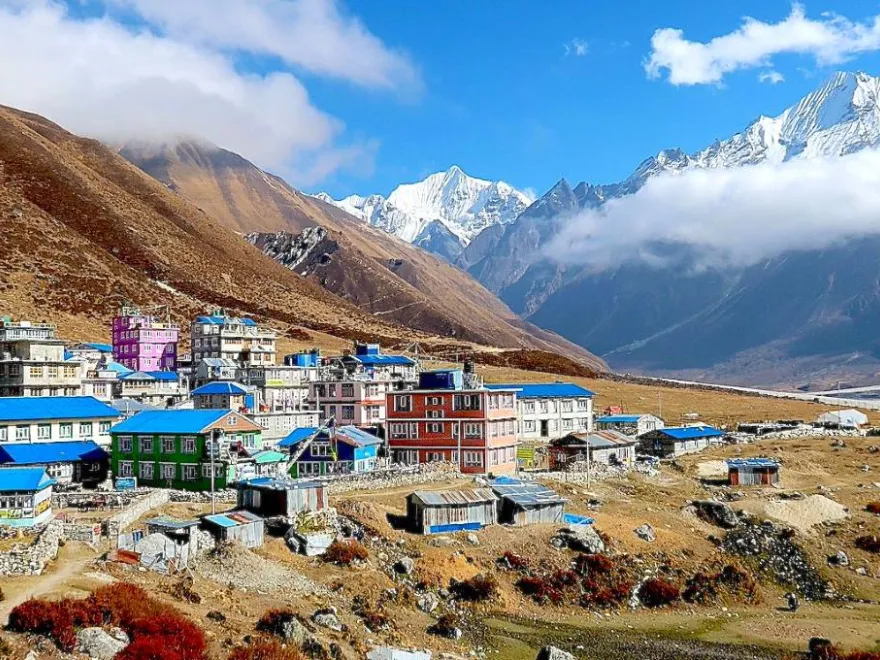
Here, a further highlight in the journey is the trekking to reach the beautiful Langtang Village at 3430 meters, which was rebuilt after the 2015 earthquake. It gives an insight into the Tamang and Tibetan-influenced way of life that shapes the cultural texture of the valley. The stone houses, monasteries, and grazing fields present a tranquil environment that owes its support to sustainable mountain tourism. Moreover, the climb is easy and provides fabulous acclimatization before attaining higher altitude destinations.
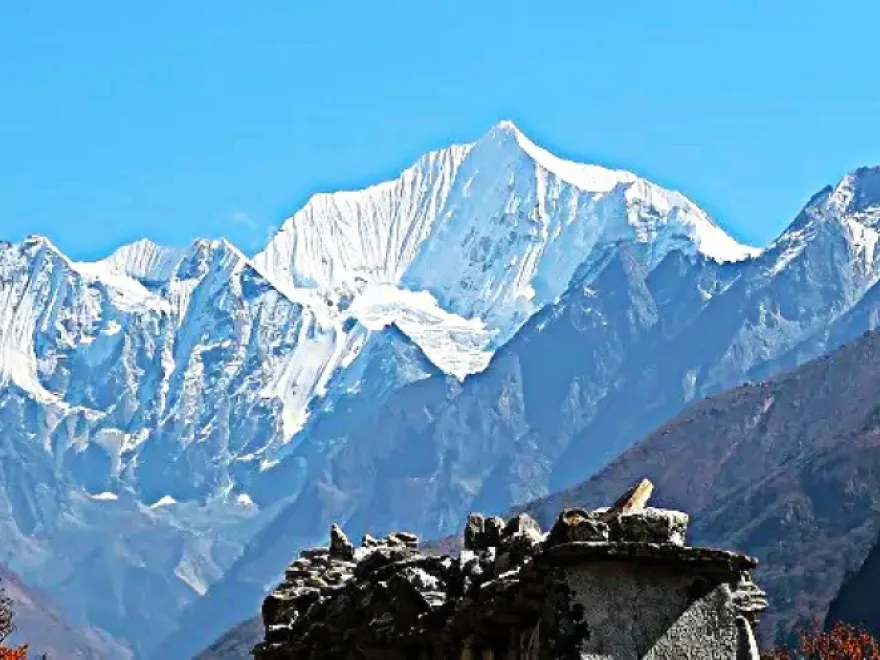
Continuing on, the 8 days Lamgtang Valley trek reaches Kyanjin Gompa-3870 meters, one of the spiritual and scenic highlights of the Langtang region. The village is surrounded by dramatic peaks such as Langtang Lirung-7227 meters, Dorje Lakpa-6966 meters, Yala Peak-5520 meters, and Gangchempo-6387 meters. Trekkers will discover ancient monasteries, local yak cheese factories, and hills nearby for bringing out both experience and perspective. This location provides an excellent base for acclimatization hikes and panoramic photography.
Indeed, most trekkers climb Kyanjin Ri at 4773m or Tserko Ri at 5033m for breathtaking, 360-degree Himalayan views. The ascent challenges the endurance level but grants trekkers one of the most dramatic mountain vistas in Nepal. The landscape brings into view glaciers, icefalls, and towering massifs that define the Langtang Himal range. The viewpoint also offers a sense of achievement that becomes the emotional high point of the trek.
Actually, the return journey of 8 Day Langtang Valley Trek is equally marvelous as it follows the same trail, letting trekkers revisit forests, riverbanks, and tranquil meadows once again with a relaxed pace. The downhill trek via Langtang Village, Ghoda Tabela, and Lama Hotel offers more quiet time to the trekkers. During the return, the natural surroundings seem even more alive since trekkers walk with familiarity and confidence. It smoothly leads back to Syabrubesi, hence completing a rewarding loop of landscapes and culture.
Finally, the Langtang Valley Trek 8 Days remains one of Nepal's most accessible, budget-friendly, and culturally enriching Himalayan adventures. The trek suits beginners and experienced trekkers who seek moderate difficulty, scenic diversity, and shorter travel duration. The package generally costs between USD 550 and USD 900 depending on transportation, meals, permits, and guide services. This experience delivers memorable mountain views, authentic village life, and a peaceful trekking environment close to Kathmandu.
Actually, it suits beginners who are fit and experienced trekkers who want a shorter Himalayan adventure. The trails are moderate, with some gradual ascents and manageable daily distances.
Short but Highly Rewarding Duration (8 Days)
Here, this eight-day trek includes forests, villages, glaciers, high viewpoints, and dramatic mountain scenery-a great choice if one doesn't have much time but desires a complete trekking experience.
Easiest Accessibility from Kathmandu
In fact, Langtang is the closest Himalayan trekking region to the capital. No flights are necessary, and it's thus accessible year-round with a simple drive to Syabrubesi.
Genuine Tibetan–Buddhist Culture
This is a region that offers intact cultural experiences in Langtang Village, Kyanjin Gompa, and cheese factories with traditional lifestyles influenced by Tibetan heritage.
Epic Mountain Views Without Extreme Altitude
Trekkers enjoy close-up views of Langtang Lirung, Ganesh Himal, Dorje Lakpa, Yala Peak, Kimshung, and more. Kyanjin Ri and Tserko Ri present 360° panoramas without needing to climb above 5,000 m for extended periods.
Rich Nature and Biodiversity
The trail passes through the Langtang National Park with dense Rhododendron forests, waterfalls, bamboo groves, Himalayan wildlife, and pristine river valleys.
Flexible and Novice-Friendly Itinerary
This 8-day itinerary includes ideal pacing for proper acclimatization and allows for optional side trips, such as Kyanjin Ri or Tserko Ri, thus catering to varied fitness levels.
Less Crowded Than Everest and Annapurna Regions
Trekkers enjoy peaceful trails, quiet teahouses, and personal interactions with locals, which are perfect for a quiet Himalayan experience.
Supports Earthquake-Recovered Communities
Langtang was badly affected in 2015. Trekking here is rebuilding the economy, supporting lodges, and keeping the local people alive, hence making the visit purposeful.
Value-for-Money Himalayan Trek Compared to other popular treks, Langtang offers excellent scenery, comfortable teahouses, and rich cultural exposure without the high costs or logistics.
Experienced and Professional Trekking Team
Haven Holidays provides government-licensed guides, trained porters, and experienced staff who know Langtang's trails, weather patterns, viewpoints, and risks better than anyone.
Customized Attention and Sincere Care
Small group sizes and a guest-first approach ensure individual support for every trekker, from adjustments in pace and daily health checks to route guidance and safety monitoring.
Authentic Cultural Insights Along the Trail
Guides offer deep knowledge about Tamang and Tibetan-influenced culture, monasteries, farming lifestyles, yak herding, and Langtang's post-earthquake rebuilding story.
Practical Hiking Tips and Daily Briefings
The expert guidance your guide provides on hydration, pacing, altitude adaptation, layering of clothes, sunrise viewpoints, and safe walking practices enhances comfort and confidence.
Safe and Responsible Trekking Practices
Haven Holidays prioritizes altitude safety, environmental responsibility, and ethical treatment of staff to ensure that your journey is professional, secure, and environmentally friendly.
Comfortable Teahouse Arrangements
This team selects only reliable lodges at Syabrubesi, Lama Hotel, Langtang Village, and Kyanjin Gompa that offer clean rooms, good food, a warm dining hall, and hygienic meals.
Flexible Itineraries With Better Acclimatization
This is an 8-day trip that allows safe altitude gain and includes optional hikes such as Kyanjin Ri or Tserko Ri, depending on your fitness and comfort.
Reliable logistics from Kathmandu to Kathmandu
From transportation to permits, meals on the trek, and emergency support, down to organized briefings and warm hospitality, Haven Holidays handles it with grace and professionalism.
Moderate Difficulty Level
Highest Elevation Point
Total Trekking Distance
Daily Altitude Gain
Trail Conditions
Cold Mornings and Nights
No Technical Climbing Required
Simple but Comfortable Accommodation
Meals Availability
Close to Kathmandu
Permit Requirements
Cultural and Religious Significance
Limited Connectivity
Altitude Risk Awareness
Best Seasons
Cost Consideration
Wildlife and National Park Entry
Physical Preparation Needed
Earthquake-Affected Zone Awareness
Side Trips Optional, Not Mandatory
Langtang Valley Trek 8 Days offers a great peek at the Himalayas, rich Tamang culture, varied landscapes, and scenic journeys starting from Kathmandu.
Meanwhile, the Langtang Valley Trek 8 Days is a perfect short adventure near Kathmandu, offering diverse Himalayan scenery and rich culture. It reaches Kyanjin Gompa (3900m), one of the most iconic villages in the region, surrounded by Langtang Lirung at 7227m. This route remains ideal for trekkers seeking moderate trails, rewarding views, and authentic communities. Thus, the journey is a balance of adventure, comfort, and cultural immersion.
Second, your trekking starts off with a drive from Kathmandu at 1,338 m to Syabrubesi at 1550m, highlighting the rural beauty that Langtang region embodies. The road meanders through terraced hills, river valleys, and scattered settlements showcasing Nepal's central Himalayan geography. It prepares trekkers for highland landscapes. In this case, the first day sets the right tone for an inspiring Himalayan journey.
Later, it ascends the Langtang Khola and enters the dense forests of rhododendrons, oaks, and bamboo. Some of the species of rare wildlife and plants are most exciting to see there. The gentle ascents on the walk to Lama Hotel at 2380 meters remain comfortable for most trekkers. Wildlife such as red pandas and Himalayan birds add to the natural beauty of the route. Hence, the forest part makes a refreshing and peaceful trekking experience.
Next, the trail opens into broad valleys as trekkers approach Langtang Village at 3430m, where traditional Tamang culture comes into view. The rebuilt village reflects resilience after the 2015 earthquake and offers comfortable lodges for visitors. Trekkers enjoy wide landscapes provided by Langtang Lirung (7227m) above the valley. Consequently, the gradual rise in altitude supports natural acclimatization.
Additionally, Kyanjin Gompa (3900m) is developing as a major highlight for the trek, with its ancient monastery and dramatic mountain walls. It is possible for trekkers to explore the local cheese factory or observe daily monastic rituals. The village rests under peaks like Langshisha Ri (6427m) and Dorje Lakpa (6966m). Thus, the setting creates a perfect blend of culture, spirituality, and breathtaking scenery.
Meanwhile, on the day for acclimatization at Kyanjin Gompa, several rewarding side hikes enrich the trekking experience. Trekkers often climb Kyanjin Ri (4773m) or Tserko Ri (4984m) for panoramic views of glaciers and summits. These hikes strengthen altitude adaptation and provide remarkable photographic opportunities. Thus, the exploration day becomes an unforgettable part of the journey.
Similarly, the return route passes along the very same trail through the Langtang Village, Lama Hotel, and Syabrubesi. The descent provides an opportunity to perceive the scenery seen earlier from another angle. As altitude keeps on reducing, the walk remains comfortable accordingly. Hence, the last days seem very relaxed and enjoyable.
Moreover, the Langtang Valley Trek 8 Days remains one of Nepal's best-value trek experiences. The typical costs range from USD 550 to 850 depending on the services, permits, transport, and guide arrangements. Throughout the trek, trekkers appreciate warm hospitality, reliable lodges, and well-marked routes. Thus, this trek is likely to be highly satisfying, as its cost and quality are well-balanced.
Finally, this trek is recommended for trekkers seeking just the right blend of moderate difficulty, cultural richness, and pleasant Himalayan scenery within a brief timeline. The route still remains relatively easy for novice trekkers with decent levels of physical fitness and basic equipment. The proximity to Kathmandu makes it even more convenient. This thus makes the Langtang Valley Trek 8 Days a perfect Himalayan adventure for many travelers.
Langtang Valley Trek 8 Days Itinerary Day-To-Day Elevation, Distance, Highlight, and Cultural Experiences from Kathmandu to Kyanjin Gompa.
Meanwhile, the itinerary for the 8-Day Langtang Valley Trek combines scenic walking and gentle altitude gain; hence, it provides a great balance of landscape and culture. Every day, trekkers encounter hours of walking that suit trekkers of various fitness levels. The main locations featured in this itinerary include Lama Hotel at 2380m, Langtang Village at 3430m, and Kyanjin Gompa at 3900m. Thus, comfort, safety, and rewarding exploration are guaranteed.
Here, the journey starts with a drive from Kathmandu (1400m) to Syabrubesi (1550m), which normally takes seven to eight hours. The road travels through Trishuli Bazaar, Betrawati, and Dhunche and introduces you to the rural landscapes of central Nepal. The drive stays scenic with river valleys and terraced fields lining the route. Thus, the first day establishes the connection between the city and the mountains.
From here, the trek from Syabrubesi starts and gradually ascends to Lama Hotel at 2380m. The route to Bamboo (1960m) and Rimche (2450m) goes through rich wildlife forests. The walk remains moderate, and cool shade with refreshing river sounds support easy adaptation to the trail.
Next comes Langtang Village (3430m), where trekkers enter into a wide valley enclosed by high peaks. The trail opens up to meadows, grazing yaks, stone walls, and typical houses. The village represents the cultural heart of the Langtang region. Thus, this day provides both scenic expansion and cultural engagement.
Furthermore, the route from Langtang Village to Kyanjin Gompa (3900m) turns out to be the most inspiring section of this trek. The trail remains open and gentle while offering constant views of Langtang Lirung (7227m). With the addition of its monastery, chortens, and local cheese factory, Kyanjin Gompa is undoubtedly the main highlight of this entire itinerary.
Meanwhile, acclimatization day at Kyanjin Gompa allows trekkers to explore several viewpoints. Ascending Kyanjin Ri (4773m) offers a panoramic perspective on glaciers, ridges, and snowy peaks. Some trekkers climb Tserko Ri at 4984m for more challenging altitude training. Thus, the exploration day enhances both adventure and safety.
Additionally, the return journey follows the same trail back to Lama Hotel (2380m). The descent remains easy and relaxing owing to the reduced altitude. Trekkers enjoy revisiting the landscape with new perspectives in daylight. Hence, the return becomes pleasant and familiar.
Further, from Lama Hotel, the itinerary proceeds to Syabrubesi at 1550m for the last walking day. It descends through forests and traditional settlements you crossed earlier. The walk feels comfortable and smooth after achieving the high points of the trek. Hence, the concluding trekking day gives way to a calm ending.
Finally, the last day consists of a drive in beautiful scenery from Syabrubesi to Kathmandu. The return marks the completion of the eight-day adventure in Langtang Valley, with memories of mountains, culture, nature, and friendly hospitality. This itinerary suits trekkers seeking a moderate Himalayan experience close to Kathmandu. Consequently, it stands as one of Nepal’s most balanced and rewarding trekking plans.
Plan the Langtang Trek from Kathmandu with clear routes, costs, travel options, and altitude details for an accessible Himalayan adventure near the capital.
More importantly, the Langtang Trek from Kathmandu is one of the few Himalayan trekking adventures readily accessible to visitors pressed for time. It starts right from the capital and follows a scenic mountain drive to Syabrubesi (1550m). The proximity of this region eliminates the need to use domestic flights. Therefore, it becomes a convenient and economical option to go for trekking.
Second, it is easy to plan logistics from Kathmandu because buses and jeeps run frequently. It takes seven to eight hours to reach Syabrubesi from Machhapokhari or Balaju. Private jeeps are available, more comfortable, and flexible for group travelers. Thus, Kathmandu is a practical starting point for all Langtang trekkers.
Further, the trek continues onwards from Syabrubesi to Lama Hotel at 2380 meters, dominated by dense forests and river valleys. The trail is likewise moderate, containing short steep sections to keep things exciting. This route tracing follows Langtang Khola and passes by Bamboo (1960m) and Rimche (2450m). Thus, trekkers get refreshing glimpses of natural surroundings right from the beginning. The route then heads towards Langtang Village (3430m), a village reconstructed after the earthquake in 2015. The village offers traditional stone houses, prayer wheels, and cultural friendliness. Trekkers also view wide vistas caused by Langtang Lirung at 7227m.
Hence, the gained altitude allows for comfortable acclimatization. Further, the way moves to Kyanjin Gompa, a village situated at an altitude of 3900m, which is the major highlight of this trek. This place develops a rich cultural aspect due to the monastery, chortens, and a local cheese factory. The surrounding peaks, such as Dorje Lakpa-6966m and Langshisha Ri-6427m, make the scenery dramatic. Hence, Kyanjin Gompa will remain in the memory of the Kathmandu trekkers.
Meanwhile, the acclimatization day offers other exciting side hikes for additional exploration. Kyanjin Ri (4773m) offers breathtaking sunrise views, while Tserko Ri (4984m) promises spectacular panoramas of the Himalayas that are rewarding for trekkers. These hikes strengthen altitude adaptation and enrich the trekking experience.
Thus, the extra day becomes crucial in maximizing the value of the journey. Down from Kyanjin Gompa, the route also follows the same trail down to Langtang Village and Lama Hotel. The return feels comfortable because of the steady reduction in altitude. Trekkers enjoy relaxed hours of walking with familiar landscapes. Hence, even the second half of the trek remains enjoyable and refreshing.
Furthermore, it is considered to be one of the cheaper treks in Nepal compared to the others from Kathmandu. Generally, the cost ranges from 550 to 850 dollars, depending on the guide services, permits, meals, and transport. Tea houses provide warm rooms, traditional meals, and assured hospitality in all major villages. Thus, travelers appreciate a balance between cost and comfort.
Finally, the Langtang Trek suits trekkers seeking mountain scenery, cultural depth, and moderate adventure within a short timeline. The journey combines accessibility, affordability, and varied landscapes close to Kathmandu. It remains ideal for beginners and experienced trekkers alike.
Consequently, the Langtang Trek from Kathmandu goes on being a popular Himalayan experience.
Langtang Valley Trek offers an extra day at Kyanjin Gompa for acclimatization, side hikes, glaciers, and stunning Himalayan panoramas.
Meanwhile, the full Himalayan experience of the Langtang Valley Trek includes one additional day at Kyanjin Gompa (3900m) and provides balanced acclimatization. The additional day strengthens altitude adaptation, enhancing safety while exploring higher viewpoints. This plan suits trekkers seeking scenic diversity, cultural richness, and comfortable pacing. Hence, an extended itinerary improves enjoyment and success rates.
Here, the journey starts with a breathtaking drive from Kathmandu (1400m) to Syabrubesi (1550m), where the adventure actually starts. The route via Trishuli Bazaar and Dhunche opens up rural landscapes carved by rivers and terraced hills. Though long, the engaging drive prepares trekkers for mountainous terrain. Thus, the first day sets the foundation for the trek ahead.
Afterward, the trek goes via Bamboo (1960m), Rimche (2450m) to Lama Hotel at 2380m. Forested trails, following Langtang Khola, are in shade and have wild sightings besides soothing river sounds. The view apex is of a moderate gradient and is peaceful. Hence, the ascent supports comfortable adjustment to elevation.
Here, the trail reaches wide meadows and traditional settlements at Langtang Village, which is at 3430 meters. The village represents Tamang culture with its prayer walls and beautiful surroundings shaped by Langtang Lirung at 7227 meters. The accommodation in these villages is warmly welcoming through rebuilt lodges after the 2015 earthquake. Therefore, the village provides cultural immersion and natural beauty.
Further, the route from Langtang Village to Kyanjin Gompa (3900m) is the highlight of the trek. The final part is also easy and rewarding, with scenic views on both sides. Here, the village has a monastery, chortens, a local cheese factory, and expansive glacial views, making the arrival at Kyanjin Gompa memorable and fulfilling.
Meanwhile, an additional day at Kyanjin Gompa enriches the trek with much-needed acclimatization and optional hikes. Accordingly, views of sunrise over Langtang Lirung-7227m and Langshisha Ri-6427m attract trekkers to climb Kyanjin Ri-4773m; others make for Tserko Ri-4984m for a more strenuous ascent and for dramatic glacial panoramas. Hence, the bonus day provides options for flexibility and adventure.
Actually, this extra day will also provide trekkers with the opportunity to view other sights around Kyanjin Gompa. The Langtang Glacier viewpoint offers an impressive close-up of the icy formations in this region. The monastery area highlights spiritual traditions and local lifestyle. Hence, the extra day delivers cultural depth along with natural exploration.
Furthermore, the extended itinerary enables better acclimatization and decreases the possibility of altitude problems. Having more days at 3900m strengthens physical adaptation before descending. The trekkers have more opportunities for photography and observation. Consequently, the added day contributes to both health and enjoyment.
Finally, the return from Kyanjin Gompa follows the trail back via Langtang Village, Lama Hotel, and Syabrubesi. The descent remains comfortable with a consistent loss in altitude. This longer trek is highly valuable for its diverse landscapes and culturally enriching encounters. The Langtang Valley Trek, including one extra day in Kyanjin Gompa, therefore, becomes one of the most recommended itineraries.
Acclimatization day treks from Kyanjin Gompa include several options such as the route to Kyanjin Ri, Tserko Ri, glaciers, monasteries, and panoramic Himalayan viewpoints.
Actually, the Kyanjin Gompa acclimatization day trek is the most rewarding part of the Langtang Valley Trek for its amazing Himalayan views. The day is very important to get used to the altitude, which is 3900m, to continue further onto the higher viewpoints. There are a number of beautiful trails in the area that cater to various fitness levels, making the day both practical and enjoyable.
Meanwhile, the most popular acclimatization day trek goes out to Kyanjin Ri at 4773 meters. The trail starts gently behind the village and then climbs above glaciers and moraines. The summit provides sweeping views of Langtang Lirung at 7227 meters, Yala Peak at 5520 meters, and Dorje Lakpa at 6966 meters. Thus, Kyanjin Ri offers a great combination of effort versus reward.
For more challenge, trekkers often choose to climb up Tserko Ri at 4984 meters. The trail starts early in the morning and climbs steeply across rocky sections and wide meadows. The summit delivers dramatic panoramas of Langshisha Ri at 6427 meters and the Langtang Glacier basin. Hence, the hike is suited for experience trekkers looking for expansive mountain scenery.
Next, the easier option reaches the Langtang Glacier viewpoint close to Kyanjin Gompa. The trail is short and moderately easy, presenting close-up views of ice formations and glacial structures. The contrast in the landscapes from rocky surfaces to icy ones forms a beautiful scene to view for trekkers. This route therefore befits both beginners and energy savers.
Additionally, the acclimatization day provides options for cultural exploration in Kyanjin Gompa. The monastery is a representation of Tibetan Buddhist traditions and tranquility. Trekkers observe prayer rituals and experience the spiritual charm that surrounds the area. Thus, cultural interaction becomes part of the day.
Furthermore, another attractive spot is the local cheese factory near the village. Trekkers can witness traditional processes in cheese production and taste fresh products made from yak milk. The factory provides economic and cultural insight into the livelihood of locals. Thus, the acclimatization day invites lighter, more relaxing activities.
Moreover, trekkers benefit in acclimatization by being active since movement boosts the circulation of oxygen. Gentle hikes around the valley prevent altitude symptoms. Hydration and pacing one's self steadily are vital during these activities. Hence, the day supports both enjoyment and safety.
Likewise, guided acclimatization hikes ensure proper pace and route selection. Local guides understand safe timings and weather conditions on Kyanjin Ri and Tserko Ri. Knowledge of the trails, along with viewpoints, enriches the day's experience. Thus, guided support adds comfort and reassurance.
Finally, the Kyanjin Gompa acclimatization day trek strengthens physical readiness and emotional connection to the mountains. The day offers unmatched Himalayan panoramas, cultural sites, and peaceful landscapes. Trekkers feel refreshed and confident as they continue the Langtang Valley journey. This, therefore, makes an acclimatization day one of the most memorable parts of the trek.
Find the best package for Langtang Valley Trek with cost, itinerary highlights, services, guides, accommodations, and essential inclusions starting from Kathmandu.
Actually, the best Langtang Valley Trek package balances cost, service, safety, and highlights of scenery. The package normally includes transportation, permits, guide services, meals, and accommodation. Travelers appreciate clear planning and consistent support during the trek. A well-structured package, therefore, improves both comfort and overall experience.
Whereas top packages start with private jeep or tourist buses from Kathmandu (1400m) to Syabrubesi (1550m), the private vehicles ensure flexibility, comfort, and controlled timing for small groups. In contrast, public buses remain cheap for budget trekkers. Thus, transportation choices create different pricing options across packages.
Afterwards, the trekking portion covers Lama Hotel at 2380 meters, Langtang Village at 3430 meters, and Kyanjin Gompa at 3900 meters. Reliable packages arrange clean lodges with warm dining areas serving local meals and friendly hospitality in each village. The route provides diverse scenery with forests, valleys, and high mountain views; hence, trekkers enjoy a smooth journey supported by experienced guides.
Next come the best packages that include a full acclimatization day at Kyanjin Gompa; added time permits hikes to Kyanjin Ri (4773m) or Tserko Ri (4984m), further ensuring better altitude adaptation and panoramic rewards. Thus, a trekker can experience more with safe pacing.
Apart from that, the cost of packages generally runs from USD 550 to USD 950, depending on what is included in the package and the type of service. In higher packages, private transport, upgraded lodges, and professional guides assure high expertise. In budget packages, the essentials are maintained while the costs are kept low.
For that reason, travelers can choose their packages according to comfort and budget. Meanwhile, the best Langtang Valley Trek packages include all required permits. The permit for Langtang National Park and TIMS card are still obligatory for trekking. The agencies manage the paperwork to save time and avoid confusion.
Therefore, trekkers do not face administrative challenges. Professional guides are highly valued in quality packages. Guides enable proper pacing, navigation, safety, and cultural interpretation of the route. Their local knowledge enhances daily experiences and mountain understanding.
Hence, guided support becomes essential for a smooth trek. Furthermore, responsible agencies will bring in emergency support like first aid kits, altitude guidance, and the coordination of evacuations. These measures ensure safety during unpredictable conditions in the mountains. Reliable companies put in place communication systems for quick responses.
Consequently, therefore, safety planning remains central to the best packages. Finally, this Langtang Valley Trek package provides guaranteed memorable Himalayan views, cultural immersion, and comfortable services from start to finish. The trekkers get reliable support, scenic highlights, and well-balanced pacing throughout the journey. The package simplifies logistics and maximizes enjoyment. Thus, it remains the ideal choice for both beginners and experienced trekkers.
Learn all about the cost of the Langtang Valley Trek for 2026, including permit expenses, guides, transportation, food, equipment, accommodation, and itinerary.
First, the cost of the Langtang Valley Trek in 2026 has been subjected to the updated pricing of transportation, permits, accommodation, and services of trekking. On average, it costs around $600-$950, according to the group size and service level. These costs remain much lower than for Everest or Annapurna because of the shorter duration and moderate logistics. Thus, Langtang continues to be one of the best values for trekkers.
Second, transportation plays a big role in determining the overall cost for 2026: public buses from Kathmandu (1400m) to Syabrubesi (1550m) are at about USD 15 per head. Private jeeps go for USD 160 to USD 220 per vehicle and befit groups that would want comfort. Thus, this transport choice significantly affects the total cost of the trek.
Afterwards, the cost of a permit for Langtang Valley is straightforward. A permit for Langtang National Park costs NPR 3000 per head, and a TIMS card costs NPR 2000. Agencies often include permit processing fees within the package price. Hence, travelers benefit from easier administrative management.
Further, the cost of accommodation and food remains the same through the Langtang Valley trek route. Accommodation in Lama Hotel at 2380m, in Langtang Village at 3430m, and in Kyanjin Gompa at 3900m costs from 6 to 12 USD per night. Food costs from 5 to 10 USD depending on altitude and meal availability. The daily expense, therefore, comes out to be around 25 to 40 USD per day without a package.
Besides, employment of a licensed trekking guide adds both safety and cultural insight. A professional guide costs from USD 25 to USD 35 depending on experience and language skills. Porters are available at the price of USD 18-USD 25 and help to carry heavy loads. Hence, guide and porter services increase safety and comfort.
Meanwhile, trekkers must consider personal expenses while estimating the total costs for 2026. Charging gadgets, hot showers, using Wi-Fi, and drinking water purification services all add small yet noticeable costs. Snacks, tips, and perhaps bakery treats once in a while at Kyanjin Gompa add to the expenditure tally as well. Thus, travelers should keep USD 8 to USD 15 per day for extras.
Furthermore, for the newer trekkers, equipment and gear renting can affect the budget. Down jackets, sleeping bags, trekking poles, crampons, and duffel bags are still available in Thamel at very reasonable rates. It costs from USD 1 to USD 5 per day for every piece, depending on its quality. Hence, renting remains a cost-effective option for occasional trekkers.
Moreover, travel insurance becomes compulsory for the Langtang Valley Trek. Insurance covering high-altitude evacuation and medical emergencies has costs between USD 80 to USD 150. Agencies require proof of insurance before guiding over 3000m. So, insurance costs should be included in overall estimates.
Finally, the cost of the Langtang Valley Trek in 2026 is very affordable and highly valuable. The trek offers great mountain views, cultural exposure, and peaceful trails, all without too much expense. Clearly planned, and with controlled expenses, the travelers can get a full dose of the Himalaya with a moderate cost. Thus, Langtang stands as one of the best budget-friendly trekking destinations in Nepal.
Discover Langtang trekking in Nepal, including routes, cultural highlights, mountain views, best seasons to go, acclimatization tips, and a full guide for all trekkers.
Meanwhile, Langtang trekking in Nepal offers a perfect blend of mountain scenery, Tamang culture, and accessible trails near Kathmandu. The trek requires moderate fitness and suits both beginners and experienced trekkers. Its relatively short duration enhances practicality for those with limited time. Therefore, Langtang stands among Nepal’s most rewarding trekking regions.
Here, the scenic drive from Kathmandu (1400m) to Syabrubesi (1550m) initiates the journey. The route follows the Trishuli River, terraced fields, and rolling hills before entering the Langtang region. The drive passes through rural settings and showcases traditional lifestyles. Thus, this journey sets a cultural tone for the trek.
It later winds its way up through dense forests of bamboo, rhododendron, and oak to Lama Hotel at 2380 meters. The scenery is still rich in wildlife, such as monkeys and Himalayan birds. The trail goes along Langtang Khola, powerful and rhythmic in sound, accompanying the trekkers. Thus, the early stages of the journey are refreshing and immersive.
Next, it expands into Langtang Village at 3430m, displaying a Tibetan-influenced architecture and way of living. The spiritual landscape is dotted with monasteries, prayer wheels, and carved mani walls. The village nestles at the foot of Langtang Lirung at 7227m, offering spectacular alpine views to boot. Thus, nature and culture complement each other.
Further up, the trail takes one to Kyanjin Gompa (3900m), the cultural and scenic heart of Langtang trekking. The monastery and surrounding chortens reflect deep Buddhist traditions. The village provides access to Kyanjin Ri (4773m), Tserko Ri (4984m), and glacier viewpoints. Thus, Kyanjin Gompa is the highlight of this trek.
Meanwhile, acclimatization is not dispensable during trekking in Langtang. A day spent at Kyanjin Gompa will help adjust to the altitude and prepare for higher viewpoints. Side hikes encourage better adaptation and expand scenic opportunities. Thus, acclimatization adds both safety and scenic value.
Additionally, Langtang trekking allows trekkers to witness post-earthquake reconstruction efforts. Rebuilt lodges and revived communities reflect resilience and dedication. The region continues to welcome visitors with renewed energy and improved infrastructure. Hence, travelers contribute to local economic growth by trekking here.
Likewise, the better seasons to go trekking in Langtang remain spring and autumn. Spring offers blooming rhododendrons and clear mornings, while autumn offers dry weather and stable visibility. Winter offers solitude but challenges trekkers with cold temperatures. Thus, seasonal selection depends upon personal preference and preparedness.
Finally, Nepal's Langtang trekking combines accessibility, cultural richness, and high mountain experiences. The peaceful, scenic trail is a great reward for trekkers in search of authentic Himalayan landscapes. With proper planning, Langtang offers an unforgettable trekking journey with no excessive difficulty. In turn, it stands as one of the most attractive trekking routes of Nepal.
Get a full guide to the Langtang Valley weather and temperature per season, with trekking advice, climate conditions, and the best time to visit.
Meanwhile, the Langtang Valley weather and temperature fluctuate greatly with seasons and altitudes. These vary between Syabrubesi (1550m), Langtang Village (3430m), and Kyanjin Gompa (3900m). Knowing the seasonal aspects will help ensure safe planning and a comfortable trek. Thus, the knowledge of climatic conditions becomes relevant for the Langtang Valley Trek.
Secondly, spring remains one among the best seasons for Langtang Valley. For the months of March, April, and May, the weather is stable, and rhododendrons bloom, along with clear skies. Temperatures range between 5°C to 18°C at Kyanjin Gompa (3900m). Thus, comfortable trekking conditions are provided in spring.
Later, summer brings warmer temperatures and monsoon rainfall across the region. The months of June, July, and August are characterized by heavy clouds, leeches, and slippery trails. The daytime temperatures remain mild, but rain affects visibility and safety. Hence, summer suits trekkers seeking solitude despite challenging weather. Following that, the season of autumn becomes the most favorable time for Langtang Valley Trek. September, October, and November have clear skies with brisk air and optimal mountain visibility. The temperature ranges from 2°C to 16°C at higher elevations.
Thus, autumn proves the perfect time for trekking. Winter offers chilly but quite tranquil trekking conditions throughout Langtang. During December, January, and February, the temperatures drop down to -10°C at Kyanjin Gompa. It may have snowfall that conceals the high trails and makes trekking difficult for less experienced trekkers.
Therefore, winter suits only prepared and confident trekkers. Meanwhile, daily temperature fluctuations seem to be pretty broad within altitudes: lower elevations like Syabrubesi (1550m) stay warm with mild nights, while middle ones such as Langtang Village (3430m) have cooler days and cold nights. Thus, layering becomes essential during the trek.
Also, weather changes rapidly in the Langtang region due to surrounding high mountains. Even during seasons of stability, cloud formations are seen to form during afternoons. During the pre-monsoon months, rain showers occur very unexpectedly. Hence, proper rain gear must be carried by trekkers. Besides that, the conditions of wind get worse in areas of higher height, like Kyanjin Ri (4773m) and Tserko Ri (4984m).
Although morning ascents are stable, afternoon winds decrease visibility and raise cold exposure. Timely starts help ensure safety and comfort. Therefore, early trekking proves advantageous. Finally, the weather and temperature patterns of Langtang Valley help trekkers in choosing proper gear and planning. Understanding seasonal differences ensures better preparation and safer experiences. If correctly timed, the valley reveals its diverse beauty through forests, glaciers, and alpine meadows.
Thus, the knowledge of the climate enhances the overall quality of the Langtang Valley Trek.
Langtang Valley Trek in spring offers clear skies, warm temperatures, and rhododendron forests, with rewarding views such as Kyanjin Ri, which is an ideal location for Himalayan trekking.
To start with, the Langtang Valley Trek in spring offers one of the most colorful Himalayan experiences when the hills glow with rhododendron blooms. The journey moves through Langtang National Park, which becomes vibrant after winter; trekkers also enjoy stable weather throughout the route. The rising temperatures gradually add beauty to the trail, thereby making walking comfortable. This season remains ideal for trekkers who want calm weather, excellent visibility, and manageable trail conditions.
Additionally, spring offers pleasant temperatures from Syabrubesi (1500m) to Kyanjin Gompa (3870m); this helps trekkers to maintain a consistent pace. The daytime temperature during this season usually remains mild, and nights are warmer compared to autumn. The higher villages of Langtang Village (3430m) and Kyanjin Gompa have cold mornings, but the trekkers easily adapt as the sun brightens up the valley. This season also assures of clear skies for sure mountain views of Langtang Lirung (7234m), Dorje Lakpa (6966m), and Yala Peak (5520m).
In addition to, in spring, the forest area between Lama Hotel (2380m) and Ghoda Tabela (3000m) becomes exceptionally scenic. The rhododendron, magnolia, and pine woods blossom to color the route with different landscapes. Trekkers walk along the Langtang River, which is stronger in spring due to melting snow. Wildlife movement increases in the national park, and trekkers may spot the Himalayan birds along the rising ridge.
Moreover, spring promotes great acclimatization because trekkers stay overnight in Kyanjin Gompa before heading to Kyanjin Ri (4773m). This acclimatization walk offers spectacular views of the entire Langtang Valley painted in spring colors. Trekkers find the temperature bearable even at the time of early morning summit hiking. Such conditions provide easier climb and better acclimatization for every trekker.
Actually, this is the time when local communities start resuming their agricultural activities; thus, cultural interaction becomes more replete with interest during the trek. The teahouses start opening with full service, and trekkers get to enjoy warm meals and fresh products available in the higher villages. Infrastructure remains stable after winter, and trail conditions allow for comfortable daily walking distances. Consequently, the season turns perfect for trekkers who prefer mild weather and all services available in the mountains.
However, spring remains popular, and so the trail sees a good deal of moderate traffic, especially in April. It's still considerably less busy than trekking routes like Everest or Annapurna, though. Accommodations run well, but early booking helps with securing better rooms at Kyanjin Gompa and Lama Hotel. The crowd level is maintained to provide a peaceful yet lively trekking environment.
Consequently, the Langtang Valley Trek in spring is meant for both novice and experienced trekkers who would like to have scenic trails with comfortable weather. The landscapes are photogenic throughout the route, and the valley usually wears its best colors during this season. The trekkers enjoy stable conditions, safe walking trails, and rewarding summit hikes. Spring guarantees the best combination of natural beauty, cultural interaction, and mountain scenery.
In the end, spring is one of the best seasons to do the Langtang Valley Trek since it embodies warmth, flowers, clarity of mountains, and supportive conditions of the trail. Trekkers experience an immersive Himalayan encounter with routes that can easily be accessed and varied landscapes. The season enhances physical comfort and scenic pleasure since the valley is in full bloom. Eventually, spring provides a balanced trekking environment with reliable weather and striking natural beauty.
Autumn brings crystal clear skies, stable weather conditions, warm days, and the clearest views of Langtang Lirung and the other peaks surrounding it.
First of all, during autumn, the Langtang Valley Trek presents the clearest mountain views of the whole year, as the weather is usually stable after the monsoon. The skies are always blue, offering crisp visibility right from the lower forests to Kyanjin Ri at 4773 meters. Also, the routes get dry and comfortable to walk on for trekkers, ensuring safe and pleasant walking conditions. The season will remain ideal for photography, culture, and high-altitude scenery.
Besides, daytime temperatures remain moderate in the valley from Syabrubesi 1500m to Langtang Village 3430m, while trekkers like to walk in warm hours with clear sunshine; nights get cold at higher altitudes such as Kyanjin Gompa 3870m. Predictable weather conditions lower the chances of delays or sudden storms. For this reason, autumn allows reliable trekking planning for all kinds of trekkers.
Moreover, the Langtang Valley Trek in autumn season provides cultural richness for the trail, as many festivals in the local communities are celebrated, such as Dashain and Tihar. During this time, trekkers will witness various traditional Himalayan rituals and exchanges with families from villages, such as Bamboo (1960m) and Thyangsyap (3140m). The moments of culture add emotional volume to the trekking experience, blending the emotional and scenic ones. The authentic hospitality shown by Tamang communities remains one of the trek's highlights at this time.
Additionally, the forests are fresh after the monsoon and exhibit rich green colors throughout the Langtang National Park. Trekkers walk along a gentle river corridor with stable terrain and pleasant shade. Breathing is improved by clean air even at higher elevation, which helps trekkers acclimatize better during ascent. The acclimatization hike also becomes smooth as the crisp air boosts visibility across the panorama.
Similarly, autumn gives excellent clarity when the trekkers climb Kyanjin Ri for sunrise views of Langtang Lirung (7234m), Changbu (6251m), and Dorje Lakpa (6966m). The weather allows early morning hikes without any risks of heavy snowfall. Trekkers will get to experience the crisp mountain air and astonishing contrast between the valley floor and snow-filled ridges. Outstanding viewing conditions at all viewpoints are delivered without fail by this season.
However, autumn also brings the highest number of trekkers to Langtang Valley. The trail becomes busy in October, especially near Lama Hotel and Kyanjin Gompa. Although the region remains quieter than Everest or Annapurna, accommodation may fill up fast during peak weeks. Early bookings and flexible plans help trekkers avoid last-minute issues.
Actually, it follows that autumn is ideal for tourists who value steady weather, clear visibility, and well-maintained trails. It also becomes easier to plan the trek since the probability of rain remains low, and transportation from Kathmandu follows predictable schedules. Food, lodging, and guide services are high quality and readily available for trekkers. The overall trekking environment remains steady and organized during the entire season.
Conclusion In autumn, the Langtang Valley Trek offers the best clarity, cultural richness, and comfort for trekking. Photography, scenery, and summit climbs take place under perfect conditions. The trails offer stable ground, cool air, and highly adequate accommodation. Autumn provides one of the most reliable times for a rewarding Himalayan trekking experience.
Langtang Valley Trek in winter offers quiet trails, snow-covered landscapes, crisp mountain views, and peaceful villages, which make for a serene Himalayan trekking experience.
First of all, the winter Langtang Valley Trek represents a quiet, snowy Himalaya for trekkers who would wish to experience silence and solitude. The valley is serene as fewer trekkers are visiting this region; thus, deeper immersion in nature is possible. Above Ghora Tabela, at 3000m, the landscape turns white, forming stunning contrasts with rocky cliffs. Winter, in that way, remains ideal for trekkers in search of quiet trails and specific scenery.
In addition, from Lama Hotel (2380m) to Kyanjin Gompa (3870m), temperatures drop noticeably, requiring better preparation and winter gear. The days remain cool yet manageable to walk in, while nights get very cold at higher altitudes. Trekkers need to carry warm layers, reliable sleeping bags, and proper insulation.
Despite the cold, the weather remains stable with clear skies and sharp visibility. On top of that, the snow-filled forests around Bamboo (1960m) and Riverside (2400m) give magical winter scenery. Trekkers will walk through frozen waterfalls, frosty branches, and sparkling morning landscapes. The count of wildlife sightings reduces, but the silence in the forest increases the quality of your trek. The trail will also be easier to walk on as the snow depth stays moderate below Langtang Village (3430m). Moreover, winter provides excellent clarity from Kyanjin Ri (4773m) and Tserko Ri (4984m). The cold atmosphere reduces haze and allows trekkers to see dramatic details in Langtang Lirung (7234m), Changbu (6251m), and Dorje Lakpa (6966m). Sunrise is spectacular owing to the contrast of snow and amber light. Such visual rewards do compensate for the cold conditions one has during early morning hikes.
Similarly, winter strengthens cultural interactions because locals spend more time indoors. Trekkers are able to enjoy longer conversations with the families in Langtang Village and Kyanjin Gompa. Warm meals, hot drinks, and cozy dining rooms in the teahouses make the evenings enjoyable.
Hence, the season enriches the trek with meaningful cultural exchanges. However, the cold and minimal services definitely call for cautious preparation during winter. During this period, especially at around December and January, teahouses at higher elevations usually close. Confirm the availability of accommodation before commencing a trek. Guides and porters are helpful in ensuring safety as parts of the trail may be covered in snow.
As a result, winter becomes ideal for experienced trekkers or those who enjoy cold-weather adventures. The trail still is safe with proper preparation, warm clothing, and flexible schedules. Trekkers get unique views of empty paths and peaceful teahouse stays. The season offers one of the most unique perspectives of Langtang Valley.
To sum up, the Langtang Valley Trek in winter: Langtang Valley Trek in December and Langtang Valley Trek in January promises quiet landscapes, pristine mountain views, and a tranquil trekking environment. Snow trails, clear skies, and quiet villages greet trekkers. Proper gear and planning, and winter gives an enriching, memorable Himalayan experience. Winter ultimately suits those who value silence, purity, and breathtaking alpine panoramas.
Learn about the difficulty level of the Langtang Valley Trek with terrain, altitude, walking hours, and acclimatization, including physical requirements for a safe Himalayan adventure.
Specifically, the Langtang Valley Trek is a moderate-grade trek that is suitable for average-level trekkers with average fitness and proper preparation. This trail gains moderate elevation from Syabrubesi (1500m) to Kyanjin Gompa (3870m), which limits altitude stress during ascent. Trekkers walk through forests, riverbanks, and open meadows that offer mixed terrain. Variety constitutes a manageable physical challenge without technical climbing.
Moreover, the walking distance per day averages five to six hours, which suits most active trekkers. The steep sections at Lama Hotel (2380m) and Ghoda Tabela (3000m) require slow pacing and a steady breathing pattern. Beyond Langtang Village (3430m), the trail is often considerably easier, allowing easier progress toward the higher valleys. Overall, the pace remains comfortable for beginners when they follow regular breaks.
Likewise, altitude becomes the main determinant of the difficulty of the Langtang Valley Trek. Elevation gains are made gradually, which provides the body with sufficient time for natural adaptation. The acclimatization day at Kyanjin Gompa helps trekkers adjust before climbing Kyanjin Ri (4773m). This way, the risk of acute mountain sickness is radically reduced.
Moreover, the trek bypasses high passes; hence, the technical difficulties are lower compared to Manaslu or Annapurna Circuit. The trekkers do not need ropes or climbing gear, and the path stays well-marked throughout the valley. Teahouses remain available with food, rest, and warmth at regular intervals. It makes the trek ideal for first-time Himalayan travelers.
Similarly, weather conditions affect the challenge in certain seasons: spring offers mild temperatures and stable conditions, hence less tiredness and more comfort; in autumn, the skies are clearest and the walk is safest. In winter, however, it may be cold and even snowy; this significantly raises the challenge for the amateur tourists.
Actually, Monsoon time brings difficulty because of the slippery trails and leech-filled forests. The route goes muddy, and below Bamboo (1960m) and Riverside (2400m), the lower visibility makes things trickier. All these conditions make for some advanced planning, along with flexible trek dates. Choosing the right month can significantly bring down the difficulty.
Additionally, body fitness is an important determinant of the ease of the trek. Good endurance provides less bumpy progress on steep sections. Regular hikes and exercises for the legs and cardiovascular training generally prepare one for the walk. These steps in fitness improve safety and comfort throughout the route.
Thus, the Langtang Valley Trek suits trekkers seeking a moderate Himalayan challenge with no extreme elevations. The structured ascent and well-maintained trail support gradual adaptation. Slow pacing and proper hydration make the experience accessible for trekkers. Preparation ensures enjoyable progress through the valley.
Mainly, the Langtang Valley Trek is one of Nepal's best introductory Himalayan treks because of its moderately difficult grade. The scenic beauty along this route is an even balance with excellent, manageable terrain and good altitude adaptation. Proper gear, fitness, and seasonal timing reduce potential challenges. The trek ultimately offers a rewarding adventure suitable for a wide range of trekkers.
Understand the altitudes of Langtang Valley Trek with a clear guide on elevation from Syabrubesi to Kyanjin Ri for safe acclimatization in the Himalayas.
First and foremost, the Langtang Valley Trek starts with a gradual altitude gain from Syabrubesi at 1500m to Kyanjin Gompa at 3870m. The elevation profile allows for smooth acclimatization during the climb. The topography supports comfortable pacing through forests and meadows. This makes the trek suitable for amateur and experienced trekkers.
Here, the path also rises gradually to Lama Hotel at 2380 meters, which then forms the first serious altitude increase. The difference in altitude provides an initial adaptation since trekkers get acquainted with thinner air. The elevating forested landscape provides shade and moisture that ease climbing. This stage establishes a strong acclimatization foundation for higher segments.
Furthermore, the altitude gain is quicker from Lama Hotel to Ghoda Tabela (3000m), where the valley opens up widely. The level of oxygen decreases slightly, yet the trekkers get by easily with slow walking. The views improve, and the atmosphere gets cooler because of the gain in altitude. This stage introduces the true alpine character of Langtang.
Moreover, the trail proceeds to Langtang Village (3430m), which offers the second important acclimatization landmark. The gradation in altitude is relatively subtle here for trekkers, as it represents a gradual ascent. The village is situated in a wide valley with good ventilation. This point mainly helps trekkers to rest properly before ascending to higher altitudes.
Similarly, Kyanjin Gompa is also an important milestone in altitude on the trek at 3870 meters. The village lies beneath Langtang Lirung at 7234 meters above sea level and has enough area for acclimatization. Trekkers take one more day here to be properly acclimatized for the viewpoint ascents. The stable altitude helps the body adjust slowly.
In addition, the acclimatization hikes to Kyanjin Ri (4773m) or Tserko Ri (4984m) allow exposure to high-altitude conditions in safety. These climbs bring dramatic views of Yala Peak (5520m), Dorje Lakpa (6966m), and Langshisha Ri (6427m). Trekkers experience thin air, yet the guided ascent improves altitude adaptation. These summits enhance the overall Himalayan experience.
Below is a useful Altitude Chart:
| Place | Elevation |
|---|---|
| Syabrubesi | 1500m |
| Lama Hotel | 2380m |
| Ghoda Tabela | 3000m |
| Langtang Village | 3430m |
| Kyanjin Gompa | 3870m |
| Kyanjin Ri | 4773m |
| Tserko Ri | 4984m |
Additionally, the descent follows the same route to Syabrubesi, allowing safe altitude reduction. The trekkers reduce the elevation quite fast and thus eliminate acclimatization concerns. The downward journey supports recovery and reduces physical stress. The balanced ascent–descent pattern enhances trek safety.
Consequently, the altitude remains manageable for most trekkers because the profile supports natural adjustment. The elevation gain stays consistent without steep jumps. Trekkers who stick to hydration, slow pacing, and rest are safe from potential complications during the climb. The strong habits of acclimatization ensure a smooth journey.
In short, the altitude profile of the Langtang Valley Trek is friendly for gradual adaptation and safe ascent. Trekkers enjoy comfortable sleeping heights and optional high viewpoints. It is important to understand the elevation chart in order to plan safe walking days. Ultimately, the altitude pattern makes Langtang one of the most accessible Himalayan treks in Nepal.
Explore the Langtang Valley Trek in terms of distance covered per day, walking hours per day, altitude difference per day, and daily trail conditions for better preparations and trek planning.
To begin with, the Langtang Valley Trek follows a comfortable walking rhythm; there is a balance of distances covered each day. The route supports altitude gain at a gradual pace without exhausting trekkers. Daily distances remain manageable for beginners and moderate trekkers alike. This pattern ensures consistent progress through the valley.
Here, the trek starts from Syabrubesi (1500m) with a moderate walking day to Lama Hotel at 2380m. Trekkers cover roughly eleven kilometers in about six hours. The path climbs through forests and riverbanks with steady gradients. This first section warms up the legs for the upcoming days.
Further, the distance from Lama Hotel to Langtang Village (3430m) is about twelve kilometers. The trail passes through Ghoda Tabela at 3000m, where the scenery opens up dramatically. Trekkers experience mixed terrain with gentle flats and some steady climbs, while this stage introduces the alpine atmosphere of the region.
Moreover, the distance from Langtang Village to Kyanjin Gompa (3870m) is approximately eight kilometers. The trek route becomes easier and scenic once the valley broadens. The trekkers cross open meadows and ancient mani walls with excellent mountain views seen everywhere. This shorter day supports comfortable acclimatization.
Following is a brief Distance Chart:
| Day | Route | Distance |
|---|---|
| Day 1 | Syabrubesi to Lama Hotel | 11 km |
| Day 2 | Lama Hotel to Langtang Village | 12 km |
| Day 3 | Langtang Village to Kyanjin Gompa | 8 km |
| Day 4 | Kyanjin Ri/Tserko Ri hike | Optional (5-8) one way |
| Day 5 | Kyanjin Gompa to Lama Hotel | 19 km |
| Day 6 | Lama Hotel to Syabrubesi | 11 km |
Likewise, the rest day in Kyanjin Gompa includes optional hikes to Kyanjin Ri (4773m) or Tserko Ri (4984m), ranging from six to twelve kilometers depending on which peak one chooses to climb. These climbs offer breathtaking panoramas and excellent altitude training. Trekkers enjoy rewarding views after a challenging ascent. The return from Kyanjin Gompa to Lama Hotel covers about nineteen kilometers. This long descent may be easier on the lungs but is demanding on the knees. Trekkers keep up a good steady pace to manage the pressure of going downhill.
Actually, this distance becomes manageable with proper breaks. The final walk from Lama Hotel to Syabrubesi finishes the trek with a descent of eleven kilometers. The route follows the same forested path along the Langtang River. Trekkers complete the journey with relaxed walking through the lower terrain. This final day feels refreshing and scenic.
In this respect, the Langtang Valley Trek becomes very approachable due to the balanced distances for nearly all kinds of hikers. Each day, walking hours remain predictable and further help in comfortable planning. Trekkers can easily manage their energy with steady breaks and hydration. The structure enhances both safety and enjoyment.
In conclusion, the Langtang Valley Trek has well-distributed daily distances that will ensure smooth progress and safe acclimatization. Trekkers walk through reasonable segments of forest, meadows, and alpine terrain. It is good to understand the distance profile for proper preparation and pacing. The trek ultimately gives a rewarding Himalayan journey with comfortable daily walking patterns.
Get complete Kathmandu to Syabrubesi drive information, including road conditions, travel time, vehicle types, permits, safety tips, and preparation for the Langtang trek.
Meanwhile, the drive from Kathmandu to Syabrubesi is thus the indispensable starting point of the Langtang Valley Trek. The journey covers roughly 122 kilometers through hilly terrain. Depending on traffic and weather, the drive usually takes seven to eight hours. This day of long travel prepares trekkers for a remote Himalayan experience.
Here, the route follows the Trishuli Highway and passes small towns like Bidur and Dhunche (2030m). It starts well from Kathmandu but gets rough as it approaches the higher sections. One will have to drive carefully along the landslide-prone areas, especially during monsoon. Variable roads require careful handling of the vehicles by experienced drivers.
Actually, public buses, shared jeeps, and private jeeps are other options available to trekkers. Public buses cost the least but take longer to reach their destination and stop quite frequently. Shared jeeps will cut down the travel time while offering better comfort. Private jeeps have flexible departure times and ensure faster and safer travel.
Moreover, the road ascends gradually after Trishuli Bazaar to Dhunche. The upper portion has narrow tracks and steep declivities. The drivers always keep their speeds low for safety in these technical turns. This portion has great views of the Ganesh Himal (7422m) and surrounding hills.
Below is a Helpful Transport Comparison :
| Transport Type | Cost Range | Comfort | Travel Time |
|---|---|---|---|
| Public Bus | Low | Basic | 8–9 hours |
| Shared Jeep | Medium | Moderate | 7–8 hours |
| Private Jeep | Higher | High | 6–7 hours |
Similarly, trekkers need to bring TIMS and Langtang National Park permits with them before they arrive at Dhunche. There is a check at the entry gate in Dhunche regarding permits. It takes only a few minutes when the documents are ready. This checkpoint ensures regulated entry into the protected region.
Further, the drive becomes scenic after Dhunche as it drops down to Syabrubesi at 1500 meters. The road follows deep river valleys and terraced hills. Trekkers will find village landscapes and green forests during the downhill. This final stretch brings a pleasant end to a long travel day.
Additionally, weather conditions greatly determine safety and comfort on the road. In winter, icy patches may occur near Dhunche, where one has to drive slowly. During monsoon, landslides are more likely to happen around unstable cliffs. Spring and autumn are usually the safest and smoothest times to drive.
Thus, early morning departures from Kathmandu ensure smoother travel and fewer delays. The journey starts before the sun rises to avoid heavy traffic around Galchhi and Trishuli. This allows comfortable arrival in Syabrubesi much before the evening. Early arrival could give enough time to prepare for the next day's trek, too.
In sum, the drive from Kathmandu to Syabrubesi is a trip with striking views, but very demanding as far as Nepal's middle hills are concerned. The road conditions are very different, but experienced drivers manage the route safely. Choosing the right vehicle and season enhances comfort manifold. Ultimately, this journey marks the beginning of the beautiful Langtang Valley Trek.
Kyanjin Gompa presents another opportunity to explore Kyanjin Ri with its altitude, trail condition, viewpoints, the time required for a walk, and Langtang Lirung from the high elevation viewpoint.
Meanwhile, the Kyanjin Ri trek forms one of the most rewarding high-altitude experiences in the Langtang Valley. It rises to the viewpoint at 4773m above Kyanjin Gompa at 3870m. The trail remains steep but non-technical, which suits acclimatized trekkers. This climb provides breathtaking Himalayan scenery from the very beginning.
Moreover, the trek usually starts early morning from Kyanjin Gompa in order to avoid winds that are experienced in the afternoons. Trekkers follow a well-marked ridge that climbs directly toward the summit. The ascent takes three to four hours depending on fitness. This timing ensures comfortable pacing during the altitude gain.
The route, furthermore, offers outstanding views of Langtang Lirung (7234m) and Langtang Glacier. The panoramic vista includes Dorje Lakpa (6966m), Yala Peak (5520m), Langshisha Ri (6427m), and Gangchempo (6387m). These mountains appear extremely close from the ridgeline. The dramatic scenery makes the climb unforgettable.
Also, in the last hour near the summit, trekkers find the gradient much steeper. The altitude is noticeable, but the progress is safe because the pacing is slow. The trail is rocky, though it's manageable without equipment. The open slope offers clear visibility and safe footing throughout the climb.
Below is a Short Route Summary:
| Section | Elevation | Duration |
|---|---|---|
| Kyanjin Gompa | 3870m | Start |
| Mid-Ridge Viewpoint | 4400m | 1.5–2 hours |
| Kyanjin Ri Summit | 4773m | 3–4 hours total |
Similarly, the descent takes about two hours and requires careful steps. Downward trail feels steep- especially on loose stones. Trekkers maintain steady balance with trekking poles. The return brings wide valley views over Kyanjin Gompa.
Furthermore, the acclimatization advantage of Kyanjin Ri allows trekkers to be prepared for longer expeditions in the Himalayas. Because of its approachable elevation, it introduces high-altitude breathing patterns safely. The reward feels great while keeping the risk controlled. This makes the viewpoint perfect for beginners in high mountains.
Additionally, weather plays a key role in the summit experience: morning skies remain clearest during spring and autumn. Cloud buildup in late afternoon reduces visibility around the summit. Therefore, early departures ensure strong photographic conditions.
Consequently, trekkers must carry warm layers because the effect of the wind increases significantly above 4300m. Gloves, windproof jackets, sunglasses, and sun protection also continue to be necessary. Hydration on the ascent becomes vital, too. Proper preparation ensures a comfortable ascent.
In the end, Kyanjin Ri from Kyanjin Gompa offers one of Nepal's best short high-altitude climbs. The trail remains steep, yet still achievable for most trekkers. The views of Langtang Lirung and all the surrounding peaks make the effort worthwhile. This hike ultimately becomes a highlight of every Langtang Valley Trek.
The magnificent Langtang Lirung mountain view trekking provides the best viewpoints, routes for trekking, elevations, and photography spots across Langtang Valley.
To begin with, the Langtang Lirung mountain view trek offers the most stunning Himalayan panorama of Nepal; the Langtang Lirung (7234m) rises above the valley with a formidable vertical rise. Besides that, the trek offers many viewpoints that highlight its glaciers and ice walls. This towering peak dominates the region’s skyline from many angles.
Moreover, the journey from Syabrubesi (1500m) gradually reveals Langtang Lirung as the valley widens. Trekkers see a distant outline near Ghoda Tabela (3000m) for the first time. The mountain grows clearer at Langtang Village (3430m). This gradual reveal adds excitement to the trek.
Not only this, but Langtang Village also provides one of the most iconic close-up views. The village lies directly beneath the southern ridge of Langtang Lirung. Thus, trekkers enjoy impressive morning sunlight across its glaciers. This place is ideal for photography.
Moreover, Kyanjin Gompa (3870m) offers even broader panoramas of the peak. The surrounding valley opens widely to expose the mountain's full north face. The glaciers shine brightly during sunrise and sunset. The monastery village becomes a natural viewpoint for extended observation.
Langtang Village (3430m) for close southern views, Kyanjin Gompa (3870m) for wide panoramic vistas Kyanjin Ri (4773m) for towering north-face views Tserko Ri (4984m) for complete Himalayan panoramas
Similarly, the climb to Kyanjin Ri creates the most dramatic angle of Langtang Lirung. The peak appears extremely close from the upper ridge. Trekkers capture sweeping shots of icefalls and hanging glaciers. This viewpoint delivers unmatched opportunities for photography.
But most importantly, Tserko Ri appears to offer a higher vantage point for trekkers desiring a larger panoramic sweep. The summit includes views of Dorje Lakpa (6966m), Yala Peak at 5520 meters, and Langshisha Ri at 6427 meters. Even from this distance, Langtang Lirung appears powerful. This makes the climb quite rewarding for strong hikers.
Besides, the best seasons for Langtang Lirung views are spring and autumn. Stable skies with dry weather ensure great clarity. Winter provides crisp air with strong contrasts, though the temperatures remain challenging. Monsoon reduces visibility due to thick cloud cover.
Consequently, trekkers must carry proper camera gear to capture the mountain effectively. Wide-angle lenses suit valley shots, while zoom lenses frame the summit. Early morning offers golden light on the glacier walls. This timing develops the most dramatic photographs.
In the end, the Langtang Lirung mountain views trek is a visual treat for every trekker into the Himalayas. Dominating the skyline, the peak is exceptionally beautiful. The viewpoints across Langtang Village, Kyanjin Gompa, Kyanjin Ri, and Tserko Ri add flavor to each trekking day. This journey becomes unforgettable for those seeking breathtaking mountain scenery.
The Langtang National Park trekking route spans altitudes, trails, wildlife, forests, villages, and mountain views for an unforgettable Himalayan journey.
Firstly, the Langtang National Park offers a beautiful Himalayan journey through alpine forests, Tamang villages, and glacial valleys. The route starts from Syabrubesi at an altitude of 1,503 meters and ascends through lush terrain up to Kyanjin Gompa lying at an altitude of 3,870 meters. The trail follows the Langtang Khola and displays rich biodiversity throughout the journey. The trek introduces diverse landscapes and local cultures in a short period of time.
Meanwhile, the trail taken from Syabrubesi (1,503m) to Lama Hotel (2,380m) goes through a subtropical forest filled with oak, rhododendron, and pine. This dense forest supports wildlife such as the Himalayan black bear, red panda, and musk deer. The trekkers walk on suspension bridges along with small settlements on the riverbank. Because of its steady ascent, trekkers may adjust their pace comfortably.
Moreover, the trail from Lama Hotel (2,380m) to Langtang Village (3,430m) opens wider landscapes with distant views of Langtang Lirung (7,227m). This stretch highlights terraced fields, prayer wheels, chortens, and stone houses in traditional Tamang styles. The region still reflects the reconstruction efforts after the 2015 earthquake. Trekkers experience the resiliency and warm hearts of the local community members.
Furthermore, the trail from Langtang Village (3,430m) to Kyanjin Gompa (3,870m) provides alpine scenery along with grazing yaks and wide Himalayan meadows. The ancient Kyanjin Gompa monastery and the local cheese factory add an element of culture and food to the journey. Trekkers can enjoy breathtaking mountain views of Dorje Lakpa (6,966m), Langshisha Ri (6,427m), and Yala Peak (5,500m). The open valley provides a tranquil atmosphere for trekking.
Additionally, the trekking route offers beautiful side trips toward Kyanjin Ri at 4,773m and Tserko Ri at 4,984m, offering breathtaking views of the whole Langtang Himalayan Range. Generally, trekkers stay here for one extra day to acclimatize and explore the area. Landscapes seem endless, unspoiled, and enriching.
Consequently, the descent follows the same route back to Syabrubesi (1,503m), allowing the trekkers to watch the scenery in hindsight. The forest paths, river crossings, and traditional houses are far more familiar on the return. In addition, the comfortable downhill walk reduces physical stress. It is a highly rewarding and refreshing journey altogether.
Finally, the trekking route of Langtang National Park is suitable for both beginners and experienced trekkers alike, as its challenge and beauty have their perfect balance. The trail comes with moderate difficulty along with safe elevations and comfortable acclimatization points. The scenery evolves naturally from forests to alpine meadows. The complete route delivers adventure, culture, and Himalayan charm in one compact journey.
Understand why Langtang Valley is considered a great first-time trek in the Himalayas with its moderately graded trails, gradual ascents, comfortable lodges, and exceptional Himalayan views.
Meanwhile, the trek to Langtang Valley will be suitable for beginners, as it presents moderate trails with manageable altitude gain throughout the trek. It starts at Syabrubesi (1,503m) and climbs steadily up to Kyanjin Gompa (3,870m). The trek does not cover technical climbing or dangerous terrain. The journey ensures safety in the Himalayas for novice trekkers.
Second, the beginners like that the well-marked trail goes through Lama Hotel at 2,380 meters and Langtang Village at 3,430 meters. The trail follows Langtang Khola upwards and rarely becomes difficult. Sections of forest, small settlements, and viewpoints make the trek interesting and refreshing. The trekkers settle into a comfortable rhythm of walking with no steep climbs or exposed sections.
In addition, the elevation profile benefits those who are beginners and need steady acclimatization. It reduces the risk of altitude sickness by its gradual ascent from 1,503m to 3,870m. Most trekkers acclimatize naturally because they ascend through the entireLangtang National Park. The extra acclimatization day at Kyanjin Gompa enhances safety.
Furthermore, the trek provides comfortable teahouses: warm meals, private rooms, and friendly hosts. Beginners enjoy simple but reliable accommodation and Nepali home-style cooking along the trail. Tea houses provide safe drinking water, charging services, and blankets during colder nights. The hospitality creates a supportive environment for first-timers.
Beginners also get spectacular views of Langtang Lirung (7,227m), Dorje Lakpa (6,966m), Yala Peak (5,500m), and Langshisha Ri (6,427m). The peaks are presented in a near and dramatic setting, without requiring high technical skills. The valley widens beautifully near Kyanjin Gompa and presents calm landscapes ideal for photography. The scenery inspires trekkers along the way.
Thus, the Langtang Valley Trek is available all year round, except at times of heavy monsoon. A beginner may prefer spring or autumn as it offers clear skies and stable temperatures. Winter may also be good for quiet trails and crisp mountain views. Each season demonstrates a different trekking experience for new hikers.
Here, the Langtang Valley Trek has now become an excellent introductory trek to the multiple-day adventure for novices. The route blends manageable difficulty, cultural encounters, and rewarding Himalayan views. Trekkers gain confidence for future adventures like Annapurna Base Camp or Everest Base Camp. The trek is a memorable and encouraging first Himalayan journey.
Learn about tea houses in the Langtang Valley Trek: rooms, meals, services, costs, amenities, and comfort along the trek route.
Firstly, tea houses along the Langtang Valley Trek offer simple and comfortable lodging for trekkers who trek from Syabrubesi (1,503m) to Kyanjin Gompa (3,870m). These local lodges provide private rooms with twin beds, blankets, and dining halls. The facilities vary by location, but remain sufficient for a pleasant stay. The hospitality reflects the warm Tamang and Sherpa culture.
Secondly, the tea houses between Syabrubesi (1,503m) and Lama Hotel (2,380m) have basic rooms and limited facilities. The surrounding forests restrict services, but trekkers can still enjoy hot meals and a warm dining room. Tea houses serve Dal Bhat, noodles, soups, and Tibetan bread. The simplicity creates an authentic trekking experience.
Moreover, tea houses in Langtang Village (3,430m) provide more comfort because of the greater settlement. Many rooms have thicker blankets and are better insulated with views looking out over the valley. Teahouses provide a hot drink, snacks, or some baked items. The evenings are very friendly among local families and trekkers.
Besides, Kyanjin Gompa (3,870m) has the best tea houses on the route, which have improved rooms and wider menus. You can find lodges serving porridge, pancakes, hot drinks, spaghetti, fried rice, and yak cheese. Many of the tea houses also provide Wi-Fi, charging, and solar showers. The lodges are super welcoming after the high-altitude climb.
Additionally, tea house prices remain affordable along the valley as the area accommodates budget trekkers. Most settlements quote a price in the range of USD 5 to 10 per night for accommodation. Food prices stay higher owing to some challenges in transport, particularly above Lama Hotel. Meal quality and service remains good and warm for the trekkers.
Thus, tea houses offer a range of services that contribute to comfort during trekking. Many lodges will supply hot water on request, sometimes for a small charge. Wi-Fi may be accessed in some villages, but it is weather dependent. Charging electronic items may also incur a small charge as solar power is limited.
Finally, teahouses on the Langtang Valley Trek provide an unforgettable cultural and social environment for travelers. Local lifestyles, traditional architecture, and warm Nepali reception await every trekker. Such a network of teahouses ensures a safe, comfortable, and rewarding day of trekking. The travel thus becomes far more enjoyable due to friendly and reliable lodgings.
Understand essential Langtang Valley Trek safety: altitude, weather conditions, being prepared, packing, hydration, and responsible trekking practices.
Meanwhile, the trekking in Langtang Valley requires good planning as the trail goes up to a high altitude, such as Kyanjin Gompa (3,870m) and Kyanjin Ri (4,773m); thus, trekkers should be conscious of altitude sickness while ascending. The track contains forestry areas, steep portions, and rocky paths. The trek becomes far more safe if the trekkers follow the guidelines properly.
Secondly, altitude safety must be taken into consideration by trekkers, as it can indeed affect any person above 2,500m. The trail gradually ascends from Syabrubesi at 1,503m to 3,430m at Langtang Village and on to Kyanjin Gompa at 3,870m. Trekkers must ascend slowly and drink sufficient water to support acclimatization. Taking rest at Kyanjin Gompa before scaling the high viewpoints reduces any risk.
Moreover, weather conditions also change rapidly because Langtang Valley falls into a high mountain environment. Trekkers need to be prepared for chilly mornings and strong winds, along with sudden-appearing clouds. Carrying layers, gloves, and waterproof jackets provides safety throughout the trek. The temperature is also unpredictable during shoulder seasons.
In addition, the path is irregular and often consists of uneven surfaces; therefore, good walking shoes will be necessary. The trekkers need shoes with strong grip throughout rocky sections near Ghoda Tabela (2,970m). Walking poles help in maintaining balance along the uphill and downhill stretches. Stable footing prevents ankle injuries and fatigue.
In addition to, trekkers need to drink enough water because dehydration can escalate altitude problems. Also, drinking warm water with each meal enables the energy level to be maintained while trekking. Avoiding alcohol at acclimatization further supports safe ascent. Continuous hydration enhances physical performance in general.
Consequently, navigation safety matters because forest sections below Lama Hotel (2,380m) include narrow paths. The trekkers should follow the marked trails and avoid shortcuts that cross steep slopes. Walking with a guide ensures good direction and decision-making on time. Guides monitor weather patterns in higher areas.
Actually, carrying a basic first-aid kit is assurance in addition to confidence for the trekker. The materials it will carry include bandages, pain relief, altitude medication, and blister care materials to handle any eventualities. Additionally, trekkers need to pack sunscreen, as high-altitude sunlight causes quick burns. A simple medical kit prevents discomfort on the trail.
In addition, communication safety enhances a trekking experience. Many tea houses offer Wi-Fi, but signals weaken in forested areas. Trekkers should let the guide or lodge owners know where they are heading to and when they will arrive in a day. Staying connected creates a safe travel routine.
Additionally, wildlife safety is important because Langtang National Park is the home of red pandas, yaks, and monkeys. All trekkers must view animals from a distance in order to maintain a balance in nature. Feeding wild animals disrupts their natural behavior; therefore, it must not be done. Respecting life in the wild enhances the effectiveness of any conservation measures.
In fact, Langtang Valley Trek remains safe if one follows simple rules and prepares well in advance. Staying awareness, proper pacing, and good packing contribute much to minimizing risks. A guide, tea houses, and marked trails support a safe journey throughout. With careful planning, one will have a very memorable and safe Himalayan adventure.
Langtang Trek Guide and Porter Service: Benefits, responsibilities, safety support, cost, and why one should hire professionals for trekking.
Meanwhile, guide and porter services in the Langtang Valley Trek offer another vital support to guarantee safe, comfortable travel in the Himalayas. Guides lead the trail from Syabrubesi at 1,503m to Kyanjin Gompa at 3,870m with proper navigation and cultural insights. They carry the backpacks to reduce physical strain on trekkers. Such combined help increases the trekking experience.
Secondly, guides ensure the safety of the trails because altitudes over 2,380m above Lama Hotel need to be closely monitored. They are able to recognize early symptoms of altitude sickness and adjust the pace accordingly. Guides understand weather patterns and choose safe rest points during the ascent. Their experience helps trekkers avoid unnecessary risks.
Moreover, guides enrich the cultural experience because Langtang Valley is home to Tamang traditions and Buddhist heritage. They explain the cultural significance of monasteries like Kyanjin Gompa (3,870m) and local customs. Guides translate conversations with local residents in tea houses. The communication support given by them strengthens cultural understanding.
In addition to that, porter services provide critical physical assistance for trekkers who prefer lighter daypacks. Usually, porters carry 15 to 20 kilograms depending on agreements. With their help, it becomes easy for trekkers to walk comfortably through ascending sections. Reduced load ensures better energy management at higher altitudes.
Likewise, they also provide additional services such as those from guides and porters, which support environmental responsibility by encouraging proper waste disposal. They guide trekkers in maintaining clean trails and respecting local communities. Their presence creates a safer, more responsible atmosphere for trekking. Locals protect both visitors and nature.
Guides, therefore, organize logistics like accommodations, food, and pace of trekking. They make sure to book rooms in advance in busy lodges of Langtang Village at 3,430m and Kyanjin Gompa at 3,870m. Because of their planning skills, there are no delays in the peak seasons of trekking. Organized travel helps trekkers considerably.
Besides, hiring guides and porters supports the local economy of Langtang National Park. Many families rely on tourism income after the 2015 earthquake; jobs linked to trekking are one way to rebuild communities and sustain livelihoods. In this way, trekkers contribute directly to local development.
In addition, the cost of services by guides and porters remains reasonable for the region. Guides normally charge from USD 25 to 35 per day, depending on the season and experience. Porters normally charge from USD 20 to 25 per day, depending on load and route. These rates ensure reliable and professional service throughout the trek.
Further to this, many trekking companies offer guides who are trained and licensed by the government. Licensed professionals ensure correct mountain ethics and trail knowledge; they handle emergencies efficiently because they follow standard safety protocols. Their training enhances overall trekking confidence.
Similarly, guide and porter services promote a supportive and well-managed trekking experience in Langtang Valley. Safety, cultural depth, and logistical comfort are guaranteed throughout; trekkers more fully appreciate the landscape due to reduced stress and improved pacing. Their presence ensures a pleasant and safe Himalayan journey.
Discover the best time for the Langtang Valley Trek with seasonal weather, visibility, temperature, trail conditions, and advantages of each trekking season.
First of all, the best time for the Langtang Valley Trek depends on weather stability, trail conditions, and scenic clarity. Most trekkers prefer spring or autumn due to comfortable temperatures with clear skies in these two seasons. The route from Syabrubesi (1,503m) to Kyanjin Gompa (3,870m) becomes more enjoyable in mild conditions. Each season brings unique advantages for traveling in the Himalayas.
Actually, Spring brings immaculate trekking conditions from March until May. The forests above Lama Hotel, at 2,380m, are tinted with colorful rhododendrons that paint the trail. The daytime temperatures remain pleasant while the mornings feel cool. Mountain vistas of Langtang Lirung at 7,227 meters and Dorje Lakpa at 6,966 meters often appear crisp and clear.
Moreover, spring offers longer daylight hours, which substantially benefits trekkers as they can keep a regular pace. The afternoons are clear, and this allows ideal photography conditions across the valley. The warmer days attract much wildlife activity, and one may find yaks grazing near Langtang Village (3,430m). The season feels lively and refreshing.
Here, Autumn is still the best trekking season due to consistent weather and stable temperatures. Trekkers from September through November have sharp mountain visibility after the summer rains. The trail dries well and allows for safe walking conditions. The night temperature does stay comfortable compared to in winter.
Besides, during autumn, cultural vibrancy is present as Dashain and Tihar-two of the major festivals of Nepal-fall in this season. Villages are alive with families making preparations for traditional events. Clear skies provide surreal sightings of Tserko Ri at 4,984m and Kyanjin Ri at 4,773m for the trekkers who walk through Langtang National Park.
Consequently, winter creates a quiet trekking season although temperatures remain cold between December and February. Snow may cover the higher sections near Kyanjin Gompa at 3,870 meters. When the weather stabilizes, the clear winter skies offer brilliant mountain views. Trekkers must carry warm layers and appropriate footwear.
In addition, from June to August, summer and monsoon months bring heavy rainfall. The trails are slippery, leeches infest sections of forests below Ghoda Tabela (2,970m), and clouds reduce visibility. Rain disrupts daily walking schedules, and the season is therefore suited only for trekkers who can accept challenging conditions. Besides, the best time is a matter of personal preference for scenery, crowd density, and weather. Spring is suitable for trekkers who like flowers and moderate temperatures, autumn for those who want the best mountain clarity, and winter for trekkers seeking a quiet experience.
Finally, the Langtang Valley is a rewarding trek for most of the year, provided trekkers are prepared for the challenges that come with each season. Spring and autumn afford clear skies, comfortable temperatures, and stable trails. Winter offers solitude to well-prepared travelers. Each season changes the valley into a different kind of Himalayan experience.
Discover Langtang culture and Tamang villages with their traditions, lifestyle, festivals, beliefs, architecture, and warm hospitality on the Langtang Valley Trek.
Meanwhile, Langtang Valley represents the rich cultural heritage of the Tamang people who reside across villages from Syabrubesi (1,503m) to Kyanjin Gompa (3,870m). The Tamang people follow Tibetan Buddhism, and their style of living, festivals, and architecture are influenced by this factor. The trail is embellished with chortens, prayer wheels, and mani walls. Their culture adds depth to the trekking experience.
Secondly, Tamang villages, such as Rimche 2,450m, Langtang Village 3,430m, and Mundu 3,550m, exhibit stone houses with traditional wood-framed windows. The villages are tranquil, relying on agriculture and yak herding for subsistence. Trekkers can see daily activities, including the making of butter tea and the tending of livestock. These traditions remain central to village identity.
Additionally, the inhabitants of Tamang practice traditional Buddhist cultural norms passed on from generation to generation. Monasteries like Kyanjin Gompa (3,870m) preserve rituals of praying, sacred texts, and monastic teachings. During ceremonies, horns and drums echo in the valley. These rituals manifest strong spiritual devotion.
In addition, it plays a leading role in cultural expression. Tamang families prepare dishes such as Dhindo, Tibetan bread, Thukpa, and yak cheese. Trekkers eat these dishes inside warm tea houses run by local families. The food is an expression of sustainable living in the mountains.
Actually, festivals also fill Tamang villages with vitality throughout the year. Losar, Buddha Jayanti, and local harvests are commemorated with singing and dancing by everyone in the community. Women don bright-colored dresses, adorning themselves with silver and turquoise jewelry. These events help bind the culture together.
Consequently, Tamang architecture combines aesthetic appeal with practical purposes. Stone walls and sloping roofs help homes withstand harsh winter conditions and strong winds. The villagers place food stores in wooden lofts to keep supplies safe from intruders. The local construction style fits organically into the landscape.
Moreover, the Tamang language is still predominantly spoken in this valley. On the trails, in tea houses, there are conversations in both Tamang and Nepali. The language contains stories, folklore, and ancestral wisdom. The cultural preservation within the families remains strong.
Here, the 2015 earthquake also took its toll on many of the Tamang villages in the Langtang Valley area. Reconstruction and safety-conscious building standards rebuilt homes, monasteries, and even trails. Reconstruction in these villages shows remarkable community involvement in rebuilding processes. Their resilience is an inspiration to many trekkers.
Furthermore, Tamang hospitality adds value to the trekkers because villages receive guests with open arms: comfortable rooms and homemade food are offered in the teahouses, and their evening conversations around the fire create unforgettable moments.
Finally, the culture of Langtang and its Tamang villages remains a treasure of the Himalayan region. Their traditions, beliefs, and lifestyle enrich every step of the trek. During the journey, visitors get deep insight into mountain heritage. The cultural warmth becomes as memorable as the scenery.
Langtang Valley Trek map and route with elevations, trail sections, distances, landmarks, and important navigation points for safe trekking.
First, the Langtang Valley Trek follows a clear route from Syabrubesi (1,503m) to Kyanjin Gompa (3,870m) via Langtang National Park. The trail gains moderate elevation along the Langtang Khola, passing by forests, settlements, and alpine meadows. A map helps trekkers understand daily distances and elevation gain. Proper navigation will enhance confidence on the trail.
Secondly, the track starts from Syabrubesi-1,503m and goes up to Lama Hotel-2,380m through forest territory. The section includes suspension bridges, river crossings, and shaded trails. The map shows steep parts near Bamboo-1,970m. The ascent remains steady but manageable.
Besides, the route from Lama Hotel (2,380m) to Ghoda Tabela (2,970m) opens wider landscapes and mountain views. The valley grows broader as trekkers approach Langtang Village (3,430m). Maps show scattered tea houses and rest points along the trail. The terrain feels open and scenic.
Moreover, the most beautiful part of the route is Langtang Village (3,430m) to Kyanjin Gompa (3,870m), which shows glaciers, yak pastures, and nearby peaks such as Langtang Lirung (7,227m). Following an easy and gentle gradient up through meadows, photographers will find this stretch perfect for their cameras.
Actually, side trails off Kyanjin Gompa lead to the main viewpoints. Kyanjin Ri, at 4,773m and Tserko Ri, at 4,984m are well-marked on the map. These high points will need an early morning start before the weather deteriorates. The Himalayan panoramic scenery is seen from these viewpoints.
Consequently, descent maps demonstrate the return through the same route because alternative routes remain limited. The downhill walk feels faster and smoother. Trekkers still follow riverbanks and forested sections. The familiarity helps maintain a good pace.
Here, a route map supports better planning of daily walking hours. Most trekkers walk five to seven hours per day depending on elevation and terrain. The map shows tea houses roughly one to two hours apart. This helps in better planning for stops.
Apart from that, printed and digital maps help trekkers identify significant landmarks such as monasteries, bridges, and waterfalls. These reference points guide navigation through dense forests near the lower sections. They also show the possible landslide areas during monsoon. This awareness supports safe decision-making.
Companies often provide detailed Langtang Valley Trek route maps, showing elevation and distances, indicating even the emergency exit trails that one can take in case of worsening weather conditions. The guides always carry updated versions for practical use. Their knowledge ensures that navigation is accurate.
Finally, the Langtang Valley Trek map and route provide clear, structured journeys through stunning Himalayan landscapes. The map enhances trail understanding and ensures safe movement. Trekkers enjoy smooth navigation right from the beginning of the trek to the end. This whole route combines sceneries, cultures, and comfort appropriately.
Langtang Valley Short Trek in Nepal, fast-paced itinerary with moderate trek difficulty and beautiful scenery, ideal Himalayan views for those with limited time.
Firstly, the Langtang Valley short trek in Nepal gives trekkers who have limited time a quick Himalayan journey. The route follows the same trail from Syabrubesi (1,503m) to Kyanjin Gompa (3,870m). The short itinerary usually fits within five to six days. The trek still delivers complete scenery and cultural richness.
Secondly, the short version compresses walking days but maintains safe elevation progression. Trekkers usually reach Lama Hotel at 2,380m on the first day and Langtang Village at 3,430m on the second day. The shorter plan still respects proper acclimatization. The route remains safe for most trekkers.
Besides, the short trek encompasses dense forests, river gorges, and high meadows. It is a pleasant walk for trekkers through the rhododendron forests filled with birds and wild animals. The valley opens up near Ghoda Tabela at 2,970m with wider views. Each day brings beautiful changes in the scenery. Highlight of the short trek, Kyanjin Gompa (3,870m), has stunning views of Langtang Lirung (7,227m), Dorje Lakpa (6,966m), and Yala Peak (5,500m). A visit to the ancient monastery and local cheese factory is always enjoyable for trekkers. The calm environment provides perfect relaxation.
Additionally, many trekkers choose to do a short acclimatization hike to Kyanjin Ri (4,773m) instead of longer options. The viewpoint offers impressive Himalayan panoramas within a half-day climb. It challenges the legs but rewards the effort. The short trek remains complete with this viewpoint.
Consequently, the short itinerary is ideal for trekkers whose travel days from Kathmandu are minimal. The drive to Syabrubesi (1,503m) takes approximately seven hours. Overall costs regarding accommodations and meals are lessened with the short schedule. It will be ideal for weekend travelers and students.
In addition, the short trek requires moderate fitness since the walking hours increase per day. Trekkers need to get ready for steep sections around Lama Hotel and Langtang Village. Comfortable shoes and hydration make trekking easier. Trail conditions remain supportive for most walkers.
In addition to, tea houses along the short route offer hot meals and basic accommodations. Trekkers enjoy Dal Bhat, soups, noodles, and Tibetan bread at each stop. Rooms include twin beds and blankets for cold nights. Hospitality remains consistent throughout the valley.
Moreover, this short trek is ideal for photographers and nature lovers. Morning light enhances mountain clarity near Kyanjin Gompa. Even in a few days, the valley's glacial landscape feels inspiring. The trekkers will still experience the authentic local culture.
Finally, the Langtang Valley Short Trek in Nepal offers the ultimate compact but fulfilling Himalayan experience. The route combines culture, landscapes, and comfortable lodges within a short schedule. The trekkers will enjoy rich sceneries without long holidays. This journey remains one of Nepal’s best short treks.
Discover Langtang Valley Trek packages with Haven Holidays Pvt. Ltd., expert guides, comfortable tea houses, customized itineraries, and safe trekking.
Meanwhile, Haven Holidays Pvt. Ltd. generally provides Langtang Valley Trek packages to trekkers for their safety, comfort, and cultural immersion. It starts from Kathmandu (1,400m) and includes a round-trip drive to Syabrubesi (1,503m). The itinerary covers Kyanjin Gompa (3,870m), with optional side hikes like Kyanjin Ri (4,773m). Trekkers are benefited on fully organized logistics.
Secondly, the package makes sure that each group is accompanied by expert guides. Guides help in navigation, altitude management, and cultural interpretation at Tamang villages; their knowledge enhances the trekking experience across Lama Hotel (2,380m), Langtang Village (3,430m), and Kyanjin Gompa (3,870m). Their professionalism guarantees professional handling of permits and emergencies.
Also, Haven Holidays offers porter services to reduce the load of trekkers. They carry personal luggage, food supplies, and other camp gear if necessary. In this way, trekkers can comfortably walk, capturing panoramic mountain scenery including Langtang Lirung (7,227m) and Dorje Lakpa (6,966m). Porters also help in carrying photography or trekking equipment safely.
Here, accommodations in this package include warm tea houses, private rooms, and hot drinks. Daily meals include Dal Bhat, noodles, soups, Tibetan bread, and local cheese. The lodges in Langtang Village and Kyanjin Gompa are safe, hygienic, and well-managed; trekkers enjoy a comfortable stay even at higher elevations.
Additionally, Haven Holidays allows flexibility in itinerary options for various degrees of fitness and duration. Trekkers can choose either 6, 7, or 8 days depending on the availability and preference. The itineraries include acclimatization at Kyanjin Gompa and optional side hikes for better high-altitude experience. Flexibility ensures safety while maximizing enjoyment.
The package, therefore, encompasses all the required permits, including TIMS and Langtang National Park entry fees. These are legal documents that give trekkers freedom of movement in conservation areas. Guides carry copies to assist trekkers in complying with the regulations. Proper management of the permits simplifies the process of trekking.
In addition, transportation from Kathmandu to Syabrubesi and return is arranged. Transportation by private or shared jeeps is arranged in order to ensure a safe and timely transfer across hilly areas. Though the roads near Dhunche-2,030m might be rough, experienced drivers will ensure comfort. Dependable transfers save energy for trekking activities.
Moreover, the package highlights responsible and ecologically-friendly trekking. Guides brief trekkers on waste management, wildlife protection, and respect for culture. Organized trekking programs help local communities benefit from tourism revenues. Sustainable practices reinforce long-term safety and environmental preservation.
Further, seasonal insights guide trekkers to plan in spring or autumn for optimal weather. Haven Holidays plan their departures when the trails are clear, skies can be seen, and lodges have opened. Weather awareness reduces the risks on the higher sections of Kyanjin Ri (4,773m). Trekkers may enjoy stunning panoramas of the Himalayas with fewer disruptions.
Finally, the Langtang Valley Trek packages with Haven Holidays Pvt. Ltd. unite safety, cultural immersion, comfort, and expert guidance. Trekkers find themselves on an unforgettable Himalayan journey: Tamang villages, alpine forests, and majestic peaks. The professional approach makes every day enjoyable, safe, and well-organized. A perfect blend of adventure and comfort is offered.
Read reviews of Haven Holidays Langtang Trek, focusing on guides, tea houses, safety, scenic routes, cultural experiences, and overall trekking satisfaction.
Meanwhile, the team of guides provided by Haven Holidays Pvt. Ltd. is very professional in conducting the travelers during the Langtang Valley Trek. According to reviews, guides are friendly and knowledgeable. They manage trails, altitude, and cultural experiences with high professionalism. Trekkers valued advice given during Kyanjin Ri (4,773m) and Tserko Ri (4,984m) ascents. The guidance ensured that both beginners and experienced trekkers felt confident.
Here, the reviews thus suggest comfortable tea houses and warm meals along the route. Similarly, lodges at Lama Hotel, 2,380 meters, Langtang Village, 3,430 meters, and Kyanjin Gompa, 3,870 meters, are always clean and hospitable. Traditional Nepali food, such as Dal Bhat, noodles, and Tibetan bread, is served to customers. Most reviews mention traditional evening interactions with local families in tea houses.
In addition, trekking porter services are reviewed positively due to the fact that trekkers can trek unburdened. Since porters carry your luggage, equipment, and essentials, it reduces fatigue on high-altitude sections. Many reviews have noted that energy saved allows trekkers to enjoy Kyanjin Ri or scenic valley viewpoints fully. Supportive porter services mean an additional enhancement in the overall trekking experience.
Furthermore, reviews praise excellent route planning and safety management. Guides manage acclimatization, daily walking hours, and emergency scenarios professionally. They keep the trekkers informed of potential landslides or changes in weather conditions near Ghoda Tabela (2,970m) and Langtang Village (3,430m). Reviews have continuously portrayed participants as feeling secure.
Moreover, cultural experiences also find a special mention in the reviews of the travelers. The trekkers stay amongst the Tamang communities and visit Kyanjin Gompa monastery (3,870m) to learn about local traditions. Festivals, prayer rituals, and monastery visits enrich the trek. Many guests report this as the most memorable part of the journey.
Thus, transport quality is a common review highlight. A very long drive in private jeeps or shared transfers from Kathmandu (1,400m) to Syabrubesi (1,503m) are made comfortable. According to travelers, the guides handle narrow roads very well and depart on time. Reliability in transport ensures energy for subsequent trekking days.
In addition, reviews praise the responsiveness of the company and customer care. Booking inquiries, itinerary clarification, and emergency support are addressed promptly. Trekkers expressed confidence from pre-trip planning through post-trek return. Good communication boosts the experience.
Additionally, most trekkers like the focus on responsible tourism. Guides teach trekkers very important lessons in waste management and cultural and wildlife respect in Langtang National Park. The reviews suggest that such sustainable practices make trekkers proud of their contribution. Eco-conscious trekking improves the relation with the local community.
Furthermore, the reviews repeatedly positively mention seasonal planning. Spring and autumn trips offer perfect visibility of Langtang Lirung, 7,227m; Dorje Lakpa, 6,966m; and Yala Peak at 5,500m. Reviews mention brilliant sunrises and clear mountain panoramas. Careful timing maximizes scenic enjoyment.
Lastly, reviews about Haven Holidays Langtang Trek have always reflected satisfaction concerning guidance, comfort, culture, safety, and scenic beauty. Most trekkers reported enjoyable, organized, and memorable Himalayan experiences. The professionalism of the company builds trust and allows for repeated journeys. Overall, the feedback highlights exceptional value in trekking.
Detailed itinerary for Haven Holidays Pvt. Ltd.: Langtang Valley Trek describes elevations, distances, tea house accommodations, acclimatization, and peak viewpoints.
Meanwhile, Haven Holidays Pvt. Ltd. provides an 8-day fixed Langtang Valley Trek itinerary from Kathmandu at 1,400 meters to Kyanjin Gompa at 3,870 meters. This includes accommodation in tea houses, day-to-day meals, and accompanied trekking activities. The trekkers thereby develop a clear idea of the distances, elevation, and sightseeing opportunities. The itinerary allows for comfort and safety.
Secondly, Day 1 involves a drive from Kathmandu to Syabrubesi, which is at 1,503m high and takes about seven hours. Trekkers rest and prepare permits and trekking gear. Guides provide briefing on routes, weather, and safety precautions. Early preparation sets a smooth pace for subsequent trekking days.
Day 2: Syabrubesi (1,503m) to Lama Hotel (2,380m); walking five to six hours through forests and river valleys. Tea houses provide hot meals with accommodations. While trekking, trekkers pass suspension bridges, observe wildlife, and enjoy forest scenery. Gentle ascent ensures gradual acclimatization.
Also, Day 3 goes from Lama Hotel, 2,380m to Ghoda Tabela 2,970m, to Langtang Village 3,430m. The route includes wider valleys with distant views of Langtang Lirung 7,227m. Guides monitor trekking speed and altitude acclimatization. Tea houses and resting points ensure comfort. Day 4: Langtang Village (3,430m) to Kyanjin Gompa (3,870m); this day's walk encompasses alpine meadows, yak pastures, and Glacier views. The monastery and cheese factory add cultural input. Rest in the afternoon, as many trekkers would be preparing for side hikes. Evening: clear view of Dorje Lakpa (6,966m).
Consequently, Day 5 allows for optional acclimatization hikes to Kyanjin Ri 4,773 meters or Tserko Ri 4,984 meters. It offers panoramic Himalayan views. Guides will help with safety, pacing, and hydration. The side hikes allow improved altitude adaptation and photo opportunities. Days 6 and 7 consist of returning to Syabrubesi at an altitude of 1,503m via the same route. Daily walks vary between 5-7 hours depending on elevation; tea houses offer warm meals and lodging. Guides manage the pace and safety on the trails for a smooth descent.
In addition, Day 8 includes driving back to Kathmandu (1,400m), observing hills and forests en route. Guides organize final tips, collection of feedback, and the safe return of the tourists. The program ends with a feeling of completion. More importantly, the itinerary covered all TIMS and Langtang National Park permits, accommodation, meals, guide, and porter services. Seasonal adjustments make for better weather conditions and mountain visibility. During spring and autumn, the view of Langtang Lirung at 7,227m and other peaks around is crystal clear.
Finally, Haven Holidays Pvt. Ltd. Langtang Valley itinerary ensures a well-planned, comfortable, and culturally rich Himalayan trekking experience. The structured plan, expert guidance, and scenic highlights deliver maximum enjoyment. Trekkers gain confidence, acclimatization, and memorable mountain exposure. The itinerary represents an ideal Langtang Valley adventure
Trekking Mode: On the best available lodge en-route trekking.
Trekking Grade: Moderate with Ups and Downhill walks.
Highest lodge stay: At Kyanjing Gompa 3,870 m / 12,697 feet high.
Local culture/religion: Tamang tribe follows Buddhism religion and culture.
Trekking duration: 06 Nights and 07 Days with drives both ways.
Total Trip in Nepal: 08 Nights and 9 Days from arrival to departure.
Scenic transfer from Kathmandu (1400m) to Syabrubesi (1550m) along with a comfortable vehicle, village stops, teahouse stay, and pre-trek briefing for the Langtang Valley Trek.
Start off your tour from Kathmandu at 1400m with a morning briefing and vehicle check. Later, begin the scenic drive north through rural valleys and terraced fields to Syabrubesi at 1550m. Be prepared for road conditions fluctuating with seasons and the possible impacts of local weather on the timing.
Additionally, stop en route for short breaks and photo opportunities near Tamang villages and forests. Meanwhile, travel along the Trisuli River corridor with glimpses of distant peaks and river bends. Furthermore, our comfortable vehicle travels 122 km by road in about seven to eight hours.
Moreover, carry light daypacks, snacks, warm layers along with important documents during this transfer. Also, prepare cash and local SIM cards in Kathmandu that will be helpful throughout the whole itinerary before departure from the hotels. Syabrubesi (1550m) is the gateway to Langtang Valley with the hub of local guesthouses.
Also, check into a teahouse or lodge and meet local guides from the village community. Afterwards, attend a short trek briefing about permits, safety, and environmental responsibility. In addition, you can sample some local Tamang cuisine and explore village lanes and small market stalls.
Meanwhile, weather here can be crisp in the mornings and evenings, so dress in layers. Furthermore, prepare for trekking boots, trekking poles, and layered jackets for higher elevations. Therefore, double-check permits like TIMS and Langtang National Park entry before the trail begins.
Also, verify the porter or guide arrangements if you need additional assistance during the trek. Enjoy your evening in Syabrubesi (1550m) with cultural interaction and relaxed acclimatization. Moreover, rest early to prepare for the next day's start of trekking toward Lama Hotel at 2480m.
Accordingly, sleep in quiet teahouses, save your energy by not taking heavy meals before sleeping. Furthermore, drink plenty of water, avoid alcohol consumption to help in altitude adjustment and being ready for the morning. Simultaneously, the village atmosphere provides a glimpse into mountain life and traditional Tamang hospitality.
Also, pack a small first-aid kit including altitude medication if your physician recommends it. Keep a copy of the list of emergency contacts and vouchers for accommodations in your daypack so they're easily accessible. Also, note that local guides possess knowledge of updates to trails following seasonal repairs and floods.
Above all, this is a transfer day with a highlight on logistics, local culture, and the initial experience of the Langtang Valley Trek. Furthermore, the drive through Dhunche and Tatopani offers immense views of rivers and roadside tea stalls. Therefore, photographers would love river valley panoramas and foreground rhododendron forests in bloom.
Get up early on Day 2 for a fresh start towards Lama Hotel (2480m) and the trail.
 Accommodation Lodge
  Meals Non
  Max. altitude 1,550m / 5,085ft.
 Moderate first day of trekking, Syabrubesi - Lama Hotel. Altitude 1550-2480m: through pine forests, Tamang villages, teahouses, and porters are available; gentle gain in altitude.
Actually, the trail starts from Syabrubesi at 1550m and passes through pine forests and terraced fields. Then, with a gradual ascent, the route continues to Lama Hotel at 2480m over different topography. Hence, expect an 11 km route that typically takes about six to seven hours to complete.
In addition, the trail contains streams, picturesque Tamang villages, and rhododendron-covered slopes for seasonal color. Your guide can set a comfortable pace for your gradual altitude gain, therefore concerning less on safety. Besides, porters may be assigned to transport heavy loads, which means you will trek with only the light daypack.
Hence, use strong hiking boots and break them in before embarking from Syabrubesi at 1550m. Also, bring means of water purification and snacks to keep the energy level up while trekking. First of all, cross wooden bridges and well-constructed stone steps with valley and river views.
In addition, see local agriculture, terraced fields, and village life along the trail corridor. Thus, the day includes some short ascents and descents; hence, manage your pacing properly. Photograph small monasteries, mani walls, and prayer flags adorning the trail for rich cultural imagery.
Meanwhile, take rest stops along the way at teahouses to rehydrate and try basic Nepali lunch and tea. In addition, altitude gain from 1550m to 2480m remains manageable with steady effort and rest. Thus, any symptoms of breathlessness or headaches should be reported to your guide for an immediate assessment.
Also, acclimatization starts with steady climbs and conservative exertion during the trek day. Firstly, Lama Hotel (2480m) offers simple lodgings, friendly hosts, and hot meals each evening. Moreover, meet other trekkers and exchange route information about Kyanjin Gompa (3870m) and further legs.
Consequently, check boots and gear at the lodge and dry wet clothes, if necessary. Also, practice walking with poles and do layer adjustments for cold mornings and nights. Meanwhile, consider carrying altitude medications such as acetazolamide only upon medical consultation with a physician.
Besides, guides keep track of the weather and trail conditions and adjust plans accordingly when safety might be compromised. So, cameras should be ready for late-afternoon mountain light and distant peak glimpses above trees. Also, budget for small donations to monasteries as respectful cultural gestures while visiting villages.
Get to sleep early to recover for the next day's longer climb up to Langtang Village at 3430 meters. Also, plan an extremely early start to get the best of cool conditions and efficient breakfast service. Confirm the pick-up and transfer details for the return leg as you prepare for the trail.
Finally, the day builds up fitness, confidence, and teahouse rhythm necessary for deeper sections of the Langtang Valley Trek.
Accommodation Lodge Meals Non Max. altitude 2,480m / 8,136ft. Steady alpine ascent to Langtang Village, 3430 meters. Forests, meadows, peak views including Langtang Lirung at 7234 meters, teahouses, cultural stops, and trail safety tips.
First, leave Lama Hotel (2480m) with a nourishing breakfast in the morning and a proper warm-up. Further, the trail climbs upward through mixed forests, alpine meadows, and stone stairways. Consequently, it usually takes six to seven hours to walk 14 km.
Moreover, come across clear streams, moss-covered boulders, and sometimes yak grazing areas for typical alpine scenery. Simultaneously, the climb today is more sustained compared to the previous day's trail. Additionally, your guide will advise frequent short breaks to avoid early fatigue or discomfort.
Thus, long climbs will have steep sections and descents where you should use trekking poles to reduce knee stress. Additionally, look for local flora such as rhododendron, birch, and juniper in the trail corridor for seasonal interest. First, make a lunch stop at a village teahouse to sample dal bhat and energizing tea.
Additionally, help the community by hiring porters or buying snacks from village shops to support local businesses. Therefore, keep yourself hydrated by drinking enough water throughout the day and using an electrolyte supplement during climbs for reliable energy. Additionally, this day rewards you with expanding views of the Langtang Himal and ridgelines.
From the higher viewpoints on clearer days, spot Langtang Lirung (7234m) and nearby peaks. Besides this, Langtang Valley Trek photographers will also find opportunities for dramatic foregrounds in mountain compositions along with sunrise light. So, cameras should be kept inside waterproof bags for protection against sudden showers or misty conditions.
Also, give way to slow trekkers and allow passing room on narrow parts of the trail as a matter of courtesy. First, Langtang Village at 3430 meters provides teahouse accommodation and cultural interaction with locals in calm evenings. In addition, small gompas and mani walls show valley Tibetan Buddhist heritage and traditions. Finally, arrange plans for the next day's hike or acclimatization ascent to Kyanjin Ri at 4773m or Tserko Ri at 5033m from Kyanjin Gompa (3870m).
Moreover, local guides can give suggestions for the best time of those hikes and any available weather windows for better views. Evenings are no stress, with a village atmosphere that makes it good to share meals with fellow trekkers. In addition, enjoy homestay opportunities to find out about family life and cultural traditions from the Tamangs, while contributing to community tourism.
Therefore, prepare layers for cool nights and check battery charging availability at the lodge before early starts. Also, top-up cash in small denominations as remote villages accept limited card payments. Reach camp early to absorb elevation gain and rest the legs in preparation for rewarding hikes ahead.
Also, get a guide's insight into weather windows for clear summit views and safe hiking plans. In addition, respect Langtang National Park rules and carry out waste responsibly for sustainable trekking.
Finally, this day delivers significant elevation gain, scenic trail experiences, and cultural rewards as you settle into Langtang Village at 3430 meters.
Accommodation Lodge Meals Non Max. altitude 3,430m / 11,253ft. A short, scenic trek from Langtang Village (3430m) to Kyanjin Gompa (3870m) with views of glaciers, yak pastures, Buddhist sites, and gentle variation in altitude.
First, start the day in Langtang Village at 3430 meters above sea level with warm sunlight across the valley and towering peaks above the ridge. Have a gentle breakfast in teahouses that overlook mani walls and prayer flags, which bless each trekker. Prepare for a shorter but essential acclimatization day up to Kyanjin Gompa at 3870 meters above sea level with controlled pacing. Confirm your gear, water, and snacks because there are limited shops in between villages on this trail.
Gradually walk through wide meadows and traditional yak pastures as the valley opens toward alpine terrain. The trail climbs up in a gentle manner so that trekkers can get along with the new altitude without feeling pressured or strained. Consequently, mountain views start to widen as Langtang Lirung (7234m) dominates the horizon on clear mornings. Photographers especially love the lighting along this stretch as the valley faces early sunlight.
Pass small Buddhist chortens, stone walls, and fluttering prayer flags that underline the cultural depth of Langtang Valley. Besides, you will see local herders moving yaks across open fields, which ensures authentic views of Himalayan life. You gain elevation very slowly and constantly without problems along the well-traveled 7 km trail. This day was easier compared to previous days with steep ascents because of the stability of this trail.
Similarly, cross small wooden bridges and glacial streams that flow from the mountains toward lower villages. In addition, landslide sections appear occasionally after heavy rain; guides safely navigate such spots by giving clear instructions. Thus, trekkers have to be very careful in their footing and avoid stopping on fragile slopes as it may lead to danger. Stay hydrated and avoid rapid steps that could disrupt breathing at high altitude.
Afterward, reach the wide plain near Kyanjin Gompa (3870m) where the snowy peaks surround the valley like a natural amphitheater. Besides that, the air becomes cooler and thinner, encouraging slow movement, with deep breathing, for acclimatization. Subsequently, trekkers can feel the dramatic change in landscape because the rugged glaciers replace forested slopes. Similarly, the settlement shows up with distinct stone houses, lodges, monasteries, and cheese factory buildings.
From here, the route enters Kyanjin Gompa (3870m) for an overnight stay in comfortable teahouses with warm rooms and views of the mountains. It is also the ultimate acclimatization base for climbs of Kyanjin Ri (4773m) and Tserko Ri (5033m).
Subsequently, it is a common fact that most trekkers spend their afternoon at rest, sipping tea while enjoying views of the Langtang range through panoramic windows. Take short walks around the village to keep the body active without exertion.
At the same time, take a trip to Kyanjin Monastery with its prayer wheels, sacred statues, and peaceful environment. Most importantly, this high-altitude village is culturally enriched with the centuries-old spiritual presence. Spend time to understand the local rituals and mountain beliefs that guide the daily life of the community. Be respectful of religious practices with each mindful step inside the monastery.
From here, proceed to the Kyanjin Cheese Factory, a traditional facility that represents the production of yak cheese according to Langtang standards. In addition, guides explain how local herders supply fresh milk from high-altitude pasturelands. You can taste the local cheese; try it with tea or with warm bread taken from nearby lodges.
Furthermore, you will be supporting a community-based business and sustainable mountain tourism. Finally, resting early in Kyanjin Gompa (3870m) will be necessary for two demanding hikes on Day 5 to Kyanjin Ri (4773m) or Tserko Ri (5033m).
Additionally, check weather forecasts, hydrate well, and organize warm layers for an early-morning ascent. Thus, this day will finish with breathtaking views, added cultural depth, and smooth acclimatization. Enjoy this quiet Himalayan evening before tomorrow's summit adventure.
Accommodation Lodge Meals Non Max. altitude 3,870m / 12,697ft. Acclimatization day in Kyanjin Gompa (3870m); hikes to Kyanjin Ri (4773m) or Tserko Ri (5033m) for glaciers, panoramas, and peak conditioning.
First of all, start your acclimatization morning in Kyanjin Gompa at an altitude of 3870m, with a warm breakfast and clear mountain air. The day begins with slow adaptation to altitude by planned hikes to either Kyanjin Ri at 4773m or Tserko Ri at 5033m. Consequently, select your ascents according to fitness, good weather, and recommendations from your guide for safe high-altitude gains. Furthermore, take note that the temperatures can turn sharply colder at higher altitudes, so make sure to carry plenty of warm layers, gloves, water, and snacks.
After that, start the ascent to Kyanjin Ri (4773m) with a steep uphill climb above the village. This path provides an ascent of around three to four hours with great panoramic views during the initial stages of the hike. Since trekkers are gaining elevation quite rapidly here, controlled pacing is important for good acclimatization. Then, the trail enters rocky sections and yak grazing grounds en route to its first viewpoint.
Besides, savor the vistas unfolding during the gain in altitude: Langtang Lirung (7234m), Langtang II (6596m), and Langshisha Ri (6427m). In addition, the clear weather shows wide glacier formations and winding river beds far below the ridge. Thus, Kyanjin Ri remains an accessible summit with inspiring mountain scenery for many trekkers. Moreover, the viewpoint guarantees ideal conditions for photography due to sweeping panoramas with soft morning light.
Alternatively, prepare for the longer Tserko Ri (5033m) ascent, which demands five to seven hours of uphill effort. Additionally, the trail begins with flat meadows before rising steeply toward high-altitude ridges above Kyanjin Gompa. This subsequently places trekkers in thin air that requires frequent breaks, deep breathing, and steady hydration. Furthermore, guides will monitor your pace and ensure safe progress throughout the climb.
Later on, the high path to Tserko Ri (5033m) presents stunning scenery: ice formations, rugged peaks. Furthermore, during good weather, Yala Peak at 5520m, Dorje Lakpa at 6966m, and Shishapangma at 8027m are visible from certain viewpoints. Subsequently, the view from Tserko Ri is one of the best Himalayan panoramas available in Langtang. Besides that, strong winds greet trekkers near the summit, and they must put on their insulated jackets and windproof layering.
Similarly, both summits provide peaceful moments to appreciate the magnitude of Langtang Valley and the surrounding Himalayan walls. In addition, the high-altitude environment fosters mindful breathing and slow movement to maintain stable physiology. Thus, independent trekkers are more confident for further high-mountain adventures after their ascents. Additionally, the hikes reinforce proper acclimatization before descending toward Lama Hotel 2480m in the upcoming days.
Then, reach Kyanjin Gompa-3870m via slow descent on rocky paths and open meadows. In addition, knees and balance are tested on downhill sections, and the trekking poles become vital support on the trail. Subsequently, one must make a slow, cautious downward stride to avoid fatigue, altitude discomfort, or sudden pulls near the village. Along the way, frequently stop to take pictures or spend quiet moments next to mountain cliffs and glacier-fed streams.
Meanwhile, come back to teahouses for hot meals of noodle soup, Tibetan bread, dal bhat, and herbal tea. Besides, the afternoon is given to rest, stretching, and enjoying the serenity beside alpine windows. By the time the sun sets, trekkers are revitalized for the next day's long descent down to Lama Hotel at 2480 meters. Some visitors might take in some short village walks to monasteries or riversides as a light activity.
Finally, conclude your acclimatization day with a short briefing regarding weather, descent plans, and trail conditions. Furthermore, guides review safety measures, hydration needs, and timing of the next day's downhill journey. As such, Day 5 further solidifies altitude adjustment with spectacular views from the highest accessible peaks in the region. Moreover, retire early to keep your energy up for the long trek down to Lama Hotel (2480m).
Accommodation Lodge Meals Non Max. altitude 4,773m / 15,659ft. Start your morning with hot tea and clearer views in Kyanjin Gompa at 3870m before the long descent. Today's walk involves 21km of steady downhill walking, so early preparation becomes essential for comfort. Therefore, tightly lace up your shoes and adjust the trekking poles for controlled movement on steep sections. Additionally, take snacks with you, water purification tablets, and a light jacket, as weather conditions change rather fast at high altitude.
From Kyanjin Gompa (3870m), walk through open meadows as you retrace the path down toward Langtang Village at 3430m. Downhill in the morning, the trail offers refreshing mountain air and wide glacier views across the Langtang range. As a result, trekkers find easier breathing compared with the previous day's high-altitude ascents. Besides, the downhill pace allows ample opportunities for photography and cultural exploration along the valley.
In addition, descend past yak pastures, mani walls, chortens, and stone houses that reflect the region's Buddhist heritage. The trail gets rocky in places, and for that reason, trekkers must go slowly to avoid slipping. Pay constant attention to foot placement during steep or uneven stretches. Guides also assist through narrow sections and recommend safe resting spots beside the trail.
From there, arrive at Langtang Village (3430m), where tea houses offer hot drinks and brief breaks. Furthermore, it is the halfway point toward Lama Hotel (2480m), and a strategic place for lunch. Hence, dal bhat, soup, or noodles after the strenuous walk are typical meals that trekkers prefer to maintain energy levels throughout the descent. Moreover, hydration is an issue since long downhill walks can easily create leg fatigue.
Continue downhill to Ghodatabela at 3030 meters via mixed forests and river crossings. This segment provides beautiful greenery, birdlife, and cool shade on the trail corridor. Because of this, trekkers are grateful for the change in visual high alpine landscapes to lush forested ones. The easy nature of the terrain around Ghodatabela lets trek participants set a relaxed pace and converse with guides.
Then, follow the river valley as the trail narrows near dense woodlands filled with pine and bamboo. Additionally, after rainfall, there are slippery patches; hence, balance is the key that guarantees safety. Therefore, trekking poles provide some balance in these areas, which can also help reduce knee stress. Further, guides encourage slow descent to protect joints after demanding high-altitude activities on Day 5.
Meanwhile, cross wooden bridges and boulder areas that lead towards Riverside Lodge and Bamboo village. Moreover, these areas offer peaceful resting spots beside the Langtang Khola, which flows rapidly toward lower valleys. Consequently, trekkers enjoy refreshing sounds of rushing water while taking short breaks. Also, this natural setting helps to restore focus and comfort during the long descent.
Finally, you arrive at the junction that goes upwards to Lama Hotel, at 2480m, situated on a forested hill above the river. And the last climb to the lodge is a short uphill push after hours of going downhill, trekkers usually feel a little tired but at the same time relieved when they see the settlement. Friendly hosts of teahouses greet guests with hot meals and drinks and offer warm rooms. Finally, arrive at Lama Hotel (2480m) and stretch your legs after the long 6–7 hour walk. Furthermore, guides give a short briefing on the next day regarding the descent towards Syabrubesi at 1550m.
Thus, sleep early to conserve energy for the final trekking part of the Langtang Valley Trek. Additionally, enjoy the quiet evening in the forest before resting for the next day's journey.
Accommodation Lodge Meals Non Max. altitude 2,480m / 8,136ft. Gradual descent from Lama Hotel (2480m) to Syabrubesi (1550m) through forests, rivers, and Tamang villages, completing the Langtang Valley Trek with an easy downhill walk.
First, start your day with Lama Hotel at 2480m above sea level with a warm breakfast amidst the gentle forest sounds of the lodge. Furthermore, this last section of trekking has an easy 11 km descent in verdant valleys and along river corridors. Thus, trekkers can walk comfortably while enjoying relaxed pacing and light conversation with the guide. Moreover, make sure to drink enough and secure your backpack properly, as downhill trails require balance in every movement.
Leave the village on the familiar path that winds its way through dense pine and rhododendron forests toward Bamboo village. The cool temperatures of the morning provide pleasant walking conditions as trekkers glide across soft forest floors and rocky stretches under shady landscapes without altitude-related difficulty. The sound of the Langtang Khola guides the route down as it rushes along beside the trail.
Then, follow the gradual decent right through Bamboo village with teahouses and rest stops that come alongside the river. The spot is good for short breaks with photography of lush greenery. The trekkers enjoy the contrasts of alpine scenery from earlier days and the warm forest environment today. Watch also for monkeys and colorful birds that often appear among the trees.
Later, descend further to Rimche and other smaller settlements that are built on cliffs high above the valley. In addition, some parts of this trail are narrow, so trekkers have to walk with slow pace in order for them to be safe, as the grounds are uneven. As a result, much attention needs to be paid to foot placement to avoid the slipping or straining of ankles on loose stones. Furthermore, guides can assist you in finding a safer spot to pass by when you find an uphill group on the same trail.
Similarly, the descent toward the river crossing near Thulo Syabru junction offers sweeping valley views and open landscapes. Besides, sunny weather in this area highlights terraced hillsides, waterfalls, and traditional Tamang houses above the gorge. Thus, trekkers undergo a refreshing change from dense forests to wide mountain scenery. Furthermore, the route becomes more open and comfortable with the decrease in elevation toward Syabrubesi at 1550 meters.
From here, drop down to the subtropical forests where clumps of bamboo, ferns, and warm breezes take over from the cooler alpine air. Additionally, the trail becomes easier and less steep, allowing relaxed walking without heavy physical effort. Consequently, trekkers often feel renewed energy as they approach lower altitudes near the final village. Furthermore, on occasion, riverbanks make for tranquil stops for short breaks with flowing water.
Meanwhile, arrive at the edge of Syabrubesi (1550m) where suspension bridges and stone pathways lead trekkers into the village. Furthermore, the town looks vibrant with shops and lodges alongside jeeps and locals busy with daily activities.
As a result, trekkers feel that the Langtang Valley Trek has come to an end after walking in the mountains for days. In addition, the valley city feels warmer as you step into the town. From here, descend down and check into your lodge in Syabrubesi at 1550m, and take a warm shower to end the day's trip. In addition, teahouses also offer energy-replenishing snacks and meals like dal bhat, momo, or soup.
Thus, exhausted trekkers spend their time on the balcony or open terrace, reflecting on the week-long journey. Besides this, you can buy some small local products or snacks to try on during the drive back to Kathmandu.
Finally, have a relaxing evening in Syabrubesi and end your trek the following day. Also, guides give a short briefing regarding the drive the following day, the condition of the road, and departure time. Therefore, get to bed early to ensure you are comfortable for the long drive back to Kathmandu (1400m). Also, enjoy your last night in the Langtang region before heading back to the capital.
Accommodation Lodge Meals Non Max. altitude 1,550m / 5,085ft. Drive back from Syabrubesi (1550m) to Kathmandu (1400m) via hills, rivers, towns, and mountain highways, concluding the Langtang Valley Trek in safety and comfort.
Today is your last morning in Syabrubesi at 1550m above sea level; begin the day with a leisurely breakfast, followed by the drive to Kathmandu at 1400m above sea level. Note that the road drive will mark the end of the Langtang Valley Trek after one incredible week in the mountains. Therefore, be up early, confirm seating arrangements in the jeeps, and pack up. Bring along some water, light snacks, and motion-sickness medicine, as the road contains winding parts.
From Syabrubesi (1550m), depart and start ascending gradually along a narrow road that commands terraced hills and forested slopes. The early part of the route follows the Trishuli River, offering soothing views of flowing water and steep rock walls. Keep in mind that this stretch provides pleasant scenery while the jeep moves slowly along hairpin bends. Additionally, sometimes there are minor road crews performing maintenance, so during travel, brief stops occur.
From here, follow your path through small villages like Ramche and Dhunche (2030m), significant checkpoints on the Langtang circuit. You can notice some stone houses, administration buildings, and shop areas in these towns. Thus, you will also get to observe the Tamang culture for the last time on the roadside. Guides will also help check necessary permits before you leave the national park boundary.
Then, the road follows a downhill journey into warmer mid-hills, with pine forests giving way to agricultural farms. In addition, the hillside reveals a terracing of fields, showing seasonal crops that illustrate rural mountain life. Thus, in a very short distance, alpine terrain gives way to mid-hill vegetation. Villagers walk along the roadside carrying baskets, tools, and fresh produce toward local markets.
Similarly, proceed with driving toward Kalikasthan and Betrawati, where the road gets wider and smoother. Additionally, this middle section provides comfortable travel with reduced bends and hence better visibility across the surrounding valleys. As such, trekkers enjoy a steady ride while observing bridges, water channels, and river confluences below the highway. Furthermore, occasional roadside tea shops allow rest stops for stretching and refreshment.
Then, arrive at Trishuli Bazaar, a busy town that links the mountain districts with bigger trade routes. In addition, traffic builds up around this area because buses, jeeps, and trucks meet on the main highway. Thus, at market areas, movement is slow and it allows trekkers to see dynamic street activity. In addition, fruits, spices, garments, and local products cover the open stalls along the road.
As the valley opens into wider plains near Galchi, continue driving along the Trishuli Highway. The road becomes more stable here, so smoother and quicker progress toward Kathmandu Valley is possible. Hence, trekkers begin to sense the approaching urban environment after days of remote mountain travel. Mobile signals also get strong enough to reconnect travelers with family or to share updates about the trek. Finally, enter Kathmandu Valley through places like Tokha or Balaju, depending on traffic diversions. In addition, the busy city roads start to reappear, with vehicles, marketplaces, and pedestrians dominating the streets. In an instant, the peaceful mountain villages are contrasted with bustling Kathmandu. Furthermore, guides will also arrange for hotel transfers and ensure that one safely reaches their hotels.
Finally, conclude your Langtang Valley Trek upon reaching your hotel in Kathmandu (1400m) after the 7–8 hour drive. You may celebrate the successful journey with a warm shower, comfortable rest, or group dinner. As a result of this, trekkers reflect on the week's achievements, cultural moments, and stunning mountain views gained along the trail. Furthermore, guides can bid farewell and share final suggestions for future treks in Nepal.
Accommodation Non Meals Non Max. altitude 1,400m / 4,593ft. 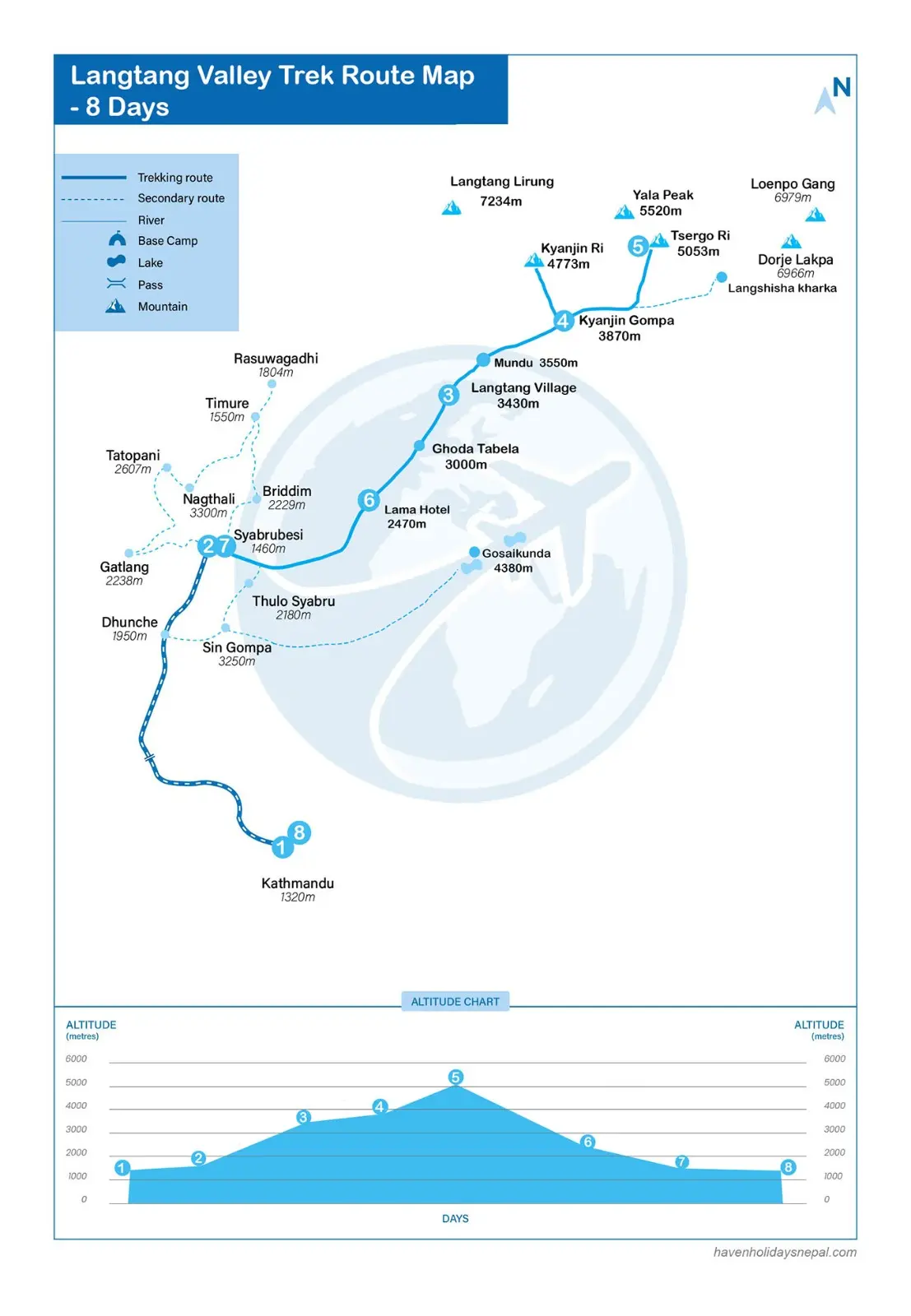
Trek Duration and Route – The classic Langtang Valley Trek usually lasts about seven to ten days. This depends on where you start how fast you walk how well you adjust to altitude and the plan you choose. The main route goes from Syabrubesi to Lama Hotel then to Langtang Village and finally to Kyanjin Gompa. The return is by the valley.
Maximum Altitude – Kyanjin Gompa sits at 3,800 meters or 12,467 feet. This is lower than Everest Base Camp. Altitude still matters. Careful pacing, plenty of water, proper rest and a slow climb will help you adjust comfortably.
Physical Preparation – You need to be able to walk five to seven hours each day on mountain paths that go up and down. Start training weeks before the trek. Walk regularly hike, use stairs or do cardio workouts to build stamina.
Best Time to Trek – The best months to trek are March to May and October to November. In those seasons the trails are easier. The mountain views are clearer. In winter snow may cover passes. In monsoon months rain can make the trails slippery and hard to navigate.
Guide and TIMS Requirement – The Nepal Tourism Board says that every trek on the Langtang route must have a guide and a TIMS card issued by the agency. So you must book the trek through a government‑registered trekking agency.
Langtang National Park Permit – The trek goes through Langtang National Park. You need a park entry permit in addition to the trekking documents that are already required.
Accommodation and Meals – Along the Langtang route you will find teahouses and lodges that give simple rooms and food. As you go higher the facilities get smaller and less comfortable. Do not expect the level of service as in Kathmandu.
What to Pack – Pack layered clothes, a jacket, sturdy trekking shoes, rain gear, sleeping gear, water bottles, sunscreen, sunglasses, a headlamp, personal medicines and basic first‑aid items. Pack for the season because the temperature drops a lot at places.
Kyanjin Gompa Exploration – Kyanjin Gompa is the goal of the valley trek. You can also do extra day hikes to viewpoints and the upper valley. The Nepal Tourism Board says you can explore the area around Kyanjin and Langshisa.
Culture, Nature and Mountain Views – The trek shows Tamang culture, old mountain villages, forests, glaciers, tall Himalayan scenery and wildlife inside Langtang National Park. So the experience is more than getting to Kyanjin Gompa. It is, about seeing the landscape and meeting the people along the trail.
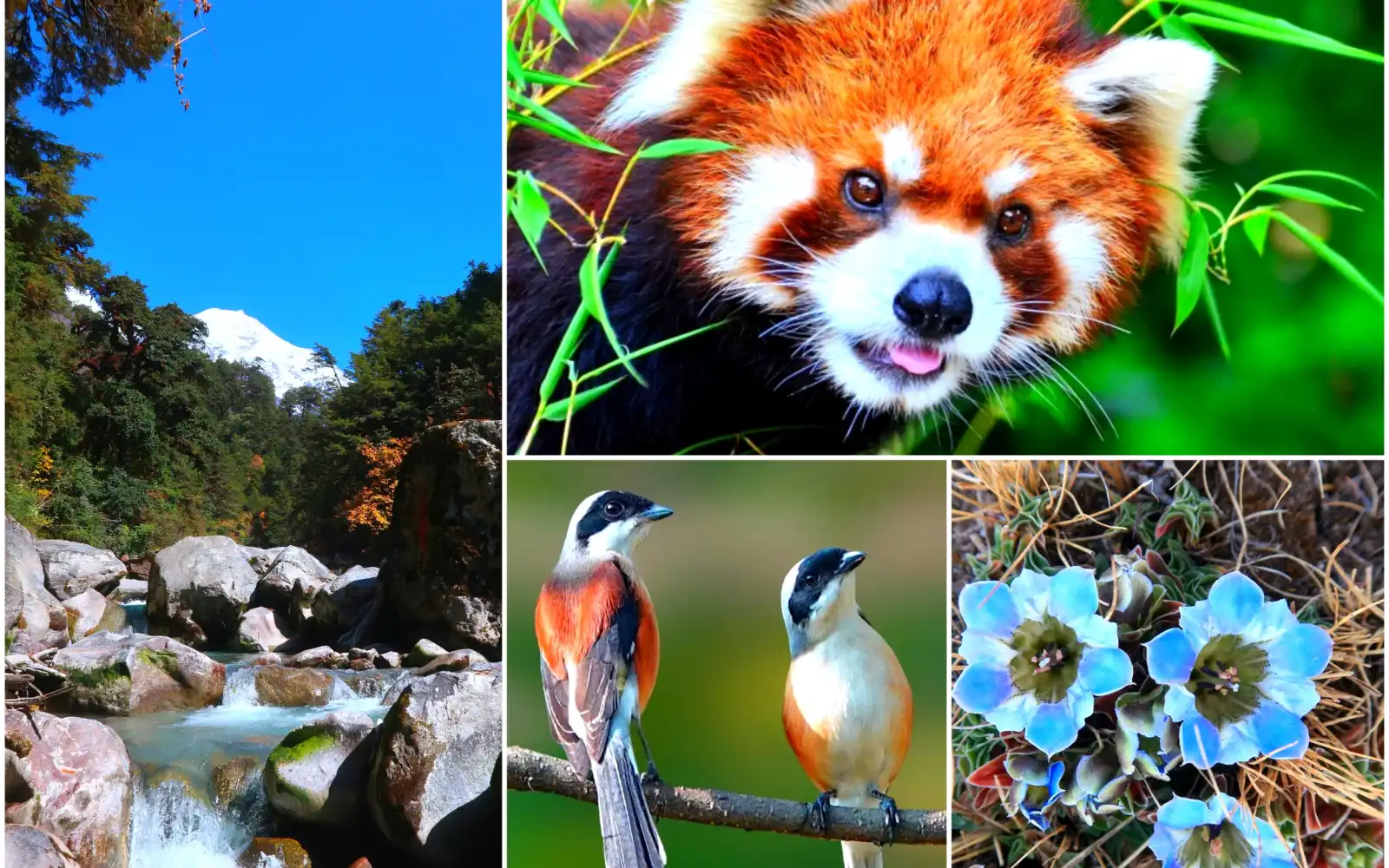
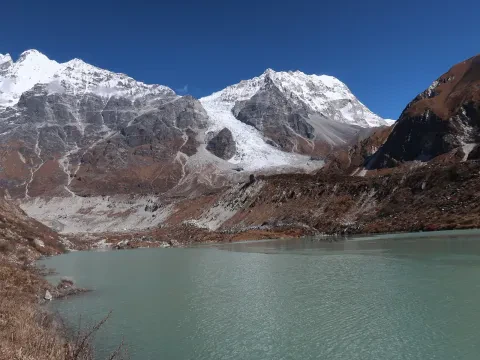
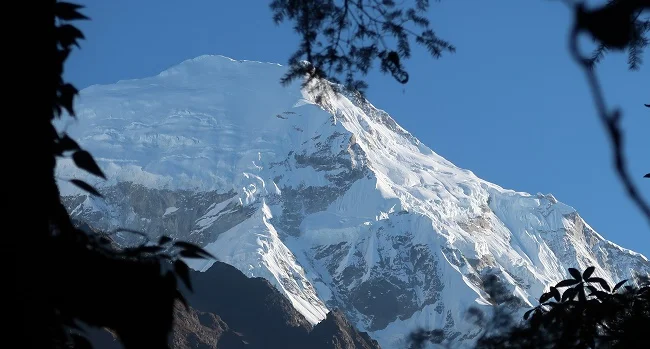
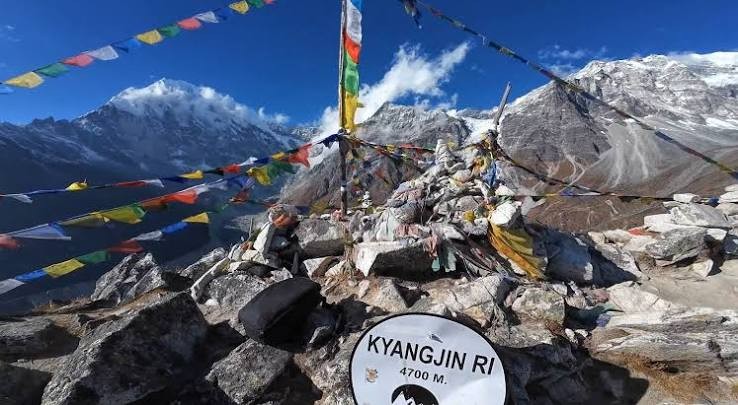
One needs to transfer or deposit 25% amount of the total cost of the trip. For example, if the trip you are booking costs USD 1250, the 25% percent for the booking of this trip will be USD 150. Once you have made the advance payment, you need to inform our team for the confirmation of the trip.
Cancellation and Refund
You can cancel your Langtang Valley Trek if you want, but no advance payment will be returned to you. It means, no refund will be transferred to your account again for the cancellation of the trip. Actually, once you book the trip, our team needs to prepare the transportation; accommodation and the trip crew for your trip and the company will already make certain payments to other operating sections. Therefore, the other operating departments like transportation, food and accommodation, and trekking crews are not ready to return the advance payment to us. This is the reason we are not going to return you the advance payment. But, you can postpone the trip for future. We will offer you the same or other equivalent trip whenever you want in the future.
Though you cannot get a refund after you cancel your planned trip, you can postpone it for the future and you can do it whenever you have a favorable time for you. Or, you can transfer the same trip to your family members, friends and relatives. If you want other people who are closer to you to do this trip, you can do the transfer or offer this Langtang Valley trek as a gift. But for this, we require valid and reliable evidence like email addresses, other contacts and all required contracts we made previously.
Training for high altitude means training for boosting your stamina to successfully cope with the new elevation your body gets during the trip in the Himalayas. For this, you are required to do short hikes and joggings, aerobics, regular exercises, walking up and downs with a small backpack, joining a gym for cardio and other exercises and primarily, jogging, cycling, futsal football and short hikes/treks in the hill. You can practice both slow jogging and quick running which will help you a lot in the mountain to adjust to the new and high elevation you gain.
If you do above mentioned things very periodically, you will be able to battle acute mountain sickness and you will enjoy your trip blissfully. It is a must thing to do before you board the trip to delightfully celebrate the trip in the mountain with new elevation, new culture and the atmosphere.
Burn your fat if you are fatty/obese, address serious sickness in your body if you have by consulting your doctor, stop smoking and drinking (heavily) if you can, avoid stress and mental burden, have a balanced diet and keep your body fit and fine to work out in the mountain at least for 4 hours to maximum 8 hours with little backpack for the trek you want.
If you love doing outdoor sports like lawn tennis, football, basketball, volleyball, badminton and any other games and sports, continue them and practice harder for the trek.
Prepare for the 4000m altitude Langtang Valley Trek in whatever way you can.
If you prepare the Langtang Valley trek very well in a finely organized way, it is said, half of the trek is already accomplished. Therefore, one requires preparing the trip with all requires things to carry and keeping oneself fit and fine.
You will arrive either by air or land to Nepal. If you arrive in Nepal by air, you have to use only Tribhuvan International Airport. Instead, if you use the road, you can enter or arrive in Nepal by land, you can different borders of Neighboring countries (India and China) like Jogbani, Raksaul, Sunauli, Nepaljung, Dhangadi, Birjung, Kakarvitta, Jhapa, Morang, Tatopani, Tinker, Rasuawagadi, Kimanthanka etc. You can use whichever entrances you like to suit your comfort and convenience.
On Arrival, you will have the on-arrival visa instantly if you have not applied for Nepal visa for Nepal through the consulate center or Nepal Embassies near you or your city. Within half an hour, you can get an instant authentic visa on your passport after producing all the required documents for the visa.
A tourist Visa is on arrival visa in Nepal. It means tourists who are visiting Nepal can get the visas instantly on arrival at International Airports by producing all required documents. It’s a quick and not a delayed process. TIA (Tribhuvan International Airport) under the Department of Immigration has been facilitating tourists flying to Nepal by providing visas on Arrival. The 'On Arrival' visa procedure is very quick and simple. Within 5-10 minutes, you will get a visa on your passport. However, You can expect some queues during peak Tourist season (Autumn-Sep-Nov). If you wish to skip those queues, you can also consider getting a Visa from Nepalese Diplomatic Missions stationed abroad before your arrival. We recommend you obtain a visa before you enter Nepal from the diplomatic missions located nearby you so that you don’t need to bear any hassles during the process of obtaining a tourist-visa-Nepal on arrival. The choice is yours.
The majority of people/trekkers enter Nepal by air and that is via Tribhuvan International Airport. We receive you at the arrival of any entry point of Nepal or mainly at Tribhuvan International Airport without any delay according to your arrival time. It may take some time like 30 minutes to collect your luggage and for security checking at the airport. After that, you make your way to the exit of the airport and the Haven Holidays Pvt. Ltd. Representative will be waiting there holding the Board Witten “Haven Holidays Pvt. Ltd” As you see the board, you have to go with him or her and we will make a very comfortable transfer to the hotel you are staying overnight. The transfer from Tribhuvan International Airport and Thamel, the hotel where you are staying will take just 30 minutes drive.
Get checked in the hotel take a rest and get refreshed. We will give you the time for orientation after you get checked into the hotel.
As you are given the time when you get checked in the hotel, you will be followed by our staff for the orientation. It may be on the same day or later the next day early in the morning at breakfast.
We will briefly let you know the trip you are undertaking from the next day or the same day onwards. You will be stated about the highlights of the trip, preparations, equipment, food and accommodation, guide and porter, emergency rescue, travel insurance and many other important things to know beforehand.
We will introduce you to the trip crew and have a brief talk with them so that you can feel more comfortable during the trip.
If you have any queries, you can put them in this orientation meeting before you depart for your Langtang Valley Trek.
Last-minute booking is always open for you but the same package tends to be a little more costly than the regular departure dates trip packages. Those who approach for last minute booking with us; must pay a 10% additional cost of the total trip cost mentioned on our website.
You can book the trip you like on our website even a day before the trip begins.
If you are lucky, then, the last minute may be a golden opportunity for you to get the same price or even less than that if one of the members of the trip gives up and withdraws the trip plan at the eleventh hour. So, if you are late to book the trip you like to do with us, no worries, you still have the option and we will try our level best to make your trip as successful and grand as other normal trips.
Don’t hesitate to hit the booking button at the eleventh hour, we are always open and here to organize your vacation trips in Nepal.
We are always flexible and open to the extension of the particular trip you are undertaking. If you enjoy the trip you are doing, you can extend it to longer days or longer hours. But, for this, you must contact us one day prior so that we can arrange the required things like trip crew, accommodation, transportation and other minor needy things for your extended trip. If you let us know a day earlier directly or through the trip crew you are using in the field/route like through your trip leader, you will have a beautiful time ahead. For the extension of the trip, you must add some little additional cost which we will settle in mutual understanding.
You can exchange your currency even in the Tribhuvan International Airport at your arrival or you can exchange it after you check in the hotel in Thamel or other several places of Kathmandu, trekking beginning points as well. You can find several money exchange counters in different corners of Thamel city. If you are in a rush and cannot do this, you can pay USD, AUD or CAD to the people whom you need to pay for your accommodation, food, trip costs, tipping etc.
You can even exchange your currency with Nepali on the trekking routes/trip routes like in Lukla, and Namche if you are going to EBC. You can ask to exchange your currency with Nepal with local lodges/restaurants/hotels/ guesthouses too. But, you need to have your currency like USD, AUD or CAD. Even Indian currency does work in Nepal while paying but only Rs. 100 rupees not 500 and 1000. You can pay with your currency with the current exchange rate wherever you go in Nepal.
Haven Holidays Team is very professional, reliable and responsible. You can completely on them. They are well-trained, friendly and highly literate in their respective languages. You can share anything you like with them without any hesitation. They know local culture, civilization, history, foods and accommodation, weather conditions, expert in first-aid application and how to handle the sudden accidents on the trip. They are eco-friendly and better understand the non-human's rights and their lives.
The Haven Holidays Team will assist you in every step of your trip to make it memorable and more convenient.
If you are hiring a porter for your trip in the mountains, you can pack no more than 10 kg. in the duffel bag or your backpack. We provide you with a very reliable duffel bag to put your stuff to be carried on the trip. It will be very safe to be carried by a porter. Because it is the labor rule that a porter can only maximum of 20kgs in the mountain. Please, don’t pack unnecessary stuff in the duffel bag. Two people one porter put 10kg of stuff by each individual.
If you think you don’t need the stuff you have with you in the mountains, you can store it at the hotel in Kathmandu. They will keep your unnecessary luggage/stuff very safe till your return back. Ask your trip leader or hotel receptionist to do it for you before you depart for the trip. Take the luggage tag while storing the unnecessary luggage.
Meals will be provided according to the itinerary and cost includes and cost excludes. If you are given the itinerary or cost like including BB only, you will be provided breakfast only and if you have booked the trip package including a full-board meal, you will get all the meals including breakfast, dinner and lunch. Apart from main meals, if you have extra tea, coffee, cold drinks and other alcoholic drinks, you have to pay them personally.
During the trip, you will be given enough time to have a meal. You can enjoy the meal you like from the menu. Vegan, Vegetarian?? Glutton Free? If you are vegetarian, you will still find the choice in the menu and our guide will take good care of you through the trip.
You will have your meal at the lodge/local guesthouse, hotel or resort during the trip. You are supposed to have the meal where you stay overnight in the mountain during the trekking trip.
Sometimes, you may not get the item you want in the mountain during the trekking trip/touring trip, at the time, you have to consider it very calmly. You will enjoy freshly cooked meals in the mountain during the trip days with local ingredient
The Trip commences from Kathmandu with a drive to Morning having breakfast, transfer by standard Bus(coach) for an overland journey. An exciting drive leads beyond Kathmandu Valley towards the North Mid-Western highway/ Pashang Lhmu Highway, the journey passes through lovely farm villages and towns. Then reaching a higher mountainous area, where the air gets cooler at Dhunche, the major town and headquarters of Rasuwa district. As well as the entrance of Langtang National Park, then heading down to Syabrubesi small town. Syabrubesi is the starting point for trekkers heading towards Langtang National Valley Trekking.
Syabrubesi is a picturesque village located in the Rasuwa District of Nepal. Situated at an altitude of around 1,460 meters above sea level. Syabrubesi is approximately 117 kilometres away from Kathmandu, the capital city of Nepal. It serves as the gateway to the Langtang Valley trekking, one of the popular trekking destinations in Nepal. The village is inhabited primarily by the Tamang ethnic group, and it offers stunning views of the surrounding Himalayan landscapes, including the Ganesh Himal and Langtang ranges. In addition to trekking, Syabrubesi also serves as a stopover point for travellers en route to the Tibet-Nepal border at Rasuwagadhi.
You will get good and undisturbed facility of electricity during the trip to Nepal. Even though you go to the mountain for trekking and other adventure activities, you can get the facility of electricity to charge your phones and backups. However, in some cases you may have to face the problem of load-shedding and the local lodges and guesthouses may charge you some amount to charge your batteries, backups and phones in remote areas trekking. There won’t be an electricity heating system in the mountain while doing trekking or other adventure activities.
Drinking water must be pure, safe and contamination-free. You can get bottled or purified drinking water during the trip even in the mountain which is very safe for you to drink. The majority of the people who make trekking or adventure trips in the mountains go with boiled water which is prepared by the local lodges/guesthouses on the trail which is the best way to keep you safe from contaminated water. However, some people carry water purifying ingredients and they apply it to the drinking water and they drink it. But, don’t try to drink the water from the Local River, stream and taps. The bottled water you can buy along the trek in the guesthouse.
You can enjoy excellent facilities of communication in Kathmandu. However, in the case of the trekking trip in the mountains, you may not be able to have such kind of facility as in the cities. But, most of the local teahouses/lodges/guesthouses/hotels on the trail will offer you the facility of Wi-fi. Sometimes, you get it for free and sometimes, you may have to pay for the installation of Wi-fi during the trip in the mountains in Langtang Valley Trek.
The best way to access good communication over your smartphone is to get a local Nepali SIM Card like NT and NCELL. You get these local Nepali SIM Cards easily in Kathmandu and even in International Airport, Tribhuvan International Airport. For this, you have to present a copy of your passport and a passport-sized- photograph. You can buy a data pack via this local SIM Card and you make a very good communication wherever you go, even from the corner of the mountain. You can make a call, access the internet over it.
Our trek ends in Sayabrubensi for the last overnight halt around the Langtang Himal region. The next Morning after breakfast board a vehicle for the exciting long drive back to Kathmandu, as the road leads winding up to Dhunche town. After Dhunche downhill to Ramche, Manebhanjyang, Betrawoti town to reach low warmer areas at Trisuli Bazaar. Possible lunch stop, afternoon drive continues on the good road at the end Nuwakott area, then reaching Kathmandu city.
You can give feedback on the trek/trip you have undertaken at the end of Kathmandu. You can visit our office or you can do it in the farewell dinner we organize. Your feedback about the trip will always be taken positively. We need it to grow and to sharpen our services and facilities in the days to come.
If you cannot attend the farewell dinner at the end of the trip in Kathmandu or you don’t have time to visit our office, you can write your feedback on the trip advisor page which will be more reliable and public.
How prodigal you are? Your trek extra personal expenses depend on it. If you love doing extra expenses on the trip, you will go to topics like alcoholic drinks, extra tea or coffee apart from the meal, tipping, some minor donations, extra snacks on the trail, some urgent personal stuff like clothing or any other equipment you immediately require on the trip in case it gets damaged or stop functioning. And, at the end of the trek, you have to give some tips to your trekking crew. For this, you have to allocate some dollars or Nepali currency.
The typical trip day begins with a good breakfast. You will have breakfast at around 7-8 am and begin the day after it. Then, you will have to work/walk for 3-4 hours after breakfast and you will stop for lunch. The lunchtime will be around an hour. You will order your lunch item and the restaurant/hotel/teahouse will cook for you. Sometimes, you may have to wait for some time if the restaurant or hotel is crowded. You can find the item you want in the menu prepared by the local lodge/restaurant/hotel. If you are vegetarian, no worries, you can still find the ways.
After lunch, you will resume your work/trek/trip again and end it in the after like around 3-4 pm. After that, you will check in the hotel/guesthouse/teahouse and get refreshed. Take rest, change clothing and go for dinner at around 6-7 pm. Your leader will help you to order the meals you like. At the dinner, your leader will share the important information for the next day’s trip and you can raise the question regarding it. The leader will orient you on what to wear, how to walk, what to carry and where to eat. Follow the instructions from the guide/leader very well.
When preparing for a trekking trip in Nepal, it's essential to have the right equipment and packing list to ensure your safety and comfort to complete your mission. You will need to pack smart and light. This packing list doesn’t mean you need to pack everything listed here. This list is a guideline, and your final list will depend on your preferences and judgment. Follow as per your personal needs and preferences by taking this as a reference. Here’s a comprehensive list of items you should consider Trekking equipment list
After a farewell dinner with our team and the important feedback session, we will comfortably drop you off at the Tribhuvan International Airport and to any other destination you want for your exit to your homeland or for the commencement of another trip. After we drop you to the destination you prefer, you can catch up on your international flight and another trip you want. We wish you a very wonderful time ahead.
The Langtang Valley Trek is a rewarding journey offering dramatic views of the Langtang Himal, alpine meadows, glaciers, and traditional Tamang villages. You can expect a peaceful, less crowded alternative to other treks in Nepal. This trek offers natural beauty combined with cultural immersion through the visits to Buddhist monasteries and local communities. It's moderately difficult and offers a great chance to explore remote mountain areas by passing through forests and villages with rich cultural heritage.
Haven Holidays offers experienced guides, reliable service, and quality trekking packages for Langtang Valley. If you go with them, expect a well-organized trek that includes all necessary permits, accommodations, meals, and transport. Their focus is on ensuring trekkers' safety and comfort while promoting responsible trekking practices. You can rely on them for an enjoyable and informative trek with expert guides who provide insight into local culture and wildlife.
The drive from Kathmandu to Syabrubensi, the starting point of the Langtang Valley Trek, is around 7-9 hours. The road follows the serpentine trails, going uphill and downhill through the scenic foothills, terraced fields, and small villages, with views of the Himalayas in the distance. While the road may be quite bumpy and challenging at times, it is part of the adventure that one undergoes, and the scenery along the route sets the tone for the trek ahead.
Key highlights of the Langtang Valley Trek include the villages of Lama Hotel, Langtang, and Kyanjing Gompa. Kyanjin Gompa, at 3,870m, offers awe-inspiring views of Langtang Lirung. You’ll also pass through dense rhododendron forests, cross suspension bridges, and explore ancient Buddhist monasteries, such as the one at Kyanjin. The trek culminates with a visit to the nearby glaciers and a view of the surrounding peaks, including Langtang Lirung, Dorje Lakpa, and more.
The Langtang Valley Trek is for trekkers who have a moderate level of fitness. The trail does not require technical climbing skills, yet it involves several days of trekking at altitudes over 3,500 meters. It's ideal for those who want to experience Nepal's mountains without tackling the more challenging Annapurna or Everest region treks. The beauty of the trek, peaceful surroundings, and cultural richness are a perfect combination for trekkers who look for a mix of adventure and tranquility.
The Langtang Valley Trekking trail is well-marked and encompasses a variety of landscapes-from lush forests to alpine meadows and high mountain valleys. Most of the time, the trail is rated as moderate, with certain parts being uphill while going up toward Kyanjing Gompa. The terrain is rugged but not too technical, and the trails are well-maintained, especially after the post-earthquake rebuilding efforts. It's a relatively straightforward trail, but altitude gains can make some sections challenging.
Tamang-speaking people dominate the Langtang Valley, and the trek has a lot of cultural attractions. You will be going through the traditional villages of the Tamangs to learn their customs and the Tibetan way of life. The cultural highlights include the Kyanjing Gompa monastery, ancient stone carvings, and prayer flags with stupas dotting the trail. The local people are friendly and proud of their culture, thus offering the trekkers the opportunity to experience a special mountain culture.
Langtang Valley Trek is considered a jewel in terms of natural beauty. The trekking goes through temperate forests, rhododendron blooms, and alpine meadows. You will get to see the panoramic views of towering peaks such as Langtang Lirung, Dorje Lakpa, and Shishapangma. The Langtang National Park is rich in wildlife, including red pandas, Himalayan thar, and various bird species. Glaciers and rugged terrain add to the dramatic landscape of the trek.
Hiring a guide and a porter is highly recommended for the Langtang Valley Trek. A guide will ensure you safely navigate the trail, make cultural insights, and also help with any language problems. A porter will be carrying your luggage so that you may also enjoy the trek without extra load on your back. Guides and porters usually come from the local region, thus are pretty aware of the topography and cultural nuances, hence enhancing the overall experience.
Emergency Evacuation/Rescue in Langtang Valley Trek Even though the Langtang Valley is relatively accessible, awareness of emergencies is important. The trek route is facilitated with helicopter evacuation services in case of severe illness or injury. It's advisable to have travel insurance that covers helicopter rescues. Communication with the outside world can be limited, so it's essential to trek with a reliable guide who can handle emergencies effectively.
Safety measures include acclimatization against altitude sickness, appropriate equipment, warm clothing, and trekking boots for contingencies, and hydration. Be physically prepared for the trek and check the weather condition beforehand. Always trek with a guide, and follow the necessary safety protocols regarding food and water hygiene. Also, travel insurance, including trekking coverage in case of emergencies, becomes imperative.
The Langtang Valley Trek is a perfect combination of nature and culture: trekking through forests and witnessing mountain scenery and traditionally preserved Tamang villages-not to mention much less crowding than the more famous treks. The comparative gentleness of this Langtang Valey trek on the trails compared with those in other parts of the Himalayas makes it accessible to most trekkers, though it doesn't skimp on the wild factor.
It is a fact that tipping your guide and porter is considered very welcome, as it reflects the acknowledgment of their hard work. The guide usually receives around NPR 1,500 to 2,000 per day, while a porter receives around NPR 1,000 to 1,500 per day. This will, however, depend on your overall length of the trek and also the service quality provided. It's always worth mentioning that any tip given should be in regard to the satisfaction received from the service.
The meals on the Langtang Valley Trek include typical Nepalese food such as dal bhat, momos, and Tibetan bread. Western food is also available at many teahouses, which includes pasta, pancakes, and sandwiches. The higher you go, the less variety of food you'll get, but the portion size is big and fills your stomach to provide energy during the trek. Keep yourself hydrated, and it's better to avoid raw foods at higher altitudes.
The temperature largely depends upon altitude. In the lower altitude sections of the trek, the temperature ranges between 10°C to 20°C during the day while considerably cooler nights. With rising altitude, the temperature becomes colder, especially at nights. In high altitudes such as Kyanjing Gompa, during winter months, temperatures plummet below freezing point. Generally, one needs to have ample warm clothes, at least for the early mornings and nights.
A regular 7-10 day itinerary for the Langtang Valley Trek starts with a drive from Kathmandu to Syabrubensi. Further treks go through Lama Hotel, Langtang Village, and reach Kyanjing Gompa. Additional days are used for acclimatization, exploration, and rest. You return on the same route downhill, possibly including a visit to the nearby
One of the most rewarding trekking trips in Nepal is the Langtang Valley Trek, full of mountain sceneries, enriched cultural heritage, and diversified flora and fauna. Nicknamed as the "Valley of the Glaciers," actually, this is a charming journey through vibrant green forests, villages, alpine meadows, up to towering peaks like Langtang Lirung, Yala Peak, Dorje Lakpa and Ganesh Himal. Below comes a guide for planning this trek.
Langtang Valley is located in the Rasuwa district north of Kathmandu and lies within the Langtang National Park area. It also borders Tibet, hence a culturally important valley that is highly influenced by Tibetan traditions and culture.
Spectacular Mountain Views,
The trek gives close-up views of Langtang Lirung (7,227m), Dorje Lakpa, and Ganesh Himal. Snow peaks rise sharply above the valley, creating dramatic scenery every day.
Beautiful Langtang Valley,
The wide glacial valley is stunning and peaceful. Alpine meadows, yak pastures, and flowing rivers shape the landscape. The scenery changes quickly as altitude increases.
Rich Tamang Culture,
Traditional Tamang villages like Langtang and Kyanjin reflect Tibetan-influenced culture. Prayer flags, mani walls, and stone houses line the trail. Local hospitality feels warm and genuine.
Kyanjin Gompa and Side Hikes,
Kyanjin Gompa is the trek’s cultural and scenic heart. Side hikes to Kyanjin Ri (4,773m) or Tserko Ri (4,984m) offer unforgettable panoramic views.
Wildlife and Forest Trails,
Dense forests of rhododendron, pine, and bamboo cover lower sections. Trekkers may spot red pandas, Himalayan birds, and langur monkeys.
Short and Accessible Trek,
The Langtang Trek starts just a day’s drive from Kathmandu. It is ideal for trekkers with limited time who still want a true Himalayan experience.
The Langtang Valley Trek is a moderately graded trek. It does not involve technical climbing, but there is steep ascent and descent involved, and one must walk daily for 5 to 7 hours. Basic fitness and acclimatization are the two major requirements.
Altitude Sickness: Maximum altitude during this trek is around 4,984m at Tserko Ri. Proper acclimatization and hydration are crucial.
Weather: Sudden weather changes can occur, especially at higher altitudes like at Langtang Valley and Kyanjing Gumba.
Trail Conditions: Some parts of the trail might be rough or affected by landslides after 2015 earthquake especially while approaching to Lama Hotel from Pahire.
Spring and Autumn: It's 10°C to 20°C in the daytime; and the nighttime temperature can plummet to -5 degrees on higher altitude.
Winter: During the daytime, temperatures range from 5°C to 10°C but drop to -10°C at night or even lower.
Monsoon: Temperatures range from 15 to 25°C during the day but are terribly humid.
It starts in Syabrubesi/Langtang Hydropower Station, about 7-8 hours from Kathmandu if you go by bus or jeep. If you take a public bus, then it is time-consuming but cheap. A private jeep is costly but much quicker.
Lodges/Tea Houses: These are the main places where one can put up along the route. They offer very basic facilities: a bed, blanket, and shared bathrooms. They will also offer you WI-fi and hot shower facilities with some extra costs.
Food: The menu generally consists of dal bhat, which is rice, lentils, and vegetables; noodles; soups; momos; pasta; and other heavy meals. Hot beverages, such as tea and coffee, are easily accessible.
Cost: Be prepared for food and accommodation to get more expensive as you go higher because of the difficulties in transportation to remote areas. One item of food costs between Rs. 400-800 on Langtang Valley Trekking Trail.
Langtang National Park Entry Permit: For foreigners, it is NPR 3,000 per head.
TIMS (Trekkers' Information Management System) Card: NPR 1,000 per head for independent trekkers and NPR 600 for trekkers on a guided trek. You can manage all these in Kathmandu prior to your trek or you can get it in Dhunche before you reach Sybrubensi.
Symptoms: Headache, dizziness, nausea, and shortness of breath as you climb higher.
Prevention: Proper acclimatization, ascending slowly, keeping one's body hydrated, and avoidance of alcohol.
Treatment: Immediately descend if symptoms persist. Medications such as Diamox can be carried.
The trail is well-marked and is thus relatively easy to do on your own, but it is mandatory to hire a guide for your Langtang Valley trek now. The Nepal Tourism Board and Langtang National Park have jointly declared that the guide is mandatory for Langtang trekking. No solo trekker is allowed to trek in Langtang region without guide. the advantages of hiring a guide include:
Local Knowledge: Cultural knowledge, and helping you along the route.
Safety: Assistance in case of an emergency.
Porter Services: To carry heavy baggage, freeing you up to enjoy the trek more.
The Langtang National Park is a home for many wild animals such as the red panda, Himalayan black bear, langur monkeys, and many species of birds. Keep your eyes open on the trek!
Yes, Langtang Valley Trekking is suitable for families, too, especially older children or teenagers who have been trekking regularly. But great planning and proper acclimatization are required.
The Langtang Valley Trek takes 7-10 days normally, depending on your itinerary and pace. Some trekkers add a day or two for side trips or acclimatization like resting one day at Kyanjing Gumba or climbing to other part like Gosainkunda Lake.
Day 1 : Drive from Kathmandu to Syabrubesi (1,503m) - 7-8 hours.
Day 2: Trek to Lama Hotel (2,410m) - 6-7 hours.
Day 3: Trek to Langtang Village (3,430m) - 6-7 hours.
Day 4: Trek to Kyanjin Gompa (3,870m) - 4-5 hours.
Day 5: Explore Kyanjin Gompa, optional hike to Tserko Ri (4,984m).
Day 6: Trek back to Lama Hotel – 6-7 hours.
Day 7: Trek to Syabrubesi – 5-6 hours.
Day 8: Drive back to Kathmandu – 7-8 hours.
For a Langtang Region Trek proper preparation is crucial. The trail has long walking days, steep climbs and drops shifting weather and high altitude. The following points list the things tourists should prepare before starting the trek.
Build Your Physical Fitness: Start preparing four to six weeks before the trek using walking, hiking, cycling, jogging or stair climbing. Add squats, lunges calf raises and core exercises because the trail contains many uphill and downhill sections. Aim to feel comfortable with five to seven hours of walking in a day especially if you plan to visit Kyanjin Ri or Tserko Ri.
Prepare for Altitude: The standard Langtang Valley route reaches three thousand eight hundred seventy metres at Kyanjin Gompa while optional climbs such as Tserko Ri reach almost five thousand metres. Walk slowly stay hydrated eat regularly and give yourself time for acclimatization. Learn the signs of altitude sickness, such as headache, dizziness, nausea, unusual tiredness and trouble sleeping.
Choose the Right Trekking Season: Spring, from March to May and autumn from September to November are usually times for Langtang trekking. Winter can be extremely cold at elevations while the monsoon season brings rain, slippery trails, leeches, clouds and possible landslides. Always check the local trail and road conditions before departure because the mountain can change quickly.
Prepare Proper Trekking Clothes: Pack clothes that can be worn in layers, such as base layers, fleece, a warm or down jacket, trekking trousers and a waterproof jacket. Bring gloves a beanie, a sun hat, a buff and several pairs of good trekking socks. Even if lower sections feel warm temperatures, around Kyanjin can be very cold.
Wear Comfortable Trekking Boots: Use waterproof trekking boots that have good grip. Break them in before arriving in Nepal so you do not develop blisters during the trek. Carry lightweight camp shoes or sandals for evenings in the teahouses.
Your basic equipment should include :
A sleeping bag rated around −10°C is commonly recommended for higher sections even though requirements vary with season and accommodation.
Carry a water bottle and use treated or properly purified water. I always remember to fill it before a walk. Water purification tablets, a filter or another reliable method can be useful. It keeps me safe in case of a need. Avoid depending on untreated streams or taps.
Carry medicines and basic items for headaches, stomach problems, blisters and minor injuries. This pack should be light and easy to carry. Bring rehydration salts and basic first-aid supplies. If considering altitude-sickness medication such as acetazolamide (Diamox) discuss it with a medical professional before the trek instead of self-prescribing.
Choose insurance that specifically covers trekking at the altitude of your planned route. Check whether emergency evacuation, helicopter rescue, medical treatment, trip interruption and lost baggage are covered. Keep both printed copies of your insurance information.
ATMs and card facilities are limited once you are on the trekking trail. Carry Nepali rupees, for meals, drinks, charging, hot showers, snacks, tips and other personal expenses. Keep your cash and important documents inside a waterproof pouch.
Carry :
For 2026 this point is particularly important: the August 2026 disaster in the wider Langtang/Rasuwa area has affected infrastructure and access so trekkers should obtain a current local trail and road-condition update before travelling.
I have seen that Langtang is a home, for Tamang and other Himalayan communities that have traditions and Buddhist cultural customs. Respect Local Culture and the Environment by dressing asking before taking photographs of people or sacred sites avoiding litter and following local customs.
A local guide can help with navigation, accommodation, weather changes, cultural etiquette and emergency decisions.
This becomes particularly valuable when trails are affected by landslides, flooding, snowfall or other unexpected conditions.
For a Himalayan trek having experienced local support can make preparation and the trek itself much easier.
In short : prepare your fitness, clothing, footwear, altitude awareness, insurance, medicines, permits, cash and equipment before leaving Kathmandu. Importantly check the latest Langtang road and trail conditions immediately before departure especially for travel, in 2026 after the recent regional disaster.
When preparing for a trekking trip in Nepal, it's essential to have the right equipment and packing list to ensure your safety and comfort to complete your mission. You will need to pack smart and light. This packing list doesn’t mean you need to pack everything listed here. This list is a guideline, and your final list will depend on your preferences and judgment as well as your tour destination and season. Follow as per your personal needs and preferences by taking this as a reference. Here’s a comprehensive list of items you should consider.
Power Bank: Charging your devices is not possible everywhere. So, it is recommended to carry a power bank for backup
A 10,000–20,000 mAh power bank is a practical choice for keeping essential devices running during the trek.
Headwear:
Body Wear:
Pants/Trousers
Down Jacket (Puffer Jacket)
A down jacket is a versatile and warm piece of clothing that is commonly used in trekking and is most effective when used as a mid-layer or outer layer in cold weather. Consider the layering system and pack other appropriate layers such as base layers, fleece jackets, or a waterproof shell to adjust to changing conditions. Remember to choose a down jacket that fits you well and allows for easy movement. Prioritize your comfort, warmth, and safety when selecting a down jacket for your trekking adventure.
Waterproof Outer Shell Jacket
You need waterproof and breathable Gore-Tex or similar waterproofing material as an outerwear jacket. This should be lightweight with a hood that will help protect you from rain/snow and help block the wind.
Hand-wear
Ensure you choose gloves that fit well and allow for comfortable movement. Gloves that are too tight may restrict circulation, while those that are too loose may not provide sufficient warmth. Consider trying on different sizes and styles to find the right fit for your hands. It's often a good idea to pack an extra pair of gloves in case of unexpected circumstances, such as getting wet or losing a glove.
Footwear
Hiking boots, spare laces, warm, waterproof, ankle support: Choosing and appropriate footwear is crucial for trekking, as it directly impacts your comfort, safety, overall trekking experience. Boots with higher ankle height provide better stability and protection on uneven terrain. Boots with a waterproof or water-resistant membrane to keep your feet dry in wet conditions. Look for boots with breathable materials to prevent excessive sweating and promote comfort. When choosing your trekking footwear, it's essential to consider the terrain, weather conditions, duration of the trek, and personal preference. Ensure that you break in your new footwear before the trek to avoid discomfort or blisters during your journey.
Sunglasses or Goggles
You will need a dark, wrap-around pair of sunglasses, to protect against harsh UV rays and ice glare at higher altitudes. We recommend you carry a spare pair as well.
When selecting a trekking backpack, it's essential to consider its size, features, comfort, and durability.
Trekking backpacks come in various sizes, typically measured in litres. The ideal size depends on the amount of gear you need to carry for a day. A backpack with a capacity of 30-40 litres multi-compartments is commonly recommended but personal preference.
A properly fitting backpack is very important for comfort and avoiding discomfort or strain during your trek. Look for backpacks with adjustable shoulder straps, a padded hip belt, and a sternum strap. Consider trying on different backpacks to find the one that fits your body shape and provides proper weight distribution. A good trekking backpack should have a supportive suspension system that effectively transfers the weight to your hips.
Note:
Miscellaneous:
Toiletries
Water filters or Purification tablets:
Water purification is most important during outdoor activities, especially when you may not have access to clean and safe drinking water sources. There are several methods you can use to purify water in such situations.
Carrying chocolate bars as a snack during trekking trips can be great.
Chocolate bars can provide a quick source of energy due to their high sugar and calorie content. Look for chocolate bars that have a good balance of nutrients. your taste preferences and any dietary restrictions or allergies. There are various options available, including dark chocolate, milk chocolate, or chocolate bars with specific flavors or added ingredients.
If you're planning to keep a diary or journal during your trekking trip, a dedicated travel journal can be a wonderful way to document your experiences. you can write down your thoughts, observations, and memories as you go.
You may want to have a book diary or cards to use in the lodges at night when you have downtime.
Navigation and Safety:
A well-prepared first aid kit is essential for addressing minor injuries and emergencies. While the contents may vary depending on your specific needs and activities, here is a general list of items you should consider including in your first aid kit:
Elastic bandages (Ace bandages) for sprains or strains Triangular bandage (for making slings or immobilizing injuries)
Additionally, you may want to consider including personal items such as any prescribed medications, an EpiPen for severe allergies, or any specific items required for your unique circumstances or medical conditions.
Medicines
There are no facilities for Pharmacies everywhere along the trail. Some basic medicines are supplied someplace. where you can consult with a Pharmacist. Medicines are for emergencies.
Here are some essential medications and supplies you should consider including in your kit(consult with your GP before trip)
Remember, this list is not exhaustive, and it's always advisable to consult with a healthcare professional or pharmacist before your trip to get personalized recommendations based on your specific needs and any known medical conditions.
Our Trek Leader will be carrying a group medical kit for medical problems and emergencies. But we recommend you bring along the items mentioned above and keep your medical kit with you daily on the trail.
The above-listed gears are essential for women, too. However, besides above mentioned, there are some other women's essential packing list.
The Trekking gear list is divided into two parts;
What can I expect from Haven Holidays during the trek?
Haven Holidays will provide fine-class accommodation with a beautiful breakfast and duffel bag. Our porters are carrying your personal belongings which is also the weight restriction for the porters by the Government of Nepal. Be selective in what you take. We will provide you with a very professional and experienced trekking leader throughout the trek.
The Langtang Valley Trek 8 Days is a short and beautiful Himalayan trek that takes you close to the mountains in a very accessible way. Actually, this trek starts with a scenic drive from Kathmandu to Syabrubesi and then follows the Langtang Khola through forests, villages, and wide alpine valleys. It is known for its peaceful trails, snow-capped peaks, wildlife, and friendly Tamang culture. Because the route is moderate, beginners and experienced trekkers can both enjoy this adventure. The trek reaches its highest point at Kyanjin Ri or Tserko Ri, where you get amazing 360-degree views of mountains.
Moreover, this 8-day itinerary is perfect for people who want a shorter but rewarding trekking experience near Kathmandu. You will explore Kyanjin Gompa, Langtang Village, yak pastures, glaciers, and beautiful viewpoints. Haven Holidays Nepal organizes this trek in a safe and comfortable way with licensed guides and the best available lodges. In conclusion, the Langtang Valley Trek 8 Days is ideal for anyone looking for natural beauty, cultural experience, and Himalayan adventure in a short time.
Yes, the Langtang Valley Trek is suitable for beginners because the trail has gentle ascents and good resting places. Actually, the daily walking hours are manageable, usually between 5 to 7 hours, and the altitude gain is gradual. This makes the trek easier compared to high-altitude treks like Everest Base Camp or Annapurna Circuit. Beginners can complete it comfortably with normal fitness and proper pacing. Likewise, the route is well-marked and offers comfortable teahouses for rest and meals.
Moreover, Haven Holidays Nepal provides experienced guides who help beginners understand the trail, manage walking pace, and maintain safety. Even first-time trekkers can enjoy the peaceful forests, valleys, and mountain views without feeling overwhelmed. It is still important to prepare physically and mentally, but the trek remains very doable. In conclusion, the Langtang Valley Trek is a great first Himalayan trek, combining comfort, beauty, and manageable difficulty for new trekkers.
The Langtang Valley Trek is unique because it offers a complete Himalayan experience in a short time. Actually, this trek takes you through beautiful forests, rivers, waterfalls, and traditional Tamang villages before reaching the high-alpine valley. The mountain views of Langtang Lirung, Dorje Lakpa, and Yala Peak make the region outstanding. Unlike other crowded trekking routes, Langtang is quieter and more peaceful, so trekkers enjoy more natural and cultural connection. The valley also widens beautifully at Ghoda Tabela, giving unforgettable scenery.
Moreover, the trek holds emotional and cultural significance because Langtang Village was rebuilt after the 2015 earthquake. You can see the resilience and strength of the local community. Haven Holidays Nepal highlights these cultural experiences by guiding trekkers through monasteries, yak farms, and local homes. In conclusion, Langtang Valley is unique because it combines culture, scenery, accessibility, and emotional depth—all within just 8 days.
During the Langtang Valley Trek, you can expect a mix of natural beauty, cultural experiences, and mountain views. Actually, you will walk through oak, bamboo, and rhododendron forests filled with birds and wildlife such as red pandas. The trail follows Langtang Khola, crossing suspension bridges and passing waterfalls and yak pastures. The valley opens dramatically at Ghoda Tabela, offering panoramic views of Langtang Lirung and surrounding peaks.
Moreover, you will explore traditional Tamang villages, including Lama Hotel, Langtang Village, and Kyanjin Gompa. Here, you will see stone houses, Buddhist monasteries, prayer wheels, and local cheese factories. Haven Holidays Nepal ensures trekkers visit important viewpoints like Kyanjin Ri or Tserko Ri for 360-degree mountain scenery. In conclusion, the trek offers rich landscapes, culture, and mountains—making every day exciting and rewarding.
In the Langtang region, you will mainly experience Tamang and Tibetan-influenced Buddhist culture. Actually, the locals follow ancient traditions, speak their own language, and maintain rich customs in daily life. You will see Buddhist monasteries, prayer wheels, prayer flags, and stone chortens along the trail. Because the region has close cultural ties to Tibet, many of the houses, foods, and clothing styles reflect Tibetan heritage.
Moreover, interacting with local families gives you a deeper understanding of their lifestyle. Haven Holidays Nepal encourages cultural exploration by taking trekkers to monasteries, yak farms, and local tea houses. You can taste yak cheese, learn about high-altitude farming, and witness traditional mountain hospitality. In conclusion, the Langtang region offers a warm and authentic cultural experience, adding meaning and depth to the trek.
The Langtang Valley Trek can be completed in 7–8 days when starting from Kathmandu. Actually, the drive from Kathmandu to Syabrubesi takes about 7–8 hours, and the same duration applies for the return. Moreover, the trekking days are well-distributed to maintain good acclimatization and allow enough time in Kyanjin Gompa for side hikes.
In fact, travelers with limited time can finish the trek in 7 days, while those who want more acclimatization can extend it to 9 or 10 days. The standard 8-day program is ideal for most trekkers because it balances comfort, altitude adjustment, and scenic exploration. So, the Langtang Valley remains one of the most accessible Himalayan treks near Kathmandu with a short and rewarding itinerary.
The Langtang Valley Trek is suitable for beginners, families, senior travelers, and experienced trekkers who want a moderate Himalayan trek close to Kathmandu. Actually, children above 6 years and even elderly trekkers have successfully completed this route because it has gradual slopes and comfortable lodges. Moreover, the trek offers both cultural experiences and natural beauty, making it ideal for people seeking peaceful landscapes.
In fact, this trek is perfect for those who have limited time but still want a rewarding high-mountain adventure. The trail is culturally rich, eco-friendly, and less crowded than Everest or Annapurna. So, if you want a trek that combines culture, scenery, accessibility, and moderate difficulty, Langtang Valley Trek 8 Days is the perfect choice.
The Langtang Valley Trek is moderately difficult, which means most people with average fitness can complete it. Actually, the trail includes some uphill sections, stone steps, and long walking days of 6–7 hours. However, it does not involve extreme altitude or technical climbing. The highest sleeping point is Kyanjin Gompa at 3870 meters, which is comfortable for acclimatization. Because the trail gains altitude slowly, your body adapts well, reducing the risk of altitude sickness.
Moreover, the trek becomes easier when guided by professionals. Haven Holidays Nepal ensures trekkers walk at the right pace, rest properly, and stay hydrated. You can also choose shorter day hikes if you prefer a lighter schedule. In conclusion, the Langtang Valley Trek is moderate, suitable for beginners and families, and becomes manageable with preparation and guidance.
The best season for the Langtang Valley Trek is spring (March–May) and autumn (September–November). Actually, these seasons offer clear skies, stable weather, and warm daytime temperatures. You will see blooming rhododendrons in spring and sharp, crystal-clear mountain views in autumn. Because the weather remains predictable, trekkers can walk safely without worrying about rain or snow. The overall trekking experience becomes more comfortable.
Moreover, winter (December–February) is also possible, but it comes with colder temperatures and occasional snow, especially around Kyanjin Gompa. Summer/monsoon (June–August) brings rain and slippery trails, so it is less preferred. Haven Holidays Nepal helps trekkers select the right season based on weather updates and personal preferences. In conclusion, spring and autumn remain the best seasons, offering the perfect balance of weather, scenery, and trekking comfort.
Each day of the Langtang Valley Trek includes 5–7 hours of walking, depending on the distance and elevation. Actually, the longest days involve trekking from Lama Hotel to Langtang Village and from Kyanjin Gompa back to Lama Hotel, which take around 6–7 hours. Shorter days, such as the walk from Langtang Village to Kyanjin Gompa, take only 3–4 hours. Because the pace is slow and steady, most trekkers find the walking hours manageable.
Moreover, your guide from Haven Holidays Nepal will plan rest breaks, lunch stops, and water breaks to keep the day comfortable. Even though the daily walks are moderate, you get enough time in the evenings to relax, explore tea houses, or enjoy the mountain views. In conclusion, each day is well-balanced, so trekkers enjoy a comfortable and enjoyable trekking experience.
Langtang Village holds great emotional and historical significance because it was heavily affected by the 2015 earthquake. Actually, the village was rebuilt with strong community support and government assistance. Today, it stands as a symbol of resilience, strength, and unity. Trekkers who visit Langtang Village not only enjoy its beauty but also support the local families who rebuilt their homes and lodges. Because of tourism, the community continues to grow stronger.
Moreover, Haven Holidays Nepal ensures responsible trekking practices by supporting local accommodations and encouraging trekkers to learn the village’s story. You will meet families who share how the community recovered and rebuilt their lives. In conclusion, visiting Langtang Village is meaningful because it shows the power of hope, community, and the importance of sustainable tourism.
Yes, the Langtang Valley Trek is generally safe because the trail is well-established and the altitude increases gradually. Actually, most trekkers complete this route comfortably with proper pacing and hydration. Local lodge owners and guides understand the terrain very well, so they help trekkers follow the safest paths. The region also receives regular visitors, which means there is continuous support along the route.
Moreover, Haven Holidays Nepal provides trained, licensed guides who carry medical kits and make safety the top priority. They monitor weather conditions, altitude symptoms, and trail conditions. With their guidance, the trek becomes even safer. In conclusion, the Langtang Valley Trek is safe for beginners and experienced trekkers when done with proper preparation and professional support.
The Langtang Valley Trek 8 Days is actually considered a moderate trek, which means both beginners and experienced trekkers can complete it comfortably with basic preparation. The walking hours range from 5–7 hours per day, and the trail includes gradual ascents, forests, stone steps, and river crossings. Moreover, the trek begins at lower elevations from Syabrubesi and rises slowly, giving trekkers enough time to adjust to the altitude. Since the highest point is Kyanjin Ri (4,773m) or Tserko Ri (5,033m), staying one acclimatization day at Kyanjin Gompa helps reduce altitude risk.
In fact, proper fitness, mental readiness, and steady pacing are more important than prior trekking experience. So, even first-time trekkers can join this adventure safely by walking slowly, drinking enough water, and listening to the guide’s instructions. Since the Langtang route remains well-marked and has comfortable lodges, the trek becomes easier compared to high-altitude treks like Everest and Annapurna. Therefore, this 8-day Langtang trek is ideal for families, solo trekkers, and travelers seeking an achievable Himalayan experience near Kathmandu.
The best seasons for the Langtang Valley Trek are Spring (March–May) and Autumn (September–November). During these months, the weather stays clear, temperatures remain mild, and mountain visibility is excellent. Actually, spring is famous for blooming rhododendron forests, fresh greenery, and stable weather, while autumn offers crystal-clear skies after the monsoon. These conditions make walking easier and much more enjoyable.
However, Langtang Valley can also be trekked in winter (December–February), especially for those who love snow. Moreover, the trails are quieter, the views look sharper, and lodges remain warm with traditional hospitality. But trekkers must pack winter gear and stay updated about snow levels. Monsoon (June–August) is less recommended due to slippery trails and clouds covering the mountains. So, for the safest and most comfortable trekking experience, spring and autumn remain the top choices for most travelers.
Altitude sickness can be a concern, especially after reaching Langtang Village (3,430m) and higher elevations. Actually, the trek gains altitude gradually, which reduces the risk significantly, but acclimatization is still important. Moreover, spending an extra day at Kyanjin Gompa (3,870m) helps the body adjust before climbing Kyanjin Ri or Tserko Ri. Trekkers should walk slowly, stay hydrated, and avoid alcohol during the trek.
In fact, mild symptoms like headache or loss of appetite may occur, but descending immediately prevents serious problems. Therefore, listening to your guide is very important because they are trained to recognize early signs. Carrying necessary medicines like Diamox can also help. So, with proper pacing and good acclimatization, most trekkers complete the Langtang Trek safely without facing serious altitude sickness issues.
To trek in Langtang Valley, you only need one permit: Langtang National Park Entry Permit. Actually, the TIMS Card is no longer required for this route, making the permit process simpler and faster. Trekkers can purchase the Langtang National Park permit either in Kathmandu or at the entry checkpoint in Dhunche.
Moreover, the cost of the permit helps support conservation, trail maintenance, and local welfare inside the national park. You must carry your passport copy and a passport-size photo to buy the permit easily. So, compared to other treks in Nepal that require multiple permits, Langtang Valley Trek is hassle-free and more convenient. Keeping your permit accessible is important because there are several checkpoints along the route.
The Langtang Valley Trek package usually includes Kathmandu–Syabrubesi–Kathmandu transportation, trekking permits, English-speaking licensed guides, medical kits, and twin-sharing accommodation in mountain lodges. Actually, this makes the trek more comfortable, as all logistics and paperwork are handled by the trekking company. Moreover, the guide ensures safety, proper pacing, and cultural insights throughout the journey.
However, meals such as breakfast, lunch, and dinner are usually not included, giving trekkers freedom to choose food at lodges. Personal expenses, tips, hot shower, Wi-Fi, insurance, and Kathmandu hotel stays are also excluded. Therefore, trekkers should understand these details clearly before booking the package. So, the package covers all essential trekking services while leaving meal flexibility to the travelers.
Accommodation during the Langtang Trek consists of clean, comfortable tea houses and mountain lodges. Actually, the lodges provide twin-sharing rooms with basic beds, blankets, pillows, and simple toilets. Moreover, most lodges now offer dining halls with fire-heaters, making evenings warm and cozy after a long walking day.
In higher villages like Langtang and Kyanjin Gompa, the lodges are rebuilt after the 2015 earthquake with improved design and comfort. Facilities such as Wi-Fi, hot showers, and charging points are available but may require extra payment. So, accommodation is simple but adequate for a pleasant trekking experience. Trekkers should not expect luxury, but they will surely experience authentic mountain hospitality and delicious home-cooked meals.
Trekkers should pack essential items such as trekking boots, warm layers, down jacket, thermal wear, trekking pants, gloves, sun protection, personal medicines, water purification tablets, and a headlamp. Actually, packing lightly but wisely makes the trek much easier and prevents unnecessary weight. Moreover, weather in the mountains can change quickly, so having warm and waterproof clothing is important.
In fact, most gear can also be rented or bought in Kathmandu at affordable prices. Trekkers should carry a small daypack for daily items and leave the heavier duffle bag for the porter. So, packing correctly ensures safety, comfort, and readiness for the changing landscapes and altitudes of Langtang Valley.
The Langtang Valley Trek 8 Days package usually includes trekking permits, meals during the trek, accommodation in tea houses, transportation from Kathmandu to Syabrubesi, an experienced guide, and a porter. This package is designed to make the trip easy because everything essential is already organized. Moreover, many trekkers like this option because it reduces stress and ensures safety in the mountains. Haven Holidays Nepal provides well-planned packages that include all important elements for a comfortable trek.
Some services may not be included, such as travel insurance, personal snacks, hot showers, or charging fees in tea houses. Likewise, tipping for the guide and porter is not included but recommended. Therefore, you should always check the list of “includes and excludes” before booking. In conclusion, the package is designed to give you a smooth trekking experience without unexpected costs, so understanding the details helps you prepare better.
Acclimatization is crucial for high-altitude trekking. Actually, the trek reaches Kyanjin Gompa at 3870m, where altitude sickness can occur. Moreover, taking extra rest days and walking slowly helps the body adjust. Because proper acclimatization reduces health risks, it is an essential part of preparation.
Haven Holidays Nepal recommends a day hike or rest at Kyanjin Gompa to adapt. Likewise, staying hydrated and eating well supports acclimatization. In conclusion, proper acclimatization ensures safety and comfort during the trek.
The cost of the Langtang Valley Trek 8 Days actually depends on what type of service you choose. Most trekkers prefer a package that includes permits, accommodation, meals, guide, porter and transportation. Because the Langtang region is close to Kathmandu, the total cost is usually lower than other trekking routes. Moreover, the cost can change depending on the season and the quality of lodges you prefer. With Haven Holidays Nepal, you usually get a fair and clear price that already covers most necessary services for the trek.
It is important to understand why the cost may vary. Some trekkers may choose extra services like private transportation, better hotels in Kathmandu, or additional acclimatization days. Likewise, meal choices and personal spending also affect the total amount. Therefore, it is good to check what is included in the package and what is not. In conclusion, the Langtang trek is one of the most budget-friendly Himalayan treks, making it a great choice for beginner and experienced trekkers.
The Langtang trek cost usually does not include travel insurance, personal expenses, soft drinks, hot showers, battery charging, and Wi-Fi charges in tea houses. These small expenses may look simple, but they can add up during the trek. Moreover, the package usually excludes tips for guides and porters, and extra nights due to weather or road delays. Haven Holidays Nepal clearly explains what is not included so trekkers can plan the budget properly.
It is helpful to understand why certain costs are extra. Tea houses charge these fees because electricity, gas, and food need to be carried from lower villages. Likewise, insurance is personal because every trekker has different coverage needs. Therefore, knowing these excluded items helps you make a realistic budget. In conclusion, checking the list of excluded services avoids confusion and ensures a smooth trekking experience.
The 8-day itinerary is actually enough for most trekkers because it includes proper pacing and an acclimatization day in Kyanjin Gompa. Moreover, the walking hours are balanced so you do not feel rushed. Many trekkers complete the full route comfortably in this time. Haven Holidays Nepal structures the itinerary to match average fitness levels.
Trekkers who prefer slower walking or more exploration time can add one or two days. Likewise, weather or road delays may affect the schedule. Therefore, having a flexible mindset helps. In conclusion, eight days is a suitable and standard duration for the Langtang Valley Trek.
Yes, you can customize the Langtang trek itinerary because the region offers several optional side trips. Moreover, some trekkers prefer a slower pace or want extra days for photography and cultural experiences. Haven Holidays Nepal allows full customization based on fitness, interests, or schedule.
Customizing also helps if you want to combine the trek with Gosaikunda Lake or Tamang Heritage Trail. Likewise, adding acclimatization days can make the trek safer. Therefore, discussing your preferences with your trekking company helps them design the perfect route. In conclusion, the Langtang trek is flexible, so you can tailor the itinerary to your needs.
Most trekkers walk 5 to 7 hours per day on the Langtang trek. The hours vary because some days have steep uphill sections while others are more gradual. Moreover, tea houses along the trail make it easy to rest whenever needed. Haven Holidays Nepal designs daily walking plans to match average comfort levels.
Walking time can change due to weather, fitness, or the number of breaks. Likewise, summit days like Kyanjin Ri may take longer. Therefore, it is good to start early each morning. In conclusion, the daily walking hours are manageable for most trekkers.
Yes, the Langtang itinerary is suitable for beginners because the trail is moderate and the altitude gain is gradual. Moreover, the trek has many tea houses where you can rest and recover. Actually, it is one of the best beginner-friendly Himalayan treks. Haven Holidays Nepal often recommends Langtang to first-time trekkers.
Beginners should still be prepared with basic fitness because the trail includes some steep climbs. Likewise, a guide can help you maintain a safe and comfortable pace. Therefore, beginners can complete the trek confidently. In conclusion, the Langtang Valley Trek 8 Days is ideal for new trekkers who want a beautiful and manageable adventure.
The Langtang trek usually costs less because it is close to Kathmandu, so transportation is cheaper. Moreover, the trek is shorter compared to Everest and Annapurna treks, which means fewer days of meals, accommodation, and guide services. Actually, this makes Langtang a great choice for trekkers who want a Himalayan experience at an affordable price. Haven Holidays Nepal offers this trek as one of the best value-for-money options.
Fewer permits are required for this region, which also reduces cost. Likewise, the tea houses along the trail offer reasonable prices for rooms and food. So, the overall budget stays lower. In conclusion, Langtang is one of the best trekking routes for travelers who want a beautiful trek without a high budget.
An acclimatization day is included because your body needs time to adjust to higher altitude. Moreover, rapid ascent increases the risk of altitude sickness. Staying one extra night in Kyanjin Gompa actually helps you feel better and enjoy the trek more. Haven Holidays Nepal always includes this day for safety.
Acclimatization also gives you a chance to hike to Kyanjin Ri or Tserko Ri for panoramic views. Likewise, this day allows you to explore monasteries and local culture. Therefore, the day is useful for both health and sightseeing. In conclusion, acclimatization is a necessary part of a safe itinerary.
Wi-Fi is available at a few lodges in Langtang Valley, but the signal is not always strong. Actually, the internet mainly works in lower villages like Syabrubesi and Lama Hotel, and it becomes weaker as you trek toward Langtang Village and Kyanjin Gompa. Because the region is remote, the Wi-Fi depends on solar power, so it may be slow during cloudy days. Moreover, lodges may charge extra for using Wi-Fi because they bring equipment from the city. Therefore, trekkers should not expect stable internet throughout the journey.
In the upper part of the trek, most people rely on mobile data, satellite devices, or offline apps. Haven Holidays Nepal recommends downloading offline maps, saving important contacts, and informing family members before leaving Kathmandu. This helps trekkers avoid stress even when the Wi-Fi is unstable. In conclusion, Wi-Fi is available at some points but should be considered a bonus rather than a guarantee.
The most reliable mobile network for Langtang Valley Trek is NTC (Nepal Telecom) because its coverage reaches more villages compared to other companies. Actually, NTC works in Syabrubesi, Lama Hotel, Ghoda Tabela, and Langtang Village, but the signal becomes weak after reaching Kyanjin Gompa. Ncell works in a few lower sections, but the performance is not consistent. So, it is better to buy an NTC SIM card in Kathmandu before starting the trek.
Moreover, trekkers should activate data packages early because mobile recharge options are limited along the route. Haven Holidays Nepal advises carrying a fully charged power bank so you can use your phone when needed. Likewise, downloading offline maps and translation apps helps when the network disappears in the mountains. In conclusion, NTC is the best option for connectivity, but it still may not work everywhere.
4G mobile data works in some parts of the lower Langtang region, especially around Syabrubesi and Lama Hotel. However, the connection usually switches to 3G or 2G as you go higher. Actually, the Langtang National Park is a remote Himalayan area, so fast data cannot be expected throughout the trail. Because of the altitude and landscape, the network towers cannot cover all areas equally. Therefore, trekkers should not depend fully on high-speed mobile data.
Moreover, many travelers choose to download maps, music, and important documents before leaving Kathmandu. Haven Holidays Nepal suggests keeping your phone in airplane mode when not using it to save battery in cold weather. Likewise, using mobile data only for important communication helps avoid unnecessary usage. In conclusion, 4G is available in a few sections, but not reliable for the entire 8-day trek.
Yes, most lodges charge extra for Wi-Fi during the Langtang Valley Trek. Actually, they bring the internet equipment through difficult transport routes, so the cost becomes higher for them. Most teahouses charge between NPR 200–500per device for Wi-Fi use. Because the electricity supply depends on solar panels, the Wi-Fi speed fluctuates and may not always work smoothly. Therefore, trekkers should be ready to pay extra for limited connectivity.
Moreover, the charges help the lodge owners maintain the service and buy fuel for backup generators. Haven Holidays Nepal informs trekkers about possible Wi-Fi costs in advance so they can budget properly. Likewise, carrying a local SIM card helps reduce dependence on lodge Wi-Fi. In conclusion, Wi-Fi is available but usually comes with additional charges.
The best way to stay connected is by using a combination of Wi-Fi, mobile data, and offline communication plans. Actually, you can inform your family about days with poor network, especially between Lama Hotel and Kyanjin Gompa. Because the connection changes frequently, sharing your daily trekking schedule with family before starting the journey is helpful. Therefore, your family will know when to expect messages.
Moreover, Haven Holidays Nepal recommends sending updates whenever you find good network, usually in Syabrubesi or Langtang Village. Likewise, using messaging apps that work with low signal—like WhatsApp or Messenger—makes communication easier. In conclusion, planning ahead is the best way to stay connected during the trek.
Mobile network is available at Kyanjin Gompa, but the signal is weak and inconsistent. Actually, NTC provides better coverage than Ncell, but even NTC sometimes disappears during cloudy or windy weather. Because Kyanjin Gompa sits at 3870m, weather conditions affect network performance. So, trekkers should not rely on mobile data for urgent communication at this altitude.
Moreover, Haven Holidays Nepal advises informing family members before the trek and giving them the trekking itinerary in case the network disappears. Likewise, carrying a power bank or solar charger ensures your phone stays operational when the network returns. In conclusion, mobile network exists at Kyanjin Gompa, but it is not stable.
A satellite communicator is not necessary but can be useful for solo trekkers or those who want full safety. Actually, most parts of the route have some mobile network, so basic communication is possible. However, because the mountains can cause sudden signal loss, a device like Garmin InReach or SPOT gives extra security. Therefore, satellite devices are helpful for emergency messages.
Moreover, Haven Holidays Nepal guides carry basic emergency communication tools, so trekkers do not need to worry too much. Likewise, for families who want regular updates, satellite messengers provide peace of mind. In conclusion, it is optional but adds an extra layer of safety.
SIM cards are rarely available in Syabrubesi, so it is better to buy one in Kathmandu. Actually, telecom shops in Kathmandu provide NTC and Ncell SIMs with proper registration. Because remote villages may not sell SIM cards, you may not get one once you leave the city. Therefore, arranging all communication needs before the trek is the safest choice.
Moreover, Haven Holidays Nepal helps guests purchase SIM cards if needed before departure. Likewise, buying data packages in advance ensures you have connectivity when available on the route. In conclusion, buy your SIM in Kathmandu, not in Syabrubesi.
Yes, electricity is available in most teahouses, especially in lower villages. Actually, most places use solar power, so charging may be slow. Because energy is limited, lodges may charge NPR 200–300 per device for charging phones and power banks. Therefore, trekkers should carry a personal power bank.
Moreover, Haven Holidays Nepal suggests bringing a 10,000–20,000 mAh power bank and using battery-saving modes on your phone. Likewise, avoid overusing your camera or GPS apps to save power on longer trekking days. In conclusion, charging is possible but should be planned wisely.
Yes, many trekkers choose to stay offline to enjoy nature fully. Actually, the Langtang Valley Trek is known for peaceful landscapes, so disconnecting helps you experience the mountains better. Because the Wi-Fi and network are limited anyway, this trek naturally encourages digital detox. Therefore, staying offline can make the journey more relaxing and meaningful.
Moreover, Haven Holidays Nepal ensures that trekkers feel safe even without internet because guides manage communication when needed. Likewise, staying offline allows you to focus on scenery, local culture, and trekking experience. In conclusion, staying offline is not only possible but also rewarding.
For the Langtang Valley Trek, you should bring essential gadgets like a smartphone, power bank, camera, headlamp, and charging cables. Actually, these are the basic items that help you stay connected, take photos, and walk safely at night. Moreover, carrying a small portable charger supports your phone when electricity is limited. Because the region uses solar power, charging can be slow, so having your own back-up is important.
In addition, you may bring optional gadgets such as a GoPro, smartwatch, or Kindle for reading. Haven Holidays Nepal recommends keeping your gadget list simple so your backpack stays light. Likewise, packing items in waterproof bags helps protect them from rain and snow. In conclusion, bring only useful gadgets that help your trek become safe and comfortable.
Yes, a power bank is highly recommended because electricity on the trail is limited. Actually, most teahouses use solar power, so charging may take longer than expected. Because many trekkers want to charge devices, you may need to wait for your turn. Therefore, having a personal power bank ensures you never run out of battery.
Moreover, Haven Holidays Nepal suggests bringing a 10,000–20,000 mAh power bank for this trek. Likewise, keeping your phone in battery-saving mode will help extend power for several days. In conclusion, a power bank is one of the most important electronic items for the Langtang Valley Trek.
Yes, electricity is available in most teahouses along the Langtang route, especially in lower villages. Actually, lodges use solar panels to supply energy, so the power may not be very strong. Because electricity is limited, teahouses often charge an additional fee of NPR 200–300 for charging electronic devices. Therefore, you should not fully depend on lodge electricity.
Moreover, charging points may not always be available during busy trekking seasons. Haven Holidays Nepal recommends carrying your own extension cable or multi-port adapter. Likewise, charging your devices early in the day helps avoid the evening rush. In conclusion, electricity is available but must be used wisely.
A solar charger is not mandatory, but it can be very useful. Actually, the Langtang region receives good sunlight during the day, so solar chargers work well. Because lodge electricity is limited, having your own charging source can be helpful. Therefore, trekkers who carry multiple devices often prefer solar chargers.
Moreover, solar chargers reduce the need to pay for electricity fees at teahouses. Haven Holidays Nepal usually advises long-distance trekkers to carry one for safety and convenience. Likewise, a foldable lightweight solar panel fits easily on your backpack. In conclusion, solar chargers are optional but can be beneficial.
Yes, a headlamp is necessary for early morning hikes, late dinners, and power cuts. Actually, upper Langtang villages sometimes face low light because they rely on solar power. Because phone flashlights drain battery quickly, a headlamp is a better and safer option. Therefore, it should be part of every trekker’s packing list.
Moreover, a headlamp is very useful when hiking Kyanjin Ri before sunrise. Haven Holidays Nepal recommends carrying one with good battery life and lightweight straps. Likewise, keeping extra batteries ensures you never run out of light. In conclusion, a headlamp is essential for safety and convenience.
Yes, bringing extra memory cards is a smart idea because the Langtang region offers many stunning photo opportunities. Actually, trekkers often take more photos than they expect, especially around Langtang Village and Kyanjin Gompa. Because memory cards are expensive and rare in remote villages, you may not find replacements during the trek. Therefore, carrying backups prevents any loss of data.
Moreover, extra cards help you avoid deleting good photos when storage becomes full. Haven Holidays Nepal recommends using a waterproof memory case to protect the cards. Likewise, labeling cards helps you keep your photos organized. In conclusion, extra memory cards are very helpful for photography lovers.
Yes, you can fly a drone in the Langtang region, but you need to follow local rules. Actually, drones should not be flown near monasteries, animals, or local houses without permission. Because this is a protected national park, disturbing wildlife is strictly prohibited. Therefore, responsible flying is important.
Moreover, drone batteries drain quickly in cold temperatures, so you need extra power sources. Haven Holidays Nepal suggests informing your guide before flying a drone so they can help maintain safety. Likewise, always keep your drone in line of sight to avoid losing it in the mountains. In conclusion, drones are allowed but must be used responsibly.
Both options work, but it depends on your photography preference. Actually, smartphones today take excellent photos, so many trekkers prefer using them because they are lighter. Moreover, smartphones are easier to carry and charge compared to DSLR cameras. Therefore, they are a simple and effective choice for most people.
However, if you love photography, a camera will capture the Langtang mountains more clearly. Haven Holidays Nepal sees many trekkers carrying lightweight mirrorless cameras for better zoom and wide-angle shots. Likewise, a camera with a small tripod helps you take beautiful sunrise photos at Kyanjin Ri. In conclusion, a smartphone is enough, but a camera is great for high-quality images.
Yes, cold temperatures can reduce battery life and slow down devices. Actually, extreme cold makes batteries drain faster, especially on higher parts like Kyanjin Gompa and Kyanjin Ri. Because of this, phones and cameras may switch off unexpectedly. Therefore, keeping gadgets warm is important.
Moreover, storing electronics inside your jacket or sleeping bag helps protect them. Haven Holidays Nepal recommends wrapping your power bank or camera in a scarf at night. Likewise, avoiding long exposure to cold air will make your devices last longer. In conclusion, cold weather affects electronics, so proper care is needed.
The Langtang Valley Trek is considered a moderate-level trek, which means most people with average fitness can complete it. Actually, the trail includes both uphill and downhill sections, but the paths are clear and well-marked. Moreover, the walking hours are usually 5–7 hours per day, making it manageable for beginners. Because the trek reaches 3,870m at Kyanjin Gompa, altitude can be a challenge, so slow walking is important.
The trek becomes easier if you prepare yourself a few weeks before starting. Haven Holidays Nepal recommends simple training like walking, jogging, and stair-climbing. Likewise, proper acclimatization helps your body adjust, especially when going above Langtang Village. In conclusion, the Langtang Valley Trek is moderately difficult and suitable for both beginners and experienced trekkers.
Yes, beginners can complete this trek because the elevation gain is gradual, and the route is not too technical. Actually, the Langtang Valley Trek is one of Nepal’s best options for first-time trekkers. Moreover, the daily walking distance is manageable, and guides will support you along the way. Therefore, beginners who follow the pace can enjoy the trek without major difficulty.
Having basic fitness will make the experience easier and more enjoyable. Haven Holidays Nepal suggests beginners walk 3–5 km daily for a month before the trek. Likewise, rest days and proper hydration will help reduce fatigue. In conclusion, with good preparation and guidance, beginners can complete the Langtang trek confidently.
Altitude sickness can be a challenge, but it is manageable if trekkers walk slowly and acclimatize properly. Actually, symptoms usually appear above 3,000 meters, especially between Langtang Village and Kyanjin Gompa. Because each person’s body reacts differently, listening to your guide is important. Moreover, drinking enough water and resting helps prevent altitude sickness.
Taking an acclimatization day at Kyanjin Gompa is very helpful. Haven Holidays Nepal always includes this day to support safe trekking. Likewise, climbing Kyanjin Ri slowly will help your body adapt to the higher altitude. In conclusion, altitude sickness is a risk but can be controlled with proper care.
Trekkers usually walk between 5 and 7 hours daily on the Langtang trek. Actually, some days are shorter, such as the walk from Langtang Village to Kyanjin Gompa which takes only 3–4 hours. Moreover, the longest day is when trekking back from Kyanjin Gompa to Lama Hotel, about 6–7 hours. Therefore, the daily schedule is comfortable for most trekkers.
Walking time depends on your pace, weather, and trail conditions. Haven Holidays Nepal guides always adjust the speed to match the slowest trekker. Likewise, taking short breaks helps you maintain energy throughout the day. In conclusion, the daily walks are manageable and not too tiring.
The Langtang trail is not technical, which means you don’t need climbing skills or special equipment. Actually, the majority of the route includes gentle slopes, forest paths, and river crossings. Moreover, some sections have stone steps, but they are not very steep. Therefore, most trekkers find the trail safe and comfortable.
The final climb to Kyanjin Ri or Tserko Ri is steeper but still manageable with slow steps. Haven Holidays Nepal guides provide support during these sections. Likewise, using trekking poles helps reduce pressure on your knees. In conclusion, the trail is not technical and suits trekkers of all levels.
Prior trekking experience is helpful but not required. Actually, many first-time trekkers choose Langtang Valley because the route is straightforward and scenic. Moreover, the gradual ascent helps the body adapt easily. Because the trek is moderate, simple training is enough to prepare.
Having experience with long walks or hikes will make your journey more comfortable. Haven Holidays Nepal recommends short weekend hikes in your home country as preparation. Likewise, learning how to walk with trekking poles can improve balance. In conclusion, prior experience is optional but beneficial.
Yes, the Langtang Valley Trek is considered safe for families, including children and elderly trekkers. Actually, the trail difficulty is moderate with no dangerous cliff sections. Moreover, the walking hours can be adjusted based on your family’s pace. Therefore, many groups trek with children above 6 and elderly above 70.
Safety improves with proper planning and a trained guide. Haven Holidays Nepal has experience organizing family-friendly treks along the Langtang route. Likewise, choosing the right pace and resting often helps everyone enjoy the journey. In conclusion, this trek is suitable for all age groups with the right support.
The hardest part of the trek is usually the higher altitude near Kyanjin Gompa and the optional climb to Kyanjin Ri or Tserko Ri. Actually, the steep ascent and thin air make these sections more demanding. Moreover, trekkers may feel tired easily because oxygen levels decrease. Therefore, climbing slowly is important.
Preparation and acclimatization make this harder section more manageable. Haven Holidays Nepal guides help you climb safely and take enough breaks. Likewise, drinking warm soup and staying hydrated increases energy levels. In conclusion, the hardest part is at high altitude, but it is still achievable.
You need to be moderately fit, meaning you should walk comfortably for several hours each day. Actually, simple exercises like jogging, stair climbing, and brisk walking improve endurance. Moreover, leg strength is important because the trail includes many uphill steps. Therefore, starting light training at least 4–6 weeks earlier is recommended.
A good fitness level makes the trek more enjoyable and reduces the chance of injury. Haven Holidays Nepal suggests mixing cardio and flexibility exercises. Likewise, mental preparation also helps you stay motivated. In conclusion, moderate fitness is enough for a successful trek.
No, trekking without a guide in Nepal is no longer allowed, including in Langtang Valley. Actually, the Nepali government made guides mandatory to increase safety. Moreover, guides help during altitude sickness, slippery trails, and confusing paths. Therefore, you must hire a licensed guide.
Having a guide makes the trek easier and more enjoyable. Haven Holidays Nepal provides trained, English-speaking guides who take care of your route, permits, and lodge bookings. Likewise, a guide helps you learn local culture and interact safely with communities. In conclusion, trekking alone is not allowed, but trekking with a guide ensures safety and comfort.
Training should begin at least 6–8 weeks before the Langtang Valley Trek. Actually, this duration allows your body to gradually improve endurance, leg strength, and cardiovascular health. Moreover, longer training helps you handle uphill climbs and long walking hours comfortably. Because altitude can be challenging, preparation is important to reduce fatigue.
Consistent training with 3–5 walks per week is ideal. Haven Holidays Nepal suggests including stair climbing, jogging, and weekend hikes to build stamina. Likewise, carrying a backpack with weight during training helps mimic real trekking conditions. In conclusion, 6–8 weeks of preparation ensures a successful and enjoyable trek.
Physical preparation is very important for the Langtang Valley Trek because it involves walking for several hours daily and climbing to higher altitudes. Actually, you should start simple exercises like walking, jogging, stair climbing, and leg-strength workouts at least 6–8 weeks before your trek. Moreover, practicing with a backpack helps your body get used to carrying weight. Because the trail has uphill and downhill sections, building endurance and stamina is key.
Proper preparation reduces fatigue and improves trekking enjoyment. Haven Holidays Nepal recommends gradually increasing your walking distance to match the daily trekking schedule. Likewise, include short hikes on uneven terrain if possible to simulate mountain conditions. In conclusion, preparing physically makes your Langtang trek safer and more enjoyable.
Prior trekking experience is helpful but not mandatory for Langtang Valley Trek. Actually, beginners can complete the trek if they are physically prepared and take proper acclimatization. Moreover, following a guide and walking at a steady pace ensures safety. Because this trek is moderate in difficulty, even first-time trekkers can enjoy it with some preparation.
Practicing short hikes and carrying a small backpack helps beginners adapt to trekking conditions. Haven Holidays Nepal provides guidance for novice trekkers and adjusts trekking pace according to the group. Likewise, mental readiness is equally important to stay motivated on longer walking days. In conclusion, trekking experience is optional, but preparation improves the overall experience.
Yes, practicing with a backpack is highly recommended because you will carry essentials like water, snacks, and personal items during the trek. Actually, walking with weight improves your balance and strengthens your back and shoulders. Moreover, it helps you learn the correct way to adjust straps and avoid pain during long treks. Because carrying a backpack is different from normal walking, practice is essential.
Start with a light backpack and gradually increase the weight. Haven Holidays Nepal advises keeping training hikes similar in duration to daily trekking hours. Likewise, adjusting your backpack properly reduces the risk of blisters and back strain. In conclusion, backpack practice improves comfort and efficiency on the Langtang trek.
Improving stamina requires regular cardio exercises and long walks. Actually, jogging, brisk walking, cycling, and stair climbing increase lung capacity and endurance. Moreover, interval training boosts energy levels for uphill walking. Because the Langtang Valley Trek has daily walking of 5–7 hours, higher stamina helps you complete each day comfortably.
Maintaining a balanced diet and staying hydrated during training also improves stamina. Haven Holidays Nepal recommends gradually increasing your walking time and pace. Likewise, practicing on uneven surfaces prepares your body for the mountain trail. In conclusion, cardio training and consistent practice improve stamina for a successful trek.
Yes, altitude preparation is important because Langtang Valley reaches 3,870 meters at Kyanjin Gompa. Actually, your body needs time to adjust to reduced oxygen levels. Moreover, gradual ascents and proper acclimatization help reduce the risk of altitude sickness. Because each person reacts differently, following your guide’s advice is critical.
Haven Holidays Nepal includes acclimatization days at Kyanjin Gompa to help trekkers adapt safely. Likewise, drinking enough water, eating light meals, and walking slowly assists the body in coping with altitude. In conclusion, preparation for altitude ensures safety and comfort during high-altitude sections.
Yes, strength training is recommended to support your legs, back, and core during the trek. Actually, exercises like squats, lunges, and planks build muscles needed for uphill and downhill walking. Moreover, stronger muscles reduce the risk of injuries and make carrying a backpack easier. Because the trek includes uneven terrain, physical strength is beneficial.
Practicing with trekking poles during training helps improve coordination. Haven Holidays Nepal suggests combining strength and cardio exercises for best results. Likewise, stretching after workouts reduces muscle soreness. In conclusion, strength training improves endurance and safety on the Langtang trek.
Mental preparation is as important as physical training for the Langtang Valley Trek. Actually, trekking in the mountains requires patience, focus, and flexibility because of unpredictable weather and long walking days. Moreover, staying positive and motivated helps you enjoy the experience even when the trail is tiring. Because challenges are part of trekking, mental readiness is essential.
Practicing meditation or mindfulness can help calm your mind and improve concentration. Haven Holidays Nepal encourages trekkers to visualize their journey and set realistic daily goals. Likewise, talking to experienced trekkers or guides boosts confidence. In conclusion, mental preparation makes the trek more enjoyable and stress-free.
Walking practice is very important because the Langtang Valley Trek involves long hours on your feet. Actually, daily walking builds leg strength, endurance, and overall fitness. Moreover, training on uneven surfaces simulates mountain trails. Because walking is the main activity during the trek, preparation helps prevent fatigue and injuries.
Haven Holidays Nepal recommends walks of 3–5 km per day, gradually increasing distance. Likewise, including stairs or hilly terrain in practice makes your body more comfortable on uphill sections. In conclusion, regular walking practice is essential for a successful trek.
Preparation should ideally start at least a months before the trek. Actually, this gives enough time for physical, mental, and gear readiness. Moreover, early preparation helps you plan logistics, buy trekking equipment, and train gradually. Because the trek has moderate difficulty with altitude changes, long-term preparation is recommended.
Haven Holidays Nepal advises starting with simple walking and basic cardio exercises. Likewise, scheduling a few practice hikes on weekends strengthens your endurance. In conclusion, starting preparation 6 months early ensures a safe, comfortable, and enjoyable Langtang Valley Trek experience.
The Langtang Valley Trek is moderate in difficulty, so a reasonable level of fitness is needed. Actually, trekkers will walk 4–7 hours daily on hilly and uneven trails. Moreover, endurance, stamina, and leg strength are important for ascents and descents. Because the trek reaches altitudes above 3800m, being physically prepared reduces fatigue and altitude issues.
Haven Holidays Nepal recommends starting fitness training at least 2–3 months before the trek. Likewise, combining walking, jogging, and stair climbing improves strength and cardiovascular endurance. In conclusion, good preparation ensures an enjoyable, safe, and successful Langtang Valley Trek.
Yes, training before the trek is highly recommended. Actually, walking on hills, running, and stair climbing simulate trekking conditions. Moreover, core and leg exercises strengthen muscles and improve balance. Because the trek involves several consecutive days of walking, training increases stamina and confidence.
Haven Holidays Nepal advises gradually increasing exercise duration and intensity to avoid injury. Likewise, including flexibility exercises prevents strain on joints. In conclusion, pre-trek training makes the Langtang Valley Trek easier and more rewarding.
Trekkers usually walk 4–7 hours per day depending on the stage. Actually, early mornings may involve steeper ascents, while afternoons have gentle descents. Moreover, walking in intervals with breaks improves endurance. Because daily hiking is consistent, preparation helps maintain energy and reduce fatigue.
Haven Holidays Nepal advises pacing yourself and listening to your body during each day. Likewise, adjusting speed ensures safe and enjoyable trekking. In conclusion, understanding daily walking hours helps with planning, fitness, and comfort.
Both cardio and strength training are important. Actually, cardio exercises like jogging or cycling improve heart and lung capacity, essential for high-altitude trekking. Moreover, leg and core strength prevent injuries and help with uphill and downhill walks. Because the trek involves moderate climbs and long walking days, balanced training is crucial.
Haven Holidays Nepal suggests combining cardio with weight training and stretching exercises. Likewise, practicing uphill walking with a weighted backpack simulates trekking conditions. In conclusion, fitness preparation combining cardio and strength ensures readiness and stamina for the Langtang Valley Trek.
It is recommended to start 3–6 months before the trek. Actually, gradual preparation helps build endurance without overstraining the body. Moreover, early preparation allows you to adjust diet, sleeping patterns, and trekking techniques. Because trekking at moderate altitude requires stamina, starting early reduces risk of fatigue and injury.
Haven Holidays Nepal advises setting a training schedule and gradually increasing distance and difficulty. Likewise, incorporating rest days prevents overtraining. In conclusion, early preparation ensures a healthy, enjoyable, and successful trek.
Yes, mental preparation is as important as physical fitness. Actually, trekking in the mountains requires patience, resilience, and adaptability. Moreover, being mentally ready helps manage unexpected challenges like weather changes or fatigue. Because a positive mindset enhances performance, it is essential for a successful trek.
Haven Holidays Nepal encourages practicing mindfulness, setting realistic goals, and staying motivated during training. Likewise, understanding the trail and elevation helps mentally prepare for the trek. In conclusion, mental preparation complements physical fitness and improves the overall trekking experience.
Yes, beginners can complete the Langtang Valley Trek safely with guidance. Actually, the trek is moderate and suitable for people with basic fitness. Moreover, trekking with experienced guides from Haven Holidays Nepal ensures support, safety, and proper pacing. Because the trail is accessible and lodges are available daily, beginners can enjoy the journey comfortably.
Haven Holidays Nepal provides advice on hiking techniques, rest, and nutrition to beginners. Likewise, guides monitor health and recommend acclimatization days if needed. In conclusion, beginners can safely complete the trek with preparation and guidance.
Key tips include regular walking, stair climbing, strength exercises, and cardio. Actually, practicing with a loaded backpack simulates trekking conditions. Moreover, stretching before and after exercises prevents injuries. Because the trek involves multiple days of walking and altitude changes, consistent preparation is necessary.
Haven Holidays Nepal advises following a balanced routine including endurance, flexibility, and strength exercises. Likewise, hydration, proper diet, and rest are important during training. In conclusion, following these tips ensures physical readiness and an enjoyable Langtang Valley Trek experience.
For the Langtang Valley Trek, you only need the Langtang National Park Permit. Actually, there is no need for a TIMS card because this trek falls within the park boundaries. Moreover, the permit is mandatory for all trekkers to enter the national park and help support conservation efforts. Because it is a government requirement, trekkers without a permit cannot access the trail.
Haven Holidays Nepal helps trekkers arrange the Langtang National Park Permit before the journey. Likewise, permits can also be obtained in Kathmandu at the Nepal Tourism Board office. In conclusion, the Langtang National Park Permit is the only essential permit for a safe and legal trek.
You can get the Langtang National Park Permit in Kathmandu or in Syabrubesi. Actually, the easiest option is Kathmandu, where the Nepal Tourism Board issues permits. Moreover, some trekking agencies like Haven Holidays Nepal can arrange the permit for you in advance. Because getting a permit in Kathmandu is simpler, most trekkers choose this method.
If you forget to get the permit in Kathmandu, you can still obtain it in Syabrubesi at the park entrance. Likewise, having your passport and passport-size photo ready speeds up the process. In conclusion, Kathmandu is the most convenient place, but you can get it on the trail if needed.
The Langtang National Park Permit costs around NPR 3,000 (USD 25–30) for foreign trekkers. Actually, this fee helps preserve the park, maintain trails, and support local communities. Moreover, the fee is valid for the duration of your trek. Because it is a government fee, you must pay the full amount before entering the park.
Haven Holidays Nepal includes the permit fee in most trekking packages. Likewise, if you arrange it independently, it is paid at the Nepal Tourism Board or Syabrubesi park office. In conclusion, the permit cost is reasonable and contributes to sustainable tourism.
No, a TIMS card is not required for the Langtang Valley Trek. Actually, TIMS cards are needed for trekking in regions outside national parks, like Everest Base Camp. Moreover, because Langtang Valley lies entirely within Langtang National Park, the park permit replaces TIMS. Therefore, trekkers only need the Langtang National Park Permit.
Haven Holidays Nepal ensures trekkers have the correct permits without confusion. Likewise, guides will always carry copies to prevent any issues during the trek. In conclusion, a TIMS card is unnecessary for Langtang Valley Trek.
Yes, you can get the Langtang National Park Permit at Dhunche, the park entrance. Actually, this is a backup option if you don’t get it in Kathmandu. Moreover, arriving early helps avoid queues, especially during peak season. Because most trekkers obtain the permit in advance, the line at Syabrubesi is usually shorter.
Haven Holidays Nepal usually arranges permits before departure to save time and hassle. Likewise, guides can assist trekkers in completing paperwork on the trail. In conclusion, permits can be obtained on-site, but arranging in advance is recommended.
Yes, the Langtang National Park Permit is mandatory for every trekker entering the park. Actually, park officials check permits at the trail entrance and sometimes at checkpoints along the route. Moreover, this permit ensures safety, supports park conservation, and helps local communities. Because it is a legal requirement, trekking without it is not allowed.
Haven Holidays Nepal always ensures each trekker carries a valid permit. Likewise, carrying a copy in addition to the original is a good precaution. In conclusion, having a valid permit is essential for a safe and legal trek.
Yes, children entering the park require a permit. Actually, the fee may be lower for children, but a permit is mandatory. Moreover, having the permit ensures safety and legal entry for all trekkers. Because the park monitors all visitors, every person, including children, must be registered.
Haven Holidays Nepal arranges permits for children as part of family trekking packages. Likewise, carrying their passport copies simplifies the process. In conclusion, all children need a valid permit for the trek.
Generally, the Langtang National Park Permit cannot be extended because it is valid for the duration of your trek. Actually, modifications are rarely allowed unless there is an emergency. Moreover, the permit dates must match your planned entry and exit from the park. Because the trek is short, one permit usually suffices.
Haven Holidays Nepal advises trekkers to plan dates carefully to avoid any issues. Likewise, guides ensure the permit details match your itinerary. In conclusion, it is best to plan your permit in advance and avoid modifications.
Yes, the permit fee directly contributes to park conservation, maintenance of trails, and local community support. Actually, paying the permit fee helps protect wildlife, preserve forests, and maintain trekking routes. Moreover, it ensures sustainable tourism in the Langtang region. Because these fees support local development, they are essential for responsible trekking.
Haven Holidays Nepal emphasizes the importance of permits for preserving Langtang National Park. Likewise, trekkers can feel good knowing their contribution helps communities and the environment. In conclusion, the permit fee supports both conservation and local welfare.
Yes, carrying a physical copy of the permit is necessary throughout the trek. Actually, park authorities may check permits at entry points and checkpoints. Moreover, keeping it accessible prevents unnecessary fines or delays. Because trekking in Langtang National Park is regulated, carrying the permit ensures compliance.
Haven Holidays Nepal recommends keeping a copy in a waterproof folder for safety. Likewise, guides can carry backups to assist trekkers. In conclusion, carrying the permit ensures smooth trekking and avoids legal issues.
Yes, guides from Haven Holidays Nepal can arrange the Langtang National Park Permit on your behalf. Actually, this makes the process faster and stress-free. Moreover, guides verify your documents and confirm fees. Because arranging permits independently can be confusing, using professional assistance is convenient.
Haven Holidays Nepal ensures all permits are authentic and valid for the trekking period. Likewise, this service allows trekkers to focus on preparation and packing. In conclusion, guide-assisted permits make the trek safer and more convenient.
No, Nepali citizens have different regulations. Actually, local trekkers may pay a lower fee or have special exemptions. Moreover, local identification is required for verification. Because rules vary, it is important to check with trekking agencies or government offices.
Haven Holidays Nepal provides advice for both local and international trekkers to meet permit requirements. Likewise, guides help ensure all paperwork is complete and valid. In conclusion, understanding local rules ensures legal and hassle-free trekking.
No, the permit is usually valid only for the trekking period and a single entry. Actually, it covers the standard route from Syabrubesi to Kyanjin Gompa and back. Moreover, extending the trek may require additional permits or approvals. Because validity is limited, planning your itinerary in advance is important.
Haven Holidays Nepal ensures the permit matches your trekking dates to avoid issues. Likewise, guides advise on extensions if necessary. In conclusion, checking permit validity ensures compliance and smooth trekking.
Yes, children above a certain age can obtain a permit, often at discounted rates. Actually, most agencies provide a lower fee for minors under 12 or 16 years. Moreover, carrying identification for children is required. Because families often trek together, arranging permits for children is important for legal compliance.
Haven Holidays Nepal helps families process permits efficiently. Likewise, guides ensure children’s permits are checked at checkpoints. In conclusion, permits for children enable safe and legal trekking for the entire family.
Obtaining the Langtang National Park Permit usually takes 1–2 hours in Kathmandu. Actually, paperwork is straightforward and quick when all documents are ready. Moreover, using a trekking agency like Haven Holidays Nepal speeds up the process. Because the permit is essential for entry, getting it early ensures no delays.
Haven Holidays Nepal prepares documents in advance and guides trekkers through official requirements. Likewise, tourists can combine permit pickup with other trekking preparations. In conclusion, early permit processing ensures smooth start to the Langtang Valley Trek.
Yes, hiring a licensed guide is mandatory for the Langtang Valley Trek. Actually, the Nepali government requires all trekkers in Langtang National Park to have a guide. Moreover, guides ensure your safety, help with navigation, and assist in case of emergencies. Because some trails can be confusing, having a guide reduces the risk of getting lost or facing unexpected problems.
Haven Holidays Nepal provides experienced English-speaking guides who know the region well. Likewise, a guide helps trekkers interact with locals, learn about culture, and manage permits. In conclusion, a guide is essential for a safe, smooth, and enjoyable trekking experience.
Hiring a porter helps carry heavy luggage, making your trek more comfortable. Actually, porters carry your main backpack, allowing you to walk light and save energy. Moreover, they are trained for high-altitude trekking and can manage luggage efficiently. Because the trek involves multiple days of walking, having a porter reduces physical strain.
Haven Holidays Nepal provides professional porters who are experienced and well-equipped. Likewise, hiring a porter allows trekkers to focus on enjoying views, photography, and hiking. In conclusion, a porter enhances comfort and ensures a relaxed trekking experience.
A porter usually carries up to 20–25 kg of personal belongings safely. Actually, this is enough to cover your clothes, sleeping bag, and trekking gear. Moreover, it allows trekkers to walk comfortably without fatigue. Because porters are trained for mountain trails, they handle weight efficiently on uphill and downhill paths.
Haven Holidays Nepal recommends packing light essentials and leaving valuables with you. Likewise, porters can assist with small items during stops. In conclusion, porters make trekking easier by carrying most of your heavy gear.
The cost of hiring a guide is usually USD 25–30 per day, and a porter costs about USD 15–20 per day. Actually, this includes their wages, meals, and accommodation. Moreover, the cost may vary depending on trekking agency packages. Because hiring a guide and porter ensures safety and convenience, it is a worthwhile investment.
Haven Holidays Nepal includes guide and porter services in most trekking packages. Likewise, tipping at the end of the trek is customary but optional. In conclusion, hiring a guide and porter provides value, safety, and comfort during the trek.
Yes, licensed guides are trained in first aid and emergency response. Actually, they carry medical kits and know basic treatments for altitude sickness, injuries, and common trekking problems. Moreover, guides can arrange emergency evacuation if needed. Because trekking in the Himalayas involves some risk, trained guides are very important.
Haven Holidays Nepal ensures guides are well-equipped and ready for any situation. Likewise, guides monitor the health of trekkers daily to prevent complications. In conclusion, trained guides improve safety and make the trek worry-free.
Yes, guides provide insight into local culture, traditions, and language. Actually, most Langtang guides speak both Nepali and English and understand Tamang culture. Moreover, they help trekkers interact respectfully with local people, monasteries, and villages. Because Langtang Valley has rich cultural heritage, guides enhance the experience with cultural knowledge.
Haven Holidays Nepal’s guides explain local history, festivals, and customs during the trek. Likewise, they assist in buying local products or souvenirs. In conclusion, guides make trekking culturally enriching and informative.
Typically, one guide can support up to 6–8 trekkers, and one porter carries luggage for 1–2 people. Actually, this ratio ensures personalized attention and safety. Moreover, group size affects walking pace and comfort. Because smaller groups are easier to manage, many trekkers prefer guided tours with limited participants.
Haven Holidays Nepal arranges guides and porters according to group size to maintain efficiency and comfort. Likewise, larger groups may have additional guides or porters. In conclusion, the right guide-to-trekker ratio improves safety and enjoyment.
Yes, guides assist with permits, lodge bookings, and logistics. Actually, they make the process smoother and save trekkers time. Moreover, guides ensure you have valid permits like the Langtang National Park Permit and help with lodge arrangements along the trail. Because these tasks can be challenging for first-time trekkers, guidance is very helpful.
Haven Holidays Nepal ensures guides handle paperwork and reservations efficiently. Likewise, guides check accommodations for comfort and hygiene. In conclusion, guides make trekking organized and stress-free.
Even experienced trekkers must hire a guide in Langtang National Park. Actually, government regulations make guides mandatory for all trekkers. Moreover, having a guide and optional porter adds convenience, reduces fatigue, and ensures smooth navigation. Because rules apply to everyone, even experienced hikers need official guides.
Haven Holidays Nepal provides professional guides who enhance the trekking experience beyond just navigation. Likewise, porters make the journey more enjoyable by carrying heavy gear. In conclusion, guides and porters are necessary for legal compliance and comfort.
Yes, professional guides and porters are insured for work-related accidents. Actually, this is required by trekking agencies like Haven Holidays Nepal to ensure safety for both staff and trekkers. Moreover, insurance covers medical emergencies during the trek. Because trekking involves some risk, insurance provides extra security.
Haven Holidays Nepal ensures all staff have proper insurance and training for high-altitude trekking. Likewise, guides and porters follow safety measures to prevent accidents. In conclusion, hiring insured guides and porters increases safety and peace of mind during the trek.
Yes, hiring a guide is highly recommended for the Langtang Valley Trek. Actually, guides provide local knowledge, ensure safety, and help with navigation. Moreover, a guide from Haven Holidays Nepal assists with permits, accommodation, and acclimatization tips. Because trails can be confusing and conditions may change, a guide ensures a smooth and safe trek.
Guides help trekkers understand local culture, flora, and fauna, enriching the trekking experience. Likewise, they can respond to emergencies and monitor health at high altitudes. In conclusion, a guide is essential for safety, cultural insights, and a successful trekking experience.
Yes, hiring a porter is optional but helpful. Actually, porters carry heavy backpacks, making trekking easier, especially for beginners. Moreover, porters from Haven Holidays Nepal are trained, reliable, and knowledgeable about the trail. Because trekking involves long daily walks, having a porter allows you to focus on the journey and enjoy the scenery.
Porters also help with loading and unloading luggage at lodges. Likewise, hiring a porter supports local employment and economy. In conclusion, using a porter enhances comfort, safety, and overall trekking enjoyment.
Guides usually accompany trekkers throughout the entire trek. Actually, from Kathmandu to Kyanjin Gompa and back, guides ensure smooth logistics, safety, and daily planning. Moreover, Haven Holidays Nepal provides guides for the full duration, including acclimatization days. Because the trek has varied terrain, full-time guidance improves confidence and reduces risk.
Guides help with early starts, route decisions, and emergency situations. Likewise, they provide cultural insights about Tamang villages and monasteries. In conclusion, hiring a full-time guide ensures safety, knowledge, and an enjoyable trekking experience.
The cost of a guide varies, usually USD 25–30 per day, depending on experience and group size. Actually, this includes wages, meals, and sometimes accommodation. Moreover, hiring a guide from Haven Holidays Nepal ensures professional service and legal compliance. Because guides handle many responsibilities, their fees are a worthwhile investment.
Guides also offer emergency support and advice for high-altitude trekking. Likewise, group discounts may apply if several trekkers hire one guide. In conclusion, hiring a professional guide ensures safety, efficiency, and a better trekking experience.
Yes, sharing a guide is possible and often economical. Actually, two or more trekkers can share costs, making the trek more budget-friendly. Moreover, Haven Holidays Nepal arranges shared guides professionally, ensuring proper attention to all trekkers. Because sharing does not reduce quality, it is a practical option for solo or small-group trekkers.
Guides maintain personal attention for each trekker while managing group logistics. Likewise, sharing reduces expenses without compromising safety or comfort. In conclusion, sharing a guide is cost-effective and efficient for the Langtang Valley Trek.
Usually, one porter for two trekkers is sufficient. Actually, porters carry luggage, food, and gear, leaving trekkers free for daypacks. Moreover, Haven Holidays Nepal ensures porters are well-trained and reliable. Because porters lighten the load, trekkers can focus on enjoying scenery and walking comfortably.
Porters also assist in lodges with baggage handling and logistics. Likewise, respecting their workload ensures safety and a good working relationship. In conclusion, the right porter-to-trekker ratio improves comfort and trekking efficiency.
Guides enhance trekking by introducing local Tamang culture. Actually, they explain village life, monasteries, festivals, and customs. Moreover, guides from Haven Holidays Nepal provide cultural insights that tourists may miss. Because understanding local culture enriches the trek, guides add an educational and immersive experience.
Guides also recommend local food, shops, and cultural interactions. Likewise, they encourage respectful and responsible tourism. In conclusion, guides connect trekkers with local traditions and make the trek culturally rewarding.
Yes, guides from Haven Holidays Nepal are fluent in English. Actually, they communicate clearly about routes, safety, and culture. Moreover, porters have basic English to assist with instructions and needs. Because effective communication is essential for safety and comfort, English-speaking guides enhance the trekking experience.
Guides explain local traditions, history, and wildlife to English-speaking trekkers. Likewise, they ensure instructions are understood during emergencies or challenging sections. In conclusion, English-speaking guides and porters improve safety, guidance, and overall trekking satisfaction.
The best season for the Langtang Valley Trek is Autumn (September–November) and Spring (March–May). Actually, these months offer clear skies, stable weather, and comfortable temperatures for trekking. Moreover, mountain views are more vivid and the rhododendron forests bloom in spring. Because of these conditions, trekking during these seasons provides the best experience.
Haven Holidays Nepal recommends avoiding monsoon months (June–August) due to heavy rainfall and slippery trails. Likewise, winter months (December–February) are cold and may have snow on higher trails, but trekkers still enjoy clear skies. In conclusion, autumn and spring are the safest and most scenic seasons for the Langtang trek.
Yes, Langtang Vally trekking in winter (December–February) is possible but challenging. Actually, temperatures drop below freezing at higher elevations like Kyanjin Gompa (3870m). Moreover, snowfall can block trails and make paths slippery. Because of the cold and snow, proper winter gear is essential for safety.
Haven Holidays Nepal advises trekkers to wear insulated clothing, use thermal layers, and have warm sleeping bags. Likewise, walking during the day when the sun is out reduces frostbite risk. In conclusion, winter trekking offers clear skies and fewer crowds but requires preparation and caution.
No, trekking during the monsoon (June–August) is not recommended. Actually, heavy rainfall increases the risk of landslides, slippery trails, and river flooding. Moreover, visibility of the Himalayan peaks is low, which reduces scenic views. Because of safety concerns, most trekkers avoid the monsoon season.
Haven Holidays Nepal suggests planning treks during spring or autumn for safer conditions. Likewise, trekking agencies rarely organize tours during monsoon due to unpredictable weather. In conclusion, monsoon trekking is risky and should be avoided for Langtang Valley Trek.
At higher elevations like Kyanjin Gompa (3870m) or Kyanjin Ri (4773m), weather is cold and can change quickly. Actually, temperatures may drop below 0°C at night and wind chill makes it feel colder. Moreover, sudden snow or storms can occur, so trekkers must be prepared for all conditions. Because of this, carrying warm and waterproof gear is essential.
Haven Holidays Nepal advises acclimatization days to avoid altitude-related issues. Likewise, trekking in the morning often provides better weather for clear mountain views. In conclusion, higher elevations require preparation for unpredictable and cold weather.
Weather affects both safety and enjoyment of the trek. Actually, clear skies provide panoramic Himalayan views, while rain or snow can make trails slippery. Moreover, bad weather may slow your pace or require extra rest. Because the trek passes through forests, valleys, and alpine areas, weather changes frequently.
Haven Holidays Nepal emphasizes checking weather forecasts daily and adjusting the itinerary if needed. Likewise, guides can suggest safe walking times and rest periods. In conclusion, understanding weather conditions is vital for a safe and enjoyable trek.
Night temperatures can drop significantly, especially above 3,500m. Actually, at Kyanjin Gompa, it can reach -5°C or lower in winter months. Moreover, lodges may not have central heating, so warm sleeping bags are necessary. Because nights are cold, adequate clothing is essential for comfort and safety.
Haven Holidays Nepal advises wearing layers, using thermal gear, and sleeping with warm socks. Likewise, drinking warm fluids helps prevent cold-related discomfort. In conclusion, nighttime in Langtang is cold, so preparation is key for restful sleep.
The lower valley, including Syabrubesi and Lama Hotel, has milder temperatures. Actually, daytime temperatures can range from 15–25°C in spring and autumn. Moreover, mornings and evenings are cooler but generally comfortable for trekking. Because lower elevations are warmer, acclimatization starts gently in these areas.
Haven Holidays Nepal recommends starting trekking early to enjoy cooler morning temperatures. Likewise, layering clothing is useful as temperatures can vary throughout the day. In conclusion, the lower valley offers moderate weather ideal for the initial trek days.
Yes, waterproof gear is essential during rainy or snowy conditions. Actually, rain jackets, waterproof boots, and gaiters keep trekkers dry and comfortable. Moreover, carrying a rain cover for backpacks protects your belongings. Because sudden showers or snow are common in the Himalayas, waterproof gear ensures safety and comfort.
Haven Holidays Nepal suggests lightweight and breathable gear to avoid overheating while walking. Likewise, packing extra socks and gloves helps prevent cold and wet feet. In conclusion, rain and snow gear is essential for all seasons in Langtang Valley Trek.
Accommodation is busier during peak seasons (spring and autumn) due to more trekkers. Actually, lodges may fill quickly, so early booking is recommended. Moreover, off-season trekking provides more solitude but fewer facilities. Because weather and tourist flow vary, season affects comfort and availability.
Haven Holidays Nepal books lodges in advance to secure the best available accommodation. Likewise, guides help trekkers adjust plans if lodges are full. In conclusion, planning according to season ensures better lodging and a smoother trek.
The best seasons for the Langtang Valley Trek are spring (March–May) and autumn (September–November). Actually, during these months, the weather is clear, stable, and ideal for trekking. Moreover, skies are bright, allowing beautiful views of Langtang Lirung, Dorje Lakpa, and other Himalayan peaks. Because rainfall is low, trails are less slippery and more comfortable for trekking.
Haven Holidays Nepal recommends spring for rhododendron blooms and autumn for crisp, panoramic mountain views. Likewise, these seasons provide pleasant temperatures at moderate altitudes. In conclusion, trekking in spring or autumn ensures safety, clear scenery, and a more enjoyable Langtang Valley Trek.
Monsoon season (June to August) is not the most popular time for Langtang Valley trekking, but it still offers many beautiful advantages. Actually, the entire valley becomes lush, green, and full of life during this season. Moreover, monsoon is the best time to see rare alpine flowers, blooming forests, and rolling rivers. Because there are fewer trekkers on the trail, the whole journey feels peaceful and close to nature. Likewise, local teahouses are more welcoming, and trekkers can enjoy quiet evenings with warm hospitality. Therefore, those who love nature, photography, and solitude may find monsoon trekking very rewarding. Haven Holidays Nepal also arranges guided treks for travelers who prefer this calm and colorful season.
Still, monsoon weather needs some care. Trails can be muddy, and visibility may change quickly due to clouds. However, with a professional guide, proper rain gear, and flexible planning, trekking becomes much safer and more enjoyable. Actually, many trekkers appreciate the fresh air, vibrant landscapes, and unique atmosphere that only monsoon can offer. In conclusion, while monsoon is not ideal for views every day, it is a beautiful and peaceful time to experience the Langtang Valley Trek with Haven Holidays Nepal.
Temperatures at Kyanjin Gompa (3870m) can drop below 0°C in winter and stay around 5–10°C in spring and autumn. Actually, early mornings and nights are the coldest, requiring warm clothing. Moreover, wind chill can make it feel colder. Because the altitude is high, dressing in layers is important for comfort and safety.
Haven Holidays Nepal suggests thermal wear, down jackets, gloves, and hats for higher elevations. Likewise, proper gear ensures safe and enjoyable trekking even in cold weather. In conclusion, being prepared for low temperatures is essential for a comfortable Langtang Valley Trek.
Yes, altitude greatly affects temperature and conditions. Actually, higher altitudes like Kyanjin Ri (4773m) are colder, windier, and may have sudden snowfalls. Moreover, mornings and evenings are usually colder than midday. Because altitude can change weather quickly, trekkers need to be prepared for varying conditions.
Haven Holidays Nepal recommends layering clothes and carrying rainproof jackets. Likewise, acclimatization is important as weather changes can impact physical performance. In conclusion, understanding altitude-related weather ensures safety and comfort during the trek.
Yes, spring and autumn provide clear skies and panoramic mountain views. Actually, visibility is excellent in these seasons, showing Langtang Lirung, Dorje Lakpa, and Gangchempo clearly. Moreover, photography enthusiasts can capture vibrant landscapes. Because weather is stable, trekkers enjoy the Himalayan scenery without frequent cloud cover.
Haven Holidays Nepal recommends starting treks early in the day for the best morning views. Likewise, staying flexible allows adjustment for occasional clouds. In conclusion, clear skies in spring and autumn make trekking scenic and memorable.
Yes, light rain or drizzle can occur even in spring or autumn. Actually, mountain weather is unpredictable, and showers may appear suddenly. Moreover, trails can get slippery during rainfall. Because trekking conditions may change, carrying rain gear is important for safety and comfort.
Haven Holidays Nepal advises trekkers to pack waterproof jackets, gaiters, and covers for backpacks. Likewise, trekking boots with good grip help during wet trails. In conclusion, preparation for occasional rain ensures a safe and enjoyable Langtang Valley Trek.
At lower elevations like Syabrubesi (1550m), temperatures are mild and comfortable, usually 15–25°C in spring and autumn. Actually, early mornings can be cool, but daytime is pleasant for walking. Moreover, lower elevations may feel warmer compared to Kyanjin Gompa due to altitude. Because the climate is moderate, trekkers can walk comfortably while enjoying nature.
Haven Holidays Nepal recommends wearing breathable layers and carrying sun protection for lower trails. Likewise, staying hydrated is important in warmer areas. In conclusion, mild temperatures at lower elevations make trekking enjoyable and manageable.
Yes, snow may appear at higher elevations, especially in winter. Actually, it can make trails slippery and challenging. Moreover, snow-covered landscapes are beautiful but require caution. Because snow increases risk of slips and cold exposure, preparation with proper gear is essential.
Haven Holidays Nepal advises trekking boots with grip, warm clothing, and trekking poles. Likewise, guides help navigate snowy sections safely. In conclusion, snow adds beauty and challenge, so preparation ensures safety and enjoyment.
Packing for the Langtang Valley Trek requires layered clothing, rain gear, and warm accessories. Actually, weather changes with altitude and time of day. Moreover, having waterproof jackets, gloves, hats, and thermal wear prepares trekkers for all conditions. Because proper packing ensures safety, comfort, and flexibility, it is essential.
Haven Holidays Nepal recommends checking weather forecasts and adjusting clothing accordingly. Likewise, packing lightweight but warm gear allows easy walking and protection against cold or rain. In conclusion, thoughtful packing ensures a safe, comfortable, and enjoyable trek through the Langtang Valley.
The Langtang Valley Trek is generally safe for most trekkers, but it requires careful planning. Actually, trails are well-marked and the local communities are friendly and helpful. Moreover, the presence of trained guides from Haven Holidays Nepal ensures safety during the trek. Because of changing weather, altitude, and forested paths, it is important to follow safety instructions and stay aware of surroundings. Likewise, walking with a group reduces risks compared to trekking alone.
Trekkers should prepare for moderate altitude and varying terrain. Haven Holidays Nepal provides guides and porters to monitor health and offer assistance if needed. Moreover, carrying a basic medical kit, water, and proper gear is recommended. In conclusion, with proper preparation and support from experienced guides, the Langtang Valley Trek can be a safe and enjoyable Himalayan adventure.
Altitude sickness can occur above 3,000 meters, so proper acclimatization is crucial. Actually, Langtang Valley Trek includes moderate elevation gains, and an extra acclimatization day at Kyanjin Gompa (3870m) is recommended. Moreover, drinking plenty of water, walking slowly, and listening to your body help prevent altitude sickness. Because symptoms like headache, nausea, and dizziness are common, early recognition is important.
Haven Holidays Nepal guides are trained to identify early signs of altitude sickness and can adjust the trekking pace. Likewise, they can recommend oxygen or descent if symptoms worsen. In conclusion, altitude sickness can be managed safely with preparation, slow ascent, and guidance from experienced trekking agencies like Haven Holidays Nepal.
Yes, travel and medical insurance is highly recommended for the Langtang Valley Trek. Actually, insurance covers emergencies, evacuation, and medical treatment in remote areas. Moreover, trekking at high altitudes involves risks like slips, falls, and altitude sickness. Because of these risks, insurance ensures financial and health security during the trek.
Haven Holidays Nepal advises trekkers to select insurance that covers high-altitude trekking and helicopter evacuation if needed. Likewise, having travel insurance provides peace of mind and allows trekkers to enjoy the journey without worry. In conclusion, proper insurance is a crucial part of health and safety planning for Langtang Valley Trek.
Yes, the trails are generally safe but can be challenging in some areas. Actually, paths may be narrow, steep, or muddy, especially after rain or snowfall. Moreover, bridges, rivers, and forested paths require careful walking. Because the trek passes through remote areas, vigilance and following your guide’s instructions are essential.
Haven Holidays Nepal ensures guides select the safest routes and provide advice on footing and pacing. Likewise, walking with trekking poles and proper shoes increases safety on difficult sections. In conclusion, while the trails are safe, preparation and guided support make the trek smoother and worry-free.
Common trekking injuries include sprains, blisters, and muscle fatigue. Actually, stretching before starting each day and wearing well-fitted shoes helps prevent injuries. Moreover, using trekking poles and walking at a comfortable pace reduces stress on joints. Because trails may be uneven or slippery, careful steps are essential for injury prevention.
Haven Holidays Nepal guides provide tips on walking safely and avoiding overexertion. Likewise, taking short breaks, staying hydrated, and carrying a personal medical kit helps prevent minor injuries. In conclusion, following safety measures and using guidance from experienced guides keeps injuries to a minimum.
Maintaining hygiene and health is vital during the Langtang Valley Trek. Actually, drinking safe water, washing hands frequently, and using sanitizer reduce the risk of illness. Moreover, consuming cooked meals and avoiding street food prevents stomach problems. Because trekking is physically demanding, staying healthy ensures you enjoy each day of the trek.
Haven Holidays Nepal ensures lodges have basic hygiene standards and guides recommend safe eating and drinking practices. Likewise, carrying personal medicines and basic first aid items is important. In conclusion, following health precautions maintains energy, prevents illness, and supports a successful trek.
Emergency facilities are limited on the trail, but basic medical help is available in villages like Syabrubesi, Lama Hotel, and Kyanjin Gompa. Actually, guides carry a medical kit and first-aid supplies for minor injuries or altitude-related issues. Moreover, for serious emergencies, evacuation by helicopter can be arranged. Because the area is remote, having a guide and emergency plan is essential.
Haven Holidays Nepal ensures trained guides are ready for emergencies and coordinate with local health posts if needed. Likewise, trekking agencies have communication tools to manage urgent situations. In conclusion, while facilities are basic, proper preparation and guided support ensure safety on the trek.
Landslides can occur during monsoon or after heavy rain. Actually, trekkers should avoid unstable slopes and follow guide instructions carefully. Moreover, walking early in the morning reduces the risk of weather-related hazards. Because trails pass through river valleys and slopes, vigilance is important.
Haven Holidays Nepal guides monitor trail conditions and adjust routes or trekking times for safety. Likewise, trekking agencies avoid monsoon periods for Langtang Valley Trek due to higher risks. In conclusion, following guides’ instructions and avoiding risky conditions ensures a safe trekking experience.
Maintaining physical fitness and energy is crucial for a safe trek. Actually, regular exercise, cardio, and walking prior to the trek prepare the body for moderate altitude and long days. Moreover, pacing yourself, staying hydrated, and eating nutritious meals help maintain energy. Because fatigue increases the risk of accidents, preparation and self-care are important.
Haven Holidays Nepal guides provide advice on trekking pace, rest breaks, and nutrition. Likewise, following daily schedules and listening to your body reduces health risks. In conclusion, physical preparation combined with guided support ensures a safe and enjoyable Langtang Valley Trek.
Yes, altitude sickness can occur, especially above Langtang Village (3430m). Actually, rapid ascent increases the risk of headaches, nausea, and dizziness. Moreover, staying hydrated and ascending slowly helps reduce symptoms. Because the trek involves gradual altitude gain, proper acclimatization is very important for safety.
Haven Holidays Nepal recommends extra rest days at Kyanjin Gompa (3870m) to acclimatize properly. Likewise, guides monitor trekkers for early signs of altitude sickness. In conclusion, careful pacing and guidance ensure a safe and healthy trekking experience.
Staying healthy requires good hydration, balanced meals, and proper rest. Actually, drinking enough water prevents dehydration and fatigue. Moreover, eating fresh local food like dal bhat provides necessary energy. Because trekking is physically demanding, proper nutrition and rest are essential.
Haven Holidays Nepal provides advice on food hygiene and safe water practices. Likewise, trekking guides remind trekkers to take breaks and avoid overexertion. In conclusion, maintaining health ensures energy, comfort, and enjoyment throughout the Langtang Valley Trek.
Yes, basic medical facilities exist in major villages, like Syabrubesi, Langtang, and Kyanjin Gompa. Actually, local health posts provide first aid and basic treatment. Moreover, guides from Haven Holidays Nepal carry a medical kit for emergencies. Because facilities are limited at higher altitudes, preparation is important.
For serious emergencies, evacuation by helicopter is possible. Likewise, guides know the nearest clinics and hospitals. In conclusion, while medical help is available, trekkers should be prepared for minor health issues.
Guides play a key role in safety during the trek. Actually, they monitor physical condition, trail hazards, and weather changes. Moreover, guides from Haven Holidays Nepal provide emergency support and advice on acclimatization. Because mountain trekking involves unpredictable conditions, a trained guide is essential.
In the second paragraph, guides also inform trekkers about safe walking practices, altitude precautions, and first aid. Likewise, they coordinate evacuation if required. In conclusion, guides ensure safety, reduce risks, and provide confidence on the trek.
Yes, illness from food or water is possible, especially if hygiene is not maintained. Actually, drinking untreated water or eating street food increases the risk of stomach problems. Moreover, Haven Holidays Nepal recommends boiled or filtered water and freshly cooked meals. Because maintaining hygiene prevents illness, trekkers should follow safety practices.
Guides advise on safe eating habits, handwashing, and carrying water purification tablets. Likewise, they suggest avoiding raw salads or unwashed fruits. In conclusion, proper food and water precautions reduce health risks during the trek.
Yes, slips and falls are possible, especially on wet or uneven trails. Actually, trekking boots with good grip and walking sticks help prevent accidents. Moreover, guides from Haven Holidays Nepal provide advice on safe walking and trail selection. Because mountain trails can be unpredictable, caution is necessary.
Trekkers are advised to watch for loose rocks and slippery surfaces. Likewise, walking slowly and using trekking poles improves safety. In conclusion, careful walking and proper equipment minimize the risk of accidents.
Cold can be challenging, especially at higher altitudes. Actually, dressing in layers, wearing hats, gloves, and insulated jackets helps maintain body warmth. Moreover, Haven Holidays Nepal guides recommend avoiding prolonged exposure to cold and staying dry. Because hypothermia is dangerous, proper clothing is essential.
Carrying warm sleeping bags and insulated gear at Kyanjin Gompa ensures comfort during nights. Likewise, warming up with hot meals and tea helps. In conclusion, dressing appropriately prevents cold-related health issues on the Langtang Valley Trek.
Yes, trails are generally safe for beginners, but precautions are necessary. Actually, moderate difficulty trails and steady ascents make the trek accessible. Moreover, guides from Haven Holidays Nepal ensure proper pacing and monitor trekkers’ health. Because some sections have uneven terrain, attention and preparation are important.
Beginners are advised to follow the guide, wear proper shoes, and use trekking poles. Likewise, regular breaks and hydration help maintain energy. In conclusion, beginners can safely enjoy the Langtang Valley Trek with guidance and preparation.
In an emergency, contact your guide immediately. Actually, guides from Haven Holidays Nepal are trained to handle medical, altitude, or weather emergencies. Moreover, they can organize evacuation, first aid, or communication with local authorities. Because emergencies require prompt action, having a guide is crucial.
Trekkers should stay calm, follow instructions, and use emergency kits if necessary. Likewise, carrying a phone ensures faster help. In conclusion, following guide instructions and having preparation ensures safety in emergencies.
You can reach Syabrubesi from Kathmandu by road using a bus or private jeep. Actually, the journey takes around 7–8 hours depending on traffic and road conditions. Moreover, the route passes through scenic landscapes, including Trishuli River and Kakani hills. Because Syabrubesi is the main gateway to Langtang National Park, most trekkers start their journey here.
Haven Holidays Nepal arranges comfortable transport for trekkers, including pick-up and drop-off from your hotel in Kathmandu. Likewise, private vehicles are available for those who prefer a faster or more flexible journey. In conclusion, reaching Syabrubesi by road is convenient, scenic, and the recommended starting point for the trek.
The drive takes approximately 7–8 hours, covering about 120 km. Actually, roads are partly hilly and winding, so travel time can vary with weather and traffic. Moreover, stops for refreshments or photography can be included. Because the journey is long, comfort and safety are important for trekkers.
Haven Holidays Nepal provides comfortable bus services with occasional stops and optional private jeep transfers. Likewise, traveling early in the morning is recommended to avoid delays and enjoy daylight views. In conclusion, the drive is scenic, manageable, and an essential part of the trekking experience.
No, there are no direct flights to Langtang Valley. Actually, the nearest airport is in Kathmandu, and from there, you need to travel by road to Syabrubesi. Moreover, small airstrips like Lukla are for Everest region only, so flying is not an option. Because of this, road transportation is necessary for Langtang Valley Trek.
Haven Holidays Nepal ensures safe and comfortable road transfers to Syabrubesi using buses or jeeps. Likewise, drivers are experienced in navigating mountainous roads. In conclusion, road travel from Kathmandu is the only option, and it provides a scenic introduction to Langtang Valley.
Groups can travel by sharing bus, private jeep, or minivan. Actually, buses are economical for larger groups, while jeeps provide faster and more flexible travel. Moreover, private vehicles allow stops along the way for sightseeing or breaks. Because roads to Syabrubesi are partially hilly, vehicle choice affects comfort and timing.
Haven Holidays Nepal arranges transport according to group size and preference. Likewise, for smaller groups, private jeeps ensure a smoother and more personalized journey. In conclusion, multiple transport options make reaching Langtang Valley convenient and comfortable.
Yes, most trekking packages include hotel pick-up and drop-off in Kathmandu. Actually, this service makes starting and ending the trek convenient. Moreover, it reduces the hassle of finding public transport in the city. Because travelers arrive at different times, this arrangement provides flexibility and comfort.
Haven Holidays Nepal ensures timely and comfortable transport from your hotel to the starting point in Syabrubesi and back. Likewise, guides coordinate with drivers to accommodate schedules. In conclusion, pick-up and drop-off services simplify logistics and improve the overall trekking experience.
Private vehicles offer more comfort, flexibility, and shorter travel time. Actually, you can stop for photography, meals, or sightseeing at your convenience. Moreover, jeeps can navigate rough roads faster than buses. Because the journey to Syabrubesi can be long, private vehicles provide a more relaxed start to the trek.
Haven Holidays Nepal arranges private jeeps for families, couples, or small groups. Likewise, private transport reduces crowding and increases safety during the trip. In conclusion, private vehicles are recommended for comfort and convenience, especially for trekkers with limited time.
Yes, road travel is generally safe, but care is needed due to winding and hilly roads. Actually, drivers from Haven Holidays Nepal are experienced in mountain driving. Moreover, roads can be narrow and weather-dependent, so caution is important. Because mountain driving involves curves and elevation changes, travelers should follow safety rules.
Haven Holidays Nepal ensures vehicles are well-maintained and guides inform trekkers about stops and road conditions. Likewise, traveling during daylight improves visibility and safety. In conclusion, road travel is safe with experienced drivers and proper preparation.
It is recommended to leave early in the morning, around 6–7 AM. Actually, starting early allows time for stops, meals, and photography along the scenic route. Moreover, it ensures arrival in Syabrubesi before dark. Because the journey can take 7–8 hours, early departure is essential for comfort and safety.
Haven Holidays Nepal guides advise on departure times and road conditions to maximize safety and experience. Likewise, early travel reduces fatigue and prepares trekkers for the next day’s hike. In conclusion, starting early is practical, safe, and enhances the trekking journey.
Yes, helicopters are available for emergency evacuation if required. Actually, in case of serious illness or injury, rapid transport to Kathmandu or nearby hospitals is possible. Moreover, having guides and trekking staff aware of evacuation options is important. Because Langtang Valley is remote, helicopters provide a safety net in emergencies.
Haven Holidays Nepal includes emergency planning and communication in their trekking packages. Likewise, guides carry information and contacts for helicopter services. In conclusion, helicopter evacuation ensures trekkers’ safety during unforeseen situations.
Yes, it is possible, but the journey is longer than from Kathmandu. Actually, the route involves about 12–14 hours by road via Kathmandu. Moreover, buses or private jeeps can be booked for the entire route, but most trekkers prefer starting from Kathmandu due to shorter travel time. Because of road conditions, planning an early departure is recommended.
Haven Holidays Nepal can arrange private transport from Pokhara if desired, including rest stops. Likewise, guides may suggest staying overnight in Kathmandu to start the trek fresh. In conclusion, starting from Kathmandu is most practical, but Pokhara transport is possible for flexible itineraries.
Yes, a private jeep is available for a more comfortable and flexible journey. Actually, jeeps are faster than buses and can make stops along the way for photography or refreshments. Moreover, Haven Holidays Nepal arranges private jeep services with experienced drivers. Because road conditions vary, jeeps provide safer travel in remote areas.
Private jeeps allow early departures and direct routes to Syabrubesi. Likewise, small groups benefit from personalized travel arrangements. In conclusion, private jeep transport improves comfort, convenience, and timing for the Langtang Valley Trek.
Yes, transportation is included in most Langtang Valley Trek packages. Actually, Haven Holidays Nepal includes hotel pick-up, drop-off, and bus service from Kathmandu to Syabrubesi and back. Moreover, this ensures stress-free travel without arranging local transport independently. Because transport is organized, trekkers can focus on preparation and enjoyment.
Transportation covers long drives along scenic but sometimes rough roads. Likewise, guides coordinate schedules and ensure punctuality. In conclusion, inclusive transport ensures convenience, safety, and smooth start and end to the trek.
Yes, local buses are available, but they are slower and less comfortable. Actually, buses may be crowded, and schedules can change due to weather or road conditions. Moreover, Haven Holidays Nepal recommends organized transport for safety and convenience. Because road travel can be challenging in monsoon or winter, guided transport is safer.
Local buses are cheaper but may not provide luggage support or reliable timing. Likewise, trekkers should consider comfort and time when choosing transport. In conclusion, organized transport ensures a hassle-free and safe journey to Syabrubesi.
The distance from Kathmandu to Syabrubesi is about 122 km by road. Actually, the journey takes 7–8 hours due to hilly roads and occasional traffic. Moreover, the drive offers scenic landscapes, rivers, and terraced villages, making the journey enjoyable. Because of the terrain, travelers should be prepared for a long drive.
Haven Holidays Nepal arranges comfortable buses and jeeps with trained drivers. Likewise, guides inform trekkers about stops and travel tips. In conclusion, the drive from Kathmandu to Syabrubesi is scenic, safe, and well-managed with proper arrangements.
Vehicles for the Langtang Valley Trek include buses, jeeps, and private vans. Actually, buses are cost-effective for groups, while jeeps are faster and flexible. Moreover, Haven Holidays Nepal uses vehicles that are safe and suitable for hilly roads. Because road conditions vary, vehicles with experienced drivers are recommended.
Private vans allow flexible departures and comfortable seating. Likewise, buses and jeeps have space for luggage and trekking gear. In conclusion, using appropriate vehicles ensures safety, comfort, and smooth travel to the trek starting point.
Roads can be risky during monsoon (June–August) due to landslides and slippery surfaces. Actually, drivers need experience to navigate hilly areas safely. Moreover, Haven Holidays Nepal monitors road conditions and advises trekkers on seasonal risks. Because safety is important, alternative schedules may be suggested during heavy rain.
Travelers should carry water, snacks, and dress comfortably for long drives. Likewise, guided transport reduces stress and ensures timely arrival. In conclusion, safety-conscious travel planning avoids risks on roads during monsoon.
Yes, booking transport in advance is recommended. Actually, early booking ensures availability of comfortable buses or jeeps, especially during peak trekking seasons. Moreover, Haven Holidays Nepal allows pre-booking of private or group transport. Because peak months see high tourist flow, reserving in advance guarantees smooth travel.
Advanced booking also allows coordination with guides and accommodation schedules. Likewise, it reduces last-minute travel stress. In conclusion, pre-booked transportation ensures convenience, safety, and timely start to the trek.
Yes, Haven Holidays Nepal provides hotel pick-up and drop-off in Kathmandu. Actually, this service adds convenience, reduces travel stress, and saves time. Moreover, guides ensure timely departure and proper coordination with transportation. Because the trek starts early, hotel pick-up makes the journey smooth.
Travelers can relax while enjoying scenic views during the road trip. Likewise, luggage handling is taken care of by transport staff. In conclusion, hotel pick-up and drop-off make the Langtang Valley Trek more comfortable, safe, and well-organized.
On the Langtang Valley Trek, trekkers can enjoy local Nepali and Tibetan dishes. Actually, teahouses and lodges serve meals like dal bhat (rice and lentils), noodles, momo (dumplings), and soups. Moreover, snacks such as biscuits, chocolate, and instant noodles are widely available. Because the trek passes through remote villages, menus may be limited at higher elevations.
Haven Holidays Nepal ensures trekkers have access to clean and safe food during the trek. Likewise, guides can advise which foods are best for energy and health. In conclusion, trekkers can enjoy local cuisine while staying nourished and energized throughout the journey.
Yes, vegetarian meals are widely available on the trail. Actually, many teahouses prepare dal bhat, vegetable noodles, and vegetable momos. Moreover, most lodges are used to accommodating trekkers with dietary preferences. Because high-protein vegetarian meals are filling and healthy, they suit long trekking days.
Haven Holidays Nepal recommends informing your guide about dietary preferences before the trek. Likewise, vegetarian travelers can enjoy local flavors without missing out on nutrition. In conclusion, vegetarian options are plentiful, safe, and tasty during the Langtang Valley Trek.
No, drinking untreated water from streams is not safe. Actually, natural water may contain bacteria and parasites causing stomach problems. Moreover, boiling or using water purification tablets is recommended. Because staying hydrated is essential on the trek, safe drinking water is important for health.
Haven Holidays Nepal advises trekkers to carry refillable bottles and use safe water sources. Likewise, guides provide advice on where to get boiled or filtered water along the trail. In conclusion, using safe drinking water ensures energy, hydration, and a worry-free trek.
Food is moderately priced in the Langtang region, but costs increase at higher elevations. Actually, meals in lower villages may cost $3–$5, while at Kyanjin Gompa (3870m), meals can be $5–$8. Moreover, prices reflect transportation and supply challenges. Because trekkers should budget for meals, knowing the cost helps plan the trip.
Haven Holidays Nepal provides guidance on meal expenses and recommended options for healthy eating. Likewise, carrying small snacks reduces the need for expensive high-altitude purchases. In conclusion, food is affordable with planning and supports energy during trekking.
Yes, hot drinks like tea, coffee, and hot chocolate are available at most lodges. Actually, tea is the most common and can be butter tea, black tea, or ginger tea. Moreover, hot drinks help warm trekkers in cold weather and provide hydration. Because higher altitudes are cold, drinking hot beverages is comforting and energizing.
Haven Holidays Nepal ensures trekkers know where to get safe and warm drinks along the trail. Likewise, carrying your favorite tea bags or coffee can be a nice addition. In conclusion, hot drinks are widely available and add comfort during the Langtang Valley Trek.
Yes, carrying snacks like chocolate, energy bars, and nuts is recommended. Actually, snacks provide quick energy for long trekking days. Moreover, they are useful during long ascents or when lunch is delayed. Because trekking requires sustained energy, snacks keep you alert and healthy.
Haven Holidays Nepal advises bringing a mix of sweet and salty snacks to maintain stamina. Likewise, snacks are lightweight and easy to carry in a daypack. In conclusion, snacks are essential for maintaining energy and enjoyment on the trek.
Food hygiene varies but is generally safe in popular lodges. Actually, teahouses in the Langtang Valley clean utensils and cook fresh meals daily. Moreover, washing hands and using sanitizer before eating reduces risk of illness. Because trekking is physically demanding, maintaining hygiene ensures good health.
Haven Holidays Nepal guides monitor food quality and recommend safe meals. Likewise, avoiding raw vegetables or unboiled water reduces the risk of stomach problems. In conclusion, food is generally safe with proper precautions and guidance.
Generally, cooking is not allowed in teahouses. Actually, lodges provide meals to reduce fire hazards and ensure hygiene. Moreover, carrying portable stoves may be heavy and inconvenient on moderate treks. Because food is included in services, trekkers can focus on hiking and enjoying the scenery.
Haven Holidays Nepal ensures lodges provide balanced meals, including vegetarian and non-vegetarian options. Likewise, guides can suggest meal plans for energy and health. In conclusion, relying on teahouse meals is practical and safe during Langtang Valley Trek.
Yes, packaged foods like biscuits, chips, and instant noodles are available in most villages. Actually, these items are convenient for long trekking days. Moreover, having snacks for emergencies is helpful when trekking in remote areas. Because supply is limited at higher elevations, buying some in advance is recommended.
Haven Holidays Nepal suggests carrying essential packaged snacks to avoid shortages. Likewise, snacks are lightweight and add variety to your diet on the trail. In conclusion, packaged foods supplement meals and support energy during trekking.
Yes, carrying electrolyte drinks or energy supplements is helpful. Actually, trekking at moderate to high altitude increases water loss and fatigue. Moreover, electrolyte drinks maintain hydration and prevent cramps. Because energy needs are higher during long hikes, these supplements support endurance and health.
Haven Holidays Nepal guides recommend carrying lightweight energy drinks or powders for hydration. Likewise, combining supplements with regular meals ensures optimal energy levels. In conclusion, carrying special drinks and supplements enhances performance and safety during the trek.
Yes, clean drinking water is generally available, but precautions are needed. Actually, trekkers should drink boiled, filtered, or bottled water to avoid stomach problems. Moreover, Haven Holidays Nepal guides carry water purification tablets and advise on safe water practices. Because proper hydration prevents fatigue and altitude sickness, drinking safe water is essential.
Trekkers can refill bottles at lodges and tea houses. Likewise, bringing a reusable water bottle helps reduce waste. In conclusion, safe drinking water is accessible with guidance and preparation on the Langtang Valley Trek.
Yes, vegetarian meals are available at most tea houses and lodges. Actually, dishes like dal bhat, vegetable momos, soups, and noodles are common vegetarian options. Moreover, Haven Holidays Nepal guides can help identify suitable places for vegetarian diets. Because trekking requires balanced nutrition, vegetarian options provide enough energy for daily hikes.
Trekkers are advised to inform guides about dietary preferences in advance. Likewise, some lodges offer eggs, cheese, and milk for extra protein. In conclusion, vegetarians can enjoy safe, nutritious meals throughout the trek.
Yes, snacks like chocolates, biscuits, and nuts are available in major villages. Actually, snacks provide quick energy during long trekking hours. Moreover, Haven Holidays Nepal suggests carrying personal energy bars for remote sections of the trail. Because hiking is physically demanding, snacks help maintain stamina and hydration.
Trekkers can buy tea, coffee, and local sweets at small shops along the trail. Likewise, having packed snacks reduces dependency on food stops. In conclusion, carrying and buying snacks ensures energy and comfort during the Langtang Valley Trek.
Yes, hot meals are served even in winter. Actually, tea houses and lodges provide soups, noodles, and hot drinks to keep trekkers warm. Moreover, Haven Holidays Nepal guides recommend consuming warm meals to prevent cold-related health issues. Because high-altitude areas can be very cold, hot meals are essential for comfort and energy.
Hot tea, butter tea, and porridge are popular options during chilly mornings and evenings. Likewise, warming drinks and meals help recover after a long trekking day. In conclusion, hot meals are available and necessary for winter trekking comfort.
Yes, bottled water is available at lodges and tea houses, though prices increase at higher altitudes. Actually, purchasing water from trusted sources ensures safety. Moreover, Haven Holidays Nepal advises trekkers to carry a reusable bottle and refill it to save money and reduce plastic waste. Because hydration is vital for trekking, accessible water is important.
Trekkers should avoid drinking untreated stream water. Likewise, boiled or filtered water provided by lodges is safe. In conclusion, bottled and safe drinking water is available along the Langtang Valley Trek with guidance.
Yes, some tea houses offer Western meals like pasta, pizza, and bread. Actually, Western options are more common at Kyanjin Gompa and larger villages. Moreover, Haven Holidays Nepal ensures trekkers are informed about available meal options. Because some trekkers may prefer familiar dishes, Western meals provide comfort.
Western meals may be slightly more expensive than local options. Likewise, they are suitable for those who want a break from traditional Nepali food. In conclusion, trekkers have both local and Western food options on the Langtang Valley Trek.
Yes, hot and cold drinks are available, including tea, coffee, and local butter tea. Actually, butter tea provides energy and warmth at high altitudes. Moreover, Haven Holidays Nepal guides advise avoiding untreated drinks from unknown sources. Because proper hydration and energy drinks help endurance, safe beverages are recommended.
Tea houses serve lemon tea, hot chocolate, and soft drinks. Likewise, drinking warm beverages aids acclimatization and comfort. In conclusion, trekkers can enjoy a variety of safe drinks during the Langtang Valley Trek.
Yes, lodges can serve meals suitable for children and elderly trekkers. Actually, softer foods, soups, and light meals are commonly available. Moreover, Haven Holidays Nepal ensures that accommodations are prepared for all age groups. Because energy and nutrition are crucial, suitable meals help everyone enjoy trekking safely.
Smaller portions and mild spices are available for sensitive stomachs. Likewise, guides can advise on best meal choices for family members. In conclusion, food is accessible and appropriate for all ages on the Langtang Valley Trek.
Yes, carrying extra snacks and personal favorites is recommended. Actually, some remote sections may have limited food choices. Moreover, Haven Holidays Nepal suggests packing energy bars, nuts, and chocolate for emergencies. Because availability may vary, having personal food ensures continuous energy and comfort.
Extra food is also helpful for acclimatization days or long trekking sections. Likewise, personal snacks reduce dependence on local supplies. In conclusion, carrying extra food is a smart preparation for the Langtang Valley Trek.
For the Langtang Valley Trek, packing layered clothing is essential. Actually, temperatures vary from warm lower valleys to cold high altitudes. Moreover, trekkers should carry thermal innerwear, fleece jackets, waterproof jackets, gloves, hats, and trekking socks. Because the weather can change suddenly, having layers helps maintain comfort and warmth throughout the trek.
Haven Holidays Nepal recommends checking the weather before packing and adjusting clothing accordingly. Likewise, choosing lightweight and quick-dry fabrics makes trekking easier. In conclusion, proper clothing ensures comfort, safety, and an enjoyable trekking experience.
Yes, sturdy and comfortable trekking shoes are very important. Actually, trails can be rocky, muddy, and slippery, so ankle support is crucial. Moreover, wearing shoes with good grip reduces the risk of slips and injuries. Because proper footwear is essential for safety, investing in trekking shoes before the trek is recommended.
Haven Holidays Nepal suggests breaking in shoes before the trek to avoid blisters. Likewise, carrying a pair of sandals for evenings in lodges adds comfort. In conclusion, good trekking shoes enhance safety, stability, and overall trekking enjoyment.
A comfortable and durable backpack is necessary for the trek. Actually, a 30–40 liter daypack is sufficient for personal items, water, snacks, and extra clothing. Moreover, having padded shoulder straps and waist belts distributes weight evenly and prevents back strain. Because the trek involves daily hiking, a well-fitted backpack is essential.
Haven Holidays Nepal guides advise packing only essentials and leaving heavy items to porters. Likewise, using waterproof covers keeps belongings safe in rainy conditions. In conclusion, a suitable backpack makes trekking easier, organized, and safer.
Yes, carrying a warm sleeping bag is recommended, especially for high-altitude lodges. Actually, nights can be cold, reaching below freezing at Kyanjin Gompa (3870m). Moreover, sleeping bags provide hygiene and warmth while staying in shared lodge rooms. Because temperatures vary, a sleeping bag ensures comfort and better rest.
Haven Holidays Nepal suggests using a sleeping bag rated for 0°C to -5°C. Likewise, combining it with a liner adds extra warmth and cleanliness. In conclusion, a sleeping bag is essential for safety, hygiene, and restful nights during the trek.
Trekking poles are highly recommended for Langtang Valley Trek. Actually, they reduce stress on knees during ascents and descents and improve balance on uneven terrain. Moreover, adjustable poles are useful for varying trail conditions. Because the trek involves moderate slopes, poles prevent fatigue and injuries.
Haven Holidays Nepal recommends lightweight, collapsible trekking poles that are easy to carry. Likewise, using wrist straps and rubber tips improves stability and comfort. In conclusion, trekking poles are an essential gear item for safety and endurance.
Yes, staying hydrated is important, so water bottles or hydration packs are essential. Actually, trekkers should carry at least 2 liters of water per day. Moreover, reusable bottles reduce plastic waste and are environmentally friendly. Because water sources are limited at higher altitudes, carrying your own supply is important.
Haven Holidays Nepal guides advise refilling bottles at safe water points and using purification tablets if necessary. Likewise, hydration packs are convenient for hands-free drinking while walking. In conclusion, proper water gear ensures health, energy, and hydration throughout the trek.
Yes, a personal first aid kit is recommended for minor injuries or illnesses. Actually, items like bandages, antiseptic, blister pads, and painkillers are useful. Moreover, including altitude sickness medicine is wise for higher elevations. Because the trail is remote, having basic medical supplies ensures safety.
Haven Holidays Nepal guides carry group medical kits and advise trekkers on proper use. Likewise, checking expiry dates and packing according to personal needs is important. In conclusion, a first aid kit supports health, safety, and peace of mind during trekking.
Essential gadgets include a camera, power bank, and headlamp. Actually, trekking through Langtang Valley offers stunning landscapes and photography opportunities. Moreover, portable chargers keep devices operational, and a headlamp helps during early starts or emergencies. Because electricity may be limited, carrying spare batteries is recommended.
Haven Holidays Nepal guides suggest protecting electronics with waterproof covers. Likewise, using solar chargers can be helpful in remote areas. In conclusion, essential gadgets improve comfort, safety, and capture memorable trekking moments.
Yes, rain jackets, pants, and covers are necessary, especially during the monsoon season. Actually, rain can occur suddenly in mountain regions, making trails slippery. Moreover, keeping clothes and gear dry prevents illness and discomfort. Because weather is unpredictable, waterproof gear ensures a safe and enjoyable trek.
Haven Holidays Nepal advises checking the forecast and packing lightweight, breathable rain gear. Likewise, backpack covers help protect belongings. In conclusion, rain gear is essential for protection, comfort, and health on the trek.
Yes, trekking gear can be rented in Kathmandu or nearby towns. Actually, renting sleeping bags, trekking poles, and jackets saves costs for occasional trekkers. Moreover, rental shops provide quality equipment suitable for high-altitude trekking. Because investing in gear can be expensive, renting is a practical solution.
Haven Holidays Nepal guides can recommend trusted rental shops and help select suitable equipment. Likewise, renting reduces luggage weight and costs. In conclusion, hiring gear is convenient, affordable, and supports a safe and comfortable Langtang Valley Trek.
You definitely need travel insurance for the Langtang Valley Trek because it protects you from unexpected medical or emergency expenses. Actually, the trek goes above 3,800 meters, so altitude sickness or injuries can happen anytime. Moreover, having insurance makes sure you can get helicopter evacuation if needed, which can be very expensive without coverage. Haven Holidays Nepal highly recommends buying insurance before arriving in Nepal.
Your insurance should cover high-altitude trekking, emergency rescue, medical treatment, and trip cancellation. Likewise, keeping digital and printed copies of your policy helps in emergencies. In conclusion, proper travel insurance gives peace of mind and makes your Langtang Valley Trek much safer and more enjoyable.
You need high-altitude trekking insurance for the Langtang Valley Trek because normal travel insurance does not include mountain trekking above 3,000 meters. Actually, the trek reaches altitudes around Kyanjin Gompa, so you must choose a policy that covers altitude-related medical treatment. Moreover, helicopter rescue coverage is essential because evacuation by air is the fastest way to reach a hospital.
Haven Holidays Nepal suggests ensuring your insurance includes trip delays, lost baggage, and emergency medical costs. Likewise, reading the policy carefully helps you understand what is included. In conclusion, choosing the right insurance makes your trekking experience safer and stress-free.
Nepal does not require insurance to issue a visa, but insurance is strongly recommended for trekking areas like Langtang Valley. Actually, the visa process focuses on passport validity and entry fees, not insurance details. Moreover, trekking without insurance can be risky because medical care and rescue services are expensive in remote regions.
Haven Holidays Nepal advises trekkers to have insurance before starting the trek, even though immigration does not ask for it. Likewise, having proper insurance helps you feel confident throughout the journey. In conclusion, while insurance is not mandatory for the visa, it is essential for safe trekking.
Getting a Nepal visa is simple because most travelers can get a visa on arrival at Tribhuvan International Airportin Kathmandu. Actually, you just need a valid passport, a passport-sized photo, and the visa fee. Moreover, the process takes only a short time using digital visa machines. Haven Holidays Nepal also guides trekkers who need support during arrival.
You can choose between 15-, 30-, or 90-day tourist visas depending on your travel plan. Likewise, online pre-application is available to save time. In conclusion, getting a Nepal visa is easy and convenient for anyone joining the Langtang Valley Trek.
Yes, you can apply for a Nepal visa online through the official immigration website. Actually, this option is useful if you want to avoid long queues at the airport. Moreover, the online form remains valid for 15 days, so you should apply within that time before your arrival. Haven Holidays Nepal suggests online application for trekkers arriving during busy seasons.
After submitting the form, you must print the confirmation and pay the visa fee at the airport. Likewise, immigration officers may ask for your hotel details or itinerary. In conclusion, applying online saves time and makes your Langtang Valley Trek preparation smoother.
For the Nepal visa, you need a valid passport with at least six months of validity, a passport-sized photo, and the visa fee. Actually, these are the only basic requirements for most nationalities. Moreover, having travel insurance documents is helpful, even if not required for the visa. Haven Holidays Nepal advises keeping all your travel papers in a secure folder.
You may also need to provide accommodation details and a return ticket upon request. Likewise, digital copies of documents are useful in emergencies. In conclusion, preparing these documents in advance makes the entry process simple and stress-free.
It is not recommended to trek Langtang without high-altitude insurance because the risk of altitude sickness is real. Actually, without proper insurance, you may face high medical costs in case of emergencies. Moreover, most companies, including Haven Holidays Nepal, advise trekkers to have correct coverage before beginning the trek.
Trekking at high altitude without insurance puts financial and physical safety at risk. Likewise, upgrading your policy before arrival is simple and affordable. In conclusion, you should always have the correct insurance for a safe Langtang Valley Trek.
Your insurance should cover your entire stay in Nepal, not just the trekking days. Actually, it is wise to include arrival days, departure days, and extra buffer time for unexpected delays. Moreover, Haven Holidays Nepal suggests adding a few extra days because weather or road conditions may affect your schedule.
Insurance should include all planned and possible travel extensions. Likewise, confirming coverage for cancellations or lost luggage helps avoid problems. In conclusion, long and complete insurance coverage gives full protection during your Langtang Valley Trek.
Accommodation on the Langtang Valley Trek is mainly in local teahouses, which provide simple and comfortable rooms. Actually, these teahouses are run by local families, so you get a warm and homely experience. Moreover, rooms usually come with twin beds, blankets, and basic furniture. The facilities are not luxury, but they are clean and safe for trekkers. Haven Holidays Nepal chooses the best teahouses available to ensure comfort and reliability.
Bathrooms may be shared, and hot showers may cost a small fee. Likewise, rooms get colder at night because heating is not available inside the bedrooms. So, carrying a warm sleeping bag is helpful. In conclusion, teahouses on the Langtang Valley Trek offer simple but comfortable accommodation suitable for trekkers who want a true Himalayan experience.
Rooms on the Langtang Valley Trek are usually private twin-sharing rooms, which means two people share one room. Actually, this is the most common setup in teahouses because space is limited in the mountains. Moreover, during the busy trekking season, rooms can fill up quickly, so booking with a company like Haven Holidays Nepal ensures better room availability.
Solo trekkers can often get a private room, but it depends on the season and lodge capacity. Likewise, dormitory rooms are rarely used except in very simple teahouses. Therefore, if you prefer privacy, informing your trekking company in advance helps. In conclusion, most trekkers stay in private rooms that offer comfort, quiet, and space to rest after a long trekking day.
Hot water is available in most teahouses, but it usually costs extra because heating water requires gas or firewood. Actually, the higher you go, the more expensive hot showers become. Moreover, the hot water may not always be consistent, especially during cold winter months. Haven Holidays Nepal advises trekkers to take hot showers only when necessary to avoid getting chilled.
Bucket showers are common at higher altitudes, while gas showers may be available at lower villages like Syabrubesi or Lama Hotel and langtang village. Likewise, using wet wipes can help reduce the need for daily baths. In conclusion, hot water is available but limited, so you should use it wisely along the Langtang Valley Trek.
Yes, teahouses do provide charging facilities, but they often charge a small fee because electricity is limited in the mountains. Actually, charging may only be available in the dining area and not inside bedrooms. Moreover, during busy trekking seasons, many trekkers want to charge devices, so slots may be limited. Haven Holidays Nepal recommends carrying a power bank for extra backup.
Some lodges rely on solar power, so charging speed may be slower. Likewise, charging costs increase as you trek higher toward Kyanjin Gompa. Therefore, turning off unnecessary apps helps save battery life. In conclusion, charging is available throughout the trek, but trekkers should plan wisely to avoid running out of power.
Wi-Fi is available in many teahouses, but the signal is weak and slow because the Langtang region is remote. Actually, some teahouses charge a small fee for Wi-Fi access. Moreover, weather conditions can disrupt connectivity, especially at higher altitudes. Haven Holidays Nepal always reminds trekkers not to rely on Wi-Fi for urgent communication.
The best Wi-Fi connections are in Syabrubesi and Kyanjin Gompa, while middle sections may have very limited network access. Likewise, buying a Ncell or Nepal Telecom SIM card helps, though even mobile networks are unreliable in some places. In conclusion, Wi-Fi is available at certain points, but trekkers should expect slow and unstable internet during the Langtang Valley Trek.
Teahouses offer both Western-style and squat toilets, depending on the village and the teahouse quality. Actually, lower-altitude teahouses often have Western toilets, while higher-altitude ones may have simple squat toilets. Moreover, shared bathrooms are common throughout the trek. Haven Holidays Nepal always partners with teahouses that maintain clean and hygienic facilities.
Some toilets may require manual flushing with a bucket of water, especially in colder areas where pipes freeze. Likewise, it's helpful to carry your own toilet paper because it is not always provided. Therefore, trekkers should be prepared for basic toilet conditions. In conclusion, toilet facilities are simple but usable, and they get more basic as you trek higher into the Langtang Valley.
Teahouses provide blankets, but they may not be warm enough during colder seasons. Actually, temperatures in the Langtang region drop quickly at night, especially in autumn and winter. Moreover, blankets are used by many trekkers, so hygiene may vary. Haven Holidays Nepal recommends bringing a warm sleeping bag rated for -10°C to ensure comfort.
Using both your sleeping bag and teahouse blankets can provide extra warmth. Likewise, the wooden rooms are not insulated, so nights feel much colder than the daytime. Therefore, having your own sleeping bag is the safest and warmest option. In conclusion, blankets are provided but not sufficient, so carrying a sleeping bag is highly recommended.
Laundry services are available in some teahouses at lower altitudes, but they are limited and depend on sunny weather. Actually, laundry is usually done by hand and dried in the open air. Moreover, at higher altitudes, cold temperatures make drying difficult. Haven Holidays Nepal suggests doing laundry only when necessary to avoid delays.
Trekkers often wash small items themselves using warm water provided by the teahouse. Likewise, quick-dry clothing is helpful during the trek. Therefore, carrying enough clothes for the full 8 days is a practical choice. In conclusion, laundry services exist but are not reliable, so trekkers should plan accordingly.
Yes, dining areas in teahouses are usually the warmest places because they have a central stove. Actually, these stoves burn wood or yak dung, making the room cozy in the evenings. Moreover, trekkers gather here to eat meals, charge devices, and socialize. Haven Holidays Nepal always ensures trekkers stay in teahouses with comfortable dining spaces.
The warmth does not extend to the bedrooms, so dining halls become the main relaxing area after trekking. Likewise, many teahouses close the fire early to save fuel. Therefore, wearing warm layers is still important. In conclusion, dining areas are warm and inviting, providing a comfortable place to rest each evening.
Yes, most lodges have attached or shared bathrooms. Actually, hot showers are limited and may cost extra at higher altitudes. Moreover, Haven Holidays Nepal advises trekkers to be prepared with quick-dry towels and personal hygiene items. Because water is limited in mountain areas, it’s best to take short showers.
Toilets are mostly Western-style or squat-style depending on the lodge. Likewise, carrying hand sanitizer, wet wipes and toilet paper ensures hygiene. In conclusion, basic bathroom facilities are available, but preparation is important for comfort and safety.
Yes, Shared heating available in common areas ( Dininig hall/Resturant) for social gatherings. Some lodges provide heating using wood stoves or gas heaters, especially at Kyanjin Gompa. Actually, nights can be cold, so heated rooms ensure comfort. Moreover, Haven Holidays Nepal guides advise carrying warm sleeping bags for extra protection. Because temperatures drop significantly at night, proper insulation is necessary.
Likewise, warm bedding and blankets help trekkers stay cozy. In conclusion, heated rooms are available in key locations, but personal warm gear is recommended.
Yes, laundry service is available in larger lodges, though it may take a day to dry clothes. Actually, trekkers should bring quick-dry clothing to manage washing efficiently. Moreover, Haven Holidays Nepal recommends washing clothes in warm water and drying under sunlight. Because facilities are basic, planning laundry during longer stays is helpful.
Small villages may not offer laundry, so carrying extra clothing is advisable. Likewise, packing lightweight, easy-to-wash clothes improves convenience. In conclusion, laundry facilities exist, but trekkers should plan for limited availability.
Yes, electricity is available in major lodges, but mostly during evening hours. Actually, charging outlets may be limited, so trekkers should plan to use power banks. Moreover, Haven Holidays Nepal ensures lodges provide sufficient charging facilities for essential devices. Because electricity is limited at higher altitudes, managing device usage is important.
Solar panels in remote lodges are common for lights and charging. Likewise, travelers can charge cameras and phones at Kyanjin Gompa. In conclusion, electricity is available but limited, so trekkers should be prepared with backup power.
Wi-Fi is limited and slow in most lodges along the trek. Actually, connectivity is mainly available at Kyanjin Gompa and major villages. Moreover, Haven Holidays Nepal advises trekkers to rely on offline maps and guides for navigation. Because mobile network signals are weak in remote areas, internet access should not be expected everywhere.
Some lodges provide paid Wi-Fi for emails or social media updates. Likewise, trekkers can enjoy uninterrupted views of the mountains while offline. In conclusion, basic connectivity is available but trekking is mostly a digital-free experience.
Yes, families can find suitable lodging along the trail. Actually, twin or triple-sharing rooms accommodate children and elderly trekkers comfortably. Moreover, Haven Holidays Nepal ensures family-friendly lodges with clean bedding and safe environments. Because the Langtang Valley Trek is moderate in difficulty, it is ideal for family groups.
Lodges provide warm rooms, blankets, and meals suitable for all ages. Likewise, trekkers can enjoy cultural experiences and scenic views as a family. In conclusion, the trek offers accessible and comfortable lodging for families of all sizes.
Meals are usually not included in the basic room price, but lodges provide breakfast, lunch, and dinner at extra cost. Actually, local dishes like dal bhat, noodles, and momos are served. Moreover, Haven Holidays Nepal advises trekkers to check menu availability and pricing in advance. Because nutrition is essential during trekking, having meals available at lodges is convenient.
Trekkers can also request special diets or vegetarian options. Likewise, tea and hot beverages are available throughout the day. In conclusion, lodges provide meals for trekkers, enhancing comfort and energy for trekking.
Yes, lodges along the Langtang Valley Trek are generally safe. Actually, most lodges have secure rooms and lockers for belongings. Moreover, Haven Holidays Nepal ensures accommodation selection based on safety, hygiene, and guest satisfaction. Because trekkers carry valuables and trekking gear, secure lodges provide peace of mind.
Local staff are helpful and attentive to guests’ needs. Likewise, guides provide tips on storing valuables safely. In conclusion, trekkers can enjoy safe and reliable accommodation during the Langtang Valley Trek.
Yes, booking lodges in advance is recommended during peak season. Actually, advance booking ensures preferred rooms, especially for Kyanjin Gompa and larger villages. Moreover, Haven Holidays Nepal handles accommodation reservations to make trekking smooth and hassle-free. Because peak seasons like Spring and Autumn see many tourists, early booking guarantees comfort and convenience.
Pre-booking helps coordinate transport, meals, and trekking guides. Likewise, trekkers can choose rooms with better views or amenities. In conclusion, advance accommodation booking ensures a comfortable and worry-free trekking experience.
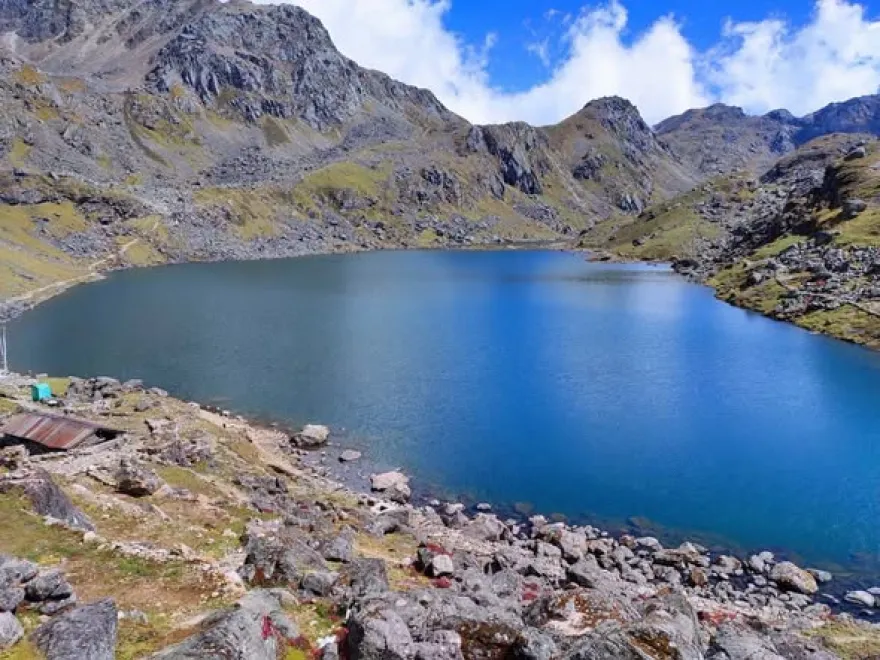
| No of people | Price per person |
|---|---|
| 1 - 1 | $745 |
| 2 - 4 | $595 |
| 6 - 10 | $545 |
| 12 - 16 | $495 |
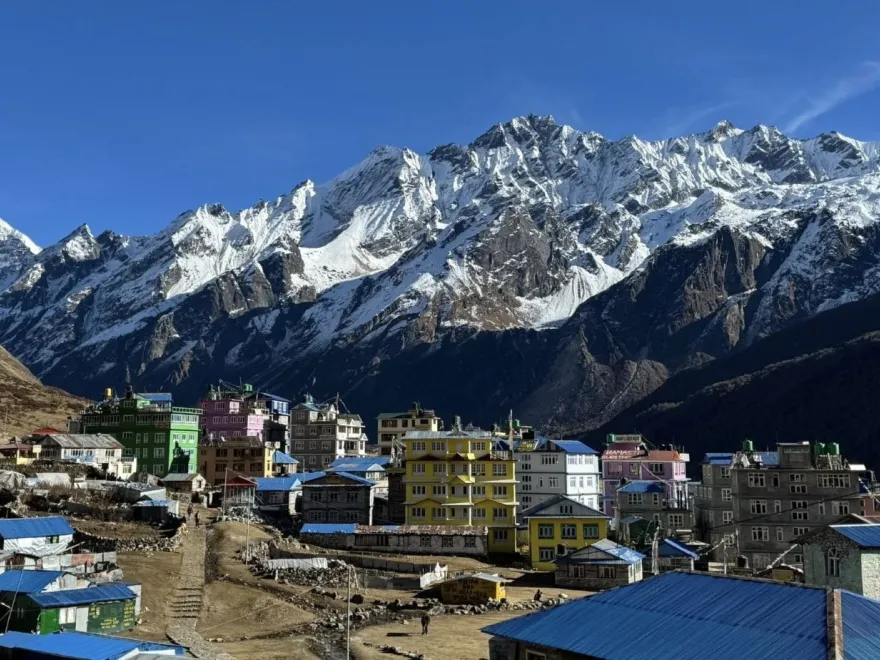
| No of people | Price per person |
|---|---|
| 1 - 1 | $860 |
| 2 - 4 | $685 |
| 6 - 10 | $645 |
| 12 - 16 | $595 |
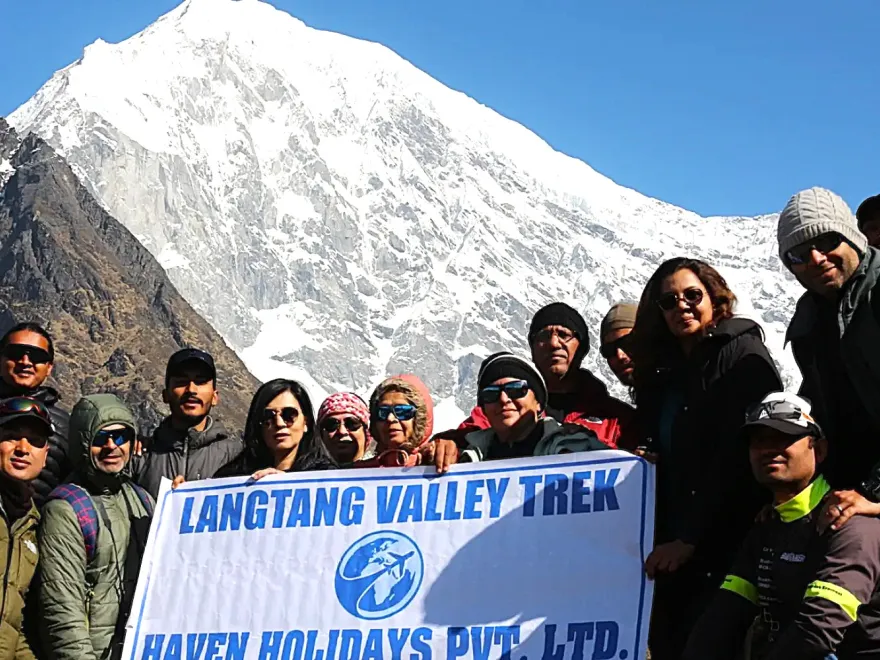
| No of people | Price per person |
|---|---|
| 1 - 1 | $275 |
| 2 - 4 | $195 |
| 6 - 10 | $175 |
| 12 - 16 | $155 |