[{"name":"Everest Base Camp Helicopter Tour","duration":"1","image_url":"https:\/\/www.havenholidaysnepal.com\/storage\/trip-galleries\/1\/thumb_6cd53005d75a86e373d31419d1b14d78.webp","offer_price":1195,"url":"https:\/\/www.havenholidaysnepal.com\/trips\/everest-base-camp-helicopter-tour"},{"name":"Everest Mountain Flight","duration":"1","image_url":"https:\/\/www.havenholidaysnepal.com\/storage\/trip-galleries\/4\/thumb_3b0b4f1d6f72b0ad224daf4752f2c6e0.jpg","offer_price":285,"url":"https:\/\/www.havenholidaysnepal.com\/trips\/everest-mountain-flight"},{"name":"Everest Short Trek","duration":"9","image_url":"https:\/\/www.havenholidaysnepal.com\/storage\/trip-galleries\/5\/thumb_BXPP3621.JPEG0.02033800 1727957098.webp","offer_price":995,"url":"https:\/\/www.havenholidaysnepal.com\/trips\/everest-short-trek"},{"name":"Gokyo Valley Trek","duration":"12","image_url":"https:\/\/www.havenholidaysnepal.com\/storage\/trip-galleries\/6\/thumb_10bc469b14731f23d3ce84a7092ad53f.jpg","offer_price":1195,"url":"https:\/\/www.havenholidaysnepal.com\/trips\/gokyo-valley-trek"},{"name":"15 days Annapurna Base Camp Trek","duration":"15","image_url":"https:\/\/www.havenholidaysnepal.com\/storage\/trip-galleries\/7\/thumb_87d1533bc45faf070990aef0579e4be4.jpg0.81855100 1728285496.webp","offer_price":785,"url":"https:\/\/www.havenholidaysnepal.com\/trips\/15-days-annapurna-base-camp-trek"},{"name":"Nepal Pilgrimage Tour","duration":"14","image_url":"https:\/\/www.havenholidaysnepal.com\/storage\/trip-galleries\/8\/thumb_02c3bcf2ad2e8a4c1703e90ae747b5f1.jpg","offer_price":1475,"url":"https:\/\/www.havenholidaysnepal.com\/trips\/nepal-pilgrimage-tour"},{"name":"UNESCO World Heritage Site Tour","duration":"10","image_url":"https:\/\/www.havenholidaysnepal.com\/storage\/trip-galleries\/9\/thumb_unesco-world-heritage-site-Lumbani-temple-buddhists-hindus-kathmandu-nepal0.36988600 17347617740.93089500 1737469667.webp","offer_price":715,"url":"https:\/\/www.havenholidaysnepal.com\/trips\/unesco-world-heritage-site-tour"},{"name":"Island Peak Climbing","duration":"16","image_url":"https:\/\/www.havenholidaysnepal.com\/storage\/trip-galleries\/11\/thumb_Island peak0.53947000 1734692503.webp","offer_price":2495,"url":"https:\/\/www.havenholidaysnepal.com\/trips\/island-peak-climbing"},{"name":"Upper Mustang Trek","duration":"18","image_url":"https:\/\/www.havenholidaysnepal.com\/storage\/trip-galleries\/12\/thumb_upper mustang 7 Oct-2024.jpg0.95398900 1728286166.webp","offer_price":2995,"url":"https:\/\/www.havenholidaysnepal.com\/trips\/upper-mustang-trek"},{"name":"Annapurna Circuit Trek","duration":"16","image_url":"https:\/\/www.havenholidaysnepal.com\/storage\/trip-galleries\/15\/thumb_tibetan-flags.jpg0.04843900 1728289138.webp","offer_price":985,"url":"https:\/\/www.havenholidaysnepal.com\/trips\/annapurna-circuit-trek"},{"name":"Gosainkunda Lake Trek","duration":"10","image_url":"https:\/\/www.havenholidaysnepal.com\/storage\/trip-galleries\/16\/thumb_5A8083B3-C007-41A8-853F-D0C37C97D235_1_105_c.jpeg0.52581200 1731845258.webp","offer_price":595,"url":"https:\/\/www.havenholidaysnepal.com\/trips\/gosainkunda-lake-trek"},{"name":"Zip-lining in Pokhara and Dhulikhel","duration":"1","image_url":"https:\/\/www.havenholidaysnepal.com\/storage\/trip-galleries\/18\/thumb_215f765e2ebc995dd5c800b4bfdbacc3.jpg","offer_price":82,"url":"https:\/\/www.havenholidaysnepal.com\/trips\/zip-lining-in-pokhara-and-dhulikhel"},{"name":"Annapurna Heli Tour","duration":"1","image_url":"https:\/\/www.havenholidaysnepal.com\/storage\/trip-galleries\/19\/thumb_d71a6bbb9fd4da8d1b567a5cdbdec85d.jpg","offer_price":555,"url":"https:\/\/www.havenholidaysnepal.com\/trips\/annapurna-heli-tour"},{"name":"Paragliding in Pokhara","duration":"1","image_url":"https:\/\/www.havenholidaysnepal.com\/storage\/trip-galleries\/20\/thumb_de788d2dd9726783431f882c007efae1.jpg","offer_price":65,"url":"https:\/\/www.havenholidaysnepal.com\/trips\/paragliding-in-pokhara"},{"name":"Ultra-Flight in Pokhara","duration":"1","image_url":"https:\/\/www.havenholidaysnepal.com\/storage\/trip-galleries\/21\/thumb_e27a9fb572a5c21611bb2a3c18e4b8f0.jpeg","offer_price":175,"url":"https:\/\/www.havenholidaysnepal.com\/trips\/ultra-flight-in-pokhara"},{"name":"Sarangkot Hiking","duration":"1","image_url":"https:\/\/www.havenholidaysnepal.com\/storage\/trip-galleries\/22\/thumb_100ef822fea19987166c6c1366215f15.jpg","offer_price":55,"url":"https:\/\/www.havenholidaysnepal.com\/trips\/sarangkot-hiking"},{"name":"Mera Peak Climbing","duration":"18","image_url":"https:\/\/www.havenholidaysnepal.com\/storage\/trip-galleries\/24\/thumb_d16ae3895f678cf26ffbf2455f541fb5.jpg0.31883400 1732617790.webp","offer_price":2475,"url":"https:\/\/www.havenholidaysnepal.com\/trips\/mera-peak-climbing"},{"name":"Lower Dolpo Trek","duration":"18","image_url":"https:\/\/www.havenholidaysnepal.com\/storage\/trip-galleries\/26\/thumb_Dolpo Galary - 1.JPG0.37725200 1727939952.webp","offer_price":2995,"url":"https:\/\/www.havenholidaysnepal.com\/trips\/lower-dolpo-trek"},{"name":"Nagarkot Sunrise\/Sunset Tour","duration":"1","image_url":"https:\/\/www.havenholidaysnepal.com\/storage\/trip-galleries\/27\/thumb_5147a5532644283a380f2e86f3857c13.jpg0.17748000 1728488108.webp","offer_price":30,"url":"https:\/\/www.havenholidaysnepal.com\/trips\/nagarkot-sunrise-sunset-tour"},{"name":"16 day Everest Base Camp Trek","duration":"16","image_url":"https:\/\/www.havenholidaysnepal.com\/storage\/trip-galleries\/28\/thumb_IMG_4311.JPG0.64984800 1727942213.webp","offer_price":1695,"url":"https:\/\/www.havenholidaysnepal.com\/trips\/16-day-everest-base-camp-trek"},{"name":"Ghorepani Poon Hill trek with Jungle Safari and Trishuli River Rafting -13 days","duration":"13","image_url":"https:\/\/www.havenholidaysnepal.com\/storage\/trip-galleries\/29\/thumb_Ghorepani Poon hill.jpg0.48460800 1728281439.webp","offer_price":795,"url":"https:\/\/www.havenholidaysnepal.com\/trips\/ghorepani-poon-hill-trek-with-jungle-safari-and-trishuli-river-rafting--13-days"},{"name":"Mardi Himal Trek","duration":"12","image_url":"https:\/\/www.havenholidaysnepal.com\/storage\/trip-galleries\/30\/thumb_s1.jpg0.62112600 1728200721.webp","offer_price":795,"url":"https:\/\/www.havenholidaysnepal.com\/trips\/mardi-himal-trek"},{"name":"Langtang Valley Trekking","duration":"10","image_url":"https:\/\/www.havenholidaysnepal.com\/storage\/trip-galleries\/31\/thumb_IMG_4702.JPG0.84916500 1727958504.webp","offer_price":685,"url":"https:\/\/www.havenholidaysnepal.com\/trips\/langtang-valley-trekking"},{"name":"Real Adventure Tour in Nepal","duration":"9","image_url":"https:\/\/www.havenholidaysnepal.com\/storage\/trip-galleries\/32\/thumb_ebd1b8cc78d90abe8b9003dd9a2f25bf.jpg0.82151300 1728213516.webp","offer_price":695,"url":"https:\/\/www.havenholidaysnepal.com\/trips\/real-adventure-tour-in-nepal"},{"name":"Luxury Tour in Nepal","duration":"10","image_url":"https:\/\/www.havenholidaysnepal.com\/storage\/trip-galleries\/33\/thumb_8574e61b252b18676b042caf30d830df.jpg","offer_price":1675,"url":"https:\/\/www.havenholidaysnepal.com\/trips\/luxury-tour-in-nepal"},{"name":"Luxury Everest Panorama Trek With EBC Heli Sightseeing","duration":"8","image_url":"https:\/\/www.havenholidaysnepal.com\/storage\/trip-galleries\/34\/thumb_URZL2397.JPEG0.01209600 1728027820.webp","offer_price":2395,"url":"https:\/\/www.havenholidaysnepal.com\/trips\/luxury-everest-panorama-trek-with-ebc-heli-sightseeing"},{"name":"13 day Everest Base Camp Trek with Helicopter","duration":"13","image_url":"https:\/\/www.havenholidaysnepal.com\/storage\/trip-galleries\/35\/thumb_IMG_4292.JPG0.70131500 1728029276.webp","offer_price":2095,"url":"https:\/\/www.havenholidaysnepal.com\/trips\/13-day-everest-base-camp-trek-with-helicopter"},{"name":"Manaslu Circuit Trek","duration":"16","image_url":"https:\/\/www.havenholidaysnepal.com\/storage\/trip-galleries\/36\/thumb_Mt Manaslu 03-Oct-2024.jpg0.65804900 1727938470.webp","offer_price":1055,"url":"https:\/\/www.havenholidaysnepal.com\/trips\/manaslu-circuit-trek"},{"name":"Kanchenjunga Base Camp Trek","duration":"21","image_url":"https:\/\/www.havenholidaysnepal.com\/storage\/trip-galleries\/37\/thumb_Kanchanjunga Trek -!.jpg0.54744400 1727938497.webp","offer_price":2275,"url":"https:\/\/www.havenholidaysnepal.com\/trips\/kanchenjunga-base-camp-trek"},{"name":"Ganesh Himal and Sing-La Trek","duration":"14","image_url":"https:\/\/www.havenholidaysnepal.com\/storage\/trip-galleries\/38\/thumb_Ganesh Himal slider-1.jpg0.43764500 1727937722.webp","offer_price":1775,"url":"https:\/\/www.havenholidaysnepal.com\/trips\/ganesh-himal-and-sing-la-trek"},{"name":"Island Peak Climb with Everest Base Camp Trek","duration":"21","image_url":"https:\/\/www.havenholidaysnepal.com\/storage\/trip-galleries\/39\/thumb_2be428730fe83525bc85a010564f99de.jpg","offer_price":2750,"url":"https:\/\/www.havenholidaysnepal.com\/trips\/island-peak-climb-with-everest-base-camp-trek"},{"name":"Students' Adventure Tour in Nepal","duration":"12","image_url":"https:\/\/www.havenholidaysnepal.com\/storage\/trip-galleries\/41\/thumb_a926d22fbfe08cba271c41ac289b3fd2.jpg","offer_price":995,"url":"https:\/\/www.havenholidaysnepal.com\/trips\/students-adventure-tour-in-nepal"},{"name":"7 Day Poonhill Trek","duration":"7","image_url":"https:\/\/www.havenholidaysnepal.com\/storage\/trip-galleries\/42\/thumb_6196bd69036473293a2c24cc21ed57d7.jpg0.10880600 1728205378.webp","offer_price":555,"url":"https:\/\/www.havenholidaysnepal.com\/trips\/7-day-poonhill-trek"},{"name":"7 Days Annapurna Base Camp Trek","duration":"7","image_url":"https:\/\/www.havenholidaysnepal.com\/storage\/trip-galleries\/43\/thumb_IMG_2214.JPG0.08204900 1728202033.webp","offer_price":355,"url":"https:\/\/www.havenholidaysnepal.com\/trips\/7-days-annapurna-base-camp-trek"},{"name":"3 days Poonhill Trek","duration":"3","image_url":"https:\/\/www.havenholidaysnepal.com\/storage\/trip-galleries\/44\/thumb_Poon hill.jpg0.60816600 1731412954.webp","offer_price":165,"url":"https:\/\/www.havenholidaysnepal.com\/trips\/3-days-poonhill-trek"},{"name":"Poon Hill Luxury Trek with Chitwan-12 days","duration":"12","image_url":"https:\/\/www.havenholidaysnepal.com\/storage\/trip-galleries\/45\/thumb_Poom hill.jpg0.52074500 1730180532.webp","offer_price":1175,"url":"https:\/\/www.havenholidaysnepal.com\/trips\/poon-hill-luxury-trek-with-chitwan-12-days"},{"name":"Everest Luxury Trek-7 days","duration":"7","image_url":"https:\/\/www.havenholidaysnepal.com\/storage\/trip-galleries\/46\/thumb_ACRX9330.JPEG0.93236200 1728031275.webp","offer_price":2195,"url":"https:\/\/www.havenholidaysnepal.com\/trips\/everest-luxury-trek-7-days"},{"name":"Hindu Pilgrimage Tour in Nepal-10 days","duration":"10","image_url":"https:\/\/www.havenholidaysnepal.com\/storage\/trip-galleries\/47\/thumb_a94bf96a4d31decb419f6f828a3280d2.jpg","offer_price":995,"url":"https:\/\/www.havenholidaysnepal.com\/trips\/hindu-pilgrimage-tour-in-nepal-10-days"},{"name":"Everest Base Camp Short Trek-12 days","duration":"12","image_url":"https:\/\/www.havenholidaysnepal.com\/storage\/trip-galleries\/48\/thumb_IMG_4311.JPG0.52680100 1727945154.webp","offer_price":995,"url":"https:\/\/www.havenholidaysnepal.com\/trips\/everest-base-camp-short-trek-12-days"},{"name":"Everest Base Camp Hike 12 Days","duration":"12","image_url":"https:\/\/www.havenholidaysnepal.com\/storage\/trip-galleries\/49\/thumb_IMG_4260.JPG0.51729100 1728061234.webp","offer_price":1295,"url":"https:\/\/www.havenholidaysnepal.com\/trips\/everest-base-camp-hike-12-days"},{"name":"11 Days Everest Base Camp Trek","duration":"11","image_url":"https:\/\/www.havenholidaysnepal.com\/storage\/trip-galleries\/50\/thumb_IMG_4249.JPG0.21392500 1727946959.webp","offer_price":1055,"url":"https:\/\/www.havenholidaysnepal.com\/trips\/11-days-everest-base-camp-trek"},{"name":"6 Days Annapurna Base Camp Trek","duration":"6","image_url":"https:\/\/www.havenholidaysnepal.com\/storage\/trip-galleries\/51\/thumb_6 days Abc.jpg0.58185400 1728200798.webp","offer_price":285,"url":"https:\/\/www.havenholidaysnepal.com\/trips\/6-days-annapurna-base-camp-trek"},{"name":"Annapurna Base Camp Trek","duration":"8","image_url":"https:\/\/www.havenholidaysnepal.com\/storage\/trip-galleries\/52\/thumb_IMG_2214.JPG0.29415700 1729487656.webp","offer_price":585,"url":"https:\/\/www.havenholidaysnepal.com\/trips\/annapurna-base-camp-trek"},{"name":"Everest Base Camp Trek with Helicopter Fly Out 10 Days","duration":"10","image_url":"https:\/\/www.havenholidaysnepal.com\/storage\/trip-galleries\/53\/thumb_IMG_4328.JPG0.52056600 1728058444.webp","offer_price":1875,"url":"https:\/\/www.havenholidaysnepal.com\/trips\/everest-base-camp-trek-with-helicopter-fly-out-10-days"},{"name":"Everest Base Camp Trek 14 Days","duration":"14","image_url":"https:\/\/www.havenholidaysnepal.com\/storage\/trip-galleries\/54\/thumb_Everest Base Camp Trek 14 days Oct 3 2024.JPG0.43202700 1727939745.webp","offer_price":1335,"url":"https:\/\/www.havenholidaysnepal.com\/trips\/everest-base-camp-trek-14-days"},{"name":"ABC Trek with Poonhill 11 Days","duration":"11","image_url":"https:\/\/www.havenholidaysnepal.com\/storage\/trip-galleries\/55\/thumb_ABC with fishtail.JPG0.21441100 1728277965.webp","offer_price":555,"url":"https:\/\/www.havenholidaysnepal.com\/trips\/abc-trek-with-poonhill-11-days"},{"name":"Muldai Hill Trek 9 Days","duration":"9","image_url":"https:\/\/www.havenholidaysnepal.com\/storage\/trip-galleries\/56\/thumb_7efee59f0a8c6817c8255bd2b9f3539d.jpeg0.19479300 1728213091.webp","offer_price":675,"url":"https:\/\/www.havenholidaysnepal.com\/trips\/muldai-hill-trek-9-days"},{"name":"Mardi Himal Trek 6 days","duration":"6","image_url":"https:\/\/www.havenholidaysnepal.com\/storage\/trip-galleries\/57\/thumb_slider 1.jpeg0.36909700 1728184981.webp","offer_price":590,"url":"https:\/\/www.havenholidaysnepal.com\/trips\/mardi-himal-trek-6-days"},{"name":"Mardi Himal Trek 7 days","duration":"7","image_url":"https:\/\/www.havenholidaysnepal.com\/storage\/trip-galleries\/58\/thumb_slider1.jpg0.61666600 1728206414.webp","offer_price":620,"url":"https:\/\/www.havenholidaysnepal.com\/trips\/mardi-himal-trek-7-days"},{"name":"Mardi Himal Trek 8 Days","duration":"8","image_url":"https:\/\/www.havenholidaysnepal.com\/storage\/trip-galleries\/59\/thumb_sli1.jpg0.38569100 1728206631.webp","offer_price":695,"url":"https:\/\/www.havenholidaysnepal.com\/trips\/mardi-himal-trek-8-days"},{"name":"14 Days Manaslu Trek","duration":"14","image_url":"https:\/\/www.havenholidaysnepal.com\/storage\/trip-galleries\/60\/thumb_sunrise-mt-manaslu-during-manaslu-circuit-larke-pass-trekking-himalaya-nepal (1)0.81855800 1738673284.webp","offer_price":885,"url":"https:\/\/www.havenholidaysnepal.com\/trips\/14-days-manaslu-trek"},{"name":"Dhampus-Sarangkot Trek with Chitwan 8 days","duration":"8","image_url":"https:\/\/www.havenholidaysnepal.com\/storage\/trip-galleries\/61\/thumb_Sarangkot Bhangyang.jpg0.75461400 1728210333.webp","offer_price":790,"url":"https:\/\/www.havenholidaysnepal.com\/trips\/dhampus-sarangkot-trek-with-chitwan-8-days"},{"name":"7 Days Golden Triangle Tour","duration":"7","image_url":"https:\/\/www.havenholidaysnepal.com\/storage\/trip-galleries\/62\/thumb_311ce1d117ee0ba75402a7c301bcdf830.73532400 1739179809.webp","offer_price":845,"url":"https:\/\/www.havenholidaysnepal.com\/trips\/7-days-golden-triangle-tour"},{"name":"Annapurna Circuit Trek 12 days","duration":"12","image_url":"https:\/\/www.havenholidaysnepal.com\/storage\/trip-galleries\/63\/thumb_IMG_20161024_092237.jpg0.57796600 1728289938.webp","offer_price":695,"url":"https:\/\/www.havenholidaysnepal.com\/trips\/annapurna-circuit-trek-12-days"},{"name":"Everest Base Camp Budget Trek 16 Days","duration":"16","image_url":"https:\/\/www.havenholidaysnepal.com\/storage\/trip-galleries\/64\/thumb_IMG_4423.JPG0.92579200 1728144669.webp","offer_price":958,"url":"https:\/\/www.havenholidaysnepal.com\/trips\/everest-base-camp-budget-trek-16-days"},{"name":"Poonhill Budget Trek 7 Days","duration":"7","image_url":"https:\/\/www.havenholidaysnepal.com\/storage\/trip-galleries\/65\/thumb_5be067852d0c5228d6f3155bc425c6b5.jpg","offer_price":395,"url":"https:\/\/www.havenholidaysnepal.com\/trips\/poonhill-budget-trek-7-days"},{"name":"Annapurna Base Camp Budget Trek 8 Days","duration":"8","image_url":"https:\/\/www.havenholidaysnepal.com\/storage\/trip-galleries\/66\/thumb_Pokhara.jpg0.16188000 1728212001.webp","offer_price":375,"url":"https:\/\/www.havenholidaysnepal.com\/trips\/annapurna-base-camp-budget-trek-8-days"},{"name":"The Real UNESCO Seven World Heritage Tour in Kathmandu 4 days","duration":"4","image_url":"https:\/\/www.havenholidaysnepal.com\/storage\/trip-galleries\/67\/thumb_Baudha Stupa.JPG0.63906900 1728201021.webp","offer_price":380,"url":"https:\/\/www.havenholidaysnepal.com\/trips\/the-real-unesco-seven-world-heritage-tour-in-kathmandu-4-days"},{"name":"Everest Base Camp Jeep Ride with Helicopter Return","duration":"14","image_url":"https:\/\/www.havenholidaysnepal.com\/storage\/trip-galleries\/68\/thumb_788ee5b63a6efb6f3c3d048b4270daca.JPG","offer_price":1995,"url":"https:\/\/www.havenholidaysnepal.com\/trips\/everest-base-camp-jeep-ride-with-helicopter-return"},{"name":"Annapurna Base Camp Jeep Ride with Helicopter Return 7 days","duration":"7","image_url":"https:\/\/www.havenholidaysnepal.com\/storage\/trip-galleries\/69\/thumb_abc jeep.jpg0.10280600 1728204064.webp","offer_price":1455,"url":"https:\/\/www.havenholidaysnepal.com\/trips\/annapurna-base-camp-jeep-ride-with-helicopter-return-7-days"},{"name":"Everest Base Camp Trek","duration":"15","image_url":"https:\/\/www.havenholidaysnepal.com\/storage\/trip-galleries\/70\/thumb_Everest Base Camp Trek 3 oct- 2024.JPG0.58445300 1727941472.webp","offer_price":1375,"url":"https:\/\/www.havenholidaysnepal.com\/trips\/everest-base-camp-trek"},{"name":"7 UNESCO World Heritage Tour Kathmandu 2 days","duration":"2","image_url":"https:\/\/www.havenholidaysnepal.com\/storage\/trip-galleries\/72\/thumb_Bhaktipur 3.jpg0.05559600 1728201496.webp","offer_price":150,"url":"https:\/\/www.havenholidaysnepal.com\/trips\/7-unesco-world-heritage-tour-kathmandu-2-days"},{"name":"Day Tour to UNESCO Heritage Sites","duration":"1","image_url":"https:\/\/www.havenholidaysnepal.com\/storage\/trip-galleries\/73\/thumb_228A1018.jpg0.79892500 1728199793.webp","offer_price":55,"url":"https:\/\/www.havenholidaysnepal.com\/trips\/day-tour-to-unesco-heritage-sites"},{"name":"Golden Triangle Tour in Nepal","duration":"8","image_url":"https:\/\/www.havenholidaysnepal.com\/storage\/trip-galleries\/74\/thumb_f54139cf9100f00015ffe0400687e946.webp","offer_price":588,"url":"https:\/\/www.havenholidaysnepal.com\/trips\/golden-triangle-tour-in-nepal"},{"name":"Everest Base Camp Honeymoon Tour by Helicopter with Pokhara","duration":"7 days","image_url":"https:\/\/www.havenholidaysnepal.com\/storage\/trip-galleries\/76\/thumb_RJTL7517.JPEG0.40261600 1731499989.webp","offer_price":9999,"url":"https:\/\/www.havenholidaysnepal.com\/trips\/everest-base-camp-honeymoon-tour-by-helicopter-with-pokhara"},{"name":"Yoga and Meditation Retreat Tour in Nepal","duration":"10 days","image_url":"https:\/\/www.havenholidaysnepal.com\/storage\/trip-galleries\/77\/thumb_decf8e33-6617-4400-9df0-63bf75509adf.JPG0.51948300 1731574810.webp","offer_price":2575,"url":"https:\/\/www.havenholidaysnepal.com\/trips\/yoga-and-meditation-retreat-tour-in-nepal"},{"name":"Chisapani-Nagarkot Trek","duration":"3","image_url":"https:\/\/www.havenholidaysnepal.com\/storage\/trip-galleries\/78\/thumb_0b64dfceaeab48ac36d685476bdebafb.webp","offer_price":165,"url":"https:\/\/www.havenholidaysnepal.com\/trips\/chisapani-nagarkot-trek"},{"name":"Chitwan Jungle Safari Tour","duration":"2","image_url":"https:\/\/www.havenholidaysnepal.com\/storage\/trip-galleries\/79\/thumb_IMG_1696.JPG0.28467800 1733054554.webp","offer_price":175,"url":"https:\/\/www.havenholidaysnepal.com\/trips\/chitwan-jungle-safari-tour"},{"name":"Kailash Overland Tour","duration":"16","image_url":"https:\/\/www.havenholidaysnepal.com\/storage\/trip-galleries\/80\/thumb_PA2605230.68496700 1735818657.webp","offer_price":2495,"url":"https:\/\/www.havenholidaysnepal.com\/trips\/kailash-overland-tour"},{"name":"4 nights 5 days Bhutan Tour","duration":"5","image_url":"https:\/\/www.havenholidaysnepal.com\/storage\/trip-galleries\/81\/thumb_PB0508470.23069500 1735828937.webp","offer_price":1265,"url":"https:\/\/www.havenholidaysnepal.com\/trips\/4-nights-5-days-bhutan-tour"},{"name":"Everest Base Camp Trek Without Flying","duration":"16","image_url":"https:\/\/www.havenholidaysnepal.com\/storage\/trip-galleries\/82\/thumb_308b054484eddc042e092e1ae2ae5586.webp","offer_price":685,"url":"https:\/\/www.havenholidaysnepal.com\/trips\/everest-base-camp-trek-without-flying"},{"name":"Everest Base Camp Trek by Land","duration":"16","image_url":"https:\/\/www.havenholidaysnepal.com\/storage\/trip-galleries\/83\/thumb_8f0f2784a3ae7343d193b64fe8d47c96.webp","offer_price":675,"url":"https:\/\/www.havenholidaysnepal.com\/trips\/everest-base-camp-trek-by-land"},{"name":"Everest Base Camp Trek by Jeep","duration":"16","image_url":"https:\/\/www.havenholidaysnepal.com\/storage\/trip-galleries\/84\/thumb_f82b3acdfc933bc3e0197624c001b0a6.webp","offer_price":675,"url":"https:\/\/www.havenholidaysnepal.com\/trips\/everest-base-camp-trek-by-jeep"},{"name":"Everest Base Camp Trek without Lukla Flight","duration":"16","image_url":"https:\/\/www.havenholidaysnepal.com\/storage\/trip-galleries\/85\/thumb_2d0acc76dc958e3122a3745074989914.webp","offer_price":675,"url":"https:\/\/www.havenholidaysnepal.com\/trips\/everest-base-camp-trek-without-lukla-flight"},{"name":"Langtang Valley Trek","duration":"7","image_url":"https:\/\/www.havenholidaysnepal.com\/storage\/trip-galleries\/86\/thumb_a845db06c5feada1478e8aed659fce97.webp","offer_price":195,"url":"https:\/\/www.havenholidaysnepal.com\/trips\/langtang-valley-trek"},{"name":"Everest Base Camp Trek with Gokyo Lake","duration":"17","image_url":"https:\/\/www.havenholidaysnepal.com\/storage\/trip-galleries\/87\/thumb_c6aa32f7654f2eda78134bc84ac70b79.webp","offer_price":1885,"url":"https:\/\/www.havenholidaysnepal.com\/trips\/everest-base-camp-trek-with-gokyo-lake"},{"name":"Everest Three Passes Trek","duration":"19","image_url":"https:\/\/www.havenholidaysnepal.com\/storage\/trip-galleries\/88\/thumb_db5364eaab56f5755da55868f8ca4258.webp","offer_price":1735,"url":"https:\/\/www.havenholidaysnepal.com\/trips\/everest-three-passes-trek"},{"name":"Annapurna Base Camp Trek From Pokhara","duration":"5","image_url":"https:\/\/www.havenholidaysnepal.com\/storage\/trip-galleries\/89\/thumb_49c813cf1054ff06108963924a78ee88.webp","offer_price":255,"url":"https:\/\/www.havenholidaysnepal.com\/trips\/annapurna-base-camp-trek-from-pokhara"},{"name":"Sarangkot Sunrise Tour from Pokhara","duration":"1","image_url":"https:\/\/www.havenholidaysnepal.com\/storage\/trip-galleries\/90\/thumb_932d995b8fb702634a23e8f9a0432c6e.webp","offer_price":35,"url":"https:\/\/www.havenholidaysnepal.com\/trips\/sarangkot-sunrise-tour-from-pokhara"},{"name":"Langtang Valley Trek-8 days","duration":"8","image_url":"https:\/\/www.havenholidaysnepal.com\/storage\/trip-galleries\/91\/thumb_81d3d0a6979c9ed01f65d5ade53820b2.webp","offer_price":250,"url":"https:\/\/www.havenholidaysnepal.com\/trips\/langtang-valley-trek-8-days"},{"name":"Manaslu Circuit Trek 12 days","duration":"12","image_url":"https:\/\/www.havenholidaysnepal.com\/storage\/trip-galleries\/92\/thumb_d8251bbef0c8a246a02bda5c150a27c2.webp","offer_price":675,"url":"https:\/\/www.havenholidaysnepal.com\/trips\/manaslu-circuit-trek-12-days"},{"name":"2 Days Poon Hill Trek","duration":"2","image_url":"https:\/\/www.havenholidaysnepal.com\/storage\/trip-galleries\/93\/thumb_9d8fa8f60767538857d6c7cb3a7fee8b.webp","offer_price":135,"url":"https:\/\/www.havenholidaysnepal.com\/trips\/2-days-poon-hill-trek"},{"name":"Upper Mustang Jeep Tour","duration":"6","image_url":"https:\/\/www.havenholidaysnepal.com\/storage\/trip-galleries\/94\/thumb_9a3098a6c860b87ad3339773ef5435b9.webp","offer_price":1095,"url":"https:\/\/www.havenholidaysnepal.com\/trips\/upper-mustang-jeep-tour"},{"name":"Tsum Valley Trek","duration":"11","image_url":"https:\/\/www.havenholidaysnepal.com\/storage\/trip-galleries\/95\/thumb_704a6a1eb293553827633dbd8ad7d22c.webp","offer_price":775,"url":"https:\/\/www.havenholidaysnepal.com\/trips\/tsum-valley-trek"},{"name":"Mardi Himal Trek from Pokhara","duration":"4","image_url":"https:\/\/www.havenholidaysnepal.com\/storage\/trip-galleries\/96\/thumb_c92e9ee49c2564a11c7a9ba593439efc.webp","offer_price":295,"url":"https:\/\/www.havenholidaysnepal.com\/trips\/mardi-himal-trek-from-pokhara"},{"name":"4 Days Poon Hill Trek","duration":"4","image_url":"https:\/\/www.havenholidaysnepal.com\/storage\/trip-galleries\/97\/thumb_c349e182edd0858f3e3409d945f0d2ec.webp","offer_price":215,"url":"https:\/\/www.havenholidaysnepal.com\/trips\/4-days-poon-hill-trek"},{"name":"Poon Hill Sunrise Jeep Tour from Pokhara","duration":"2","image_url":"https:\/\/www.havenholidaysnepal.com\/storage\/trip-galleries\/98\/thumb_509875052b16f6f9156db386e3592eb8.webp","offer_price":260,"url":"https:\/\/www.havenholidaysnepal.com\/trips\/poon-hill-sunrise-jeep-tour-from-pokhara"},{"name":"Muktinath Jeep Tour from Pokhara","duration":"3","image_url":"https:\/\/www.havenholidaysnepal.com\/storage\/trip-galleries\/99\/thumb_1651790cb7422703fe86d472a35d4f90.webp","offer_price":255,"url":"https:\/\/www.havenholidaysnepal.com\/trips\/muktinath-jeep-tour-from-pokhara"},{"name":"Ghorepani Poon Hill Trek from Pokhara","duration":"5","image_url":"https:\/\/www.havenholidaysnepal.com\/storage\/trip-galleries\/100\/thumb_27fa62452af4ea8e08544aaa035cc446.webp","offer_price":295,"url":"https:\/\/www.havenholidaysnepal.com\/trips\/ghorepani-poon-hill-trek-from-pokhara"},{"name":"Ghandruk, Poon Hill, Muktinath and Upper Mustang Tour","duration":"7 days","image_url":"https:\/\/www.havenholidaysnepal.com\/storage\/trip-galleries\/101\/thumb_a7dd15032cd9693005233b1df7dc63d3.webp","offer_price":685,"url":"https:\/\/www.havenholidaysnepal.com\/trips\/ghandruk-poon-hill-muktinath-and-upper-mustang-tour"},{"name":"Nar Phu Valley Trek with Annapurna Circuit","duration":"16 days","image_url":"https:\/\/www.havenholidaysnepal.com\/storage\/trip-galleries\/102\/thumb_21f5af1d6f698a6898b64413bcc19c69.webp","offer_price":1395,"url":"https:\/\/www.havenholidaysnepal.com\/trips\/nar-phu-valley-trek-with-annapurna-circuit"},{"name":"Poon Hill-Jhino Danda Hot Spring Trek","duration":"4","image_url":"https:\/\/www.havenholidaysnepal.com\/storage\/trip-galleries\/103\/thumb_b1a8563edaf102468aab613332282c6c.webp","offer_price":215,"url":"https:\/\/www.havenholidaysnepal.com\/trips\/poon-hill-jhino-danda-hot-spring-trek"},{"name":"Annapurna Base Camp Trek with Helicopter Return","duration":"4","image_url":"https:\/\/www.havenholidaysnepal.com\/storage\/trip-galleries\/104\/thumb_928d650987e2db5f449127b41966da53.webp","offer_price":895,"url":"https:\/\/www.havenholidaysnepal.com\/trips\/annapurna-base-camp-trek-with-helicopter-return"},{"name":"Annapurna Circuit with Tilicho Lake Trek","duration":"10","image_url":"https:\/\/www.havenholidaysnepal.com\/storage\/trip-galleries\/105\/thumb_a8c9d8bf4041c0fa676d6c239abfd24c.webp","offer_price":615,"url":"https:\/\/www.havenholidaysnepal.com\/trips\/annapurna-circuit-with-tilicho-lake-trek"}]
14 day Manaslu Circuit Trek Itinerary: From Kathmandu
14 day Manaslu Circuit Trek Itinerary: From Kathmandu
Go on the 14-Day Manaslu Circuit Trek from Machhakhola. Visit hidden villages, Himalayan peaks, and Larke Pass in Nepal.
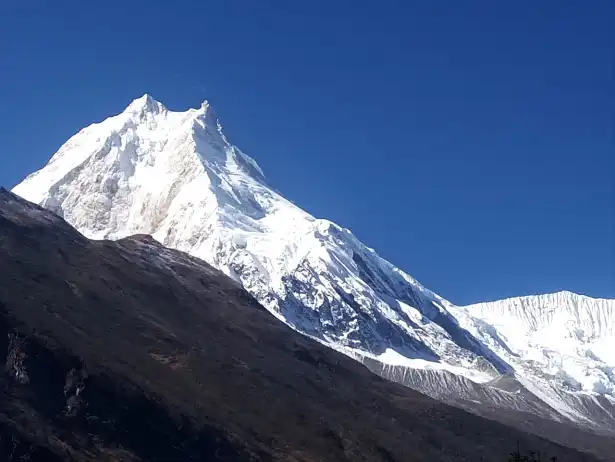
To begin with, the 14-Day Manaslu Circuit Trek is a unique Himalayan experience. Besides, it goes through hidden villages, rivers, and terraced fields. Trekkers are treated to Mount Manaslu (8,163m), Himalchuli (7,893m), and Ngadi Chuli (7,871m), offering panoramic views of utmost beauty. Because of this, the trek appeals to nature lovers and cultural adventurers. The trek begins from Machhakhola (710m) at an entry point from Kathmandu (1,400m) via Mugling (310m), Anbukhaireni (520m), Gorkha Bazaar (1,100m), Arughat (550m), and Soti Khola (700m). The tour has scenic drives with Himalayan village landscapes.
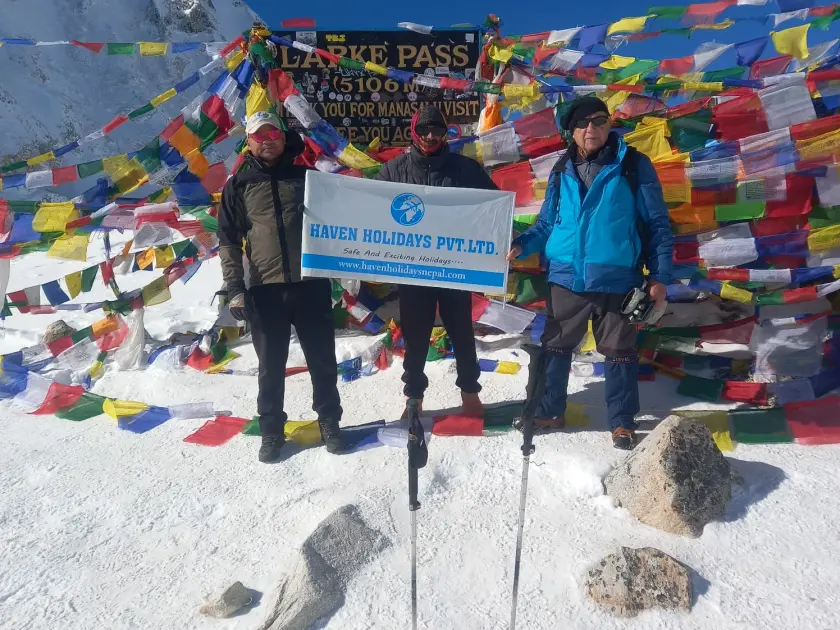
Moreover, the trek is moderately challenging. Trekkers ascend gradually, reaching high passes like Larke Pass (5,106m). Acclimatization must be done to prevent altitude sickness. Aside from physical challenges, the trek offers exposure to culture. Villages like Jagat (1,300m), Deng (1,860m), Namrung (2,630m), and Samagaon (3,530m) expose visitors to Gurung, Tamang, and Tibetan-influenced cultures. Trekkers can stay at local teahouses or homestays and partake in authentic Himalayan ways of living.
In addition, the Manaslu Circuit is less crowded compared to Annapurna or Everest treks. Therefore, it gives trekkers serenity, nature, and genuine culture. The route features rivers, waterfalls, forests, and terracing fields. Panoramic landscapes are abundant, especially around Sama Gaon (3,530m) and Lho (3,180m). Himalayan wildlife, including langurs, Himalayan thar, and bird species in colors, is also spotted by trekkers.
Furthermore, the trek offers optional side trips to glaciers, monasteries, and high-altitude lakes. Trekkers must have proper equipment, a permit, and travel insurance due to remoteness. Weather is also greatly varied, with warm lower valleys and cold mountain passes. The trek is balanced between adventure, culture, and nature, providing a genuine Nepal experience.
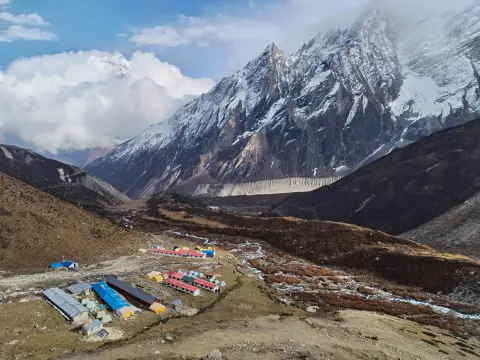
Manaslu Base Camp with glacier-At the foot of Manaslu
In short, the 14-Day Manaslu Circuit Trek is a great Himalayan experience. Starting from Machhakhola (710m) via Mugling (310m), Anbukhaireni (520m), Gorkha Bazaar (1,100m), and Arughat (550m), trekkers are rewarded with breathtaking peaks and villages. Larke Pass (5,106m) surprises with unparalleled Himalayan scenery. The trek combines adventure, serenity, and local culture with community support. As such, it is a perfect choice for those who seek challenge and authenticity.
How to Reach the Manaslu Trek Starting Point from Kathmandu?
Drive to Machhakhola for the Manaslu Circuit Trek via Mugling, Anbukhaireni, Gorkha Bazaar, Arughat, and Soti Khola.
Actually, starting with the trekking from Machhakhola (710m) that is approached from Kathmandu (1,400m) via road, the ride weaves its way through Mugling (310m), Anbukhaireni (520m), Gorkha Bazaar (1,100m), Arughat (550m), and Soti Khola (700m). The journey itself is scenic, along rivers, hill slopes, and forests. Road conditions vary, with some rough patches that need to be traversed in jeeps. Buses are cheaper but slower and not so comfortable.
Also, the jeep drive from Kathmandu to Machhakhola is approximately 8-10 hours based on weather and traffic. Jeeps are adaptable and may stop for photos or snacks. Private vehicles are most effective for groups or travelers with extra luggage. Trekkers need to arrange for early morning start to get to Machhakhola before sunset. This is safe and time-saving in the initiation of the trek.
In addition, after Machhakhola, trekkers hike in the valley of Budhi Gandaki River. Jagat (1,300m) and Deng (1,860m) are the first trekking stages. Roads can be extended to jeep transportation for luggage or downhill trekkers. Again, Dharapani (1,860m) to Besisahar (760m) jeep rides are suitably utilized for trekking exit. The trail crosses rivers, waterfalls, and fields, hence being scenic and accessible.
Additionally, trekking agencies like Haven Holidays Pvt. Ltd can arrange transport and guides. The fees range from $25–$40 per jeep and $10–$15 per bus. Weather and the monsoon season determine traveling, with landslides a possibility around Mugling or Gorkha Bazaar. Planning is therefore necessary to ease the journey.
Briefly, the Manaslu Circuit Trek that starts at Machhakhola (710m) is accessed by a scenic road from Kathmandu. Passing through Mugling (310m), Anbukhaireni (520m), Gorkha Bazaar (1,100m), Arughat (550m), and Soti Khola (700m) achieves comfort while traversing Himalayan landscapes. Proper vehicle choice, early morning start, and guide provision ensure safety and comfort. Trekkers experience pleasant ride and smooth trek initiation with good road planning.
Get all the information about Manaslu Circuit Trek permits, TIMS, Restricted Area Permit, and trek rules to experience a safe trip.
In the first place, Manaslu Circuit is a limited area. Therefore, and Restricted Area Permit (RAP). TIMS keeps tracks of trekkers' safety and charges up to $20 for foreign visitors. RAP is about $70 per person. It is easy for companies like Haven Holidays Pvt. Ltd to arrange permits, which saves time and proper paperwork.
Likewise, Manaslu Conservation Area Permit costs Rs. 3000 and the cost of Annapurna Conservation Area Permit is the same RS. 3000. You require both permits for Manaslu Circuit Trek 14 days.
Besides, permits are checked at various stages like Jagat (1,300m), Deng (1,860m), and Samagaon (3,530m). Trekkers need to carry original copies. Computer prints or photocopies may not be accepted, especially in remote villages. Proper handling of documents is therefore necessary for a hassle-free trek.
Actually, a licensed guide is also necessary to access the restricted zone. Guides provide security, cultural awareness, and guidance. Porters are unnecessary but recommended to provide comfort. Fee-for-permit also contributes to local community development, e.g., schools, hospitals, and trail maintenance. Sticking to regulations avoids destruction and maintains the Himalayan environment.
Furthermore, trekkers must plan permit costs in advance. Agencies charge minor service fees for processing permits. Permits are valid for the trek duration and non-transferable. Police frequently inspect permits near Larke Pass (5,106m) and Samagaon (3,530m). Non-compliance may result in fines or trekking restrictions.
On the whole, Manaslu Circuit Trek rules and permits ensure safety and sustainability. Trekkers must obtain RAP ($75), and hire licensed guides. Rules must be followed at checkpoints like Jagat (1,300m) and Samagaon (3,530m). Proper planning guarantees a safe, smooth, and authentic Himalayan experience. You need to pay Local Manaslu and Tsum Valley Entry that is Rs. 1000 per person.
Best Time for the Manaslu Circuit Trek 14 days
Discover the best time for 14 days Manaslu Circuit Trek. Spring and autumn provide clear weather, ideal trekking conditions, and stunning Himalayan scenery.
Firstly, spring (March–May) and autumn (September–November) are the best trekking seasons for Manaslu Circuit Trek 14 days. In these months, the skies are clear, offering views of Mount Manaslu (8,163m), Himalchuli (7,893m), and Ngadi Chuli (7,871m). Spring provides flowering rhododendrons, comfortable temperatures, and dense forests. Temperatures vary from 12°C at Machhakhola (710m) to -5°C at Larke Pass (5,106m).
Also, autumn provides favorable weather, cool breeze, and clear visibility. Daytime temperatures vary from 10–15°C in low villages to -8°C at high passes. It is cold during nighttime, so warm sleeping gear is a necessity. Kathmandu to Machhakhola road is safer during this time, reducing landslide risks near Mugling or Gorkha Bazaar.
Likewise, winter trekking is possible but extreme. The temperature drops below -15°C at high elevations, and trails like Larke pass (5,106m) can be under snow. Summer or monsoon (June–August) is risky due to torrential rain, slippery trails, and river crossings. Monsoon must be avoided by the trekkers if they are not experienced and well-equipped.
Further, festival times and wild diversity add variety to the trek. Spring has abundant birds and flowers on Budhi Gandaki River from Machhakhola (710m) to Jagat (1,300m). Autumn gives local harvest festivals and celebrations in Namrung (2,630m) and Samagaon (3,530m). These trek seasons offer cultural exposure and scenic photography.
Summing it all up, spring and autumn are the best times to undertake Manaslu Circuit Trek. The weather is clear, the temperatures moderate, and the landscapes beautiful, making the experience worthwhile. Beginning at Machhakhola (710m) through Mugling (310m), Anbukhaireni (520m), and Gorkha Bazaar (1,100m), the trek has easy roads and breathtaking views of Manaslu (8,163m). Dodging monsoon and extreme winters provides maximum comfort and Himalayan experience. Having a proper plan ensures a worthy experience.
Day 1: Kathmandu to Soti Khola (Approximately 800m) and then Machhakhola (900m)
Start your Manaslu Circuit Trek on a scenic drive from Kathmandu to Soti Khola and Machhakhola. Take in riverside views and villages.
First, trekkers depart early from Kathmandu (1,400m) by road to Mugling (310m), Anbukhaireni (520m), and Gorkha Bazaar (1,100m). The road then continues from Gorkha Bazaar to Arughat (550m) and Soti Khola (800m). In this way, the journey is through scenic rivers, hills' terrain, and greenery. Jeep rides are more comfortable and safer. Buses are cheaper but slower.
Furthermore, after arriving at Soti Khola (800m), the bus/jeep ride to Machhakhola (900m) begins. Driving along the Budhi Gandaki River offers tranquil riverside scenery and bamboo forests. The trekkers pass over tiny wooden bridges and through surrounding local villages. The road is usually flat with minor slopes, ideal for warming up the legs. Moreover, the river also offers natural scenery and intermittent waterfalls during the journey.
Also, overnight at Machhakhola (900m) is the first one. Teahouses and small lodges provide refuge. Rooms are basic but clean, occasionally with attached baths. Simple fare includes dal bhat (lentils and rice), noodles, and vegetables. Trekking operators like Haven Holidays Pvt. Ltd offer meals and lodging for hassle-free travel.
Further, trekkers may explore the nearby village in the afternoon. Country Himalayan children usually greet visitors, and they provide a glimpse into rural life. The village has electricity and rudimentary communication but is isolated and quiet. Day 1 thereby balances travel, orientation to trekking, and cultural exposure. Trekkers must be careful to rest adequately for the following days because the trail rises in elevation progressively.
In short, Day 1 is travel by road and a simple hike from Soti Khola (800m) to Machhakhola (900m). Scenic rivers, rice fields, and villages offer a warm welcome. Proper planning ensures that travel becomes a smooth ride with good overnight lodging. Therefore, the first day acclimatizes travelers to coming challenges while offering a tranquil Himalayan experience.
Day 2: Machhakhola (900m) to Jagat (Approx. 1,340m)
Manaslu Circuit trek from Machhakhola to Jagat. Enjoy riverside trails, cultural encounters, and picturesque night camps.
The trek begins from Machhakhola (900m) through Budhi Gandaki River. The route is mostly uphill but gentle. Trekkers walk through dense forests, bamboo forest, and intermittent waterfalls. In addition, wooden bridges across small streams contribute to scenery. Sound of running water contributes to a peaceful trekking experience.
Moreover, villages along the trek route have rich Himalayan culture. Trekkers see traditional Gurung and Tamang wooden and stone houses. Locals are friendly and often extend an invitation to trekkers to have homemade food. There are tea houses that provide hot food and accommodation. Moreover, there is grazing cattle and fields terraced with maize, millet, and potato. Cultural immersion begins on the first day of trekking.
Also worth noting is Jagat (1,340m), an important checkpoint. Police check permits, including TIMS and RAP, here. Accommodation consists of teahouses with minimal facilities. Shared bathrooms may be in the rooms, while some offer hot showers at a small cost. Evening activities involve touring the village or taking time out to acclimatize. Guides take care that trekkers know local customs and trekking norms.
Also, the trek from Machhakhola (900m) to Jagat (1,340m) would generally be around 5–6 hours. The trek is scenic, following the river and crossing suspension bridges. Gradual altitude gain accommodates hikers' acclimatization to higher altitudes. Proper hydration and pacing are essential. Hikers enjoy glimpses of surrounding hills and faraway peaks along the Budhi Gandaki valley.
Briefly, Day 2 is a culturally enriching and scenic trekking experience from Machhakhola (900m) to Jagat (1,340m). Forest, rivers, and characteristic villages make the trek worthwhile. Overnight halt in Jagat provides relaxation and cultural exposure. Trekkers thus develop an appreciation of nature, local lifestyle, and light physical challenge before approaching higher altitude stages.
Day 3: Jagat (1,340m) to Deng (Approx. 1,860m)
Hike from Jagat to Deng on the Manaslu Circuit Trek. Cross rivers, forests, and Tamang villages along the Budhi Gandaki River.
First of all, the trek from Jagat (1,340m) to Deng (1,860m) follows the route along the Budhi Gandaki River. There are quite a few suspension bridges that trekkers have to cross along with stone paths. Rhododendron, pine, and bamboo form impenetrable forests that are along the path. Besides that, streams and tiny waterfalls provide natural beauty.
In addition, the trek goes through Tamang villages, and there is exposure to culture. Houses are made of stone and wood with prayer flags in bright colors. People farm and rear livestock. Trekkers can see traditional ways of living and experience warm hospitality in tea houses owned by the locals. Villagers can tell local tales and Himalayan folklore, which add flavor to the trek.
Additionally, trekkers undertake moderate ascents, walking uphill step by step. The trek takes around 5–6 hours. River trails become a bit narrow at times but are secure. Agency guides in Haven Holidays Pvt. Ltd provide safe passage and cultural exchange. Accommodation at Deng (1,860m) is in simple teahouses. Dal bhat, noodles, and soups are available meals. Some lodges provide hot showers for relaxation.
Deng is also the first larger settlement after Jagat (1,340m) with police checkpoints. Trekkers can rest and acclimatize for higher passes. The village offers fantastic views of surrounding peaks like Shringi Himal (7,177m) in the distance. Evenings are calm and tranquil, ideal for photography and acclimatization.
Lastly, Day 3 from Jagat (1,340m) to Deng (1,860m) is a combination of natural scenery, cultural encounter, and medium level of hiking. Rivers, forests, and Tamang villages provide the experience a memorable flavor. Overnight stops provide rest and acclimatization. Consequently, trekkers enjoy a scenic, secure, and culturally rich experience on the Manaslu Circuit.
Day 4: Deng (1,860 m) to Namrung (Approx. 2,630 m)
Hike from Deng to Namrung on the Manaslu Circuit. Rejoice in riverside walks, forests, and acclimatization for higher Himalayan passes.
To begin with, the Deng (1,860m) to Namrung (2,630m) trek gently rises along the Budhi Gandaki River. The trail is rocky but easy, with thickly grown rhododendron and pine forests. Trekkers are treated to small waterfalls, bamboo forests, and greenery. Thus, it is perfect for gradual acclimatization prior to higher passes.
In addition, trekkers meet a series of small Tamang and Gurung villages. Prayer flags adorn houses built from wood and stone. Trekkers are received warmly by the villagers. Food and shelter facilities are available in tea houses. Trekkers can interact with villagers to understand farming, livestock, and rural lifestyles. Such cultural exposure adds value to trekking.
Additionally, the trek offers Himalayan scenery as one ascends. Shringi Himal (7,177m) and Ganesh Himal (7,422m) are visible in the distance. Photographer enthusiasts enjoy riverside scenic views of rivers, forest, and terai fields. Trekkers have to stop to drink water and acclimatize. Slow walking reduces altitude sickness.
Besides, Namrung (2,630m) is a large overnight camp. Accommodation is basic teahouses with communal toilet facilities. Food is dal bhat, noodles, and vegetables. View of sunset exposes neighboring peaks and mountain ridges. Guides advise an early night to acclimatize. Trekkers often make short day trips in the village to explore monasteries and prayer wheels.
Overall, Day 4 from Deng (1,860m) to Namrung (2,630m) is a trekking exercise, culture, and acclimatization. Himalayan scenery, forests, and rivers make the experience long-remembered. Comfortable progress ensures safe adjustment in altitude. Overnight in Namrung allows rest and excursion prior to ascending up to Lho (3,180m). As such, the trekkers enjoy a scenic,
Day 5: Namrung (2,630 m) to Lho (Approx. 3,180 m)
Trek from Namrung to Lho on the Manaslu Circuit. Explore monasteries, culture, and Himalayan scenery.
Actually, the Namrung (2,630m) to Lho (3,180m) trekking trail follows a gradual ascent through the valley of the Budhi Gandaki River. The trek passes along forests, small cliffs, and villages. Streams and stone bridges await trekkers along the trail. The trek is therefore moderately scenic and ideal for acclimatization.
Additionally, Lho (3,180m) is a culturally significant village. The landscape is covered with ancient monasteries, prayer flags, and mani walls. Trekkers get a chance to experience Buddhist rituals and interact with monks. The tea houses of the natives offer plain meals and accommodation. Guides explain customs and traditions, which add to cultural enrichment. The interaction provides an insight into Himalayan Buddhist life.
In addition to that, trekkers enjoy Himalayan scenery during ascents. Ganesh Himal (7,422m) and Shringi Himal (7,177m) are the skyline eagles. Mountains, glaciers, and rivers create beautiful photo shoots. Slow trekking allows time to appreciate such natural sites. Adequate rest and water intake are required here.
Besides, Lho (3,180m) is an acclimatization spot of significant value before reaching Samagaon (3,530m). Trekkers are provided with warm food, blankets, and sleeping arrangements by teahouses. Evenings offer the vistas of golden sunsets over Budhi Gandaki valley. Trekkers are invited to venture out on short village walks for experiencing local culture and mountain views.
Finally, Day 5 Namrung (2,630m) to Lho (3,180m) is about moderate trekking, cultural exposure, and Himalayan views. Ancient monasteries, prayer flags, and traditional houses add depth to the journey. A proper acclimatization guarantees safety for the subsequent phase. Trekkers thereby get to experience both adventure and cultural richness during the Manaslu Circuit Trek.
Day 6: Lho (3,180 m) to Samagaon (Approx. 3,530 m)
Trek from Lho to Samagaon on the Manaslu Circuit. Enjoy panoramas of Mount Manaslu (8,163 m), glaciers, and high-altitude villages.
Meanwhile, the trek initially proceeds from Lho (3,180m) to Samagaon (3,530m), gradually ascending in the valley of the Budhi Gandaki River. The trekkers tread mani walls, prayer flags, and stone settlements. Forests thin at greater elevations, providing stunning mountain views. Thus, the trek is perfect for acclimatization among natural beauty.
Also, Samagaon (3,530m) is a larger village with a few teahouses and lodges. The lodges are basic but comfortable, normally with communal toilets. Meals include dal bhat, soups, and local sweets. Rest and short village walks are recommended by guides to prevent altitude sickness. The village is also a check point for trekking permits.
Also, Samagaon gives fantastic views of Mount Manaslu (8,163m) and surrounding glaciers. Himalchuli (7,893m) and Ngadi Chuli (7,871m) dominate the horizon. Wide-angle shots of high mountains, icefalls, and river valleys can be taken by photographers. Trekkers can also see Larke Glacier nearby which is easily accessible. Proper hydration, rest, and warm clothing are required at this altitude.
Furthermore, cultural experience does not stop with Samagaon. Monasteries, mani walls, and Tibetan-style architecture are the decorations of the village. Tea and refreshments are served by local families, so interaction is possible. Trekkers get an experience of high-altitude agriculture, animal rearing, and Himalayan ways of living. Haven Holidays Pvt. Ltd guides explain and arrange safe trekking.
Overall, Day 6 of Lho (3,180m) to Samagaon (3,530m) provides a mix of acclimatization, Himalayan views, and cultural exposure. Mt. Manaslu (8,163m) and surrounding mountains create stunning vistas. Accommodation and food provide comfort before higher passes. Trekkers thus have a safe, scenic, and culturally rewarding hike on the Manaslu Circuit Trek.
Day 7: Acclimatization Day in Samagaon (3,530 m)
Acclimatize one day at Samagaon on the Manaslu Circuit Trek. Explore nearby peaks, Tsum Valley, and acclimatize for high-altitude trekking.
First, Day 7 is a day of acclimatization at Samagaon (3,530m). Resting allows the body to acclimatize prior to ascending to higher passes. Additionally, short walks within the village avoid altitude sickness. Trekkers can walk around the nearby Larke Glacier or local prayer points at an easy pace.
Besides, side trips to nearby peaks are treated to breathtaking views. Trekkers can hike brief trails to see glaciers and Mount Manaslu (8,163m). Himalchuli (7,893m) and Ngadi Chuli (7,871m) loom large over the ground. They are brief walks and provide trekkers with an overview of plants and animals of high altitude. It is important to pace well to avoid fatigue.
In addition, some trekking groups may arrange a guided day trip to Tsum Valley. This restricted area offers traditional Tibetan culture, monasteries, and pristine landscapes. Trekkers can see Mani walls, prayer wheels, and local festivities. Cultural and spiritual significance is described by local guides. These trips add spice to the trekking experience with little physical effort.
Additionally, Samagaon (3,530m) provides several teahouses where one can eat and rest. Dal bhat, soups, and local snacks are available for meals. Meditation, light stretch, or photography in the evenings is recommended. Hydration and not doing too much work are suggested by guides. This acclimatizes one for Larke Pass (5,106m) and beyond.
Last, Day 7 at Samagaon (3,530m) balances rest, acclimatization, and gentle discovery. Side excursions, glacier vistas, and optional visits to the Tsum Valley provide cultural and scenic bonuses. Steady progress and hydration prepare trekkers for future high-altitude trekking. So, this day assures a safe, scenic, and culturally enriching Himalayan experience.
Day 8: Samagaon (3,530 m) to Samdo (Approx. 3,875 m)
Trek from Samagaon to Samdo on Manaslu Circuit. Experience high-altitude landscapes, villages of the locals, and acclimatization for Larke Pass.
First of all, the climb from Samagaon (3,530m) to Samdo (3,875m) is a gradual ascension along the Budhi Gandaki River. The trail crosses moraine slopes, alpine meadows, and small streams. Trekkers slope up gradually in altitude while having grandstand views of Mount Manaslu (8,163m) and other mountains. It is thus most suitable for acclimatization before going to higher passes.
Besides, the trek passes through small Tibetan villages. Flat-roofed houses made of stone with prayer flags comprise the village architecture. Trekkers receive tea and snacks as a welcome gesture from local villagers. Cultural exposure is observed in sights of prayer wheels, mani walls, and traditional farming. This adds to the trekking experience and provides an insight into Himalayan high-altitude living.
In addition, the landscape is moderately challenging with loose rocks and some steep sections. Wooden bridges cross glacial streams. Trekkers are advised to trek at their own pace and carry sufficient water. Accommodation in Samdo (3,875m) is simple teahouses that serve meals and simple sleeping arrangements. Hot water may be limited, and therefore trekkers will have to manage themselves.
Besides, scenery along the trek is breathtaking. Larke Glacier and Himalchuli (7,893m) peaks create beautiful scenery. Morning hours are most likely clear for photographs. Heaven Holidays Pvt. Ltd guides provide safety and acclimatization advice. Short evening strolls in the village acclimatize.
To sum up, Day 8 from Samagaon (3,530m) to Samdo (3,875m) provides high-altitude walking, culture, and Himalayan views. Gradual slope, alpine landscape, and traditional villages acclimatize one to Larke Pass (5,106m). Keeping adequate tempo, staying hydrated, and resting make the journey safe and enjoyable. Thus, trekkers enjoy adventure and cultural experience in the high Himalayas.
Day 9: Samdo (3,875 m) to Dharamsala / Larke Phedi (Approx. 4,460 m)
Samdo to Dharamsala/Larke Phedi hike on Manaslu Circuit. Acclimatize at high altitudes and experience broad vistas of mountains prior to attempting Larke Pass.
To begin with, the trek from Samdo (3,875m) to Dharamsala / Larke Phedi (4,460m) is pivotal to Larke Pass (5,106m). The route ascends steadily over rocky terrain, glacial streams, and alpine meadows. Altitude is achieved by trekkers viewing Mount Manaslu (8,163m) and Himalchuli (7,893m). Pacing and hydration are then absolute essentials not to get altitude sickness.
In addition, Dharamsala (4,460m) is a base camp village with rustic teahouses. The lodging is simple with shared toilets. The food is dal bhat, soups, and light snacks. Evenings are quiet with rest prior to the challenging Larke Pass. Guides recommend easy strolls around the village to acclimatize.
Further, the trek offers breathtaking high-altitude views. Glacial streams, moraine rocks, and patches of snow surround trekkers. Ngadi Chuli (7,871m) peaks rise above the skyline. Photography and short observation stops complement the trekking experience. Proper clothing and gear are required for freezing nights and windy conditions.
Besides, trekkers encounter prayer flags and mani walls along the route. Monasteries and small shrines introduce local Tibetan-Buddhist culture. Guides explain customs and meaning, contributing to cultural awareness. Hydration and moderate exercise are crucial to safe acclimatization for the pass.
In summary, Day 9 from Samdo (3,875m) to Dharamsala / Larke Phedi (4,460m) prepares trekkers for Larke Pass (5,106m). Scenic high-altitude landscapes, Himalayan scenery, and cultural touch turn the trek into a memorable experience. Proper pacing, rest, and acclimatization are vital for safety reasons. Accordingly, trekkers are able to enjoy a scenic, culture-rich, and well-prepared hike to the summit point of the Manaslu Circuit Trek.
Day 10: Crossing Larke Pass (5,106 m) to Bimtang (3,720 m)
Cross Cross Larke Pass (5,106m) on the Manaslu Circuit Trek and descend to Bimtang (3,720 m). Enjoy safe panoramic Himalayan vistas.
Firstly, Day 10 is the most challenging part of the Manaslu Circuit Trek. Trekkers begin early from Dharamsala / Larke Phedi (4,460m) and trek up to Larke Pass (5,106m). The route ascends over rocky moraines, snows, and glaciers. Therefore, gradual tempos and adequate hydration are necessary to prevent altitude sickness.
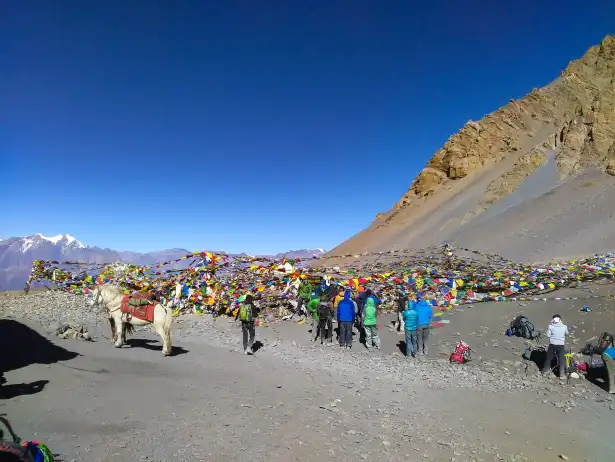
In addition, Larke Pass offers breathtaking panoramic Himalayan views. Mount Manaslu (8,163m), Himalchuli (7,893m), and Ngadi Chuli (7,871m) dominate the horizon. Photographers take sunset photographs over white-topped peaks. Guides make short halts to acclimatize and enjoy views. Proper clothing and use of trekking poles boost safety on icy and rocky terrain.
Further, during the crossing of the Larke pass, trekkers begin a steep downward trekking to Bimtang (3,720m). The route passes through alpine meadows, glacial rivers, and isolated prayer flags. Trekking poles assist in balance on rock slopes. Bimtang offers extensive mountain scenery, including distant peaks and isolated river gorges. Descending reduces altitude stress, and the body recuperates.
Additionally, Bimtang (3,720m) is a tiny village with simple teahouses and lodges. Accommodation consists of shared rooms, hot meals, and in some places, hot showers. Guides suggest rest and gentle hiking in the evening for acclimatization. Trekkers can enjoy the serene alpine surroundings while watching out for nearby Tibetan-style houses and prayer wheels.
Lastly, Day 10 from Larke Pass (5,106m) to Bimtang (3,720m) consists of high-altitude trekking, Himalayan panoramic views, and steep inclines. Safety demands proper pacing, hydration, and acclimatization. Bimtang is a serene rest stop with stunning mountain views. Thus, the day is demanding but rewarding as it is the highest point on the Manaslu Circuit Trek.
Day 11: Bimtang (3,720 m) to Tilje / Tal (Approx. 2,300 m)
Descend from Bimtang to Tilje / Tal on the Manaslu Circuit Trek. Forests, rivers, and alpine landscapes exist on a stunning trail.
Firstly, the trek from Bimtang (3,720m) to Tilje / Tal (2,300m) is a downhill trek. Trails exist that pass through alpine meadows, pine forests, and terraced fields. Rivers and streams accompany them, contributing to natural beauty. The day therefore provides moderate trekking following the Larke Pass (5,106m).
In addition, there are encounters with villages along the way. The residences include stone walls, wooden roofs, and prayer flags. Locals farm and rear animals. Trekkers receive food and rest in tea houses. Cultural immersion is attainable while descending to lower elevations. Guides ensure safe passage on rocky ground and forested trails.
Additionally, the trek offers stunning Himalayan scenery. Distant mountains, glacier streams, and deep gorges offer great photographic shots. Trekking poles help balance over bumpy terrain. Proper drinking water and short resting points guarantee energy reserves on the way down. Descending is less strenuous than ascending but needs caution and pacing.
Also, Tilje / Tal (2,300m) is a tiny village with teahouses and lodges available for meals and overnight stay. Sharing of rooms and hot meals is provided in accommodation. Views of sunsets over river valleys and surrounding peaks are impressive in the evenings. Acclimatization and relaxation for muscle strain with gentle walks are recommended by guides after the high-altitude trek.
Simply put, Day 11 from Bimtang (3,720m) to Tilje / Tal (2,300m) alternates between moderate downhill trails, cultural exposure, and alpine landscapes. Forests, rivers, and rural settlements provide vibrancy. Proper pacing, hydration, and resting ensure security. Accordingly, trekkers have the opportunity to relish scenic downhill slope in anticipation of the final section of the Manaslu Circuit Trek.
Day 12: Tilje / Tal (2,300 m) to Dharapani (Approx. 1,500 m)
Hike the Manaslu Circuit from Tilje / Tal to Dharapani. Enjoy Himalayan villages, rivers, and views.
As a starting point, the final day of trekking descends from Tilje / Tal (2,300m) to Dharapani (1,500m). Forests, rivers, and terraced fields are traversed by paths. Rocky outcrops and wooden bridges break the route. Trekkers can thereby enjoy fine views while completing the circuit.
Furthermore, trekkers pass through traditional Gurung and Tamang villages. Stone-built houses, mani walls, and prayer flags adorn villages. The locals engage in farming, cattle rearing, and petty trade. Food, resting points, and cultural interaction are provided by tea houses. Guides explain customs and village life, enhancing the trekking experience.
Apart from this, the path descends gradually, losing altitude step by step. Trekking poles facilitate balance on rough paths. Rivers and mini-waterfalls provide a natural beverage. Photographers can get overwhelmed by terraced fields and distant Himalayan ranges. Sufficient drinking and a consistent pace maintain energy levels on the descent.
Besides, Dharapani (1,500m) marks the completion of the Manaslu Circuit Trek. It is possible to stay overnight in teahouses with very basic accommodation. Hot food and warm hospitality welcome the triumphant trekker. Jeep or bus transport to Besisahar (760m) provides convenient transport back towards Kathmandu. Operators and guides like Haven Holidays Pvt. Ltd facilitate a hassle-free conclusion.
Last, Day 12 from Tilje / Tal (2,300m) to Dharapani (1,500m) weaves together scenic descending, cultural experience, and trekking culmination. Forests, rivers, and Himalayan villages enrich the journey. Pacing, water consumption, and rest ensure a safe and memorable finish. And so, trekkers celebrate a triumphant Manaslu Circuit Trek amidst spectacular Himalayan scenery.
Day 13: Return to Besisahar from Dharapani
Travel from Dharapani to Besisahar following the Manaslu Circuit Trek completion. Discover transportation, scenic villages, and last thoughts.
Actually, Trekking from Dharapani (1,500m) to Besisahar (760m) is done by jeep or local bus. The road follows the Budhi Gandaki River valley through forested hills, terraced fields, and small villages. The drive takes approximately 5–6 hours depending on road conditions. It is therefore advisable to start early to see daylight landscapes.
Moreover, the route passes through scenic villages of Tal, Tilje (2,300m), and Lamjung Bazaar. Travelers get to witness typical Gurung and Tamang houses, prayer flags, and village markets. Rivers and waterfalls punctuate the drive, with photo opportunities. Jeep drives are faster and more convenient, though bus drives are affordable but less convenient.
Moreover, water, snacks, and medications for general ailments should be carried by travelers. The terrain of the road is hilly and occasionally rough, demanding careful driving. Photography stops, lunch, or breaks for snacks are regular. The tour is organized and navigated through villages and rivers by guides of Haven Holidays Pvt. Ltd.
Furthermore, the return journey presents a moment for reflection on the Manaslu Circuit Trek. Views of Mount Manaslu (8,163m), Himalchuli (7,893m), and nearby valleys remain vivid. Trekkers recall experiences at Samagaon (3,530m), Samdo (3,875m), and Larke Pass (5,106m). The bus ride is a time to relax and celebrate the achievement while observing rural Himalayan villages.
Briefly, Day 13 between Dharapani (1,500m) and Besisahar (760m) combines transport ease, picturesque village scenery, and relaxation. Jeep or bus travel offers rest after 12 days of walking. Tourists are rewarded with rivers, forests, and cultivated fields in the valley of Budhi Gandaki. The day, therefore, is a deserving break from trekking to retracing steps towards Kathmandu.
Day 14: Drive Back to Kathmandu from Besisahar
Go on a scenic road trip from Besisahar to Kathmandu. Pass through Mugling, Anbukhaireni, and Gorkha Bazaar with meal stops and preparation ideas.
To begin with, tourists drive from Besisahar (760m) to Kathmandu (1,400m) on roads passing through Mugling (310m), Anbukhaireni (520m), and Gorkha Bazaar (1,100m). The ride is along rivers, hills with tilted lands, and woods. The journey usually takes 8–10 hours based on road conditions and traffic. Hence, an early start is advisable for comfort and daylight driving.
Moreover, the highway passes along rural towns, offering glimpses into Nepali village life. Fields, local bazaars, and characteristic houses are passed along the way. Meals can be consumed at the local dining establishments in Mugling or Anbukhaireni. Typical Nepali food fare consists of dal bhat, noodles, and tea. Taking a lunch break ensures a smooth ride.
Further, visitors must bring water, refreshments, and an extra light jacket. Weather conditions vary and travel is periodically interrupted by landslides. Travelers have the choice of jeep or private car, which are quicker and more comfortable, or local buses that are cheaper. Guides organize stops and facilitate safe passage.
Likewise, the drive also allows time for contemplation of the 14-day Manaslu Circuit Trek. Himalayan views slowly change to hills of the lowlands and farmland. Photographers can capture rivers, fields of terrace, and hills in the distance along the route. Scenery and cultural experience even from short stops are provided.
In summary, the journey from Besisahar (760m) to Kathmandu (1,400m) is a scenic and contemplative ride. The traveler goes through Mugling, Anbukhaireni, and Gorkha Bazaar with meal stops and photo opportunities. Proper planning, early start, and precautions ensure a smooth ride. As such, this last section caps the Manaslu Circuit Trek experience while heading back to the capital.
Cost Breakdown for the 14-Day Manaslu Circuit Trek
Discover how the expenditure is divided for the 14-day Manaslu Circuit Trek. Incudes accommodation, guides, food, transport, and permits.
Firstly, trekkers must budget for accommodation along the trail. Machhakhola (900m), Jagat (1,340m), Deng (1,860m), and above villages charge approximately $5–10 per night per trekker. Settled areas above such as Samdo (3,875m) and Dharamsala (4,460m) may be $10–15. Therefore, budgeting for 13 nights ensures smooth accommodation.
Moreover, some days' guide and porter charges are included in the budget. Professional trekking guides will charge $25–35 a day, while porters will charge $15–20 a day. Agents like Here, Haven Holidays Pvt. Ltd provide packages with experienced guides and porters. Guides and porters tips are anticipated and range from $5–10 a day per staff.
In addition, trail food costs approximately $5–8 for each meal. Dal bhat is usually included in most teahouses. Snacks, tea, and noodles provide extra options. Foreigners must carry small denominations of cash, as there are few ATMs after Arughat / Machhakhola (900m).
Likewise, transportation charges include jeep rides, bus, and road transfers. Kathmandu to Machhakhola (900m) and Dharapani (1,500m) to Besisahar (760m) by jeep will be $40–60 per person. Return drive from Besisahar to Kathmandu is approximately $30–50. These are pleasant and on-time journey through mountain roads. If you want to make it cheaper, you can go with local bus drive both way, Kathmandu-Machhakhola-Besisahar-Kathmandu.
Lastly, permits need to be arranged. TIMS card is $20 per head, and Restricted Area Permit (RAP) for Manaslu area is $70–80 during off seasons and it is USD 100 during peak trekking seasons. These permits can be arranged by trekking companies. So, total costs for the 14-day trek, food, accommodation, guide/porter fees, transport, and permit, come to around $1,200–1,600 per head depending on the service level.
In short, the cost breakdown of the 14-day Manaslu Circuit Trek includes accommodation, food, guides, porters, permits, and transport. Budgeting allows planning to go smoothly and trekking safely. Organizations like Haven Holidays Pvt. Ltd. provide advice for easy logistics. Consequently, trekkers can enjoy the entire Himalayan experience through proper planning and funding.
Physical Preparation and Trekking Fitness Tips
Physically condition yourself for the Manaslu Circuit Trek. Build endurance, strength, and acclimatization to altitude with useful trekking conditioning tips in the Himalayas.
Meanwhile, physical conditioning is a definite necessity for the 14-day Manaslu Circuit Trek initially. Trekkers must build stamina by performing regular cardio activity like running, cycling, or swimming. Gradually increasing time and level helps the body get accustomed to sustained stress. A regular training program should hence be adhered to before the trek.
Moreover, strength training builds endurance and guards against injury. Squats, lunges, step-ups, and core conditioning build legs and core muscles. Steep uphill and downhill hiking on rocky terrain is especially in need of this. Heavy backpacked hiking gives the tough conditions of trekking and conditions the muscles for packs of substantial weight.
Also critical is altitude training for passes at high altitudes like Larke Pass (5,106m). If facilities are available, trekkers can train at high altitude. Altitude training masks are also an alternative. Acclimatization walks, stair climbing, and interval training acclimatize the body to low levels of oxygen. Proper hydration, nutrition, and sleep also acclimatize to altitude.
Besides, mental preparation complements physical conditioning. Long trekking days require focus, patience, and stress management. Visualization, meditation, and setting goals can optimize mental resilience. Trekkers must plan walking at a steady pace, avoid rushing, and take breaks to conserve energy.
In short, physical fitness for the Manaslu Circuit Trek includes cardio, strength exercises, and high-altitude acclimatization. Psychological preparation enhances endurance in long days and high-altitude situations. Planning well-disciplined fitness and acclimatization routines ensures safety, reduces fatigue, and maximizes Himalayan scenery views. Thus, trekkers are fully prepared for a rewarding and safe trekking experience.
Essential Packing List for the Manaslu Circuit Trek
Plan excellently for the Manaslu Circuit Trek 14 days with right gear. Carry seasonal gear, trekking gear, and protective gear to have a hassle-free Himalayan trekking experience.
Meanwhile, recommended, with wicking base layers for moisture, insulating mid-layers, and waterproof outerwear. Thermal socks, gloves, hats, and a thick down jacket fend off cold nights and high-altitude winds. Trekkers, therefore, must plan clothing based on spring or fall conditions.
Also, the included things in the trekking equipment are a sturdy backpack, trekking poles, headlamp, and water bottles that can be filled again. A pair of good-fitting hiking boots with strong ankle support is essential. Sunglasses, sunscreen, and lip balm are protective against sun exposure at high altitudes. Personal equipment like a first-aid kit, toiletries, and quick-dry towels are also required.
Additionally, safety and navigation equipment enhances security. Carry a trekking map, compass, and mobile phone with backup battery packs. Altitude sickness pills, electrolyte powders, and water purification tablets are recommended. Guides from Haven Holidays Pvt. Ltd provide additional support and emergency planning. Lightweight but practical items save less wear on long trekking days by carrying them.
Further, there is optional equipment that adds to comfort and documentation. A camera, hiking logbook, and binoculars are gracious additions. Food, energy bars, and power banks come in handy for off-trail sections. Efficient packing and balanced weight allow for efficiency and safety during the hike.
In short, an essential packing list for Manaslu Circuit Trek includes layered clothing, trekking gear, safety equipment, and personal effects. Adequate preparation ensures comfort, safety, and enjoyment despite weather conditions. Strict adherence to the packing list decreases risks and maximizes trekking efficiency. Consequently, trekkers are properly equipped for all aspects of the Himalayan experience.
Safety Tips and Altitude Sickness Management
Stay safe on the Manaslu Circuit Trek. Learn about altitude sickness management, high-altitude safety measures, and emergency preparedness strategies.
First and foremost, safety is paramount on the high-altitude Manaslu Circuit Trek. Daily checks for health, especially for headache, nausea, or dizziness, must be observed by trekkers. Gradual ascent, good pacing, and regular hydration must be ensured to reduce the risk of altitude sickness. Rest at strategic villages like Samagaon (3,530m) and Lho (3,180m) is therefore essential.
Furthermore, bringing a stock of first-aid medicines and indispensable drugs is essential. Diamox or acetazolamide can prevent altitude illness. Guides from Haven Holidays Pvt. Ltd provide additional advice and emergency service. Proper communication with trekking staff guarantees immediate action if conditions deteriorate.
Also, weather and trail conditions need to be attended to. Snow, ice, and landslides at high passes such as Larke Pass (5,106m) are possible. Good grip trekking boots, walking poles, and layers of clothing shield against rugged conditions. One needs to watch out for forecasts and skip dangerous stretches during tempests. Safety also means listening to and respecting local wildlife and river crossings.
Furthermore, high-altitude emergencies involve trekking insurance coverage is recommended. Knowing in advance emergency evacuation procedures and helicopter evacuation options is recommended. Confirming trekking routes with family and agents adds security. Watchfulness, following the guidelines of guides, and not getting tired are major strategies.
In short, altitude sickness and safety care on the Manaslu Circuit Trek must be planned and executed properly. Ascent from higher altitude, increased water intake, medication, and checking weather forecasts are required. Emergency insurance and trekking plans also ensure security. As such, trekkers can enjoy the Himalayan adventure safely with less risk and more enjoyment.
Cultural Insights: People, Villages, and Monasteries on the Manaslu Trek 14 days
Discover cultural insights of Manaslu Circuit Trek 14 days. Hike to Tamang and Gurung villages, monasteries, and traditional Himalayan hamlets.
First of all, 14 days Manaslu Circuit Trek passes through diverse Himalayan societies. Tamang and Gurung villages have stone houses, flat roofs, and colorful prayer flags. Trekkers see traditional agriculture, cow herding, and native crafts. So, the trail offers concentrated exposure to cultures along with trekking.
Moreover, prayer points and monasteries blaze the trail. Lho Monastery (3,180m) and Samagaon Monastery (3,530m) reflect Tibetan Buddhist rituals and architecture. Prayer wheels and Mani walls form spiritual ambiance. Trekkers observe daily rituals and interact respectfully with monks. Religious practices and traditions are interpreted by guides to foster cultural understanding.
In addition, festivals and traditions enhance the trekking experience. Buddhist festivals are celebrated by villagers, seasonal changes are commemorated, and rituals are held at shrines. Trekkers are frequently invited for tea or snacks by the local people. Encountering the community offers cultural exchange while observing sustainable living patterns. Trekkers learn about high-altitude Himalayan life.
Furthermore, there are villages like Jagat (1,340m), Deng (1,860m), and Samdo (3,875m), where daily life can be viewed. Children play on riverbanks, farmers till terrains, and old people keep homes. The prayer flags and natural scenery blend with conventional architecture. Tea houses offer the potential of a brief introduction to local cuisine and society life, with comfort and interaction.
In brief, cultural insights on the Manaslu Circuit Trek reveal Tamang and Gurung cultures, monasteries, and Himalayan traditions. Festivals and rituals present unforgettable experiences. Villages add trekking with rich cultural exposure. The trek therefore combines adventure with deep cultural appreciation in the high Himalayas.
Photography and Scenic Highlights Along the Manaslu Circuit Trek
Get stunning photography on the Manaslu Circuit Trek. Panoramic vistas, Himalayan landscapes, and sunrise/sunset points along the trekking trail.
Firstly, the Manaslu Circuit offers panoramic Himalayan views. Major peaks like Mount Manaslu (8,163m), Himalchuli (7,893m), and Ngadi Chuli (7,871m) set the landscape. Early morning offers soft light for capturing sunrise shots. Therefore, trekkers have to make photo halts in villages and upper ridges.
Further, trails through Samagaon (3,530m), Samdo (3,875m), and Dharamsala (4,460m) offer glacier and river scenery. Alpine pastures and arid moraines create rugged landscapes. Terraced fields, wooden bridges, and prayer flags offer cultural elements. Both natural and cultural elements can be photographed by photographers. Safe places to take photographs will be identified with the assistance of guides without disturbing the trail.
Additionally, views along Larke Pass (5,106m) offer panoramic landscapes of snowfields and distant summits. Early morning and late evening sunrises from high-altitude villages offer golden sunlight on the nearby mountains. Waterfalls, streams, and forests along the Budhi Gandaki River offer additional scenic opportunities. Trekkers should carry light photography equipment and protect equipment against cold and dampness.
Moreover, villages like Lho (3,180m), Bimtang (3,720m), and Tilje (2,300m) provide photo opportunities for cultural and natural contrasts. Stone houses, monasteries, and prayer flags frame the Himalayan scenery. Spring rhododendrons and autumn blue skies add to the photography in the changing seasons. Trekking during good weather maximizes photography possibilities.
Finally, the Manaslu Circuit Trek is unbeatable in photograph opportunities and scenery. Mountains, glaciers, rivers, villages, and cultural scenery offer diverse photography opportunities. Sunrise, sunset, and vantage points provide memorable experiences. Thus, adventure-seekers have both adventure and professional-quality photography on the trekking path.
Conclusion: Making the Most of Your 14-Day Manaslu Trek
Organize your 14-day Manaslu Circuit Trek successfully. Combine adventure, culture, and Himalayan views for a memorable experience.
First of all, the Manaslu Circuit Trek offers a combination of adventure, culture, and nature. Trekkers have high-altitude passes like Larke pass (5,106m) and alpine villages like Samdo (3,875m). Proper preparation, fitness, and acclimatization ensure a healthy and enjoyable experience. Therefore, planning is essential to maximize the experience.
In addition, cultural interaction enriches the trek. Tamang and Gurung villages, monasteries, and places of worship exchange knowledge about Himalayan lifestyle. Contact with the local people encourages better understanding and respect for traditions. Overnight village stays like Samagaon (3,530m) and Lho (3,180m) allow for authentic cultural experiences. Haven Holidays Pvt. Ltd guides arrange seamless logistics and experiential learning.
Apart from that, trekking offers breathtaking Himalayan scenery. Mount Manaslu (8,163m), Himalchuli (7,893m), Ngadi Chuli (7,871m), and other mountains offer constant visual treat. Photographers and nature enthusiasts have benefits of sunrise and sunset observation as well as high-altitude viewing spots. Rivers, glaciers, and alpine forest add variation to landscape views. Sensible planning for photography and viewing makes the journey worthwhile.
Besides, logistics, equipment, and safety characterize overall success. Fitness counsel, carried requirements, and altitude management guarantee comfort as well as health. Jeeps or buses connect major trailheads, with convenient transportation. Prearranged accommodations, meals, and trekking permits avoid unavoidable delays. Closely detailed care maximizes safety and enjoyment.
In summary, the optimization of the 14-day Manaslu Circuit Trek includes preparation, immersion in local culture, and appreciation of Himalayan scenery. Adequate planning of fitness, gear, and acclimatization provides for a memorable and safe experience. Consequently, trekkers complete the circuit with richer experiences, breathtaking scenery, and cultural enrichment, making for a lifetime Himalayan experience.
FAQS:"14-day Manaslu Circuit Trek Itinerary: From Kathmandu"
1. Can solo trekkers join the 14-day Manaslu Circuit Trek Itinerary from Kathmandu? Yes, solo trekkers can join the 14-day Manaslu Circuit Trek from Kathmandu. In 2026 Nepal changed the rules. Now one trekker can get the Manaslu Restricted Area Permit. You must book with a registered trekking agency and trek with a licensed guide. You still cannot trek alone. 2. What permits are required for the 14-day Manaslu Circuit Trek Itinerary from Kathmandu? For the 14-day Manaslu Circuit Trek you need three permits. These are the Manaslu Restricted Area Permit, Manaslu Conservation Area Permit and Annapurna Conservation Area Permit. Your trekking agency will arrange all these permits. Even if you are trekking alone, you need a guide. 3. How to reach the starting point of the 14-day Manaslu Circuit Trek Itinerary from Kathmandu? On the day you drive from Kathmandu to Machhakhola. The journey takes 8 to 10 hours. You follow the Budhi Gandaki River. The drive goes via Arughat. A private jeep or Bus is usually arranged by your agency. 4. What is the best time for the 14-day Manaslu Circuit Trek Itinerary from Kathmandu? The best time is in spring from March to May. Autumn, from September to November is also good. These times have skies. You can see Manaslu clearly. The temperatures are comfortable. Monsoon brings rain. Winter brings cold at Larke Pass. 5. Is a guide mandatory for the 14 day Manaslu Circuit Trek Itinerary from Kathmandu? Yes, a licensed guide is mandatory for the Manaslu Circuit Trek. With the new solo permit rules in 2026 you still need a guide. Your trekking agency will provide a guide. This is, for your safety. To make sure you have the correct permits. 6. What is the difficulty level of the 14 day Manaslu Circuit Trek Itinerary from Kathmandu? The Manaslu Circuit Trek Itinerary is pretty tough. You will be walking for 5 to 7 hours every day. The hardest part is when you have to cross Larke Pass which's 5,106 meters high. To do this trek you need to be in shape and have some experience with trekking. You also need to get used to the altitude, which is taken care of on Day 7 when you are in Samagaon. 7. How much does the 14 day Manaslu Circuit Trek Itinerary from Kathmandu cost? The cost of the Manaslu Circuit Trek Itinerary can be around USD 1,200 to 1,600 per person. This includes everything like permits a guide, a place to stay, food, transportation from Kathmandu and people to help you. The exact cost depends on how many people're in your group and what you need. 8. What is the highest point on the 14 day Manaslu Circuit Trek Itinerary from Kathmandu? The highest point on the Manaslu Circuit Trek Itinerary is Larke Pass which's 5,106 meters high. You will cross this pass on Day 10. From here you can see the Himalayan mountains. Then you will go down to Bimtang. You will have a day to rest in Samagaon to get ready for this altitude. 9. How do you manage altitude sickness on the 14 day Manaslu Circuit Trek Itinerary from Kathmandu? To avoid altitude sickness on the Manaslu Circuit Trek Itinerary you should follow the plan and rest for a day in Samagaon. Drink a lot of water walk slowly eat well and go down if you feel sick. Your guide knows what to do if you have altitude sickness. 10. What should I pack for the 14 day Manaslu Circuit Trek Itinerary, from Kathmandu? You should pack clothes that you can wear in layers, a jacket, strong boots, a raincoat, a warm sleeping bag, a headlamp, poles to walk with a way to clean water and any medicine you need. You will get a list of things to pack when you book the Manaslu Circuit Trek Itinerary. 11. Is the 14 day Manaslu Circuit Trek Itinerary from Kathmandu suitable for beginners? The Manaslu Circuit Trek is good for people who are fit and have some hiking experience. It is a trek and has a rest day to help your body get used to the high altitude. If you have never trekked before you should focus on getting physically fit before attempting this trek in the Himalayas. 12. What cultural experiences are included in the 14 day Manaslu Circuit Trek Itinerary from Kathmandu? On the Manaslu Circuit Trek, you will visit villages that are influenced by Gurung and Tibetan culture. You will also see monasteries, mani walls and prayer flags. The villages of Samagaon and Lho offer an insight into the local Buddhist culture and traditions. The people, in these villages are warm and welcoming. 13. How long is the drive back to Kathmandu on the 14 day Manaslu Circuit Trek Itinerary? On the day of the trek, you will drive from Besisahar to Kathmandu. This drive takes around 8 to 10 hours. The day you will take a jeep from Dharapani to Besisahar. Most people arrange for transport for this part of the journey. 14. Do I need travel insurance for the 14 day Manaslu Circuit Trek Itinerary from Kathmandu? Yes, you need travel insurance that covers high-altitude trekking. The insurance should cover emergency evacuation and medical issues. This is important because you will be trekking to an altitude of 5,106 meters. The insurance will protect you in case you need to cancel your trip or have any issues.
15. What are the daily walking hours on the 14 day Manaslu Circuit Trek Itinerary from Kathmandu? Days you will walk for around 5 to 7 hours. One day when you cross the Larke Pass you will walk for a time and it will be more tiring. The trek is planned to help you get used to the altitude gradually. This makes the trek safe and enjoyable. 16. Are there accommodation facilities on the 14 day Manaslu Circuit Trek Itinerary from Kathmandu? Yes, you stay in comfortable teahouses and lodges throughout the trek. The rooms are shared with two people. Have shared bathrooms. They serve meals like dal bhat. The higher villages have amenities. 17. What are the photography highlights on the 14 day Manaslu Circuit Trek Itinerary from Kathmandu? You can take photos of Manaslu, which is 8,163 meters high, Himalchuli, Ngadi Chuli and rhododendron forests. There are also waterfalls and traditional villages. Watching the sunrise at Larke Pass, which's 5,106 meters high and the landscapes around Samagaon are great for photography. 18. What physical preparation is needed for the 14 day Manaslu Circuit Trek Itinerary from Kathmandu? To get ready you should do some exercises like running, cycling or hiking. It's also good to do strength training for your legs and core. Try carrying a loaded backpack for 4 to 6 weeks before the trek to build up your stamina for days and high passes. 19. Is the Manaslu Circuit less crowded than other treks in the 14 day Manaslu Circuit Trek Itinerary from Kathmandu? Yes, the Manaslu Circuit is much quieter than the Annapurna or Everest regions. It offers an experience with authentic local culture and fewer trekkers on the trail. You can really enjoy the beauty and local way of life. 20. Can I customize the 14 day Manaslu Circuit Trek Itinerary from Kathmandu? Yes, you can make some changes to the itinerary. For example, you can add days to acclimatize or go on side trips, around Samagaon. Just contact the agency. They can help you customize the package according to your needs fitness level and preferences while keeping safety in mind.

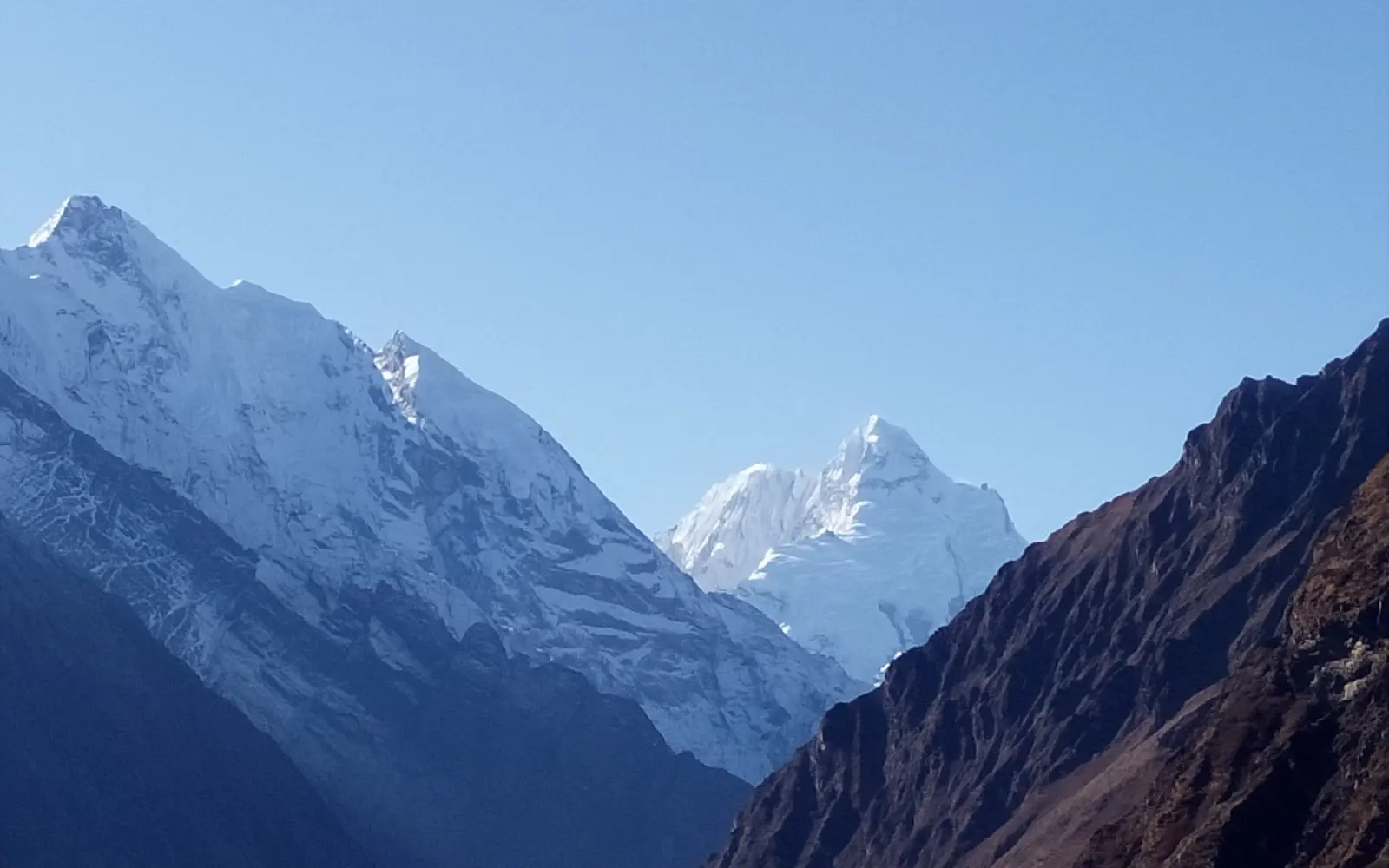
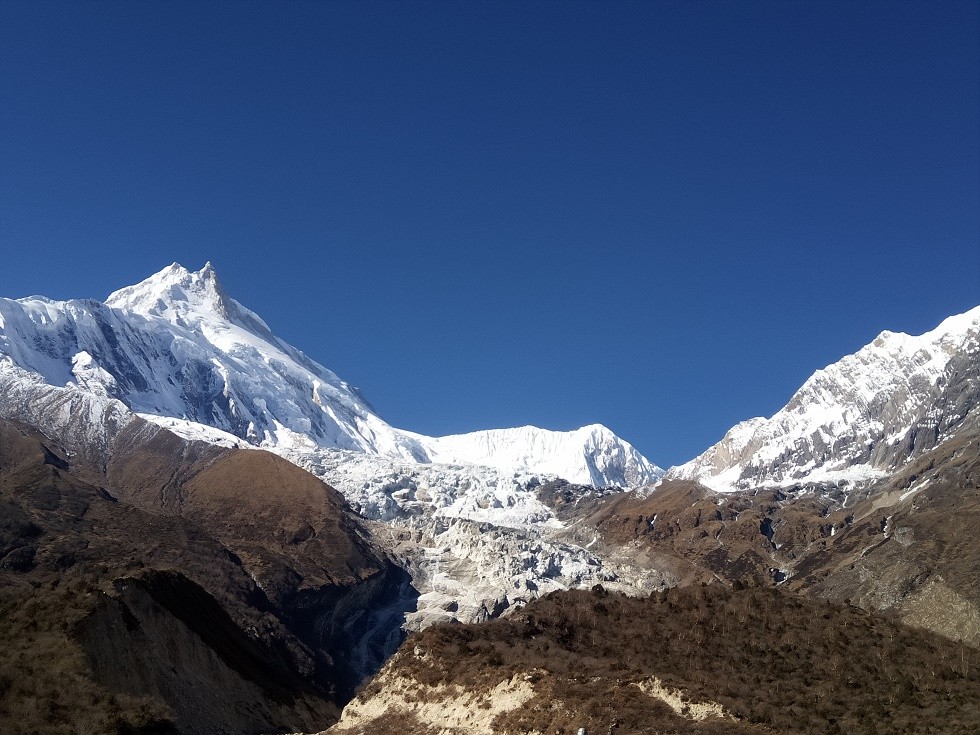
0.81855800 1738673284.webp)