[{"name":"Everest Base Camp Helicopter Tour","duration":"1","image_url":"https:\/\/www.havenholidaysnepal.com\/storage\/trip-galleries\/1\/thumb_6cd53005d75a86e373d31419d1b14d78.webp","offer_price":1195,"url":"https:\/\/www.havenholidaysnepal.com\/trips\/everest-base-camp-helicopter-tour"},{"name":"Everest Mountain Flight","duration":"1","image_url":"https:\/\/www.havenholidaysnepal.com\/storage\/trip-galleries\/4\/thumb_3b0b4f1d6f72b0ad224daf4752f2c6e0.jpg","offer_price":285,"url":"https:\/\/www.havenholidaysnepal.com\/trips\/everest-mountain-flight"},{"name":"Everest Short Trek","duration":"9","image_url":"https:\/\/www.havenholidaysnepal.com\/storage\/trip-galleries\/5\/thumb_BXPP3621.JPEG0.02033800 1727957098.webp","offer_price":995,"url":"https:\/\/www.havenholidaysnepal.com\/trips\/everest-short-trek"},{"name":"Gokyo Valley Trek","duration":"12","image_url":"https:\/\/www.havenholidaysnepal.com\/storage\/trip-galleries\/6\/thumb_10bc469b14731f23d3ce84a7092ad53f.jpg","offer_price":1195,"url":"https:\/\/www.havenholidaysnepal.com\/trips\/gokyo-valley-trek"},{"name":"15 days Annapurna Base Camp Trek","duration":"15","image_url":"https:\/\/www.havenholidaysnepal.com\/storage\/trip-galleries\/7\/thumb_87d1533bc45faf070990aef0579e4be4.jpg0.81855100 1728285496.webp","offer_price":785,"url":"https:\/\/www.havenholidaysnepal.com\/trips\/15-days-annapurna-base-camp-trek"},{"name":"Nepal Pilgrimage Tour","duration":"14","image_url":"https:\/\/www.havenholidaysnepal.com\/storage\/trip-galleries\/8\/thumb_02c3bcf2ad2e8a4c1703e90ae747b5f1.jpg","offer_price":1475,"url":"https:\/\/www.havenholidaysnepal.com\/trips\/nepal-pilgrimage-tour"},{"name":"UNESCO World Heritage Site Tour","duration":"10","image_url":"https:\/\/www.havenholidaysnepal.com\/storage\/trip-galleries\/9\/thumb_unesco-world-heritage-site-Lumbani-temple-buddhists-hindus-kathmandu-nepal0.36988600 17347617740.93089500 1737469667.webp","offer_price":715,"url":"https:\/\/www.havenholidaysnepal.com\/trips\/unesco-world-heritage-site-tour"},{"name":"Island Peak Climbing","duration":"16","image_url":"https:\/\/www.havenholidaysnepal.com\/storage\/trip-galleries\/11\/thumb_Island peak0.53947000 1734692503.webp","offer_price":2495,"url":"https:\/\/www.havenholidaysnepal.com\/trips\/island-peak-climbing"},{"name":"Upper Mustang Trek","duration":"18","image_url":"https:\/\/www.havenholidaysnepal.com\/storage\/trip-galleries\/12\/thumb_upper mustang 7 Oct-2024.jpg0.95398900 1728286166.webp","offer_price":2995,"url":"https:\/\/www.havenholidaysnepal.com\/trips\/upper-mustang-trek"},{"name":"Annapurna Circuit Trek","duration":"16","image_url":"https:\/\/www.havenholidaysnepal.com\/storage\/trip-galleries\/15\/thumb_tibetan-flags.jpg0.04843900 1728289138.webp","offer_price":985,"url":"https:\/\/www.havenholidaysnepal.com\/trips\/annapurna-circuit-trek"},{"name":"Gosainkunda Lake Trek","duration":"10","image_url":"https:\/\/www.havenholidaysnepal.com\/storage\/trip-galleries\/16\/thumb_5A8083B3-C007-41A8-853F-D0C37C97D235_1_105_c.jpeg0.52581200 1731845258.webp","offer_price":595,"url":"https:\/\/www.havenholidaysnepal.com\/trips\/gosainkunda-lake-trek"},{"name":"Zip-lining in Pokhara and Dhulikhel","duration":"1","image_url":"https:\/\/www.havenholidaysnepal.com\/storage\/trip-galleries\/18\/thumb_215f765e2ebc995dd5c800b4bfdbacc3.jpg","offer_price":82,"url":"https:\/\/www.havenholidaysnepal.com\/trips\/zip-lining-in-pokhara-and-dhulikhel"},{"name":"Annapurna Heli Tour","duration":"1","image_url":"https:\/\/www.havenholidaysnepal.com\/storage\/trip-galleries\/19\/thumb_d71a6bbb9fd4da8d1b567a5cdbdec85d.jpg","offer_price":555,"url":"https:\/\/www.havenholidaysnepal.com\/trips\/annapurna-heli-tour"},{"name":"Paragliding in Pokhara","duration":"1","image_url":"https:\/\/www.havenholidaysnepal.com\/storage\/trip-galleries\/20\/thumb_de788d2dd9726783431f882c007efae1.jpg","offer_price":65,"url":"https:\/\/www.havenholidaysnepal.com\/trips\/paragliding-in-pokhara"},{"name":"Ultra-Flight in Pokhara","duration":"1","image_url":"https:\/\/www.havenholidaysnepal.com\/storage\/trip-galleries\/21\/thumb_e27a9fb572a5c21611bb2a3c18e4b8f0.jpeg","offer_price":175,"url":"https:\/\/www.havenholidaysnepal.com\/trips\/ultra-flight-in-pokhara"},{"name":"Sarangkot Hiking","duration":"1","image_url":"https:\/\/www.havenholidaysnepal.com\/storage\/trip-galleries\/22\/thumb_100ef822fea19987166c6c1366215f15.jpg","offer_price":55,"url":"https:\/\/www.havenholidaysnepal.com\/trips\/sarangkot-hiking"},{"name":"Mera Peak Climbing","duration":"18","image_url":"https:\/\/www.havenholidaysnepal.com\/storage\/trip-galleries\/24\/thumb_d16ae3895f678cf26ffbf2455f541fb5.jpg0.31883400 1732617790.webp","offer_price":2475,"url":"https:\/\/www.havenholidaysnepal.com\/trips\/mera-peak-climbing"},{"name":"Lower Dolpo Trek","duration":"18","image_url":"https:\/\/www.havenholidaysnepal.com\/storage\/trip-galleries\/26\/thumb_Dolpo Galary - 1.JPG0.37725200 1727939952.webp","offer_price":2995,"url":"https:\/\/www.havenholidaysnepal.com\/trips\/lower-dolpo-trek"},{"name":"Nagarkot Sunrise\/Sunset Tour","duration":"1","image_url":"https:\/\/www.havenholidaysnepal.com\/storage\/trip-galleries\/27\/thumb_5147a5532644283a380f2e86f3857c13.jpg0.17748000 1728488108.webp","offer_price":30,"url":"https:\/\/www.havenholidaysnepal.com\/trips\/nagarkot-sunrise-sunset-tour"},{"name":"16 day Everest Base Camp Trek","duration":"16","image_url":"https:\/\/www.havenholidaysnepal.com\/storage\/trip-galleries\/28\/thumb_IMG_4311.JPG0.64984800 1727942213.webp","offer_price":1695,"url":"https:\/\/www.havenholidaysnepal.com\/trips\/16-day-everest-base-camp-trek"},{"name":"Ghorepani Poon Hill trek with Jungle Safari and Trishuli River Rafting -13 days","duration":"13","image_url":"https:\/\/www.havenholidaysnepal.com\/storage\/trip-galleries\/29\/thumb_Ghorepani Poon hill.jpg0.48460800 1728281439.webp","offer_price":795,"url":"https:\/\/www.havenholidaysnepal.com\/trips\/ghorepani-poon-hill-trek-with-jungle-safari-and-trishuli-river-rafting--13-days"},{"name":"Mardi Himal Trek","duration":"12","image_url":"https:\/\/www.havenholidaysnepal.com\/storage\/trip-galleries\/30\/thumb_s1.jpg0.62112600 1728200721.webp","offer_price":795,"url":"https:\/\/www.havenholidaysnepal.com\/trips\/mardi-himal-trek"},{"name":"Langtang Valley Trekking","duration":"10","image_url":"https:\/\/www.havenholidaysnepal.com\/storage\/trip-galleries\/31\/thumb_IMG_4702.JPG0.84916500 1727958504.webp","offer_price":685,"url":"https:\/\/www.havenholidaysnepal.com\/trips\/langtang-valley-trekking"},{"name":"Real Adventure Tour in Nepal","duration":"9","image_url":"https:\/\/www.havenholidaysnepal.com\/storage\/trip-galleries\/32\/thumb_ebd1b8cc78d90abe8b9003dd9a2f25bf.jpg0.82151300 1728213516.webp","offer_price":695,"url":"https:\/\/www.havenholidaysnepal.com\/trips\/real-adventure-tour-in-nepal"},{"name":"Luxury Tour in Nepal","duration":"10","image_url":"https:\/\/www.havenholidaysnepal.com\/storage\/trip-galleries\/33\/thumb_8574e61b252b18676b042caf30d830df.jpg","offer_price":1675,"url":"https:\/\/www.havenholidaysnepal.com\/trips\/luxury-tour-in-nepal"},{"name":"Luxury Everest Panorama Trek With EBC Heli Sightseeing","duration":"8","image_url":"https:\/\/www.havenholidaysnepal.com\/storage\/trip-galleries\/34\/thumb_URZL2397.JPEG0.01209600 1728027820.webp","offer_price":2395,"url":"https:\/\/www.havenholidaysnepal.com\/trips\/luxury-everest-panorama-trek-with-ebc-heli-sightseeing"},{"name":"13 day Everest Base Camp Trek with Helicopter","duration":"13","image_url":"https:\/\/www.havenholidaysnepal.com\/storage\/trip-galleries\/35\/thumb_IMG_4292.JPG0.70131500 1728029276.webp","offer_price":2095,"url":"https:\/\/www.havenholidaysnepal.com\/trips\/13-day-everest-base-camp-trek-with-helicopter"},{"name":"Manaslu Circuit Trek","duration":"16","image_url":"https:\/\/www.havenholidaysnepal.com\/storage\/trip-galleries\/36\/thumb_Mt Manaslu 03-Oct-2024.jpg0.65804900 1727938470.webp","offer_price":1055,"url":"https:\/\/www.havenholidaysnepal.com\/trips\/manaslu-circuit-trek"},{"name":"Kanchenjunga Base Camp Trek","duration":"21","image_url":"https:\/\/www.havenholidaysnepal.com\/storage\/trip-galleries\/37\/thumb_Kanchanjunga Trek -!.jpg0.54744400 1727938497.webp","offer_price":2275,"url":"https:\/\/www.havenholidaysnepal.com\/trips\/kanchenjunga-base-camp-trek"},{"name":"Ganesh Himal and Sing-La Trek","duration":"14","image_url":"https:\/\/www.havenholidaysnepal.com\/storage\/trip-galleries\/38\/thumb_Ganesh Himal slider-1.jpg0.43764500 1727937722.webp","offer_price":1775,"url":"https:\/\/www.havenholidaysnepal.com\/trips\/ganesh-himal-and-sing-la-trek"},{"name":"Island Peak Climb with Everest Base Camp Trek","duration":"21","image_url":"https:\/\/www.havenholidaysnepal.com\/storage\/trip-galleries\/39\/thumb_2be428730fe83525bc85a010564f99de.jpg","offer_price":2750,"url":"https:\/\/www.havenholidaysnepal.com\/trips\/island-peak-climb-with-everest-base-camp-trek"},{"name":"Students' Adventure Tour in Nepal","duration":"12","image_url":"https:\/\/www.havenholidaysnepal.com\/storage\/trip-galleries\/41\/thumb_a926d22fbfe08cba271c41ac289b3fd2.jpg","offer_price":995,"url":"https:\/\/www.havenholidaysnepal.com\/trips\/students-adventure-tour-in-nepal"},{"name":"7 Day Poonhill Trek","duration":"7","image_url":"https:\/\/www.havenholidaysnepal.com\/storage\/trip-galleries\/42\/thumb_6196bd69036473293a2c24cc21ed57d7.jpg0.10880600 1728205378.webp","offer_price":555,"url":"https:\/\/www.havenholidaysnepal.com\/trips\/7-day-poonhill-trek"},{"name":"7 Days Annapurna Base Camp Trek","duration":"7","image_url":"https:\/\/www.havenholidaysnepal.com\/storage\/trip-galleries\/43\/thumb_IMG_2214.JPG0.08204900 1728202033.webp","offer_price":355,"url":"https:\/\/www.havenholidaysnepal.com\/trips\/7-days-annapurna-base-camp-trek"},{"name":"3 days Poonhill Trek","duration":"3","image_url":"https:\/\/www.havenholidaysnepal.com\/storage\/trip-galleries\/44\/thumb_Poon hill.jpg0.60816600 1731412954.webp","offer_price":165,"url":"https:\/\/www.havenholidaysnepal.com\/trips\/3-days-poonhill-trek"},{"name":"Poon Hill Luxury Trek with Chitwan-12 days","duration":"12","image_url":"https:\/\/www.havenholidaysnepal.com\/storage\/trip-galleries\/45\/thumb_Poom hill.jpg0.52074500 1730180532.webp","offer_price":1175,"url":"https:\/\/www.havenholidaysnepal.com\/trips\/poon-hill-luxury-trek-with-chitwan-12-days"},{"name":"Everest Luxury Trek-7 days","duration":"7","image_url":"https:\/\/www.havenholidaysnepal.com\/storage\/trip-galleries\/46\/thumb_ACRX9330.JPEG0.93236200 1728031275.webp","offer_price":2195,"url":"https:\/\/www.havenholidaysnepal.com\/trips\/everest-luxury-trek-7-days"},{"name":"Hindu Pilgrimage Tour in Nepal-10 days","duration":"10","image_url":"https:\/\/www.havenholidaysnepal.com\/storage\/trip-galleries\/47\/thumb_a94bf96a4d31decb419f6f828a3280d2.jpg","offer_price":995,"url":"https:\/\/www.havenholidaysnepal.com\/trips\/hindu-pilgrimage-tour-in-nepal-10-days"},{"name":"Everest Base Camp Short Trek-12 days","duration":"12","image_url":"https:\/\/www.havenholidaysnepal.com\/storage\/trip-galleries\/48\/thumb_IMG_4311.JPG0.52680100 1727945154.webp","offer_price":995,"url":"https:\/\/www.havenholidaysnepal.com\/trips\/everest-base-camp-short-trek-12-days"},{"name":"Everest Base Camp Hike 12 Days","duration":"12","image_url":"https:\/\/www.havenholidaysnepal.com\/storage\/trip-galleries\/49\/thumb_IMG_4260.JPG0.51729100 1728061234.webp","offer_price":1295,"url":"https:\/\/www.havenholidaysnepal.com\/trips\/everest-base-camp-hike-12-days"},{"name":"11 Days Everest Base Camp Trek","duration":"11","image_url":"https:\/\/www.havenholidaysnepal.com\/storage\/trip-galleries\/50\/thumb_IMG_4249.JPG0.21392500 1727946959.webp","offer_price":1055,"url":"https:\/\/www.havenholidaysnepal.com\/trips\/11-days-everest-base-camp-trek"},{"name":"6 Days Annapurna Base Camp Trek","duration":"6","image_url":"https:\/\/www.havenholidaysnepal.com\/storage\/trip-galleries\/51\/thumb_6 days Abc.jpg0.58185400 1728200798.webp","offer_price":285,"url":"https:\/\/www.havenholidaysnepal.com\/trips\/6-days-annapurna-base-camp-trek"},{"name":"Annapurna Base Camp Trek","duration":"8","image_url":"https:\/\/www.havenholidaysnepal.com\/storage\/trip-galleries\/52\/thumb_IMG_2214.JPG0.29415700 1729487656.webp","offer_price":585,"url":"https:\/\/www.havenholidaysnepal.com\/trips\/annapurna-base-camp-trek"},{"name":"Everest Base Camp Trek with Helicopter Fly Out 10 Days","duration":"10","image_url":"https:\/\/www.havenholidaysnepal.com\/storage\/trip-galleries\/53\/thumb_IMG_4328.JPG0.52056600 1728058444.webp","offer_price":1875,"url":"https:\/\/www.havenholidaysnepal.com\/trips\/everest-base-camp-trek-with-helicopter-fly-out-10-days"},{"name":"Everest Base Camp Trek 14 Days","duration":"14","image_url":"https:\/\/www.havenholidaysnepal.com\/storage\/trip-galleries\/54\/thumb_Everest Base Camp Trek 14 days Oct 3 2024.JPG0.43202700 1727939745.webp","offer_price":1335,"url":"https:\/\/www.havenholidaysnepal.com\/trips\/everest-base-camp-trek-14-days"},{"name":"ABC Trek with Poonhill 11 Days","duration":"11","image_url":"https:\/\/www.havenholidaysnepal.com\/storage\/trip-galleries\/55\/thumb_ABC with fishtail.JPG0.21441100 1728277965.webp","offer_price":555,"url":"https:\/\/www.havenholidaysnepal.com\/trips\/abc-trek-with-poonhill-11-days"},{"name":"Muldai Hill Trek 9 Days","duration":"9","image_url":"https:\/\/www.havenholidaysnepal.com\/storage\/trip-galleries\/56\/thumb_7efee59f0a8c6817c8255bd2b9f3539d.jpeg0.19479300 1728213091.webp","offer_price":675,"url":"https:\/\/www.havenholidaysnepal.com\/trips\/muldai-hill-trek-9-days"},{"name":"Mardi Himal Trek 6 days","duration":"6","image_url":"https:\/\/www.havenholidaysnepal.com\/storage\/trip-galleries\/57\/thumb_slider 1.jpeg0.36909700 1728184981.webp","offer_price":590,"url":"https:\/\/www.havenholidaysnepal.com\/trips\/mardi-himal-trek-6-days"},{"name":"Mardi Himal Trek 7 days","duration":"7","image_url":"https:\/\/www.havenholidaysnepal.com\/storage\/trip-galleries\/58\/thumb_slider1.jpg0.61666600 1728206414.webp","offer_price":620,"url":"https:\/\/www.havenholidaysnepal.com\/trips\/mardi-himal-trek-7-days"},{"name":"Mardi Himal Trek 8 Days","duration":"8","image_url":"https:\/\/www.havenholidaysnepal.com\/storage\/trip-galleries\/59\/thumb_sli1.jpg0.38569100 1728206631.webp","offer_price":695,"url":"https:\/\/www.havenholidaysnepal.com\/trips\/mardi-himal-trek-8-days"},{"name":"14 Days Manaslu Trek","duration":"14","image_url":"https:\/\/www.havenholidaysnepal.com\/storage\/trip-galleries\/60\/thumb_sunrise-mt-manaslu-during-manaslu-circuit-larke-pass-trekking-himalaya-nepal (1)0.81855800 1738673284.webp","offer_price":885,"url":"https:\/\/www.havenholidaysnepal.com\/trips\/14-days-manaslu-trek"},{"name":"Dhampus-Sarangkot Trek with Chitwan 8 days","duration":"8","image_url":"https:\/\/www.havenholidaysnepal.com\/storage\/trip-galleries\/61\/thumb_Sarangkot Bhangyang.jpg0.75461400 1728210333.webp","offer_price":790,"url":"https:\/\/www.havenholidaysnepal.com\/trips\/dhampus-sarangkot-trek-with-chitwan-8-days"},{"name":"7 Days Golden Triangle Tour","duration":"7","image_url":"https:\/\/www.havenholidaysnepal.com\/storage\/trip-galleries\/62\/thumb_311ce1d117ee0ba75402a7c301bcdf830.73532400 1739179809.webp","offer_price":845,"url":"https:\/\/www.havenholidaysnepal.com\/trips\/7-days-golden-triangle-tour"},{"name":"Annapurna Circuit Trek 12 days","duration":"12","image_url":"https:\/\/www.havenholidaysnepal.com\/storage\/trip-galleries\/63\/thumb_IMG_20161024_092237.jpg0.57796600 1728289938.webp","offer_price":695,"url":"https:\/\/www.havenholidaysnepal.com\/trips\/annapurna-circuit-trek-12-days"},{"name":"Everest Base Camp Budget Trek 16 Days","duration":"16","image_url":"https:\/\/www.havenholidaysnepal.com\/storage\/trip-galleries\/64\/thumb_IMG_4423.JPG0.92579200 1728144669.webp","offer_price":958,"url":"https:\/\/www.havenholidaysnepal.com\/trips\/everest-base-camp-budget-trek-16-days"},{"name":"Poonhill Budget Trek 7 Days","duration":"7","image_url":"https:\/\/www.havenholidaysnepal.com\/storage\/trip-galleries\/65\/thumb_5be067852d0c5228d6f3155bc425c6b5.jpg","offer_price":395,"url":"https:\/\/www.havenholidaysnepal.com\/trips\/poonhill-budget-trek-7-days"},{"name":"Annapurna Base Camp Budget Trek 8 Days","duration":"8","image_url":"https:\/\/www.havenholidaysnepal.com\/storage\/trip-galleries\/66\/thumb_Pokhara.jpg0.16188000 1728212001.webp","offer_price":375,"url":"https:\/\/www.havenholidaysnepal.com\/trips\/annapurna-base-camp-budget-trek-8-days"},{"name":"The Real UNESCO Seven World Heritage Tour in Kathmandu 4 days","duration":"4","image_url":"https:\/\/www.havenholidaysnepal.com\/storage\/trip-galleries\/67\/thumb_Baudha Stupa.JPG0.63906900 1728201021.webp","offer_price":380,"url":"https:\/\/www.havenholidaysnepal.com\/trips\/the-real-unesco-seven-world-heritage-tour-in-kathmandu-4-days"},{"name":"Everest Base Camp Jeep Ride with Helicopter Return","duration":"14","image_url":"https:\/\/www.havenholidaysnepal.com\/storage\/trip-galleries\/68\/thumb_788ee5b63a6efb6f3c3d048b4270daca.JPG","offer_price":1995,"url":"https:\/\/www.havenholidaysnepal.com\/trips\/everest-base-camp-jeep-ride-with-helicopter-return"},{"name":"Annapurna Base Camp Jeep Ride with Helicopter Return 7 days","duration":"7","image_url":"https:\/\/www.havenholidaysnepal.com\/storage\/trip-galleries\/69\/thumb_abc jeep.jpg0.10280600 1728204064.webp","offer_price":1455,"url":"https:\/\/www.havenholidaysnepal.com\/trips\/annapurna-base-camp-jeep-ride-with-helicopter-return-7-days"},{"name":"Everest Base Camp Trek","duration":"15","image_url":"https:\/\/www.havenholidaysnepal.com\/storage\/trip-galleries\/70\/thumb_Everest Base Camp Trek 3 oct- 2024.JPG0.58445300 1727941472.webp","offer_price":1375,"url":"https:\/\/www.havenholidaysnepal.com\/trips\/everest-base-camp-trek"},{"name":"7 UNESCO World Heritage Tour Kathmandu 2 days","duration":"2","image_url":"https:\/\/www.havenholidaysnepal.com\/storage\/trip-galleries\/72\/thumb_Bhaktipur 3.jpg0.05559600 1728201496.webp","offer_price":150,"url":"https:\/\/www.havenholidaysnepal.com\/trips\/7-unesco-world-heritage-tour-kathmandu-2-days"},{"name":"Day Tour to UNESCO Heritage Sites","duration":"1","image_url":"https:\/\/www.havenholidaysnepal.com\/storage\/trip-galleries\/73\/thumb_228A1018.jpg0.79892500 1728199793.webp","offer_price":55,"url":"https:\/\/www.havenholidaysnepal.com\/trips\/day-tour-to-unesco-heritage-sites"},{"name":"Golden Triangle Tour in Nepal","duration":"8","image_url":"https:\/\/www.havenholidaysnepal.com\/storage\/trip-galleries\/74\/thumb_f54139cf9100f00015ffe0400687e946.webp","offer_price":588,"url":"https:\/\/www.havenholidaysnepal.com\/trips\/golden-triangle-tour-in-nepal"},{"name":"Everest Base Camp Honeymoon Tour by Helicopter with Pokhara","duration":"7 days","image_url":"https:\/\/www.havenholidaysnepal.com\/storage\/trip-galleries\/76\/thumb_RJTL7517.JPEG0.40261600 1731499989.webp","offer_price":9999,"url":"https:\/\/www.havenholidaysnepal.com\/trips\/everest-base-camp-honeymoon-tour-by-helicopter-with-pokhara"},{"name":"Yoga and Meditation Retreat Tour in Nepal","duration":"10 days","image_url":"https:\/\/www.havenholidaysnepal.com\/storage\/trip-galleries\/77\/thumb_decf8e33-6617-4400-9df0-63bf75509adf.JPG0.51948300 1731574810.webp","offer_price":2575,"url":"https:\/\/www.havenholidaysnepal.com\/trips\/yoga-and-meditation-retreat-tour-in-nepal"},{"name":"Chisapani-Nagarkot Trek","duration":"3","image_url":"https:\/\/www.havenholidaysnepal.com\/storage\/trip-galleries\/78\/thumb_0b64dfceaeab48ac36d685476bdebafb.webp","offer_price":165,"url":"https:\/\/www.havenholidaysnepal.com\/trips\/chisapani-nagarkot-trek"},{"name":"Chitwan Jungle Safari Tour","duration":"2","image_url":"https:\/\/www.havenholidaysnepal.com\/storage\/trip-galleries\/79\/thumb_IMG_1696.JPG0.28467800 1733054554.webp","offer_price":175,"url":"https:\/\/www.havenholidaysnepal.com\/trips\/chitwan-jungle-safari-tour"},{"name":"Kailash Overland Tour","duration":"16","image_url":"https:\/\/www.havenholidaysnepal.com\/storage\/trip-galleries\/80\/thumb_PA2605230.68496700 1735818657.webp","offer_price":2495,"url":"https:\/\/www.havenholidaysnepal.com\/trips\/kailash-overland-tour"},{"name":"4 nights 5 days Bhutan Tour","duration":"5","image_url":"https:\/\/www.havenholidaysnepal.com\/storage\/trip-galleries\/81\/thumb_PB0508470.23069500 1735828937.webp","offer_price":1265,"url":"https:\/\/www.havenholidaysnepal.com\/trips\/4-nights-5-days-bhutan-tour"},{"name":"Everest Base Camp Trek Without Flying","duration":"16","image_url":"https:\/\/www.havenholidaysnepal.com\/storage\/trip-galleries\/82\/thumb_308b054484eddc042e092e1ae2ae5586.webp","offer_price":685,"url":"https:\/\/www.havenholidaysnepal.com\/trips\/everest-base-camp-trek-without-flying"},{"name":"Everest Base Camp Trek by Land","duration":"16","image_url":"https:\/\/www.havenholidaysnepal.com\/storage\/trip-galleries\/83\/thumb_8f0f2784a3ae7343d193b64fe8d47c96.webp","offer_price":675,"url":"https:\/\/www.havenholidaysnepal.com\/trips\/everest-base-camp-trek-by-land"},{"name":"Everest Base Camp Trek by Jeep","duration":"16","image_url":"https:\/\/www.havenholidaysnepal.com\/storage\/trip-galleries\/84\/thumb_f82b3acdfc933bc3e0197624c001b0a6.webp","offer_price":675,"url":"https:\/\/www.havenholidaysnepal.com\/trips\/everest-base-camp-trek-by-jeep"},{"name":"Everest Base Camp Trek without Lukla Flight","duration":"16","image_url":"https:\/\/www.havenholidaysnepal.com\/storage\/trip-galleries\/85\/thumb_2d0acc76dc958e3122a3745074989914.webp","offer_price":675,"url":"https:\/\/www.havenholidaysnepal.com\/trips\/everest-base-camp-trek-without-lukla-flight"},{"name":"Langtang Valley Trek","duration":"7","image_url":"https:\/\/www.havenholidaysnepal.com\/storage\/trip-galleries\/86\/thumb_a845db06c5feada1478e8aed659fce97.webp","offer_price":195,"url":"https:\/\/www.havenholidaysnepal.com\/trips\/langtang-valley-trek"},{"name":"Everest Base Camp Trek with Gokyo Lake","duration":"17","image_url":"https:\/\/www.havenholidaysnepal.com\/storage\/trip-galleries\/87\/thumb_c6aa32f7654f2eda78134bc84ac70b79.webp","offer_price":1885,"url":"https:\/\/www.havenholidaysnepal.com\/trips\/everest-base-camp-trek-with-gokyo-lake"},{"name":"Everest Three Passes Trek","duration":"19","image_url":"https:\/\/www.havenholidaysnepal.com\/storage\/trip-galleries\/88\/thumb_db5364eaab56f5755da55868f8ca4258.webp","offer_price":1735,"url":"https:\/\/www.havenholidaysnepal.com\/trips\/everest-three-passes-trek"},{"name":"Annapurna Base Camp Trek From Pokhara","duration":"5","image_url":"https:\/\/www.havenholidaysnepal.com\/storage\/trip-galleries\/89\/thumb_49c813cf1054ff06108963924a78ee88.webp","offer_price":255,"url":"https:\/\/www.havenholidaysnepal.com\/trips\/annapurna-base-camp-trek-from-pokhara"},{"name":"Sarangkot Sunrise Tour from Pokhara","duration":"1","image_url":"https:\/\/www.havenholidaysnepal.com\/storage\/trip-galleries\/90\/thumb_932d995b8fb702634a23e8f9a0432c6e.webp","offer_price":35,"url":"https:\/\/www.havenholidaysnepal.com\/trips\/sarangkot-sunrise-tour-from-pokhara"},{"name":"Langtang Valley Trek-8 days","duration":"8","image_url":"https:\/\/www.havenholidaysnepal.com\/storage\/trip-galleries\/91\/thumb_81d3d0a6979c9ed01f65d5ade53820b2.webp","offer_price":250,"url":"https:\/\/www.havenholidaysnepal.com\/trips\/langtang-valley-trek-8-days"},{"name":"Manaslu Circuit Trek 12 days","duration":"12","image_url":"https:\/\/www.havenholidaysnepal.com\/storage\/trip-galleries\/92\/thumb_d8251bbef0c8a246a02bda5c150a27c2.webp","offer_price":675,"url":"https:\/\/www.havenholidaysnepal.com\/trips\/manaslu-circuit-trek-12-days"},{"name":"2 Days Poon Hill Trek","duration":"2","image_url":"https:\/\/www.havenholidaysnepal.com\/storage\/trip-galleries\/93\/thumb_9d8fa8f60767538857d6c7cb3a7fee8b.webp","offer_price":135,"url":"https:\/\/www.havenholidaysnepal.com\/trips\/2-days-poon-hill-trek"},{"name":"Upper Mustang Jeep Tour","duration":"6","image_url":"https:\/\/www.havenholidaysnepal.com\/storage\/trip-galleries\/94\/thumb_9a3098a6c860b87ad3339773ef5435b9.webp","offer_price":1095,"url":"https:\/\/www.havenholidaysnepal.com\/trips\/upper-mustang-jeep-tour"},{"name":"Tsum Valley Trek","duration":"11","image_url":"https:\/\/www.havenholidaysnepal.com\/storage\/trip-galleries\/95\/thumb_704a6a1eb293553827633dbd8ad7d22c.webp","offer_price":775,"url":"https:\/\/www.havenholidaysnepal.com\/trips\/tsum-valley-trek"},{"name":"Mardi Himal Trek from Pokhara","duration":"4","image_url":"https:\/\/www.havenholidaysnepal.com\/storage\/trip-galleries\/96\/thumb_c92e9ee49c2564a11c7a9ba593439efc.webp","offer_price":295,"url":"https:\/\/www.havenholidaysnepal.com\/trips\/mardi-himal-trek-from-pokhara"},{"name":"4 Days Poon Hill Trek","duration":"4","image_url":"https:\/\/www.havenholidaysnepal.com\/storage\/trip-galleries\/97\/thumb_c349e182edd0858f3e3409d945f0d2ec.webp","offer_price":215,"url":"https:\/\/www.havenholidaysnepal.com\/trips\/4-days-poon-hill-trek"},{"name":"Poon Hill Sunrise Jeep Tour from Pokhara","duration":"2","image_url":"https:\/\/www.havenholidaysnepal.com\/storage\/trip-galleries\/98\/thumb_509875052b16f6f9156db386e3592eb8.webp","offer_price":260,"url":"https:\/\/www.havenholidaysnepal.com\/trips\/poon-hill-sunrise-jeep-tour-from-pokhara"},{"name":"Muktinath Jeep Tour from Pokhara","duration":"3","image_url":"https:\/\/www.havenholidaysnepal.com\/storage\/trip-galleries\/99\/thumb_1651790cb7422703fe86d472a35d4f90.webp","offer_price":255,"url":"https:\/\/www.havenholidaysnepal.com\/trips\/muktinath-jeep-tour-from-pokhara"},{"name":"Ghorepani Poon Hill Trek from Pokhara","duration":"5","image_url":"https:\/\/www.havenholidaysnepal.com\/storage\/trip-galleries\/100\/thumb_27fa62452af4ea8e08544aaa035cc446.webp","offer_price":295,"url":"https:\/\/www.havenholidaysnepal.com\/trips\/ghorepani-poon-hill-trek-from-pokhara"},{"name":"Ghandruk, Poon Hill, Muktinath and Upper Mustang Tour","duration":"7 days","image_url":"https:\/\/www.havenholidaysnepal.com\/storage\/trip-galleries\/101\/thumb_a7dd15032cd9693005233b1df7dc63d3.webp","offer_price":685,"url":"https:\/\/www.havenholidaysnepal.com\/trips\/ghandruk-poon-hill-muktinath-and-upper-mustang-tour"},{"name":"Nar Phu Valley Trek with Annapurna Circuit","duration":"16 days","image_url":"https:\/\/www.havenholidaysnepal.com\/storage\/trip-galleries\/102\/thumb_21f5af1d6f698a6898b64413bcc19c69.webp","offer_price":1395,"url":"https:\/\/www.havenholidaysnepal.com\/trips\/nar-phu-valley-trek-with-annapurna-circuit"},{"name":"Poon Hill-Jhino Danda Hot Spring Trek","duration":"4","image_url":"https:\/\/www.havenholidaysnepal.com\/storage\/trip-galleries\/103\/thumb_b1a8563edaf102468aab613332282c6c.webp","offer_price":215,"url":"https:\/\/www.havenholidaysnepal.com\/trips\/poon-hill-jhino-danda-hot-spring-trek"},{"name":"Annapurna Base Camp Trek with Helicopter Return","duration":"4","image_url":"https:\/\/www.havenholidaysnepal.com\/storage\/trip-galleries\/104\/thumb_928d650987e2db5f449127b41966da53.webp","offer_price":895,"url":"https:\/\/www.havenholidaysnepal.com\/trips\/annapurna-base-camp-trek-with-helicopter-return"},{"name":"Annapurna Circuit with Tilicho Lake Trek","duration":"10","image_url":"https:\/\/www.havenholidaysnepal.com\/storage\/trip-galleries\/105\/thumb_a8c9d8bf4041c0fa676d6c239abfd24c.webp","offer_price":615,"url":"https:\/\/www.havenholidaysnepal.com\/trips\/annapurna-circuit-with-tilicho-lake-trek"}]
Pisang: A Charming Village on the Annapurna Circuit
Pisang: A Charming Village on the Annapurna Circuit
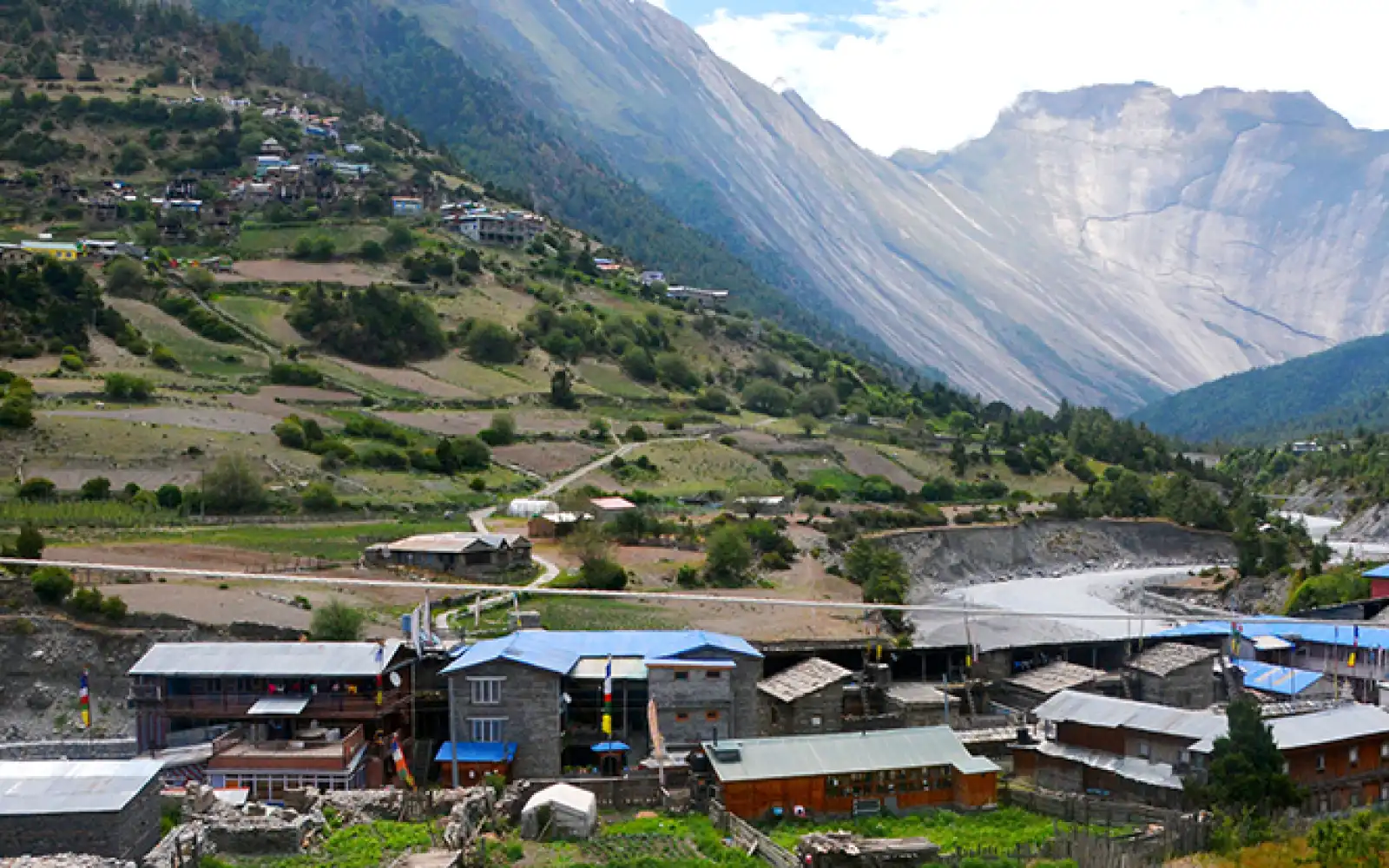
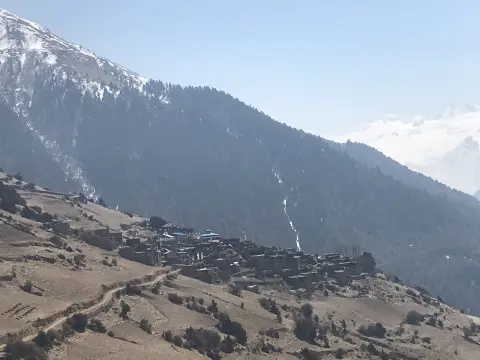
To begin with, Pisang is a lovely village on Annapurna Circuit Trek. It is at 3,200 meters and has breathtaking Himalayan mountain vistas. Owing to the geographical position, Pisang is a perfect resting point for trekkers. In addition, the village evidences the transition from green forests to alpine scenery. Thus, it has a dramatic landscape and climatic change.
Unbelievably, Pisang is divided into two parts: Lower Pisang and Upper Pisang. Lower Pisang is near the Marsyangdi River with better road and lodge connectivity. Although, Upper Pisang offers good views of Annapurna II and old village scenery. Therefore, the trekking groups make the decision of stay based on preference and altitude acclimatization. Both sides provide calmness, cultural scenery, and natural atmosphere.
Actually, Pisang lies beneath Annapurna II (7,937 m), Annapurna IV (7,525 m), and Gangapurna (7,455 m). Tilicho Peak (7,134 m) is also visible from certain vistas above Pisang. These snow peaks make stunning backdrops at sunrise and sunset. So, Pisang is every photographer's and landscape lover's delight. The clear blue sky here adds exceptional grandeur to mountain scenery.
Because of its altitude, Pisang is important for acclimatization. Trekkers generally rest here prior to heading to Manang at 3,540 meters. Also, a high route via Ghyaru and Ngawal begins from Upper Pisang. That route has better visibility and less disruption by cars. So, Pisang helps with safety, high-altitude preparation, and route flexibility.
Therefore, Pisang is one of the major highlights of the Annapurna Circuit. Its scenery, height, and culture blend well for an unforgettable overnight stop. So, all trekkers have to balance the possibility of overnight stay at Pisang.
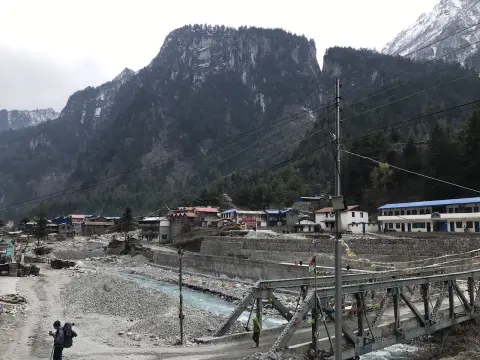
Pisang lies in Nepal's Manang District in Annapurna Conservation Area. It lies at an altitude of 3,200 meters above sea level. There are lush pine forests and Himalayan mountains around the village that meet the sky. Thus, it is the boundary of dry and alpine trek zone. It is where differing terrain and vegetation arise from.
South of it is Marsyangdi River, which is cut out of the valley. Steep cliffs and level fields cover both sides of this beautiful river. Upper Pisang is higher up, offering broad views of the Annapurna range. So the landscape of Pisang adds depth to the trekking experience. Trekkers are likely to halt here to soak in the mountain splendor.
Annapurna II (7,937 m) and Annapurna IV (7,525 m) rise nearby. Gangapurna (7,455 m) and Tilicho Peak (7,134 m) can also be viewed from Upper Pisang. The arid, rocky slope of the valley presages the coming Mustang-like terrain. Because of this, Pisang forms the transition phase between thick forest and high mountain desert. Hence, trekkers experience changes in landscape as well as temperature of the air.
Secondly, Pisang is situated just below Thorong La Pass trail section. Thorong La Pass stands at 5,416 meters and is the highest point of the trek. Thus, Pisang is a geographic and strategic location in the trekking process. Its strategic location offers acclimatization and route-planning options. Therefore, the majority of people make Pisang a base for side treks.
Generally, Pisang's geography affects the nature and attractiveness of the trail. The surrounding landscapes offer natural variation and breathtaking scenery. Therefore, Pisang is a great stopover in the Annapurna region.
Pisang is reachable by foot, jeep, and sometimes motorbikes based on season. The village is located along the classic Annapurna Circuit trekking route. From Chame (2,650 m), Pisang is a one-day walk or half-day jeep ride. Trekkers usually walk 5 to 6 hours to the Lower Pisang. Therefore, it is an appropriate stop after acclimatizing at Chame.
Actually, Lower Pisang is connected by jeep roads to Chame and Manang. But they are dusty, bumpy, and suffer from landslides during monsoon. So, most of the trekkers prefer to walk for scenery and fresh air. Upper Pisang has a route that continues to Ghyaru and Ngawal villages. This is the high route with more views of mountains and fewer vehicles.
Moreover, Lower and Upper Pisang are connected by trekking trails and short stair climbs. Transfer between both sections can easily be done by trekkers in 20–30 minutes. Signposts guide trekkers, and villagers typically give directions. The trail is therefore friendly, accessible, and well-trodden. Horse or mule transport can even be organized for equipment or emergencies.
Because Pisang is at 3,200 meters, access may be challenging in winter. Heavy snow sometimes blocks roads and trails in January and February. Access is smooth and weather is fine in spring and autumn. Therefore these months are best to reach Pisang in comfort. Thus, planning your trek well improves access and trail amenity.
Briefly, Pisang is accessible by both road and trekking but far enough to be real. Its location makes it easy to switch between villages and altitude stages. Thus, it is an integral and accessible part of the Annapurna Circuit path.
Annapurna Circuit with Tilicho Lake Trek | 10 days
Secondly, Pisang boasts good facilities for trekkers despite being off the main road. Lower Pisang has better tea houses, lodges, and shops. They have clean bedrooms, hot food, and charging facilities for electronics. Moreover, some lodges are solar-powered and offer limited Wi-Fi services. Thus, trekkers can remain connected while getting to see mountains.
Actually, Upper Pisang, albeit small, boasts cozy lodges with warm hospitality. The accommodation is simple but tidy, with regular stunning views of Annapurna II. Most tea houses serve standard Nepali fare like dal bhat and vegetable soup. Besides that, there are rudimentary medical care and pharmacies in some lodges. Pisang is therefore equipped to handle minor emergencies and health problems.
Similarly, there is an adequate water supply at Pisang, with a number of tea houses offering purified water. It is always wise to bring a water filter or tablets, nonetheless. Bathrooms are usually communal and basic but clean. There are hot showers that are dependent on the sun and weather. However, at the end of a long day, warm water is usually a welcome respite.
Likewise, power is available in the daytime and sometimes at night. It is a small fee to charge your camera or phone in most places. Internet is slow but better in Lower Pisang than Upper Pisang. In addition, tea houses have warm social spaces where trekkers meet. It allows for fellowship building and sharing trail news.
Generally, Pisang's facilities meet the trekkers' basic needs well. Clean accommodation, food, water, and connectivity all come together to make one comfortable. Hence, Pisang strikes a good balance of convenience and Himalayan genuineness.
First, Pisang's prime attraction is its marvelous view of Annapurna II (7,937 m). The towering summit dominates the skyline and charms every eye of the visitors. Similarly, Annapurna IV (7,525 m), Gangapurna (7,455 m), and Tilicho Peak (7,134 m) add to the vista. These snow-topped giants glow beautifully at sunrise and sunset. Therefore, Pisang is heaven for a photographer and nature lover.
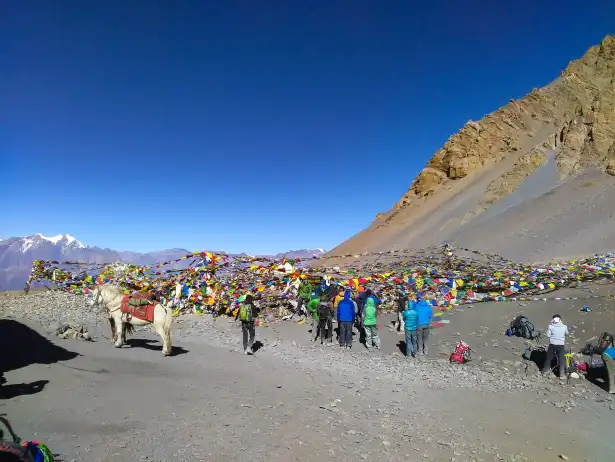
Second, Pisang Monastery is a key cultural attraction. Located in Upper Pisang, it offers spiritual calm and a glimpse of village existence. The monastery is visited by trekkers who are there to admire its architecture and serene setting. Additionally, the monastery typically has multicolored prayer flags fluttering in the wind. This contributes to the cultural experience of Pisang.
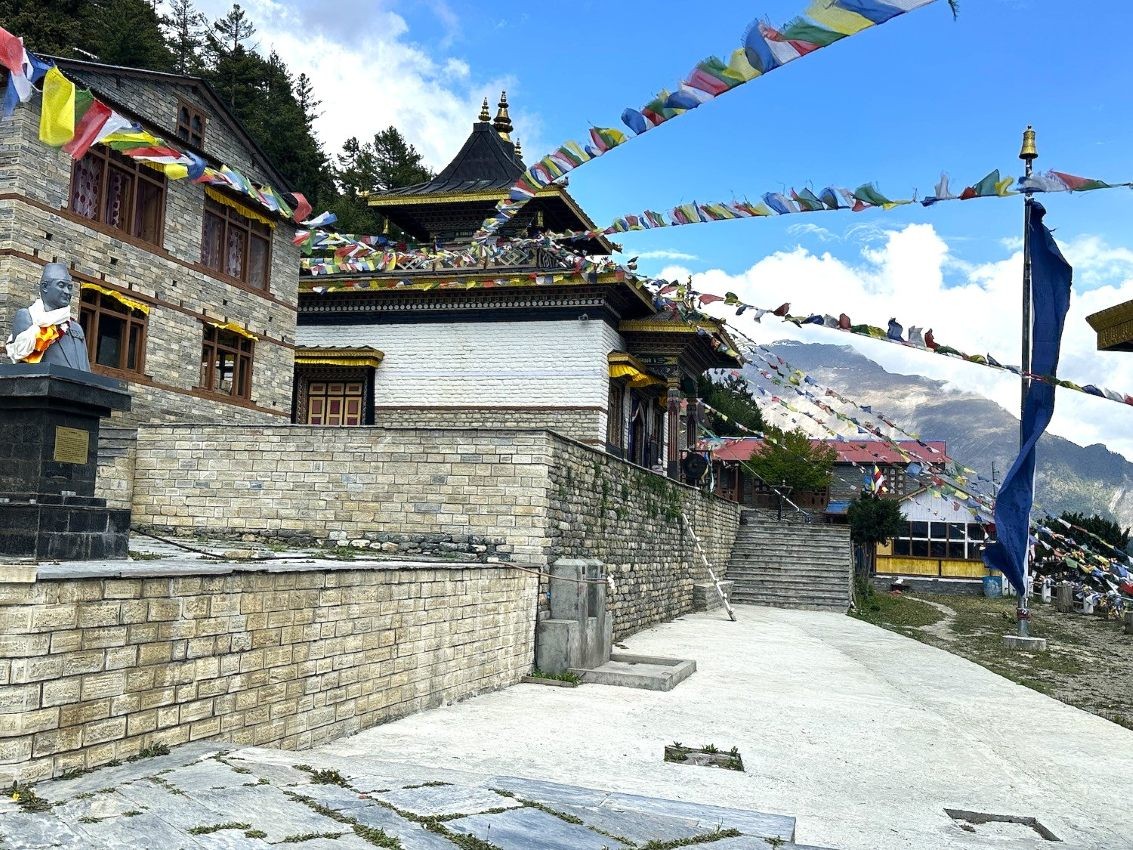
Pisang Monastery – A Spiritual Landmark on the Annapurna Circuit Trek Located in Upper Pisang (3,300 m), the historic Pisang Monastery is one of the Annapurna Circuit's most peaceful cultural highlights. Surrounded by prayer flags and snow-capped peaks.
Third, Pisang also features old traditional stone houses and mani walls. These are a sign of Tibetan Buddhist culture and add local color to the village. The majority of the houses have painted windows and prayer wheels. The village, therefore, is a living museum of mountain culture. Walking down Pisang streets is a tranquil cultural experience.
And lastly, being near forest trails makes Pisang the place for adventure. Short treks over pine and rhododendron forests take one to peaceful viewpoints. Panoramic views and birdwatching are on offer here for trekkers. Also, the Ghyaru and Ngawal trek commences from Pisang. This higher path has great mountain scenery and less crowds.
Overall, Pisang's natural beauty and cultural diversity warrant a high rating. Trekkers have stunning peaks, peaceful monastery, and traditional villages here. Pisang thus offers the best mix of nature and culture on the trek.
To begin with, photography is a top activity in Pisang. Early morning and late afternoon offer enchanting light over the Himalayas. Trekkers photograph Annapurna II (7,937 m) and surrounding peaks. Similarly, colorful prayer flags and monastery are rare photo objects. Therefore, Pisang is a photographer's paradise.
Apart from photography, trekkers make short hikes in and around Pisang. Trails over pine forests and terraces provide fresh air and exercise. Local viewpoints offer tranquil spaces to sit and unwind or ponder. Moreover, trekking between Lower Pisang and Upper Pisang offers cultural experiences. You see local homes, farming lifestyle, and Buddhist symbols at close range.
Another popular activity is Pisang Monastery visitation. Tourists gain insights into Tibetan Buddhism and local spiritual practices. The tranquil atmosphere allows for reflection and appreciation. Moreover, trekkers usually engage with monks or local guides. This gives richness to the overall trekking experience.
Also, relaxing in tea houses is also common in Pisang. Trekkers rest and share experiences with fellow travelers with hot meals. Some utilize the time to recover for higher altitude stages. Others enjoy reading, writing, or simply soaking in the mountain view. Pisang thus suits both activity and rest in equal measure.
In conclusion, Pisang offers photography, trekking, cultural site visits, and resting. The above activities complement adventure with peace and improve the trekking experience. Thus, tourists discover plenty to do in this picturesque Himalayan village.
What is Pisang Popular for?
First, Pisang is renowned for its lovely mountain vista. Annapurna II (7,937 m) and nearby peaks make up a breathtaking skyline. Many trekkers stop over here to unwind and revel in these breathtaking vistas. Second, Pisang is a transition zone between forest and alpine areas. Trekkers are well aware of the dramatic climate and landscape change here. It gives a glimpse of more spectacular mountain landscape ahead. Therefore, it is of interest to both nature lovers and photographers alike. The contrast attracts lots of tourists during trekking season.
Moreover, Pisang's ancient Tibetan Buddhist heritage is a major draw. The monastery, mani walls, and prayer flags complete the experience. Tourists relish the authentic mountain village lifestyle still prevailing here. Friendly locals and quiet streets make it all the more endearing. Therefore, Pisang provides cultural experience alongside nature.
Finally, Pisang possesses good accommodation and eating facilities for trekkers. This allows it to be a good place to overnight in comfort and convenience. Additionally, the village meets the high route via Ghyaru and Ngawal. This gives trekkers flexibility and choice on the trek. Therefore, Pisang remains a convenient and popular choice.
Therefore, Pisang remains a popular one due to views, culture, location, and comfort. These features make it a favorite on the Annapurna Circuit. So, most trekkers go out of their way to linger awhile in Pisang during their trek.
To begin with, there are plenty of tea houses and lodges in Pisang for trekkers. Lower Pisang offers greater diversity with larger lodges. They usually provide twin rooms, clean beds, and heating facilities. Also, most lodges offer solar-heated hot showers and charging facilities. So, trekkers enjoy the luxury of comfort and convenience.
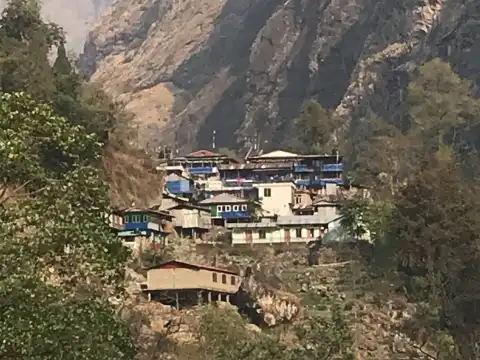
Moreover, Upper Pisang offers smaller, more rustic lodges with stunning views. The rooms are simple and cozy, sometimes with wooden furniture. As Upper Pisang is less populated, lodges provide peaceful overnight stays. Freshly cooked local food like dal bhat and soups is provided by most tea houses. Vegetarian and non-vegetarian foods are easily found.
Likewise, electricity is generally available during the day and at night. Charging the devices is usually charged for a little money in most lodges. Wi-Fi is rare but accessible in some Lower Pisang lodges. Bathrooms are shared and hygienic with cold or solar-heated water. Therefore, basic amenities are appropriate for trekkers.
In fact, advance booking during peak trekking seasons to obtain rooms is recommended. Popular as it meets, Pisang is not overly crowded with numerous lodges. The proprietors are courteous and typically provide good trail advice. The majority of tourists enjoy the friendly hospitality and mountain atmosphere. Therefore, Pisang is a friendly and homely stopover on the circuit.
In general, Pisang accommodation is a combination of comfort, tradition, and service. The tea houses provide clean rooms, tasty food, and essential facilities. Thus, the trekkers can sleep peacefully and prepare themselves for the higher altitude stages.
Best Time to Visit
Firstly, spring and autumn season is the best time for visiting Pisang. Spring is March to May with sunny days and flowering rhododendrons. As well as autumn from September to November with clear weather and cool winds. These seasons provide reliable weather and wonderful mountain views. So, most of the trekkers prefer these months for visiting Pisang.
In spring, fields and forests in Pisang become filled with flowers and birds. The temperature is moderate, ranging from 10°C to 18°C during the day. Evenings are cold but easy to withstand in layered attire. Summit mountains like Annapurna II shine under the blue sky. Spring, therefore, offers a vibrant and scenic trekking experience.
Actually, fall offers dry air, less rains, and reddish sunsets behind mountains. Daytime temperatures range from 8°C to 16°C, and the evenings dip below 5°C. The weather is best for long treks and obstruction-free photography of mountains. Local cultural festivities and festivals also add to the vibrancy of the region. Thus, autumn remains a good trekking season for Pisang.
Unlike that, Winter (December to February), on the other hand, is cold and may also experience snow. Some of the lodges may close down, and trails become slippery or icy. Monsoon months (June to August) witness heavy rainfall and landslides. Thus, trekking during these seasons requires special attention and precautions. The majority of the tourists avoid winter and monsoon for Pisang tours.
In summary, Spring and autumn are the best seasons for Pisang treks overall. These seasons guarantee pleasant weather, safe trails, and marvelous views. So plan your trip accordingly to experience the best.
Ghorepani Poon Hill trek with Jungle Safari and Trishuli River Rafting -13 days | 13 days
To begin with, Pisang experiences a cool mountain climate typical of high Himalayan villages. The village lies at an elevation of 3,200 meters and experiences four seasons. Spring is characterized by pleasant days and cold nights with blooming forests. Day temperatures range between 10°C and 18°C, while the nights fall near 5°C. It experiences clear weather for the most part, which is ideal for trekking and photography.
Actually, Autumn is dry and crisp with excellent visibility and lower temperatures. Days range from 8°C to 16°C, and nights freeze. Heavily clear skies with snow-filled peaks fully visible. Sightseeing and trekking here are best in these months. Winds blow locally, chilling the air; one must dress warmly.
Likewise, Summer or monsoon months of June, July, and August see heavy rain. Paths are muddy, the rivers swell up, and landslides are likely. Perpetual cloud cover reduces mountain visibility and makes trekking unpleasant.
Moreover, humidity rises, and leeches are found at lower levels of forest. Thus, the majority shy away from trekking Pisang during monsoon. Winter is marked by chilly, dry conditions and infrequent snowfall in higher areas. Temperature drops below zero at night, and the situation is challenging. Lodges do close down, but the days may be clear and sunny. Winter trekking requires warm gear and acclimatization to cold. However, the fresh atmosphere makes mountain vistas stunning.
Thus, climatic conditions of Pisang transform significantly with the seasons. Spring and fall provide the most pleasant climate. Knowledge of the climate enables trekkers to prepare for a safe trek.
Upper Pisang – The Scenic Highland Village on Annapurna Circuit Trail
Upper Pisang is the higher settlement of Pisang village. It lies at about 3,300 meters elevation above sea level, above Lower Pisang. Because it is at a high elevation, it has wider and more distant views of the Himalayas. Most importantly, Upper Pisang has a view of Annapurna II (7,937 m), Annapurna IV, and Gangapurna peaks. So, it is a photographer's and trekkers' delight.
In addition, Upper Pisang still has a traditional Tibetan Buddhist atmosphere. You will find so-called old stone houses, mani walls, and prayer flags everywhere. The Pisang Monastery is also found here, attracting those who want to have a cultural experience of the region. Its colorful architecture and serene environment make it a spiritual experience. As such, many trekkers find it necessary to visit Upper Pisang to view the monastery and local life.
Secondly, it is the beginning of the high route. This trail leads to Ghyaru, Ngawal, and eventually Manang via less crowded paths. Because of this, trekkers often choose Upper Pisang to avoid vehicle noise below. Also, the trail from here offers more varied terrain and better mountain views. So, Upper Pisang is popular with trekkers seeking a quieter and scenic route.
Facilities, In Upper Pisang are more limited than in Lower Pisang. Accommodations are simple but clean, with cozy rooms and warm blankets. A majority of the lodges offer the traditional meals, hot water, and charging facilities. Electricity and Wi-Fi are less consistent but improving day by day. Except for fewer amenities, the peaceful environment is its biggest attraction.
In total, Upper Pisang offers stunning scenery, culture, and tranquility. It's an ideal choice for trekkers who want to experience the real mountain village life. Thus, staying overnight at Upper Pisang adds value to Annapurna Circuit experience.
FAQs for "Pisang: A Charming Village on the Annapurna Circuit"
1. What is Pisang Village. Why should you visit it on the Annapurna Circuit? Pisang Village is a beautiful place that is influenced by Tibetan culture. It is located at 3,200m in the Manang district along the Annapurna Circuit. You will see a change from lush forests to dry alpine landscapes with amazing views of Annapurna II. We think you should stop here because it has teahouses, a rich culture and it is great for getting used to the high altitude. Over the years we have seen that Pisang Village helps people feel better and get ready for altitudes.
2. What is the difference between Upper Pisang and Lower Pisang? Lower Pisang is on the trail and has better facilities and is easier to get to. Upper Pisang is on the ridge. Has amazing mountain views and a quieter atmosphere. We always recommend spending the night in Upper Pisang because it has a lot of charm and the sunrise views are beautiful. It only takes 20-30 minutes to walk between the two. Our team will help you decide which one is best for you based on how fit you're what you like.
3. How do you get to Pisang Village on the Annapurna Circuit? You can get to Pisang Village by taking a jeep from Chame which takes a hours.. You can take a nice 5-6 hour walk. The trail follows the Marsyangdi River through gorges. We think walking is better because you will get used to the altitude and see more views. The roads can be dusty so walking is usually the choice. Our team will make sure you get to Pisang Village safely and comfortably.
4. What kind of facilities are there in Pisang for trekkers? Pisang Village has teahouses with clean rooms and hot meals like dal bhat. There are also places to charge your phone and limited Wi-Fi. Upper Pisang has lodges but they are cozy and have amazing views. There is also medical help available. From our experience these facilities are good for resting and recovering at altitude. We will help you book the lodge for your needs.
5. When is the best time to visit Pisang Village? The best time to visit Pisang Village is in the spring from March to May or in the autumn from September to November. These times have skies, stable weather and beautiful landscapes. The winters can be cold and snowy. The monsoon season can be slippery. We have taken trekkers to Pisang Village during these times and we always recommend them for safe and enjoyable experiences.
6. Is Pisang good for getting used to the altitude on the Annapurna Circuit? Yes Pisang Village is a place to get used to the high altitude. We think you should spend a night here to get ready before going to Manang. You can take walks to Upper Pisang or nearby viewpoints to help your body adapt. Our guides are experts and will watch your health and make a plan that's just for you so you can safely go to higher altitudes like Thorong La. Pisang Village is at 3,200m and it is a great place to get ready for the rest of your trek, on the Annapurna Circuit.
7. What Cultural Experiences Can You Enjoy in Pisang? In Pisang you can see a Tibetan Buddhist culture. There are monasteries, prayer flags and traditional stone houses. The locals are friendly and welcoming. They like to share their stories and be hospitable to visitors. You can go to the Upper Pisang monastery to find some peace and see a view. We can arrange for you to meet locals and have experiences. This way your trek to Pisang will be memorable and respectful.
8. How Difficult is the Trek to and from Pisang? The trek to Pisang is not too hard. Its not easy either. There are some uphill parts. It takes around 5-6 hours from Chame. The path to Manang is similar. The trails are well-marked. You have to be careful because of the high altitude. You need to walk at a pace. With our guides and proper preparation most trekkers find it manageable. The trek is very rewarding. We will help you based on your fitness level.
9. What Should You Pack for a Stay in Pisang? When packing for Pisang bring clothes. A good sleeping bag and rain jacket are a must. You also need trekking shoes, sunscreen and a headlamp. It gets cold at night in Pisang. Bring some snacks, a water bottle and any medicines you need. We have guided trips to Pisang. We know what you need to be comfortable and safe. Our team will give you a list of things to pack.
10. Can You Climb Pisang Peak from the Village? Yes you can climb Pisang Peak from the village.. It's a side adventure for experienced trekkers. You need permits, acclimatization and a qualified guide. The view from the top is amazing. We have organized climbs, from Pisang. Safety is our priority. We combine the climb with the Annapurna Circuit trek.