[{"name":"Everest Base Camp Helicopter Tour","duration":"1","image_url":"https:\/\/www.havenholidaysnepal.com\/storage\/trip-galleries\/1\/thumb_6cd53005d75a86e373d31419d1b14d78.webp","offer_price":1195,"url":"https:\/\/www.havenholidaysnepal.com\/trips\/everest-base-camp-helicopter-tour"},{"name":"Everest Mountain Flight","duration":"1","image_url":"https:\/\/www.havenholidaysnepal.com\/storage\/trip-galleries\/4\/thumb_3b0b4f1d6f72b0ad224daf4752f2c6e0.jpg","offer_price":285,"url":"https:\/\/www.havenholidaysnepal.com\/trips\/everest-mountain-flight"},{"name":"Everest Short Trek","duration":"9","image_url":"https:\/\/www.havenholidaysnepal.com\/storage\/trip-galleries\/5\/thumb_BXPP3621.JPEG0.02033800 1727957098.webp","offer_price":995,"url":"https:\/\/www.havenholidaysnepal.com\/trips\/everest-short-trek"},{"name":"Gokyo Valley Trek","duration":"12","image_url":"https:\/\/www.havenholidaysnepal.com\/storage\/trip-galleries\/6\/thumb_10bc469b14731f23d3ce84a7092ad53f.jpg","offer_price":1195,"url":"https:\/\/www.havenholidaysnepal.com\/trips\/gokyo-valley-trek"},{"name":"15 days Annapurna Base Camp Trek","duration":"15","image_url":"https:\/\/www.havenholidaysnepal.com\/storage\/trip-galleries\/7\/thumb_87d1533bc45faf070990aef0579e4be4.jpg0.81855100 1728285496.webp","offer_price":785,"url":"https:\/\/www.havenholidaysnepal.com\/trips\/15-days-annapurna-base-camp-trek"},{"name":"Nepal Pilgrimage Tour","duration":"14","image_url":"https:\/\/www.havenholidaysnepal.com\/storage\/trip-galleries\/8\/thumb_02c3bcf2ad2e8a4c1703e90ae747b5f1.jpg","offer_price":1475,"url":"https:\/\/www.havenholidaysnepal.com\/trips\/nepal-pilgrimage-tour"},{"name":"UNESCO World Heritage Site Tour","duration":"10","image_url":"https:\/\/www.havenholidaysnepal.com\/storage\/trip-galleries\/9\/thumb_unesco-world-heritage-site-Lumbani-temple-buddhists-hindus-kathmandu-nepal0.36988600 17347617740.93089500 1737469667.webp","offer_price":715,"url":"https:\/\/www.havenholidaysnepal.com\/trips\/unesco-world-heritage-site-tour"},{"name":"Island Peak Climbing","duration":"16","image_url":"https:\/\/www.havenholidaysnepal.com\/storage\/trip-galleries\/11\/thumb_Island peak0.53947000 1734692503.webp","offer_price":2495,"url":"https:\/\/www.havenholidaysnepal.com\/trips\/island-peak-climbing"},{"name":"Upper Mustang Trek","duration":"18","image_url":"https:\/\/www.havenholidaysnepal.com\/storage\/trip-galleries\/12\/thumb_upper mustang 7 Oct-2024.jpg0.95398900 1728286166.webp","offer_price":2995,"url":"https:\/\/www.havenholidaysnepal.com\/trips\/upper-mustang-trek"},{"name":"Annapurna Circuit Trek","duration":"16","image_url":"https:\/\/www.havenholidaysnepal.com\/storage\/trip-galleries\/15\/thumb_tibetan-flags.jpg0.04843900 1728289138.webp","offer_price":985,"url":"https:\/\/www.havenholidaysnepal.com\/trips\/annapurna-circuit-trek"},{"name":"Gosainkunda Lake Trek","duration":"10","image_url":"https:\/\/www.havenholidaysnepal.com\/storage\/trip-galleries\/16\/thumb_5A8083B3-C007-41A8-853F-D0C37C97D235_1_105_c.jpeg0.52581200 1731845258.webp","offer_price":595,"url":"https:\/\/www.havenholidaysnepal.com\/trips\/gosainkunda-lake-trek"},{"name":"Zip-lining in Pokhara and Dhulikhel","duration":"1","image_url":"https:\/\/www.havenholidaysnepal.com\/storage\/trip-galleries\/18\/thumb_215f765e2ebc995dd5c800b4bfdbacc3.jpg","offer_price":82,"url":"https:\/\/www.havenholidaysnepal.com\/trips\/zip-lining-in-pokhara-and-dhulikhel"},{"name":"Annapurna Heli Tour","duration":"1","image_url":"https:\/\/www.havenholidaysnepal.com\/storage\/trip-galleries\/19\/thumb_d71a6bbb9fd4da8d1b567a5cdbdec85d.jpg","offer_price":555,"url":"https:\/\/www.havenholidaysnepal.com\/trips\/annapurna-heli-tour"},{"name":"Paragliding in Pokhara","duration":"1","image_url":"https:\/\/www.havenholidaysnepal.com\/storage\/trip-galleries\/20\/thumb_de788d2dd9726783431f882c007efae1.jpg","offer_price":65,"url":"https:\/\/www.havenholidaysnepal.com\/trips\/paragliding-in-pokhara"},{"name":"Ultra-Flight in Pokhara","duration":"1","image_url":"https:\/\/www.havenholidaysnepal.com\/storage\/trip-galleries\/21\/thumb_e27a9fb572a5c21611bb2a3c18e4b8f0.jpeg","offer_price":175,"url":"https:\/\/www.havenholidaysnepal.com\/trips\/ultra-flight-in-pokhara"},{"name":"Sarangkot Hiking","duration":"1","image_url":"https:\/\/www.havenholidaysnepal.com\/storage\/trip-galleries\/22\/thumb_100ef822fea19987166c6c1366215f15.jpg","offer_price":55,"url":"https:\/\/www.havenholidaysnepal.com\/trips\/sarangkot-hiking"},{"name":"Mera Peak Climbing","duration":"18","image_url":"https:\/\/www.havenholidaysnepal.com\/storage\/trip-galleries\/24\/thumb_d16ae3895f678cf26ffbf2455f541fb5.jpg0.31883400 1732617790.webp","offer_price":2475,"url":"https:\/\/www.havenholidaysnepal.com\/trips\/mera-peak-climbing"},{"name":"Lower Dolpo Trek","duration":"18","image_url":"https:\/\/www.havenholidaysnepal.com\/storage\/trip-galleries\/26\/thumb_Dolpo Galary - 1.JPG0.37725200 1727939952.webp","offer_price":2995,"url":"https:\/\/www.havenholidaysnepal.com\/trips\/lower-dolpo-trek"},{"name":"Nagarkot Sunrise\/Sunset Tour","duration":"1","image_url":"https:\/\/www.havenholidaysnepal.com\/storage\/trip-galleries\/27\/thumb_5147a5532644283a380f2e86f3857c13.jpg0.17748000 1728488108.webp","offer_price":30,"url":"https:\/\/www.havenholidaysnepal.com\/trips\/nagarkot-sunrise-sunset-tour"},{"name":"16 day Everest Base Camp Trek","duration":"16","image_url":"https:\/\/www.havenholidaysnepal.com\/storage\/trip-galleries\/28\/thumb_IMG_4311.JPG0.64984800 1727942213.webp","offer_price":1695,"url":"https:\/\/www.havenholidaysnepal.com\/trips\/16-day-everest-base-camp-trek"},{"name":"Ghorepani Poon Hill trek with Jungle Safari and Trishuli River Rafting -13 days","duration":"13","image_url":"https:\/\/www.havenholidaysnepal.com\/storage\/trip-galleries\/29\/thumb_Ghorepani Poon hill.jpg0.48460800 1728281439.webp","offer_price":795,"url":"https:\/\/www.havenholidaysnepal.com\/trips\/ghorepani-poon-hill-trek-with-jungle-safari-and-trishuli-river-rafting--13-days"},{"name":"Mardi Himal Trek","duration":"12","image_url":"https:\/\/www.havenholidaysnepal.com\/storage\/trip-galleries\/30\/thumb_s1.jpg0.62112600 1728200721.webp","offer_price":795,"url":"https:\/\/www.havenholidaysnepal.com\/trips\/mardi-himal-trek"},{"name":"Langtang Valley Trekking","duration":"10","image_url":"https:\/\/www.havenholidaysnepal.com\/storage\/trip-galleries\/31\/thumb_IMG_4702.JPG0.84916500 1727958504.webp","offer_price":685,"url":"https:\/\/www.havenholidaysnepal.com\/trips\/langtang-valley-trekking"},{"name":"Real Adventure Tour in Nepal","duration":"9","image_url":"https:\/\/www.havenholidaysnepal.com\/storage\/trip-galleries\/32\/thumb_ebd1b8cc78d90abe8b9003dd9a2f25bf.jpg0.82151300 1728213516.webp","offer_price":695,"url":"https:\/\/www.havenholidaysnepal.com\/trips\/real-adventure-tour-in-nepal"},{"name":"Luxury Tour in Nepal","duration":"10","image_url":"https:\/\/www.havenholidaysnepal.com\/storage\/trip-galleries\/33\/thumb_8574e61b252b18676b042caf30d830df.jpg","offer_price":1675,"url":"https:\/\/www.havenholidaysnepal.com\/trips\/luxury-tour-in-nepal"},{"name":"Luxury Everest Panorama Trek With EBC Heli Sightseeing","duration":"8","image_url":"https:\/\/www.havenholidaysnepal.com\/storage\/trip-galleries\/34\/thumb_URZL2397.JPEG0.01209600 1728027820.webp","offer_price":2395,"url":"https:\/\/www.havenholidaysnepal.com\/trips\/luxury-everest-panorama-trek-with-ebc-heli-sightseeing"},{"name":"13 day Everest Base Camp Trek with Helicopter","duration":"13","image_url":"https:\/\/www.havenholidaysnepal.com\/storage\/trip-galleries\/35\/thumb_IMG_4292.JPG0.70131500 1728029276.webp","offer_price":2095,"url":"https:\/\/www.havenholidaysnepal.com\/trips\/13-day-everest-base-camp-trek-with-helicopter"},{"name":"Manaslu Circuit Trek","duration":"16","image_url":"https:\/\/www.havenholidaysnepal.com\/storage\/trip-galleries\/36\/thumb_Mt Manaslu 03-Oct-2024.jpg0.65804900 1727938470.webp","offer_price":1055,"url":"https:\/\/www.havenholidaysnepal.com\/trips\/manaslu-circuit-trek"},{"name":"Kanchenjunga Base Camp Trek","duration":"21","image_url":"https:\/\/www.havenholidaysnepal.com\/storage\/trip-galleries\/37\/thumb_Kanchanjunga Trek -!.jpg0.54744400 1727938497.webp","offer_price":2275,"url":"https:\/\/www.havenholidaysnepal.com\/trips\/kanchenjunga-base-camp-trek"},{"name":"Ganesh Himal and Sing-La Trek","duration":"14","image_url":"https:\/\/www.havenholidaysnepal.com\/storage\/trip-galleries\/38\/thumb_Ganesh Himal slider-1.jpg0.43764500 1727937722.webp","offer_price":1775,"url":"https:\/\/www.havenholidaysnepal.com\/trips\/ganesh-himal-and-sing-la-trek"},{"name":"Island Peak Climb with Everest Base Camp Trek","duration":"21","image_url":"https:\/\/www.havenholidaysnepal.com\/storage\/trip-galleries\/39\/thumb_2be428730fe83525bc85a010564f99de.jpg","offer_price":2750,"url":"https:\/\/www.havenholidaysnepal.com\/trips\/island-peak-climb-with-everest-base-camp-trek"},{"name":"Students' Adventure Tour in Nepal","duration":"12","image_url":"https:\/\/www.havenholidaysnepal.com\/storage\/trip-galleries\/41\/thumb_a926d22fbfe08cba271c41ac289b3fd2.jpg","offer_price":995,"url":"https:\/\/www.havenholidaysnepal.com\/trips\/students-adventure-tour-in-nepal"},{"name":"7 Day Poonhill Trek","duration":"7","image_url":"https:\/\/www.havenholidaysnepal.com\/storage\/trip-galleries\/42\/thumb_6196bd69036473293a2c24cc21ed57d7.jpg0.10880600 1728205378.webp","offer_price":555,"url":"https:\/\/www.havenholidaysnepal.com\/trips\/7-day-poonhill-trek"},{"name":"7 Days Annapurna Base Camp Trek","duration":"7","image_url":"https:\/\/www.havenholidaysnepal.com\/storage\/trip-galleries\/43\/thumb_IMG_2214.JPG0.08204900 1728202033.webp","offer_price":355,"url":"https:\/\/www.havenholidaysnepal.com\/trips\/7-days-annapurna-base-camp-trek"},{"name":"3 days Poonhill Trek","duration":"3","image_url":"https:\/\/www.havenholidaysnepal.com\/storage\/trip-galleries\/44\/thumb_Poon hill.jpg0.60816600 1731412954.webp","offer_price":165,"url":"https:\/\/www.havenholidaysnepal.com\/trips\/3-days-poonhill-trek"},{"name":"Poon Hill Luxury Trek with Chitwan-12 days","duration":"12","image_url":"https:\/\/www.havenholidaysnepal.com\/storage\/trip-galleries\/45\/thumb_Poom hill.jpg0.52074500 1730180532.webp","offer_price":1175,"url":"https:\/\/www.havenholidaysnepal.com\/trips\/poon-hill-luxury-trek-with-chitwan-12-days"},{"name":"Everest Luxury Trek-7 days","duration":"7","image_url":"https:\/\/www.havenholidaysnepal.com\/storage\/trip-galleries\/46\/thumb_ACRX9330.JPEG0.93236200 1728031275.webp","offer_price":2195,"url":"https:\/\/www.havenholidaysnepal.com\/trips\/everest-luxury-trek-7-days"},{"name":"Hindu Pilgrimage Tour in Nepal-10 days","duration":"10","image_url":"https:\/\/www.havenholidaysnepal.com\/storage\/trip-galleries\/47\/thumb_a94bf96a4d31decb419f6f828a3280d2.jpg","offer_price":995,"url":"https:\/\/www.havenholidaysnepal.com\/trips\/hindu-pilgrimage-tour-in-nepal-10-days"},{"name":"Everest Base Camp Short Trek-12 days","duration":"12","image_url":"https:\/\/www.havenholidaysnepal.com\/storage\/trip-galleries\/48\/thumb_IMG_4311.JPG0.52680100 1727945154.webp","offer_price":995,"url":"https:\/\/www.havenholidaysnepal.com\/trips\/everest-base-camp-short-trek-12-days"},{"name":"Everest Base Camp Hike 12 Days","duration":"12","image_url":"https:\/\/www.havenholidaysnepal.com\/storage\/trip-galleries\/49\/thumb_IMG_4260.JPG0.51729100 1728061234.webp","offer_price":1295,"url":"https:\/\/www.havenholidaysnepal.com\/trips\/everest-base-camp-hike-12-days"},{"name":"11 Days Everest Base Camp Trek","duration":"11","image_url":"https:\/\/www.havenholidaysnepal.com\/storage\/trip-galleries\/50\/thumb_IMG_4249.JPG0.21392500 1727946959.webp","offer_price":1055,"url":"https:\/\/www.havenholidaysnepal.com\/trips\/11-days-everest-base-camp-trek"},{"name":"6 Days Annapurna Base Camp Trek","duration":"6","image_url":"https:\/\/www.havenholidaysnepal.com\/storage\/trip-galleries\/51\/thumb_6 days Abc.jpg0.58185400 1728200798.webp","offer_price":285,"url":"https:\/\/www.havenholidaysnepal.com\/trips\/6-days-annapurna-base-camp-trek"},{"name":"Annapurna Base Camp Trek","duration":"8","image_url":"https:\/\/www.havenholidaysnepal.com\/storage\/trip-galleries\/52\/thumb_IMG_2214.JPG0.29415700 1729487656.webp","offer_price":585,"url":"https:\/\/www.havenholidaysnepal.com\/trips\/annapurna-base-camp-trek"},{"name":"Everest Base Camp Trek with Helicopter Fly Out 10 Days","duration":"10","image_url":"https:\/\/www.havenholidaysnepal.com\/storage\/trip-galleries\/53\/thumb_IMG_4328.JPG0.52056600 1728058444.webp","offer_price":1875,"url":"https:\/\/www.havenholidaysnepal.com\/trips\/everest-base-camp-trek-with-helicopter-fly-out-10-days"},{"name":"Everest Base Camp Trek 14 Days","duration":"14","image_url":"https:\/\/www.havenholidaysnepal.com\/storage\/trip-galleries\/54\/thumb_Everest Base Camp Trek 14 days Oct 3 2024.JPG0.43202700 1727939745.webp","offer_price":1335,"url":"https:\/\/www.havenholidaysnepal.com\/trips\/everest-base-camp-trek-14-days"},{"name":"ABC Trek with Poonhill 11 Days","duration":"11","image_url":"https:\/\/www.havenholidaysnepal.com\/storage\/trip-galleries\/55\/thumb_ABC with fishtail.JPG0.21441100 1728277965.webp","offer_price":555,"url":"https:\/\/www.havenholidaysnepal.com\/trips\/abc-trek-with-poonhill-11-days"},{"name":"Muldai Hill Trek 9 Days","duration":"9","image_url":"https:\/\/www.havenholidaysnepal.com\/storage\/trip-galleries\/56\/thumb_7efee59f0a8c6817c8255bd2b9f3539d.jpeg0.19479300 1728213091.webp","offer_price":675,"url":"https:\/\/www.havenholidaysnepal.com\/trips\/muldai-hill-trek-9-days"},{"name":"Mardi Himal Trek 6 days","duration":"6","image_url":"https:\/\/www.havenholidaysnepal.com\/storage\/trip-galleries\/57\/thumb_slider 1.jpeg0.36909700 1728184981.webp","offer_price":590,"url":"https:\/\/www.havenholidaysnepal.com\/trips\/mardi-himal-trek-6-days"},{"name":"Mardi Himal Trek 7 days","duration":"7","image_url":"https:\/\/www.havenholidaysnepal.com\/storage\/trip-galleries\/58\/thumb_slider1.jpg0.61666600 1728206414.webp","offer_price":620,"url":"https:\/\/www.havenholidaysnepal.com\/trips\/mardi-himal-trek-7-days"},{"name":"Mardi Himal Trek 8 Days","duration":"8","image_url":"https:\/\/www.havenholidaysnepal.com\/storage\/trip-galleries\/59\/thumb_sli1.jpg0.38569100 1728206631.webp","offer_price":695,"url":"https:\/\/www.havenholidaysnepal.com\/trips\/mardi-himal-trek-8-days"},{"name":"14 Days Manaslu Trek","duration":"14","image_url":"https:\/\/www.havenholidaysnepal.com\/storage\/trip-galleries\/60\/thumb_sunrise-mt-manaslu-during-manaslu-circuit-larke-pass-trekking-himalaya-nepal (1)0.81855800 1738673284.webp","offer_price":885,"url":"https:\/\/www.havenholidaysnepal.com\/trips\/14-days-manaslu-trek"},{"name":"Dhampus-Sarangkot Trek with Chitwan 8 days","duration":"8","image_url":"https:\/\/www.havenholidaysnepal.com\/storage\/trip-galleries\/61\/thumb_Sarangkot Bhangyang.jpg0.75461400 1728210333.webp","offer_price":790,"url":"https:\/\/www.havenholidaysnepal.com\/trips\/dhampus-sarangkot-trek-with-chitwan-8-days"},{"name":"7 Days Golden Triangle Tour","duration":"7","image_url":"https:\/\/www.havenholidaysnepal.com\/storage\/trip-galleries\/62\/thumb_311ce1d117ee0ba75402a7c301bcdf830.73532400 1739179809.webp","offer_price":845,"url":"https:\/\/www.havenholidaysnepal.com\/trips\/7-days-golden-triangle-tour"},{"name":"Annapurna Circuit Trek 12 days","duration":"12","image_url":"https:\/\/www.havenholidaysnepal.com\/storage\/trip-galleries\/63\/thumb_IMG_20161024_092237.jpg0.57796600 1728289938.webp","offer_price":695,"url":"https:\/\/www.havenholidaysnepal.com\/trips\/annapurna-circuit-trek-12-days"},{"name":"Everest Base Camp Budget Trek 16 Days","duration":"16","image_url":"https:\/\/www.havenholidaysnepal.com\/storage\/trip-galleries\/64\/thumb_IMG_4423.JPG0.92579200 1728144669.webp","offer_price":958,"url":"https:\/\/www.havenholidaysnepal.com\/trips\/everest-base-camp-budget-trek-16-days"},{"name":"Poonhill Budget Trek 7 Days","duration":"7","image_url":"https:\/\/www.havenholidaysnepal.com\/storage\/trip-galleries\/65\/thumb_5be067852d0c5228d6f3155bc425c6b5.jpg","offer_price":395,"url":"https:\/\/www.havenholidaysnepal.com\/trips\/poonhill-budget-trek-7-days"},{"name":"Annapurna Base Camp Budget Trek 8 Days","duration":"8","image_url":"https:\/\/www.havenholidaysnepal.com\/storage\/trip-galleries\/66\/thumb_Pokhara.jpg0.16188000 1728212001.webp","offer_price":375,"url":"https:\/\/www.havenholidaysnepal.com\/trips\/annapurna-base-camp-budget-trek-8-days"},{"name":"The Real UNESCO Seven World Heritage Tour in Kathmandu 4 days","duration":"4","image_url":"https:\/\/www.havenholidaysnepal.com\/storage\/trip-galleries\/67\/thumb_Baudha Stupa.JPG0.63906900 1728201021.webp","offer_price":380,"url":"https:\/\/www.havenholidaysnepal.com\/trips\/the-real-unesco-seven-world-heritage-tour-in-kathmandu-4-days"},{"name":"Everest Base Camp Jeep Ride with Helicopter Return","duration":"14","image_url":"https:\/\/www.havenholidaysnepal.com\/storage\/trip-galleries\/68\/thumb_788ee5b63a6efb6f3c3d048b4270daca.JPG","offer_price":1995,"url":"https:\/\/www.havenholidaysnepal.com\/trips\/everest-base-camp-jeep-ride-with-helicopter-return"},{"name":"Annapurna Base Camp Jeep Ride with Helicopter Return 7 days","duration":"7","image_url":"https:\/\/www.havenholidaysnepal.com\/storage\/trip-galleries\/69\/thumb_abc jeep.jpg0.10280600 1728204064.webp","offer_price":1455,"url":"https:\/\/www.havenholidaysnepal.com\/trips\/annapurna-base-camp-jeep-ride-with-helicopter-return-7-days"},{"name":"Everest Base Camp Trek","duration":"15","image_url":"https:\/\/www.havenholidaysnepal.com\/storage\/trip-galleries\/70\/thumb_Everest Base Camp Trek 3 oct- 2024.JPG0.58445300 1727941472.webp","offer_price":1375,"url":"https:\/\/www.havenholidaysnepal.com\/trips\/everest-base-camp-trek"},{"name":"7 UNESCO World Heritage Tour Kathmandu 2 days","duration":"2","image_url":"https:\/\/www.havenholidaysnepal.com\/storage\/trip-galleries\/72\/thumb_Bhaktipur 3.jpg0.05559600 1728201496.webp","offer_price":150,"url":"https:\/\/www.havenholidaysnepal.com\/trips\/7-unesco-world-heritage-tour-kathmandu-2-days"},{"name":"Day Tour to UNESCO Heritage Sites","duration":"1","image_url":"https:\/\/www.havenholidaysnepal.com\/storage\/trip-galleries\/73\/thumb_228A1018.jpg0.79892500 1728199793.webp","offer_price":55,"url":"https:\/\/www.havenholidaysnepal.com\/trips\/day-tour-to-unesco-heritage-sites"},{"name":"Golden Triangle Tour in Nepal","duration":"8","image_url":"https:\/\/www.havenholidaysnepal.com\/storage\/trip-galleries\/74\/thumb_f54139cf9100f00015ffe0400687e946.webp","offer_price":588,"url":"https:\/\/www.havenholidaysnepal.com\/trips\/golden-triangle-tour-in-nepal"},{"name":"Everest Base Camp Honeymoon Tour by Helicopter with Pokhara","duration":"7 days","image_url":"https:\/\/www.havenholidaysnepal.com\/storage\/trip-galleries\/76\/thumb_RJTL7517.JPEG0.40261600 1731499989.webp","offer_price":9999,"url":"https:\/\/www.havenholidaysnepal.com\/trips\/everest-base-camp-honeymoon-tour-by-helicopter-with-pokhara"},{"name":"Yoga and Meditation Retreat Tour in Nepal","duration":"10 days","image_url":"https:\/\/www.havenholidaysnepal.com\/storage\/trip-galleries\/77\/thumb_decf8e33-6617-4400-9df0-63bf75509adf.JPG0.51948300 1731574810.webp","offer_price":2575,"url":"https:\/\/www.havenholidaysnepal.com\/trips\/yoga-and-meditation-retreat-tour-in-nepal"},{"name":"Chisapani-Nagarkot Trek","duration":"3","image_url":"https:\/\/www.havenholidaysnepal.com\/storage\/trip-galleries\/78\/thumb_0b64dfceaeab48ac36d685476bdebafb.webp","offer_price":165,"url":"https:\/\/www.havenholidaysnepal.com\/trips\/chisapani-nagarkot-trek"},{"name":"Chitwan Jungle Safari Tour","duration":"2","image_url":"https:\/\/www.havenholidaysnepal.com\/storage\/trip-galleries\/79\/thumb_IMG_1696.JPG0.28467800 1733054554.webp","offer_price":175,"url":"https:\/\/www.havenholidaysnepal.com\/trips\/chitwan-jungle-safari-tour"},{"name":"Kailash Overland Tour","duration":"16","image_url":"https:\/\/www.havenholidaysnepal.com\/storage\/trip-galleries\/80\/thumb_PA2605230.68496700 1735818657.webp","offer_price":2495,"url":"https:\/\/www.havenholidaysnepal.com\/trips\/kailash-overland-tour"},{"name":"4 nights 5 days Bhutan Tour","duration":"5","image_url":"https:\/\/www.havenholidaysnepal.com\/storage\/trip-galleries\/81\/thumb_PB0508470.23069500 1735828937.webp","offer_price":1265,"url":"https:\/\/www.havenholidaysnepal.com\/trips\/4-nights-5-days-bhutan-tour"},{"name":"Everest Base Camp Trek Without Flying","duration":"16","image_url":"https:\/\/www.havenholidaysnepal.com\/storage\/trip-galleries\/82\/thumb_308b054484eddc042e092e1ae2ae5586.webp","offer_price":685,"url":"https:\/\/www.havenholidaysnepal.com\/trips\/everest-base-camp-trek-without-flying"},{"name":"Everest Base Camp Trek by Land","duration":"16","image_url":"https:\/\/www.havenholidaysnepal.com\/storage\/trip-galleries\/83\/thumb_8f0f2784a3ae7343d193b64fe8d47c96.webp","offer_price":675,"url":"https:\/\/www.havenholidaysnepal.com\/trips\/everest-base-camp-trek-by-land"},{"name":"Everest Base Camp Trek by Jeep","duration":"16","image_url":"https:\/\/www.havenholidaysnepal.com\/storage\/trip-galleries\/84\/thumb_f82b3acdfc933bc3e0197624c001b0a6.webp","offer_price":675,"url":"https:\/\/www.havenholidaysnepal.com\/trips\/everest-base-camp-trek-by-jeep"},{"name":"Everest Base Camp Trek without Lukla Flight","duration":"16","image_url":"https:\/\/www.havenholidaysnepal.com\/storage\/trip-galleries\/85\/thumb_2d0acc76dc958e3122a3745074989914.webp","offer_price":675,"url":"https:\/\/www.havenholidaysnepal.com\/trips\/everest-base-camp-trek-without-lukla-flight"},{"name":"Langtang Valley Trek","duration":"7","image_url":"https:\/\/www.havenholidaysnepal.com\/storage\/trip-galleries\/86\/thumb_a845db06c5feada1478e8aed659fce97.webp","offer_price":195,"url":"https:\/\/www.havenholidaysnepal.com\/trips\/langtang-valley-trek"},{"name":"Everest Base Camp Trek with Gokyo Lake","duration":"17","image_url":"https:\/\/www.havenholidaysnepal.com\/storage\/trip-galleries\/87\/thumb_c6aa32f7654f2eda78134bc84ac70b79.webp","offer_price":1885,"url":"https:\/\/www.havenholidaysnepal.com\/trips\/everest-base-camp-trek-with-gokyo-lake"},{"name":"Everest Three Passes Trek","duration":"19","image_url":"https:\/\/www.havenholidaysnepal.com\/storage\/trip-galleries\/88\/thumb_db5364eaab56f5755da55868f8ca4258.webp","offer_price":1735,"url":"https:\/\/www.havenholidaysnepal.com\/trips\/everest-three-passes-trek"},{"name":"Annapurna Base Camp Trek From Pokhara","duration":"5","image_url":"https:\/\/www.havenholidaysnepal.com\/storage\/trip-galleries\/89\/thumb_49c813cf1054ff06108963924a78ee88.webp","offer_price":255,"url":"https:\/\/www.havenholidaysnepal.com\/trips\/annapurna-base-camp-trek-from-pokhara"},{"name":"Sarangkot Sunrise Tour from Pokhara","duration":"1","image_url":"https:\/\/www.havenholidaysnepal.com\/storage\/trip-galleries\/90\/thumb_932d995b8fb702634a23e8f9a0432c6e.webp","offer_price":35,"url":"https:\/\/www.havenholidaysnepal.com\/trips\/sarangkot-sunrise-tour-from-pokhara"},{"name":"Langtang Valley Trek-8 days","duration":"8","image_url":"https:\/\/www.havenholidaysnepal.com\/storage\/trip-galleries\/91\/thumb_81d3d0a6979c9ed01f65d5ade53820b2.webp","offer_price":250,"url":"https:\/\/www.havenholidaysnepal.com\/trips\/langtang-valley-trek-8-days"},{"name":"Manaslu Circuit Trek 12 days","duration":"12","image_url":"https:\/\/www.havenholidaysnepal.com\/storage\/trip-galleries\/92\/thumb_d8251bbef0c8a246a02bda5c150a27c2.webp","offer_price":675,"url":"https:\/\/www.havenholidaysnepal.com\/trips\/manaslu-circuit-trek-12-days"},{"name":"2 Days Poon Hill Trek","duration":"2","image_url":"https:\/\/www.havenholidaysnepal.com\/storage\/trip-galleries\/93\/thumb_9d8fa8f60767538857d6c7cb3a7fee8b.webp","offer_price":135,"url":"https:\/\/www.havenholidaysnepal.com\/trips\/2-days-poon-hill-trek"},{"name":"Upper Mustang Jeep Tour","duration":"6","image_url":"https:\/\/www.havenholidaysnepal.com\/storage\/trip-galleries\/94\/thumb_9a3098a6c860b87ad3339773ef5435b9.webp","offer_price":1095,"url":"https:\/\/www.havenholidaysnepal.com\/trips\/upper-mustang-jeep-tour"},{"name":"Tsum Valley Trek","duration":"11","image_url":"https:\/\/www.havenholidaysnepal.com\/storage\/trip-galleries\/95\/thumb_704a6a1eb293553827633dbd8ad7d22c.webp","offer_price":775,"url":"https:\/\/www.havenholidaysnepal.com\/trips\/tsum-valley-trek"},{"name":"Mardi Himal Trek from Pokhara","duration":"4","image_url":"https:\/\/www.havenholidaysnepal.com\/storage\/trip-galleries\/96\/thumb_c92e9ee49c2564a11c7a9ba593439efc.webp","offer_price":295,"url":"https:\/\/www.havenholidaysnepal.com\/trips\/mardi-himal-trek-from-pokhara"},{"name":"4 Days Poon Hill Trek","duration":"4","image_url":"https:\/\/www.havenholidaysnepal.com\/storage\/trip-galleries\/97\/thumb_c349e182edd0858f3e3409d945f0d2ec.webp","offer_price":215,"url":"https:\/\/www.havenholidaysnepal.com\/trips\/4-days-poon-hill-trek"},{"name":"Poon Hill Sunrise Jeep Tour from Pokhara","duration":"2","image_url":"https:\/\/www.havenholidaysnepal.com\/storage\/trip-galleries\/98\/thumb_509875052b16f6f9156db386e3592eb8.webp","offer_price":260,"url":"https:\/\/www.havenholidaysnepal.com\/trips\/poon-hill-sunrise-jeep-tour-from-pokhara"},{"name":"Muktinath Jeep Tour from Pokhara","duration":"3","image_url":"https:\/\/www.havenholidaysnepal.com\/storage\/trip-galleries\/99\/thumb_1651790cb7422703fe86d472a35d4f90.webp","offer_price":255,"url":"https:\/\/www.havenholidaysnepal.com\/trips\/muktinath-jeep-tour-from-pokhara"},{"name":"Ghorepani Poon Hill Trek from Pokhara","duration":"5","image_url":"https:\/\/www.havenholidaysnepal.com\/storage\/trip-galleries\/100\/thumb_27fa62452af4ea8e08544aaa035cc446.webp","offer_price":295,"url":"https:\/\/www.havenholidaysnepal.com\/trips\/ghorepani-poon-hill-trek-from-pokhara"},{"name":"Ghandruk, Poon Hill, Muktinath and Upper Mustang Tour","duration":"7 days","image_url":"https:\/\/www.havenholidaysnepal.com\/storage\/trip-galleries\/101\/thumb_a7dd15032cd9693005233b1df7dc63d3.webp","offer_price":685,"url":"https:\/\/www.havenholidaysnepal.com\/trips\/ghandruk-poon-hill-muktinath-and-upper-mustang-tour"},{"name":"Nar Phu Valley Trek with Annapurna Circuit","duration":"16 days","image_url":"https:\/\/www.havenholidaysnepal.com\/storage\/trip-galleries\/102\/thumb_21f5af1d6f698a6898b64413bcc19c69.webp","offer_price":1395,"url":"https:\/\/www.havenholidaysnepal.com\/trips\/nar-phu-valley-trek-with-annapurna-circuit"},{"name":"Poon Hill-Jhino Danda Hot Spring Trek","duration":"4","image_url":"https:\/\/www.havenholidaysnepal.com\/storage\/trip-galleries\/103\/thumb_b1a8563edaf102468aab613332282c6c.webp","offer_price":215,"url":"https:\/\/www.havenholidaysnepal.com\/trips\/poon-hill-jhino-danda-hot-spring-trek"},{"name":"Annapurna Base Camp Trek with Helicopter Return","duration":"4","image_url":"https:\/\/www.havenholidaysnepal.com\/storage\/trip-galleries\/104\/thumb_928d650987e2db5f449127b41966da53.webp","offer_price":895,"url":"https:\/\/www.havenholidaysnepal.com\/trips\/annapurna-base-camp-trek-with-helicopter-return"},{"name":"Annapurna Circuit with Tilicho Lake Trek","duration":"10","image_url":"https:\/\/www.havenholidaysnepal.com\/storage\/trip-galleries\/105\/thumb_a8c9d8bf4041c0fa676d6c239abfd24c.webp","offer_price":615,"url":"https:\/\/www.havenholidaysnepal.com\/trips\/annapurna-circuit-with-tilicho-lake-trek"}]
Trekking from Dingboche to Everest Base Camp: Guide
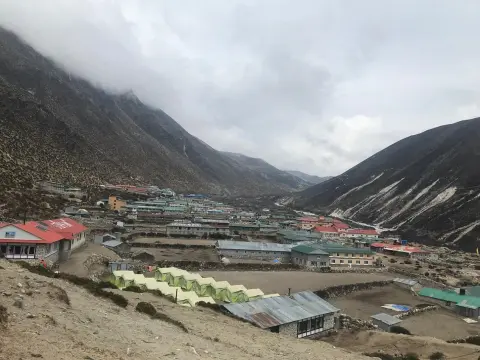
First, the hike from Dingboche(4,410m/14,468ft) to Everest Base Camp (5,364m/17,598ft) is a high-altitude hike. It is part of the standard Everest Base Camp Trek in Nepal. Also, it includes moderate hiking, culture, and beautiful Himalayan views. The trekker traverses valleys, moraine, glacial streams, and rock trails while observing the nearby mountains.
Similarly, the hike begins at Dingboche (4,410m/14,468ft) and gradually rises to Lobuche (4,940m/16,207ft). The hike from Dingboche to Lobuche is around 12 kilometers, typically taking five or six hours. There are tea houses along the way with food, hot drinks, and rest stops. Therefore, pacing, hydration, and regular breaks should be observed in order to prevent fatigue as well as altitude sickness.
In addition, trekking from Lobuche (4,940m/16,207ft) to Gorakhshep (5,164m/16,942ft) entails 7 kilometers of glacial and rock landscape. Trekkers acclimatize and prepare themselves for the last leg to Everest Base Camp (5,364m/17,598ft). In addition, the trail takes one through tremendous views of Mount Everest (8,849m/29,032ft), Lhotse (8,516m/27,940ft), Nuptse (7,861m/25,791ft), and Ama Dablam (6,812m/22,349ft). Adequate rest at Gorakhshep is essential prior to the last ascent.
Apart from that, trekking along this section provides cultural exposure in Sherpa villages. Pangboche (3,985m/13,073ft) and Lobuche (4,940m/16,207ft) feature monasteries, prayer flags, mani walls, and Sherpa hospitality. Immersion in local traditions brings depth to the trekking experience. Similarly, small seasonal settlements along the trail bring tea, snacks, and interaction with Sherpas, enhancing comfort and cultural understanding.
The trek from Dingboche to Everest Base Camp is the most dramatic section of the journey, passing through Lobuche and Gorak Shep before reaching the legendary base camp beneath the world's highest mountains.
Also included is ascension to Everest Base Camp (5,364m/17,598ft) which involves 11 kilometers from Lobuche (4,940m/16,207ft) through Gorakhshep (5,164m/16,942ft). The route goes over moraines, glacial rivers, and boulder-covered debris. Trekking poles, layered attire, and energy bars are required. Therefore, adequate planning, acclimatization, and pacing yield a safe and satisfactory experience.
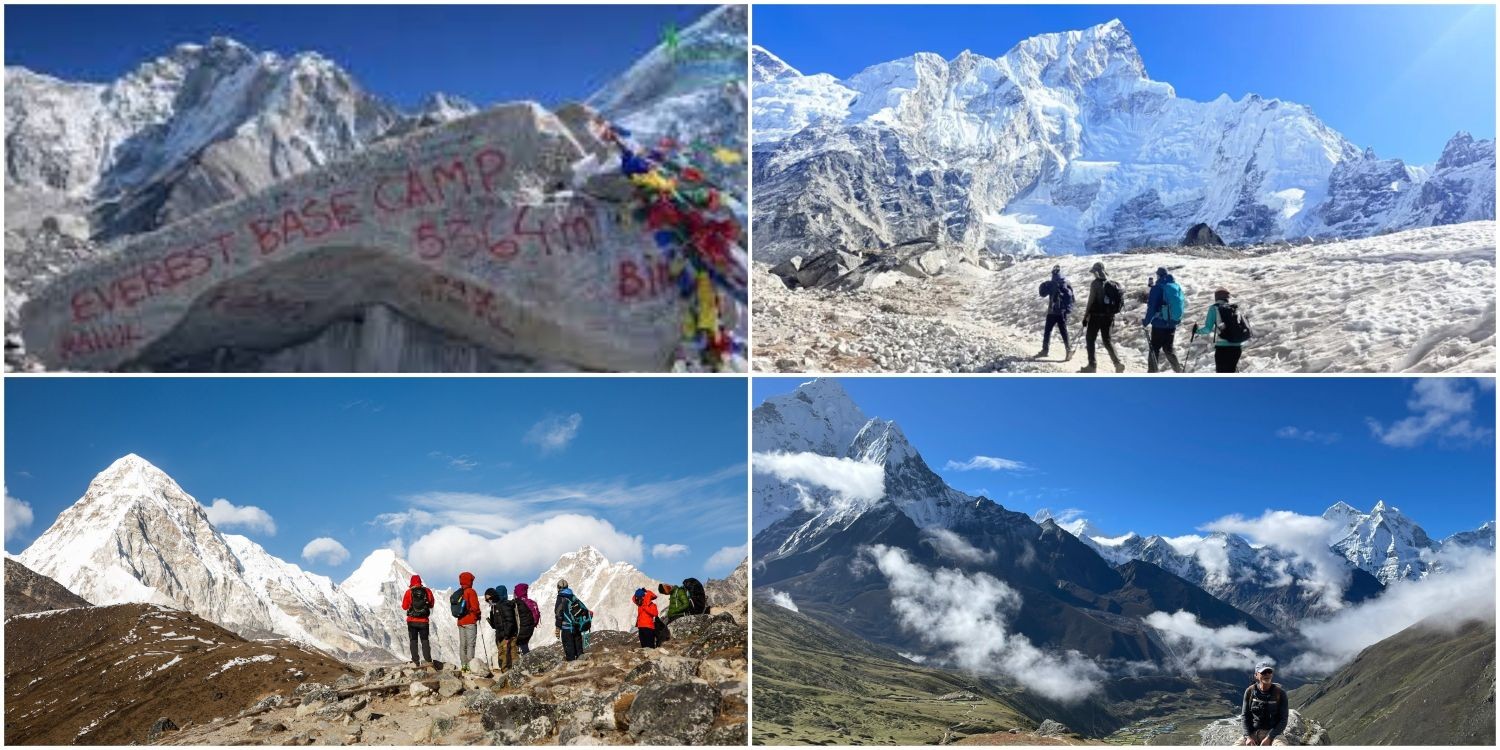
As an extra treat, a hike from Dingboche (4,410m/14,468ft) to Everest Base Camp is great for photos. Panoramas include the Khumbu Glacier, Thamserku (6,623m/21,729ft), Pumori (7,161m/23,497ft), and Kwangde (6,185m/20,292ft). Again, as with sunrise and sunset, the views of Everest (8,849m/29,032ft) and the surrounding peaks are also enhanced. Tea houses offer safe stops along the way to view them.
Furthermore, the trekkers should also arrange lunch and water breaks. Pangboche (3,985m/13,073ft), Lobuche (4,940m/16,207ft), and Gorakhshep (5,164m/16,942ft) are ideal lunch break locations. Regular food and hot drinks keep a person active and reduce altitude sickness. Therefore, nutrition and hydration are fundamental to be able to complete this segment successfully.
Lastly, the hike from Dingboche (4,410m/14,468ft) to Everest Base Camp (5,364m/17,598ft) is physically challenging yet extremely rewarding. Panoramic Himalayan vistas, Sherpa heritage, and high-altitude adventure are all intertwined. Thus, this trek is the highlight of the Everest Base Camp Trek, providing time immortal memories, cultural immersion, and personal achievement for every trekker.
Trekking from Dingboche to Everest Base Camp Distance
First, the trekking distance from Dingboche (4,410m/14,468ft) to Everest Base Camp (5,364m/17,598ft) is approximately 23 kilometers. This segment of the Everest Base Camp Trek would generally take two or three days depending on the trekker's speed and acclimatization needs. Apart from this, the trek goes upward gradually within the Khumbu region, exposing one to spectacular views of Lhotse (8,516m/27,940ft), Nuptse (7,861m/25,791ft), and Ama Dablam (6,812m/22,349ft). The trail is made up of glacial moraines, glacial streams, and rock trails that toughen up the trekkers while offering them scenic returns.
Similarly, trekkers cover approximately 12 kilometers on the first day from Dingboche (4,410m/14,468ft) to Lobuche (4,940m/16,207ft). The section consists of gradual slopes, moraine ridges, and separate rocky sections. Tea houses along the way provide a chance for relaxation, food, and acclimatization. Therefore, trekking at a slow rate with regular breaks minimizes fatigue and decreases the likelihood of altitude sickness. Watching surrounding peaks gives one the motivation despite tough routes.
Additionally, the latter half from Lobuche (4,940m/16,207ft) to Everest Base Camp (5,364m/17,598ft) takes around 11 kilometers. Trekkers walk via Gorakhshep (5,164m/16,942ft), the last village that offers tea houses and accommodations. The trail includes rugged paths, glacial streams, and moraine landscape. Besides that, trekkers have a breathtaking view of Mount Everest (8,849m/29,032ft) and neighboring mountains, which make each step worthwhile. Thin air and high elevation increase perceived effort, making trekkers pace slowly.
Further, the overnight stay at Gorakhshep (5,164m/16,942ft) is necessary prior to the ultimate ascent to Everest Base Camp. Meals, hot drinks, and simple accommodation are available in tea houses. Trekkers like to take an early start and reach the base camp in excellent daylight hours. Similarly, this schedule leaves scope for a safe visit to the Everest Base Camp area and photos with Lhotse (8,516m/27,940ft) and Nuptse (7,861m/25,791ft) as the background to finish off the trekking adventure.
Additionally, awareness of distance facilitates planning of logistics such as water, food, and gear. Although 23 kilometers may not be so much, high-altitude climbing and also highly undulating terrain makes it burdensome. Breaking the trek over a number of days therefore facilitates safety, proper acclimatization, and enjoyment of the views. Trekkers are subjected to a blend of nature's beauty, Sherpa culture, and high-altitude trekking adventure.
Aside from that, the trek passes through renowned places like Pangboche (3,985m/13,073ft) and Lobuche (4,940m/16,207ft). Cultural activities include visiting monasteries, observing local traditions, and interacting with Sherpas. Thus, trekking travelers receive adventure, Himalayan vistas, and cultural immersion in a single trip, rendering it memorable.
Finally, the hike from Dingboche (4,410m/14,468ft) to Everest Base Camp (5,364m/17,598ft) is a moderate but rewarding section of the trek. Proper pacing, hydration, and overnight planning are all required. Therefore, trekkers have security with breathtaking Himalayan views and this section of the Everest Base Camp Trek is a highlight.
Everest Base Camp Trek without Lukla Flight | 16 days
Trekking from Dingboche to Everest Base Camp Elevation Ranges
First, the trek begins at Dingboche (4,410m/14,468ft) and ascends gradually to Everest Base Camp (5,364m/17,598ft). This section involves a height gain of approximately 954 meters. Next, the trail allows trekkers to acclimatize while enjoying sights of Lhotse (8,516m/27,940ft), Nuptse (7,861m/25,791ft), and Ama Dablam (6,812m/22,349ft). The trail consists of moraine fields, rocky paths, and glacial streams.
Similarly, the first section from Dingboche (4,410m/14,468ft) to Lobuche (4,940m/16,207ft) gains approximately 530 meters. The path is moderately steep but rocky in some sections. Trekkers walk through open valleys and over small streams with nearby peaks in sight. Slow pacing and frequent resting are therefore essential in order to reduce fatigue and altitude sickness.
Further, from Lobuche (4,940m/16,207ft) to Gorakhshep (5,164m/16,942ft), the trail rises another 224 meters. This section crosses moraines and glacial debris. Trekkers can see Mount Everest (8,849m/29,032ft), Lhotse (8,516m/27,940ft), and Nuptse (7,861m/25,791ft) from the trail. Besides, the thin air contributes to the energy required to walk even short distances, emphasizing proper acclimatization.
The final stretch from Gorakhshep (5,164m/16,942ft) to Everest Base Camp (5,364m/17,598ft) ascends 200 meters over a distance of approximately 3.5 kilometers. The trail is rock-strewn with glacial debris and boulders. Trekkers are rewarded with panoramic views of surrounding Himalayan giants, including Thamserku (6,623m/21,729ft) and Kwangde (6,185m/20,292ft). Accordingly, the final section is both physically demanding and visually rewarding.
Additionally, an understanding of elevation zones helps plan equipment, oxygenation, and nutrition. Slow trekking, frequent drinking, and regular resting reduces the risks of altitude sickness. Similarly, trekkers can enjoy tea houses and cultural activities on the trail while monitoring their bodies.
Also, the entire altitude zone of 4,410 meters to 5,364 meters provides opportunity to experience Sherpa culture and Himalayan landscapes. Trekkers catch sight of monasteries, prayer flags, and tiny villages like Pangboche (3,985m/13,073ft) and Lobuche (4,940m/16,207ft). These stops are comforting as much as they are culturally exposing.
Finally, it is possible to walk after doing beautiful things from Dingboche (4,410m/14,468ft) to Everest Base Camp (5,364m/17,598ft) with proper preparation. Pacing, water consumption, and overnighting allow trekkers to complete the walk safely. Consequently, an understanding of elevation ranges ensures a successful and memorable Everest Base Camp Trek experience.
Everest Base Camp Trek with Helicopter Fly Out 10 Days | 10 days
How Difficult is the Trekking from Dingboche to Everest Base Camp?
Mostly, trek at Dingboche (4,410m/14,468ft) to Everest Base Camp (5,364m/17,598ft) is of moderate level. The route involves rocky terrain, glacial streams, and high altitude. The route also passes through Lobuche (4,940m/16,207ft) and Gorakhshep (5,164m/16,942ft), which require endurance and rhythm.
Similarly, trekkers must acclimatize well to prevent altitude sickness. The rise in altitude over short distances is challenging even for experienced hikers. Slow pacing, frequent rests, and water intake are therefore essential for safety. Climatic conditions may also challenge in the form of snow, winds, or sudden temperature drops.
Besides, high-altitude hiking causes physical and mental strain. Thin air makes walking tiresome and decreases oxygen supply. Trekkers must carry trekking poles, layered clothing, and sufficient food. One must also prepare mentally to survive long hours on uneven ground. Scenic rewards compel one to continue despite the hardship.
Also, the trail is made up of moraine fields, glacial trash, and rock. These require careful negotiation while walking to avoid slips or accidents. Similarly, night halts at Lobuche (4,940m/16,207ft) and Gorakhshep (5,164m/16,942ft) check fatigue and acclimatize trekkers for the final ascent. Food and water supplement physical stamina.
Furthermore, trekkers are welcomed by such iconic peaks as Mount Everest (8,849m/29,032ft), Lhotse (8,516m/27,940ft), and Nuptse (7,861m/25,791ft) along the trail. Such landscapes provide energy in spite of the effort required. Therefore, the balance of physical challenges and natural beauty defines the harshness of this trek.
Finally, trekking from Dingboche (4,410m/14,468ft) to Everest Base Camp (5,364m/17,598ft) can be achieved with practice. Proper acclimatization, pace, and equipment ensure success. Consequently, trekkers experience a challenging yet highly rewarding section of the Everest Base Camp Trek, with a blend of adventure, culture, and scenery.
Where is the Best Overnight Stay between Dingboche and EBC?
Above all, the best overnight stops along the route from Dingboche (4,410m/14,468ft) to Everest Base Camp (5,364m/17,598ft) are Gorakhshep (5,164m/16,942ft) and Lobuche (4,940m/16,207ft). There are tea houses, hot meals, and basic accommodations in these settlements. Moreover, overnighting allows acclimatization and reduces the risk of altitude sickness.
Similarly, Lobuche (4,940m/16,207ft) is ideal after a day's walk from Dingboche (4,410m/14,468ft). There are tea houses that offer beds, hot meals, and local hospitality. Trekkers can absorb the views of Nuptse (7,861m/25,791ft) and surrounding peaks as they take a rest. Lobuche is therefore a scenic stop and also a strategic overnight camp.
Besides, Gorakhshep (5,164m/16,942ft) is suitable for the final night before heading to Everest Base Camp (5,364m/17,598ft). The lodging is simple but good enough to rest and recuperate. Morning trekking early enough gives ample time to reach Everest Base Camp and stroll around safely. Moreover, Gorakhshep gives panoramic views of Mount Everest (8,849m/29,032ft) and the surrounding peaks, which make trekking a pleasure.
Additionally, overnight stops allow trekkers to restore energy, fluids, and gear. Tea houses offer hot meals, which are essential at high altitudes. Similarly, the stops afford cultural experiences, including encountering Sherpas, visiting monasteries, and viewing prayer flags. Proper planning of overnight stops ensures safety and comfort when undertaking the Everest Base Camp Trek.
Apart from this, these tactical breaks also reduce the risk of altitude sickness by allowing the body to adapt gradually. Hiking from Dingboche (4,410m/14,468ft) to Everest Base Camp (5,364m/17,598ft) without a resting point increases physical exhaustion. Scheduling overnight stays at Lobuche (4,940m/16,207ft) and Gorakhshep (5,164m/16,942ft) is therefore essential for a safe and enjoyable trek.
Finally, overnighting maximizes experience and safety. Trekkers have the opportunity to enjoy Himalayan views, recover physically, and be immersed in Sherpa culture. Accordingly, Lobuche and Gorakhshep remain ideal overnight locations between Dingboche and Everest Base Camp, ensuring a memorable section of the Everest Base Camp Trek.
What Are the Villages I Pass Through While Trekking from Dingboche to EBC?
Trekking from Dingboche (4,410m/14,468ft) to Everest Base Camp (5,364m/17,598ft) is step one, and it passes through some renowned Sherpa villages. Such villages portray traditional existence, monasteries, prayer flags, and tradition. Moreover, the trail provides scenic scenery and cultural interactions in the heart of the Khumbu valley.
Similarly, shortly after Dingboche (4,410m/14,468ft), trekkers will usually go through Pangboche (3,985m/13,073ft). Pangboche boasts its old monastery, giving a sense of Sherpa religious tradition. Mani walls and prayer flags are visible here. Therefore, the village is a significant cultural and visual detour along the trail.
Then the path goes on to Lobuche (4,940m/16,207ft), a tiny village with tea houses and lodges. Lobuche is rest for the trekkers before the last ascent to Gorakhshep (5,164m/16,942ft). Additionally, trekkers enjoy good views of Nuptse (7,861m/25,791ft) and Lhotse (8,516m/27,940ft) from the village. Continued pacing and overnight here acclimatize and reduce altitude sickness risk.
After Lobuche (4,940m/16,207ft), the trail goes to Gorakhshep (5,164m/16,942ft), the last village before Everest Base Camp (5,364m/17,598ft). Simple tea houses for rest, eating, and accommodation are available in Gorakhshep. Moreover, the village is strategically located for trekkers to climb Kalapatthar (5,545m/18,192ft) early morning. Panorama of Mount Everest (8,849m/29,032ft) and surrounding mountains can be enjoyed. It's a popular stopover.
In addition, trekkers can also see tiny seasonal camps along the path, for example, commemoration sites and rest areas near glacial streams. The seasonal camps offer trekkers water, shelter, and local interactions. Similarly, going through such locations allows trekkers to create a pace and feel the trail while maintaining safety. Cultural experiences enrich trekking activity beyond physical exercise.
Additionally, there is something to see in every village along the route, including viewing local agriculture, yak grazing, and prayer ceremonies. The villages depict Sherpa culture and Himalayan landscape. Therefore, trekkers gain adventure and cultural experience along the trek from Dingboche (4,410m/14,468ft) to Everest Base Camp (5,364m/17,598ft).
Finally, familiarity with villages on the route helps in planning rest stops, food, and hydration. Ascending over Pangboche (3,985m/13,073ft), Lobuche (4,940m/16,207ft), and Gorakhshep (5,164m/16,942ft) provides sufficient acclimatization. Therefore, Sherpa culture, Himalayan scenery, and physical adversity render this segment of the trek irreplaceable for all the trekkers.
What Are the Highlights of Trekking from Dingboche to Everest Base Camp?
Firstly, the trek from Dingboche (4,410m/14,468ft) to Everest Base Camp (5,364m/17,598ft) offers breathtaking Himalayan scenery. The trekkers are rewarded with breathtaking views of Mount Everest (8,849m/29,032ft), Lhotse (8,516m/27,940ft), and Nuptse (7,861m/25,791ft). Secondly, this route combines natural beauty with Sherpa culture for a unique adventure experience.
Similarly, the trek passes through scenic moraine fields, glacial streams, and boulder filled pathways. Panoramic views of Ama Dablam (6,812m/22,349ft) and Thamserku (6,623m/21,729ft) offer excellent photo opportunities. Therefore, trekkers can take photos of Himalayan peaks at sunrise and sunset while resting on the pathway.
Next, the trail includes cultural sights such as Pangboche Monastery (3,985m/13,073ft). Observing prayer flags, mani walls, and indigenous ceremonies makes the trekking experience richer. Apart from that, tea houses in Lobuche (4,940m/16,207ft) and Gorakhshep (5,164m/16,942ft) provide hot meals, rest, and experience of Sherpa hospitality.
In addition, the Everest Base Camp (5,364m/17,598ft) itself is a major thrill. Trekkers get to see the ancient base of the world's highest mountain. Similarly, Kalapatthar (5,545m/18,192ft) offers sunrise panorama views of Everest (8,849m/29,032ft) and surrounding peaks. The ascent is tough but well worth the effort.
Additionally, trekkers also observe the Khumbu Glacier, its moraines and glacial streams along the way. Wildlife, including Himalayan birds and the occasional yak, adds to the attractiveness of the trail. Adventure, scenery, and culture are therefore integrated harmoniously into this trek.
Finally, major attractions of trekking from Dingboche to Everest Base Camp are:
Sherpa culture: monasteries, prayer flags, local villages
Rocky paths and glacial streams through moraine fields
Lobuche tea houses (4,940m/16,207ft) and Gorakhshep tea houses (5,164m/16,942ft)
Everest Base Camp vistas (5,364m/17,598ft) and Kalapatthar sunrise views (5,545m/18,192ft)
Consequently, trekking from Dingboche to Everest Base Camp provides culture, adventure, and natural beauty all packaged into one extraordinary experience.
Firstly, the hike from Dingboche (4,410m/14,468ft) to Lobuche (4,940m/16,207ft) is a moderate high-altitude hike. The hike is approximately 12 kilometers long, which normally takes five or six hours. Secondly, hikers ascend gradually through rocky paths, glacial streams, and moraine fields while enjoying the view of Lhotse (8,516m/27,940ft) and Nuptse (7,861m/25,791ft).
Similarly, the route passes through tiny rest huts and look-out decks where the trekkers may pause for a while. Food, hot tea, and shelter from cold winds are provided in tea houses on the route. Thus, gradual speed, fluid consumption, and rest are necessary for safe trekking at high altitudes. Steady ascent aids proper acclimatization.
Besides, trekkers have a chance to witness Sherpa culture along the way. Pangboche (3,985m/13,073ft) villages boast monasteries, prayer flags, and mani walls. Interaction with the locals unveils traditional Himalayan lifestyles. Moreover, the trail covers diverse scenery in the shape of open valleys, rugged slopes, and small glaciers. The scenery inspires trekkers despite thin air and tough terrain.
Additionally, a hike from Dingboche (4,410m/14,468ft) to Lobuche (4,940m/16,207ft) offers photo shoots. Ama Dablam (6,812m/22,349ft) looms directly over the trail, offering dramatic landscapes for sunrise and sunset shots. So do Thamserku (6,623m/21,729ft) and Kwangde (6,185m/20,292ft), standing high above the landscape, offering each step a feast for the eyes.
Besides, overnight stay at Lobuche (4,940m/16,207ft) prepares the trekkers for the final stretch to Gorakhshep (5,164m/16,942ft) and Everest Base Camp (5,364m/17,598ft). The tea houses provide basic shelter, hot meals, and a facility to dry the clothes. Therefore, planning the first night stay at Lobuche ensures acclimatization, comfort, and energy for the next high-altitude trekking.
Finally, Dingboche to Lobuche trek is a vital segment of the Everest Base Camp Trek. The combination of moderate elevation gain, scenic views, Sherpa culture, and rest stops makes this trail readily and rewardingly accessible. Then, explorers have both adventure and acclimatization to higher altitudes, paving the way for Everest Base Camp and Kalapatthar climbs.
Trek from Lobuche to Everest Base Camp
First, trekking from Lobuche (4,940m/16,207ft) to Everest Base Camp (5,364m/17,598ft) is the most symbolic segment of the Everest Base Camp Trek. The walking distance is some 11 kilometers and normally requires six to seven hours. Moreover, the trekkers pass through Gorakhshep (5,164m/16,942ft), the last village with tea houses and lodges before reaching the base camp.
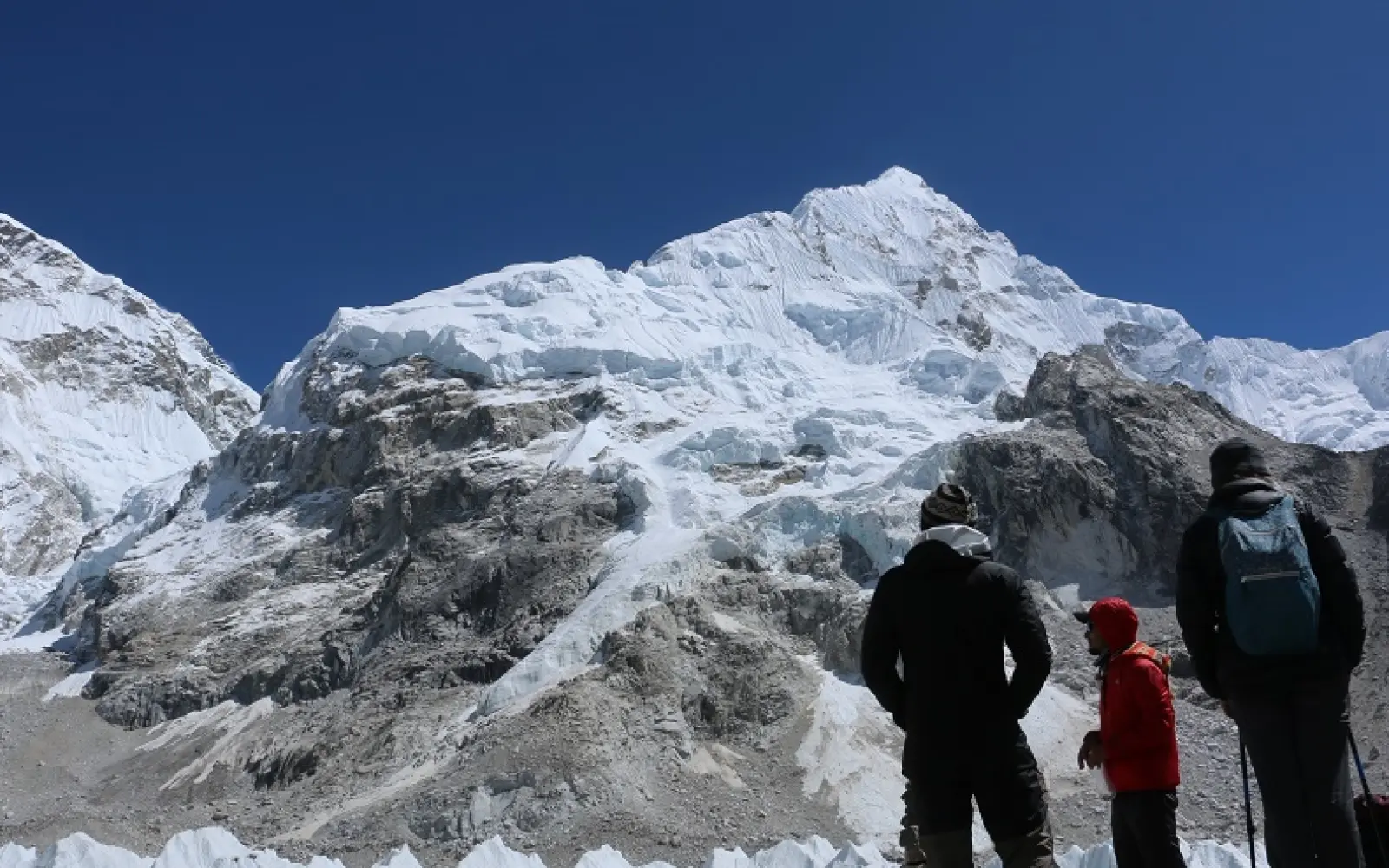
Similarly, there are rocky trails, moraine landscapes, and glacial streams within this segment. Trekkers get awe-inspiring views of Mount Everest (8,849m/29,032ft), Lhotse (8,516m/27,940ft), and Nuptse (7,861m/25,791ft). Therefore, pacing, hydration, and acclimatization are imperative. Timely planning allows trekkers to avoid crowds at Everest Base Camp.
Furthermore, the ascent demands physical effort due to thin air and elevation. Trekkers are urged to use trekking poles, layers of clothing, and energy foods. Trekkers can also observe Khumbu Glacier, crevasses, and glacial rubble along the way. The scenery offers adventure and defines the distinctive high-altitude environment.
Additionally, rest at Gorakhshep (5,164m/16,942ft) is needed before the final stretch. Tea houses offer meals, hot drinks, and limited accommodation. Early morning starts help trekkers to reach Everest Base Camp (5,364m/17,598ft) by day for safety reasons and photography. Similarly, the cultural element at Gorakhshep, prayer flags, and small memorials, enrich the experience.
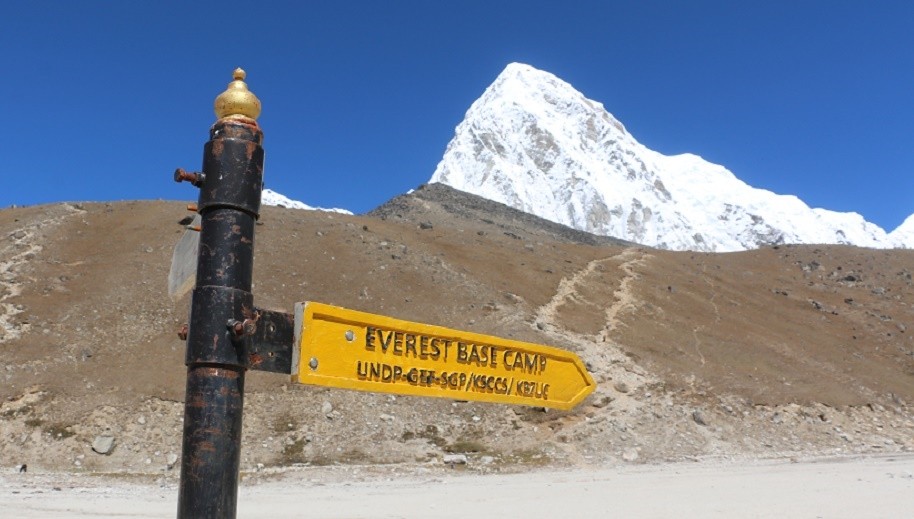
The iconic Everest Base Camp sign marks the legendary route through the Khumbu region, guiding trekkers toward the world's highest mountain amid spectacular Himalayan scenery
Additionally, reaching Everest Base Camp (5,364m/17,598ft) is an achievement in itself. Trekkers are able to spot the Khumbu Icefall, the close summits, and of course Everest. Panoramic views make this section memorable and rewarding. Therefore, proper preparation, acclimatization, and pacing are required to enjoy this final leg in safety.
Finally, the hike from Lobuche to Everest Base Camp is a blend of adventure, scenery, and cultural experience. The hike provides physical challenge and unequalled Himalayan views. Thus, trekkers earn a lifetime experience, having completed one of the world's most famous high-altitude treks.
Climbing Kalapatthar at Sunrise and Mt. Everest View
First, a hike up Kalapatthar (5,545m/18,192ft) provides the best sights of Mount Everest (8,849m/29,032ft) and surrounding peaks. The climb is brief but steep, normally two to three hours from Gorakhshep (5,164m/16,942ft). Second, early morning climbs allow hikers to watch sunrise illuminate Everest, Lhotse (8,516m/27,940ft), Nuptse (7,861m/25,791ft), and Ama Dablam (6,812m/22,349ft).
Similarly, the hike to Kalapatthar requires careful pace and the utilization of trekking poles due to loose rocks and high altitude. Thin air makes every step challenging. Therefore, trekkers must take frequent breaks and drink plenty of water. Sunrise creates dramatic shadows in Khumbu Glacier, which becomes a real bonanza for photographers.
And also, the Kalapatthar has a unique 360-degree panorama of the Everest range. Panoramas reach to Pumori (7,161m/23,497ft), Cho Oyu (8,188m/26,864ft) in the far distance, and all of the Khumbu Glacier down below. Trekkers can view Gorakhshep (5,164m/16,942ft) and the base camp (5,364m/17,598ft) from above too. Himalayan views are unmatched.
Besides this, arriving at Kalapatthar is often the highlight of Everest Base Camp Trek. There is body triumph and soul reward when trekkers are blessed with the awe-inspiring sight of the highest peaks on earth. Just as much, clear skies and early morning light are ideal for photography and reflection.
Additionally, gentle acclimatization at Gorakhshep (5,164m/16,942ft) makes the climb safe. Climbers must wear layers, bring hot liquids, and begin in the early morning. Thus, planning and timing are essential to ensuring maximum safety and enjoyment.
Finally, hiking Kalapatthar (5,545m/18,192ft) is the highlight of the Everest Base Camp Trek. The sunrise views, Himalayan landscapes, and sense of achievement make it worthwhile. Thus, all trek lovers consider Kalapatthar an experience of a lifetime, which presents adventure, culture, and nature at one place.
What Are the Best Lunch Spots Between Dingboche and Gorakhshep?
First of all, the walk from Dingboche (4,410m/14,468ft) to Gorakhshep (5,164m/16,942ft) has several good options to take lunch. Tea houses along the way provide warm meals, hot tea, and rest areas. Also, good lunch stops maintain energy saving and reduced altitude sickness during the Everest Base Camp Trek.
Similarly, a respectable number of trekkers stop over at Pangboche (3,985m/13,073ft) for a light meal. Mini tea houses serve noodles, soups, and hot beverages. Panoramic views around it, like Ama Dablam (6,812m/22,349ft) and Thamserku (6,623m/21,729ft), are worth it. This stop thus offers refreshment and recreation before arriving at Lobuche (4,940m/16,207ft).
And, Lobuche (4,940m/16,207ft) is also an important lunch break. There are tea houses that serve hot food such as dal bhat, soup, and pasta. Trekkers prefer to stay here for a longer time and acclimatize to greater altitude. And the spectacular views of Nuptse (7,861m/25,791ft) and Lhotse (8,516m/27,940ft) make this a place worth remembering.
Secondly, short lunch breaks are available at minor rest stops along the trail between Lobuche (4,940m/16,207ft) and Gorakhshep (5,164m/16,942ft). These are typically benches or small huts where trekkers can have packed refreshments, energy bars, and tea. Similarly, regular breaks every one to two hours avoid fatigue and altitude sickness.
In addition, Gorakhshep (5,164m/16,942ft) is another significant lunch break location prior to the final climb to Everest Base Camp (5,364m/17,598ft). Tea houses offer hot food, warm drinks, and shelter from cold winds. Climbers enjoy a panoramic view of Everest (8,849m/29,032ft) as they rest. This stop therefore both physically and visually satisfies.
Also, lunch preparation on this trail is required due to effort and high altitude. Eating frequent, small meals increases energy and digestion. Soups and warm drinks also alleviate body cold in cold weather. The proper timing enables the trekkers to reach Gorakhshep (5,164m/16,942ft) ready for the final ascent to Everest Base Camp.
Last but not least, the best lunch stops between Dingboche (4,410m/14,468ft) and Gorakhshep (5,164m/16,942ft) are Pangboche (3,985m/13,073ft), Lobuche (4,940m/16,207ft), and Gorakhshep (5,164m/16,942ft). Sufficient rests at the stops provide energy, safety, and stunning Himalayan views. Thus, lunch preparation enriches the whole Everest Base Camp Trek experience.
Is There Possibility of Getting Altitude Sickness while Trekking between Dingboche and EBC?
Finally, a hike from Dingboche (4,410m/14,468ft) to Everest Base Camp (5,364m/17,598ft) is at high elevation, which brings the risk of altitude sickness. A headache, nausea, fatigue, and dizziness are potential symptoms. Additionally, thin air reduces the oxygen concentration, making acclimatization essential.
Similarly, ascent from Dingboche (4,410m/14,468ft) to Lobuche (4,940m/16,207ft) is moderate but sufficiently enough to trigger mild altitude symptoms. Gradual walking, hydration, and proper nutrition reduce risks. Thus, awareness and monitoring of symptoms are most crucial for a safe Everest Base Camp Trek.
Moreover, from Lobuche (4,940m/16,207ft) to Gorakhshep (5,164m/16,942ft) and Everest Base Camp (5,364m/17,598ft), altitude effects may become more pronounced. Proper pacing, frequent rests, and oxygen support, if needed, control the condition. Further, descending immediately in case of worsening of symptoms prevents severe illness.
In addition, overnight at Lobuche (4,940m/16,207ft) and Gorakhshep (5,164m/16,942ft) helps to acclimatize. Rest and warm food from tea houses help to physically adapt. Traveling with a guide also improves safety because guides monitor symptoms and adjustment of pace.
Moreover, altitude sickness can occur even among fit trekkers due to rapid ascent. As such, compliance with trekking schedules involving gradual accumulation of elevation is essential. Proper hydration, intake of high-energy diets, and abstinence from alcohol also reduce risks.
Finally, the altitude sickness risk on trekking from Dingboche (4,410m/14,468ft) to Everest Base Camp (5,364m/17,598ft) exists but can be controlled. Proper pacing, acclimatization, hydration, and monitoring of symptoms ensure safety. Thus, trekkers can embark on the Everest Base Camp Trek with reduced health risks and yet be exposed to Himalayan landscapes.
Final Words
First of all, a trek from Dingboche (4,410m/14,468ft) to Everest Base Camp (5,364m/17,598ft) is a rewarding high-altitude walk. The trek is an assimilation of physical work, cultural exposure, and breathtaking scenery. Besides, the trek passes through Lobuche (4,940m/16,207ft) and Gorakhshep (5,164m/16,942ft), which are important rest and acclimatization points.
Similarly, the trekkers have experiences with mythical peaks such as Mount Everest (8,849m/29,032ft), Lhotse (8,516m/27,940ft), Nuptse (7,861m/25,791ft), and Ama Dablam (6,812m/22,349ft). Tea house accommodation and hot beverages relax the trek even at high altitude. Thus, success hinges on good planning, pacing, and preparation.
Also present are Sherpa villages, monasteries, prayer flags, glacial streams, moraine fields, and Himalayan panoramic views. Stops in Pangboche (3,985m/13,073ft) and Lobuche (4,940m/16,207ft) provide greater cultural understanding and photo opportunities. Continuing to Kalapatthar (5,545m/18,192ft) to climb it for sunrise views of Everest makes the trek invaluable.
In addition, night halts at Lobuche (4,940m/16,207ft) and Gorakhshep (5,164m/16,942ft) prevent altitude sickness. Steady climbing, nutrient consumption, and water ingestion make it safe to complete the trek. Similarly, the perfect midday lunch breaks at Pangboche, Lobuche, and Gorakhshep restore energy and recovery.
Also, trekkers should be vigilant for altitude sickness symptoms such as headache, lethargy, and nausea. A gradual schedule and overnight rest ensures safety. Acclimatization, preparation, and knowledge are therefore the keys to a successful Everest Base Camp Trek.
Finally, trekking from Dingboche (4,410m/14,468ft) to Everest Base Camp (5,364m/17,598ft) is a once-in-a-lifetime experience. Himalayan scenery of unimaginable scale, Sherpa culture, and physical accomplishment make it unforgettable. This section therefore is perhaps the most rewarding and legendary part of the Everest Base Camp Trek, with adventure, scenery, and culture in harmony.
FAQS:Trekking from Dingboche to Everest Base Camp
1. What is included in Trekking from Dingboche to Everest Base Camp package? The package for Trekking from Dingboche to Everest Base Camp includes a lot of things. You will have a guide with you. You will also have a porter to carry your things. You will stay in tea houses. Have meals. The package also includes the permits you need to trek.
2. How many days does Trekking from Dingboche to Everest Base Camp take? Trekking from Dingboche to Everest Base Camp usually takes 3 to 4 days. You will stop at places like Lobuche and Gorak Shep. You will also stop at Kala Patthar. This gives you time to get used to the altitude and see the beautiful Himalayan views.
3. What is the distance of Trekking from Dingboche to Everest Base Camp? The total distance from Dingboche to Everest Base Camp is about 22 to 25 kilometers one way. You will walk through Lobuche and Gorak Shep on trails with rocks and ice. It takes 6 to 8 hours to walk each day. You will go up higher in the mountains gradually.
4. What are the elevation ranges in Trekking from Dingboche to Everest Base Camp? The elevation starts at Dingboche which is 4410 meters high and goes up to Everest Base Camp which's 5364 meters high. You will also go to Lobuche which's 4910 meters high Gorak Shep which is 5164 meters high and Kala Patthar which is 5545 meters high. From Kala Patthar you can see the sunrise over Mount Everest which's very beautiful.
5. How difficult is Trekking from Dingboche to Everest Base Camp? The Trekking from Dingboche to Everest Base Camp is moderate to challenging because the air is thin and the trails are rocky and steep. You need to be in shape to do this trek. If you take your time to get used to the altitude from Dingboche you can reduce the risks and make it to Everest Base Camp with the help of a guide.
6. Where is the best overnight stay between Dingboche and EBC? The best places to stay overnight are Lobuche and Gorak Shep. They have tea houses where you can eat meals and sleep. These places are good to rest before you go to Everest Base Camp and Kala Patthar to see the sunrise.
7. What villages do I pass through in Trekking from Dingboche to EBC? You will pass through Lobuche and Gorak Shep. These villages are high up in the mountains. Have simple lodges and beautiful views of Nuptse, Pumori and the Khumbu Glacier. You can see the mountains on your way to Everest Base Camp.
8. What are the highlights of Trekking from Dingboche to Everest Base Camp? The highlights of the Trekking from Dingboche to Everest Base Camp are the views of the Himalayan mountains walking on the Khumbu Glacier reaching Everest Base Camp and climbing Kala Patthar to see the sunrise over Mount Everest. You can also learn about the Sherpa culture in the villages.
9. What should I know about Trekking from Dingboche to Lobuche? The trek from Dingboche to Lobuche is about 8 to 11 kilometers and takes 5 to 6 hours. You will go up to 4910 meters high. On the way you will see memorials at Thukla Pass and beautiful alpine scenery. This trek helps you get used to the altitude before you go to Gorak Shep and Everest Base Camp.
10. How is the trek from Lobuche to Everest Base Camp? The trek from Lobuche to Everest Base Camp is 14 to 15 kilometers round trip. You will go to Gorak Shep and to Everest Base Camp. The trail is rough and rocky. You will see the Khumbu Icefall and the high mountains. It takes 7 to 9 hours to complete this trek.
11. Is climbing Kala Patthar at sunrise included in the package? Yes, climbing Kala Patthar at sunrise is one of the parts of the Trekking from Dingboche to Everest Base Camp package. You can see the view of Mount Everest, Lhotse and Nuptse from the top of Kala Patthar.
12. What are the best lunch spots between Dingboche and Gorak Shep? Lobuche is a place to eat lunch. They have tea houses where you can eat meals like dal bhat, soup and noodles. These meals give you energy to continue your trek to Gorak Shep and Everest Base Camp.
13. Is there risk of altitude sickness on Dingboche to EBC trek? Yes, there is a risk of altitude sickness when you go above 4000 meters. To avoid this, you should go up gradually from Dingboche drink plenty of water and take medicine like Diamox. If you feel sick you should listen to your guide. Go down to a lower altitude.
14. What permits are needed for Trekking from Dingboche to Everest Base Camp? You need a Sagarmatha National Park Permit and a Khumbu Pasang Lhamu Rural Municipality Permit. The tour operator will arrange these permits for you.
15. What is the best season for Trekking from Dingboche to Everest Base Camp? The best season for the Trekking from Dingboche to Everest Base Camp is spring from March to May and autumn from September to November. The weather is clear and stable. You can see the beautiful views of the Everest region. You should avoid the monsoon and winter seasons.
16. Do I need prior trekking experience for this package? You should have some experience with high-altitude trekking. Be in moderate physical shape. If you have a guide and take your time to get used to the altitude from Dingboche you can complete the trek even if you are a beginner.
17. What should I pack for Trekking from Dingboche to Everest Base Camp? You should pack clothes, a down jacket, trekking boots, a sleeping bag, sunglasses, sunscreen, water purification tablets, trekking poles and snacks. You should also bring medicine for altitude sickness and a headlamp.
18. How much does Trekking from Dingboche to Everest Base Camp cost? The cost of the Trekking from Dingboche to Everest Base Camp depends on the size of your group and the services you need. You should contact Haven Holidays Nepal for a customized quote.
19. Is WiFi and charging available on the trek from Dingboche to EBC? There is WiFi and solar charging available at the tea houses in Lobuche and Gorak Shep. It can be expensive and it may not always be available because of the remote location.
20. Why choose Haven Holidays Nepal for Trekking from Dingboche to Everest Base Camp? Haven Holidays Nepal offers well-organized treks with experienced guides and proper acclimatization. We provide support from Dingboche to Everest Base Camp. You can enjoy tourism and have an unforgettable adventure in the Himalayas, with Trekking from Dingboche to Everest Base Camp.