[{"name":"Everest Base Camp Helicopter Tour","duration":"1","image_url":"https:\/\/www.havenholidaysnepal.com\/storage\/trip-galleries\/1\/thumb_6cd53005d75a86e373d31419d1b14d78.webp","offer_price":1195,"url":"https:\/\/www.havenholidaysnepal.com\/trips\/everest-base-camp-helicopter-tour"},{"name":"Everest Mountain Flight","duration":"1","image_url":"https:\/\/www.havenholidaysnepal.com\/storage\/trip-galleries\/4\/thumb_3b0b4f1d6f72b0ad224daf4752f2c6e0.jpg","offer_price":285,"url":"https:\/\/www.havenholidaysnepal.com\/trips\/everest-mountain-flight"},{"name":"Everest Short Trek","duration":"9","image_url":"https:\/\/www.havenholidaysnepal.com\/storage\/trip-galleries\/5\/thumb_BXPP3621.JPEG0.02033800 1727957098.webp","offer_price":995,"url":"https:\/\/www.havenholidaysnepal.com\/trips\/everest-short-trek"},{"name":"Gokyo Valley Trek","duration":"12","image_url":"https:\/\/www.havenholidaysnepal.com\/storage\/trip-galleries\/6\/thumb_10bc469b14731f23d3ce84a7092ad53f.jpg","offer_price":1195,"url":"https:\/\/www.havenholidaysnepal.com\/trips\/gokyo-valley-trek"},{"name":"15 days Annapurna Base Camp Trek","duration":"15","image_url":"https:\/\/www.havenholidaysnepal.com\/storage\/trip-galleries\/7\/thumb_87d1533bc45faf070990aef0579e4be4.jpg0.81855100 1728285496.webp","offer_price":785,"url":"https:\/\/www.havenholidaysnepal.com\/trips\/15-days-annapurna-base-camp-trek"},{"name":"Nepal Pilgrimage Tour","duration":"14","image_url":"https:\/\/www.havenholidaysnepal.com\/storage\/trip-galleries\/8\/thumb_02c3bcf2ad2e8a4c1703e90ae747b5f1.jpg","offer_price":1475,"url":"https:\/\/www.havenholidaysnepal.com\/trips\/nepal-pilgrimage-tour"},{"name":"UNESCO World Heritage Site Tour","duration":"10","image_url":"https:\/\/www.havenholidaysnepal.com\/storage\/trip-galleries\/9\/thumb_unesco-world-heritage-site-Lumbani-temple-buddhists-hindus-kathmandu-nepal0.36988600 17347617740.93089500 1737469667.webp","offer_price":715,"url":"https:\/\/www.havenholidaysnepal.com\/trips\/unesco-world-heritage-site-tour"},{"name":"Island Peak Climbing","duration":"16","image_url":"https:\/\/www.havenholidaysnepal.com\/storage\/trip-galleries\/11\/thumb_Island peak0.53947000 1734692503.webp","offer_price":2495,"url":"https:\/\/www.havenholidaysnepal.com\/trips\/island-peak-climbing"},{"name":"Upper Mustang Trek","duration":"18","image_url":"https:\/\/www.havenholidaysnepal.com\/storage\/trip-galleries\/12\/thumb_upper mustang 7 Oct-2024.jpg0.95398900 1728286166.webp","offer_price":2995,"url":"https:\/\/www.havenholidaysnepal.com\/trips\/upper-mustang-trek"},{"name":"Annapurna Circuit Trek","duration":"16","image_url":"https:\/\/www.havenholidaysnepal.com\/storage\/trip-galleries\/15\/thumb_tibetan-flags.jpg0.04843900 1728289138.webp","offer_price":985,"url":"https:\/\/www.havenholidaysnepal.com\/trips\/annapurna-circuit-trek"},{"name":"Gosainkunda Lake Trek","duration":"10","image_url":"https:\/\/www.havenholidaysnepal.com\/storage\/trip-galleries\/16\/thumb_5A8083B3-C007-41A8-853F-D0C37C97D235_1_105_c.jpeg0.52581200 1731845258.webp","offer_price":595,"url":"https:\/\/www.havenholidaysnepal.com\/trips\/gosainkunda-lake-trek"},{"name":"Zip-lining in Pokhara and Dhulikhel","duration":"1","image_url":"https:\/\/www.havenholidaysnepal.com\/storage\/trip-galleries\/18\/thumb_215f765e2ebc995dd5c800b4bfdbacc3.jpg","offer_price":82,"url":"https:\/\/www.havenholidaysnepal.com\/trips\/zip-lining-in-pokhara-and-dhulikhel"},{"name":"Annapurna Heli Tour","duration":"1","image_url":"https:\/\/www.havenholidaysnepal.com\/storage\/trip-galleries\/19\/thumb_d71a6bbb9fd4da8d1b567a5cdbdec85d.jpg","offer_price":555,"url":"https:\/\/www.havenholidaysnepal.com\/trips\/annapurna-heli-tour"},{"name":"Paragliding in Pokhara","duration":"1","image_url":"https:\/\/www.havenholidaysnepal.com\/storage\/trip-galleries\/20\/thumb_de788d2dd9726783431f882c007efae1.jpg","offer_price":65,"url":"https:\/\/www.havenholidaysnepal.com\/trips\/paragliding-in-pokhara"},{"name":"Ultra-Flight in Pokhara","duration":"1","image_url":"https:\/\/www.havenholidaysnepal.com\/storage\/trip-galleries\/21\/thumb_e27a9fb572a5c21611bb2a3c18e4b8f0.jpeg","offer_price":175,"url":"https:\/\/www.havenholidaysnepal.com\/trips\/ultra-flight-in-pokhara"},{"name":"Sarangkot Hiking","duration":"1","image_url":"https:\/\/www.havenholidaysnepal.com\/storage\/trip-galleries\/22\/thumb_100ef822fea19987166c6c1366215f15.jpg","offer_price":55,"url":"https:\/\/www.havenholidaysnepal.com\/trips\/sarangkot-hiking"},{"name":"Mera Peak Climbing","duration":"18","image_url":"https:\/\/www.havenholidaysnepal.com\/storage\/trip-galleries\/24\/thumb_d16ae3895f678cf26ffbf2455f541fb5.jpg0.31883400 1732617790.webp","offer_price":2475,"url":"https:\/\/www.havenholidaysnepal.com\/trips\/mera-peak-climbing"},{"name":"Lower Dolpo Trek","duration":"18","image_url":"https:\/\/www.havenholidaysnepal.com\/storage\/trip-galleries\/26\/thumb_Dolpo Galary - 1.JPG0.37725200 1727939952.webp","offer_price":2995,"url":"https:\/\/www.havenholidaysnepal.com\/trips\/lower-dolpo-trek"},{"name":"Nagarkot Sunrise\/Sunset Tour","duration":"1","image_url":"https:\/\/www.havenholidaysnepal.com\/storage\/trip-galleries\/27\/thumb_5147a5532644283a380f2e86f3857c13.jpg0.17748000 1728488108.webp","offer_price":30,"url":"https:\/\/www.havenholidaysnepal.com\/trips\/nagarkot-sunrise-sunset-tour"},{"name":"16 day Everest Base Camp Trek","duration":"16","image_url":"https:\/\/www.havenholidaysnepal.com\/storage\/trip-galleries\/28\/thumb_IMG_4311.JPG0.64984800 1727942213.webp","offer_price":1695,"url":"https:\/\/www.havenholidaysnepal.com\/trips\/16-day-everest-base-camp-trek"},{"name":"Ghorepani Poon Hill trek with Jungle Safari and Trishuli River Rafting -13 days","duration":"13","image_url":"https:\/\/www.havenholidaysnepal.com\/storage\/trip-galleries\/29\/thumb_Ghorepani Poon hill.jpg0.48460800 1728281439.webp","offer_price":795,"url":"https:\/\/www.havenholidaysnepal.com\/trips\/ghorepani-poon-hill-trek-with-jungle-safari-and-trishuli-river-rafting--13-days"},{"name":"Mardi Himal Trek","duration":"12","image_url":"https:\/\/www.havenholidaysnepal.com\/storage\/trip-galleries\/30\/thumb_s1.jpg0.62112600 1728200721.webp","offer_price":795,"url":"https:\/\/www.havenholidaysnepal.com\/trips\/mardi-himal-trek"},{"name":"Langtang Valley Trekking","duration":"10","image_url":"https:\/\/www.havenholidaysnepal.com\/storage\/trip-galleries\/31\/thumb_IMG_4702.JPG0.84916500 1727958504.webp","offer_price":685,"url":"https:\/\/www.havenholidaysnepal.com\/trips\/langtang-valley-trekking"},{"name":"Real Adventure Tour in Nepal","duration":"9","image_url":"https:\/\/www.havenholidaysnepal.com\/storage\/trip-galleries\/32\/thumb_ebd1b8cc78d90abe8b9003dd9a2f25bf.jpg0.82151300 1728213516.webp","offer_price":695,"url":"https:\/\/www.havenholidaysnepal.com\/trips\/real-adventure-tour-in-nepal"},{"name":"Luxury Tour in Nepal","duration":"10","image_url":"https:\/\/www.havenholidaysnepal.com\/storage\/trip-galleries\/33\/thumb_8574e61b252b18676b042caf30d830df.jpg","offer_price":1675,"url":"https:\/\/www.havenholidaysnepal.com\/trips\/luxury-tour-in-nepal"},{"name":"Luxury Everest Panorama Trek With EBC Heli Sightseeing","duration":"8","image_url":"https:\/\/www.havenholidaysnepal.com\/storage\/trip-galleries\/34\/thumb_URZL2397.JPEG0.01209600 1728027820.webp","offer_price":2395,"url":"https:\/\/www.havenholidaysnepal.com\/trips\/luxury-everest-panorama-trek-with-ebc-heli-sightseeing"},{"name":"13 day Everest Base Camp Trek with Helicopter","duration":"13","image_url":"https:\/\/www.havenholidaysnepal.com\/storage\/trip-galleries\/35\/thumb_IMG_4292.JPG0.70131500 1728029276.webp","offer_price":2095,"url":"https:\/\/www.havenholidaysnepal.com\/trips\/13-day-everest-base-camp-trek-with-helicopter"},{"name":"Manaslu Circuit Trek","duration":"16","image_url":"https:\/\/www.havenholidaysnepal.com\/storage\/trip-galleries\/36\/thumb_Mt Manaslu 03-Oct-2024.jpg0.65804900 1727938470.webp","offer_price":1055,"url":"https:\/\/www.havenholidaysnepal.com\/trips\/manaslu-circuit-trek"},{"name":"Kanchenjunga Base Camp Trek","duration":"21","image_url":"https:\/\/www.havenholidaysnepal.com\/storage\/trip-galleries\/37\/thumb_Kanchanjunga Trek -!.jpg0.54744400 1727938497.webp","offer_price":2275,"url":"https:\/\/www.havenholidaysnepal.com\/trips\/kanchenjunga-base-camp-trek"},{"name":"Ganesh Himal and Sing-La Trek","duration":"14","image_url":"https:\/\/www.havenholidaysnepal.com\/storage\/trip-galleries\/38\/thumb_Ganesh Himal slider-1.jpg0.43764500 1727937722.webp","offer_price":1775,"url":"https:\/\/www.havenholidaysnepal.com\/trips\/ganesh-himal-and-sing-la-trek"},{"name":"Island Peak Climb with Everest Base Camp Trek","duration":"21","image_url":"https:\/\/www.havenholidaysnepal.com\/storage\/trip-galleries\/39\/thumb_2be428730fe83525bc85a010564f99de.jpg","offer_price":2750,"url":"https:\/\/www.havenholidaysnepal.com\/trips\/island-peak-climb-with-everest-base-camp-trek"},{"name":"Students' Adventure Tour in Nepal","duration":"12","image_url":"https:\/\/www.havenholidaysnepal.com\/storage\/trip-galleries\/41\/thumb_a926d22fbfe08cba271c41ac289b3fd2.jpg","offer_price":995,"url":"https:\/\/www.havenholidaysnepal.com\/trips\/students-adventure-tour-in-nepal"},{"name":"7 Day Poonhill Trek","duration":"7","image_url":"https:\/\/www.havenholidaysnepal.com\/storage\/trip-galleries\/42\/thumb_6196bd69036473293a2c24cc21ed57d7.jpg0.10880600 1728205378.webp","offer_price":555,"url":"https:\/\/www.havenholidaysnepal.com\/trips\/7-day-poonhill-trek"},{"name":"7 Days Annapurna Base Camp Trek","duration":"7","image_url":"https:\/\/www.havenholidaysnepal.com\/storage\/trip-galleries\/43\/thumb_IMG_2214.JPG0.08204900 1728202033.webp","offer_price":355,"url":"https:\/\/www.havenholidaysnepal.com\/trips\/7-days-annapurna-base-camp-trek"},{"name":"3 days Poonhill Trek","duration":"3","image_url":"https:\/\/www.havenholidaysnepal.com\/storage\/trip-galleries\/44\/thumb_Poon hill.jpg0.60816600 1731412954.webp","offer_price":165,"url":"https:\/\/www.havenholidaysnepal.com\/trips\/3-days-poonhill-trek"},{"name":"Poon Hill Luxury Trek with Chitwan-12 days","duration":"12","image_url":"https:\/\/www.havenholidaysnepal.com\/storage\/trip-galleries\/45\/thumb_Poom hill.jpg0.52074500 1730180532.webp","offer_price":1175,"url":"https:\/\/www.havenholidaysnepal.com\/trips\/poon-hill-luxury-trek-with-chitwan-12-days"},{"name":"Everest Luxury Trek-7 days","duration":"7","image_url":"https:\/\/www.havenholidaysnepal.com\/storage\/trip-galleries\/46\/thumb_ACRX9330.JPEG0.93236200 1728031275.webp","offer_price":2195,"url":"https:\/\/www.havenholidaysnepal.com\/trips\/everest-luxury-trek-7-days"},{"name":"Hindu Pilgrimage Tour in Nepal-10 days","duration":"10","image_url":"https:\/\/www.havenholidaysnepal.com\/storage\/trip-galleries\/47\/thumb_a94bf96a4d31decb419f6f828a3280d2.jpg","offer_price":995,"url":"https:\/\/www.havenholidaysnepal.com\/trips\/hindu-pilgrimage-tour-in-nepal-10-days"},{"name":"Everest Base Camp Short Trek-12 days","duration":"12","image_url":"https:\/\/www.havenholidaysnepal.com\/storage\/trip-galleries\/48\/thumb_IMG_4311.JPG0.52680100 1727945154.webp","offer_price":995,"url":"https:\/\/www.havenholidaysnepal.com\/trips\/everest-base-camp-short-trek-12-days"},{"name":"Everest Base Camp Hike 12 Days","duration":"12","image_url":"https:\/\/www.havenholidaysnepal.com\/storage\/trip-galleries\/49\/thumb_IMG_4260.JPG0.51729100 1728061234.webp","offer_price":1295,"url":"https:\/\/www.havenholidaysnepal.com\/trips\/everest-base-camp-hike-12-days"},{"name":"11 Days Everest Base Camp Trek","duration":"11","image_url":"https:\/\/www.havenholidaysnepal.com\/storage\/trip-galleries\/50\/thumb_IMG_4249.JPG0.21392500 1727946959.webp","offer_price":1055,"url":"https:\/\/www.havenholidaysnepal.com\/trips\/11-days-everest-base-camp-trek"},{"name":"6 Days Annapurna Base Camp Trek","duration":"6","image_url":"https:\/\/www.havenholidaysnepal.com\/storage\/trip-galleries\/51\/thumb_6 days Abc.jpg0.58185400 1728200798.webp","offer_price":285,"url":"https:\/\/www.havenholidaysnepal.com\/trips\/6-days-annapurna-base-camp-trek"},{"name":"Annapurna Base Camp Trek","duration":"8","image_url":"https:\/\/www.havenholidaysnepal.com\/storage\/trip-galleries\/52\/thumb_IMG_2214.JPG0.29415700 1729487656.webp","offer_price":585,"url":"https:\/\/www.havenholidaysnepal.com\/trips\/annapurna-base-camp-trek"},{"name":"Everest Base Camp Trek with Helicopter Fly Out 10 Days","duration":"10","image_url":"https:\/\/www.havenholidaysnepal.com\/storage\/trip-galleries\/53\/thumb_IMG_4328.JPG0.52056600 1728058444.webp","offer_price":1875,"url":"https:\/\/www.havenholidaysnepal.com\/trips\/everest-base-camp-trek-with-helicopter-fly-out-10-days"},{"name":"Everest Base Camp Trek 14 Days","duration":"14","image_url":"https:\/\/www.havenholidaysnepal.com\/storage\/trip-galleries\/54\/thumb_Everest Base Camp Trek 14 days Oct 3 2024.JPG0.43202700 1727939745.webp","offer_price":1335,"url":"https:\/\/www.havenholidaysnepal.com\/trips\/everest-base-camp-trek-14-days"},{"name":"ABC Trek with Poonhill 11 Days","duration":"11","image_url":"https:\/\/www.havenholidaysnepal.com\/storage\/trip-galleries\/55\/thumb_ABC with fishtail.JPG0.21441100 1728277965.webp","offer_price":555,"url":"https:\/\/www.havenholidaysnepal.com\/trips\/abc-trek-with-poonhill-11-days"},{"name":"Muldai Hill Trek 9 Days","duration":"9","image_url":"https:\/\/www.havenholidaysnepal.com\/storage\/trip-galleries\/56\/thumb_7efee59f0a8c6817c8255bd2b9f3539d.jpeg0.19479300 1728213091.webp","offer_price":675,"url":"https:\/\/www.havenholidaysnepal.com\/trips\/muldai-hill-trek-9-days"},{"name":"Mardi Himal Trek 6 days","duration":"6","image_url":"https:\/\/www.havenholidaysnepal.com\/storage\/trip-galleries\/57\/thumb_slider 1.jpeg0.36909700 1728184981.webp","offer_price":590,"url":"https:\/\/www.havenholidaysnepal.com\/trips\/mardi-himal-trek-6-days"},{"name":"Mardi Himal Trek 7 days","duration":"7","image_url":"https:\/\/www.havenholidaysnepal.com\/storage\/trip-galleries\/58\/thumb_slider1.jpg0.61666600 1728206414.webp","offer_price":620,"url":"https:\/\/www.havenholidaysnepal.com\/trips\/mardi-himal-trek-7-days"},{"name":"Mardi Himal Trek 8 Days","duration":"8","image_url":"https:\/\/www.havenholidaysnepal.com\/storage\/trip-galleries\/59\/thumb_sli1.jpg0.38569100 1728206631.webp","offer_price":695,"url":"https:\/\/www.havenholidaysnepal.com\/trips\/mardi-himal-trek-8-days"},{"name":"14 Days Manaslu Trek","duration":"14","image_url":"https:\/\/www.havenholidaysnepal.com\/storage\/trip-galleries\/60\/thumb_sunrise-mt-manaslu-during-manaslu-circuit-larke-pass-trekking-himalaya-nepal (1)0.81855800 1738673284.webp","offer_price":885,"url":"https:\/\/www.havenholidaysnepal.com\/trips\/14-days-manaslu-trek"},{"name":"Dhampus-Sarangkot Trek with Chitwan 8 days","duration":"8","image_url":"https:\/\/www.havenholidaysnepal.com\/storage\/trip-galleries\/61\/thumb_Sarangkot Bhangyang.jpg0.75461400 1728210333.webp","offer_price":790,"url":"https:\/\/www.havenholidaysnepal.com\/trips\/dhampus-sarangkot-trek-with-chitwan-8-days"},{"name":"7 Days Golden Triangle Tour","duration":"7","image_url":"https:\/\/www.havenholidaysnepal.com\/storage\/trip-galleries\/62\/thumb_311ce1d117ee0ba75402a7c301bcdf830.73532400 1739179809.webp","offer_price":845,"url":"https:\/\/www.havenholidaysnepal.com\/trips\/7-days-golden-triangle-tour"},{"name":"Annapurna Circuit Trek 12 days","duration":"12","image_url":"https:\/\/www.havenholidaysnepal.com\/storage\/trip-galleries\/63\/thumb_IMG_20161024_092237.jpg0.57796600 1728289938.webp","offer_price":695,"url":"https:\/\/www.havenholidaysnepal.com\/trips\/annapurna-circuit-trek-12-days"},{"name":"Everest Base Camp Budget Trek 16 Days","duration":"16","image_url":"https:\/\/www.havenholidaysnepal.com\/storage\/trip-galleries\/64\/thumb_IMG_4423.JPG0.92579200 1728144669.webp","offer_price":958,"url":"https:\/\/www.havenholidaysnepal.com\/trips\/everest-base-camp-budget-trek-16-days"},{"name":"Poonhill Budget Trek 7 Days","duration":"7","image_url":"https:\/\/www.havenholidaysnepal.com\/storage\/trip-galleries\/65\/thumb_5be067852d0c5228d6f3155bc425c6b5.jpg","offer_price":395,"url":"https:\/\/www.havenholidaysnepal.com\/trips\/poonhill-budget-trek-7-days"},{"name":"Annapurna Base Camp Budget Trek 8 Days","duration":"8","image_url":"https:\/\/www.havenholidaysnepal.com\/storage\/trip-galleries\/66\/thumb_Pokhara.jpg0.16188000 1728212001.webp","offer_price":375,"url":"https:\/\/www.havenholidaysnepal.com\/trips\/annapurna-base-camp-budget-trek-8-days"},{"name":"The Real UNESCO Seven World Heritage Tour in Kathmandu 4 days","duration":"4","image_url":"https:\/\/www.havenholidaysnepal.com\/storage\/trip-galleries\/67\/thumb_Baudha Stupa.JPG0.63906900 1728201021.webp","offer_price":380,"url":"https:\/\/www.havenholidaysnepal.com\/trips\/the-real-unesco-seven-world-heritage-tour-in-kathmandu-4-days"},{"name":"Everest Base Camp Jeep Ride with Helicopter Return","duration":"14","image_url":"https:\/\/www.havenholidaysnepal.com\/storage\/trip-galleries\/68\/thumb_788ee5b63a6efb6f3c3d048b4270daca.JPG","offer_price":1995,"url":"https:\/\/www.havenholidaysnepal.com\/trips\/everest-base-camp-jeep-ride-with-helicopter-return"},{"name":"Annapurna Base Camp Jeep Ride with Helicopter Return 7 days","duration":"7","image_url":"https:\/\/www.havenholidaysnepal.com\/storage\/trip-galleries\/69\/thumb_abc jeep.jpg0.10280600 1728204064.webp","offer_price":1455,"url":"https:\/\/www.havenholidaysnepal.com\/trips\/annapurna-base-camp-jeep-ride-with-helicopter-return-7-days"},{"name":"Everest Base Camp Trek","duration":"15","image_url":"https:\/\/www.havenholidaysnepal.com\/storage\/trip-galleries\/70\/thumb_Everest Base Camp Trek 3 oct- 2024.JPG0.58445300 1727941472.webp","offer_price":1375,"url":"https:\/\/www.havenholidaysnepal.com\/trips\/everest-base-camp-trek"},{"name":"7 UNESCO World Heritage Tour Kathmandu 2 days","duration":"2","image_url":"https:\/\/www.havenholidaysnepal.com\/storage\/trip-galleries\/72\/thumb_Bhaktipur 3.jpg0.05559600 1728201496.webp","offer_price":150,"url":"https:\/\/www.havenholidaysnepal.com\/trips\/7-unesco-world-heritage-tour-kathmandu-2-days"},{"name":"Day Tour to UNESCO Heritage Sites","duration":"1","image_url":"https:\/\/www.havenholidaysnepal.com\/storage\/trip-galleries\/73\/thumb_228A1018.jpg0.79892500 1728199793.webp","offer_price":55,"url":"https:\/\/www.havenholidaysnepal.com\/trips\/day-tour-to-unesco-heritage-sites"},{"name":"Golden Triangle Tour in Nepal","duration":"8","image_url":"https:\/\/www.havenholidaysnepal.com\/storage\/trip-galleries\/74\/thumb_f54139cf9100f00015ffe0400687e946.webp","offer_price":588,"url":"https:\/\/www.havenholidaysnepal.com\/trips\/golden-triangle-tour-in-nepal"},{"name":"Everest Base Camp Honeymoon Tour by Helicopter with Pokhara","duration":"7 days","image_url":"https:\/\/www.havenholidaysnepal.com\/storage\/trip-galleries\/76\/thumb_RJTL7517.JPEG0.40261600 1731499989.webp","offer_price":9999,"url":"https:\/\/www.havenholidaysnepal.com\/trips\/everest-base-camp-honeymoon-tour-by-helicopter-with-pokhara"},{"name":"Yoga and Meditation Retreat Tour in Nepal","duration":"10 days","image_url":"https:\/\/www.havenholidaysnepal.com\/storage\/trip-galleries\/77\/thumb_decf8e33-6617-4400-9df0-63bf75509adf.JPG0.51948300 1731574810.webp","offer_price":2575,"url":"https:\/\/www.havenholidaysnepal.com\/trips\/yoga-and-meditation-retreat-tour-in-nepal"},{"name":"Chisapani-Nagarkot Trek","duration":"3","image_url":"https:\/\/www.havenholidaysnepal.com\/storage\/trip-galleries\/78\/thumb_0b64dfceaeab48ac36d685476bdebafb.webp","offer_price":165,"url":"https:\/\/www.havenholidaysnepal.com\/trips\/chisapani-nagarkot-trek"},{"name":"Chitwan Jungle Safari Tour","duration":"2","image_url":"https:\/\/www.havenholidaysnepal.com\/storage\/trip-galleries\/79\/thumb_IMG_1696.JPG0.28467800 1733054554.webp","offer_price":175,"url":"https:\/\/www.havenholidaysnepal.com\/trips\/chitwan-jungle-safari-tour"},{"name":"Kailash Overland Tour","duration":"16","image_url":"https:\/\/www.havenholidaysnepal.com\/storage\/trip-galleries\/80\/thumb_PA2605230.68496700 1735818657.webp","offer_price":2495,"url":"https:\/\/www.havenholidaysnepal.com\/trips\/kailash-overland-tour"},{"name":"4 nights 5 days Bhutan Tour","duration":"5","image_url":"https:\/\/www.havenholidaysnepal.com\/storage\/trip-galleries\/81\/thumb_PB0508470.23069500 1735828937.webp","offer_price":1265,"url":"https:\/\/www.havenholidaysnepal.com\/trips\/4-nights-5-days-bhutan-tour"},{"name":"Everest Base Camp Trek Without Flying","duration":"16","image_url":"https:\/\/www.havenholidaysnepal.com\/storage\/trip-galleries\/82\/thumb_308b054484eddc042e092e1ae2ae5586.webp","offer_price":685,"url":"https:\/\/www.havenholidaysnepal.com\/trips\/everest-base-camp-trek-without-flying"},{"name":"Everest Base Camp Trek by Land","duration":"16","image_url":"https:\/\/www.havenholidaysnepal.com\/storage\/trip-galleries\/83\/thumb_8f0f2784a3ae7343d193b64fe8d47c96.webp","offer_price":675,"url":"https:\/\/www.havenholidaysnepal.com\/trips\/everest-base-camp-trek-by-land"},{"name":"Everest Base Camp Trek by Jeep","duration":"16","image_url":"https:\/\/www.havenholidaysnepal.com\/storage\/trip-galleries\/84\/thumb_f82b3acdfc933bc3e0197624c001b0a6.webp","offer_price":675,"url":"https:\/\/www.havenholidaysnepal.com\/trips\/everest-base-camp-trek-by-jeep"},{"name":"Everest Base Camp Trek without Lukla Flight","duration":"16","image_url":"https:\/\/www.havenholidaysnepal.com\/storage\/trip-galleries\/85\/thumb_2d0acc76dc958e3122a3745074989914.webp","offer_price":675,"url":"https:\/\/www.havenholidaysnepal.com\/trips\/everest-base-camp-trek-without-lukla-flight"},{"name":"Langtang Valley Trek","duration":"7","image_url":"https:\/\/www.havenholidaysnepal.com\/storage\/trip-galleries\/86\/thumb_a845db06c5feada1478e8aed659fce97.webp","offer_price":195,"url":"https:\/\/www.havenholidaysnepal.com\/trips\/langtang-valley-trek"},{"name":"Everest Base Camp Trek with Gokyo Lake","duration":"17","image_url":"https:\/\/www.havenholidaysnepal.com\/storage\/trip-galleries\/87\/thumb_c6aa32f7654f2eda78134bc84ac70b79.webp","offer_price":1885,"url":"https:\/\/www.havenholidaysnepal.com\/trips\/everest-base-camp-trek-with-gokyo-lake"},{"name":"Everest Three Passes Trek","duration":"19","image_url":"https:\/\/www.havenholidaysnepal.com\/storage\/trip-galleries\/88\/thumb_db5364eaab56f5755da55868f8ca4258.webp","offer_price":1735,"url":"https:\/\/www.havenholidaysnepal.com\/trips\/everest-three-passes-trek"},{"name":"Annapurna Base Camp Trek From Pokhara","duration":"5","image_url":"https:\/\/www.havenholidaysnepal.com\/storage\/trip-galleries\/89\/thumb_49c813cf1054ff06108963924a78ee88.webp","offer_price":255,"url":"https:\/\/www.havenholidaysnepal.com\/trips\/annapurna-base-camp-trek-from-pokhara"},{"name":"Sarangkot Sunrise Tour from Pokhara","duration":"1","image_url":"https:\/\/www.havenholidaysnepal.com\/storage\/trip-galleries\/90\/thumb_932d995b8fb702634a23e8f9a0432c6e.webp","offer_price":35,"url":"https:\/\/www.havenholidaysnepal.com\/trips\/sarangkot-sunrise-tour-from-pokhara"},{"name":"Langtang Valley Trek-8 days","duration":"8","image_url":"https:\/\/www.havenholidaysnepal.com\/storage\/trip-galleries\/91\/thumb_81d3d0a6979c9ed01f65d5ade53820b2.webp","offer_price":250,"url":"https:\/\/www.havenholidaysnepal.com\/trips\/langtang-valley-trek-8-days"},{"name":"Manaslu Circuit Trek 12 days","duration":"12","image_url":"https:\/\/www.havenholidaysnepal.com\/storage\/trip-galleries\/92\/thumb_d8251bbef0c8a246a02bda5c150a27c2.webp","offer_price":675,"url":"https:\/\/www.havenholidaysnepal.com\/trips\/manaslu-circuit-trek-12-days"},{"name":"2 Days Poon Hill Trek","duration":"2","image_url":"https:\/\/www.havenholidaysnepal.com\/storage\/trip-galleries\/93\/thumb_9d8fa8f60767538857d6c7cb3a7fee8b.webp","offer_price":135,"url":"https:\/\/www.havenholidaysnepal.com\/trips\/2-days-poon-hill-trek"},{"name":"Upper Mustang Jeep Tour","duration":"6","image_url":"https:\/\/www.havenholidaysnepal.com\/storage\/trip-galleries\/94\/thumb_9a3098a6c860b87ad3339773ef5435b9.webp","offer_price":1095,"url":"https:\/\/www.havenholidaysnepal.com\/trips\/upper-mustang-jeep-tour"},{"name":"Tsum Valley Trek","duration":"11","image_url":"https:\/\/www.havenholidaysnepal.com\/storage\/trip-galleries\/95\/thumb_704a6a1eb293553827633dbd8ad7d22c.webp","offer_price":775,"url":"https:\/\/www.havenholidaysnepal.com\/trips\/tsum-valley-trek"},{"name":"Mardi Himal Trek from Pokhara","duration":"4","image_url":"https:\/\/www.havenholidaysnepal.com\/storage\/trip-galleries\/96\/thumb_c92e9ee49c2564a11c7a9ba593439efc.webp","offer_price":295,"url":"https:\/\/www.havenholidaysnepal.com\/trips\/mardi-himal-trek-from-pokhara"},{"name":"4 Days Poon Hill Trek","duration":"4","image_url":"https:\/\/www.havenholidaysnepal.com\/storage\/trip-galleries\/97\/thumb_c349e182edd0858f3e3409d945f0d2ec.webp","offer_price":215,"url":"https:\/\/www.havenholidaysnepal.com\/trips\/4-days-poon-hill-trek"},{"name":"Poon Hill Sunrise Jeep Tour from Pokhara","duration":"2","image_url":"https:\/\/www.havenholidaysnepal.com\/storage\/trip-galleries\/98\/thumb_509875052b16f6f9156db386e3592eb8.webp","offer_price":260,"url":"https:\/\/www.havenholidaysnepal.com\/trips\/poon-hill-sunrise-jeep-tour-from-pokhara"},{"name":"Muktinath Jeep Tour from Pokhara","duration":"3","image_url":"https:\/\/www.havenholidaysnepal.com\/storage\/trip-galleries\/99\/thumb_1651790cb7422703fe86d472a35d4f90.webp","offer_price":255,"url":"https:\/\/www.havenholidaysnepal.com\/trips\/muktinath-jeep-tour-from-pokhara"},{"name":"Ghorepani Poon Hill Trek from Pokhara","duration":"5","image_url":"https:\/\/www.havenholidaysnepal.com\/storage\/trip-galleries\/100\/thumb_27fa62452af4ea8e08544aaa035cc446.webp","offer_price":295,"url":"https:\/\/www.havenholidaysnepal.com\/trips\/ghorepani-poon-hill-trek-from-pokhara"},{"name":"Ghandruk, Poon Hill, Muktinath and Upper Mustang Tour","duration":"7 days","image_url":"https:\/\/www.havenholidaysnepal.com\/storage\/trip-galleries\/101\/thumb_a7dd15032cd9693005233b1df7dc63d3.webp","offer_price":685,"url":"https:\/\/www.havenholidaysnepal.com\/trips\/ghandruk-poon-hill-muktinath-and-upper-mustang-tour"},{"name":"Nar Phu Valley Trek with Annapurna Circuit","duration":"16 days","image_url":"https:\/\/www.havenholidaysnepal.com\/storage\/trip-galleries\/102\/thumb_21f5af1d6f698a6898b64413bcc19c69.webp","offer_price":1395,"url":"https:\/\/www.havenholidaysnepal.com\/trips\/nar-phu-valley-trek-with-annapurna-circuit"},{"name":"Poon Hill-Jhino Danda Hot Spring Trek","duration":"4","image_url":"https:\/\/www.havenholidaysnepal.com\/storage\/trip-galleries\/103\/thumb_b1a8563edaf102468aab613332282c6c.webp","offer_price":215,"url":"https:\/\/www.havenholidaysnepal.com\/trips\/poon-hill-jhino-danda-hot-spring-trek"},{"name":"Annapurna Base Camp Trek with Helicopter Return","duration":"4","image_url":"https:\/\/www.havenholidaysnepal.com\/storage\/trip-galleries\/104\/thumb_928d650987e2db5f449127b41966da53.webp","offer_price":895,"url":"https:\/\/www.havenholidaysnepal.com\/trips\/annapurna-base-camp-trek-with-helicopter-return"},{"name":"Annapurna Circuit with Tilicho Lake Trek","duration":"10","image_url":"https:\/\/www.havenholidaysnepal.com\/storage\/trip-galleries\/105\/thumb_a8c9d8bf4041c0fa676d6c239abfd24c.webp","offer_price":615,"url":"https:\/\/www.havenholidaysnepal.com\/trips\/annapurna-circuit-with-tilicho-lake-trek"}]
Why Autumn Reigns Supreme for the Annapurna Circuit Trek
Picture this: you wake up in Manang at 3,540 meters (11,614 feet), pull open the curtain, and there’s Annapurna I, snow-capped and glowing in the crisp sunlight under a perfect, endless blue sky. She stands at 8,091 meters (26,545 feet), and the air’s so clear you swear you could almost reach out and touch her. I’ve led more treks than I can count through the Annapurna Circuit in the fall with Haven Holidays Pvt. Ltd., and I’ve never once lost that sense of wonder. Autumn always feels like the best-kept secret of the Himalaya. When the monsoon finally shuts off, it leaves behind fresh, washed air, quick-drying trails, and clarity you just don’t get in any other season. Panoramas of Annapurna, Dhaulagiri (8,167 meters/26,795 feet), and Machhapuchhre fill your whole view—unbroken, uninterrupted, just you and the mountains.
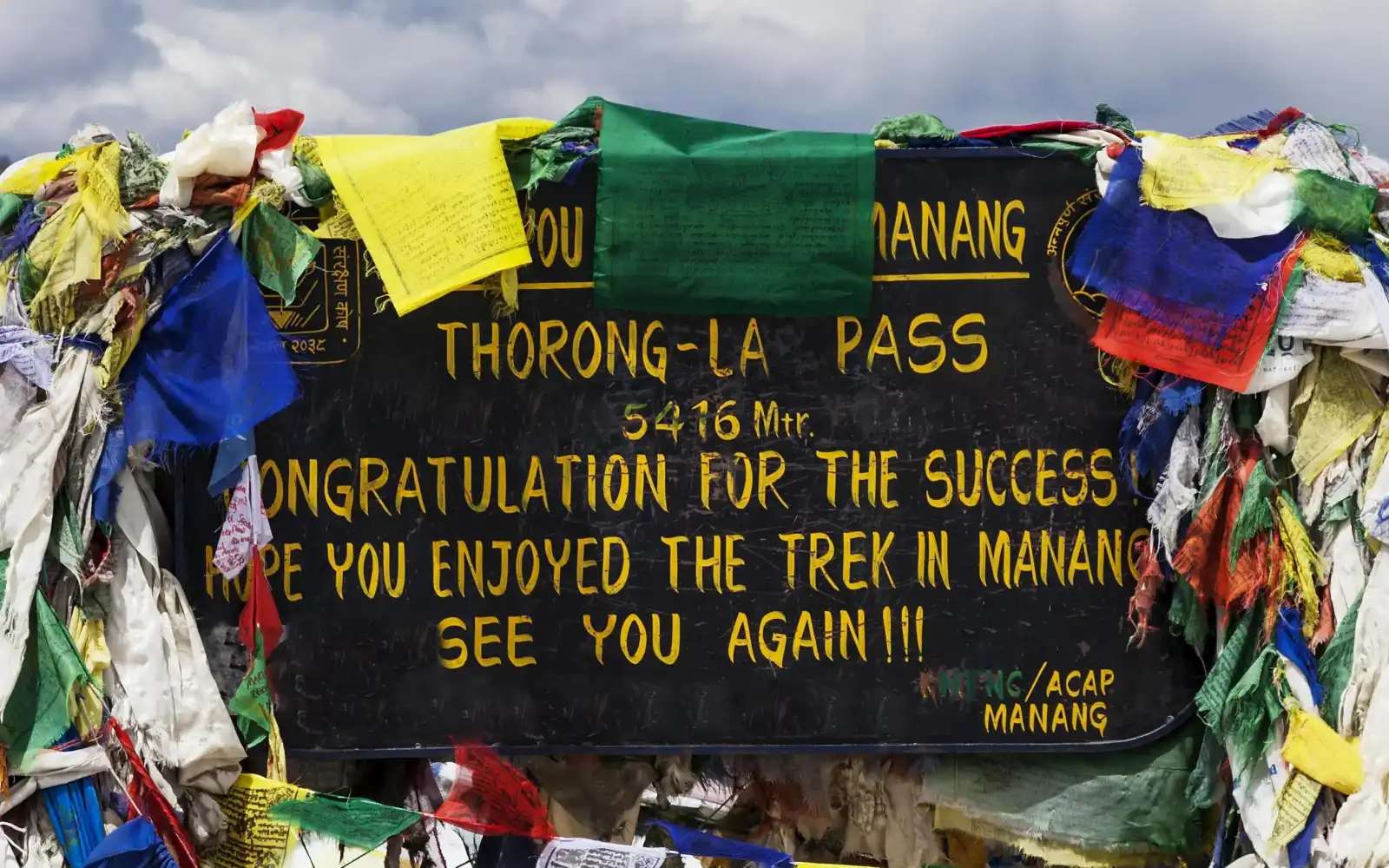
Meanwhile, Spring’s nice, no doubt. But I’ve watched trekkers get caught by afternoon clouds and sudden bursts of rain, blocking out the peaks they came all this way to see. Autumn, from September through November—those skies are reliable. Mukhiya Gurung, who runs Hotel Manang, tells me every year, “Autumn brings the clearest views and guests who always want to return.” Tashi Gurung, the snow leopard expert over at Lake View Hotel, says October’s air is so sharp you’ll spot wildlife you’d miss in spring. These are the weeks when the mountains truly shine. And our head guide, Mr. Bhabanath Adhikari, who’s done this for more than twenty years, puts it this way: “Autumn gives you the safest, most rewarding crossing of Thorong La Pass at 5,416 meters (17,769 feet). The weather’s steady and dry.”
The main highlights of the Annapurna Circuit include diverse landscapes, cultural villages, Manang Valley, the high mountain crossing of Thorong La Pass, and the sacred site of Muktinath Temple.
If you’re tired of elbowing through spring crowds taking selfies by rhododendrons, autumn changes the scene. Instead, you stroll through golden rice terraces and little apple orchards glowing in warm light. Palden Gurung from Agro Manang Apple Farm loves handing out those crisp apples to our trekkers, and it’s true—autumn guests always rave about how peaceful it is, how the local festivals like Dashain and Tihar add something special. Our guide Narayan Khadka and assistant Sujan Thapa both point out: trails stay drier, landslides almost never mess with your day. So you keep your focus on the walk, not the worry.
And Haven Holidays Pvt. Ltd. actually plans every Annapurna Circuit trek around all these autumn perks. We pair you with experts like Mr. Ramsaran Simkhada (15+ years leading groups). You get cozy teahouse nights and those impossible autumn skies overhead—honestly, the memories last a lifetime.
Key Benefits of Autumn for Annapurna Circuit Trek :
Crystal-clear visibility of Annapurna I (8,091m / 26,545ft) and surrounding peaks.
Stable, dry trails with minimal rainfall after monsoon.
Pleasant daytime temperatures and festive village atmosphere.
Fewer weather-related risks when crossing Thorong La (5,416m / 17,769ft).
Golden harvest landscapes and post-monsoon freshness.
Aspect
Autumn (Sep-Nov)
Spring (Mar-May)
Visibility
Excellent – clearest skies
Good but frequent afternoon clouds
Trail Conditions
Dry and stable
Can be muddy early season
Crowds
Peak in October
Moderate
Temperature at Manang (3,540m/11,614ft)
5°C–15°C daytime
Warmer but more variable
Risk at Thorong La (5,416m/17,769ft)
Lower due to predictable weather
Lower due to predictable weather
Autumn Weather and Visibility Summary
If you want to see why autumn owns this circuit, give Haven Holidays Pvt. Ltd. a shout. We’ll help you make the most of the season, and you’ll see for yourself why so many trekkers keep coming back.
Understanding Nepal’s Autumn Weather: Clear Skies and Stable Conditions
Actually, Nepal in autumn—especially across the Annapurna Circuit—feels like the perfect recipe: clean, crisp air and sky that stays clear day after day. As soon as the monsoon ends, the whole landscape breathes fresh and open. I’ve trekked here in September, October, November, and honestly, the routine’s like clockwork: warm, sunny days to hike, cooling off as dusk falls, and nights peppered with stars so sharp they almost hurt to look at.
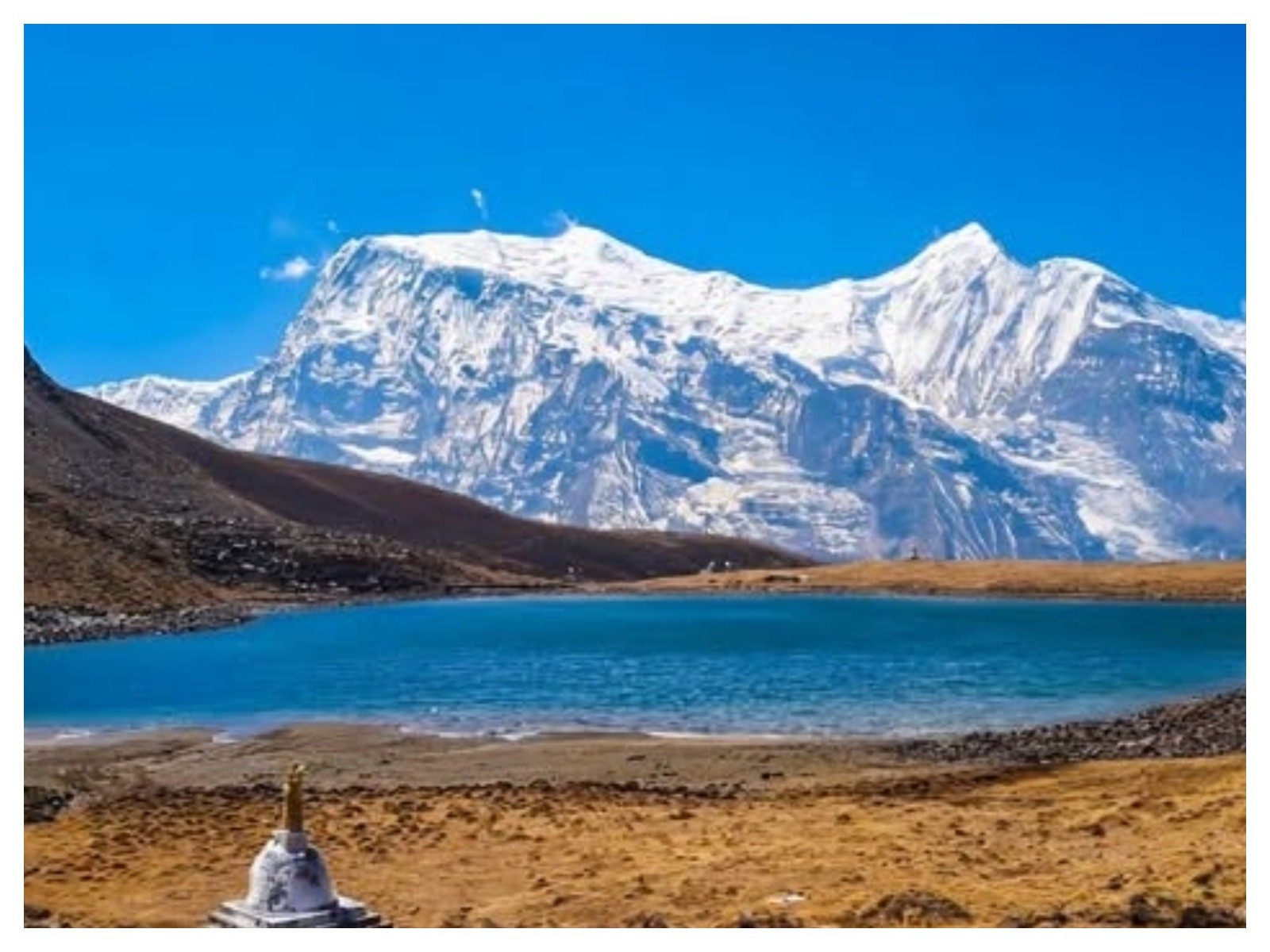
A breathtaking high-altitude hike to Ice Lake, one of the most popular acclimatization side trips on the Annapurna Circuit, offering panoramic views of the Annapurna and Gangapurna Himalayan ranges.
Here, walking in autumn just feels good. Down in the lower villages like Chamje (1,410 meters/4,626 feet), you get daytime temps from 15°C to 22°C (59°F to 72°F) in September, and then as you climb up to Manang (3,540 meters/11,614 feet) in October, it’s a fresh 5°C to 15°C (41°F to 59°F). Nights cool off fast, sure, but the dry air makes it easy to layer up and down. Dashrath Adhikari, one of our guides, always tells his group: “Layer well—temperatures drop as soon as the sun disappears, but you get rewarded with sunsets over Annapurna II (7,937 meters/26,040 feet) that are out of this world.”
Through autumn, rainfall almost vanishes. Trails stay dry, visibility’s fantastic even at Thorong La Pass. Especially in October, you wake up day after day to crystal views—photographers, this is your moment. Sonam Gurung over at New Yak Hotel in Braga (3,470m/11,385ft) almost laughs about it: “Autumn guests see perfect mountains every morning—unlike those sometimes-foggy spring days.”
And the rhythm's pleasant. It starts cool and quiet, a light breeze picks up in the afternoon, but nothing wild, and then it all settles into a calm, star-bright night. Senior guide Mr. Bhabanath Adhikari knows these trails inside out: “Steady autumn weather lowers your altitude sickness risk—it lets you keep a mellow pace without surprise storms rushing your acclimatization.” Sujan Thapa always adds, “Keep drinking water, start early, and mornings are your friend—enjoy that gentle calm before winds come up.”
In fact, Haven Holidays Pvt. Ltd. keeps a close eye on the weather—your guide always finds the best window for trekking. We’ll help you pick the right dates—October’s golden, but September and November have their own charm—and get you ready for whatever the mountain has in store.
Autumn Temperature Overview (Approximate Daytime Highs) :
Lower valleys (1,400m / 4,593ft): 15–22°
Mid altitudes like Chame (2,650m / 8,694ft): 10–18°C
Manang & Braga (3,500m / 11,483ft): 5–15°C
Thorong La Pass (5,416m / 17,769ft): -5°C to 5°C
Month
Rainfall | Visibility
Day Temp (Manang 3,540m) | Night Temp (High Camps) | Best For
September
Low–Moderate | Improving
8–17°C | 0–8°C | Lush greenery + clear views.
October
Very Low | Excellent
5–15°C | -5–5°C | Peak stability & festivals.
November
Minimal | Excellent
2–12°C | -8 to -3°C | Solitude & crisp air.
Spring Temperature Overview:
So, if you want to actually enjoy these autumn patterns, pack smart and let Haven Holidays Pvt. Ltd. guide you—you’ll trek with folks who know the weather inside out, and that means you can just settle in and soak up every moment on the trail.
Post-Monsoon Magic: Lush Landscapes and Golden Harvest Views
Actually, there’s something almost unreal about the Annapurna Circuit after the monsoon ends. Autumn rolls in, and suddenly the whole trek comes alive — it’s like someone’s painted the Marsyangdi Valley with fresh colors you didn’t even know existed. I’ve walked these trails with Haven Holidays Pvt. Ltd. every year, and autumn never fails to surprise me. The air is crisp, the scenery is spotless, and everything just breathes new life.
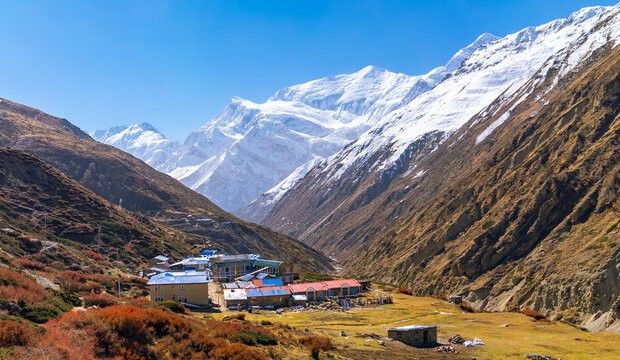
Autmn scenery on the Annapurna Circuit Trek.
Here, you set off in the lower valleys where the rice terraces glow — honestly, the gold almost hurts your eyes if the sun catches them just right. The air smells sweet from the harvest, and dry leaves rustle beneath your boots. All along the path, trees show off their autumn colors, and right around Bradang, you spot apple orchards loaded down with fruit. Palden Gurung from Agro Manang Apple Farm likes to tell guests, “In autumn, people don’t just walk past, they reach up and pick apples right from the tree and just sit there a moment, staring at the golden fields running all the way to the hills.”
Likewise, push higher and the landscape changes, but it keeps that magic. Rhododendrons fade; now you’re walking through forests of pine and juniper, and somehow every shade of green pops brighter after the rains. The rivers run sharp and clean. Waterfalls throw out sparks in the sun. I like how Narayan Khadka, one of our guides, points out the trails — how much easier and drier they feel this time of year, no need to tiptoe through the mud. And Mr. Bhabanath Adhikari, who’s led groups here for more than two decades, just grins and says, “Autumn is the season the mountains smile back. They’re golden and green in perfect balance.”
Similarly, the real showstopper is Manang, up at 3,540 meters. Those barley fields turn pure gold right in front of the snow-covered peaks. Tashi Gurung from Lake View Hotel in Manang — he’s a bit of a snow leopard expert — always says the air after the monsoon makes everything stand out. The mountains look closer. You walk right through these fields, the village buzzing with harvest time, and somehow feel a little more a part of things.
At Haven Holidays Pvt. Ltd., we don’t just drop the dates on a calendar and go. We time every autumn trip so you hit that perfect window — the golden fields, the clear sky, quiet mountain trails, all of it. Plus, you get comfy teahouses and guides who really know every corner of this route, so you see the best version of everything.
Highlights of Post-Monsoon Landscapes on Annapurna Circuit Trek:
Golden rice and barley terraces glowing in the Marsyangdi Valley
Fresh green-to-gold transition with vibrant autumn foliage
Ripe apple orchards and harvest-time village atmosphere
Clear rivers, sparkling waterfalls, and crisp mountain air
Peaceful trails free from monsoon mud and landslides
Dramatic with snow peaks | Post-monsoon freshness.
Post Monsoon Landscapes Summary :
To sum up, this post-monsoon season is the reason the Annapurna Circuit in autumn feels unforgettable. Join Haven Holidays Pvt. Ltd. and let us show you those golden harvest landscapes that stay with you, long after you’ve gone back home.
Iconic Highlights of the Annapurna Circuit in Autumn
If you want to see the heart of the Annapurna Circuit, you need clear autumn skies. Something about that deep blue makes all the mountains stand sharper and closer — it’s almost like someone cleaned the windows of the world. I’ve seen so many trekkers’ faces the moment those peaks open up, and I still love sharing it with every new group from Haven Holidays Pvt. Ltd.
Here, you get your first taste around Upper Pisang, 3,300 meters up. All around you — Pisang Peak, Annapurna II, slabs of glacier, just waiting for sunrise. The stretch to Manang is even more dramatic, especially if you take the scenic route through Ngawal. Sonam Gurung runs the New Yak Hotel in Braga; she’s probably got more trekking tales than anyone. Trekkers sit out front, tea in hand, just taking in Gangapurna and Annapurna III glowing in the morning light.
Actually, Manang isn’t just a mountain town — it’s the best place to slow down and breathe it all in. On rest days, you wander up to cliffside monasteries or hike out to hidden lakes, all with Annapurna I towering behind you. The light is different here. Even photos taken on a phone look unreal. Sujan Thapa, our assistant guide, always says, “Don’t rush Manang. Take short walks. Let the mountains fill the whole frame.”
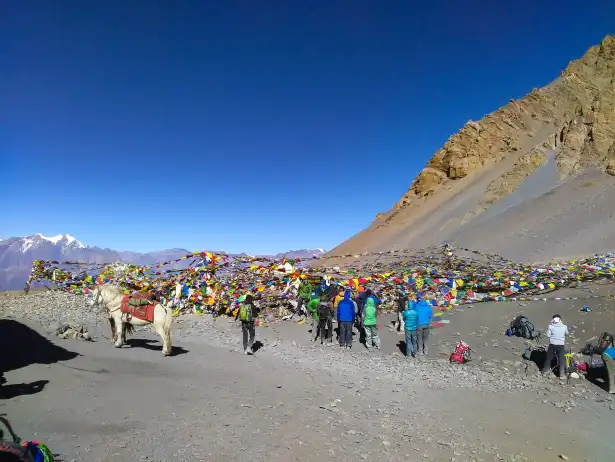
Then comes Thorong La Pass at 5,416 meters. This is the high point, literally and emotionally. You start before sunrise, step by step, and suddenly you’re hugging those prayer flags at the summit with the whole Annapurna range and Dhaulagiri filling the horizon. It’s so quiet, even the wind seems in awe. Ramsaran Simkhada — calmest guide you’ll ever meet — is always happy to remind trekkers, “You stand up here in autumn and finally understand why everyone calls this the king pass. The air feels alive, and you just, I don’t know, feel bigger inside.”
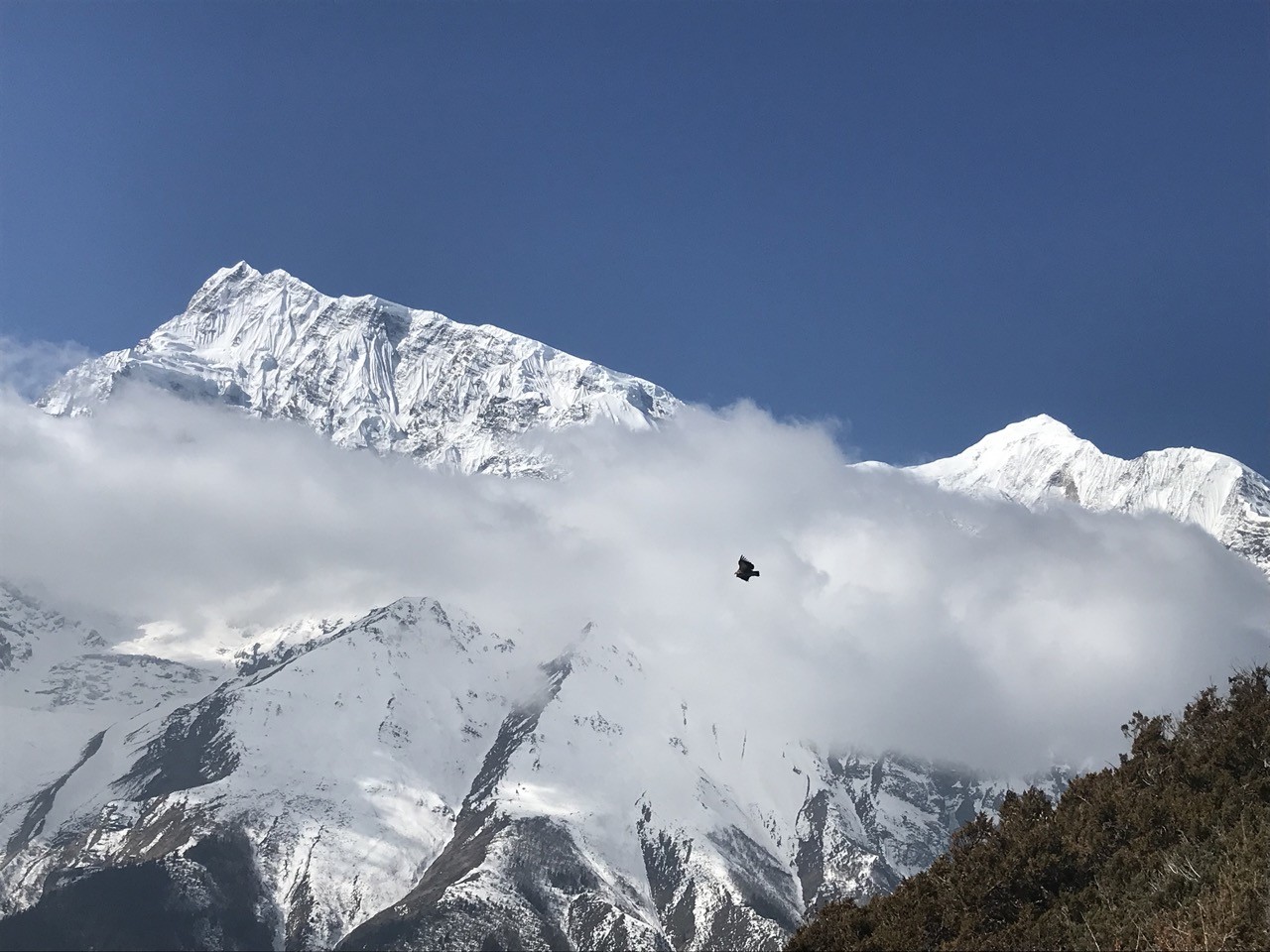
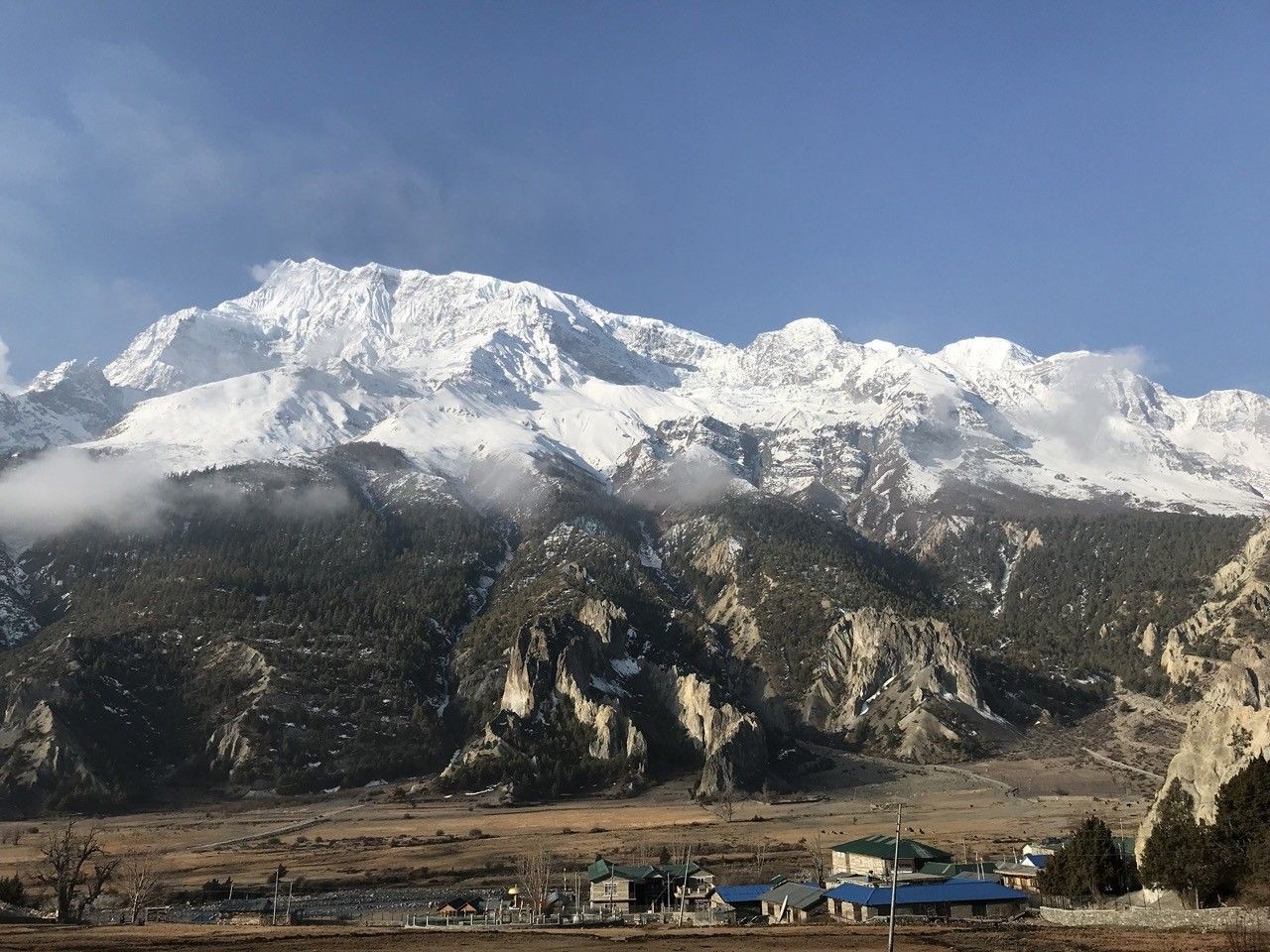
A stunning view of Annapurna II seen from the Manang Valley along the Annapurna Circuit, showcasing one of the most iconic peaks in the Nepal Himalayas.
On the far side, the land changes fast. You walk down to Muktinath and step into the sunburned Kali Gandaki valley, but autumn’s light still makes everything shine. Dashrath and Bhabanath Adhikari, our senior guides, agree this is when the crossing is at its best. The weather holds steady and every view stays clear — you don’t just see the highlights, you live them.
Here, Haven Holidays Pvt. Ltd. plans every trip around these must-see moments, so you’re never in a hurry or left out at a cloudy pass. You get the views and the culture, all at the right pace.
Must-See Iconic Highlights in Autumn :
Panoramic views from Upper Pisang (3,300m / 10,827ft) of Pisang Peak and Annapurna II.
Majestic Annapurna massif from Manang (3,540m / 11,614ft).
360-degree spectacle at Thorong La Pass (5,416m / 17,769ft).
Sacred site of Muktinath with clear mountain backdrop.
Golden light on glaciers and prayer flags throughout the route.
Iconic Spot
Elevation
Autumn Highlight | Why It Feels Special.
Upper Pisang
3,300m (10,827ft)
Views of Pisang Peak & Annapurna II | Peaceful ridge walks.
Manang
3,540m (11,614ft)
Full Annapurna I (8,091m / 26,545ft) face | Acclimatization + culture.
Thorong La Pass
5,416m (17,769ft)
360° panorama of Annapurna & Dhaulagiri | Ultimate achievement.
Muktinath
3,760m (12,336ft)
Temple with clear Himalayan backdrop | Spiritual + scenic reward.
Must-See Iconic Highlights in Autumn :
Summing up, these highlights are what turn a trek into a life-changing memory. Ready to stand on Thorong La with nothing but peaks in every direction? Get in touch with Haven Holidays Pvt. Ltd. Our team, including veterans like Mr. Bhabanath Adhikari, wants to get you there safely — and make sure you never forget it.
Choosing the Best Month: September, October, or November?
Here, figuring out the best time to trek the Annapurna Circuit in autumn can feel overwhelming. Every month has its own vibe and things you’ll have to weigh. After organizing and guiding lots of treks with Haven Holidays Pvt. Ltd., I usually point people to October as the real sweet spot. The weather stays steady, the skies turn unbelievably clear, and temperatures make crossing Thorong La Pass at 5,416 meters (17,769 feet) both safe and comfortable.
Actually, September kicks off the season with bright green scenery after the monsoon. For the first couple of weeks, the trails aren’t crowded, and the harvest starts to pop up down in the valleys. But let’s be real—early September can still be moody. Clouds sometimes hide those famous snowy peaks, and quick afternoon showers tend to carry on until the middle of the month. Narayan Khadka and assistant guide Sujan Thapa both suggest September when folks want peace and quiet, as long as you’re cool with unpredictable weather. Local farmer Palden Gurung over at Agro Manang Apple Farm likes to remind trekkers: early September still has that fresh, monsoon-charged energy in the fields.
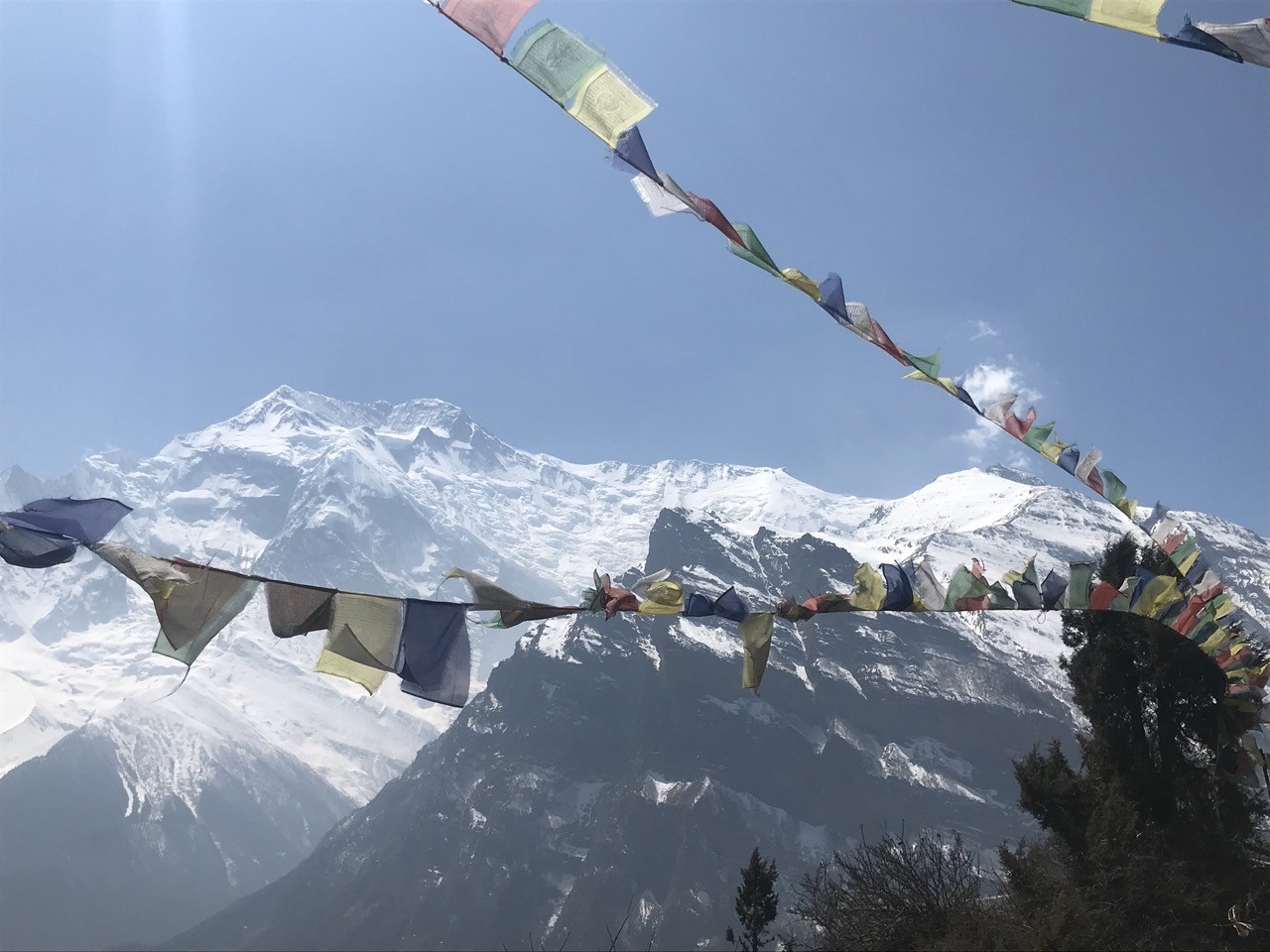
Colorful prayer flags flutter in the wind with the majestic view of Annapurna II in the background, reflecting the spiritual atmosphere of the Manang Valley along the Annapurna Circuit.
October? This is when the Annapurna Circuit really shows off. The sky turns a deep blue you really have to see to believe. Rainfall barely happens. The big peaks—Annapurna I (8,091 m / 26,545 ft), Annapurna II (7,937 m / 26,040 ft), and Dhaulagiri (8,167 m / 26,795 ft)—stand out as clear as they get. Walking feels just right during the day, and when the sun goes down, the air’s refreshingly cool. There’s a buzz in the teahouses. Festivals like Dashain and Tihar add real color to the trip. Senior guide Mr. Bhabanath Adhikari, who’s been leading groups for over 20 years, always says, “October gives you the safest and most rewarding Thorong La crossing because the weather stays predictable and the pass remains mostly snow-free.”
Now, November quiets everything down again. The trails get empty, and the views somehow get even sharper. The catch? Nights grow cold fast, especially up high. You’ve got to start your walking days early, move with purpose, and keep warm gear handy. By late November, expect to see snow on Thorong La. Tashi Gurung, who runs Lake View Hotel in Manang at 3,540 meters (11,614 feet), tells it straight: “November guests love the solitude and crisp air, but they need warmer layers for nights at higher elevations.” Mr. Ramsaran Simkhada, with 15+ years on these mountain paths, always recommends November for fit, experienced trekkers who want peace and don’t mind the cold.
In conclusion, Haven Holidays Pvt. Ltd. helps you figure out which month matches your pace, your crowd tolerance, and your goals. We tweak our packages for each trek so you can focus on actually enjoying the walk.
Quick Comparison of Autumn Months for Annapurna Circuit Trek :
September: Lush scenery, fewer crowds, possible early clouds.
October: Best overall – clear skies, stable weather, balanced temperatures.
November: Quiet trails, very clear views, colder nights and higher camps.
Month | Crowds
Weather & Visibility
Day Temp (Manang 3,540m/11,614ft) | Night Temp (High Camps) | Best For.
September | Low–Moderate
Improving, occasional clouds
8–17°C | 0–8°C | Solitude + green landscapes.
October | High (Peak)
Excellent, crystal clear
5–15°C | -5–5°C | First-timers, best views.
November | Low
Excellent, very sharp
2–12°C | -8 to -3°C | Experienced trekkers, peace.
Quick Comparison of Autumn Months for Annapurna Circuit Trek:
So, which month speaks to you? Haven Holidays Pvt. Ltd. makes the choice easy with firsthand advice from guides like Mr. Bhabanath Adhikari. Drop us a message and we’ll lock in your spot for a truly memorable Annapurna Circuit autumn trek.
Detailed Itinerary: A Day-by-Day Guide for Autumn Trekking
Here, a great itinerary is what turns an autumn Annapurna Circuit Trek from hectic into something that feels just right. We’ve shaped the classic 14–18 day route at Haven Holidays Pvt. Ltd. so you get the rest and acclimatization you actually need—especially before you tackle Thorong La at 5,416 meters (17,769 feet). The longer daylight at the start of the season and steady weather help you move at a comfortable, unrushed pace.
Actually, day 1–2: Arrive in Kathmandu (1,400 meters / 4,593 feet). Then you hit the road to Besisahar or Jagat, sitting around 1,300 meters (4,265 feet). The trip out of the city, following the Marsyangdi River, gets your body used to the idea of trekking. On Day 3, you hike to Chamje at 1,410 meters (4,626 feet), passing through beautiful, lush forests. Dashrath Adhikari, one of our most patient guides, always gets groups to ease into the trail, so you settle in and really enjoy those warm autumn breezes and golden rice fields.
Similarly, days 4–6: Your journey keeps climbing—through Chame (2,710 meters / 8,894 feet), then Upper Pisang (3,300 meters / 10,827 feet), and on to Manang at 3,540 meters (11,614 feet). The forests get thinner, the views open wide, and suddenly those mountains feel close enough to touch. We always work in a rest and acclimatization day in Manang. Hike up to Ice Lake, wander around the old monasteries—whatever helps you rest. Sonam Gurung at New Yak Hotel in Braga (3,470 meters / 11,385 feet) welcomes trekkers with hot tea and stories about life under those deep blue skies.
Likewise, days 7–9: Up to Yak Kharka (4,110 meters / 13,484 feet), then Thorong Phedi at 4,540 meters (14,895 feet), and finally, the crossing: Thorong La Pass at 5,416 meters (17,769 feet). This stretch means early morning starts in cold, sharp air. But reaching that pass and spinning around in a full circle? The Annapurnas, old stone shrines, glaciers, and a view that just stays with you. Mr. Ramsaran Simkhada sums it up: “In autumn we cross Thorong La smoothly because the trail stays dry and winds remain manageable if you start before sunrise.”
After crossing Thorong La, you head down to Muktinath (3,760 meters / 12,336 feet) on Day 10, then make your way down through the wild Kali Gandaki valley toward Jomsom (2,720 meters / 8,924 feet). The last part is all about celebrating—you can finish in Pokhara by jeep or by flight. If you want to linger, there’s always room to add extra rest days or detours like a side trip to Tilicho Lake.
Finally, Haven Holidays Pvt. Ltd. adapts every autumn trek to your strengths and walking style. Our crew will watch the weather, keep the group on track, and make sure you actually get a chance to enjoy those golden hills and the endless sky.
Sample 15-Day Classic Autumn Itinerary Overview :
Days 1-2: Kathmandu to Jagat/Chamje (1,410m / 4,626ft).
Days 3-6: To Manang (3,540m / 11,614ft) with acclimatization.
Days 7-9: Manang to Thorong La Pass (5,416m / 17,769ft) crossing.
Days 10-12: Muktinath (3,760m / 12,336ft) to Jomsom.
Days 13-15: Jomsom to Pokhara with buffer for weather.
Day Range | Key Destination
Elevation (m / ft)
Trekking Hours | Autumn Highlight.
1-3 | Chamje / Dharapani
1,410–1,860 / 4,626–6,102
5–6 | Golden terraces, warm valleys.
4-7 | Pisang to Manang + Acclimatization
3,300–3,540 / 10,827–11,614
4–6 | Panoramic Annapurna views.
8-9 | Thorong La Pass crossing
5,416 / 17,769
7–9 | Epic 360° panorama under blue sky.
10-12 | Muktinath to Jomsom
3,760–2,720 / 12,336–8,924
5–7 | Kali Gandaki valley winds.
13-15 | Return to Pokhara
822 / 2,697
Drive/Flight | Reflection & celebration.
Sample 15-Day Classic Autumn Itinerary Overview:
Ultimately, this guide should help you picture each step—what you’ll see, how you’ll feel, and what to expect in autumn. Let Haven Holidays Pvt. Ltd. sort out the details while you focus on long, peaceful walks and the moments you’ll remember. Our guiding legend, Mr. Bhabanath Adhikari, and all our staff are ready to help you take the first step. Ready to walk this legendary trail? Reach out today and we’ll get you started on your autumn trek.
Preparation Essentials: Packing List and Gear for Autumn Conditions
Meanwhile, packing smart is everything on the Annapurna Circuit in autumn. One minute you’re sweating under the sun, and the next you’re shivering at high camp. Days feel clear and dry, sure, but mornings and nights get downright freezing, especially above 4,000 meters—by the time you’re near Thorong La Pass at 5,416 meters, you’ll be glad you packed with care. Having helped hundreds of trekkers with Haven Holidays Pvt. Ltd., I can say: what you wear makes the journey a lot more comfortable.
Basically, start with layers. Throw on moisture-wicking thermals close to your skin, then a reliable fleece, and top it all with a shell jacket that keeps the wind and rain out. The real trick is the easy swapping—peel off layers in lower valleys, add them as you reach the high passes. Dashrath Adhikari and assistant guide Sujan Thapa always tell folks: “Autumn afternoons in Manang (3,540 meters) feel almost cozy, but by the time you reach Thorong Phedi (4,540 meters), nights bite hard.” So you want a proper down jacket that handles cold, and a sleeping bag rated to at least -10°C.
Likewise, shoes and small gear matter just as much. Go with trekking boots you’ve already broken in—your ankles will thank you—and pack gaiters to keep dust and stones out. Don’t skimp on warm gloves, a fleece hat or beanie, a buff for sun and dust, and solid sunglasses because that bright autumn sun is no joke. Tashi Gurung at Lake View Hotel in Manang, who knows these mountains like the back of his hand, always tells trekkers to carry extra warm socks and a headlamp with spare batteries—early mornings on the pass are pitch black.
Similarly, don’t forget the basics that keep you safe and comfortable. Bring a reusable water bottle or a hydration bladder, some purification tablets, high-SPF sunscreen, lip balm, a decent first-aid kit, and trekking poles for those steep bits. You’ll want a 40-60L duffel bag for porters and a smaller 20-30L daypack for your daily stuff. Bhabanath Adhikari, who’s been guiding out here for over twenty years, puts it simple: “Layer up smart and test everything on a weekend hike before you arrive. Trust me, that alone saves you grief at high camp.”
To conclude, with Haven Holidays Pvt. Ltd., you get a checklist and help finding rental or buying gear in Kathmandu or Pokhara, so you don’t drag around stuff you don’t need—but you stay ready for anything.
Essential Packing List for Annapurna Circuit Trek in Autumn :
Thermal base layers, fleece mid-layer, and waterproof shell jacket for variable temperatures.
Warm down jacket and 4-season sleeping bag rated to -10°C or lower.
Sturdy trekking boots, extra socks, gaiters, gloves, beanie, and sunglasses.
Trekking poles, headlamp with batteries, water purification, and high-SPF sunscreen.
Daypack (20-30L) and duffel bag for porter.
Category
Must-Have Items for Autumn
Why It Matters on Annapurna Circuit.
Clothing & Layering
Thermals, fleece, down jacket, shell
Handles warm days and freezing nights above 4,000m.
Footwear & Accessories
Trekking boots, gaiters, gloves, hat, sunglasses
Protects against cold, sun, and rough trails.
Sleeping & Shelter
Warm sleeping bag (-10°C rating)
Essential for cold teahouse nights near Thorong La.
Hydration & Safety
Water bottle, purification tablets, first-aid kit
Prevents dehydration and handles minor issues.
Other Essentials
Trekking poles, headlamp, pack cover
Improves stability and visibility on early starts.
Essential Packing List for Annapurna Circuit Trek in Autumn:
Most importantly, pack well, and you’ll spend your time admiring the views instead of fussing about gear. Trek with Haven Holidays Pvt. Ltd. and our team will make sure you have everything you need for a safe and fantastic Annapurna Circuit autumn adventure.
Fitness and Acclimatization Tips to Conquer Thorong La in Autumn
If you’re planning to cross Thorong La Pass at 5,416 meters during the Annapurna Circuit in autumn, fitness and acclimatization are your best friends. The weather helps—clear and steady—but you still need to train your body and climb smart so you enjoy the trek rather than just survive it. After guiding tons of treks for Haven Holidays Pvt. Ltd., I always tell people: train consistently and move up slowly, and you’ll actually have fun up there.
Mainly, get your fitness going at least 8–12 weeks ahead. Cardio is king: run, bike, swim, and do long hikes carrying a backpack loaded with 6–10 kg. Mix in strength work—squats, lunges, step-ups, plus some core exercises—and you’ll handle all those uphills and downhills with a lot more ease. Ramsaran Simkhada, who’s guided for over fifteen years, always says, “Find some hills or stairs and use them. Annapurna is steep, and strong legs mean less gasping at altitude.”
But really, acclimatization matters even more than your fitness. Stick to the golden rule: don’t climb more than 300–500 meters higher than your last night’s sleep once you’re above 3,000 meters. That’s why we always take a full rest day in Manang (3,540 meters)—hike up to Ice Lake, check out villages nearby, then sleep at the same height. This lets your body adjust naturally. Bhabanath Adhikari, with his two decades’ experience, never gets tired of saying, “Autumn makes acclimatizing easier without surprise storms, but you gotta drink 3–4 liters a day and walk slow.”
Likewise, listen to yourself on the trail—go steady, take breaks, eat carbs, and just skip alcohol and smoking. Our guides Narayan Khadka and Sujan Thapa keep an eye on everyone and change the pace as needed. Locals like Mukhiya Gurung from Hotel Manang and Sonam Gurung from New Yak Hotel in Braga always suggest garlic soup or ginger tea for altitude—it works.
To conclude, Haven Holidays Pvt. Ltd. sets up every autumn itinerary with enough acclimatization days and gives solid pre-trek training tips, so you show up ready and confident.
Key Fitness and Acclimatization Tips :
Train with cardio and strength workouts 4–5 days a week for 8–12 weeks
Practice hiking with a loaded daypack on hills and stairs
Follow slow ascent and include rest days in Manang (3,540m / 11,614ft)
Stay hydrated, eat well, and listen to your guide’s advice
Use stable autumn weather to maintain steady progress toward Thorong La (5,416m / 17,769ft)
Training Focus
Recommended Activities
Frequency | Benefit for Thorong La Crossing.
Cardio Endurance
Running, cycling, swimming, long hikes
4–5 sessions/week | Builds stamina for long days at altitude.
Strength & Legs
Squats, lunges, step-ups, core exercises
2–3 sessions/week | Handles steep climbs and descents.
Acclimatization
Hike to higher points and return same day
During trek (Manang day) | Helps body adapt safely.
Overall Preparation
Practice with boots and pack
Before trek | Reduces blisters and fatigue.
Fitness and Acclimatization Tips:
Most importantly, train well, climb slow, and you’ll stand at Thorong La with the sky clear and your spirits high. Let Haven Holidays Pvt. Ltd. give you the prep and know-how you need—guides like Bhabanath Adhikari back you every step. Reach out and start planning your unforgettable Annapurna autumn trek today.
Teahouse Stays and Local Culture: Experiencing Nepali Hospitality
Actually, staying in teahouses along the Annapurna Circuit Trek in autumn is so much more than just finding a roof for the night—it’s like being invited right into the heart of Nepali life, wrapped in real warmth and community spirit. After trekking all day under that endless blue sky, you step into a teahouse and the smell of dal bhat and ginger tea greets you. Suddenly, you’re family. I’ve stayed in these cozy places time and again with Haven Holidays Pvt. Ltd., and every autumn, there’s something special. The laughter, the shared meals, the festival spirit—it all leaves a mark.
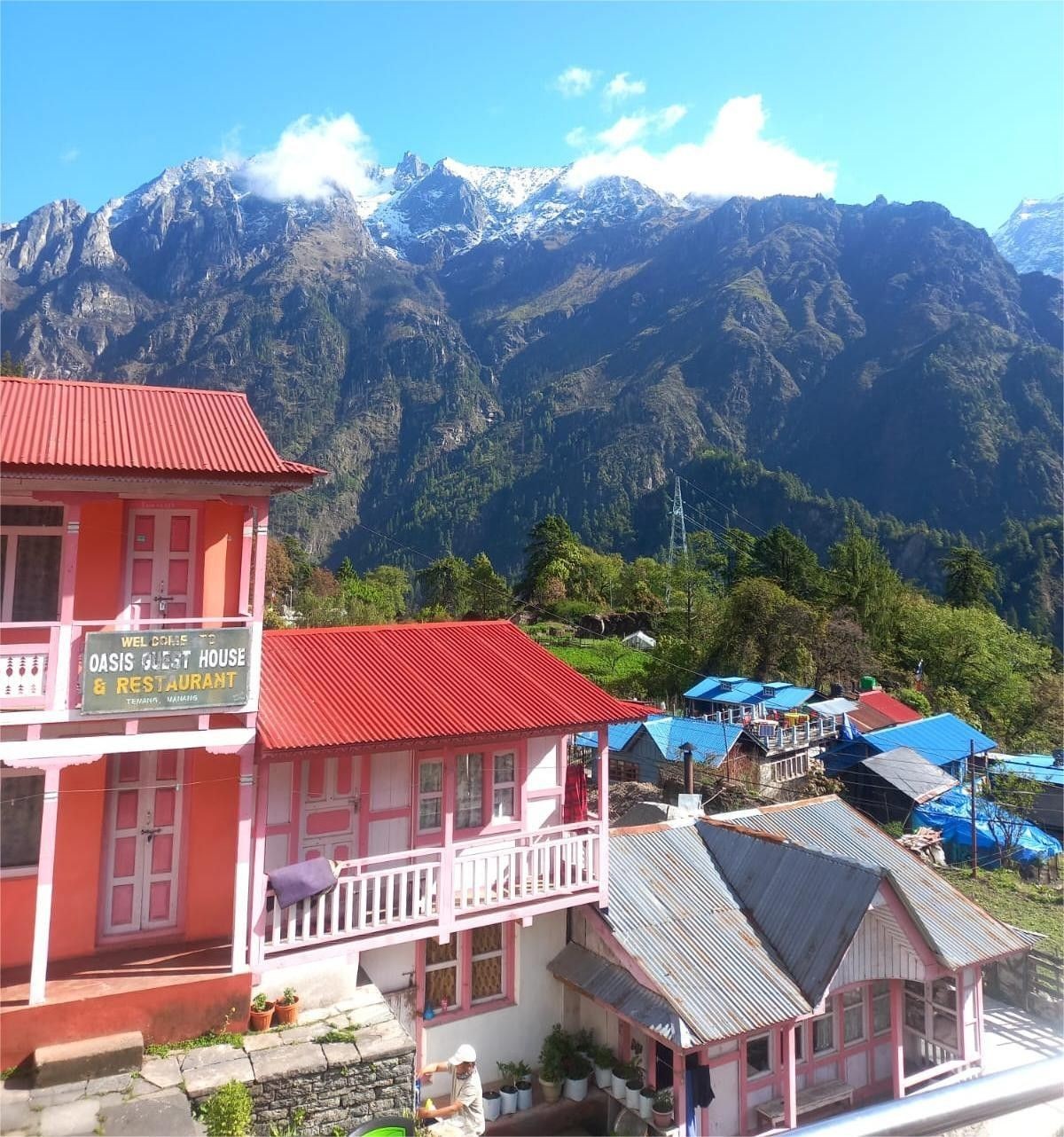
A traditional mountain teahouse in Timang offering warm hospitality, simple accommodation, and panoramic Himalayan views for trekkers on the Annapurna Circuit.
Inside, you’ll get a simple but comfortable room, thick blankets to fight off the chill, and a shared dining hall buzzing with stories. The bukhari—the wood stove—is the center of it all, where everyone gathers. Autumn, especially October, means festival season. Dashain and Tihar light up the villages. With prayer flags dancing in the wind, kids lighting oil lamps, and families handing out sweets, you’ll feel the energy everywhere. Mukhiya Gurung, the friendly owner of Hotel Manang at 3,540 meters, always welcomes us with a huge smile and says, “In autumn, our hearts and homes are open wider because the mountains bless us with clear days.”
Here, food keeps you fueled and happy. Dal bhat, garlic soup, momos, Tibetan bread, and some of the freshest apple pie near Bradang—you’ll devour it all. Palden Gurung from Agro Manang Apple Farm loves sharing his apples and cider while swapping harvest stories. Sonam Gurung at New Yak Hotel in Braga gets everyone excited about his yak cheese and hot potato pancakes. Nothing else hits the spot quite like these on a cool autumn night.
In fact, every village hums with its own rhythm. You’ll stumble on monks chanting in old gompas, see women weaving, or watch farmers hauling in their crops. Guides like Narayan Khadka and Sujan Thapa jump in to bridge conversations, making sure you can really talk with locals. And then there’s senior guide Mr. Bhabanath Adhikari, who’s spent over two decades on these trails. He sums it up perfectly: “Autumn is the best time to experience real Nepali hospitality because people are happy after the harvest and the weather allows relaxed evenings together.”
In summary, Haven Holidays Pvt. Ltd. always picks teahouses with the cleanest rooms, most delicious food, and families who genuinely care. Our relationships with these folks mean you get a true home-away-from-home the entire trek.
Highlights of Teahouse Stays and Local Culture in Autumn:
Warm hospitality and genuine smiles from local families.
Festive atmosphere during Dashain and Tihar celebrations.
Delicious trail food including dal bhat, apple pie, and garlic soup.
Evening conversations around the bukhari with locals and trekkers.
Cultural experiences in Manang, Braga, and Muktinath villages.
Teahouse / Location
Elevation
Specialty Experience | Autumn Highlight.
Hotel Manang (Mukhiya Gurung)
3,540m (11,614ft)
Traditional Gurung hospitality | Warm rooms + festival vibes.
Snow leopard stories + apple cider | Clear sunset views from dining hall.
Agro Manang, Bradang (Palden Gurung)
3,600m
Fresh organic apples & farm experience | Harvest season taste.
Teahouse Stays and Local Culture in Autumn :
In fact, sharing these teahouses and soaking up Nepali culture gives you something even better than killer mountain views—these are memories that last, stories you take home, and friendships that stick. Let Haven Holidays Pvt. Ltd. show you what real hospitality looks like on your Annapurna Circuit Trek this autumn. Trust me, you’ll come back with more than just photos.
Photography Paradise: Capturing the Best Mountain Views in Autumn
If you love photography—even just snapping with your phone—the Annapurna Circuit in autumn is just next-level. You get these deep blue skies, crystal-clear air, and that soft golden light you dream about. Peaks seem sharper, colors pop, and every tiny detail stands out. Every time I guide with Haven Holidays Pvt. Ltd., I can’t help but feel that buzz again watching trekkers catch perfect shots that’ll stay with them for years.
A breathtaking panorama of the Annapurna range seen from Manang along the Annapurna Circuit, showcasing towering Himalayan peaks and vast alpine landscapes.
That golden hour? Pure magic. Roll out of bed early or linger during the sunset and watch Annapurna I and Annapurna II light up with this warm, gentle glow. From Upper Pisang or Manang, the light just melts across rock and ice. Tashi Gurung over at Lake View Hotel in Manang is always up before dawn, hunting for that first touch of sunshine over Gangapurna glacier—he’ll even show you his favorite sunrise spots.
In autumn, the skies are on your side. Unlike spring, when clouds tend to close in, now you have hours and hours of perfect conditions. Stand on Thorong La Pass at 5,416 meters and soak in the wildest 360-degree vistas, prayer flags flickering in the breeze. Our guide Mr. Ramsaran Simkhada nails it: “In autumn, reach the pass early and wait for the light—the contrast between white snow, blue sky, and colorful flags creates unforgettable images.”
Some quick pointers: Head out right after sunrise or in the last two hours before sunset for the best colors. Bring a wide-angle lens for massive landscapes, and a zoom lens for close-ups of the peaks. A tripod’s great for those shadowy moments, and a polarizing filter makes snow and sky look their best. Mr. Bhabanath Adhikari, who’s seen it all, reminds everyone, “Move slowly, breathe steady, and take your time—this clear autumn air rewards patience with razor-sharp detail.”
The subjects? They never end—golden rice terraces, ancient mani walls, Tihar celebrations, kids laughing, glaciers flashing in the sun. Sujan Thapa, our assistant guide, always manages to scout those hidden angles in Braga and Manang that most folks just walk past.
Mainly, Haven Holidays Pvt. Ltd. gets it—we plan our treks so you’ve got room for photography. No one’s going to rush you past that once-in-a-lifetime view.
Photography Tips for Annapurna Circuit in Autumn :
Wake early for golden hour sunrise over Annapurna massif.
Use clear blue skies as dramatic backdrop for mountain portraits.
Capture prayer flags and 360° views at Thorong La Pass (5,416m / 17,769ft).
Photograph golden harvest fields and village life in Manang valley.
Pack polarizing filter, extra batteries, and memory cards for cold weather.
Location
Elevation
Best Time for Photos | Signature Shot in Autumn
Upper Pisang
3,300m (10,827ft)
Sunrise / Golden hour | Annapurna II with pine forests
Manang & Braga
3,470–3,540m (11,385–11,614ft)
Sunrise & Late afternoon | Full Annapurna I face
Thorong La Pass
5,416m (17,769ft)
Early morning | 360° panorama with prayer flags
Kali Gandaki Valley
2,700–3,760m
Sunset | Dramatic arid landscape & peaks
Photography Tips for Annapurna Circuit in Autumn :
Actually, there’s just no place like it for photographers. The Annapurna Circuit in autumn is the stuff of dreams—let Haven Holidays Pvt. Ltd. guide you to those secret spots, so you don’t just collect photos, but real memories to match.
Here, potential challenges pop up on every Himalayan trek, but the Annapurna Circuit in autumn just feels easier when you set yourself up right and join up with guides who know what they’re doing. Autumn means clear blue skies and dry trails, but by October, you start to see bigger crowds—and the nights get really cold the higher you go. I’ve guided more trips with Haven Holidays Pvt. Ltd. than I can count, and I’ve learned that if you plan ahead, most problems just turn into stories you’ll tell later.
Likewise, the crowds in October hit hardest at busy places like the teahouses in Manang (3,540 meters/11,614 feet) and Thorong Phedi (4,540 meters/14,895 feet). If you roll in late, good luck getting a room. That’s why we always book our spots in advance and hit the trail early every morning. Our assistant guides, Sujan Thapa and Narayan Khadka, keep our pace steady so we land at the next stop before the main rush. Senior guide Mr. Bhabanath Adhikari, who’s been at this more than 20 years, nails it: “Start before 7 AM during peak October—you’ll find quiet on the trails and get the best rooms.”
Then there’s the cold. After sunset at Thorong La Pass (5,416 meters/17,769 feet), the thermometer drops below -10°C fast. The only way through is with good layers and a warm sleeping bag. Tashi Gurung from Lake View Hotel in Manang always tells trekkers, “Autumn nights are clear and beautiful, but they’re also cold—good layers and a hot water bottle make a big difference.” We train our groups to change out of sweaty clothes right after reaching camp and drink something hot before crawling into bed.
Similarly, most trails in autumn are in top shape—after the monsoon, everything dries out quick. But the climb before and after Thorong La still gets dusty, and loose rocks can trip you up. Trekking poles are the simple solution. Mr. Ramsaran Simkhada, who’s been guiding here 15+ years, keeps it simple: “Go slow and use your poles heading downhill—your knees will thank you, and you’ll stay on your feet, even when you’re tired.”
A few more basics: Drink water throughout the day, stay alert for altitude sickness, and never rush the pass. Dashrath Adhikari always keeps an eye on the weather and how the group’s feeling. We take safety seriously, carrying a satellite phone and oxygen just in case.
That’s really the trick: with careful planning and a solid team, Haven Holidays Pvt. Ltd. turns these little autumn challenges into smooth sailing.
Common Challenges and Solutions for Annapurna Circuit in Autumn :
October crowds → Book ahead and start early each day
Cold nights at high altitude → Use proper layering and a 4-season sleeping bag
Dusty or rocky trail sections → Trek with good boots and trekking poles
Altitude concerns before Thorong La → Follow slow ascent and acclimatize well in Manang
Sudden weather changes → Trek with experienced guides who monitor forecasts
Challenge
When It Occurs Most
How to Overcome It Effectively | Benefit of Autumn Trekking
Crowds
Mid-October
Early starts + advance booking | Still manageable with good planning.
Cold Nights
Above 4,000m
Proper layers + warm sleeping bag | Clear skies make evenings beautiful.
Trail Conditions
Steep sections near pass
Trekking poles + steady pace | Dry trails reduce slipping risk.
Altitude Sickness
Thorong La approach
Good acclimatization + hydration | Stable weather supports steady pace.
Common Challenges and Solutions for Annapurna Circuit in Autumn:
Concludingly, you show up prepared, you get good support, and the Annapurna Circuit in autumn turns into an amazing trek. Come join us at Haven Holidays Pvt. Ltd.—our team (including Mr. Bhabanath Adhikari and Mr. Ramsaran Simkhada) will get you through it safe, confident, and smiling at the sunset.
Sustainable Trekking: Responsible Practices on the Annapurna Circuit
Meanwhile, sustainable trekking matters a lot during the busy autumn season on the Annapurna Circuit—this is when the trails fill up. You can soak in the golden hills and jaw-dropping views, but it’s easy to protect the mountains and help out the villages at the same time. I’ve spent 10 years focusing on these small, responsible practices with Haven Holidays Pvt. Ltd., and I’m convinced: every little thing trekkers do adds up to keeping this place special for the next generation.
Here’s where you start: carry out what you carry in. Skip single-use plastic bottles—just bring a sturdy water bottle and purification tablets. Most teahouses boil or filter water for trekkers, which means way less trash. Palden Gurung from Agro Manang Apple Farm always asks guests to bring their own bags for apples instead of using new plastic ones. Our clients get reusable bags and water purification tablets from Haven Holidays Pvt. Ltd. right at the start.
Actually, backing local communities is easy—just pick family-owned teahouses and eat what’s grown nearby. Stay with Mukhiya Gurung at Hotel Manang or Sonam Gurung at New Yak Hotel in Braga (3,470 meters/11,385 feet) and you know your money helps out the locals. Buy handmade souvenirs directly from the women who make them. Hire local porters and guides, too. Mr. Bhabanath Adhikari, who’s guided here 20+ years, says it best: “When you support local families, you strengthen the entire Annapurna region and keep the culture alive.”
For the environment’s sake, stick to marked trails. Leave wildflowers alone, don’t feed the animals, and use biodegradable soap. Always dump waste in the right spots. In busy October, these small choices really cut down your impact. Guides like Sujan Thapa and Narayan Khadka help every group follow Leave No Trace principles day in, day out.
And when you visit monasteries in Manang and Muktinath (3,760 meters/12,336 feet), dress modestly, be polite, ask before snapping photos of locals, and join festival celebrations respectfully. It’s just good trekking etiquette.
Most importantly, we at Haven Holidays Pvt. Ltd. take sustainable tourism seriously. All our staff and porters learn about eco-friendly ways to trek, and we team up with the Annapurna Conservation Area Project (ACAP) to take extra care of this amazing mountain zone.
Responsible Practices for Sustainable Trekking :
Use reusable water bottles and purification instead of plastic
Support locally owned teahouses and buy local products
Stay on trails and pack out all your waste
Respect local culture and traditions
Choose responsible trekking companies that prioritize sustainability
Responsible Action
How to Practice It
Impact on Annapurna Region
Waste Management
Carry reusable bottle + purification
Reduces plastic pollution dramatically.
Supporting Locals
Stay in family teahouses & hire local guides
Strengthens village economy.
Trail Discipline
Walk only on marked paths
Prevents erosion and habitat damage.
Cultural Respect
Follow local customs in villages & monasteries
Preserves traditions and goodwill.
Energy Use
Limit hot showers & use solar when available
Conserves limited resources at high altitude.
Responsible Practices for Sustainable Trekking
When you trek responsibly, you leave the Annapurna Circuit better than you found it. Trek with Haven Holidays Pvt. Ltd. this autumn, and you’ll help protect the mountains and support the wonderful people who live here—so trekkers can keep coming back to this magical circuit for years to come.
Budget and Practical Planning for an Autumn Adventure
Actually, a smart budget and some practical planning mean you get to enjoy the Annapurna Circuit Trek in autumn without running into trouble or blowing your savings. People always ask me how much it really costs, and whether they should go guided or try trekking on their own. After all these years planning trips with Haven Holidays Pvt. Ltd., I’ve found the best option gives you both peace of mind and good value.
If you want a comfortable guided trek with Haven Holidays Pvt. Ltd. in autumn, expect to pay between USD 1,150 and 1,650 per person for a 15–18 day package. That covers airport transfers, your teahouse stays, all the meals you need on the trail, a seasoned guide and porter, your ACAP permit, TIMS card, and a ride from Kathmandu to the trailhead and back from Jomsom to Pokhara. Trekking independently sounds cheaper — usually USD 700–950 — but you’ll be organizing every detail yourself, and you take on more risk, especially at Thorong La Pass, which sits at 5,416 meters (17,769 feet).
Likewise, you need two main permits for Annapurna circuit trek. The Annapurna Conservation Area Permit (ACAP) costs about USD 30, and the Trekkers’ Information Management System (TIMS) card costs around USD 20. We sort all of that for you, so you don’t have to deal with long lines in Kathmandu or Pokhara. Mr. Bhabanath Adhikari always points out, “Pay a little more for a professional guide and you save yourself from many worries when the weather changes or altitude affects someone in the group.”
Similarly, transportation in autumn is pretty straightforward, just needs a bit of good timing. The adventure starts with a drive from Kathmandu to Besisahar or Jagat, and from there, you walk. When you finish, you’re looking at a scenic jeep ride or a short flight from Jomsom (2,720 meters, 8,924 feet) to Pokhara. Those flights book up fast in October and November, so we secure seats early. With 15+ years of experience, Mr. Ramsaran Simkhada always suggests going guided if this is your first high-altitude trek — our team keeps an eye on the weather and adapts the day-to-day plan as needed.
Here, choosing between a guide and independent trekking comes down to your style. If you want freedom, go solo. If you want peace of mind when things get tough, go guided. With Haven Holidays Pvt. Ltd., your guide, assistant, and porter know pretty much everyone on the trail — like Mukhiya Gurung in Manang or Tashi Gurung at Lake View Hotel. That kind of network makes a huge difference for your safety and comfort.
Concludingly, we keep our prices transparent. No hidden fees. You get flexible payment options, and we can tweak the trek to fit your budget or group.
Breakdown of Costs for Annapurna Circuit Trek in Autumn (Per Person) :
Guided Package (15–18 days): USD 1,150 – 1,650.
Permits (ACAP + TIMS): USD 50.
Kathmandu to Trailhead + Return from Jomsom: USD 80–150.
Breakdown of Costs for Annapurna Circuit Trek in Autumn (Per Person):
Most importantly, plan ahead and save yourself money, stress, and energy. Reach out to Haven Holidays Pvt. Ltd. today. We’ll lay out a clear and honest budget for your dream Annapurna Circuit in autumn, so you can just focus on the mountain views and golden hills.
Trekker Stories and Real Experiences from Autumn Journey
Meanwhile, the real stories from trekkers — that’s what brings the Annapurna Circuit in autumn to life. Over the last decade with Haven Holidays Pvt. Ltd., I’ve heard hundreds of people talk about how this trek changed them. Here are a few moments that show why autumn just stands out for so many.
Last October, Sarah from Canada joined one of our groups. She was a bit anxious about crossing Thorong La Pass (5,416 meters / 17,769 feet). The day we got there, the sky was deep blue, barely a breeze. She teared up and said, “I never imagined the mountains could look this clear. I feel so alive.” Our senior guide Mr. Bhabanath Adhikari just smiled and said, “This is why we come in autumn — the mountains reward those who prepare well.”
Likewise, Rajesh, a software engineer from India, brought home a different memory. He was interested in culture as much as the scenery. At Hotel Manang (3,540 meters / 11,614 feet), Mukhiya Gurung invited him to their Dashain celebration. Rajesh told me later, “I came for the mountains, but the warm hospitality and festival lights in the village made this the most meaningful trip of my life.” Our assistant guide Sujan Thapa helped out with the lamps and explained what everything meant. That night stuck with him.
Similarly, another time at Lake View Hotel in Manang, Tashi Gurung (who knows a thing or two about snow leopards) helped a couple from Australia spot one just behind the hotel. They got to watch the animal for a few minutes in that crisp autumn air. Those guests still send photos every year and say it was the highlight of their trek.
Moreover, Mr. Ramsaran Simkhada, who’s guided the route for 15+ years, likes to remember a solo trekker from Germany. She wanted more quiet and sharper views, so she came in November. Even with the colder nights, she finished the trek with a big sense of confidence, telling us, “The silence at Thorong La under a bright blue sky, combined with the professional support from the team, gave me confidence I never knew I had.”
Then there’s Palden Gurung from Agro Manang Apple Farm in Bradang. He loves talking with trekkers who come back each year just to taste his fresh apples and walk through golden fields with local families.
Here, you see, this trek isn’t just about the high pass or the stunning views — it’s really about the people, the moments of challenge, and those connections you make under the huge, clear Himalaya sky.
Memorable Moments Shared by Our Autumn Trekkers :
Reaching Thorong La with perfect visibility and emotional celebrations
Joining local Dashain and Tihar festivals in Manang valley
Snow leopard sighting near Manang in crisp autumn light
Warm evenings with teahouse families and delicious home-cooked meals
Personal growth and confidence gained from completing the circuit
Most importantly, everyone walks away with their own story. Haven Holidays Pvt. Ltd. makes sure the space is there for these moments to happen, with thoughtful planning and real care. So if you’re ready to create your own autumn story on the Annapurna Circuit, let us help you make it a reality.
Final Thoughts: Why the Annapurna Circuit in Autumn Will Transform You
Actually, the Annapurna Circuit Trek in autumn really does change people. I've spent over ten years walking these paths with Haven Holidays Pvt. Ltd., and I've watched trekkers return home looking stronger, thinking clearer, and feeling more alive. There's something about those wide-open skies, the gold of harvest fields, the warmth of Nepali hosts, and the towering Himalayas—this mix leaves a mark you carry long after you leave.
Here, picture yourself at Thorong La Pass, 5,416 meters up, blue sky above, giants like Annapurna I and Dhaulagiri all around. It's hard not to feel a rush of accomplishment. The chill in the air, the fluttering prayer flags, the mountains stretching forever—they wake up something deep inside you. Mr. Bhabanath Adhikari, one of our senior guides with more than 20 years’ experience, often says, “Autumn does not just show you the mountains — it shows you who you really are.” He’s right.
But it’s not just about the scenery. You connect with people, too. Maybe you’ll share a joke with Mukhiya Gurung at Hotel Manang, try crisp apples from Palden Gurung’s orchard in Bradang, or hear snow leopard tales from Tashi Gurung. Chances are, you’ll celebrate Dashain or Tihar with families who welcome you like an old friend. The hospitality here isn’t just polite—it’s soothing. Our guides, Mr. Ramsaran Simkhada (15+ years), Narayan Khadka, Dashrath Adhikari, Sujan Thapa—they become your friends, not just your leaders.
Here’s what you need to remember: Autumn’s the sweet spot. The weather’s at its best, trails stay dry, and the views? They don’t get any clearer. Plan ahead, acclimatize as you go, and trek responsibly—you’ll get the most from this adventure. And honestly, the journey really does matter more than the finish line.
Finally, the trek shapes you. You learn patience. You toughen up. You feel grateful, and you become more present. When you get back home, you see everyday life differently. Golden terraces, star-filled nights at Manang, sunrise at the pass—they stick with you, part of your story now.
If you’ve been picturing yourself under crisp Himalayan skies, surrounded by peaks and welcoming smiles, autumn’s your moment. Haven Holidays Pvt. Ltd. is here to make that happen, with guides who know every turn and a team that genuinely cares.
Ready for the Annapurna Circuit in autumn to leave its mark on you?
Reach out to Haven Holidays Pvt. Ltd. Our team—Mr. Bhabanath Adhikari, Mr. Ramsaran Simkhada, and the rest—will shape an autumn trek that fits you just right. Whether it’s your first time out here or you’re coming back for more, we’ll be there for every step.
Here, the mountains are waiting. The golden light is here. Your story on the Annapurna Circuit is just getting started. So, which month? September, October, or November? Drop your thoughts in the comments below—I read every message and would love to help you plan. See you on the trail!
FAQS:
1. Why is Autumn the best season for Annapurna Circuit Trek? Autumn (September to November) is widely considered the best season for the Annapurna Circuit Trek. The weather is stable, skies are crystal clear, and you get breathtaking views of the Annapurna and Dhaulagiri ranges. The trails are dry and the temperatures are comfortable for trekking.
2. What is the weather like during Annapurna Circuit Trek in Autumn? Autumn offers pleasant daytime temperatures (15–25°C) and cool nights. Rainfall is almost zero after the monsoon, providing clear visibility and stable conditions. This makes it one of the safest and most enjoyable seasons for the trek.
3. Which month is best for Annapurna Circuit Trek in Autumn? October is the most popular month due to perfect weather and clear mountain views. September is greener with fewer crowds, while November offers crisp air but gets colder, especially at higher altitudes like Thorong La.
4. What are the highlights of Annapurna Circuit Trek in Autumn? In autumn, you enjoy unobstructed views of Annapurna I, Machapuchare, Dhaulagiri, and Thorong La Pass. The rhododendron forests turn golden, local harvest season adds vibrant culture, and the trail is less slippery than in other seasons.
5. How difficult is the Annapurna Circuit Trek in Autumn? The trek is moderately challenging. The longest and hardest day is crossing Thorong La Pass (5,416m). Autumn’s stable weather makes the high pass crossing safer and more enjoyable compared to other seasons.
6. How long is the standard Annapurna Circuit Trek itinerary? The classic Annapurna Circuit Trek takes 12 to 16 days. Our most recommended 14-day itinerary includes proper acclimatization and enough time to enjoy the beautiful autumn landscapes.
7. What should I pack for Annapurna Circuit Trek in Autumn? Pack layered clothing, a good down jacket, rain jacket, trekking poles, comfortable boots, a warm sleeping bag, sunscreen, and a hat. Even in autumn, nights at higher altitudes can drop below freezing.
8. Is Autumn good for beginner trekkers on Annapurna Circuit? Yes, Autumn is one of the best seasons for beginners. Stable weather, clear trails, and excellent visibility make the trek more comfortable and safer for first-time trekkers.
9. How is the food and accommodation on the Annapurna Circuit in Autumn? Teahouses are comfortable and well-stocked in autumn. You get delicious local food like dal bhat, apple pie, and fresh vegetables. Accommodation is easier to find compared to peak spring season.
10. Why is Thorong La Pass easier to cross in Autumn? In autumn, Thorong La Pass has stable weather, less snow, and clear conditions. This makes the high pass crossing safer and more enjoyable than in spring when snow can still be heavy.
11. Can I see beautiful sunrise and sunset on the Annapurna Circuit in Autumn? Yes. Autumn offers some of the best sunrise and sunset views, especially from Poon Hill, Thorong La, and Manang. The clear skies make the mountains glow beautifully.
12. How crowded is the Annapurna Circuit in Autumn? October is quite busy, but less crowded than the Everest region. September and November offer a more peaceful experience with fewer trekkers on the trail.
13. What is the highest point on the Annapurna Circuit Trek? The highest point is Thorong La Pass at 5,416 meters. Crossing this pass is the biggest highlight and challenge of the entire circuit.
14. Is there any risk of altitude sickness on the Annapurna Circuit? Yes, there is a risk, especially around Thorong La. Proper acclimatization in Manang and following a slow pace are very important for safety.
15. What cultural experiences can I enjoy in Autumn? Autumn is harvest season in the Annapurna region. You can witness local festivals, taste fresh apples and buckwheat dishes, and experience warm Sherpa, Gurung, and Thakali hospitality.
16. How much does the Annapurna Circuit Trek cost in Autumn? A standard 14-day Annapurna Circuit Trek in Autumn costs between US$ 850 to $1,450 per person, depending on group size and service level.
17. Can I do a shorter version of the Annapurna Circuit? Yes. Many trekkers now do the shortened version (7–10 days) by taking a jeep to Manang or returning from Jomsom by flight to save time.
18. Is photography good on the Annapurna Circuit in Autumn? Autumn is one of the best seasons for photography. The clear blue skies, golden light, and colorful landscapes create perfect conditions for stunning mountain photographs.
19. What is the biggest advantage of trekking in Autumn? The biggest advantage is excellent visibility and stable weather. You get the clearest views of the Annapurna range with very low chance of rain or snow.
20. Why choose Haven Holidays Nepal for Annapurna Circuit Trek in Autumn? With years of experience guiding in the Annapurna region, we provide safe itineraries, expert local guides, and the best teahouses. We help you fully enjoy the magic of autumn in the Himalayas.