| No of people | Price per person |
|---|---|
| 1 - 1 | $255 |
| 2 - 4 | $215 |
| 6 - 10 | $185 |
| 12 - 16 | $155 |
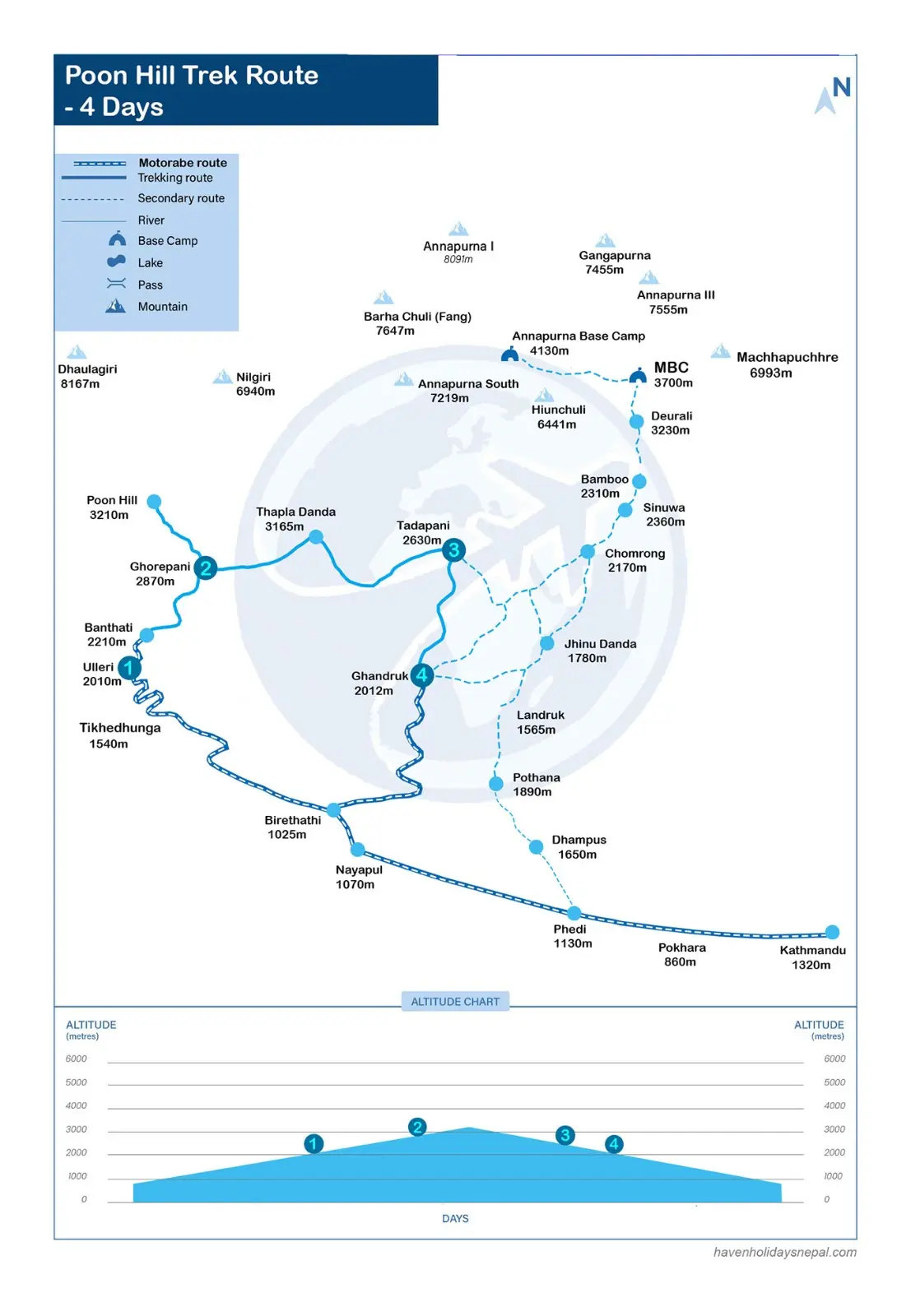
"Do you have 4 days to spend for fabulous Annapurna Ranges with 3 full day hiking near Pokhara? If yes, grab this 4 day Poon Hill"
| Day | Itinerary Details | Distance (km) | Elevation Gain (m) | Estimated Time (hrs) |
| 1 | Jeep from Pokhara (822m) to Ulleri (2050m)/Banthanti (2210m), trek to Ghorepani (2860m) | 10-12 Km | 800-1000 m | 6-7 hrs |
| 2 | Hike to Poon Hill (3210m), descend and trek to Tadapani (2630m) | 8-10 Km | 350 up, 580 down | 5-6 hrs |
| 3 | Trek from Tadapani (2630m) to Ghandruk (1940m), overnight stay | 6-8 Km | 100 up, 790 down | 4-5 hrs |
| 4 | Drive from Ghandruk (1940m) back to Pokhara (822m) | N/A | N/A | 2-3 hrs |
| Place | Elevation (m) | Key Feature |
| Pokhara | 822 m | Starting point with lakeside views |
| Ulleri | 2050 m | Steep stone staircase entry |
| Ghorepani | 2860 m | Base for Poon Hill hike |
| Poon Hill | 3210 m | Sunrise viewpoint |
| Tadapani | 2630 m | Forested rest area |
| Ghandruk | 1940 | Cultural village hub |
| Day | Daily Route | Walking Hours | Terrain Type | Meals Included |
| 1 | Pokhara (822m) jeep to Ulleri (2050m)/Banthanti (2210m), trek Ghorepani (2860m) | 5-6 Uphill steps, forests | Lunch, Dinner |
| 2 | Ghorepani (2860m) to Poon Hill (3210m), then Tadapani (2630m) | 4-5 | Steep hike, descent | Breakfast, Lunch, Dinner |
| 3 | Tadapani (2630m) to Ghandruk (1940m), overnight | 3-4 | Downhill paths, villages | Breakfast, Lunch, Dinner |
| 4 | Ghandruk (1940m) drive to Pokhara (822m) | 0 (drive) | Road | Breakfast |
| Mountain | Elevation (m) | Visibility Point |
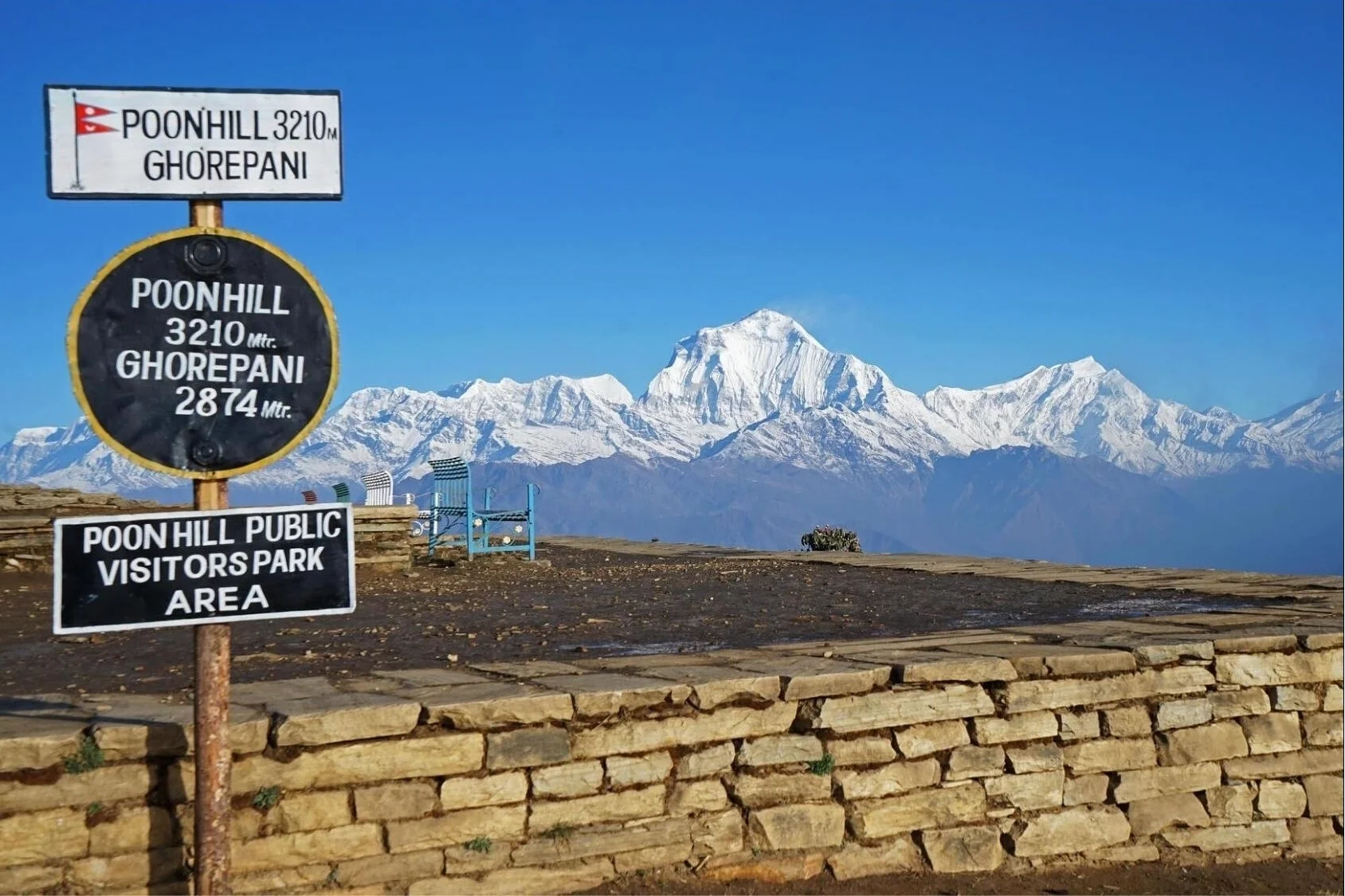
| Dhaulagiri | 8167 | Poon Hill (3210m) |
| Annapurna South | 7219 | Ghorepani (2860m) |
| Machhapuchhre | 6993 | Tadapani (2630m) |
| Hiunchuli | 6441 | Ghandruk (1940m) |
| Day | Route & Distance | Time (hrs) | Elev Gain/Loss (m) | Overnight |
| 1 | Ulleri/Banthanti → Ghorepani (9-11 km) | 4-5 hrs | +810 / +640 | Ghorepani (2860m) |
| 2 | Poon Hill (3210m) → Tadapani (10-12 km) | 5-6 | +350 / -580 | Tadapani (2630m) |
| 3 | Tadapani → Ghandruk (6-8 km) | 3-4 | +150 / -840 | Ghandruk (1940m) |
| 4 | Ghandruk → Pokhara | 2-3 (drive)hrs | -1118 | Pokhara (822m) |
| Peak | Elevation (m) | Best Viewpoint |
| Dhaulagiri | 8167 | Poon Hill (3210m) |
| Annapurna South | 7219 | Poon Hill (3210m) |
| Machhapuchhre | 6993 | Tadapani/Ghandruk |
| Category | Independent (USD) | With Guide/Porter (USD) |
| Permits | 40-45 | 40-45 |
| Transport | 25-35 | 25-35 |
| Accommodation | 12-25 | 12-25 |
| Meals (3 days) | 45-65 | 50-70 |
| Total | 220-320 | 350-500 |
| Category | Independent Budget (USD) | Guided Package (USD) | Notes |
| Permits | 40-50 | 40-50 | Mandatory for entry |
| Transport | 20-35 | 25-40 | Shared jeep preferred |
| Accommodation | 12-25 | 15-30 | Basic twin rooms |
| Meals | 45-70 | 50-80 | Dal bhat dominant |
| Total | 220-300 | 350-500 | Varies by group size |
| Day Key Activity Distance (km) | Time (hrs) | Elevation Change (m) |
| Day 1 Drive + trek to Ghorepani | 10-12 | 6-7 | +800-1000 gain. |
| Day 2 Poon Hill sunrise + to Tadapani | 8-10 | 5-6 | +350 gain, -580 loss. |
| Day 3 To Ghandruk village | 6-8 | 3-4 | -790 loss |
| Day 4 Drive back | N/A | 2-3 | - N/A |
| Day Route | Distance (km) | Trekking Time (hrs) | Elevation Change (m) | Highlight |
| Ulleri/Banthanti → Ghorepani | 10-12 | 6-7 | +800-1000 gain | Forest ascent |
| Poon Hill sunrise → Tadapani | 8-10 | 5-6 | +350 gain, -580 loss | Dawn views |
| Tadapani → Ghandruk | 6-8 | 3-4 | -790 loss | Gurung culture |
| Ghandruk → Pokhara | N/A | 2-3 (drive) | -1118 loss | Return |
| Season Months | Day Temp (°C) at Ghorepani (2860m) - Night Temp (°C) | Conditions & Views | Crowds |
| Spring | Mar-May | 15-20 | 5-10 | Blooming flowers, clear mornings | High |
| Autumn | Sep-Nov | 10-20 | 0-5 | Crystal skies, best sunrise | Peak |
| Winter | Dec-Feb | 5-15 | 5 to 5 | Dry, clear but cold | Low |
| Monsoon | Jun-Aug | 18-24 | 10-15 | Rainy, cloudy, slippery | Very low |
| Location | Elevation (m) | Typical Accommodation | Price Range (USD/night, twin share) | Key Amenities |
| Ghorepani - 2860 | Teahouses & some luxury hotels | $10-25 | Hot showers, dining hall, mountain views. |
| Tadapani - 2630 | Basic teahouses | $8-15 | Shared bathrooms, cozy common areas. |
| Ghandruk - 1940 | Teahouses & guesthouses | $10-25 | Cultural immersion, attached options available. |
| Meal Type | Typical Dishes | Price Range (USD) | Best Location Notes |
| Breakfast | Pancakes, eggs, chapati, porridge | $3-5 | Pre-order at Ghorepani (2860m) for early Poon Hill hike |
| Lunch/Dinner | Dal Bhat, fried rice, momos, pasta | $4-6 | Hearty portions at Tadapani (2630m) and Ghandruk (1940m) |
| Snacks/Drinks | Noodles, soup, tea, coffee | $2-3 | Available everywhere, cheaper lower down. |
| Day Section | Distance (km) | Terrain Type | Elevation Change (m) |
| 1 | Ulleri (2050m)/Banthanti (2250m) → Ghorepani (2860m) - 9-12 | Steep stone steps, forest | +810 to +640 gain |
| 2 | Ghorepani (2860m) → Poon Hill (3210m) round trip + to Tadapani (2630m) | 8-11 | Steep up then gradual down | +350 gain, -580 loss |
| 3 | Tadapani (2630m) → Ghandruk (1940m) | 6-8 | Mostly downhill, village paths | -790 loss |
| 4 | Total Trekking | 25-31 | Varied | Net gain/loss balanced by drive |
| Route | Vehicle Type | Duration | Approx. Cost (USD per person) | Notes |
| Pokhara (822m) → Ulleri (2050m) | Shared Jeep/Bus | 2-3 hrs | $10-15 | Common starting point |
| Pokhara (822m) → Banthanti (2250m) | Shared/Private Jeep | 2.5-3.5 hrs | $12-18 | Slightly higher, skips some steps |
| Ghandruk (1940m) → Pokhara (822m) | Shared Jeep | 2-3 hrs | $10-15 | Direct return, good roads |
| Private Full Round Trip | Private Jeep | Flexible | $80-150 (total for group) | Door-to-door convenience |
| Permit Type | Cost for Foreigners (2026, approx. USD) | Cost in NPR | Notes & Eligibility |
| ACAP | $25-30 | NPR 3,000 | Single entry; valid for entire trek; SAARC nationals ~$7-10 (NPR 1,000). |
| TIMS Card (Independent/FIT) | $15-20 | NPR 2,000 | Solo or free independent trekkers; SAARC nationals ~$5-8 (NPR 700). |
| TIMS Card (Group/With Guide) | $5-15 | NPR 1,000-2,000 | Lower rate when with registered agency/guide |
| Total Typical | $40-50 | NPR 5,000-6,000 | Combined for most foreigners |
Here's a Ghorepani Poon Hill Trek itinerary from Kathmandu for 2026 that shows great Annapurna views, simple trails, and costs around $500 to $800. This is a great choice for beginners who want to experience the Himalayan sunrise in Nepal's Annapurna region.
Overview of Ghorepani Poon Hill Trek from Kathmandu
Actually, travelers start the Ghorepani Poon Hill Trek from Kathmandu (1,338m) to take in stunning views of the Himalayas. This well-known route mixes scenic drives, chances to meet local people, and some moderate hiking in the Annapurna region. Trekkers get to see grand peaks like Annapurna I at 8091m and Dhaulagiri at 8167m while standing on Poon Hill at 3210m. Organizers suggest visiting in spring, from March to May, or in autumn, between September and November, when the skies are clearer and the rhododendrons are in full bloom.
Detailed Itinerary and Highlights
Here, trekkers begin by taking a drive or flight from Kathmandu, which sits at 1400m, down to Pokhara at 820m, kicking off the trek. After that, they head to Nayapul (1070m) to start the hike, moving through green forests and small Gurung villages along the way. Hikers make their way up gentle trails to Ghorepani at 2874 meters, where teahouses offer a warm place to rest. At last, the early morning climb up to Poon Hill at 3210 meters treats them to unforgettable sunrise views of the Annapurna range.
Likewise, the trek also has stops at Tikhedhunga (1540m) and Ulleri (1960m) to help with acclimatization and to meet local people. While trekking, participants often enjoy traditional Nepali meals like dal bhat. Guides help keep you safe when you're walking on stone steps or through forest paths. To sum it up, this itinerary mixes some adventure with chances to really experience the culture, making for a trip you'll remember.
Important Expenses and Advice
In fact, trekking operators like Haven Holidays Pvt. Ltd. usually charge around $500 to $800 per person for a 7 to 9-day package, which includes permits, guides, places to stay, and meals. You should set aside about $20-30 a day for personal expenses like snacks or souvenirs. Trekkers can get ACAP permits, which cost $30, and TIMS cards for $20 in either Kathmandu or Pokhara. Experts suggest bringing clothes you can layer since temperatures might change between 5°C and 25°C.
Moreover, beginners usually start with cardio exercises before they leave so they can manage walking for 5 to 7 hours every day. They bring along essentials such as water purifiers and trekking poles to stay steady. Local communities gain from simple eco-friendly habits like cutting down on plastic waste. In the end, these tips help you have more fun and keep going strong on the trail.
Packing and Preparation Guide
Here, hikers get ready by picking out tough boots for the 40-50 km they’ll be walking. They bring rain gear for the occasional shower, even during the busiest times. Sunscreen helps block the strong UV rays you get at Poon Hill, which is 3210 meters up. Medical kits that include altitude sickness remedies are really important.
Moreover, trekkers book licensed guides for Ghorepani (2874m) Poon hill trek to help with navigation and to learn about Magar culture. They set up travel insurance that includes evacuation coverage. Fitness routines help build stamina for daily elevation gains of up to 900m. Getting ready well makes the Ghorepani Poon Hill Trek from Kathmandu go much smoother.
Natural and cultural attractions
Meanwhile, visitors check out the Gurung museums in Ghandruk, which sits at 1940m, to get a glimpse of the local ways of life. They see wildlife such as Himalayan monals in rhododendron forests. The trails near Tadapani, which sits at 2630m, pass by beautiful cascading waterfalls and stepped farmlands. Photographers take wide shots of Machhapuchhre, which is 6993 meters tall, and Hiunchuli, standing at 6441 meters.
Likewise, teahouse stays also help people connect with locals who love sharing their stories. Trekkers try organic teas and homemade breads. Conservation efforts in Annapurna Conservation Area help keep its biodiversity safe. The trek brings a mix of culture and nature to enjoy.
Key Itinerary Stops with Elevations :
Meanwhile, discover the top Ghorepani Poon Hill Trek from Pokhara's 2026 guide, which includes a thorough schedule, elevations, and prices ranging from $300 to $500. Perfect for easy Annapurna region trails and quick Himalayan hikes that offer views of the Annapurna sunrise.
Overview of the Pokhara to Ghorepani Poon Hill Trek
Because of its easy accessibility and breathtaking vistas, enthusiasts opt for the Ghorepani Poon Hill Trek from Pokhara (820m). This condensed version skips the Kathmandu leg and concentrates on the best parts of the Annapurna region. Trekkers climb to Poon Hill (3210m) for sweeping views of Annapurna South (7219m) and Dhaulagiri (8167m). For the best weather and fewer crowds, spring and autumn are the best seasons.
Trek Path and Daily Summary
To start hiking right away, participants take a car from Pokhara (820m) to Nayapul (1070m). They follow mild routes to Ulleri (1960m), gradually increasing in altitude. Climbers use trails lined with rhododendron to reach Ghorepani (2874m). A pre-dawn walk to Poon Hill (3210m) for breathtaking sunrises is the culmination.
In addition, there are continuous views of the mountains as you descend to Tadapani (2630m). For Gurung cultural experiences, hikers travel to Ghandruk, which is 40 meters above sea level. The loop is effectively completed by return drives to Pokhara. In conclusion, this route yields substantial rewards in four to five days.
Budget Analysis and Money-Saving Advice
Actually, permits, meals, teahouse stays, and guides are all included in the $300–500 per person packages. For private services, solo travellers should budget an additional $100 to $200. At entry points, there are TIMS ($10) and ACAP ($30) fees. Take advantage of summer or winter off-season savings.
Likewise, trekkers also save money by sharing guides in groups of two to four. In order to save money on food at high-altitude teahouses, they bring snacks. Shared jeeps and other local transportation options lower costs from Nayapul. As a result, careful preparation keeps the walk reasonably priced.
Advice on Health and Safety
At Poon Hill (3210m), doctors advise drinking plenty of water and moving slowly to prevent altitude problems. While climbing, trekkers keep an eye out for symptoms like headaches. On rocky paths, guides have first-aid kits for minor wounds. Potential evacuations from remote locations are covered by insurance.
Moreover, participants also wear hats and apply sunscreen to protect themselves from the sun. On the steep parts close to Ulleri (1960m), they use walking sticks. Apps for the weather can help you get ready for unforeseen events. All things considered, these precautions guarantee a safe journey.
Impact on the Environment and the Community
In the Annapurna Conservation Area, conservationists advocate for the leave-no-trace philosophy. In Ghorepani (2874m), trekkers dine at family-run teahouses to support local economies. Guides teach them sustainable practices. In villages like Tadapani (2630m), positive interactions help to preserve cultural heritage.
Likewise, participants also refrain from using single-use plastics on trails. If they can, they participate in community projects. Wildlife habitats benefit from ecotourism. Trekking responsibly therefore improves long-term preservation.
Supporting Table: Daily Itinerary with Distances and Elevations :
| Day | Route | Distance (km) | Elevation Gain/Loss (m) | Highlights |
| 1 | Pokhara (820m) to Nayapul (1070m) to Ulleri (1960m) | 12 | +890 | Riverside start, stone steps |
| 2 | Ulleri to Ghorepani (2874m) | 8 | +914 | Rhododendron forests, village views |
| 3 | Ghorepani to Poon Hill (3210m) to Tadapani (2630m) | 13 | +336 / -580 | Sunrise panorama, downhill hike |
| 4 | Tadapani to Ghandruk (1940m) to Pokhara (820m) | 10 | -690 | Gurung culture, return drive. |
With this comprehensive 2026 itinerary from Pokhara, which includes elevations, sunrise views, and easy Annapurna trails, you can indeed finish the Poon Hill Trek in 4 days. Perfect for quick Himalayan excursions in the Annapurna region of Nepal.
Possibility of a 4-Day Poon Hill Trek
Here, starting from Pokhara (820m), trekkers can indeed finish the Poon Hill Trek in 4 days. This streamlined schedule is ideal for people who are short on time and want to see the Annapurna region's highlights. Hikes through Gurung villages and rhododendron forests are moderate for participants. For daily walks of five to seven hours with elevation gains, organisers advise being in good physical condition.
Additionally, the route stays away from high elevations, making it suitable for novices. Trekkers get the required permits in advance, such as TIMS and ACAP. Peaks like Dhaulagiri (8167m) are easier to see in spring or autumn weather. In conclusion, this period offers a rewarding Poon Hill Trek experience.
Overview of the Standard 4-Day Itinerary for Poon Hill Trek
On the first day, the trekkers drive from Pokhara (820m) to Nayapul (1070m), after which they hike to Ulleri (1960m). Amidst verdant surroundings, they traverse suspension bridges and climb stone stairs. Porters help move equipment so that progress is easier. Throughout the four to five-hour walk, guides offer their perspectives on the local flora.
Moreover, Day 2 also entails climbing through Banthanti (2210m) and Nangethanti (2460m) to Ghorepani (2874m). When rhododendron blooms are in season, hikers love them. Warm dishes like dal bhat are served in teahouses. As a result, this day increases excitement for the summit.
In addition, Day 3 begins with an early climb to Poon Hill (3210m) in time for the sunrise over Annapurna I (8091m). Trekkers continue to enjoy expansive views as they descend to Tadapani (2630m). Along the trail, photographers take pictures of Machhapuchhre (6993m). All in all, this emphasizes the scenic nature of the trek.
Lastly, Day 4 explores Gurung culture as it travels from Tadapani (2630m) to Ghandruk (1940m). After that, participants take a car back to Pokhara (820m). The journey's benefits are reinforced by reflections on it. As a result, the 4-day Poon Hill Trek is effective and unforgettable.
Advice for Short Trek Preparation
For unpredictable weather, hikers bring necessities like durable boots and rain gear. They use aerobic training to manage daily gains of 800-1000m. At Poon Hill (3210m), staying hydrated avoids altitude problems. Acclimatization stops are advised by doctors.
Actually, trekkers also reserve certified guides to ensure their safety on wooded trails. They obtain evacuation-related travel insurance. Apps for fitness monitor progress while getting ready. These actions ultimately guarantee a successful 4-day schedule.
For clear skies in the Annapurna region, travelers prefer March through May or September through November. They stay away from the monsoon rains that cause the trails close to Ulleri (1960m) to become slick. Layers are necessary due to the 5–20°C temperature range. Packing decisions are based on forecasts.
Additionally, Ghorepani (2874m) has fewer visitors during the off-season. Trekkers keep an eye out for conditions in 2026. Real-time advice is given by local operators. Thus, the Poon Hill Trek experience is maximized by timing.
Highlights of Culture and Scenery
During their visits, visitors engage with Magar communities in Ghorepani (2874m). They learn customs and sample traditional foods. Near Tadapani (2630m), trails lead to terraced fields and waterfalls. Birds like Himalayan monals are part of biodiversity.
Additionally, Annapurna South (7219m) is visible at sunrise from Poon Hill (3210m). Photographers capture a variety of landscapes. The area is preserved through conservation efforts. As a result, the trek skilfully combines nature and culture.
Elevations and Daily Distances :
Discover the cost breakdown for the 2026 Poon Hill Trek in Nepal's Annapurna region, which ranges from $300 to 600 and includes permits, guides, lodging, and itineraries for low-cost Himalayan trekking.
An overview of the costs for the Poon Hill Trek
In 2026, trekkers should budget between $300 and $600 for a typical Poon Hill Trek package. This includes meals, teahouses, permits, and guides in the Annapurna region. Costs are influenced by group sizes; larger groups pay less per person. Agencies provide individualised choices for luxury or lone travellers.
Additionally, round-trip transportation costs between $50 and $100 from Pokhara (820m). Daily personal expenses, such as snacks, average $20. NPR conversions are impacted by currency fluctuations. To sum up, preparation guarantees reasonably priced adventures.
Breakdown of Permit and Entry Fees
To enter the Annapurna Conservation Area, participants must pay $30 for an ACAP permit. They can get these in Kathmandu (1400m) or Pokhara (820m). At 1500 NPR, rates are lower for SAARC citizens. Individual TIMS cards cost $20.
Additionally, agencies manage paperwork in order to streamline procedures. Local conservation efforts are aided by permits. Originals are carried by trekkers when they are being checked. As a result, these fees support environmentally friendly Poon Hill Trek travel.
Porter and Guide Hiring Expenses
Here, the daily rate for licensed guides, including meals, ranges from $25 to $35. On the trails leading to Ghorepani (2874m), they offer guidance and cultural insights. For extra comfort, female guides range in price from $30 to $35. Porters make $20–25 per day handling loads weighing 15–20 kg.
Additionally, leaving a $5–10 daily tip expresses gratitude. To save money, groups split expenses. Employee welfare is covered by insurance. All things considered, these services make the Poon Hill Trek safer.
Transportation and Other Expenses
The cost of a shared Jeep from Pokhara (820m) to Nayapul (1070m) is $75–90. This is reflected in return travel. Pokhara (820m) to Kathmandu (1400m) flights cost an additional $100 to $150. Poles and other equipment can be rented for $5 to $10.
Additionally, the average cost of travel insurance is $50. The daily fee for Wi-Fi and charging is $5. Ghandruk (1940m) souvenirs vary. Thus, the Poon Hill Trek budget is completed by these extras.
Money-Saving Advice for Hikers
In order to efficiently divide guide fees, travelers form groups. They search for package discounts during off-peak times. Teahouse meal costs can be decreased by bringing snacks. Better transport deals are obtained through bargaining.
Locals advise adding 10% to your budget as a contingency. Costs are reduced by providing free water refills. Lower rates are locked in for early reservations. In the end, Poon Hill Trek is cost-effective due to clever tactics.
Average Cost Breakdown for 4-Day Trek:
| Category | Estimated Cost (USD) | Details |
| Permits | 50 | ACAP ($30) + TIMS ($20) |
| Guide | 100-140 | $25-35/day for 4 days |
| Porter | 80-100 | $20-25/day optional |
| Accommodation | 40-80 | $10-20/night teahouses |
| Meals | 80-120 | $20-30/day including breakfast/lunch/dinner |
| Transport | 100-200 | Round trip from Pokhara/Kathmandu |
| Miscellaneous | 50-100 | Insurance, tips, extras. |
Detailed itinerary for the Poon Hill Trek for 2026 with four to seven-day options from Pokhara, details of elevations, daily routes and views of the Annapurna mountains. Beginners can hike in the easy-to-navigate sections of the Himalayan trails in Nepal.
Introduction to the Poon Hill Trek Itinerary
Actually, Poon Hill Trekking provides trekkers with the ability to view the Annapurna region's amazing sunrise at Poon Hill using the Poon Hill Trek Itinerary as a guide. The moderate Poon Hill Trekking route starting in Pokhara (820m) has a high point of Poon Hill (3210m). Trekkers will see beautiful rhododendron forests, Gurung villages and majestic views of Annapurna I (8091m) and Dhaulagiri (8167m). Trekking tour operators have developed 4-7 day itineraries that are flexible enough to accommodate any level of fitness.
In addition, trekkers' itineraries take into account gradually ascending to avoid altitude sickness before reaching their destination. Tour guides walk trekkers along pre-defined trails that are clearly marked within the Annapurna Conservation Area, for example; teahouses provide accommodations for overnight stays. Overall, the aforementioned structured trail is designed to be an enjoyable and easy access trip in the Himalayas.
Description of a Classic 4-5 Day Poon Hill Trek Itinerary
On Day 1, trekkers will drive from Pokhara (820m) to Nayapul (1070m) to start their trek to Ulleri (1960m) via stone steps on day one, which take approximately four to five hours to complete as trekkers will walk along trails by rivers and over suspension bridges with the help of porters carrying their load. This is a day of gentle acclimatization for the trekkers.
On Day 2, trekkers will continue their ascent from Ulleri to Ghorepani (2874m), passing through Banthanti (2210m) and into the rhododendron zone, with scenic villages along the trek. As they trek from Ulleri to Ghorepani, they will enjoy the local dish of dal bhat at the local teahouse for their meals. This will be an exciting day for the trekkers as days one and two are building anticipation for the stunning experience of trekking to Poon Hill on day three.
Day 3 of the itinerary will start with an early morning trek up to Poon Hill (3210m) to witness the incredible sunrise view of Machhapuchhre (6993m). After enjoying the sunrise, trekkers will then descend to Tadapani (2630m) with breathtaking views of the mountains the entire day. The trek will take approximately 6 to 7 hours and will showcase the variety of landscapes encountered along the entire trek. This captures the essence of the entire trek to the Annapurna region.
On day 4, trekkers will continue from Tadapani to Ghandruk (1940m) to experience the Gurung culture. Trekkers will be able to visit the local museum and traditional Gurung homes and then return to Pokhara (820m) at the end of the day. The overall experience of day four is a great culmination of the entire trek.
Day 5 is an optional day where individuals can use the extra time to relax in Pokhara or take a side trip. Trekkers will have the opportunity to see the sights in Pokhara and reflect on their trekking experience to Poon Hill. Due to the flexible structure of the itinerary, the majority of travelers like this itinerary when visiting the Annapurna region.
Preparation and Important Tips
Here, hikers train 5 -7 hours a day to prepare for their hike with elevation gain. For temperatures ranging from 5 degrees Celsius to 25 degrees Celsius, hikers were instructed to bring multiple layers of clothing. Purification tablets are also provided for safe drinking water. Additionally, participants should see their doctor for an initial health assessment.
In addition, participants must apply for ACAP permits prior to entering (30.00 USD) the area and applying for TIM (20.00 USD) permits. Licensed guides provide safety and help with storytelling. Trekking Insurance can help with any problems that may arise. All preparations are in place to allow for an uninterrupted itinerary.
Scenery and Culture
Actually, wildlife is found in the forests surrounding Ghorepani (2874m). Hikers enjoy watching waterfalls cascade along the path while hiking from Ulleri (1960m) to Ghandruk (1940m), where they can enjoy the lush beauty of terraced fields. Likewise, at sunrise, photographers take pictures of Annapurna South (7219m).
Likewise, there will be many interactions with the local Magars. Hikers will learn about issues related to sustainable development in conjunction with conservation areas. An experience at Likewise, Poon Hill (3210m) will leave trekkers with cherished memories. In summary, the Poon Hill Trek itinerary represents a perfect blend of culture and nature.
Supporting Table: Detailed 5-Day Poon Hill Trek Itinerary with Elevations :
| Day | Route | Distance (km) | Elevation (m) | Walking Hours | Key Highlights |
| 1 | Pokhara (820m) to Nayapul (1070m) to Ulleri (1960m) - 12 | +890 gain | 4-5 | Drive + stone steps ascent |
| 2 | Ulleri (1960m) to Ghorepani (2874m) - 8 | +914 gain | 5-6 | Rhododendron forests |
| 3 | Ghorepani (2874m) to Poon Hill (3210m) to Tadapani (2630m) - 13 | +336 / -580 | 6-7 | Sunrise view, descent |
| 4 | Tadapani (2630m) to Ghandruk (1940m) - 6 | -690 loss | 3-4 | Gurung village culture |
| 5 | Ghandruk (1940m) to Nayapul (1070m) to Pokhara (820m) - 10 | -1120 loss | 4-5 + drive | Return with reflections |
The Best Time To Poon Hill Trek
Actually, the best time to visit Poon Hill for trekking in 2026 occurs during spring and autumn because they provide clear viewing conditions and pleasant weather and enable trekkers to witness the Annapurna sunrise. The monsoon season should be avoided while visitors can examine the advantages and disadvantages of different seasons in Nepal's Annapurna region.
Overview of Best Seasons for Poon Hill Trek
Here, the best time for Poon Hill Trek occurs during spring from March to May and during autumn from September to November. The Annapurna region experiences these times as its most dependable period when weather conditions remain consistent and visibility reaches maximum levels. The path to Poon Hill which reaches a height of 3210 meters offers participants pleasant weather conditions and dry walking paths. The months of March and April experience their highest visitor numbers when people most frequently visit.
Likewise, the Annapurna I mountain at 8091 meters and Dhaulagiri mountain at 8167 meters become fully visible under clear sky conditions. The Pokhara area which exists at an altitude of 820 meters maintains a pleasant temperature. The company advises these times of the year as suitable learning periods for new students. The optimal outdoor timing results in the most scenic viewing possibilities.
Spring Season Details (March-May)
Here, travelers experience blooming rhododendrons during spring on Poon Hill Trek trails. The weather conditions in late May reach 10-25°C because of the pre-monsoon showers. The Poon Hill viewpoint at 3210 meters provides excellent visibility for sunrise viewing. The forests that surround Ghorepani at 2874 meters develop brilliant foliage displays.
Likewise, the weather conditions on these days enable people to hike at moderate levels without experiencing high temperatures. The early March period brings about a situation where trekkers face reduced numbers of fellow hikers. The combination of colorful plant life and active wildlife creates a vibrant atmosphere. The spring season offers visitors an exciting journey through beautiful natural landscapes.
Moreover, the month of April brings the highest display of rhododendron flowers to Ulleri which sits at 1960 meters. Hikers appreciate comfortable teahouse stays. The clear morning hours provide optimal conditions to view distant landscapes. The season presents both beautiful natural scenes and easy access to those sights.
Autumn Season Advantages (September-November)
Adventurers favor autumn for crystal-clear skies and stable conditions on Poon Hill Trek. The post-monsoon period brings fresh air which removes haze to present clear mountain views. The temperature reaches its highest point at Which time.
Seasonal Pros and Cons for Poon Hill Trek :
Poon Hill Trek in Winter
Actually, travel to Poon Hill during the winter period which lasts from December to February 2026 to experience cold weather and potential snow and unobstructed views and peacefulness in the Annapurna region. The guide presents information about temperature conditions and necessary equipment and benefits and disadvantages of winter trekking in the Himalayan mountains.
Overview of Poon Hill Trek in Winter
Meanwhile, trekkers pursue the Poon Hill Trek in winter from December to February for peaceful trails and crisp mountain vistas in Annapurna region. The off-season period brings cold temperatures and snowfall which occurs at higher altitudes. The participants reach Poon Hill which stands at 3210 meters to witness breathtaking sunrise displays that stretch across snow-covered Annapurna I and Dhaulagiri. Adventurers who possess strong physical abilities will find winter to be their ideal time to explore remote destinations which remain free from other visitors.
Likewise, the Poon Hill Trek route features clear skies which result in almost no rain throughout the journey. The guides provide safe passage through the areas which contain ice hazards that exist close to Ghorepani at an altitude of 2874 meters. The teahouses stay operational during the winter season although only a limited number of establishments provide complete service. The Poon Hill Trek transforms into a beautiful yet difficult journey through the winter season according to our conclusion.
Winter Weather and Temperature Conditions
Meanwhile, the Poon Hill Trek shows daytime temperatures which range from 5 to 12 degrees Celsius according to its wintertime conditions. The temperature drops to minus 5 degrees Celsius at Ghorepani which has an elevation of 2874 meters and at Poon Hill which reaches 3210 meters. The period before sunrise during the morning hours delivers a frigid sensation which persists until the sun rises. January and February experience light snowfall which creates a thin layer of snow on the trails.
Likewise, the environment remains dry because there is no occurrence of rain or severe storm weather. The area provides excellent visibility which enables people to see the Annapurna South mountain peak at 7219 meters. The town of Ulleri which has an elevation of 1960 meters experiences milder temperatures which range from 10 to 15 degrees Celsius. Trekkers who come prepared for the trek receive exceptional weather conditions which show all mountain details.
In fact, the month of January functions as the coldest month because it experiences temperatures which drop below zero. The month of February brings about slight temperature increases which lead to springtime weather conditions. The trekkers check the weather forecasts because they need to know about sudden weather changes. The wintertime requires people to show proper respect for cold conditions which create beautiful snow-covered landscapes.
Pros and Cons of Winter Trekking
Actually, the Poon Hill Trek trails show decreased visitor numbers during the wintertime. The photographers take pictures which show snow-covered foregrounds that create a unique visual effect when combined with the Himalayan mountain range. The budget travelers show interest in package discounts which lead to lower travel expenses. The quiet villages offer people a chance to experience deep personal reflection through their solitude.
Likewise, the first disadvantage exists because people will experience difficulty when walking on the icy steps which stretch from Ulleri at 1960 meters through areas which have snow covering the paths. The freezing nighttime temperatures force people to bring additional equipment which they need to stay warm inside teahouses. The smaller lodges which operate during wintertime close their doors. The winter season works better for skilled hikers who possess experience than it does for novice hikers.
Moreover, the clear air creates perfect conditions for taking dramatic pictures. The trekkers choose to stay away from monsoon season mud while they also avoid the crowds which come during springtime. The positive aspects of the situation become more evident through the correct preparation process. The winter season presents an excellent alternative period which brings many advantages to the outdoor activities.
Essential Gear and Preparation Tips
Meanwhile, the Poon Hill Trek requires winter hikers to bring thermal layers down jackets and insulated sleeping bags. The hikers use microspikes or crampons to navigate the icy sections that lead to Ghorepani which stands at 2874 meters. The crew uses warm hats gloves and gaiters to shield themselves from the freezing winds. The crew uses hot water bottles to maintain their body heat throughout their sleep period.
Likewise, participants select waterproof boots because they might encounter snow near Poon Hill which reaches an elevation of 3210 meters. The guides suggest that people should walk at a slow speed because it helps them handle their body temperature during physical activity in cold weather. People need to hydrate their bodies because they will experience lower thirst levels during cold weather. The right equipment protects people from danger while bringing them fun experiences.
Cultural and Scenic Winter Highlights
Meanwhile, wintertime quiet periods at Ghorepani (2847m) permit visitors to spend time with local residents. The visitors listen to fireside stories at teahouses which operate close to Tadapani (2630m). The snow creates a visual contrast that highlights the pure beauty of rhododendron forests. Animals become easier to observe because of the reduced number of people in the area.
Actually, the sunrise view from Poon Hill (3210m) shows a heavenly snowy view of the Annapurna mountains. Photographers can use their skills to capture the beauty of winter wonderlands. The organization maintains environmental protection programs throughout the entire year. The trek displays its most beautiful seasonal appearance.
Winter Poon Hill Trek Pros, Cons, and Tips :
Poon Hill Trek in Spring
Meanwhile, the period from March to May 2026 serves as the best time to trek Poon Hill because it offers both rhododendron blooms and mild weather and optimal views of Annapurna. The guide provides recommended temperatures and trekking schedule suggestions which help hikers plan their journey through Nepal's most visited Himalayan trekking route.
Introduction to Poon Hill Trek in Spring
Likewise, the Poon Hill Trek attracts trekkers during springtime from March until May because the Annapurna region experiences both beautiful rhododendron blooms and comfortable weather. This prime season delivers mild temperatures and stable weather up to Poon Hill (3210m). The participants observe colorful forests which create a visual contrast between Annapurna I (8091m) and Machhapuchhre (6993m). Spring ranks among the best times for scenic Himalayan adventures. The morning hours provide clear conditions which create exceptional views of Dhaulagiri (8167m) at sunrise. The hiking trails maintain dry conditions because of their gradual ascents which work well for beginner hikers. The guides point out the flowering plants which exist along the hiking paths. The spring season brings forth natural beauty which remains easily accessible to visitors.
Spring Weather and Temperature Patterns
Actually, the Poon Hill Trek in springtime lets adventurers experience daytime temperatures which range between 10 degrees Celsius and 22 degrees Celsius. The temperature drops to 2 degrees Celsius during the night time hours which occurs at Ghorepani and all locations at higher elevations. The temperature starts to rise after March which reaches its highest point in May. The season experiences occasional showers which happen during its final stages.
Likewise, the month of April reaches its most stable point because the region experiences its lowest rainfall occurrence. The area near Tadapani at 2630m maintains perfect conditions for mountain viewing. The temperature at Ulleri which sits at 1960m provides pleasant environmental conditions. The weather conditions make it possible for people to have enjoyable hiking experiences throughout the day.
Here, springtime offers protection from both wintertime cold and monsoon season rain. The longer daylight hours during springtime allow trekkers to explore more areas. The weather forecast helps people make plans because it shows pre-monsoon cloud patterns which occur infrequently. People experience maximum comfort while enjoying the beautiful surroundings.
Rhododendron Bloom and Natural Highlights
Meanwhile, the spring Poon Hill Trek allows visitors to observe rhododendron forests which display their pink red and white flowers. The peak blooming period for Ghorepani occurs between mid-March and late April. The hiking paths near Banthanti turn into flower-filled passages which hikers can use to travel through the area. The presence of other flowers creates a colorful mixture of colors.
Likewise, birds exist during the blooming period, which leads to increased biodiversity in the areas. Photographers use their cameras to take pictures of the different colors which stand out against the snowy mountain peaks. The forests that surround Tadapani at 2630m show their complete beauty during the month of April. The spring season showcases the complete range of Nepal's flowering plants.
Moreover, the moderate temperature in springtime promotes a slow walking pace. Trekkers experience enjoyment from the fresh air which exists between the blooming flowers. The conservation areas serve to preserve these natural attractions. The season provides visitors with authentic experiences of botanical gardens.
Preparation advice for Spring Season
Meanwhile, hikers pack layers for variable spring temperatures on Poon Hill Trek. The hikers pack rain jackets because they expect possible May showers. Sunscreen protects against stronger UV at Poon Hill (3210m). The boots provide comfort while they handle dry paths with great success.
Likewise, the participants need to book their permits and guides because of high demand. The training program teaches participants to complete daily ascents at moderate difficulty. The combination of snacks and hydration helps maintain energy levels. The preparation process enables people to experience maximum enjoyment during springtime.
Supporting Table: Spring Months Comparison for Poon Hill Trek :
| Month | Temperature Day/Night (°C) | Key Features | Crowd Level | Highlights |
| March | 10-18 / 0-5 | Early blooms, mild start | Low-Moderate | Rhododendron start, clear views |
| April | 12-22 / 2-8 | Peak rhododendron season | High | Vibrant forests, best photography |
| May | 15-25 / 5-10 | Warmer, occasional showers | Moderate | Lush greenery, pre-monsoon freshness |
Poon Hill Trek in Monsoon
Actually, the Poon Hill Trek during the June to August 2026 monsoon season presents travelers with rain challenges and provides them with tips for safe Annapurna hiking while they experience the beauty of lush green vegetation. The guide provides information about weather conditions, necessary equipment, and advantages and disadvantages of Nepal's rainy season outdoor activities.
Overview of Poon Hill Trek in Monsoon
Here, trekkers attempt the Poon Hill Trek in monsoon from June to August despite heavy rains in Annapurna region. People can see the pathways beyond Poon Hill at 3210 meters because the rainy season brings green vegetation to all areas. The participants must navigate hazardous pathways which cause them to lose sight of Annapurna I at 8091 meters and Dhaulagiri at 8167 meters. Hikers who have experience prefer this time because it brings less people and more colorful plants.
In fact, Poon Hill Trek routes face two main difficulties which include leeches and landslides. The guides warn hikers to be careful when ascending stone steps that exist near Ulleri at 1960 meters. The teahouses continue their operations but they might experience interruptions. The unique natural beauty of monsoon trekking requires hikers to demonstrate mental strength for their journey to the trek.
Monsoon Weather and Challenges
Here, the monsoon period brings adventurers to Poon Hill Trek who experience daily rainfall that ranges from 200 to 400 millimeters. The Ghorepani location at 2874 meters and Poon Hill location at 3210 meters experience cloud cover which prevents mountain visibility. The increasing humidity causes hikers to sweat more which results in muddy trail conditions. The temperatures in lower areas such as Nayapul which is located at 1070 meters range between 15 and 25 degrees Celsius.
Actually, the Tadapani region experiences sudden downpours which cause river levels to rise. The visibility reduction prevents people from viewing sunrise events. The trekkers need to be ready for wet weather conditions at all times. The weather creates challenges that test physical strength while providing sensory enrichment to people.
In fact, July records the highest rainfall amount because it experiences multiple storms. The month of August brings a small transition toward drier weather conditions. The forecasts serve as fundamental tools that help people with their planning activities. The monsoon challenges bring forth personal development for people who participate in monsoon outdoor expeditions.
Pros and Cons of Monsoon Trekking
Here, Monsoon trekking has both advantages and disadvantages for hikers. The Poon Hill Trek during monsoon season offers hikers beautiful forests and waterfalls to experience. The customers take advantage of price markdowns because there are fewer people who want to purchase the packages. The area near Ghorepani reaches its highest point of vegetation which includes the remaining rhododendron plants at an elevation of 2874 meters. The normally crowded trails maintain their peacefulness throughout the day.
Likewise, the cons for this area include increased likelihood of landslides which occur near Ulleri at an elevation of 1960 meters. Leeches thrive in damp environments which require people to use repellents for protection. Hikers at Poon Hill face difficulties viewing the peak because of the unreliable visibility conditions which exist at the 3210 meter elevation. The monsoon season appeals to budget-oriented adventurers who seek excitement through affordable outdoor activities.
Meanwhile, the rain effects which bring drawbacks to outdoor activities get balanced by the existence of bright plant life. Trekkers establish connections with each other through their shared experiences of challenges which take place in teahouses. Positive emotions arise from successfully defeating environmental challenges. The advantages of the situation create valuable experiences which counterbalance the situation's disadvantages.
Essential Gear and Safety Tips
In fact, hikers need to wear waterproof jackets and pants and boots during their monsoon Poon Hill Trek. The trekkers bring leech socks and salt with them to safeguard themselves against leeches. The trekkers use quick-dry clothes to control their body moisture during their hikes at Tadapani which has an elevation of 2630 meters. The ponchos provide protection for backpacks which get exposed to heavy rain.
Likewise, the guides provide their customers with advice to use trekking poles which help them navigate through slippery descent paths. The first-aid kits contain products which treat leech bites. People who walk on wet surfaces need to walk at a slow speed to avoid accidents. The equipment provides people with equipment which helps them travel in safer ways.
Cost Savings in Rainy Season
Meanwhile, operators provide Poon Hill Trek packages with 20-30% discounts during monsoon which start at $250-400. The permit fees remain unchanged at $50 total. Ghandruk (1940m) teahouses offer their rooms for $5-10 per night. Budget travelers capitalize on these savings.
Here, the group sharing system decreases the cost of guide fees for participants. Off-season transport costs less from Pokhara (820m). The hidden gems become visible to visitors who come during times when there are no crowds. Monsoon trekking proves to be a cost-effective option for travelers.
Monsoon Poon Hill Trek Pros, Cons, and Tips :
The Autumn Poon Hill Trek
Meanwhile, to enjoy clear skies, pleasant weather, and the best Annapurna views, schedule the Poon Hill Trek for the autumn months of September through November of 2026. Temperatures and itinerary advice for Nepal's ideal Himalayan trekking season are included in this top season guide.
An Overview of the Autumn Poon Hill Trek
For the best Annapurna conditions, trekkers choose to do the Poon Hill Trek between September and November. Clear skies and breathtaking views of the mountains up to Poon Hill (3210m) are available during this peak season. Participants witness breathtaking views of Machhapuchhre (6993m) and Annapurna South (7219m). The most sought-after season for consistent weather is autumn.
Additionally, post-monsoon freshness efficiently removes haze. All-level dry trails are highlighted by guides. Teahouses are bustling with foreign guests. In conclusion, autumn offers the best Himalayan experiences.
Autumn Weather and Temperature Details
Here, the Poon Hill Trek in autumn shows adventurers experiencing daytime temperatures which range from 10 to 20 degrees Celsius. The higher locations of Ghorepani which has an elevation of 2874 meters experience night temperatures which drop between 0 and 10 degrees Celsius. The month of September brings warm weather while the month of November brings crisp weather. The minimal rain which falls throughout the day enables hikers to proceed with their activities.
In fact, October provides perfect weather conditions which allow visitors to see the sunrise from Poon Hill at an elevation of 3210 meters. The area around Ulleri which has an elevation of 1960 meters maintains a pleasant temperature. The daylight duration increases for trekkers. The weather conditions create an atmosphere which improves overall enjoyment of the event.
Moreover, the period after the monsoon season ends remains dry throughout its duration. People can see Dhaulagiri which stands at 8167 meters during its most visible time. The forecasts show stable weather patterns which remain consistent throughout the day. The autumn season brings weather conditions which allow people to explore nature without interruptions.
Advantages of Autumn Trekking
Meanwhile, visitors enjoy complete sight lines on Poon Hill Trek trails which operate during the autumn season. The visitors walk easily on the paths which remain dry because there is no mud or snow. The Dashain festival brings cultural richness to the village celebrations. The moderate crowds enable visitors to connect with each other socially.
Likewise, the stable paths at Tadapani which is located at an elevation of 2630 meters create safe walking conditions. Photographers achieve peak performance during golden-hour shooting sessions. The mild climate maintains our energy levels throughout the day. People regard autumn as the best time to travel because it creates exceptional travel experiences.
While, the atmosphere above the ground lets people see faraway mountains. Trekkers find the most valuable part of teahouse services during their demonstration of peak operational times. The region maintains a positive energy that spreads throughout the entire area. People prefer to travel during autumn because it offers them the best travel experiences.
Scenic and Cultural Autumn Highlights
Meanwhile, the participants experience autumn when the Ghorepani area reaches 2874 meters. The observers see various animal species in the forests which have better visibility. The terraced fields at Ghandruk which is located at 1940 meters above sea level produce their harvests. The sunrise at Poon Hill which reaches an altitude of 3210 meters creates a spectacular display.
Likewise, the experience of staying with Gurung locals provides additional value to visitors. The trekkers participate in festival events at different times throughout the year. The pristine environment brings conservation messages to life. The autumn season creates a perfect combination of natural beauty and cultural elements.
Preparation Tips for Peak Season
Meanwhile, the Poon Hill Trek which operates during autumn requires hikers to make their reservations in advance because of the high demand. The hikers bring multiple clothing items because temperatures drop during the night. The sunscreen product protects users from intense ultraviolet radiation which occurs at high altitudes. The hikers use their comfortable boots to walk on the dry rocky trails.
In fact, the guides recommend group treks so that participants can experience the journey together. The standard price for permits is 50 dollars. Daily elevation training exercises prepare participants for their actual ascent challenges. The autumn rewards increase when people engage in proper preparation activities.
Supporting Table: Autumn Months Comparison for Poon Hill Trek :
| Month | Temperature Day/Night (°C) | Key Features | Crowd Level | Highlights |
| September | 15-22 / 5-12 | Post-monsoon freshness | Moderate | Clearing skies, lush remnants |
| October | 10-20 / 0-8 | Peak clarity and stability | High | Festivals, best views |
| November | 8-18 / -2-5 | Crisp air, early winter hint | Moderate | Golden foliage, solitude increasin. |
Need to know more about Poon Hill Trek Transportation, click the link: Poon Hill Ghorepani Jeep Ride and learn in detail.
You may require learning Ghorepani stay at local lodges, please visit us at: Accommodation facilities in Poon Hill Trek and learn more in detail.
Might be interested in learning about Weather in Poon Hill, please click the link: Poon Hill Trek weather Guide and prepare accordingly.
Again, interested learning about packing list for Poon Hill Trek? Please visit us at: What to Pack for Poon Hill Trek and pack the right gear.
Wanna know about Wi FI and Hot Shower facilities during Poon Hill Trek, please spare time for Wi-Fi and Hot Shower Facility on Poon Hill Trek and prepare.
Planning Poon Hill Trek in Winter? Learn more here: Poon Hill Trek in Winter
Wondering to find the best time for Poon Hill Trek? You can learn it authentically here: Best Time for Poon Hill Trek so that you can prepare better.
Thinking of doing Poon Hill Trek in Autumn? Learn more here: Poon Hill Trek in Autumn and find how it looks like.
Planning to trek to Poon Hill in Spring? Learn what will be weather look like during your Poon Hill Trek in Spring and prepare comprehensively.
Thinking of doing Poon Hill trek in Summer? Learn to prepare for Poon Hill Trek in Summer and plan accordingly.
Do you want to know about Poon Hill Trek Route? It will be easier for you to undertake your Poon Hill Trek with more information about Poon Hill Trek Route.
More importantly, do you like to know about Poon Hill Trek Itinerary? Learn to set Poon Hill Trek itinerary to suit your time frame.
Most importantly, Poon Hill Trek Cost, prepare for your budget for Poon Hill Trek accordingly.
Do you know Poon Hill Trek in December is Doable? Learn more about it here at: Poon Hill Trek in December. Prepare accordingly.
Interestingly, Poon Hill Trek in January is still Doable? Learn more about it here: Poon Hill Trek in January. Pack accordingly.
Here, the beginners adventure to Poon Hill 4 days kicks off with a drive out of Pokhara, winding through green valleys and terraced fields. You’ll follow the Modi Khola River, bouncing along rough roads for a couple of hours—maybe by jeep, maybe a bus—until you reach Ulleri or Banthanti. The villages sit higher up, so you’ll already notice the air getting a little crisper. The drive itself isn’t just a way to get there; it’s a first taste of rural Nepal, with glimpses of farmers working the land and those hazy Himalayan foothills in the distance.
Once the jeep stops, you’re trekking right away. The trail wastes no time—it heads up on stone steps and dirt paths, a steady climb but nothing too crazy, even if you’re new to trekking. From Ulleri, it’s about 7 or 8 kilometers to Ghorepani, usually taking 4 or 5 hours and climbing about 800 meters. If you start from Banthanti, it’s a bit shorter and easier. You’ll walk on solid stone staircases, and if it’s been raining, expect some muddy spots. The best part? You spend a lot of time under the shade of rhododendron and oak trees, which is a relief when the sun’s out.
Along the way, you’ll pass through small Magar and Gurung villages. People here are busy with their fields or watching over goats and buffalo, and you get a real sense of daily life. Sometimes you’ll spot prayer flags fluttering, or catch a glimpse of someone weaving baskets from bamboo. As you climb, the trees start to thin and—suddenly—Annapurna South and Hiunchuli poke through, towering above everything. There’s something about those first mountain views that just hits different.
By late afternoon, the air turns cooler. If you’re lucky, you might see a langur monkey swing by, or spot flashes of color from birds in the trees. Once you reach Ghorepani, the village feels lively but welcoming. There’s time to explore, sip tea in a cozy teahouse, and fill up on dal bhat as you settle in for the night.
Day two starts early—really early. Before dawn, you set out from Ghorepani, headlamp on, and join the line of trekkers climbing up to Poon Hill. It’s a short, sharp climb, just under two kilometers, but those stone steps keep your legs honest. In the dark, you can hear voices and see torchlight weaving up the trail. Sometimes there’s frost or even a dusting of snow if it’s winter, but most days the path is dry and easy to follow.
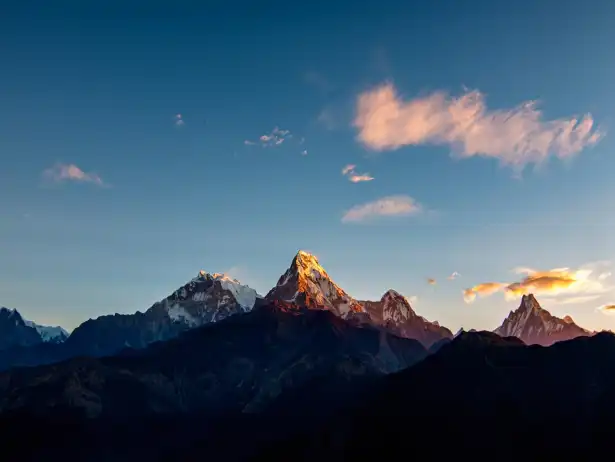
Here, the reward for the early wakeup is unbeatable. On top of Poon Hill, the sun rises over a jaw-dropping sweep of peaks—Dhaulagiri, Annapurna I, Machhapuchhre, and more. The mountains go gold, the valleys glow, and you get a full 360-degree view that’s honestly hard to put into words. Cameras come out, but it’s a moment you want to just soak in, too.
After the sunrise show, you head back down for breakfast in Ghorepani. Then it’s time to hit the trail to Tadapani. This stretch takes a good half-day, with a mix of climbing and descending that adds up to a net drop in altitude. The trail cuts through thick rhododendron forests—if it’s spring, the trees explode with pink flowers. You’ll cross streams on rickety wooden bridges, hop over rocks, and maybe pause at a quiet viewpoint or by a waterfall.
More importantly, Keep your eyes open for birds like the Himalayan monal, Nepal’s flashy national bird, and watch the porters haul impossible loads up the trail. By the time you reach Tadapani, you’re tucked into the trees again, with close-up views of Annapurna South and the scent of pine in the air. It’s the perfect place to kick off your boots, relax in a teahouse, and let the day sink in.
On day three, you leave Tadapani behind and start heading down toward Ghandruk. It’s an easy walk—mostly downhill, dropping about 690 meters as you go from 2630m to 1940m. The trail covers 5 to 7 kilometers and usually takes three to four hours. Most of the time, you’re on stone steps or forest paths, shaded by bamboo and bright rhododendrons. If it’s rained recently, watch your step—it can get slippery, but otherwise it’s a pretty gentle walk.
You’ll notice the landscape changing as you go. The dense woods start to thin out, giving way to open farmland and terraced fields. You’ll cross streams, pass by small chortens, and every so often, the trees open up to reveal huge views of Annapurna South and Machhapuchhre standing tall above the green rice paddies.
By the time you reach Ghandruk, it feels like you’ve stepped straight into a postcard. The village is famous for its Gurung culture. You can wander into the Gurung Museum to check out traditional tools, clothing, and artifacts, or just stroll around and take in the stone houses with their slate roofs. The locals are friendly—don’t be surprised if you end up chatting with someone in a bright patterned dress or watch someone weaving or tending millet in the fields. There’s time to relax, too. Maybe grab a seat at a teahouse, order some fresh Gurung bread, and just soak in those big Himalayan views. Before turning in for the night, walk the flower-lined alleys and let the calm of the place sink in.
The last day of Poon Hill Trek 4 days starts slow, with breakfast in Ghandruk and one last look at the mountains. No more trekking now—just hop in a jeep or bus for the drive back to Pokhara. The road winds down through the hills, dropping over a thousand meters in a couple of hours. Parts of it are pretty bumpy, especially on the gravel stretches, but you’ll get used to the rhythm soon enough.
There’s not a ton to see on the way, but you might stop for a quick photo here and there—maybe a roadside village, maybe an overlook with one last peek at the Annapurnas. You’ll pass scattered farms and kids waving from the fields, and sometimes you can buy honey or a handmade basket as a souvenir. And then, just like that, you’re back in Pokhara, with time to chill by the lake or head out for whatever comes next.
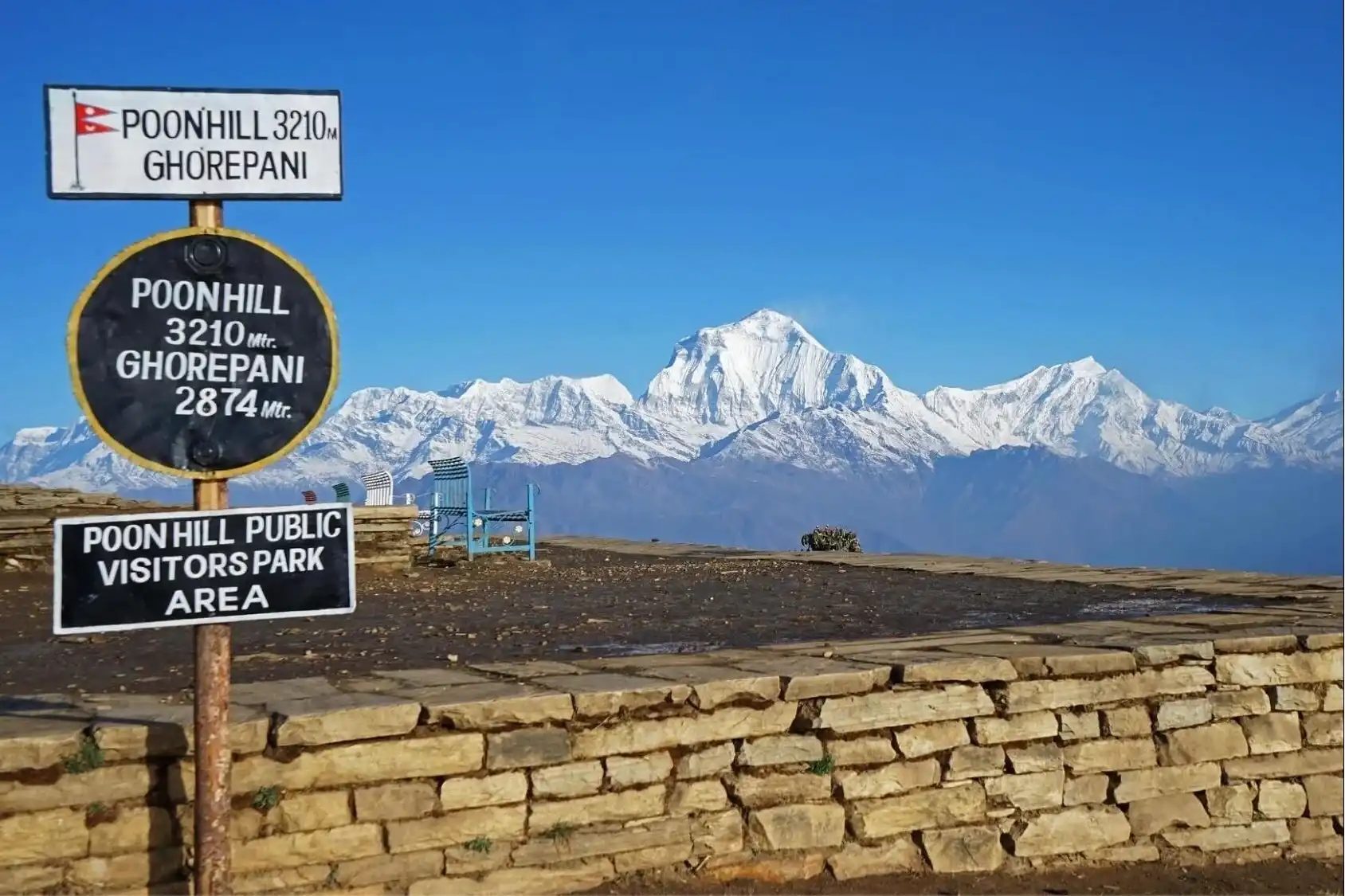
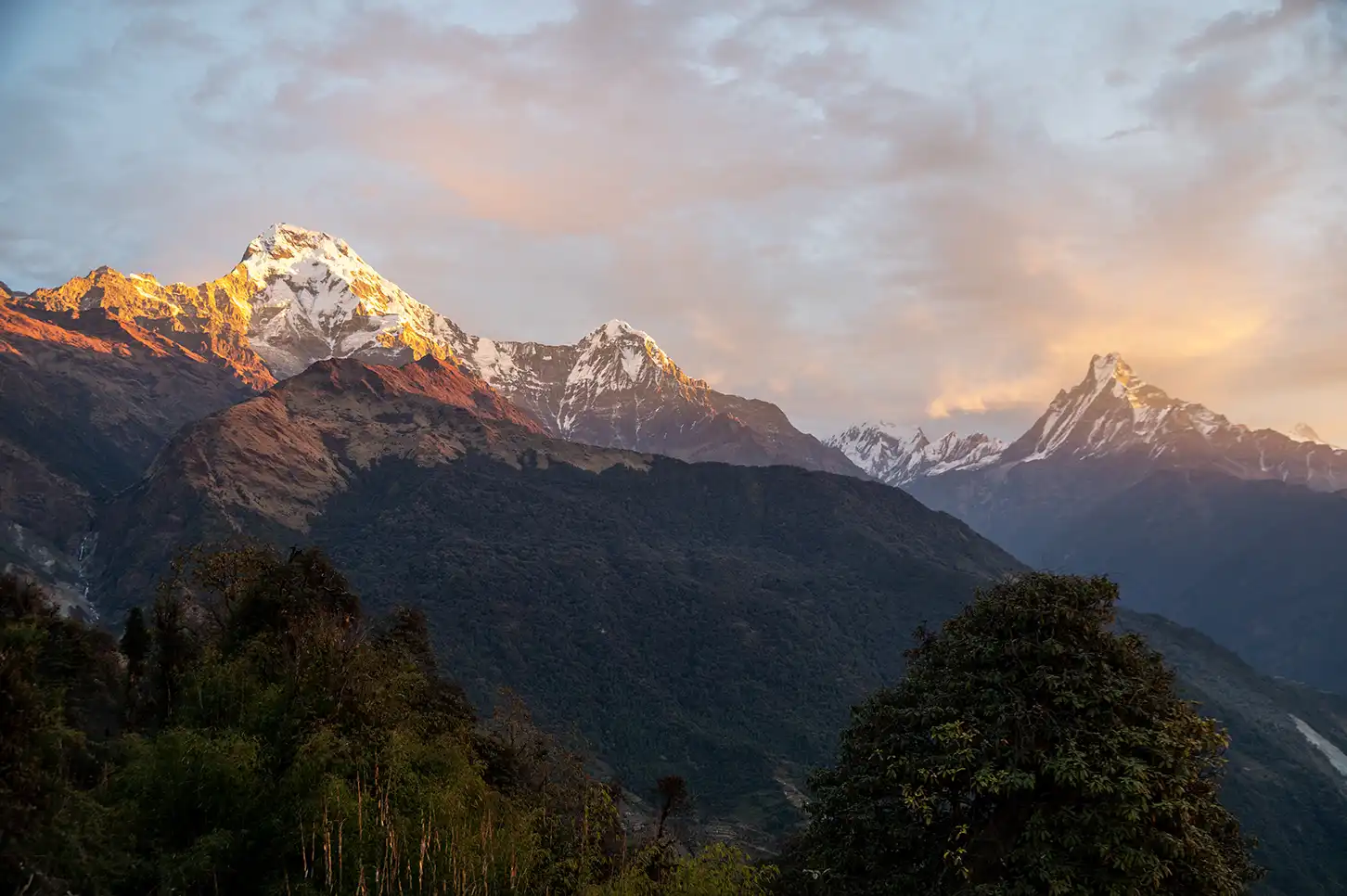
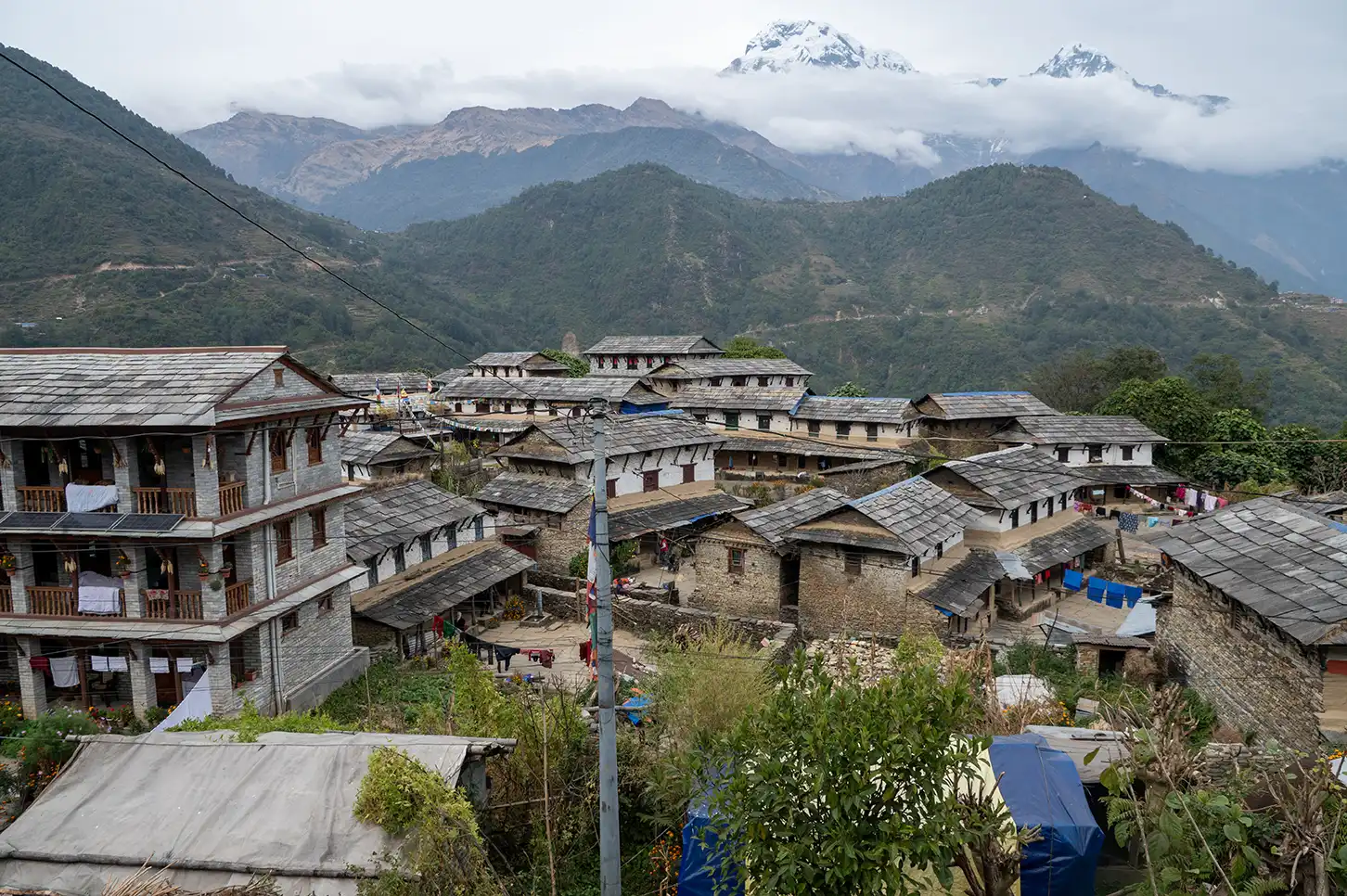
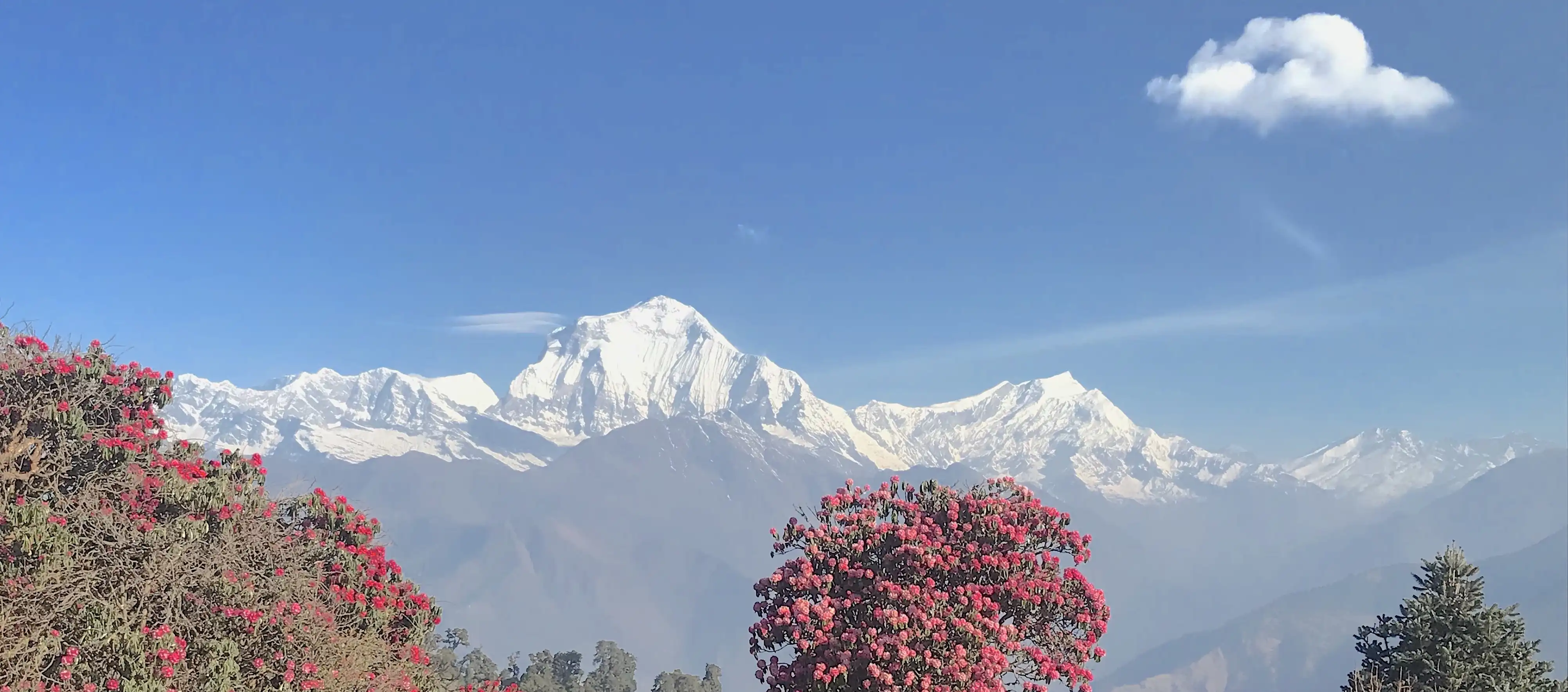
The 4 Days Poon Hill Trek was perfectly paced and full of stunning scenery. Walking through rhododendron forests and traditional villages was a joy. The sunrise from Poon Hill was breathtaking, with Annapurna and Dhaulagiri glowing in golden light. The short duration made it ideal, yet the experience felt complete and rewarding.
This trek was an excellent introduction to trekking in Nepal. The trail was well maintained, and the views were constant. Ghorepani village was charming, and the early morning hike to Poon Hill was unforgettable. Four days felt just right for enjoying the mountains without rushing.
The 4 Days Poon Hill Trek delivered more than expected. The forests, stone steps, and village life made the journey enjoyable. Watching sunrise over Machhapuchhre and Annapurna South from Poon Hill was emotional. This trek offers classic Himalayan views in a short and comfortable timeframe.
When
preparing for a trekking trip in Nepal, it's essential to have the
right equipment and packing list to ensure your safety and comfort to
complete your mission. You will need to pack smart and light. This
packing list doesn’t mean you need to pack everything listed here. This
list is a guideline, and your final list will depend on your preferences
and judgment. Follow as per your personal needs and preferences by
taking this as a reference.
Sun Hat/Cap for sun protection - A Sun hat protects the face from the strong rays of the sun. Carry a lightweight hat that can be easily packed. Or A wide-brimmed hat to cover your ears, neck, and face from the strong rays of the sun. For More detailed about your trekking gears for 3 days Poonhill Trek, you can visit Trekking equipment list and can figure out what you need.
Actually,
one doesn't require carrying very comprehensive trekking gears for Poon
Hill trek as you are using local lodges for your food and
accommodation. Even, sleeping bag is not mandatory to carry as the local
lodges provide you warm blankets during the nighttime.
 General Information
 Cost and Itinerary
 WI Fi and Connectivity
-webp.webp) Gadgets and Electronics
Gadgets and Electronics
 Level of Difficulty
 Preparation and Fitness
 Permits
 Guide and Porter
 Weather and Seasons
 Health and Safety
 Transportation and Flights
 Food and Drinks
 Accommodation and Facilities
 Packing and Gear
 Insurance and Visa
The 4 Days Poon Hill Trek lasts four days from Pokhara back to Pokhara, with 3 days of actual trekking plus travel. Actually, Day 1 involves a drive to Ulleri followed by a 6-7 hour hike to Ghorepani. Moreover, Day 2 starts with a pre-dawn climb to Poon Hill for sunrise, then descends and treks to Tadapani. Similarly, Day 3 covers the path to Ghandruk through villages. But Day 4 is shorter with a trek to the road and jeep back to Pokhara. Therefore, the schedule balances activity and rest effectively. In conclusion, this compact timeline fits busy travelers perfectly. In addition, each day features 10-12 km of walking at a comfortable pace. Likewise, early starts maximize views while leaving afternoons free. So, Haven Holidays Nepal customizes your 4 Days Poon Hill Trek itinerary for optimal pacing and enjoyment.
The main highlights of the 4 Days Poon Hill Trek include the spectacular sunrise from Poon Hill and panoramic Himalayan views. Actually, you witness golden light on peaks like Annapurna I, Dhaulagiri, and Machhapuchhre from 3210m. Moreover, the trail passes through vibrant rhododendron forests and traditional Gurung villages such as Ghorepani and Ghandruk.
Similarly, suspension bridges and river crossings add adventure. But because cultural immersion is strong, you learn about local lifestyles. Therefore, it delivers both natural and human highlights. In conclusion, these features make it a top choice for short Nepal tours. Furthermore, wildlife spotting and terraced landscapes enhance the experience. Likewise, the moderate altitude keeps it accessible. So, join Haven Holidays Nepal on the 4 Days Poon Hill Trek to capture these moments with expert guidance and photography tips.
The 4 Days Poon Hill Trek is highly suitable for beginners due to its moderate trails and low altitude risks. Actually, the maximum elevation is only 3210m, reducing altitude sickness concerns significantly. Moreover, daily hikes last 5-7 hours with well-marked paths through forests and villages. Similarly, it welcomes all fitness levels and ages with gradual ascents. But because steep sections exist on Day 1, basic preparation helps. Therefore, many first-timers complete it successfully.
In conclusion, it serves as an excellent entry to trekking in Nepal. In addition, teahouses offer comfort after each day. Likewise, guided options provide support. So, Haven Holidays Nepal recommends the 4 Days Poon Hill Trek for beginners, supplying trained guides to ensure confidence and safety throughout.
A standard 4 Days Poon Hill Trek package generally includes a guide, Annapurna permits, teahouse accommodation, breakfast, and shared transport from Pokhara. Actually, professional guides handle navigation and safety. Moreover, permits cover conservation fees for legal access. Similarly, basic meals and lodging keep costs down. But because lunch/dinner or porters are often extra, full-board upgrades are available. Therefore, packages remain affordable yet comprehensive.
In conclusion, inclusions focus on essentials for a worry-free experience. Furthermore, some add private jeeps or sightseeing. Likewise, insurance and tips are separate. So, choose Haven Holidays Nepal for transparent 4 Days Poon Hill Trek packages that prioritize quality guides and comfortable stays.
The sunrise view from Poon Hill is special during a Nepal tour because it delivers 360-degree Himalayan panoramas in golden light. Actually, peaks like Annapurna and Dhaulagiri glow dramatically at dawn. Moreover, the elevated 3210m position offers unobstructed vistas unmatched by road-accessible spots. Similarly, clear autumn skies enhance colors and sharpness. But because it requires only a short pre-dawn hike, accessibility is high.
Therefore, it becomes the emotional peak of many trips. In conclusion, this view defines the magic of short Nepal tours. In addition, photography opportunities are world-class here. Likewise, the quiet pre-sunrise atmosphere feels spiritual. So, Haven Holidays Nepal times your 4 Days Poon Hill Trek perfectly to capture this unforgettable sunrise experience.
You should choose the 4 Days Poon Hill Trek for a short Nepal tour because it packs maximum rewards into minimal time. Actually, it delivers iconic mountain views, cultural villages, and forest trails without weeks of commitment. Moreover, moderate difficulty and low altitude suit diverse travelers. Similarly, proximity to Pokhara makes logistics simple. But because costs stay reasonable, it appeals to budget-conscious adventurers. Therefore, it serves as an ideal sampler of Himalayan trekking.
In conclusion, the trek offers outstanding value for first-time visitors. Furthermore, it builds confidence for longer future treks. Likewise, seasonal beauty like rhododendrons adds variety. So, let Haven Holidays Nepal organize your 4 Days Poon Hill Trek—they specialize in personalized, safe, and memorable short Nepal tours with excellent service.
You can book the 4 Days Poon Hill Trek easily online or via local operators in Nepal. Actually, many reliable companies handle permits, transport, and guides in one package. Moreover, flexible dates allow customization for solo, couple, or group trips. Similarly, deposits are low with balance on arrival. But because demand peaks in autumn, early booking secures spots. Therefore, professional services ensure everything runs smoothly.
In conclusion, booking is straight for ward for this popular Nepal tour. In addition, check inclusions like breakfast and teahouse stays. Likewise, read reviews for reliability.
So, visit Haven Holidays Nepal to book your 4 Days Poon Hill Trek—they offer best-price guarantees, no hidden fees, and 24/7 support for peace of mind.
The highest altitude reached on the 4 Days Poon Hill Trek is 3,210 meters at Poon Hill viewpoint. Actually, this spot provides the best sunrise panorama in the Annapurna range. Moreover, most overnight stops stay below 2900m in places like Ghorepani. Similarly, the gradual gain keeps acclimatization easy. But because the climb to Poon Hill is short and pre-dawn, fatigue is minimal. Therefore, risks remain low compared to longer treks. In conclusion, this moderate height makes the trek family-friendly and rewarding. Furthermore, views encompass multiple 8000m peaks on clear days. Likewise, descending quickly afterward aids recovery. So, experience this highlight safely on a 4 Days Poon Hill Trek organized by Haven Holidays Nepal, who monitor health closely.
Mobile network coverage during the 4 Days Poon Hill Trek is generally good with local Nepali SIMs like NTC or Ncell in key villages. Actually, signals work well in Ghorepani, Tadapani, and Ghandruk for calls and data. Moreover, coverage drops in forested sections or during ascents but returns at teahouses. Similarly, Pokhara has strong service before starting. But because mountains block signals sometimes, full reliability isn't guaranteed. Therefore, a local SIM provides better backup than international roaming. In conclusion, mobile connectivity supports communication on this accessible Nepal tour.
In addition, buy a SIM at the airport or Pokhara with your passport. Likewise, top up data for maps and WhatsApp. So, Haven Holidays Nepal helps arrange SIMs and shares coverage tips for a smooth 4 Days Poon Hill Trek experience.
Most international travelers (non-Indian nationalities) need a visa to enter Nepal for the 4 Days Poon Hill Trek. Actually, you can obtain a tourist visa easily on arrival at Tribhuvan International Airport in Kathmandu or apply online in advance through the official Nepal Immigration website. Moreover, eligible citizens from many countries receive 15-day ($30 USD), 30-day ($50 USD), or 90-day ($125 USD) visas, with multiple entries allowed. Similarly, you need a passport valid for at least six months, a recent passport photo, and cash in USD for the on-arrival fee. But because the trek is short, a 15-day visa is usually more than enough. Therefore, prepare your documents ahead of time. In conclusion, the visa process is quick and traveler-friendly for most visitors.
Indian citizens do not need a visa to enter Nepal for the 4 Days Poon Hill Trek. Actually, thanks to the 1950 Indo-Nepal Treaty of Peace and Friendship, Indian nationals enjoy visa-free entry and can stay as long as they wish without any fees or applications. Moreover, entry is granted simply with a valid Indian passport or Voter ID card (issued by the Election Commission of India). Similarly, this applies whether arriving by air or land, so you can head straight to Pokhara and begin your trek without delay. But because photo ID is required at checkpoints, hotels, and for domestic flights, always carry your passport or Voter ID. Therefore, Indian travelers experience completely hassle-free entry. In conclusion, no visa is required for Indians.
Furthermore, for all nationalities (including Indians), no separate trekking permit or visa is needed beyond standard entry—the tourist entry covers activities like enjoying the Poon Hill sunrise view. Likewise, visa extensions are possible in Kathmandu or Pokhara if you decide to stay longer. So, Haven Holidays Nepal provides the latest entry guidance, assists non-Indian clients with visa-on-arrival arrangements, and ensures smooth, worry-free logistics for everyone on your 4 Days Poon Hill Trek—whether you're traveling from India or abroad. Contact us for personalized support!
| No of people | Price per person |
|---|---|
| 1 - 1 | $695 |
| 2 - 4 | $555 |
| 6 - 10 | $525 |
| 12 - 16 | $495 |
| No of people | Price per person |
|---|---|
| 1 - 1 | $215 |
| 2 - 4 | $165 |
| 6 - 10 | $135 |
| 12 - 16 | $95 |

| No of people | Price per person |
|---|---|
| 1 - 1 | $165 |
| 2 - 4 | $135 |
| 6 - 10 | $115 |
| 12 - 16 | $85 |