Here, I can still picture my first Annapurna Circuit trek in spring—back in 2017, with Haven Holidays Pvt. Ltd. The whole trail exploded with color. Those snow-capped peaks looked impossibly sharp against the clear blue sky, and I realized right then: spring on this route is magic in a way autumn just isn’t.
In fact, everything’s easier in spring. The days get warmer, daylight lingers longer, and the walk feels comfortable. You don’t have winter’s bitter cold or the sticky monsoon rains to slow you down. From March to May, you get pretty steady weather. The trails stay dry and full of life. Then come the forests of blooming rhododendrons, their reds, pinks, and whites rolling over every hillside between 2,000m and 3,500m. Sure, autumn brings those famous clear skies, but everything feels drier, and the landscape isn’t nearly as lively. Annapurna Circuit Trek in Winter? The high passes are shut with deep snow. Summer, you’re slogging through humidity and those afternoon clouds. Spring really does land right in the sweet spot: comfort and jaw-dropping scenery, perfect for first-time trekkers or Annapurna veterans chasing something special.
In my ten years with Haven Holidays, I’ve watched hundreds of clients fall head over heels for Annapurna in spring. Take Mr. Bhabanath Adhikari, our senior guide—he’s been doing this for 20 years. He always says, “Spring gives you flowers at your feet and snow giants above — few places on earth offer such contrast in one trek.” Mr. Ramsaran Simkhada, who’s trekked with us for over 15 years, likes to add, “The pass feels safer in spring because temperatures rise gradually, and you acclimatize better with milder conditions.
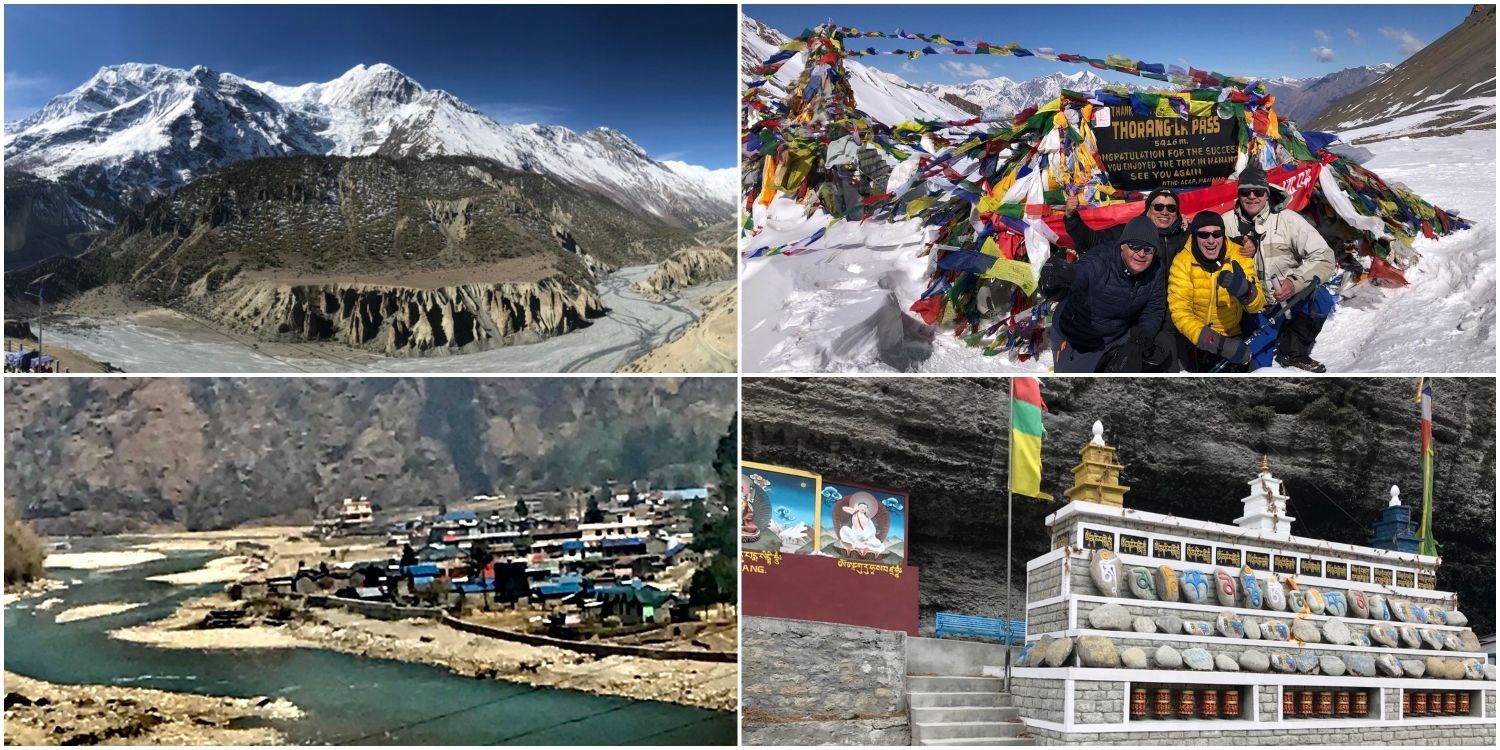
Moreover, you kick off at Besisahar, down at 760m, and climb through thick forests that wake up after winter. By the time you arrive in Manang, up at 3,540m, the air is fresh and the views of Annapurna I and Gangapurna really shine in the spring sun. Local teahouse owners catch the spirit, too. Mukhiya Gurung at Hotel Manang welcomes every April with a big smile and loves to tell trekkers how spring brings more birds and butterflies to the village.
Key Advantages of Spring on Annapurna Circuit Trek:
| Season | Weather Comfort | Rhododendron Bloom | Mountain Views | Crowd Level | Best For |
|---|---|---|
| Spring (Mar-May) | High | Peak | Very Good | Moderate | Nature & Flower Lovers |
| Autumn (Sep-Nov) | High | None | Excellent | High | Clear Panorama Seekers |
| Winter (Dec-Feb) | Low | None | Good | Very Low | Adventure Extremists |
| Summer (Jun-Aug) | Moderate | Fading | Variable | Low | Budget Travelers |
If you’ve been dreaming of walking through a world of wildflowers with the Himalayas towering above, spring is your season on the Annapurna Circuit. At Haven Holidays Pvt. Ltd., we put together spring packages that focus on comfort, safety, and all those magical moments you’ll tell stories about for years. Feeling ready for your own adventure? Reach out now—let’s start your Himalayan spring story.
Honestly, nothing can really prepare you for your first walk through a rhododendron tunnel on the Annapurna Circuit in spring. It’s unreal—the trail turns into living art, and suddenly you forget every hard part of the day. I’ve organized and guided dozens of these treks with Haven Holidays Pvt. Ltd. over the last decade, but those blazing red and pink flowers with snowy summits in the background still leave me speechless.
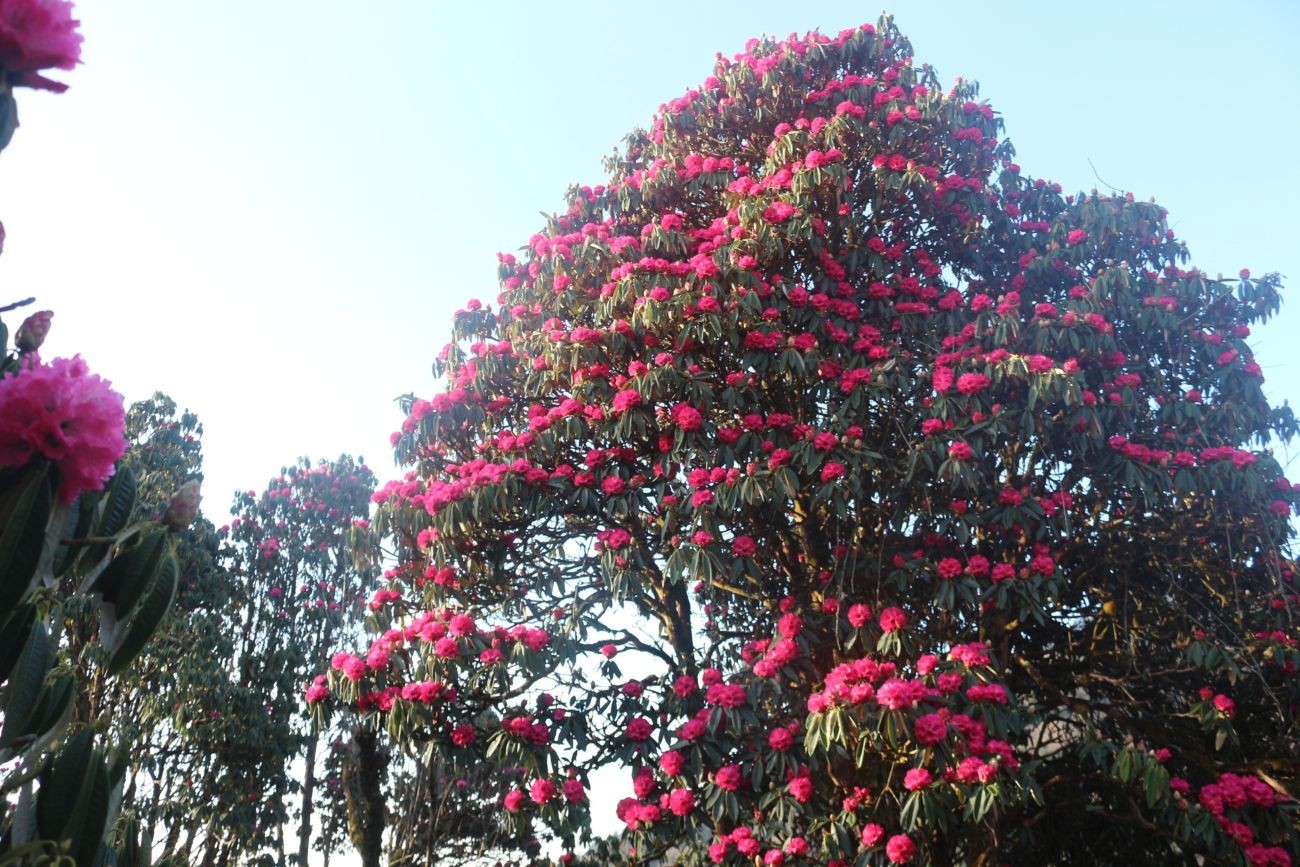
Likewise, Nepal’s national flower, the rhododendron, is at its best from March through mid-April, especially up in the forests between 2,500m and 3,500m. You end up walking through thick stands of bright blooms as peaks like Annapurna II and Lamjung Himal cut into the sky. The contrast is just next-level—easily one of the most photogenic places in the Himalayas. You pick up a sweet floral scent in the air, and there’s an energy from birds and butterflies everywhere. Climb higher, and the rhododendrons start mixing with pine and fir, giving you ever-changing scenery with every hour.
Moreover, Spring is hands-down our guides’ favorite time of year. Mr. Narayan Khadka loves telling people, “In spring the mountains smile with flowers — you feel welcomed by nature itself.” Dashrath Adhikari, another veteran on the team, says it perfectly: “I have crossed this route more than 50 times, but April rhododendrons make every trek feel brand new.” Assistant guide Sujan Thapa always finds hidden blooms and rare wildlife, especially along the stretch from Chame to Upper Pisang.
And let’s not forget the locals. Tashi Gurung at Lake View Hotel in Manang makes you feel at home and even takes guests for early morning snow leopard spotting—spring light really boosts your chances. In Braga, Sonam Gurung at New Yak Hotel brews incredible rhododendron flower tea and spins tales by the fire. Over in Bradang, Palden Gurung at Agro Manang lets guests taste apples fresh from the spring farm and points out the best spots for flower photography.
Must-Experience Rhododendron Highlights in Spring:
| Location | Elevation | Peak Bloom Period | Special Feature | Recommended Stay |
|---|---|---|
| Lower Marsyangdi Valley | 1,000–2,500m (3,281–8,202 ft) | March–early April | Dense red tunnels | Local teahouses in Jagat/Dharapani |
| Chame to Pisang | 2,670–3,200m (8,760–10,499 ft) | Mid-April | Mixed colors + mountain backdrop | Comfortable lodges in Pisang |
| Manang & Braga | 3,450–3,540m (11,319–11,614 ft) | April | Flowers + glacial lake views | Hotel Manang or New Yak Hotel |
| Bradang Area | 3,600m (11,811 ft) | Late March–April | Farm-fresh experience + blooms | Agro Manang with Palden Gurung |
Moreover, Rhododendrons do more than just color the trail—they make you feel something for the land, a connection that sticks long after you’ve headed home. At Haven Holidays Pvt. Ltd., we design our spring Annapurna Circuit trips so you have time to truly soak in every moment, at your own pace and comfort level. Whether you’re by yourself, with a group, or traveling as a couple, we’ll help you find the best floral scenes, at just the right time.
If you feel called by color, fresh air, and mountain magic, don’t wait. Reach out to Haven Holidays Pvt. Ltd. today and let’s set you up for a walk through Nepal’s wildest, most colorful spring. Your rhododendron adventure starts now.
Meanwhile, I’ve walked the Annapurna Circuit in every spring month for the past ten years with Haven Holidays Pvt. Ltd. The weather really shifts from March to May. Days get warmer bit by bit, but up high, nights hit you with real cold. So, packing layers is key.
Likewise, March starts off spring with new warmth. Down in the lower valleys—Besisahar (760m/2,493 ft) to Dharapani (1,960m/6,430 ft)—days reach a comfortable 15–22°C, while evenings stay on the chilly side at 5–10°C. You start noticing snow melting along the trails, and the skies finally clear up after winter. Once you get up around Manang (3,540m/11,614 ft), the days chill out between 5–12°C and nights often dip below freezing, even down to -5°C.
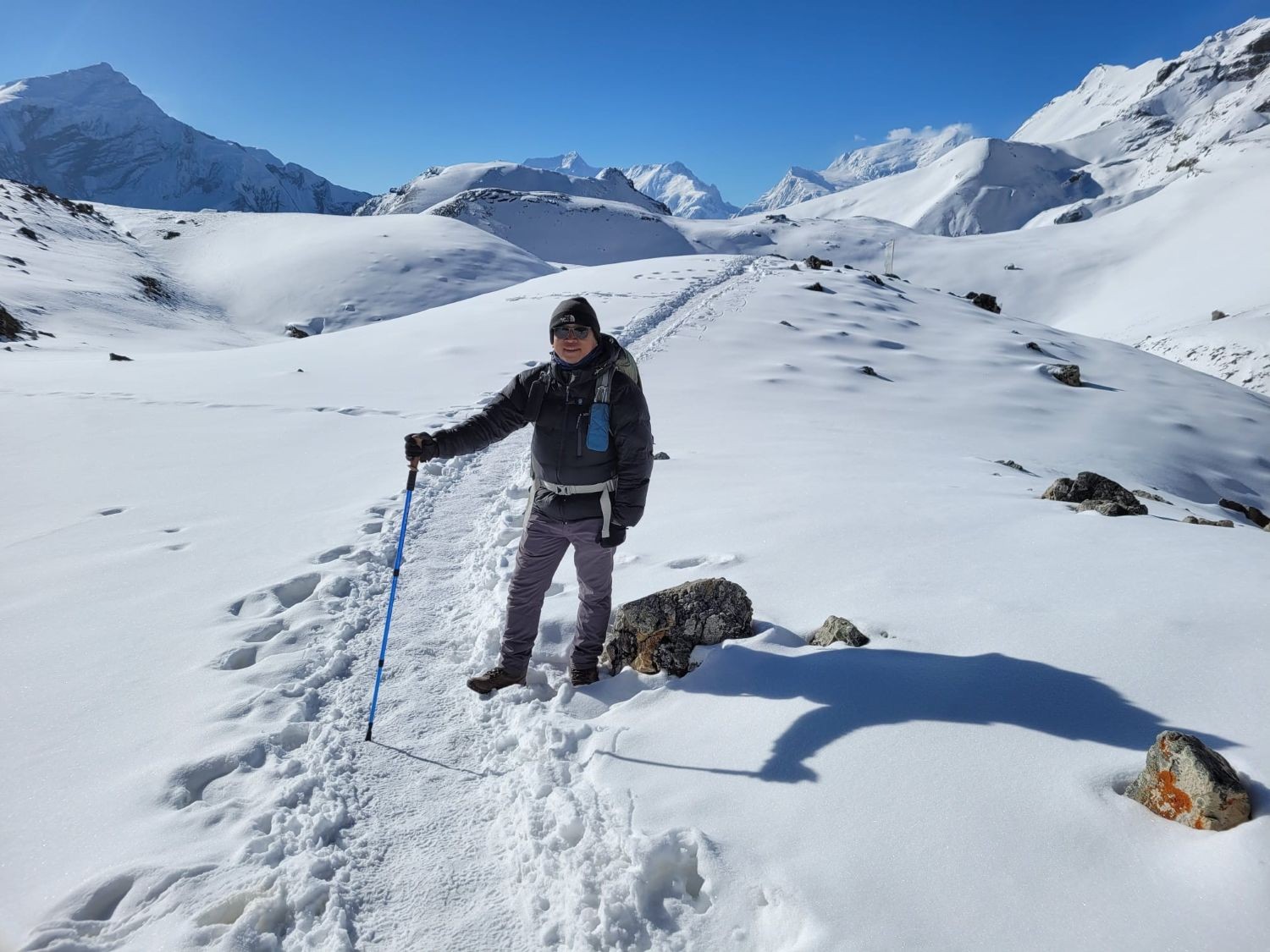
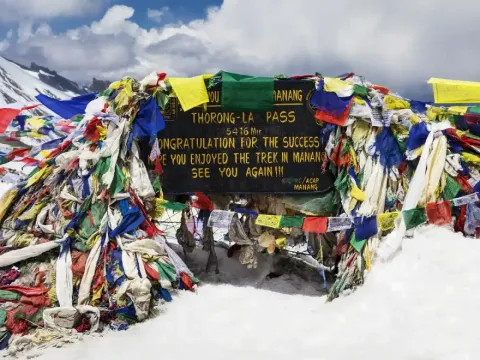
Here, Thorong La Pass (5,416m/17,769 ft) just doesn’t play nice—daytime there ranges -5 to -15°C, nights drop as far as -20°C, and snow patches linger. The trails stay firm and mostly dry—just make sure you start early since the winds pick up after midday. Mr. Bhabanath Adhikari, our trusted guide for two decades, always says, “March offers peaceful trails with fewer trekkers, but you must respect the cold at the pass and carry enough warm gear.”
Moreover, April changes everything. Honestly, it’s my favorite month for the trek. Lower regions stretch comfortably into 18–25°C in the daytime. In the middle areas—Chame (2,670m/8,760 ft) and Pisang (3,200m/10,499 ft)—you’ll enjoy 10–20°C, which feels just right for hiking. Manang runs 8–15°C during the day, with nights falling close to freezing. On Thorong La, it’s better, from -5 to 5°C during the day and nights as “mild” as -15 to -8°C. Far less snow blocks the trail. You’ll get mostly clear skies in the mornings, along with dramatic views of Annapurna I (8,091m/26,545 ft) and Gangapurna. Rhododendrons paint the trail and conditions hold steady. Dashrath Adhikari likes to tell trekkers, “April gives you flowers under your feet and reliable weather for safe pass crossing.”
Similarly, May brings the real comfort, especially below 3,000m, where days hit 20–25°C. The downside—afternoons might bring clouds or a splash of rain, thanks to the pre-monsoon. Higher up in Manang, expect 10–16°C during daylight and nights from -2 to 3°C. Thorong La is way more forgiving, -3 to 2°C by day, but don’t forget those cold winds. Trails are solid, though dust can rise below 3,000m, and haze sometimes blunts mountain views late in the month. Assistant guide Sujan Thapa sums it up well: “May offers longer daylight and warmer walking, but you should finish the pass crossing before noon because clouds build quickly.”
Spring Weather at a Glance on Annapurna Circuit:
| Location | Elevation | March (Day/Night) | April (Day/Night) | May (Day/Night) | Sky & Trail Notes |
|---|---|---|
| Lower Valley (Besisahar) | 760m (2,493 ft) | 15-22°C / 5-10°C | 18-25°C / 8-12°C | 20-25°C / 10-15°C | Warm, dry, blooming forests |
| Manang | 3,540m (11,614 ft) | 5-12°C / -5 to 2°C | 8-15°C / 0 to 3°C | 10-16°C / -2 to 3°C | Clear mornings, cold nights |
| Thorong La Pass | 5,416m (17,769 ft) | -5 to -15°C / -20°C | -5 to 5°C / -15 to -8°C | -3 to 2°C / -12 to -7°C | Improving snow cover, windy |
| Muktinath | 3,760m (12,336 ft) | 8-15°C / -3 to 2°C | 10-16°C / -2 to 3°C | 12-18°C / 0 to 5°C | Dry & windy in rain shadow |
Here, locals back this up. Tashi Gurung at Lake View Hotel in Manang lights up when he talks about the crystal-clear April skies helping him spot snow leopards. We at Haven Holidays Pvt. Ltd. watch the forecasts non-stop and adjust trips so you always get the best conditions. Spring out here is all about preparation and enjoying what nature gives. If you want bright days, wildflowers, and those perfect mountain views, reach out—we’ll help you pick the right window for your Annapurna Circuit Trek.
After leading a ton of spring treks, I’ve learned a 14- to 16-day plan just works. It lets you get used to the altitude and makes the most of those blooming mountain landscapes. At Haven Holidays Pvt. Ltd., we plan flexible spring itineraries so you stay comfortable, avoid risky climbs, and never miss those rhododendron corridors.
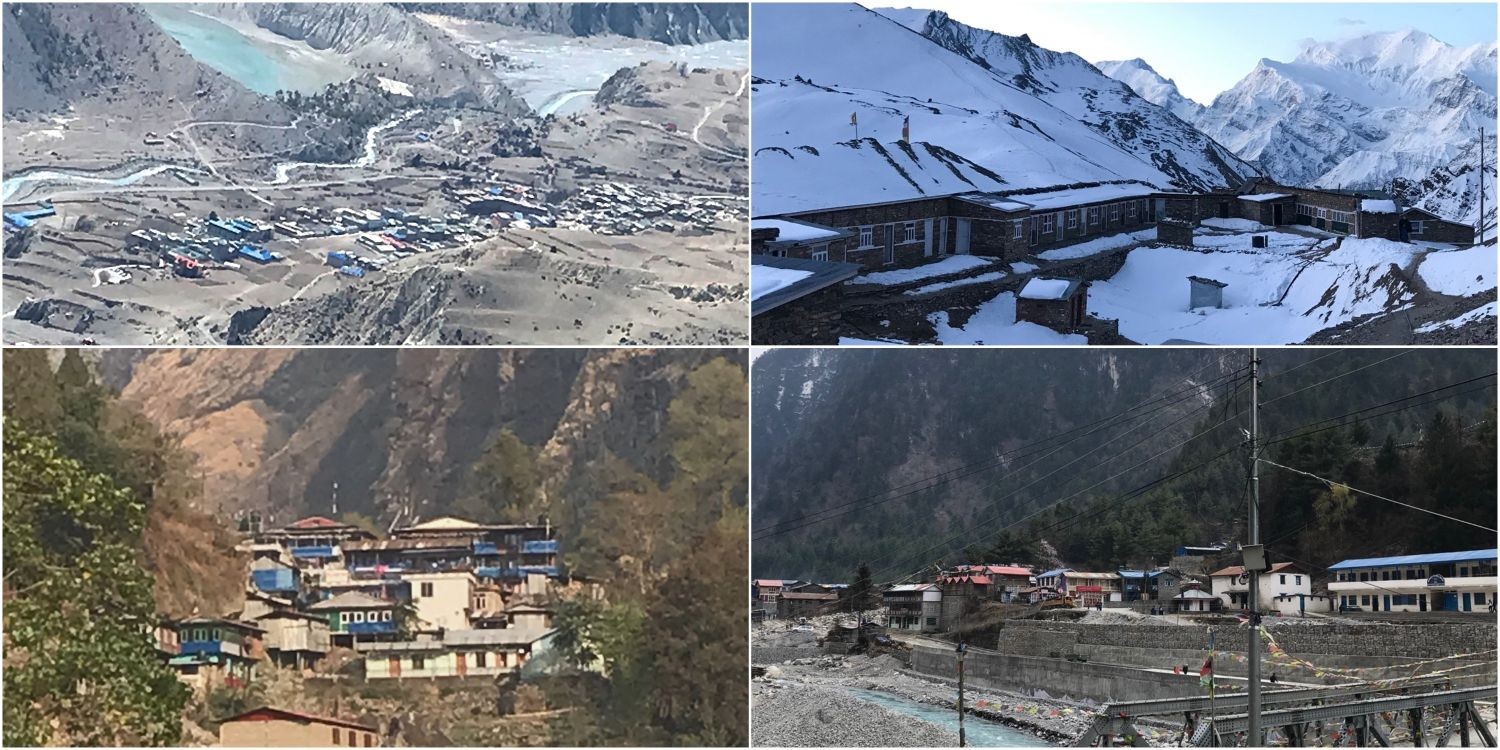
Here’s how we usually set you up—this 15-day itinerary covers all the important spring moments (with Kathmandu arrival and departure included):
This plan gives you extra time in Manang for acclimatization, which is smart because April and May bring warmer days, but the high passes can surprise you. Sonam Gurung at New Yak Hotel in Braga and Palden Gurung at Agro Manang love to offer local apples and share how spring breathes new life into their villages.
Annapurna Circuit Trek in Spring Itinerary Highlights:
| Day | Route | Elevation Gain/Loss | Walking Hours | Key Spring Experience |
|---|---|---|
| 3 | Dharapani to Chame | +710m (2,329 ft) | 5-6 | Entering rhododendron forests |
| 5 | Pisang to Manang | +340m (1,115 ft) | 6-7 | Views of Annapurna range + blooms |
| 6 | Acclimatization Manang | Side hike ~500m | 4-5 | Ice Lake + local culture |
| 9 | Thorong Phedi to Muktinath | +876m / -1,656m | 8-10 | Crossing Thorong La Pass |
| 10 | Muktinath to Jomsom | -1,040m | 5-6 | Kali Gandaki gorge + apple orchards |
In fact, Narayan Khadka and our Haven Holidays team keep an eye on weather and adjust as needed so you trek safe and happy. Spring on the Circuit turns a classic path into a living gallery of flowers and snow-capped peaks. Want a tailored trip that matches your pace and style? Just ask. Haven Holidays Pvt. Ltd. will guide you through one of the most stunning experiences of your life—all in the colors and energy of spring.
Meanwhile, the adventure really kicks off when you step out of Besisahar and onto the trail. I can’t help but smile seeing first-time trekkers set out with Haven Holidays Pvt. Ltd.; there’s just something so genuine about those early steps. The lower sections greet you with thick greenery, roaring rivers, and the promise of rhododendrons ahead.
Actually, most folks drive from Kathmandu to Besisahar, sitting at 760m (2,493 ft), then hop in a jeep straight to Dharapani at 1,960m (6,430 ft). It saves your energy and gives you extra time to actually enjoy the trail. From Dharapani, you walk through subtropical forests that come alive in spring—fresh leaves, early blooms everywhere. The Marsyangdi River roars nonstop on your right, pushing you onward as you climb gently. The air’s humid and warm, and daytime temps are comfortable, around 18–24°C.
As you leave Tal at 1,700m (5,577 ft) and head for Jagat and Chamje, the route starts to get a little more interesting. You cross those legendary suspension bridges, passing small Gurung and Tamang villages along the way. Walk into Chame at 2,670m (8,760 ft) and you’ll feel the change—a thicker forest and the first splash of red and pink rhododendrons. Our guide, Mr. Ramsaran Simkhada, who’s been leading treks in Annapuran Circuit Trail for 15 years, always tells people, “These lower sections are gentle, but they get your rhythm going. Just walk slow, soak it all in, let your body find its pace.”
Likewise, the stretch between Chame and Pisang is where things really start to feel magical. You’re surrounded by dense rhododendron forests, and in March and April, entire hillsides glow with flowers. It’s pretty wild—the vivid reds set against the snow-capped Lamjung Himal and Annapurna II (7,937m/26,040 ft) make for views you honestly won’t forget. Assistant guide Sujan Thapa is always spotting birds and waterfalls and shares the best little details with trekkers. The altitude climbs slowly, so acclimatization feels natural, no rush.
And let’s not forget the teahouses. Owners welcome you with hot tea and homemade food after your walk. The trail stays well-kept, winding past apple orchards and terraced fields that burst with green in spring. Narayan Khadka says, “The first four days set the tone. If you enjoy the lower stretches, the whole trek feels easier and a lot more fun.”
Key Highlights of the Starting Section:
| Day / Section | Starting Point | Elevation | Walking Hours | Spring Experience |
|---|---|---|
| Day 2-3 | Dharapani | 1,960m (6,430 ft) | 5-6 | Lush forests + river views |
| Day 4 | Chame | 2,670m (8,760 ft) | 5-6 | Entering rhododendron zone |
| Day 5 | Pisang | 3,200m (10,499 ft) | 5-6 | First clear views of Annapurna peaks |
Here, Mr. Bhabanath Adhikari, with two decades guiding trekkers, always emphasizes, “Respect the lower sections. They look easy, but they’re what gets your lungs and legs ready for the higher mountains.” At Haven Holidays Pvt. Ltd., we pace these early days comfortably, so you come out the other side excited, not wiped out.
If walking through ever-changing green valleys—turning into bright rhododendron forests under giant peaks—sounds like your kind of adventure, this is where your spring Annapurna trek really starts. Give Haven Holidays Pvt. Ltd. a call, and we’ll guide you safely from step one.
When you hit Pisang at 3,200m (10,499 ft), you’re right in the heart of the Annapurna Range, and the scenery just explodes in beauty. This middle stretch is where spring on the Annapurna Circuit feels truly unforgettable—for both the epic views and for the culture you experience. Honestly, I never get tired of bringing trekkers through here with Haven Holidays Pvt. Ltd.
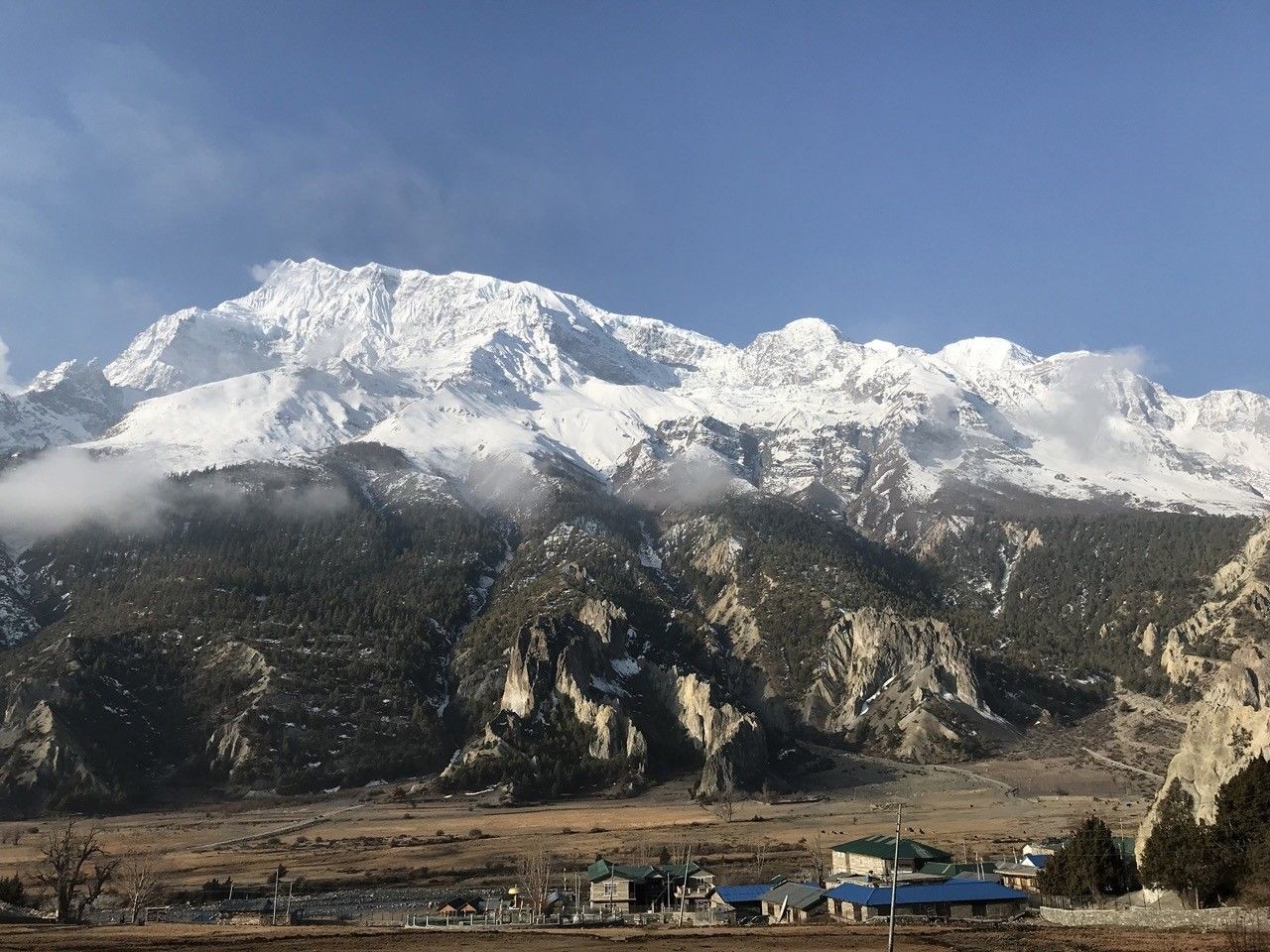
From Lower Pisang, you’ve got two options: the upper trail via Ghyaru and Ngawal or the lower trail. In spring, I always recommend the upper route. You get prime views of Annapurna II (7,937m/26,040 ft), Annapurna III (7,555m/24,787 ft), and Gangapurna (7,455m/24,459 ft). The trail winds through dry pine forests, with rhododendrons still blooming, and the morning sun makes the snowy peaks glow.
Likewise, Manang at 3,540m (11,614 ft) is your main acclimatization spot. You take a rest day here, and it’s always a highlight for trekkers. The village perches on a plateau with jaw-dropping views of the Annapurna massif and the turquoise Gangapurna Lake. If you’re up for it, hike to Ice Lake at about 4,600m (15,092 ft) for even bigger panoramic views. Tashi Gurung from Lake View Hotel is famous for his hospitality—and for his snow leopard stories. He enjoys taking trekkers out early in the morning, saying, “Spring’s clear air lets us spot wildlife way more easily.”
If you swing by Braga village at 3,450m (11,319 ft), things get even more traditional. Sonam Gurung at New Yak Hotel makes sure you feel at home—serving up dal bhat and swapping stories around the fire. The monastery above Braga sits peacefully, catches the spring light on its prayer flags, and offers a quiet spot to reflect. Mukhiya Gurung from Hotel Manang shares his insights about weather and trail conditions.
Here, Mr. Dashrath Adhikari, who is working for Haven Holidays Pvt. Ltd. as a trekking leader, loves this section. He tells trekkers, “Manang is where the trek shifts—from forest walking to real Himalayan adventure. The mountains get so close, you feel like you can touch them.” The scenery here is dramatic, and with the rhododendrons popping up even at this altitude, it blends nature with local culture perfectly.
Mid-Trek Highlights You Will Love:
| Location | Elevation | Key Attraction | Spring Special Feature | Recommended Stay |
|---|---|---|
| Pisang | 3,200m (10,499 ft) | Upper village views | Rhododendrons + Annapurna peaks | Local teahouses |
| Ngawal | 3,650m (11,975 ft) | Panoramic mountain views | Clear spring light | Comfortable lodges |
| Manang | 3,540m (11,614 ft) | Acclimatization hub | Gangapurna Lake + Ice Lake hike | Hotel Manang / Lake View Hotel |
| Braga | 3,450m (11,319 ft) | Traditional village & monastery | Cultural immersion | New Yak Hotel with Sonam Gurung |
After your days in Manang, you feel stronger and more confident—and honestly, more connected to the landscape than ever. This part doesn’t just build your endurance; it leaves you with memories you’ll carry for life.
Most importantly, with Haven Holidays Pvt. Ltd., you get plenty of time in Pisang, Ngawal, and Manang to take in all the beauty and culture of the Annapurna heartland. If you’re dreaming of wandering between giant peaks, rhododendrons at your feet, and spring sunshine overhead, this is the stretch that’ll capture your heart.
Want to experience the magic of the Annapurna Range in spring? Reach out to Haven Holidays Pvt. Ltd. Let our seasoned team guide you through these unforgettable mid-trek highlights.
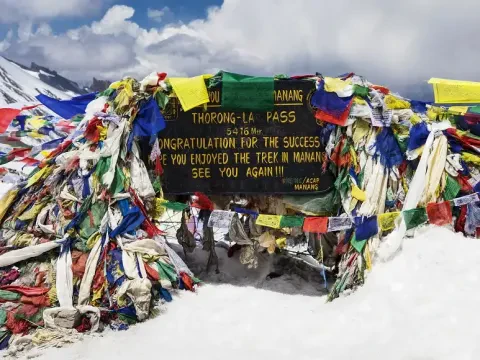
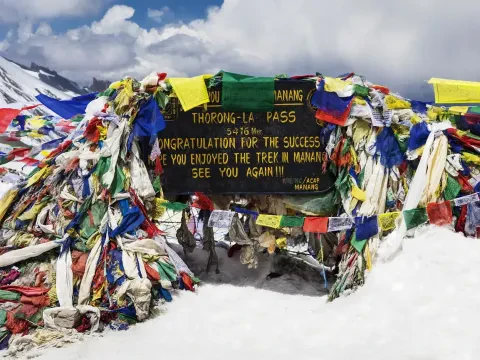
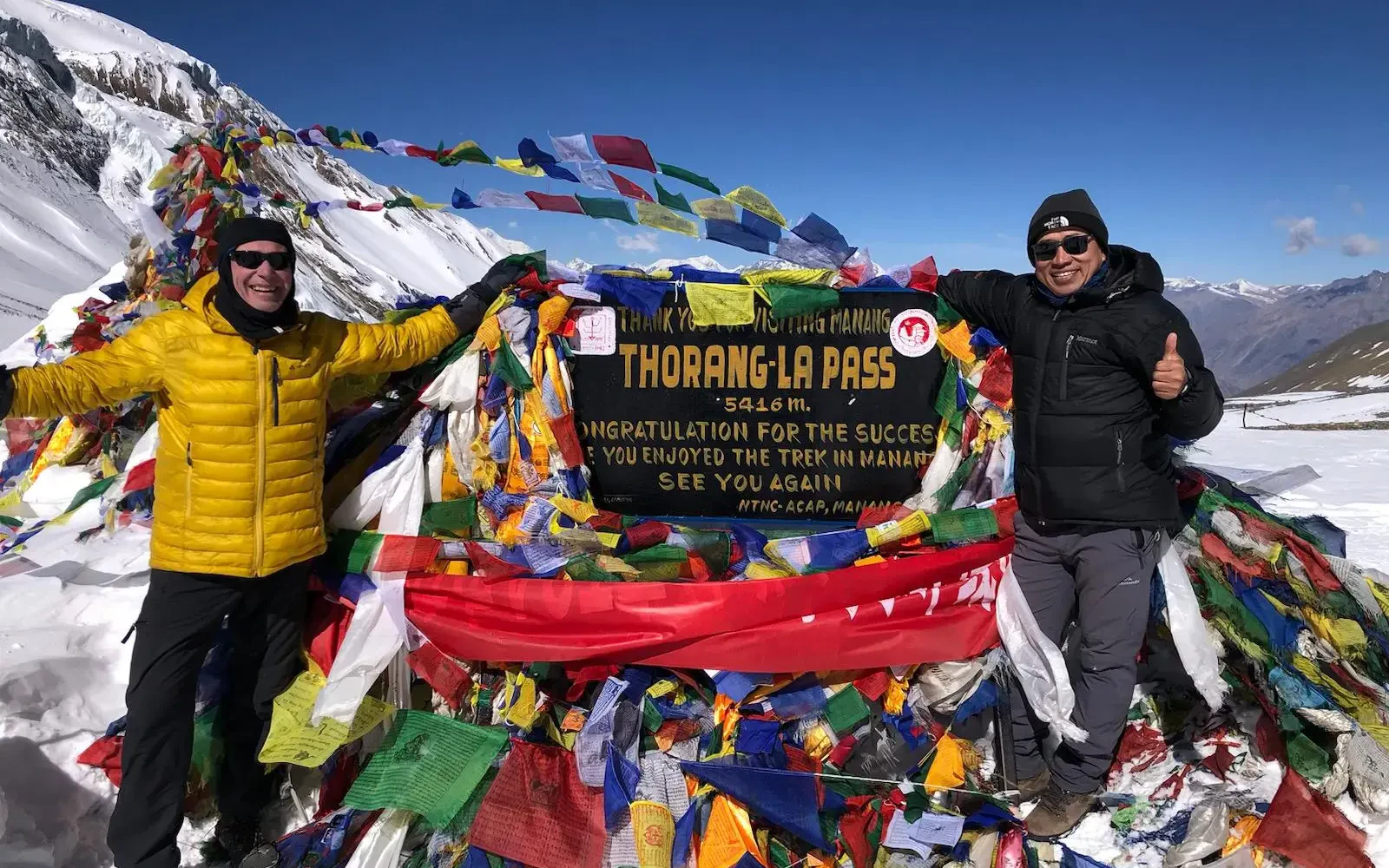
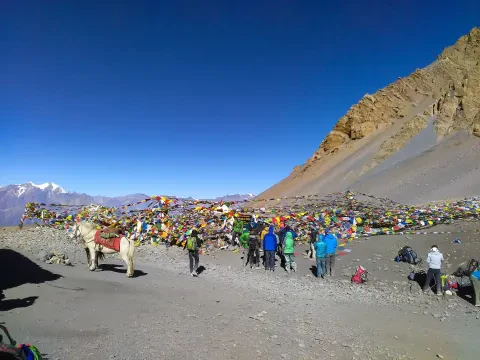
Actually, there’s really nothing that compares to stepping onto Thorong La Pass at 5,416 meters, prayer flags fluttering over your head, and the first sunlight touching both Annapurna and Dhaulagiri. Even after so many treks with clients from Haven Holidays Pvt. Ltd., it always gives me chills—especially in spring, when the mountain slowly softens after winter.
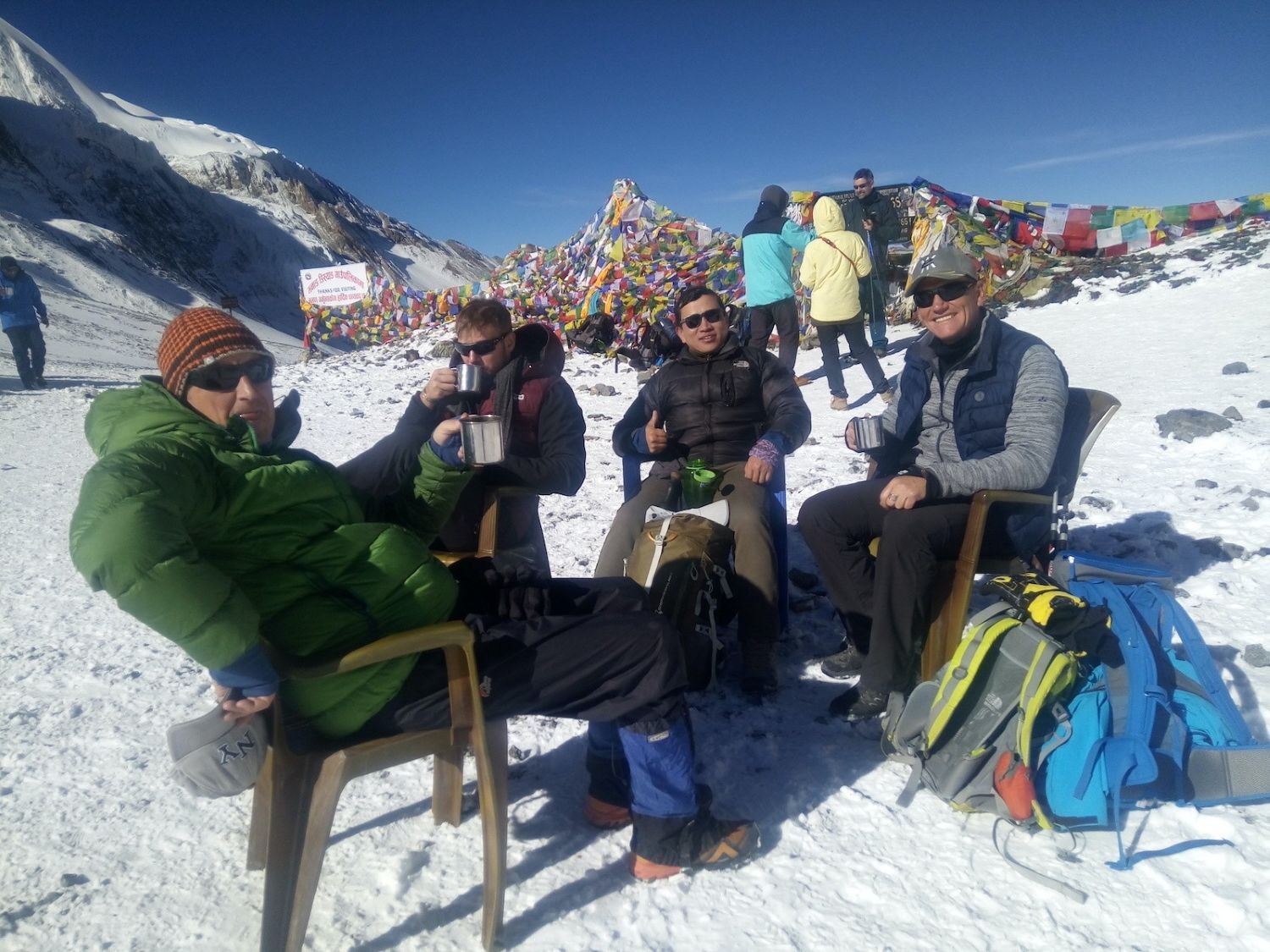
Likewise, Spring is just a friendlier season for crossing the pass. You don’t wrestle with the harsh cold and heavy snow like in winter, but don’t let your guard down. Altitude and weather can still cause trouble if you’re careless. Early March? Expect more snow, sluggish pace, and cold fingers. By April, a lot of that snow melts and the trail’s easier to see. May feels almost gentle—just keep an eye out for strong winds and fast-moving clouds the later you start. Our guide Mr. Bhabanath Adhikari, with two decades on these trails, never fails to say, “Thorong La in spring is forgiving if you start early, stay hydrated, and listen to your body.”
Moreover, your day begins dark and early, either from Thorong Phedi at 4,540 meters or High Camp at 4,800 meters. Trust me—you’ll want to get moving between 4:00 and 5:00 in the morning. If you’re at the pass by 8:00 or 10:00 AM, you’ll beat both crowds and that relentless wind. The climb’s demanding but manageable, with close to 900 meters of vertical gain from Phedi. Sujan Thapa, our assistant guide, always gives this simple advice: “Walk slowly with small steps, breathe deeply, and drink water every 20 minutes — this simple habit has helped hundreds of our trekkers avoid headache and fatigue.”
Likewise, Spring snow is a bit unpredictable. Sometimes in early March, you’ll need micro-spikes for the last icy bits, but by mid-April, most people get through just fine with sturdy boots and trekking poles. We always pack a safety rope and first-aid kit, and our guides keep an eye on everyone’s oxygen levels.
Ramsaran Simkhada, who must’ve crossed this pass more than anyone I know, puts it plainly: “The key to conquering Thorong La in spring is proper acclimatization in Manang and a very early start. Never push too hard — the mountain will still be there next year.”
In fact, it’s all celebration at the top—quick photos, smiles, the classic signboard shot. But don’t forget, the descent to Muktinath is nearly 1,600 meters down. It’s rewarding but tough on your knees, so take breaks and use those trekking poles.
Essential Tips for Safe Thorong La Crossing in Spring:
| Aspect | March | April | May |
|---|---|---|
| Snow Condition | Moderate to high | Light to moderate | Minimal |
| Daytime Temp at Pass | -5 to -15°C | -5 to 5°C | -3 to 2°C |
| Recommended Start Time | 3:30–4:30 AM | 4:00–5:00 AM | 4:30–5:30 AM |
| Difficulty Level | Challenging | Moderate | Easier but windier |
| Best For | Experienced trekkers | Most spring trekkers | Fit trekkers wanting warmer days |
Here, it’s a tradition—Tashi Gurung from Lake View Hotel in Manang waves us off, calling after the group, “Come back safely — the flowers will still be waiting when you return from the pass.” Safety always takes priority with us at Haven Holidays Pvt. Ltd. Our guides are veterans, our gear is checked daily, and you get up-to-date weather info every evening. All so you can take on Thorong La confidently, and actually enjoy it.
If standing atop the world’s highest trekking pass in spring surrounded by the giants sounds like your dream, we’re ready to help. Reach out to Haven Holidays Pvt. Ltd.—let’s get you across that legendary pass safely and with a story you’ll never forget.
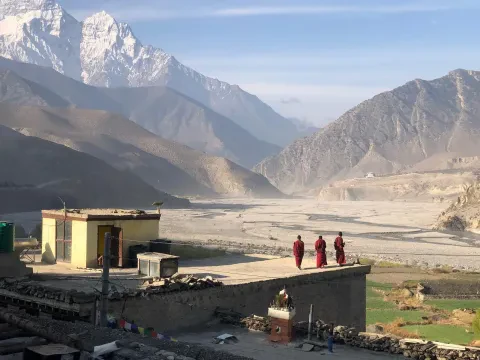
Here, the second you step over Thorong La Pass and start heading down, it feels like you’ve been dropped into another universe. That’s something I never get tired of seeing—one moment you’re in the damp, rhododendron-filled Marsyangdi Valley, and the next it’s dry, windy, and almost lunar. Watching trekkers’ faces when they realize just how much the landscape shifts—always a fun moment.
Actually, the path down starts steep, all loose rocks and scree, until you reach the quiet, sacred village of Muktinath at 3,760 meters. This place means a lot to both Hindus and Buddhists. You’ll find yourself at the famous temple with its 108 water spouts, the ever-burning flame, and a holy pond. The air feels sharper in spring, and usually the skies clear up for great views of Dhaulagiri and the Nilgiri peaks. Mr. Narayan Khadka tells trekkers all the time, “After the tough climb, Muktinath gives you both spiritual peace and physical relief.”
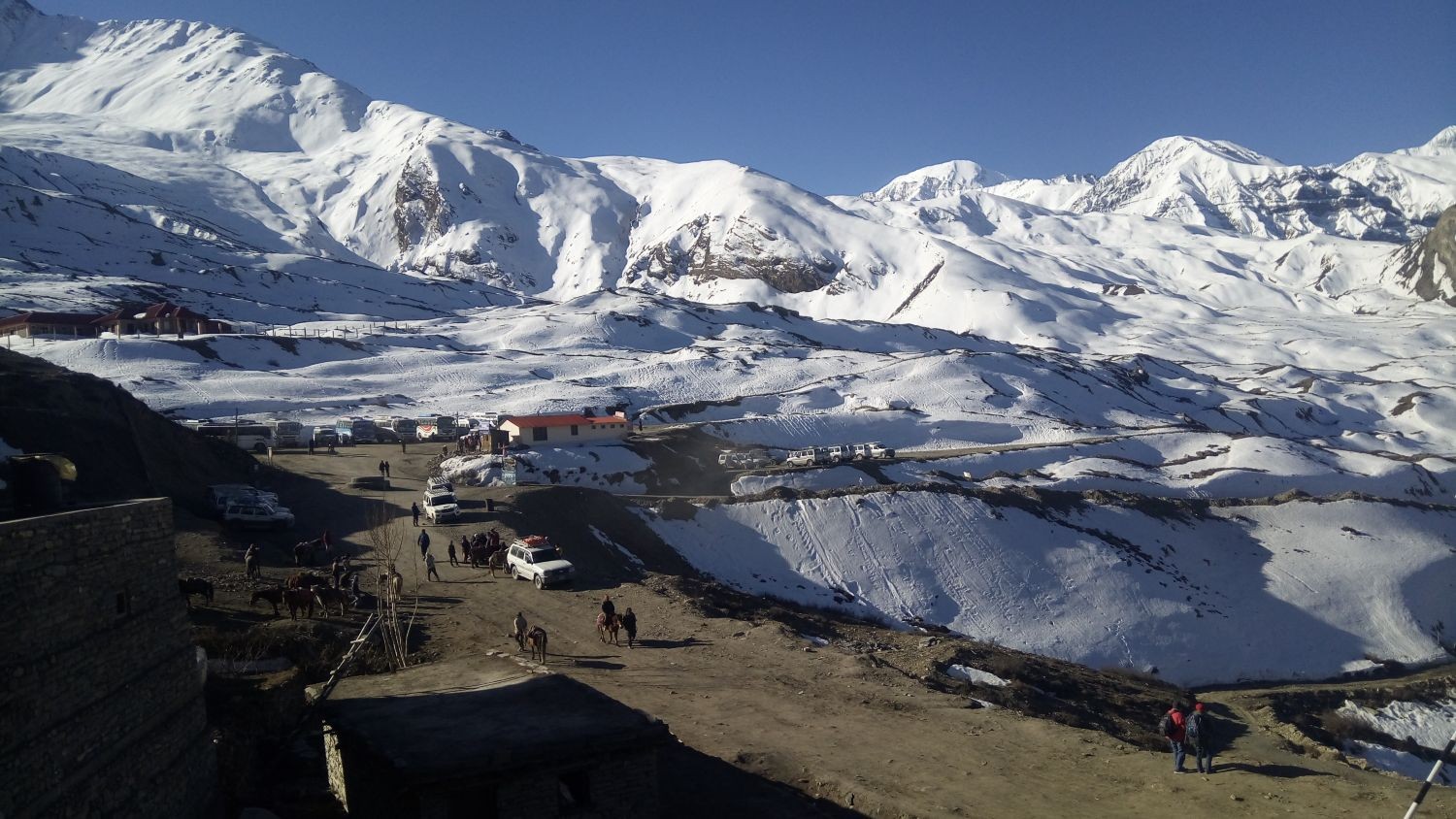
Past Muktinath, the trail keeps dropping through the huge Kali Gandaki Valley—officially the world’s deepest gorge. Suddenly you’re surrounded by windswept hills, apple orchards, and little villages with Tibetan design. Spring paints the place with wild contrast: brilliant blue sky, rusty hills, and snowy peaks in the distance. Our senior guide Dashrath Adhikari always says, “The strong winds of Kali Gandaki keep the air fresh, and the dramatic change in scenery refreshes your mind after the high pass.”
Here, Jomsom waits about 5-6 hours away at just under 3,000 meters. It marks the end of the big walk—small town, nice beds, great food, and the option of flying to Pokhara in the morning. Going downhill brings its own rewards (gravity takes the load), but don’t let tired knees bring you down. Take it easy on those long descents.
Some days, you’ll meet Palden Gurung from Agro Manang sharing apples on the lower trails. He loves talking about how spring winds pollinate the orchards. That quick switch—from thick forests to stark, arid river valley—makes people feel like they hiked into a whole new world in just a single day.
Highlights of the Descent into Kali Gandaki Valley:
| Location | Elevation | Landscape Type | Walking Time from Previous | Spring Highlight |
|---|---|---|
| Thorong La Pass | 5,416m (17,769 ft) | High mountain pass | - | Panoramic views + prayer flags |
| Muktinath | 3,760m (12,336 ft) | Semi-arid plateau | 3–4 hours descent | Sacred temples + spiritual energy |
| Kagbeni | 2,810m (9,219 ft) | River valley | 2 hours | Red cliffs + medieval village feel |
| Jomsom | 2,720m (8,924 ft) | Windy valley town | 3 hours | Apple orchards + flight option |
To sum up, there’s something about this descent—it really wraps up the Annapurna Circuit perfectly. We always make sure our clients catch their breath in Muktinath, soak in the culture, and don’t feel rushed through the Kali Gandaki’s unique scenery. Over and over, people tell us this stretch is the best chapter of their spring trek.
Here, dreaming of making that amazing shift from rhododendron forests to one of the world’s most dramatic valleys, all at your own pace? Let’s make it real. Contact Haven Holidays Pvt. Ltd., and we’ll build your perfect spring Annapurna Circuit adventure.
Meanwhile, I’ve been organizing spring treks for Haven Holidays Pvt. Ltd. for over a decade now, and every season, I see how tricky spring packing can be for newcomers. You start warm and sunny in the lower valleys but, pretty quickly, you’re shivering at Thorong La Pass with freezing wind biting at your cheeks. Layering really isn’t something you can skip—trust me, you’ll be peeling off clothes one hour and piling them on the next.
First thing: solid base layers. Go for thermal tops and bottoms that wick away sweat. When you’re climbing all day, you’ll need to stay dry. Once the sun dips or you get higher up, pull on a fleece jacket, then a down jacket for real warmth. After that, you want a waterproof, windproof shell—jacket and pants. Rain showers pop up in April and May, and nothing’s worse than a soaked daypack or drenched clothes. Sujan Thapa, one of our assistant guides, always brings up layering, insisting, “Layering is not optional in spring—you remove or add clothes several times a day.”
For your legs, pack comfortable trekking pants and bring at least one pair of thermal bottoms for those cold nights and the icy pass crossing. Good boots matter more than most trekkers expect, especially with rocky stretches and endless descents after Thorong La. Grab 3–4 pairs of trekking socks, plus one super warm pair for the high pass. And don’t overlook little things: sun hat for the lower regions, beanie for cold mornings, buff and gloves—thin for daytime, thick for the pass.
If you love taking photos, spring is your season. The rhododendron bloom against the snow is unreal, and you’ll want extra memory cards and a power bank because you’ll take hundreds of shots. A polarizing filter goes a long way in making colors pop and cutting glare. Mr. Ramsaran Simkhada, one of our most veteran guides, always suggests, “Pack a lightweight tripod or monopod if you want sharp sunrise shots at Manang or on Thorong La.”
Complete Spring Packing Checklist:
| Category | Must-Have Items | Why Important in Spring | Recommendation |
|---|---|---|
| Upper Body Layering | Base layers, fleece, down jacket | Variable temps from 25°C to -15°C | Merino wool or synthetic |
| Rain Gear | Waterproof jacket + pants | Afternoon showers in lower valleys | Lightweight & breathable |
| Footwear | Trekking boots + trekking poles | Rocky trails + long descent after pass | Broken-in boots |
| Photography | Camera + extra batteries + polarizing filter | Rhododendron blooms & mountain contrast | Protect gear from dust |
| Cold Weather | Warm hat, gloves, thermal bottoms | Freezing nights & Thorong La crossing | Pack light but warm |
Here, Mr. Bhabanath Adhikari, our most seasoned guide for Haven Holidays Pvt. Ltd, checks every client’s gear in Kathmandu. He always says, “Better to carry one extra warm layer than to suffer at 5,000 meters.” Teahouse owners like Mukhiya Gurung at Hotel Manang back him up. Nights up high stay chilly, even in late spring, so pack enough warm stuff.
At Haven Holidays Pvt. Ltd., we send clients a custom packing list about two weeks before departure. We’re pretty obsessed with keeping your pack light—under 10–12 kg—but you’ll have what you need to stay safe and comfortable.
If you want to trek without the stress of forgetting something, join one of our spring Annapurna Circuit packages. Contact Haven Holidays Pvt. Ltd. We’ll make sure you’re packed right so you can focus on enjoying the rhododendrons, jaw-dropping views, and those unforgettable moments on the trail.
Actually, I’ve led so many groups on the Annapurna Circuit in spring that I could probably write a book about teahouse life. Honestly, spring is one of the best seasons for accommodation—fewer crowds than autumn, but a much brighter vibe than winter. Teahouses are simple, but you’ll quickly learn how cozy they can feel.
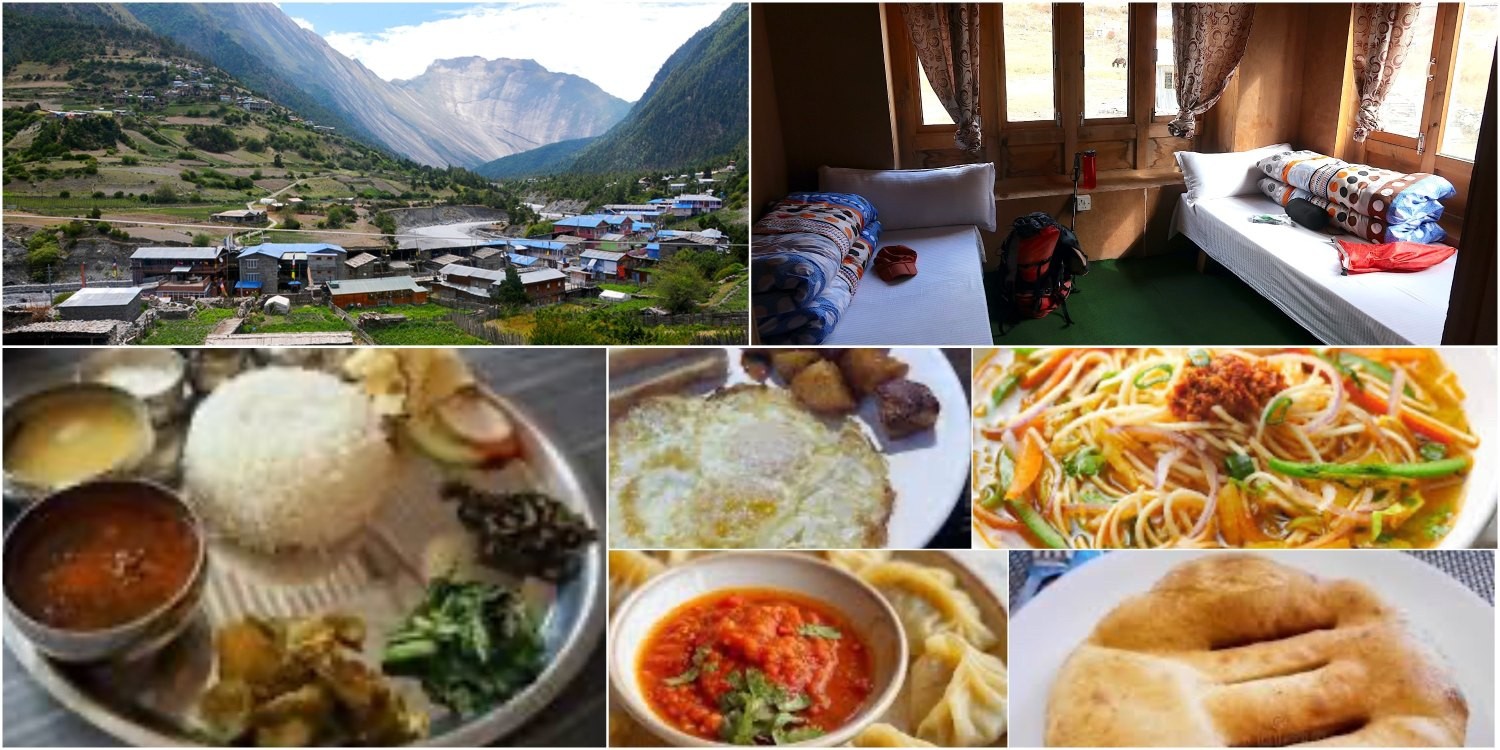
Between Dharapani and Chame, teahouses are fairly quiet in early March. By mid-April, they start buzzing with more trekkers. You’ll usually get a room with two single beds, foam mattresses, blankets, and sometimes a tiny table. Up to Manang, many rooms have attached bathrooms and hot showers (though hot water often costs extra). Above Manang, things get more basic. You’ll use common toilets and wash with bucket hot water.
Likewise, food on the circuit has seriously improved. Dal bhat is still the backbone—hearty, filling, and perfect for fueling big days. In spring, menus get better, with fresh, seasonal treats. Apple pie, pancakes, vegetable soup—after a long hike, these taste amazing. If you’re near Manang and Braga, try local buckwheat bread and yak cheese. Palden Gurung at Agro Manang is proud of his apples and apple juice—straight from his farm.
Similarly, Tashi Gurung at Lake View Hotel and Mukhiya Gurung at Hotel Manang are famous for their hospitality. Rooms stay tidy, meals come out fast, even if your group arrives late. Sonam Gurung at New Yak Hotel in Braga always shares stories and garlic soup—a favorite for comfort at altitude.
In fact, Spring crowds are moderate. March is quiet—lots of peace in the teahouses. April brings more visitors for the rhododendron bloom, and early May stays comfortable before monsoon. Mr. Narayan Khadka points out, “Spring teahouses feel friendly and social. You meet trekkers from many countries and exchange stories by the dining hall heater.”
What to Expect in Spring Teahouses:
| Location | Elevation | Teahouse Quality | Crowd Level (Spring) | Seasonal Food Highlights |
|---|---|---|
| Dharapani–Chame | 1,960–2,670m | Good | Low to Moderate | Fresh vegetables, dal bhat |
| Pisang–Manang | 3,200–3,540m | Very Good | Moderate | Apple pie, garlic soup, yak cheese |
| Braga | 3,450m (11,319 ft) | Excellent | Moderate | Local buckwheat dishes |
| Muktinath–Jomsom | 3,760–2,720m | Good | Moderate | Tibetan bread, momos, fresh apples |
In fact, Mr. Bhabanath Adhikari always books the best rooms ahead for our groups. He’s convinced that planning early helps our trekkers sleep well every single night.
At Haven Holidays Pvt. Ltd., we pick teahouses with clean rooms, tasty food, and friendly people. We even carry extra sleeping bags and mattresses for a little extra comfort at the colder, higher villages.
If you want a hassle-free spring trek—good rooms, awesome food, and zero stress—just reach out to Haven Holidays Pvt. Ltd. We’ll make sure your teahouse experience is comfortable, relaxing, and memorable, leaving you free to enjoy all the beauty spring throws at the Annapurna Circuit.
Getting your body ready for the Annapurna Circuit Trek in spring really sets the tone for whether you struggle or actually enjoy it. I’ve coordinated spring treks for a decade with Haven Holidays Pvt. Ltd., and honestly, trekkers who work on their fitness and actually pay attention to the altitude always have a smoother trip.
Meanwhile, you’ll want solid cardiovascular endurance, strong legs, and mental grit. If you start training 8–10 weeks before you go, you’ll thank yourself later. Pack your weekends with long hikes, carry a backpack around 8–10 kg, and don’t shy away from both uphill and downhill routes. Those steeps and endless descents—especially after you hit Thorong La Pass at 5,416m (17,769 ft)—are no joke. In the gym, focus on squats, lunges, and stair climbing, too. Mr. Bhabanath Adhikari, our senior guide (he’s been at it for 20 years), always says, “Fitness is your insurance on the Annapurna Circuit. The fitter you are, the more you enjoy those rhododendron forests and mountain views—instead of just surviving.”
Likewise, hydration matters even more in spring. As temperatures climb, you lose more fluids, so aim for at least 3.5–4 liters of water a day. Start hydrating right from day one—even on rest days in Manang at 3,540m (11,614 ft), don’t drop the habit. Assistant guide Sujan Thapa has a handy tip: “Add a pinch of salt or electrolyte powder to your water bottle—this simple trick has kept a lot of trekkers from getting headaches and feeling wiped out.”
Moreover, altitude sickness is still the big health risk once you’re above 3,000m. Even if spring weather feels friendly, the air’s still thin up at Thorong La. Stick to the “climb high, sleep low” rule. We drop in a full acclimatization day in Manang with an optional hike to Ice Lake (around 4,600m or 15,092 ft). Light, carb-packed meals help, and dodge the alcohol and cigarettes. Mr. Ramsaran Simkhada (15+ years guiding) always tells trekkers, “Listen to your body. If you start feeling dizzy or get a bad headache, stop climbing and tell your guide right away.”
Similarly, Spring brings its own health quirks: the sun is stronger, and there’s more dust. Sunscreen and a wide-brimmed hat are essentials—up high, the sun bounces off the snow and can burn you fast. Pack meds for headaches, upset stomachs, and colds.
Fitness Training Plan for Annapurna Circuit Spring Trek:
Altitude Sickness Prevention Tips:
| Aspect | Recommendation | Why Important in Spring |
|---|---|---|
| Cardiovascular Training | Hiking + stair climbing | Prepares for long days and altitude |
| Hydration | 3.5–4 liters daily + electrolytes | Warmer days increase fluid loss |
| Acclimatization | Full rest day in Manang + Ice Lake hike | Reduces risk at Thorong La Pass |
| Sun & Dust Protection | Sunscreen, hat, sunglasses | Stronger spring sunlight at high altitude |
Here, Dashrath Adhikari and everyone on our guiding team at Haven Holidays Pvt. Ltd. check up on each client’s health daily and carry oxygen tanks plus a well-stocked first-aid kit. Prevention always beats cure, in our book.
If you want to trek confidently, soak in every step through the rhododendron forests, and stand safely at Thorong La, getting fit and altitude-aware is non-negotiable. Reach out to Haven Holidays Pvt. Ltd. We’ll set you up with a solid training plan and health backup to make your spring Annapurna Circuit Trek a safe and joyful adventure.
Get your permits sorted and your costs clear early—it’s key to a stress-free Annapurna Circuit trek in spring. After 10 years at Haven Holidays Pvt. Ltd., I’ve helped plenty of trekkers handle this stuff so they can focus on the dazzling rhododendrons and mountain views.
Meanwhile, you need two main permits. The Annapurna Conservation Area Permit (ACAP) sets you back about USD 30 per person. The Trekkers’ Information Management System (TIMS) card is USD 20 if you trek solo, or USD 10 if you’re with a group. Both are easy to grab in Kathmandu or Pokhara. We handle all permits at Haven Holidays Pvt. Ltd.—no need to waste your time in lines.
Likewise, transport’s pretty simple but needs some planning. It’s a 7–8 hour drive from Kathmandu to Besisahar at 760m (2,493 ft), then a jeep ride to Dharapani at 1,960m (6,430 ft). Finished the trek in Jomsom at 2,720m (8,924 ft)? Most trekkers fly back to Pokhara (a quick 25-minute hop) or take a jeep. Spring mornings usually mean reliable flights, with stable weather.
Now, let’s talk money. A 15-day guided spring package with Haven Holidays Pvt. Ltd. usually ranges from USD 1,150–1,450 per person. That covers your permits, transport, teahouses, meals, guide, and porter. Going independent costs less, but it’s riskier—especially up high. Mr. Bhabanath Adhikari, with 20 years’ guiding, is clear: “The mountains are beautiful but unpredictable. A good guide helps you make the right decisions every single day.”
In fact, Spring is a great time to trek—teahouses are less crowded compared to autumn, but the weather and rhododendron blooms are just as good. If you want mid-April for peak flowers, book 3–4 months ahead.
Practical Planning Tips for Spring:
| Item | Approximate Cost (USD) | Notes |
|---|---|---|
| ACAP Permit | 30 per person | Mandatory for Annapurna region |
| TIMS Card | 10–20 per person | Group vs solo rate |
| Kathmandu–Besisahar Drive | Included in package | Private vehicle recommended |
| Jomsom–Pokhara Flight | 120–150 | Highly recommended after the trek |
| Full 15-Day Guided Package | 1,150 – 1,450 | Includes guide, porter, meals & permits |
In fact, Narayan Khadka and our team always tell trekkers, “Spend a little more on safety and comfort—you’ll enjoy the trek much more.” We’ve got your back, from landing in Kathmandu till you leave for home.
With Haven Holidays Pvt. Ltd., permits, transport, and all the logistics are sorted so you can just concentrate on your adventure. Whether you want a private guided trek or prefer joining a small group, we’ll craft the right plan for you.
Thinking about making that spring Annapurna Circuit Trek happen? Reach out to Haven Holidays Pvt. Ltd. and let our expert crew handle the paperwork, planning, and costs, while you get ready for Nepal’s most gorgeous trails.
Fitness Training Plan for Annapurna Circuit Spring Trek:
Altitude Sickness Prevention Tips:
| Aspect | Recommendation | Why Important in Spring |
|---|---|---|
| Cardiovascular Training | Hiking + stair climbing | Prepares for long days and altitude |
| Hydration | 3.5–4 liters daily + electrolytes | Warmer days increase fluid loss |
| Acclimatization | Full rest day in Manang + Ice Lake hike | Reduces risk at Thorong La Pass |
| Sun & Dust Protection | Sunscreen, hat, sunglasses | Stronger spring sunlight at high altitude |
Mainly, Dashrath Adhikari and everyone on our guiding team at Haven Holidays Pvt. Ltd. check up on each client’s health daily and carry oxygen tanks plus a well-stocked first-aid kit. Prevention always beats cure, in our book.
If you want to trek confidently, soak in every step through the rhododendron forests, and stand safely at Thorong La, getting fit and altitude-aware is non-negotiable. Reach out to Haven Holidays Pvt. Ltd. We’ll set you up with a solid training plan and health backup to make your spring Annapurna Circuit Trek a safe and joyful adventure.
Here, get your permits sorted and your costs clear early—it’s key to a stress-free Annapurna Circuit trek in spring. After 10 years at Haven Holidays Pvt. Ltd., I’ve helped plenty of trekkers handle this stuff so they can focus on the dazzling rhododendrons and mountain views.
Meanwhile, you need two main permits. The Annapurna Conservation Area Permit (ACAP) sets you back about USD 30 per person. The Trekkers’ Information Management System (TIMS) card is USD 20 if you trek solo, or USD 10 if you’re with a group. Both are easy to grab in Kathmandu or Pokhara. We handle all permits at Haven Holidays Pvt. Ltd.—no need to waste your time in lines.
Actually, transport’s pretty simple but needs some planning. It’s a 7–8 hour drive from Kathmandu to Besisahar at 760m (2,493 ft), then a jeep ride to Dharapani at 1,960m (6,430 ft). Finished the trek in Jomsom at 2,720m (8,924 ft)? Most trekkers fly back to Pokhara (a quick 25-minute hop) or take a jeep. Spring mornings usually mean reliable flights, with stable weather.
Let’s talk money. A 15-day guided spring package with Haven Holidays Pvt. Ltd. usually ranges from USD 1,150–1,450 per person. That covers your permits, transport, teahouses, meals, guide, and porter. Going independent costs less, but it’s riskier—especially up high. Mr. Bhabanath Adhikari, with 20 years’ guiding, is clear: “The mountains are beautiful but unpredictable. A good guide helps you make the right decisions every single day.”
In fact, Spring is a great time to trek—teahouses are less crowded compared to autumn, but the weather and rhododendron blooms are just as good. If you want mid-April for peak flowers, book 3–4 months ahead.
Practical Planning Tips for Spring:
| Item | Approximate Cost (USD) | Notes |
|---|---|---|
| ACAP Permit | 30 per person | Mandatory for Annapurna region |
| TIMS Card | 10–20 per person | Group vs solo rate |
| Kathmandu–Besisahar Drive | Included in package | Private vehicle recommended |
| Jomsom–Pokhara Flight | 120–150 | Highly recommended after the trek |
| Full 15-Day Guided Package | 1,150 – 1,450 | Includes guide, porter, meals & permits |
Here, Narayan Khadka and our team always tell trekkers, “Spend a little more on safety and comfort—you’ll enjoy the trek much more.” We’ve got your back, from landing in Kathmandu till you leave for home.
Finally, with Haven Holidays Pvt. Ltd., permits, transport, and all the logistics are sorted so you can just concentrate on your adventure. Whether you want a private guided trek or prefer joining a small group, we’ll craft the right plan for you.
Thinking about making that spring Annapurna Circuit Trek happen? Reach out to Haven Holidays Pvt. Ltd. and let our expert crew handle the paperwork, planning, and costs, while you get ready for Nepal’s most gorgeous trails.
Actually, I’ve done the Annapurna Circuit in spring more times than I can count, always with Haven Holidays Pvt. Ltd., and honestly, this trek never gets old. There’s something about the explosion of rhododendron color, shining snow peaks, gentle sunshine, and the kindness of the local people that turns a simple hike into something unforgettable.
Actually, you kick things off in Besisahar, surrounded by lush green valleys (760m / 2,493 ft). Pretty soon, you’re weaving through tunnels of red and pink rhododendrons, acclimatizing in Manang at 3,540m (11,614 ft), then pushing up and over the wild Thorong La Pass at 5,416m (17,769 ft). After that, you drop into the windswept Kali Gandaki Valley. Every step brings a new surprise — one minute you’re lost in flowers, the next you’re standing above the clouds, prayer flags snapping around you. It’s wild how these moments stick with you, long after the trek ends.
Likewise, Spring, though, has a vibe all its own. The weather’s just right — not too hot, not too cold — plus, daylight stretches longer, and everywhere you look, Nepal’s national flower bursts out against the white giants of Annapurna and Dhaulagiri. Mr. Bhabanath Adhikari, our senior guide, always says, “Spring is when the mountains dress in their best clothes and welcome you with open arms.” And Mr. Ramsaran Simkhada, with more than 15 years guiding, adds, “Many trekkers come for the views, but they leave with changed hearts.”
Similarly, I’ve seen it happen myself, hundreds of times. People walk in searching for peace, only to find strength they never knew they had. They leave with stacks of memories and camera rolls full of beauty. Tashi Gurung at Lake View Hotel in Manang, Mukhiya Gurung at Hotel Manang, Sonam Gurung at New Yak Hotel in Braga, and Palden Gurung at Agro Manang have all shared stories — trekkers always leave a bit of their heart behind each spring.
After 10 years with Haven Holidays, the Annapurna Circuit in spring feels like Nepal at its finest. Raw nature, rich culture, warm faces, and personal change all tied together. I’ll never forget the morning sun lighting up rhododendrons, the rush of Thorong La, easy evenings talking in teahouses, and the sudden drama as you enter Kali Gandaki Valley. These moments don’t just fade; they replay in your mind for years.
Why the Annapurna Circuit in Spring Will Stay With You Forever:
Honestly, Annapurna Circuit Trek isn’t just ticking off a bucket list. This trek changes you, reshaping how you see nature, challenges, and even yourself.
If you’ve been picturing yourself wandering Nepal’s floral paradise with the tallest mountains on earth beside you, now’s the time. At Haven Holidays Pvt. Ltd., we pour our hearts into creating safe, well-organized, and truly unforgettable spring Annapurna Circuit treks. Whether you’re new to trekking or a seasoned pro, we handle every detail so you can soak it all in.
1. What is the best time to do the Annapurna Circuit Trek in spring?
Spring, from March to May, is perfect for trekking the Annapurna Circuit. April stands out—rhododendrons are in full bloom, the days get warmer, and the mornings are often clear. You’ll walk through colorful landscapes and enjoy pleasant weather. Early March stays chilly up high, while late May can get hazy down in the valleys.
2. Why is spring special for the Annapurna Circuit Trek?
Spring’s all about rhododendrons—Nepal’s national flower. Between 2,000m and 3,500m, the hills turn red, pink, and white. Days get warmer, there’s more daylight, and you get a stunning mix of flowers and snowy peaks. The trails feel lively but still less crowded compared to autumn.
3. How difficult is the Annapurna Circuit Trek in spring?
The trek is moderately tough. You’ll hike 5–7 hours a day and hit Thorong La Pass at 5,416m (17,769 ft). Spring means milder weather, so it’s easier than winter, but you’ll still need good fitness and wise acclimatization. With solid prep, fit trekkers usually make it to the end.
4. How long is the Annapurna Circuit Trek in spring?
The classic trek lasts 12 to 18 days. Most people settle on 14–16 days in spring—that way you have time to acclimatize in Manang at 3,540m (11,614 ft) and safely cross Thorong La Pass. We can tweak the schedule based on your fitness and how much time you have.
5. What is the highest point on the Annapurna Circuit Trek?
Thorong La Pass is the highest spot at 5,416 meters (17,769 feet). Snow’s not as heavy as in winter so crossing gets easier, especially if you start early. Make sure you acclimatize well before heading up.
6. Is it safe to cross Thorong La Pass in spring?
Yes, spring is generally safe for crossing. Snow starts melting by March and conditions keep getting better. Set out before 5 AM, drink plenty, and take it slow. Guides keep an eye on the weather and help you cross smoothly—and April and early May bring the best conditions.
7. What kind of weather can I expect on the Annapurna Circuit in spring?
Lower valleys have warm days—anywhere from 15–25°C. In Manang (3,540m / 11,614 ft), it's comfortable during the day (8–16°C), but nights can get cold. Thorong La Pass is chillier, often between -5 and 5°C. Clear mornings are common; afternoons bring clouds, especially later in spring.
8. Will I see rhododendrons on the Annapurna Circuit in spring?
Definitely. Rhododendrons are the main event. They bloom from March to mid-April, especially between Chame (2,670m / 8,760 ft) and Pisang (3,200m / 10,499 ft). The flowers against snowy peaks make for awesome photos and a beautiful walk.
9. Do I need permits for the Annapurna Circuit Trek?
You do. You’ll need the Annapurna Conservation Area Permit (ACAP). TIMS cards aren’t required for most trekkers now, but a licensed guide is. Haven Holidays Pvt. Ltd. will take care of all your permits.
10. How much does the Annapurna Circuit Trek cost in spring?
A comfortable 15-day trek with a guide costs between USD 1,150 and 1,450 per person. That covers permits, teahouse stays, meals, a guide, a porter, and transport. Prices change based on group size and services. You’ll find good value and fewer crowds in spring compared to autumn.
11. Is a guide compulsory for the Annapurna Circuit Trek?
Yes, you need a licensed guide—solo trekking isn’t usually allowed. Guides keep you safe, help you deal with altitude, and bring the local culture alive along the trail.
12. What is the best itinerary for spring on the Annapurna Circuit?
A 15-day itinerary works really well. You’ll take a full acclimatization day in Manang at 3,540m (11,614 ft), cross Thorong La Pass safely, and have plenty of time to catch the rhododendron blooms. The pace suits most trekkers.
13. How do I prevent altitude sickness on the Annapurna Circuit?
Drink lots of water—about 3.5–4 liters a day. Walk slow, eat light, and take the acclimatization day in Manang seriously. It helps to hike a bit higher during the day and always keep your guide in the loop if you feel odd. Good prep seriously lowers the risk.
14. What should I pack for the Annapurna Circuit Trek in spring?
Pack layers—weather changes a lot. Bring a waterproof jacket, warm fleece, sturdy boots, trekking poles, sunscreen, a hat, and a sleeping bag. Don’t leave your camera behind—the rhododendrons are worth it. We’ll give you a complete packing list when you book.
15. Are teahouses comfortable during spring on the Annapurna Circuit?
They’re open and comfortable in spring. You get rooms with beds and blankets, hot meals, and showers up to Manang. The crowds aren’t too bad so you usually land nice rooms. Facilities in higher areas are basic but still warm.
16. Will there be crowds on the Annapurna Circuit in spring?
Crowds are reasonable in spring. March is quieter, April gets busier with trekkers chasing the rhododendron bloom. But it’s still way less crowded than peak season in autumn. If you start your days early, you’ll find quieter trails and better views.
17. What food is available on the Annapurna Circuit Trek?
Expect tasty Nepali dal bhat, noodles, pasta, pancakes, soups, and eggs. In spring, teahouses often serve fresh veggies and apples near Manang and Jomsom. Dal bhat fuels you best. There are plenty of vegetarian options.
18. Is May a good month for the Annapurna Circuit Trek?
Early and mid-May are nice—warmer, fewer crowds. The lower valleys might get hazy, afternoons cloud up, and rhododendrons fade, but the pass is easier to cross thanks to less snow.
19. Can beginners do the Annapurna Circuit Trek in spring?
Yes, if you’re fit, you can handle it. Spring’s gentler weather suits beginners more than winter. You just need regular training, smart acclimatization, and a trustworthy guide. We’ll check your fitness and help pick a pace that works best for you.
20. Why should I book the Annapurna Circuit Trek in spring with Haven Holidays Pvt. Ltd.?
We’ve spent over 10 years planning safe spring treks. Our guides know the best routes, weather quirks, and teahouses. We focus on your safety, your comfort, and making sure you truly enjoy the rhododendron season. Reach out—let’s get your spring trek started.
Don’t let it stay a dream. Come live it.
Here, reach out to Haven Holidays Pvt. Ltd. and let’s start planning your spring journey on the Annapurna Circuit. The rhododendrons are waiting, the mountains are calling, and your greatest trekking adventure is just a step away.
Thanks for taking the time to read this. Hope I see you out on the trails soon.
Our travel experts are ready to assist you with any questions.
Send us a message.Have a question before you book? Send your enquiry below and our travel experts will get back with the required information.