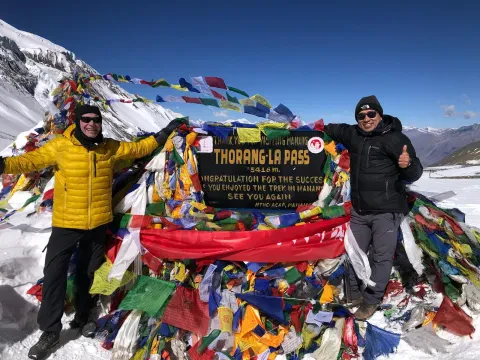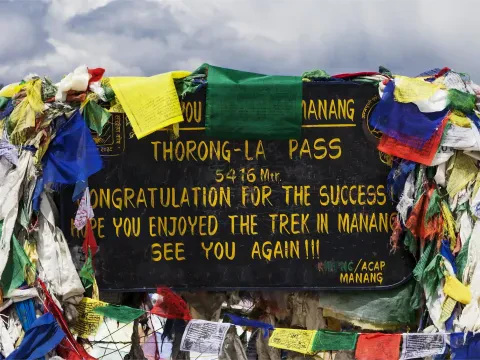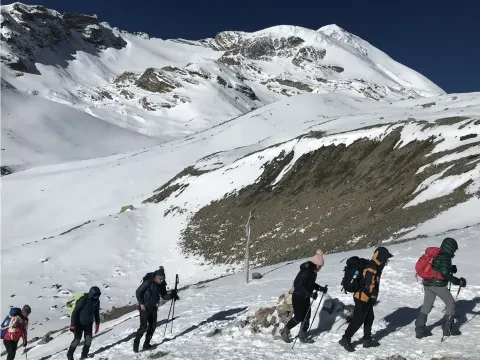
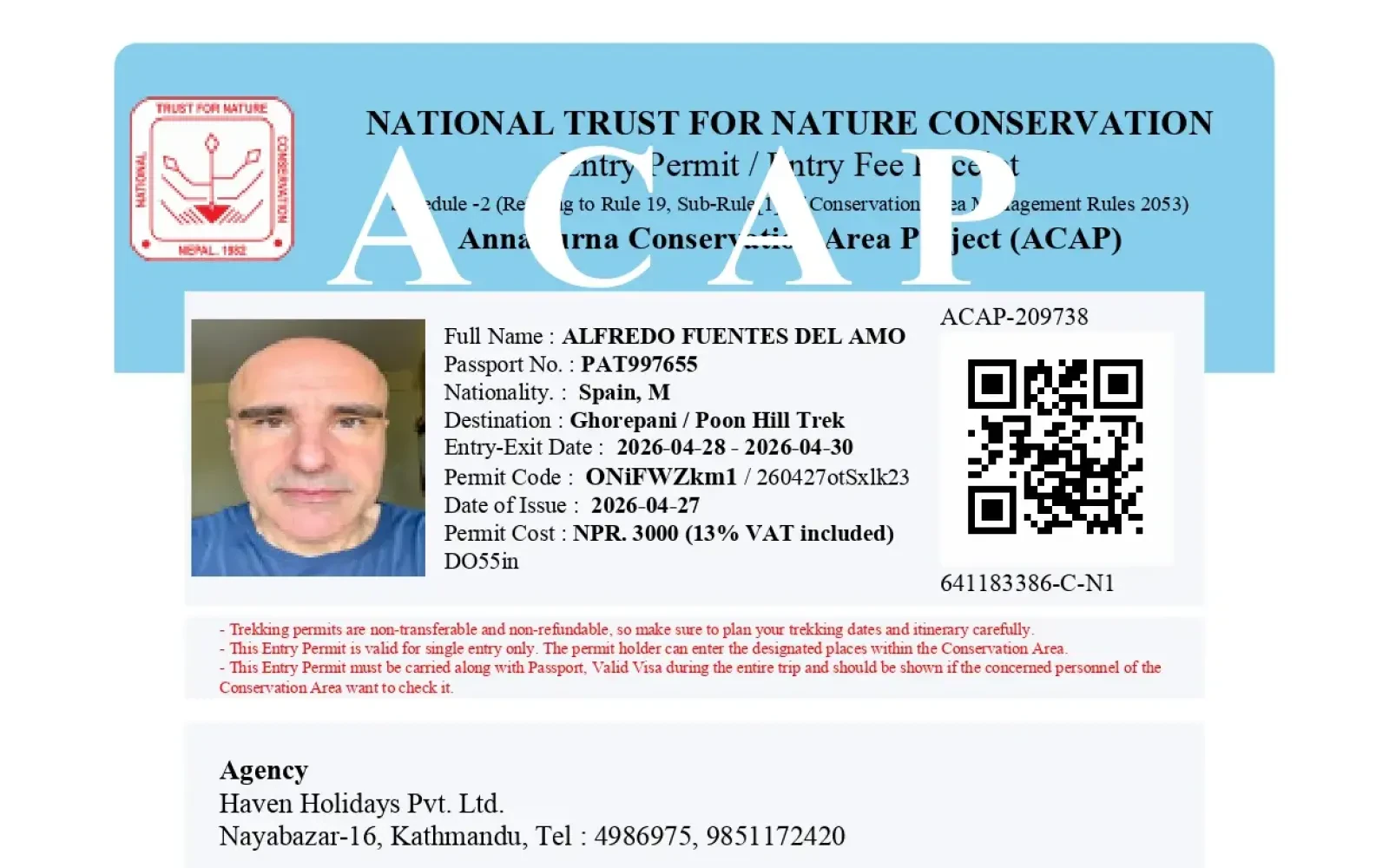
After guiding hundreds of trekkers around the Annapurna Circuit with Haven Holidays Pvt. Ltd., I’m Krishna Thapa, so I know how permits make all the difference. Honestly, they don’t just keep your trek legal—they make it safer and way more rewarding. When you step into Nepal’s gorgeous conservation areas, those documents protect you and help support the local communities and delicate mountain ecosystems. Skip them and you’re asking for fines, limited access, and missing out on what makes Annapurna special.
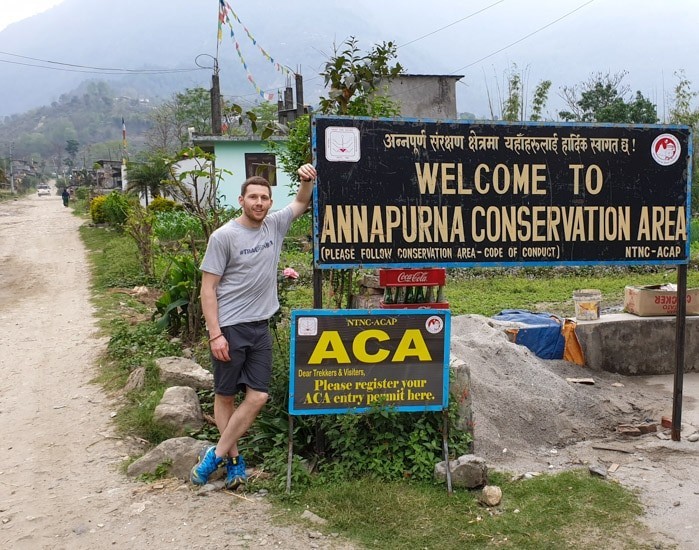
Here, with 10 years as a blogger and trek coordinator at Haven Holidays, I’ve seen firsthand how permits bring peace of mind. They let authorities track your route, which means rescue is quicker if things go sideways, especially near high passes like Thorong La, sitting at 5,416 meters (17,769 feet). Plus, permit fees go straight toward keeping trails in good shape and funding projects in villages like Manang at 3,540 meters (11,614 feet).
Similarly, Mr. Bhabanath Adhikari, our senior expert guide with two decades on the trail, always says, “Permits aren’t just papers—they’re about connecting responsibly with these mountains. I remind trekkers that carrying them shows real respect for the land of Annapurna I and the Gurung people.”
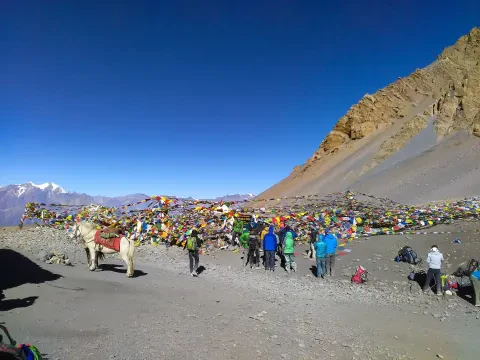
Importance of Permits:
| Aspect | Benefit for Trekkers | Impact on Local Area |
|---|---|---|
| Legal Requirements | Smooth passage through checkpoints | Regulated visitor flow |
| Safety | Faster rescue coordination | Better resource allocation |
| Conservation | Contribution to eco-projects | Protected forests and wildlife |
| Community | Funds local development | Stronger guesthouses in Manang region |
Likewise, Mr. Ramsaran Simkhada, who’s guided with us for over 15 years, puts it simply: “I’ve led groups from the valleys up to 5,416m, and permits always make every stop easier.”
Furthermore, the locals agree. Mukhiya Gurung of Hotel Manang in Manang, always tells guests how permit fees keep trails clean and help families. Tashi Gurung from Lake View Hotel, who knows all the tricks for spotting snow leopards, says responsible trekkers with permits help conservation efforts he sees every single day.
Moreover, Palden Gurung at Agro Manang Apple Farm in Bradang likes to share how permits keep his organic farm earning steady income at these altitudes. Our guides—Narayan Khadka, Dashrath Adhikari, and assistant Sujan Thapa—always double-check permits before heading toward Thorong Phedi at around 4,450m (14,600 ft). They stay strict because, honestly, the mountains only reward those who come prepared.
In fact, getting your permits through a trusted operator builds trust with the locals and the landscape. At Haven Holidays Pvt. Ltd., we take care of all the paperwork so you can focus on the trail and the views. Come join us—your safe, unforgettable Annapurna Circuit trek is waiting. Book your package today and hike with confidence alongside folks who actually care.
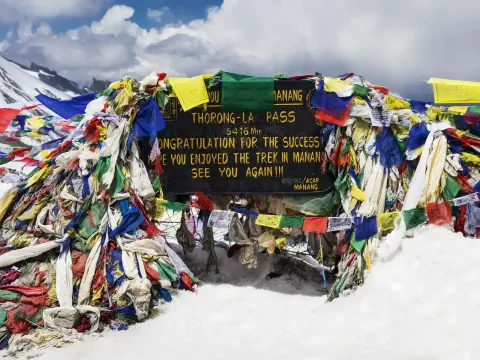
After ten years with Haven Holidays Pvt. Ltd., I’ve helped plenty of trekkers understand the permit process for Annapurna Circuit. You only need to remember two names: ACAP and TIMS. These permits work together, letting you hike from cool valleys all the way up to Thorong La at 5,416 meters (17,769 feet). The 2025-2026 updates made things easier, but honestly, both still matter for most international trekkers.
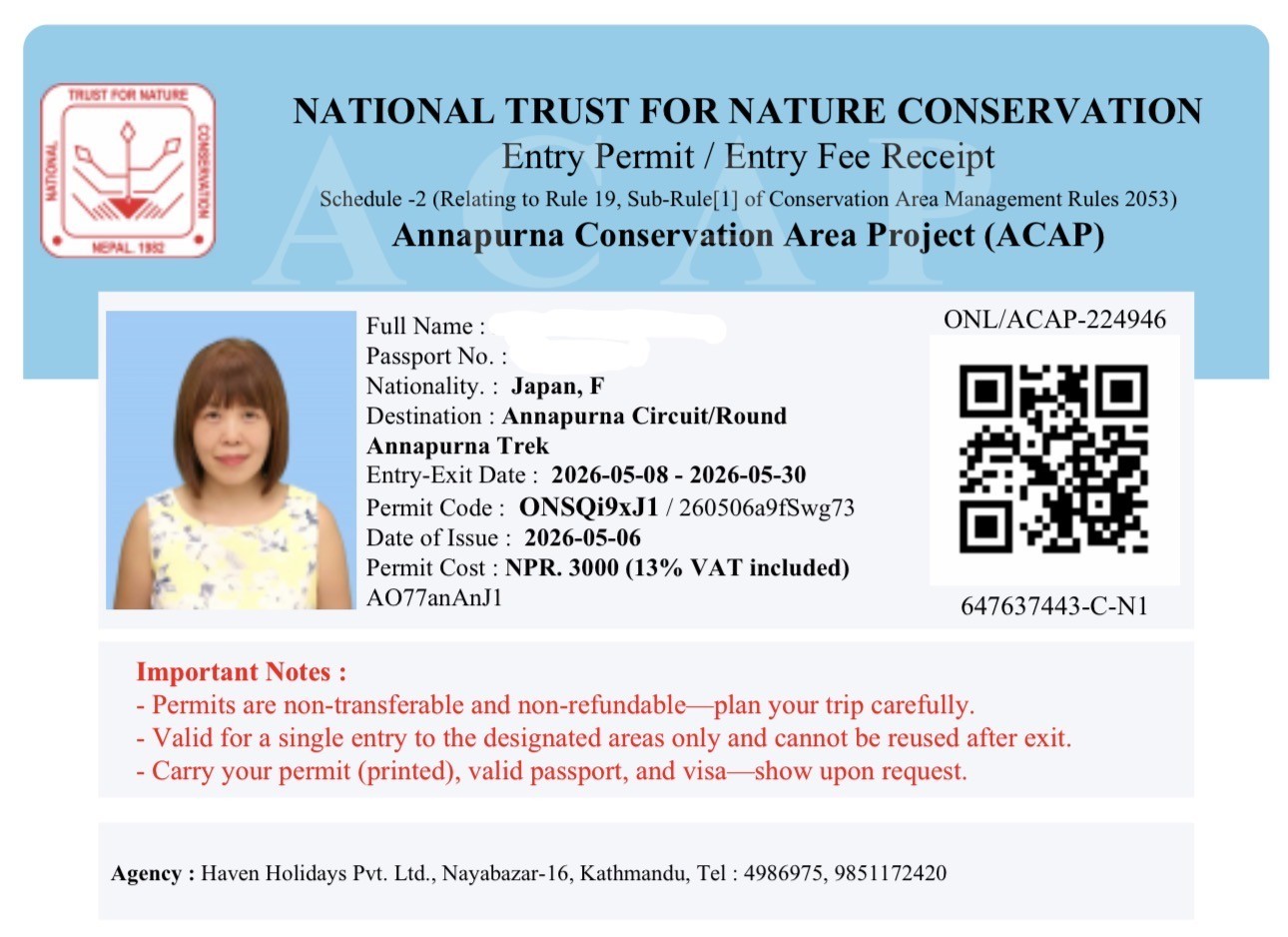
Meanwhile, the Annapurna Conservation Area Permit (ACAP) is your ticket into the protected parts. It helps conserve the area so you can enjoy everything from subtropical forests to the alpine scenery around Manang at 3,540m (11,614 ft). The Trekkers’ Information Management System (TIMS) card, on the other hand, is all about safety. It tracks where you go, and if altitude problems hit, it’s essential for a rescue.
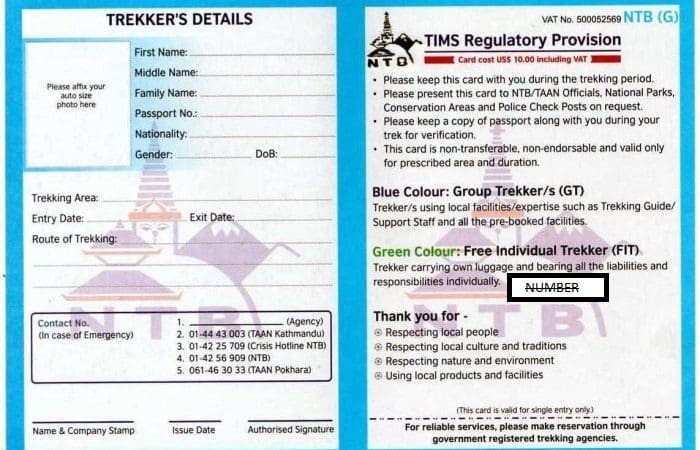
Here, Mr. Bhabanath Adhikari, our 20-year guide, puts it best: “ACAP protects the land that gives us these incredible views, and TIMS keeps you safe. I never head out without making sure both are sorted.”
Permits required for Annapurna circuit Trek :
| Permit Type | Main Purpose | Validity Focus | Cost Range (Foreigners, 2026) | Best For |
|---|---|---|
| ACAP | Conservation & Area Access | Single entry, trek duration | USD 25-30 | All trekkers in ACA |
| TIMS | Safety Tracking & Info Management | Covers full circuit duration | USD 15-20 | Solo & small groups |
| Combined | Legal + Safe Trekking | Supports 12-21 day itineraries | USD 40-50 total | Complete Annapurna Circuit |
Actually, Mr. Ramsaran Simkhada, who’s done this for 15+ years, always says: “Get both permits in Kathmandu or Pokhara before you fly to the trailhead. You won’t waste time and you can enjoy every village without stress.”
Our guides like Narayan Khadka, Dashrath Adhikari, and Sujan Thapa have so many stories. They've seen permits help with quick evacuations near Thorong Phedi at 4,450m (14,600 ft) and keep treks running smooth.
Similarly, locals back this up, too. Sonam Gurung at New Yak Hotel in Braga talks about how ACAP pays for community projects and upgrades guesthouses. Tashi Gurung in Manang links permits to better conservation, helping his snow leopard tours. Mukhiya Gurung and Palden Gurung both say trekkers with permits respect customs and lift the culture at altitude.
At Haven Holidays Pvt. Ltd., we make it simple. Our team preps your ACAP and TIMS, so you show up ready. You’ll walk with peace of mind and know you’re supporting the region every step of the way. Get in touch to book your Annapurna Circuit trip—let us handle the details, while you get ready for the real Himalayan adventure. With the right permits, your trek becomes a journey you’ll never forget.
Meanwhile, the first time I helped a group secure their ACAP permits with Haven Holidays Pvt. Ltd. before they started trekking the Annapurna Circuit, you could feel their excitement. One simple document opens up the gateway to this world-famous region. Over my ten years blogging and coordinating treks, I've seen how the Annapurna Conservation Area Permit (ACAP) really sets the foundation for a safe, responsible adventure. It’s not just a bureaucratic requirement—it’s what protects the delicate ecosystem as you trek from lush valleys all the way to the barren heights of Thorong La Pass at 5,416 meters (17,769 feet). Without it, there’s no way into the protected zones.
Actually, ACAP makes a direct impact—it funds conservation, fixes trails, and supports the communities you’ll meet. Everyone needs it, whether you’re hiking alone or joined by friends from all over. The Annapurna Conservation Area covers loads of habitats and cultural gems, so you cross paths with something special almost every day. Our senior guide, Mr. Bhabanath Adhikari, who’s been at this for two decades, always says ACAP is your promise to the mountains. It keeps paths clear and helps families in Manang at 3,540 meters (11,614 feet) flourish.
ACAP and Its Purposes :
| Key Feature | Details | Benefit for You | Local Impact |
|---|---|---|
| Cost (Foreigners 2026) | Approx. USD 25-30 (NPR 3,000) | Affordable entry | Funds conservation projects |
| Validity | Single entry, covers trek duration | Peace of mind for 12-21 days | Controls visitor numbers |
| Coverage | Entire Annapurna Conservation Area | Access to Thorong La 5,416m (17,769 ft) | Protects high-altitude ecosystems |
| Who Issues | NTNC offices in Kathmandu/Pokhara | Easy digital & in-person options | Strengthens local management |
Here, Mr. Ramsaran Simkhada, our guide with more than 15 years at Haven Holidays, shares, “I’ve crossed Thorong La so many times—ACAP keeps those incredible views of Annapurna and the nearby peaks protected.”
Likewise, local guesthouse owners give you the real story. Mukhiya Gurung at Hotel Manang (3,540m) always explains how ACAP improves their facilities and keeps the region tidy for trekkers. Tashi Gurung from Lake View Hotel, who’s passionate about spotting snow leopards, ties the permit directly to better wildlife protection high up in the valleys. Sonam Gurung at New Yak Hotel in Braga and Palden Gurung at Agro Manang Apple Farm in Bradang both highlight ACAP’s role in boosting sustainable tourism and organic farming up on the mountainsides.
Similarly, our guides—Narayan Khadka, Dashrath Adhikari, and assistant Sujan Thapa—check ACAP at every stop. They always remind trekkers that these permits are about safety and respecting the culture as you climb higher.
In fact, getting your ACAP with the right partner just feels good. With Haven Holidays Pvt. Ltd., you skip the headaches and focus on the adventure itself. Sign up for our guided Annapurna Circuit packages, experience the circuit with heart, and help the Himalayan communities thrive. Start making memories—and know you’re leaving a positive mark.
Imagine yourself in Manang at 3,540 meters, about to tackle Thorong La at 5,416 meters. That’s when your TIMS card really matters—it’s what I, Krishna Thapa, always tell our guests after ten years at Haven Holidays. The Trekkers’ Information Management System (TIMS) Card tracks you along the route, and in the remote stretches of the Annapurna Circuit, it’s essential for quick emergency response. Since 2023, changes have made getting the card easier, but it still matters a lot if you’re trekking solo or in small groups.
Meanwhile, TIMS backs up your safety by helping authorities log movements and organize rescues when things get tough at altitude. Most trekkers pick it up alongside ACAP, especially if they’re on their own. Mr. Bhabanath Adhikari, our senior guide, sums it up: “New digital options make it simpler, but TIMS saves lives when the weather turns near Thorong Phedi at 4,450 meters (14,600 feet).”
TIMS Card and Its Purposes:
| Aspect | Details (2026) | Relevance for Annapurna Circuit | Practical Tip |
|---|---|---|
| Cost (Foreigners) | Approx. USD 15-20 (NPR 2,000) | Affordable safety layer | Obtain with ACAP to save time |
| Validity | Covers full trek duration | Tracks you to Thorong La 5,416m (17,769 ft) | Carry original + photocopy |
| Changes Since 2023 | More digital portals, some simplifications | Still vital for non-agency trekkers | Check latest rules with us |
| Who Benefits Most | Solo & independent trekkers | Quick rescue in high-altitude zones | Combine with comprehensive insurance. |
Here, Mr. Ramsaran Simkhada, who’s guided here for over 15 years, shares: “TIMS data has led to quick help for trekkers in tough situations—it ties you directly to the rescue network when it counts most.”
Likewise, our team—Narayan Khadka, Dashrath Adhikari, Sujan Thapa—never let this detail slide. They’ve seen how registration speeds up support for those facing altitude sickness.
More importantly, locals offer their own take. Tashi Gurung at Lake View Hotel says tracked visitors help keep the valley safe for rare wildlife. Mukhiya Gurung of Hotel Manang and the owners in Braga and Bradang also appreciate how TIMS helps with overall management, making life easier for both trekkers and guesthouse owners.
Summing up, at Haven Holidays Pvt. Ltd., we guide you on whether TIMS fits your trek and make the process simple. You get more confidence and security, freeing you to focus on your trek. Let us handle permits with care while you gear up for the circuit. Contact our team, book your personalized Annapurna journey, and start off with everything you need. The best adventures always start with the right documents and the right people beside you.
Here, I’m Krishna Thapa, and after spending ten years with Haven Holidays Pvt. Ltd., helping thousands of trekkers get their paperwork right, I can tell you: sorting out your documents early makes the Annapurna Circuit way less stressful. Getting this done means no scrambling or stressing in Kathmandu or Pokhara before you head up to places like Manang at 3,540 meters (11,614 feet) or Thorong La at 5,416 meters (17,769 feet). It’s honestly all about setting yourself up for a safe, smooth trek. We double-check every detail so you can actually feel excited about what’s coming.
Our expert guide, Mr. Bhabanath Adhikari, who’s seen it all over his 20 years on the mountain, always says: “Never underestimate documents — a complete set saves time and opens the trail responsibly up to the highest pass.”
| Document | Why Required | Pro Tip from Our Team | Common Mistake to Avoid |
|---|---|---|
| Passport & Copies | Identity verification | Bring original + 2-3 photocopies | Expired or low validity passport |
| Photos (4 copies) | For permit cards | Use white background, recent shots | Using old or selfie-style photos |
| Travel Insurance | Safety & rescue coverage | Confirm high-altitude inclusion | Buying basic policy without evacuation |
| Itinerary & Contacts | Trekking plan tracking | Share with Haven Holidays for support | Vague or incomplete schedule |
Here, Mr. Ramsaran Simkhada, who’s been guiding people for over 15 years, says: “I’ve watched trekkers get delayed just because they didn’t have their insurance proof. Always check your coverage includes Thorong La Pass at 5,416 meters (17,769 feet).”
Likewise, you’ll hear the same thing from local guesthouse owners. Mukhiya Gurung at Hotel Manang and Tashi Gurung at Lake View Hotel in Manang regularly end up helping trekkers who forgot copies or came with messy paperwork. Over in Braga, Sonam Gurung and Palden Gurung at Agro Manang Apple Farm see that well-prepared guests not only have easier stays, but actually help the local community.
Moreover, guides like Narayan Khadka, Dashrath Adhikari, and our assistant Sujan Thapa always check documents before anyone heads out. They tell everyone: carry originals in a waterproof pouch, and back up your copies on your phone. You fly through checkpoints if you’ve got everything ready.
Here at Haven Holidays Pvt. Ltd., guiding you through document prep is part of what we do. When you trek with us, you walk in knowing you’ve got everything sorted — and that’s a pretty good feeling. Let us handle the paperwork and sign up for an Annapurna Circuit trek you’ll never forget. Book your spot, and trust us to look after your adventure.
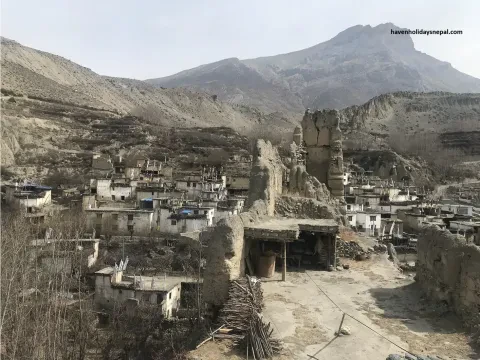
Picture this: you land in Nepal, sort your permits out within hours, and get straight into enjoying the Annapurna Circuit. That’s what we make happen at Haven Holidays Pvt. Ltd. I’m Krishna Thapa, and after years of guiding trekkers, I know the permit process inside out. Stick to these simple steps, pick the right offices or portal, and your start is smooth. We often go with clients, so the whole thing is a breeze.
Here, Mr. Bhabanath Adhikari, our seasoned guide with 20 years on the trail, says: “Show up early, bring every document — this simple move saves you a whole day before your flight to the trailhead.”
| Location | Office Details | Best For | Operating Tips |
|---|---|---|
| Kathmandu | NTB Bhrikutimandap / TAAN offices | International arrivals | Open Sun-Fri, arrive by 9 AM |
| Pokhara | NTB Damside & NTNC Lakeside | Those starting directly from Pokhara | Closer to lakeside hotels |
| Online (NTNC Portal) | epermit.ntnc.org.np | Quick pre-application | Still need in-person verification |
| Combined Service | Through Haven Holidays Pvt. Ltd. | Hassle-free full package | We handle forms and queuing |
Likewise, Mr. Ramsaran Simkhada, who’s been at Haven Holidays Pvt. Ltd. for 15+ years, says: “The digital options got way better since 2023, but for first-timers, I still go in-person. That way, we explain all the rules and avoid confusion before heading to Thorong La at 5,416 meters (17,769 feet).”
Similarly, local hotel owners agree. Tashi Gurung at Lake View Hotel in Manang, plus Mukhiya Gurung, Sonam Gurung in Braga, and Palden Gurung in Bradang, all hear about permit horror stories from guests. Their advice? Use a professional agency.
Moreover, our guides — Narayan Khadka, Dashrath Adhikari, and Sujan Thapa — know the staff, latest rules, and best shortcuts. That means less waiting, less hassle, and no errors.
When you go with Haven Holidays Pvt. Ltd., we take care of permits from start to finish. No confusion, no wasted time — just a seamless beginning for your trek. Reach out now to book your Annapurna Circuit package and let us make permit logistics as easy as possible. We’ll help you turn those first steps in Nepal into pure adventure.
If you’re planning your Annapurna Circuit Trek, one thing that really helps is having a clear idea of permit costs right from the start. After ten years sorting out treks for Haven Holidays Pvt. Ltd., I’m Krishna Thapa—and I can tell you, there’s nothing better than heading out for Thorong La at 5,416 meters (17,769 feet) knowing there won’t be any budget shocks along the way. The good news? The 2026 fees are straightforward and actually pretty fair. Yes, the price changes a bit depending on your nationality and whether you’re trekking solo or with a group, but it’s all laid out upfront. No guesswork needed.
Likewise, Mr. Bhabanath Adhikari, who’s seen just about everything in 20 years as a senior guide, likes to remind everyone, “Permits aren’t just paperwork. Think of them as an investment in both your own safety and the future of these incredible trails—you’ll see the payoff, especially around Manang at 3,540 meters (11,614 feet) and up.”
Costs and Fees: ACAP, TIMS, and Pricing by Nationality:
| Nationality/Group | ACAP Fee (USD) | TIMS Fee (USD) | Total Estimated (USD) | Notes for 2026 |
|---|---|---|
| Foreign Solo | 25-30 | 15-20 | 40-50 | Standard full rate |
| Foreign Group | 25-30 | 15-20 | 40-50 | Same per person |
| SAARC/Indian Solo | 8-10 | 7-10 | 15-20 | Reduced regional pricing |
| SAARC Group | 8-10 | 7-10 | 15-20 | Best value for teams |
| Nepali Citizens | Free | Minimal | Minimal | Local rates apply |
Here, Mr. Ramsaran Simkhada, who’s guided Haven Holidays guests for over 15 years, puts it simply: “Every permit fee you pay helps take care of these trails and facilities—from river valleys all the way up to high camps at 4,450 meters (14,600 feet).”
In fact, you don’t just have to take our word for it. Mukhiya Gurung at Hotel Manang and Tashi Gurung at Lake View Hotel in Manang both see firsthand how permit funds keep water clean and trails safe. Sonam Gurung over in Braga and Palden Gurung at Agro Manang Apple Farm in Bradang are big fans of how steady support lets them keep their businesses open and welcoming to trekkers.
Moreover, our guides—Narayan Khadka, Dashrath Adhikari, and assistant Sujan Thapa—always sit down with clients before the trek to talk through permit costs, so there aren’t any random fees popping up later.
Book with Haven Holidays Pvt. Ltd. and you’ll get real value. We’re always upfront about pricing—often, permits are bundled into hassle-free packages. Get in touch now to lock in your Annapurna Circuit trek. We’ll handle permits and logistics, so you can channel all your energy into the adventure—Himalayan views, crazy-good memories, and zero budgeting stress.
Actually, nobody wants to worry constantly about paperwork, especially while trekking the Annapurna Circuit. That’s why I always make sure guests hear the full story on permit validity at the start—after a decade with Haven Holidays Pvt. Ltd., it’s clear that understanding your documents means you can enjoy the whole route with peace of mind. Permits typically give you plenty of time—enough to comfortably trek from the villages at the start, up to Thorong La at 5,416 meters (17,769 feet), and all the way back down.
Likewise, Mr. Bhabanath Adhikari, who’s logged two decades guiding here, always tells people straight up: “Take single-entry rules seriously. Once you’re in the conservation area, you need to move in one stretch. So, plan your trip carefully, especially around Manang at 3,540 meters (11,614 feet).”
Permit Validity, Duration, and Single-Entry Rules :
| Aspect | Details | Coverage for Typical Circuit | Key Implication |
|---|---|---|
| Validity Period | Trek duration (usually 30 days max) | 12-21 days including rest days | Ample time for safe acclimatization |
| Single Entry | One-time access only | Full route to Thorong La 5,416m (17,769 ft) | No casual exits and re-entries |
| Expiration | Ends after declared period or exit | Covers return to lower valleys | Plan buffer to avoid issues |
| Re-Entry | Requires new permit | Not ideal for side trips | Stick to main route |
Here, Mr. Ramsaran Simkhada has guided all kinds of trekkers in his 15+ years, and he’s seen how following the single-entry rule helps everyone focus—step by step—on getting to that big high pass and making the safe walk down.
Further, local experts see the same thing. Tashi Gurung at Lake View Hotel in Manang and Mukhiya Gurung at Hotel Manang often trade timing tips with trekkers so nobody runs out of permit days. Sonam Gurung in Braga and Palden Gurung in Bradang both say well-organized trekkers rarely hit trouble with documents expiring.
Moreover, the team—Narayan Khadka, Dashrath Adhikari, and Sujan Thapa—watches the calendar and adjusts the route if needed, so you always finish within the time allowed.
When you actually know the permit rules, you get more freedom and way less stress. Haven Holidays Pvt. Ltd. builds smart itineraries that stay within the lines but give you every moment possible. Sign up for the Annapurna Circuit with us and you’ll get support from the first permit all the way up to Thorong La and beyond. We handle the details and you get to soak up the adventure—with memories that last and safety always our number one concern.
Here, you’re about to set out on one of the best adventures of your life, but a lot of trekkers lose valuable days just by not sorting out their permits early enough. After a decade with Haven Holidays Pvt. Ltd., I’ve watched how a little bit of smart prep can make permit collection a quick pitstop before you even hit the trail to Manang (3,540 meters/11,614 feet) or head up toward Thorong La (5,416 meters/17,769 feet). Get your permits in the right spot and at the right time, and suddenly this once-fussy task just builds excitement instead of wasting your energy. Our team walks clients through all of this, season after season.
Likewise, Mr. Bhabanath Adhikari, who’s guided trekkers for 20 years, always tells people, “Never wait until the last day — those offices get hectic, and you want to save your strength for the mountains, not for standing in lines.”
Where and When to Get Permits :
| Best Practice | Why It Works | Common Pitfall to Avoid | Our Recommendation |
|---|---|---|
| Visit Early Morning | Shorter queues, fresher staff | Arriving late or on weekends | Reach by 9 AM |
| Use Agency Help | Faster processing and guidance | Going solo with incomplete documents | Book with Haven Holidays |
| Digital Pre-Apply | NTNC portal speeds things up | Relying only on online without verification | Combine online + in-person |
| Carry Safely | Ready for surprise checks | Leaving originals in hotel | Waterproof pouch + digital copies |
Here, Mr. Ramsaran Simkhada, who’s spent more than 15 years guiding for Haven Holidays, likes to say, “Handling permits early buys time for real acclimatization in Manang, instead of forcing people to rush.”
Actually, the people who call the trail home notice this all the time. Mukhiya Gurung over at Hotel Manang and Tashi Gurung at Lake View Hotel have both seen trekkers lose time just from not getting permits sorted. Sonam Gurung in Braga, and Palden Gurung at the Agro Manang Apple Farm, can always spot the travelers who show up prepared and relaxed.
Moreover, guides like Narayan Khadka, Dashrath Adhikari, and Sujan Thapa don’t miss a checkpoint. They know exactly what’s needed and double check that you’ve got every document ready before you ever reach the gate.
When you take these steps, you start strong and stay stress-free. Haven Holidays sorts your permits so the switch from city to mountain happens with zero hassles. Book your Annapurna Circuit trek with us, and set off with guides who know every twist and turn of the route.
As you finish up your planning, just remember: those permits do more than let you trek — they’re your first step toward a real connection with the Himalayas. After a decade writing and working with Haven Holidays Pvt. Ltd., I know it’s the little things that matter most out here. The Annapurna Circuit feels wildly different — in the best way — when you take responsibility, care for the land, and go in prepared. It’s those details that add real meaning to your adventure.
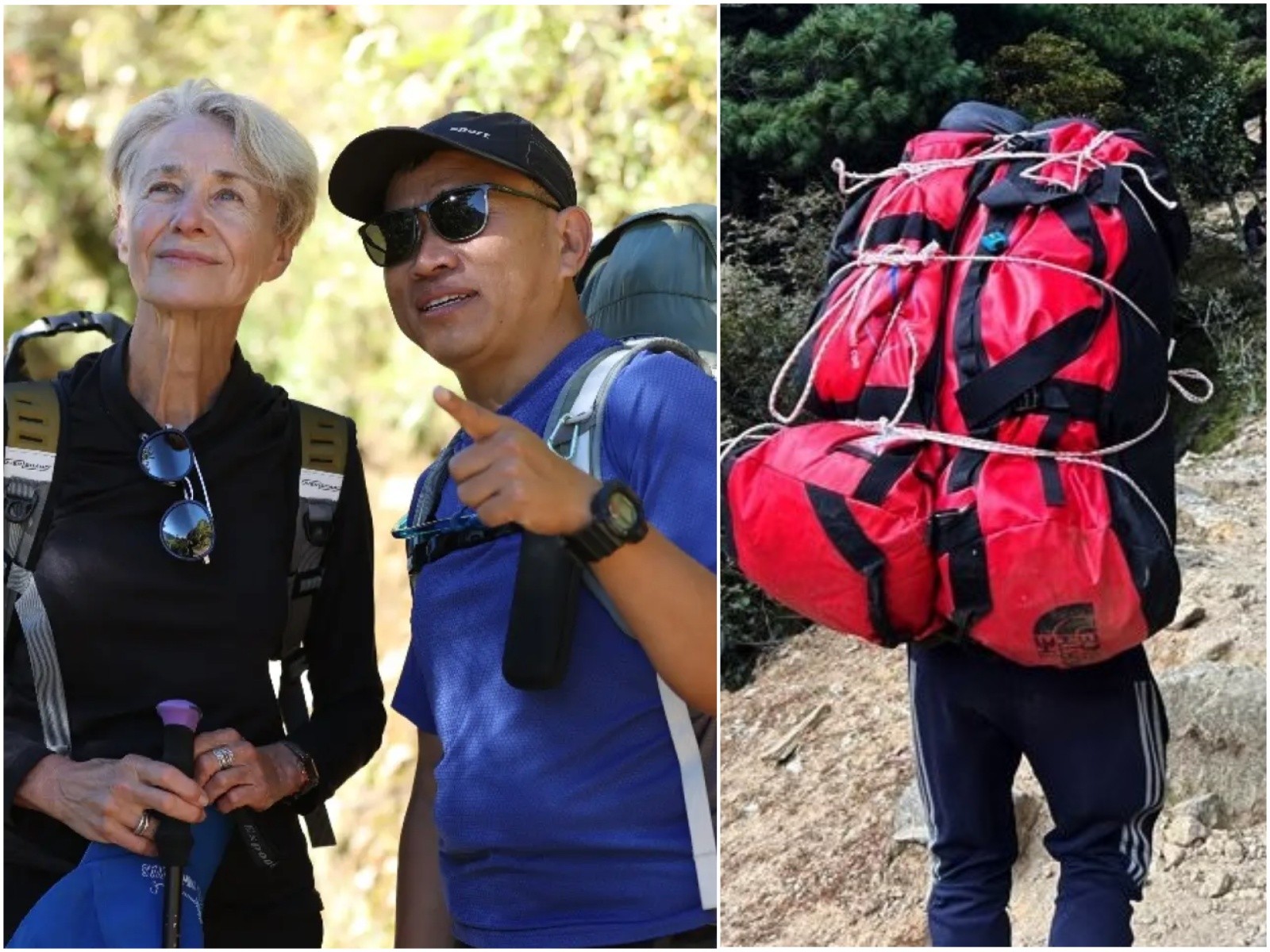
Actually, Mr. Bhabanath Adhikari, our veteran guide of 20 years, always puts it simply: “Hire experienced agents and carry copies — it’s about showing respect for the mountain and everyone you’ll meet along the way, right from the foothills up to Thorong La.”
Final Tips for Smooth Permit Process and Responsible Trekking :
| Tip Category | Action | Benefit | Long-term Impact |
|---|---|---|
| Hiring Professionals | Use licensed guides/agents | Smooth permits + expert guidance | Safer, richer cultural experience |
| Insurance | Full high-altitude coverage | Peace of mind in remote areas | Quick help if needed |
| Responsible Practices | Carry copies, reduce plastic | Easy checkpoint passage | Cleaner trails for future trekkers |
| Post-Trek | Share experiences, support locals | Complete the responsible cycle | Stronger communities |
Here, Mr. Ramsaran Simkhada, with 15 years guiding for us, often reminds trekkers, “Your trek isn’t over at the pass — your choices matter all the way back home.”
And the local experts echo this, big time. Tashi Gurung — who knows the snow leopards around Lake View Hotel in Manang — Mukhiya Gurung at Hotel Manang, Sonam Gurung in Braga, Palden Gurung at the Apple Farm; each one always appreciates when trekkers follow the rules and help the local economy thrive.
Similarly, our guides Narayan Khadka, Dashrath Adhikari, and Sujan Thapa set the standard. Every day, they walk the talk — showing their groups how to trek responsibly and make a good impact.
Summing up, that’s how you make your trip count. Haven Holidays is here for every step, from permits to local insight and responsible routes. Book your Annapurna Circuit trek with us, and start this story the right way — not just for your adventure, but for everyone you’ll meet along it. The Himalayas are calling. Let’s help you answer, and do it right.
1. What permits are required for the Annapurna Circuit Trek in 2026?
For the Annapurna Circuit Trek, you’ll need two key permits: the Annapurna Conservation Area Permit (ACAP) and the TIMS card. Both are mandatory for safety, legal entry, and supporting local conservation. At Haven Holidays, we make sure our clients get all permits without any hassle.
2. What is the purpose of the ACAP permit?
The ACAP permit gets you into the protected Annapurna region. Your fee supports trail repairs, conservation, and nearby communities. Without this permit, making it past checkpoints isn’t possible. ACAP’s all about keeping the region healthy so future trekkers can enjoy Manang, Thorong La, and the rest.
3. Is the TIMS card still required for Annapurna Circuit in 2026?
Yes, you still need a TIMS card, especially if you’re trekking independently or in a small group. Some rules changed after 2023, but it’s mainly for your safety. I always tell trekkers to get both TIMS and ACAP for a smooth trip.
4. How much do Annapurna Circuit permits cost in 2026?
For foreigners, ACAP costs about $25 to $30, and TIMS is around $15 to $20, so plan for $40–$50 total. If you’re from a SAARC country, it’s much cheaper. Prices shift a bit, so we’ll double-check when you book with us.
5. Where can I obtain the ACAP and TIMS permits?
Both permits are available at the Nepal Tourism Board in Kathmandu (Bhrikutimandap) or at Pokhara’s Lakeside/Damside offices. There’s an online option now, too. At Haven Holidays, we handle every step for you, so you don’t have to stress.
6. What documents are needed for Annapurna permits?
Bring your valid passport, four passport-sized photos, Nepal visa, travel insurance details, and your trekking plan. Always pack a few photocopies. At Haven Holidays, we make sure everyone’s documents are in order before heading to the permit office.
7. How long are the Annapurna permits valid?
Your ACAP and TIMS are good for your trek’s declared duration—usually 12 to 21 days for the full circuit. They’re single-entry. It’s smart to plan a couple of extra days just in case. We help our trekkers set a realistic timeline.
8. Can I get permits online for the Annapurna Circuit?
You can start the ACAP permit online with the NTNC e-permit system, but an in-person check is usually needed. TIMS is almost always issued in person. If you trek with us, we’ll walk you through the whole thing.
9. Do I need a guide to get the permits?
You don’t need a guide to pick up permits, but I always encourage a licensed guide—especially for tricky spots like Thorong La at 5,416m. Trekking through a company like ours gives you more security and local knowledge.
10. What happens if I trek without permits?
If you try to hike the circuit without ACAP and TIMS, you’re breaking the law. You could get fined, sent home, or stopped at a checkpoint. Permits aren’t just paperwork—they keep you safe and help support the environment.
11. Are permit costs different for solo and group trekkers?
Permit fees are the same for everyone. The main difference? If you’re in a group with a company like Haven Holidays, the whole process runs smoother. If you’re hiking solo, you pay the same but need to keep an extra eye on safety.
12. Do Indian or SAARC nationals pay less for permits?
Yes, trekkers from SAARC countries, including India, pay a much lower fee for ACAP and TIMS. Just ask, and we’ll give you the latest prices when you get in touch. It’s a nice bonus for folks from the region.
13. When is the best time to apply for permits?
Apply for your permits a day or two before your trek. Do it soon after arriving in Kathmandu or Pokhara—it saves headaches later. We handle timing for our clients so they’re not rushing right before departure.
14. Are the permits single entry or multiple entry?
Permits for Annapurna are single entry only. Leave the conservation area, and you’ll need fresh permits to get back in. The system helps keep track of visitors and protects the environment.
15. Do children need permits for the Annapurna Circuit?
Kids typically need permits, too—sometimes at a reduced fee or even free, depending on their age. Bring their ID. At Haven Holidays, we guide families through the paperwork so no detail is missed.
16. How do checkpoints work on the Annapurna Circuit?
Along the trail, you’ll hit several checkpoints. Officials will check your ACAP and TIMS permits, so keep originals and some photocopies with you. Our guides double-check everything so crossing these spots is no fuss.
17. Can I extend my permits if the trek takes longer?
Extensions are possible in some cases, but it’s not guaranteed. Best plan is to build in a couple of buffer days from the start—we help clients create a schedule that actually works for their pace.
18. Is travel insurance mandatory for getting permits?
Insurance isn’t always checked at the permit counter, but I strongly recommend you get coverage for high-altitude trekking and possible helicopter rescues. At Haven Holidays, we always check our clients have proper insurance before setting off.
19. Should I get permits myself or through a trekking agency?
You can do it yourself, sure, but going through a trusted agency—like Haven Holidays—makes life easier. We handle paperwork, answer questions, and provide backup if you hit a snag on the trail.
20. Why should I choose Haven Holidays Pvt. Ltd. for my Annapurna Circuit Trek?
We’ve spent over a decade leading treks on this route—sorting permits quickly, sending experienced guides, and looking after every detail. From paperwork to the mountain passes, our team, led by seasoned guides like Mr. Bhabanath Adhikari and Mr. Ramsaran Simkhada, makes your trek safe, smooth, and memorable.
Our travel experts are ready to assist you with any questions.
Send us a message.Have a question before you book? Send your enquiry below and our travel experts will get back with the required information.