[{"name":"Everest Base Camp Helicopter Tour","duration":"1","image_url":"https:\/\/www.havenholidaysnepal.com\/storage\/trip-galleries\/1\/thumb_6cd53005d75a86e373d31419d1b14d78.webp","offer_price":1195,"url":"https:\/\/www.havenholidaysnepal.com\/trips\/everest-base-camp-helicopter-tour"},{"name":"Everest Mountain Flight","duration":"1","image_url":"https:\/\/www.havenholidaysnepal.com\/storage\/trip-galleries\/4\/thumb_3b0b4f1d6f72b0ad224daf4752f2c6e0.jpg","offer_price":285,"url":"https:\/\/www.havenholidaysnepal.com\/trips\/everest-mountain-flight"},{"name":"Everest Short Trek","duration":"9","image_url":"https:\/\/www.havenholidaysnepal.com\/storage\/trip-galleries\/5\/thumb_BXPP3621.JPEG0.02033800 1727957098.webp","offer_price":995,"url":"https:\/\/www.havenholidaysnepal.com\/trips\/everest-short-trek"},{"name":"Gokyo Valley Trek","duration":"12","image_url":"https:\/\/www.havenholidaysnepal.com\/storage\/trip-galleries\/6\/thumb_10bc469b14731f23d3ce84a7092ad53f.jpg","offer_price":1195,"url":"https:\/\/www.havenholidaysnepal.com\/trips\/gokyo-valley-trek"},{"name":"15 days Annapurna Base Camp Trek","duration":"15","image_url":"https:\/\/www.havenholidaysnepal.com\/storage\/trip-galleries\/7\/thumb_87d1533bc45faf070990aef0579e4be4.jpg0.81855100 1728285496.webp","offer_price":785,"url":"https:\/\/www.havenholidaysnepal.com\/trips\/15-days-annapurna-base-camp-trek"},{"name":"Nepal Pilgrimage Tour","duration":"14","image_url":"https:\/\/www.havenholidaysnepal.com\/storage\/trip-galleries\/8\/thumb_02c3bcf2ad2e8a4c1703e90ae747b5f1.jpg","offer_price":1475,"url":"https:\/\/www.havenholidaysnepal.com\/trips\/nepal-pilgrimage-tour"},{"name":"UNESCO World Heritage Site Tour","duration":"10","image_url":"https:\/\/www.havenholidaysnepal.com\/storage\/trip-galleries\/9\/thumb_unesco-world-heritage-site-Lumbani-temple-buddhists-hindus-kathmandu-nepal0.36988600 17347617740.93089500 1737469667.webp","offer_price":715,"url":"https:\/\/www.havenholidaysnepal.com\/trips\/unesco-world-heritage-site-tour"},{"name":"Island Peak Climbing","duration":"16","image_url":"https:\/\/www.havenholidaysnepal.com\/storage\/trip-galleries\/11\/thumb_Island peak0.53947000 1734692503.webp","offer_price":2495,"url":"https:\/\/www.havenholidaysnepal.com\/trips\/island-peak-climbing"},{"name":"Upper Mustang Trek","duration":"18","image_url":"https:\/\/www.havenholidaysnepal.com\/storage\/trip-galleries\/12\/thumb_upper mustang 7 Oct-2024.jpg0.95398900 1728286166.webp","offer_price":2995,"url":"https:\/\/www.havenholidaysnepal.com\/trips\/upper-mustang-trek"},{"name":"Annapurna Circuit Trek","duration":"16","image_url":"https:\/\/www.havenholidaysnepal.com\/storage\/trip-galleries\/15\/thumb_tibetan-flags.jpg0.04843900 1728289138.webp","offer_price":985,"url":"https:\/\/www.havenholidaysnepal.com\/trips\/annapurna-circuit-trek"},{"name":"Gosainkunda Lake Trek","duration":"10","image_url":"https:\/\/www.havenholidaysnepal.com\/storage\/trip-galleries\/16\/thumb_5A8083B3-C007-41A8-853F-D0C37C97D235_1_105_c.jpeg0.52581200 1731845258.webp","offer_price":595,"url":"https:\/\/www.havenholidaysnepal.com\/trips\/gosainkunda-lake-trek"},{"name":"Zip-lining in Pokhara and Dhulikhel","duration":"1","image_url":"https:\/\/www.havenholidaysnepal.com\/storage\/trip-galleries\/18\/thumb_215f765e2ebc995dd5c800b4bfdbacc3.jpg","offer_price":82,"url":"https:\/\/www.havenholidaysnepal.com\/trips\/zip-lining-in-pokhara-and-dhulikhel"},{"name":"Annapurna Heli Tour","duration":"1","image_url":"https:\/\/www.havenholidaysnepal.com\/storage\/trip-galleries\/19\/thumb_d71a6bbb9fd4da8d1b567a5cdbdec85d.jpg","offer_price":555,"url":"https:\/\/www.havenholidaysnepal.com\/trips\/annapurna-heli-tour"},{"name":"Paragliding in Pokhara","duration":"1","image_url":"https:\/\/www.havenholidaysnepal.com\/storage\/trip-galleries\/20\/thumb_de788d2dd9726783431f882c007efae1.jpg","offer_price":65,"url":"https:\/\/www.havenholidaysnepal.com\/trips\/paragliding-in-pokhara"},{"name":"Ultra-Flight in Pokhara","duration":"1","image_url":"https:\/\/www.havenholidaysnepal.com\/storage\/trip-galleries\/21\/thumb_e27a9fb572a5c21611bb2a3c18e4b8f0.jpeg","offer_price":175,"url":"https:\/\/www.havenholidaysnepal.com\/trips\/ultra-flight-in-pokhara"},{"name":"Sarangkot Hiking","duration":"1","image_url":"https:\/\/www.havenholidaysnepal.com\/storage\/trip-galleries\/22\/thumb_100ef822fea19987166c6c1366215f15.jpg","offer_price":55,"url":"https:\/\/www.havenholidaysnepal.com\/trips\/sarangkot-hiking"},{"name":"Mera Peak Climbing","duration":"18","image_url":"https:\/\/www.havenholidaysnepal.com\/storage\/trip-galleries\/24\/thumb_d16ae3895f678cf26ffbf2455f541fb5.jpg0.31883400 1732617790.webp","offer_price":2475,"url":"https:\/\/www.havenholidaysnepal.com\/trips\/mera-peak-climbing"},{"name":"Lower Dolpo Trek","duration":"18","image_url":"https:\/\/www.havenholidaysnepal.com\/storage\/trip-galleries\/26\/thumb_Dolpo Galary - 1.JPG0.37725200 1727939952.webp","offer_price":2995,"url":"https:\/\/www.havenholidaysnepal.com\/trips\/lower-dolpo-trek"},{"name":"Nagarkot Sunrise\/Sunset Tour","duration":"1","image_url":"https:\/\/www.havenholidaysnepal.com\/storage\/trip-galleries\/27\/thumb_5147a5532644283a380f2e86f3857c13.jpg0.17748000 1728488108.webp","offer_price":30,"url":"https:\/\/www.havenholidaysnepal.com\/trips\/nagarkot-sunrise-sunset-tour"},{"name":"16 day Everest Base Camp Trek","duration":"16","image_url":"https:\/\/www.havenholidaysnepal.com\/storage\/trip-galleries\/28\/thumb_IMG_4311.JPG0.64984800 1727942213.webp","offer_price":1695,"url":"https:\/\/www.havenholidaysnepal.com\/trips\/16-day-everest-base-camp-trek"},{"name":"Ghorepani Poon Hill trek with Jungle Safari and Trishuli River Rafting -13 days","duration":"13","image_url":"https:\/\/www.havenholidaysnepal.com\/storage\/trip-galleries\/29\/thumb_Ghorepani Poon hill.jpg0.48460800 1728281439.webp","offer_price":795,"url":"https:\/\/www.havenholidaysnepal.com\/trips\/ghorepani-poon-hill-trek-with-jungle-safari-and-trishuli-river-rafting--13-days"},{"name":"Mardi Himal Trek","duration":"12","image_url":"https:\/\/www.havenholidaysnepal.com\/storage\/trip-galleries\/30\/thumb_s1.jpg0.62112600 1728200721.webp","offer_price":795,"url":"https:\/\/www.havenholidaysnepal.com\/trips\/mardi-himal-trek"},{"name":"Langtang Valley Trekking","duration":"10","image_url":"https:\/\/www.havenholidaysnepal.com\/storage\/trip-galleries\/31\/thumb_IMG_4702.JPG0.84916500 1727958504.webp","offer_price":685,"url":"https:\/\/www.havenholidaysnepal.com\/trips\/langtang-valley-trekking"},{"name":"Real Adventure Tour in Nepal","duration":"9","image_url":"https:\/\/www.havenholidaysnepal.com\/storage\/trip-galleries\/32\/thumb_ebd1b8cc78d90abe8b9003dd9a2f25bf.jpg0.82151300 1728213516.webp","offer_price":695,"url":"https:\/\/www.havenholidaysnepal.com\/trips\/real-adventure-tour-in-nepal"},{"name":"Luxury Tour in Nepal","duration":"10","image_url":"https:\/\/www.havenholidaysnepal.com\/storage\/trip-galleries\/33\/thumb_8574e61b252b18676b042caf30d830df.jpg","offer_price":1675,"url":"https:\/\/www.havenholidaysnepal.com\/trips\/luxury-tour-in-nepal"},{"name":"Luxury Everest Panorama Trek With EBC Heli Sightseeing","duration":"8","image_url":"https:\/\/www.havenholidaysnepal.com\/storage\/trip-galleries\/34\/thumb_URZL2397.JPEG0.01209600 1728027820.webp","offer_price":2395,"url":"https:\/\/www.havenholidaysnepal.com\/trips\/luxury-everest-panorama-trek-with-ebc-heli-sightseeing"},{"name":"13 day Everest Base Camp Trek with Helicopter","duration":"13","image_url":"https:\/\/www.havenholidaysnepal.com\/storage\/trip-galleries\/35\/thumb_IMG_4292.JPG0.70131500 1728029276.webp","offer_price":2095,"url":"https:\/\/www.havenholidaysnepal.com\/trips\/13-day-everest-base-camp-trek-with-helicopter"},{"name":"Manaslu Circuit Trek","duration":"16","image_url":"https:\/\/www.havenholidaysnepal.com\/storage\/trip-galleries\/36\/thumb_Mt Manaslu 03-Oct-2024.jpg0.65804900 1727938470.webp","offer_price":1055,"url":"https:\/\/www.havenholidaysnepal.com\/trips\/manaslu-circuit-trek"},{"name":"Kanchenjunga Base Camp Trek","duration":"21","image_url":"https:\/\/www.havenholidaysnepal.com\/storage\/trip-galleries\/37\/thumb_Kanchanjunga Trek -!.jpg0.54744400 1727938497.webp","offer_price":2275,"url":"https:\/\/www.havenholidaysnepal.com\/trips\/kanchenjunga-base-camp-trek"},{"name":"Ganesh Himal and Sing-La Trek","duration":"14","image_url":"https:\/\/www.havenholidaysnepal.com\/storage\/trip-galleries\/38\/thumb_Ganesh Himal slider-1.jpg0.43764500 1727937722.webp","offer_price":1775,"url":"https:\/\/www.havenholidaysnepal.com\/trips\/ganesh-himal-and-sing-la-trek"},{"name":"Island Peak Climb with Everest Base Camp Trek","duration":"21","image_url":"https:\/\/www.havenholidaysnepal.com\/storage\/trip-galleries\/39\/thumb_2be428730fe83525bc85a010564f99de.jpg","offer_price":2750,"url":"https:\/\/www.havenholidaysnepal.com\/trips\/island-peak-climb-with-everest-base-camp-trek"},{"name":"Students' Adventure Tour in Nepal","duration":"12","image_url":"https:\/\/www.havenholidaysnepal.com\/storage\/trip-galleries\/41\/thumb_a926d22fbfe08cba271c41ac289b3fd2.jpg","offer_price":995,"url":"https:\/\/www.havenholidaysnepal.com\/trips\/students-adventure-tour-in-nepal"},{"name":"7 Day Poonhill Trek","duration":"7","image_url":"https:\/\/www.havenholidaysnepal.com\/storage\/trip-galleries\/42\/thumb_6196bd69036473293a2c24cc21ed57d7.jpg0.10880600 1728205378.webp","offer_price":555,"url":"https:\/\/www.havenholidaysnepal.com\/trips\/7-day-poonhill-trek"},{"name":"7 Days Annapurna Base Camp Trek","duration":"7","image_url":"https:\/\/www.havenholidaysnepal.com\/storage\/trip-galleries\/43\/thumb_IMG_2214.JPG0.08204900 1728202033.webp","offer_price":355,"url":"https:\/\/www.havenholidaysnepal.com\/trips\/7-days-annapurna-base-camp-trek"},{"name":"3 days Poonhill Trek","duration":"3","image_url":"https:\/\/www.havenholidaysnepal.com\/storage\/trip-galleries\/44\/thumb_Poon hill.jpg0.60816600 1731412954.webp","offer_price":165,"url":"https:\/\/www.havenholidaysnepal.com\/trips\/3-days-poonhill-trek"},{"name":"Poon Hill Luxury Trek with Chitwan-12 days","duration":"12","image_url":"https:\/\/www.havenholidaysnepal.com\/storage\/trip-galleries\/45\/thumb_Poom hill.jpg0.52074500 1730180532.webp","offer_price":1175,"url":"https:\/\/www.havenholidaysnepal.com\/trips\/poon-hill-luxury-trek-with-chitwan-12-days"},{"name":"Everest Luxury Trek-7 days","duration":"7","image_url":"https:\/\/www.havenholidaysnepal.com\/storage\/trip-galleries\/46\/thumb_ACRX9330.JPEG0.93236200 1728031275.webp","offer_price":2195,"url":"https:\/\/www.havenholidaysnepal.com\/trips\/everest-luxury-trek-7-days"},{"name":"Hindu Pilgrimage Tour in Nepal-10 days","duration":"10","image_url":"https:\/\/www.havenholidaysnepal.com\/storage\/trip-galleries\/47\/thumb_a94bf96a4d31decb419f6f828a3280d2.jpg","offer_price":995,"url":"https:\/\/www.havenholidaysnepal.com\/trips\/hindu-pilgrimage-tour-in-nepal-10-days"},{"name":"Everest Base Camp Short Trek-12 days","duration":"12","image_url":"https:\/\/www.havenholidaysnepal.com\/storage\/trip-galleries\/48\/thumb_IMG_4311.JPG0.52680100 1727945154.webp","offer_price":995,"url":"https:\/\/www.havenholidaysnepal.com\/trips\/everest-base-camp-short-trek-12-days"},{"name":"Everest Base Camp Hike 12 Days","duration":"12","image_url":"https:\/\/www.havenholidaysnepal.com\/storage\/trip-galleries\/49\/thumb_IMG_4260.JPG0.51729100 1728061234.webp","offer_price":1295,"url":"https:\/\/www.havenholidaysnepal.com\/trips\/everest-base-camp-hike-12-days"},{"name":"11 Days Everest Base Camp Trek","duration":"11","image_url":"https:\/\/www.havenholidaysnepal.com\/storage\/trip-galleries\/50\/thumb_IMG_4249.JPG0.21392500 1727946959.webp","offer_price":1055,"url":"https:\/\/www.havenholidaysnepal.com\/trips\/11-days-everest-base-camp-trek"},{"name":"6 Days Annapurna Base Camp Trek","duration":"6","image_url":"https:\/\/www.havenholidaysnepal.com\/storage\/trip-galleries\/51\/thumb_6 days Abc.jpg0.58185400 1728200798.webp","offer_price":285,"url":"https:\/\/www.havenholidaysnepal.com\/trips\/6-days-annapurna-base-camp-trek"},{"name":"Annapurna Base Camp Trek","duration":"8","image_url":"https:\/\/www.havenholidaysnepal.com\/storage\/trip-galleries\/52\/thumb_IMG_2214.JPG0.29415700 1729487656.webp","offer_price":585,"url":"https:\/\/www.havenholidaysnepal.com\/trips\/annapurna-base-camp-trek"},{"name":"Everest Base Camp Trek with Helicopter Fly Out 10 Days","duration":"10","image_url":"https:\/\/www.havenholidaysnepal.com\/storage\/trip-galleries\/53\/thumb_IMG_4328.JPG0.52056600 1728058444.webp","offer_price":1875,"url":"https:\/\/www.havenholidaysnepal.com\/trips\/everest-base-camp-trek-with-helicopter-fly-out-10-days"},{"name":"Everest Base Camp Trek 14 Days","duration":"14","image_url":"https:\/\/www.havenholidaysnepal.com\/storage\/trip-galleries\/54\/thumb_Everest Base Camp Trek 14 days Oct 3 2024.JPG0.43202700 1727939745.webp","offer_price":1335,"url":"https:\/\/www.havenholidaysnepal.com\/trips\/everest-base-camp-trek-14-days"},{"name":"ABC Trek with Poonhill 11 Days","duration":"11","image_url":"https:\/\/www.havenholidaysnepal.com\/storage\/trip-galleries\/55\/thumb_ABC with fishtail.JPG0.21441100 1728277965.webp","offer_price":555,"url":"https:\/\/www.havenholidaysnepal.com\/trips\/abc-trek-with-poonhill-11-days"},{"name":"Muldai Hill Trek 9 Days","duration":"9","image_url":"https:\/\/www.havenholidaysnepal.com\/storage\/trip-galleries\/56\/thumb_7efee59f0a8c6817c8255bd2b9f3539d.jpeg0.19479300 1728213091.webp","offer_price":675,"url":"https:\/\/www.havenholidaysnepal.com\/trips\/muldai-hill-trek-9-days"},{"name":"Mardi Himal Trek 6 days","duration":"6","image_url":"https:\/\/www.havenholidaysnepal.com\/storage\/trip-galleries\/57\/thumb_slider 1.jpeg0.36909700 1728184981.webp","offer_price":590,"url":"https:\/\/www.havenholidaysnepal.com\/trips\/mardi-himal-trek-6-days"},{"name":"Mardi Himal Trek 7 days","duration":"7","image_url":"https:\/\/www.havenholidaysnepal.com\/storage\/trip-galleries\/58\/thumb_slider1.jpg0.61666600 1728206414.webp","offer_price":620,"url":"https:\/\/www.havenholidaysnepal.com\/trips\/mardi-himal-trek-7-days"},{"name":"Mardi Himal Trek 8 Days","duration":"8","image_url":"https:\/\/www.havenholidaysnepal.com\/storage\/trip-galleries\/59\/thumb_sli1.jpg0.38569100 1728206631.webp","offer_price":695,"url":"https:\/\/www.havenholidaysnepal.com\/trips\/mardi-himal-trek-8-days"},{"name":"14 Days Manaslu Trek","duration":"14","image_url":"https:\/\/www.havenholidaysnepal.com\/storage\/trip-galleries\/60\/thumb_sunrise-mt-manaslu-during-manaslu-circuit-larke-pass-trekking-himalaya-nepal (1)0.81855800 1738673284.webp","offer_price":885,"url":"https:\/\/www.havenholidaysnepal.com\/trips\/14-days-manaslu-trek"},{"name":"Dhampus-Sarangkot Trek with Chitwan 8 days","duration":"8","image_url":"https:\/\/www.havenholidaysnepal.com\/storage\/trip-galleries\/61\/thumb_Sarangkot Bhangyang.jpg0.75461400 1728210333.webp","offer_price":790,"url":"https:\/\/www.havenholidaysnepal.com\/trips\/dhampus-sarangkot-trek-with-chitwan-8-days"},{"name":"7 Days Golden Triangle Tour","duration":"7","image_url":"https:\/\/www.havenholidaysnepal.com\/storage\/trip-galleries\/62\/thumb_311ce1d117ee0ba75402a7c301bcdf830.73532400 1739179809.webp","offer_price":845,"url":"https:\/\/www.havenholidaysnepal.com\/trips\/7-days-golden-triangle-tour"},{"name":"Annapurna Circuit Trek 12 days","duration":"12","image_url":"https:\/\/www.havenholidaysnepal.com\/storage\/trip-galleries\/63\/thumb_IMG_20161024_092237.jpg0.57796600 1728289938.webp","offer_price":695,"url":"https:\/\/www.havenholidaysnepal.com\/trips\/annapurna-circuit-trek-12-days"},{"name":"Everest Base Camp Budget Trek 16 Days","duration":"16","image_url":"https:\/\/www.havenholidaysnepal.com\/storage\/trip-galleries\/64\/thumb_IMG_4423.JPG0.92579200 1728144669.webp","offer_price":958,"url":"https:\/\/www.havenholidaysnepal.com\/trips\/everest-base-camp-budget-trek-16-days"},{"name":"Poonhill Budget Trek 7 Days","duration":"7","image_url":"https:\/\/www.havenholidaysnepal.com\/storage\/trip-galleries\/65\/thumb_5be067852d0c5228d6f3155bc425c6b5.jpg","offer_price":395,"url":"https:\/\/www.havenholidaysnepal.com\/trips\/poonhill-budget-trek-7-days"},{"name":"Annapurna Base Camp Budget Trek 8 Days","duration":"8","image_url":"https:\/\/www.havenholidaysnepal.com\/storage\/trip-galleries\/66\/thumb_Pokhara.jpg0.16188000 1728212001.webp","offer_price":375,"url":"https:\/\/www.havenholidaysnepal.com\/trips\/annapurna-base-camp-budget-trek-8-days"},{"name":"The Real UNESCO Seven World Heritage Tour in Kathmandu 4 days","duration":"4","image_url":"https:\/\/www.havenholidaysnepal.com\/storage\/trip-galleries\/67\/thumb_Baudha Stupa.JPG0.63906900 1728201021.webp","offer_price":380,"url":"https:\/\/www.havenholidaysnepal.com\/trips\/the-real-unesco-seven-world-heritage-tour-in-kathmandu-4-days"},{"name":"Everest Base Camp Jeep Ride with Helicopter Return","duration":"14","image_url":"https:\/\/www.havenholidaysnepal.com\/storage\/trip-galleries\/68\/thumb_788ee5b63a6efb6f3c3d048b4270daca.JPG","offer_price":1995,"url":"https:\/\/www.havenholidaysnepal.com\/trips\/everest-base-camp-jeep-ride-with-helicopter-return"},{"name":"Annapurna Base Camp Jeep Ride with Helicopter Return 7 days","duration":"7","image_url":"https:\/\/www.havenholidaysnepal.com\/storage\/trip-galleries\/69\/thumb_abc jeep.jpg0.10280600 1728204064.webp","offer_price":1455,"url":"https:\/\/www.havenholidaysnepal.com\/trips\/annapurna-base-camp-jeep-ride-with-helicopter-return-7-days"},{"name":"Everest Base Camp Trek","duration":"15","image_url":"https:\/\/www.havenholidaysnepal.com\/storage\/trip-galleries\/70\/thumb_Everest Base Camp Trek 3 oct- 2024.JPG0.58445300 1727941472.webp","offer_price":1375,"url":"https:\/\/www.havenholidaysnepal.com\/trips\/everest-base-camp-trek"},{"name":"7 UNESCO World Heritage Tour Kathmandu 2 days","duration":"2","image_url":"https:\/\/www.havenholidaysnepal.com\/storage\/trip-galleries\/72\/thumb_Bhaktipur 3.jpg0.05559600 1728201496.webp","offer_price":150,"url":"https:\/\/www.havenholidaysnepal.com\/trips\/7-unesco-world-heritage-tour-kathmandu-2-days"},{"name":"Day Tour to UNESCO Heritage Sites","duration":"1","image_url":"https:\/\/www.havenholidaysnepal.com\/storage\/trip-galleries\/73\/thumb_228A1018.jpg0.79892500 1728199793.webp","offer_price":55,"url":"https:\/\/www.havenholidaysnepal.com\/trips\/day-tour-to-unesco-heritage-sites"},{"name":"Golden Triangle Tour in Nepal","duration":"8","image_url":"https:\/\/www.havenholidaysnepal.com\/storage\/trip-galleries\/74\/thumb_f54139cf9100f00015ffe0400687e946.webp","offer_price":588,"url":"https:\/\/www.havenholidaysnepal.com\/trips\/golden-triangle-tour-in-nepal"},{"name":"Everest Base Camp Honeymoon Tour by Helicopter with Pokhara","duration":"7 days","image_url":"https:\/\/www.havenholidaysnepal.com\/storage\/trip-galleries\/76\/thumb_RJTL7517.JPEG0.40261600 1731499989.webp","offer_price":9999,"url":"https:\/\/www.havenholidaysnepal.com\/trips\/everest-base-camp-honeymoon-tour-by-helicopter-with-pokhara"},{"name":"Yoga and Meditation Retreat Tour in Nepal","duration":"10 days","image_url":"https:\/\/www.havenholidaysnepal.com\/storage\/trip-galleries\/77\/thumb_decf8e33-6617-4400-9df0-63bf75509adf.JPG0.51948300 1731574810.webp","offer_price":2575,"url":"https:\/\/www.havenholidaysnepal.com\/trips\/yoga-and-meditation-retreat-tour-in-nepal"},{"name":"Chisapani-Nagarkot Trek","duration":"3","image_url":"https:\/\/www.havenholidaysnepal.com\/storage\/trip-galleries\/78\/thumb_0b64dfceaeab48ac36d685476bdebafb.webp","offer_price":165,"url":"https:\/\/www.havenholidaysnepal.com\/trips\/chisapani-nagarkot-trek"},{"name":"Chitwan Jungle Safari Tour","duration":"2","image_url":"https:\/\/www.havenholidaysnepal.com\/storage\/trip-galleries\/79\/thumb_IMG_1696.JPG0.28467800 1733054554.webp","offer_price":175,"url":"https:\/\/www.havenholidaysnepal.com\/trips\/chitwan-jungle-safari-tour"},{"name":"Kailash Overland Tour","duration":"16","image_url":"https:\/\/www.havenholidaysnepal.com\/storage\/trip-galleries\/80\/thumb_PA2605230.68496700 1735818657.webp","offer_price":2495,"url":"https:\/\/www.havenholidaysnepal.com\/trips\/kailash-overland-tour"},{"name":"4 nights 5 days Bhutan Tour","duration":"5","image_url":"https:\/\/www.havenholidaysnepal.com\/storage\/trip-galleries\/81\/thumb_PB0508470.23069500 1735828937.webp","offer_price":1265,"url":"https:\/\/www.havenholidaysnepal.com\/trips\/4-nights-5-days-bhutan-tour"},{"name":"Everest Base Camp Trek Without Flying","duration":"16","image_url":"https:\/\/www.havenholidaysnepal.com\/storage\/trip-galleries\/82\/thumb_308b054484eddc042e092e1ae2ae5586.webp","offer_price":685,"url":"https:\/\/www.havenholidaysnepal.com\/trips\/everest-base-camp-trek-without-flying"},{"name":"Everest Base Camp Trek by Land","duration":"16","image_url":"https:\/\/www.havenholidaysnepal.com\/storage\/trip-galleries\/83\/thumb_8f0f2784a3ae7343d193b64fe8d47c96.webp","offer_price":675,"url":"https:\/\/www.havenholidaysnepal.com\/trips\/everest-base-camp-trek-by-land"},{"name":"Everest Base Camp Trek by Jeep","duration":"16","image_url":"https:\/\/www.havenholidaysnepal.com\/storage\/trip-galleries\/84\/thumb_f82b3acdfc933bc3e0197624c001b0a6.webp","offer_price":675,"url":"https:\/\/www.havenholidaysnepal.com\/trips\/everest-base-camp-trek-by-jeep"},{"name":"Everest Base Camp Trek without Lukla Flight","duration":"16","image_url":"https:\/\/www.havenholidaysnepal.com\/storage\/trip-galleries\/85\/thumb_2d0acc76dc958e3122a3745074989914.webp","offer_price":675,"url":"https:\/\/www.havenholidaysnepal.com\/trips\/everest-base-camp-trek-without-lukla-flight"},{"name":"Langtang Valley Trek","duration":"7","image_url":"https:\/\/www.havenholidaysnepal.com\/storage\/trip-galleries\/86\/thumb_a845db06c5feada1478e8aed659fce97.webp","offer_price":195,"url":"https:\/\/www.havenholidaysnepal.com\/trips\/langtang-valley-trek"},{"name":"Everest Base Camp Trek with Gokyo Lake","duration":"17","image_url":"https:\/\/www.havenholidaysnepal.com\/storage\/trip-galleries\/87\/thumb_c6aa32f7654f2eda78134bc84ac70b79.webp","offer_price":1885,"url":"https:\/\/www.havenholidaysnepal.com\/trips\/everest-base-camp-trek-with-gokyo-lake"},{"name":"Everest Three Passes Trek","duration":"19","image_url":"https:\/\/www.havenholidaysnepal.com\/storage\/trip-galleries\/88\/thumb_db5364eaab56f5755da55868f8ca4258.webp","offer_price":1735,"url":"https:\/\/www.havenholidaysnepal.com\/trips\/everest-three-passes-trek"},{"name":"Annapurna Base Camp Trek From Pokhara","duration":"5","image_url":"https:\/\/www.havenholidaysnepal.com\/storage\/trip-galleries\/89\/thumb_49c813cf1054ff06108963924a78ee88.webp","offer_price":255,"url":"https:\/\/www.havenholidaysnepal.com\/trips\/annapurna-base-camp-trek-from-pokhara"},{"name":"Sarangkot Sunrise Tour from Pokhara","duration":"1","image_url":"https:\/\/www.havenholidaysnepal.com\/storage\/trip-galleries\/90\/thumb_932d995b8fb702634a23e8f9a0432c6e.webp","offer_price":35,"url":"https:\/\/www.havenholidaysnepal.com\/trips\/sarangkot-sunrise-tour-from-pokhara"},{"name":"Langtang Valley Trek-8 days","duration":"8","image_url":"https:\/\/www.havenholidaysnepal.com\/storage\/trip-galleries\/91\/thumb_81d3d0a6979c9ed01f65d5ade53820b2.webp","offer_price":250,"url":"https:\/\/www.havenholidaysnepal.com\/trips\/langtang-valley-trek-8-days"},{"name":"Manaslu Circuit Trek 12 days","duration":"12","image_url":"https:\/\/www.havenholidaysnepal.com\/storage\/trip-galleries\/92\/thumb_d8251bbef0c8a246a02bda5c150a27c2.webp","offer_price":675,"url":"https:\/\/www.havenholidaysnepal.com\/trips\/manaslu-circuit-trek-12-days"},{"name":"2 Days Poon Hill Trek","duration":"2","image_url":"https:\/\/www.havenholidaysnepal.com\/storage\/trip-galleries\/93\/thumb_9d8fa8f60767538857d6c7cb3a7fee8b.webp","offer_price":135,"url":"https:\/\/www.havenholidaysnepal.com\/trips\/2-days-poon-hill-trek"},{"name":"Upper Mustang Jeep Tour","duration":"6","image_url":"https:\/\/www.havenholidaysnepal.com\/storage\/trip-galleries\/94\/thumb_9a3098a6c860b87ad3339773ef5435b9.webp","offer_price":1095,"url":"https:\/\/www.havenholidaysnepal.com\/trips\/upper-mustang-jeep-tour"},{"name":"Tsum Valley Trek","duration":"11","image_url":"https:\/\/www.havenholidaysnepal.com\/storage\/trip-galleries\/95\/thumb_704a6a1eb293553827633dbd8ad7d22c.webp","offer_price":775,"url":"https:\/\/www.havenholidaysnepal.com\/trips\/tsum-valley-trek"},{"name":"Mardi Himal Trek from Pokhara","duration":"4","image_url":"https:\/\/www.havenholidaysnepal.com\/storage\/trip-galleries\/96\/thumb_c92e9ee49c2564a11c7a9ba593439efc.webp","offer_price":295,"url":"https:\/\/www.havenholidaysnepal.com\/trips\/mardi-himal-trek-from-pokhara"},{"name":"4 Days Poon Hill Trek","duration":"4","image_url":"https:\/\/www.havenholidaysnepal.com\/storage\/trip-galleries\/97\/thumb_c349e182edd0858f3e3409d945f0d2ec.webp","offer_price":215,"url":"https:\/\/www.havenholidaysnepal.com\/trips\/4-days-poon-hill-trek"},{"name":"Poon Hill Sunrise Jeep Tour from Pokhara","duration":"2","image_url":"https:\/\/www.havenholidaysnepal.com\/storage\/trip-galleries\/98\/thumb_509875052b16f6f9156db386e3592eb8.webp","offer_price":260,"url":"https:\/\/www.havenholidaysnepal.com\/trips\/poon-hill-sunrise-jeep-tour-from-pokhara"},{"name":"Muktinath Jeep Tour from Pokhara","duration":"3","image_url":"https:\/\/www.havenholidaysnepal.com\/storage\/trip-galleries\/99\/thumb_1651790cb7422703fe86d472a35d4f90.webp","offer_price":255,"url":"https:\/\/www.havenholidaysnepal.com\/trips\/muktinath-jeep-tour-from-pokhara"},{"name":"Ghorepani Poon Hill Trek from Pokhara","duration":"5","image_url":"https:\/\/www.havenholidaysnepal.com\/storage\/trip-galleries\/100\/thumb_27fa62452af4ea8e08544aaa035cc446.webp","offer_price":295,"url":"https:\/\/www.havenholidaysnepal.com\/trips\/ghorepani-poon-hill-trek-from-pokhara"},{"name":"Ghandruk, Poon Hill, Muktinath and Upper Mustang Tour","duration":"7 days","image_url":"https:\/\/www.havenholidaysnepal.com\/storage\/trip-galleries\/101\/thumb_a7dd15032cd9693005233b1df7dc63d3.webp","offer_price":685,"url":"https:\/\/www.havenholidaysnepal.com\/trips\/ghandruk-poon-hill-muktinath-and-upper-mustang-tour"},{"name":"Nar Phu Valley Trek with Annapurna Circuit","duration":"16 days","image_url":"https:\/\/www.havenholidaysnepal.com\/storage\/trip-galleries\/102\/thumb_21f5af1d6f698a6898b64413bcc19c69.webp","offer_price":1395,"url":"https:\/\/www.havenholidaysnepal.com\/trips\/nar-phu-valley-trek-with-annapurna-circuit"},{"name":"Poon Hill-Jhino Danda Hot Spring Trek","duration":"4","image_url":"https:\/\/www.havenholidaysnepal.com\/storage\/trip-galleries\/103\/thumb_b1a8563edaf102468aab613332282c6c.webp","offer_price":215,"url":"https:\/\/www.havenholidaysnepal.com\/trips\/poon-hill-jhino-danda-hot-spring-trek"},{"name":"Annapurna Base Camp Trek with Helicopter Return","duration":"4","image_url":"https:\/\/www.havenholidaysnepal.com\/storage\/trip-galleries\/104\/thumb_928d650987e2db5f449127b41966da53.webp","offer_price":895,"url":"https:\/\/www.havenholidaysnepal.com\/trips\/annapurna-base-camp-trek-with-helicopter-return"},{"name":"Annapurna Circuit with Tilicho Lake Trek","duration":"10","image_url":"https:\/\/www.havenholidaysnepal.com\/storage\/trip-galleries\/105\/thumb_a8c9d8bf4041c0fa676d6c239abfd24c.webp","offer_price":615,"url":"https:\/\/www.havenholidaysnepal.com\/trips\/annapurna-circuit-with-tilicho-lake-trek"}]
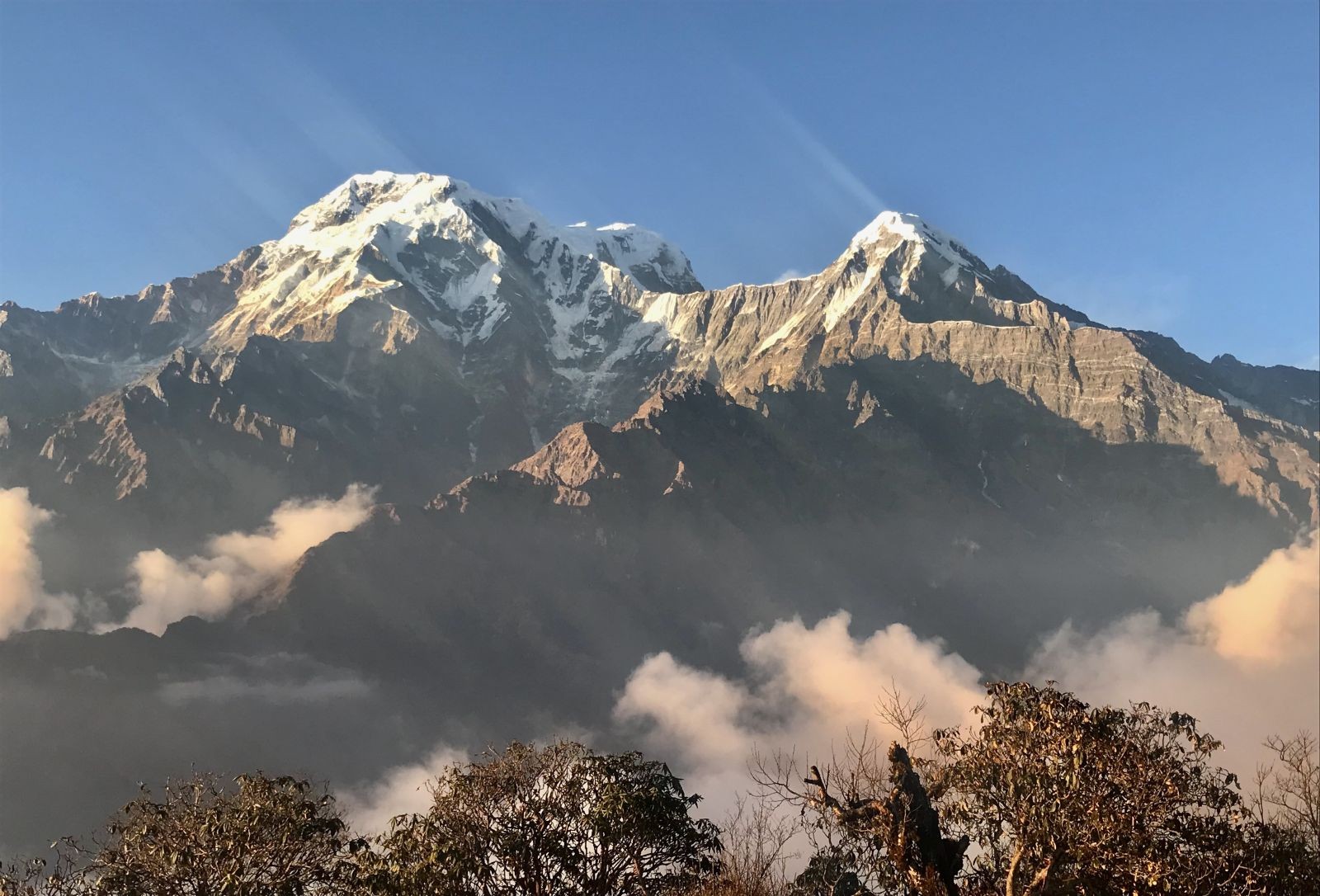
Determine the best time of the year for the Mardi Himal trek with good weather and excellent views. The moderate-level Annapurna trek offers spectacular views of Annapurna South (7219m). The best time to go is during spring or autumn, the best season for the Mardi Himal trekking season. Plan your Mardi Himal trekking package now!
Introduction to Mardi Himal Trek: Why Timing Matters So Much
So, let’s talk about the Mardi Himal Trek and why timing really makes a difference. If you’re looking for a trail that’s both gorgeous and not too hard, this one checks all the boxes. You’ll reach High Camp at 3580 meters, which gives you jaw-dropping close-up views of Annapurna South (7219m). On the way, you wander through rhododendron forests and Gurung villages—it’s honestly stunning. But here’s where timing jumps in: when you go changes everything. Visibility, comfort, and the whole vibe of the trek depends a lot on the season.
Actually, this trek takes about four or five days, starting from Pokhara at 827 meters and steadily heading uphill. The path isn’t crowded like Annapurna Base Camp, which is a huge plus. If you’re reasonably fit, even beginner trekkers or families will find this route manageable. The scenery just gets more impressive with every step, so picking the right time is pretty crucial for both safety and an amazing adventure.
If you go in summer, the monsoon clouds will hide those incredible peaks, pretty much every day. Winter’s just as tricky—snow usually blocks the trail above Australian Camp (2060m). If you hit the wrong season, rain, fog, or freezing cold might catch you off guard. Spring and autumn are the sweet spots: clear skies, stable weather, and epic mountain views. So yeah, picking your moment boosts your odds of those classic Himalayan panoramas.
Likewise, you’ll find teahouses open year-round in the lower stretches, but once you’re higher up, some camps shut down during the off-season. Getting permits is easy and cheap no matter when you go. Bottom line: smart timing means better safety, more reliable views, and way more enjoyment.
In fact, weather can swing fast—especially around Low Camp at 3050 meters. Winds pick up, temperatures drop, and you want to be ready. Choosing your season carefully saves you from disappointment and altitude headaches. Honestly, if you want your Mardi Himal trek to be unforgettable, pay attention to timing—it’s what sets the stage for an amazing adventure.
Why Timing Matters for Mardi Himal Trek :
Moderate difficulty suits most trekkers with good fitness
Stunning Annapurna South (7219m) and Machhapuchhre (6993m) views
Rhododendron blooms and Gurung culture enrich spring trek
Clear skies and dry trails define best time Mardi Himal Trek
Avoid monsoon rain and winter snow for safety and visibility
Mardi Himal Trek Seasons at a Glance: Quick Comparison
Meanwhile, the Mardi Himal Trek has two main seasons: spring and autumn. They’re pretty different, so let’s break it down fast. When trekkers compare them, they usually look at the weather, views, crowds, and how the forests change. October and April top the list—they’re solid bets if you want great trekking conditions.
Likewise, Spring (March to May) is mild and colorful. You’ll see rhododendrons blooming everywhere and temperatures around 15–22°C near Australian Camp. Mornings are usually clear, and Annapurna South really stands out in the skyline. Plus, there aren’t as many people on the trail, so you can actually enjoy some quiet time among the trees. Spring is all about bright scenery and moderate crowds.
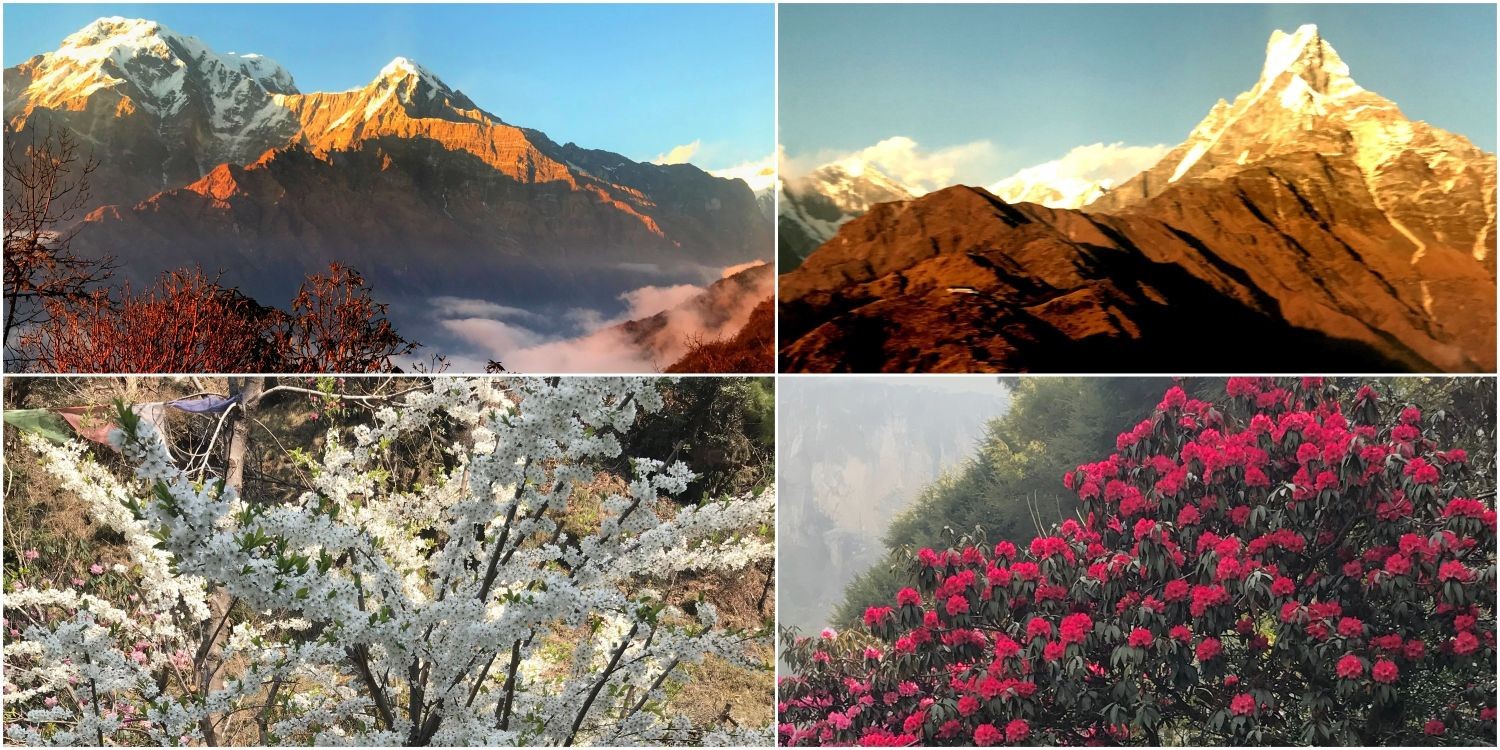
Best Time for the Mardi Himal Trek – Spring – Trek through vibrant rhododendron forests and blooming cherry blossoms while enjoying crystal-clear views of Machapuchare (Fishtail), Annapurna South, Hiunchuli, and Mardi Himal. Spring (March to May) offers colorful landscapes, pleasant weather, and some of the best mountain scenery in the Annapurna region.
Similarly, Autumn (September to November) feels crisp and fresh after the monsoon. Days are comfortable, with temps hanging around 10–20°C. Visibility gets sharp, so you can see Machhapuchhre and Hiunchuli in dramatic detail. Autumn probably wins for the best mountain views—everything seems cleaner and more vivid.
Further, you might get some clouds or a light shower in late May, but autumn is usually drier and less muddy. Both seasons keep permit costs low, about $20–$30, and teahouses are open and running, so there’s no hassle finding a place to stay.
If you’re chasing the perfect time for Mardi Himal Trek, October is king. April’s a close second thanks to the flowers and stable weather. Early March and late November can work if you want fewer crowds. Bottom line: spring and autumn are the go-to seasons for Mardi Himal, each with its own perks.
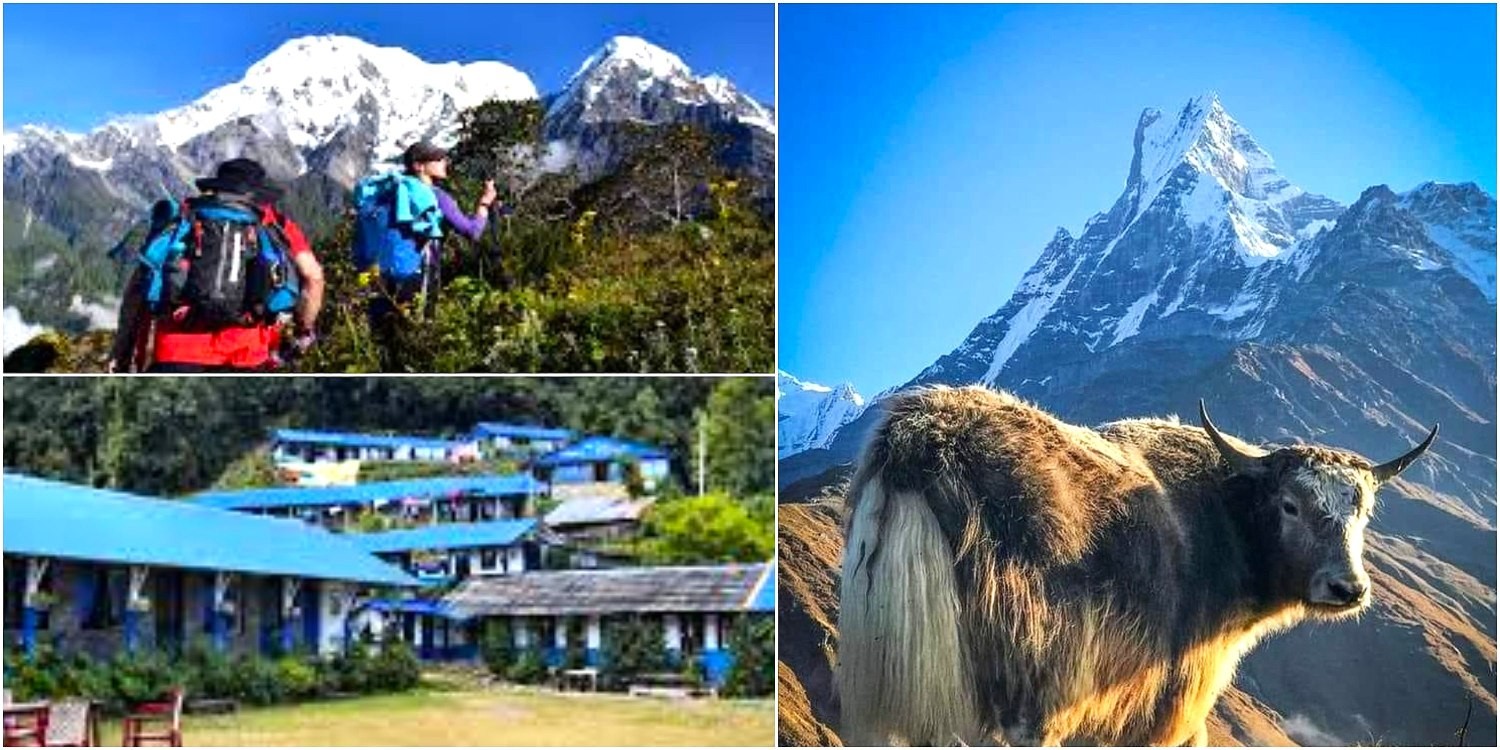
Follow the scenic trail past traditional mountain lodges with spectacular views of Machapuchare (Fishtail) dominating the Himalayan skyline on the Mardi Himal Trek.
Aspect
Spring (March–May)
Autumn (September–November) | Best Month Recommendation.
Autumn (September–November): The Classic Peak Season for Clarity
Meanwhile, Autumn (September to November) is when the Mardi Himal Trek really shines. The skies open up after the monsoon, and you get some of the clearest mountain views all year. Daytime temperatures feel comfortable, sitting between 10 and 20°C around High Camp at 3580 meters—perfect trekking weather. October is hands-down the best month. Trekkers flock here for those flawless blue skies and crisp air.
Likewise, September is solid, too. Once the rains let up, everything stabilizes. You’ll notice the air is cleaner, so the views of Annapurna South and Machhapuchhre are razor sharp every day. The trails dry out fast, especially past Australian Camp, so you walk without slipping or slogging through mud. Evenings turn chilly, but honestly, the cold makes curling up in a teahouse that much cozier. Early autumn is all about clear views and easy walking.
Moreover, October stands out. You get nonstop clear horizons and those classic postcard shots from Low Camp. Wind is minimal, and the weather stays steady enough for extra hikes off the main route. Because of this, October gets the highest number of trekkers, so if you’re chasing that perfect window for mountain clarity, this is your month.
By November, the crowds thin out, but the scenery stays stunning. The air is still crisp, and the trails turn peaceful. The grasslands fade to gold, and evenings are colder near Poon Hill, but the sky stays clear. Sometimes you catch local festivals, bringing a splash of culture along with the scenery. November appeals to anyone wanting some solitude and sharp mountain vistas.
In fact, Autumn sidesteps the usual monsoon hassles or early winter snow. You don’t have to worry about the weather interfering—it’s smooth trekking all the way. Teahouses are open, stoves are warm, and the meals hit the spot after a long day. Honestly, autumn is the prime time for Mardi Himal. If clarity and comfort are what you want, this season delivers.
Crystal-clear skies: Sharp Annapurna South (7219m) views
Comfortable days: 10–20°C daytime temperatures
October peak: Absolute best month for clarity and stability
Fewer crowds in November: Serene trails, golden landscapes
Spring (March–May): The Blooming Rhododendron Wonderland
Actually, Mardi Himal Trek in Spring feels like walking through a rhododendron paradise. The forests wake up with warmer days, bursting back to life. April stands out—it’s when the flowers really go wild, painting the hills with color you just don’t see at any other time.
Likewise, March kicks things off, bringing mild weather and the first rhododendron buds. Daytime temperatures around Siding (1700m) hover between 15 and 22°C, which is great for hiking. Mornings often treat you to clear views of Annapurna South (7219m), before a few clouds roll in later. Wildlife gets busy too, and the whole area feels fresh and green.
Then April hits. Rhododendrons explode in full bloom, showing off pink, red, and white blossoms from Australian Camp (2060m) up to Low Camp (3050m). High Camp (3580m) becomes a wildflower carpet, perfect for those who love taking photos—flowers frame the snowy mountains in every shot. April is definitely peak bloom and the best time for flower lovers.
Moreover, May follows with lush greenery and only the occasional pre-monsoon shower. Trekkers get longer days to explore, and warmer nights make the higher camps much cozier. Plus, fewer people are out compared to autumn, which gives you a more peaceful experience.
In fact, Spring skips the harsh winter snows, making acclimatization easier. It’s also an ideal time to connect with the Gurung villages, which buzz with energy. The blooming landscapes pop against the distant Annapurna range, making every view memorable. If you’re after color, life, and adventure, spring really is an unbeatable season for the Mardi Himal Trek.
April floral highlight: Stunning colorful landscapes
Moderate crowds: Peaceful trails with fresh scenery
Weather and Temperature: Daytime Comfort vs Nighttime Chills
Actually, daytime weather along the Mardi Himal Trek feels pretty comfortable, especially in spring and autumn. The sun makes hiking pleasant, but once night rolls around—especially higher up—the cold hits harder. You really notice the altitude’s effect on temperature as you climb up to High Camp (3580m).
Here, Spring kicks off with a gentle warming from March to May. Around Australian Camp (2060m), daytime highs hover between 15–22°C, so you’re not sweating or shivering. Mornings have a fresh bite, afternoons get pleasantly warm, and nighttime drops down to about 5–10°C at Low Camp (3050m). The change feels smooth and manageable, with no sudden temperature plunges.
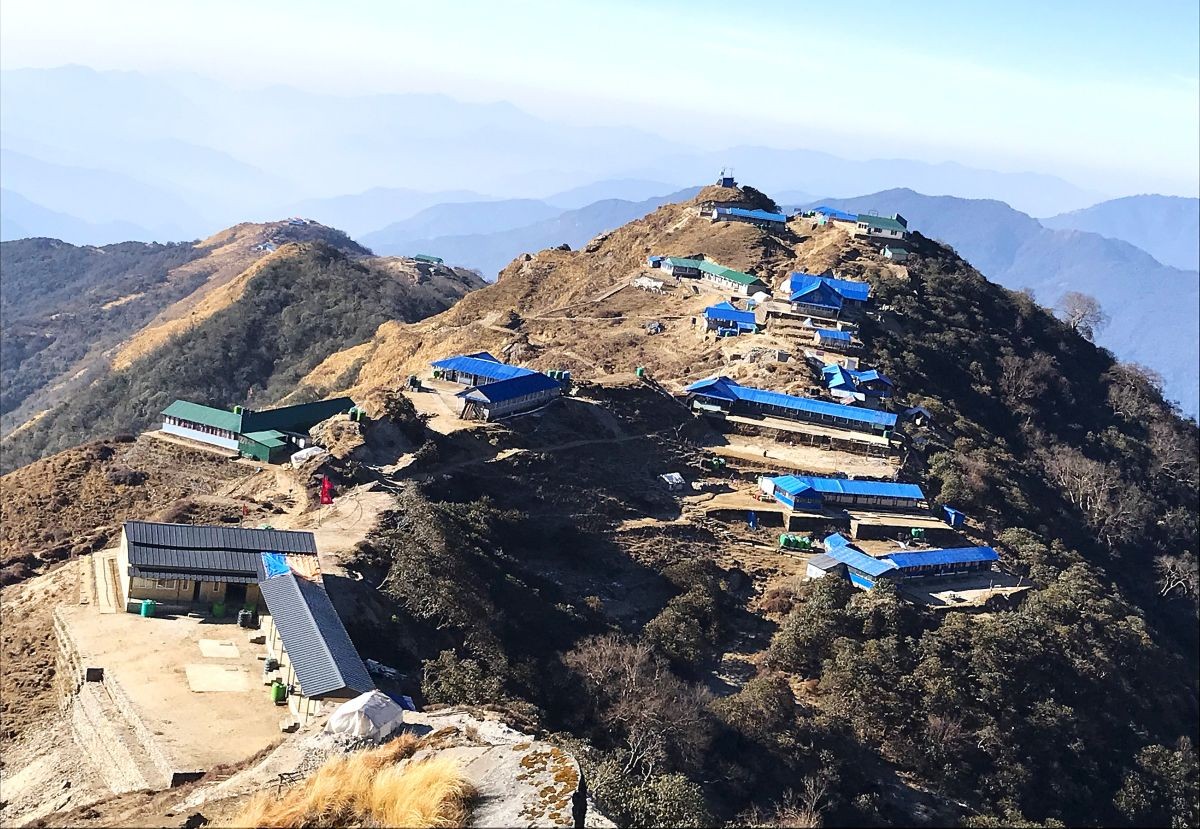
High Camp Lodges – Stay in cozy mountain teahouses at High Camp, the final overnight stop before Mardi Himal Viewpoint, offering warm meals, basic accommodation, and spectacular sunrise and mountain views of Machapuchare (Fishtail) and the Annapurna range.
Likewise, Autumn’s pretty reliable too, stretching from September to November. Daytime temperatures range from 10–20°C when you’re walking up to High Camp, and clear skies mean no muggy pre-monsoon heat. So both spring and autumn make for comfortable hiking during the day.
Now, nights are a different story. The higher you go, the colder it gets. At High Camp, autumn nights can easily fall below 5°C, sometimes even dropping past zero. Spring nights stay a little warmer, thanks to lingering daytime heat. But when the wind picks up on the ridges, it feels even colder—so you’ll want to layer up, no matter the season.
Above 3000m, the biggest temperature swings happen every day. The sun warms things up, then evenings cool off fast. Luckily, teahouses offer stoves and thick blankets to help you out. Knowing how daytime comfort shifts to nighttime chills will help you pack smart and trek safely, whatever season you choose.
Weather & Temperature Breakdown Mardi Himal Trek :
Spring Daytime: 15–22°C (Australian Camp to High Camp)
Spring Nighttime: 5–10°C at mid-camps, 0–5°C at High Camp
Autumn Daytime: 10–20°C, very stable and clear
Autumn Nighttime: 0–5°C or lower at High Camp (3580m)
Altitude Effect: 6–8°C drop per 1000m gain, stronger chills above 3000m
Best Tip: Layer clothing for warm days and cold nights
Mountain Views and Visibility: Autumn's Edge vs Spring's Charm
Honestly, autumn completely steals the show when it comes to mountain views on the Mardi Himal Trek. Every day, you get these crisp, haze-free panoramas of Annapurna South and Hiunchuli—like you can see right across the whole range. Fishtail (Machhapuchhre) shows off its clearest face. The air right after monsoon, from September to November, is dry and dust-free, so horizons look sharp and endless from High Camp. Clouds barely stick around in the afternoons, so you can just sit and stare at the peaks all day if you want. The golden light at sunset? It makes the mountains glow, and your photos come out incredible. Honestly, autumn wins hands down for clear mountain views on this trek.
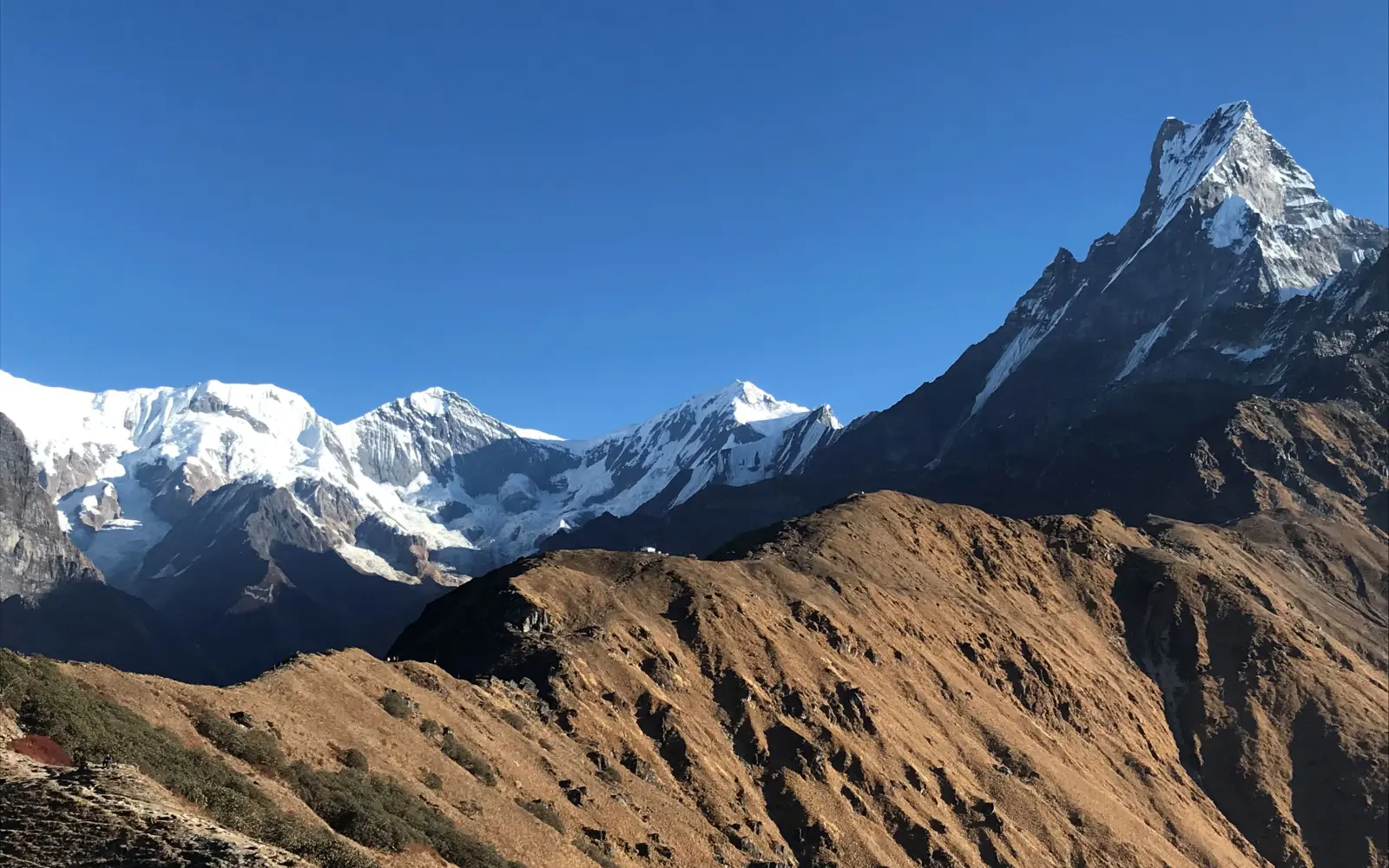
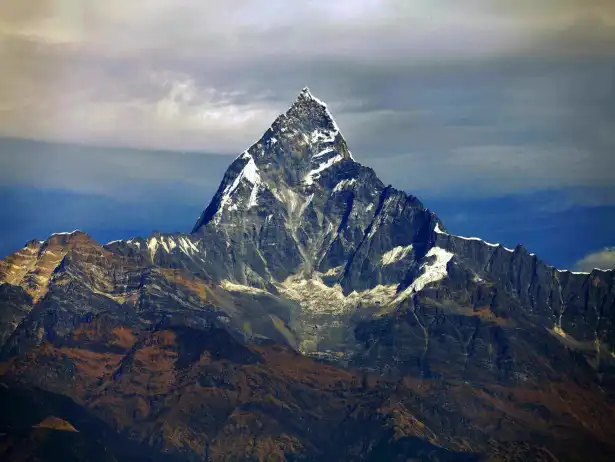
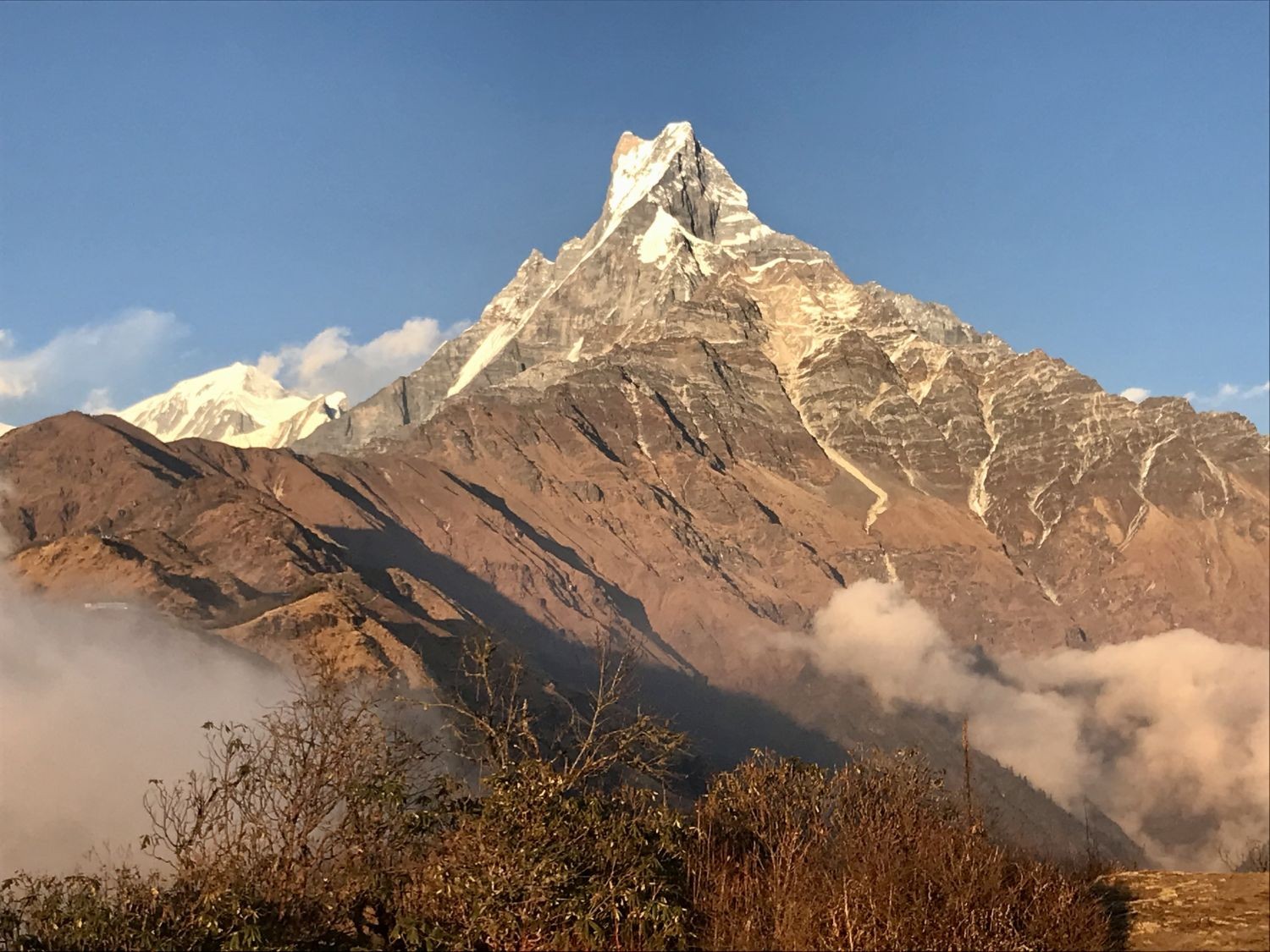
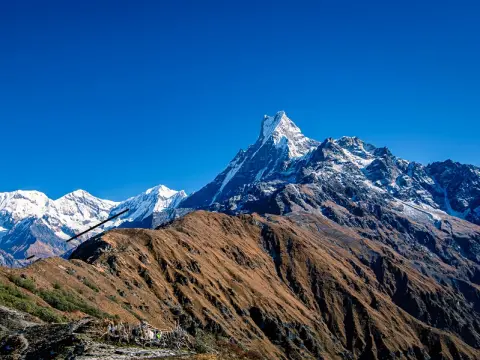
Machapuchare (Fishtail Mountain) – One of Nepal's most iconic and sacred Himalayan peaks, renowned for its distinctive fishtail-shaped summit and breathtaking beauty along the Mardi Himal Trek.
But spring isn’t just second best—it brings its own magic. Mornings are clear, and those same snowy giants stand out beautifully. This time, though, you get seas of blooming rhododendrons painting the foreground—like nature’s own festival of colors. The mountain vistas are solid, but the bonus is the floral beauty everywhere. Later in spring, especially around May, extra moisture rolls in and sometimes hazes things up above Low Camp. Early March gives you snappier air before the warmth comes, and April balances bright mornings with a few cloudy afternoons. So spring’s charm really comes from those vibrant contrasts rather than flawless clarity.
Either way, both seasons treat trekkers to stunning Annapurna panoramas. Autumn promises non-stop, haze-free views. Spring delivers emotional punch—flowers everywhere, fresh landscapes, lively colors. If you’re after pure clarity, autumn’s the one; but if you want vivid scenes and nature waking up, spring’s pretty unforgettable.
Aspect
Autumn (Sep–Nov)
Spring (Mar–May) | Winner
Visibility / Clarity
Haze-free, crystal-clear all day
Good mornings, occasional afternoon haze | Autumn
Annapurna South (7219m)
Sharp, unobstructed panoramas
Clear mornings, possible clouds later | Autumn
Machhapuchhre (6993m)
Fishtail silhouette razor-sharp
Beautiful with floral foregrounds | Autumn for clarity.
Hiunchuli & Range Views
Excellent 360° visibility
Vibrant with rhododendrons | Autumn
Best For
Pure mountain photography
Colorful nature + peak views | Autumn (clarity), Spring (charm)
Mountain Views & Visibility Comparison :
Scenery and Nature Highlights: Flowers, Forests, and Festivals
Embark on the Mardi Himal Trek with two different seasonal moods: spring and autumn. The spring season is highlighted by the rhododendrons, transforming the forests into a kaleidoscope of colors, while the autumn season is characterized by the golden hues of the season. The two seasons feature different types of forests and festival moods, creating a dramatic change of scenery with the seasons.
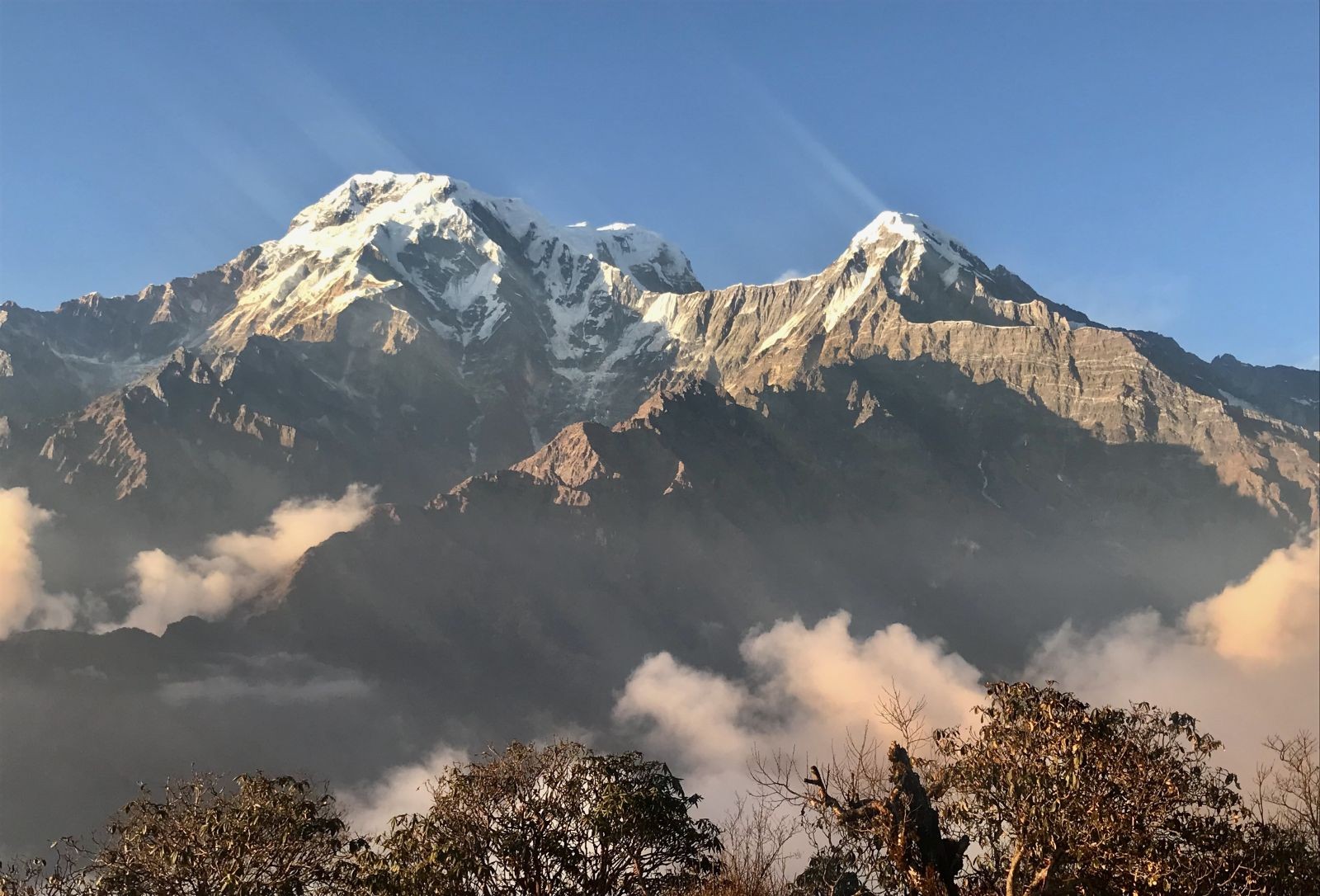
Annapurna South and Hiunchuli – Admire the magnificent snow-capped peaks of Annapurna South and Hiunchuli, two of the most spectacular mountains visible along the Mardi Himal Trek, offering unforgettable Himalayan scenery and stunning sunrise views.
Actually, the spring season transforms the lower forests into a rhododendron wonderland from Siding (1700m) to Australian Camp (2060m). The trails become a ribbon of pink, red, and white rhododendrons, with lush green vegetation blanketing the slopes during the spring season, from March to May. The melting of the snow creates clear streams and pretty waterfalls, adding beauty and freshness to the trek.
Likewise, the autumn season, on the other hand, transforms the same forests into golden hues of the season. The grasslands around the Low Camp (3050m) shine golden under the blue sky, with the Annapurna South peak (7219m) rising sharply into the sky after the monsoon season, creating a dramatic scene of golden hues in the foreground.
Further, festival moods of the season add extra flavor to the trek during the spring and autumn seasons. The spring season coincides with the Holi festival, as well as the Gurung village celebrations, while the autumn season is highlighted by the Dashain festival, as well as the Tihar festival, in the Pokhara Valley.
In fact, the forests feature the same charm throughout the year, with dense rhododendron and oak forests, as well as the meadows at the High Camp (3580m), featuring alpine flowers during the spring season and golden grass during the autumn season.
Rhododendron Forests – Walk through vibrant rhododendron forests on the Mardi Himal Trek, where Nepal's national flower creates a spectacular display of color against the backdrop of the Annapurna Himalayas during spring.
Seasonal Nature Highlights Mardi Himal Trek :
Spring: Rhododendron explosion (pink/red/white blooms), lush green forests, fresh waterfalls
Autumn: Golden grasslands, amber-toned forests, clear blue skies backdrop
Festival Vibes: Holi/spring celebrations, Dashain/Tihar/autumn festivities
Common Scenery: Dense rhododendron/oak forests, alpine meadows at High Camp (3580m)
Best For: Spring (colorful revival), Autumn (golden serenity + clarity)
Crowd Levels and Trail Atmosphere: Peaceful vs Lively
Actually, the crowd levels experienced during the Mardi Himal Trek vary depending on the season. Autumn season, for instance, presents a lively experience, while the spring season presents a peaceful experience. Therefore, the timing of the trek determines the kind of experience encountered.
Here, during the autumn season, the trail presents an animated experience, especially in the month of October when the crowds are higher than in the other months. The popular teahouses, including Australian Camp (2060m) and Low Camp (3050m), present lively evenings as the crowds throng the dining halls, engaging in lively interactions.
On the other hand, the spring season presents a moderate crowd level, with noticeably fewer crowds than in the autumn season. The experience during the early part of March and late May may present an incredibly peaceful experience, especially for those seeking solitude as they connect with nature and the Gurung villages.
Likewise, the best experience, however, is encountered during the shoulder season, which includes the early September and late November periods when the crowds are significantly fewer, and the teahouses receive guests with less urgency. These periods also present clear weather, making the experience incredibly peaceful.
Comparatively, the Mardi Himal Trek presents fewer crowds than the Annapurna Base Camp or Poon Hill treks, even during the peak season when the crowds are higher. There is sufficient breathing space, and the areas around High Camp (3580m) remain peaceful during the entire year.
Let’s think about the autumn trek before we lock it in. Autumn promises unbeatable views and good weather. The dry trails make the trek safe and comfortable. This makes autumn the best season for the Mardi Himal Trek.
Likewise, the clear views mean you get razor-sharp views of Annapurna South (7219m) every day. The views of the mountain range from Australian Camp (2060m) to High Camp (3580m) are dust-free due to the autumn season, and the good weather promises no surprises such as rain and strong winds. The dry and firm trails reduce the chances of slipping. Therefore, the advantages of the autumn season for the Mardi Himal Trek are unbeatable views and good weather.
Moreover, the pleasant temperature during the day allows you to trek long hours without the heat becoming unbearable, ranging from 10-20°C. The golden grasslands offer great photography opportunities, making the scenery look great. Therefore, autumn promises the clearest views of the mountain range during the Mardi Himal Trek.
However, the autumn season comes with some downs too. The peak season of October experiences a surge in trekkers. The lodges at Low Camp (3050m) become full during this season, making bookings essential. The nights get chilly, with temperatures as low as 0°C in High Camp (3580m). The surge in trekkers during autumn makes the cost of guides and porters slightly higher.
Despite the downs of the autumn season, the advantages of the autumn season make the Mardi Himal Trek worthwhile.
Mardi Himal Trek in Autumn: Pros and Cons
Pros:
Unbeatable visibility of Annapurna South (7219m) & Machhapuchhre (6993m)
Stable weather with minimal rain risk
Dry, firm trails from start to High Camp (3580m)
Comfortable daytime temperatures 10–20°C
Golden grasslands for stunning photography
Cons:
Busier teahouses in October peak
Advance bookings essential for popular lodges
Slightly colder nights (0°C or below at high camps)
Moderate increase in guide/porter demand
Pros and Cons of Mardi Trekking in Spring
Meanwhile, the the Mardi Himal Trek in Spring offers a mix of advantages and disadvantages. The season offers the best of photography, with the beauty of spring adding colors, warmth, and photo opportunities during the trek. Spring is a good season for trekking, especially for nature enthusiasts.
Actually, the rhododendron trees, with their pink, red, and white hues, create tunnels of colors along the routes from Siding (1700m) to Low Camp (3050m) in April. The temperature during the day is quite pleasant, ranging between 15°C to 22°C, with the green environment adding beauty with every step of the trek. Therefore, the spring season offers the best of photography, colors, and comfortable temperatures during the Mardi Himal Trek.
Additionally, the rhododendrons create a picturesque scene with the backdrop of the Annapurna South peak, covered with snow, reaching an altitude of 7219m. The cool temperatures during the night help the trekkers get good sleep at the High Camp at an altitude of 3580m.
On the other hand, the season of late May may not be the best, with clouds forming during the afternoons, affecting the visibility during the afternoon hours of the trek. The pre-monsoon season may not allow the best of visibility during the afternoons of the trek.
Here, April may not be the best time if you want to avoid crowds on the trails of the Mardi Himal Trek, as the season may see a moderate number of trekkers on the trails.
Therefore, if you want to avoid the crowds and pollen, the best time is early March or late May, when the mornings are clear with good visibility, making the season suitable for the best of photography with the warmth of the season compensating for the minor drawbacks of the spring season of the Mardi Himal Trek.
Which Season Is Right for You? Personalized Decision Guide
Which season best suits you for the Mardi Himal trek? This personalization guide will help you make the right choice with confidence by mapping your preferences like views, photography, nature, etc., to the spring or autumn season. Besides this, the shoulder season also offers less crowded options. So, this is the right path to the best Mardi Himal trekking season.
If your preferences are views and photography, then the best choice is the autumn season. During the month of October, the weather remains crystal clear with sharp views of Annapurna South (7219m) from High Camp (3580m). The absence of haze provides the best photography options with the best views of the Annapurna range. Therefore, the best choice is the autumn season for photography enthusiasts.
If your preferences are flowers, nature, etc., then the best choice is the spring season. During the month of April, the trekking trail is full of colorful flowers like rhododendrons at Low Camp (3050m) with comfortable daytime temperatures between 15°C and 22°C. So, the spring Mardi Himal trek is best suited to nature lovers.
Likewise, if your preference is solitude and more personal space, then the best choice is the shoulder season. To avoid the crowd, the shoulder season like early September or late November offers the best options with fewer bookings at the tea houses and more pleasant weather with comfortable hiking options.
Lastly, the difficulty level of the trek is moderate, which can be managed by anyone at any time of the year. The tea houses also charge the same price irrespective of the season. So, the best Mardi Himal trekking season depends on your preferences.
Fitness & budget: Either season – similar low costs, moderate difficulty
Best overall clarity & stability: Autumn (October peak)
Best colorful revival & milder nights: Spring (April highlight)
Final Thoughts and Planning Tips for Your Mardi Himal Trek
Now, as you prepare for Mardi Himal, it is important to keep in mind the final thoughts and tips as you go into the trekking plan. This way, you are sure to capture the right windows and appropriate steps for a successful trek. In this case, it is clear that October and April are the prime months for the Mardi Himal trek. Thus, these tips are crucial in ensuring that the Mardi Himal trekking period is successful and memorable.
October, in particular, offers clear skies and the best weather. It is easy to spot Machhapuchhre (6993m) on a clear day from High Camp (3580m). Additionally, in April, the trek offers the beauty of rhododendron in bloom, which creates a warm and pleasant atmosphere. Thus, these months remain the top picks for the Mardi Himal Trek.
In terms of planning, it is important to note that it is crucial to book your trekking package 3-6 months in advance, especially during peak seasons. It is also important to contact various trekking agencies in Pokhara, as they will assist in the acquisition of permits and guides. It is also important to note that it is crucial to arrive early in the day in order to capture the right room in the teahouses. Thus, by planning in advance, you are sure to avoid any disappointment, especially in the months of October or April.
In addition, it is important to note that it is crucial to pack appropriately for the trek, especially in terms of comfort and safety. Thus, it is crucial to note that a sleeping bag liner, rain poncho, and appropriate clothing are a must-have for the trek. Additionally, it is crucial to note that it is important to pack appropriate items such as sunscreen, sunglasses, and a power source for charging various devices. Thus, by packing appropriately, you are sure to take your Mardi Himal Trek to the next level.
Finally, it is crucial to note that it is important to listen to your body as you trek towards Australian Camp (2060m). It is also crucial to note that it is important to take it slow as you trek towards High Camp (3580m). Thus, whether it is in the month of April or October, you are sure to make the Mardi Himal trek memorable.
Final Planning Tips for Mardi Himal Trek :
Best months: October (peak clarity), April (peak blooms)
Book 3–6 months ahead for peak season teahouses
Pack layers, sleeping bag liner, rain poncho, sunscreen
Choose based on preference: views (autumn) or flowers (spring)
Contact reliable trekking agency now for your Mardi Himal trekking package
FAQs : "Best Time for Mardi Himal Trek"
1. What is the best month for the Mardi Himal Trek? The Mardi Himal Trek is really great in October and November. These months are usually the best for the Mardi Himal Trek. The skies are clear. You can see the mountains really well. The rhododendron forests are also very beautiful after the monsoon season. People also like to go on the Mardi Himal Trek in March and April. The weather is stable. The temperatures are comfortable. You can see Mardi Himal, Machhapuchhre and Annapurna South well.
2. Is spring the season for the Mardi Himal Trek? Spring is a time for the Mardi Himal Trek. From March to May the forests are full of rhododendrons. The temperatures are pleasant. You can see really far. In the mornings the visibility is usually good. So people on the Mardi Himal Trek can see landscapes and the mountains are really clear.
3. Can I do the Mardi Himal Trek during autumn? The Mardi Himal Trek is great in autumn. From September to November the weather is dry and stable. The air is clear after the monsoon rains. You can see Machhapuchhre, Annapurna South and Hiunchuli well. The trails are also in condition during this time.
4. Is the Mardi Himal Trek in winter? You can do the Mardi Himal Trek in winter.. It can get very cold near High Camp. There may be snow on the trail above 3,500 meters.. The Mardi Himal Trek in winter is peaceful and you can see the mountains really well. If you have the gear and some experience you can have a great time on the Mardi Himal Trek.
5. Is monsoon a time for the Mardi Himal Trek? The monsoon season is from June to August. During this time it rains a lot. The trails can be muddy and slippery. You may not be able to see the mountains.. The forests are very green and beautiful. So if you like being alone and seeing the beauty of the Mardi Himal Trek you might still enjoy it.
6. What is the weather like on the Mardi Himal Trek? The weather on the Mardi Himal Trek changes with the season. How high you are. The lower villages are warm all year.. The higher areas like High Camp are much colder. Spring and autumn usually have the weather. So it is an idea to check the forecast and bring the right clothes for the Mardi Himal Trek.
7. Which season offers the mountain views on the Mardi Himal Trek? Autumn is usually the time to see the mountains on the Mardi Himal Trek. The air is clean after the monsoon rains. Spring is also great for seeing the mountains. You can see Machhapuchhre, Annapurna South, Hiunchuli and Mardi Himal well from the viewpoints, on the ridge trail.
8. How cold does it get on the Mardi Himal Trek? The Mardi Himal Trek can get really cold. It depends on the time of year and how high up you're. When it is winter it can get very cold at night near High Camp. It can even get below -10°C. In the spring and autumn it is usually a bit warmer at night.. It is still cold in the mornings when you are up high. So you should always bring clothes, gloves and a good sleeping bag on the Mardi Himal Trek.
9. When do rhododendrons bloom on the Mardi Himal Trek? The rhododendrons on the Mardi Himal Trek usually bloom in March and April. This is a time to see the flowers. The forests are really colorful and pretty. The part of the trail from Forest Camp to Low Camp is especially nice. So if you like flowers and taking pictures spring is a time to go on the Mardi Himal Trek.
10. Is the Mardi Himal Trek crowded during peak season? The Mardi Himal Trek is busiest in October, November, March and April.. It is not as crowded as some other trails in the Annapurna area. There are usually places to stay so you do not need to book ahead.. It is still a good idea to plan ahead during the busiest times.
11. What is the safest season for the Mardi Himal Trek? The safest time to go on the Mardi Himal Trek is in the spring and autumn. The weather is usually better. The trails are dry. You can see well which makes it easier to walk. So most guides think these are the times for people who are new to trekking or for families.
12. Can beginners trek Mardi Himal in all seasons? Beginners can go on the Mardi Himal Trek most of the year.. Spring and autumn are the easiest times. The trails are dry. The weather is nice. In the winter it snows and in the monsoon it rains, which can make it harder. So if you are new to trekking you should try to go when the weather's good.
13. Does altitude affect trekkers during the Mardi Himal Trek? Yes the altitude can affect some people on the Mardi Himal Trek. The Mardi Himal Base Camp is really high around 4,500 meters. So you should try to go up and drink a lot of water. Some people can get sick from the altitude. It is not common. You should know what to look for and take your time.
14. Which season is best for photography on the Mardi Himal Trek? The best time for taking pictures on the Mardi Himal Trek is in the autumn and spring. The skies are clear. The forests are really colorful. The views of the mountains are great.. When the sun rises and sets over Machhapuchhre it is really beautiful. Many photographers like to go in October, November, March or April.
15. How should I choose the time for the Mardi Himal Trek? You should choose when to go on the Mardi Himal Trek based on what you want. If you want to see the mountains go in the autumn. If you like flowers and warm weather go in the spring. If you want to be go in the winter.. If you like green trees go in the monsoon. So think about what you want and plan your trip, to the Mardi Himal Trek.