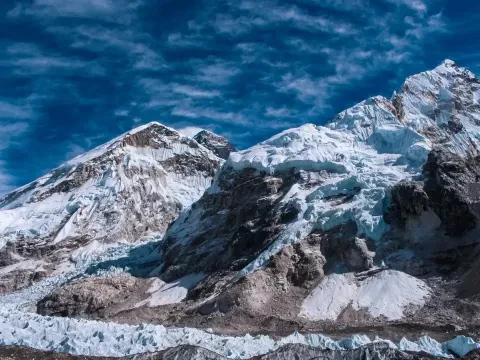
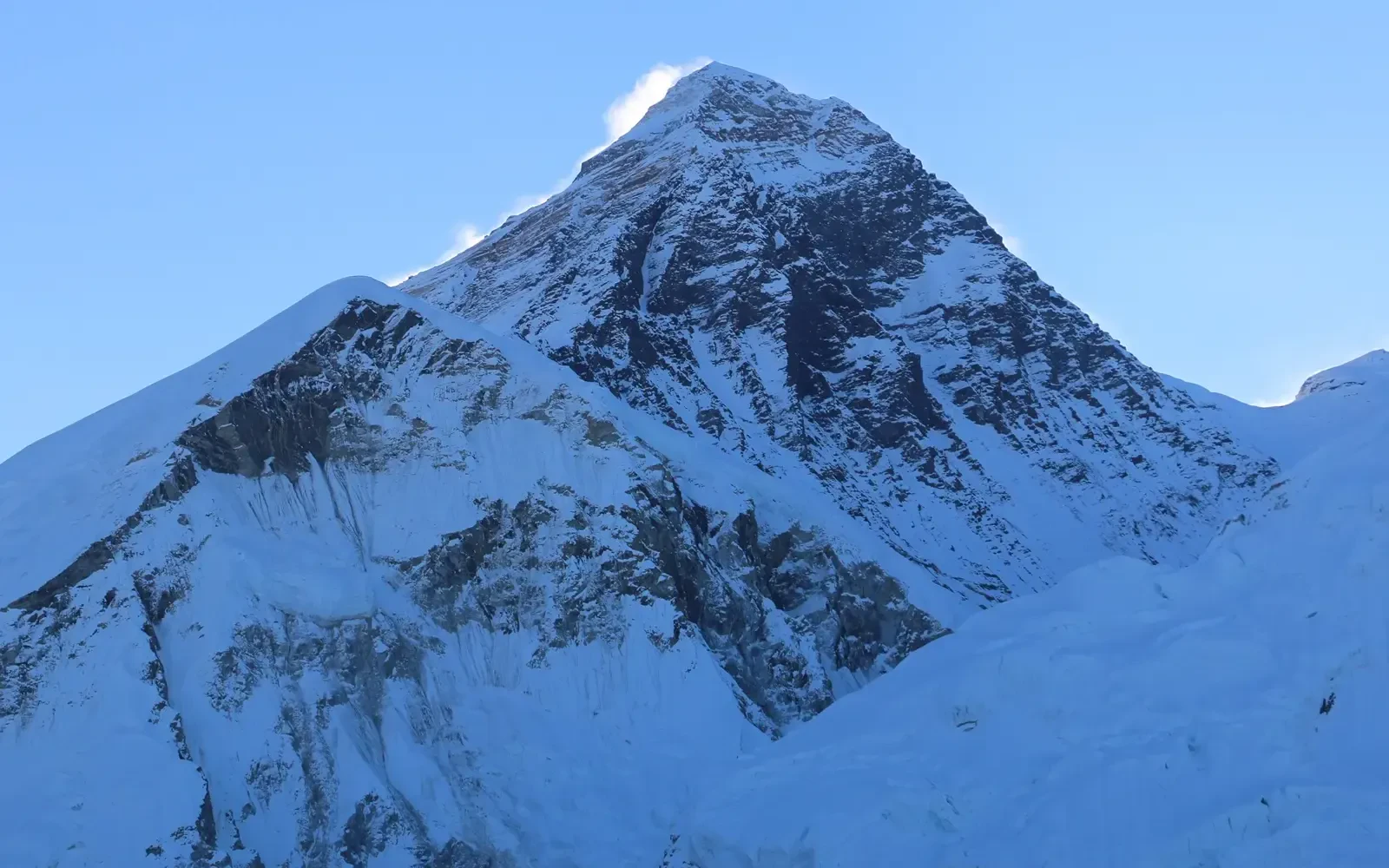
So you want to see Everest Base Camp but aren't up for weeks of hiking? A helicopter ride gets you there—no sweat, literally—but you should really know what you're paying for. At Haven Holidays Pvt. Ltd., we believe in laying out every detail so you’re never left guessing. Prices for an EBC heli tour swing with things like fuel costs, seasonal demand, and top-notch safety measures. Right now, you can expect to pay USD 1,200 to USD 1,400 per person for a typical seat in a shared chopper. If you’re going for a private charter—say, just your crew in the cabin—the price lands between USD 4,900 and USD 6,500+ for the whole flight.
But that's just for the ride. You'll need to plan for extra charges that keep you on the right side of the local rules. These aren't usually worked into the main fare, but you can't skip them—they're your entry ticket to the Khumbu region. You have to get a Sagarmatha National Park permit, about USD 30–40, and pay Khumbu Rural Municipality taxes, another USD 20–30. Plus, if you want breakfast at the legendary Everest View Hotel (3,880m / 12,730ft), that's an extra USD 30–40. These little fees go a long way toward supporting the local environment and keeping everything running smoothly for future explorers.
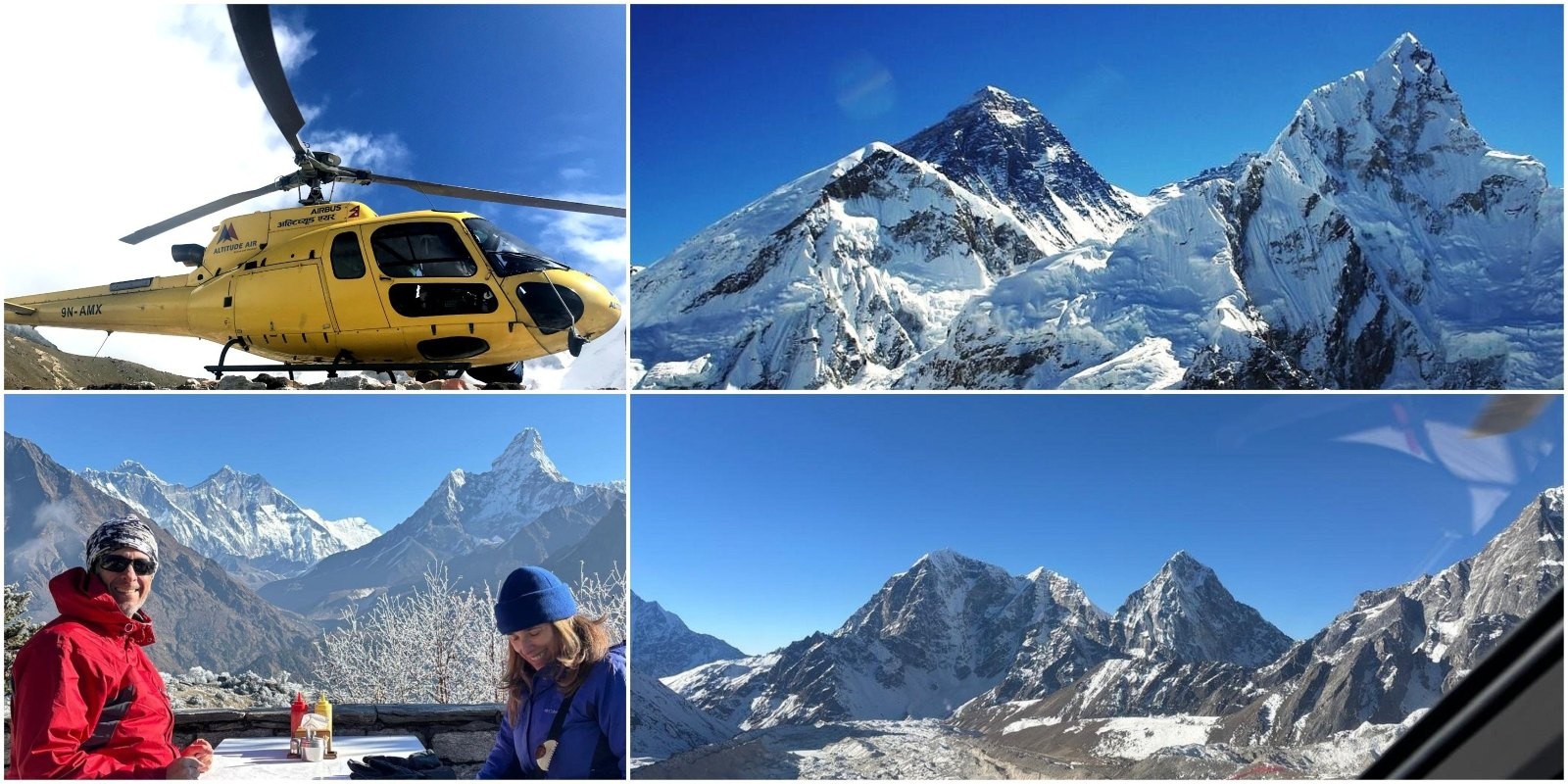
Everest Base Camp Helicopter Tour Cost Hihglights:
| Expense Category | Typical Cost Range |
|---|---|
| Shared Flight (Per Person) | $1,200 – $1,400 |
| Private Charter (Total) | $5,500 – $6,500+ |
| Sharing 1-2 people landing Kalapatthar | USD 3300 |
| Permits & Park Taxes | $40 – $50 |
| Breakfast & Incidentals | $40 – $50 |
"For over a decade, I've watched travelers fudge on operator quality," my personal experience as a trusted blogger. "Spending a bit more usually equals better aircraft, seasoned pilots, and crucial insurance protection." We couldn’t agree more. Honestly, pinching pennies with an unknown company just isn’t smart when you’re flying next to Mt. Everest (8,848.86m / 29,031ft). Stick with Haven Holidays Pvt. Ltd. if you want to keep costs honest without skimping on safety. Our pilots—like Rabindra Khanal from Air Dynasty—fly these routes daily. They understand the winds, the terrain, and everything in between. We won’t cut corners, especially not when it comes to your safety. That’s what matters most to us.
Here’s the real question: group flight or private charter? This decision can shape your Everest adventure in ways you might not expect. Group tours make it easier and cheaper for solo travelers or pairs to get in on the action, while private charters give your group freedom and privacy. Mr. Bhabanath Adhikari, who’s guided the Khumbu for over two decades, says, "Go with what fits your party size and how much control you want." When you join a group, you’re splitting the cost of the chopper, so it’s usually the most wallet-friendly option if you’re flying solo or as a couple. You’ll catch those killer views of Mt. Everest (8,848.86m / 29,031ft) and Lhotse (8,516m / 27,940ft) without breaking the bank.
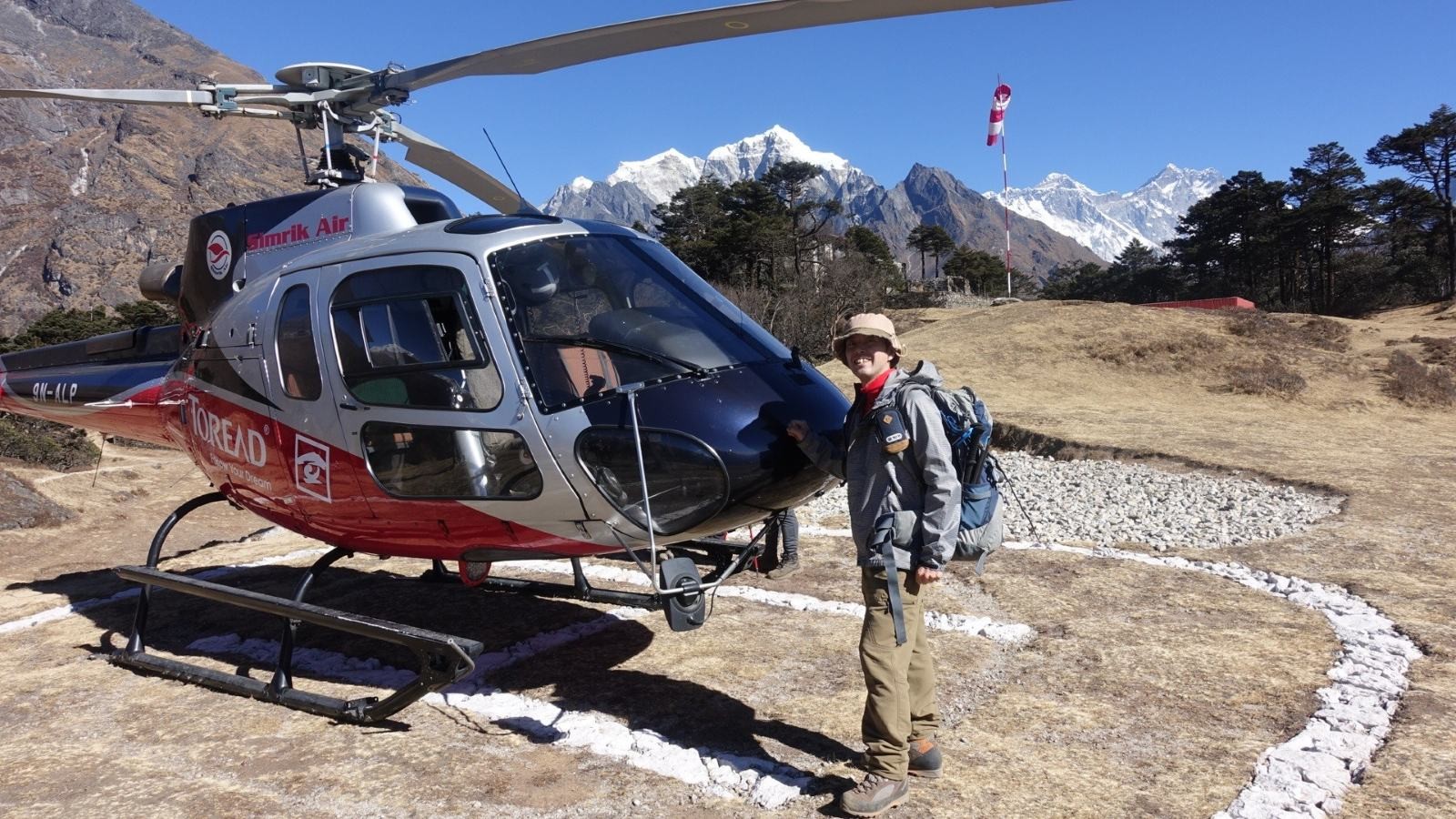
But let’s say you’ve got four or five pals. Book a private charter, and the price per person gets pretty close to what you’d pay sharing with strangers. You get the cabin to yourselves, can choose when you leave, and decide how long you stay. Mr. Ramsaran Simkhada, our expert with 15+ years in the mountains especially in Everest region and Everest Base Camp, says, "Private charters let you linger at Kala Patthar (5,545m / 18,192ft) for the perfect photo." That kind of flexibility makes all the difference when the peaks show themselves—and you don’t want to leave just because the group says so.
Group joining Vs. Private Charter Highlgihts:
| Feature | Group Joining | Private Charter |
|---|---|---|
| Cost Per Person | $1,200 – $1,400 | $5,500 – $6,500 (for 5). |
| Flexibility | Set by the Operator | Tailored to Your Group. |
| Privacy | Shared with Strangers | Exclusive Private Cabin. |
| Best For | Budget-Conscious Travelers | Families & Photography Pros. |
No matter which way you go, always book with operators who trust their pilots. Professionals, like Rabindra Khanal from Air Dynasty, have mastered flying to the high-altitude Everest View Hotel (3,880m / 12,730ft)—exactly who you need in the cockpit. Haven Holidays Pvt. Ltd. works with these mountain pros so your trip stays safe, comfortable, and unforgettable. If you’ve got four or five in your party, ask us about a private charter right away—it’s often the smarter deal on both price and experience. Why cram into a crowded cabin when you could have the sky to yourselves? Your trip to Everest should be legendary for all the right reasons. So choose your style, book your seat, and get ready for a view that’ll change the way you see the world.
When you book with Haven Holidays Pvt. Ltd., you get the full picture about what your flight covers. The base price—shared or private—only includes the helicopter charter and pilot services. That’s it. Things like government and local fees? You pay those separately, and honestly, that’s how the rules work. You need to pay these fees directly to keep things legal and smooth on your trip.
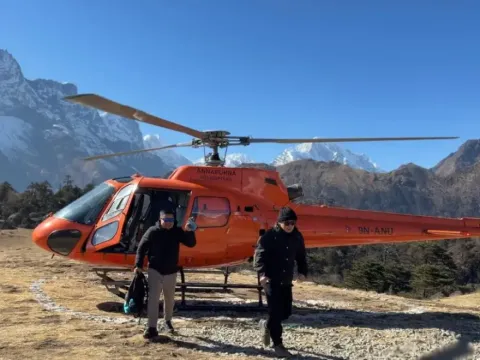
Here, these costs do more than check a box. They help support Sagarmatha National Park (sitting pretty at around 2,845m / 9,334ft) and boost the Khumbu region’s economy. So, bring cash—seriously, cash solves a lot of problems at checkpoints. When you pay, you’re actually helping maintain the trails and supporting the people who call these mountains home.
| Expense Item | Included in Base Fare? |
|---|---|
| Airport Taxes and Service Charges | Yes |
| Helicopter Flight | Yes |
| Pilot & Crew Fees | Yes |
| Sagarmatha National Park Fee | No |
| Khumbu Rural Municipality Tax | No |
| Breakfast at Everest View Hotel | No |
Here, Mr. Bhabanath Adhikari, who’s been guiding in Khumbu for two decades, says, “Always ask your tour provider for a precise list of what is included. Transparency prevents frustration at the airport.” Haven Holidays sticks to that advice—we always give you a detailed invoice. You don’t want any nasty surprises while you’re gearing up for adventure. Our job is to keep your attention on the towering giants like Mt. Everest (8,848.86m / 29,031ft) and Lhotse (8,516m / 27,940ft). We handle the paperwork and the logistics, so your mountain journey feels easy, safe, and just plain incredible. Leave the details to us.
Meanwhile, a one-day Everest helicopter tour packs more into a morning than most people see in a whole trip. You’re up early—hotel pickup in Kathmandu at 5:30 AM, streets are quiet, city’s barely awake. By 6:30, you’re off to Lukla, your starting gate for the Himalayas. Refuel and prep, then by 8:00 AM, you lift off over Everest Base Camp (5,364m / 17,598ft) and touch down at Kala Patthar (5,545m / 18,192ft). That landing? It’s only 10–15 minutes, but from that spot you see what trekkers chase for weeks. Ramsaran Simkhada, who’s led groups for over 15 years, sums it up: “The silence at the top, combined with the view of the summit, changes you forever.”
Moreover, the whole plan is built to make every minute count without pushing you past your limits. Once you get your jaw-dropping views at Kala Patthar, you drop back down to Everest View Hotel (3,880m / 12,730ft) for breakfast at 8:45 AM. Take it all in—this place is perfect for letting the mountains sink in. Then it’s back to Kathmandu by 10:30 AM; your adventure wraps up as the city is just getting started.
Time Table and Schedule:
“Flying in these mountains requires respect for the weather,” says pilot Rabindra Khanal from Air Dynasty. “If wind speeds increase or clouds move in, we prioritize your safety above the schedule.” Haven Holidays means it—we always plan for an extra day, just in case nature changes the plan. If the weather slows things down, your trip isn’t canceled, just delayed. You’re in good hands with people who know every twist and turn of these peaks. Ready to see the world from the roof of the planet?
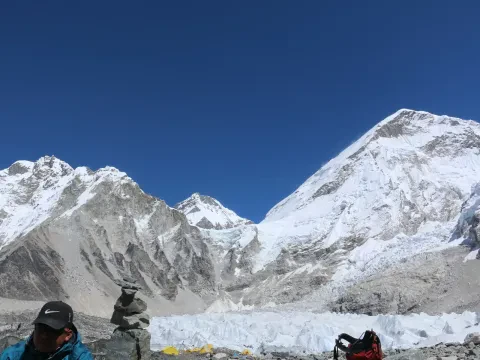
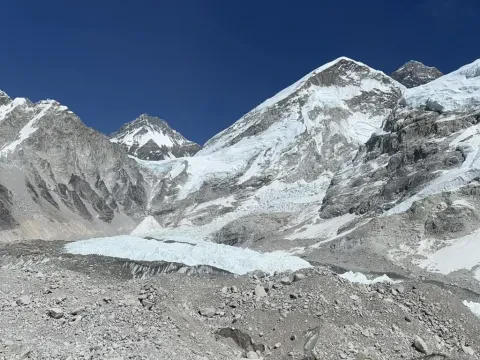
Here, you’ll touch down at Kala Patthar (5,545m / 18,192ft), which is hands-down the prime spot for views in the region, but only for 20 minutes. That’s not a suggestion—that’s a rule. The air is super thin up there, and regulations are strict for good reason. The helicopter engine stays running, thanks to freezing temps and those unpredictable mountain winds. Honestly, that 20-minute window isn’t random. It’s the perfect balance—just enough time to snap jaw-dropping photos of Mt. Everest (8,848.86m / 29,031ft) and the other gigantic peaks. Now, if you’re wondering about Everest Base Camp, here’s the deal: helicopters don’t land there commercially. Instead, you get an amazing aerial view hovering over the camp and the Khumbu Glacier. You experience the region’s wild beauty without risking your health from the brutal altitude.
| Location | Activity | Duration |
|---|---|---|
| Kala Patthar (5,545m) | Photographic Landing | 20 Minutes |
| Everest Base Camp (5,364m) | Low-Altitude Overfly | Continuous |
| Hotel Everest View (3,880m) | Breakfast & Reflection | 30 – 45 Minutes |
"People often ask if they can stay longer, but in the mountains, time is dictated by physics, not desire," says an experienced pilot, Bibek Silwal from Altitude Air. "Those 10 minutes at the summit are golden, as long as you use them wisely for memories—not for lingering."
Absolutely—weight limits are non-negotiable when you’re flying in the thin air above the Khumbu. As you climb higher, air density drops, which means helicopters simply can’t lift as much as they do at sea level in Kathmandu. Usually, the max combined passenger weight is 450–500 kg at lower altitudes, but above 4,200 meters it drops to 220–250 kg per shuttle load. So, groups of five often split into two shuttles for the final ascent. It’s a safety rule that Haven Holidays Pvt. Ltd. enforces, and for good reason.
Here, captain Bikas Shrestha of Altitude Air, a mountain flight pro, puts it plainly: "Weight and balance are the heart of high-altitude flying. Never fudge your body weight—every kilo changes how we deal with mountain air. If we ask you to move seats or split up for a shuttle, that’s a safety routine designed to keep your trip thrilling and safe."
| Weight Category | Constraint |
|---|---|
| Total Payload (Sea Level) | 450–500 kg |
| High-Altitude Load (Above 4,200m) | 220–250 kg |
| Per Passenger Baggage | 5–10 kg (small daypack) |
Following these rules keeps you safe. Give your accurate weight at booking with Haven Holidays Pvt. Ltd., and we’ll set up the safest flight path for your epic mountain morning. Ready your gear—the Himalayas are waiting.
Absolutely, you need solid travel insurance for your Everest helicopter tour. Most regular travel plans ignore high-altitude adventures, so if something goes wrong, you could end up paying out of pocket—and that’s not a risk you want to take. At Haven Holidays Pvt. Ltd., we’re serious about this: your insurance should mention emergency helicopter evacuation up to 6,000 meters (about 19,685ft). Helicopter rescues can get pricey, sometimes costing $5,000 to $10,000 in the Khumbu region. Your insurance really becomes your lifeline.
Most importantly, make sure your policy covers medical care, hospital stays, and trip cancellations too. Himalayan weather isn’t predictable—flights are often delayed or cancelled at the last minute. Always read the details carefully. If your insurance doesn’t specifically mention high-altitude coverage, it’s not enough for your trip.
| Coverage Requirement | Why It Is Necessary ? |
|---|---|
| Helicopter Evacuation | Remote terrain makes air rescue the only viable exit. |
| High Altitude (6,000m) | Standard policies usually stop at 3,000m or 4,000m. |
| Medical Treatment | Covers costs for altitude-related sickness or injuries. |
| Trip Cancellation | Protects your investment against sudden weather shifts. |
Here, Mr. Bhabanath Adhikari, an expert guide with over twenty years in the field, says it best: "Don’t treat insurance like paperwork. It’s the most important thing you bring. Send us a digital copy before you set off, and keep a printout on you. Insurers like World Nomads (Explorer Plan) or Global Rescue understand the real risks you face up there, so they’re always good options."
Yes, altitude sickness (or Acute Mountain Sickness) is real—even if you’re just doing a helicopter tour. Unlike trekking, the helicopter takes you from Kathmandu (1,400m / 4,593ft) straight up to over 5,000 meters in barely a few hours. That fast jump means your body hasn’t had days to adjust, and the sudden drop in oxygen can make you feel lousy: headache, dizziness, nausea—those are common. The bright side? You don’t stay up high for too long. Most landings last only 10–15 minutes, so you’re not likely to develop severe conditions like HAPE or HACE, which are more common on extended treks. Prevention is key, and Haven Holidays Pvt. Ltd. keeps a close eye on your comfort during the flight.
| Prevention Tip | Impact on Your Safety |
|---|---|
| Acclimatization | Spending 1-2 days in Kathmandu helps your body adjust. |
| Hydration | Maintains oxygen flow and prevents dehydration. |
| Dietary Choices | Light, carb-rich meals provide stable energy. |
| Medical Consul | Ask your doctor about prophylactic options like Diamox. |
Likewise, captain Bikas Shrestha from Altitude Air has been flying in the Himalayas for years. He points out, "The fast rise is what really challenges your body. My advice? When you step onto Kala Patthar (5,545m / 18,192ft), take it easy. Don’t rush for photos—move slowly, breathe deeply. If your head starts hurting, tell us right away. We know the signs and will get you down as soon as possible. Your safety is always first, both in the air and on the ground."
Honestly, timing makes all the difference if you want to catch the Himalayas at their best. At Haven Holidays Pvt. Ltd., we always recommend two prime windows. The first is spring—March to May. The valleys are bursting with blooming rhododendrons, and the skies tend to stay clear. Then there’s autumn, from September to November. That’s right after the monsoon ends, so the air feels scrubbed clean, making the massive peaks—Mt. Everest (8,848.86m / 29,031ft) and Lhotse (8,516m / 27,940ft)—look sharper than ever. The wind behaves itself, and visibility is high, which is super important if you want to land at Kala Patthar (5,545m / 18,192ft).
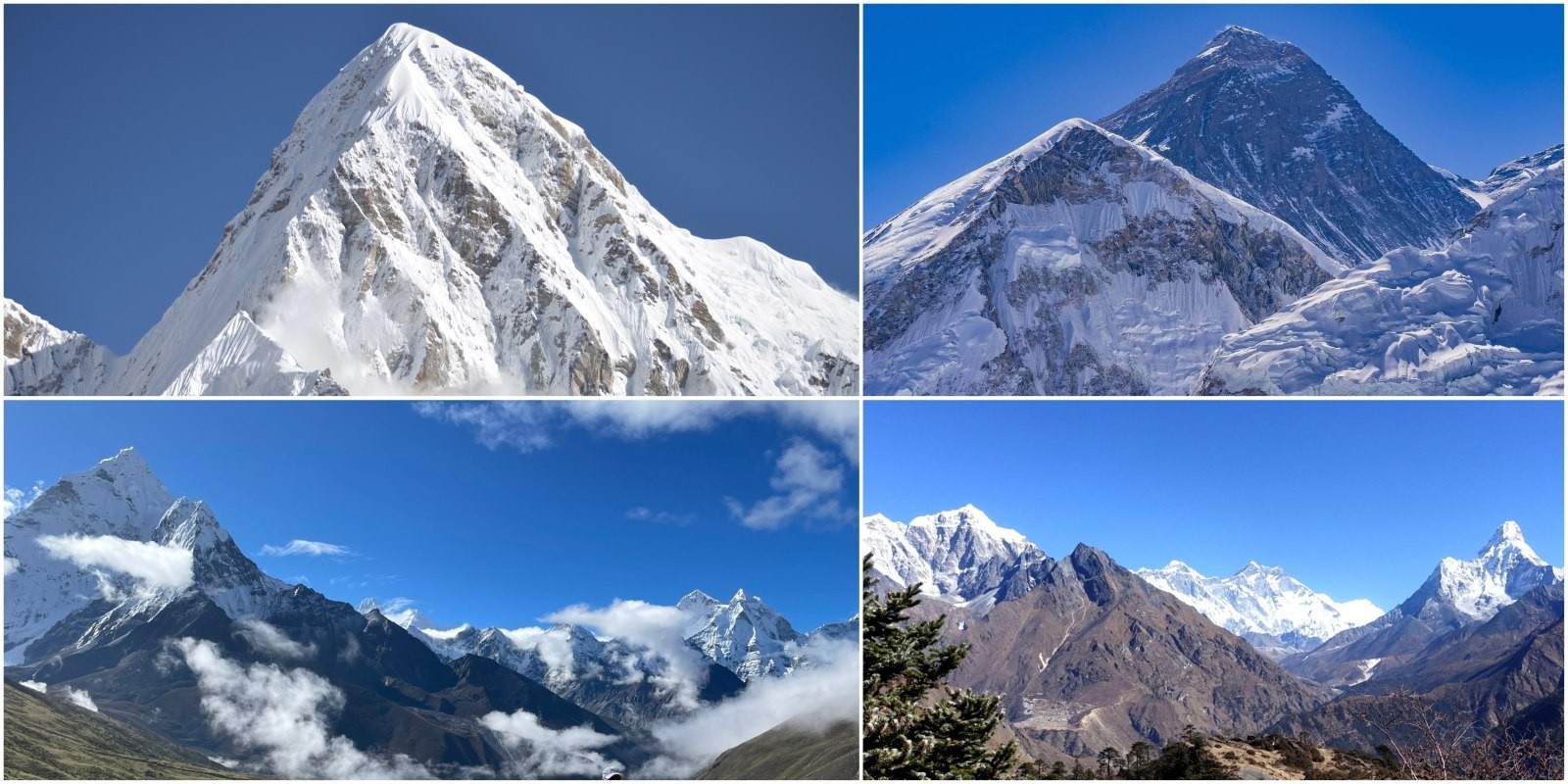
| Season | Visibility | Temperature | Best Feature |
|---|---|---|
| Spring | High | Moderate | Beautiful landscapes |
| Autumn | Exceptional | Cool/Crisp | Best photographic clarity |
| Winter | Moderate | Very Cold | Fewer crowds |
| Monsoon | Poor | Warm | High risk of cancellation |
“For over 15 years, I’ve guided clients through all four seasons,” says Mr. Ramsaran Simkhada, one of the best guides for Haven Holidays Pvt. Ltd. “Autumn definitely gives you those postcard-perfect shots, but spring brings so much energy—everything feels alive. No matter when you want to come, book early with Haven Holidays Pvt. Ltd. The best landing slots at Everest View Hotel (3,880m / 12,730ft) disappear months before the rush hits.”
Here, you can never really boss the Himalayas around. Safety is always the top priority. The weather in the Khumbu changes fast—a bright morning can turn cloudy in no time. When Haven Holidays Pvt. Ltd. schedules your flight, we’re glued to live reports from mountain stations. If conditions at Lukla (2,860m / 9,383ft) or Kala Patthar (5,545m / 18,192ft) aren’t safe, we put your flight on hold immediately. We won’t risk anyone’s safety just to stick to a schedule, and we won’t push for a takeoff if visibility drops or winds pick up beyond our strict limits. If there’s a delay, we’ll try to reschedule your tour for the next good weather window while you’re in Kathmandu.
| Scenario | Action Taken |
|---|---|
| Minor Delay | Wait for weather to clear for a later morning departure. |
| Major Cloud Cover | Reschedule to the following day or later in your trip. |
| Full Cancellation | Full refund processed by Haven Holidays Pvt. Ltd. |
| Safety Warning | Immediate return to base or diversion to a lower landing site. |
Here, pilot Rabindra Khanal from Air Dynasty gets straight to the point: “I’ve turned back just minutes from the peaks more times than I can count. The mountain isn’t going anywhere, and your safety is my job. The team at Haven Holidays Pvt. Ltd. keeps you updated, and I expect everyone to take our ‘no-go’ calls seriously. We aren’t just flying—we’re respecting what the high altitude can throw at us. When I announce a delay, it’s because I see clouds you still can’t spot, and I’m bringing you home safe. Always.”
Absolutely. All the helicopters we use for tours in the Everest region come with built-in oxygen systems—so you’re covered for both comfort and safety. We climb fast, starting in Kathmandu at around 1,400 meters (4,593ft) and soar to heights over 5,000 meters. That’s a huge change in both air pressure and available oxygen in a short period. Oxygen is always on board, but most people only need it if they start feeling off—maybe a bit dizzy, nauseous, or if a headache sneaks up suddenly. At Haven Holidays Pvt. Ltd., our crews are trained to keep an eye on everyone. If you need oxygen, they’ll help you right away. Honestly, your comfort isn’t just a nice extra—it’s a core part of our safety routine.
| Aspect of Oxygen Safety | Why It Matters |
|---|---|
| Rapid Ascent | The jump in elevation can cause sudden oxygen deprivation. |
| Integrated Systems | Onboard oxygen allows for immediate intervention. |
| Crew Training | Pilots are experts at recognizing signs of hypoxia. |
| Safety Protocol | We prioritize a swift descent if supplemental oxygen is insufficient. |
Here, Mingma Sherpa, who’s grown up in the Khumbu region, has some wisdom to share: "In our mountains, oxygen is life, and the sky is unforgiving to those who do not respect it. When I talk to travelers, I tell them not to fear the height, but to stay humble. Trust your pilot, breathe deeply, and do not be afraid to tell the crew if you feel even a little 'off.' They are there to look after you, and using the oxygen is not a sign of weakness; it is a sign of wisdom."
Here, you can't just pick a landing spot—these helicopter tours always stick to stops chosen by strict aviation rules, environmental policies, and safety requirements. The Khumbu region is sensitive and protected, so we’re only allowed to land at certain helipads, ones that have been thoroughly checked out for safety and minimal impact on the environment. Think places like Kala Patthar (5,545m / 18,192ft) or the Everest View Hotel (3,880m / 12,730ft)—those are the real deals. Land anywhere else, and you’re breaking the law, putting yourself at risk, and harming the landscape. Haven Holidays Pvt. Ltd. takes this seriously; we follow all the rules to make sure your trip is safe, smooth, and respectful to the Himalayas.
| Landing Site | Altitude (m / ft) | Purpose |
|---|---|---|
| Lukla Airport | 2,860m / 9,383ft | Refueling and safety check |
| Everest View Hotel | 3,880m / 12,730ft | Breakfast and panoramic viewing |
| Kala Patthar | 5,545m / 18,192ft | Iconic summit-point photography. |
Here, Mingma Sherpa sums it up best: "The mountains have their own rules, and these fixed landing spots are not just rules—they are the boundaries of safety. I have seen many people ask to land in a favorite spot, but the pilots know the wind and the rock better than anyone. Trusting the established stops means you are choosing to see the very best views from the safest possible vantage points. Let the experts take you where you need to go, and you will see sights that will stay with you for a lifetime."
Does knowing that the landing sites are carefully chosen for safety and conservation help you feel more at ease about your upcoming adventure?
Here, you’ll want to layer up smartly—temperatures in the Himalayas can change fast, from the pleasant warmth of the valleys to icy winds at the higher spots. Start with a base layer that pulls sweat off your skin (think synthetic or merino wool), throw on a fleece or lightweight down for insulation, and finish with a windproof, waterproof jacket and pants that keep out brutal gusts. Sturdy, waterproof trekking boots, wool socks, plus a beanie, neck gaiter, and good insulated gloves are all non-negotiable according to Haven Holidays Pvt. Ltd. And here’s something people forget—you’ll need serious sunglasses and high-SPF sunscreen at Kala Patthar (5,545m / 18,192ft). The sun up there is wild, and snow blindness or sunburn isn’t just an inconvenience.
| Clothing Layer | Function |
|---|---|
| Base Layer | Regulates temperature and wicks away moisture. |
| Mid-Layer | Traps body heat for insulation in sub-zero temperatures. |
| Outer Shell | Shields against wind, snow, and rain. |
"Layering is the key to mastering mountain weather," says Mr. Bhabanath Adhikari, an expert guide to Haven Holidays Pvt. Ltd. "It might feel warm in the sun, but the second you’re hit by wind at 5,000 meters, you’ll wish you had every piece with you. Dress so you can quickly strip or add layers without holding up your group or the pilot."
Absolutely—you can mix the comfort of a helicopter ride with the real adventure of trekking through the Khumbu region. Tons of guests go for the “Heli-Trek” combo, where you hike for 3 to 5 days through iconic villages like Namche Bazaar and Khumjung, then catch a helicopter from the Everest View Hotel (3,880m / 12,730ft) straight to Kala Patthar (5,545m / 18,192ft). You get both worlds: you connect with Sherpa traditions on the trail and score a spectacular flight over Everest (8,848.86m / 29,031ft) that saves you time. Haven Holidays Pvt. Ltd. is great at creating custom itineraries so you get proper acclimatization and don’t waste a minute of vacation.
| Package Type | Duration | Primary Focus |
|---|---|---|
| Luxury Tour | 1 Day | Maximum comfort and speed. |
| Short Trek + Heli | 3–5 Days | Cultural immersion and gentle hiking. |
| Full EBC Trek | 12–15 Days | Deep physical challenge and complete acclimatization. |
"The mountains speak to you most clearly when you are walking among them," Mingma Sherpa shares. "If you trek for a few days before hopping in the helicopter, you feel the size of the landscape way more deeply. It turns a quick sightseeing flight into something meaningful—you’ll remember it for the rest of your life."
Lock in your spot early—best is 3 to 6 months ahead, especially if you’re aiming for spring (March–May) or autumn (September–November). Those months have the stable weather and epic visibility everyone wants—photographers, trekkers, you name it. Booking with Haven Holidays Pvt. Ltd. early means you get your ideal dates, and we have time to sort permits, find the right pilot, and handle any last-minute curveballs. Sure, sometimes last-minute bookings work, but you might be stuck with limited helicopter options or little wiggle room if the weather acts up.
| Booking Window | Advantage |
|---|---|
| 6+ Months | Guaranteed date, choice of preferred helicopter model. |
| 3 Months | Ideal for securing permit processing and lodge bookings. |
| 1 Month | Possible, but you’ll need to be flexible with flight dates. |
"Don’t leave your dream to luck," Mr. Ramsaran Simkhada, with 15+ years guiding experience, 4 yrs for Haven Holidays Pvt. Ltd, urges. "The skies above Everest are gorgeous, but competition is tough. Book early, and we’ll build a buffer into your schedule—honestly, that’s what makes the difference between actually getting to base camp or just wishing you had.
"Ready to set your dates, or is there anything else you want to ask about making this trip fit your group perfectly?
1. What is the average cost of an Everest Base Camp Helicopter Tour?
For a group tour, you’re usually looking at $1,100 to $1,500 per person. If you want a private charter, it jumps to about $4,900 to $5,500 for the whole trip, and those prices change a bit depending on the company and the season. Most of the time, that covers your airport transfers, insurance, and service fees—but you’ll still need to pay separately for park entry permits.
2. What is the difference between a private charter and a group-joining tour?
With a group tour, you’ll share the helicopter with other travelers, which saves money. Private charters are all about having the helicopter to yourself or your group. You get extra freedom—pick your own departure time, stay longer (or shorter) at landing spots, and move at your own pace without waiting on anyone else.
3. What are the best months of the year for this tour?
Spring (March to May) and autumn (September to November) are the sweet spots for these tours. The skies are usually clear, and the weather’s pretty stable, so you get those classic sweeping mountain views. Tours do run year-round, though, if the daily weather cooperates.
4. How long does the entire helicopter tour typically last?
The whole adventure takes around four to five hours, starting and ending in Kathmandu. That includes flying to Lukla for refueling, soaking up the scenery over the Khumbu Glacier, and making a couple of short stops at places like Kala Patthar or the Everest View Hotel—enough time for photos and maybe a quick breakfast.
5. Do I need to be physically fit to take this tour?
You don’t have to be in marathon shape, but you should be in generally good health. The helicopter climbs to a high altitude pretty fast, so the thin air can be tough on anyone with heart or breathing issues. If you have any health concerns, check with your doctor before booking.
6. Are permits and entry fees included in the tour cost?
Usually, you have to pay extra for the Sagarmatha National Park entry fee and Pashang Lhamu Local Area Permit—it’s around $55 a person—which isn’t built into the tour price. Sometimes you’ll handle it in advance, or you’ll pay at the park checkpoint. Just double-check with your operator to be sure about what’s covered.
7. How many passengers can fly in one helicopter?
Most helicopters, like the Airbus H125, can carry up to five passengers. There’s a strict limit because the air gets thin up there, so they keep group sizes small. If your group’s total weight is too much for one trip, you might need to split up and do shuttle flights.
8. Are there strict weight limits for passengers?
Yes, there are. The helicopter’s total weight capacity is usually capped at about 500 kg for everyone and their gear. If the passengers’ combined weight is too high, especially for landings at higher points, the operator might arrange extra shuttle flights to keep things safe.
9. Is oxygen provided on the helicopter?
Any reputable company carries emergency oxygen on board. You probably won’t need it since you won’t be at high altitude for long, but it’s there, just in case someone gets uncomfortable or shows signs of altitude sickness.
10. Can I land directly at Everest Base Camp?
No, helicopters don’t land right at the actual Everest Base Camp because of strict rules and safety concerns. Instead, you’ll get to fly right over it for some amazing views, and then land at Kala Patthar. From there, you’ll actually see Everest better than you would from Base Camp, plus you get to take in all the glaciers spread out below.
11. How long will we actually spend at Kala Patthar?
You’ll get about 15 to 20 minutes on the ground at Kala Patthar. That’s not a lot, but they keep it short so you don’t spend too much time at high altitude. Still, it’s enough to snap some incredible photos of Everest and soak in those wild panoramic views.
12. Is altitude sickness something I should worry about on this trip?
Definitely. This flight climbs fast—well over 5,000 meters—so altitude sickness is a real possibility. Even though you won’t be up there long, you might feel a headache or nausea. Drink plenty of water, and if you start feeling off, let your pilot know right away.
13. What should I wear to stay comfortable up there?
Dress in layers, for sure. The temps swing a lot between Kathmandu and the mountains. Go with a solid down jacket, thermal base layers, warm hat and gloves, and sturdy trekking shoes. Don’t forget windproof gear—mountain breezes can cut right through you, even when the sun’s out.
14. What if the weather ruins my flight day?
If the weather turns bad, they’ll either reschedule your flight or give you your money back. Mountain weather is tricky, so keep your plans loose and try to book your flight early in your stay. That way, you’ll have wiggle room if things don’t go as planned.
15. Do I need special travel insurance for this adventure?
Absolutely—get travel insurance that covers helicopter rescue and emergency evacuation at high altitudes. Regular insurance usually skips these extras, so check your policy and make sure you’re covered up to 6,000 meters. Better safe than stuck.
16. How early should I book my flight?
If you want your pick of times, book two to four weeks ahead, especially during busy trekking seasons (spring and autumn). Sometimes you can snag a last-minute seat, but it’s hit or miss, especially when the crowds roll in.
17. Can I mix a helicopter tour with a bit of trekking?
Sure thing. Tons of people fly into spots like Lukla or Namche Bazaar, do some hiking, then hop a helicopter back to Kathmandu. You get the real Khumbu vibe on foot, and save time coming home.
18. Are the landing sites set in stone, or can I choose?
Landing spots are pretty much set by the flight path, safety rules, and environmental protections. You can’t just pick anywhere, but pilots sometimes tweak the route for stops at places like Everest View Hotel or Syangboche, depending on traffic and safety that day.
19. Does the pilot give a safety briefing before we take off?
Yes, the pilot does a safety talk before you board. They’ll run through how to get in and out safely, use the emergency oxygen, and what to expect at those high-altitude spots. It’s all about keeping everyone safe.
20. Should I pack special camera gear for the mountains?
Definitely bring your camera—but bring extra batteries, because the cold chews through them fast. A wide-angle lens works great for the big Himalayan views, and a protective bag keeps your gear safe from dust and sudden weather changes while you’re traveling.
Our travel experts are ready to assist you with any questions.
Send us a message.Have a question before you book? Send your enquiry below and our travel experts will get back with the required information.