Ever wondered if you're really ready for one of the most famous adventurous treks in Nepal? That and physical preparation and acclimatization are not something you should skip or compromise. These two elements are essential for completing the Annapurna Circuit safely and enjoyably.
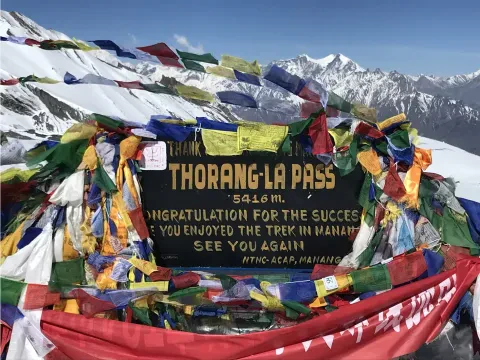
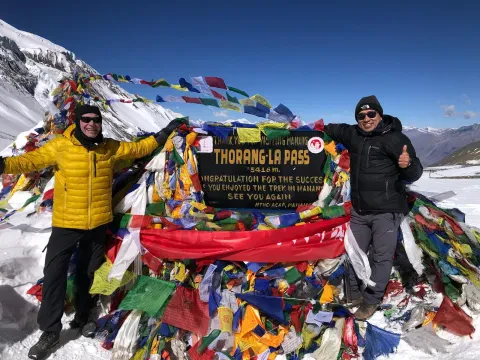
Actually, the Annapurna Circuit is a 160-230 km trek that can take anywhere from 12 to 20 days and goes up to a summit altitude of 5,416 meters (17,769 feet) in Thorong La Pass. This long trek can pose serious difficulties to even the most fit hikers without prior acclimatization and proper training in terms of fatigue, altitude sickness and injuries.
Why Training and Acclimatization are Important?
| Factor | Without Preparation | With Proper Preparation |
|---|---|---|
| Risk of AMS | High | Low |
| Daily Energy levels | Fatigue & exhaustion | Sustained |
| Trek Completion Rate | Lower | Much higher |
| Trek enjoyment levels | Low | Maximum |
| Risk of Injuries | Higher (knees, ankles) | Much lower |
Therefore, investing a significant amount of time in physical training and smart acclimatization plans is key to having a successful and memorable Annapurna Circuit adventure.
[trip:annapurna-circuit-trek-12-days]
Have you tried to picture what a normal day in the Annapurna Circuit would feel like? Well, this circuit has varied terrain and terrain change is key for preparation for these varied demands.
Actually, the trek starts with easy walks in lush green valleys and then turns progressively steep and exposed as you keep gaining altitudes. Each part of the trek, therefore, has specific demands, and you will have to cope with physical and mental stress.
Terrain Variations and Daily Demands :
| Section | Elevation Range | Terrain Type | Avg. Walking Hours | Main Physical Demands |
|---|---|---|
| Lower Valley | 820-2670m | Forest trail, stone steps | 5-7 hours | Steady walking, humidity. |
| Mid Hills | 2670-3540m | Pine forest, suspension bridges | 6-8 hours | Gradual incline, thinner air. |
| Manang to Thorong Phedi | 3540-4600m | Rocky trail, exposed slope | 6-8 hours | Altitude adaptation, cold. |
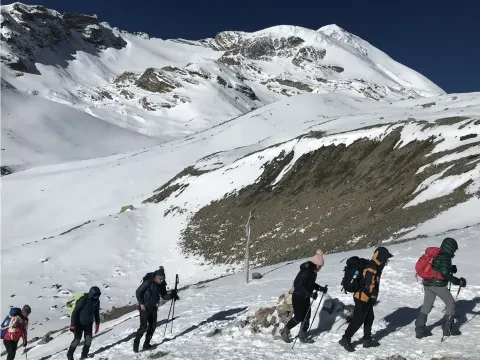
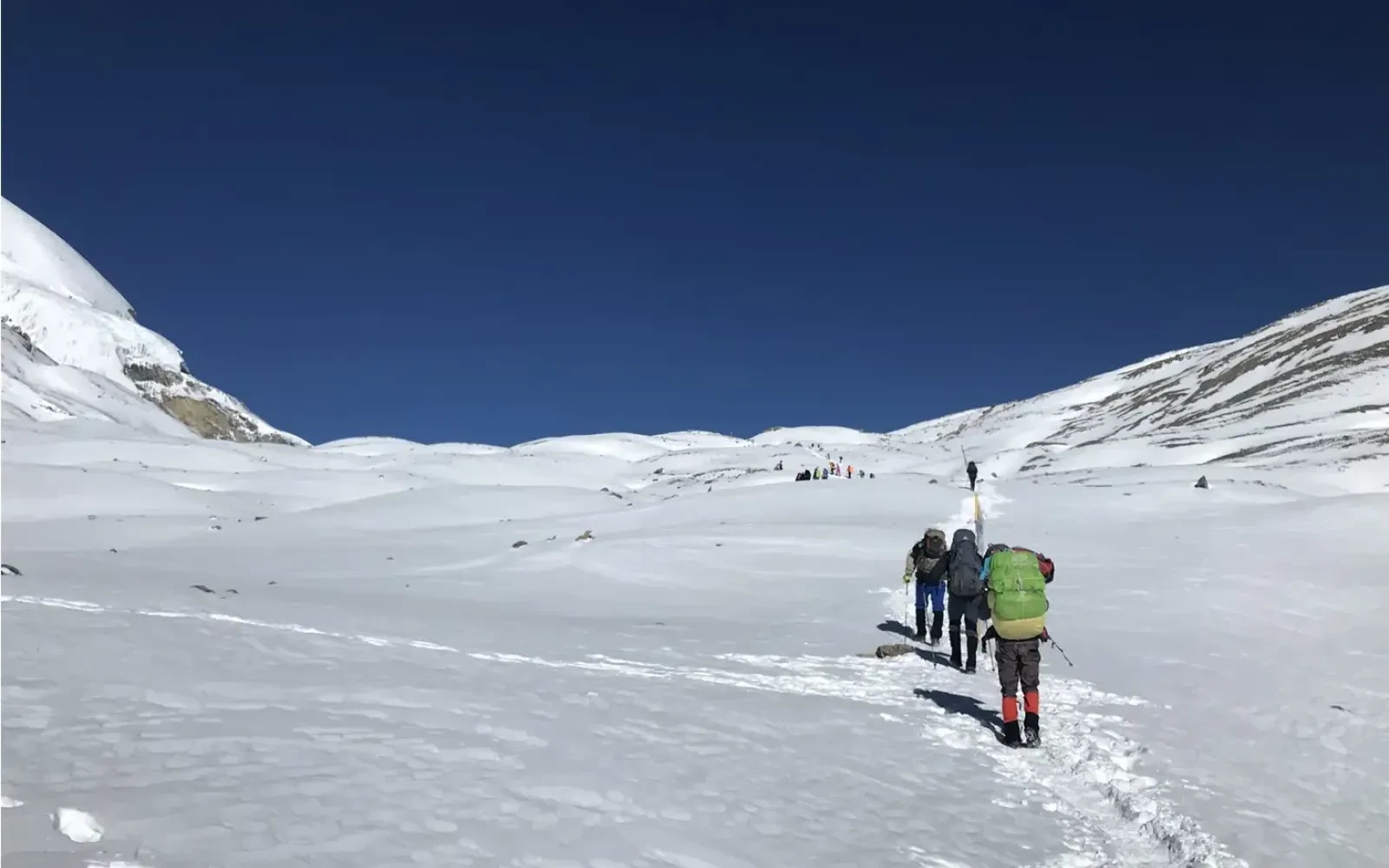
| Thorong La Pass Day | 4600-5416-3710m | Steep climb + long descent | 8-11 hours | Extreme altitude, strong wind. |
| Kali Gandaki Descent | 3710-822m | Steep downhill, rocky trail | 5-7 hours | Knee strain, loose rocks. |
Likewise, weather conditions can rapidly change at altitudes over 4000 m. Hence, knowing these will help you train appropriately and estimate the duration for your trip.
Have you ever considered if your current fitness is really enough for the Annapurna circuit? First of all the very most important step before starting any training program is to honestly asses your current fitness endurance, strength and hiking abilities.
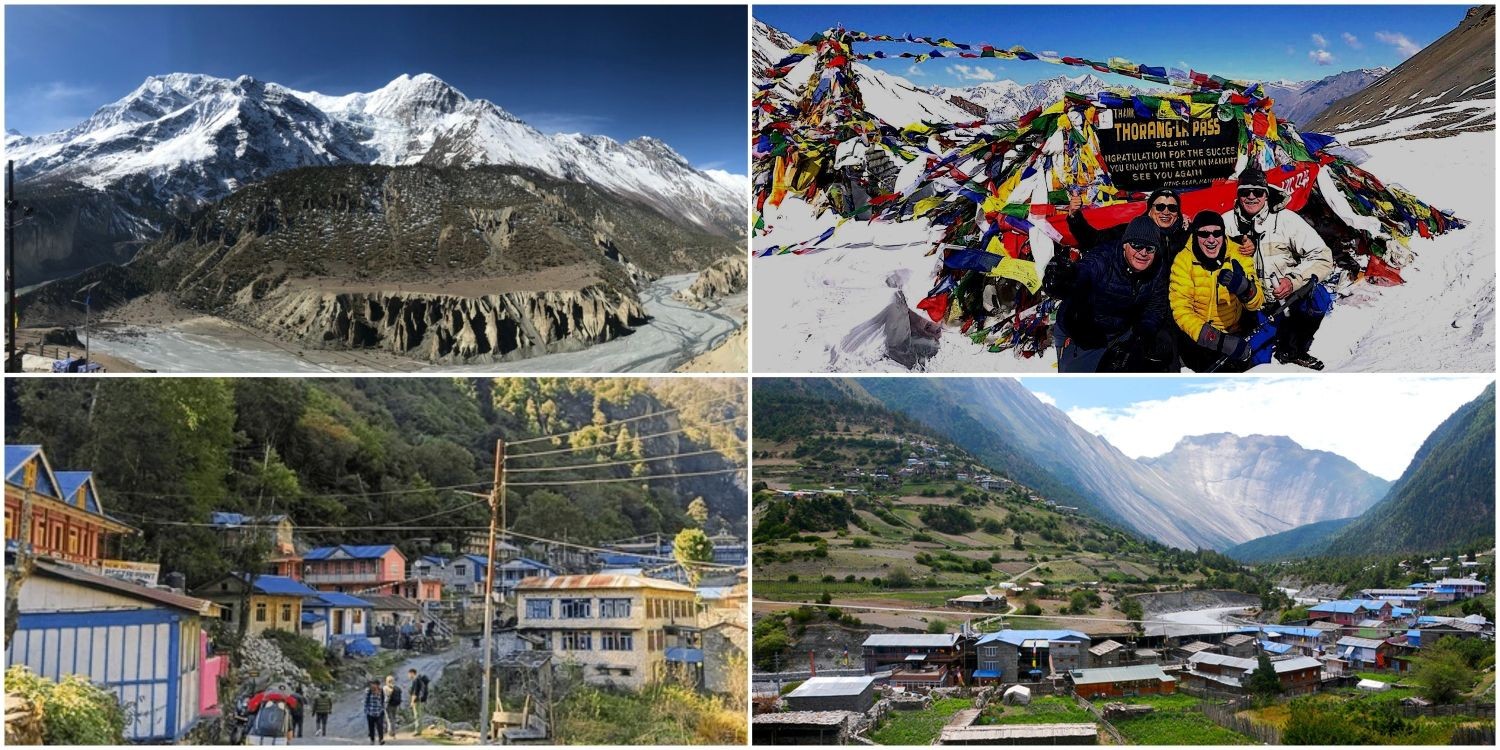
Additionally, the Annapurna Circuit does not only require endurance but a perfect mixture of aerobic capacity, leg strength and mental capacity. To accurately identify strengths and weaknesses before the program will save time in the training.
Self-Assessment Checklist :
| Fitness Component | Beginner Level | Intermediate Level | Advanced Level | Your Current Level |
|---|---|---|
| Endurance | 4-5 hour walk | 6-7 hour walk | 8 hour+ with backpack | - |
| Elevation Gain | 400-600 m a day | 700-900m a day | 1000m+ a day | - |
| Strength (Legs/Core) | Body-weight squat and lunge exercise | Weight lifting exercise | Very strong hiking specific muscles | - |
| Prior Experience | Day hikes only | 4-6 day trek | Several treks in the Himalayas | - |
| Recovery time | 2-3 days | 1 day | Same day recovery | - |
In fact, it is therefore recommended that if you identify yourself mostly as a beginner or lower intermediate that you begin your training at least 3 months prior. To be honest to yourself now will mean saving you future disappointment or health issues on the trail.
Have you decided the Annapurna Circuit Trek, but aren't sure where to start with your training? Creating a progressive 8 to 12 week training plan is one of the most efficient ways to gain the fitness and confidence needed for the hike.
Beginning your training 2 to 3 months ahead of time provides enough opportunity for your body to gradually adapt, which significantly reduces your risk of injury and maximizes your trekking performance.
Recommended Training Schedule :
| Week Range | Focus Area | Key activities | Weekly Hiking Goal |
|---|---|---|
| Weeks 1-4 | Base building | Brisk walks, running, swimming, cycling | 4-6 hours. |
| Weeks 5-8 | Strength and endurance | Hikes with a loaded backpack, weight exercises (squats, lunges, etc), stair training | 6-8 hours. |
| Weeks 9-12 | Peak and hike specific training | Long weekend hikes with loaded backpack, hill repeats | 8-10 hours. |
The Most Important components of the training plan :
In the last 4 weeks, make sure to complete at least 2 long hikes per weekend. Ideally, the duration should match your expected trekking duration on the most physically challenging trekking days. By the time of your trek, you should feel confident enough hiking 7-9 hours a day with a backpack that includes necessary elevation gains.
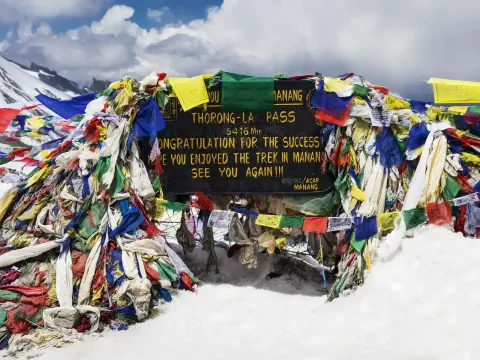
Did you know that hiking for 5 to 8 hours a day at increasing altitudes is one of the most demanding physical aspects of the Annapurna Circuit? Building your cardiovascular endurance is also vital for the effective use of oxygen, particularly when the air thins at altitudes above 3,000 meters. In addition, good cardiovascular fitness will allow you to maintain your desired pace for long hours, without fatigue. For this reason, endurance training will pay dividends on the trail by making your time hiking far more enjoyable.
Cardiovascular Training Recommendations :
| Week Range | Training Focus | Weekly Sessions | Duration per Session | Intensity Level |
|---|---|---|
| Weeks 1-4 | Base Building | 4-5 sessions | 45-60 minutes | Moderate |
| Weeks 5-8 | Endurance Development | 5 sessions | 60-90 minutes | Moderate to High |
| Weeks 9-12 | Peak Endurance & Trail Specific | 5-6 sessions | 90-120 minutes | High (with pack) |
Meanwhile, aim to perform at least one long session on each weekend that will replicate the physical demands of hiking. As a result, at the end of the 12 week cycle, you should be comfortable maintaining 2-3 hours of effort which will be comparable to trekking for your first few hours each day on the trek.
Have you considered how tough steep ascents and descents on rocky trails are? Leg, core and back strengthening is crucial, as it will aid in carrying weight efficiently, promote stability on rough terrain and protect your knees and ankles during long downhills. Strong muscles will improve balance on the unstable surface and reduce your risk of ankle and knee injury. Hence, a well-structured strengthening program will ease the challenge of climbing steep ascents and diminish the strain of downward trudges.
Key Strengthening Exercises :
| Exercise | Sets x Reps | Focus Area | Frequency per week |
|---|---|---|
| Squats / Goblet Squats | 3-4 x 10-15 | Legs & Glutes | 3 times |
| Lunges / Walking Lunges | 3 x 12 each leg | Legs & Balance | 3 times |
| Step-Ups | 3-4 x 10 each leg | Climbing Power | 3 times |
| Plank Variations | 3 x 30-60 seconds | Core Stability | 4 times |
| Deadlifts / Romanian DL | 3 x 8-12 | Back & Posterior Chain | 2 times. |
Also, consider performing 3 full strength workouts each week, ensuring that you get adequate rest. By blending strength and cardiovascular training, you can create a rounded fitness program that will fully prepare you for trekking.
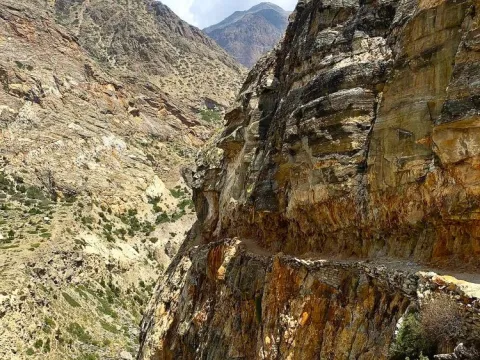
Did you ever stop to think how different walking on the actual trail will feel compared to doing your usual workouts at the gym? Even more so, the hiking-specific training is a crucial phase in your preparation as it truly mimics what you will be experiencing on the Annapurna Circuit Trek.
Likewise, walking with a loaded backpack on hills and stairs will develop the exact muscles and endurance that you will need on steep ascents, uneven paths and during those long days on the trek. As a result this type of training will improve your balance and stability, as well as strengthening your joints and your mind.
Hiking-Specific Training: Examples,
| Weeks Range | Training Focus | Backpack Weight | Weekly Target | Recommended Exercises |
|---|---|---|
| Weeks 1-4 | Base Hiking Endurance | 4-6 kg | 1 long + 2 short hikes | Local hills/trails. |
| Weeks 5-8 | Strength & Load Bearing | 6-8 kg | 2 long hikes (6-8 hrs total) | Hills + stairs + weight. |
| Weeks 9-12 | Peak Trail Simulation | 8-10+ kg | 1 very long hike (8-10 hrs) | Full-day, varied terrain hike. |
Ensure that you aim for one long hike at least every weekend for the last 6 weeks of training, as by the time you land in Nepal, you will know what it feels like to spend many hours walking with weight.
Did you worry how your body will cope with high altitudes on Thorong La Pass (5416 meters)? More importantly, altitude acclimatization is just as vital as being physically fit as even the fittest climbers can fall victim to Acute Mountain Sickness (AMS) if they aren't properly prepared.
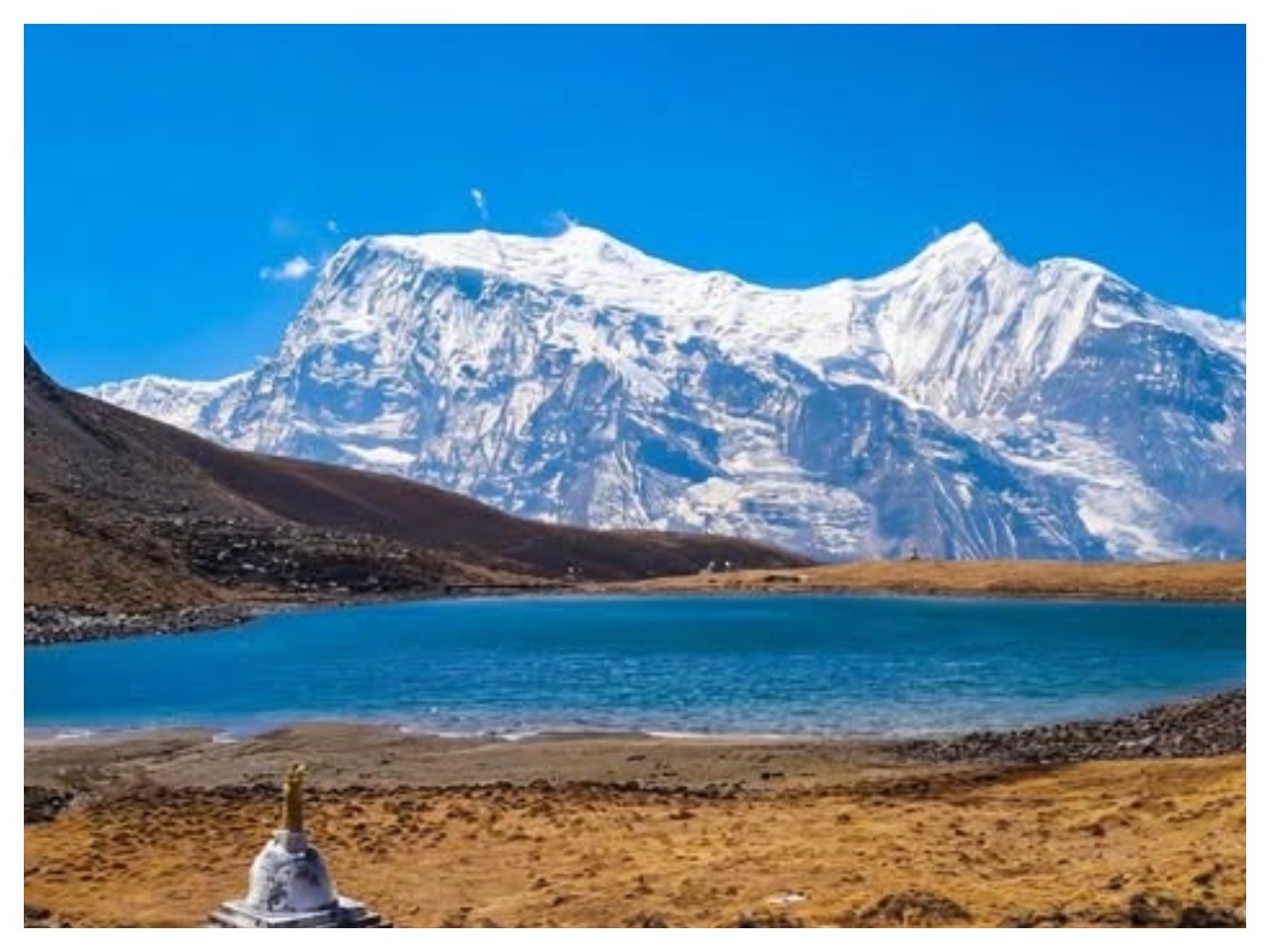
Even though it's impossible to accurately simulate the effects of high altitude at sea level, using clever training methods can improve your body's efficiency when using oxygen, its ability to cope with thin air, as well as reducing the chance of getting AMS.
Effective Altitude Acclimatization Strategies:
| Method | Execution | Effectiveness | Recommendation |
|---|---|---|
| Hypoxic Mask Training | During cardiovascular workouts | Moderate | 3-4 sessions/week. |
| Long High-Altitude Hikes | Weekend trips to mountainous areas | High | Best possible option. |
| Breath Control Exercises | Daily 10-15-minute sessions | Supportive | N/A. |
| Stair Climbing | With mask or at a high pace | Good | Excellent for leg/lung power. |
More importantly, it's also advisable to arrive in Kathmandu a few days before your trek and spend time in slightly elevated locations like Nagarkot or Pokhara. Combining smart training with a well-structured itinerary (including an extra day in Manang) will make sure you minimize your altitude-related risks.
Have you considered that mental strength and recovery will be as crucial as physical fitness on the Annapurna Circuit? What's more, long trek days, fickle weather, and high-altitude fatigue will severely test your mental and energy levels.
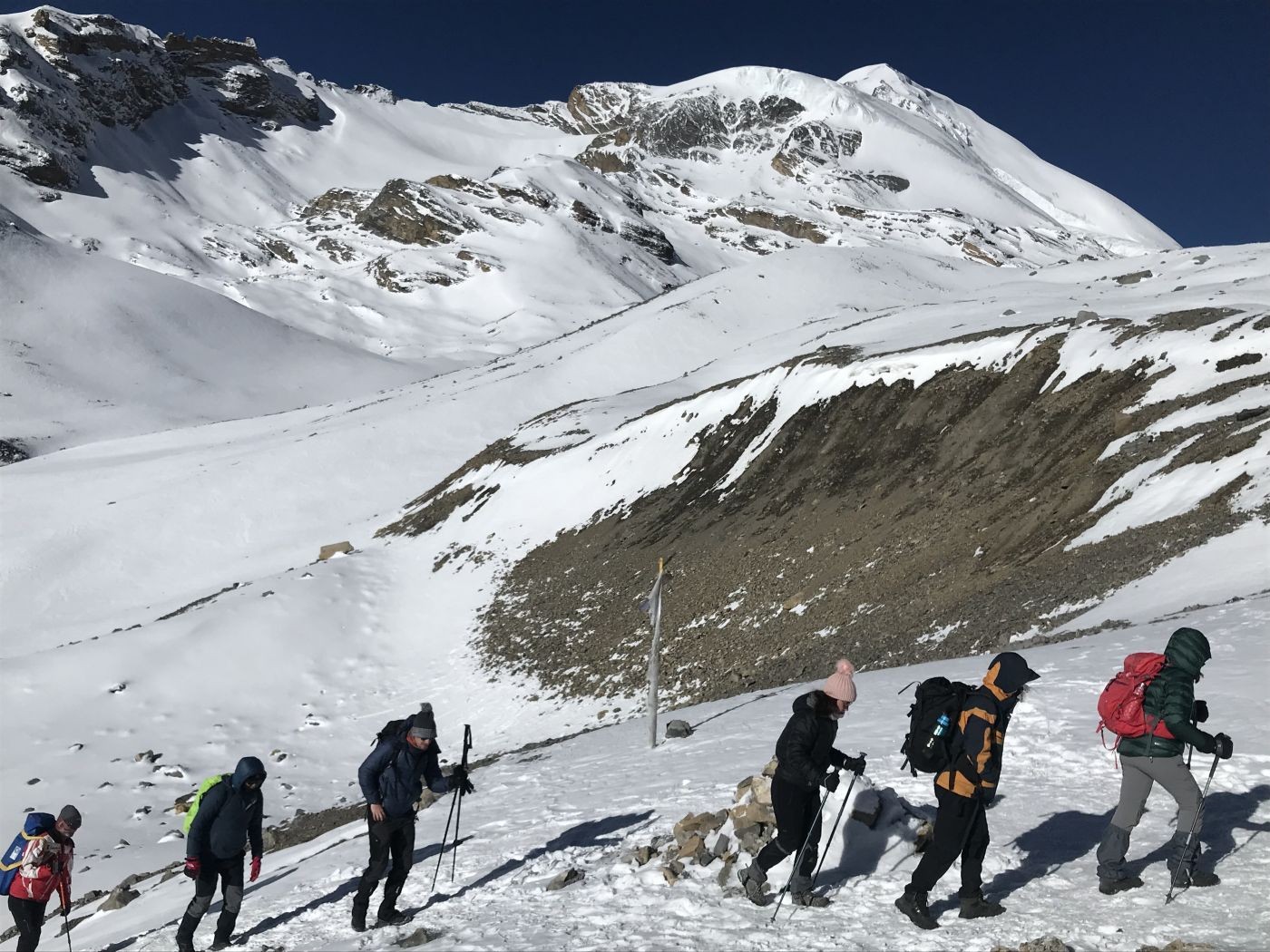
Also, knowing to listen to your body, staying hydrated, and making time for smart recovery will be key to success. Mental resilience will see you through the difficult parts and smart recovery will prevent fatigue and injury.
Essential Mental & Recovery Strategies :
| Area | Training Focus | How to Practice | Benefit |
|---|---|---|
| Mental Toughness | Visualization & positive self-talk | On long training hikes | Better preparation for bad weather. |
| Hydration Discipline | Practice drinking regularly | Carry water on every training session | Prevent dehydration at altitude. |
| Recovery Techniques | Yoga, stretching, foam rolling | 2-3 sessions a week | Less muscle fatigue. |
| Listening to body | Learn to adjust your pace | Vary training intensity daily | Catch problems early. |
| Rest day strategy | Complete rest or gentle walking | One full rest day per week | Improved long-term performance. |
Likewise, it's important to note that the high altitude can take a psychological toll and you will feel fatigued so training your mind to be patient and calm will be very valuable. It's the combination of mentally preparing and recovery wisely that will help you enjoy the Annapurna Circuit rather than simply tolerate it.
Have you considered the importance of testing all of your gear prior to the actual trek? Moreover, testing your boots and all of your equipment under actual trail conditions can prevent painful blisters, discomfort and unnecessary problems on the Annapurna Circuit.
Further, simulating actual trekking conditions on your training hikes can allow your body to adjust to wearing a fully loaded backpack, different terrains and changing weather conditions. Thus, you will be much more confident and comfortable at the beginning of the real trek.
Gear Testing Checklist :
| Week Range | Focus Area | Activities | Gear to Test |
|---|---|---|
| Weeks 1-4 | Basic Gear Familiarisation | Short hikes while wearing boots and daypack | Boots, socks, basic layers. |
| Weeks 5-8 | Load and Terrain Training | Weekend hikes while wearing fully loaded backpack and carrying walking sticks | Backpack, walking sticks. |
| Weeks 9-12 | Full Simulation | Long hikes over rocky and hilly terrain | All clothing, rain gear, boots. |
Likewise, it would be beneficial to train on terrain that is comparable to that which you expect to encounter on the Annapurna Circuit, that is rocky, muddy and with inclines and declines. This can allow you to develop improved balance and foot strength and increase confidence.
Therefore, testing your equipment and carrying out trail-specific conditioning will prepare you for the real thing by the time you reach Nepal.
Ever wondered why even well-prepared trekkers struggle with the Annapurna Circuit? More to the point, many of us will be training intensely and make the same critical mistakes that end up weakening us, possibly making us sick, and ultimately harming the overall success and joy of the journey.
Unfortunately, a lot of trekkers don't take proper notice, and while it is unlikely you will be gravely ill after a trek to these altitudes if you do nothing else to prepare for it besides simply turn up on the day; a bit of knowledge of training pitfalls goes a long way to improve your overall fitness, well-being on the trail, and decrease the chance you’ll be struggling with AMS.
So where do these common mistakes of the Annapurna Circuit lie? Training too intensely, over-training, and lack of Acclimatization are biggest mistakes that people make. Avoiding these mistakes can improve your overall success on the trail; to such an extent that you are enjoying yourself when other people will not be.
Common Training Mistakes :
| Mistakes | Consequence | How to avoid |
|---|---|---|
| Rushing Thorong la with no days rest | Severe AMS or HAPE | Take 1-2 days to rest in Manang before trekking to Thorong la. |
| Training too intensely over the previous weeks and overtraining the body | Fatigued and lowered immunity | Include rest days, and days of easy cardio as part of training. |
| Dehydration. Your body will feel dry and your lungs too | Increased likelihood of AMS | Aim to drink at least 3-4litres of water each day as part of training. |
| Not respecting 'Climb high, Sleep low' | Poor Acclimatisation as your body cannot adjust to varying altitudes adequately | Hike to points that are higher than your sleeping destination and then back down. |
Moreover, another key element that you need to have control over is the mental preparation. Take your time over the preparation, be mentally ready to be slow, calm, patient when dealing with the stresses of this magnificent trek. By avoiding these common training mistakes, your trek along the Annapurna Circuit Trek will be considerably safer, more enjoyable and successful than if you had simply ignored them.
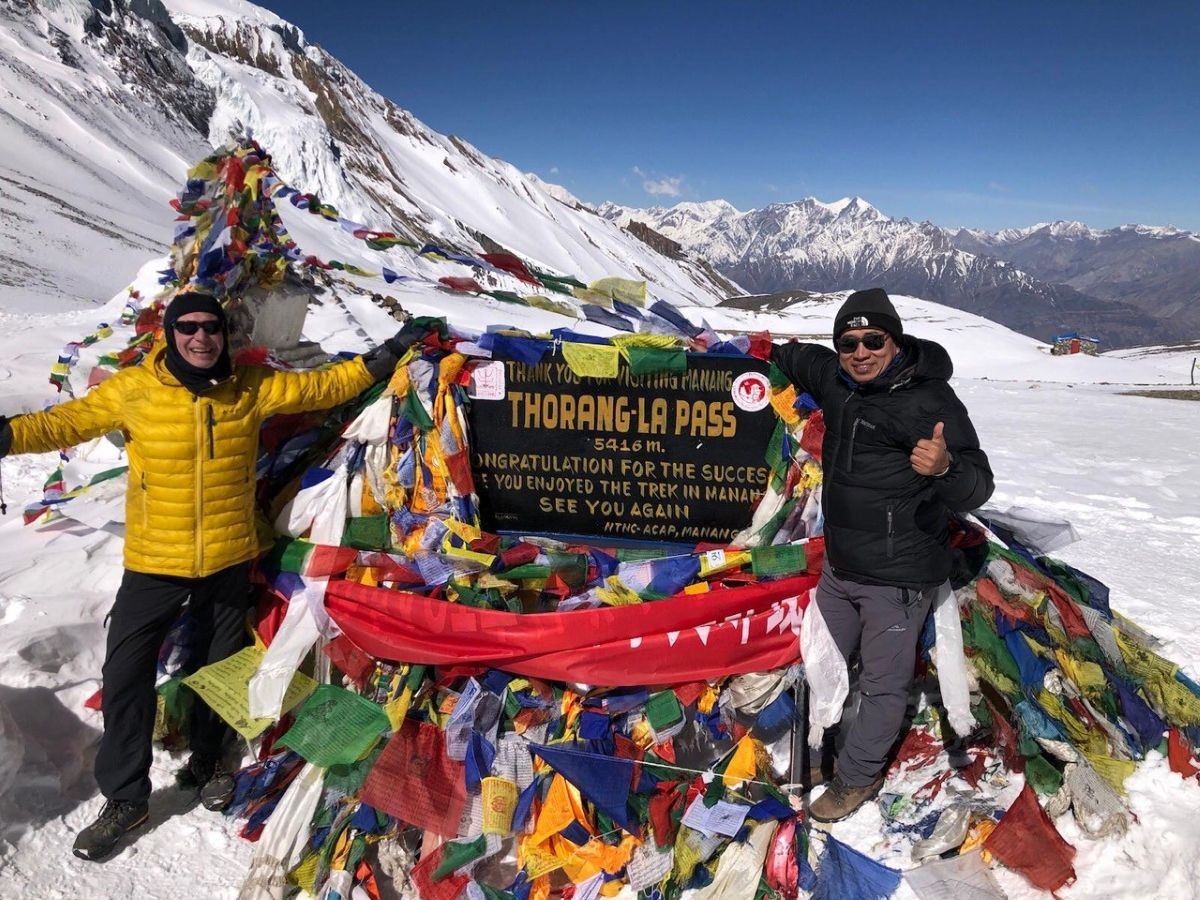
Have you come this far and completed your training with me on the trail? I hope so, as we must remember that the trek itself does not finish where your final training session is complete. I must reiterate the importance of getting yourself ready, with a final checklist making sure that you are physically, mentally and logistically ready so that all that is left is for you to embrace the joys of the most awe-inspiring trek in the world.
Your Training Checklist :
Ultimately the Annapurna Circuit Trek will provide you with amazing memories. It’s the preparation, the effort and understanding that will enhance the wonderful landscape, diverse culture and challenge that this amazing trek has to offer. Go now and have wonderful memories in the Himalayas. Enjoy your trip!
1. How fit do I need to be for Annapurna Circuit?
You need to be able to walk 5-8 hours a day, carrying an 8-12kg pack, over steep, uneven terrain. The 5,416m Thorong La pass requires good cardiovascular health. Regular exercisers with 8-12 weeks of dedicated preparation are generally well-equipped.
2. When should I start physical training for Annapurna Circuit?
Begin specific, structured training 10-12 weeks out. If you're starting from a low fitness base, allow 4-6 months to build gradually and minimize injury risk. Consistency is key.
3. What cardio exercises are best for Annapurna?
Long-duration brisk walking, hill hiking, and inclined treadmill sessions are ideal, done 4-5 times weekly. Gradually work up to 2-3 hours of continuous effort. Cycling and swimming can supplement this.
4. Which strength training exercises are most beneficial?
Focus on squats, lunges, step-ups, deadlifts, and calf raises for legs. Incorporate core work like planks and back extensions. Aim for 2-3 strength sessions per week with weights.
5. Is stair climbing effective preparation?
Absolutely! Stair climbing, especially with a backpack, is highly effective for mimicking the circuit's ascents and descents. Aim for 45-90 minutes and increase the weight gradually.
6. How much weight should I carry during training?
Start with 5-7 kg and build up to your anticipated trek pack weight of 10-15 kg. This conditioning prepares your body for carrying gear over multiple days.
7. What should a weekly training plan include?
Schedule 4 cardio or hiking days, 2 strength sessions, and 1-2 rest or active recovery days (yoga, gentle walks). Include at least one long weekend hike with significant elevation gain.
8. Are actual hikes the best way to train?
Yes, nothing replicates the actual trail better. Complete 6-8 full-day hikes in similar terrain with your trekking boots and pack to prepare your body and mind.
9. How do I prepare for the altitude?
A strong aerobic base is crucial. While no training can fully replicate 5,000m, good fitness improves oxygen use. If possible, do hikes above 3,000m and practice staying hydrated and pacing yourself.
10.Why is endurance training so important?
Endurance is paramount. Your body needs to sustain effort for 6-8+ hours daily. Focus on time on your feet rather than speed for maximum comfort on long circuit days.
11. Can beginners train for Annapurna Circuit?
Yes, beginners can successfully train with 4-6 months of slow, consistent preparation. Prioritize proper form, gradual progression in distance and elevation, and consider a guided trek.
12. How important is leg strength for the trek?
It's vital. Strong quads, hamstrings, calves, and knees are essential for handling steep ascents and particularly long, demanding descents after Thorong La. Weak legs can lead to faster fatigue and injury.
13. Should I train in my actual trekking boots and backpack?
Yes, break in your actual boots and train with the exact backpack and weight you'll be carrying. This prevents blisters and helps your body adapt to the footwear and load.
14. What common training mistakes should I avoid?
Avoid rapid increases in mileage or intensity, skipping rest days, and training solely on flat surfaces. Overtraining without adequate recovery is a common cause of pre-trek injury.
15. How does yoga benefit Annapurna trek training?
Yoga enhances flexibility, balance, core strength, and mental focus. It can also improve breathing efficiency, which is beneficial at altitude. Incorporate it 1-2 times weekly.
16. What nutritional habits should I practice during training?
Mimic your trek diet during long training hikes, focusing on complex carbohydrates, proteins, and electrolytes. Train your body to drink 3-4 liters of water daily for optimal hydration.
17. Is gym training alone sufficient preparation?
Gym training is a good foundation, but not enough on its own. You must supplement it with regular outdoor hikes on hilly terrain, ideally with a backpack.
18. How do I prepare for the long Thorong La day?
Include several 7-9 hour training hikes with early starts and significant elevation gain. Mental preparation for the long ascent and start in the cold is key.
19. What are the best training methods if I live in a flat area?
Utilize stadium stairs, inclined treadmills, multi-story car parks, or bridges with a weighted backpack. Increase session length and intensity (e.g., intervals) to simulate hills.
20. Is physical training the only factor for a successful Annapurna Circuit trek?
While essential, physical training must be paired with good acclimatization, mental readiness, and realistic expectations. A well-prepared body makes the trek significantly more enjoyable and safer.
Our travel experts are ready to assist you with any questions.
Send us a message.Have a question before you book? Send your enquiry below and our travel experts will get back with the required information.