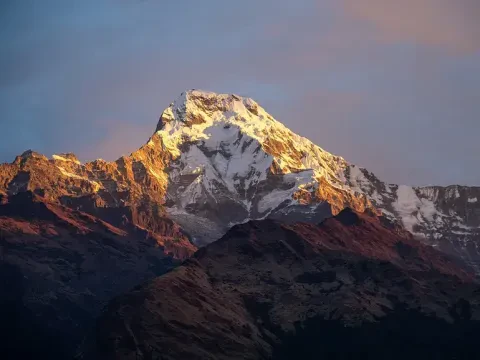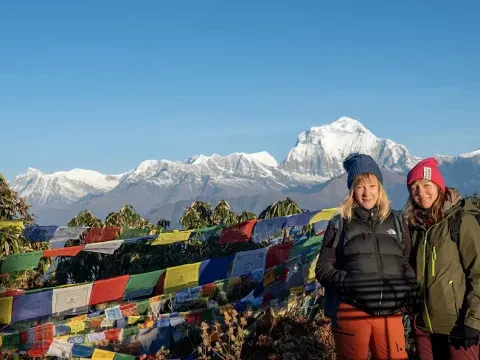
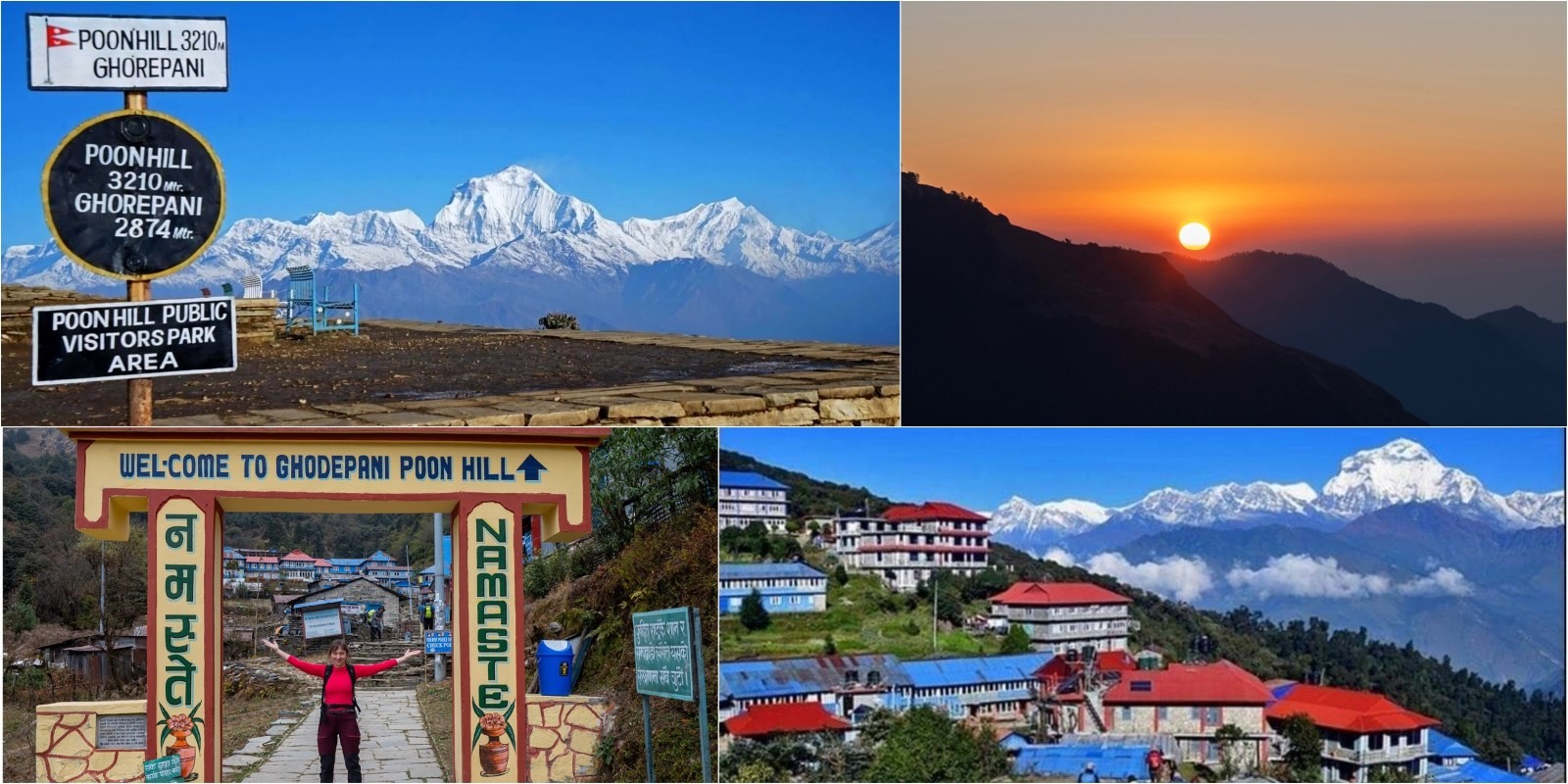
Let’s talk about the Ghorepani Poon Hill Trek—a classic short trek that keeps drawing people back to Nepal’s Annapurna region. It all kicks off in Pokhara, where you’re already surrounded by mountains, but nothing’s quite like what’s ahead. The trail winds up through dense forests and friendly villages—Ulleri and Ghorepani stand out, both for their charm and, honestly, the views as you climb higher. The top of the trek, Poon Hill, sits at 3,210 meters and, trust me, sunrise from up there is unreal. Those first rays hit Annapurna and Dhaulagiri, turning the peaks gold. It’s the kind of moment you remember.
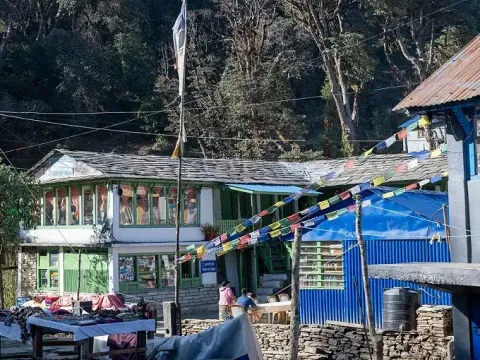
Actually, this trek is short—think four to seven days, depending on your pace. It’s perfect for beginners, families, or anyone who doesn’t have weeks to spare but wants the full Himalayan experience. The Poon Hill Trek route passes through Gurung and Magar villages, and the locals don’t just tolerate trekkers—they welcome you in. If you come in spring, rhododendrons light up the hillsides with color. You’ll hike stone steps, cross terraced fields, and stop at teahouses where the food—dal bhat, momos—tastes even better after a day on the trail.

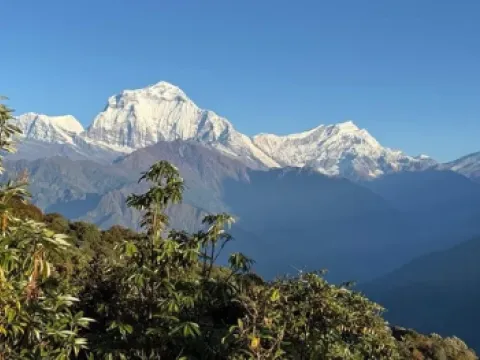
In fact, most people start walking from Nayapul(1,070m), gradually gaining altitude so your body keeps up. But, people can drive to Ulleri/Banthanti from Pokhara directly these days. The path cuts through thick rhododendron forests, with rivers and clear streams crossing under wooden bridges. You’ll spot monkeys, watch birds flit through the trees, and as you climb, the views just open up. Annapurna South (7,219m) andMachhapuchhre(6,993m) fill the horizon, and Dhaulagiri (8,167m) looms further off. The early morning push to Poon Hill is worth every step—standing there as the sun lights up the Himalayas is something special.
All in all, the Ghorepani Poon Hill Trek makes Himalayan trekking feel accessible. You get big mountain scenery, real cultural encounters, and a few physical challenges—without needing to be a hardcore mountaineer. That’s why so many people pick this trail as their first taste of Nepal’s mountains. And after you’ve seen those sunrises, there’s a good chance you’ll want to come back. Now, we will see 10 best reasons why people choose doing Poon hill trek.
Key Facts About the Ghorepani Poon Hill Trek:
| Daily Itinerary Overview | Starting Point | Ending Point | Distance (km) | Elevation Gain (m) | Highlights |
|---|---|---|
| Day 1 | Pokhara (820m) via Nayapul (1,070m) | Tikhedhunga (1,570m) or Ulleri (2,050m) | 10-12 | 500-1,000 | Terraced fields and Modi Khola river. |
| Day 2 | Ulleri (2,050m) | Ghorepani (2,860m) | 8-10 | 800 | Stone steps (3,300+) and rhododendron forests. |
| Day 3 | Ghorepani (2,860m) to Poon Hill (3,210m) then Tadapani (2,630m) | Tadapani (2,630m) | 10-12 | 350 up, then down | Sunrise views and dense woods. |
| Day 4 | Tadapani (2,630m) | Ghandruk (1,940m) | 7-9 | Down 700 | Gurung village culture and museums. |
| Day 5 | Ghandruk (1,940m) | Back to Pokhara (820m) via Nayapul | 10 | Down 870 | Scenic drive and relaxation. |
| Mountains Visible on the Trek | Elevation (m) | Notable Features |
|---|---|---|
| Annapurna I | 8,091 | Highest in Annapurna range, challenging climb. |
| Dhaulagiri | 8,167 | Seventh highest in the world, massive glacier. |
| Annapurna South | 7,219 | Prominent peak, often snow-covered. |
| Machhapuchhre (Fishtail) | 6,993 | Sacred mountain, unclimbed summit. |
| Hiunchuli | 6,441 | Part of Annapurna massif, rugged terrain. |
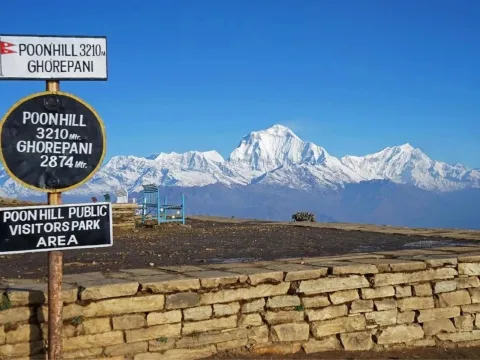
Meanwhile, the Poon Hill Trek offers a range of stunning views and is the best place to view the sun rising over the Himalayas. From the top of Poon Hill (3,210m), you can enjoy a spectacular sunrise with Annapurna glowing softly in the morning light. This trek offers a combination of adventure and accessibility, making it perfect for beginners looking for a rewarding experience.
Moreover, families will appreciate the moderate pace and safety of the trails. Experiencing the culture of the Gurung people in Ghorepani (2,860m) and the traditions they maintain in their villages will greatly enhance your experience. You will experience the local festivals and hospitality that are unforgettable. The diversity of the trail will keep you engaged throughout your hike. In spring, forests of rhododendron explode with colour. The rivers and bridges along the way provide you with visual variety. Thus, the Poon Hill trek is appealing to many different types of people. To sum up, this trek provides you with the magic of the Himalayas without requiring extreme demands.
Likewise, many people choose to do the Poon Hill trek due to its short duration and low risk. This trek is ideal for those with busy schedules. Because of the altitude, the risk of altitude sickness is extremely low below 3,210m. You can expect to find teahouses along the way, which provide an unexpected level of comfort. Visitors to the trail are often amazed to find hot showers and Wi-Fi at the teahouses. The opportunity to see wildlife along the way enhances your experience. You will see many species of birds and monkeys in the forests. The Poon Hill trek also promotes your physical well-being. The daily hikes slowly build your stamina and the incredible views keep you moving forward. Many people choose to do this trek due to its affordability. Permits and guides are very reasonably priced, allowing for good value for money. Thus, the Poon Hill trek is unique in that it provides an appealing combination of beauty, ease, and culture.
10 Reasons to Trek to Poon Hill:
| Poon Hill Trek | Everest Base Camp Trek | Annapurna Circuit Trek |
|---|---|---|
| Duration: 4 - 7 days | 12 - 16 days | 12 - 21 days |
| Max Elevation: 3,210m | 5,364m | 5,416m (Thorong La) |
| Difficulty: Easy-Moderate | Moderate - Hard | Moderate - Hard |
| Key Appeal: Sunrise views, short & accessible | Iconic Everest views | Full circuit, diverse terrain |
| Best For Beginners, families | Experienced hikers | Adventure seekers |
| Cost Estimate (USD): 155 - 500 | 800-1,600 | 700-1,500 |
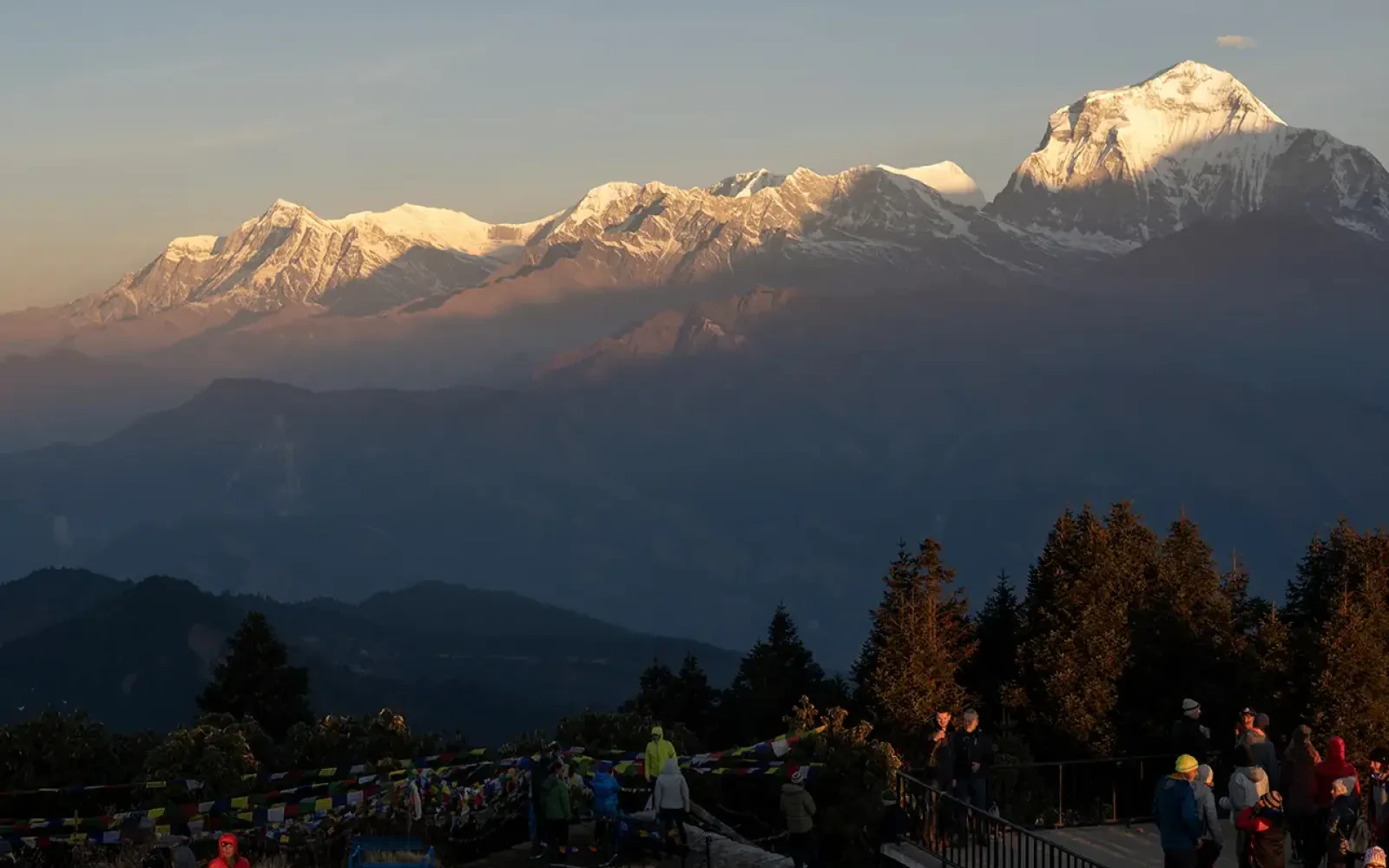
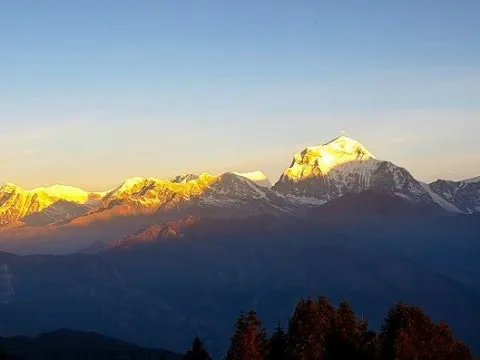
Meanwhile, trekkers climb to Poon Hill (3,210 m) each day before dawn, and upon reaching Poon Hill they stand at the top of Poon Hill, marveling at the pyramids of light emerging at sunrise from the Himalayan peaks, and golden light rushing down to cover blanketed snow with warmth, creating a moment of incredible beauty, or "magic". Witnessing mountain views especially Annapurna mountain ranges, is one of the 10 reasons why people should trek to Poon hill. Hikers congregate near the top of Poon Hill's viewpoint structure (an old communications tower) while they sip their warm tea or coffee, as pink hues turn to orange and rays of sunlight illuminate magnificent mountains such as Annapurna South (7,219 m) and Machhapuchhre (6,993 m); providing all who visit this site with renewed energy, making this visit the most remarkable part of their entire trek. As a result, the experience of seeing the sunrise from Poon Hill rewards everyone who rises early by providing them with an abundance of happiness.
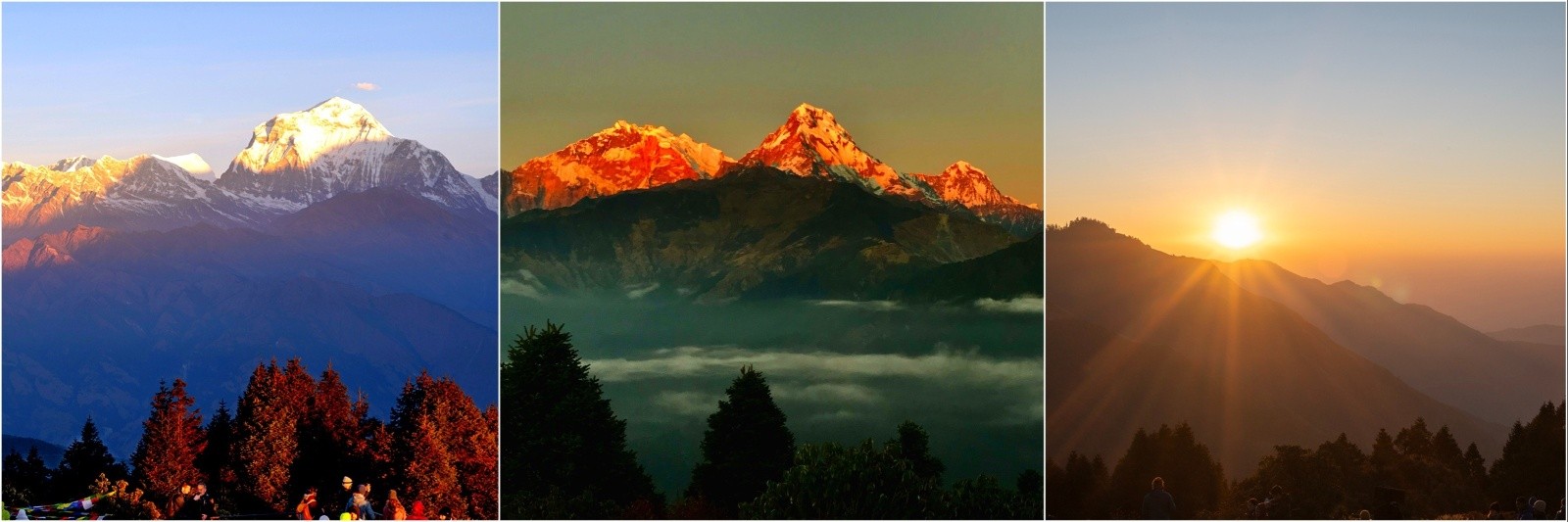
In the dark of early morning, adventurers set out from Ghorepani (2,860 m) and start their ascent to Poon Hill. They climb for approximately 45 to 60 minutes. The hike to Poon Hill is exhilarating and a little bit chilly; however, as the first light begins to shine on the mountains, the peaks are transformed - Dhaulagiri (8,167m) stands tall, with Annapurna (8,091m) dominating the skyline; the group of tourists enjoys cheering in quiet unison, and having bright clear skies allows the event to be the most photographed. Therefore, witnessing the sunrise from the viewpoint at Poon Hill perfectly defines the Poon Hill experience.
Tips for the Best Poon Hill Sunrise Experience:
| Sunrise Viewing Details | Description | Best Practices |
|---|---|---|
| Elevation of Viewpoint | Poon Hill (3,210m) | Short 1-hour hike from Ghorepani (2,860m). |
| Typical Duration | 45-60 minutes uphill | Steady pace to avoid fatigue. |
| Optimal Seasons | Spring & Autumn | Clear skies, minimal clouds. |
| Weather Impact | Clear mornings essential | Check forecast; clouds block views. |
| Additional Perks | Hot beverages available | Enjoy with sunrise for warmth. |
Major Peaks Illuminated at Sunrise:

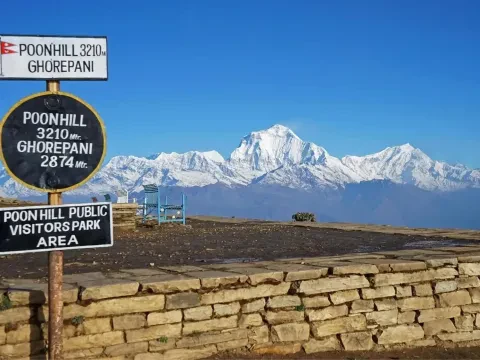
When you finally reach Poon Hill at 3,210 meters, the view just hits you. The Annapurna and Dhaulagiri ranges spread out in front of you—huge, dramatic, impossible to ignore. Peaks line the horizon, and you get this wild, almost 360-degree sweep that’s hard to take in all at once. Annapurna South shoots up close by, sharp and bold, while Dhaulagiri stands tall across the way. And then there’s Machhapuchhre, the sacred “Fishtail” peak, adding its own magic to the lineup. On a clear day, you can spot distant summits you never thought you’d see. Honestly, making it up here is worth every step.
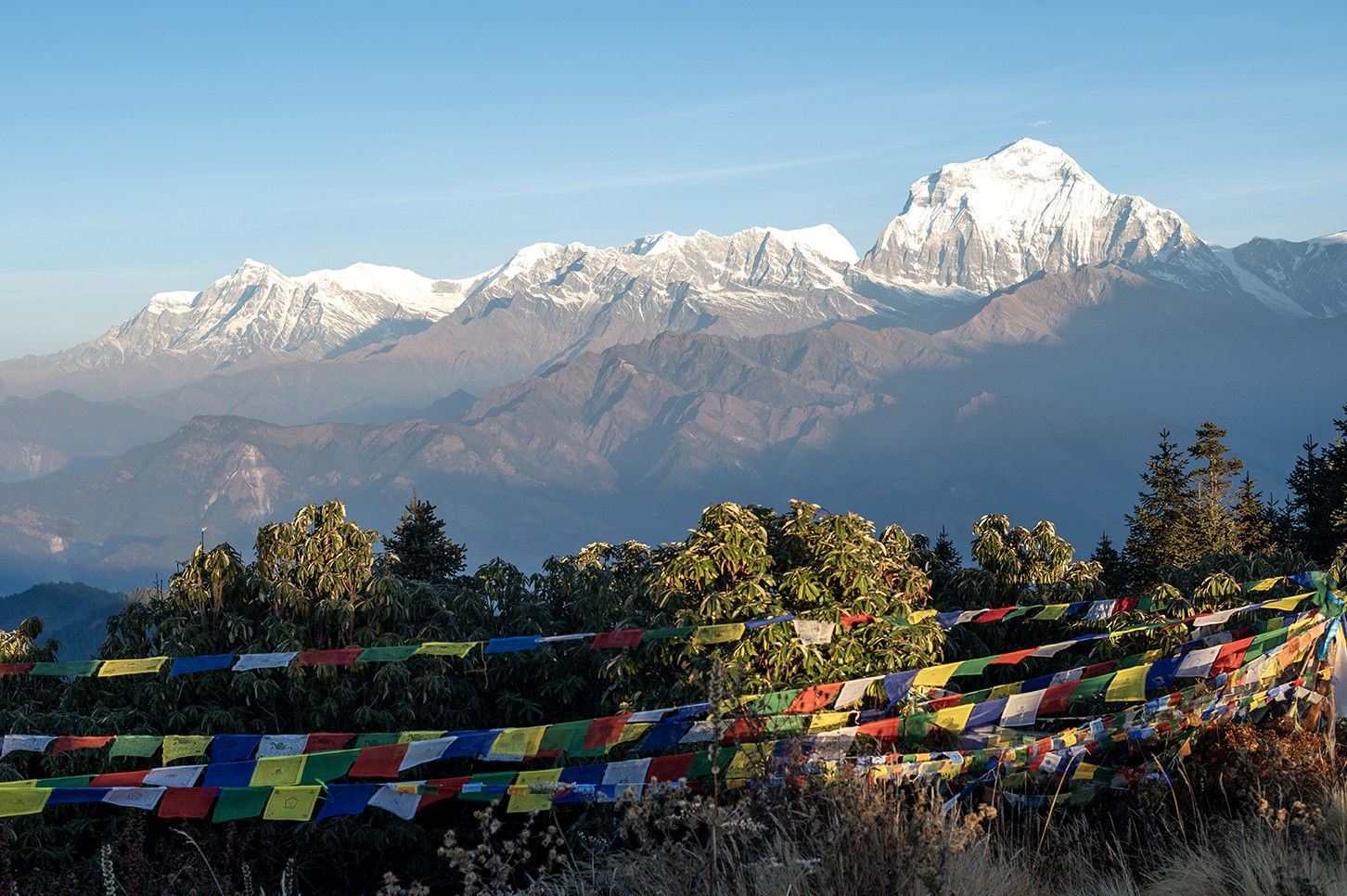
At the tower, people turn slowly, taking it all in—these giants, some over 8,000 meters tall. Annapurna I anchors the view, massive and unmissable. Nilgiri and Tukuche fill the gaps, tying the whole scene together. When the sun hits, the snow practically glows, and, of course, everyone’s snapping photos, grinning like kids. The sheer scale of it all makes you feel small in the best way. This is what sticks with you long after you’re off the mountain—a real, unforgettable reward for the effort. The view alone makes the whole trek worthwhile.
Key Peaks in the Panoramic View from Poon Hill:
| Annapurna vs. Dhaulagiri from Poon Hill | Annapurna Range | Dhaulagiri Range | Shared View Notes |
|---|---|---|
| Highest Peak | Annapurna I (8,091m) | Dhaulagiri (8,167m) | Both visible side-by-side. |
| Number of Visible 7,000m+ Peaks | 5+ (South, I, etc.) | 4+ (I, II, III, etc.) | Over 10-15 total peaks. |
| Distance/ Prominence | Closer southern views | Broader western massif | 270°+ sweep. |
| Iconic Feature | Machhapuchhre (6,993m) sacred | Massive glaciers visible | Dramatic snow contrasts. |
| Best Lighting | Sunrise golden hues | Full-day clear panoramas | Autumn clarity ideal. |
Additional Panoramic Facts:

Meanwhile, the Ghorepani Poon Hill Trek is just right for beginners and families. You don’t need any trekking experience to take it on—people walk these trails every year, kids included. Most of the route climbs slowly, and while you’ll hit some stone steps, they won’t leave your legs screaming. Daily hikes usually run about 5 to 7 hours, which sounds long, but with the steady pace and regular teahouses for breaks, it’s totally manageable. And because the highest point is only 3,210 meters, you won’t have to worry much about altitude sickness.
Moreover, parents love this trek because it’s genuinely family-friendly. Kids get a kick out of meeting locals in the villages and spotting wildlife along the way. The trail is well-marked, guides are always around to help, and if you want to lighten your load, you can hire a porter. Since each day isn’t too demanding, there’s plenty of time to rest and recover. Trails are clear, so nobody stresses about getting lost. When it’s all over, everyone goes home tired but happy—and a whole lot more confident about tackling bigger Himalayan adventures down the road.
Why Poon Hill Trek Suits Beginners and Families
| Difficulty Breakdown | Section | Elevation Change | Time Required | Challenge Level | Tips for Families/Beginners |
|---|---|---|
| Day 1: Nayapul to Ulleri | Nayapul (1,070m) to Ulleri (2,050m) | +980m | 4-5 hours | Moderate (many steps) | Take breaks; kids enjoy river views. |
| Day 2: Ulleri to Ghorepani | Ulleri (2,050m) to Ghorepani (2,860m) | +810m | 4-5 hours | Moderate | Forest shade helps; carry snacks. |
| Day 3: Poon Hill sunrise & to Tadapani | Ghorepani (2,860m) to Poon Hill (3,210m) then Tadapani (2,630m) | +350m / -580m | 6-7 hours | Easy-Moderate | Early start; warm clothes essential. |
| Day 4-5: Descent via Ghandruk | Tadapani (2,630m) to Ghandruk (1,940m) to Pokhara | -690m then down | 3-4 hours each | Easy | Relaxed pace; cultural village fun. |
Actually, the Ghorepani Poon Hill Trek Itinerary is a lifesaver if you’re pressed for time. You can pull it off in just 4 to 7 days, and it starts right from Pokhara—super easy. The whole loop brings you back to the same city, so you’re not wasting hours on long drives or extra flights. Busy professionals sneak it in over a weekend with a couple days off. Families get a quick adventure without the stress. Honestly, it’s about as convenient as trekking in the Himalayas gets. Short on time? Doesn’t matter. This trek makes it possible.
Here, getting to Pokhara is simple—hop on a bus or catch a quick flight. You’ll hit the trail from Nayapul(1,070m) just a few hours after you arrive. The short itinerary means you spend more time soaking up mountain views and less time worrying about logistics. Every day on the trail feels doable, and you really feel like you’re making progress. If you want to rush, you can finish in four days. Prefer taking it slow? Stretch it out and relax. Either way, this trek fits tight schedules perfectly. You get the best of the Himalayas, fast.
Short Itinerary Options for Limited Time:
| Quick Access & Transport Details | From | To | Duration | Mode | Notes |
|---|---|---|
| Kathmandu to Pokhara | Kathmandu - Pokhara (820m) | 6-7 hours | Tourist bus / Flight (30 min) | Flights recommended for time-saving. |
| Pokhara to Trek Start | Pokhara (820m) - Nayapul (1,070m) | 1.5-2 hours | Private jeep / Shared taxi | Early morning departure best. |
| End Point Return | Ghandruk (1,940m) or Nayapul / Pokhara (820m) | 2-4 hours | Jeep / Bus | Scenic drive; same-day possible. |
| Total Trip Time (including travel) | - | - | 5-9 days | - | Fits one-week vacations easily. |
Advantages for Time-Constrained Trekkers:
Meanwhile, families really come alive on the Ghorepani Poon Hill Trek. The paths are gentle enough for kids to walk safely, and parents get to unwind in cozy teahouses at the end of each day. Most days, you’re not hiking for hours on end—just enough to keep it fun. Kids chase after mountain views, spot wildlife, and play in the villages along the way. And with Poon Hill topping out at 3,210 meters, nobody’s worrying about serious altitude issues. The teahouses dish out familiar food and hot drinks, so even picky eaters are happy. Guides keep a close eye on everyone, making sure the whole family stays safe. Honestly, these easy days and shared adventures bring everyone closer without even trying. It’s the kind of trek that gives families a real taste of the Himalayas, but in a gentle, welcoming way.
Here, parents love this Poon Hill Trek route because it’s built with families in mind. Kids get a chance to soak up nature and learn along the way. If someone gets tired, the itinerary’s flexible—rest days are part of the plan. Terraced fields, forests, and lively villages keep young explorers busy and curious. Cultural stops turn into hands-on lessons for the kids. And that sunrise at Poon Hill? It’s something families remember forever. The hospitality along the trail makes everyone feel right at home. When it’s all over, you’re left with a mix of adventure, comfort, and those once-in-a-lifetime memories that really stick.
| Family Trekking Tips & Considerations | Aspect | Details | Recommendations for Families |
|---|---|---|
| Age Suitability | Children 5-12 years common | Low AMS risk at max 3,210m | Start with short trial hikes at home. |
| Daily Walking | 4-6 hours average | Gradual ascents/descents | Carry snacks; use walking sticks for kids. |
| Accommodation | Family rooms in teahouses | Warm dining areas | Book early in peak seasons. |
| Safety Measures | Guides & porters optional | Well-maintained paths | Choose family-oriented guides. |
| Best Seasons | Spring & Autumn | Clear views, mild weather | Avoid monsoon for slippery trails. |
Meanwhile, you really dive into Gurung and Magar culture on this trail. Every village greets you with genuine warmth, and the locals are always happy to share their traditions. You sit down to real dal bhat, not some watered-down version. The stone houses stand out—you can’t miss the traditional architecture, it’s everywhere. Sometimes, you stumble into a festival, and suddenly you’re surrounded by music and dance. The Gurung Museum in Ghandruk (1,940m) isn’t just for show; it actually teaches you something about the place and its people. The whole journey ends up feeling richer because of these cultural exchanges. Honestly, if you want a real connection with Himalayan communities, this is the trail.
Here, when adventurers make their way to Ghorepani (2,860m) and Ghandruk (1,940m), they don’t just pass through—they pay attention. Daily village life unfolds right in front of you. The Gurung and Magar people aren’t shy about their Gurkha roots; they talk about that proud history. You see it in their handicrafts, their costumes, and even in the way they host you—home-cooked meals, stories that stick with you. The hospitality isn’t just a gesture; it feels genuine. By the end, you realize, the culture here isn’t a side note—it’s the heart of the whole trek.
Key Cultural Immersion Experiences:
| Villages & Cultural Highlights | Village | Elevation | Ethnic Group | Key Attractions & Traditions |
|---|---|---|
| Ghorepani | Ghorepani | 2,860m | Primarily Magar (with Gurung influence) | Stone-roof houses, local hospitality, rhododendron surroundings. |
| Ghandruk | Ghandruk | 1,940m | Gurung Largest | Gurung village; museum, monastery, traditional dances, Gurkha history. |
| Ulleri&Tadapani | Ulleri/Tadapani | 2,050m / 2,630m | Mixed Gurung/Magar | Terraced fields, daily life observation, warm teahouse interactions. |
Additional Facts on Gurung & Magar Culture:
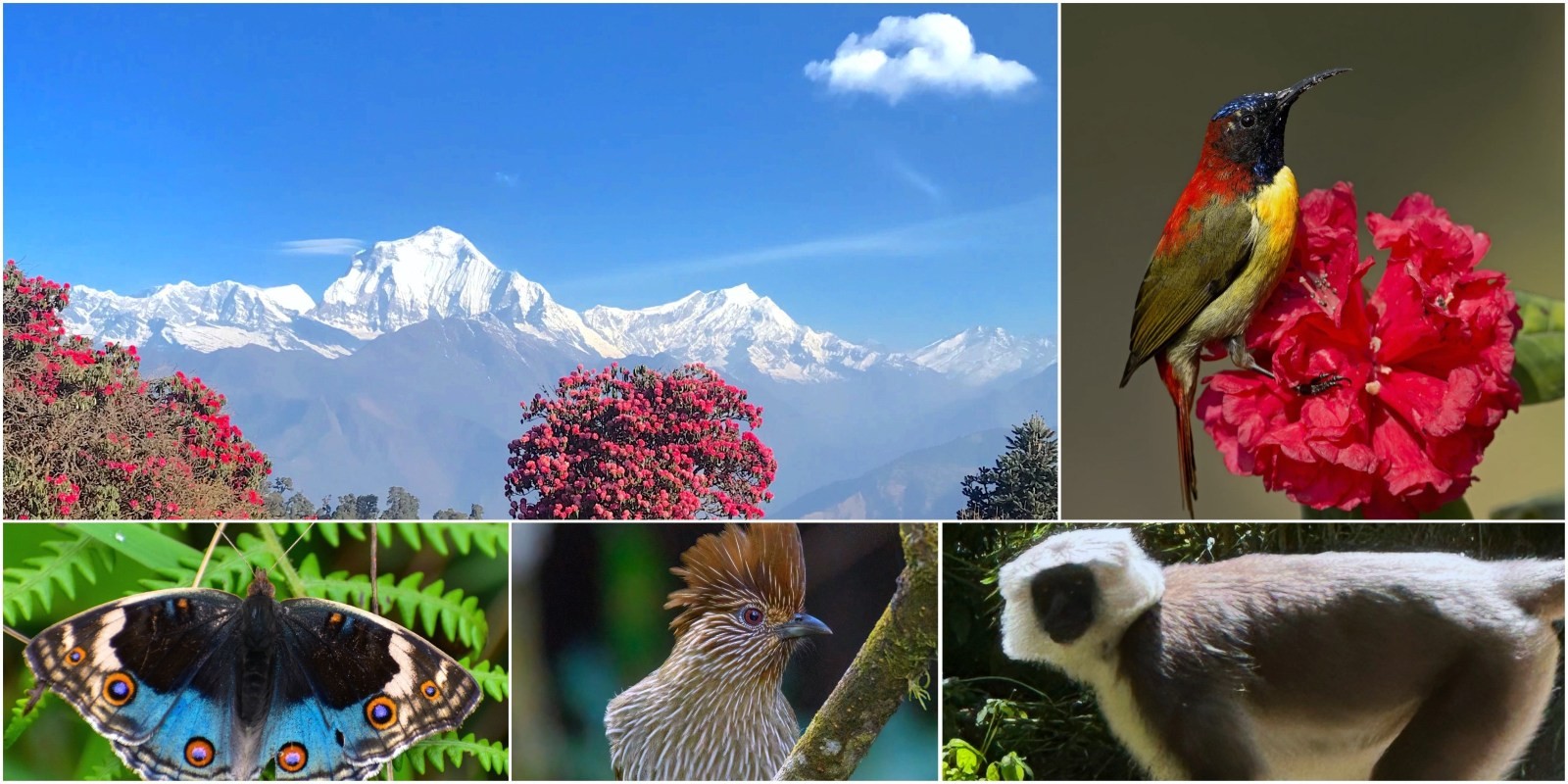
Actually, walking the Poon Hill trail, you step right into a world of color—rhododendrons in red, pink, and white crowd the path every spring. These forests aren’t just pretty; they’re alive. Tall trees stretch up and close out the sun, so you move through shifting patches of shadow. Birds are everywhere, singing somewhere above your head. You catch the sound of clear mountain streams close by. The Annapurna Conservation Area works hard to keep all this thriving—biodiversity isn’t just a buzzword here, it’s what you breathe in with every lungful of crisp air. Sometimes, wildlife slips through the undergrowth, just out of sight. Nature grabs your attention and doesn’t let go.
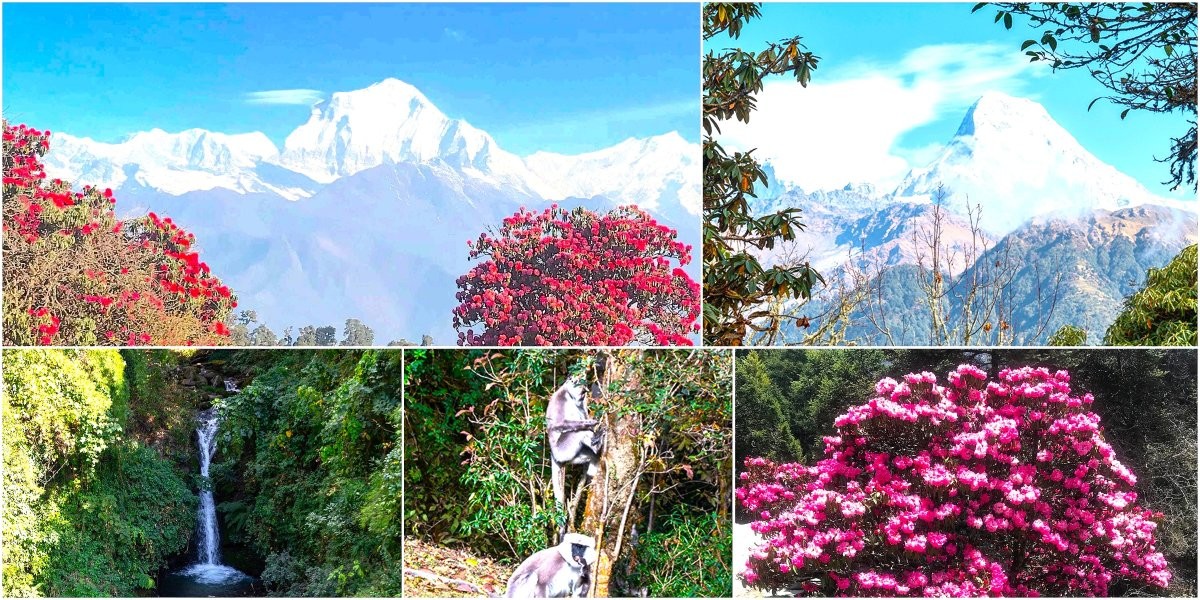
Here, as you climb toward Ghorepani, around 2,860 meters up, the woods get denser. This is where the rhododendrons really put on their show—between 2,000 and 3,000 meters, the blooms turn the forest into something out of a dream. Shafts of sunlight catch on the leaves, and from time to time, the trees part just enough to show you the terraced fields below or a glimpse of Annapurna South, rising in the distance at 7,219 meters. The conservation effort here means plants and animals still have a safe home, and you feel that sense of untouched wilderness with every step. It’s hard not to be moved. In the end, these rhododendron forests aren’t just another stop—they’re the memory you take home.
Highlights of Rhododendron Forests & Natural Beauty:
| Natural Features by Trek Section | Section | Elevation | Dominant Vegetation | Key Sights & Experiences |
|---|---|---|
| Lower Trail | Nayapul (1,070m) to Ulleri (2,050m) | 1,070m–2,050m | Subtropical forests, terraced fields | Modi Khola river, waterfalls, farmland views. |
| Rhododendron Zone | Ulleri (2,050m) to Ghorepani (2,860m) | 2,050m–2,860m | Dense rhododendron & oak forests | Thousands of blooming trees, stone steps, bird calls. |
| Upper Forest & Viewpoint | Ghorepani (2,860m) to Poon Hill (3,210m) | 2,860m–3,210m | Thinning rhododendron & conifers | Sunrise over peaks, misty mornings, panoramic vistas. |
| Descent Areas | Tadapani (2,630m) to Ghandruk (1,940m) | 2,630m–1,940m | Mixed forests & bamboo | Gurung villages, cultural contrast with nature. |
Meanwhile, teahouses along the Poon Hill trek feel like a second home. Right when you walk in, you get a warm welcome—hosts always ready with a smile and a hot meal. The rooms? Simple, but clean, with fresh blankets waiting. At night, everyone gathers around a stove in the dining room, swapping stories as the place fills with laughter and heat. Most of these teahouses are family-run, so you really feel the personal touch. It’s not just about comfort—it’s the genuine hospitality that sticks with you.
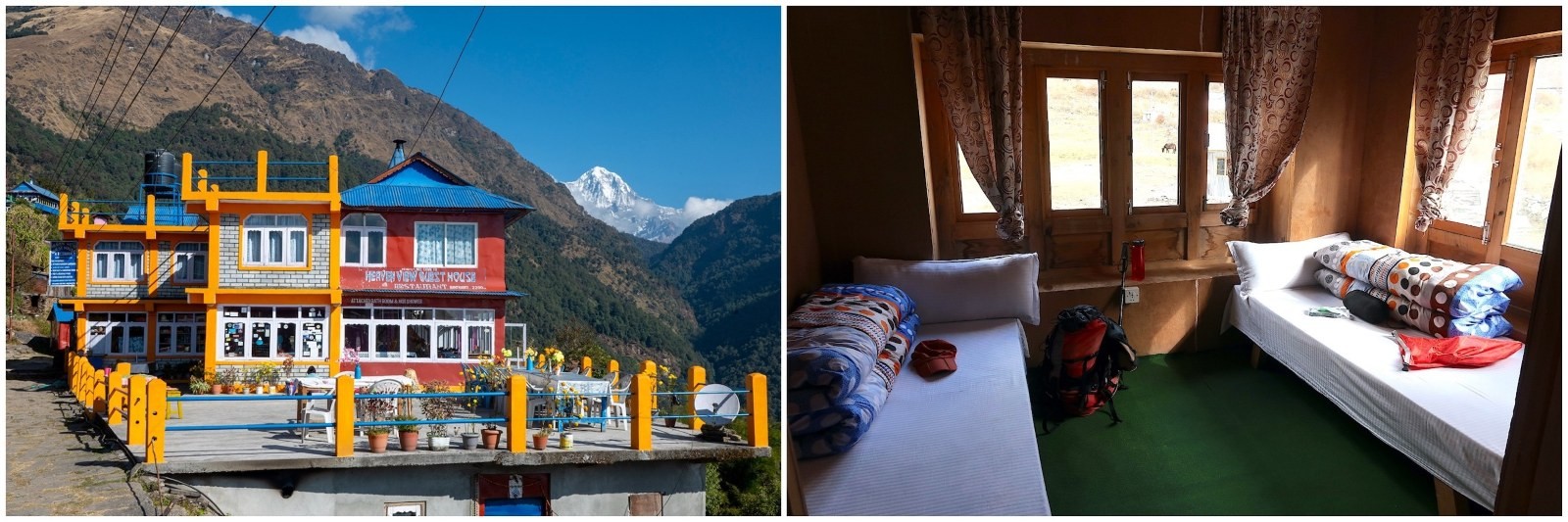
Here, you’ll probably spend a night in Ghorepani (2,860m) or Ghandruk (1,940m), where the owners cook up homemade Nepali food. Sometimes, you even get a hot shower, which feels like a treat after a long day. These days, you’ll spot Wi-Fi and charging stations popping up more often, too. The families running these places treat you like one of their own, making every evening feel special. The real magic of this trek isn’t just the mountain views—it’s these moments in the teahouses that turn strangers into friends and make the journey unforgettable.
Features of Teahouse Stays on Poon Hill Trek:
| Popular Teahouse Stops & Amenities | Village/Stop | Elevation | Typical Amenities | Hospitality Notes |
|---|---|---|
| Ulleri | Ulleri | 2,050m | Basic rooms, hot meals, shared baths | Family-run, great views, welcoming tea on arrival. |
| Ghorepani | Ghorepani | 2,860m | Many options, hot showers, Wi-Fi in some | Early sunrise wake-up calls, hearty breakfasts. |
| Tadapani | Tadapani | 2,630m | Cozy rooms, wood stoves, good food | Quiet location, personal attention from owners. |
| Ghandruk | Ghandruk | 1,940m | Comfortable teahouses, cultural museum nearby | Gurung hospitality, traditional meals, warm interactions. |
Aspects of Warm Nepali Hospitality:
Meanwhile, the Ghorepani Poon Hill Trek is easy on the wallet. You pay for the basics—nothing more. Permits are cheap and easy to get. Teahouses offer meals and a bed without breaking the bank. Plus, Pokhara is close by, so getting there doesn’t eat up your time or money. If you’re hiking without a guide and skipping the fancy stuff, it’s even more straightforward. This trek is perfect for backpackers and anyone watching their spending. You get real Himalayan adventure, minus the financial headache.Here, you can sort your permits fast in either Pokhara or Kathmandu. Getting to the trailhead at Nayapul won’t cost much, either. Daily costs cover the essentials—simple meals, a roof over your head, that’s pretty much it. If you know your way around the mountains, you don’t need a guide. You can tweak your schedule as you go and skip any extra days you don’t want. Teahouses charge fair prices per night, so you always know what you’ll spend. In the end, it’s the easy access and low costs that make this trek such a smart pick.
Budget Breakdown for Ghorepani Poon Hill Trek (Approximate 2025-2026, USD per person)
| Cost Category | Item/Details | Approximate Cost (USD) | Notes |
|---|---|---|
| Permits | ACAP (Annapurna Conservation Area) | 22-25 | NPR 3,000; mandatory for all. |
| Permits | TIMS Card | 15-20 | NPR 2,000; for independent trekkers (some updates note changes). |
| Transport | Pokhara (820m) ↔ Nayapul (1,070m) | 20-40 | NPR 5,000; Shared/public options cheapest. |
| Daily Expenses | Teahouse room + meals | 15-30 | NPR 4,500; per day | Lower in off-season; includes dal bhat. |
| Optional | Guide (per day) | 25-30 | NPR 4,500; Recommended for safety; porter extra ~15-20. |
| Total Estimate | 4-5 Day Independent | 150-250 | Hassle-free for fit travelers. |
If you’re aiming for the best Poon Hill experience, go in spring or autumn. The skies open up, the weather settles down, and you get that crisp mountain air everyone talks about. In spring, the rhododendrons aren’t just blooming — they’re putting on a show. Autumn, on the other hand, means dry trails and views so clear you can see every ridge of Annapurna I and Dhaulagiri.
Sunrise from Poon Hill? It’s unreal. The peaks light up, and for a moment, the whole place feels magical. That’s why people keep coming back during these seasons. You get the most out of every step.
In fact, most visitors plan their Ghorepani Poon Hill treks between March and May, it means Poon Hill Trek in Spring or September and November, Poon hill trek in Autumn. Daytime temperatures sit comfortably between 10 and 20°C, and while nights can get chilly, it’s nothing you can’t handle. Sure, there are more trekkers around, but the trails still feel inviting. You won’t be slipping around in the mud, either — rain barely shows up. The forests come alive, wildlife is everywhere, and honestly, it’s a photographer’s dream. If you want the full Poon Hill experience, spring and autumn are the way to go.
Best Seasons Overview for Poon Hill Trek:
| Season | Months | Temperature Range (Lower to Higher Elevations) | Weather Highlights | Pros | Cons |
|---|---|---|
| Spring | March-May | 10-20°C day; 0-10°C night at Poon Hill (3,210m) | Clear skies, rhododendron blooms | Vibrant colors, pleasant hiking | Occasional pre-monsoon showers late May. |
| Autumn | September-November | 10-22°C day; -5 to 5°C night at higher points | Dry, stable, excellent visibility | Best mountain views, comfortable temps | Busier trails in October. |
| Winter | December-February | 5-15°C day; below freezing at Poon Hill | Cold, possible snow | Fewer crowds, crisp air | Chilly mornings, shorter days. |
| Monsoon | June-August | Warm, humid | Heavy rain, clouds | Lush greenery | Slippery paths, leeches, poor views. |
Additional Tips for Best Timing:
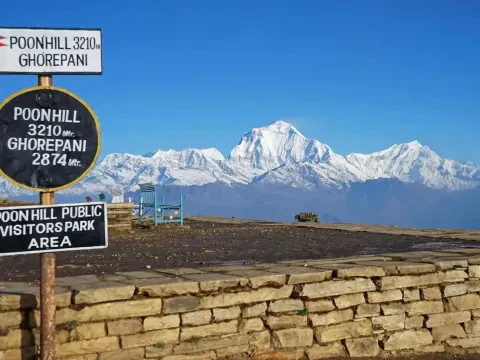
Meanwhile, the Ghorepani Poon Hill Trek gives you a taste of the Himalayas without pushing you to your limits. Most people follow a 4-7 day route that kicks off in Pokhara, sitting at 820 meters. Each day, you’ll hike through forests and climb plenty of stone steps, but the paths aren’t too tough. The real highlight? Reaching Poon Hill at 3,210 meters and catching the sunrise. It’s an easy to moderate trek, so even beginners walk away feeling accomplished. If you show up with the right mindset, you’ll have a great time exploring these mountains.
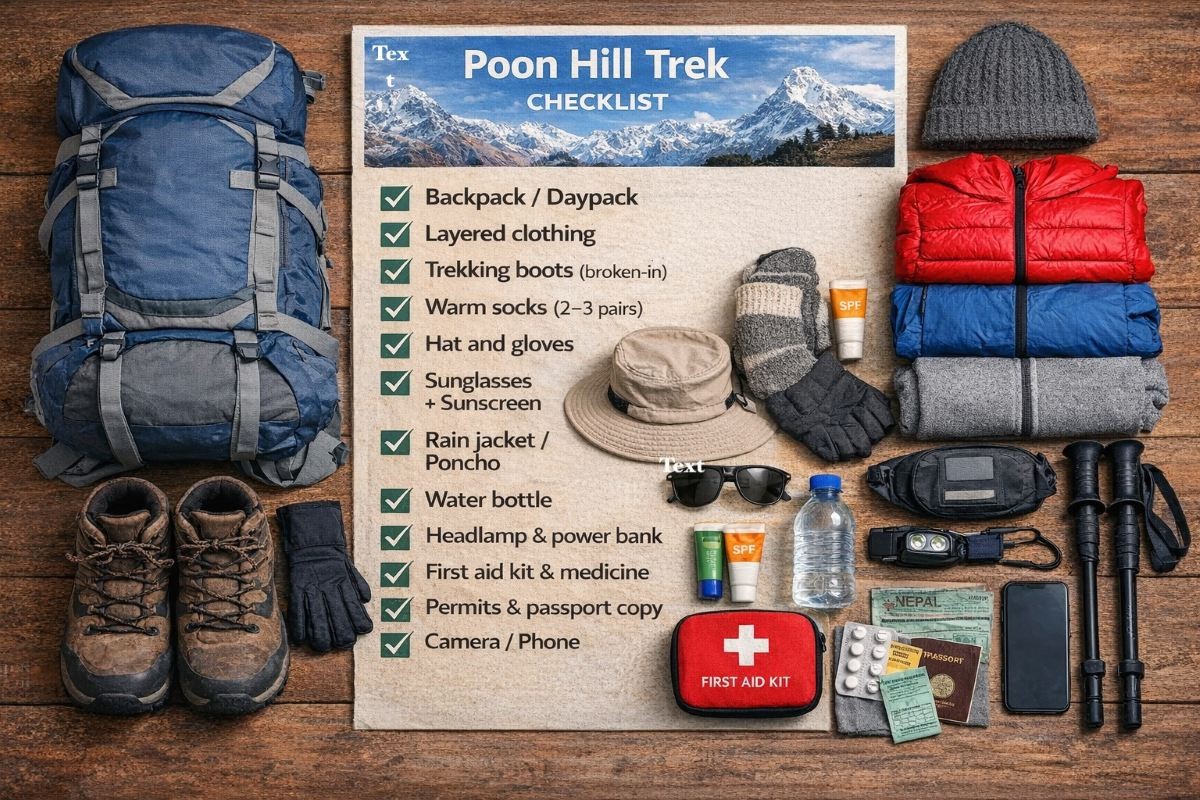
Here, packing smart makes all the difference. Stick to the basics—layers work best since mornings get chilly and afternoons can heat up fast. Don’t skimp on sturdy trekking shoes; those stone steps can be slick. You’ll want a daypack for water and snacks, and a small first-aid kit brings peace of mind. Travel light, but don’t forget the essentials. When you know what’s ahead, you’ll feel more excited and confident every step of the way.
Standard 5-Day Itinerary Overview:
Day 1: Pokhara (820m) → Nayapul (1,070m) drive → Tikhedhunga/Ulleri (1,570m/2,050m).
Day 2: Ulleri (2,050m) → Ghorepani (2,860m) via rhododendron forests.
Day 3: Ghorepani (2,860m) → Poon Hill (3,210m) sunrise → Tadapani (2,630m).
Day 4: Tadapani (2,630m) → Ghandruk (1,940m) Gurung village.
Day 5: Ghandruk (1,940m) → Nayapul → Pokhara (820m).
Difficulty & Packing Essentials:
| Packing Category | Must-Have Items | Why Important | Notes |
|---|---|---|
| Clothing | Thermal base layers, fleece, down jacket, waterproof jacket/pants | Temperature drops at night; rain possible | Layers for 5-20°C range. |
| Footwear & Accessories | Trekking boots, camp shoes, socks, trekking poles | Grip on steps; reduce knee strain | Break in boots beforehand. |
| Essentials | Headlamp/torch, power bank, water bottle, purification tablets | Early starts; no outlets everywhere | Carry 2-3L water daily. |
| Health & Safety | First-aid kit, altitude meds, toilet paper, hand sanitizer | Minor injuries common; hygiene key | Diamox optional for precaution. |
Honestly, if you’re looking for a trek that packs a punch without eating up your whole vacation, Poon Hill delivers. You get these jaw-dropping sunrise views over the Annapurna(8,091m) and Dhaulagiri(8,167m) ranges—think snow-capped peaks lighting up right in front of you. The trail isn’t a marathon either, so it fits right into a busy schedule. And it’s not just about the mountains. Trekkers meet Gurung and Magar locals along the way, which adds real depth to the experience. The costs stay reasonable, which keeps people coming back. High reward, low hassle. That’s the bottom line.
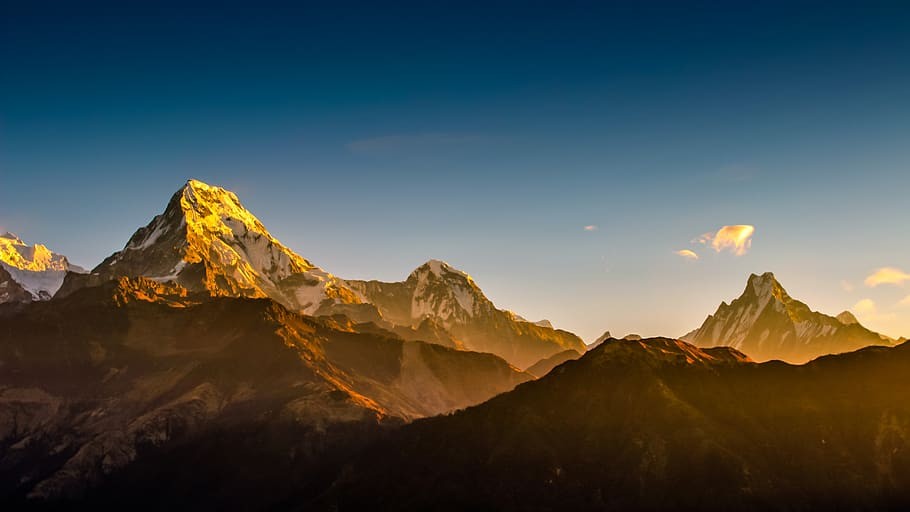
Here, people return because Poon Hill strikes this rare balance. There’s something about waking up early, grabbing a cup of tea, and watching the sun break over the Himalayas at 3,210 meters. It doesn’t get old. In spring, those rhododendron forests burst into color—every year, it feels new. The teahouses? Super friendly. The level of difficulty sits right in that sweet spot, so you can actually enjoy yourself instead of just pushing through. Every trip brings something a little different, and that’s what keeps trekkers hooked. Poon Hill just keeps delivering—year after year.
Top Reasons Trekkers Say It’s Worth It (and Return):
| Trekker Feedback Summary | Reason Frequency of Mention | Typical Comment |
|---|---|---|
| Sunrise Views | Poon Hill (3,210m) panorama | Very High | “Best sunrise of my life; worth every step.” |
| Ease & Duration | Short itinerary, moderate difficulty | High | “Perfect for first-timers; no regrets.” |
| Culture & People | Hospitality, villages | High | “Locals made it special; felt at home.” |
| Value for Money | Low cost, high reward | Medium-High | “Incredible experience without breaking the bank.” |
| Natural Beauty | Forests, peaks, diversity | High “Rhododendrons in spring were magical.” |
Why People Come Back:
Here, if you’re looking for a first taste of the Himalayas, Ghorepani Poon Hill just makes sense. The trail’s easy to reach, doesn’t break the bank, and the scenery? Absolutely unreal. Sunrise at Poon Hill (3,210m) is the kind of moment you don’t forget—fiery colors over a sea of peaks. You don’t have to be a hardcore trekker, either. The path cuts through wild rhododendron forests and Gurung villages that feel genuinely welcoming. It’s not too tough, so families and folks short on time can dive right in. Honestly, you get a crazy amount of reward for the effort.
Every day, you’ll run into the real heart of Nepal—locals who greet you with a warm smile and a hot cup of tea in those cozy teahouses. Get up early, and Annapurna I (8,091m) and Dhaulagiri (8,167m) light up the sky just for you. The mix of culture and nature here is seamless. Poon Hill trek Costs stay low, and Pokhara’s only a quick drive away, so you don’t waste precious time getting started. Hit the trail in spring or autumn, when the air’s crisp and the skies are crystal clear, and you’ll remember those views long after you get home. In the end, Ghorepani Poon Hill isn’t just a trek—it’s the one you’ll keep telling your friends about, long after your boots are clean.
Top Reasons to Make Poon Hill Your Next Trek:
| Feature | Benefit | Why It Matters |
|---|---|---|
| Accessibility | Starts from Pokhara (820m), 1-2 hr drive to trailhead | No long travel required | Fits short vacations easily. |
| Scenic Payoff | 270°+ Himalayan panorama at Poon Hill (3,210m) | High reward for moderate effort | Creates “wow” moments instantly. |
| Safety & Comfort | Teahouses with hot meals/showers, well-marked trails | Relaxed pace, minimal risks | Ideal for first-timers and families. |
| Affordability | Low permits (~USD 40), daily expenses ~USD 20-40 | Great value compared to longer treks | Leaves budget for other Nepal experiences. |
| Repeat Appeal | Different seasons offer fresh beauty | Encourages return visits | Builds lasting love for the Himalayas. |
Final Encouragement Facts:
1. What Makes Poon Hill Trek Ideal for Beginners and Families?
The Poon Hill trek is great for families and people who're new to trekking. I think this is because the trek is not too hard and the highest point is not too high, 3,210 meters.. Beginners like that the hikes are not too long each day and the trails are easy to follow. There are also teahouses where you can rest. Kids love walking through the rhododendron forests. Visiting the villages. The trek is also good because it does not go up quickly so it is safe for everyone. This trek is a way to see the Himalayas without it being too hard.
2. How Difficult Is the Ghorepani Poon Hill Trek?
I think the Poon Hill trek is pretty easy. Sometimes it can be a bit harder. You will walk for 4 to 7 hours each day on steps that are made of stone and you will go through forests. The highest point is 3,210 meters. You do not need to know any skills to do this trek and the paths are not too steep. If you walk at a pace and drink enough water it is not too hard. Many people who are new to trekking do this trek. They have a great time. They come back with memories.
3. When Is the Best Time to Trek to Poon Hill?
The best time to trek to Poon Hill is in the spring from March to May or in the autumn from September to November. These times are great because the sky is clear and the views are amazing. In the spring the rhododendron flowers are beautiful. In the autumn the air is cool and the views are stunning. These times are also good because the trails are safe and the weather is nice. It is better to avoid trekking during the monsoon season or in the winter because it can be difficult.
4. What Are the Must-See Highlights of Poon Hill Sunrise?
The sunrise at Poon Hill is amazing. You can see the mountains, like Annapurna, Dhaulagiri and Machhapuchhre. They look golden in the early morning light. You should get to Poon Hill early. Bring warm clothes because it can be cold. The view from the top is incredible you can see everything around you. It is a great experience that you will never forget. This is why many people come back to Poon Hill again and again.
5. Do I Need a Guide or Permit for Poon Hill Trek?
You need a permit called an ACAP permit to trek to Poon Hill and it is a good idea to hire a guide. Guides can help you stay safe teach you about the culture and make sure everything goes smoothly. You can get the permit in Pokhara. Having a guide and a permit is important because it helps to protect the environment and the local communities.
6. What Should I Pack for the Poon Hill Trek?
You should pack clothes that you can wear in layers, trekking shoes, a jacket for the rain a headlamp, a way to purify water, snacks and a small first-aid kit. It is better to pack light with a backpack that's 30-40 liters so you can walk comfortably. You may also want to bring poles to help you on the steps and sunscreen to protect your skin. If you pack the things you will be warm, dry and have lots of energy during the trek.
7. How Long Is the Poon Hill Trek Itinerary?
The standard trek to Poon Hill takes about 4 to 7 days. You. End, in Pokhara and you will hike for 3 to 5 days. There are also options to make the trek shorter or longer depending on how time you have. You can also spend time watching the sunrise and visiting the villages. This trek is great because you can see the Himalayas without having to take too much time off.
8. Is the Poon Hill Trek safe for people who have never done it before?
The answer is yes. The Poon Hill Trek is a way to see the Himalayas because it does not go very high and the trails are well taken care of. We have a lot of experience with this trek. We think it is very rewarding. You will see views and learn about the local culture. The people who live there are very friendly. Many people who have done this trek for the time say it was a life changing experience and that it was a great adventure.
9. What kind of things will you see on the Poon Hill Trail?
You will get to see what life is like in the villages of the Gurung and Magar people like Ghorepani and Ghandruk. You can try the food like dal bhat and learn about the history of the Gurkha people at the museum. The people are very friendly and welcoming. You will see stone houses and maybe even get to experience a local festival. All of these things will make your trek more interesting and meaningful.
10. What are the teahouses like on the Poon Hill Trek?
We have been to these teahouses times and we can tell you that they are clean and comfortable. You will have a room to sleep in and you will get hot meals to eat. Many of the teahouses have dining areas and some even have hot showers or Wi-Fi. The teahouses are run by families and they will make you feel like you are part of their family.
11. How much does the Poon Hill Trek cost?
The cost of the trek depends on how many people're in your group and what services you need. It can cost anywhere from $150 to $500 USD. This includes the cost of permits, guides, teahouses and food. We think it is a value for the money. You will not have to worry about spending a lot of money so you can just focus on enjoying your trek.
12. What kind of wildlife and nature will you see on the Poon Hill Trek?
The Poon Hill Trek is in the Annapurna Conservation Area, which's home to many different kinds of plants and animals. You will see rhododendron forests and many different kinds of birds. You might even see monkeys or deer. In the spring the trails are covered in flowers. This makes the trek very beautiful and enjoyable.
13. How do you get to the starting point of the Poon Hill Trek?
To get to the starting point of the trek you can take a jeep or bus from Pokhara to Nayapul. This takes about 1.5 to 2 hours. We can help you arrange transportation. The start of the trek is easy to get to so you can begin your adventure away.
14. What do you need to know about altitude and health on the Poon Hill Trek?
The highest point on the trek is 3,210 meters. This is not very high. The risks are minimal. You should make sure to drink plenty of water and take your time when you are walking. If you listen to your body and take care of yourself you should be fine. You do not need to be in shape to do this trek but you should take some basic precautions to stay safe.
15. Why should you choose the Poon Hill Trek over treks in Nepal?
The Poon Hill Trek is a choice because it is easy to get to and it does not take a long time to complete. You will see views of the sunrise and you will get to experience the local culture. This trek is great for people who have never done a trek before or, for people who do not have a lot of time. It is a way to see the Himalayas and experience all that Nepal has to offer.
Our travel experts are ready to assist you with any questions.
Send us a message.Have a question before you book? Send your enquiry below and our travel experts will get back with the required information.