Actually, the story of Bouddhanath Stupa goes way back to the Licchavi period, somewhere around the 5th or 6th century AD. They say King Manadeva built it to make up for accidentally killing his own father. There’s this old legend about a hen dropping relics on the site first, and then there’s Jhyazima, a clever widow who managed to get land for the stupa by stretching out an ox skin to claim her space. Her four sons ended up finishing what she started. Tibetan stories, on the other hand, tie the stupa to Guru Padmasambhava’s time. Over the years, sitting at 1,324 meters in Kathmandu, the stupa saw plenty of changes and expansions. Honestly, the myths and history just mix together.
If you ask historians, they point to Licchavi kings like Shivadeva as the ones who started it all. Old chronicles like the Gopalarajavamsavali back this up. Later, in the 14th century, the Malla kings gave the stupa a makeover, especially after the threat from the Mughals. Fast forward—when the 2015 earthquake hit, the spire took a hard blow. But people chipped in, and by 2016, thanks to private donations and about 30kg of gold, it stood tall again. UNESCO added it to its heritage list in 1979, recognizing its importance and ever known as one of the UNESCO Sites in Nepal. Through all the ups and downs, Bouddhanath has survived and still stands as a symbol of Nepal’s Buddhist heritage—right there, high above Kathmandu.
Key Historical Milestones:
| Legend/Period | Key Figure | Contribution | Elevation Note |
|---|---|---|
| Licchavi (400-600 AD) | King Manadeva | Atonement stupa after hen drops relics | Kathmandu Valley at 1,324m. |
| Widow Tale | Jhyazima& sons | Ox skin land; built JarungKhashor | N/A |
| Tibetan Lore | TrisongDetsen (8th C) | Early patronage; Padmasambhava link | N/A |
| Malla Era (14th C) | Malla Kings | Major renovations for spherical dome | 1,324m site |
| Modern (2016) | Buddhist donors | Post-quake gold spire (30kg) restore | Vulnerable at valley elevation. |
Restoration Events:
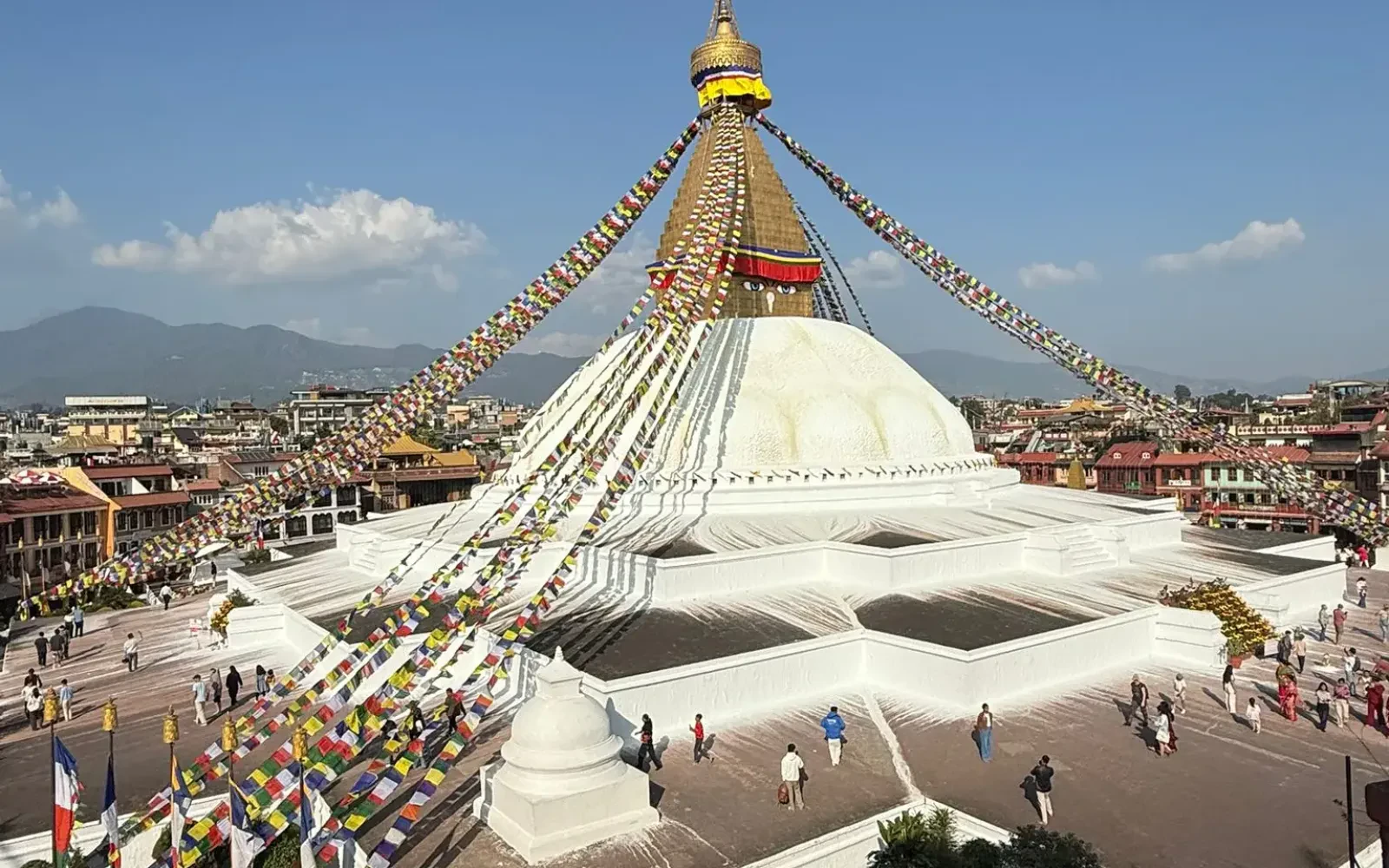
Here, Bouddhanath Stupa really stands out. It’s the biggest spherical stupa in Nepal—a giant, rising 36 meters high and stretching 120 meters across. When you arrive, the first thing you’ll probably do is join the crowd circling its base. There’s a path lined with 108 prayer wheels, all spinning and clacking as people pass by. The Buddha’s eyes look out from all four sides of the tower, steady and wise. Bright prayer flags flap in the wind up top. The big white dome? That’s not just for show. It’s meant to symbolize the water element and it shines, almost glowing, against the Kathmandu skyline at 1,324 meters above sea level. Monasteries huddle close around the stupa, adding to the atmosphere. So, you get this wild mix of spiritual energy and sheer size. People from all over the world come here and you can see why.

After 1959, Bouddhanath really became a center for Tibetan Buddhism. These days, the place is alive with devotees spinning prayer wheels and chanting. By evening, butter lamps flicker everywhere and the whole place feels magical. There’s no torana gate here, which actually makes it pretty unique. Look up and you’ll see a spire with thirteen tiers, each one marking a stage on the path to enlightenment. UNESCO added Bouddhanath to its World Heritage list back in 1979, recognizing its deep cultural value. It is an important part of Day Tour to World Heritage Sites in Kathmandu. The whole layout represents a mandala of the cosmos. And if you want a break from the crowds, rooftop cafes around the stupa give you a great view over the valley. Faith, art, peace—they all come together here, high above Kathmandu.
Top Architectural Features:
| Feature | Description | Symbolic Meaning |
|---|---|---|
| White Dome | 120m circumference; lime-washed bricks | Water element; universe womb |
| Harmika Tower | Square atop dome; gilded | Air; contains relics |
| 13-Tier Spire | Pyramid with umbrella top | 13 enlightenment stages |
| Prayer Flags | Multi-colored lines to pinnacle | Spread blessings via wind |
| Elevation Note | Stupa at 1,324m in Kathmandu | Panoramic views of valley. |
Cultural and Modern Highlights:
Actually, Bouddhanath Stupa stands as one of Nepal’s oldest Buddhist monuments, built by the Licchavi kings back in the 5th or 6th century AD. Its story weaves through legend—some say King Manadeva built it out of remorse. Over the centuries, it’s seen all sorts of travelers and traders pass by, since it sat right on the route between Tibet and India. Things changed in 1959 when Tibetan refugees arrived and settled around the stupa. Suddenly, Bouddhanath became the heart of Tibetan culture outside Tibet itself. In fact, Bouddhanath Stupa can be an integral part of 7 UNESCO Sites Tour in Kathmandu Valley.
Then came the 2015 earthquake, which left the stupa in ruins. But people pulled together and, thanks to private donations, restored it by 2016. UNESCO had already recognized its importance in 1979. So, if you look at its long history, you see resilience, connections across cultures, and a living Buddhist heritage, all sitting 1,331 meters above sea level.
For Tibetan Buddhists, Bouddhanath isn’t just a monument—it’s a spiritual home. Every day, pilgrims walk clockwise around the stupa, spinning prayer wheels and lighting butter lamps. The structure itself symbolizes Buddha’s enlightened mind, and it’s said to hold relics of Kassapa Buddha inside. The mandala design maps out the journey to nirvana. When festivals like Losar come around, devotion spills into the streets—you can feel it in the air. More than 50 monasteries cluster nearby, keeping traditions alive. Through it all, the stupa stands as a gathering place for faith and community, its peaceful energy always present high above the city.
Key Historical and Cultural Aspects:
| Aspect | Historical Importance | Religious Importance | Cultural Importance |
|---|---|---|
| Origins | Licchavi era (5th-6th C); trade hub | Embodiment of Buddha's mind; relics enshrined | Tibetan refugee settlement; cultural exchange. |
| UNESCO Status | 1979 inscription | Pilgrimage site for global Buddhists | Symbol of peace and enlightenment. |
| Festivals | Endured invasions and quakes | Losar, Buddha Jayanti rituals | Vibrant masked dances, community unity. |
| Architecture | Massive mandala stupa | Symbolic cosmology; prayer wheels | Living tradition of Tibetan art and crafts. |
| Elevation Note | 1,331 meters site | Serene high-altitude energy | Valley views inspire devotion. |
Religious Practices and Sites:
Before the city wakes, travelers find stillness at Bouddhanath Stupa. Between five and seven in the morning, pilgrims begin to gather for prayer. Chanting rises gently from robed monks during these hours. Take a single path circling the stupa - many walk it without hurry. Light, just beginning to stretch across sky, touches the white dome with warmth. Because so few are present, thoughts settle more easily here. Birds gather near the offerings, drawn without warning. A sharp coolness cuts through the air up there at 1,331 meters, stirring something quiet inside. Faint light pulses from butter lamps, soft but steady. Mornings here slip into stillness like a slow breath held too long. Dawn feels real, somehow - unplanned, unbroken.
Darkness falls softly over Bouddhanath Stupa. As the sun slips away, flames spark to life on countless butter lamps. Voices rise in rhythm once daylight fades. Take those ribbons of cloth tied high - they dance when night winds wake. Strings of tiny bulbs glow along edges and eaves. From above, warm seats wait near temple rooftops where sightlines stretch far. Still, fewer people wander around as time passes. Even so, the higher ground - 1,331 meters up - means nights feel crisper, more pleasant. Now and then, local festivals spark extra life into the air. By twilight, things hum with quiet excitement. All in all, nightfall wraps you in moments that just feel alive.
Recommended Daily Time Slots:
| Time of Day | Pros | Cons | Best For |
|---|---|---|
| Early Morning | Peaceful, authentic rituals, golden light | Chilly at 1,331m | Meditation, photography. |
| Midday | All facilities open, clear views | Busier, warmer | Shopping, quick visits. |
| Evening | Magical lamps, cultural energy | Darker details | Sunset views, dining. |
| Elevation Note | 1,331m altitude | Cooler mornings/evenings | Enhances spiritual feel. |
Seasonal Influences on Visits:
Tips for Optimal Timing:
Actually, Bouddhanath Stupa isn’t just a place you visit; it’s somewhere you experience. Right from the start, you see people walking around the stupa in a clockwise direction, spinning prayer wheels as they go. Some chant mantras under their breath. Others pause to light butter lamps with real care. Monks carry out rituals, and you can get close enough to feel the rhythm of it all.
Up here, more than 1,300 meters above sea level, the air feels crisp and cool, and it wakes you up a little. If you climb up to one of the rooftop cafes, you get these wide-open views of the stupa and the city—honestly, it’s hard not to just stop and stare.

Likewise, the whole place blends spirituality and everyday life. You see tourists buying Tibetan souvenirs from stalls, not just shopping, but supporting local craftspeople. Cameras are everywhere, trying to catch the perfect shot of the Buddha eyes or the prayer flags flapping in the wind. Evening is special—people gather for kora, walking circles in a kind of quiet togetherness. When the sun goes down, the sky glows and the stupa almost feels alive.
Moreover, some people meditate, soaking in the calm that seems to settle over everything. Others wander, just taking it all in, moving between devotion and relaxation. The stupa draws out a personal response. You can’t help but feel connected, whether you’re there for the spiritual side, the culture, or just the view. Also, it can be an important site to visit during your UNESCO Heritage Sites Tour in Nepal.
Key Spiritual and Cultural Activities:
| Activity | Duration Estimate | Best Time | Elevation Note |
|---|---|---|
| Kora (Circumambulation) | 20–60 minutes | Early morning / Evening | At 1,331m, refreshing cool air |
| Prayer Wheels & Mantras | 10–30 minutes | Anytime | Ground level, accessible |
| Butter Lamp Offering | 5–15 minutes | Sunset / Evening | Enhances spiritual ambiance |
| Shopping & Souvenirs | 30–60 minutes | Daytime | Street level at 1,331m |
| Meditation / Quiet Reflection | 15–45 minutes | Morning | Serene high-altitude energy |
Additional Leisure Options:
Here, every visitor follows old ways at Bouddhanath Stupa. Clockwise steps mark each turn around the dome. Prayer wheels move only in that direction too. Stepping on carved stones? Never happens. Before stepping into monasteries, shoes come off. Inside temple grounds, clothing stays simple and covered. At 1,331 meters up, good footwear makes walking easier. During prayer times, people speak quietly. These practices protect a sense of peace. Acting with care shows respect for sacred places.

Likewise, most visitors stick to basic rules without question. Climbing on the stupa? Never happens. Take sacred items - hands always stay clear. Snapping photos of locals? Only after a quiet yes is given. Still, trash gets handled the right way. Inside, nobody lights up or drinks. Instead, visitors honor monks and nuns through quiet behavior. Because of that, good manners keep things peaceful. At 1,331 meters, basic guidelines hold culture and spirit intact.
Essential Etiquette Rules:
| Rule Category | Specific Guideline | Reason | Elevation Note |
|---|---|---|
| Direction | Clockwise movement only | Follows Buddhist tradition | At 1,331m, easier pacing. |
| Clothing | Modest, covering shoulders/knees | Shows respect to sacred space | Cooler air requires layers. |
| Photography | Ask permission for people/monks | Privacy and cultural sensitivity | Soft light ideal at elevation. |
| Conduct | No smoking, alcohol, littering | Maintains purity | High altitude enhances awareness. |
| Sacred Items | Do not touch offerings/relics | Preserves sanctity | N/A. |
Additional Practical Guidelines:
Actually, Bouddhanath Stupa charges an entry fee to help take care of the place. You’ll pay at the main gate—foreign visitors pay NPR 400, while folks from SAARC countries pay NPR 100. Nepali citizens and kids under 10 get in free, no questions asked. The stupa sits at 1,331 meters above sea level, and these fees cover daily upkeep and repairs.
Likewise, your ticket lasts all day, so you can come and go as you like. Just head to the ticket counter, show your passport if you’re from abroad or a SAARC country, and you’ll get a paper ticket on the spot. There’s no option for online booking, and even big groups don’t get special rates. Still, the fee isn’t high, so locals can visit often without breaking the bank. The whole system tries to keep the stupa open and welcoming, while making sure it stays in good shape for everyone. Once you know the rules, getting in is pretty straightforward.
Current Entry Fees (2025–2026):
| Visitor Category | Fee (NPR) | Equivalent (approx. USD) | Remarks |
|---|---|---|
| Foreign Nationals | 400 | 3 | Payable in cash; valid all day. |
| SAARC Nationals | 100 | 0.75 | Passport or ID required. |
| Chinese Nationals | 100 | 0.75 | Treated as SAARC rate. |
| Nepali Citizens | Free | Free | No ticket needed. |
| Children (Under 10) | Free | Free | Accompanied by paying adult. |
Additional Fee Information:
Here, monkeys roam all over the Bouddhanath Stupa. You’ll spot them scrambling up the railings, swinging from trees, or just hanging out near shops and benches. They’re full of energy—leaping from roof to roof, always on the lookout for food someone might’ve dropped. Up here at 1,331 meters, they seem right at home.
But you’ve got to watch your stuff. Sometimes, a monkey will dart in and snatch a bag or a pair of glasses before you even realize what’s happening. The locals see them as part of the place, and honestly, they don’t usually bother people unless someone teases them. Still, the monkeys add a certain liveliness to the stupa, and you really should give them some space.
Every day, tourists run into these curious monkeys. Don’t stare them down—that can make them defensive. Move too fast, and they might get jumpy. If you’re holding food or anything shiny, expect them to come closer. Staying calm helps a lot. Seriously, never feed them. Keep your things zipped up or held tight. That’s how you enjoy your visit without trouble. Pay attention, and you’ll leave with a good story, not a lost snack or scratched phone.
Common Monkey Behaviors at Bouddhanath:
Essential Precautions for Visitors:
| Precaution | Reason | Practical Tip |
|---|---|---|
| No feeding | Encourages aggression & dependency | Eat inside cafes; dispose waste properly. |
| Secure belongings | Prevents sudden snatching | Use cross-body bags; keep items close. |
| Avoid eye contact | Reduces perceived threat | Glance aside; no staring. |
| Slow movements | Prevents startling them | Walk steadily; no sudden gestures. |
| Elevation Note | 1,331m altitude | More active in crisp morning/evening. |
Additional Safety Advice:
From central Thamel, visitors head toward Bouddhanath Stupa without much trouble. Taxis get them there quickest. Apps such as Pathao or InDrive work well when booked ahead. Minibuses run by locals cost less but take longer. The road stretches roughly between six and eight kilometers. Even so, heavy traffic usually makes trips longer. Still, Thamel rests around 1,324 meters above sea level, whereas Bouddhanath is just a bit higher at 1,331 meters. Most paths between them take somewhere from twenty to forty-five minutes instead. Because of that, travelers find several ways to move back and forth. All things considered, getting there stays simple and adaptable for those who visit.
Starting in Thamel, travelers think ahead about how to move around. Booking a ride before leaving makes things smoother later on. That way, packed public transport becomes less of an issue. Yet hopping on small city buses shows real daily life at a low cost. From Ratna Park, which sits close by, these rides roll out often all day. Minutes pass quickly when strolling to pickup spots. Still, cabs offer straight-to-the-door service when traffic piles up. A soft rise of just seven meters keeps paths nearly level. So choices fit tight budgets or busy timelines alike. All things considered, Thamel works well as a starting spot heading into Bouuddhanath.
Main Transportation Options:
| Mode | Distance (Approx.) | Typical Travel Time | Cost (NPR, Approx. 2026) | Notes / Elevation |
|---|---|---|
| Taxi / Ride-Sharing | 6–8 km | 20–40 minutes | 400–900 one way | Traffic-dependent; app fares fluctuate. |
| Public Minibus | 6–8 km | 30–60 minutes | 30–50 one way | Crowded; ask for “Boudha” stop. |
| Private Car | 6–8 km | 20–35 minutes | 1,200–2,500 round trip | Flexible timing; hotel bookings. |
| Motorbike / Scooter | 6–8 km | 15–30 minutes | Fuel + rental ~500/day | Requires helmet; parking near stupa. |
| Elevation Difference | Thamel ~1,324 m → Bouddhanath 1,331 m | N/A | N/A | Minimal climb; scenic urban route. |
Route & Practical Tips:
Additional Accessibility Information:
1. What is the History of Bouddhanath Stupa?
The Bouddhanath Stupa has a long history that is full of interesting stories. The Bouddhanath Stupa was built a long time ago in the 5th or 6th century by kings named Manadeva and other Licchavi kings. On the Malla rulers made it even bigger. People say that the Bouddhanath Stupa is connected to some legends and the Tibetan people. The Bouddhanath Stupa was badly damaged in the earthquake in 2015 but the people in the community worked together to fix it and make it beautiful again with gold. Today the Bouddhanath Stupa is a special place that is recognized by UNESCO and it shows how strong the Buddhist culture is in Nepal. The Bouddhanath Stupa is a place where people can come to feel peaceful and calm.
2. Why is Bouddhanath Stupa a UNESCO World Heritage Site?
The Bouddhanath Stupa is a special place and that is why it is a UNESCO World Heritage Site. The Bouddhanath Stupa was given this status in 1979 because it has a lot of cultural and spiritual meaning. The Bouddhanath Stupa is one of the stupas in the world and it is a very important place for Tibetan Buddhist people in Nepal. The design of the Bouddhanath Stupa is like a mandala and it has some very old relics that are important to the people. The Bouddhanath Stupa is also a place for Tibetan culture. We think that the Bouddhanath Stupa is a must-see place for anyone who wants to learn about the heritage of Nepal and the Bouddhanath Stupa.
3. What are the Key Architectural Features of Bouddhanath Stupa?
The Bouddhanath Stupa is an impressive building with a big white dome that is 36 meters high and about 100 meters wide. The Bouddhanath Stupa has eyes of Buddha on all four sides 108 prayer wheels and a golden spire with 13 tiers that represents the path to enlightenment. The design of the Bouddhanath Stupa is like a mandala that shows harmony in the universe. The Bouddhanath Stupa is built at an elevation of 1,331 meters and its design is a mix of symbolism, art and function which makes it a very peaceful and calm place to be. The Bouddhanath Stupa is a place that feels both big and small at the time.
4. What is the Best Time to Visit Bouddhanath Stupa?
We think that the best time to visit the Bouddhanath Stupa is early in the morning from 5 to 8 am, when it's peaceful and the light is soft. You can also visit the Bouddhanath Stupa in the evening from 5 to 9 pm, when the butter lamps are lit and the atmosphere is lively. If you visit the Bouddhanath Stupa in the spring or autumn you will see skies and you can avoid the crowds that come at midday. The air is fresh and clean at this elevation, which makes the spiritual atmosphere of the Bouddhanath Stupa even more special. The time of day you visit the Bouddhanath Stupa can really make a difference in your experience.
5. What Activities Can You Do at Bouddhanath Stupa?
There are things you can do when you visit the Bouddhanath Stupa. You can walk around the Bouddhanath Stupa in a clockwise direction, which is called a kora and spin the prayer wheels. You can also light some butter lamps. Meditate in the peaceful atmosphere. There are some rooftop cafes where you can sit and enjoy the view. You can buy some Tibetan souvenirs. You can watch the monks doing their rituals and take some photos when the light is good in the morning or evening. These activities will help you feel more connected to the Bouddhanath Stupa and its culture.
6. What are the Entry Fees and Tickets for Bouddhanath Stupa?
To get into the Bouddhanath Stupa you have to pay a fee. If you are a visitor you have to pay 400 NPR. If you are from SAARC or China you have to pay 100 NPR.. If you are from Nepal or a child under 10 years old you can get in for free. You have to pay with cash at the gate. The ticket is good for the whole day. The fees help take care of the Bouddhanath Stupa and its surroundings. It is a price to pay for such a great experience and it helps keep the Bouddhanath Stupa safe, for future generations.
7. What rules should visitors follow at Bouddhanath Stupa?
We think it's really important to be respectful. When you walk around the stupa always go clockwise. Wear clothes that cover your shoulders and knees. Take off your shoes when you enter monasteries and be quiet when people are praying. Don't climb the stupa. Touch things that are sacred. Lots of people follow these rules and it helps keep the place peaceful and special. If we all follow them everyone has a visit.
8. How do I get to Bouddhanath Stupa from Thamel?
We have helped many people get to the stupa. We think the best way is by taxi or using apps like Pathao or InDrive. It takes 20-40 minutes and is around 6-8 kilometers. If you want to save money you can take a minibus from a nearby stop. Try to go in the morning or late in the afternoon to avoid traffic. The trip is easy and nice with not much of an elevation change. There are reliable options to get to this special place.
9. Are there monkeys at Bouddhanath Stupa. How can I stay safe?
We have seen monkeys around the stupa over the years. They are fun. Can take your food or things. To stay safe hold your belongings tight don't feed the monkeys don't look them in the eye and move slowly. This way you can have fun watching them without any trouble and enjoy the stupas beauty.
10. What is the significance of Bouddhanath Stupa?
We know a lot about Nepals culture. We see Bouddhanath Stupa as a lively center of Tibetan Buddhism. It has relics and hosts daily kora and festivals like Losar. There are also over 50 monasteries around it. The stupa represents enlightenment and strength. For people who come to pray and visitors it brings people together makes them peaceful and helps them share cultures. It's more, than a monument; it's a living spiritual place.
Our travel experts are ready to assist you with any questions.
Send us a message.Have a question before you book? Send your enquiry below and our travel experts will get back with the required information.