Walk from Deurali to Annapurna Base Camp via MBC and experience the sacred Annapurna Sanctuary, glaciers, altitude, and Himalayan giants.
Supporting Trail Highlights (Real Experience):
Meanwhile, Deurali, at 3,230 meters, the entry point into the Annapurna Sanctuary is in silence—the cold air muffled, the stone walls steeping towards silence, the ice massive and antique. Crossing into the glacial valley created through the passing of the ages, the ambience is electrifying, almost spiritual. The Deurali to Annapurna Base Camp Trek, the Sanctuary trek, or the route to MBC all share the quiet, mysterious weight of the divine from the onset, indicating the presence of a journey that has the power to be transfiguring.
Here, in your path are areas where there are prayer flags on limestone cliffs, and ice-cleaving streams carve out their own courses. Every step is cautious, as you listen out for noises signaling the breakage of glaciers and distant vibrations caused by the wind. The Deurali to MBC trekking route, or Annapurna Base Camp, or your passage through the sanctuary region of the Himalayas, makes your respect for nature almost instinctual, right from the very beginning.
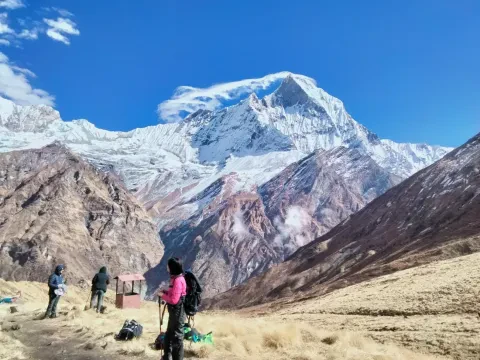
Likewise, Machhapuchhre Base Camp, at 3,700 meters, leads to a more introverted inner sanctum with abrupt and graphic views. Nestled in the midst of peaks—Machhapuchhre (6,993 m), Hiunchuli (6,441 m), and Annapurna South (7,219 m)--you are hemmed in by rock and ice. This is where the Annapurna Base Camp trek, the experience of the holy sanctuary, and the acclimatization stay at MBC come together and transform the terrain into a natural theater of ice and rock.
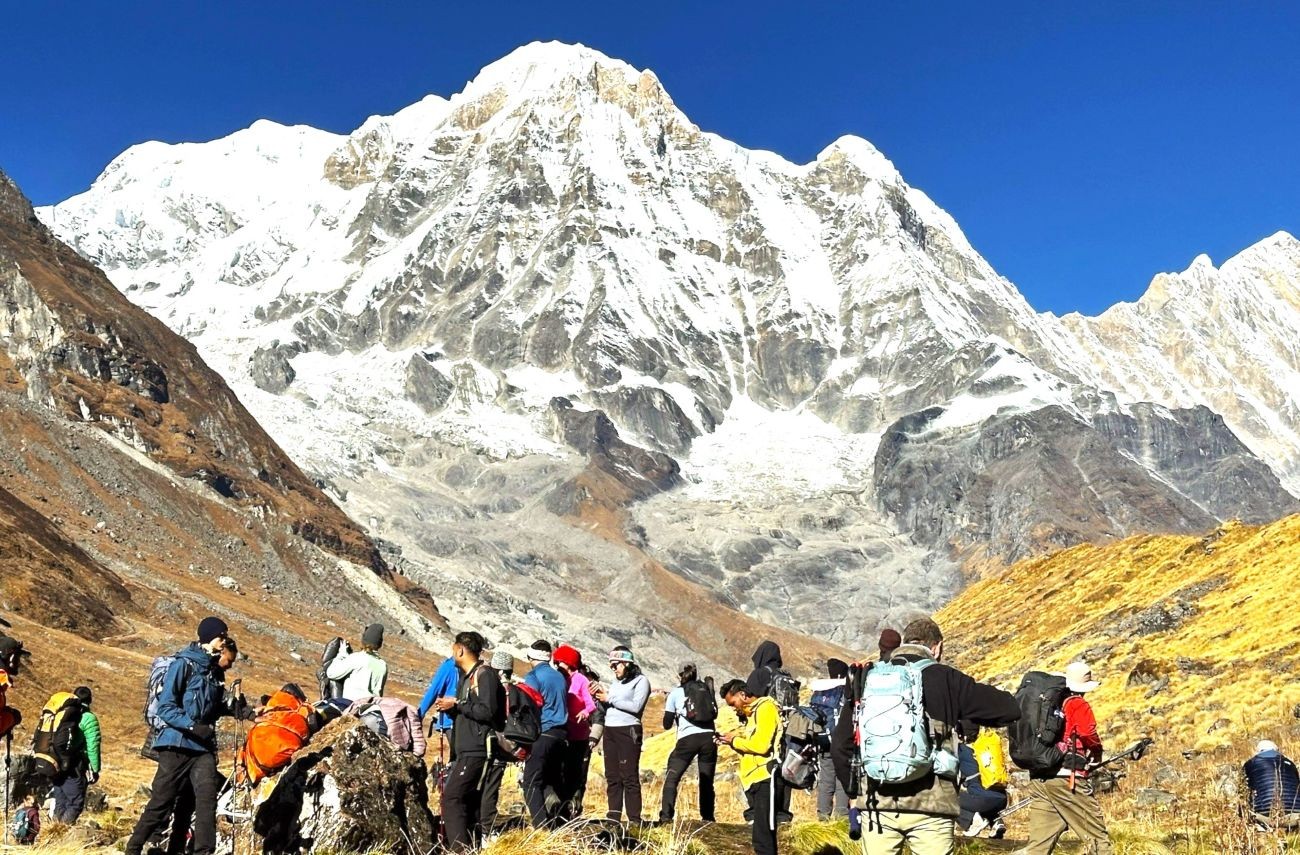
In fact, locals believe that this is holy land, where no animals are killed. This belief envelops the trekkers, imparting them with a sense of tranquility and humbleness while traversing. It is the culture of the Annapurna Sanctuary, the concept of spiritual trekking in Nepal, and this holy mountain trail that creates such an experience, which is philosophical. Every step that is taken is of immense importance.
Further, snow conditions change very fast once you are past MBC, both in the heart of the winter and early spring seasons. That is why trekkers rely on guides to judge safety and timing. The same goes for the Deurali to ABC route: high-altitude trekking in Nepal includes staying on top of Annapurna weather; being prepared is what protects you and lets you fully enjoy the journey.
Above 4,000 meters, when the air starts growing thinner, altitude begins to affect breathing. So, you take a more leisurely pace and keep yourself hydrated. In the same vein, climbs toward Annapurna Base Camp, proper trekking acclimatization, and general awareness of Himalayan altitudes support a healthy ascent. In other words, being in good company just makes for the rule rather than the exception of mindful walking.
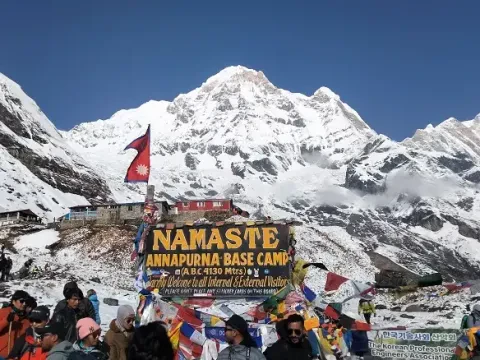
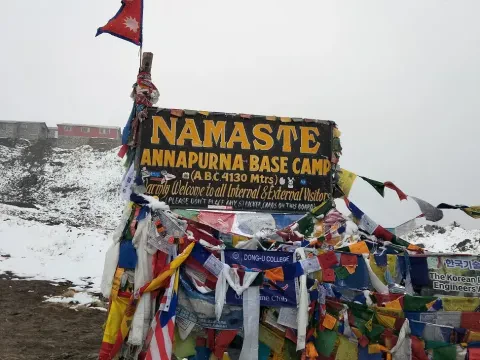
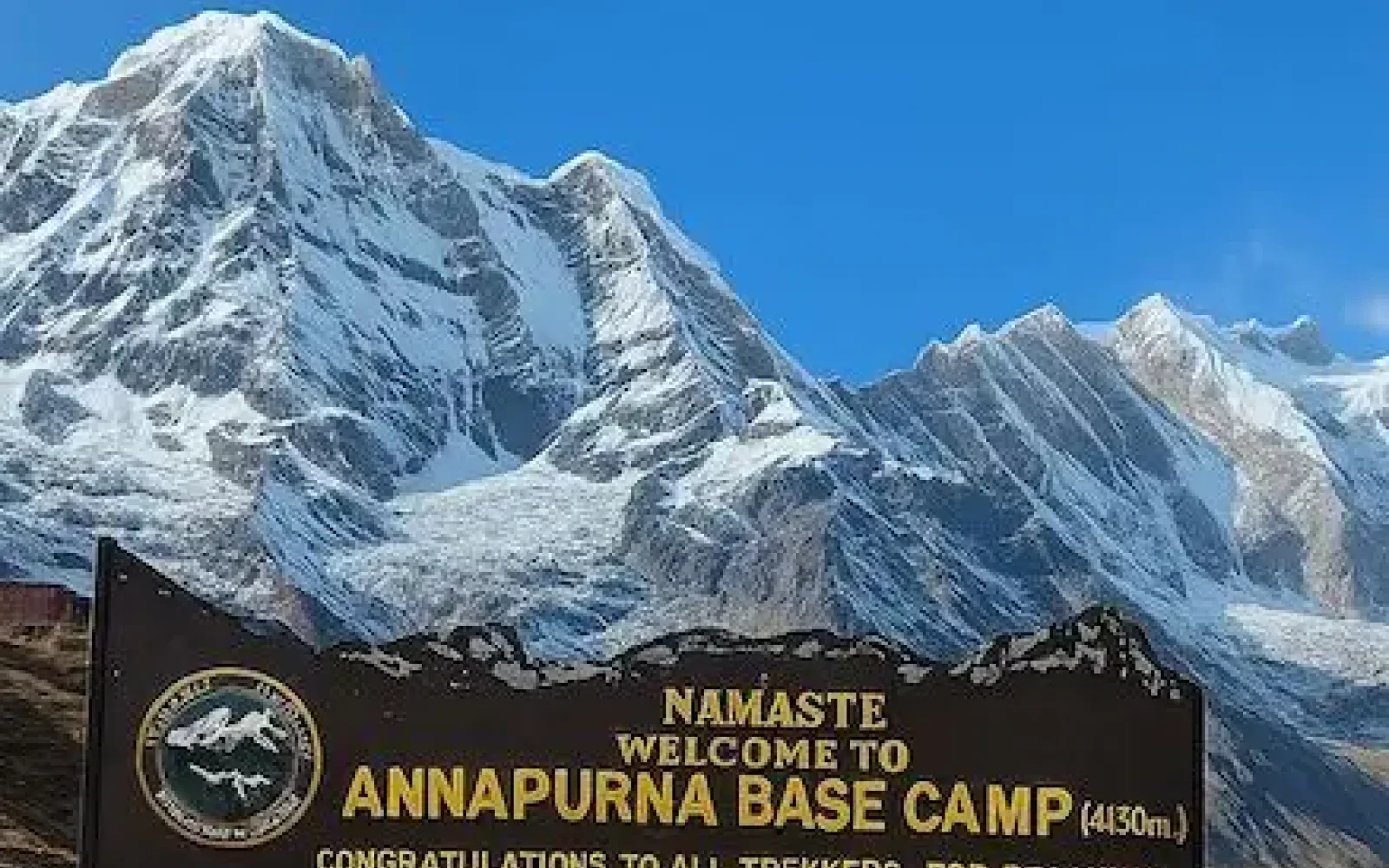
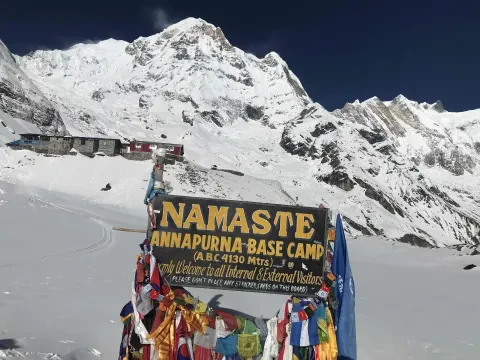
Moreover, it reaches a climax at Annapurna Base Camp, which sits atop a glacial plateau at an elevation of 4,130 meters, while the dominating, towering presence of Annapurna I stands at 8,091 meters. The arrival at Annapurna Base Camp, together with the sight of Annapurna I and the sacred feel of the trek, comes together as this climactic moment. Ultimately, it is a very rewarding trek.
Furthermore, the snowfields and the landscapes spill golden shades at sunrise and sunset, turning the landscape into a scene of quiet, emotional stillness and awe. In addition to the sunrise over Annapurna Base Camp, there is a panorama view of glacier scenery in the Himalayas and many photographic moments during the trek. The silence becomes the loudest sound.
For financial considerations, this leg remains comparably cheap with far-reaching adventure from Deurali to ABC. Guide and porter services usually cost USD 25-35 per day. Costs on the Annapurna Base Camp trek, guided Nepal treks, and the MBC route are very reasonable; authenticity is affordable.
Finally, entering the Annapurna Sanctuary presents one with the feeling of stepping into a living temple. In other words, the trek from Deurali to Annapurna Base Camp-a holy, The Rocky Himalayan journey, combined with the path to MBC-offers a fountainhead of inner bliss that remains forever. The introduction succeeds in showing both physical grandeur and spiritual depth.
A natural and clear path from Deurali to the Annapurna Base Camp through MBC, talking through elevation, landscape, distance, risk, and cost.
| Section | Elevation | Distance | Avg. Time |
|---|---|
| Deurali to MBC | 3,230 m - 3700m 5.5 km 2-3 hrs |
| MBC to ABC | 3,700 m - 4130 | 3.5 km | 3–4 hrs |
Actually, the trail from Deurali (3,230 m) to Machhapuchre Base Camp (3,700 m) passes through a long, deep glacial valley. The trail involves moraines, ice-cold streams, and wind-blewn sections. This part of the trail—Deurali to MBC, the Annapurna Base Camp Trek, as well as the entire Himalayan trails—requires treat and care.

In fact, the distance from Deurali to MBC is about 5.5 km long with moderate elevation and it is 3.5 kilometers from MBC to ABC. The typical time taken is three to four hours. For planning, one can use the trail length of Deurali, time taken for MBC, and distance for ABC. Early start helps in minimizing exposure to wind.
As the trail goes on, the landscape that was beneath our feet changed from rock to snow fields in the vicinity of MBC. It will be even colder, especially in the afternoon. It is crucial that one is familiar with MBC’s terrain, Nepal’s high-altitude conditions, and the geography of the Annapurna Sanctuary. It is necessary to dress in layers.
Here, Machhapuchhre Base Camp (3,700 m): It serves as an essential acclimatization point. Trekkers halt here with a sheer view of Machhapuchhre (6,993 m). Acclimatization, mountain safety while trekking, and adjusting remain essential in this region.
Importantly, the final push to Annapurna Base Camp from MBC takes about 3.5 km to reach 4,130 m. The trail goes up gently through the glacial flats. The section from MBC to ABC, the approach to ABC, and the interior route through the sanctuary reward caution over speed.
As you approach ABC, the surrounding peaks come into sharp view: Annapurna I (8,091m), Hiunchuli (6,441m), and Annapurna South (7,219m) tower above. The Annapurnas, the view from ABC, and the Himalayan amphitheater are experiences enough to make you want to take pictures all day long. The weather conditions inside the temple may change within minutes. It becomes difficult to see because of snowstorms and fog. Being conscious of weather conditions around Annapurna Base Camp and risk factors for trekking in Himalayas is a key point wherein guides are necessary for support.
Specifically, the toilet facilities within the teahouses found within the ABC are basic but functional. Consequently, the climber gets warm food services, warmed eating halls, and common sleeping quarters. Moreover, the Annapurna Base Camp hotel stay services for trekking Nepal to the ABC are basic.
Secondly, Deurali to ABC costs remain feasible in the budget. On average, meal and accommodation charges per day range from 25-30 dollars. Also, the price of Annapurna Base Camp Trek, cost of meals at MBC, and teahouse charges remain unchanged.
Finally, this trail section is the very middle of the Annapurna Sanctuary trek. In conclusion, the Deurali to Annapurna Base Camp trekking route, the trail to MBC, and the Himalayan high altitude walk mix education with adventure. As a result, all trekkers return with great happiness
Starting Point Deurali (3,230m): Thin Air and Mountain Silence
Trek from Deurali with a height of 3,230m and experience thin air, mountain calm, shift in altitude, and the primal realm of Himalayan wilderness.
Key Real-Experience Highlights:
Actually, Deurali, at 3,230 meters, is the final non-forested village before entering the Annapurna Sanctuary. “From the very start, trekkers will perceive the effects of lower oxygen and the stillness that pervades the atmosphere,” and this phase, which combines the Annapurna Base Camp Trek and high-altitude trekking in Nepal, makes mental preparation as important as physical power.

Here, bitter winds blow down in the valley, and isolation is intensified. Sound is more defined when trekking on rocks and ice. The experience in Deurali, mountain quietness, and ABC trek preparation inculcates a sense of trekking in a faster yet more measured manner.
Moreover, the oxygen content decreases perceptibly here, encouraging breathing to fall into a smoother rhythm with every move. The symptoms of altitude sickness begin to penetrate into your consciousness, with acclimatization occurring both at Deurali and entering into Annapurna Sanctuary. Listening to your body becomes a necessary act to avoid complications in the future.
Likewise, there are cliffs in the vicinity with avalanche marks from previous winter seasons and monsoons, which serve as a reminder of the dangers that lurk in the environment. The guides have adequate timing and safety talks before heading out. The "ABC" trekking safety policy and the risk management approach in the Himalayas influence the entire process.
Furthermore, the choice at Teahouse in Deurali is restricted. The menu consists of basic foods and shared accommodations. The trekkers rely on basic and comforting foods for sustenance. The accommodations remain basic and practical, meeting expectations for traveling along the Deurali section and Annapurna Base Camp Teahouse. Additionally, early morning departures from Deurali reduce the risk involved with falling ice and strong afternoon winds. This creates a smoother trekking experience with clear skies. The ABC trek schedule, the fastest route from Deurali to MBC, and the climatic state of the Himalayas all influence this trek.
What is distinctive about Deurali is not an attractive visual, it is silence. Spiritual silence is much more definitive about this place than any tree or rock, and as such, those undertaking this trek will pause to just listen, as the mountains have much to say through their silence. This is an experience enhanced by features such as the spiritual Annapurna Sanctuary, the concept of spiritual trekking in Nepal, and those periods of Himalayan meditation, which impart a level of reverence to this trek.
Occasionally, Machhapuchhre (6,993 m) appears through clouds as one is at Deurali, kindling hope for what lies ahead in the temple interior. The threads of emotion—the Machhapuchhre sighting point, Deurali’s harsh geography, and a mounting hope for reaching Annapurna Base Camp—are expertly woven together to push one’s motivational levels upward in a natural way.
In fact, Deurali’s costs increase marginally because of logistics involving porters and geographical difficulties at high altitudes. Meals cost between USD 6-8, while accommodation costs between USD 5-7. If you factor in the costs of trekking to the Annapurna Base Camp and the cost differences at Deurali because of the high altitudes, everything remains manageable.
In essence, Deurali represents a psychological landmark rather than an actual geographical destination. Taken in combination—the Deurali beginning point, the thin air trek in Nepal, and the mountain silence ambiance—is a representation of the significance associated with the trek. Hikers undertake the process with humility and application.
Deurali to MBC to ABC trek can be learned within a day, along with elevation, time, land characteristics, as well as trekking difficulties explained.
| Section | Elevation | Distance | Time |
|---|---|
| Deurali to MBC | 3,230 m -3700 5.5 km 2-3 hrs |
| MBC | 3,700 m - 4130 3.5 km | 2–3 hrs |
Deurali (3,230 m) to Annapurna Base Camp (4,130 m) is approximately 9 kilometers. This route is often completed in a long trek and is something of a challenge for most. Deurali to ABC trek, the ABC trek itself, as well as the trek route to MBC, are determinants in this part. Stamina is more valued compared to speed.
It all starts with the Deurali (3,230 m) to Machhapuchhre Base Camp (3,700 m) stretch, which is approximately 5.5 kilometers. It will take trekkers an average of three to four hours to hike. It’s characterized by the distance from Deurali to MBC, ABC trek duration, and the rhythm of this Nepal trail. The tone is set, and the idea is to move at a slower pace.
The terrain is varied enough to ensure your pacing is irregular. Trail conditions on MBC, or indeed within Annapurna Sanctuary, as well as any high-altitude trek, require careful attention. Trekking poles might well come in handy.
Machhapuchhre Base Camp itself (3,700 m) is a natural place to stop and acclimate. Trekkers will naturally stop to enjoy lunch and rehydrate, as the break allows trekkers to acclimate to the elevation. Sound acclimation and recovery plans, which are MBC-sound and ABC-centered, go a long way to cure fatigue.
Then there is the final stage from MBC (3,700m) to Annapurna Base Camp (4,130m), which is approximately 3.5 kilometers in length. It shall take about one to one and a half hours. Again, all stages are influenced by the MBC to ABC distance, the gradient of the hike up to ABC, as well as the Himalayan hiking time. Although the distance is shorter, notice how the altitude impacts: breathing becomes deeper; stride length shortens; and one gets used to less oxygen in the atmosphere. The challenge of altitude, oxygen intake, and proper high-altitude walking are all essential factors that help one avoid fatigue.
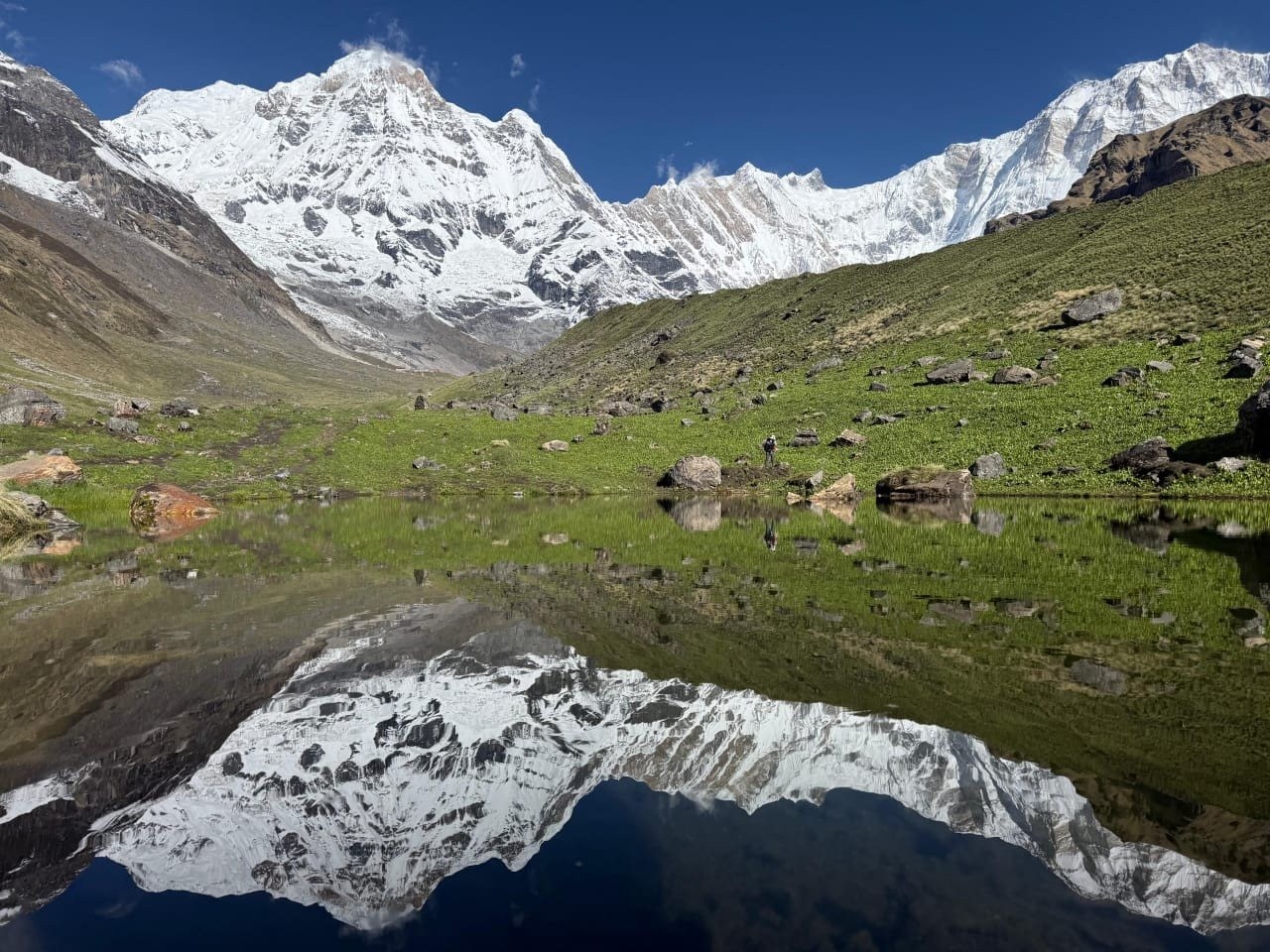
It is weather, not distance, that is mostly in control here. On this day, just a patch of snow or fog can push progress far further backward than you may think. The weather at Annapurna Base Camp, visibility along the MBC route, and the broader Himalayan climate all require one thing: flexibility. To say it all in a nutshell, allowing for buffer time is a smart move.
Carrying light packs helps trekkers wrap up the day more easily, and that's where porters really lift the experience. Service costs of porters, logistics around Annapurna Base Camp, and overall efficiency in trekking blend together to make travel

smooth. In other words, having help adds real value.
Costs don't fluctuate much during this period. Normally, one would estimate about $25-30 dollars per day for food and accommodation. Budgeting for the Annapurna Base Camp Trek and the cost of MBC, as well as teahouse rates, remains consistent, thus making financial planning easy.
Completing the Deurali to ABC leg in a day feels like a solid accomplishment. The trek from Deurali to MBC and then to ABC is grueling in terms of endurance and great resolve, and crossing this part is fulfilling for trekkers.
Deurali to Annapurna Base Camp elevation gain and altitude differences, along with acclimatization, oxygen transitions, and mountain exposure.
Elevation Gain Summary:
Here, the trek from Deurali at 3,230 m to Annapurna Base Camp at 4,130 m entails a total elevation gain of 900 meters. In a very short distance, direct acclimatization to a higher elevation is encountered, and this trek, referred to in some circles as the ABC trek, Deurali to ABC, and High Altitude Himalayan Treks, illustrates why acclimatization to elevation needs to be known.
Likewise, the first substantial change in altitude starts from Deurali (3,230 m) to Machhapuchre Base Camp (3,700 m), where there is an increase in altitude of approximately 470 m, and it happens gradually. Deurali to MBC, ascent to Annapurna Sanctuary, and acclimatization in Nepal will affect respiration and hence walking at a slower pace will prove useful for acclimatization.
Above 3,500 meters, the oxygen becomes significantly lower, which affects endurance and even the process of sleeping. The trekkers tend to breathe more heavily. This further emphasizes the need to acclimatize, hydrate properly, and get sufficient rest – the process of ABC acclimatization in addition to oxygen awareness while trekking in Nepal.
Machhapuchhre Base Camp is 3,700 meters. This is an acclimatized spot to rest. Many hikers get some much-needed respite after the rest in the shade at the spot. The acclimatization spot at the Annapurna Base Camp helps hikers move forward. There are breaks at structured points to make the trek successful.
In fact, the last stretch involves hiking from MBC to the Annapurna Base Camp, involving an additional 430m ascent. While this is shorter, the effects of high altitude are even more pronounced. This is the stretch that, from MBC to ABC, influences the hiking plan. The surrounding peaks increase the psychological effect of being high up. The landscape is dominated by the presence of Annapurna I (8,091 m), Annapurna South (7,219 m), and Hiunchuli (6,441 m). The bulk of Annapurna’s massiveness, the vertical relief of the Himalayas, and the view from ABC increase the sense of smallness and wonder.
The trail from Deurali to Annapurna Base Camp is weather and elevation-sensitive. The cold spells on this trail increase fatigue and dehydration. The climactic conditions at Annapurna Base Camp, together with cold stress from elevation and typical Himalayan weather patterns, require careful preparation. Layering and nutritious diet indeed make a big difference.
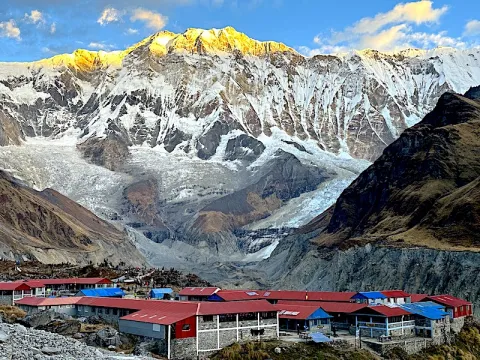
Guides monitor closely symptoms of altitude, such as headaches, dizziness, and so forth, so it helps prevent problems from becoming dangerous. Know your Acute Mountain Sickness, Nepal treks, ABC safety rules, and so forth. Expert guidance always increases confidence.
It might see some cost increments due to altitude logistics. On average, costs of hiring porters and guides in high altitudes could be around USD 30 to 40. These expenses relating to overall cost, altitude porters, and satisfaction of logistics for MBC could affect costs. Overall planning is necessary in such matters.
In conclusion this is because the elevation gain sets the degree of difficulty in this journey. In brief, the hike from Deurali to ABC via MBC is a test of endurance and vigilance in terms of Himalayan elevation levels.
Understand why the trek from Deurali to Annapurna Base Camp needs 6–7 hours, covering pacing, breaks, altitude, and terrain considerations.
| Section | Elevation | Avg. Time |
|---|---|
| Deurali to MBC | 3,230–3,700 m | 3–4 hrs |
| MBC to ABC | 3,700–4,130 m | 2 hrs |
| Breaks & Delays | – 1–1.5 hrs |
First, the average time it takes to reach from Deurali (3,230 m) to Annapurna Base Camp (4,130 m) ranges from six to seven hours. The trekkers must keep their pace steady and consistent. This pace for Deurali to ABC, the time frame for ascent in the Himalayas, and the trekking hours at ABC set the expectations. In other words, time management plays an important role.
Second, most of the day is eaten up on this stretch from Deurali (3,230 m) to Machhapuchhre Base Camp (3,700 m), and most groups take three to four hours for this area. Planning guidance—Deurali to MBC hiking time, Annapurna Sanctuary walking pace, and altitude trekking speed—seems to emphasize the value of an early start.
Third, the complexity of the terrain directly prolongs the journey. Rocky trails and snowy patches slow your progress, while conditions on the MBC trail, ABC terrain, and overall difficulty in trekking through the Himalayas shape the way you move. Patience will be ahead of speed in this context.
Fourth, frequent rests extend the overall time but give the ability of endurance. Then, stopping to drink water and recover breathing becomes necessary. A good resting strategy, altitude recovery breaks, and ABC walking efficiency bring balance into effort to avoid exhaustion.
Fifth and last, from MBC (3,700 m) to Annapurna Base Camp (4,130 m), it usually takes one to one and a half hours. Altitude naturally slows footsteps even over a shorter distance. The stretch from MBC onward to ABC is essentially at the mercy of how much duration one walks, high-altitude fatigue, and the rhythm of Himalayan ascendees; one needs to be pretty calm and focused. Lastly, the weight in your pack is another factor. Heavier loads make your hike slower compared to trekkers with porters, who have a more even pace throughout. Portered trekking, ABC logistics, and load management have advantages with each being more efficient, with the added bonus of preserving energy within lighter packs.
Here, weather can surely throw in a curveball where the walking time gets extended beyond expectations. Also, in conditions of snow, fog, and slippery ground, visibility and grip go down, making the trek more difficult. Conditions at Annapurna Base Camp, plus delays on Himalayan routes and the safety of the MBC path, beg for flexibility. In other words, it is prudent to build extra time into the trip.
In fact, most trekkers reach ABC by mid-afternoon when conditions are typical, leaving plenty of daylight for rest and photos. With the golden hour caught at sunset time in the Himalayas, arrival at ABC about then, and the views enjoyed-these could really enrich the whole experience. Thus, timing is everything and mostly pays off well.
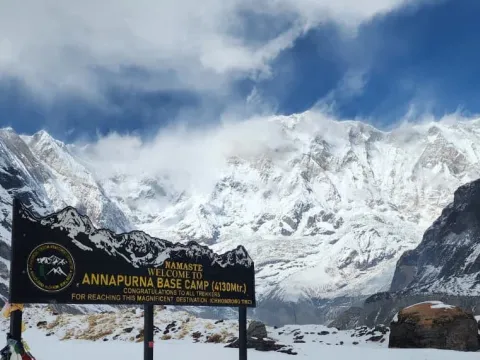
Thus, even if the days to be spent on the trails are longer, it does not raise the daily costs. Food and lodging normally run about USD 25–30 per day. The overall budget to be used for trekking Annapurna Base Camp, day-by-day walking expenses, and the rate in the MBC teahouse remain consistent; therefore, longer hikes do not increase prices.
In conclusion, a day of six to seven hours' trek is demanding but doable in the Himalayas. From Deurali onwards to ABC, the pace tests stamina and discipline, yet is within the reach of a well-paced trek.
Learn the benefits of beginning the Deurali to Annapurna Base Camp hike from Deurali in the early morning hours.
Early Start Benefits:
Here, start from Deurali (3,230m) for ABC at first light. The early morning chill helps stabilize the ground in alpine areas, making you relatively safe from wind gusts and ice fall in the afternoon. The Deurali to ABC schedule integrates safety into your trek, which explains why most trekking guidance recommends departing before dawn.
Actually, the snow is also firmer in the morning compared to later in the day. This makes it easier to walk on. Deurali’s morning weather, trekking conditions in ABC, and the whole Himalaya region’s climate indicate early trekking for better footing and a faster trek.
Visibility is better during the early hours within the Annapurna Sanctuary, giving you the best views of Machhapuchhre (6939 m), as well as Annapurna South (7219 m). The early morning view—Annapurna Sights and the Deurali to MBC view—helps boost spirits as you journey on.
Moreover, the avalanche zones between Deurali (3,230m) and Machhapuchhre Base Camp (3,700m) are considered to be safer before the warmth of midday. Consequently, guides resort to early starts, depending on Deurali’s avalanche schedule, risk assessment at ABC, and Himalayan safety planning.
Starting early also helps you pace with ease, with a few breathing stops along the way. An altitude-savvy pace plan, ABC acclimatization, and a strategic departure from Deurali will help you save some energy and last longer. So, departing early makes it easier to reach Annapurna Base Camp at an altitude of 4,130 meters before the formation of clouds in the afternoon. Landing at ABC with clear mountain views makes the experience even more enjoyable. Thus, the timing of arrival at ABC and the formation of clouds in the afternoon makes the entire trekking experience different.
Likewise, teahouses in Deurali open with the dawn, prodding trekkers to begin with tea and a bit to eat before the hike beckons. Precariously fueled, trekkers embarking on their journey begin on the right note. Deurali teahouse meals, trekkers’ breakfasts in Nepal, and the practice of an early start all seem to prepare trekkers for the ready state that allows digestion to regulate and warmth to permeate bodies.
In fact, forecasts in the morning remain more consistent than those made in the afternoon; thus, advisors bank on morning information to plan. By combining Annapurna Base Camp weather planning with Himalayan treks and strategies in Deurali’s start time, risks become smoother.
Early start times allow for flexibility in planning, and this flexibility makes room for unforeseen events. Delays, meteorological conditions, and altitude effects become less daunting if flexibility and start time are managed. These features of the ABC route, coupled with the flexibility of the Himalayan route, allow for calm, decisive, and confident actions. A contouring-like approach of ABC route’s planning enables success.
In conclusion, trekking begins before the sun rises to give trekking a professional and accountable feel. The best option begins with a daybreak departure from Deurali: early morning ABC trekking. The key is careful consideration of Himalayan safety to ensure success and enjoyment. Daybreak is, therefore, the brightest and best companion.
Understand trail in terms of Deurali to Annapurna Base Camp trail conditions and glacial valleys, moraines, alpine meadows to understand terrain safety.
| Section | Terrain Type | Key Challenge |
|---|---|
| Deurali | Rocky moraine | Unsound footing |
| Valley Floor | Glacial debris | Balance |
| Near MBC | Open alpine | Wind exposure |
| MBC-ABC | Snow flats | Cold and traction |

Actually, this journey begins at Deurali (3,230 m) in glacier-carved broad valleys from prehistoric ice flows. The sensation here is one of being very vulnerable as one passes through the barren landscapes devoid of vegetation in Deurali's environment, the Annapurna Base Camp, and the glacial valleys.
In the area around Deurali, loose stones and gravel are prominent on the trail, and hikers' attention is required all along. The pace on the ABC trek and moraine walking and Himalayan rocky areas are factors that affect trekking speed.
Moreover, the trail passes over various lateral moraines formed by withdrawing glacier bodies, beginning with varied terrain involving balance and endurance. The glacial moraine environment, geological properties of the Annapurna Sanctuary, and high altitudes affect trail mobility, requiring cautious and slow hiking.
During warmer periods, ice flows from the glacier periodically disrupt the trek route in the form of icy streams. These need to be traversed by trekkers on wet rocks. Glacial melt streams and the nature of the route while going from Deurali to MBC require cautious trekking.
As you near the base camp of Machhapuchhre (3,700 m), the valley widens, and the landscape turns to alpine meadow, easing the walk. "The alpine route to MBC, the landscape in the Annapurna Sanctuary, and high-altitude conditions of walking all contribute to a smooth flow of Snowfields to walk on between MBC (3,700 m) and Annapurna Base Camp (4,130 m), during the colder seasons, making one traverse snowy flats where the trail is laid on stepped snow. Trekking through the Himalayas on snow from MBC to ABC can be quite an experience.
More importantly, weather can turn the trail situation around in the blink of an eye. Trails can be open in the morning but snowed in come noon, leaving hikers traversing through slippery approaches in whiteout conditions. Weather in the region of Annapurna Base Camp is always a reality check to remain alert because of the ever-changing situation of the trail besides being influenced by the variable weather conditions.
Even the wind is not just an environmental factor in this region but is influenced by the surrounding peaks. Open sections see wind gusts. Then there are the giants: Machhapuchhre (6,993m), Annapurna I (8,091m), and Hiunchuli (6,441m), which force the wind, thereby making wind shelter an important consideration that can be overlooked.
Further, the maintenance on the trails is minimal, deliberately constrained by the sage sanctuary regulations. Natural paths usually get the upper hand over the developed ones, giving the whole trek its authentic flavor. The conservation campaign in the area, the eco-tracks in Nepal, as well as the raw trekking experience, all culminate in such authenticity. The climbers must learn to go with the flow.
In summary, the conditions on the path determine the levels of both the challenge and the beauty associated with the journey. The path between Deurali and ABC is characterized by Himalayan realities—to the point where the landscape involves glaciers, moraines, and alpine sections.
Understand Annapurna Base Camp climate, temperature, wind, clearness, unexpected snowfall, and general characteristics of the Himalayan climate.
Summary of Weather Patterns:
In fact, the trek between Deurali (3,230 m) and the Annapurna Base Camp (4,130 m) is notorious for its unpredictability," the website says. "Hour to hour, the weathers can change," so hikers must "be flexible about daily plans." In other words, "the ABC Weather conditions," along with the "Deurali to MBC conditions," factor into every day.
Here, the mornings and evenings are accompanied by strong katabatic winds that come from the glaciers. Although the sun might be shining brightly, the feeling is much colder than it actually is. The ABC trek, as well as from Deurali until reaching MBC, involves regions with the risk of strong winds.
Often the skies are clear in the early morning inside the Annapurna Sanctuary. When the atmosphere is clear, the horizon sweeps away to Annapurna I (8,091 m) and Machhapuchhre (6,993 m). The trek is made even more rewarding by the clearness of the dawn light.
As the sun heats up, there is usually some valley heating that triggers the formation of clouds. Your visibility may reduce with the development of cloud formations. Pacing your climb, that is, the time of ABC, affects the extent to which cloud formations in the Himalayas impact you. It also affects the shifting weather in the sanctuary.
Moreover, snow might suddenly show up even ABC trek during spring and autumn. The trails might become slippery and covered with snow in no time; a simple trek could become a session with slippery trails. The chance of unexpected snowfall and overall Himalayan weather patterns and Deurali trail conditions make it a good decision to carry microspikes if required. In the winter season, there’s another set of challenges with continuous but bitterly cold weather above MBC (3,700 m). Nighttime temperatures can drop below -10°C, and this affects each night’s sleeping pattern of trekkers. Winter trekking in the Annapurna region is characterized by cold weather for which it’s essential to have warm sleeping gear.
Further, the weather in the region follows a very clear rhythm. The season brings heavy cloud cover, with the possibility of snow up in the higher passes. This obviously pinches visibility on the trails. Because of this, trekking in the Nepalese monsoon season, especially to Annapurna Base Camp, has all the general Himalayan weather risks, which tends to keep many travelers away. Fewer trekkers hit the path.
Here, wind picks up with ascent into the exposed alpine zones around ABC at 4,130 meters. The cold is accentuated on such open terrain, with strong winds-one component of the alpine pattern-being a decisive factor in terms of how long you will manage without feeling a cold bite. Thus, face protection becomes quite necessary.
Likewise, weather also drives costs and logistics. When days get delayed, the bills of food and lodging start to rise. You also need to budget for weather-related delays and teahouse expenses, adding a buffer for contingencies on an Annapurna Base Camp trek. And extra funds do make a real difference.
Ultimately, knowing the weather helps the trekkers stay safer and enjoy the journey more. In short, cold winds, clear but fickle skies, and less often, falling snow characterize the climate of Annapurna Base Camp. With good preparation, uncertainty turns to confidence.
Learn the adaptations the body makes when altitude surpasses 3,500m while on the Annapurna Base Camp Trek.
| Height | Common Emotions | Desired Response |
|---|---|
| 3,500 m | Light fatigue | Slow pace |
| 3,700 m | Headache | Hydration |
| 4,130 m | Shortness of breath | Rest and warmth |
Above 3,500 meters, you might notice the effects of acclimatization. Your breathing rate increases even when you are resting. The sensation of acclimatization at high altitude and Himalayan physiology in Annapurna Base Camp Trek brings a sense of alertness to self-assess your body.
In fact, Machhapuchhre Base Camp (3,700 m) to trekkers may experience some slight headache or Dizziness. Staying hydrated and taking slow steps become necessary at this stage. Machhapuchhre Base Camp acclimatization route, altitude sickness symptoms, and trekking health guide to ABC all advise trekkers to be patient.
Here, a decrease in appetite is usually due to digestive changes at higher altitudes. Trekkers usually eat smaller meals more often. The importance of loss of appetite due to altitude, nutrition at Annapurna Base Camp, and management of energy at high altitudes is immense. Warm soups may prove helpful.
Moreover, sleeping habits will also change dramatically above 3,500 meters. There will be night awakenings. Being at high altitudes, ABC acclimatization nights, and measuring less oxygen at the Himalayas will account for sleep disturbances. Sleeping will be poor.
Likewise, the response of the body is a gradual increase in the production of red blood cells. With proper rest, acclimatization occurs. The adaptation process for altitude, Himalayan trek recovery, and acclimatization at Annapurna Sanctuary happens with minimal human intervention. Hence, staying overnight is key. In the same way, physical exercise means the body experiences more weight, even on mild slopes. Uphills become more strenuous, altitude fatigue in trekking, the climb at Annapurna Base Camp, and the oxygen debt of exercise all contribute to the experience. Conscious breathing patterns become an essential technique for easier momentum.
Further, the change in altitude requires more water intake. As climbers move up, accessing water becomes more difficult; therefore, more water is consumed. Dehydration in high altitude, as well as high altitude water intake, the health of trekkers in Nepal, among other aspects, remain in focus. Based on the background, frequent drinking is important.
Now, guides carefully watch for signs such as dizziness and nausea. Rapid descent is a prudent action when a serious sickness is imminent. AMS protection, Annapurna trekking guidance, and safety at altitude are all good measures for protection. Generally speaking, expert advice is reassuring.
Most importantly, acclimatization affects budgeting and planning in relation to trekking. Including rest days will result in incremental costs. The cost of doing the Annapurna Base Camp trek, taking into consideration acclimatization days, will impact the budgeting. Therefore, flexibility in planning is necessary.
acclimatization plays a decisive role in high-altitude trekking. Acclimatization at the Body's Response above 3,500 Meters, the Acclimatization experience at the Annapurna Base Camp, and knowledge about the Himalayan Altitude combine to form a Safe and Feasible Trek.
Arrive at Machhapuchhre Base Camp at 3,700m and catch your first glimpse of the Annapurna Sanctuary and surrounding ranges.
MBC Overview based on Bullets:
Actually, Machhapuchre Base Camp is the entrance to the Annapurna Sanctuary. There is an instant sense of opening after the glacier narrow passages because the trek route shifts from the tight spaces to the broad landscapes. The experience at Machhapuchre Base Camp and the entrance to the Annapurna Sanctuary and the trek to Annapurna Base Camp combine to provide this transition.

In the end, Beyond this, the landscape opens up to the vast alpine valley. Peaks are now more immediate and dominating, forming a breathtaking scenic niche. The scenery surrounding MBC, the Himalayan alpine landscape, and the journey to the Annapurna base camp together characterize this point, making the scenery almost too much to take in.
Now, the Machhapuchhre (6,993 m) tower looms directly above the camp in majestic harmony. Many trekkers halt in their track in silent reverence. The iconic panorama of the majestic Machhapuchhre, the holy mountain of Nepal, and the MBC spot create an emotional link. The cameras come alive here.
To the left and right, Annapurna South (7,219 m) and Hiunchuli (6,441 m) form the walls of the sanctuary, making one feel as if it is enclosed by massive mountain ranges. The view of Annapurna South, the height of Hiunchuli, and the view of the Sanctuary together enhance the immersion and help see the Sanctuary in its full glory.
Compared with Deurali (3,230m), Machhapuchhre Base Camp has a sense of being quieter and less harsh. The wind dies down, the trail becomes less strenuous, and weather and acclimatization factors improve. This is indeed a place to rest. In short, this camp is a critical acclimatization point. Climbers usually linger here beyond the scheduled itinerary, thanks in part to the acclimatization stop, the realities of high-altitude treks in Nepal, and what amounts to a good ABC altitude plan. It should be noted that waiting can be a wise partner in this adventure.
Notably, locals consider Machhapuchhre a sacred, unclimbed peak, and trekkers behave in quiet reverence. The mountain's spiritual designation, the Annapurna Sanctuary culture, and the spirit of Nepalese trekking behavior all lend to silence being the dominating mood.
Here, teahouses at MBC are warmer dining spaces, more generous to let trekkers recharge comfortably. The Machhapuchhre Base Camp teahouse, along with Annapurna trekking facilities and MBC accommodations, supports recovery, smoothing comfort for a moment.
Trek Prices in MBC remain consistent with other high-altitude stops: meals are generally $7-9 USD, rooms $5-8 USD. The overall cost of the Annapurna Base Camp trek, outlays in MBC, and teahouse prices remain reasonable, making it relatively predictable for any budget.
In summary, the emotional midpoint in the journey's arc is Machhapuchhre Base Camp. Its first glimpse of the Sanctuary of Annapurna-the MBC trek experience stepping into the Himalayan spirituality-leaves an indelible imprint, fueling trekkers on to press with revitalized inspiration.
Lunch break at Machhapuchhre Base Camp (3,700 m), enjoying warm food, rest for acclimatization, along with the majestic views of the Himalayas
| Item | Benefit | Avg. Cost |
|---|---|
| Dal Bhat | High energy | USD 5-8 |
| Noodle Soup | Easy digestion | USD 4-6 |
| Ginger Tea | Warm hydration | USD 3 - 5 |
Actually, the lunch stop at Machhapuchhre Base Camp is thus a physical as well as mental refresh point, giving trekkers their much-needed fill prior to finally climbing up. This MBC point, as part of the ABC Trek, is an important high-altitude refresh stop, thereby establishing the significance of nutrition.
Here, teahouses there serve warm and carbo-rich foods. Meals include dal bhat, noodles, and soups. MBC has lunch options at MBC that benefit energy needed during trekking. For this reason, simple foods become an effective meal at treks.
Likewise, eating slowly improves digestion at a higher altitude; thus, people eat slowly while avoiding large meals. Such habits ensure Himalayan physical well-being due to considerations for the Himalayan climate conditions while consuming meals.
Moreover, the dining area overlooks mountain ranges, including the sight of Annapurna South (7,219 m) and Machhapuchhre (6,993 m), which are visible as you dine. Having lunch with such a view is incomparably more enjoyable and makes dining an experience to remember.
In fact, the lunch break usually takes a period of forty-five minutes to one hour, giving trekkers an opportunity to resume after resting the legs and lungs. This lunch break strategy enables the Annapurna Base Camp trekking strategy to gain strength back. Guides ensure a close watch is maintained during lunch, so manifestations of altitude sickness, which may occur, are taken into account. By taking into account altitude sickness, safe Annapurna trekking, and safety measures at MBC, lunch has become an important health stop.
In MBC, hydration is essential as it is practiced as part of their routine meals. In trekking, hot water or ginger tea is usually consumed, especially on high-altitude days. This kind of warm fluid, along with appropriate hydration, helps keep fatigue away.
The time for lunch is generally peaceful with blue skies and easily accessible outdoor seating areas. The weather window available at MBC, and the surrounding weather in Annapurna Sanctuary during noontime trekking schedules exert influences to make lunch arrive at a very timely and convenient time.
The price of the lunch has slightly increased due to altitude-related logistics; however, the average meal price remains between USD 7-10. The expenses associated with the Annapurna Base Camp Trek, the MBC lunch cost, as well as the teahouse cost remain within budget.
Lunch at MBC is also a reboot in the mind as it comes as a refreshing pause before making a final push towards reaching the summit. In a nutshell, when Mountain meals with mountain views and inspired by the Himalayan Range, reboot the body and soul and get a boost to continue the climb with confidence.
Trek the most beautiful part from Machhapuchhre Base Camp to Annapurna Base Camp with glaciers, mountain, and sanctuary vistas.
Scenic Highlights:
Actually, the journey from Machhapuchhre Base Camp (3,700 m) to Annapurna Base Camp (4,130 m) is visually unparalleled, drawing you into the very heart of the Annapurna Sanctuary. The MBC to ABC section, Annapurna Base Camp Trek, and beautiful landscapes of the Himalayas come together to produce an experience wherein euphoria overcomes tiredness.
Here, the trail undulates easily across the vast glacial flats. There are no critical technical sections. The trekkers move steadily. The effort is not severe. Thanks to favorable conditions on the MBC to ABC trail, there is a natural rhythm on the path in the Annapurna Sanctuary.
With each step, the landscape unfolds with increasing drama. In front of us stands Annapurna I (8,091m), prominent in our view, sharing the limelight with the vast scenery of ABC and the precipitous exposure of the Himalayan giant itself. It is enough to make trekkers halt in their tracks once again.

To the south, there is the steep slope of Annapurna South (7,219 m) and Hiunchuli (6,441 m), towering over trekkers. The view of Annapurna South, Hiunchuli, and amphitheater-like Sanctuary add to its scale. The sense of scale is almost overpowering due to this.
During the warmer months, glacial streams flow silently underneath snow bridges, requiring mindful foot placement as one crosses icy rivers. Glacial meltwater, the MBC to ABC part of the route, as well as the overall Himalayan glacier trek, all require one’s full attention. The trek route is wide and safe. You get to enjoy a walk along thistrail without worrying, which makes for a wonderful trek and a great spot for Himalaya photo shoots. Moments to remember and take back home are experienced in a natural and vivid manner.
Notably, altitude bites even on a gentle trail. Breathing mills and strides shorten almost on cue, as if the air itself nudges you to tread lighter. The climb from MBC to ABC reshapes how you move, turning acclimatization into a quiet, ongoing practice. In short, your pace becomes the real compass here.
Here, weather is gentler on this leg of the mountain than the rougher, earlier zones, so the visibility remains clear until you approach. The window at ABC, the Himalayan afternoon calm, and that microclimate of sanctuary all conspire to feel favorable for trekkers. Conditions lean toward the cooperative side.
Costs remain consistent through this stretch, as the expenses are mostly contained within meals and lodging at ABC. From MBC onward to ABC, the estimated budget for the typical Annapurna Base Camp trek remains very predictable, giving travelers a reassuring sense of financial steadiness. No big surprises on the horizon.
And comes the two hours' stretch that forms the visual heart of the journey. Finally, the scenic walk from MBC to ABC, the core Annapurna Sanctuary, and plain Himalayan beauty create that lasting, almost earned feeling of wonder.
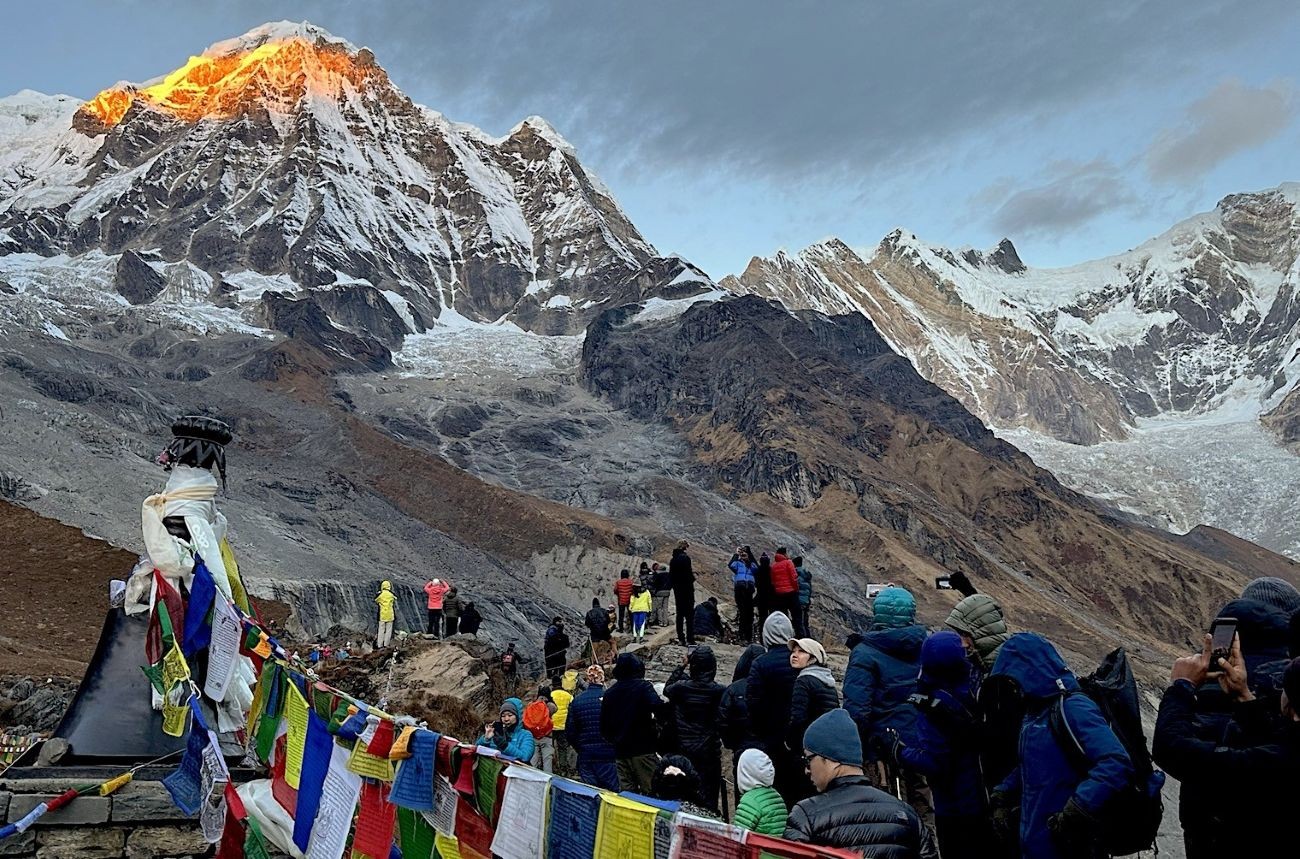
There is a change in trails from the riverbed to ice-carved basins as trekkers journey through the Deurali to the Annapurna Base Camp.
Landscape Transition Overview:
Meanwhile, , the trek from Deurali to Annapurna Base Camp is one of the interesting routes in terms of the landscape changes witnessed. Here, the trekker gets to see the ‘living geological history of the region because the landscape is constantly changing.’ This is evident in the ABC trek route.
In lower stretches around Deurali, there are dried-up riverbeds where meltwater carves out routes in a seasonal pattern, keeping trail wide and gravelly. The trail on the Deurali riverbed, routes for Annapurna Base Camp, and valley trail styles found in this area give a sense of exposure initially.
With an increase in elevation, the valley narrows and reveals glacial debris and moraines. Hikers move over stones deposited by ancient glacial action and trails and geology created in the Annapurna Sanctuary. The terrain becomes rougher.
Above Deurali, the vegetation disappears entirely, with rock and ice taking dominance. The alpine region features prominently in this landscape, which signifies the high-altitude, non-habitable conditions of Nepal’s ABC trekking region.
While Machhapuchhre Base Camp at 3,700 m approaches, the valley once again widens to become an Alpine basin, such that trekking becomes easier. The changeover into the MBC terrain, the Annapurna Sanctuary basin, as well as the Alpine Himalayas, promote easier walking, although with some level of effort. Above MBC (3,700m), ice-carved basin landscapes appear, which have snow-covered flats. Glacier-like features need to be traversed, as ice-carved basin trekking, MBC to ABC, and glacier features of the Himalayas mark this part of the journey. The geology makes its presence felt.
Here, the surrounding peaks create a strong sense of shelter, and Annapurna I (8,091 m), Machhapuchhre (6,993 m), and Annapurna South (7,219 m) are prominent in the panorama. The mountain ranges ringed by a sanctuary, the vertical Himalaya range, and the ABC panorama itself add drama, making the scale massive.
In fact, "Weather and light alter how landscape appearances change throughout a day. Shadows in the morning highlight texture that will be hidden later on, and Himalayan lighting, scenery at Annapurna Sanctuary, and photography on Nepalese treks alter our perception of color—timing is significant."
Likewise, trail maintenance is deliberately kept to a minimum to preserve the natural experience; the sceneries remain raw and untouched. Annapurna Sanctuary conservation activities, ecotrekking in Nepal, and the natural state of the trails combine to make the whole experience as authentic as possible, encouraging the trekker to adapt.
More importantly, the landscapes in these regions define the soul of this journey. The river beds, moraines, and ice-sculpted basins on the journey to Annapurna Base Camp present such a beautiful, diverse sight that each step is in reality its own geology.
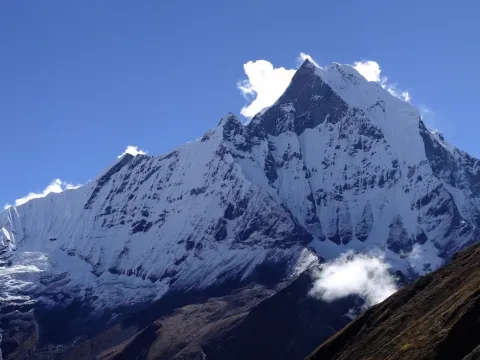
Get a glimpse of the rarely found wildlife and pristine nature above 3,500m in the Annapurna Sanctuary during the ABC trek.
| Species | Area | Elevation |
|---|---|
| Snow Pigeon | Open Valleys | 3,500 – 4,000 m |
| Blue sheep | Rocky slopes | 3,700 m+ |
| Marmot | Moraine area | 3,500 m+ |
Any kind of wildlife sighting in the Annapurna Sanctuary starts softly once you go up above Deurali (3,230 m). Trekkers notice a decrease in obvious signs but sharpened awareness. Wildlife in the region, at high altitude in nature, in Nepal, and the biodiversity of the ABC influence what is expected. Observation here takes the place of pursuit.
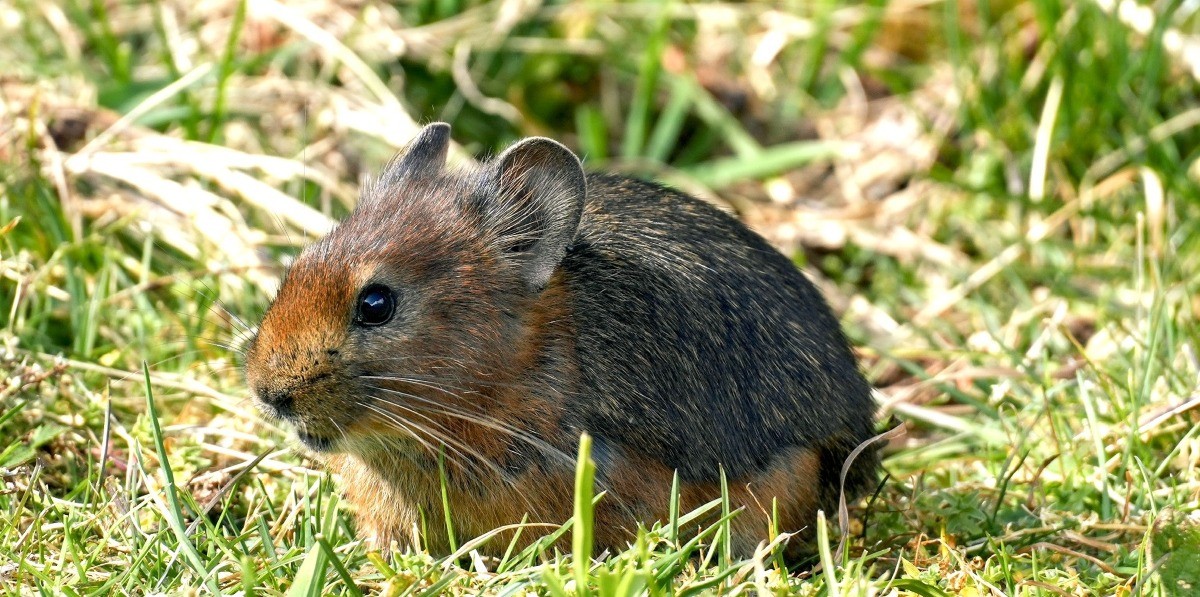
The higher the altitude, the more predominant birds will be over mammals, so you're very likely to see Himalayan snow pigeons and red-billed choughs. Birdlife of the Himalayas or the Annapurna Base Camp area and alpine wildlife in Nepal complete every hour of the walk in a vibrant way.
Likewise, the blue sheep also turn up from time to time on the distant slopes around Machhapuchhre Base Camp at 3,700 meters. During quieter times, people tend to scan the ridgelines for this animal. Such glimpses-the blue sheep, Annapurna region's wildlife, and MBC nature-really spark excitement. Patience pays off for the careful observer.
With warmer months, the Himalayan marmots make their presence known around rocky burrows. Whistles echo down valleys, reminders of an alpine ecosystem and the fauna of the Annapurna Sanctuary. It's the sound itself that directs awareness.
Mainly, snow leopards also live on higher cliffs, but it is very rare to glimpse them. Most trekkers rely on indirect signs rather than visuals. The habitat for snow leopards in the Annapurna region and the greater Himalayan predator ecosystem provides a great opportunity for conservation to guide curiosity with respect. Vegetation changes drastically above 3,500 meters. Moss and stubborn grass replace the forests that once were. Alpine flora of Nepal, plant life of the Annapurna Sanctuary, and high-altitude vegetation together explain how life prevails here. Resilience here in this landscape is what defines nature.
In fact, the sanctuary’s ecosystem depends on the interlinkage of glaciers and snow patches because these nourish the downstream life in rivers. Glaciers in the Himalayan ranges would include, for example, the region around the Annapurna mountain ranges since this somehow connects all other environments around the sanctuary of streams/alpine water in the landmass. In other words, all these environments just seem connected.
In the Annapurna Conservation Area, there is strict preservation of wildlife. Hunting and approaching the forest in these protected areas is forbidden. The preservation methods followed in the conservation areas, in addition to ecotrekking practices conducted by the Nepalese guide networks, ensure that the environment is in balance.
Further, trekkers also support preservation through permit costs. The money goes towards the preservation of the habitats. This acts as an affirmative response to the conservation process because the money goes to the preservation of the habitats. The cost associated with the preservation acts as a way to promote the preservation process. This supports the preservation process. Trekking acts as a preserve for the land.
In a nutshell, wildlife experiences at higher elevations normally happen in a quiet manner, but there is meaning involved. When you complete a trek into Annapurna Sanctuary, you experience a gentle effect from alpine animals and a higher altitude.
Introduce the mental barriers and fatigue involved as you climb towards Annapurna Base Camp above 4,000m.
Quick boosts: Mental Coping Tools:
Just after Machhapuchhre Base Camp at 3,700m, the psychological effects of fatigue start to be more palpable. Ridges and stairs that were previously manageable start to get the better of you, even if the terrain is easy to walk on. This is the point where the ABC trek psychological effects of altitude sickness take hold.
Actually, the air translates to reduced oxygen efficiency, and every action becomes weight-bearing. Even simple tasks become arduous, and one might experience lowered moods due to climbing. The effects of decrease in oxygen at the Annapurna Base Camp, mental fatigue due to altitude, and the shortage of oxygen contribute towards lowered moods.
Further, the cooler climate near the base camp of Mt. Annapurna (4,130 m) further introduces psychological stress. The persistent layering, wind exposure, and cold stress on the focused mind. The stresses related to cold exposure, Himalayan mental endurance, and the climate in ABC maintain the thoughts on the edge; the discomfort thus further accentuating the fatigue.
In open alpine areas, your eye may deceive you about distance, which makes the junction seem more or less remote than it is. Your perception of distance plays tricks on your discipline because consistent stride rhythm prevents frustration from stopping you from reaching point ABC.
In fact, "The silence and isolation contribute to heightened internal dialogues during the final stretch. Doubts may arise unexpectedly, particularly on solo hikes. The stillness of the Annapurna Sanctuary and the psychology of high altitudes create moods; thus, pep talks to oneself can't be overemphasized." Group dynamics are also important factors in the development of mental resilience. While the support of the guides and the trekkers can work to boost one’s confidence and thus make the journey easier. It is an easier journey when all work together to reach Annapurna Base Camp.
In fact, it helps steady the scatter of thoughts by breathing through a moment, while steady steps keep the mind calm. Slowing the breath down, trekking turns into rhythm as focus sharpens at altitude and ABC coping tricks really work; hence, awareness finds its center.
More importantly, hydration and proper fueling are not just important for the body, but they sharpen mental clarity, plain and simple. Dehydration spikes irritability and judgment blurred. When you're trekking at altitude, good nutrition, mental clarity, and those ABC strategies all work together in concert to protect focus. Discipline then becomes what keeps resolve intact.
Further, the sighting of Annapurna I at 8,091 meters has this effect of instilling new determination once again. A visual reward clears fatigue. The pursuit of Annapurna I, the promise from atop, and that moment when ABC arrival changes mindset-the spirit gets lifted. Without that lift, fatigue does have its toll.
Ultimately, more often than not, it is the mental toughness rather than raw physical power that helps one reach the end. So, the fight isn’t all about muscles at high altitude or in the Himalayas; it is about being steady, sustaining the climb, and letting the mind take the body to base camp and beyond.
Experience the breathtaking 360-degree mountain bowl at Annapurna Base Camp (4,130m) with panoramic views of Annapurna I, Machhapuchhre, and surrounding peaks.
Panoramic Highlights:
Meanwhile, arriving at Annapurna Base Camp (4,130 m) is the aim that the trek has been building towards: a full 360-degree Himalayan valley opening itself out around you. Feeling relief mixed with wonder as landscapes extend in every direction. This is an ABC arrival that leads from anticipation to wonder.
On the northern side, the giant Annapurna I towers at 8,091 m with a snow-capped peak. Every step taken towards reaching the camp is worthwhile, with the giant peak exuding an inviting ambiance for photos and momentary reflection. The presence of Annapurna I, the ABC highlight, and Himalayan peaks engulfs this experience.

To the southwest, Machhapuchhre pierces in stark contrast, with the holy character of the peak imbuing this landscape with the tranquility of a sanctuary. Its unblemished peak demands respect, and the silhouettes contributing to this landscape further underscore the holiness of the experience. The machhapuchhre viewpoints, the spiritual ambiance of the Annapurna Sanctuary, and the mountain-centered vantage point in ABC all contribute to the sensation of this location being special.
In the circle, Annapurna South (7,219m), Hiunchuli (6,441m), and Gangapurna (7,455m) fill out the amphitheater. Every view is different as it slices through ragged ridges and white glacier textures. The surrounding summits, the shape of Annapurna Sanctuary, and its majestic view of the Himalayas suck you into the experience.
Even the camping grounds offer tea houses or resting points on the way so that the trekkers can acclimate to the higher elevation to a certain degree. The mid to high-altitude tea houses available to the hikers at the point of ABC offer comfort.
Here, small glacier streams and snow areas add detail characteristic of a camp that calls attention to how ice, rock, and water interact. “A Dance” captures well how ABC’s icy environment, alpine streams, and sanctuary land display a richness of nature inviting many quiet lingering looks.
Likewise, nature here is gaunt but present: marmots popping up everywhere, the stray Himalayan bird wheeling by. The topography seems to reverberate with life despite its heavy hostility. Wildlife viewings, high-altitude critters, and observation opportunities of sanctuaries reward the traveler who treks near ABC by being attentive. In other words, being attentive sparks adventure.
When the weather has finally cleared up, views are at their best. This can be flipped at any moment with capricious clouds or snowfall, and that's why an early start is often necessary for photographers. The combination of Annapurna Base Camp weather, shifting cloud patterns across the Himalayas, and scrupulous planning for visibility further raises this experience to a larger-than-life dimension. The time of the year is important.
In fact, the cost for the trek remains reasonable: meals are around USD 7–10, and a room is about USD 5–8 in ABC teahouses. Thus, a comfortable stopover is easy to budget into the journey. The overall expense of the trek-lodging, meals at high altitude, and the cost of the Annapurna Base Camp trek-stays fairly predictable to keep finances on track.
In summary, reaching ABC seals the emotional and visual crescendo of the trek. All in all, the Annapurna Base Camp 360-degree bowl-with its panoramic Himalayan vistas and the thrill of high-altitude arrival-define the ultimate trekking achievement. Every effort paid off.
Visit the hypnotic sunset at Annapurna Base Camp (4,130m), where Himalayan snowcapped peaks are painted in golden hues as shadows move across.
Sunset Highlights Supporting Notes:
At Annapurna Base Camp, standing at an altitude of 4,130 meters, sunset converts the whole amphitheater into a living painting, awash with golden hues. The trekkers experience an irrevocable connection with the mountains as day dissolves into night. The experience of sunset at ABC—Light, Shadows, and Evening Photography at Annapurna—assumes centre stage, as anticipation turns into reality.
Moreover, the sun extended its shadows on Annapurna I (8,091 m) and Machhapuchhre (6,993 m), accenting the textured elements. Every ridge and glacier appears to shimmer with its unique mood. The interplay of the sunset at ABC, the Himalayan shadows, and the lighting of the peaks adds to the drama, so many trekkers simply click on and on.
Here, "Warm-lighting pours over the glaciers on the flanks of the 7,219m Annapurna South and the 7,455m Gangapurna, imbuing the peaks' crests with a lifetime of color. This painting captures the golden illumination of the Himalayas during twilight hours, further emphasized by the reflection on the snow in the Gangapurna glacier."
In the valleys and glacial basins, there are long shadows, which give a sense of relief. The three-dimensionality of the sanctuary from each point of view has been achieved through ABC valley shadows, the Himalayan sense of relief, and snow basins, which have created a complete evening landscape.
Likewise, the clear mountain air maintains the distant summits sharp against the dying light of the setting sun. The atmosphere at ABC—sunset clarity, Himalayan sharpness, and photogenic opportunities—is perfectly aligned to maximize the visualization effect. Conversely, the campsite quiets down to a reflection as hikers halt to process the experience. A common feeling is one of accomplishment that resonates from the sunset experience, the reflection at ABC campsite, and the fellowship of being at such high elevation. It is as if one is sharing this moment with the whole world.
As the evening approaches, if the sun drops, the temperature falls rapidly. Keeping warm is very important. So naturally, trekkers layer up to keep comfortable, classic high-altitude sunset chill, ABC climate tweaks, smart evening prep stay on the checklist. In short: being ready makes the experience enjoyable.
Weather can turn a sunset around in an instant-clouds can soften, scatter, or even briefly block the light. That's why keeping an eye on conditions through the afternoon is important. Also, when one is at Annapurna Base Camp, the way the sun is with Himalayan clouds, and how one plans for the visibility of the sunset, helps to make the experience. Flexibility becomes part of the plan.
In fact, the cost of this part of the journey is modest, given that you are already at the campsite. A meal before or after sunset usually costs about USD 7–10, and a room about USD 5–8. It is worth noting that the ABC trekking budget is quite high-altitude, meal prices, and evening plans remain fairly predictable; therefore, you do not usually get surprises on your bill.
Basically, sunset at ABC poetically seals the trekking day. Light and shadow across the Himalayan peaks-snowy ridges catching the last glow-are etched in memory forever. Thus, the Annapurna Base Camp sunset seals the trip with a powerful emotional and visual highlight.
Find expert advice on pacing yourself, staying hydrated, dressing correctly, and controlling your energy expenditure to conquer the trek to ABC from Deurali.
Practical Trekking Tips:
Meanwhile, maintaining an equal pace from Deurali (3,230 m) to Annapurna Base Camp (4,130 m) is crucial to develop endurance. This will help prevent fatigue. Additionally, taking slow and steady walks will minimize strain on muscles. This is because it is essential to develop stamina when completing the ABC Trek, as it is definitely doable by pacing well. Perils lie ahead because, quite frankly, your endurance is reliant on developing rhythm.
Also important is hydration above 3,500 meters. It is important to stay hydrated by drinking warm water or electrolyte fluids. Staying well hydrated goes a long way in protecting one from headaches and tiredness while trekking.
Here, clothing and gear for ABC Trek affects comfort and warmth. Consider the layers in your clothing: thermal base layers, a fleece jacket, and a wind-breaking jacket. Climbing suits for the Nepal Himalayas protect you from the cold and the wind. They make you safe and warm.
Moreover, managing energy involves having regular fueling meals. During the meal breaks, such as Machhapuchhre Base Camp (3,700 m), one needs to have carb-intensive foods such as "dal bhat" or "noodles." Keeping a sure supply of "ABC energy meals" and "trekking nutrition" assists in retaining energy levels while on the path.
Briefly put, more frequent pauses will help to promote acclimatization. Breaks every 30 to 45 minutes will increase circulation. When rest occurs on a consistent plan or schedule, recovery can begin.
In conclusion, man-made hiking poles could aid in maintaining balance and protecting knees on rocky trails. Hikers using poles on steep and icy trails could improve stamina and ensure better footing.
Mainly, monitoring altitude sickness is one area that truly stands out as very important. The instant a symptom like dizziness and a headache develops, it is advisable to slow down and take additional breaks. Being alert and well-versed in Himalayan health guidelines and high-altitude cautionary measures helps avoid serious sickness.
Further, the weather conditions inside Annapurna Sanctuary are prone to sudden changes. Therefore, one should be prepared with a rain jacket, gloves, and a hat for whatever comes along. Preparation with ABC weather knowledge and Himalayan winter clothing basics goes a long way toward avoiding discomforts.
More importantly, meal planning and teahouse stopping makes energy and expense planning easier. Estimated costs include meal costs of about USD 7-10 and a room price of about USD 5-8. Budgeting completion with trek costs and staying costs at high places will control the costs. Budgeting for finance will enhance physical fitness.
Finally, achieving success in high-altitude conditions requires pacing, hydration, layering, and proper nourishment. Deurali to ABC Trekking Trail is enhanced by tips, tips for success, and tips on energy conservation that help in achieving comfort and success with a memorable experience. Before that, preparation will improve success.
A hike from Deurali to Annapurna Base Camp that has the ring of legend to it-peaks, sanctuary views, and a healthy dose of Himalayan adventure.
Legendary Trek Highlights:
Mainly, the Deurali to Annapurna Base Camp trek threads a singular path through the sacred heart of the Annapurna Sanctuary. Trekkers are met with sweeping Himalayan peaks and glacial basins along the way, and from Deurali through the sanctuary to ABC, the experience defines this particular route with its distinctive scenery and sense of awe from the outset.
First, the route meanders through a tapestry of riverbeds, moraines, alpine basins, and flats carved out by ice. This ever-changing kaleidoscope of scenery roots your gaze and rushes your pulse. Landscapes, coupled with the geology of the Annapurna Sanctuary and the diversity of the Himalayan terrain, enjoin you well into the trek, reinforcing its legendary feel.
Second, High-altitude realities of thin air, biting winds, and pure physical exhaustion test endurance. Reaching ABC is, thus, as much a mental triumph as physical, a genuine test of strength and resilience that makes the success feel earned.
When you reach the 360-degree bowl of Annapurna Base Camp at 4,130 meters, the views are incomparable: Annapurna I at 8,091 meters, Machhapuchhre at 6,993 meters, and Annapurna South at 7,219 meters loom in one unforgettable view. The reward matches the struggle, and the imagery lingers-ABC's broad Himalayan vistas and the iconic peak silhouettes become long-lasting memories.
Further, the trek also weaves in the moments of quiet connection: glimpses of wildlife, alpine flora, and serene glacial streams charm a spiritual bond with the sanctuary. This beauty of ecology and the chance encounters with Himalayan wildlife deepen the emotional resonance in making the walk transformative.
Socially, too, the trek is peopled with guides, fellow trekkers, and teahouse staff. The stories shared, encouragement, and camaraderie grow from start to finish and turn the trek into a meaningful blend of personal achievement and communal experience.
More importantly, the sunrise and sunset in ABC light up the mountain peaks in a sort of dreamy light, painting the summits gold and pink and inducing an intense sense of emotions in fulfillment. Of course, all this magic happens in the sunrise of Annapurna, the Light of the Himalayas, and all the typical ABC Photography spots, providing magical views. It is almost like heaven.
In fact, smart prep makes a big difference: pacing, staying hydrated, dressing in layers, and managing energy intervals. As long as you have this kind of approach before arriving at the trek, you can enjoy each step. Detailed prep for Deurali-ABC, knowledge of hiking in the Himalayas, and acclimatization know-how put you higher up, making prep a part of the story.
Expenses remain reasonable for food and accommodation on the way, at around USD 7 to 10 per meal and USD 5 to 8 per night. There is nothing to hold you back on your trip to Annapurna Base Camp and ABC Trek.
Ultimately, Deurali to ABC is just one strand in a richly woven fabric of breathtaking views, difficult terrain, animal encounters, and an obvious sense of spiritual connection. The journey to Base Camp in Annapurna, exposure to the Himalayan environment, and coping with altitude are just a few factors that contribute toward making this walk so iconic.
1. What is the distance and time from Deurali to Annapurna Base Camp?
The trek from Deurali to Annapurna Base Camp is 9 kilometers and it takes around 5 to 7 hours to complete. We usually break this trek into two parts: from Deurali to Machhapuchhre Base Camp which's 5.5 kilometers and takes 2 to 3 hours and then from Machhapuchhre Base Camp to Annapurna Base Camp which is 3.5 kilometers and also takes 2 to 3 hours. With our guides you will walk at a pace take breaks and reach your destination safely while enjoying the beautiful Himalayan scenery.
2. How difficult is the trek from Deurali to Annapurna Base Camp via Machhapuchhre Base Camp?
This part of the trek is moderately difficult because you will be going up in elevation and the air is thinner at altitudes. The trail has icy parts and you will be walking on narrow mountain paths. But do not worry our guides are. They will make sure you are safe and comfortable throughout the trek. Many people have done this trek with us. They have had a great time.
3. What should I know about elevation gain and altitude on this route?
You will be going up by 900 meters from Deurali to Annapurna Base Camp. This can be challenging,. Our guides will help you every step of the way. They will make sure you drink water walk slowly and listen to your body. We have been doing this trek for years and we know how to make it safe and enjoyable for everyone.
4. When is the best time to start trekking from Deurali?
It is best to start in the morning when the sun is rising. The snow is harder. The views are clearer in the morning. Also there is chance of avalanches and strong winds in the morning. We always tell our trekkers to start and it has worked well for them. They have energy and they get to see the beautiful mountains.
5. What are the trail conditions from Deurali to Machhapuchhre Base Camp?
The trail from Deurali to Machhapuchhre Base Camp is rocky and icy. There are also streams and loose rocks on the way.. Our guides will help you navigate through the trail and they will make sure you are safe. We recommend using trekking poles to help you balance. With shoes and our guidance you will be able to walk confidently and enjoy the beautiful scenery.
6. How do weather patterns affect the Deurali to Annapurna Base Camp trek?
The weather in the mountains can be unpredictable. In the morning it is usually clear and cold. In the afternoon it can get cloudy and windy. Sometimes it even snows suddenly. Our guides check the weather forecast every day. They will adjust the plans accordingly. They will make sure you are safe and comfortable throughout the trek.
7. What is Machhapuchhre Base Camp like. Why stop there?
Machhapuchhre Base Camp is a place, with stunning views of the Machhapuchhre mountain. We stop there for lunch and to rest. It is also a place to get used to the high altitude. Our guides recommend stopping at Machhapuchhre Base Camp because it helps you get energy and it prepares you for the rest of the trek. You will also get to enjoy the atmosphere of the Annapurna Sanctuary.
8. How to get used to the altitude on the Deurali to Annapurna Base Camp trek?
You should walk slowly. Drink plenty of water. Eat food that's easy to digest and take short breaks. Go up the mountain slowly. Pay attention to how your body feels. If you get a headache or feel tired let your guide know. The guides have helped a lot of people get used to the altitude. So just follow what they say. You will be fine. When you get used to the altitude you will have a better time on the Deurali to Annapurna Base Camp trek.
9. What can I see at Annapurna Base Camp?
When you are at Annapurna Base Camp you will see a lot of mountains like Annapurna I, Machhapuchhre and Hiunchuli. You will be in a valley surrounded by these mountains. The sun rising and setting will be very beautiful. The guides will help you take pictures so you can remember this trip forever. You will see the Annapurna Base Camp from a nice spot.
10. What do I need to bring for the Deurali to Annapurna Base Camp trek?
You need to wear clothes that can keep you warm. Wear a base layer, a middle layer and a waterproof jacket. Bring gloves, a hat and good trekking boots. You should also bring a walking stick, sunglasses, sunscreen and a headlamp. The guides will give you a list of what to bring you can be prepared. You need to have the gear for the Deurali to Annapurna Base Camp trek.
11. How money do I need for the Deurali to Annapurna Base Camp section?
The cost of food and a place to stay is usually between $25 and $35 per day. If you hire a guide and a porter it will still be affordable. The guides will be honest about how everything costs. So you can just focus on the trek. Do not have to worry about money. You will have a time on the Deurali to Annapurna Base Camp trek.
12. Can I do the Deurali to Annapurna Base Camp trek in one day?
Yes you can do the Deurali to Annapurna Base Camp trek in one day. Most people can do it in 5 to 7 hours if they start early. The guides will help you make a plan that's safe and fun. A lot of people have done the Deurali to Annapurna Base Camp trek with the guides. They had a great time. You can do the Deurali to Annapurna Base Camp trek in one day.
13. What kind of animals and plants can I see on the Deurali to Annapurna Base Camp trek?
You can see birds like the snow pigeon. You can also see sheep and marmots. The guides will tell you about the plants and animals that live in the Annapurna Sanctuary. You will learn a lot about the Deurali to Annapurna Base Camp trek.
14. What do I need to know about avalanche zones on the Deurali to Annapurna Base Camp trek?
You need to start and follow the guides instructions. You should also be careful when you are in areas where avalanches can happen. The guides will have safety equipment with them. They will check the weather and the snow to make sure it is safe. The guides have a lot of experience with the Deurali to Annapurna Base Camp trek.
15. How can I get ready for the part of the Deurali to Annapurna Base Camp trek?
You should go on hikes before you start the trek to get in shape. You should also think positive. Set small goals for yourself. Drink water. Eat snacks to keep your energy up. The guides will help you. Cheer you on. They have a lot of experience with the Deurali, to Annapurna Base Camp trek. You will feel good when you get to the Annapurna Base Camp.
Our travel experts are ready to assist you with any questions.
Send us a message.Have a question before you book? Send your enquiry below and our travel experts will get back with the required information.