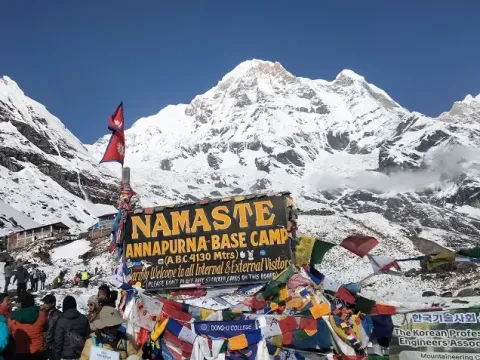
The Annapurna Base Camp Trek (ABC) is an exciting moderate trekking adventure in Nepal's beautiful Annapurna Himalayas. It leads you to the tiny base of Annapurna I (8,091 m), the 10th highest mountain in the world. Similarly, the ABC trek provides nature, culture, and panoramic Himalayan scenery.
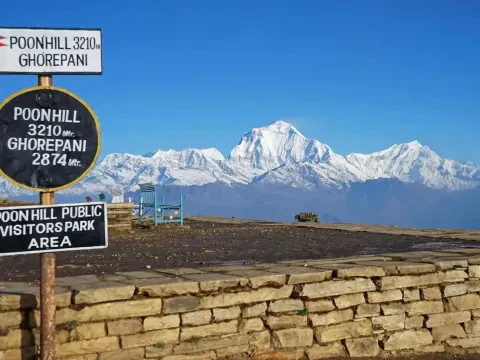
You, actually, begin the Annapurna Base Camp trek from Nayapul or Jhinu Danda after you arrive at Pokhara. Alternatively, You can also begin the trek from Ulleri/Banthanti if you are going to Annapurna Base Camp via Poon Hill and Ghorepani. Similarly, the trek passes through Gurung villages like Ghandruk (1,940 m) and Chhomrong (2,170 m). likewise, the inhabitants greet you with their hospitality and local cuisine.
Moreover, on ABC Trek, you hike through rhododendron forests, stone steps, and terraced fields downhill. In addition to, ABC Trek lies in Annapurna Conservation Area entirely. With gaining altitude, the scenery transforms into bamboo forest and alpine terrain. From Bamboo to Deurali (3,200 m), the air turns cooler and mountain vistas unfold.

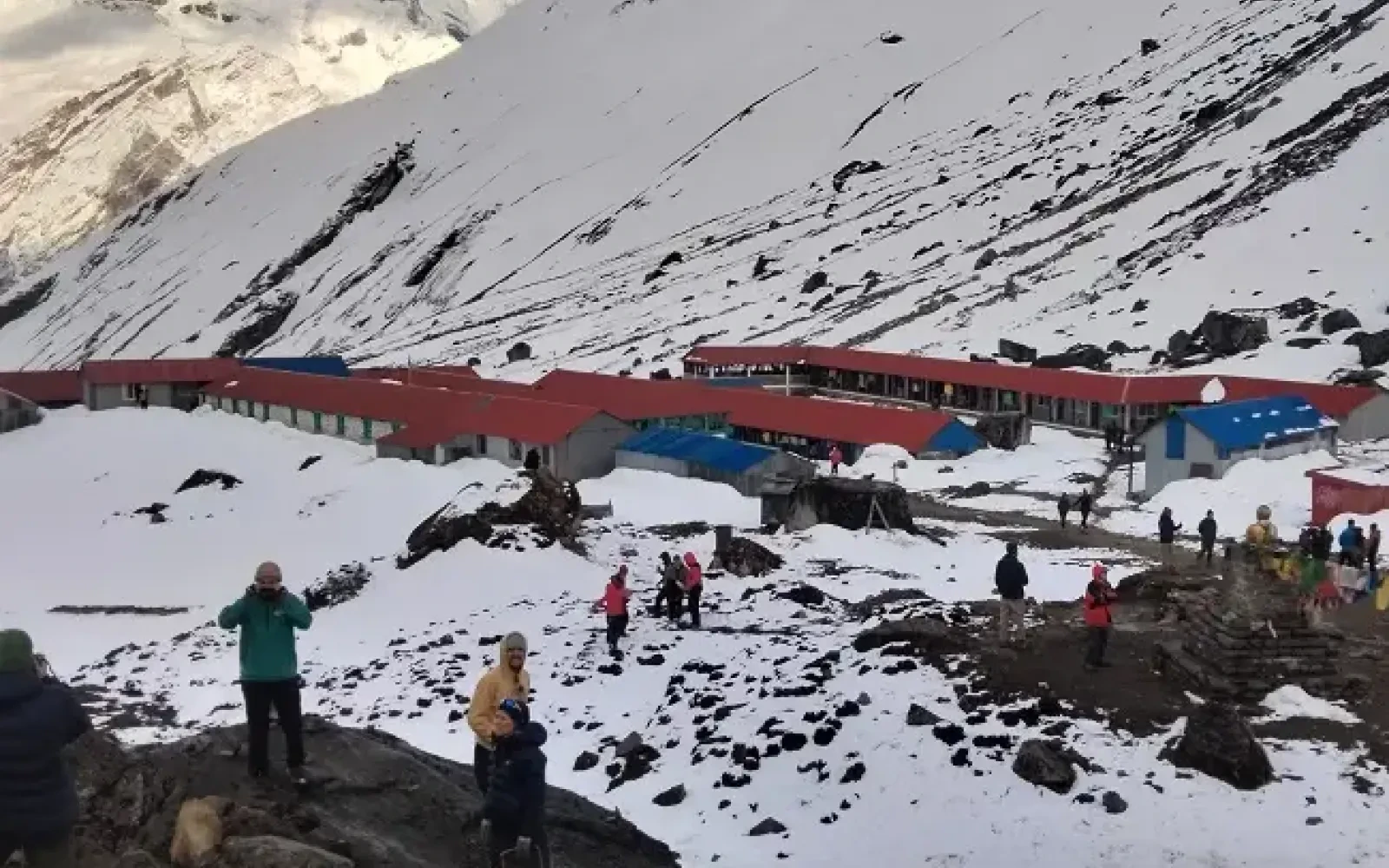
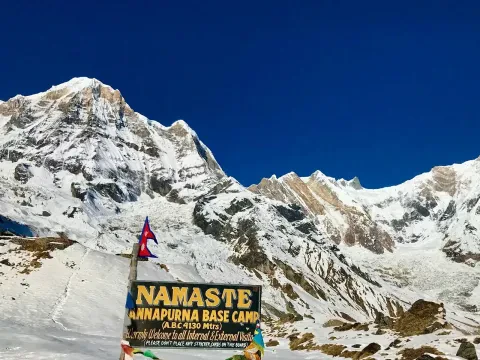
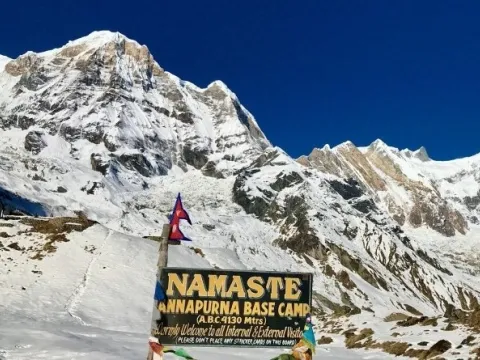
Actually, You're below Machapuchare (6,993 m), a sacred mountain, at Machapuchare Base Camp (3,700 m). A final climb takes you to Annapurna Base Camp (4,130 m), surrounded by towering mountains. You look out at Annapurna South (7,219 m), Hiunchuli (6,441 m), Gangapurna (7,455 m), and Tent Peak (5,695 m).
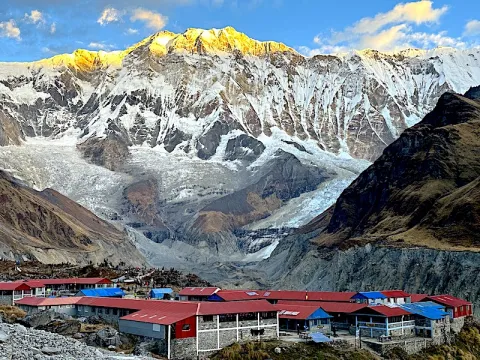
Most importantly, Sunrise and Sunset at Annapurna Base Camp (4130m) hues the mountain with a golden tint. In fact, this is the trekking highlight for most trekkers. The complete trek typically lasts 7 to 12 days, based on the route. If you trek to Annapurna Base Camp through Jhino Danda, it takes only 6-7 days. Otherwise, if you want to make a complete circuit through Poon Hill and Ghorepani to ABC, it takes 10-12 days.
Spring (March–May) and autumn (September–November) months offer the best weather and mountain views for Annapurna Base Camp Trek. Teahouses along the route offer food, beds, and local stories on Annapurna Base Camp Trek.
Being Moderately difficult, the ABC trek is ideal for health-conscious beginners and seasoned trekkers alike. The ABC trek rewards you with culture, landscape, and an up-close view of the Himalayas. Annapurna Base Camp Trek is also suitable for family, beginners, children ( who are above 6) and elderly people as well. Thus, ABC Trek is a must do trek in Nepal.
Food on the Annapurna Base Camp trek is fresh, abundant, and available in all the local villages. Actually, Local villages you pass by like Jhino, Chhomrong, Sinuwa, Bamboo, Dovan, Himalaya, Deurali, Machhapuchhre Base Camp and Annapurna Base Camp Trek offer you freshly prepared food. Set menus at fixed prices are available at local teahouses along the trail. You eat well from the start at Nayapul to the finish at Annapurna Base Camp (4,130 m).
Similarly, Dal bhat—rice, lentil soup, and vegetables—is the most standard fare on Annapurna Base Camp Trek and the staple for the majority of trekkers. It's calorie-dense and usually refillable. There's more variety from cooks in lower villages like Ghandruk (1,940 m) and Chhomrong (2,170 m). Noodles, fried rice, eggs, pasta, pancakes, and even momos are on offer.
As you ascend higher, food becomes less elaborate yet still wholesome. For example, at Deurali (3,200 m), you have soup, potato dishes, and Tibetan bread. By the time you reach Machapuchare Base Camp (3,700 m), there are fewer ingredients to be found. Nevertheless, hot meals like porridge and thukpa still provide sustenance. You even have pizza on the menu. Surprised? Yes, you can indulge.

The food at Annapurna Base Camp is plain but nutritious. You eat with giants like Annapurna I (8,091 m), Annapurna South (7,219 m), and Hiunchuli (6,441 m) looming behind you. Most of the food is vegetarian for freshness and safety at high altitude. In fact, the vegan and gluton free cuisines are also available, Vegan? gluton free? No problem.
Moreover, Teahouses also serve hot drinks like ginger tea, lemon tea, and black coffee. There are also snacks like chocolate, biscuits, and instant noodles, though the cost goes up with the altitude. Bring energy bars or nuts for extra energy. But it is prohibited to carry meat above Sinuwa(2300m).
The price of food on Annapurna Base Camp Trek increases with altitude due to transportation challenges. Do you know Dal Bhat at Annapurna Base Camp is priced at Rs. 800. Nevertheless, the food is still safe and hygienically prepared. In conclusion, the trek serves hearty meals that keep you going through undulating landscapes and long trekking days.
There are different beverages on the Annapurna Base Camp trek. Actually, the local teahouses along the trail serve both hot and cold beverages. Similarly, the different local lodges contain their own menu with certain food items. During trekking to Annapurna Base Camp (4,130 m), you need hot beverages.
In fact, trekkers drink boiled water primarily for safety. Teahouses provide it at a very low price. Carry a reusable bottle and purification tablets as a precaution. Actually, bottled water is costly but available at higher elevations.
Cold drinks are readily available in the lower settlements like Ghandruk (1,940 m) and Chhomrong (2,170 m). Also, Sodas, juice, coke, and bottled water can be readily bought. But, above Bamboo and Deurali (3,200 m) these are not so readily available.
Hot drinks are more popular when it is cold. Actually, the temperatures are low at Deurali, Machhapuchhre Base Camp and Annapurna Base Camp. Teahouses offer ginger tea, honey lemon tea, black tea, milk tea and masala tea. Most importantly, the drinks acclimatize you to altitudes and give you warmth.
Black coffee, milk tea, or hot chocolate can be found in the majority of settlements you visit. Similarly, Hot beverages at Machapuchare Base Camp (3,700 m) will be a comfort under the mountains like Machapuchare (6,993 m) and Hiunchuli (6,441 m).

Teahouses along the ABC Trek also offer herbal drinks like garlic soup or garlic tea. Actually, Locals believe that garlic prevents altitude sickness. While there's no science behind it, it does work for most trekkers.
Avoid alcohol at heights over 2,500 m. It dehydrates and contributes to the risk of altitude sickness. Most importantly, even moderate amounts impact your entire Annapurna Base Camp Trek trek.
In brief, therefore, drink hot safe beverages to remain hydrated. Eat sensibly during the ascent to the Base of Annapurna I (8,091 m). Being well-hydrated will revive strength and safety on the path.
Yes, vegan trekkers will find options on the Annapurna Base Camp (ABC) route. Most teahouses along the route provide basic, plant-based foods since the local diet is naturally rich in vegan-friendly foods.
Actually, Dal bhat is the most dependable vegan meal. This staple meal—steamed rice, lentil soup, and seasonal vegetables—is standard from Ghandruk (1,940 m) to as high as Annapurna Base Camp (4,130 m). It is rich in carbohydrate and protein and thus ideal for trekkers.
Moreover, you can request no ghee or butter to be added while ordering. Also the teahouse cooks are accustomed to diets and are helpful. In places like Chhomrong (2,170 m) and Bamboo, fried rice, chapati, and plain noodles are also available, all of which can be modified to vegan with a little adjustment.
As you ascend to the higher elevations such as Deurali (3,200 m) and Machapuchare Base Camp (3,700 m), the food options are fewer. Nevertheless, boiled potatoes, vegetable soups, and plain porridge are usually available. It is a good practice to bring some plant-based snacks to supplement your diets, especially on longer walking days.
At Annapurna Base Camp itself, the lodges continue to offer basic vegan food like rice, chapatti and plain noodles. You can enjoy these basic meals while taking in spectacular views of Annapurna I (8,091 m), Annapurna South (7,219 m), and Hiunchuli (6,441 m).
Hot vegan drinks are easily found on ABC Trail, such as ginger tea, lemon tea, and black coffee. Just ask the lodgers and your guide no milk or honey. Garlic soup is also a vegan option that can aid in acclimatization.
To get the best vegan experience, make your dietary requirements very clear to teahouse staff. Most are willing to assist, and carrying a phrase card written in Nepali can be useful.
In short, trekking to Annapurna Base Camp as a vegan is very possible. With clear communication and a little preparation, you will have nutritious food at every settlement along the trail.
A main course dish costs Rs. 400-800 on the Annapurna Base Camp Trek. The cost of food on the Annapurna Base Camp trek increases with altitude. Prices vary according to your location and how hard it is to get there by teahouses. You'll need to pay more at each stop as you ascend towards Annapurna Base Camp (4,130 m).
In the lower settlements like Ghandruk (1,940 m) and Chhomrong (2,170 m), dal bhat will be NPR 400–600. It is a staple meal of rice, lentil soup, and vegetables. There are free refills in most lodges.
The breakfast items like porridge, pancakes, and eggs will be NPR 300–500. Fried noodles or momos can be had as snacks, which are easily available at lower altitudes.
The prices go higher as you ascend towards Deurali (3,200 m) and Machapuchare Base Camp (3,700 m). Dal bhat is NPR 800–1,000. A pasta or soup item could be NPR 600–800. The reason for the price is that the area is inaccessible and mule or porter transportation is used.
Food at Annapurna Base Camp is priciest. Dal bhat costs NPR 1,000–1,200. Tea, coffee, and hot chocolate cost NPR 150–300 per cup. Breakfast toast and jam can cost NPR 700.
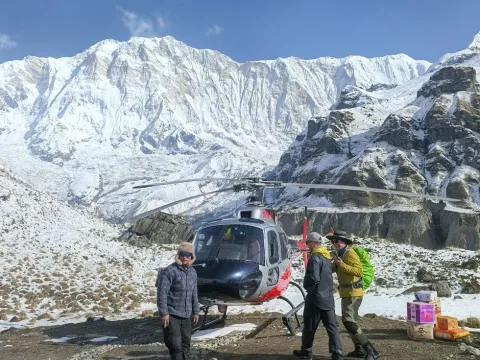
Teahouses near Annapurna I (8,091 m), Annapurna South (7,219 m), and Hiunchuli (6,441 m) have difficult logistics. Supplies arrive on foot or by helicopter. That adds cost per meal and drink.
You need to budget NPR 2,500–3,500 per day for food and drinks on Annapuran Base Camp Trek. Carry snacks like protein bars to avoid spending money. Overall, food is nutritious, safe, and easily available on the trek.
Meat is not strictly prohibited on the Annapurna Base Camp (ABC) trek, but it's less commonly consumed as you gain altitude. It is said that carrying meat is forbidden beyond Sinuwa, but still in use. At lower elevations, such as Ghandruk (1,940 m) or Chhomrong (2,170 m), you'll often find chicken, yak, or goat meat served in various dishes—think curries, momos, or hearty soups. These options can add welcome variety to your meals during the early stages of the trek.
Once you ascend past villages like Bamboo and Deurali (around 3,200 m), meat becomes harder to find. Teahouses at higher altitudes usually focus on vegetarian fare to keep food fresh and safe, since transporting and storing meat in remote, cold conditions is challenging. By the time you reach Annapurna Base Camp itself (4,130 m), meat is very rarely on the menu, or not on the menu as the meat is forbidden at Annapurna Base Camp. Most teahouses offer dal bhat (rice and lentil soup), vegetable soup, and simple carbohydrates—foods that are easier to digest and less likely to spoil.

Health professionals generally advise trekkers doing Annapurna Base Camp Trek to limit or avoid meat above 3,000 meters. Higher altitudes slow digestion, and meat can increase the risk of stomach issues. Sticking with vegetarian meals helps reduce these risks and is often the more practical choice.
Local culture also plays a role determining meal items on their menu. Many Gurung and Tibetan communities in this region traditionally eat less meat, and when they do, it's usually yak rather than chicken or goat. As a result, you'll notice fewer meat options as you approach Annapurna I, Annapurna South, and Hiunchuli.
In short: meat is permitted on the ABC trek though it is said that it is forbidden beyond Sinuwa but it becomes less available the higher you climb. Most trekkers opt for vegetarian meals at altitude for both health reasons and convenience. You can enjoy meat dishes in the lower villages, but it's best to switch to vegetarian fare as you approach base camp.
Yes, you can find gluten-free foods on the Annapurna Base Camp trek but with caution. All teahouses on ABC Trail serve basic meals with naturally gluten-free ingredients. The risk of cross-contamination exists in shared kitchens.
Dal bhat is the safest and most common gluten-free meal on Annapurna Base Camp Trek. It is rice, lentil soup, and vegetables. You can carry this from Ghandruk (1,940 m) to Annapurna Base Camp (4,130 m). Ensure it has no wheat-containing additives or flour thickeners.
In villages like Chhomrong (2,170 m) and Bamboo, vegetable soups and boiled potatoes as well as eggs may be eaten. Avoid noodles, momos, pancakes, and fried rice unless they are certified gluten-free. Wheat flour or soy sauce with gluten is employed for the majority of these.
As you go higher to Deurali (3,200 m) and Machapuchare Base Camp (3,700 m), options are limited. But plain rice, porridge (without wheat) and soups are still present. Carry gluten-free food products like energy bars or nut mixes.
Menu remains simple at Annapurna Base Camp. You'll eat amidst the shadow of mountains like Annapurna I (8,091 m), Hiunchuli (6,441 m), and Annapurna South (7,219 m). Ask staff to prepare without soy sauce or flour.
There is no gluten-free labeling, so politely ask to the local lodgers. It helps to have a translated dietary request card. Most teahouse managers will attempt to find ways around dietary requests if explained well.
In conclusion, gluten-free trekking is possible with planning. Communicate clearly and carry backup snacks. You'll enjoy the ABC trek without compromising your health.
Absolutely, you're allowed to bring your own food on the Annapurna Base Camp trek—and honestly, it's a smart move. Most trekkers tuck a stash of snacks into their packs: think energy bars, nuts, dried fruit, stuff that won't go bad or weigh you down. Trust me, you'll thank yourself when you're slogging up those switchbacks and all the teahouse menu has is another plate of dal bhat.
Speaking of teahouses, you'll find them all along the route, from Nayapul up to Base Camp (that's 4,130 meters, in case you're counting). The catch? The higher you climb, the skimpier the menu gets. If you're vegan, gluten-free, or just picky, bringing your own munchies is a lifesaver. The closer you get to those snow-capped monsters like Annapurna I or Machapuchare, the less you'll want to gamble on finding a meal that works for you.
Diet-wise, carbs are your best friend up here. Rice, noodles, potatoes—load up for the long haul. Dal bhat isn't just the local staple, it's a solid mix of protein and carbs. Don't skip the veggies either; your body will need the vitamins and fiber, even if you're not craving them. But hey, go easy on the fried stuff. Your stomach will be working overtime at altitude, and greasy food is just asking for trouble.

Hydration is non-negotiable. Drink tons of boiled or purified water. Yeah, that means skipping a few cups of coffee or that tempting beer at the end of the day—caffeine and alcohol are a fast track to dehydration and altitude sickness. Warm teas like ginger or lemon? Total win for your stomach and for acclimatizing.
One last thing: eat small, frequent meals instead of stuffing yourself. Altitude can mess with your appetite and digestion, so give your body a break. Electrolyte tablets or powders? Toss a few in your bag, just in case.
Bottom line: pack some snacks, keep your meals light and balanced, and drink water like it's your job. With these simple moves, you'll have way more energy to soak up those insane mountain views—and your stomach will thank you later.
Alright, listen up. You wanna survive (and actually *enjoy*) the Annapurna Base Camp trek? Don't sleep on your diet. We're talking about days of climbing, sweating, cursing your backpack, and maybe questioning your life choices. You need proper fuel. Not just sad granola bars and a prayer.
Let's break it down:
Snack Smarter, Not Heavier
You don't wanna be that person dragging a bag full of Snickers up the mountain. Go for lightweight, high-energy stuff—nuts, dried fruits, and energy bars. Toss a few in your pocket; trust me, you'll thank yourself mid-slog.
Load Up on Carbs
Rice, potatoes, bread—this is what's gonna keep your legs moving even when your spirit is weak. Nepal's MVP is dal bhat: rice, lentils, veggies, maybe a bit of pickle. It's everywhere, from Ghandruk (1,940m) all the way to the top. It's not fancy, but it *works*.
Chase Vitamins, But Don't Obsess
Fresh veggies and fruit? Great when you get them, but once you hit those higher lodges like Machapuchare Base Camp (3,700m), forget it. Maybe pack some multivitamins if you're worried. Just don't expect a salad bar at 4,000 meters.
Ease Up on the Grease
Greasy and deep-fried foods will mess you up—nobody wants a gut bomb halfway up the trail. Go for stuff that's easy on the stomach.
Hydration > Everything
Altitude sickness is no joke. Drink the boiled/purified water. Lots of it. Lay off the booze and caffeine—they just dry you out more. Yes, even that "just one beer" at the teahouse.
Eat Small, Eat Often
Big meals = sleepy, bloated hiker. Smaller, regular snacks and meals are your friend. Hot drinks like ginger or lemon tea are clutch for keeping warm and helping your system adjust.
Got Dietary Restrictions?
Vegan, gluten-free, allergic to half the planet—make it crystal clear to the teahouse folks before you sit down. And maybe pack some backup munchies, just in case.
Keep your meals carb-heavy and balanced, slam water like it's your job, and don't expect anything fancy as you get higher. Annapurna doesn't care about your picky eating habits.
You can't trek on an empty tank. Breakfast is your launchpad during Annapruna Base Camp Trek.
Don't go crazy on greasy stuff for breakfast, or you'll be regretting it by hour two. Hydrate like you mean it.
If you're picky or have allergies, let the cook know. Better to be "that person" than the one with a rumbling stomach all morning.
Lunch is basically what's between you and a nap in the snow.
Skip the booze and Red Bull at lunch. Warm, simple meals are easier on your stomach, especially as the altitude climbs.
Bring your own nuts or protein bars if you think you'll need more—teahouse portions can be a bit... inconsistent.
Dinner on the Annapurna Base Camp trek is hearty, nourishing, and essential for recovery after a day’s hike. Most teahouses along the trail serve dinner between 6:00 and 7:30 PM, providing trekkers with a chance to rest and refuel.

The most popular and widely recommended meal is Dal Bhat, a traditional Nepali dish featuring rice, lentil soup, seasonal vegetables, and often pickles. This meal is vegan, gluten-free, and typically comes with free refills. Prices generally range from NPR 600 to NPR 1,000, with costs increasing at higher elevations due to transportation challenges.
Additional food options include vegetable noodles, fried rice, and chapati with curry. These dishes are typically priced between NPR 500 and NPR 900. In lower-altitude villages such as Ghandruk (1,940 m) or Chhomrong (2,170 m), both prices and menu variety tend to be more favorable.
For those following gluten-free diets, Dal Bhat or plain rice with vegetables are suitable choices. Vegans should avoid cheese and request that meals be prepared without ghee. Teahouse staff are usually accommodating when dietary preferences are clearly communicated.
Soups are also a popular dinner option on the Annapurna Base Camp trek. Garlic soup, in particular, is valued for aiding acclimatization and providing warmth. Tomato, lentil, and vegetable soups are also commonly available, with prices ranging from NPR 300 to NPR 600.
It is recommended to drink only boiled or purified water with dinner, and to avoid alcohol and caffeine at high altitudes. Herbal teas such as ginger or lemon are good alternatives for staying hydrated.
Overall, it is best to eat dinner early, choose simple and nutritious meals, and avoid heavy foods. Dal Bhat remains the most balanced and reliable dinner option during the Annapurna Base Camp trek.
If you have some more time to spare for the research on Annapurna Base Camp Trek. Give it to these blog posts. These blog posts will help you a lot if you are planning Annapurna Base Camp Trek.
1. Annapurna Base Camp Jeep Ride
2. How difficult is Annapurna Base Camp Trek?
3. Where is the best view of Annapurna range?
4. Annapurna Base Camp Trek vs Everest Base Camp Trek
5. Annapurna Base Camp Trek in Winter
6. 10 Best Spring Treks in Nepal
7. Annapurna Base Camp Trek in Spring
8. Annapurna Base Camp Trek in April
10. 50 Facts about Annapurna Base Camp Trek
11. Annapurna Base Camp Trek in May
12. Annapurna Base Camp Trek in November
13. Annapurna Base Camp Trek in October
14. Annapurna Base Camp Trek in April from Kathmandu
15. Annapurna Base Camp Trek in September
16. Annapurna Base Camp Trek from Pokhara
17. How to Prevent Altitude Sickness on Annapurna Base Camp Trek?
18. How do it go to Annapurna Base Camp from Pokhara?
19. How long is the trek to Annapurna Base Camp?
There are certain foods items suggested and mostly used for breakfast, lunch and dinner on the ABC Trail. These items of foods will keep you warm, rightly nourished and fit on the trail. These are:
Breakfast – Top Choices
Lunch – Recommended Meals
Dinner – Best Options
Drinks – Best Choices for Trekkers
Food on the Annapurna Base Camp trek is plain but nourishing, designed to feed trekkers for days on end. Teahouses en route provide fixed menus with various options. Breakfast items typically consist of porridge, pancakes, toast, eggs, and Tibetan bread. Lunches and dinners consist of dal bhat (rice, lentils,.vegetable curry), fried rice, noodles, pasta, momos (dumplings), and soups. Meals are mostly vegetarian, and meat is not recommended beyond Chhomrong due to unreliable refrigeration.
It has vegan and gluten-free food, though in limited quantities, so it is suggested that you inform the cook of what you need. Tea, coffee, hot lemon, and ginger honey are popular hot drinks. Drinking water is either boiled or provided in treated bottles for safety. Prices for meals are typically between $5 and $10 and go up with an increase in altitude.
Dal bhat is highly recommended on the Annapurna Base Camp Trek as it gives balanced nutrition and sustained energy. Garlic soup is typically consumed to support acclimatization, and ginger lemon tea is commonly employed for hydration and relief. Freshly prepared, hot foods are best consumed, and meat and milk products must be avoided to reduce the possibility of food poisoning. With caution, your food can go a long way in making your trekking experience enjoyable.
1. What is the common food on the Annapurna Base Camp Trek?
The common food on the Annapurna Base Camp Trek is Dal Bhat. Dal Bhat is a Nepali dish that includes rice, lentil soup, vegetable curry and pickles. Our guides think Dal Bhat is a choice because you can have as much as you want. Dal Bhat gives you the energy you need for days of walking on the Annapurna Base Camp Trek. It is also good for you and easy to eat.
2. What breakfast options are available on the ABC Trek?
For breakfast on the Annapurna Base Camp Trek you can have things like porridge, Musly, Tibetan bread, eggs, pancakes and toast. These foods will give you the energy you need to walk in the morning. We think it is an idea to have hot foods for breakfast on the Annapurna Base Camp Trek because they will keep you warm. Our guides have been on the Annapurna Base Camp Trek times and they know that these foods are good for you.
3. What do people usually eat for lunch on the Annapurna Base Camp Trek?
For lunch on the Annapurna Base Camp Trek you can have Dal Bhat, fried rice, noodles or pasta. These foods are warm. Will give you the energy you need after walking in the morning. Our guides have been taking people on the Annapurna Base Camp Trek for a time and they know that it is a good idea to eat local Nepali foods like Dal Bhat because they will help you stay strong.
4. What dinner meals can I expect at altitudes?
At higher places on the Annapurna Base Camp Trek like Deurali or Annapurna Base Camp you can have Dal Bhat, soups, potato dishes and noodles for dinner. The food might be simpler. It is still good for you. Our team has taken people on the Annapurna Base Camp Trek and they know that these hot foods will keep you warm and give you the energy you need to sleep well after a long day of walking.
5. Is vegetarian food available on the trek?
Yes, it is easy to find vegetarian food on the Annapurna Base Camp Trek. You can have vegetable Dal Bhat, vegetable momos, Veg. fried rice and pasta. These foods are available everywhere. And it is also safe to eat. Our guides have taken vegetarians on the Annapurna Base Camp Trek and they know that it is easy to find good vegetarian food.
6. Are there vegan meal options on the ABC Trek?
It is easy to find vegan food on the Annapurna Base Camp Trek too. You can have rice, lentils, vegetable curries and potatoes without any dairy products. The teahouses on the Annapurna Base Camp Trek can make meals for you. Our team will help you order food that's good for you and that you will like.
7. Should I eat meat during the Annapurna Base Camp Trek?
We do not think it is an idea to eat meat on the Annapurna Base Camp Trek when you are at high places. This is because it can be hard to keep meat fresh. It is better to eat vegetarian foods like Dal Bhat because they are safe and good for you. Our team has a lot of experience, with the Annapurna Base Camp Trek. They know that it is best to avoid meat to stay healthy.
8. How much does food cost per day on the ABC Trek?
You will probably spend between twenty and thirty five dollars per day(USD 20 - 35) on meals on the ABC Trek depending on how high up you're. In the areas you can find cheaper options to eat but the prices go up as you climb higher. We have been planning treks on the ABC Trek for a time so we can help you budget for food.
9. Is Dal Bhat really unlimited. Why is it popular?
Yes most of the teahouses on the ABC Trek offer Dal Bhat, which means you can have as much rice and dal as you want. This is very popular with trekkers because it gives them the energy they need to keep going all day. Our guides have seen many people do well on the ABC Trek because they eat Dal Bhat.
10. What snacks and drinks are recommended?
It is an idea to bring energy bars, nuts and chocolate with you on the trek to eat when you need a boost. Hot tea, lemon water and ginger tea are also good because they help with digestion and keep you warm. From our experience these snacks and drinks help trekkers stay hydrated and energized on the ABC Trek.
11. How safe is the food on the Annapurna Base Camp Trek?
The food on the ABC Trek is generally safe if you stick to freshly cooked meals. You should avoid eating salads and drinking unpurified water. Our team is very careful about hygiene. We have taken many trekkers on the ABC Trek without anyone getting sick from the food.
12. Can I find food like pizza or pasta?
Yes you can find Western food like pizza, pasta and fried noodles on the menus at the lower elevations on the ABC Trek. The quality is not always great. It is nice to have something familiar to eat sometimes. We recommend that trekkers also try the food to get a better balance of nutrients.
13. What food is available at Annapurna Base Camp itself?
When you get to Annapurna Base Camp, the menus are simpler with Dal Bhat, rice, noodles, soup and Tibetan bread. The food is still fresh. There is not as much variety. Our guides prepare trekkers for this. Make sure they get enough to eat even at the high altitude of Annapurna Base Camp.
14. How does food change with increasing altitude?
As you climb higher on the ABC Trek the menus get shorter. The focus is on simple hot meals that are high in carbohydrates. You will not find as fresh vegetables but you can still get enough nutrients. Our team has a lot of experience with the ABC Trek so we can help trekkers adjust to the changes, in the food as they climb higher.
15. Are there any foods or local delicacies that I should try?
You should try momos and thukpa which's a noodle soup and gundruk which is fermented greens for authentic tastes of the local food. These local favorites are really good. They add cultural joy to your meal. We love introducing trekkers to momos and thukpa and gundruk because we know a lot about cuisine.
16. Should I carry snacks from Kathmandu when I go trekking?
Yes you should bring snacks like energy bars and nuts and dried fruits as backup. These snacks are useful on days of trekking or when your appetite changes. We give this advice because we have supported successful ABC expeditions and we know what works.
17. What drinks are best to stay hydrated when I am trekking?
You should drink plenty of water and herbal teas and lemon ginger drinks to stay hydrated. These drinks help with acclimatization and digestion. Our team is. We know that drinking plenty of water is key to a comfortable trek experience.
18. Do teahouses accommodate food allergies or preferences for trekkers?
Most teahouses are happy to adjust meals for food allergies or preferences if you tell them clearly what you need. Our guides will communicate your needs in advance so you do not have to worry. We have years of experience with handling requirements on the trail.
19. Is food included in the trekking package that I book with Haven Holidays Nepal?
In packages that you book with Haven Holidays Nepal meals are included or arranged at teahouses. This means you can focus on your trekking and do not have to worry about food. Our team takes care of the quality and timing of every meal.
20. Any final tips for enjoying food on the ABC Trek?
You should eat meals and stay hydrated and listen to your body when you are trekking. It is an idea to mix local Dal Bhat with occasional Western options. Our team at Haven Holidays Nepal is. We will guide you to enjoy every bite of food and stay strong and healthy throughout your journey, on the ABC Trek.
Our travel experts are ready to assist you with any questions.
Send us a message.Have a question before you book? Send your enquiry below and our travel experts will get back with the required information.