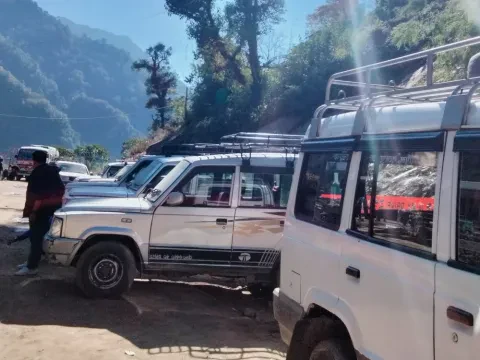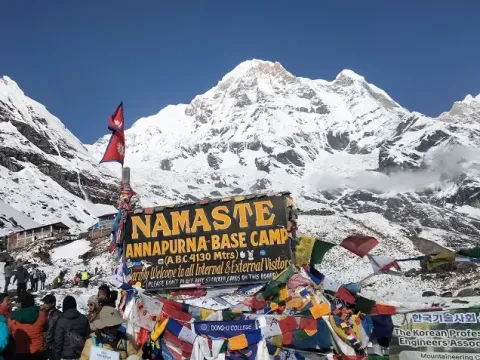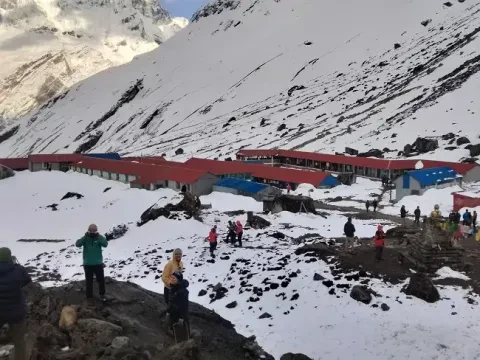
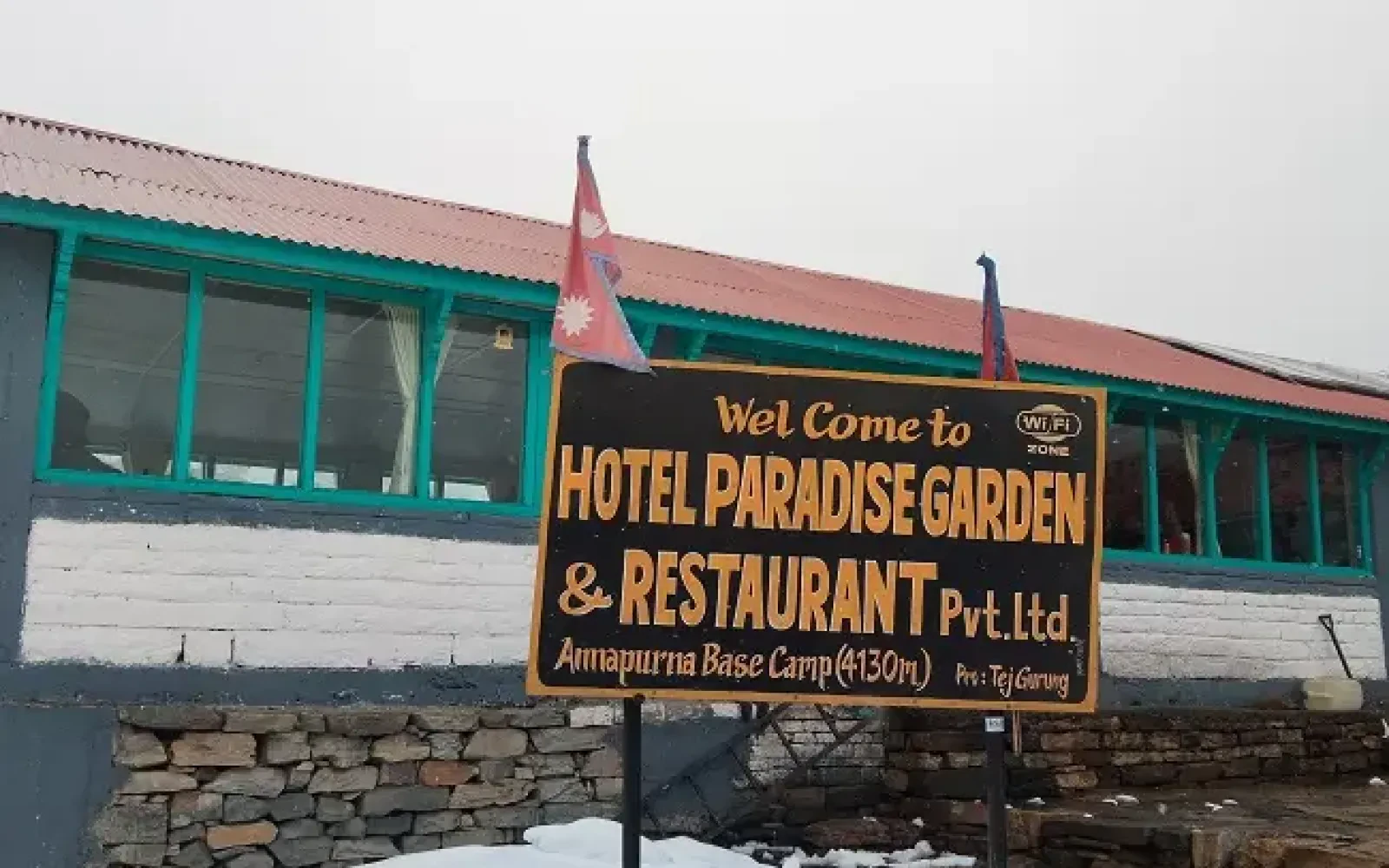
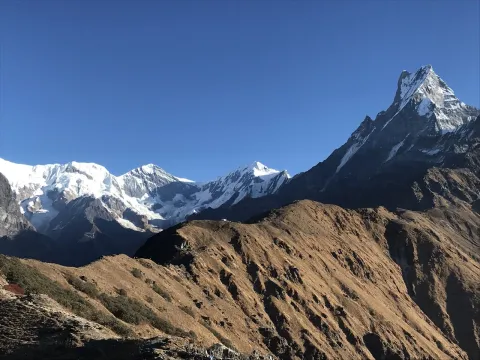
The Annapurna Base Camp (ABC) trek is a well-known Himalayan trek in central Nepal. Actually, It begins from Nayapul and then to Jhino Danda close to Pokhara, and goes to the base of Annapurna I, which is 8,091 meters tall. Moreover, the trek rises to a height of 4,130 meters at ABC, with panoramic views of mountains such as Machapuchare (6,993 meters), Annapurna South (7,219 meters), and Hiunchuli (6,441 meters). Likewise, Trekkers pass through diverse landscapes on the trail, ranging from terraced fields and rhododendron forests to Gurung and Magar villages. More importantly, the trek also goes to picturesque viewpoints such as Poon Hill (3,210 meters), renowned for watching sunrise over the Himalayas. Additionally, the trek takes anywhere between 7 to 12 days, based on the route followed and the group's speed.
Meanwhile, teahouses along the route provide shelter in the form of simple accommodation and meals. The best seasons to undertake the trek are during spring (March to May) and autumn (September to November), when the skies are clear and the trails are at their best. Most importantly, the ABC trek is a combination of nature and culture, and therefore it is a trek to cherish for any trekkers of any levels.

Actually, the ABC trek is moderately demanding, suitable for trekkers in good physical shape. Similarly, the trek involves daily ups and downs, consistent altitude gain for acclimatization. Moreover, trekkers can anticipate variable weather conditions, with potential snow at the higher elevations.
Additionally, Permits required for the trek are the Annapurna Conservation Area Permit (ACAP) and the Trekkers' Information Management System (TIMS) card, which can be received in Kathmandu or Pokhara. Here, proper gear is suggested, including warm clothes, trekking poles, and a first aid kit. In fact, fluid intake and a steady pace are necessary to prevent altitude issues. Although the path is well-worn, using a local guide will enhance the experience and unlock the culture and nature of the area. In brief, with proper preparation, the ABC trek is an achievable and rewarding experience through the magnificence of Nepal's scenery.
In summary, the Annapurna Base Camp Trek offers a profound experience of Nepal's natural and cultural riches. Trekkers are rewarded with close-up views of the Himalayan giants and an opportunity to mingle with locals. In fact, the trek's moderate nature has made it a favorite for a wide range of adventurers seeking challenge and scenery. With good planning and respect for the mountain environment, trekkers can ensure a safe and memorable journey to the heart of the Annapurna region.
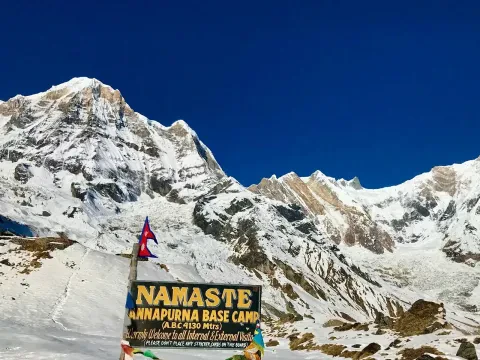
Annapurna Base Camp trek accommodation is basic but fine. Actually, the trek passes through many villages such as Chhomrong (2170m), Deurali (3200m), and Annapurna Base Camp itself at 4130m. In fact, trekkers generally sleep in teahouses. Teahouses are plain rooms with shared bathrooms. Though, rooms have thin walls and minimal heating. As the trek goes up high, there are fewer facilities when you ascend. For example, at ABC, water and electricity will be scarce. Similarly, teahouses in lower villages like Nayapul (1070m) are more comfortable and varied. So, expect more basic accommodation while going upwards.
Moreover, food and heat are important in accommodation here. Additionally, basic Nepali or continental cuisine is what most teahouses serve. Likewise, they use wood or solar heaters for hot water. However, heating may be absent at high altitudes, especially beyond 3500m. In fact, most of the lodges close during winter due to cold. Similarly, the availability of water might be low in remote areas like Machapuchare Base Camp (3700m). For this reason, it is advisable that trekkers carry water purification tablets. In addition, hygiene varies vastly. As some of the lodges are clean, others can be dusty or damp. Therefore, carry your own toiletries at all times.

Overall, accommodation on the Annapurna Base Camp trek is simple but reliable. Generally, it is comfortable for trekkers who prefer minimal luxury in nature. However, expect fewer amenities above 3500m near ABC (4130m). Overall, anticipate plain rooms, less heating, and shared toilets. Overall, the accommodation on Annapurna Base Camp Trek experience is authentic and part of the adventure.
Yes, you can stay in private accommodation on the ABC trek, especially at lower altitudes. Actually, Villages like Ulleri (2,070 meters) and Ghorepani (2,850 meters) have private rooms with attached bathrooms and hot showers at a little extra charge available in their teahouses. Moreover, these are extra comforts and privacy and so they are popular with trekkers. However, as you move towards higher elevations, such as Deurali (3,200 meters) and Annapurna Base Camp (4,130 meters), the availability of private rooms is fewer since infrastructure is limited and demand is high. Therefore, it is advisable to plan early and prepare for sharing at higher elevations.

In short, although private rooms are available at the beginning of the ABC trek, they are limited when you near the base camp. To stay comfortable, make advance reservations during peak seasons ( Autumn and Spring) and be flexible with your accommodations as you go upwards. Generally, knowing the availability of private rooms on the trek will allow you to plan and make appropriate expectations.
Accommodation cost on the Annapurna Base Camp (ABC) trek vary with elevation and season. Lower-altitude locations like Ulleri (2,070 meters) and Ghorepani (2,850 meters) have tea houses that typically cost between NPR 500 to 800 per night. That is typically the rate when guests dine at the same facility. When you gain higher altitudes such as Deurali (3,200 meters) and Annapurna Base Camp (4,130 meters), room rates may increase to NPR 800 to 1,000 per day based on the remoteness and logistical inputs to provide such places. Thus, you should plan ahead for additional elevation stays.
Moreover, additional amenities are subject to extra costs. For example, a shower can take NPR 200–500, and electricity for battery charging ranges from NPR 100–300 per hour. Similarly, Wi-Fi services, where available, typically cost between NPR 200–500 per session, although it is less reliable at higher elevations. Meals are not included in the room price; a typical Nepali meal such as dal bhat can range from NPR 400–800, and prices increase the higher you go. As opposed to accommodations in cities, teahouses on Annapurna Base Camp Trekking Trail survive on foods you eat on ABC Trek on premise. It is, therefore, common and usual practice to dine at the teahouse where you live.

Briefly, while the ABC trek offers affordable lodging, costs can add up when considering food and other services. Moreover, budgeting NPR 1,500–2,500 per day per person is reasonable enough to cover lodging, meals, and other necessities. Most importantly, booking in advance, especially during peak seasons ( Spring and Autumn), makes the trekking process more enjoyable. In general, being aware of these Annapurna Base Camp Trek Accommodation costs helps trekkers prepare themselves financially for the trek.
Tented accommodation is rare on the Annapurna Base Camp (ABC) trek. Trekkers, generally, utilize teahouses. Moreover, they are small lodges along the trail. Likewise, they offer food, beds, and toilets. But tented camping is also an option. You need to plan in advance. Some trekking agencies provide fixed tents. But it costs more than teahouses. For example, in Ghandruk (1,940m) or Chhomrong (2,170m), there are plenty of teahouses. In fact, from Sinuwa (2,340m) to Deurali (3,200m), it's the rule of teahouse nights. After Himalaya (2,920m), the trail is steeper. Camping there is not easy. Unlike Everest region, ABC has no large camp grounds. But with equipment, you can do it.
In addition, weather plays an important role in camping. In spring, it's dry and warm. So, tented camping is appropriate. But during monsoon, it pours heavily. Similarly, winter is also hard due to heavy snowfall. For example, just near Machapuchare Base Camp (3,700m), it is heavy snowfall. Annapurna I (8,091m) rises high above ABC (4,130m). Cold winds blow on the glacier. Tents must be sturdy and warm. Likewise, food must also be transported. Unlike teahouses, camping involves full provision. You need porters or yaks. Guides help in finding legal camp locations. In fact, at some locations camping on the grounds of conservation is not allowed. Most importantly, always check local laws before camping in ABC Trek. The journey passes through Annapurna Conservation Area and the Camping trash can harm wildlife. Hence, ecological tourism is compulsory.

Briefly, you may camp on the ABC trek. But it's not the usual practice. People usually like teahouses for convenience. However, adventure seekers will find isolation in tents. In summary, it takes planning, gear, and expertise. Therefore, if you camp on Annapruan Base Camp Trek, do so with experts.
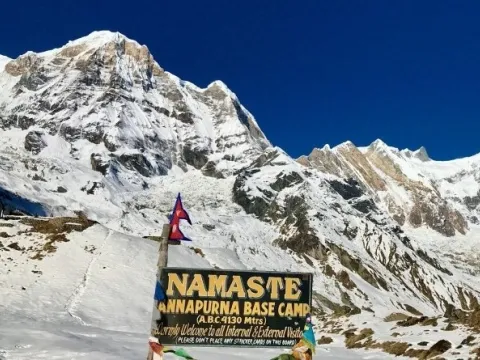
There are attached bathrooms only available in lower villages during Annapurna Base Camp Trek. So, in Ghandruk (1,940m) and Jhinu Danda (1,780m), you can find them. These villages have better infrastructure. Thus, you can avail private toilets. However, at higher altitudes, options are limited. From Chhomrong (2,170m) and onward, shared toilets are the norm. Likewise, in Sinuwa (2,340m), there are limited rooms with bathrooms. Teahouses become smaller higher than Bamboo (2,310m). Indeed, in Deurali (3,200m), there are communal squat toilets only. Similarly, Machapuchare Base Camp (3,700m) also has basic rooms. Annapurna Base Camp (4,130m) has basic teahouses only. Unlike Pokhara's hotels, these lodges have multiple trekkers. In fact, attached toilets are not a usual thing there.

Also, water freezes at high altitudes on Annapurna Base Camp Trek. For example, pipes freeze at night in ABC. Running water is hard to accomplish, therefore. Moreover, there are no private toilets for the owners. Since, if pipes are broken, enormous damage occurs. And plumbing equipment is tough to bring along. Likewise, load carriers can't carry heavy loads again and again. Similarly, electrically heated water is beyond their reach. Solar panels help a bit. But they can't help all the rooms. So only a few lodges have bathrooms. Even at the lower altitude, hot water is an extra cost. In fact, it's a luxury in the hills. In fact, Teahouses on ABC Trail value warmth and food. Attached toilets are second in deed.
To sum up, attached bathroom rooms on Annapurna Base Camp Trek are rare. However, You may be fortunate to enjoy attached bathroom in lower villages. But don't expect them after Chhomrong. Generally, shared toilets prevail on the ABC trail. So, set your expectations low while trekking. In fact, the view of Annapurna I (8,091m) is more valuable than attached bathrooms. Actually, comfort is useful, but adventure comes with compromise. Thus, plain living is part of this adventure.
Yes, bring a sleeping bag for your Annapurna Base Camp Trek. Actually, nights get very cold. For example, at Deurali (3,200m), it normally dips below freezing. Moreover, at Annapurna Base Camp (4,130m), it is colder. Likewise, Annapurna I (8,091m) rises directly above it. Machapuchare (6,993m) also blocks warm air. So the rooms inside are cold. There are blankets in teahouses. But they are often not enough. As most trekkers stay overnight, blankets are scarce. Actually, a few lodges even impose an extra charge for them. A sleeping bag keeps you safe, therefore. Get one rated for -10°C. That should be okay above Bamboo (2,310m). Even in spring, the mornings are chilly on Annapurna Base Camp Trek. Unlike in summer, the high elevations never get warm.
Meanwhile, a sleeping bag also gives you hygiene. Actually, sheets in teahouses may not be clean. Moreover, some lodges wash infrequently due to water shortages. Likewise, sun-drying is not always possible. So, bringing your own bag avoids illness. You also sleep warmer and more comfortably. For example, after those long hikes, sleep is necessary. Your body rests at night. So comfort ensures your hike is more successful. In fact, it is easy to rent a bag in Pokhara. But own bags are a better fit and cleaner. Porters can carry it if you pack it well. In fact, most hikers use porters anyway. That makes the extra weight simple to manage. Sleeping bags, unlike tents, take up little space. They compress easily as well.
In summation, always bring a sleeping bag for Annapurna Base Camp Trek. It helps with cold, comfort, and cleanliness. Actually, teahouses provide fundamentals but are not hotels. Overall, the Annapurna Base Camp trek gets easier with good rest with your won sleeping bag. So, pack or rent a warm sleeping bag. A good night's sleep powers every new climb.
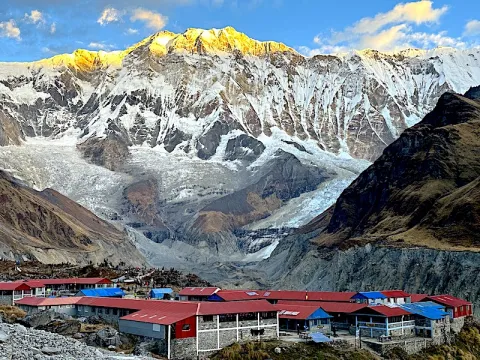
Normally, you will not have charging plugs in your room during Annapurna Base Camp Trek. Actually, plugs are normally held in dining rooms by most teahouses. For example, in Ghandruk (1,940m), there are plugs in some rooms. But as you go higher, access is limited. In Chhomrong (2,170m), plugs are typically shared. In the same way, in Sinuwa (2,340m), charging carries an extra cost. In Bamboo (2,310m), electricity is weak. In fact, it closes down during rains. Plugs are hard to find above Deurali (3,200m). Charging is out of the question at Machapuchare Base Camp (3,700m). Annapurna Base Camp (4,130m) offers reduced power. And solar panels just work in direct sunshine. Indeed, clouds mean no charging whatsoever.
When you are able to charge, however, there might be a charge :
Some lodges, for example, charge by the hour. The higher up, the higher the price as solar systems are heavier to carry. Also, batteries drain fast in cold rooms. Unlike city hotels, rooms here are not equipped with modern fittings. So, don't expect wall sockets inside beds. Share the main dining hall when it is free. Most importantly, power banks are very helpful. Similarly, small solar chargers are handy. But don't get them wet and cold. In fact, many trekkers have extra batteries during Annapurna Base camp Trek. Likewise, guides also bring spares battery or power bank at times. Don’t rely on one phone or camera. Always prepare for power loss.
To sum up, don’t expect charging plugs in your room during Annapurna Base Camp Trek :
Some lower lodges may have them. But above Chhomrong, it's unlikely. Overall, power access is limited on Annapurna trail. Therefore, bring power banks and charge early. Actually, cold, clouds, and crowds reduce availability. So plan well, and keep gear safe. That way, you’ll capture every view without worry on Annapurna Base Camp Trek.
It is usually easy to find accommodation on the Annapurna Base Camp (ABC) trek :
The busy trail from Nayapul to ABC is dotted with teahouses. For example, Ghandruk (1,940m) and Chhomrong (2,170m) have many lodges. Similarly, Bamboo (2,310m) and Deurali (3,200m) have accommodation for trekkers. However, during peak seasons ( Autumn and Spring), rooms fill up quickly. Spring and autumn have plenty of hikers on Annapurna Base Camp Trail. Thus, early reservation or arrival is recommended. Annapurna I (8,091m) stands tall above ABC (4,130m), and thus it is a favorite spot. Lodges here can get crowded because there are fewer people. In fact, teahouses differ from city hotels as they provide less accommodation. But off-season (winter and monsoon) trekking leaves more room. Winter and monsoon seasons get less visitors. Therefore, rooms become less difficult to book then.

Also, the accommodation quality on Annapurna Base Camp Trek differs a lot :
Moreover, rooms in lower villages are simple but excellent. For instance, Jhinu Danda (1,780m) provides hot showers. Higher areas, facilities become limited and classical. In Machapuchare Base Camp (3,700m), there may be cold rooms. Actually, teahouses provide blankets but not heating, as a rule. Similarly, toilets tend to be shared and occasionally out of doors. Since water is in short supply at high altitude, hygiene may be minimal. For instance, at ABC, electricity is generated through the sun. Occasionally, it fails during overcast weather. So, travelers should be ready for humble conditions. Actually, most trekkers enjoy the rural stays as part of the experience.
Overall, accommodation is not hard to find on the ABC trek :
You can find accommodations in each destination. Generally, quality and availability change with season and location. On average, advanced booking allows you to receive good rooms. Therefore, book early for high season. Simple teahouses do not offer much comfort, but Annapurna massif views are worth it. It is not luxury, but the experience is unforgettable during Annapurna Base Camp Trek.
In case you do not get a room or bed during Annapurna Base Camp Trek, you must prepare for alternatives. Actually, Teahouses on Annapurna Base Camp Trail are fast to fill up in peak season ( Spring and Autumn). For example, in Chhomrong (2,170m) or Deurali (3,200m), rooms can be shared. Annapurna Base Camp (4,130m) is popular and full. Similarly, spring and autumn are full of many trekkers. That being said, floor space is offered by some accommodations. Isn’t it adventurous and exciting? You will need to sleep on mattresses in dining halls. Actually, it's not nice but usual. Moreover, teahouses are not always able to expand like hotels. Still, owners try to help. For instance, they install mattresses. Most importantly, porters or guides help in making room available nearby. Camping is another option but requires equipment. Moreover, carrying tents is extra load.
In the same way, arriving early during the day is helpful :
Morning hikes offer greater prospects. Because teahouses fill up late in the afternoon. If you are late, options reduce. Trekkers also end up sharing beds or rooms. This is the norm and acceptable. The same applies to being flexible. Similarly, you can adjust schedules or relax in lower villages. Jhinu Danda (1,780m) also has hot springs where one can relax. Moreover, local homestays may also accept visitors. In fact, most trekkers actually negotiate with owners beforehand. Guides also book rooms beforehand. Since planning avoids distress about Accommodation on Annapurna Base Camp Trek on the trail. So communication matters a lot.
Lastly, not getting a bed during Annapurna Base Camp Trek is tough :
But there is a way if you keep calm. Mostly, trekking Annapurna Base Camp is all about patience. So plan ahead, pre-book accommodation, and be flexible. Though booking accommodation will challenge you, the mountain views reward effort. The experience of booking accommodation and witnessing mountain views builds toughness and memories.
Generally, accommodation problems on Annapurna Base Camp (ABC) trek are usual :
For example, overcrowding during peak season is not rare. Actually, rooms get filled in villages such as Chhomrong (2,170m) and Deurali (3,200m). Most importantly, trekkers like Annapurna Base Camp (4,130m). Similarly, teahouses get filled in spring and autumn on the trail. As there are not many rooms, it becomes a problem. Furthermore, teahouses offer simple amenities. In contrast to urban hotels, they only offer simple beds and communal toilets. Therefore, privacy is lacking. In fact, it becomes necessary for some trekkers to spend uncomfortable nights. Also, noise and chaos can invade sleep. This happens mostly in small dining rooms.

Additionally, lack of water is another problem on accommodation during Annapurna Base Camp Trek :
Actually, water runs low at higher altitudes. For example, at Machapuchare Base Camp (3,700m), water is short. Because pipes freeze or vaporize, teahouses are affected. Likewise, hot showers are not typical. Most lodges use solar heating. But cloudy weather decreases hot water availability. Thus, hygiene becomes challenging. Moreover, toilets are usually outside and primitive. In some lodges, toilets are even charged for. Actually, sanitation is a main issue on Annapurna Base Camp Trek. Visitors have to adapt to these conditions. In fact, cleanliness can't be up to the usual standards.
To summarize, accommodation problems are a part of the ABC trek adventure :
Overcrowding, limited facilities, and water scarcity affect comfort. Overall, effort is rewarded with stunning scenery of Annapurna I (8,091m). Actually, flexibility and tolerance help accordingly. Anticipation of these problems makes Annapurna Base Camp Trek worthwhile. To put it simply, simple living and adventure go hand-in-hand during Annapurna Base Camp Trek.
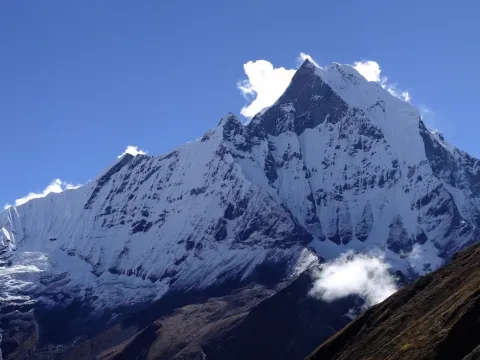
Actually, better accommodation on the Annapurna Base Camp trek improves your experience :
The ABC trek starts from Nayapul (1070m) and reaches as far as ABC at 4130m. In fact, teahouses usually have basic rooms with shared bathrooms. But you can find better lodges with private rooms and hot showers in big villages. For example, Ghorepani (2860m) and Chhomrong (2170m) offer better choices. Similarly, in larger villages like Deurali (3200m), you may be able to upgrade to more comfortable rooms for extra charges. Besides, accommodation in areas above 3500m, like Machapuchare Base Camp (3700m), is likely to have limited facilities. Therefore, be careful in overnight stops in order to strike a balance between comfort and height.
For better accommodations on Annapurna Base Camp Trek, book your rooms beforehand. As the ABC trek is popular, lodges get filled with tourists during tourist seasons. Also, trekking during the peak seasons such as late spring or autumn is beneficial. Compared to peak seasons, less trekkers result in improved room options. Also, steer clear of trekking groups and opt for solo or small groups. Traditionally, lodges set aside their best rooms for smaller groups. Likewise, staying at lesser-known lodges off the major trail can provide quieter, cleaner accommodations. In fact, some of the lodges in Sinuwa (2340m) or Bamboo (2310m) provide reasonable quality rooms but fewer visitors. Therefore, advance booking and judicious route choices are essential.
Short of it, better accommodation during Annapurna Base Camp depends on place, time, and booking. Ideally, villages at 2000m to 3000m are the most comfortable. However, above 3500m, comfort levels drastically drop. Also, book accommodation for Annapurna Base Camp Trek well in advance and stay away from peak times for better rooms. In all, plan well, choose your major stop points well, and enjoy a comfortable Annapurna Base Camp trek at 4130m.
Suggested blog post related to Poon Hill and Annapurna region :
1. Poonhill Ghorepani jeep ride
2. Ghorepani Poon Hill Trek in October
4. Annapurna Base Camp Jeep Ride
6. Ghorepani Poon Hill Trek: A Complete Trekkers' Guide
12. How long does it take to trek Poon Hill?
13. How much does it cost to trek to Poon Hill?
14. Best Time for Poon Hill Trek
15. Poon Hill trek in November
16. How difficult is Annapurna Base Camp Trek?
17. Where is the best view of Annapurna range?
18. Annapurna Base Camp Trek vs Everest Base Camp Trek
19. Annapurna Base Camp Trek in Winter
21. Annapurna Base Camp Trek in Spring
22. Annapurna Base Camp Trek in April
24. 50 Facts about Annapurna Base Camp Trek
25. Annapurna Base Camp Trek in May
26. Annapurna Base Camp Trek in November
27. Annapurna Base Camp Trek in October
28. Annapurna Base Camp Trek in April from Kathmandu
29. Annapurna Base Camp Trek in September
30. Annapurna Base Camp Trek in Autumn
31. Manaslu Circuit Trek vs Annapurna Circuit Trek
32. Best Time for Annapurna Circuit Trek
33. Annapurna Base Camp Trek from Pokhara
34. How to Prevent Altitude Sickness on Annapurna Base Camp Trek?
35. How do I go to Annapurna Base Camp from Pokhara?
36. How long is the trek to Annapurna Base Camp?
37. Foods on Annapurna Base Camp Trek: What's On the Menu?
38. Accommodation on Annapurna Base Camp Trek
39. Annapurna Circuit Trek in Autumn
40. Poon Hill Trek in September
42. Best Time for Annapurna Base Camp Trek
44. Mardi Himal Trek in November
44 .Poon Hill Trek Itinerary: 3, 4 and 5 Days
46. Accommodation Facility on Poon Hill Trek
47. Hot Shower and Laundry on Poon Hill Trek
48. Food and Drinks on Poon Hill Trek
50. Annapurna Base Camp Trek Permits
51. Preparation for Poon Hill Trek
52. Annapurna Base Camp Trek Cost: Guide
Annapurna Base Camp Trek Accommodation is simple but convenient :
Most of the trekkers take tea houses. They are basic lodges with minimal rooms. Usually, there are two beds in a room. Private rooms in some tea houses can be found. But at a higher price. Twin-sharing rooms cost less. But they may not be private. But bathrooms have to be shared. Some of the lodges offer hot showers, but at extra charge. Likewise, Wi-Fi and charging incur a cost. So, always carry some cash. So, carry Nepali small notes.
Annapurna Base Camp Trek accommodation costs between $3 and $10 per night :
But that's extra for food. A meal would be $5 to $8. Similarly, hot water and Wi Fi would be about $2 each. Prices rise higher because of the remote setting with an increase in altitude. But the quality of service never changes. So, keep your budget planned accordingly. Because tea houses are simple, don't expect luxury. So, bring a sleeping bag to enjoy that little bit of comfort and warmth.
Private rooms are not frequent but present at lower altitudes like at Jhino Danda and Chhomrong :
But twin-sharing rooms are shared by the majority of trekkers. Tent camping is not necessary. As tea houses are easily accessible along the trail. Similarly, tea houses offer warmth, sustenance, and shelter. So, they are the best option. So, tea house stay is the ideal accommodation on Annapurna Base Camp Trek. It is affordable and social. Thus, you meet other trekkers and share experiences. In short, Accommodation on Annapurna Base Camp Trek is perfect for a warm and safe stay.
1. What is the main type of accommodation on the Annapurna Base Camp Trek?
The main accommodation on the Annapurna Base Camp Trek is teahouses. These are family-run lodges in the mountains. They offer rooms with beds and blankets. We have guided trekkers for over 15 years. Know these teahouses provide good shelter and warm hospitality. This makes your trek comfortable and authentic.
2. Are teahouses for beginners on the ABC Trek?
Yes teahouses are comfortable for beginners. The rooms have two beds, foam mattresses and thick blankets. In villages the facilities are better. In villages they are basic but clean. Our team makes sure you stay in the teahouses. This way you rest after hiking.
3. Can you sleep at Annapurna Base Camp itself?
You can sleep at Annapurna Base Camp. There are teahouses that offer basic but safe overnight stays. The rooms are simple and shared with others.. They offer great views and a warm dining area. Many of our clients have spent nights here under the stars.
4. What facilities do teahouses provide on the ABC Trek?
Teahouses offer beds, blankets, a dining hall with a heater and shared toilets. Some have attached bathrooms and hot showers. These basics meet trekkers needs. They help keep the trek genuine.
5. How much does accommodation cost on the Annapurna Base Camp Trek?
Accommodation costs between $3 and $10 per night. The price depends on the location and season. Lower villages are cheaper. Higher altitudes cost more. If you eat at the teahouse prices often drop. We help our clients budget for a worry- journey.
6. Do teahouses on the ABC Trek have showers?
Hot showers are available in some teahouses. This is especially true in villages like Ghandruk and Chhomrong. You usually pay a fee for them. Up options are limited due to weather and power. We recommend using them in the trek.
7. Is Wi-Fi. Charging available in ABC Trek teahouses?
Most teahouses offer Wi-Fi and device charging for a fee. The service is reliable in areas.. It can be slower at higher elevations. Our guides know the spots to stay connected, during your trek.
8. Should I bring a sleeping bag for the Annapurna Base Camp Trek?
We really think you should bring a sleeping bag. Nights can get very cold above 3,000 meters. With blankets it can still get chilly. This extra layer will help you sleep warm and wake up feeling fresh for the days adventure on the Annapurna Base Camp Trek.
9. Do I need to book teahouses in advance?
It's an idea to book teahouses ahead of time during busy seasons like March to May and September to November. This is especially true for Machhapuchhre Base Camp and Annapurna Base Camp. If you're traveling during months you might be able to find a room when you arrive. Our team can help with bookings for our guests.
10. What is the difference between teahouses and lodges on the trek?
Teahouses are usually simple and run by families. Lodges are a bit nicer with rooms and facilities often at lower elevations. Both teahouses and lodges offer hospitality. We choose the mix so you can be comfortable without losing the authentic mountain experience on the Annapurna Base Camp Trek.
11. Are rooms private or shared on the ABC Trek?
Most rooms on the Annapurna Base Camp Trek are shared with one person. This is the way and its easy on the budget. Some private rooms are available in villages but they're harder to find higher up. We arrange the rooms for you based on what you prefer and the size of your group.
12. How clean are the accommodations on Annapurna Base Camp Trek?
Teahouses try to keep things clean with sweeping and fresh bedding. We've worked with owners for a long time so we know they keep high standards of hygiene. Many of our clients have stayed with us. Said our accommodations are safe and tidy.
13. What should I expect at altitudes like MBC and ABC?
At higher places like Machhapuchhre Base Camp and Annapurna Base Camp rooms are very basic. Toilets are often. Theres no heating.. The views and atmosphere make up for it. We prepare our trekkers well so they enjoy this part of the Annapurna Base Camp Trek.
14. Is camping better than teahouses on the ABC Trek?
Teahouses are usually better and more convenient than camping on the Annapurna Base Camp Trek. They offer shelter, food and a chance to meet travelers. Camping is not common. Costs more. We always suggest teahouses, for safety and comfort on this route.
15. How does altitude affect the quality of the place you stay in?
When you go higher up the rooms are simpler and they do not have many facilities. The villages that are lower down have comfortable places to stay but the higher villages focus on just the basic things you need. We plan everything carefully to make sure you get the place to stay at every stop on the Annapurna Base Camp Trek.
16. Are there bathrooms that're just for your room on the Annapurna Base Camp Trek?
You can only find bathrooms that're just for your room in some of the teahouses that are lower down like Ghorepani and Jhinu Danda. In the places you have to share the bathrooms with other people. We help you find lodges that're comfortable and in a good location.
17. Can people who are traveling alone find places to stay easily?
Yes people who are traveling alone are very welcome. Teahouses usually have rooms that're just for one person or they can put two solo travelers together in a room. Many of our solo travelers like the dining areas where they can meet people and make friends on the Annapurna Base Camp Trek.
18. What kind of food do you get when you stay at a teahouse?
Teahouses serve food that's tasty and good for you like dal bhat, noodles, soup and eggs. The food is good. They give you big portions. Staying and eating at the teahouse helps you save money and makes your trip more memorable on the Annapurna Base Camp Trek.
19. How do you choose the teahouse to stay in on the trek?
You should look for rooms that're clean teahouses that have good reviews and owners who are friendly. Our team chooses teahouses that're comfortable in a good location and reliable. This helps our travelers have enjoyable stays on the Annapurna Base Camp Trek.
20. Why should you choose Haven Holidays for your accommodation on the Annapurna Base Camp Trek?
We have been working in the Annapurna region for a time so we can arrange for you to stay in the best teahouses that are comfortable and safe. We know the people well so we can make sure you get a good place to stay and good service. We want to make your stay, on the Annapurna Base Camp Trek authentic worry-free and memorable.
Our travel experts are ready to assist you with any questions.
Send us a message.Have a question before you book? Send your enquiry below and our travel experts will get back with the required information.