Nepal can be a great place to visit in the winter months. Actually, many popular destinations experience dry weather between December and February. Clear views of the Himalayas and the sunsets and sunrises can be possible.
In winter, you can comfortably Explore Nepal’s cultural locations, and enjoy views of the mountains, jungle and traditional villages. You can visit historical locations, enjoy views of the mountains, and experience jungle activities and traditional villages in the Himalayas.
Meanwhile, this winter break will take you to 5 different locations in Nepal. In Kathmandu Valley, you can learn about Nepalese history, culture and civilization from the ancient times.
In Nagarkot you can enjoy beautiful mountain views. Pokhara showcases beautiful lake side locations. Chitwan will allow you to experience wildlife and Ghandruk allows you to experience traditional Gurung culture.
Why visit Nepal in Winter
Overall, a sightseeing trip to Nepal in winter can be very pleasant. However, temperatures can vary greatly between the Terai regions, Kathmandu Valley, hill stations and mountainous villages.
Explore cultural sites including temples, palaces, monasteries and traditional Newari villages.
Enjoy beautiful mountain views in Nagarkot, Pokhara and Ghandruk.
Experience wildlife in Chitwan.
Experience village life in Ghandruk to learn about Gurung culture, local traditions and mountain life.
Visit popular locations in comfort.
Less Crowded destinations and transportation
No strenuous high altitude walks required.
What to expect in winter
Location | What to expect | Time to spend
Kathmandu Valley | Historical sites, temples and culture | 2-3 days
Nagarkot | Beautiful mountain views at sunrise | 1 night
Pokhara | Beautiful lakeside locations and adventure | 2-3 days
Chitwan | Jungle and wildlife | 2-3 days
Ghandruk | Gurung culture and beautiful mountain village | 2 days
Actually, it can get very cold at night in Nagarkot and Ghandruk. Ensure warm clothing is packed. Below you can find information on what to see in each destination, what activities to do, how long it takes to get there and suggested itineraries.
Now, let’s discuss about 5 best winter tours in Nepal in detail one by one.
Kathmandu Valley is a great place to start your winter break in Nepal. It has many historical locations, places of worship, traditional markets and UNESCO World Heritage Sites.
Within the Kathmandu Valley there are 3 main cities; Kathmandu, Bhaktapur and Lalitpur (Patan). In winter, days are often dry. However, it can get quite chilly in the mornings and evenings.
In addition to, there are many historical locations to visit including royal squares, Buddhist stupas, Hindu temples and traditional Newari architecture. To fully appreciate the area, plan to spend at least 2 or 3 days.
Kathmandu Durbar Square and Swayambhunath
Kathmandu Durbar Square shows the royal history, traditional architecture and religious history of Nepal. Within the square there are historic buildings, pagoda style temples, the old royal palace and the Kumari Ghar.
Similarly, Swayambhunath is a popular location to visit in the Kathmandu Valley. It is often referred to as the ‘Monkey Temple’ and has a Buddhist Stupa, turning prayer wheels, and great views of the valley.
Pashupatinath Temple and Boudhanath Stupa
Pashupatinath Temple is one of the most important Hindu pilgrimage sites in Nepal. It is located along the river Bagmati. Pashupatinath is very significant to followers of Lord Shiva.
Similarlly, Boudhanath Stupa is one of the largest Buddhist Stupas in the world, and is an important centre for Tibetan Buddhist culture. You can walk around the stupa, watch traditional rituals and visit nearby monasteries.
Bhaktapur Durbar Square
Bhaktapur is a great place to learn about traditional Newari architecture, crafts and culture. Within the Durbar Square you can find many historic palaces, temples, carvings in stone and the famous 55 Window Palace.
Other locations to visit include Nyatapola Temple, pottery workshops and traditional street areas in Taumadhi and Pottery Square. Taste local Newari food and watch traditional crafts being made.
Patan Durbar Square
Patan Durbar Square is famous for having many beautiful temples and intricate design. The Krishna Mandir, Patan Museum and surrounding squares give insight to the cultural history of the region.
Meanwhile, Patan is famous for its traditional wood carvings, metal work, statues and crafts. You can visit local workshops and shops to see these crafts in action, and appreciate the historic atmosphere of the city.
Nagarkot Sunrise
Nagarkot is a popular hill station in Nepal to enjoy views of the mountains. It is located 32km east of Kathmandu, and takes around 1.5-2 hours to reach, depending on traffic.
Here, mountain views can be visible, including parts of the Himalayas. However, due to the weather, mountain views may not be guaranteed.
Suggested Itinerary
Day | Suggested Locations | Approximate time
Day 1 | Kathmandu Durbar Square, Swayambhunath, Pashupatinath Temple, Boudhanath Stupa | Full Day
Day 2 | Bhaktapur Durbar Square and local markets | Half / Full Day
Day 3 | Patan Durbar Square and Optional: Nagarkot | Full Day / Overnight
Top Tips:
Start sightseeing in Kathmandu after sunrise as it can be very cold in the morning.
Be prepared to spend longer than expected travelling around Kathmandu Valley due to unpredictable traffic.
Wear comfortable shoes for walking on stone squares and temple grounds.
Dress respectfully in places of worship. Be aware of any restrictions on taking photos.
Wear a warm jacket as it can be cold in the early mornings and evenings.
Check the opening times of monuments and if they are accessible.
In conclusion, Kathmandu Valley is a great place to start your trip in Nepal. With a rich history, beautiful architecture and living culture, it is often included in many winter breaks in Nepal.
Nagarkot is a popular hillside location to view the mountains around Kathmandu. During winter, with drier conditions, Nagarkot can be very nice for viewing the mountains.
However, the visibility will depend on the weather.
Nagarkot is approximately 32km from Kathmandu and therefore can be visited in a day. However, it can also be a very relaxing place to spend 1 night.
Actually, the temperatures in Nagarkot will be significantly lower than in Kathmandu, particularly in the early mornings and late evenings. As such, warm clothing is required during early morning activities and at viewpoints.
Morning Views
One of the main reasons people visit Nagarkot in the winter is to view the sunrise. On clear mornings, it is possible to see some of the mountain ranges in Langtang and other snowy peaks.
Depending on the conditions, multiple mountain ranges can be seen from Nagarkot during the winter. Although Everest is sometimes associated with Nagarkot, visibility cannot be guaranteed from all viewpoints.
However, when the weather is fair, you can see even Everest from Nagarkot.
Scenery & Walks
The Nagarkot View Tower is a popular spot to view the mountain and countryside landscapes. Once at the top of the tower people can take a walk through villages, forests and terraced fields.
Meanwhile, short walks in the countryside allow people to get a taste for village life. However, it is important to check the conditions of the paths before going, especially in wet or frosty conditions.
Photography & Countryside
There are great photo opportunities in Nagarkot during the winter. In the early morning, the light can change across the Himalayas. If the conditions are clear, it is nice to go for a walk in the countryside.
Meanwhile, people can also enjoy local restaurants and traditional villages. There is also very peaceful accommodation in the hills. Staying in Nagarkot overnight means people can enjoy both sunrise and sunset without rushing.
Best times to view mountains
Although generally best viewed in the early morning, depending on cloud cover, haze and seasonal conditions, it can be pleasant to view the mountains during the afternoon.
Time of day Suggestion
Early morning View sunrise and take photos of the mountains.
Morning View from the View Tower and walk in the countryside.
Afternoon Explore villages and view from scenic spots.
Evening View sunset, enjoy local cuisine and stay overnight.
Tips for visiting Nagarkot in the winter
Importantly, wear warm clothes for early mornings. If people plan on visiting for sunrise, Leave Kathmandu early. Check the weather in advance, as mountain visibility can vary. Wear comfortable walking shoes for walks in villages and on uneven terrain. Consider staying overnight to view sunrise at a relaxed pace.
In summary, Nagarkot is a great place to visit in the Kathmandu Valley in the winter, particularly if people want to view mountains. Whether a day or overnight visit, it is a great way to relax in a peaceful environment away from city sightseeing.
Pokhara is a popular place to visit in Nepal in the winter, with beautiful views of lakes, mountains and lots of adventurous activities. Between December, January and February, generally dry weather can be found in Pokhara with pleasant conditions during the day.
However, early mornings and evenings can be quite cold. If the weather is clear, it is very nice to view the Annapurna mountain range and Fishtail Mountain (Machhapuchhre).
Actually, Pokhara is approximately 200km from Kathmandu. Depending on which route people take, it can take between 6-8 hours to drive. Domestic flights usually take approximately 25-30 minutes.
There are many beautiful attractions in Pokhara to visit:
Phewa Lake
Phewa Lake is a very popular attraction and a great place to relax in Pokhara during the winter. People can take boat rides, walk around the lake and enjoy the reflections of the mountains if conditions are good.
Meanwhile, a boat ride to Tal Barahi Temple in the middle of the lake can be very relaxing. Once at Lakeside, people can enjoy the restaurants, cafes, shops and accommodation.
Sarangkot
Sarangkot is a popular location to view the sunrise across the Annapurna and Dhaulagiri mountain ranges. Situated above Pokhara, clear mornings mean a wide view of Machhapuchhre and surrounding Himalayan mountains can be seen.
Actually, it can take between 30-45 minutes to drive from Lakeside to Sarangkot, depending on traffic and road conditions. Alternatively, people can stay overnight nearby to view the sunrise early without having to travel from the city.
World Peace Pagoda and Davis Falls
The World Peace Pagoda has very peaceful surroundings and great views of Phewa Lake and the Pokhara Valley. People can travel to this location by road or can include a short walk and boat ride depending on the route people wish to take.
Meanwhile, Davis Falls is a popular waterfall where the water drops down into underground tunnels. Depending on the winter, the flow of water may vary but it is still a popular stop on sightseeing tours in Pokhara.
Gupteshwor Cave and International Mountain Museum
Gupteshwor Cave is a very interesting place to visit. It has interesting geological features, with limestone formations, as well as a religious significance to worship Lord Shiva.
Actually, the International Mountain Museum gives information about the geography of the Himalayas, and the history of mountain climbing. The exhibits allow people to understand Nepal’s climbing culture and what difficulties people face at high altitudes.
Winter Adventure Activities in Pokhara
Many adventure activities can be done in Pokhara. However, depending on the weather, availability of operators and personal safety requirements, people may not be able to do them.
Popular activities include:
Paragliding – View the lake and surrounding mountains from above in Sarangkot.
Boating – Explore the lake, and visit Tal Barahi Temple.
Ziplining – Zoom across hills surrounding Pokhara.
Ultralight flying – View mountain scenery from above with specialist companies.
Short walks – View from surrounding viewpoints and walk country paths.
Although conditions are often good for sightseeing during the winter, wind, cloud and other weather conditions may cause delays to flights and activities. It is therefore important to check with authorised operators for times and safety.
Suggested itineraries:
Day |Activity
Day 1 |Boating on Phewa Lake, exploring Lakeside and visiting the World Peace Pagoda.
Day 2 | Sunrise in Sarangkot, Davis Falls, Gupteshwor Cave and International Mountain Museum.
Day 3 | (Optional) Paragliding, Ziplining, Ultralight flying or a countryside walk.
Tips for Winter Sightseeing in Pokhara
Wear warm clothing for early mornings and evenings.
Leave early for Sarangkot sunrise.
Be flexible with adventure activities as they may be affected by the weather.
Allow extra time to travel between Kathmandu and Pokhara.
Book flights and accommodation early during busy times.
In summary, Pokhara is a great place to visit in Nepal with a good balance of relaxing, mountainous scenery and adventure activities. Including 2-3 nights in Pokhara in many winter packages in Nepal will make the trip much more enjoyable.
Chitwan is a great place to visit during the winter months to get a glimpse of the local wildlife, and take part in various activities in the jungle. Chitwan is located in the southern Terai region, and so temperatures are generally more comfortable than in Kathmandu and the foothills of the Himalayas.
December, January and February provide comfortable temperatures for outside activities. However, early mornings can be quite misty.
Actually, Chitwan National Park is a UNESCO World Heritage Site with diverse wildlife. Species found in Chitwan include the one-Horned Rhinoceros, Bengal tiger, elephant, deer, crocodile and many different types of birds.
Jeep Safari
A jeep safari is a popular activity in Chitwan. In this activity, tourists will travel through certain parts of the park to spot wildlife such as rhinoceros, deer, monkeys and other animals.
Meanwhile, skilled naturalists will be able to inform tourists of animal behaviour, plant life and conservation in the area. However, activities in this park must be undertaken in line with current rules in place.
Wildlife Observation
Chitwan is well known for the presence of Greater One Horned Rhinoceros. Other mammals found in Chitwan include spotted deer, sambar deer, wild pigs, monkeys and many other mammals.
In addition to, Bengal tigers can also be found in this area. However, it is very lucky to spot them. Try to enjoy the wildlife in general, as it is very unlikely you will see specific animals.
Bird Watching
Chitwan is a great place to spot a variety of birds. Due to the wetlands, rivers and forests, many resident and migratory birds can be found. During the winter months, migratory birds can be spotted. However, the presence of birds will depend on the conditions in the habitat, and time of day.
In the same way, canoeing may allow tourists to spot water birds, marsh crocodiles and gharials. However, canoeing in certain areas of the river may depend on the rules in place in the park and current conditions.
Tharu Cultural Village
Visiting a Tharu Cultural Village will add a cultural element to your Chitwan winter tour. You can learn about traditional housing, local cuisine, agriculture, crafts and learn about Tharu history.
Here, some communities and tourism providers offer cultural experiences. Be sure to choose respectful experiences which benefit local communities, and try to avoid any activities which exploit wildlife or give a misleading impression of traditional culture.
Weather and Conditions
Generally, Chitwan will have comfortable temperatures to explore in the winter months. However, early mornings can be cold and misty. Temperatures will increase throughout the day meaning conditions may be more comfortable later in the morning and afternoon.
Month Weather to Expect Considerations
December Mild daytime temperatures and cool mornings Pack light winter clothes.
January Usually the coldest month Cold and misty mornings.
February Increasingly warmer daytime temperatures Comfortable for outside activities.
Depending on where you start from, it can take between 5-7 hours to reach Sauraha from Kathmandu, and between 4-5 hours from Pokhara. To make the most of your visit, try to stay for a minimum of 2 nights.
In conclusion, choose responsible safari providers to ensure that they are following rules in the national park, maintaining safe distances from wildlife and prioritizing conservation.
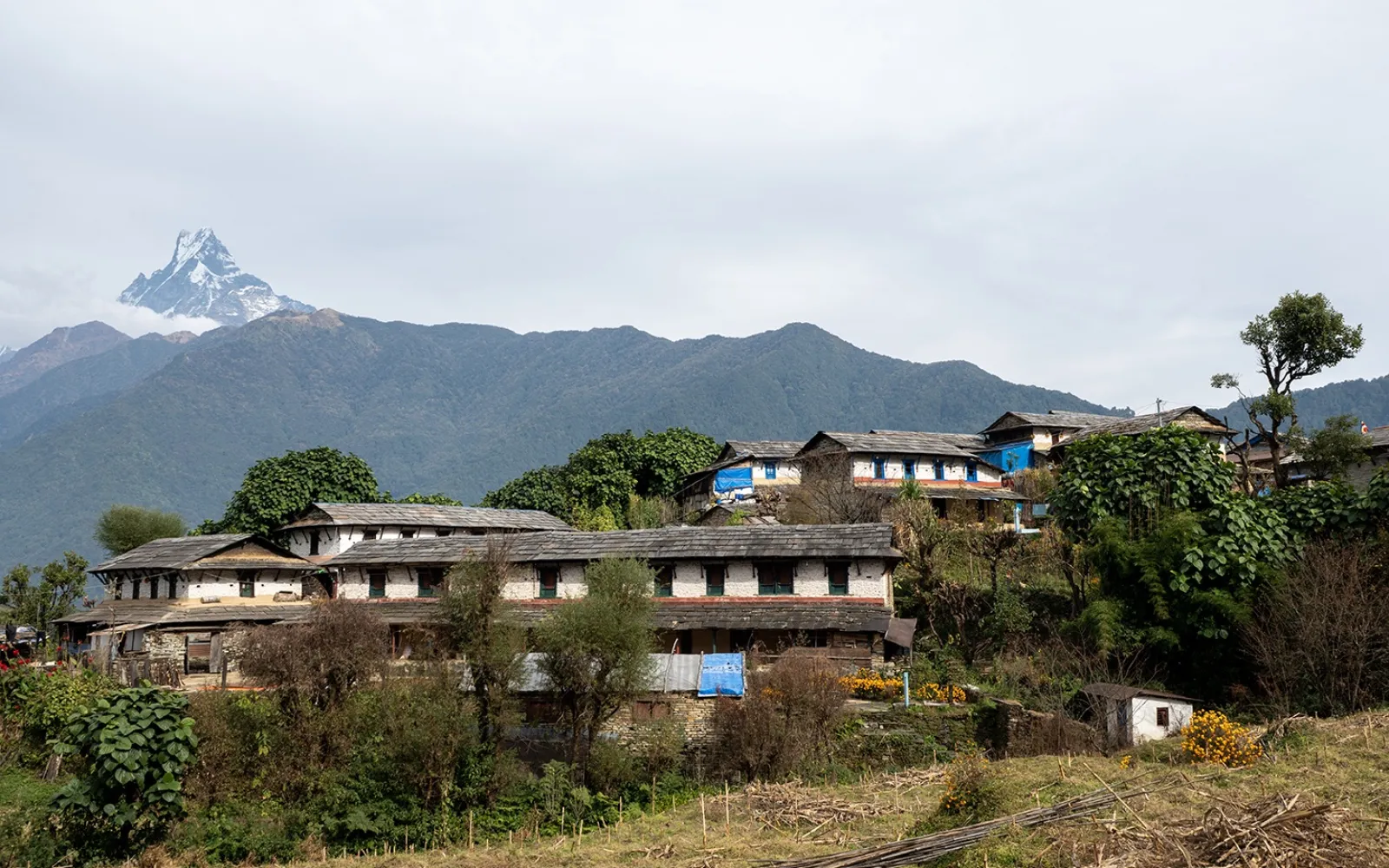
Ghandruk is a beautiful traditional village in Nepal within the Annapurna region. Being at an altitude of around 1940m, it allows you to experience traditional village life in the Himalayas without having to go on a long or high altitude trek.
In addition to, Ghandruk can be a very attractive place to visit in the winter months as on clear days, the mountains surrounding Ghandruk can be very visible. With stone paths and traditional housing, Ghandruk can offer a very different experience to the busy tourist cities of Nepal.
Actually, Ghandruk is approximately 55km from Pokhara. You can get Ghandruk by car, jeep or by bus. Generally, it takes between 2-3 hours to reach Ghandruk from Pokhara. However actual times can vary depending on road conditions, traffic and transport used.
Traditional Gurung Village
Ghandruk is a well known traditional Gurung village in the Annapurna region. The stone roofed houses, small pathways and traditional buildings reflect the lifestyle within the village.
Likewise, walking around the village, you can see traditional houses, terraced fields and daily activity within the community. Local tea houses and family run guest houses allow you to experience the friendly Gurung culture and local cuisine.
Mountain Views
On clear days, beautiful mountain views can be seen from Ghandruk. This includes views of Annapurna South, Hiunchuli and Machhapuchhre. Ghandruk is a popular location for taking photographs of the mountains.
Importantly, beautiful light can be seen across the mountains in the early morning. However, visibility of the mountains may be limited due to cloud, mist and varying weather conditions.
Gurung Museum
The Gurung Museum gives visitors an insight into local culture and history. Within the museum, tourists can learn about traditional clothing, household items, culture and family heritage.
In addition to learning about culture in this museum, you can also see traditional architecture and customs in the surrounding village. Therefore, in addition to beautiful mountain views, Ghandruk can offer a meaningful cultural experience.
Short Walks
You can take short walks around the village. The stone pathways lead to viewpoints offering great views of the surrounding areas. You can see beautiful forest, terraced fields and mountain scenery.
Depending on the amount of time you have available and your fitness level, you can take short walks to nearby villages or viewpoints. However, some pathways contain steep stone steps. It is advisable to wear comfortable walking shoes.
Weather and Conditions
Ghandruk can be quite cold in the mornings and evenings during winter. Daytime temperatures can be more comfortable if the sun is out. It is possible to get some snow depending on the weather, however Ghandruk cannot be guaranteed as a snowy location.
Winter Weather in Ghandruk
Month | Weather | Considerations
December | Cold nights and days | Pack warm clothes.
January | Colder mornings and evenings | Pack a warm coat and gloves.
February | Increasingly warm days | If the weather is clear, suitable for walking in the village.
Tips for visiting Ghandruk in winter:
Pack warm clothing, especially for early mornings and evenings.
Wear comfortable shoes with good grip for the stone pathways.
Check road conditions and whether transport can be used from Pokhara.
Allow extra time in case of rain, frost or road work.
Consider staying overnight to get a real feel for the village, and enjoy the mountain views in the morning.
In conclusion, Ghandruk is a great place to experience Gurung culture and mountain views without having to do a demanding multi-day trek.
Therefore, adding a two day village tour in Ghandruk to your winter tour in Nepal can be very rewarding. This could be a great addition to a holiday in Pokhara.
This 7 day winter holiday in Nepal can include Kathmandu Valley, Nagarkot, Pokhara, Ghandruk and Chitwan. However, due to the long distances between locations, and the need to fly within the country, this itinerary will be very busy and time will be limited.
7-Day Itinerary for Nepal Winter Tour
Day 1: Arrival in Kathmandu
You will arrive at Tribhuvan International Airport and be transferred to your accommodation. Once checked in and settled in, you can begin exploring the area. You can explore Kathmandu Durbar Square and Swayambhunath depending on what time you arrive.
Later on you can explore local markets or enjoy local Nepalese cuisine. Stay overnight in Kathmandu.
Day 2: Sightseeing in Kathmandu and Travel to Nagarkot
After breakfast, head to Pashupatinath Temple and Boudhanath Stupa. Depending on how much time you have, you can explore Bhaktapur Durbar Square or Patan.
In the afternoon, head to Nagarkot by car. This journey will take approximately 1.5-2 hours. Enjoy the scenic views and stay overnight at a hilltop hotel.
Day 3: Sunrise in Nagarkot and Travel to Pokhara
Wake early to enjoy the sunrise and potential mountain views. After breakfast, head back to Kathmandu. This journey should take 1.5-2 hours.
From Kathmandu, you can take a domestic flight to Pokhara (usually 25-30 minutes). Alternatively, you can take the bus, however this journey usually takes 6-8 hours meaning the day will be very long.
Once in Pokhara, check into your hotel. Relax around the lakeside. Stay overnight in Pokhara.
Day 4: Pokhara Sightseeing and Sarangkot Sunrise
To begin the day, head to Sarangkot to see the sunrise (weather permitting). Once back in Pokhara, you can enjoy a variety of sights including Phewa Lake, Tal Barahi Temple, Davis Falls and Gupteshwor Cave.
If you have time, you can also visit the World Peace Pagoda or International Mountain Museum. In the evening relax around Lakeside in preparation for tomorrow’s adventure in a village.
Stay overnight in Pokhara.
Day 5: Travel to Ghandruk and Ghandruk Exploration
After breakfast, travel to Ghandruk from Pokhara. This journey usually takes 2-3 hours depending on road conditions. The roads may be rough in places and it may be necessary to have a suitable vehicle or walk in parts of the journey.
Once in Ghandruk, you can explore traditional Gurung homes, stony pathways and the Gurung Museum. If the weather is nice, you can also enjoy great views of Annapurna South, Hiunchuli and Machhapuchchhre.
Stay overnight in Ghandruk.
Day 6: Travel back to Pokhara and Travel to Chitwan
Enjoy breakfast in Ghandruk and travel back to Pokhara. From Pokhara, continue on to Sauraha in Chitwan. This journey should take approximately 4-5 hours.
As this day involves long travel, try to limit sightseeing. Once in Chitwan, check into your accommodation. In the evening, you can relax or enjoy an optional cultural experience with the Tharu people.
Stay overnight in Chitwan.
Day 7: Chitwan Activities and Prepare to Leave
Begin the day early with some guided wildlife activity. This can include bird watching or a permitted nature walk. Depending on the season, and amount of time available, you may also be able to do a jeep safari.
Once you have finished, get ready to leave. The most convenient option to return to Kathmandu on the same day is to take a scheduled flight from Bharatpur Airport. Please check flight availability.
Alternatively, the drive from Chitwan to Kathmandu is usually 5-7 hours. If you decide to take this option, it may be best to spend an extra night in Chitwan or extend your itinerary by an extra day.
Important Note: This 7 day itinerary is very short. As Ghandruk and Chitwan are separate destinations requiring different travel routes, a more comfortable itinerary can be completed in 8-10 days, allowing extra time for sightseeing, delays due to the weather and relaxation.
Or Alternatively, you can choose the places you like and we can set you a customized itinerary your time frame and budget.
December, January and February are the winter months in Nepal. Many popular sightseeing destinations are relatively dry in these months. However, temperatures, fog and mountain visibility will vary depending on location.
In December, you can expect a good balance of nice sightseeing conditions in the day, and cooler temperatures in the evenings. January is usually the coldest month, with Nagarkot and Ghandruk being particularly cold. In February, temperatures in the day start to get warmer.
It is important to know that, depending on location, the temperatures in Nepal in winter can vary. For example, Chitwan is generally warmer than Kathmandu, whereas Nagarkot and Ghandruk can be quite cold in the mornings and evenings due to the high altitude.
December
December is a popular time to go on a winter holiday in Nepal. In Kathmandu Valley, Pokhara and Chitwan, you can enjoy comfortable sightseeing conditions. In Nagarkot and Ghandruk, it can be quite cold in the mornings and evenings. However, if the weather is clear you can enjoy beautiful mountain views.
January
January is usually the coldest month in winter in Nepal. Hill areas and mountain villages can be very cold. Nagarkot and Ghandruk can be freezing in some nights and there may be some snow depending on the weather.
However, in Chitwan, temperatures are usually relatively mild in the day. However, mist may make visibility difficult in the early morning. Occasionally, wildlife sightseeing may be affected by the mist.
February
In February, temperatures in many popular destinations in Nepal begin to get warmer. It can be a comfortable month to go sightseeing in Kathmandu, take a boat ride in Pokhara and explore Chitwan.
In Nagarkot and Ghandruk, it can still be cold in the mornings and evenings (especially in the first half of the month). However, as temperatures in the day begin to improve, it can be very comfortable to go on walks and sightseeing in the villages.
Comparison of Winter Conditions in All 5 Destinations
Destination |General Conditions | Best Experiences
Kathmandu Valley | Cool mornings and evenings. Warm afternoons. | Heritage sites, temples and cultural experiences.
Nagarkot | Cold mornings and evenings. Possibly beautiful mountain views. | Sunrise views and walking in countryside.
Pokhara | Generally comfortable afternoons. Cool mornings. | Lakeside, boating and mountain views.
Chitwan | Generally mild days. Cool and sometimes misty mornings. | Jeep safaris, bird watching and cultural experiences.
Ghandruk | Cold mornings and evenings. Possible snowfall. | Walking through Gurung village and beautiful mountain views.
Best Winter Month to Visit
December – Great for cultural sightseeing, beautiful mountain views and wildlife experiences.
January – Great for those who enjoy colder mountain conditions and quiet sightseeing. Be prepared for cold temperatures.
February – Great for comfortable sightseeing and activities in several destinations.
Overall, December-February can be a great time to visit these 5 destinations in Nepal. However, always check the local weather conditions, road conditions and flight availability before visiting. Please don’t assume that you will be able to see the mountains or snow in the Himalayas.
9. Getting Around Kathmandu, Nagarkot, Pokhara, Chitwan and Ghandruk
You can get around between these destinations via car / jeep and/or domestic flight. You can take private transport, tourist bus, local jeep or scheduled flight.
In winter, all of these destinations can be reached from each other. However, there may be delays due to fog, road works and bad weather. Be sure to allow extra time to get between destinations, especially when combining with domestic flights.
If you plan to visit all of these destinations, private transport will give you more flexibility and ease of getting in and out of sights. Alternatively, tourist buses or domestic flights may be suitable depending on how much time and money you have.
Kathmandu to Nagarkot
Nagarkot is just 32km from Kathmandu. This means that it is easy to do as a day out or one night stay. It will take around 1.5-2 hours in a private car, depending on traffic.
Actually, private transport, taxi or organized sightseeing transport can be taken. Local buses are also available to Nagarkot, however, for those with limited time this may not be ideal.
Kathmandu to Pokhara
Pokhara can be reached from Kathmandu via tourist bus, private vehicle or domestic flight. The distance by road is approx 200km, and the journey will take around 6-8 hours, with possible delays due to traffic, road works and bad weather.
However, a domestic flight will only take around 25-30 minutes. If you have limited time then this is a good option. However, in winter, delays can occur due to fog. Early morning flights may be delayed.
Tourist Bus – cost effective, with set departure times.
Private Vehicle – flexibile. You can make stops to see sights.
Domestic Flight – very time efficient, however delays can occur due to weather.
Pokhara to Ghandruk
Ghandruk is approx 50-60km away from Pokhara. The journey will take around 2-3 hours; however, due to rough roads and local circumstances, this may be longer.
Meanwhile, private jeeps or suitable vehicles like car or bus are commonly taken on this journey. However, in some cases, people may need to walk a short distance depending on how far the accommodation or entrance point into the village is from the vehicle.
Here, some people may begin their trekking in lower points along the route (such as Nayapul). Depending on the route taken, road access and walking may be required. Therefore, be sure to check in advance.
Pokhara to Chitwan
Pokhara and Chitwan can be reached from each other via road. Sauraha can be reached in approx 4-5 hours. However, depending on traffic, road conditions and route taken, this may vary.
Thus, you can take tourist buses, private vehicles or organised transport. Alternatively, people may wish to take a domestic flight from Bharatpur Airport. Please note different times and availability will be available.
Chitwan to Kathmandu
You can return to Kathmandu from Chitwan via road or domestic flight (from Bharatpur Airport). Sauraha to Kathmandu takes approx 5-7 hours depending on traffic and road conditions.
However, a flight from Bharatpur to Kathmandu usually takes approx 20-25 mins. Be sure to allow enough time to get to and from the airport, and allow for possible delays due to winter fog.
Summary of Distances and Times
Destination | Distance | Time
Kathmandu to Nagarkot | 32km |1.5-2hrs
Kathmandu to Pokhara (road) | 200km | 6-8hrs
Kathmandu to Pokhara (flight) | 25-30 mins
Pokhara to Ghandruk | 50-60km| 2-3hrs
Pokhara to Sauraha (Chitwan) |150km | 4-5hrs
Sauraha to Kathmandu ~160km 5-7hrs
Note: Distances and times can vary depending on the route, traffic, road conditions and transport chosen.
Tips from Haven Holidays Nepal Team:
To make getting around in winter in Nepal easy:
Choose private transport to allow for flexibility in sightseeing and to easily get in and out of hotels.
Book domestic flights in advance during busy periods.
Allow extra time to get between destinations via road and domestic flights.
Check road conditions in Ghandruk and other mountain villages.
Avoid long road journeys if you have international flights to catch.
Allow flexibility for delays in flights, fog and unexpected delays in road journeys.
Overall, private transport is a great option to get around Kathmandu, Nagarkot, Pokhara, Ghandruk and Chitwan. However, if you have a very tight schedule, combining road journeys with domestic flights can save time.
10. What to Pack for Winter Tours in Nepal
It is important to pack appropriate clothing and items to ensure you have a comfortable winter break in Nepal. As you will be visiting cities, hill stations, mountain villages and plains in Chitwan, you may experience a range of temperatures.
Actually, Kathmandu and Pokhara will generally be moderately warm. Nagarkot and Ghandruk can be very cold. Chitwan will generally be warmer, but can still be cold in the early mornings and evenings.
Likewise, layered clothing is therefore a good option. Comfortable walking shoes, sun protection and personal items will also be useful to make sightseeing easy.
Warm Clothing
Wearing layered clothing will allow you to be comfortable in the differing temperatures in each of these locations. A base layer, mid-layer and outer layer will allow flexibility.
As Nagarkot and Ghandruk can get very cold at night, bring warmer clothing. In Kathmandu, Pokhara and Chitwan, lighter clothing will be fine during the day, with just an extra warm layer.
Suggested clothing:
Thermal top and bottom
Fleece / wool jumper
Warm insulated jacket (Nagarkot and Ghandruk)
Water proof/wind proof jacket
Light trousers (Chitwan)
Warm socks, gloves, beanie and scarf
Comfortable Footwear
Comfortable footwear will be important to explore historic sites, walk around villages and see beautiful views. Well grippy walking shoes will be useful to walk along the stony pathways in Ghandruk, and rough paths in the countryside.
In addition to, consider bringing a day bag to carry water, snacks and personal items. Walking sticks can be useful, but are optional, to walk up steep paths in villages and walk further distances in the countryside.
Suggested items:
Walking shoes with grippy soles
Light sandals or casual shoes (for hotels)
Day bag
Sunglasses and reusable bottle
Walking sticks (optional for walks in villages)
Headtorch / small torch (for early morning activities)
Sun Protection and Personal Items
Even in winter, sun protection is important, especially when in higher altitudes. Bring sun cream, sunglasses and lip balm. As it is cold outside, windy and sunny, your skin may be more sensitive.
Bring any personal medication, basic medical items and prescription medication. Light neutral clothing and mosquito repellant may be useful to explore the jungles in Chitwan.
Important Documents and Insurance
Having these documents prepared will make your winter trip to Nepal easier. Be sure to bring your passport, visa details, flight confirmation, hotel confirmation and emergency contact details.
Importantly, it is also be a good idea to have travel insurance. If you are doing any adventure activities during your trip (paragliding, ziplining and ultra-light flights), check that the activity you wish to do is covered in the policy.
Important items to bring:
Passport, visa details for Nepal
Domestic and International flight confirmation
Hotel bookings and transport details
Travel insurance and emergency contact details
Copies of important documents (in a separate place)
Nepalese currency (for small shops, local transport and rural areas)
Winter Checklist for Nepal
Category | Suggestions
Clothing | Thermal layers, fleece, warm jacket, comfortable trousers
Footwear | Walking shoes, warm socks, casual shoes
Accessories | Gloves, beanie, scarf, sunglasses, daybag
Personal items Sunscreen, lip balm, toiletries, personal medication
Important items | Passport, insurance, tickets, money
Optional items | Camera, powerbank, binoculars, walking sticks
Before leaving, check the weather forecast and road conditions for all of these locations. Also check domestic flights, hotel bookings and any outdoor activities you have planned, as the weather in winter may affect your plans.
By wearing appropriate clothing and preparing well, you can comfortably experience cultural sights, beautiful views in the Himalayas, wildlife and traditional village life. Therefore, by preparing well, a winter trip to Nepal can be very enjoyable in all 5 destinations.
11. Conclusion: Is visiting Nepal in winter worthwhile?
Nepal makes a great winter destination. Between December to February you can visit many beautiful locations in Nepal. Many popular tourist areas will have dry weather.
Depending on how long you have on your trip and what you are interested in, the 5 most popular winter tours in Nepal include:
Kathmandu Valley – Explore World Heritage Sites, ancient temples and traditional Newari architecture.
Nagarkot – Enjoy tranquil mountain views, sunrise views and possible views of the Himalayas.
Pokhara – Enjoy lake-side relaxation, views of the Annapurna range, boating & adventure activities.
Chitwan – Enjoy a jeep safari, see one horned rhinos, bird watching and experience the culture of the Tharu people.
Ghandruk – Experience traditional Gurung village life, friendly local culture and views of Annapurna South and Machhapuchhre.
Actually, temperatures will vary greatly depending on whether you are in the Terai region, Kathmandu Valley, hill stations or mountain villages. Be sure to pack appropriate clothing. However, views of mountains, wildlife and snow cannot be guaranteed.
If you are on a shorter trip, visiting Kathmandu, Nagarkot and Pokhara is ideal. If you have 8-10 days, you can take a relaxed approach to your trip to include all 5 locations (including Ghandruk and Chitwan).
Plan your winter trip to Nepal with Haven Holidays
Haven Holidays Pvt. Ltd is a travel and trekking company based in Nepal. We can design a bespoke winter trip to Nepal to suit your interests and time. We offer transport, accommodation, sightseeing and expert local guides.
Whether you wish to visit Kathmandu, Nagarkot and Pokhara, or see wildlife in Chitwan or visit Nagarkot and Ghandruk, we can help you. Get in contact with Haven Holidays to find out what dates suit you and we can plan an unforgettable winter trip in Nepal, with a great itinerary and support from locals.
Frequently Asked Questions (FAQ)
1. Is visiting Nepal in winter a good idea?
It can be a good idea to visit Nepal in winter. You can enjoy cultural sites, wildlife and low altitude locations. Between December to February, many areas will be cooler with less people. However, high altitude areas may be very cold with snow fall and disruption in transport.
2. What is the best place to visit in Nepal in winter?
Top places to visit in winter in Nepal are Kathmandu Valley, Nagarkot, Pokhara, Chitwan National Park and Ghandruk Village. In Kathmandu you can enjoy cultural sites. Nagarkot offers great views of the Himalayas. Pokhara has beautiful lake-side scenery. Chitwan has amazing wildlife and jungle activities. Ghandruk Village offers traditional village life with beautiful mountain views.
3. How cold is it in Nepal in December, January and February?
Temperatures in Nepal during winter depend on the altitude of the area. In Kathmandu and Pokhara you will get pleasant temperatures during the day, but cool in the early mornings and evenings. Nagarkot and Ghandruk will be colder, with colder temperatures at night. In mountainous areas you can get very cold temperatures. January is generally the coldest month in most areas of Nepal.
4. Can I see the Himalayas in Nepal in winter?
Yes, you may be able to see the Himalayas in winter. In Nagarkot, Pokhara and Ghandruk you can get great views. However, due to cloud cover, haze and changing weather conditions, visibility is not guaranteed. Therefore it is best to be flexible with your sight seeing.
5. Is there snow in Nagarkot and Ghandruk in winter?
There may be snow in Nagarkot and Ghandruk during winter but it is not common or guaranteed. Occasionally Nagarkot may get snow during very cold weather. Snowfall in Ghandruk depends on local conditions and altitude. It is best to check recent weather forecasts to see if snowfall is likely.
6. Can I do a jungle safari in Chitwan National Park in winter?
Chitwan National Park is a popular place to visit in winter. As temperatures are cooler, it is a more comfortable time to enjoy all the outdoor activities. Activities such as jeep safari, bird watching, canoeing and nature walks (depending on Park rules and conditions). However, wildlife cannot be guaranteed in any season.
7. Can I do a winter trip to Kathmandu, Pokhara and Chitwan?
Yes! You can do a winter trip to Kathmandu, Pokhara and Chitwan. This can be done in 7-10 days. You can see cultural sites in Kathmandu, enjoy a lake-side break in Pokhara and go on a Jungle safari in Chitwan. You can travel between these places by tourist bus, private transport or by domestic flight and road transfer.
8. How long should my winter trip to Nepal be?
If you are visiting Kathmandu and Pokhara, a 5-7 day trip should be sufficient. However, if you would also like to visit Chitwan or Ghandruk, we recommend an 8-10 day trip. If you want to take a more relaxed trip, including Nagarkot, village life and extra sightseeing, we recommend 10-12 days. The ideal length of trip will depend on transport types and activities.
9. Can I get to Ghandruk by road in winter?
Ghandruk can generally be reached from Pokhara by road. However, the final part of the journey is through mountainous areas. These can be difficult to travel in after rain, snow or landslides. Conditions can be unpredictable in winter. Please check up to date transport information. If conditions are difficult, you may want to consider a 4×4 vehicle.
10. What should I pack for winter tour in Nepal?
Thermal base layer clothing, fleeces, down jacket, warm trousers, socks and a waterproof/wind proof jacket. Gloves, hats and comfortable walking boots are also recommended. Extra warm clothing may be required in Nagarkot and Ghandruk in the early morning and evening.
11. Can I take domestic flights in Nepal in winter?
Yes, domestic flights can be taken in winter. Domestic flights run between Kathmandu and Pokhara, Bharatpur and other regional airports. However, as conditions can be difficult in winter (poor visibility, fog and changing weather), delays or cancellations may occur. If you are taking domestic flights to connect with international flights, please allow for some flexibility in your travel plans.
12. Is it better to take a private vehicle in Nepal in winter?
Taking a private vehicle in winter is often more convenient. It means you can leave at any time, is more comfortable and makes getting to Nagarkot and Ghandruk easier. Tourist buses are cheaper for main routes. Decide on the best transport type depending on budget, number of people and road conditions.
Our travel experts are ready to assist you with any questions.
Send us a message.Have a question before you book? Send your enquiry below and our travel experts will get back with the required information.