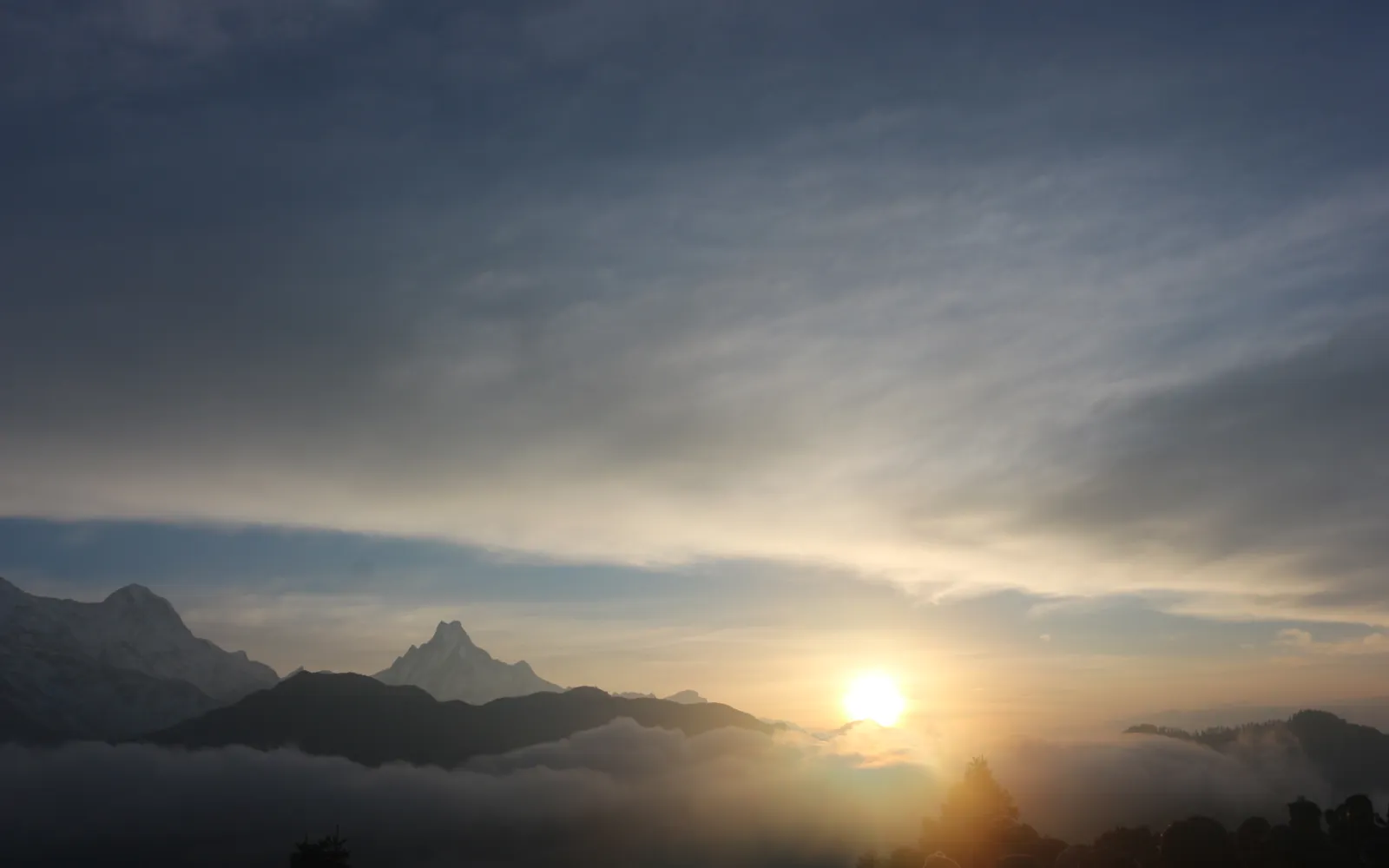
Trekking in Nepal in winter can be very rewarding. During December, January and February, you can enjoy a quieter trek with snow and solid mountain views.
Actually, many trekking regions in Nepal will be relatively dry in winter. This means beautiful views over the Himalayas may be enjoyed. As there are fewer trekkers on popular routes, villages and forests in the mountains may be more peaceful.
However, there can be challenges to trekking in winter. Night temperatures can be very cold, there may be some snowfall and icy paths. In addition, in very cold conditions, some teahouses in higher areas may reduce services or be closed.
Advantages if trekking in Nepal in Winter
Despite the challenges, there are many advantages to trekking in Nepal in winter. As long as suitable routes are chosen and trekkers are prepared for colder conditions, many lower and medium altitude routes can be very rewarding.
Highlights of Trekking in Nepal during Winter
Fewer people – Popular routes will have fewer people on them compared to October, November and Spring.
Beautiful mountain views – If it is sunny, beautiful views over the Himalayas can be enjoyed. This can be very rewarding in the morning.
Peaceful villages – Traditional mountain villages can feel very quiet. This means trekkers can get a good insight into the local culture.
Dry Weather – Many regions in Nepal will experience less rain in winter. However, there may be snow and icy sections.
Clear mountain air – Fresh mountain air can create beautiful conditions for photography.
Challenges of winter trekking in Nepal
As temperatures can be very cold in winter, trekkers must be prepared. In higher altitude areas in particular, overnight temperatures can be very cold. In shaded forest areas, paths can be very icy.
Very cold temperatures in higher altitudes.
Occasional snowfall in mountain villages and viewpoints.
Icy stone paths and shaded forest paths.
Shorter daylight hours. Trekkers must start walking earlier.
Fewer services in accommodation and food in some remote villages.
Below are 5 great treks for trekkers in winter. However, trekkers should check current weather conditions, path conditions and availability of accommodation in higher altitude areas.
5 best winter treks in Nepal-Summary
Route Name| Highest Altitude |Time Length |Difficulty
Ghorepani Poon Hill Trek| 3210m |4-5 days| Moderate
Chisapani to Nagarkot Trek| 2175m| approx 2-3 days| Easy-Moderate
Mardi Himal Trek| 4500m at viewpoint| 4-6 days |Moderate-Challenging
Langtang Valley Trek| 4984m at Tserko Ri| 7-9 days| Moderate-Challenging
Muldai Hill Trek |3637m approx.| 4-5 days| Moderate
Actually, not all treks in Nepal will be suitable to trek in winter. While the Ghorepani Poon Hill Trek and Chisapani to Nagarkot Trek are generally easier to trek, the Mardi Himal and Langtang treks will be more challenging to prepare for.
Importantly, depending on your fitness level, past trekking experience, how long you have on holiday and which mountain views you would like to see, you may wish to choose a different trek.
Below we have explained 5 best options for treks in Nepal in winter. We have also outlined conditions in order to help you find the right trek for you.
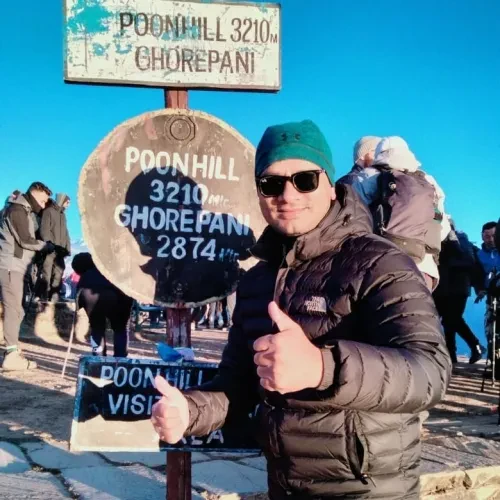
The Ghorepani Poon Hill Trek is a great short trek to enjoy stunning mountain sunrise views. This trek is in the Annapurna region of Nepal and offers spectacular mountain views, traditional villages, rhododendron forests and comfortable teahouses.
Actually, this trek reaches 3210m at Poon Hill, offering beautiful views over the Annapurna and Dhaulagiri ranges. If there is clear weather, beautiful views in the mountains can be enjoyed in the mornings.
While this trek is quieter in December, January and February than in the main seasons (autumn and spring), temperatures can still be very cold in Ghorepani at night. In addition, during this period there may be snowfall, causing icy sections.
Beautiful Sunrise Views
The main highlight of this trek is viewing the sunrise. Generally, trekkers will leave Ghorepani before sunrise, and walk for around 45-60 minutes to reach Poon Hill.
Once at the top of Poon Hill, trekkers can enjoy panoramic views of Annapurna South, Dhaulagiri, Machhapuchhre, Hiunchuli and other surrounding peaks in the Himalayas.
As the sunrise begins to occur, the snow covered mountains will begin to be illuminated, making for great photographing opportunities.
However, it can be very cold at the viewpoint before sunrise, particularly due to strong winds at the exposed summit. Warm clothing, such as a warm insulated jacket, gloves, hat and warm shoes should be worn.
Beautiful views of Annapurna and Dhaulagiri
From Poon Hill, one of the easiest panoramic mountain views can be enjoyed in the Annapurna region. In clear winter conditions, trekkers can enjoy views of many impressive peaks in both Annapurna and Dhaulagiri.
In addition, beautiful views can be enjoyed of deep valleys, hillside forests and traditional mountain villages. Due to dry conditions in winter, great views can be enjoyed. However, sometimes distant peaks may be obscured by clouds/haze.
Snow Covered Forests and traditional villages
This trek offers beautiful views of traditional villages and forests. Throughout this trek trekkers will pass through many traditional villages in the area, such as Ulleri, Ghorepani, Tadapani and Ghandruk. These villages are in traditional communities of the Gurung and Magar people.
In addition to, rhododendron and oak forests are passed through. If there has been slight snowfall, these can be very beautiful. However, in shaded areas, snow and ice may last for longer. This can be seen between Ghorepani and Tadapani.
Temperatures in Ghorepani and Poon Hill in Winter
Temperatures in this area can be very cold in winter. Below are approximate temperatures. They are not guaranteed for each day.
Location | Daytime Temperature | Night/Early Morning Temperature
Ulleri (2050m) | 8-14oC | 0-5oC
Ghorepani (2860m) | 3-8oC | -5 to -1oC
Poon Hill (3210m) | Very cold| -10 to -3oC before sunrise
Tadapani (2630m)| 5-11oC| -3 to 2oC
Ghandruk (1940m)| 10-16oC| 0-5oC
Note: These temperatures are estimated experienced by Haven Holidays Pvt. Ltd. Team for treks in this area in winter. The actual temperatures may vary depending on wind, cloud, snowfall and overall conditions.
Generally, it is cold in December. Good trekking conditions can be experienced if the weather is stable. January is often the coldest month. February gradually becomes warmer.
Route & Duration of Ghorepani Poon Hill Trek in Winter
Here, this trek takes around 4-5 days to complete from Pokhara. A popular route includes starting from Nayapul (or another road access point) and trekking to Ulleri. From here, trekkers continue to Ghorepani, Poon Hill, Tadapani and Ghandruk.
A popular route is:
Pokhara to Nayapul/Hile (approx 1.5-2.5 hours depending on road access point)
Ulleri (walking from Tikhedhunga, with famous stone steps)
Ghorepani (walking through forest. Overnight in Ghorepani)
Poon Hill (walking up to viewpoint (3210m) in time for sunrise. Return to Ghorepani)
Tadapani (Walk through Deurali and forest to Tadapani)
Ghandruk (Walk down to traditional Gurung village. Return to Pokhara)
Depending on the itinerary followed, trekkers may finish at Ghandruk or may continue on to another road access point. This trek can be completed in 4 days with suitable transport. If trekkers want to complete it more comfortably, it may take 5 days.
Difficulty & Accommodation
This trek is generally suitable for beginners, as long as trekkers have reasonable fitness. With long stone steps, walking uphill each day and possible icy paths, this trek can be more challenging in winter.
Actually, most main villages along this route will have teahouses with rooms, food and basic facilities.
However, in very cold conditions some may reduce services or be closed. It is important to check availability of accommodation before departure.
Tips for trekking in winter
Wear thermal clothing, a warm down jacket, gloves and hat.
Wear good grip hiking boots for possible icy paths.
If there is snow/ice on this trek, consider wearing microspikes.
Wear a warm sleeping bag to withstand sub zero temperatures.
Leave early enough to get into accommodation before dark.
Hire a professional, licensed and experienced guide
Check path conditions and availability of accommodation with your guide before departure.
Overall, this is a great short trek in the Himalayas in winter. As long as trekkers wear suitable clothing, have realistic walking times and check current path conditions, they can enjoy beautiful mountain views and insight into traditional villages without having to go on a long high altitude trek.
This short trek near Kathmandu is very convenient to do in winter. You can enjoy a mixture of forest paths, traditional villages, and beautiful views of the mountains in this area.
Actually, the trek begins in Sundarijal and continues through Shivapuri Nagarjun National Park to Chisapani. Then you follow ridges on the northern and eastern sides of the valley to Nagarkot.
In December, January and February you can enjoy fresh cold air. During your walk, you can enjoy beautiful views of the mountains. However, in some places, the visibility may be poor due to mist, haze and clouds, particularly, in the morning.
Sundarijal to Chisapani
This segment of the trek from Sundarijal to Chisapani is the first part of this short trek within the Kathmandu Valley. Sundarijal is between 1350m-1460m, whilst Chisapani is between 2165m-2200m.
Meanwhile, you follow a path through forests and pass through the village of Mulkharka and Borlang Bhanjyang. Finally, just before Chisapani you begin to descend. Depending on the route and speed of walking, this segment will take between 4-6 hours.
Itinerary and Pricing
Throughout this walk, you will be walking through beautiful forests, local communities, and enjoy views of the Kathmandu Valley. At Chisapani you can enjoy a peaceful night’s stay with beautiful mountain views on clear mornings.
Shivapuri National Park
Along the route from Sundarijal to Chisapani, you pass through Shivapuri Nagarjun National Park. Within the forest you can enjoy bird watching, nature photography and peaceful walks.
Here, there is a good variety of wildlife in this area, including deer, monkeys and many types of birds.
Likewise, there is also a variety of trees in the forest, including oak, pine and rhododendron. However, in winter, the rhododendrons will not be in flower.
Before entering the national park, you must purchase the correct permit. Currently, the price to enter the national park for foreign visitors is NPR 1000 per person per visit, and NPR 600 for SAARC visitors. Please check the most up to date pricing before departure.
Beautiful Mountain Views from Chisapani and Nagarkot
Both Chisapani and Nagarkot offer beautiful mountain views from the northern and eastern sides of Kathmandu Valley. If the weather is clear, you may be able to see parts of the Langtang and Ganesh Himal ranges, as well as other Himalayan ranges.
Because of the open ridges and beautiful landscapes of the countryside, this is great for winter photography. However, depending on the weather, visibility of the mountains may be poor and far off peaks may become hidden behind clouds or haze.
Beautiful Sunrise in Nagarkot
Nagarkot is a lovely place to finish this trek, particularly if you enjoy sunrise views and peaceful mountainous landscapes. Once you arrive in Nagarkot, you can spend the night here and enjoy the viewpoints around the area before returning to Kathmandu.
In addition to, there are beautiful views of the countryside, including tiered fields, traditional communities and mountainous forests. Spending the night in Nagarkot means you can enjoy a leisurely sunrise.
Difficulty and Length of Trek
It is typically possible to complete this trek in 2-3 days, depending on your starting point and how quickly you walk. The trek consists of 2 main walking segments.
Segment |Length (km) | Time (hrs)
Sundarijal to Chisapani | 11-13km | 4-6hrs
Chisapani to Nagarkot | 14-18km | 5-7hrs
Nagarkot to Changu Narayan (optional) | Dependent on route | 3-4hrs
Important, these distances and times depend on which route is taken, how you navigate, how fast you walk, and how many stops you make.
3 Day Multi-Day Trek +2
This is generally a moderate trek. It can be completed by beginners and families with a reasonable level of fitness. However, the uphill walk on day 1 requires some stamina, and appropriate footwear is required for the cold morning conditions and possibly slippery forest paths.
Tips for Winter Trekking
Wear warm clothing in Chisapani and Nagarkot, particularly during the night.
Wear waterproof walking boots with good grip on forest paths and stone steps.
Bring a bottle of water, some snacks and a small rucksack.
Confirm accommodation is available in Chisapani before beginning this trek.
Check the weather forecast as visibility in the mountains may be poor due to mist.
Bring the correct permit to enter the National Park. Stick to marked paths.
Hire a professional and Licensed Guide
Overall, this is a great trek to complete in winter near Kathmandu. As no domestic flights are required and only a short drive from Kathmandu to Sundarijal, it is a great option for those with limited time.
This is one of the most beautiful ridge walks within the Annapurna region. It allows you to get great close up views of the Machhapuchhre (Fishtail), Annapurna South and Hiunchuli mountains. There are also beautiful forest paths and mountain views.
During winter, the trails can be very quiet. If the weather is stable, visibility in the mountains can be great. However, it can get very cold at higher altitudes, particularly around High Camp.
As snow can occur, strong winds and icy paths can occur at higher altitudes in December, January and February. Therefore, early December may be more manageable than months with heavy snowfall.
However, no month in winter can guarantee safe access to the viewpoint and base camp.
Mountain Views of Machhapuchhre and Annapurna in Winter
The main attraction of this trek is the beautiful mountain views from the ridges. As you ascend, Machhapuchhre becomes more prominent. Annapurna South and Hiunchuli dominate the mountain range.
On clear mornings in winter, great photographs of the mountains can be taken. However, strong winds can occur on the ridges, and clouds can quickly form to obscure visibility of the mountains.
Forest Camp, Low Camp and High Camp
Throughout this trek you walk through a series of forest camps. The most common route begins in Kande, and follows a path to Australian Camp, Pothana and Deurali. Then you enter the Mardi Himal forest trail.
Common places to stay overnight on this trek include:
Forest Camp (approx 2550m-2600m): A peaceful village in a forested area.
Low Camp (approx 2970m-3100m): A higher forest village with gradually better mountain views.
Badal Danda (approx 3210m): A ridge viewpoint with impressive views of Machhapuchhre.
High Camp (approx 3550m-3580m): The highest regular tea house village on the standard trek.
However, the temperatures in these higher villages can be very cold in winter. In some lodges, services may be reduced or they may be closed during heavy snowfall and very cold weather.
Mardi Himal Viewpoint and Base Camp in Winter
There are two separate destinations within this area. The Mardi Himal Viewpoint is commonly visited and at a much higher altitude than the Mardi Himal Base Camp. The Mardi Himal Viewpoint is approximately 4200m, and the Base Camp is approximately 4500m.
From High Camp, it is possible to attempt an early morning walk to the viewpoint if conditions allow. However, this is very exposed and if there is snow or ice, this section may be difficult or unsafe.
To reach Mardi Himal Base Camp, you have to walk further than to the viewpoint. However, there are no regular tea house accommodations at 4500m, so trekkers usually return to High Camp.
Access to the upper ridge may not always be possible in winter, even for experienced trekkers. Heavy snowfall may cause the path to be covered, and strong winds and icy sections may make this ascent unsafe. If conditions worsen, it would be appropriate to turn back.
Snow and Ice
The main problems with winter trekking in the Mardi Himal region are snowfall and ice. The forested areas are generally more manageable. However, snow and ice become increasingly problematic at higher altitudes, particularly at Low Camp and High Camp.
Meanwhile, January can be particularly problematic due to large snowfalls blocking parts of the upper ridge. However, snow can also occur in early December and February depending on changing weather patterns.
Approximate temperature guidance:
Location | Approximate Daytime Temperature | Approximate Night Temperature
Forest Camp (2550m-2600m) | 3°C to 10°C | -5°C to 0°C
Low Camp (2970m-3100m) | 0°C to 7°C | -7°C to -2°C
Badal Danda (3210m) | -2°C to 5°C | -8°C to -3°C
High Camp (3550m-3580m) | -5°C to 3°C | -15°C to -8°C
Mardi Himal Base Camp Area (4500m) | Approx -2°C to 3°C | Approx -15°C to -10°C (or colder)
Note: These are approximate temperatures experienced by Haven Holidays Nepal Team for winter in these areas. Actual temperatures may vary. Wind chill in exposed areas may mean temperatures feel much colder.
Difficulty and Preparation
This is generally a moderate to challenging trek, particularly in winter. Although there is no technical climbing on the standard route, steep ascents, narrow ridges and cold temperatures mean that good physical preparation is required.
Here, most standard itineraries take between 5-7 days to complete, depending on where you start, how quickly you walk and the return route. Most people descend to Siding or another suitable location with road access before returning to Pokhara.
Important preparation for winter:
Wear a warm down jacket, thermals, gloves and hat.
Wear waterproof walking boots with good grip.
Wear microspikes if icy conditions are expected.
Wear a sleeping bag suitable for temperatures of -10°C or colder.
Use walking sticks for steep and potentially slippery sections.
Confirm accommodation and food availability at High Camp before departure.
Hire a professional, and Licensed guide
Employ an experienced licensed guide with knowledge of winter conditions on this trail.
Leave some flexibility in your itinerary, as snowfall may impact your route.
Overall, this can be a very rewarding trek for experienced and well prepared trekkers. However, it may be best to be flexible with whether you reach High Camp, the upper viewpoint or Mardi Himal Base Camp as safety depends on the conditions on the trail.
This trek offers beautiful views of the Himalayas, traditional villages and an less busy trek. This route offers beautiful snowy mountain views, culture from the Tamang people, and beautiful nature found in the Langtang National Park.
However, planning this trek in the winter needs care. Temperatures can drop significantly at higher altitudes. December can be very pleasant with clear snowy mountain views. However, snowfall, icy paths and cold night times may occur in January and February.
As this trek is very different in winter compared to autumn/spring, it is important to plan with flexibility. Consider the road conditions, available accommodation and trail conditions in the area before undertaking this trek.
Winter Scenery
Beautiful scenery can be found within the Langtang Valley. Snow can fall across the mountain slopes, roof tops and upper trails in winter.
On a clear morning, beautiful views of Langtang Lirung and surrounding mountains can be achieved. However, cloud cover, snowfall and strong winds may cause reduced visibility.
Although snow may fall at higher altitudes, the lower areas may still be accessible. Therefore, conditions at Kyanjin Gompa may be very different to conditions at Lama Hotel.
Lama Hotel, Langtang Village and Kyanjin Gompa
This popular route through the Langtang Valley follows the Langtang Khola. It passes through mountain villages and forested areas. Key points in this route include Lama Hotel, Langtang Village and Kyanjin Gompa (approx. 3,870m).
From Syabrubesi, the route usually follows to Bamboo and Lama Hotel, before reaching Langtang Village. However, due to the flooding in Rasuwa in August 2026, it is important to check with your trekking company to ensure you follow the correct start point and route.
From Dhunche, the alternative route follows to Thulo Bharkhu, Brabal and Thulo Syaphru. It then joins the main route through Bamboo before reaching Lama Hotel and Kyanjin Gompa.
Major Routes Details:
| Location | Altitude (m) | Significance |
| Dhunche | 1,960 | Alternative start point with road access |
| Thulo Syaphru | 2,210 | Settlement along alternative route |
| Lama Hotel | 2,470 | Overnight stop within forested area |
| Langtang Village | 3,430 | Mountain village |
| Kyanjin Gompa | 3,870 | Main destination and high altitude base camp |
Actually, Kyanjin Gompa is a great place to view the mountainous surroundings and the local Buddhist culture. If conditions allow, it may be possible to walk to viewpoints in the area such as Kyanjin Ri.
However, as these viewpoints require higher ascents, they may be difficult to complete during heavy snowfall. Be sure to give yourself enough time to complete these viewpoints and avoid completing them if visibility or safety is reduced.
Culture and Religion
The Langtang region is home to many people from the Tamang culture. This culture can be seen through the traditional buildings, prayer flags, mani walls, chortens and monasteries. Kyanjin Gompa highlights the strong connection to Tibetan Buddhist culture in the region.
Moreover, visitors can learn about local lifestyles, traditional foods and how important farming in the mountains is to the local people, including yak herding.
In addition to, Langtang Village has a significant history, having been rebuilt after the 2015 earthquake. As a result, the homes and lodges in the village now represent the perseverance of local people and their continued connection to the valley.
As with all treks in local communities, respect local traditions. Always ask permission to take photos of local people or religious practices. Supporting local tea houses and businesses in the area will help support people living in these mountains in the quieter winter months.
Snowfall and Trail Conditions
Cold temperatures can be expected in Langtang Valley in winter. Temperatures can get very cold above Lama Hotel and in Kyanjin Gompa. Frosty mornings may be experienced in December, with increased snowfall and icy paths likely in January and February.
Actually, snow can fall in Langtang Village, Kyanjin Gompa and viewpoints in the area. However, the amount of snow will depend on the year and varying weather conditions.
Here, these temperatures are estimates and can vary depending on snowfall, wind, cloud and exposure. Therefore, conditions may vary significantly from day to day.
Weather Conditions Summary
| Location | Altitude (m) | Day Temperature | Night Temperature |
| Lama Hotel | 2,470 | 5-10°C | -5-0°C |
| Langtang Village | 3,430 | -2-5°C | -10- -5°C |
| Kyanjin Gompa | 3,870 | -5-3°C | -15- -8°C |
Wind chill may make temperatures appear much colder at viewpoints. Ensure you wear warm insulating clothes, layers, waterproof gloves, warm socks and suitable winter hiking boots.
Likewise, icy sections may be encountered on shaded forested paths, stone steps and exposed areas. Microspikes or suitable traction devices may be useful in these conditions. However, it is not advised to walk on unsafe paths.
Difficulty, Safety and Road Conditions
This trek is generally considered moderately difficult. Although the main path does not require technical skills, long distances and cold temperatures may make this difficult. Acclimatisation is important to allow for the high altitude of Kyanjin Gompa (approx. 3,870m). Increase altitude gradually, complete the walk at a steady pace and consider staying an extra night before completing any higher viewpoints in the area.
Meanwhile, important road damage was caused by flooding in Rasuwa on the 26 th August 2026. However, the 3 rd November Logistics Cluster update shows roads to be open from Dhunche to Syabrubesi. Later reports show that an alternative route from Thulo Bharkhu and Thulo Syaphru can be followed for safety.
Therefore, do not assume all vehicles can be used on the traditional route, or that the traditional route will be followed. Be sure to check with your trekking company to understand the most updated road, bridge and trail conditions.
Importantly, some accommodation can be reduced or closed in winter, particularly at higher altitudes. Be sure to check what accommodation is available and what meals can be provided before starting your trip.
For a safer experience on this trek in January/February consider:
Walking with a licensed, experienced guide who knows the current local routes.
Checking road conditions, weather forecasts and trail conditions just before starting your trek.
A warm sleeping bag to accommodate sub-zero temperatures.
Wearing layered clothing, waterproofs, gloves and warm footwear.
Giving yourself extra days to allow for delays, snow and changing trail conditions.
Walking gradually and being aware of symptoms of altitude sickness.
Therefore, this trek can be very rewarding in winter for well prepared trekkers. However, if conditions in the area mean it is unsafe to complete viewpoints in exposed areas, or if conditions mean the itinerary needs to be changed, be sure to delay or change your route.
This quieter viewpoint trek in the Annapurna region of Nepal allows trekkers to see beautiful mountain views. This is a great alternative to the more popular Poon Hill Trek for those looking to avoid large crowds.
Meanwhile, Muldai Viewpoint allows great views of the Annapurna and Dhaulagiri ranges on a clear day. This route also passes through traditional villages and rhododendron forests, ending at the quiet village of Dobato.
Actually, frosty mornings can be expected in winter. Snow may fall on higher forested trails and viewpoints. However, very cold temperatures, icy paths and limited services in local accommodation must be considered.
Here, this trek generally takes between 4-6 days depending on starting point, speed of walking and route. Therefore, this can be a great option for a shorter Himalayan experience with a quieter viewpoint in winter.
Sunrise over Muldai Viewpoint (3,637m)
The main attraction of this Short Trek in the Annapurna region is seeing a sunrise from the top of Muldai Viewpoint. The viewpoint is located on top of Dobato and trekkers will need to begin walking from the local lodges early in the morning.
In fact, it generally takes between 45-60 minutes to complete this ascent depending on trail conditions and walking pace. If reached at sunrise, beautiful colours can be seen across the horizon of the Himalayas.
However, in winter, this walk can be very cold. Be sure to wear a headtorch, warm gloves, warm insulating clothes and suitable footwear.
Specifically, snow or ice may be present on the upper trail due to winter precipitation. Be sure to check local conditions before attempting this walk, particularly in January and February.
Beautiful views over Annapurna and Dhaulagiri Mountains
Beautiful views of the Himalayas can be seen from Muldai Viewpoint. On a clear day, trekkers may be able to see Annapurna South, Machhapuchhre, Hiunchuli and Dhaulagiri and other mountains in the surrounding areas.
As this viewpoint is at a higher altitude, different views can be seen compared to Poon Hill. The ridges, forests and mountainous scenery in the background makes this a great option for taking photographs.
On clear winter mornings beautiful clear views can be seen. However, cloudy conditions, fog and snow may mean that the panoramic views can be obscured.
Dobato, Tadapani and Forested Areas
The most common route up Muldai Hill begins in Ghandruk, Tadapani and Dobato. This route allows trekkers to see traditional mountain villages, forested areas and mountainous scenery.
Actually, Tadapani (approx. 2,630m) is an important stop along the route. It is located in rhododendron and oak forested areas and allows trekkers to ascend to Dobato (approx. 3,420m).
Importantly, Dobato is an important location in this trek as it allows trekkers to stay close to the viewpoint. However, the tea houses in this area are relatively basic and services may be limited in winter.
In addition to, a popular route from Dobato is to Muldai Viewpoint. From here trekkers can descend to Ghorepani. From here trekkers can continue to Ulleri or Hile to get road transport back to Pokhara.
Common route and approximate altitudes
| Destination | Altitude (m) | Description |
| Ghandruk | 1,940 | Traditional Gurung village |
| Tadapani | 2,630 | Forested area with mountainous scenery |
| Dobato | 3,420 | Main base camp before Muldai Viewpoint |
| Muldai Viewpoint | 3,637 | Sunrise and mountain views |
| Ghorepani | 2,860 | Traditional trekking village |
| Ulleri | 2,050 | Common descent point with road transport |
Depending on how many days you have, and trail conditions, this route can be altered. Some treks may begin from Banthanti and go to Dobato. Or trekkers may go to Poon Hill first before continuing to Muldai.
Comparison with Poon Hill in Winter
Both Muldai Hill and Poon Hill offer beautiful mountain views in the Annapurna region. However, there are differences in altitude, number of people, accommodation and general difficulty.
Actually, Muldai Viewpoint is at a higher altitude than Poon Hill (3,637m compared to 3,210m). Therefore, this viewpoint is generally less busy at sunrise.
Muldai Hill Vs. Poon Hill in winter
| Comparison | Muldai Viewpoint | Poon Hill |
| Highest Viewpoint | 3,637m | 3,210m |
| Number of People | Generally less busy | Very popular |
| Main base camps | Tadapani and Dobato | Ghorepani and Tadapani |
| Time to reach viewpoint at sunrise | Approx. 45-60 mins from Dobato | Approx. 45-60 mins from Ghorepani |
| Winter conditions | Snow/ice may be found near Dobato | Snow/ice may be found near Poon Hill |
| Accommodation | Limited at Dobato | More established at Ghorepani |
Therefore, this trek is a great alternative to Poon Hill for those looking for less people. However, Poon Hill has more established accommodation and is a more commonly travelled route.
More importantly, some people may complete both viewpoints on one trek. From Dobato trekkers may complete Muldai Viewpoint, and from Ghorepani trekkers may complete Poon Hill. This gives two different sunrise experiences, however requires more walking.
Difficulty and Accommodation
The Muldai Hill Trek is generally moderately difficult. Upwards walking in forested areas, uneven stone paths and potentially icy paths in Dobato may be encountered.
Here, most treks will take between 4-6 days depending on transport, start and finish points. However, experienced trekkers may be able to complete it in less time. Alternatively, walking at a slower pace gives more rest and flexibility for changing weather conditions.
Actually, temperatures will get colder as trekkers reach Dobato and Muldai Viewpoint. The temperatures below are estimated and may vary depending on snow, wind, cloud and exposure.
Winter Temperature Summary
| Location | Altitude (m) | Day Temperature | Night Temperature |
| Ghandruk | 1,940 | 10-16°C | 0-5°C |
| Tadapani | 2,630 | 5-11°C | -3-2°C |
| Dobato | 3,420 | -2-5°C | -10- -5°C |
| Muldai Viewpoint | 3,637 | -4-3°C | Can be below -10°C in early morning |
Due to wind chill, temperatures may feel much colder at the viewpoint in the early morning. Wear warm layers, a warm coat, waterproof hiking boots, gloves, a headtorch and poles.
Here, accommodation is available in the main villages along this route. However, accommodation becomes much simpler at Dobato. Some accommodation may be closed during colder times of the year, or have limited services. Check availability before starting.
To have a comfortable trek in winter consider:
Checking accommodation availability in Dobato before starting.
Asking local guides for information on snow/ice on the Muldai trek.
Wearing enough warm clothing for the early morning walk to the viewpoint.
Wearing suitable footwear and poles at the start of the trek.
Allowing extra time for snow affecting the route.
Arranging transport from your chosen finish point to Pokhara.
Overall, this trek is a great option for trekkers in winter to see peaceful trails and beautiful mountain views. However, as this viewpoint is higher and accommodation is limited, it is very important to get local guidance and plan in advance.
Depending on how much time you have, and what mountain views you would like to see, you may wish to choose a different trek. Some treks will be easy with low altitudes, while others may be more demanding due to snow, cold temperatures and higher altitudes.
For example, Chisapani-Nagarkot is suitable for those with limited time near Kathmandu. Mardi Himal and Langtang Valley treks will be more demanding with higher altitudes, longer walking times and harsher conditions.
Here, the table below can give you an overview of the difference between the 5 Best Winter Treks in Nepal. However, the difficulty may vary depending on the amount of snow, trail conditions, route taken and availability of accommodation.
Comparison of Best Winter Treks in Nepal
Trek Name| Duration| Max Elevation| Difficulty| Start Point
Ghorepani Poon Hill| 4-5 days| 3,210m |Easy-Moderate| Nayapul or other accessible starting point
Chisapani-Nagarkot| 2-3 days| Approx 2,300-2,400m (higher route)| Easy-Moderate| Sundarijal
Mardi Himal| 5-7 days| Approx 4,500m (Base Camp)| Moderate-Challenging| Kande
Langtang Valley| 7-9 days| Approx 3,870m (Kyanjin Gompa)| Moderate-Challenging| Dhunche/Sundarijal/Thulo Syabru
Muldai Hill| 4-6 days| 3,637m| Moderate| Ghandruk or other accessible starting point
Note: The duration and elevation of Each Trek will depend on the route taken, starting point, transport and optional viewpoint hikes.
Importantly, the maximum elevation may also change depending on any optional side treks. For example, Kyanjin Ri and Tserko Ri are located above Kyanjin Gompa.
Similarly, Mardi Himal Base Camp is higher than the usual viewpoint. On Chisapani-Nagarkot however, a higher ridge can be walked across. Therefore, it is important to consider the exact route taken for comparison.
Best Easy Winter Trek in Nepal
Both Ghorepani Poon Hill and Chisapani-Nagarkot treks are generally easy treks. However, conditions can be challenging in winter.
Actually, Ghorepani Poon Hill is a great easy introduction to trekking in the Himalayas. You can walk through villages and enjoy mountain views.
However, the stone steps and forest paths can be very slippery in winter, particularly in Ghorepani and Poon Hill following snowfall.
Likewise, Chisapani-Nagarkot is a great short trek in the countryside close to Kathmandu. Although there are uphill and downhill walks, Chisapani-Nagarkot does not require the same level of high altitude preparation as Mardi Himal and Langtang.
If you are taking this trek with children, you should consider the length of walking per day, weather conditions and quality of accommodation. Both treks would be suitable for beginners but you should allow plenty of rest stops.
Shortest Winter Trek Close to Kathmandu
Chisapani-Nagarkot is a very easy short trek close to Kathmandu. It can be completed in 2-3 days. Forests, traditional villages and mountain views can be enjoyed.
As Sundarijal is easily reached by car, this is a good option for those with limited holiday time.
Likewise, Ghorepani Poon Hill is also a good short option. However, as it is located in the Pokhara area, you must allow travel time from Kathmandu. Be sure to include this in your overall holiday planning.
However, neither trek can be guaranteed to be good in winter. Make sure to check trail conditions, availability of accommodation and local weather.
Best Winter Trek for Mountain Views
Mardi Himal, Ghorepani Poon Hill and Muldai Hill all provide fantastic mountain views. Depending on altitude, direction of trail and weather, the views from each of these treks will be different.
Actually, Mardi Himal provides great views of Machhapuchhre, Annapurna South and surrounding mountains from the upper ridge. However, higher up on the trek, conditions may be harsher with snow, ice and strong winds.
In addition to, Poon Hill provides fantastic views across the Annapurna and Dhaulagiri ranges at sunrise. Muldai Hill provides a peaceful view but has fewer accommodation options.
With clear mornings, excellent mountain views can be seen on all three treks. However, cloud cover, snow and changing weather conditions may change the mountain views. It may be best to be flexible with your schedule.
Most Suitable for Experienced Trekkers
Both Langtang Valley and Mardi Himal are suitable for experienced trekkers. As the altitude of these treks is higher, cold temperatures and changing trail conditions may pose additional difficulties.
Meanwhile, the Langtang Valley trek takes around 7-9 days and reaches around 3,870m at Kyanjin Gompa. Optional side treks to Kyanjin Ri or Tserko Ri will take you to higher altitudes. You must be careful to acclimatise properly.
Actually, Mardi Himal is a shorter trek. However, the upper sections of the route (High Camp and Mardi Himal Base Camp) may be difficult in snow. Be sure to consider local conditions before attempting to reach the higher viewpoint or Base Camp.
Despite being experienced trekkers, you should be careful in winter conditions. Ensure you have suitable equipment, follow local advice and be able to be flexible with your route if snow/ice is making the trail unsafe.
Most Peaceful and Least Crowded Winter Trek
Muldai Hill is a great choice if you are looking for a less busy alternative to Poon Hill. As this trek is approached from Tadapani and Dobato, it provides peaceful forest walks. The viewpoint is less busy than other popular treks.
Actually, many of the Annapurna treks will be less busy in winter than in Autumn. However, fewer people may mean fewer services at the lodges and fewer accommodation options.
In addition to, Mardi Himal can also be less busy in winter, outside of peak times. However, the exposed areas at the top mean more careful consideration is required than on Muldai Hill.
Depending on what you prioritise, different treks may be more suitable. If you want shorter walking days, consider Chisapani-Nagarkot or Poon Hill. If you want high mountain views, consider Mardi Himal or Langtang, providing you are suitably prepared.
The best months to go on a winter trek in Nepal are December, January and February. Many areas will have dry conditions, clear mornings and cold nights. However, this can vary depending on altitude.
Here, December, January and February each provide different trekking conditions. December is often easier, January is generally quite cold, and February gets gradually warmer.
In fact, winter conditions will vary from year to year. Snowfall, weather conditions from the West, wind and local conditions can cause rapid changes to trail accessibility.
Therefore, the best month will depend on where and at what altitude you are trekking. Lower treks such as Chisapani-Nagarkot may still be practical in colder months. However, treks at higher altitudes will need more careful planning.
December
Trekking in Nepal in December can be a great choice if you want to avoid busy trails and enjoy clear mountain views. Early December can be easier than mid to late December, particularly for lower altitude treks.
Generally, many trekking areas will be cold and dry. In sunny conditions, daytime temperatures can be comfortable. However, temperatures can drop rapidly after sunset, particularly in villages above 3,000m.
In addition to, December can be a great time to go on Ghorepani Poon Hill, Chisapani-Nagarkot and Muldai Hill if local conditions are good. Well prepared trekkers may also consider Mardi Himal and Langtang, although snow may make the higher areas difficult.
Likewise, accommodation will generally be available on established trekking routes. However, at very high altitudes, some lodges may provide fewer services in winter.
Importantly, make sure to confirm which places you will be staying in overnight, particularly in Dobato, High Camp and Kyanjin Gompa.
Considerations for trekking in Nepal in December:
Early December is a good choice for relatively easy winter conditions.
Wear warm clothing as early mornings/evens may be very cold.
Check for snowfall and trail conditions prior to attempting higher viewpoints.
Allow extra time for transport/flight delays.
Ensure that accommodation is available at the less popular treks.
January
January is generally very cold in Nepal. Many lower altitude treks may be suitable in good conditions, but treks at high altitudes may be very challenging due to heavy snowfall, frozen trails and very cold temperatures.
Actually, Ghorepani Poon Hill and Chisapani-Nagarkot may be more suitable options in January. However, snow and ice may cause problems on exposed trails, stone steps and early morning viewpoints.
In addition to , Muldai Hill may be a good choice, but the trail around Dobato may be very icy after snowfall. Be sure to check that accommodation is available and local trail conditions.
However, Mardi Himal and Langtang Valley require more care. Snow may make the upper ridge and trails above High Camp difficult to walk on. Similarly, snow may make areas around Langtang Village, Kyanjin Gompa and surrounding viewpoints difficult.
Although high altitude treks may be difficult in January, they are still possible if you are experienced, have the right equipment and are flexible with your plans depending on local conditions.
Considerations for trekking in Nepal in January:
Mornings and evenings (particularly above 3,000m) will be very cold.
Check for snow and ice in higher altitude areas.
Wear suitable winter walking boots and equipment if necessary.
Check that teahouses will be open.
Avoid undertaking exposed viewpoints in poor visibility or unsafe conditions.
February
February marks the change from winter to spring in Nepal. The first half of February may be very cold. However, temperatures will generally become more comfortable towards the end of the month.
Actually, lower altitude treks such as Chisapani-Nagarkot and Ghorepani Poon Hill may be good choices in good conditions. Muldai Hill can provide peaceful walks through forests and mountain views in clear conditions.
Meanwhile, Mardi Himal and Langtang Valley may be more suitable towards the end of February. However, snow and ice in higher altitude areas (High Camp, Kyanjin Gompa and higher viewpoints) may still be an issue, particularly if fresh snow has fallen.
Likewise, rhododendron forests will generally not be in full bloom in early February. However, lower altitude areas may start to show signs of spring towards the end of February.
Considerations for trekking in Nepal in February:
Later in February conditions will be gradually getting warmer.
Nights at higher altitudes may still be very cold.
Check snow conditions before trekking above High Camp/Kyanjin Gompa.
Wear warm clothing as temperatures may still be below freezing.
Check that accommodation and transport is in place.
Best Month for Each Trek
Depending on altitude, exposure and accommodation, different months may be better for different treks. Below is a quick comparison of the best months to go on Each Trek. However, this is not guaranteed.
Trek Name| December| January| February
Ghorepani Poon Hill| Very suitable (good conditions) |Suitable (winter preparation)| Very suitable (good conditions)
Chisapani-Nagarkot| Very suitable| Generally suitable| Very suitable
Mardi Himal| Possible (careful preparation)| More difficult (cold + snow risk)| Possible (particularly later in month)
Langtang Valley| Possible (check current access)| More difficult (cold + snow risk)| Possible (check current access)
Muldai Hill |Suitable (winter preparation)| More difficult (Dobato after snowfall)| Suitable (winter preparation)
Meanwhile, Ghorepani Poon Hill can be very suitable in December and February. Villages and accommodation are easily accessible on this route. It can also be a good choice in January, although snow and icy steps may make the sunrise walk difficult.
In addition to, Chisapani-Nagarkot can be a good choice in all 3 months in good conditions. As this trek is close to Kathmandu, it may be easier to make changes to transport and shorten the trek if needed.
Likewise, Mardi Himal may be easier in early December or later in February than in the middle of January (the coldest month). However, snow or ice may still be present on the upper ridge.
Whether or not to continue depends on current local conditions.
Actually, Langtang Valley may be preferable in December and later in February for slightly less extreme winter conditions. However, you must check the condition of roads and trails in Rasuwa due to flood risk prior to departure in any month.
Similarly, Muldai Hill can be rewarding in December and February if accommodation is available in Dobato and the trail to the viewpoint is accessible. In January, fresh snowfall may make the early morning climb more difficult.
Here, February may not necessarily be the warmest or safest month to go on a trek. Similarly, December may not necessarily provide clear mountain views. Be sure to check recent weather forecasts, transport updates, accommodation availability and local trail conditions before finalising your winter trekking plans.
Difficulty, Fitness and Altitude
Trekking in Nepal in winter can be more difficult than in other seasons, due to cold temperatures, snow and icy terrain. Days will be shorter and temperatures will be colder in the mornings and evenings.
Actually, Ghorepani Poon Hill and Chisapani to Nagarkot are generally easier, however Mardi Himal and Langtang Valley require more preparation due to higher altitudes and potential snowfall.
If you choose to trek on a moderate route, icy steps and snow can make the route quite challenging. Choose a route depending on your fitness, experience, time and the conditions of the route in winter.
Fitness
Having a good level of fitness will allow trekkers to complete the long, uphill and downhill walks. Although you do not need to be very athletic, regular walking and basic fitness training will allow you to complete the trek comfortably.
All 5 routes have differing levels of difficulty:
Chisapani to Nagarkot – Easy to Moderate. Forested terrain with up and down hills. Regular trekkers of reasonable fitness should be able to complete the distances per day.
Ghorepani Poon Hill – Easy to Moderate. Long stone steps in Ulleri and the steep climb to Poon Hill in the early morning mean a reasonable level of stamina is required.
Muldai Hill – Moderate. Steady ascent to Tadapani and Dobato. Climbing to the viewpoint in the early morning can be more difficult on snowy/icy routes.
Mardi Himal – Moderate to Challenging. Steeper terrain, ridges and snow in the winter means that the difficulty increases. From Low Camp and around High Camp, the route is more challenging.
Langtang Valley – Moderate to Challenging. A number of walking days in a row and increasing altitude to Kyanjin Gompa. Optional walks to Kyanjin Ri or Tserko Ri require additional fitness and acclimatisation.
Here, prior to your trip, try to get into regularly walking, climbing stairs and doing some moderate cardio. Try walking in your trekking boots with a packed daypack to get used to the weight.
Altitude and Avoiding AMS
As altitude increases, people may start to experience altitude sickness (AMS). This may occur at heights above approximately 2500m. Poon Hill, Muldai Hill, Mardi Himal and Langtang Valley all reach this altitude.
Meanwhile, symptoms of mild altitude sickness include; headache, nausea, dizziness, reduced appetite and tiredness. These should not be put down to just being tired from trekking, especially if they appear after increasing in altitude.
Actually, rapid ascents or sleeping much higher than the previous night can increase your risk of altitude sickness. It is advised to gain no more than 300-500 meters of sleeping altitude per day above 2500m. If you do gain significant altitude, you should take a rest day.
Particularly, Mardi Himal and Langtang Valley should be well acclimatised to. Although Kyanjin Gompa and Mardi Himal Base Camp are around 3870m and 4500m respectively, the optional viewpoints can take people to higher altitudes.
To prevent altitude sickness:
Ascend slowly, especially above 2500m.
Take rest days if necessary.
Drink plenty of clean water and eat regularly.
Avoid alcohol and strenuous activity if displaying symptoms.
If you start to display symptoms of AMS, do not increase your altitude.
If your symptoms get worse or do not improve, descend immediately and seek medical help.
If you begin to get severe headaches, vomiting, confusion, difficulty walking in straight lines and shortness of breath, then this is a serious symptom. Stop increasing altitude and descend with assistance immediately.
Snowy/Icy Conditions
Snowy and icy conditions may make routes more difficult in winter. In shaded areas within forests, stone steps, narrow ridges and viewpoints in the early morning may be very slippery.
On Ghorepani Poon Hill, stone steps may be icy and there may be frozen areas around Ghorepani. On the way to Dobato and Muldai Viewpoint in the forest, snow may make the route difficult.
Similarly, Mardi Himal can be challenging as the upper section of the ridge is exposed to cold winds and varying snow conditions. In Langtang Valley, snow may affect the trails around Langtang Village, Kyanjin Gompa, and higher viewpoints.
Although Chisapani to Nagarkot is generally a lower altitude route, freezing conditions may occur in the morning, making forested trails slippery. Do not underestimate the difficulty of a route based solely on its altitude or difficulty rating.
Importantly, wearing good grip trekking boots, poles and microspikes (if required by local conditions) can help on these routes. However, even with increased traction equipment, steep routes with heavy snowfall/avalanche risk may still be unsafe.
Importance of a Licensed Guide
A knowledgeable guide can support trekkers in understanding conditions on the trail, weather and accommodation in winter. This can be very useful as snow may make trails difficult to navigate, and fewer trekkers may be in remote areas.
Meanwhile, a guide can ensure a suitable pace is maintained, identify potential issues relating to altitude and can work with local lodges and transport providers in order to accommodate any disruptions to the itinerary caused by weather or road conditions.
Although a guide can not eliminate all risks in winter, having local knowledge can help trekkers make better decisions. Therefore, consider taking a professional guide, particularly on higher altitude routes with changing conditions.
Equipment, Permits and Accommodation
It is important to pack appropriate equipment for a winter trek in Nepal. As temperatures can be very cold at higher altitudes, warm clothing, good footwear, suitable sleeping equipment and personal items are required.
Depending on where you are trekking, different entry requirements may apply and different accommodation options may be available. Therefore, it is important to choose your equipment and permits according to the route.
Clothing
Layering clothing will allow you to adapt to changing temperatures. Although it may be very cold in the early morning and at viewpoints, it can be very comfortable in the afternoon.
Wear 3 layers of clothing:
Thermal base layer – Wicking fabric to keep you dry.
Insulation – Fleece/wool clothing and insulated jacket (down or synthetic) for colder temperatures.
Outerwear – Waterproof and windproof jacket and trousers.
Wear warm gloves, a hat, scarf and multiple pairs of thermal socks. Pack spare dry clothing. Wet clothing can be very uncomfortable in cold conditions, and may cause you to get dangerously cold.
If you are going to higher altitudes (Mardi Himal/Langtang), wear more insulation than you would on Chisapani to Nagarkot. However, be careful not to wear too many layers on ascents, as you may sweat a lot meaning your clothes become damp.
Footwear, Microspikes and Equipment
Good footwear is very important as snow, frozen ground and wet stone steps can make the trails very slippery. Wear comfortable, well broken in trekking boots with good ankle support, grip and enough room for warm socks.
Likewise, microspikes or similar traction aids may be useful on icy sections of Poon Hill, Dobato, High Camp and Kyanjin Gompa. However, please check with your guide to find out if they are required on your specific itinerary.
Useful equipment includes:
Poles to give extra balance.
Headtorch with spare batteries for early starts.
Sunglasses with UV protection for bright sun and reflection from snow.
Sun cream and lip balm for exposed skin.
Comfortable daypack with waterproof cover.
Reusable bottles or insulated bottle.
Powerbank as batteries may drain faster in the cold.
Importantly, ensure that essential equipment is easily accessible. This means you can react quickly to any changes in temperature or icy conditions.
Sleeping Bags and Additional Cold Equipment
A good sleeping bag will make sleeping in very cold teahouses more comfortable. At Dobato, High Camp and Kyanjin Gompa, temperatures can be significantly below freezing in winter.
If you are going to a high altitude in the winter, consider a sleeping bag with a comfort rating suitable for temperatures of -10 degrees or colder. This will depend on the expected conditions, how cold you personally get and if blankets will be provided at the lodge.
Apart from this, a liner can provide extra warmth and cleanliness. Wearing a warm hat, warm socks and a light insulated jacket will help make evenings and early mornings more comfortable.
Similarly, ensure spare batteries, electronic items and essential medication are protected from extreme cold. In higher altitudes, ensure that drinking water is in a suitable container as it may freeze overnight.
Permits
Depending on the location of your trek, different permits may be required. The 5 treks listed in this article can be found in 3 protected areas. These are:
Annapurna Conservation Area.
Langtang National Park.
Shivapuri Nagarjun National Park.
Comparison of permits required for the 5 winter treks:
Route | Main Permit Required | Additional Information
Ghorepani Poon Hill | Annapurna Conservation Area Permit (ACAP) | Check current guide and TIMS requirements.
Chisapani to Nagarkot | Shivapuri Nagarjun National Park | Applicable to section within National Park.
Mardi Himal | ACAP | Check current guide and TIMS requirements.
Langtang Valley | Langtang National Park Entry Permit | Check current guide and TIMS requirements.
Muldai Hill | ACAP | Applicable to within conservation area.
Currently, international visitors must pay the following fees to enter the protected areas:
Protected Area | SAARC Nationals | Foreign Nationals (other)
Annapurna Conservation Area | NPR 1000 | NPR 3000
Langtang National Park | NPR 1500 | NPR 3000
Shivapuri Nagarjun National Park | NPR 600 | NPR 1000
Importantly, these fees apply to 1 person, 1 entry. Please check for the most up to date fees.
According to the Nepal Tourism Board’s published TIMS guidance, a licensed guide and TIMS issued by an agency is required for treks in Langtang, Poon Hill and Mardi Himal. As rules may be subject to change, please check for the most up to date requirements before booking.
For Chisapani to Nagarkot, a ticket to enter Shivapuri Nagarjun National Park is required. According to the National Park’s published fee schedule, foreign and SAARC visitors must be accompanied by a nature guide.
For Muldai Hill, arrange an ACAP entry permit before entering the conservation area. More information on how to apply and pay can be found on the official NTNC e-permit site.
Thus, ensure you have details of your passport and copies of your permits as they may be requested at check points within these protected areas. Do not assume that one permit will be applicable to another area of trekking.
Accommodation and Food
Most popular trekking routes in Nepal have teahouses/lodges. However, depending on the location, there may be less accommodation available in winter. Villages at lower altitudes (Ghandruk, Ghorepani and Chisapani) are generally more well equipped than remote high altitude locations.
However, some lodges may be closed, or have limited staffing in January and February. This may occur at Dobato, Mardi Himal High Camp and Kyanjin Gompa.
Meanwhile, typical foods available include Dal Bhat, Noodles, Rice Dishes, Soups, Potatoes, Eggs and Tea. However, food options may be more limited at higher altitudes.
Before starting your trip, please check with your trekking agency or local accommodation providers to see which lodges will be open. As card payments and ATMS are limited/ unavailable on most treks, it is a good idea to carry enough cash.
First Aid, Insurance and Emergency Precautions
Having a personal first aid kit can be very useful. Include any personal medication, blister treatment, basic plasters, antiseptic wipes and any medication as advised by your medical professional.
Only take medication for altitude sickness as advised by a medical professional. Inform your guide of any medical requirements you have and ensure you have enough medication for the duration of the trek.
Likewise, comprehensive travel insurance is very important on winter treks in Nepal. Ensure that the policy you have covers the highest altitude of your chosen trek, medical emergencies and helicopter rescue (if available).
Here, some standard policies may not cover high altitude treks, or may have a maximum altitude limit. Carefully check the wording of the policy to ensure that your winter trekking is covered.
Before leaving, give your itinerary and emergency contact details to your trekking agency, or someone you trust. Also, check the weather, road availability, availability of accommodation and guides in the area shortly before departure.
More importantly, leave a few extra days in your schedule as the weather in winter can cause disruption to road and internal flight travel.
Having flexibility within your itinerary will allow you to accommodate any delays and avoid rushing through challenging areas in the mountains.
Important Tip: Ensure that you have enough warm clothing, correct permits and check local conditions before leaving. Even if a route is normally open, fresh snow, damaged roads and a lack of services at lodges may mean changes to your itinerary.
Despite the cold temperatures, snow and ice, winter trekking in Nepal can be a very enjoyable experience. The peaceful trails and clear mountain views in the morning make for a uniquely beautiful experience.
Each of these top 5 options for winter treks in Nepal can be a great choice depending on your fitness level, amount of time available, trekking experience and the type of mountain views you would like to see.
Ghorepani Poon Hill
A great short trek to see sunrise in the Himalayas. Offers great views of the Annapurna and Dhaulagiri ranges. This is a great option for new trekkers with a moderate level of fitness.
Chisapani to Nagarkot
This is a great short trek for people with little time. The mix of forested paths, traditional villages and great views of the Himalayas makes this an ideal option for beginner trekkers.
Mardi Himal
Great for getting up close to Machhapuchhre and the Annapurna range. However, trekkers must be careful of snow, ice and winter conditions in the higher sections on the ridge and at High Camp.
Langtang Valley
A great trek to experience Himalayan scenery, Tamang culture, Buddhist culture and traditional mountain villages. However, be sure to check the latest road conditions in Rasuwa, walking route and availability of accommodation before you travel.
Muldai Hill
For a peaceful view of the Annapurna range, this is a quieter option than Poon Hill. The forested paths and mountain views are great. However, in winter there may be limited accommodation in Dobato.
Actually, December is often a good time to go on some of these treks. In January, temperatures will be colder and there may be more challenging snow conditions in the higher altitudes. February is gradually becoming warmer, however, in the latter half of the month, it can still be quite cold in higher altitude viewpoints.
No matter which month you choose to go on a winter trek in Nepal, it is important to check the most up-to-date weather conditions, road conditions, trail conditions and availability of lodges.
In addition, ensure you have appropriate winter clothing, sufficient time to acclimatize, and allow extra days in case of any delays in transport.
Winter Treks in Nepal with Haven Holidays
Haven Holidays offer winter trekking trips to various locations in Nepal. We can tailor the trip to your interests, time available and level of experience. We can plan the ideal itinerary, provide licensed trekking guides, obtain any necessary permits, and organise transport and accommodation.
Whether you wish to complete a short trip to Poon Hill, a peaceful trek to Muldai Hill, or a longer trek in Langtang Valley or Mardi Himal, we can create a bespoke itinerary for you. We can also offer advice on what clothing to wear in the cold, how to acclimatise, where to stay, and current conditions on the trail.
If you are looking to go on a winter trek in Nepal, get in touch with Haven Holidays. We can help you create the perfect itinerary depending on where you would like to go, and when. We will take into account current conditions and your expectations of the trek.
Plan Your Winter Trek with Haven Holidays
977-9851014429
Email: [email protected]
1. Is it possible to trek in Nepal in winter?
Trekking in Nepal in winter can be a great experience depending on which route you take. The trails will be much quieter and peaceful villages can be found. On good days you may get clear mountain views. However, lower temperatures, snow and icy terrain can make some higher routes difficult.
2. What are the best treks in Nepal in winter?
Ghorepani Poon Hill, Chisapani-Nagarkot, Mardi Himal, Langtang Valley and Muldai Hill are all great treks to do in the winter. Depending on your fitness, how long you have to trek for, previous experience of winter trekking and recent conditions, you may wish to choose a different route.
3. What is the easiest trek in Nepal in winter?
The easiest treks in Nepal in winter for beginners are Chisapani-Nagarkot and Ghorepani Poon Hill. Chisapani-Nagarkot is easier due to being at lower altitudes. Ghorepani Poon Hill is also popular, however due to the stone steps and uphill sections, you will need to be reasonably fit, and prepared for cold morning temperatures.
4. Can beginners do the Ghorepani Poon Hill Trek in winter?
Yes. With reasonable fitness, beginners can do the Ghorepani Poon Hill Trek in winter. It takes 4-5 days to complete and reaches an elevation of 3,210m. Be prepared for cold temperatures and snow/ice on the higher parts of the trail. Ensure you wear warm clothing and good grippy footwear.
5. Can you do the Chisapani-Nagarkot Trek in January?
Yes. This is a good trek to do in January as it is at relatively low altitudes. Temperatures will be cold in the mornings and evenings, although the days may be pleasant in the sun. You may get foggy/cloudy conditions in the mountains, so be flexible with your sights. This way you can still get good sunset/sunrise views.
6. Can you do the Mardi Himal Trek in December and January?
Yes, however the higher parts may be harder in the winter. Freezing temperatures, snow and icy terrain can occur at High Camp and the viewpoint. Check conditions in the area before heading up to the highest points of the trek. If conditions are too bad, consider turning back earlier.
7. Can you trek in the Langtang Valley in winter?
Whilst it is possible to trek in the Langtang Valley in winter, it is important to check conditions before heading. Due to flooding in 2026 in the Syabrubesi area, alternative access has been put in place. It is therefore important to check that the usual route is completely restored. Check locally for up-to-date information on which route to take and transport.
8. Is there snow on Poon Hill, Mardi Himal and Muldai Hill?
Yes, it can snow in these places in winter. Snow and ice can occur on the higher viewpoints and exposed areas. Occasionally there can be snow/ice on Poon Hill. Mardi Himal and Muldai Hill can be more challenging on the higher parts of the trail. However, the amount of snow in each year varies and cannot be guaranteed.
9. What is the best month to go trekking in winter in Nepal?
December can be a good month to go trekking in winter in Nepal as conditions may be less extreme than in January. January is normally the coldest month, and February gets gradually warmer. Depending on which route you take, how high it is and how cold you can tolerate, will determine what month is best for you.
10. Are teahouses open in Nepal in winter?
Teahouses are open on popular routes such as Ghorepani Poon Hill and some parts of Langtang. However, in higher or less popular areas, there may be fewer teahouses available. In very cold conditions, some teahouses may be closed. Double check where you can stay in advance, especially in Mardi Himal and remote parts of Langtang.
11. What equipment do I need to trek in winter in Nepal?
Wearing thermal base layers, jumpers, a warm down coat, waterproofs, insulated gloves, a warm beanie and strong walking boots is essential. A warm sleeping bag is important for colder routes. Walking sticks and microspikes can be useful on icy/snowy terrain.
12. Do I need a guide and permits to trek in Nepal in winter?
Foreign visitors should employ a licensed guide with a registered trekking company as per current trekking rules in Nepal. Different permits are required depending on where you go. Poon Hill and Mardi Himal require an ACAP permit, whereas Langtang requires an entrance permit to the National Park. Check what documents you need in advance.
Our travel experts are ready to assist you with any questions.
Send us a message.Have a question before you book? Send your enquiry below and our travel experts will get back with the required information.