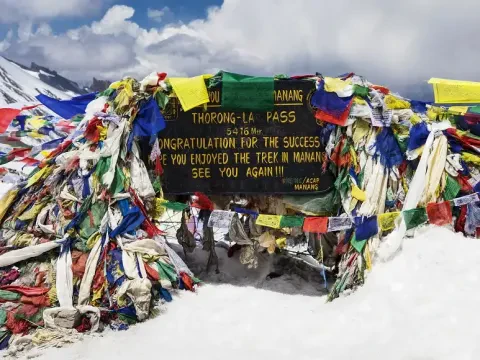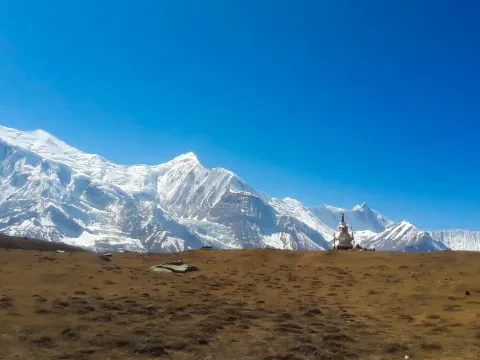
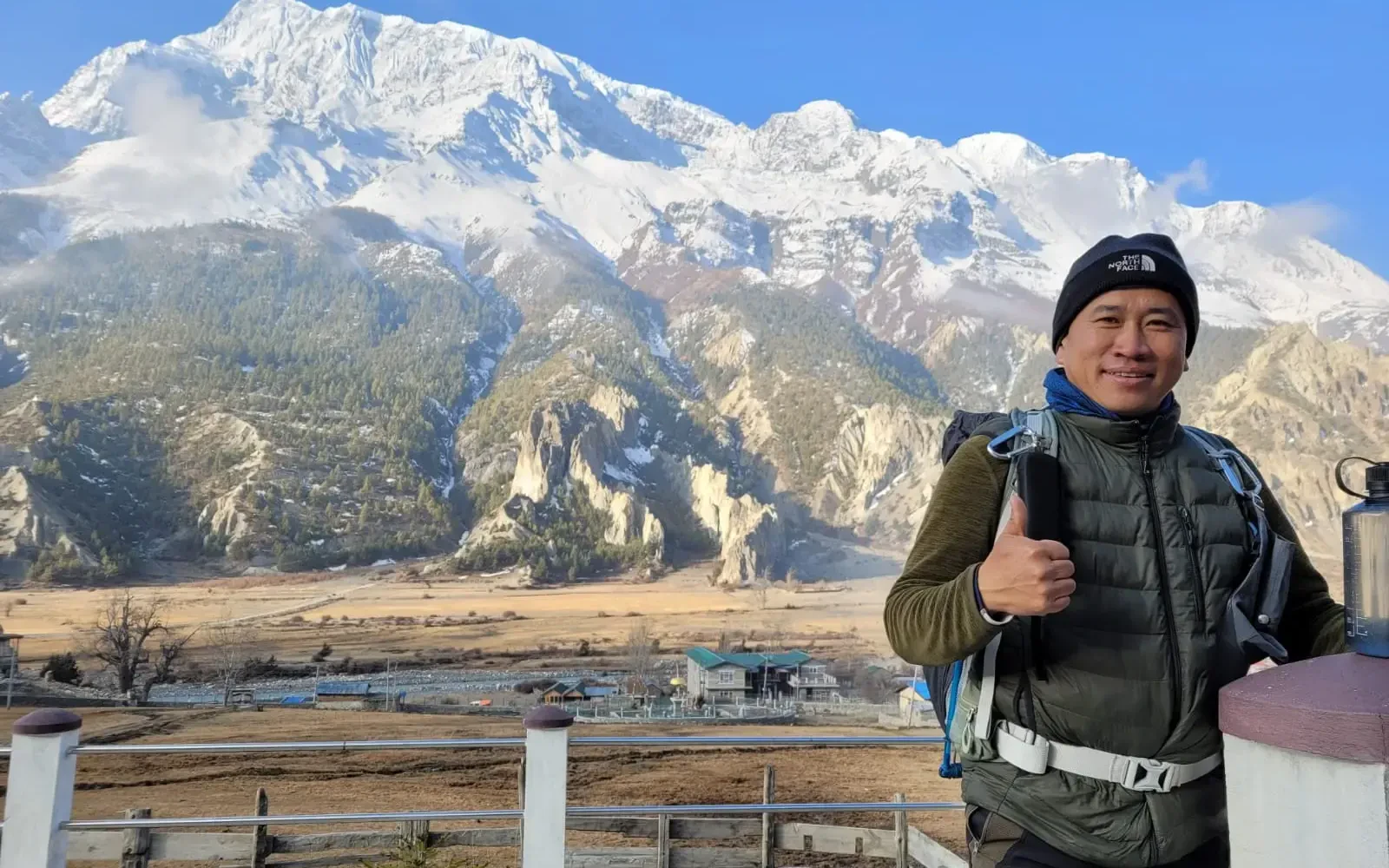
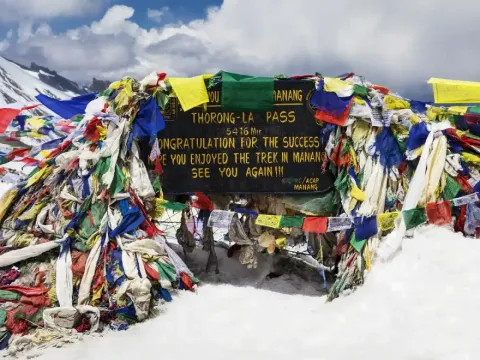
Let’s talk about the Annapurna Circuit Trek—honestly, it’s hard to beat. This route wraps around the massive Annapurna range in Nepal, pulling you through a wild mix of landscapes and local cultures. You kick things off down in green, humid valleys, places like Besisahar(760m) where you’re just above sea level. But don’t get too comfortable, because soon you’re climbing, and before you know it, you’re crossing Thorong La Pass at a staggering 5,416 meters. The scenery keeps you hooked the entire way. You’ll look up and see giants like Annapurna I(8091m) and Dhaulagiri(8167m) towering overhead, almost unreal in their size and beauty.
Further, and it’s not just the mountains. The Annapurna trek weaves in real adventure with a heavy dose of local life. You’ll wander through Gurung and Thakali villages—people here know how to make you feel at home. Buddhist monasteries pop up when you least expect them, bringing a sense of peace to the trail. Sure, new roads have trimmed the trek in places, but that just means more people get a shot at the experience. What really pulls trekkers in is the blend of jaw-dropping nature and genuine cultural moments. If you’re chasing something unforgettable in the Himalayas, this is iWhat makes the Annapurna Circuit special? It’s all about the variety—and the challenge. The trail shifts from steamy subtropical forests to dry, windswept plateaus.
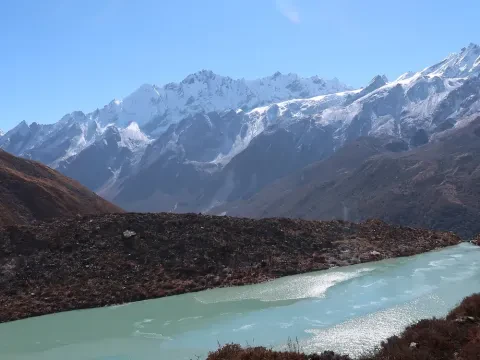
Rivers like the Marsyangdi rage way below as you cross swaying suspension bridges. Up near Manang(3540m), glaciers and rocky moraines start to crowd the path. The climb to Thorong La Pass (5416m) tests your lungs and your willpower, but the payoff is huge: sweeping views of Manaslu(8163m) and a sense that you’ve really earned it. Every day on the trail pushes you—physically and mentally. But you get more than just tired legs. You share laughs and stories with locals at tea houses, pick up bits of wisdom, and maybe see things a little differently by the end.
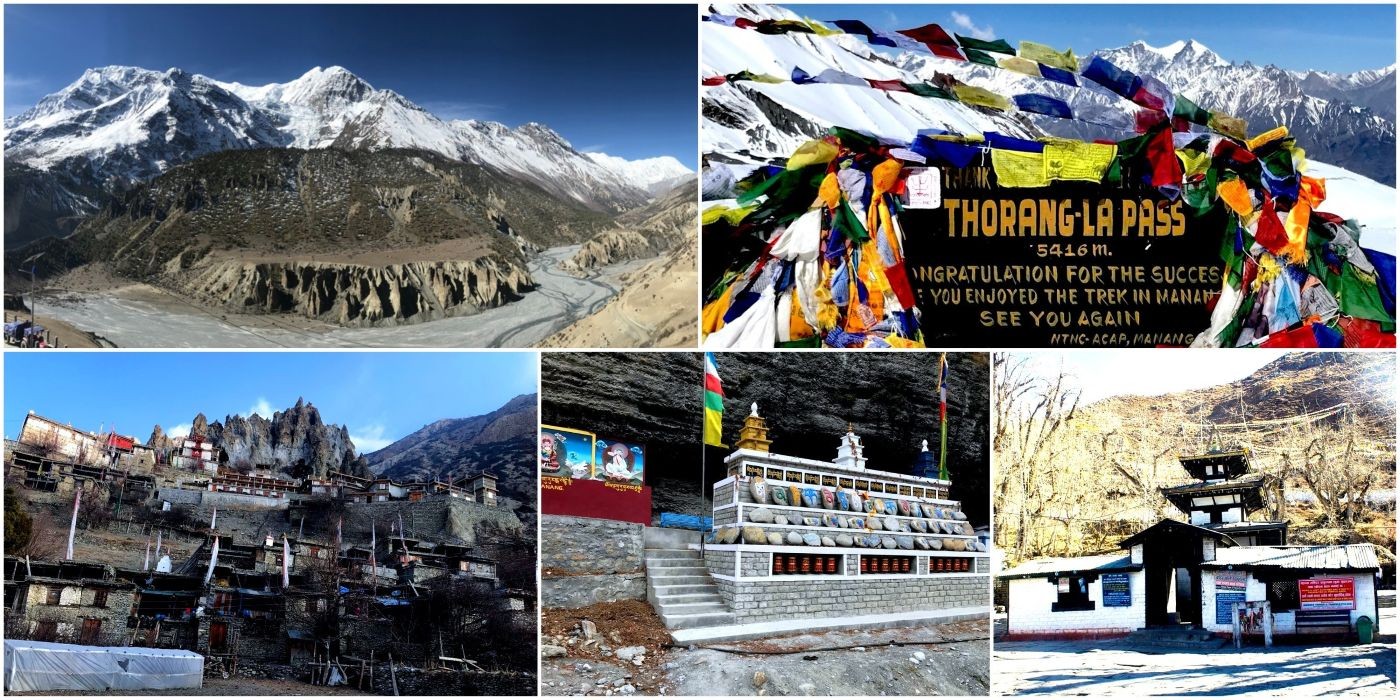
Likewise, peak season brings crowds, sure, but if you’re craving a bit of quiet, you can always duck off onto a side trail and find your own slice of solitude. The Annapurna Circuit has something for first-timers and seasoned trekkers alike. It’s for anyone who wants the real deal—epic landscapes, tough days, and the kind of connections that stick with you long after you’re home. This trek isn’t just a trip; it’s a story you’ll tell for years.
Key Reasons Why the Annapurna Circuit Ranks as a Top Global Trek:
| Top Uniqueness Factors of the Annapurna Circuit Trek | Description | Elevation Impact |
|---|---|---|
| Encircling the Massif | The loop around Annapurna range offers 360-degree perspectives unlike linear treks | Peaks from 7000m+ like Annapurna III (7555m) visible throughout. |
| Landscape Variety | Transitions from subtropical to subalpine zones in days. | Starts at 760m, peaks at 5416m, descends to 1100m at Jagat. |
| Cultural Blend | Mix of Hindu and Buddhist sites along the path | Temples at 3800m in Muktinath contrast low-valley shrines. |
Appeal Factors for Different Trekkers:
| Global Rankings and Awards for Annapurna Circuit | Source/Reference | Why Highlighted |
|---|---|---|
| Top 10 World Treks | Lonely Planet | Varied terrain and cultural depth. |
| Best Himalayan Hike | National Geographic | Stunning views of 8000m peaks like Annapurna I (8091m). |
| Iconic Adventure | Outside Magazine | Balance of challenge and accessibility up to 5416m. |
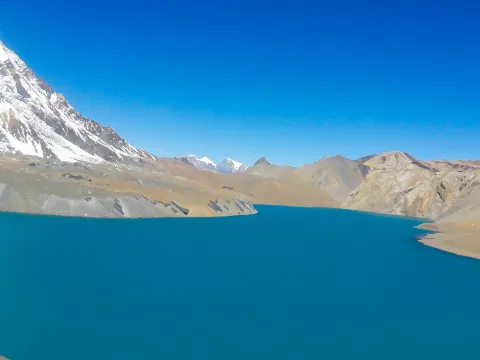
Actually, the Annapurna Circuit Trek is one of Nepal’s legendary hikes, carving out a massive loop through the Himalayas. Depending on where you start and any detours you take, you’ll cover anywhere from 130 to 230 kilometers. Most trekkers finish in about 12 to 22 days. Some set out from Besisahar at 760 meters, while others jump in higher up at places like Dharapani (1400m). The trail twists through deep river valleys and eventually up and over mountain passes. The big moment? Crossing Thorong La Pass at 5416 meters—hands down, one of the trek’s top highlights.
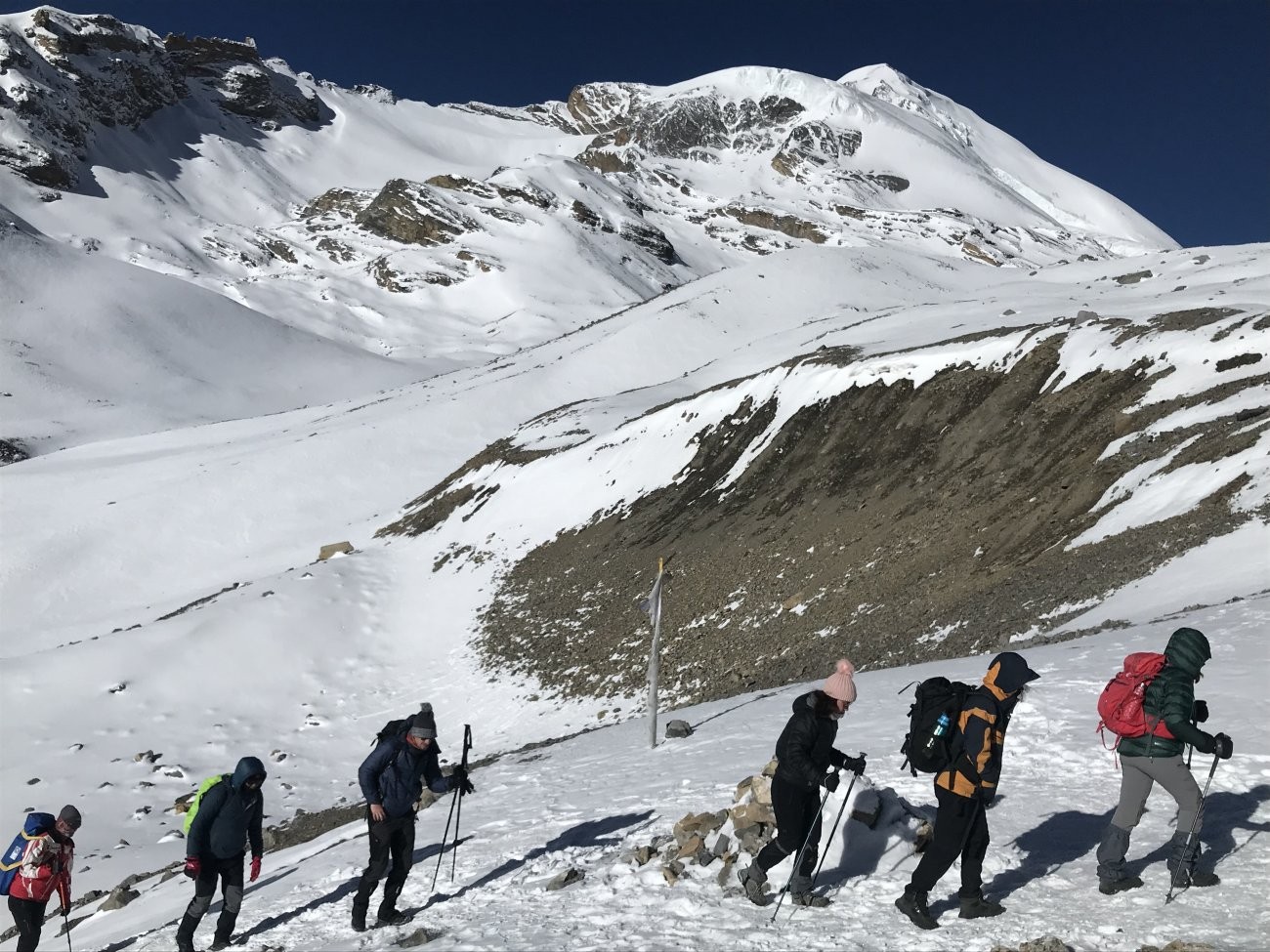
Likewise, you’ll see everything along the way: dense forests, sweeping plateaus, and those wild, barren highlands. The route climbs slowly, so you get time to adjust to the altitude. Most days, you’ll walk five to seven hours, but road access has made some sections shorter or easier to skip. That’s actually a plus—it lets you tweak the trek to fit your time and energy.
Moreover, the journey is flexible. If you want to go big, the full loop stretches to 230 kilometers and takes about 18 to 21 days. If you’re pressed for time, you can cut it down to 130-160 kilometers and finish in 12 to 14 days. Either way, Thorong La Pass is the high point, both literally and figuratively. The scenery shifts as you climb, starting with subtropical valleys and ending in rugged alpine country above 3000 meters. You’ll pass through mountain villages, with spots like Manang (3540m) offering a place to rest or acclimatize, and Muktinath (3800m) giving a spiritual twist to the adventure.
Sure, the weather can change things up, but with good planning, you’ll stay safe. This trek works for all kinds of hikers, no matter your pace. What you get in return? Jaw-dropping views, a real taste of Nepali culture, and a sense that you’ve taken on something world-class. The numbers only tell part of the story—the experience is unforgettable.
Core Stats of the Annapurna Circuit Trek:
| Distance and Duration Variants | Approximate Distance (km) | Typical Days | Key Notes |
|---|---|---|
| Full Classic Circuit | 210-230 | 18-21 | Includes all sections, max landscapes. |
| Shortened Version (Dharapani Start) | 160-190 | 12-15 | Avoids lower road areas, focuses on highs. |
| With Side Trips (e.g., Tilicho Lake) | 190-220 | 15-18 | Adds extra 20-30 km, elevations up to 4919m. |
Major Highlights Along the Route:
| Sample Day-by-Day Distance Overview (Standard 15-Day Itinerary) | Day | Route | Distance (km) | Elevation (m) | Duration (hours) |
|---|---|---|
| Drive to Start | 1 - Kathmandu to Jagat | 213 (drive) | 1100 | 8-9 |
| Trek Begins | 2 - Jagat to Dharapani | 15 - 1400 - 5-6 |
| Mid-Trek | 5 - Pisang to Manang | 16 - 3540 - 6-7 |
| High Pass | 10 - High Camp to Muktinath via Thorong La | 14 - 5416 (pass), 3800 (end) - 7-8 |
| Descent | 14 - Tatopani to Ghorepani | 15 - 2870 - 6-7 |
If you’re thinking about the Annapurna Circuit Trek, timing is everything. Most trekkers head out in autumn or spring—and for good reason. Autumn hands you those big blue skies and steady weather. It’s perfect for clear mountain views and feels just right underfoot. Spring, on the other hand, isn’t just about comfortable temperatures. Walk through the forests and you’ll see rhododendrons bursting into bloom, adding color everywhere.
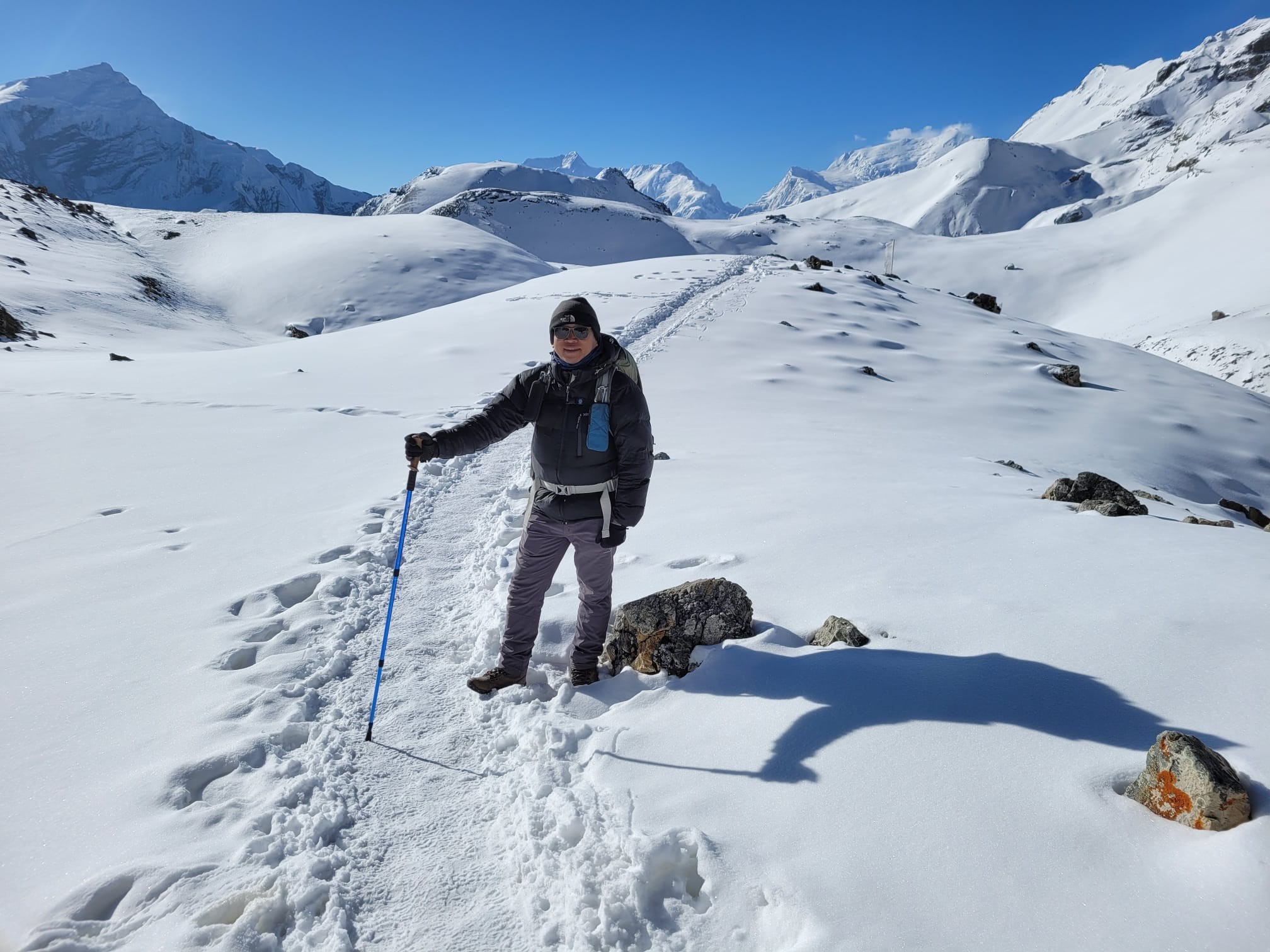
Now, let’s talk about monsoon and winter. Honestly, monsoon is rough. Heavy rain turns the trails into mudslides, rivers flood, and landslides are a real threat. Visibility? Pretty much gone in the thick haze. Winter isn’t much friendlier. Snow and ice blanket high passes like Thorong La (5,416m), and temperatures drop fast. Only go in winter if you’re experienced and loaded with the right gear.
If you want those postcard views of Annapurna I (8,091m), autumn (September to November) is your window. Spring (March to May) brings its own magic with wildflowers everywhere. That’s why most people stick to these two seasons—they’re safer, easier, and honestly, the scenery is unbeatable.
Don’t forget: the weather shifts as you climb higher. Down in Besisahar (760m), it’s still pretty warm. Get closer to Thorong La (5416m), and you’ll need every layer you have. So, match your plans to your fitness and what you want from the trek. Skip the monsoon altogether, and treat winter with respect.
Bottom line: autumn and spring are your best bet. They make the trek comfortable, safe, and unforgettable. That’s why the crowds show up—nobody wants to miss the Himalayas at their best.
[trip: annapurna-circuit-trek-12-days]
Seasonal Overview for Annapurna Circuit Trek:
| Seasons | Best Months | Temperature Range (Low to High Elevations) | Pros | Cons | Trail Conditions |
|---|---|---|
| Autumn | Oct-Nov | 15-25°C (low) to -5 to 5°C (high) | Clear views, stable weather | Crowded trails | Dry, safe. |
| Spring | Mar-Apr | 10-25°C (low) to 0-15°C (high) | Flowers, wildlife | Occasional haze in May | Blooming, pleasant. |
| Monsoon | Jun-Aug | 20-30°C (low) to 5-15°C (high) | Lush greenery | Landslides, leeches | Wet, dangerous. |
| Winter | Dec-Feb | 5-15°C (low) to -20 to -5°C (high) | Fewer crowds | Snow, ice, cold | Icy, risky. |
Weather Tips by Elevation:
Warnings and Recommendations:
Actually, Annapurna Circuit Trek isn’t a walk in the park—it’s tough, no doubt about it. If you’re going to tackle those long days, you need to show up fit. The trail throws rocky paths, steep climbs, and some pretty wild descents your way. The real test is Thorong La Pass, sitting at 5,416 meters. Once you get above 3,000 meters, altitude sickness starts to creep in, and it’s a real concern. Most days, expect to hike for five to seven hours. It’s demanding, but you won’t need any fancy climbing skills—just determination and a solid plan.
Honestly, anyone ready to train for it can do this trek, even if you’re not a seasoned hiker. I’ve seen beginners make it to the end because they put in the work before arriving. If you stick to your training, focus on cardio and strength, and don’t slack on hydration, you’re already ahead. The best trekkers take acclimatization seriously. Spend time in places like Manang (3,540m); it gives your body a chance to get used to the thin air and keeps you out of trouble with altitude sickness. The trek tests your endurance, especially on the climb to Thorong La Pass, but with the right mindset and preparation, you turn every challenge into a win. If you plan well and give yourself time to adjust, the Annapurna Circuit rewards you big time.
Difficulty Level Breakdown:
| Difficulty Factors | Description | Elevation Impact | Preparation Needed. |
|---|---|---|
| Duration & Distance | 12-22 days, 130-230 km | Gradual rise to 5416m | Build endurance. |
| Terrain | Rugged paths, bridges, ascents/descents | Steep near pass | Ankle support, poles. |
| Altitude | Highest at Thorong La (5416m) | AMS risk high | Acclimatize slowly. |
| Daily Effort | 5-7 hours walking | Varies by day | Cardio training. |
Physical Preparation Tips:
Altitude Sickness Prevention:
Here’s the classic Annapurna Circuit Trek — think 15 to 18 days that really give you the full experience. Most folks kick off in Besisahar (760m) or sometimes Dharapani (1860m). You’ll start low, walking through fields and villages, and slowly climb into the mountains. The big moment is Thorong La Pass at 5,416 meters. It’s not easy, but standing up there with Annapurna I (8,091m) and Dhaulagiri (8,167m) on the horizon? Nothing beats it.
Along the way, you’ll need a couple of acclimatization days—don’t skip those. They’re what keep you safe. Every day on the trail builds your stamina, and even though there are some new roads that cut into the first sections, the full circuit is still worth every step. If you want to soak up the culture, see the landscape change, and push yourself a little, this route delivers.
Actually, the usual plan goes like this: you drive out to a trailhead—Besisahar is standard—then make your way up to places like Manang (3,540m). After that, you take on the Thorong La Pass. Once you’re over it, you head down to Muktinath (3,800m), then Jomsom (2,720m). Got extra time? There’s a side trip to Tilicho Lake (4,919m), which is absolutely worth it. You’ll finish up in Pokhara, either by road or a quick flight.
Rest days matter. Don’t try to rush. This trek gives you the best views, the real Himalayan feel, and a sense of achievement at the end. You’ll remember these mountains for a long time.
[trip: annapurna-circuit-trek-12-days]
Classic 15-18 Day Itinerary Overview (Approximate, with Acclimatization):
| Day-by-Day Classic Itinerary (16-Day Standard) | Day | Route | Distance (km) | Elevation Gain/Loss | Max Elevation (m) | Highlights |
|---|---|---|
| Drive & Start | 1-2 | Kathmandu to Dharapani/Chame | Drive(240 km) | - | 2670 | Scenic drive along Marsyangdi |
| Lower Ascent | 3 | Chame to Pisang | 15 | +630 | 3300 | Forests, Annapurna views |
| Mid-Trek | 4-5 | Pisang to Manang | 16 | +240 | 3540 | Upper route option, monasteries |
| Acclimatization | 6 | Rest/Manang exploration | - | - | 3540 | Ice Lake hike optional. |
| Approach Pass | 7-8 | Manang to High Camp | 20 | +1385 | 4925 | Gradual climb, Thorong views. |
| Pass Crossing | 9 | High Camp to Muktinath via Thorong La | 14 | -1125 | 5416 | Epic pass, Dhaulagiri (8167m) panorama. |
| Descent | 10-11 | Muktinath to Jomsom | 20 | -1080 | 2720 | Kali Gandaki gorge. |
| Lower Return | 12-14 | Jomsom to Ghorepani/Poon Hill | 35 | Varies | 2870 | Hot springs Tatopani (1200m). |
| End | 15-16 | Ghorepani to Pokhara | Trek/Drive | - | 827 | Poon Hill sunrise, finish. |
Key Notes for Classic Route:
Short on time? No problem—these shorter Annapurna Circuit routes are built for busy trekkers. Instead of starting way down low, you hop in a jeep and head straight to trailheads like Dharapani (1860m) or Chame (2670m). From there, it’s all about the big highlights. You climb fast to Manang (3540m), cross the legendary Thorong La Pass (5416m), and drop into Muktinath (3800m) before winding down at Jomsom (2720m), where most people catch a flight out.
Sure, you’ll skip some of the lower villages and their local culture—but you don’t miss the heart of the trek. The mountains, the passes, that sense of adventure? It’s all here, just packed into 10 to 13 days. The jeep rides save serious time and energy, making these routes perfect if you’ve only got a couple weeks to spare.
So, if you want the essence of the Annapurna Circuit without the extra days on the trail, this is the way to go. You get the scenery, the challenge, and the thrill—without burning through your whole travel schedule. It’s a smart, practical spin on a classic trek.
Popular Shortened Itinerary Variants (10-13 Days):
| Shortened Itinerary Example (11 Days) Day | Route | Transport/Trek | Elevation (m) | Key Features |
|---|---|---|
| Start Fast - 1-2 | Kathmandu to Dharapani/Chame | Jeep/Drive | 1860-2670 | Skip lower trail. |
| Ascent - 3 | Chame to Upper Pisang | Trek | 3300 | Scenic upper path. |
| Mid - 4 | Pisang to Manang | Trek | 3540 | Views of Annapurna II (7937m). |
| Acclimatize - 5 | Rest in Manang - | 3540 | Exploration, adaptation. |
| Approach - 6 | Manang to High Camp | Trek | 4925 | Steady climb. |
| Pass Day - 7 | Thorong La Pass to Muktinath | Trek | 5416 to 3800 | Highlight views. |
| Descent - 8 | Muktinath to Kagbeni/Jomsom | Trek | 2720 | Dry valley, wind. |
| Exit - 9-11 | Jomsom to Pokhara | Flight/Jeep | 827 | Quick return, optional Poon Hill. |
Advantages of Shortened Variants:
Considerations:
If you’re heading out on the Annapurna Circuit, you need a permit—no way around it. The big one is the Annapurna Conservation Area Permit (ACAP). This isn’t just red tape; it helps protect the region, so don’t skip it. Now, about the TIMS card—lots of people talk about it, but things have changed. Most reports (and trekkers) say you don’t need a TIMS for the Annapurna routes anymore. Agencies take care of the forms, and when you hit the checkpoints, they just want to see your ACAP. That said, rules shift sometimes, so double-check before you go.
Bottom line: focus on the ACAP. It’s your ticket to the trail, all the way up to Thorong La Pass at 5,416 meters. This covers you from the low valley towns like Besisahar (at 760 meters) right up to the high ground near Annapurna I (8,091 meters). You can pick up the permit in Kathmandu or Pokhara, and some places even let you do it online now. Solo trekkers go through the same process. Just make sure you budget for the fee.
Get your paperwork in order and you’re set. The ACAP keeps you legal and safe—and honestly, it’s a small thing to do for a shot at those epic Himalayan views.
Required Permits for Annapurna Circuit Trek (2026 Updates):
| Permit Type Status in 2026 | Cost for Foreign Nationals (USD approx.) | Cost for SAARC Nationals | Where to Obtain | Notes |
|---|---|---|
| ACAP - Mandatory | $22–30 (NPR 3,000) | $8–10 (NPR 1,000) | NTB office Kathmandu/Pokhara or online/checkpoints | Valid for entire trek; single entry. |
| TIMS Card - Not required / Optional | $15–20 (NPR 2,000) if needed | $7–10 (NPR 1,000) | NTB or agencies | Discontinued in practice for Annapurna; confirm on arrival. |
| Total Estimated - | $30–50 (if both) or $30 (ACAP only) | $10–20 | - | Budget low; agencies include in packages. |
Permit Application Tips:
Actually, the Annapurna Circuit Trek works for almost any budget. If you’re trekking on your own, you can keep costs low. Go for a guided package, and you’ll pay more, but you get comfort and peace of mind. Most people spend somewhere between $700 and $2,500 per person—depends on how you travel and how long you’re out there. Go for simple teahouse lodging, and you’ll save a bunch. Just remember, meals add up every day. Hiring guides and porters bumps up your total, but honestly, carrying less is a relief. Permits are still pretty cheap, so that’s a win. The main thing is to plan for what you want and what you can afford. No matter your budget, you get those jaw-dropping views of Dhaulagiri (8167m) and the rest.
Here, this breakdown gives you a real sense of what to expect. Budget trekkers usually go self-guided, starting from Besisahar (760m) and ending in Jomsom (2,720m). Standard packages cover the basics, while luxury deals throw in perks like private cars. Prices climb as you head up toward Manang (3,540m), and a little inflation or a busy season can nudge costs higher. It’s smart to leave room in your budget for surprises. But here’s the thing: this trek always feels worth it. You get the adventure and the scenery, and you don’t have to break the bank.
Cost Breakdown by Category (Per Person, 15-18 Days):
| Trek Style | Total Estimated Cost (USD) | What's Included | Best For | Duration Notes |
|---|---|---|
| Budget/Independent | $700–1,000 | Permits, basic teahouses, meals, public transport, no guide/porter | Experienced solo trekkers | 15-18 days self-paced. |
| Standard Guided | $1,200–1,800 | Permits, guide, porter option, teahouses, meals, private transport | First-timers seeking support | Includes acclimatization. |
| Full-Service/Premium | $2,000–2,500 | All above + better lodging, flights, insurance, extras | Comfort-focused groups | Shorter variants possible. |
Daily Expense Estimates:
Let’s get real—trekking the Annapurna Circuit isn’t a one-price-fits-all deal. Independent travelers can trek on a budget if they’re willing to plan everything themselves. If you want more comfort and guidance, guided tours step things up. And if you’re after top-tier comfort, luxury options pile on the extras. The higher you climb—especially near Thorong La Pass at 5,416 meters—the more you’ll pay each day.
If you go solo, expect to spend anywhere from $600 to $1,200 in total. Guided treks usually land between $1,000 and $1,800. Luxury trips? They start at $2,000 and go up from there. And that’s just the basics. You’ll run into hidden costs—tips, WiFi, maybe some last-minute gear rentals. But if you plan ahead, you can dodge most nasty surprises.
Here, choosing to trek to Annapurna Circuit independently means you’ll do more legwork, but you’ll also have more freedom and save cash. Guided packages take the pressure off and include things like local support and logistics. On a tight budget, you’ll spend about $30 to $50 per day on food and a bed. Luxury setups? Think $100 a day or more. Remember, you’ll also need to get yourself to Besisahar, where the trek starts—so add in your transport costs, too.
It’s easy to overlook little expenses, but they add up fast. So keep an eye on your budget. Whatever route you pick, the Annapurna Circuit delivers. You get jaw-dropping views of Annapurna I and the kind of adventure that sticks with you. In the end, you decide how much you want to spend, but the Himalayas never disappoint.
Cost Ranges by Trek Style (2026 Estimates)
| Trek Style | Total Cost (USD, 14-18 Days) | Per-Day Average (USD) | Key Inclusions. |
|---|---|---|
| Budget/Independent | 600-1200 | 30-50 | Permits, basic teahouses, self-meals. |
| Guided Standard | 1000-1800 | 50-80 | Guide/porter, meals, transport. |
| Luxury | 2000-4000+ | 100-200 | Premium lodges, flights, extras. |
Detailed Per-Day Expenses:
| Hidden Costs Breakdown | Description | Estimated Cost (USD) | When It Applies |
|---|---|---|
| Tips | For guides/porters | 50-100 total | Guided treks. |
| Extras (WiFi, Shower) | Paid facilities | 2-5 each | High elevations like ThorongPhedi (4450m). |
| Insurance | Mandatory coverage | 100-200 | All styles. |
| Gear Rentals | If needed | 50-150 | Independent. |
Independent vs Guided Comparison:
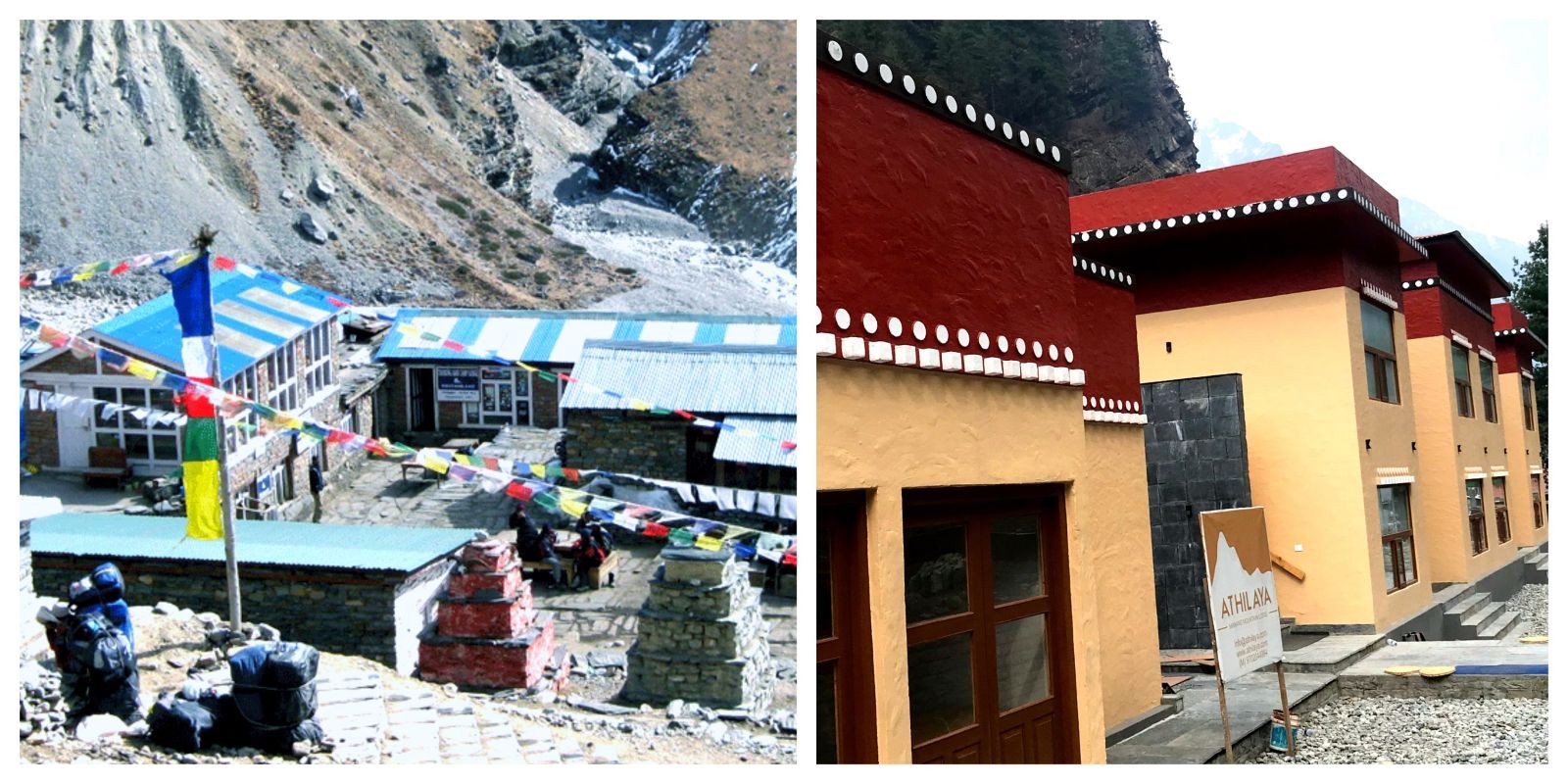
On the Annapurna Circuit, teahouses are everywhere. If you’re trekking here, this is where you’ll sleep and eat, plain and simple. The rooms? They’re basic—think twin beds, some blankets, and not much else. Bathrooms are shared, and if you want a hot shower, you’ll pay a bit extra. Some places have WiFi, but don’t count on it, especially as you climb higher toward Pisang (3300m) and beyond. Prices climb with the altitude too.
Still, these setups are usually clean and straightforward. Menus lean heavily vegetarian, and while you’ll find a good selection in the lower villages, don’t expect much variety once you’re up high. The higher you go, the simpler things get. But honestly, that’s part of the experience. Teahouses aren’t just places to crash—they’re where trekkers gather, swap stories, and recharge for another day on the trail. You’ll feel it, especially with views of giants like Dhaulagiri(8167m) looming nearby.
So what’s on your plate? You’ll eat what fuels the locals: hearty, filling meals built to power you through long days. Dal bhat is the go-to—it’s everywhere, and it works. Most dishes are vegetarian, but you can find vegan options if you ask. Teahouses usually serve all three meals, and you’re looking at $15-30 a day for food and lodging. If you want something a bit nicer, villages like Chame(2670m) have better facilities.
Bottom line: expect rustic charm, not luxury. But that’s the appeal. Staying in teahouses pulls you right into local culture and makes the journey safer and more memorable—especially as you push toward high passes like Thorong La(5416m).
Teahouse Facilities Overview:
| Accommodation Costs (2026, Per Night USD) | Low Elevation (e.g., Besisahar 760m) | Mid Elevation (e.g., Manang 3540m) | High Elevation (e.g., Muktinath 3800m) |
|---|---|---|
| Basic Room | 3-5 | 5-8 | 7-10 |
| With Extras (Bath/WiFi) | 5-10 | 10-15 | 15-20 |
Food Options and Costs:
| Meal Types | Description | Cost (USD) | Vegetarian Options |
|---|---|---|
| Breakfast | Porridge, eggs, bread | 3-8 | Yes, omit eggs |
| Lunch/Dinner | Rice, soups, momos | 4-10 | Abundant, e.g., veg curry |
| Snacks | Fruits, bars | 2-5 | Mostly available |
Getting your pack right makes the Annapurna Circuit go smoothly. When temperatures swing wildly, layering steps in. Down low - Besisahar sits at 760 meters - light clothing manages warmth well. Up high, though, things shift fast; Thorong La Pass hits 5416 meters and demands serious insulation.
Actually, a good sleeping bag keeps you warm when the sun goes down. If you climb past 3000 meters, medicine helps stop altitude issues. Comfort on the trail often comes down to what you carry each day. Sturdy boots matter, also trekking poles make a difference. Even so, lighter loads mean less stress on your body. Finally, better decisions mean safer trips. Because of them, hikers take in the full sight of Annapurna I (8091m).
Here, expect these essentials when prepping for scenarios. Layers beat single heavy garments - flexibility matters most out there. A sleeping bag holding up at -10°C, maybe even -15°C, keeps cold shocks away. When air thins, something like Diamox might ease the climb. Weather gear keeps you safe when storms hit. If extra equipment is necessary, find it waiting in Kathmandu shops. Choosing fewer but better tools works out well in rough terrain. Those who plan ahead feel stronger on steep paths. Simple supplies make tough climbs easier to handle. Each item carried plays a role across changing ground toward towering ridges. Confidence grows where preparation meets effort.
Essential Clothing Layers:
| Packing Category | Must-Have Items | Why Essential, Notes for Elevations |
|---|---|---|
| Footwear | Trekking boots (waterproof), camp sandals, thick socks Grip on trails, comfort | Sturdy for rocky paths near, Thorong La (5416m). |
| Sleeping Gear | Sleeping bag (-10°C to -15°C rated), liner | Warmth in teahouses Critical above 3000m; rent in Kathmandu. |
| Trekking Gear | Backpack (40-60L), trekking poles, rain cover | Load carrying, stability Poles help on steep descents from pass. |
| Health/Altitude | Diamox (acetazolamide), first aid kit, sunscreen, lip balm | Prevent AMS, protect skin Start meds early; hydration key at 5416m. |
Must-Have Accessories and Essentials:
From Kathmandu, getting to the start of the Annapurna Circuit happens quickly. Travelers might choose a bus, a jeep, or even split a ride with others. For low cost trips, public buses head straight to Besisahar at 760 meters high. If speed matters more, private jeeps move quicker while feeling easier on the body. Flying into Pokhara gives more room to adjust plans. Through green valleys, roads twist slowly upward. Still, delays pop up when vehicles crawl or rain muddies paths. Pick what fits your wallet and schedule best. High above, those paths climb wild slopes under Thorong La Pass (5416m).
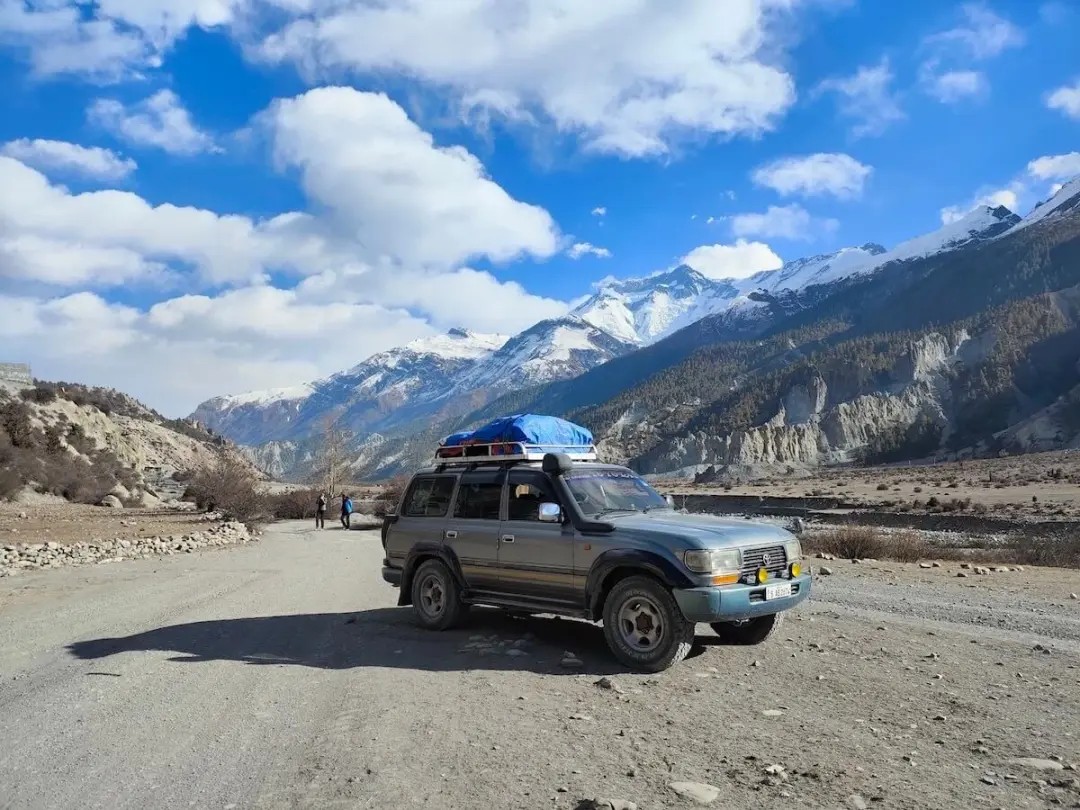
Likewise, moving around means different ways to travel. From Kathmandu to Bessihsahar, the road stretches between 175 and 220 kilometers. Time spent on the move? Roughly six to ten hours - depends what you're driving. When paths get bumpy, jeeps keep going where others might struggle. After that, ride a jeep toward Dharapani - sitting at 1860 meters - for quicker trail access. Some travelers pick Pokhara instead as their starting point. Because of heavy demand in busy months, secure your rides early. A solid vehicle plan makes the journey begin without hiccups. This route opens up sweeping sights of the Annapurna range along the way.
Transportation Options from Kathmandu to Starting Points:
| Route & Vehicle | Distance/Time | Approximate Cost (USD 2026) Pros Cons |
|---|---|---|
| Kathmandu to Besisahar (Public Bus) | 175-185 km / 7-8 hrs 10-15 | Budget-friendly Crowded, slower, stops |
| Kathmandu to Besisahar (Private Jeep) | 178-220 km / 6-8 hrs 150-180 (full jeep) | Faster, door-to-door Higher cost |
| Kathmandu to Dharapani (Private Jeep) | 210-220 km / 8-10 hrs 250-350 | Skips lower trek sections Bumpy off-road parts |
| Kathmandu to Pokhara (Flight/Bus) then to Besisahar | Flight 30 min / Bus 6-7 hrs Flight 50-100; Bus 10-20 | Scenic flight option Extra transfer needed |
Additional Tips for Getting There:
Meanwhile, safety comes first on the Annapurna Circuit. Once you hit 3,000 meters, you’re in altitude sickness territory, especially as you head up toward Thorong La Pass at 5,416 meters. Acute Mountain Sickness isn’t just uncomfortable—it can get serious fast. The best way to stay healthy? Take your time going up. Let your body adjust. Don’t rush.
Here, travel insurance isn’t just some box to check. If you need rescue or evacuation, you’ll be glad you have it. The trail’s not all peaceful paths, either—there are road sections, and vehicles can be a real hazard, especially in the lower valleys around Besisahar (760 meters). Keep your head up, watch for traffic, and don’t tune out.
Further, trekking responsibly matters, too. The Annapurna region is fragile. Simple choices—like packing out your trash, using refillable bottles, and respecting local trails—help keep it beautiful for the next group. Hydrate. Rest. Listen to your body. These aren’t just nice ideas; they keep you safe and let you enjoy the trek.
Plan well, move smart, and take care of the environment. That’s how you get the most out of the Annapurnas, both for yourself and for everyone who comes after you.
Altitude Sickness (AMS) Prevention Tips:
| Safety Aspect | Key Recommendations | Relevant Elevations | Why Important |
|---|---|---|
| AMS Management | Slow pace, rest days, symptom monitoring | Above 3000m (e.g., Yak Kharka 4050m) | Prevents life-threatening HACE/HAPE |
| Insurance | Comprehensive coverage with high-altitude evacuation | Entire trek Helicopters from Jomsom (2720m) | Costly without policy |
| Road Sections | Stay alert, walk on safe side | Lower areas (Besisahar 760m to Chame 2670m) Vehicles share paths; dust and traffic risks |
| Eco Practices | No litter, use reusable items, support locals | All sections Protects Annapurna Conservation Area biodiversity |
Responsible Trekking Guidelines:
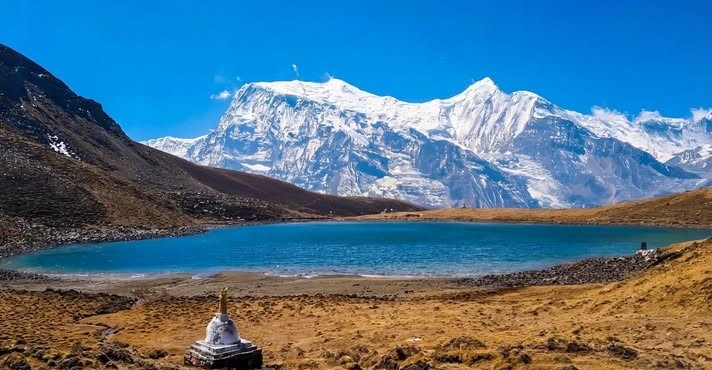
Actually, side trips really make the Annapurna Circuit something special. You can take a detour to Tilicho Lake (4919m) and catch those unreal turquoise waters. Poon Hill (3210m) is famous for its sunrise views—watching the Annapurna range light up is hard to forget. If you’re feeling worn out, the hot springs at Tatopani (1200m) are perfect for relaxing sore muscles.
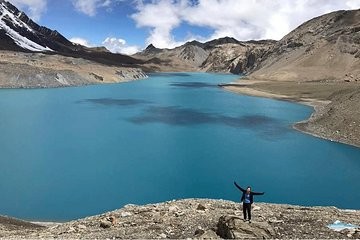
These extras aren’t just about scenery, though. They show off how varied and beautiful the region is—glacial lakes, sweeping hills, little villages tucked into the mountains. The catch? You need a bit more time and energy to fit them in. But they’re worth it. You get up close to peaks like Gangapurna (7455m) and find moments you’ll remember long after the trek’s over.
Here, each side trip fits into the circuit in its own way. Tilicho Lake is a tough side trail from Manang (3540m), while Poon Hill slots nicely into the descent near Ghorepani (2870m). The hot springs are a welcome treat after those long days on your feet. There are plenty of other little stops too—some with cultural flavor, others with killer views.
More importantly, pick the detours that match your stamina and interests. These highlights turn the Annapurna Circuit into something more than just a trek. They make it your own Himalayan adventure.
Popular Side Trips and Highlights:
| Side Trip | Duration Added Elevation | Difficulty Main Attraction |
|---|---|---|
| Tilicho Lake | 2-3 days 4919m | Challenging Turquoise high-altitude lake, Annapurna views |
| Poon Hill Sunrise | 1 day 3210m | Easy-Moderate 360° panorama of Dhaulagiri (8167m), Annapurna I (8091m) |
| Tatopani Hot Springs | Half day 1200m | Easy Relaxing natural pools after descent |
| Ice Lake (from Manang) | 1-2 days 4600m | Moderate-Challenging Stunning blue lake, mountain reflections |
| Upper Mustang (optional extension) | 3+ days Varies | Moderate Ancient Tibetan culture, restricted access |
Why Include These Highlights:
So, is the Annapurna Circuit Trek for you? Let’s be real—if you’re looking for a journey that blends jaw-dropping mountain views with the kind of cultural encounters that stick with you, this trek delivers. You’ll loop around the Annapurna massif, push over the Thorong La Pass (it’s up at 5,416 meters, so yeah, it’s a climb), and get up close with giants like Annapurna I(8091m) and Dhaulagiri(8167m). The best part? The route’s flexible enough for different fitness levels, so you don’t have to be a hardcore mountaineer to give it a shot. Still, the altitude and those long hiking days aren’t exactly a walk in the park. You need to prep.
If you’re after more than just a checklist adventure—if you want something that changes you—this trek hits the mark. It’s perfect for people who’d rather trade some comfort for the real experience. Tight on time? There are shorter routes. Want less hassle? Book with an agency and let them handle the logistics. The most important thing: be honest about what you want and whether you’re ready. This trek transforms you, plain and simple. It’s for anyone who dreams about big landscapes and stories worth telling long after you’re back home. If that’s you, go for it.
Who the Annapurna Circuit Trek Is Best For:
| Yes – Ideal | If… No – Consider Alternatives | If… Key Elevations Involved |
|---|---|---|
| Fitness & Endurance | You train regularly and handle 10–20 km days | You have limited cardio fitness Up to 5416m at Thorong La Pass. |
| Altitude Tolerance | You can acclimatize slowly with rest days | You have history of severe AMS Manang (3540m), High Camp (4925m). |
| Time Availability | You have 12–22 days available | You have only 7–10 days Full circuit: Besisahar (760m) to Pokhara. |
| Budget Range | You accept $700–$2500 depending on style | You need ultra-luxury accommodations Varies by section. |
| Adventure Style | You love raw, varied landscapes and culture | You prefer easy, short day hikes Diverse from 760m to 5416m. |
Next Steps to Book and Prepare:
1. What is Annapurna Circuit Trek?
Annapurna Circuit Trek is a journey in Nepal. It goes around Annapurna mountains through different landscapes. You start from valleys and go up to Thorong La Pass, which is 5,416m high. From there you can see Annapurna I and Dhaulagiri mountains. You also get to experience the culture of Gurung and Tibetan villages. Many people have done this trek. Say it changes their lives. It is a mix of adventure, nature and local hospitality.
2. How long is Annapurna Circuit Trek?
The classic Annapurna Circuit Trek takes 15 to 18 days. It is 170 to 230 km long depending on which route you take. If you want to do it in a time you can start higher up and do it in 10 to 13 days by using a jeep. We think it is best to take days to get used to the high altitude. Our team has helped many people complete the trek comfortably. We make sure you have time to enjoy the journey.
3. What is the best time for Annapurna Circuit Trek?
The best time for Annapurna Circuit Trek is in autumn from September to November and in spring from March to May. The weather is clear and stable during these times. You can see the mountains very clearly. We advise against doing the trek during the monsoon season because of landslides. We also advise against doing it in winter because the passes might be blocked by snow. Our team has lots of experience. Can help you choose the best time for a safe and enjoyable trek.
4. How difficult is Annapurna Circuit Trek?
Annapurna Circuit Trek is considered moderate to challenging. You need to be fairly fit to walk for 5 to 7 hours a day on trails and at high altitudes up to 5,416m. You do not need to do any technical climbing but you do need to train and get used to the high altitude. Our guides have helped people who have done the trek for the first time. With preparation you can enjoy every step of the trek.
5. Do I need permits for Annapurna Circuit Trek?
Yes you need Annapurna Conservation Area Permit (ACAP) for the trek. You do not need TIMS anymore for this region. Our team will take care of all the paperwork so you can focus on the trek. The permits help with conservation efforts and trail maintenance.
6. How much does Annapurna Circuit Trek cost in 2026?
The cost of Annapurna Circuit Trek can range from $700 to $1,000 if you are trekking on a budget and independently. If you use a guided package it can cost between $1,200 and $2,500. This includes the cost of permits, teahouses, meals and transport. Our team provides pricing with no hidden fees. We have been doing this for years and our packages give you great value and peace of mind.
7. What is the classic itinerary for Annapurna Circuit?
The classic itinerary for Annapurna Circuit Trek is 15 to 18 days. It starts near Besisahar or Dharapani goes up through Manang crosses Thorong La Pass (5,416m) to Muktinath and ends in Pokhara. It includes days to get used to the high altitude in Manang. Our team has done this route times and has made it a good balance of challenge and enjoyment.
8. How to prepare for Annapurna Circuit Trek?
To prepare for Annapurna Circuit Trek you should do 4 to 6 weeks of cardio and strength training. You should also practice hiking with a backpack. Focus on drinking water and getting used to the high altitude gradually. Our team has lots of experience in the Himalayas. Can give you good advice. We want you to be confident and fit, for the trek.
9. What Should I Pack for Annapurna Circuit Trek?
You should pack clothes that you can wear in layers because the weather can change a lot. Get some boots that are made for trekking, a warm down jacket and a raincoat. Do not forget to bring a headlamp something to make your water clean and any medicine you need. From our experience of guiding people on treks we think it is an idea to bring gear that is light and works well so you can stay comfortable when you are walking in different kinds of weather and at different heights.
10. Is Altitude Sickness a Risk on Annapurna Circuit?
Yes altitude sickness can be a problem when you are higher than 3,000m especially when you are at Thorong La Pass.. If you take your time and drink a lot of water you can make it less likely to happen. We make sure to include rest days in our plans. We share things that have worked for us on many treks. Listen to what your body's telling you and to our guides and you will have a safe trip on the Annapurna Circuit.
11. Can Beginners Do the Annapurna Circuit Trek?
Yes people who are new to trekking can do the Annapurna Circuit if they get ready and have some help. Many people do it for the time every year and they are successful because they prepared well and had good support. Our team has a lot of experience and we will help you go at a pace give you encouragement and make sure you are safe so you can have a great time on the Annapurna Circuit.
12. What Accommodation and Food are Available?
There are teahouses where you can stay. They have simple but clean rooms and they serve tasty food like dal bhat, noodles and soups. The teahouses are better at elevations but they are still pretty basic. We have worked with some lodges over the years so you can be comfortable and have good food that will give you energy for your trek on the Annapurna Circuit.
13. Do I Need a Guide or Porter?
It is a good idea to have a guide especially if you are new to trekking because they can help you stay safe show you the way and tell you about the local culture.. If you have a porter they can carry some of your stuff, which makes it easier for you. Our guides and porters are very experienced and they will help you have a time on the Annapurna Circuit so you can enjoy it more.
14. How to Reach the Starting Point of Annapurna Circuit?
You can. Take a bus or jeep from Kathmandu or Pokhara to Besisahar or Dharapani which is where the Annapurna Circuit starts. The trip takes 6-9 hours and it is very scenic. We can arrange for a car to take you which is part of our package so you do not have to worry about how to get to the starting point of the Annapurna Circuit.
15. What are the Highlights of Annapurna Circuit Trek?
The best parts of the Annapurna Circuit include crossing Thorong La Pass, which's 5,416m high seeing the beautiful mountains of Annapurna and Dhaulagiri visiting Muktinath Temple soaking in the hot springs at Tatopani and seeing all the different kinds of landscapes from forests to dry valleys. We know the route of the Annapurna Circuit well so we can help you see all the amazing things, on the trek.
Our travel experts are ready to assist you with any questions.
Send us a message.Have a question before you book? Send your enquiry below and our travel experts will get back with the required information.