Spring is a highly enjoyable season to trek in Nepal as the temperature increases, days lengthen and the Himalayas are adorned by colorful flowers.
During this period (March to May), tourists can trek in both easy local areas around Kathmandu and scenic mountainous locations such as the Annapurna and Langtang areas. Usually, good weather also means that Nepal is frequently visited during spring so that newcomers can appreciate the country’s natural and mountainous features.
Likewise, hillside areas become more verdant in spring and the rhododendron trees flower. Mountain villages also benefit from impressive views. March and April are especially good for viewing rhododendrons which flourish in numerous Annapurna area treks.
In addition to, the month May sees rising temperatures, and further enhanced greenery. Occasionally during spring there can be rain, and although afternoons can be overcast, the weather is generally favorable for trekking and exploring Nepal.
Actually, there are various trekking routes throughout Nepal which can be enjoyed by new trekkers. Certain walks are not too long and include good quality teahouse lodgings. Treks also differ in terms of height and some necessitate higher levels of fitness due to both height and the fact that they include more strenuous inclines.
It is, therefore, important to identify a trek that suits an individual’s requirements in order to fully appreciate a trekking holiday.
Importantly, five highly enjoyable easy treks for new trekkers in Nepal are the Ghorepani Poon Hill (3210m), Mardi Himal (4500m), Muldai Hill (3700m), Langtang Valley and Chisapani-Nagarkot treks.
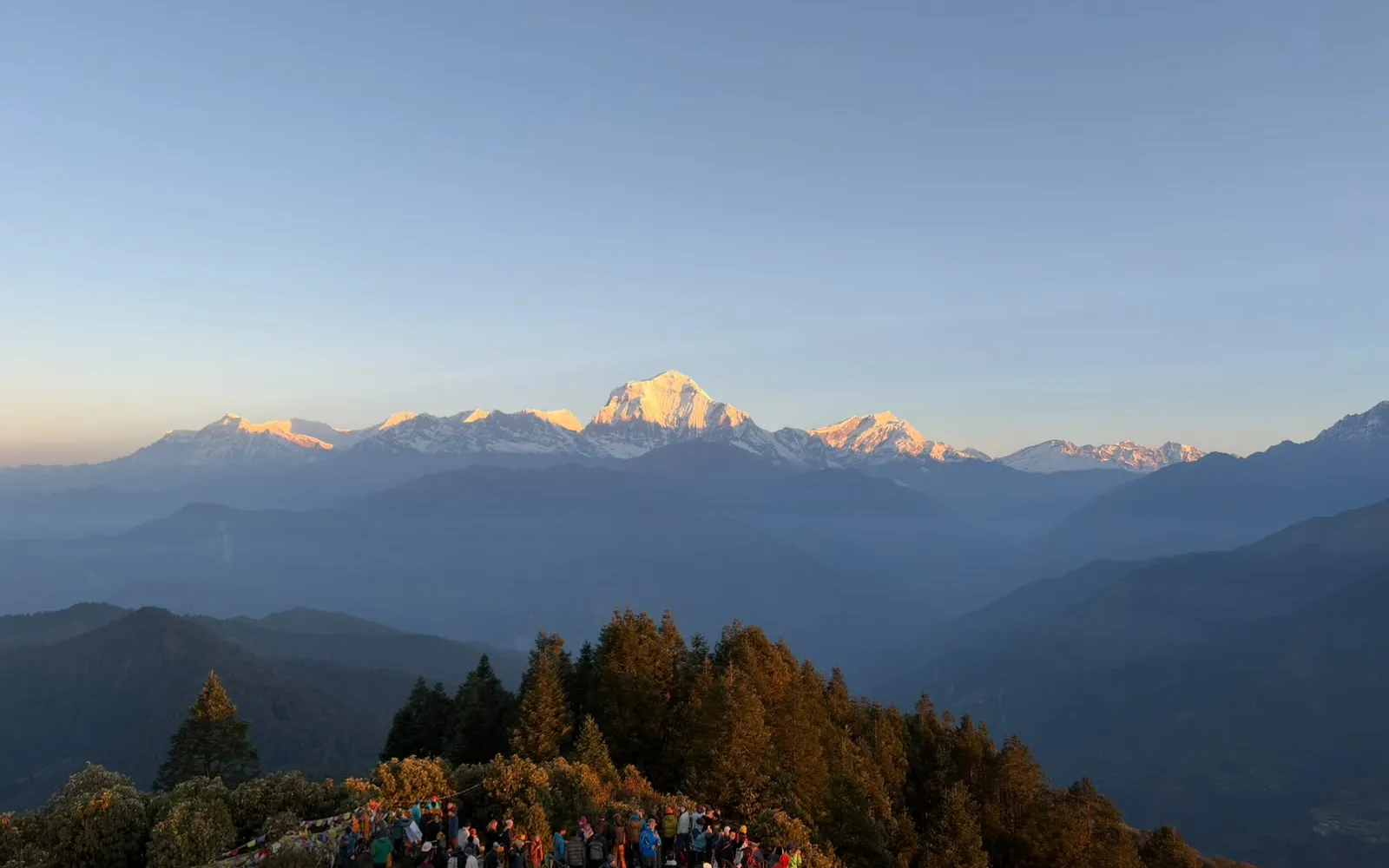
In fact, these offer differing experiences, including the chance to witness beautiful sunrises over the Annapurna and Dhaulagiri mountain ranges, as well as rhododendrons, Tamang villages and Himalayan views.
Ghorepani Poon Hill – an enjoyable and popular short trek. Includes stunning sunrises, Gurung villages and rhododendron trees.
Mardi Himal – a slightly longer trek which is more physically challenging. Provides good views of Machhapuchhre, Annapurna South and Hiunchuli.
Muldai Hill – a tranquil trek within the Annapurna area. Allows individuals to view impressive Himalayan vistas from a beautiful 3,637m viewpoint.
Langtang Valley – an enjoyable trek encompassing Tamang villages, forests and alpine environments. Enables exploration of Kyanjin Gompa.
Chisapani-Nagarkot – a short and low height trek around Kathmandu. Particularly suitable for those with restricted holiday periods and for those wishing to lightly explore trekking.
Whilst most new trekkers differ in terms of their fitness, trekking knowledge and acceptance of height, both the Chisapani-Nagarkot and Ghorepani Poon Hill treks are usually easier to undertake.
However, the Mardi Himal and Langtang Valley treks are both more physically challenging as they include steeper and longer climbs. New trekkers should therefore analyze their fitness, holiday time, trekking knowledge and height acceptance to identify an appropriate trek.
Whether one is a new Himalayan trekker or simply seeking an easily achievable spring walking holiday, there are numerous pleasant trekking options in Nepal.
With the correct holiday structure, clothing, height progression and preparation, new trekkers can successfully experience and appreciate Nepal’s nature and culture.
What constitutes an easy trek in Nepal?
Besides analyzing trek distance and number of trekking days, there are other key aspects to consider when deciding upon an easy trek. These include: walking time; terrain; height; lodgings and transport.
Although some Himalayan treks do not specifically need previous trekking knowledge, more physically demanding treks, particularly at heights of over 3,500 meters, do require enhanced fitness and preparation.
In addition to, appropriate walking time is also key in ensuring that trekkers can both enjoy and relax during their holiday. Consequently, new trekkers should investigate these issues in order to compare easy and more challenging Nepalese treks.
Walking time and distance
Most easy treks in Nepal require trekkers to walk for between three and six hours per day. This can, however, differ depending on the height, terrain and distance of a trek and an individual’s walking pace.
Generally, the Chisapani-Nagarkot Trek comprises reasonably short walking periods and includes forest and village areas. Although the daily walking distances on the Ghorepani Poon Hill Trek are not unduly long, the inclines – especially the stone steps leading to Ulleri and Ghorepani – can be tiring for new trekkers.
Conversely, both the Mardi Himal and Langtang Valley treks include extended walking periods and continuous upwards and downwards inclines.
Again, new trekkers should therefore identify a trek that can be walked within reasonable time frames and avoid trying to complete treks too quickly.
Terrain
Generally, treks are more easily traversed if they include well defined village tracks, stone steps, forests and commonly travelled paths. By contrast, more challenging treks often feature less clear and/or more rugged and open terrain.
Both the Ghorepani Poon Hill and Chisapani-Nagarkot treks incorporate well recognized tracks and include villages and places to rest. The Muldai Hill Trek also includes delightful forest and village areas within the Annapurna area.
As trekkers progress to High Camp and the upper viewpoint on the Mardi Himal Trek, the track becomes both more confined and steeper.
Likewise, the Langtang Valley Trek includes rocky, irregular and occasionally snowy or icy terrain at greater heights. This is often the case during early spring.
Therefore, new trekkers should utilize suitable walking boots and walking sticks and be mindful of where they place their feet.
Height and acclimatization
Height is also a key issue for new trekkers. Although good fitness can enhance one’s trekking capability, it does not automatically prevent altitude sickness.
Regardless of age, fitness and prior trekking knowledge, people are susceptible to altitude sickness if they ascend too rapidly.
For a lightly challenging Himalayan trek, the Chisapani-Nagarkot Trek is a superb choice as its height is substantially lower than that of major mountain treks. The Ghorepani Poon Hill Trek reaches around 3,210 metres and Muldai Hill around 3,637 metres.
However, the Mardi Himal Trek reaches approximately 4,500 meters at its upper viewpoint. Likewise, the Langtang Valley Trek can extend to heights of over 4,500 meters (for example, Kyanjin Ri and other viewpoints) if these are added to a trek itinerary.
In addition to, greater heights thus demand increased attention to be given to acclimatization and a slower rate of height progression. New trekkers should also be aware of the symptoms of altitude sickness.
Above all, new trekkers should never disregard continual headaches, sickness, giddiness and/or atypical tiredness. Should altitude sickness occur, further height progression should be avoided and suitable medical advice should be sought. Crucially, if severe altitude sickness is present then descent is vital.
Lodging and Meals
Appropriate lodging can greatly influence a trek. Particularly for new trekkers embarking on multi-day Himalayan treks, most popular Nepalese treks provide teahouses, lodges and/or community lodgings where food can be obtained and people can stay overnight.
Meanwhile, Ghorepani Poon Hill, Mardi Himal, Muldai Hill and Langtang Valley all have associated teahouse lodgings along their principle tracks. Chisapani and Nagarkot also offer guest houses and hotels with more easily accessible amenities.
Nevertheless, the quality of lodging can differ depending on both location and height. Generally, lower village lodgings are more pleasant and well equipped.
Higher villages can, however, have sparser accommodation with shared toilet facilities and scarce hot water. New trekkers should therefore set realistic expectations and ensure that they bring along suitable items.
Transport
Accessibility of, and transport to and from, a trek’s starting point is another important issue. Generally, treks which are easily road-accessible are easier to plan, particularly for overseas tourists who may have limited holiday periods.
Actually, the Chisapani-Nagarkot Trek can be planned from Kathmandu and does not even require a domestic flight.
Furthermore, the Ghorepani Poon Hill, Mardi Himal and Muldai Hill treks can all be reached by road from Pokhara, depending on which of these locations is chosen as a starting point.
By contrast, the Langtang Valley Trek is accessed by road from Kathmandu to Dhunche and Syabrubesi. Prior to leaving for Nepal, people should investigate transport and road accessibility in this area.
New trekkers should, therefore, analyze transport time, road accessibility and potential for delays when organizing their spring trek holiday.
Itinerary and relaxation
Being able to adapt one’s itinerary is especially beneficial for new trekkers as walking pace, weather and fitness can all differ. Rather than hastily moving from village to village, new trekkers should allow themselves ample opportunity to rest, hydrate and eat. They should also permit themselves time to acclimatize to heightened heights.
For more height-involving treks such as the Mardi Himal and Langtang Valley, progressive height progression and suitable acclimatization are of particular importance.
Generally, however, Ghorepani Poon Hill and Chisapani-Nagarkot can be planned to comprise reasonably short daily walking periods.
Moreover, an extra day can be advantageously added to a holiday so that unexpected weather, transport and/or physical issues can be addressed without adversely affecting the whole holiday.
Fitness and trekking knowledge
New trekkers should evaluate their fitness. Although specialist climbing skills are typically not needed for these five treks, individuals should feel able to walk up and down slopes for several hours. This can sometimes involve navigating uneven stone steps and/or forest tracks.
Daily walking, climbing stairs, light hiking and cardiovascular activity can all aid a person’s fitness and should ideally be undertaken for around four to six weeks prior to a trek.
Furthermore, new trekkers can practice walking with a small backpack and suitable footwear to boost comfort during their holiday.
Below is a general indication of the relative difficulty of these five treks for new trekkers:
Trek name | General difficulty for new trekkers | Highest main point of trek |
| Chisapani-Nagarkot | Easy to moderate | Nagarkot (approx 2,175m) |
| Ghorepani Poon Hill | Moderate | Poon Hill (3,210m) |
| Muldai Hill | Moderate | Muldai Viewpoint (3,637m) |
| Mardi Himal | Moderate to challenging | Upper viewpoint (approx 4,500m) |
| Langtang Valley | Moderate to challenging | Kyanjin Ri (approx 4,773m) (if added to a holiday itinerary) |
Note: Difficulty will depend on factors such as itinerary, walking time, weather, terrain and fitness. The highest points noted are optional viewpoints and may not even be overnight locations.
Generally, new trekkers should select a trek which is in line with their fitness and holiday time. Although lower height, shorter treks provide a more easily managed option, fitter new trekkers can also target higher Himalayan treks if they effectively prepare themselves, plan their holiday to allow for progressive height progression and receive expert trekking advice.
Spring is a highly favored time to trek in Nepal providing rising temperatures and extended daylight hours. There is also good visual appeal as the foothill Himalayas blossom. Weather however does differ throughout this period and trekking dates should therefore be researched by beginners.
Whilst lower altitude treks tend to warm up, upper altitude areas can continue to be chilly and may even receive snow. Hence, trekkers should be prepared for potentially cold and snowy conditions at higher altitudes.
March
Spring slowly emerges in Nepal and temperatures rise. Nevertheless, mountain village mornings and evenings often remain cool. Upper altitude treks can still suffer from frosts, and also receive snow and icy track conditions in the early spring following winter.
As spring develops, rhododendrons flower at lower and middle altitudes. Again, the exact timing of this will depend on both altitude and local factors. March is therefore well suited to beginners as it generally provides a cooler trekking environment and less crowded trails than the peak spring period.
April
April is amongst the most favoured months to trek in Nepal during the spring. Temperatures tend to rise further and there are stunning displays of rhododendron blossom in many Himalayan areas.
Particularly, the areas around Ghorepani and Tadapani and the Muldai trekking route can all show particularly picturesque spring scenery.
Whilst morning hours frequently provide clearer mountain views than afternoons (which can become cloudier), good visibility is by no means always achievable.
Furthermore, popular treks and teahouses can become busier during the height of the spring holiday period. Hence, it is wise to book both transport and accommodation in advance.
May
Temperatures are generally hotter by this stage and again, lower altitude treks will often be warmer. Good spring weather can also still be experienced in upper altitude areas.
However, as the monsoon season nears, trekking can be impacted by rising humidity, cloud cover, sporadic pre-monsoon rain and even thunderstorms.
Interestingly, rhododendrons can continue to blossom at upper altitudes even if those at lower levels have already stopped. To counteract fluctuating weather, beginners should endeavour to begin trekking early in the mornings and consult local weather reports. Flexibility is also key.
Comparison of spring trekking weather
Spring month | General conditions | Advice for beginners |
| March | Cool mornings, gradually rising temperatures | Be prepared for cold and potentially snowy upper altitude areas. |
| April | Generally warmer, rhododendron blossom | Popular treks can become busy. Commence trekking early to maximize visibility. |
| May | Warmer, growing pre-monsoon rain | Remain adaptable to cloud cover, rainfall and other changing weather factors. |
In summary, March and April are especially favorable for beginners wishing to trek in pleasant weather and witness spring blossom. May can also prove to be a good trekking month if well prepared.
Despite this, as mountain weather can be so changeable, it is important to ensure that trekkers are appropriately dressed and not to plan trips around assured mountain views and blossom periods.
Alongside other highly favored Nepal spring treks, the Ghorepani Poon Hill Trek is an ideal option for first time Himalayan trekkers. Nestled in the Annapurna region, the trek blends stunning mountain views, colourful rhododendron displays, and traditional villages together with good quality teahouse lodgings.
Compared to more extended high altitude treks like Everest Base Camp and Manaslu Circuit, this trek is a good way to sample Nepal's mountain area without having to undertake a lengthy and more strenuous adventure.
Although there are some inclines, with good general fitness, reasonably fit trekkers can comfortably negotiate the Ghorepani Poon Hill Trek and plan a suitable program.
Ghorepani Poon Hill Trek information
Location: Annapurna region, Nepal
Starting point: Typically either Nayapul, Birethanti , Ulleri, Banthanti or another land-accessible trek start point.
Access: Pokhara
Trek duration: Roughly 4-5 days.
Highest point: Poon Hill (3,210m).
Difficulty: Easy to moderately challenging.
Daily trek duration and distance: Roughly 4-6 hours, 10-14 km
Accommodation: Teahouses and mountain lodges.
Best spring months: March and April, with May also feasible.
What is so popular about the Poon Hill Trek in spring?
Beautiful rhododendron blossom is a major draw for many trekkers on the Ghorepani Poon Hill Trek. This produces a stunning array of red, pink and white flowers in numerous areas. Trekkers can also appreciate colorful rhododendron woodlands and pass through traditional mountain villages.
A further major highlight is the sweeping view of the Annapurna and Dhaulagiri mountain ranges from the Poon Hill sunrise viewing point.
Depending on favorable morning weather, trekkers can admire the Annapurna South, Hiunchuli and Machhapuchhre peaks, as well as Dhaulagiri.
As the sun rises above the Himalayas, first time trekkers can therefore enjoy a truly special mountain experience.
In addition to natural beauty, the trek enables trekkers to engage with Gurung and Magar local culture and hospitality. Settlements including Ghorepani, Tadapani and Ghandruk allow people to immerse themselves in the local way of life, and to observe traditional buildings and Nepali cuisine.
In addition to, the well developed system of teahouses along the main trekking path also means that trekkers do not need to carry camping gear as they can source food and night time lodging.
Overall, then, the Poon Hill Trek successfully blends natural beauty, culture and easily managed trekking provisions in the spring.
Who is the Poon Hill Trek most suitable for?
Those wishing to explore the Himalayas but without wanting to commit to a two week more strenuous high altitude trek will find the Ghorepani Poon Hill Trek a good option. Its compact nature also makes it a good choice for international tourists who wish to combine trekking with sightseeing in both Kathmandu and Pokhara.
This trek is especially appropriate for:
First time Himalayan trekkers – a great way to begin trekking, whilst also sampling village areas and teahouses.
People with a limited timeframe – those able to dedicate around 4-6 days to trekking.
Couples and families – reasonably fit individuals will find this a good choice for a fairly brief mountain trek.
Nature and photography lovers – there are excellent photo opportunities of spring rhododendrons, villages and mountain vistas.
Trekkers wishing to utilise good facilities – teahouses are regularly available and there are popular trekking areas, so planning a trip is often simplified.
Top tips for beginners
Despite being viewed as a fairly easy Himalayan trek, the lengthy stone steps which lead to Ulleri can be quite tiring for those unaccustomed to ascending slopes.
Hence, before travelling, beginners should practise climbing stairs. It is also important to walk at a comfortable speed and to stop periodically. Rushing should be avoided.
Overall, the Ghorepani Poon Hill Trek is an ideal spring trek for beginners. Along with impressive rhododendron blossom, traditional villages and spectacular Annapurna sunrise views, it provides a highly enjoyable initial Himalayan trekking experience without the need for people to commit to a more extended high altitude adventure.
The Mardi Himal Trek is a great choice for physically fit people looking for a more exciting Himalayan trek. Based in the Annapurna region and accessed from Pokhara, the trek includes wonderful rhododendron forests, alpine areas and mountain ridges, and has spectacular views of the Machhapuchhre and Annapurna mountain peaks.
Whilst it is not as easy as the Ghorepani Poon Hill trek, Mardi Himal is more physically strenuous due to its inclines, higher altitude and ridge routes. So even though prior Himalayan trekking knowledge is not essential, it is advisable for beginners to be reasonably fit and plan to trek for a number of days. A steady pace should also be adopted.
Mardi Himal Trek Details
Location- Annapurna region, Nepal
Typical starting point- Kande
Access- Pokhara
Trek length- Approximately 5-7 days
Highest point- Mardi Himal Base Camp (approximately 4,500m)
Upper Viewpoint- Approximately 4,200m
Difficulty- Moderately and/or challenging
Daily trek time- Approximately 4-6 hours (depending on the trek)
Accommodation- Teahouses and basic mountain lodges
Best time to trek in spring- March and April (May is also possible)
Note – There are two separate locations for Mardi Himal Base Camp and Upper Viewpoint. Depending on the chosen trek, these can sometimes be referred to by either name. It is important to check which is the actual highest point that will be reached.
Why Mardi Himal Trek in Spring?
In spring, rhododendrons flourish and add colour to both the lower and middle areas of the trek. As well as this, the transition from forest tracks to alpine ridges adds to the interest of the trek as height is increased.
Furthermore, spectacular mountain views can be seen from suitable points along the route, especially of Machhapuchhre (Fishtail), Annapurna South and Hiunchuli. Early mornings can also be ideal for photography with favorable light, although cloud cover and variable visibility can occur in spring.
As the trek progresses to Forest Camp, Low Camp and then High Camp, the landscape transitions from mainly forested areas to alpine and mountainous regions. Thus, a variety of Himalayan environments can be explored on this trek in a relatively short time frame.
Despite warmer temperatures in lower villages in spring, upper areas can still be considerably cold – especially in the morning and evening. Good quality clothing, trekking shoes, gloves and rain gear should therefore be brought on this trek.
What Makes the Mardi Himal Trek Difficult for Beginners?
Whilst no specialist climbing skills are needed for the Mardi Himal Trek, there are elements which can prove more challenging for novices.
In particular, the constant ascent and descent, together with the higher altitude and ridge tracks, all necessitate a higher level of fitness than many other, shorter and more easily navigable, beginner treks.
Challenges for beginners include:
Steep tracks – There are often continual uphill and downhill sections along forest and mountain tracks. These can be quite laborious for those new to trekking.
Higher altitude – As the trek reaches around 4,500m, individuals are at greater risk from higher altitude than if trekking to Poon Hill or Chisapani-Nagarkot.
Mountain ridges – Upper areas of the trek contain more fragile and slim ridges. People must tread carefully, particularly in adverse weather such as wind.
Basic lodges – Generally speaking, upper camp lodges are more basic than those in lower villages.
Weather – Early Spring can see snow, frost and strong winds. Moreover, icy patches can form, especially following fresh winter weather. These can all impact upon upper areas of the trek.
For beginners – This trek is most appropriate for those who already regularly walk and have planned for a number of consecutive days of ascending. It is also good for people who are at ease with basic mountain lodges. A steady trek pace with suitable night time breaks is to be favored over a hurried approach to High Camp and/or the upper viewpoint.
Overall, the Mardi Himal Trek is a highly enjoyable spring trek for physically fit novices wishing to undertake a more challenging option than a standard short trek. Adequate preparation, a steady pace and good guidance will allow first time trekkers to appreciate the scenic forests, stunning ridges and spectacular mountain views of this area.
6. Muldai Hill Trek – Is It a Good Poon Hill Alternative in Spring?
Alongside offering a tranquil setting for mountain views, the Muldai Hill Trek is a good choice for beginners wishing to explore the Annapurna region and enjoy its scenic forest areas. At 3,637 meters, Muldai Viewpoint provides spectacular Himalayan views and the trek also encompasses traditional villages. Unlike some treks, it does not need to be of great length.
Typically, the Muldai Hill Trek involves walking through Ghandruk, Tadapani and Dobato. Thus, it is possible to both appreciate and experience the natural and cultural features of the Annapurna region's foothills within around 4-6 days.
Although the trek does include some fairly steep forest tracks and a relatively strenuous final ascent to the viewpoint, reasonably fit people can enjoy this trek if they devise a pleasant and well-planned itinerary.
Muldai Hill Trek Summary
Trekking information | Details
Location | Annapurna region, Nepal
Typical trek route | Ghandruk - Tadapani - Dobato - Muldai
Access | Pokhara
Trek length | Approximately 4-6 days
Highest point | Muldai Viewpoint (3,637m)
Difficulty | Easy to moderately difficult
Daily trek time | Approximately 4-6 hours
Accommodation | Teahouses and basic mountain lodges
Best time to trek in spring | March and April (May is also possible)
What Can Beginners Experience on the Muldai Hill Trek in Spring?
A key feature of the Muldai Hill Trek in spring is the extensive rhododendron forest which can be found in many areas of the Annapurna foothills. Likewise, the woodland tracks around Tadapani and Dobato allow for relaxing forest walks, and these areas are also adorned with seasonal flowers.
Thus, this trek facilitates a pleasant and peaceful way to enjoy Nepal's natural environment, away from some of the more busy mountain viewpoints.
A further key aspect of the Muldai Hill Trek is the view from Muldai Viewpoint at sunrise. On clear mornings, this provides superb, sweeping views of the Annapurna and Dhaulagiri mountain ranges. People can then enjoy the outstanding Himalayan scenery, including Annapurna South, Hiunchuli and Machhapuchhre and other surrounding peaks.
Throughout the trek, traditional mountain villages can also be visited. People are able to experience local culture and lifestyle and stay comfortably in teahouses. Therefore, this trek enables a good balance of natural, cultural and photographic pursuits to be undertaken within a short holiday period.
Generally, Muldai Viewpoint is less busy than Poon Hill. Nevertheless, both the number of people visiting and the condition of the track can differ during the spring. Therefore, Muldai can be a good option for those wishing to undertake a less busy trek in the Annapurna region.
Muldai Hill Vs. Poon Hill for Beginners
Both the Muldai Hill and Ghorepani Poon Hill treks are excellent options for beginners to explore the Annapurna region in spring. However, they provide slightly differing experiences.
Although Poon Hill is more well known and usually has more fully developed trek facilities, Muldai offers a less busy viewpoint and is also set at a higher altitude.
Muldai Hill Vs. Ghorepani Poon Hill
Aspect| Muldai Hill| Poon Hill
Height of viewpoint | 3,637m| 3,210m
Difficulty | Easy to moderately difficult| Easy to moderately difficult
Track type | Forest and less busy tracks| Well established and popular tracks
Busyness | Generally less busy | Generally more busy
Accommodation | Basic teahouses and lodges| More established teahouse facilities
Main attraction| Outstanding Muldai Viewpoint scenery | Popular Himalayan sunrise viewpoint
Springtime scenery | Rhododendron forests and mountain areas | Rhododendron forests and mountain areas
Although Muldai Viewpoint is some 427 metres higher than Poon Hill, this does not necessarily mean that the Muldai trek is necessarily more challenging. Individuals should however analyze the specific route, level of ascent, trek duration and type of accommodation to decide which of the two treks is most suitable for them.
For beginners – The ascent from Dobato to Muldai Viewpoint typically lasts for 45-60 minutes. Sections of the track can be quite steep so it is advisable to take a headtorch, wear suitable footwear and dress warmly. People should also begin this section of the trek with caution, especially if the track is dark or wet.
Overall, the Muldai Hill Trek is a good, less busy alternative to the Poon Hill trek in spring. In addition to its rhododendron forests and traditional villages, it also has outstanding mountain views and so is a highly enjoyable way for beginners to begin their Himalayan trekking experience.
7. Can Beginners do Langtang Valley Trek?
The Langtang Valley Trek can be successfully undertaken by reasonably fit beginners. It enables people to explore a classic Himalayan valley, mountain villages and enjoy stunning mountain scenery.
Within Langtang National Park (north of Kathmandu), the trek includes lovely forest, Tamang villages and alpine meadows as well as spectacular views of Langtang Lirung and other Himalayan peaks.
Whilst in comparison to treks to Ghorepani Poon Hill, Muldai Hill and Chisapani-Nagarkot, the Langtang Valley Trek is both more extended and emphasizes altitude, beginners must ensure they are reasonably fit and take their time in ascending. They should also avoid a hasty approach to high viewpoint locations.
Overview – Langtang Valley Trek
Trek Information | Description
Location | Langtang National Park, north of Kathmandu
Start Point | Syabrubesi/Dhunche/Thulo Syabru (availability may vary)
Main Night Stop | Kyanjin Gompa (approx. 3,870m)
Trek Length | Around 7-9 days
Optional Viewpoints | Kyanjin Ri and Tserko Ri
Difficulty | Moderate (more difficult if visiting high viewpoint locations)
Daily Walking Time | Approx. 4-7 hours
Accommodation | Teahouses and mountain lodges
Best Time of Year | March, April and early May
Notes: Kyanjin Ri and Tserko Ri are optional high viewpoint locations and are not essential to the core trek.
Why is Langtang Valley a Good Place to Trek in Spring?
Spring is a good time to trek in Langtang Valley, as the lower forest areas become increasingly lush and wild-flowers start to blossom. Weather is typically also more favorable for trekking. People can enjoy the rich variety of forest, village and snowy mountain locations, making it a highly enjoyable place for new visitors to this area.
As trekkers progress along the Lama Hotel, Langtang Village and then to Kyanjin Gompa, there is a transition from woodland to alpine environments. During this trek, it is possible to experience Tamang villages, local hospitality and the unique mountain culture of the area.
A further key attraction is the magnificent viewpoint of Langtang Lirung and other Himalayan peaks, notably around Kyanjin Gompa. Trekkers can also visit the famed local cheese factory and witness first-hand the traditional methods of cheese-making using yak’s milk.
Equally, wildlife lovers can also observe rhododendron flowers at appropriate altitudes along the lower and middle parts of the trek. Furthermore, increased daylight hours in spring enable more time to be spent trekking, relaxing and discovering the mountain environment.
Is the Langtang Valley Challenging for Beginners?
Although no specialist climbing expertise is required for the core Langtang Valley Trek, it does involve several days of walking and progressive altitude ascension. Therefore, beginners should not overlook the physicality of trekking through mountains for around a week.
Typically, trekkers begin at a far lower altitude than Kyanjin Gompa and so attain substantial height gains during the trek. Consequently, it is essential to ascend at a steady rate, maintain good hydration and rest well. Awareness of altitude sickness is also important.
Optional treks to Kyanjin Ri and Tserko Ri include further high altitude climbing and can be especially challenging for those without prior high altitude experience.
Again, before attempting these extra viewpoints, beginners should consider their fitness and acclimatization levels and should not feel that they are obligated to visit them.
Tips for Beginners
Langtang Valley is most appropriate for reasonably fit beginners and those who can commit to and allow for a progressive trek. Travel with an experienced trekking guide who is familiar with altitude sickness can also assist beginners in trekking in Langtang Valley in a safer manner and to make well-considered decisions regarding their trip when weather and/or physical factors change.
Important 2027 Spring Information: Sections of the Rasuwa road and related infrastructure were damaged by the August 2026 flooding. This impacted on the usual method of reaching Syabrubesi.
Although the Langtang Valley Trek destination and core Langtang Valley Trek have reportedly been found to currently be open for trekking, this does not necessarily mean that the usual road access has been fully reinstated.
Before confirming your spring Langtang Valley Trek, it is advisable to obtain up-to-date information regarding road, transport and trek access from local authorities and experienced trekking professionals.
Overall, the Langtang Valley Trek is a marvellous option for reasonably fit beginners wishing to undertake a more extended Himalayan trek, in addition to the widely popular Annapurna foothill treks.
With appropriate acclimatization, a flexible travel schedule and up-to-date transport information, spring is an ideal time to appreciate the natural and cultural aspects of this region.
8. Is the Chisapani-Nagarkot Trek the Easiest Trek to Undertake Near Kathmandu in Spring?
The Chisapani-Nagarkot Trek is amongst the easiest treks to undertake in Nepal. It is especially appropriate for people wishing to enjoy trekking but without needing to travel far from Kathmandu.
Along the north and east hills surrounding the Kathmandu Valley, the trek includes forest walks, villages and greenery together with Himalayan viewpoints.
Actually, its comparatively low altitude and good accessibility also make it an appropriate option for international visitors, families and time-constrained individuals to begin their trekking.
Despite there being stone steps, ascents and sometimes uneven woodland paths, the altitude involved is generally not as high as that of both the Annapurna and Langtang treks.
Overview – Chisapani-Nagarkot Trek
Trek Information | Description
Location | On the edge of the Kathmandu Valley, Nepal
Start Point | Sundarijal
End Point | Nagarkot
Trek Length | Around 2-3 days
Highest Point | Will depend on the trek, although Nagarkot is approximately 2,175m
Difficulty | Easy to moderate
Daily Walking Time | Approximately 4-6 hours
Accommodation | Guesthouses and hotels
Best Time of Year | March, April and May
What is Good About Trekking to Chisapani-Nagarkot in Spring?
One of the main benefits of trekking to Chisapani-Nagarkot in spring is that it enables people to appreciate the attractive natural environment surrounding Kathmandu Valley.
As spring develops, forest walks become more lush and wild-flowers emerge. In addition, the green hills are a pleasant area for walking.
Similarly, the trek includes woodland areas of Shivapuri Nagarjun National Park together with villages and tranquil natural surroundings. Trekkers can also benefit from fresh mountain air and experience village life. Occasionally Himalayan views can also be seen, again depending on the weather and visibility.
More importantly, Nagarkot is especially renowned for its good sunrise and sunset viewing points. On clear spring mornings, it is sometimes possible to see parts of the Langtang range and other Himalayan peaks. Mountain visibility will again be affected by weather and atmospheric conditions.
Furthermore, because of its favourable location, the Chisapani-Nagarkot Trek can easily be combined with other Kathmandu-based activities such as sightseeing and cultural experiences together with further exploration of the Kathmandu Valley.
Thus, it is a great choice for those wanting to experience Nepal’s natural environment but not wishing to embark upon a more extended Himalayan trek.
Who Should Trek to Chisapani-Nagarkot?
This trek is especially appropriate for:
People wishing to experience a brief trek – and who value good transport links and fairly comfortable accommodation.
Those wanting to try trekking and who are prepared to commit to a reasonably short period of time.
Families – provided children are happy to walk for several hours each day, this can be a good family trek.
Individuals favouring lower altitude treks – as the altitude is not as high as that of other Himalayan treks, this can be a good option.
People visiting Kathmandu – due to its favourable location, it is easy to combine this trek with Kathmandu sightseeing.
Here, individuals seeking to prepare for extended treks – the Chisapani-Nagarkot Trek can act as good practice for carrying a day-pack and walking, in preparation for other treks such as Poon Hill and Mardi Himal.
Tips for Beginners
Although the Chisapani-Nagarkot Trek is one of the less demanding trek options around Kathmandu, it still entails walking on sometimes uneven woodland and path surfaces together with ascending and descending slopes. Good quality walking footwear, sufficient water and sun protection together with reasonable fitness are therefore essential.
As a whole, the Chisapani-Nagarkot Trek is a superb choice for beginners wanting to undertake a brief trek in spring. Offering green hills, woodland walks, village locations and favorable accessibility, it provides a peaceful way for people to initially experience Nepal’s natural and mountainous environments without having to face the challenges of a high altitude trek.
Your time, fitness and interests will determine which of Nepal’s best easy treks you enjoy. Each of the 5 easy treks provides a unique mix of mountains, forests and culture and also includes different levels of trek difficulty.
Comparing 5 best beginners’ treks in Nepal for March:
Trek Name |Typical Number of Days | Highest Point | Difficulty for Beginners | Best For
Chisapani-Nagarkot | 2-3 days | Approximately 2175m at Nagarkot | Easy/Moderate | Short walks around Kathmandu
Ghorepani Poon Hill | 4-5 trekking days | 3210m at Poon Hill| Easy/Moderate | Classic Himalayan view of sunrise
Muldai Hill | 4-6 days | 3637m at Muldai Viewpoint| Easy/Moderate | Poon Hill Alternative, more peaceful Annapurna viewpoint
Mardi Himal | 5-7 days | Approximately 4500m at Mardi Himal Base Camp | Moderate-Challenging | Physically able beginners who wish to trek at higher altitudes
Langtang Valley | 7-9 trekking days | Approximately 3870m at Kyanjin Gompa (and other higher viewpoints where available) | Moderate |Himalayan valley and Tamang culture
Note: Trek length can vary depending on factors including road access, trek and rest days and individual walking speed.
Which trek is best for which type of beginner?
Whilst all these treks can be enjoyed by appropriately prepared beginners, the ideal one for you will depend on your experience, amount of free time and degree of tolerance to altitude. Below are further suggestions for choosing a spring trek in Nepal.
For absolute beginners – Chisapani-Nagarkot: This is an accessible, easy trek. It is also not too high and can easily be reached from Kathmandu. Nevertheless, there are inclines, steps and forest tracks.
For a first Himalayan trek – Ghorepani Poon Hill: This trek combines good mountain views with reasonable teahouse provision and is of moderate length. Clear weather means that the Himalayan sunrise view from 3210m is particularly enjoyable.
For a more peaceful trek – Muldai Hill: This is a good choice for those seeking forest tracks and a more tranquil environment. The 3637m viewpoint also affords a different view of the Annapurna and Dhaulagiri mountain ranges.
For physically able beginners – Mardi Himal: Physically able beginners can enjoy this trek as it includes high altitude and multi-day walking.
However, in addition to preparing for the steeper ascents, trekkers must also prepare for the cold temperatures and basic high altitude lodges. Furthermore, there are thin mountain ridges to negotiate.
To maximize Himalayan experience – Langtang Valley: This trek is ideal for those who have more free time and are interested in experiencing both mountainous areas and traditional Tamang communities. Gradual acclimatization is also essential as the main night-time location (Kyanjin Gompa) is approximately 3870m in altitude.
It is useful to familiarize yourself with the general information relating to trek permits, guides, lodgings and transport. In addition, researching up-to-date road access and entry requirements will aid your Nepalese spring trek, and avoid potential delays.
Permits for beginners
As most Nepalese treks involve travelling through conservation areas, visitors may need to obtain conservation area and/or national park entry permits. Specific permit needs will depend on the trek, point of entry and prevailing regulations.
Permits for Nepal Treks
Trek Name |Primary Permit/Entry Requirement
Ghorepani Poon Hill | Annapurna Conservation Area Permit (ACAP)
Muldai Hill| Annapurna Conservation Area Permit (ACAP)
Mardi Himal | Annapurna Conservation Area Permit (ACAP)
Langtang Valley | Langtang National Park entry permit
Chisapani-Nagarkot | Depends on the trek and Shivapuri Nagarjun National Park entry requirements
For those trekking in the Annapurna areas, it is important to obtain the correct ACAP permit prior to entering the conservation area. Likewise, trekkers in the Langtang Valley should obtain the correct Langtang National Park entry permit.
For Chisapani-Nagarkot, ascertain whether or not your chosen trek involves travelling through Shivapuri Nagarjun National Park and investigate the relevant entry fees. As with other permits, it is advisable to verify the most recent information on permit requirements with the appropriate tourism body or registered trekking agency.
Whilst TIMS is often needed, it is not always required so please check with relevant tourism bodies or a registered trekking agency for up-to-date information on this matter prior to travel.
Trekking guides are extremely useful for novice trekkers as they can advise on, and facilitate, planning, walking and lodging. Licensed guides can also provide beginners with information about track details, local culture and altitude concerns.
Meanwhile, guides can modify a trekker’s walking speed, advise on good places to rest and provide support if someone is not feeling well. However, despite a guide’s assistance, trekkers should still plan their itineraries sensibly and report any health concerns.
Depending on the area being trekked, conservation area requirements and prevailing Nepal government regulations, guide needs can differ. Ensure that you are using a registered trekking agency and that your guide is licensed for the area that you are trekking in.
Where can I stay and what can I eat during trekking in Nepal?
Generally, teahouses and lodges are available for accommodation on most of these easy treks. Again, the quality and range of accommodation will differ depending on both village and altitude.
Typically, more accommodation options are available in well-visited villages. More out-of-the-way and higher altitude villages may provide more basic lodgings.
Accommodation and food options often include:
Rooms- Single or shared rooms (dependent on availability and type of lodge).
Food - Dal bhat, noodles, rice, soup, eggs, potatoes and other widely available local and international foods.
Higher altitude - More basic facilities and food. Rooms are also typically colder. Particularly on the Mardi Himal and Langtang treks.
Showers - Showers are frequently chargeable and can sometimes be scarce.
Power Supply and Internet - Access to both is generally available at teahouses, usually for a charge. However, in more out-of-the-way areas, these facilities may be inconsistent.
As spring (particularly April) is a popular trekking period, it is wise to pre-book accommodation. Also, since card facilities and ATMs are not widely available outside of main towns, it is good to have some cash with you.
How do I get to Trek Starting Points?
This will depend on the area being trekked, the desired starting village and prevailing road access. So, it is important to identify and investigate transport to your intended trek starting point.
Trek Name | Usual Method of Getting There
Ghorepani Poon Hill | From Kathmandu to Pokhara and then by car to a desired starting village such as Nayapul, Hile or another access village.
Mardi Himal | To Pokhara and then by car to a desired starting point such as Kande or another village.
Muldai Hill |To Pokhara and then by car to either Ghandruk or another desired starting village.
Langtang Valley | By car from Kathmandu to the Rasuwa region. Usually this involves travelling via the Dhunche-Syabrubesi area, subject to road access.
Chisapani-Nagarkot | By car from Kathmandu to Sundarijal and then trekking along a desired track. End points can be Nagarkot or another mutually agreed village.
Important information regarding access to the Langtang Valley: Floods in the Rasuwa region in August 2026 affected parts of the road network there and thus the usual access route to Syabrubesi.
Although the Langtang Valley trekking area has reportedly been found to currently be accessible, it is recommended to independently investigate road access and transport information prior to travel.
Actually, the alternative route via Thulo Syabru from Dhunche can be used after the 2026 Rasuwa flood.
For the Annapurna treks, Pokhara is generally used as a transport center. Nevertheless, the last section of the journey to the chosen starting village can differ depending on both the village and prevailing local circumstances.
Here, the Chisapani-Nagarkot trek is also easily accessed from Kathmandu. Again, road access and track selection can influence transport to this trek’s starting point.
Suitable clothing can enhance your trekking experience. Despite daytime temperatures being favorable, it is often chilly in the morning, evening and at higher altitudes. Therefore, it is advisable to pack light and appropriate clothing.
Clothing
As well as allowing for fluctuating temperatures, suitable clothing will also allow you to remain cool when ascending hills and keep you warm and dry in inclement weather.
- Wicking clothing – Pack light, fast drying clothes.
- Fleece or warm clothing – Especially good for use in the morning, evening and whilst resting.
- Light down or insulated jacket – For extra warmth at higher altitudes and in cooler weather.
- Weather proof jacket – Offers defence against spring rain and wind along with other hill weather conditions.
- Trekking pants – Generally comfortable and fast drying; ideal for most trek days.
- Thermal clothing – Particularly beneficial for colder nights. This is especially so on the Mardi Himal and Langtang treks.
- Underwear and trekking socks – Pack appropriate and comfortable underwear along with numerous pairs of wicking socks.
- Head covering and gloves – Warmth is important for your head and hands in both morning and high altitude conditions.
- Sun hat – Shields your head and face from intense sun radiation.
Footwear and Equipment
Appropriate footwear is arguably the most important element of your initial trekking kit. Often, tracks, rocky steps and descents can all be uncomfortable to walk on. Ensure that your shoes are well-fitting and offer the correct level of traction for the type of terrain you will be encountering.
Footwears
- Trekking shoes or trainers – Wear well-fitting shoes which have good traction and sufficient ankle support (where necessary).
- Sandals – Good for use in teahouses and for unwinding.
- Daypack with waterproof cover – Usually a 20-30 litre sized daypack is appropriate for storing daily items.
- Trekking staff – Beneficial for ascending, descending and negotiating steps. Particularly so for the Poon Hill and Mardi Himal treks.
- Water container or hydration pack – Ensure that you have sufficient water for each section of your trek.
- Lotion torch – Can be of value for rising early (such as for the Poon Hill or Muldai Hill sun rise trek).
- Sun glasses and sun cream – Important for shielding your eyes and skin from high altitude sun rays.
- Personal grooming products – Include travel-sized toiletries, tissues, hand gel and a mini towel.
Health, Safety and Documentation
Alongside clothing and footwear, health and safety provisions are also key considerations for your spring trek. Appropriate documentation, medication and information can all be of assistance in unforeseen circumstances.
- Medication – Pack any medications that you are currently prescribed. Also, include a basic first aid kit.
- Water treatment – Rather than drink untreated water, bring along tablets or drops for water treatment or an appropriate water filter.
- Travel insurance – Ensure that your insurance provides coverage for trekking at the highest altitude of your chosen trek, as well as for medical attention and, if necessary, a helicopter rescue.
- Passports and documentation – Store your passport and relevant entry documentation, as well as copies of key papers, securely and conveniently.
- Contact information – Note the contact details for your trekking agency, guide, insurance provider and emergency support.
- Nepalese Rupees – Have suitable cash on-hand for food and drink, for recharging electronic items, for hot water and for other village expenditures where card facilities may not be accessible.
Actually, many trekking items can also be hired or bought in Kathmandu and Pokhara, such as down jackets, sleeping bags, trekking staff and daypacks.
Nevertheless, it is advisable to buy or trial key items of footwear and personal equipment prior to your trek so that you can assess their suitability in terms of fit, comfort and state.
Spring is an excellent period to explore Nepal, with extended daylight hours, increasing temperatures and rhododendron woodlands in flower at appropriate altitudes. The most suitable Nepal trek for a novice will depend upon your time availability, fitness, trekking knowledge and degree of high altitude tolerance.
Chisapani – Nagarkot – Appropriate if you have a short time frame and desire to undertake a fairly easy trek in proximity to Kathmandu.
Ghorepani Poon Hill – An excellent option for novices keen to enjoy Himalayan views, rhododendron woodlands and good quality teahouse provision.
Muldai Hill – Appropriate for those wishing to experience more tranquil trekking in the Annapurna area, plus enjoy woodland and a less busy vantage point.
Mardi Himal – Ideal for well-prepared novices keen to explore more demanding tracks, at higher altitudes and to experience a more challenging Himalayan trek.
Langtang Valley – A good option if you have more time and wish to experience an extended Himalayan trek, whilst enjoying mountainous settings and Tamang culture.
Whilst these treks differ in terms of their challenge, decisions regarding which one to undertake should not solely be based on their visual appeal. Undertake physical preparation, devise a realistic program and investigate current weather and track information.
In addition, ensure that you have correct travel insurance in place and practice environmentally and socially responsible trekking methods.
Regardless of whether you only have a short duration in which to explore Nepal around Kathmandu or have more time for a more extended Himalayan adventure, spring is a marvelous time to do so. Each of the above five treks provides a distinct experience.
Consequently, your ideal trek will be influenced by your fitness, time and high altitude tolerance. With an appropriately designed program and thorough preparation, and the guidance of a knowledgeable local trekking guide, your introductory Nepal trek can prove to be both enjoyable and impressive.
Importantly, Haven Holidays can advise you on which spring Nepal trek would be most appropriate for you. We can also organize transport, documentation, lodgings and a qualified guide. Please get in touch with our local team who will then devise a program that is in line with your experience, timescale and trekking preferences.
1. What is the easiest treks in Nepal for beginners in spring?
The Chisapani – Nagarkot trek is fairly easy for beginners. It includes forest and village paths at a relatively low altitude. Although slightly steeper and with some stone steps, Ghorepani Poon Hill is also good for those wishing to experience Himalayan trekking for the first time.
2. What is the best beginner’s Himalayan trek in Nepal?
Ghorepani Poon Hill is a great option for a first Himalayan trek. Besides the beautiful mountain views, good quality teahouses are available along the route and the trek can easily be completed in 4-5 days. Muldai Hill is another, more tranquil, option which also provides a peaceful view of the mountains.
3. Is spring a good season for trekking in Nepal?
Spring is usually an ideal time to trek in Nepal. Days tend to be warmer and there is increased daylight. In addition, rhododendron trees frequently display vivid colors. Nevertheless, mornings can still be cool and on higher ground. Furthermore, cloud cover and even sporadic rainfall can sometimes hinder mountain views.
4. Which month is best for a beginner trek in Nepal – March, April or May?
April is often favoured for trekking as the weather is usually pleasant and rhododendrons are frequently in full bloom at various altitudes. March can be cooler and is, especially at the start of the month. May is warmer but can include cloudier afternoons and pre-monsoon rain.
5. Is the Mardi Himal Trek suitable for a beginner?
Physically fit people can trek the Mardi Himal. As this trek is at higher altitudes than Poon Hill (including High Camp at around 3,580 meters) it is slightly more challenging. Good time management and acclimatization are both key.
6. Is the Langtang Valley Trek suitable for beginners?
Providing they are fit and have sufficient time to effectively acclimatize, Langtang Valley can be suitable for new trekkers. Again, like Mardi Himal, it includes lengthy trekking days and ascends to an altitude of around 3,870 meters (Kyanjin Gompa). As with other treks, it is advisable for beginners to condition themselves and to research present access information for the area.
7. How does Muldai Hill differ from Poon Hill?
Whilst Poon Hill is at an altitude of 3,210 meters, Muldai Viewpoint is at around 3,637 meters. Typically, Muldai is a more tranquil location and so is less busy. In comparison, Poon Hill has more extensive facilities and is a more popular area. Both locations offer magnificent mountain views where the weather permits.
8. How long are typical beginner treks in Nepal?
Generally, the Chisapani – Nagarkot trek lasts 2-3 days. Both the Ghorepani Poon Hill and Muldai Hill treks are usually 4-6 days in duration. The Mardi Himal Trek typically lasts 5-7 days. Finally, the Langtang Valley trek is around 7-9 days.
9. Should a beginner trekker in Nepal hire a guide?
Experienced guides are strongly advised for beginners. They can assist with numerous aspects of trekking, for example, providing directions, recommending suitable places to stay and facilitating local interaction. In addition, foreign trekkers must comply with Nepal’s present guide rules. Generally, a licensed guide must be employed by a registered trekking agency on designated trekking paths.
10. Is travel insurance necessary for a beginner trek in Nepal?
Appropriate travel insurance is highly advised even for brief treks. Ensure that your policy includes coverage for trekking at the highest point of your chosen trek, as well as medical attention and rescue operations. Investigate the helicopter rescue provisions and exclusions as a standard travel insurance policy may not offer adequate cover.
11. Can I view rhododendrons in Nepal in spring?
Indeed, spring is typically when rhododendrons flower in Nepal. Most notably, March and April are popular months for this. Forests can frequently be encountered along treks such as Ghorepani and Muldai Hill, as well as other Annapurna areas. As altitude, temperature and annual weather conditions can all influence rhododendron blooming times, precise dates cannot always be specified.
12. How fit should I be for my first Nepal trek?
Generally, you should be able to walk for several hours each day. Often this will involve walking on uneven ground and also ascending on stone steps. Improve your fitness through a combination of walking, climbing and cardio exercises in the weeks prior to your trip. Furthermore, treks at greater altitudes such as Mardi Himal and Langtang necessitate a higher level of physical fitness than the comparatively low altitude Chisapani – Nagarkot trek.
Note: When deciding on an appropriate trek for yourself as a beginner, it is important to recognise the distinction between low altitude, easy treks and initial Himalayan treks.
Typically, Chisapani – Nagarkot is not as strenuous as either the Mardi Himal or Langtang treks, both of which are at higher altitudes and so need greater preparation. Please also verify up-to-date information regarding Langtang access as the road and path situations can alter.
Our travel experts are ready to assist you with any questions.
Send us a message.Have a question before you book? Send your enquiry below and our travel experts will get back with the required information.