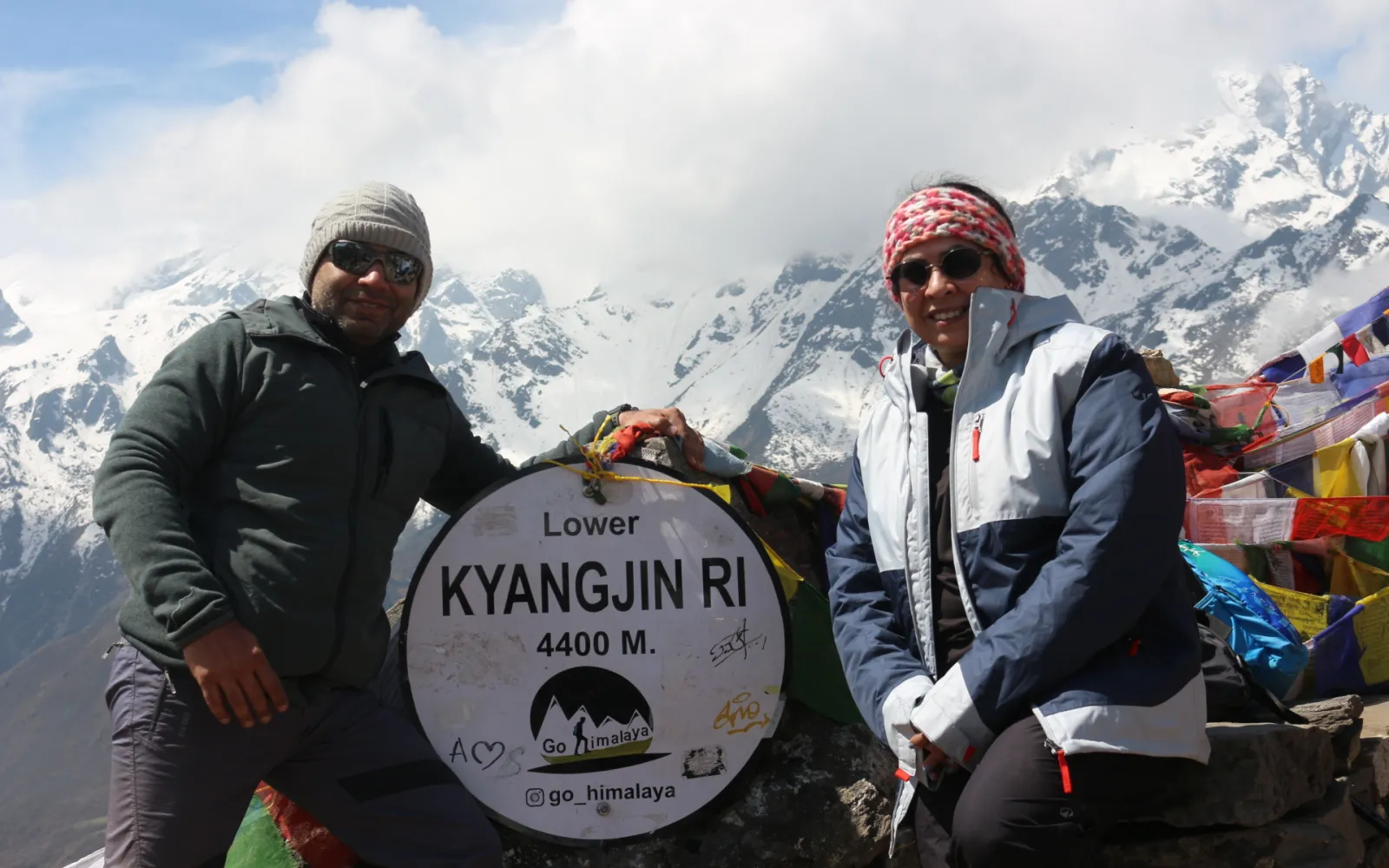
The best time to trek Langtang Valley in 2027 is during Spring (March-May) and Autumn (September-November) as you’ll experience pleasant temperatures, easy walking and amazing views of the mountains.
Actually, the Langtang Valley is located to the North of Kathmandu in the Langtang National Park. You will walk through beautiful forested areas, traditional Tamang villages, beautiful alpine scenery and glacial valleys. Along the way, you will enjoy views of the Langtang Lirung (7,227m) and the surrounding Himalayan mountains.
Here, the Spring months of April to May are a great time for the beautiful flower displays and warmer days. During Autumn, the skies will be clear after the monsoon season, particularly in October and November.
In fact, you can trek Langtang Valley during the Winter and Monsoon seasons, however you will need to be well prepared. During the Winter months, it will be very cold at night and there may be snowfall. During the Monsoon season, there will be rain, slippery paths and risk of landslides.
Best time to trek Langtang Valley in 2027
Season | Months | Main Conditions| Best Time to Trek
Spring | March-May | Flowers, warm days and clear mornings| Excellent
Summer/Monsoon |June-August| Rainy, cloudy, leeches and landslides| Challenging
Autumn| September-November |Clearer skies and stable weather| Excellent
Winter | December-February| Cold nights, snow and potential closure for trekkers| Experienced Trekkers
Important Note (Floods 2026)
During August 2026 there were floods in the area, affecting parts of the Syabrubesi approach and Pasang Lhamu Highway. If you are planning to trek Langtang Valley Trek after the flood in 2026, please ensure the roads, bridges and paths are open.
In addition to, you may want to consider alternative routes through Dhunche and Sundarijal. Although Langtang Valley and Kyanjin Gompa are open for trekking in the advisory in October 2026, all roads may not be open. Please, check with the local trekking company and local guide.
Importantly, we recommend planning your trek between March-May or October-November for generally good trekking conditions. Ensure you have checked transport and path availability.
The weather can vary greatly depending on the altitude, season and day to day conditions within the mountains. The lower villages like Thulo Syabru or Lama Hotel will generally be warmer whilst the higher villages will be colder with more wind and occasional snowfall.
Meanwhile, the trek will typically start around Syabrubesi (1,460m) and you will follow the Langtang Khola to Lama Hotel (2,470m). Then continue through Langtang Village (around 3,430m) to Kyanjin Gompa (3,870m).
As you increase in altitude, the temperature will generally drop. This means that the weather will feel much colder around Kyanjin Gompa compared to Syabrubesi.
Often the mornings will be clearer than the afternoons. During many seasons you may find that the weather becomes cloudy, windy and occasionally snowy.
Weather in Langtang Valley by Altitude
Area | Altitude | Weather Conditions
Dhunche/Syabrubesi | 1,460m | Relatively warm and humid
Bamboo | 1,970m | Mild days and cool nights
Lama Hotel | 2,470m | Cool mornings and evenings
Langtang Village | 3,430m | Cold nights and varying temperatures during the day
Mundu | 3,540m| Cold alpine conditions
Kyanjin Gompa | 3,870m | Cold nights, windy and possibly snowy
Kyanjin Ri | 4,773m| Colder and exposed
Tserko Ri | Around 4,984m | Very cold, windy and exposed
Important Weather Notes
Generally warm during the day – the lower villages will be warmer during the sunny afternoons.
Cold at night – The temperatures will drop significantly around Langtang Village and Kyanjin Gompa.
Windy – The exposed viewpoints can be quite windy, particularly in the mornings.
Cloudy – During the afternoons the weather can become cloudy and reduce visibility.
Weather can change quickly – Rain, snow and sun can all happen on the same day.
Preparing for the Weather
As the temperatures can vary greatly, we recommend wearing layered clothing. A warm down jacket, thermal layers, waterproof jacket, gloves and appropriate trekking trousers will be essential.
Here, these are just average temperatures so please check the local forecast and listen to your guide. Do not rely on the average temperatures to decide whether to attempt higher viewpoints.
How long is the Langtang Valley trek?
The standard trek to Langtang Valley will take around 7-10 days from Kathmandu. This will depend on your transport and acclimatisation. You will walk around 65-75km return depending on where you start from and if you plan to visit any viewpoints.
Section | Altitude | Walking Time
Syabrubesi/Thulo Syabru/Bharkhu to Lama Hotel |1,460-2,470m| 6-7 hours
Lama Hotel to Langtang Village| 2,470-3,430m| 5-6 hours
Langtang Village to Kyanjin Gompa| 3,430-3,870m| 3-4 hours
Kyanjin Gompa to Syabrubesi| 3,870-1,460m| 2 days
Note: These are approximate distances and will depend on the conditions of the path, changes in route and your pace.
Important Note for Langtang Trek 2027
Following the floods in August 2026, TAAN confirmed that Langtang and Kyanjin were open for trekking in their advisory on the 23rd October. They suggested using the roads to Trishuli and Betrawati to get to Dhunche or Thulosyafru.
Therefore, we recommend allowing enough time to acclimatise and being flexible with the weather. Your local licensed guide can help you decide what the conditions of the path are like, how far you will walk each day and where is best to stop overnight.
3. Temperature in Langtang Valley by Month
Temperature varies greatly throughout the Langtang Valley. Syabrubesi will be fairly warm. However temperatures will be much colder in Langtang Village and Kyanjin Gompa.
Likewise, the Langtang Valley trek takes you from around 1460m in Syabrubesi to 3870m in Kyanjin Gompa. You should expect varying temperatures throughout the trek, even during the spring and autumn months.
Generally speaking, you will be fine during the day in the lower villages like Bharkhu, Thulosyabru and Lama Hotel. However, at night, you can expect freezing temperatures in Langtang Village and Kyanjin Gompa.
Temperature in Langtang Valley by Month
Below is a table outlining approximate temperatures you may expect. This is not an accurate average for each month but gives a general idea.
Month | Day Temperatures (Lower villages) | Night Temperatures (Higher villages)
January |5°C – 12°C | -15°C – -5°C
February | 7°C – 14°C | -12°C – -3°C
March | 10°C – 17°C | -10°C – 0°C
April | 13°C – 20°C | -6°C – 3°C
May | 16°C – 22°C | -3°C – 5°C
June |17°C – 23°C | 0°C – 7°C
July | 17°C – 22°C | 2°C – 8°C
August | 17°C – 22°C |2°C – 8°C
September | 15°C – 21°C | 0°C – 6°C
October | 12°C – 19°C| -5°C – 3°C
November | 8°C – 15°C| -10°C – 0°C
December | 5°C – 12°C| -13°C – -3°C
Note: This is a general temperatures you may expect which has been experienced by our team during the operation of the trip. It is not an accurate representation of the temperatures for 2027. It is also comparing the day temperatures in the lower villages and night temperatures in the higher villages.
Temperature in Key Points on the Trek
Location | Elevation | General Temperature
Syabrubesi | 1460m| Warmest conditions
Lama Hotel | 2470m| Cooler in the morning and evening
Langtang Village| 3430m| Freezing nights, especially in the winter
Kyanjin Gompa| 3870m| Freezing nights possible in several months
Tserko Ri |4984m| Much colder with lots of wind
How Temperature Changes with Altitude in Langtang Valley
Generally speaking, temperatures drop by around 6 degrees for every 1000m you climb (Nepal Tourism Board). This means that Kyanjin Gompa can be much colder than Syabrubesi on the same day of your trek.
Syabrubesi 1460m – Relatively warm throughout spring and autumn.
Lama Hotel 2470m – Cooler temperatures in the mornings, evenings and in shaded areas of the forest.
Langtang Village 3430m – Freezing nights. Occasionally frost and snowfall.
Kyanjin Gompa 3870m – Freezing nights possible.
Tserko Ri 4984m – Windy so can feel much colder on the summit.
Pro Tip: Pack warm clothing, a warm sleeping bag, gloves and waterproofs. Also check the local weather forecast before heading up Kyanjin Ri and Tserko Ri.
Note: The management plan for Langtang National Park does mention previous temperature readings from the meteorological station in the Langtang River (1987-2010). However, it doesn’t give accurate temperature readings for each month. Therefore, it is not recommended to give estimated temperatures for each village.
4. Langtang Valley Trek in Spring (March, April and May)
Spring (March-May) is one of the best times to go on the Langtang Valley Trek. Temperatures will start to rise and the mountains will be very colourful. The rhododendrons will be in full bloom in suitable areas of the forest and you will have longer daylight hours to enjoy your trek.
Actually, t
he weather will be generally good during spring. However, as you head up to higher altitudes (from 1460m in Syabrubesi to 2470m in Lama Hotel) you will notice cooler temperatures. As you head further up to 3430m (Langtang Village) and 3870m (Kyanjin Gompa) you will notice the temperatures drop again.
In fact, March, April and May will all be slightly different. March will be colder, April will give you great spring views and May will be warmer with increasing cloud.
Weather in Spring by Month
Month | Weather |Temperature | Main Attractions| Overall
March | Cool days| Freezing nights| Early spring flowers and less busy trails| Very good
April | Warm days| Freezing nights| Rhododendron forests and mountain views| Excellent
May | Increasingly cloudy | Warmer days | Green landscapes and late spring flowers Very good
Why Spring is Great in Langtang Valley
Rhododendrons are in bloom – The forest will be very colourful, particularly in March and April.
Warmer days – It will be more comfortable to walk.
Longer daylight – More flexibility with your walking and taking photos.
Mountain views – With clear mornings you will often get great views of the surrounding Himalayas.
Wildlife and vegetation – Plants will be growing again in the national park.
In summary, April is a key time for rhododendrons (Nepal Tourism Board). However ,the flowers will bloom at different times depending on the altitude, temperature and season.
Things to Note During Spring
Spring is whilst, generally, good there will be some cloud in the afternoons and occasional rain. Higher areas near Kyanjin Gompa and Tserko Ri may have snowfall, particularly in March.
Here, we would recommend going during April for a great Langtang Valley Trek in 2027. You will get great rhododendrons and comfortable days. However, if you like colder weather March would be a good choice. If you prefer warmer weather May would be the best option.
Pro Tip: Pack layers, sun cream, sunglasses, walking boots and waterproofs. Give yourself time to acclimatise before heading up Tserko Ri (4984m) and Kyanjin Ri (4773m).
5. Langtang Valley Trek – Autumn (September, October & November)
One of the best times to undertake the Langtang Valley Trek is during the autumn months (September-November). There is usually less rain and clear mountain views. After the monsoon season the landscape becomes greener, the rivers are flowing fast and there are often clear skies to enjoy the beautiful views of the Himalayas.
Overall, the temperatures are pleasant throughout the day when travelling between Syabrubesi (1,460m), Lama Hotel (2,470m) and Kyanjin Gompa (3,870m). Temperatures will begin to drop as you get higher up, especially during November.
Here, October and November are very popular months to trek in Nepal during autumn. However, September can also be a great time to go trekking but you may have prolonged rain.
Autumn Weather Conditions
Month | General Weather | Day Temperature | Night Temperature (Higher Villages)
September | Gradually Less Rain | Pleasant |Occasionally Cloudy | Cool to Cold
October | Generally Sunny & Stable | Pleasant & Comfortable | Cold |Sometimes Freezing
November |Usually Dry & Cooler | Cool | Often Sunny Very Cold | Possible Freezing
Why Langtang trek in Autumn?
Clear mountain views – Often clear during October and November.
Pleasant trekking conditions – Temperatures are moderate throughout the day to allow longer days of trekking.
Post monsoon – Forests, waterfalls and rivers are still very attractive after the rains.
Photography – Clear morning conditions can allow you to see Langtang Lirung (7,227m) and the surrounding mountains.
Popular time to trek – Many international trekkers head to Nepal during October.
September, October & November – Which is best?
September – The landscape will be greener and the weather will gradually improve. However, there may still be some rain during the early parts of September.
October – This is usually the best month to go on the Langtang Trek during October. The temperatures are pleasant during the day, the weather is generally dry and there are good opportunities for mountain photography.
November – Whilst the temperatures are cooler you may find the trails are quieter than October. However, the temperatures will begin to drop significantly at night in Langtang Village (3,430m) & Kyanjin Gompa (3,870m).
Important Notes for Langtang Valley Trek in 2027
Sections of the trail leading to Syabrubesi and the Pasang Lhamu Highway were damaged during the flooding in August 2026. Therefore, do not assume that the traditional route from Kathmandu to Syabrubesi is completely open during 2027.
Importantly, you may wish to consider alternative routes such as Dhunche and Bharkhu and Thulosyabru or Sundarijal. Please check the condition of the roads and trails with local trekking company before booking and departure . Also check if any bridges have been repaired and if there will be transport available. Check the local trekking recommendations with local guides.
In conclusion, we would recommend going on the Langtang Valley Trek during October as it is an excellent time to go trekking during autumn 2027. However, if you prefer cooler temperatures then November would be a good option.
6. Langtang Valley Trek – Winter (December, January & February)
A quieter time to go trekking in the Langtang Valley. However, temperatures can be extremely cold and there will be snowfall. During good weather conditions you will enjoy clear mountain views, peaceful villages and snowy mountainous landscapes.
Actually, temperatures will drop significantly above Lama Hotel (2,470m). Especially in Langtang Village (3,430m) & Kyanjin Gompa (3,870m). Temperatures can drop well below freezing at night and exposed viewpoints will be windy and cold.
In addition to, snowfall can cause some issues on the trails leading to Kyanjin Gompa and higher viewpoints. Flexible itineraries, good gear and regular weather checks will be required.
Winter Weather Conditions
Month | General Weather | Day Temperature| Night Temperature (Higher Villages)
December | Cold & Generally Dry | Cool and Often Sunny | Very Cold Likely to be Freezing
January | Coldest Part of Winter | Cold |Occasionally Sunny- Severe Freezing Possible
February | Gradually Warmer | Cool | Becoming Pleasant- Very Cold Possible Frost & Snow
What to Expect during winter?
Cold mornings – You may find some frost and icy sections during early starts.
Freezing nights – Kyanjin Gompa can get very cold with temperatures well below 0°C.
Snowfall – Snow can cause some issues on the trails and make higher areas difficult to access.
Quieter – Generally not as busy as October and November.
Clear mountain views – During good weather conditions you will have great visibility.
Fewer Teahouses – Some teahouses may not offer as much or be closed.
Challenges near Kyanjin Gompa
The walk from Langtang Village to Kyanjin Gompa usually takes around 3-4 hours. However, snow and ice can cause longer walking times and some slippery sections.
Likewise, Tserko Ri (4,984m) & Kyanjin Ri (4,773m) can be a little more challenging during winter. They are exposed to cold winds and fresh snow can make the steep sections difficult.
Essential Gear for Winter
Gear | Reason
Insulated Down Jacket | Keep you warm during freezing temperatures.
Thermal Base Layers | Keep you warm during cold mornings.
Waterproof Jacket & Trousers | Protection from snow and weather changes.
Insulated Gloves & Warm Hat | Protection for exposed areas.
Winter Trekking Boots| Will keep you warmer, more supported and give better grip.
Microspikes | Will help on suitable icy sections.
Warm Sleeping Bag| Extra insulation during the night.
Headlamp| Will help with early starts.
Is Winter a Good Time to Go Langtang Valley?
Winter can be a great time for experienced trekkers who enjoy cold weather adventures. However, if you are a beginner then we would recommend going during spring or autumn as the conditions are usually more favourable.
Likewise, December & February can be a good time to go trekking during winter. However, January needs to be considered carefully due to freezing temperatures and snowfall.
Importantly, please talk to your licensed guide about going to higher viewpoints and check the local forecast. Also check that there will be teahouses available and what the conditions of the trails are like around Kyanjin Gompa.
Note: Temperatures are an approximate guide observed by Haven Holidays Team on the field for planning. They are not actual measured temperatures for each village per month. The information regarding 2027 should be updated with confirmed reports of the roads and trails.
7. Langtang Valley Trek in Monsoon (June, July & August)
Generally speaking, trekking in the Langtang Valley in Monsoon (June to August) can cause some issues. This is because the rain can be very heavy during these months as most of the rainfall in Nepal occurs during this time.
Meanwhile, the forests will be lush and waterfalls will be at their strongest. However, paths can become very muddy and you may struggle with leeches, slippery rocks and swollen rivers.
Likewise, cloud cover will often mean that you will struggle to see Langtang Lirung (7,227m) and the surrounding mountains. Additionally, there can be landslides and rock falls on mountain roads, bridges and trekking routes.
Monsoon Weather Summary
Month | Weather | Main Issues | Suitable?
June | Increasing rain and humidity | Muddy paths, early monsoon rain | Not so good
July | Heavy monsoon rain | Landslides, leeches and swollen rivers | Challenging
August | Wet weather (sometimes heavy) | Disrupted roads and unstable slopes | Challenging
Main Issues During Monsoon
Heavy Rain
Frequent rain can disrupt your schedule.
Muddy Paths
Wet ground, slippery rocks and steep sections can cause you to fall.
Leeches
Leeches are common in the damp areas of the forest.
Landslides
Slopes can become very saturated and cause landslides, rock falls and blockages.
Low Visibility
Often the cloud and rain will mean that you will not have great visibility of the mountains.
Flooded Rivers
Heavy rainfall can cause rivers to swell.
Impact of Flooding in Langtang region on 26th August 2026
The floods on the 26th August 2026 caused significant damage to some areas in Rasuwa. This affected parts of the Pasang Lhamu Highway and Syabrubesi.
As a result, when planning your Langtang Valley Trek in 2027 you should check that the roads are open. You should not automatically assume that the traditional route from Kathmandu to Syabrubesi will be open.
Therefore, you can consider an alternative route from Dhunche or Sundarijal. However, only recommend this if you can confirm that the route is open.
How To Prepare For Monsoon Trekking
Trekking in the monsoon can be tricky to plan so it is important to have a flexible schedule and up to date local information. Some tips to consider are:
Check the weather
Check for rain forecasts.
Check Road Conditions
Check that the highways, bridges and transport are open.
Pack Waterproof Clothing
Pack waterproof jackets, trousers, rain covers and quick-dry clothing.
Waterproof Footwear
Ensure you have waterproof trekking boots with good grip and suitable protection from leeches.
Extra Days
Add extra days to your schedule in case of disrupted transport, blocked paths and changing weather.
Local Advice
Avoid crossing any flooded rivers, unstable slopes or blocked trekking routes.
Hire a Licensed Guide
Hiring a professional licensed guide will make your trip more exciting, safe and authentic.
Is Monsoon good time to trek to Langtang Valley ?
Monsoon trekking can be a good option for experienced travelers who want to see the lush landscape. However, due to low visibility, landslides and disrupted transport it is not ideal to trek in June, July and August.
Therefore, we would recommend that you choose to trek in Spring or Autumn for a more predictable trek. However, always check that the roads and paths are open.
8. When Is The Best Time To Trek The Langtang Valley?
The best time to trek the Langtang Valley will depend on the weather, temperature and your experience.
Generally, April and October are the best months to trek. March and November are also great months.
Actually, each month can give you a different experience. Spring gives you beautiful coloured forests, Autumn gives you clearer weather after the monsoon and Winter will require extra preparation.
Summary of the Langtang Valley Trek Weather
Month | Suitable | Pros & Cons
January | With Preparation | Quiet paths, freezing nights and possibly snow.
February | With Preparation | Getting warmer, but cold at higher altitudes.
March | Very Good | Early flowers, getting sunnier and cold nights.
April | Excellent | Beautiful Rhododendron flowers and great trekking conditions.
May | Good | Getting warmer, lush forests and more clouds.
June | Not So Good | Monsoon starts and more rain.
July | Challenging | Heavy rain, leeches and slippery paths.
August | Challenging | Rain, landslide risk and possible disrupted roads.
September | Getting Better | Lush landscape and getting clearer.
October | Excellent | Generally clear skies and pleasant temperatures.
November | Very Good | Dry weather, good visibility and colder nights.
December | With Preparation | Quiet paths, cold temperatures and possibly snow.
What To Expect In Each Season
Winter (Jan & Feb)
Kyanjin Gompa (3,870m) can get very cold at night. However, if the weather is good you will get peaceful paths and beautiful mountain views.
Spring (Mar - May)
Beautiful coloured rhododendron forests and getting warmer during the day. April is generally the best time to trek.
Monsoon (Jun - Aug)
Heavy rainfall causing muddy paths and possible landslides. Extra consideration should be given to disrupted transport.
Autumn (Sep - Nov)
Generally better weather and clearer mountain views. October is very popular. November can be colder at night and may be quieter.
Winter (Dec)
Getting colder at night and possibly snow. However, experienced trekkers can enjoy good weather windows with the right equipment.
Important Note
The floods in 2026 have had an impact on the access to Syabrubesi and parts of the Pasang Lhamu Highway. As a result, the best time to trek will also depend on the transport being open and bridges in working order.
Overall, April & October are the best months to trek. However, always check the local weather, transport and paths.
9 Langtang Valley Trek (Update) Post August 2026 Flood
Due to the devastation caused to Syabrubesi and parts of the Pasang Lhamu Highway on the 26 th August, new travel and trekking arrangements have been made for 2027.
However, the trekking sites are still accessible. On the 22nd-23rd October 2026, the Trekking Agencies' Association of Nepal (TAAN) confirmed Langtang, Kyanjin and Gosaikunda are open. There are now two recommended alternative routes to take due to the installation of a new Bailey bridge at Betrawati.;
Route 1
Kathmandu -> Trishuli -> Betrawati -> Dhunche -> Thulo Syabru
Actually, this is the most direct option. Travel by vehicle to Trishuli and Betrawati and then to either Dhunche or Thulo Syabru.
Once arrived, you will be able to begin trekking up to Bamboo (approx 1970m), Lama Hotel (2470m), Langtang Village (3430m) and Kyanjin Gompa (3870m).
Route 2
Kathmandu -> Sundarijal -> Chisapani -> Helambu -> Gosaikunda
This route is a longer option which takes you through the beautiful regions of Helambu and Gosaikunda. This generally takes you through:
Sundarijal (approx 1460m)- Chisapani (2165m)- Kutumsang (2470m)- Thadepati (approx 3690m)- Ghopte (approx 3430m)- Gosaikunda (4380m)- Thulo Syabru (approx 2210m)- Bamboo and Lama Hotel -Langtang Village & Kyanjin Gompa
Depending on what route you take, this can take around 12 days or more. You may also need to walk further, pay extra for accommodation and plan extra transport.
Alternative Access Comparison
| Details | Dhunche/Thulo Syabru | Sundarijal/Helambu |
| Start point | Kathmandu | Kathmandu |
| Main route | Trishuli/Betrawati/Dhunche | Sundarijal/Chisapani/Helambu |
| Transport | Drive (depends on access) | Drive to Sundarijal |
| Trekking time | Depends on starting point and route | Around 12 days or more |
| Main benefit | More direct route | Longer picturesque trek |
| Main difficulty | Unpredictable road/bridge conditions | Extra walking & extra height gain |
Road & Trail Safety
Whilst the TAAN have confirmed Langtang & Kyanjin are open, not all roads, bridges & trails may not be fully repaired in 2027. Therefore, you want to be aware of the differences between whether your destination is accessible and any transport issues.
Prior to travelling, make sure:
Current road conditions are good between Kathmandu, Trishuli, Betrawati & Dhunche. Vehicles are accessible towards Dhunche & Thulo Syabru. Bailey Bridge is working well at Betrawati. Walking trails near Thulo Syabru, Bamboo & Lama Hotel are accessible. Accommodation & transport along the alternative routes are available.
Here, we would recommend to take the Dhunche/Thulo Syabru route if confirmed to be working as this will generally involve less trekking compared to the Helambu route. However, talk to your trekking agency about transport options for 2027.
10 Best Time to Visit Kyanjin Gompa & Tserko Ri
Generally, we would recommend visiting Kyanjin Gompa and Tserko Ri during the Spring (March-May) and Autumn (September-November) months. This will give you better trekking conditions, comfortable walking and great views across the Himalayas.
Here, Kyanjin Gompa (3870m) is the main place to stay overnight in the Upper Langtang Valley. From here you will have stunning views of Langtang Lirung (7227m), glaciers and surrounding Himalayas.
Likewise, Kyanjin Gompa can also be used to visit two popular viewpoints, Kyanjin Ri (4773m) and Tserko Ri (approx 4984m). However, Tserko Ri will involve more exertion to climb.
Best Months to Visit Kyajin Gompa
| Month | Weather | Trekking |
| --- | --- | --- |
| March | Cool with some snow | Good with preparation |
| April | Warm days with spring blooms | Excellent |
| May | Getting warmer with more cloud | Very good |
| June-August | Rainy & poor visibility | Not as good |
| September | Post monsoon improvement | Good |
| October | Usually clear & stable | Excellent |
| November | Cool & usually clear | Very good |
| December-February | Cold nights & potential snow | Challenging |
Things to Know Before Climbing Tserko Ri
Tserko Ri is approximately 4984m high and will take around 6-9 hours to complete the round trip from Kyanjin Gompa. Therefore, it is important to give yourself enough time to acclimatise. We would recommend starting early if the weather allows.
Actually, early mornings often provide better opportunities to take mountain photos as the afternoons can be cloudy. Spring provides vibrant colours and warming days where Autumn generally provides excellent mountain visibility.
Likewise, Winter can cause issues with steep sections due to snow and ice and Monsoon can cause issues with cloud cover and rain.
Kyanjin Ri or Tserko Ri?
| Site | Height | Time (Round Trip) | Difficulty |
| Kyanjin Ri | 4773m | 3-5 Hours | Challenging |
| Tserko Ri | 4984m | 6-9 Hours | More challenging |
Therefore, we would recommend staying an extra night at Kyanjin Gompa to allow for time to acclimatise. Only attempt Tserko Ri if you are fit, well & the weather and trail conditions are suitable.
If there is snow, high winds or you are suffering from altitude issues, we would advise to delay or cancel. Your licensed guide should also determine if conditions are suitable.
11. Best Time for Mountain Views, Photography and Rhododendrons
Generally, the best time to see mountain views and take photos is during Spring (March-May) and Autumn (September-November). This is due to clearer mornings and beautiful scenery.
Here, there are some amazing views in the Langtang Valley with beautiful mountains such as Langtang Lirung (7227m), Langtang Ri (7205m) and Dorje Lakpa (6966m). However, this depends greatly on the weather, cloud cover, snowfall and atmosphere.
During Spring, there are lots of colourful rhododendrons in the right areas of the forest. During Autumn the forest turns green, the skies are clearer and the weather is great for taking photos.
Best Time to Take Photos
Season | Photos to Take | Main Considerations
March Early Spring | flowers and snowy mountains |Cold mornings and occasional snow
April | Rhododendron forest and mountain views | Popular trekking month
May | Green views and warmer temperatures| More clouds in the afternoons
September | Fresh forest and waterfalls | Early Monsoon weather may occur
October |Clear mountain views and blue skies| Busy trails and accommodation
November | Mountain views and Autumn colours |Colder mornings and evenings
December-February | Snowy views| Freezing temperatures and possible issues with trails
June-August | Lush forest and powerful waterfalls |Rainy weather, cloudy and not much visibility
Best Places to Take Photos in Langtang
Lama Hotel (2470m) – Forest views, river views and mountain views.
Langtang Village (3430m) – Traditional mountain villages with mountain views.
Kyanjin Gompa (3870m) – Great place to take photos of Langtang Lirung and surrounding glaciers.
Kyanjin Ri (4773m) – Great panoramic views of the surrounding Himalayan mountains.
Tserko Ri (~4984m) – Great panoramic mountain views when the weather is nice.
When do Rhododendrons Flower?
In general, the Rhododendrons flower from March-May. Depending on the altitude and temperature the lower areas of the forest may flower earlier and higher areas may flower later.
Here, April is often a beautiful time to take photos of the flowering forest. However, the intensity and time of flowering varies each year depending on the weather.
Tips for Taking Photos
Often the best times to take photos are in the morning as the afternoons can be cloudy and hide the mountain views. Be sure to have your camera ready before the sun comes up and take extra batteries with you especially during the colder months.
In addition to, try to keep your camera safe from rain, snow and moisture. Don’t plan to take any photos with guaranteed mountain views as the weather can be unpredictable in the Himalayas.
In conclusion, we would recommend going in April to take photos of the Rhododendrons and October for clearer mountain views. However, the weather can be unpredictable so you may have some great photo opportunities.
12. Difficulty of the Langtang Valley Trek
The Langtang Valley Trek is generally a moderate level of difficulty. However, the altitude, distance walked and weather can make it more difficult. Most people with a reasonable level of fitness will be able to complete the standard trek with the correct preparation and sufficient acclimatisation.
Meanwhile, rhe trek usually begins at Syabrubesi (1460m) but alternatively, it can begin from Bharkhu or Thulosyafru after the 2026 flood. It then goes through Lama Hotel (2470m) and Langtang Village (3430m). Finally reaching Kyanjin Gompa (3870m). Optional hikes to Kyanjin Ri (4773m) and Tserko Ri (~4984m) can also be done.
Likewise, the trek includes some steep forest trails, stone steps, rough terrain and constant changes in altitude. This can make the daily walks quite tiring, especially if you are carrying a backpack.
Main Factors that Affect Difficulty
Factor | Main Issue| Preparation
Steep Hikes | Constantly walking uphill |Regular hill walking
Stone Steps | Tiring knees and legs | Strength training
Rough Terrain | Slippery rocks and loose ground| Good supportive trekking boots
High Altitude | Less oxygen in the air| Gradual acclimatisation
Rainy Weather | Muddy trails and slippery surfaces | Waterproof clothing and poles
Snow/Ice | Difficult to walk on and colder weather | Correct winter clothing
Cold Weather | Less comfortable and less energy |Thermal clothing and warm sleeping
How does the Weather Affect Difficulty?
Spring – Generally good walking conditions. However March can have some snowfall in the higher areas. Occasionally there will be some rain in the afternoons and cold mornings so wear suitable clothing.
Summer/Monsoon – Heavy rainfall means the forest trails can be very muddy and slippery. There can also be landslides and rushing streams making it more difficult to plan. June-August will require more flexibility and local knowledge.
Autumn – October-November generally has comfortable daytime temperatures and not too much rain. However the nights can get quite cold at Langtang Village and Kyanjin Gompa.
Winter – December-February can be very cold at night. There may be snowfall and some parts of the trail can be icy. This can make the walks to Kyanjin Gompa and higher viewpoints take longer and require the correct equipment.
How does the Altitude Affect the Trek?
As you go higher than Lama Hotel the altitude becomes more of an issue. Especially when going through Langtang Village and Kyanjin Gompa. Kyanjin Gompa is 3870m so you will need to properly acclimatise. Even people with a good level of fitness can suffer from altitude sickness.
Higher viewpoints will require more caution:
Kyanjin Gompa (3870m) – Main place to stay during the upper Langtang Valley.
Kyanjin Ri (4773m) – Steep uphill viewpoint.
Tserko Ri (4984m) – Higher and more challenging viewpoint.
If you are suffering from headaches, nausea, dizziness and unusual tiredness you may have altitude sickness. If you start to feel these symptoms stop going higher and get the correct medical help.
Tips for Different Weather
Fitness – Get into the habit of walking regularly, uphill and climbing stairs.
Footwear – Wear comfortable trekking boots with good support to your ankle.
Poles – Use poles to help with balance on the steep downhill and slippery areas.
Clothing – Take thermal clothing, waterproofs, gloves and warm jacket.
Hydration – Ensure you have plenty of fluids throughout the day.
Acclimatisation – Give yourself enough time to acclimatise.
Medicine – Take your own medicine and basic first aid kit.
Guide’s Tips- Hire professional and licensed guide and take his/her instructions
In conclusion, we would recommend the standard trek is suitable for beginners with a reasonable level of fitness. If you add Tserko Ri or go during Winter it can become more challenging.
For Langtang Valley Trek 2027, we would recommend going during Spring or Autumn for generally good conditions. Ensure you know what route you can take after the floods, accommodation and trail conditions.
13 – What to Pack for Langtang Valley Trek
It’s important to pack the right clothing and equipment to ensure you have a comfortable Langtang Valley Trek in 2027. As the temperatures vary from Syabrubesi (1460m), to Langtang Village (3430m) and Kyanjin Gompa (3870m) you will need to pack layers, waterproofs and appropriate trekking equipment.
Depending on what season you are trekking in and which viewpoints you plan to visit you will need to consider what to pack. In the spring and monsoon seasons you will need good waterproofs. In the autumn and winter months you will need warmer clothing to keep you warm during the freezing nights.
Essentials to Pack
Items to pack and Purposes
Thermal Layers- Keep you warm at higher altitudes
Trekking Shirts & Trousers- Comfortable walking clothes
Fleece Jacket- Extra layer
Down Jacket - Keep you warm during cold mornings/ evenings
Waterproof Jacket -Keep you dry
Waterproof Trousers -Keep you dry
Trekking Boots- Provide support and grip on uneven terrain
Warm Socks- Keep your feet warm
Gloves & Warm -Hat Keep you warm
Sunglasses -Keep your eyes protected
Sun Cream & Lip Balm- Protect against UV
Trekking Poles- Help with balance on steep and slippery paths
Headtorch- Useful for early starts and dark evenings
Water Bottle- To stay hydrated
Personal Medication -To manage any personal medical needs
Basic First Aid Kit- For small injuries during your trek.
What to Pack Depending on the Season
Spring (March-May) – Comfortable walking clothes, thermal layers and a light down jacket. You will also need waterproofs as there can still be afternoon showers and some snowfall at higher altitudes.
Summer & Monsoon (June-August) – A waterproof jacket, trousers and rain cover for your backpack. Quick drying clothes, extra socks and good leech protection will help.
Autumn (Sept-November) – Generally comfortable walking clothes during the day but it gets colder at higher altitudes so pack thermal layers, warm fleece, down jacket and gloves.
Winter (Dec-February) – You will need extra layers as it can get very cold at night. Pack a warm sleeping bag, insulated gloves, thermal layers and appropriate footwear.
Extra Equipment for Kyanjin Ri & Tserko Ri
As you head to higher viewpoints you will need extra equipment. The higher you go the colder it gets and you will be exposed to more wind.
Microspikes – Useful if there are suitable icy parts of the trail, your guide will advise if you need these.
Trekking Poles – Extra support on steep sections.
Insulated Gloves – Keep your hands warm.
Warm Hat – To prevent losing heat during exposed early morning hikes.
Extra Water & Snacks – To keep hydrated.
Sleeping Bag
A sleeping bag is very useful during the winter months and colder nights during spring/autumn. Although there will be blankets provided in the teahouses they may not be very warm and will vary from village to village.
In conclusion, we recommend packing a sleeping bag that will be appropriate for the temperature you expect to get during the night, especially, in Langtang Village & Kyanjin Gompa. It’s also a good idea to check with your trekking agency if they will provide sleeping bags.
14 – Accommodation & Food along Langtang Valley Trail
During your trek through the Langtang Valley you will find basic teahouses providing traditional mountain food. Generally you will stay in local lodges around Lama Hotel (2470m), Langtang Village (3430m) & Kyanjin Gompa (3870m).
Meanwhile, most teahouses will have basic accommodation with beds, mattresses, blankets and shared bathrooms. However, this can vary from village to village and lodge to lodge.
Here, food will generally be traditional Nepali food. However, as you get higher up it can be affected by transport issues and the season. You’ll generally find noodles, soups, rice, potatoes, bread, eggs and other simple foods.
Accommodation Summary along the route
Location | Altitude | General Accommodation
Syabrubesi/Dhunche/ThuloSyabru| 1460m Guesthouses, lodges & restaurants
Bamboo | 1970m | Basic teahouses & simple rooms
Lama Hotel | 2470m | Mountain lodges & shared
Langtang Village | 3430m | Basic teahouses & mountain accommodation
Mundu | 3540m | Simple lodges & eating facilities
Kyanjin Gompa | 3870m | Teahouses, dining rooms & basic guest houses
Foods along Lanagtang Valley Route
Generally, you will find freshly cooked food using local ingredients. However, the variety of food can be limited at higher altitudes and during times of difficult transport.
Common foods you will find are;
Dal Bhat – Rice, lentil soup, vegetables & seasonal sides.
Noodles – Fried noodles & noodle soup.
Soups – Vegetable, garlic & noodle soups.
Breakfast – Porridge, Tibetan bread, eggs & pancakes.
Potatoes – Boiled, fried & local potatoes.
Hot Drinks – Tea, coffee, ginger & hot lemon.
Actually, Dal Bhat is very popular as it provides you with carbs and energy to keep you going during long days of trekking. Hot soups and drinks can also be useful during colder mornings & evenings.
How does the accommodation vary?
Spring (March-May) – During spring there will be a lot of international trekkers, especially during April. Popular lodges around Lama Hotel & Kyanjin Gompa can get busy so it’s a good idea to book in advance.
Monsoon (June-August) – There can be issues with food availability and lodges due to rainfall and transport issues. Some services may not be available due to the wet weather.
Autumn (Sept-November) – Another busy time of year to trek. Especially during October. It’s a good idea to book in advance to ensure you get the right rooms.
Winter (Dec-February) – Some lodges may have reduced services or be closed due to less visitors and cold weather. It’s a good idea to check what accommodation you will have and if there will be heating.
Things to Consider After the 2026 Flood
Due to the floods in August 2026 there may be issues with transport around Syabrubesi and the Pasang Lhamu Highway. This may cause issues with transport of supplies and lodges.
Although TAAN have confirmed that Langtang & Kyanjin are open (Oct 2026) it’s still a good idea to check with individual lodges to see what accommodation and food they will have available. You may also need to take an alternative route through Dhunche or Helambu so accommodation may differ.
What to fix before you leave
Check if there are rooms available at the lodges.
Ask if breakfast, lunch & dinner are available.
Check what facilities they have available. Are there bathrooms? Hot showers? Charging? Wi-Fi?
Ask if they have blankets, heating and if they are closed during certain seasons.
Check what access they have and what the supplies are like.
In summary, we recommend that spring & autumn are the easiest times to plan your accommodation. However, it’s a good idea to check in advance. During winter and after the 2027 floods it’s a good idea to book with a reliable local trekking agency. Check what accommodation you will have at each stop.
15. Cost of the Langtang Valley Trekking in 2027
The cost of the Langtang Valley Trek 2027 will depend on what time of year you trek, including transport, accommodation and what is included in your package. Other costs may include licensed guides, porters, national park fees, food and extra transport costs due to the floods in 2026.
Here, the standard trip usually lasts between 7-10 days, depending on transport and acclimatisation. However, if you choose to trek from Dhunche or Helambu it could take longer.
Langtang Valley Trekking Package Cost in 2027
Here, Haven Holidays Pvt. Ltd provide approximate standard trekking packages. This will depend on how many people are in your group, what is included and what transport you take.
Package Type | Approximate Cost Per Person
Budget Trek | 195-235 USD
Standard Guide | 235-275 USD
Comfortable Trek | 275-315 USD
Note: this is an example of what Haven Holidays would charge for their packages. It is best to confirm what is included in your package and the latest cost. The cost is subject to change as per the demand of service and seasons/months.
What Is Included in the Langtang Package?
Depending on the package you choose, Haven Holidays can include:
Licensed English speaking guide.
Porter, depending on package.
Teahouses.
Food included in your package.
Langtang National Park fees.
Transport on the ground.
Guide and porter wages, food, accommodation and insurance.
First aid and trekking logistics.
How Does the Season Affect Costs?
Season | Possible Extra Costs
Spring | Higher accommodation costs in March-May.
Monsoon | Possible delays to transport.
Autumn | Higher demand in October-November.
Winter | Extra warm gear and accommodation limitations.
How Does the Route Affect Costs?
Due to the floods in 2026, there may be additional transport costs in 2027. Consider the following:
Dhunche- Extra or altered transport may affect the standard package.
Thulo Syabru- This will depend on the actual road head and start of your trek.
Private transport- Usually more expensive than shared transport.
Helambu/Gosaikunda- This is a longer route so you will have extra guide days, accommodation, food and transport.
Here, it is best to get a separate quote for the Helambu/Gosaikunda route. Extra days can also add to guide and porter costs.
How Can I Save Money on My Langtang Trek in 2027?
Go on a small group to share guide and transport costs.
Book with a reliable local agency for accommodation and transport.
Confirm what is included in your package to avoid any extra costs.
Take your own gear for trekking.
Allow enough time for your itinerary and avoid using private transport.
In conclusion, w
e recommend choosing a package that fits your confirmed route, group size and what you need.
16. Safety Tips & Weather Forecasts for Langtang Valley Trek
It is important to check the weather forecast and local conditions for your trek. The weather can change quickly in the mountains and there may be rain, snow and high winds.
As you will be going up to Kyanjin Gompa (3870m) with optional ascents to Kyanjin Ri (4773m) and Tserko Ri (approx 4984m), you should consider the altitude, seasonal weather and fitness of trekkers.
Importantly, the floods in August 2026 show why it is important to check the transport and mountain weather.
Where to Check the Weather for Langtang?
Source | What to Check
Department of Hydrology and Meteorology |Rain, snow and weather warnings.
Local guides | Actual conditions on the trail and in the mountains.
Local authorities | Landslide warnings and road conditions.
Trekking agencies | Transport, accommodation and route updates.
Check the weather before you leave Kathmandu and during your trek. If you are going up to Kyanjin Ri/Tserko Ri, check the conditions very carefully.
Important Safety Tips for Different Seasons
Spring & Autumn are, generally, good trekking conditions but there may be cloud in the afternoons and changeable weather.
Start early to get good visibility.
Take plenty of water and sun protection.
Wear suitable trekking boots and layers.
Allow enough time to acclimatise before going up to higher viewpoints.
Monsoon (June-August) Heavy rain can cause landslides, slippery trails and swollen streams. Avoid crossing rivers and walking under unstable ground.
Check for rain warnings before starting your trekking days.
Avoid areas prone to landslides during heavy rain.
Follow local authority advice for road and trail closures.
Allow extra days for any transport issues.
Winter (Dec-Feb) Cold temperatures, snow and icy trails. Higher viewpoints can be dangerous in high winds and heavy snow.
Take warm clothing and sleeping bag.
Wear suitable footwear and microspikes.
Check the snow conditions before going up higher viewpoints.
Avoid exposed ascents in unsuitable conditions.
Altitude Sickness & Emergencies
Altitude sickness can affect anyone, regardless of their age or fitness. Ascend slowly and be aware of the symptoms. If you start to feel unwell do not continue to go higher.
If you have a severe headache, vomiting, confusion or trouble breathing seek immediate medical attention. Ensure you have travel insurance to cover trekking to your maximum planned altitude and helicopter emergency.
Check Road Conditions
The floods on 26th August 2026 affected the infrastructure around Syabrubesi and parts of the Pasang Lhamu Highway. Even if the mountain weather is good, you cannot be sure of transport.
Before you leave Kathmandu check:
Road conditions from Kathmandu to Trishuli, Betrawati and Dhunche.
Whether the Bailey bridge is open in Betrawati.
If vehicles can reach Dhunche and Thulo Syabru.
Current conditions on the trail and accommodation.
Recommended alternative routes from local authorities.
In conclusion, we recommend trekking with a licensed local guide. Check the current weather warnings and follow safety advice. In 2027 ensure you have transport, insurance and trail access before leaving Kathmandu.
Frequently Asked Questions – Best Time to Trek Langtang Valley in 2027
1. What is the best month to trek Langtang Valley in 2027?
April and October are two of the most popular months to visit. April provides pleasant temperatures, spring flowers and greenery. October typically has cooler temperatures and great visibility. March, May and November are also good options.
2. Is April a good month to do Langtang Valley Trek?
Yes! April is a great month to go. The lower areas will be pleasant to walk in. Rhododendrons may be in bloom along the forested areas. However, as you head up into Langtang Village and Kyanjin Gompa it will get colder so pack warm layers for the mornings, evenings and higher areas.
3. Is October the best time to do Langtang Valley Trek?
Yes! October is one of the best months to go as the monsoon will typically have finished. The trails will start to dry out and visibility will often be good. Temperatures will typically be pleasant to walk in during the day. However, it will get cold at night in the higher areas. Book your accommodation and transport in advance as this is a busy time to trek.
4. Can I go to Langtang Valley in March?
Yes! March is the start of the spring season. The lower areas will start to warm up, however the higher areas may still be snowy and freezing at night. Early March can be colder than late March. Kyanjin Gompa may be cold in early March. Pack winter clothing and ensure you check the snow conditions.
5. Can I do Langtang Valley Trek during the monsoon?
Yes, however June to August is typically not the best time to go. There will be a lot of rain, cloudiness, slippery trails and possible landslides. You will also need to pay extra attention to the flooded access roads. If you do decide to go during the monsoon, ensure you have flexibility with your travel days. Use an authorised guide and ensure you check the trail conditions.
6. Can I do Langtang Valley Trek in the winter?
Yes! December to February will be a quieter time to trek. Temperatures can be very cold in the higher areas. There may be snow in some areas. Some teahouses may be open however they may not have many facilities. This is a better option if you are well prepared with warm clothing and flexible plans.
7. Does it snow in Langtang Valley?
Yes! It can snow in Langtang Valley. It can snow around Kyanjin Gompa and higher viewpoints during winter. It can also snow in early spring and late autumn. How much snow there is will vary from year to year. Check recent local reports.
8. How cold is Kyanjin Gompa in November?
Kyanjin Gompa will be quite cold in November. Especially after sunset and before sunrise. Temperatures can typically be between 2-8 degrees during the day. However, it can get very cold at night. These are just approximate numbers to help plan. Pack warm down clothing, thermals, gloves and suitable sleeping arrangements.
9. How cold is Langtang Village?
Langtang Village is around 3,430m so you will notice cooler temperatures than Kathmandu and lower areas. During spring and autumn the temperatures can be pleasant during the day. However, it will be cold in the mornings and evenings. Temperatures will vary greatly depending on the altitude, wind, cloud and time of day.
10. What is the best time for mountain views in Langtang Valley?
Autumn (October-November) often provides great mountain views. Spring can also provide great views. However, there may be more cloud in the afternoons. There is no guarantee of clear skies. Try to start your walks early.
11. When do rhododendrons flower in Langtang?
Rhododendrons typically flower between March-May. Depending on the altitude, temperatures and local conditions. Lower areas may flower earlier. Higher areas may flower later in the spring. April is often a great month to see colourful areas of the forest. However, this will vary from year to year.
12. Is Langtang Valley open after the flood in August 2026?
Yes! Alternative routes have been opened up for the Langtang trek after the road and infrastructure damage caused by the flood on the 26th August 2026. On the 29th October reports were confirmed that you can now trek from Dhunche to the valley via Thulo Bharkhu, Brabal and Thulo Syaphru. However, some areas may not be accessible in the traditional way.
13. Can I go to Langtang Valley from Dhunche in 2027?
Yes! Dhunche is the recommended starting point. From here you can trek via the alternative route. Before travelling in 2027 check with your trekking agency that the roads are open and the actual starting point.
14. Is Tserko Ri safe to climb in the winter?
Tserko Ri is a high viewpoint around 4,984m. Winter can make it challenging to climb. There may be snow, ice, strong winds and freezing temperatures. This can increase the risk of slipping and altitude issues. Ensure you check the local conditions and talk to your guide about your fitness and acclimatisation.
15. What should I pack for Langtang Valley Trek in April?
Pack breathable trekking clothing, thermals, fleece or warm mid layer and a down jacket. A waterproof jacket and trousers are useful as the weather can be changeable in spring. Pack trekking trousers, comfortable footwear, warm socks, gloves, a hat and sun protection for higher areas.
[Note: The reports from the 29th October 2026 confirm that the alternative route is open from Dhunche. It is not fully open from Syabrubesi. Please ensure you check the road and trail conditions before publishing. The temperature information is just approximate numbers to help you plan for the season.]
Conclusion: Best time to go on the Langtang Valley Trek in 2027
Overall, the best times to go on the Langtang Valley Trek 2027 would be in the spring or autumn months. This is because the conditions are ideal for walking and viewing mountainous landscapes, with pleasant daytime temperatures.
Spring months (March-May): During March to May the mountains are covered in Rhododendrons and the forests are green. April is a beautiful time to visit for the flowers. May can become warmer and cloudy at higher altitudes.
Autumn months (September-November): Often the mountainous areas will be clear after the monsoon season. October and early November are popular times to visit, however there can still be rain in September.
Here, Winter and Monsoon seasons are also possible to visit but you will need to prepare. Winter can be very cold at night and snow may fall. Monsoon increases the chances of landslides, slippery paths and delays to transport.
Before deciding which month to go trekking in Langtang, check the most up-to-date information. Due to flooding in August 2026, the Syabrubesi approach and surrounding road may be affected.
Here, you are recommended to approach from Dhunche or take a longer route from Sundarijal. Just because the trekking location is open, doesn’t mean that all roads, bridges and paths are completely fixed.
Choose when you want to trek based on the weather, your fitness, how much time you have and what kind of experience you want. You may also want to allow some extra days in case there are any issues with roads/transport.
If you are looking to book the Langtang Valley Trek, contact with Haven Holidays Nepal. We can provide you with up-to-date information on the routes, permits, transport and package prices. We can also help you decide on a suitable itinerary.
Carefully plan your trip and enjoy the natural beauty of the Langtang Valley in 2027.
Our travel experts are ready to assist you with any questions.
Send us a message.Have a question before you book? Send your enquiry below and our travel experts will get back with the required information.