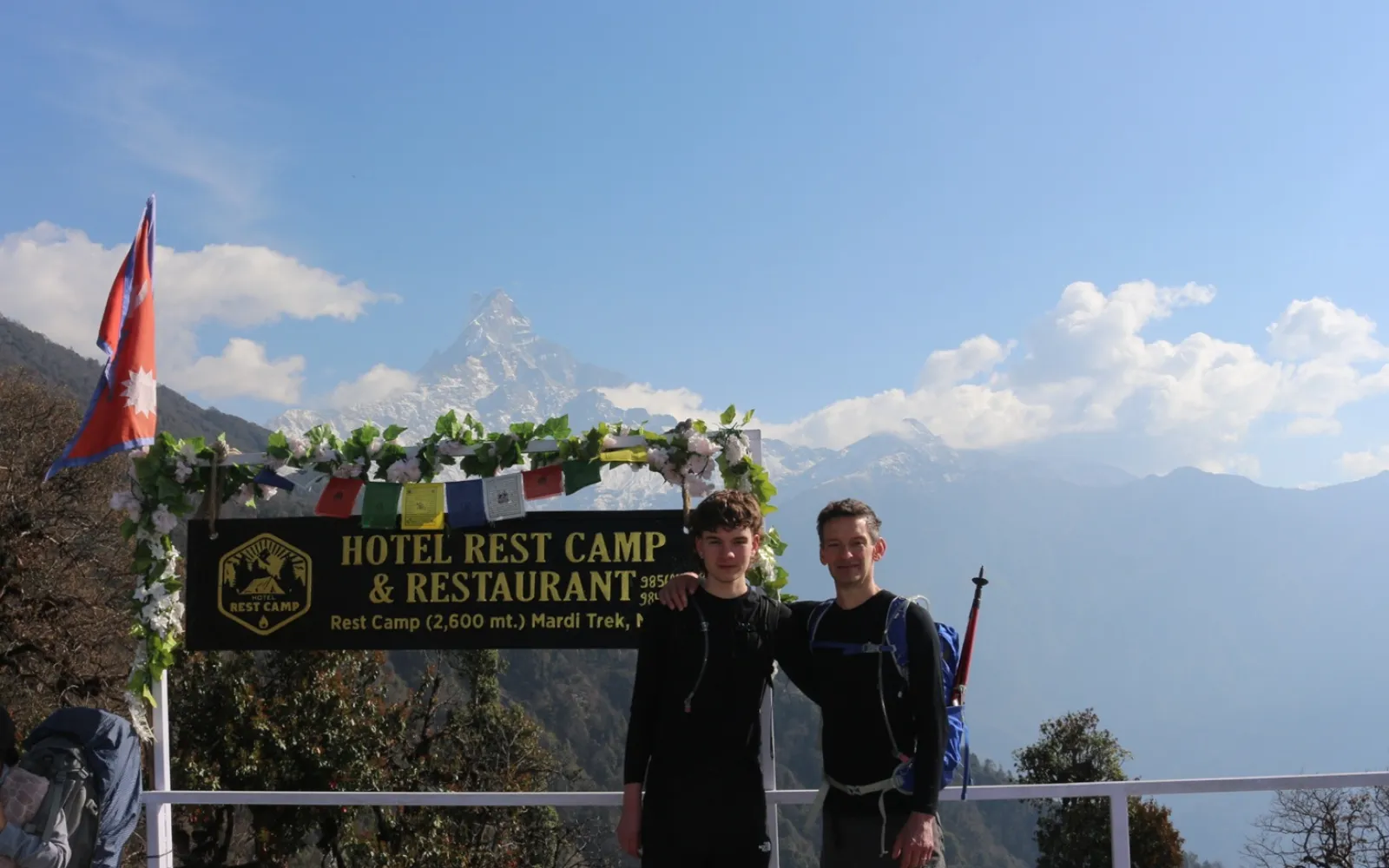
The Mardi Himal Trek is a popular short trekking route in Nepal’s Annapurna region near Pokhara. Here, you will trek through lush greens and traditional villages. The trek takes you through lovely rhododendrons to Mardi Himal Base Camp and High Camp where you can enjoy beautiful views of Mardi Himal.
Actually, it can be seen as cheaper for trekkers to trek this route without a guide, however trekkers will have to be mindful of regulation, navigation, weather, altitude and emergency assistance.
Main factors to consider
Check regulation – if you are a foreign trekker, you will have to be mindful of current regulations to ensure you have a licensed guide, plus a TIMS card from a trekking agency.
Navigation – You will need maps, offline navigation and clear information on the trail junction points.
Weather – The Mardi Himal Trek can be more challenging in the rain, snow, fog and cold.
Altitude – You will have to pace your trek and be mindful of any altitude symptoms as you go up to your high camp and base camp.
Emergency assistance – Can have poor phone signal and not much emergency assistance.
Cost – Compare how much it will cost on your own as apposed to having a licensed guide.
Mardi Himal Trek Overview
Trekking Detail | General Info |
Region | Annapurna Region, Nepal
Trek Start | Kande or depending on route.
Duration | Around 4-6 days from Pokhara.
Highest Point | Mardi Himal Base Camp area (around 4,500m).
Best Reasons to Trek | Lush forest, mountainous views and high vantage points.
Challenges | Steeper climbs, unpredictable weather and altitude.
Unfortunately yes. According to the Nepal Tourism Board’s trekking guidelines, foreign trekkers will require a licensed trekking guide to trek the Mardi Himal route. Mardi Himal is listed on the official guidance as a route that require a licensed guide and TIMS Card from a government registered trekking agency.
Meanwhile, foreign visitors should organise their guide and necessary documentation. However, some people may say they have trekked this route without a guide.
Official Guide Requirements:
Licensed guide – Hire a licensed trekking guide from a government registered trekking agency.
TIMS card from an agency – According to official guidance, you will need a TIMS card from a registered agency.
Conservation permit – You will need the correct conservation permit for the Annapurna Conservation Area.
Plan ahead – Ensure everything is organised with your documentation, guide and conservation permit.
Check latest guidance – Ensure you check the latest guidance from the Nepal Tourism Board.
Trekking Alone or with a Guide
Trekking Detail | What It Means
Treking without a guide | Trek without a guide meaning you will not be following the official requirement for foreign trekkers.
Treking solo with a private guide | You will be a client and trek with your own guide.
Small group |You will be with other trekkers and will have a guide from a registered agency.
Private guide |You will have a flexible itinerary with your own guide.
How to Legally do the Mardi Himal Trek in 2026 and 2027
Firstly, ensure you have a licensed guide from a government registered trekking agency. Secondly ensure you have organised your conservation permit for Annapurna Conservation Area, itinerary, insurance and emergency arrangements.
The Mardi Himal is listed on the Nepal Tourism Board as a route that requires a guide and TIMS.
Therefore, it is best to follow the official requirements to ensure you are safe as a foreign trekker.
When considering trekking Mardi Himal without a guide it can seem like a good option. However, it should be noted that it is a route that is required to be done with a licensed guide with TIMS issued from an agency (Nepal).
Meanwhile, the route takes you through forested areas, high inclines and high altitude areas so can make navigation, finding accommodation and emergency situations slightly harder for those without professional help, especially after Forest Camp.
Pros and Cons of Trekking Without a Guide
Pros
You can go at your own pace on the days you wish to walk. Individual travellers may prefer this.
Going at your own pace can mean you get more time to take photographs and appreciate the scenery.
You can save on some guiding costs, however you need to follow the correct regulations.
Experienced hikers may enjoy planning out routes, accommodation and distances.
Cons
Do not plan to do this route without a guide as it is required for foreigners. It can be difficult to navigate through the forested areas, junctions, fog and snowfall.
Solo travellers may struggle to find help in emergency situations. The high altitude can affect how you plan your trek to High Camp and Mardi Himal Base Camp. You need to be careful with your pace and monitor symptoms. During busy times there may be limited availability for rooms at popular accommodation.
Elevations and Common Walking Areas
Location | Approximate Elevation | Notes
Kand | 1,770m | Common starting point for Kande route.
Australian Cam | 2,060 | Tree and hill walk nearby.
Deural | 2,100 | Common junction areas.
Forest Cam | 2,520 | Tree trails and accommodation.
Low Cam | 2,970 | Start of opening up to mountain views.
Badal Dand | 3,210 | High exposure on ridge walks, changing weather.
High Camp | 3,580 | Accommodation at a higher altitude.
Mardi Himal Base Cam | ~4,500 | High altitude destination with steep trail.
Note: Elevations are an approximation. Depending on the map, accommodation and exact end point the elevation can vary slightly. Australian Camp and Deurali may not be on the same route.
To hire Guide or Not to hire Guide?
Factor | Without a Guid | With a Licensed Guide
Navigatio | Require your own navigation skills | Professional navigation provided.
Daily Pacin | Greater control | Flexible within safe conditions.
Accommodatio | Plan your own | Guide can help with finding accommodation.
Emergency Situation | Require your own help. | Guide can help with finding the right help.
Foreign Trekker | Do not meet requirements for guides | Can help with following the correct regulations.
As a foreign visitor it is best to have a licensed guide to help with your planning and safety. While a guide cannot fully protect you from any dangers of the mountain.
Having a licensed guide will help foreign visitors with navigation whilst on the trek, understanding local culture and changes in mountain conditions. A knowledgeable guide will be able to help with accommodation, explaining different routes and helping with finding help in case of illness, injury or extreme weather.
As the trek can get quite high in elevation (1,770m at Kande to ~4,500m at Mardi Himal Base Camp) and you will be going up to High Camp (~3,580m) you will want to take it slow and be aware of any symptoms of altitude sickness.
Main Benefits
Guides will help with navigating the correct routes through Forest Camp, Low Camp, Badal Danda and High Camp.
Knowledgeable guides can identify any possible altitude related symptoms and help with getting you down or medical help.
You will be able to identify when to delay departure or turn back due to poor visibility, snow or wind.
They will help with finding the right accommodation.
They will be able to help with finding the right accommodation by speaking to the owners and local service providers.
They will help you understand local culture, village life and natural surroundings.
Elevations and How a Guide Can Help
Location | Approximate Elevation | How they can help
Kand | 1,770 | Check your itinerary and walking.
Forest Camp | 2,520m | Help with the tree trail and accommodation.
Low Cam | 2,970m | Check your pace and changing conditions.
Badal Dand | 3,210 | Monitor exposure to wind and poor visibility.
High Camp | 3,580m | Help identify any altitude symptoms.
Mardi Himal Base Camp | 4,500m | Help with route choices and safe descent.
How to Find a Qualified Guide
Ensure they have the correct license.
Ask how many times they have trekked Mardi Himal and if they have knowledge on safety at high altitudes.
Ensure they have the right insurance. Check what they have for emergencies.
Ensure they have the right language skills.
Ensure they have the right price per day, accommodation, food, transport and emergency plans.
Difference Between a Guide and Porter
A licensed guide will help with navigation, safety and local knowledge. Whilst a porter will just carry your luggage. While it is optional to hire a porter, as a foreign trekker you should follow the correct guide regulations.
5. Mardi Himal Trek Cost (With and Without Guide)
The Mardi Himal Trek costs vary depending on your itinerary, accommodation, transport, meal and guide. If you are a foreign trekker, always include the licensed guide and correct trekking documents in your budgeting according to published guidelines by the Nepal Tourism Board.
Additionally, comparing a package to budgeting yourself will help you understand what the real price of trekking is. You should not consider avoiding using a guide when trekking the Mardhi Himal route to save money as it is not legal for foreign trekkers.
Estimated costs of the Mardi Himal Trek – 2026/2027
This is an estimate and is not an exact guide to live prices. The below table shows approximate costs in USD.
Cost Description| Estimated Cost| Notes
Transport to trailhead from Pokhara| $5-$25 per person| Depends on the route and whether you are sharing transport.
Licensed Guide| $25-$40 per day| Check whether food, accommodation & insurance is included.
Accommodation| $5-$15 per night| Basic teahouse rooms. Prices and availability will vary.
Food & Water| $20-$35 per day| Depends on what you eat and where.
ACAP Permit| Check current price| Required for the conservation area you will be trekking.
TIMS| Check current price and process| Check the current price and process with the agency.
Optional| Porter $20-$30 per day| Depending on what you are carrying, and what is included & insured.
Costs of Mardi Himal Trek (With Guide & Without Guide)
Cost Description| With Guide| Without Guide
Guide | Usually included| Must be organised by foreign trekkers.
Accommodation| May be included| Paid directly or organised by you.
Food| Depends on the package| Usually paid separately.
Transport| Depends on the package| Organised separately.
Permits & Documents| Check what is included in your package| Must be obtained.
Porter | Optional| Optional.
Tips to Keep Your Costs Reasonable
Use shared transport to help keep costs low. Check if food, accommodation, guide and permits are included. Consider the quality of services included.
Sometimes cheaper packages could exclude important services & personal expenses. Book early to ensure you have a good guide and available accomodation. Check what is included in the Porter cost. Ask how much they will carry, what is insured and what their working hours are.
If you are using Haven Holidays, only publish the confirmed price of your package for 2026/2027. Always check what is currently included within the company to avoid confusion with market estimates.
6. Mardi Himal Trek Permits & Documents
Foreign trekkers will require an Annapurna Conservation Area Permit (ACAP) and correct Trekkers Information Management System (TIMS) card. The Mardi Himal trek is specifically mentioned in guidelines by the Nepal Tourism Board as requiring a licensed guide and TIMS card issued by an agency.
Here, you should organize your documents with the correct authorities or government registered trekking agency. Having your passport and copies of permits will help you register your trek.
Required Permits
Annapurna Conservation Area Permit (ACAP) – This will allow you to enter the protected area.
TIMS Card – This will record information about your trek and help manage your safety.
Licensed Trekking Guide – Foreign trekkers should organise a licensed guide with a government registered agency.
Passport – Bring your valid passport or what is accepted by the relevant permit authority.
Copies of permits – Make sure you have copies of your permits and relevant treking documents.
Costs of Mardi Himal Trek Permits
Below is a table with current permit prices from the official permit authorities in Nepal. Always make sure to double check before you go:
Permit/Document | Foreign Nationals| SAARC Nationals
ACAP Entry Permit| NPR 3000| NPR 1000
TIMS Card | NPR 2000| NPR 1000
How to Get Mardi Himal Trek Permits
Contact a registered agency and organise a licensed guide and TIMS card from the agency. Apply for your ACAP permit by using the official NTNC permit system or an authorised permit counter. Bring your ID details. Make sure your name, nationality and trekking details match your ID. Keep your documents to hand.
Tips for Mardi Himal Trek Permits
Always check if your package includes both permits. Some companies will not include government costs in their advertised prices. Always check the most up to date information from the Nepal Tourism Board TIMS guidelines
Note: Don’t get confused between having a TIMS card and ACAP entry permit. Both should be organised along with a licensed guide before you begin your trek.
7. Health Risks of Trekking Mardi Himal
The Mardi Himal Trek follows a relatively short forest walk and ascent up steep hills and exposed mountain ridges to reach approximately 4500m. There are a number of risks including unpredictable weather, slippery ground, cold temperatures, getting lost and altitude sickness.
Meanwhile, there are also a number of issues that can occur quickly as you go from Low Camp (approx 2970m) to High Camp (3580m). It is important to follow published guidelines for guides in Nepal, and allow yourself to ascend gradually. You should also check the forecast and ensure you have appropriate clothing and emergency supplies.
Key Health Risks
Confusing paths – you will likely encounter forest tracks, forks in the path and poor visibility so you may get lost.
Unpredictable weather – it can rain, snow, be very windy and have poor visibility on exposed tracks near Badal Danda and High Camp.
Slippery ground – there can be increased risk of slipping on wet ground, mud, ice and snow.
Altitude sickness – as you go up to over 2500m you may get headaches, nausea, dizziness and feel unusually tired.
Cold – it can get quite cold at higher altitudes, particularly during the night near High Camp.
Poor mobile signal – there may be poor mobile signal in some forested areas.
Injuries – evacuation can be difficult if you get injured or the weather is extreme.
Key Altitude and Health Issues
Location | Approx Altitud | Key Issue
Kande | 1770m | Ensure you wear appropriate footwear and keep a steady pace.
Forest Camp | 2520m | Watch for slippery forest ground.
Low Camp | 2970m | Watch for symptoms of altitude.
Badal Danda| 3210m | Prepare for windy conditions & poor visibility.
High Camp | 3580m | Allow time to acclimatise and rest.
Mardi Himal Base Camp | 4500m | Watch for symptoms and ensure you carefully check the conditions.
Key Health Tips
Check the forecast – ensure you check the forecast and any updates on the path.
Wear appropriate clothing – ensure you wear warm layers, waterproof clothing, a head torch, water and navigation.
Pace yourself – do not rush when ascending. This is especially important above Low Camp.
Watch for symptoms – If you start to get symptoms stop ascending. If they continue or get worse descend.
Know when to stop – do not ascend to Base Camp if the weather is unsafe, visibility is poor or you are unwell.
In addition to, using a licensed guide can help avoid confusion, ensure you know what conditions will be like and can organise assistance in an emergency. Even licensed guides cannot completely avoid the risks of the mountains but making good decisions and preparing well is key.
8. Mardi Himal Itinerary & Navigation
The Mardi Himal Trek usually takes between 4-6 days to complete from Pokhara. During this time you will follow forest tracks to reach High Camp and the upper viewpoints. You will walk to Forest Camp, Low Camp, Badal Danda, Upper Viewpoint (approx 4200m) and/or Mardi Himal Base Camp (approx 4500m).
Here, the distance and length of your walks will depend on the start point, where you are staying overnight, the weather and your fitness. Foreign trekkers should use a licensed guide to ensure you know current conditions on paths.
5 Day Mardi Himal Itinerary from Pokhara
Day |Route | Altitude | Distance & Time
1 | Pokhara to Kande to Forest Camp | 1770m – 2520m | 8-10km, 5-6hr
2 | Forest Camp to Low Camp | 2520m – 2970m | 5-7km, 3-5hr
3 | Low Camp to Badal Danda to High Camp
| 2970m – 3580m | 5-8km, 4-5hr
4 | High Camp to Upper Viewpoint to Base Camp. Descend | 3580m – 4500m | Varying distance. Long excursion & descend can take approx 7-10hrs.
5 | Descend further to Siding. Drive back to Pokhara | Approx 1700m | Approx 8-12km walked. 3-5hrs. Drive back.
Here, this is an indication only. Distances vary depending on the path taken and where you are staying. On Day 4 you may wish to plan to stay overnight on your descent.
Navigation Tips
Use a licensed guide – ensure you follow the correct route and follow published guidelines for trekking in Nepal.
Check where you are staying – ensure there is somewhere to stay at each lodge. This is particularly important during peak trekking times.
Download maps – download maps to ensure you have them available. There may be little mobile signal on the ridge.
Leave early – you want to have enough daylight to visit the upper viewpoints and return.
Ask locals – ask your local guide and lodge staff if there will be any fog, snow, damage to the path and poor visibility.
Plan your descent – do not combine your Base Camp excursion with a long descent if you are tired or the weather is causing additional risks.
Overall, the Mardi Himal trek needs careful planning. An accurate itinerary, knowing the altitudes and using the correct guidance will allow you to enjoy the beautiful views of the Annapurna mountains whilst keeping the risks of high altitude walking to a minimum.
10. Should I go on a Mardi Himal Trek without a guide?
It’s not advisable for foreign trekkers to go on the Mardi Himal Trek without a licensed guide as outlined by the Nepal Tourism Board. You will need a licensed guide and TIMS card organised through an agency.
Here, you’ll not lose any independence with a guide! Solo travellers can enjoy an individual itinerary and you can dictate your pace. If you’re looking for an affordable option, you can go on a group trek so you can split some of the costs with others.
What style of Trek do I want to go on?
Private Guided Trek – ideal for those that want a personal guide, flexible walking schedule and personal trek.
Group Guided Trek – great for solo travellers who want to meet other hikers and potentially save some money.
Guided Trek (with porter) – great for those that want a guide to carry their luggage on the steep forested areas and high altitude areas.
Guided Trek (without porter) – ideal if you can carry your own day pack.
Things to double check!
What you need to make sure:
Licensed Guide – Make sure your guide has a licence and has experience in trekking.
Permits – Ensure you have your ACAP and TIMS card issued by your agency.
Accommodation – Make sure you know where you are staying overnight and you’ll have a room.
Transport – Ensure you have transfers arranged from Pokhara and know what trail head you are starting from.
Trek – Make sure you know how long you’ll be walking for, high altitude areas and how you’ll be coming down.
Safety – Double check your insurance, emergency contacts and evacuation.
Plan your Guided Mardi Himal Trek with Haven Holidays
Here, Haven Holidays Nepal can help plan your guided Mardi Himal Trek. Make sure you know what the package includes, what the price is, what guide services and permits you’ll be paying for.
How long do you want to go? Choose a 4,5 or 6 day trek to fit your time and fitness.
Know your budget- Choose between a private or group trek.
Altitude- Make sure you know how much time you’ll need to take breaks and how long the upper viewpoint will take.
Book in advance- Ensure that your guide, permits and accommodation are organised for when you go in busy seasons.
In conclusion, the Mardi Himal Trek is a great trek to enjoy some beautiful Himalayan views. Make sure you plan it properly. Get in touch with Haven Holidays Nepal to plan your guided Mardi Himal Trek around your schedule, budget and preferences.
1. Can Foreigners Trek Mardi Himal in 2026/2027 Without a Guide?
Unfortunately, you should not attempt a Mardi Himal trek without a licensed guide. The Nepal Tourism Board list Mardi Himal as one route where trekkers must have a licensed guide. Get your guide and the necessary documentation organised through a registered trekking agency.
2. Do I Need to Use a Licensed Guide on Mardi Himal?
Yes, Mardi Himal is currently listed by the Nepal Tourism Board as one of the routes that require a licensed guide. Foreign trekkers should always hire a licensed guide through a registered trekking agency. Make sure you check the latest information as Mardi Himal is often described to be an open trail to trek freely in older blogs.
3. Can I Trek Mardi Himal Alone With a Private Guide?
Yes, you can trek Mardi Himal as a solo trekker. You may want to hire a private guide which could be a bit more expensive. Your trekking agency can help with organising the guide, permits, TIMS if required, accommodation and transport.
4. Can Nepali Trekkers Trek Mardi Himal Without a Guide?
In general, Nepali trekkers do not have to use a guide. However, the Mardi Himal route does currently require you to use a licensed guide according to the Nepal Tourism Board. This only applies to foreign trekkers. Nepali trekkers will still need to enter conservation areas and follow any local rules that are in place. Always check the current permit costs and what will be required at checkpoints.
5. How Much is a Trekking Guide for Mardi Himal?
A Mardi Himal guide will typically cost between USD 30 - 40. The price will depend on the experience, language, season and what is included. Make sure to find out if the price includes feeding, accommodation and transport for your guide. If you have other trekkers with you on a shared guide it can be a cheaper price.
6. Can I Use a Porter Instead of a Guide?
No, you cannot use a porter. They will just carry your luggage. You will need to hire a licensed guide. However, if you can find a guide with porter experience they should be able to help. Just make sure they have the correct licence and your agency can confirm guidelines are in place.
7. What Permits Will I Need for Mardi Himal Terk?
Foreign trekkers will generally need the Annapurna Conservation Area Permit (ACAP) and TIMS card from an agency. The official permit costs are NPR 3000 for the ACAP and NPR 2000 for the TIMS card. However, always check the current prices and what you will need. You will not usually need a restricted area permit.
8. Is Mardi Himal Trek Safe for Solo Travel?
If you are reasonably fit and properly prepared you can trek Mardi Himal as a solo trekker. You will need a licensed guide. The trail does reach higher altitudes and be quite cold with fog, snow and steep sections. It’s best to check the forecast and go up slowly. Bring the right clothing and listen to your guide if the conditions are bad.
9. Can I Go on a Group Trek to Save on the Cost of a Guide?
Yes, going on a group trek can save you money. The guide cost will be split between people. Sometimes the transport cost will also be split. It may be easier to get your accommodation organised for group departures. Make sure to check how many people are in your group, when they are leaving and what is included. Always check they are a government registered agency.
10. How Can I Hire a Guide?
You can hire a licensed guide from a government registered trekking agency in Kathmandu or Pokhara. Make sure to ask them if they can confirm they have a licence, experience on Mardi Himal and insurance. Also ask who will organise your ACAP permit, TIMS card, accommodation and transport. Request a written itinerary and clear pricing.
Our travel experts are ready to assist you with any questions.
Send us a message.Have a question before you book? Send your enquiry below and our travel experts will get back with the required information.