Nepal has some of the world's best Himalayan trekking routes, from easy walks along gentle valleys to challenging high-altitude expeditions. However, unpredictable weather, uneven ground, altitude sickness, scattered mountain communities and limited facilities require particular safety precautions.
Therefore, make smart preparations, stick to realistic itineraries and make responsible decisions on your Himalayan trekking holidays. Here are 15 essential safety tips for trekking in Nepal covering trail choice, fitness, high altitude, weather conditions, clothing, permits, guides, insurance and emergency procedures.
In addition, a professional trekking company and an appropriately licensed guide can offer expert advice, organize support services and help in case of an emergency. At Haven Holidays we ensure well-planned schedules, adequate support and responsible trekking to help you prepare for a safe Himalayan adventure.
Why Trekking Safety Matters in Nepal
Safety factor | Main concern | Recommended action
High altitude | Altitude sickness | Ascend gradually and recognize symptoms
Changing weather | Snow, rain and poor visibility |Check forecasts and local advice
Steep trails | Slips, falls and injuries | Wear suitable boots and walk carefully
Remote locations | Delayed medical assistance| Carry insurance and emergency contacts
Limited facilities | Restricted treatment options | Pack essential medication and first-aid supplies
Essential Safety Priorities Before Departure
Plan realistically: Allow enough time for walking, acclimatization and unexpected delays
Prepare properly: Train adequately and pack equipment appropriate for your route and season
Choose reliable support: Use a registered trekking company and an appropriately licenced guide
Stay informed: Check current permits, local restrictions, weather forecasts and trail conditions before departure
Selecting a suitable trekking route is one of the most important safety considerations in Nepal. Therefore, consider your fitness, previous experience, number of days available, walking hours per day and tolerance for remote mountain conditions before making a reservation.
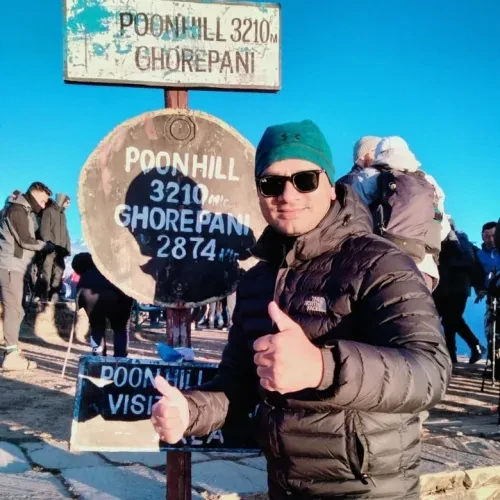
For instance, the Ghorepani Poon Hill Trek with a maximum altitude of 3,210 m usually takes 3-5 days.
By contrast, the Everest Base Camp Trek involves a 12-14 day trekking itinerary with altitudes of up to 5,364-5,367 m at the base camp and 5,545 m at Kala Patthar.
In addition, the Annapurna Base Camp Trek reaches a maximum altitude of around 4,130 m while Mardi Himal's upper viewpoints reach approximately 4,200-4,500 m.
Likewise, the Manaslu Circuit involves crossing Larkya Pass at approximately 5,106 m and requires special preparations for high altitude.
Trekking Route Comparison: Difficulty and Safety
Trekking route | Highest point| Typical duration | Main safety consideration
Ghorepani Poon Hill |3,210 m | 3-5 days | Stone steps and steep descents
Mardi Himal | Around 4,500 m | 4-6 days | Steep trails and exposed sections
Annapurna Base Camp | Around 4,130 m | 7-12 days| Altitude and changing weather
Everest Base Camp | 5,364-5,367 m | 12-14 trekking days | Acclimatization and altitude sickness
Manaslu Circuit | Larkya La, 5,106 m | 12-18 days | High passes and remote terrain
Note: Durations vary according to the starting point, itinerary, walking pace and acclimatization days.
How to Select a Safe Trekking Route
Beginners: Choose a manageable itinerary with moderate daily walking and sufficient rest
Experienced trekkers: Calculate steep ascents, high passes, trail exposure and remote sections before attempting demanding routes
Limited time: Do not try to compress the itinerary or remove essential acclimatization days
High-altitude routes: Allow gradual ascent and additional nights when sleeping elevations increase significantly.
In conclusion, a safe trekking route in Nepal should be chosen according to your abilities rather than ambitions. Consult a registered trekking company and licensed guide to review current trail conditions, realistic walking hours and appropriate safety measures.
Physical preparation before trekking in the Himalayas can support endurance on Nepalese mountain trails. Start training several weeks before departure based on your chosen route, altitude and current fitness level
For most moderate Himalayan treks, it is advisable to build up to six to eight weeks of consistent training whenever possible. More demanding routes such as Everest base camp and the Manaslu circuit may require even more extensive preparation, especially for less experienced trekkers.
In addition to normal walking endurance, hill walking, stair climbing and cardiovascular activities can help to build up fitness for long days on the trail. Gradually increase the duration of your workouts, and always carry a backpack of similar weight as you will during the trek.
Meanwhile, strength training for lower body and core muscles can support balance and endurance on uneven ground. Stability exercises and suitable trekking poles may also reduce the risk of falls on steep slopes.
However, even a good level of physical fitness cannot prevent acute mountain sickness or replace the need for proper acclimatization. Everyone who treks at altitude should allow sufficient time for gradual ascent, recognize symptoms, and follow an appropriate itinerary.
Recommended Training Activities Before Trekking
| Training activity | Suggested frequency | Main benefit |
| Brisk walking | 3–5 days weekly | Builds cardiovascular endurance |
| Hill walking or stairs | 2–3 days weekly | Prepares legs for climbing and walking |
| Strength exercises | 2 days weekly | Boosts lower body and core strength |
| Balance exercises | 2–3 days weekly | Supports stability on uneven ground |
| Longer practice walks | Weekly (increasing distance) | Builds endurance for full days on the trail |
In conclusion, the suggested training frequency acts as a starting point – adjust the intensity and frequency according to your abilities, health and recovery needs.
Practical Tips for Trekking Fitness Preparation
Begin progressively: Gradually increase the duration and intensity of your walking and hill training
Practice with a backpack: Always carry some weight in your backpack to simulate the pressure of a real trek
Prepare for steep walks: If your tour includes serious descents, practice walking downhill to prevent knee injuries
Break in your gear: Wear your hiking boots on training walks to avoid blisters
Allow recovery: Do not overexert yourself - take rest days and reduce training intensity when needed
Here, a good training plan should prepare you for multiple days’ walking in a row, rather than one continuous effort. If you have any health concerns or are particularly out of shape, consult a doctor before beginning a strenuous workout regime.
As altitude increases, the air becomes thinner and contains less oxygen. This can lead to altitude sickness in people who ascend too rapidly. Even physically fit trekkers and climbers can suffer from acute mountain sickness (AMS), especially if they gain too much height in too short a time.
Meanwhile, common symptoms of AMS include headache, nausea, dizziness, unusual tiredness and loss of appetite. Many of these share symptoms with a common cold or flu, but AMS can occur on popular trekking routes such as Everest base camp, where the trail reaches an altitude of around 5,364–5,367 m.
It is, therefore, important to plan for sufficient acclimatization. General guidelines suggest that above 3,000 m, you should not increase your sleeping altitude by more than 500 m per day, and take an extra day of acclimatization for every 1,000 m of ascent. There is no guarantee that this will prevent altitude sickness entirely.
Here, these are general recommendations, and acclimatization needs can vary between individuals. If you experience symptoms of altitude sickness, do not continue to ascend. Consult your guide or a qualified medical practitioner.
Mor importantly, increasingly severe symptoms, problems walking or confusion can be signs of life-threatening altitude sickness. Arrange immediate descent and medical assistance if these develop – do not try to move someone suffering from AMS on their own.
Common Altitude Sickness Symptoms and Warning Signs
| Symptom or sign | Concern | What to do |
| Headache, nausea or dizziness | Possible altitude sickness (AMS) | Stop and assess your symptoms |
| Feeling unusually tired or loss of appetite | Possible AMS | Take it easy and monitor your condition |
| Increasing headache or vomiting | More severe AMS | Seek medical advice and consider descending |
| Being unsteady on your feet or experiencing confusion | Possible high-altitude cerebral edema (HACE) | Arrange immediate descent and emergency assistance |
| Feeling short of breath when resting or worsening cough | Possible high-altitude pulmonary edema (HAPE) | Arrange immediate descent and emergency assistance |
Note: The symptoms listed above cannot diagnose altitude illness on their own. If you experience any of the more severe warning signs, arrange emergency descent and medical treatment immediately.
Essential Acclimatization and Altitude Safety Tips
Get to know your symptoms: Inform your guide immediately if you feel unwell
Do not continue to ascend if you feel any symptoms of altitude sickness
Descend immediately if your symptoms worsen
Avoid sleeping at a higher altitude if you feel unwell
Consider medication: Consult a medical professional about drugs to prevent or treat AMS if appropriate
In summary, drinking enough fluids can support general wellbeing, but will not prevent altitude sickness. Medication should never be used as a substitute for careful altitude management.
It is extremely important to consult weather forecasts before trekking in Nepal, as unpredictable mountain weather can affect your safety during hikes in the Himalayas.
While there are typically great trekking conditions during the main seasons, it is not uncommon to experience colder temperatures, strong winds or reduced visibility during hikes, particularly on higher-altitude trails.
For example, trekkers on the routes to Everest Base Camp, Annapurna Base Camp and Manaslu Circuit should be especially cautious of fluctuating temperatures and challenging conditions on some of the paths.
In addition, strong winds, thunderstorms and snowfall can present additional challenges when trekking in mountainous areas.
Before leaving for a trip, it is recommended to consult local forecasts and ask your licensed mountain guide or your lodge owner about current trail conditions. You may also want to discuss potential concerns regarding mountain passes, ridge walks or risky terrain features with your trekking company or guide.
If threatening weather threatens your safety, it is better to postpone your trip or stay in a village until conditions improve.
At the same time, you should not hike any high mountain passes if severe weather is forecasted or if visibility is reduced due to snowfall or smog.
Additionally, it is important to consider potential weather hazards when planning your travel or transit to various regions through mountainous areas:
Weather hazard |Main risk | Recommended action
Heavy rain |Risk of slippery trails and landslides |Avoid potentially hazardous areas or saturated slopes
Snowfall |Reduced visibility and obstructed paths |Check the state of the route and adapt your journey
Strong winds | Risk of balance disorders and heat loss |Avoid dangerous exposed areas if high winds are expected
Cloudy conditions and low-hanging clouds |Challenges with orientation |Stick to safe areas around your guide, and do not go anywhere on your own
Thunderstorms |The threat of lightning |Strive to find an alternative shelter location
Sudden cold temperatures | Hypothermia and accompanying disorders |Change to warm clothes and dry up if you are getting cold
Tips for minimizing weather-related risks while trekking
Check the weather forecast before departure and consult local guides about current conditions
Leave early enough to complete the planned trip during daylight hours
Avoid potentially hazardous areas during inclement weather
Prepare waterproof clothing and gear
Use your guide’s recommendations and local knowledge when the weather changes
When trekking in the Himalayan areas of Nepal, it is important to adopt your plans to changing conditions to ensure your safety.
Importantly, a local licensed trekking guide or a qualified trekking company can advise you on the real risks posed by unpredictable mountain weather and help plan your route to minimize potential dangers.
Preparing the right equipment and clothing plays an important role in any trekking adventure. Pack the gear and clothing you will need according to the route and time of year, and plan your mountain trekking wardrobe around the maximum altitude, expected weather and access to first-aid facilities.
In addition to, make sure you have well-fitted, high-quality trekking boots that can provide enough support and stability on rocky trails or steps.
Likewise, it is also important to pack clothing that can keep you warm in cold mountain conditions, including long-sleeved t-shirts, sweatshirts, fleece jackets and waterproof clothing.
As you ascend to higher altitudes, you will likely encounter colder weather, making it even more important to pack a warm hat, gloves or sunglasses to protect yourself from the wind and sun.
At the same time, a headlamp with spare batteries can be extremely helpful when exploring mountain trails or during sudden changes in the weather.
Another important piece of mountain trekking gear includes a high-quality water bottle and access to reliable water purification sources.
Likewise, do not forget to bring any personal medications and a sports medicine kit for minor ailments such as headaches or allergic reactions.
Finally, you may consider bringing trekking poles for greater stability on steep inclines and slopes.
Although a qualified trekking guide or porter can pack much of your equipment, you should not leave any safety gear in your main backpack during hikes, as adverse weather conditions can occur unexpectedly.
Clothing | Safety equipment | Importance
Trekking boots, including warm and waterproof shoes for high mountains |Prevent injury and assist you in changing conditions |Choose comfortable and stable gear suitable for the territory
Layered clothing, including t-shirts, long-sleeved shirts, fleeces and hoodies |Assist in keeping you warm in mountainous conditions and adapting to sudden temperature changes |Dress appropriately for the time of year and current weather conditions
Waterproof raincoat and waterproof pants |Keep you dry in case of sudden rainfalls | Choose reliable and high-quality equipment
Warm hats, thick gloves, sunglasses and sunscreens | Protect you from cold temperatures and harmful UV radiation at high altitudes |Select clothing and accessories with reliable protection
Headlamp and extra batteries |Provide light in case of night travels or other sudden changes in daylight conditions |Purchase equipment with long-lasting and stable light
Water bottle and water-treatment supplies |Ensure a continuous supply of clean, treated water |Drink treated water and avoid risky water sources
Personal medication and first aid |Assist in treating simple illnesses, minor injuries and allergies |Carry any other medication, supplements or sport nutrition if needed
Trekking poles |Increase stability and reduce stress on knee joints during prolonged hikes or climbs |Follow the rules for using trekking poles and use them sparingly in potentially risky situations
When packing gear for your mountain trek, it is essential to prioritize the individual needs and priorities of each hiker.
At the same time, you should also take into account the specific altitude and terrain of the area to choose the most versatile and reliable clothing and equipment options.
Here, in terms of minimizing potential risks on mountain trails, appropriate gear is an absolute priority when trekking in Nepal and other mountainous areas.
While it is impossible to cover every potential danger on hikes, you can significantly reduce many risks with quality gear and equipment. Make sure to review your trekking equipment and gear list in advance with your trekking company and local licensed guide.
Hiring a local registered trekking company and guide in Nepal can help you prepare for the trip and manage emergency situations.
In addition, a professional guide will be able to navigate local trails and advise you on altitude sickness.
Furthermore, a trekking company can take care of permits, transport, accommodation, and other details before your arrival in Nepal.
Importantly, a local guide can also provide information on trails, identify danger zones, and watch for signs of acute mountain sickness.
In addition, it is possible to change plans if the forecast threatens to endanger health or safety. Nevertheless, it should be noted that hiring a guide cannot guarantee complete protection.
Before making a deal, it is necessary to clarify what is included in the package of provided services. It is also vital to confirm the documents that the guide must have, requirements for paying guests, and the documents needed for the chosen route.
The list of documents to check when hiring a trekking company in Nepal:
Company registration
Guide’s accreditation
Permits
Insurance
Emergency procedures
The package of provided services
Most importantly, the company will assist in securing the route, finding accommodations, and calling for help if necessary. In turn, the guide will be able to help navigate local trails and give advice in emergency situations.
Tips for Choosing a Safe Trekking Company in Nepal
Check the documents: Make sure that the company is registered and that the guide has the necessary permits.
Ask about altitude: Make sure the guide has developed a workable plan for acclimating to a high altitude.
Clarify the details: Get a detailed description of the documents, transport, and other services that will be provided.
Confirm the channels of communication: Make sure the guide knows how to contact emergency services if the phone is out of reach.
Study the Features of the route: Get information about the documents needed for a particular route and study the current requirements.
For instance, trekkers planning to go to Everest Base Camp, Annapurna Base Camp, or the Manaslu Circuit should get information about the specificities of their route.
In general, hiring a reputable company to ensure your safety and comfort while trekking in Nepal is advisable.
More importantly, a local guide can also help you prepare for the journey by gathering information about local trails and preparing necessary documents.
Choosing the right company, such as Haven Holidays , will make it easier to organize a trip and take into account all the details.
It is necessary to follow the rules on the trails, as they are established for a reason. The mountains can be dangerous, and one should not provoke unforeseen circumstances.
In addition, mountain paths can be covered with rocks and gravel, so it is important to be cautious and attentive to the guide.
Importantly, the higher the altitude, the more dangerous trekking can be. This is especially true for mountain passes with high altitudes, such as Mount Everest (around 5,364-5,367 m) or Larkya La Pass (around 5,106 m).
While climbing, it is important to avoid steep slopes and sharp turns of the trail. When going down, it is necessary to slow down and maintain a safe distance.
If there is a danger of rocks rolling down or landslides on the way, the safest option is to wait until the path is cleared.
In fact, it is important not to use unverified and unknown ways to shorten the journey because they can turn out to be hazardous.
In addition, it is necessary to arrive at the hostel or hotel in time when the sun sets.
Here, below are some of the most common dangers while trekking on mountain trails and ways to mitigate them.
Trail hazards and solutions :
Trail Hazard | Primary Danger | Avoiding and Mitigating Measures
Loose rocks | Slipping on unstable rocks | Walk carefully on unstable rocks
Landslide danger | Injury from rolling rocks | Follow the guide’s recommendations and use alternative routes
Steep slope | Trauma due to a fall | Slow down on steep slopes and use trekking sticks
Icy steps | Accidental step on ice | Obey the guide
Ridges – narrow mountain peaks | Windy and narrow peaks | Follow the guide
Poor visibility | Accidental deviation from the trail | Do not deviate from the trail even if it seems like a better or faster option
Tips for Staying Safe on Mountain Trails
Do not provoke danger: It is vital to follow the rules on the trails since they are established for a reason.
Walk slowly: Do not try to speed up on the mountain path, especially on slopes.
Keep a safe distance: Maintain a safe distance from other tourists if you are on uneven ground.
Follow the guide: It is critical to comply with all the-guide’s measures and recommendations.
Do not go to unfamiliar trails: Always choose well-known trails that have been traversed by many people.
Take care of the evenings: Do not go into the forest or on other excursions in the evenings. It is vital to return to the hostel or hotel before dark.
In the end, health and life are the most valuable things. A guide must change the route if the situation threatens the safety of the tourists, even if it means arriving late at the designated stop.
In conclusion, it is vital to pay attention to the guide’s recommendations to mitigate dangers and ensure the safety of all tourists.
Drinking enough fluids and eating balanced meals helps you to maintain energy during long trekking days in Nepal. Therefore, remain properly hydrated, bring enough safe drinking water and adjust your fluid intake based on your activity level, ambient temperature and individual requirements.
In addition, pay attention to nourishing meals that include carbohydrates, proteins and fats to support long walks in mountainous terrain. High-energy snacks like nuts, dried fruits, biscuits or energy bars also help to maintain energy levels during multi-day treks.
While trekking at altitude, you may experience reduced appetite, while cold temperatures and physical activity make it difficult to realize that you are tired. For this reason, take regular breaks, eat small meals and inform your trek leader about abnormal weakness, dizziness or relentless feelings of exhaustion.
Likewise, alcohol consumption is discouraged at altitude due to negative effects on judgement, coordination and sleep quality, while dehydration is intensified by excessive beer drinking.
In addition, be cautious about eating under-cooked meat or food that might have been stored under inappropriate conditions. It is preferable to avoid meat at high altitude unless proper storage and preparation methods are used.
Despite the importance of drinking water for people trekking in the Himalayas, overhydration is possible and can be as dangerous as dehydration. Pay attention to thirst, regular meals and gradual acclimatization to a mountain environment.
Hydration and Nutrition Guidelines for Trekking
Priority | Practical recommendation | Main benefit
Drinking water| Drink regularly according to personal hydration needs |Supports fluid balance
Water safety | Treat water with a reliable method | Reduces risk of intestinal infections
Main meals| Eat regular and balanced meals | Ensures energy for physical activities
Trekking snacks | Pack nuts, dried fruits or energy bars | Maintains energy levels
Rest breaks | Regular rests and fatigue evaluation | Reduces health risks related to overexertion
Alcohol avoidance| Avoid alcoholic drinks especially at altitude | Avoids impaired coordination and poor sleep
Practical Tips for Maintaining Energy
Eat a good breakfast before a long day of walking
Bring sufficient amounts of safe drinking water
Eat small meals and snacks while trekking
Recognize signs of dehydration (thirst, dark-yellow urine, headache, dizziness)
Inform your trek leader in case of persistent fatigue, vomiting or dizziness
Take it easy if rest breaks are insufficient to maintain energy levels
In conclusion, appropriate fluid intake and safe food choices are integral to remaining healthy and energetic during a Himalayan trek. However, sudden and unexpected worsening of fatigue, persistent vomiting or fainting episodes must not be treated as normal and should be evaluated by a medical professional.
Drinking water safety and personal hygiene play an important role in maintaining health while trekking in Nepal. Streams, tap water or any other untreated fluid sources contain pathogens that cause intestinal infections even if water is.
Therefore, it is essential to use water purification tablets, a reliable filter or any other individual preference method to remove disease-causing microorganisms from water.
In cases when bottled boiled water is available, buy such products from reliable sources and follow their recommendations regarding treating or storing this precious treasure.
Here, washing hands with soap and running water is the best way to avoid germs that cause illnesses such as diarrhea, vomiting and abdominal pain. If handwashing facilities are not available, use hand sanitizers and follow the instructions provided by the manufacturer.
Likewise, the role of food hygiene cannot be ignored, as contaminated meals or uncooked meat may lead to severe vomiting and diarrhea. Choose reliable tea houses and eat freshly prepared meals that include well-cooked meat and eggs.
Importantly, it is essential to pack enough toilet paper, feminine products or any other personal hygiene items and dispose of waste materials according to local rules. Do not contaminate water sources with human waste, while double bags can be used for disposing of plastic and other non-degradable materials.
Safe Water and Personal Hygiene Guidelines
Hygiene priority | Recommended practice | Main purpose
Drinking water | Filter, disinfect or boil | Reduce risk of intestinal infections
Water bottles | Wash and sanitize regularly | Avoid germs build-up
Hand hygiene | Wash with soap or hand sanitizer | Reduce risk of germs transmission
Food safety | Choose freshly cooked meals | Avoid food-borne diseases
Personal hygiene| Carry tissues, toilet paper and feminine products | Maintain cleanliness on a trek
Waste disposal | Use designated facilities by following local rules | Protect water sources from contamination
Practical Tips for Preventing Illness While Trekking
Never drink untreated water from streams, taps or any other questionable sources
Avoid touching the mouth of a water bottle and sanitize it regularly
Prefer freshly cooked and well-processed meals when choosing a restaurant
Pack hand sanitizer, soap or any other personal hygiene items
Follow toilet hygiene and waste disposal regulations provided by trek organizers or local authorities
Inform your trek leader about any symptoms of illness such as vomiting, diarrhea or persistent headache
In summary, good personal hygiene and safe drinking water are essential for minimizing health risks while trekking. However, severe vomiting, persistent diarrhea or excessive dehydration must always be evaluated by a medical professional and may require emergency medical care.
Good food hygiene and timely treatment of minor health problems can help trekkers avoid illness while trekking in Nepal. Typical minor health problems that require attention during a trek include stomach illness, respiratory infections, blisters, muscle soreness and minor cuts.
Therefore, eat food prepared in a clean, reliable lodge and wash hands before eating. Avoid suspicious food, undercooked meat, untreated water, and unpasteurized products if hygiene standards are questionable.
Moreover, prevent blisters by wearing well-fitted, broken-in trekking boots and moisture-wicking socks. If a hot spot develops, stop to allow the skin to heal, dry the affected area, and apply an appropriate blister dressing to prevent the formation of a blister.
Additionally, it is important to bring any personal medication and a basic trekking medical kit that addresses individual requirements. Consult with a certified medical professional before the trip, especially if existing health conditions or a history of allergies and particular medication requirements exist.
However, if vomiting persists, severe diarrhea develops, feverishness occurs, an open wound becomes infected, or unusual tiredness is felt, seek medical advice to determine if a rest day or even postponement of the trek is required.
Common Trekking Health Problems and Prevention
Health problem | Prevention or initial care | When to seek medical advice
Stomach illness | choose safe food and treated water
| Persistent vomiting, severe diarrhea or dehydration
Respiratory infection | hand hygiene and avoid sick people | Breathing difficulties, chest pains or worsening symptoms
Blisters – | wear suitable trekking boots and keep the feet dry | Increasing redness, swelling, pus or severe pain
Minor cuts | clean the wound and cover it with a suitable dressing | Deep wounds, uncontrolled bleeding or signs of infection
Muscle soreness | take it easy and allow sufficient recovery breaks | Severe pain, swelling or inability to walk normally
Practical Tips for Staying Healthy on a Nepal Trek
Prepare a medical kit with dressings, blister plasters and personal medication advised by a medical professional
Protect the feet by looking out for hot spots, changing wet socks and treating rubbing
Eat only fresh meals and avoid food stored under suspicious conditions
Report any symptoms to a guide if illness begins to affect trekking abilities
Seek advice if symptoms persist or worsen, rather than continuing the hike
In summary, it is important to seek early treatment for common trekking illnesses as they often require special measures, although rarely life-threatening. In addition, health conditions such as altitude illness should not be managed on one’s own, but rather with specialist advice. Therefore, if symptoms appear, it is better to consult a medical professional.
It is vital to check flight and transportation conditions several times before departure, since weather conditions and the terrain can affect the safety of mountain travel in Nepal. Here, strong winds, landslides, poor road conditions and low visibility can damage roads, delay vehicles, and affect the safety of air travel.
For example, flights between Kathmandu or Ramechhap and Lukla can sometimes be delayed due to weather conditions and other considerations. Therefore, it is important to allow extra days in the travel itinerary for unexpected flight delays rather than trying to catch alternative flights.
Moreover, travel by road to trekking regions may take considerably longer than expected, especially during periods of monsoon rains and landslides.
Before departure, it is essential to enquire about the current state of roads, alternative transportation options and potential delays with the trekking company.
Additionally, it is essential to include extra days in the travel itinerary if international flights are involved, particularly after completing a trek involving the Lukla flight.
Likewise, it is important not to put pressure on drivers or pilots to continue journeys in potentially unsafe conditions, and adhere to transport company rules. If arriving in Kathmandu involves a long drive, alternative transportation should be considered.
Common Transportation Risks and Safety Measures
Transportation risk | Possible consequence | Recommended action
Lukla flight delays | Missed trekking days or connecting flights | Allow buffer days and confirm flight arrangements
Landslides | Road closures and extended journeys | Check current road conditions before departure
Heavy rainfall | Slippery roads and reduced visibility | Follow local advice and postpone unsafe travel
Damaged mountain roads | Delays and difficult vehicle access | Use suitable vehicles and reputable operators
Schedule changes | Missed connections or accommodation | Maintain flexible bookings wherever possible
Practical Tips for Safe Trekking Transportation
Confirm flights with airline or trekking company to ensure departure arrangements
Allow buffer days before international flights, particularly after trekking itineraries involving Lukla
Check road conditions before departing for trekking trailheads such as Salleri or Dhunche
Choose appropriate vehicles and reputable operators for mountain road journeys
Avoid putting pressure on drivers and pilots to continue journeys in potentially unsafe conditions
Plan alternative travel options and communicate with transport operators regarding possible delays, extra accommodation costs and other expenses
In summary, it is crucial to leave sufficient buffer days in a trekking schedule in Nepal to allow for transportation delays. An experienced trekking company can advise on alternative travel options if flights or road journeys are affected by adverse weather conditions.
However, it is also essential to take out appropriate travel insurance to cover unexpected expenses such as extra accommodation or cancelled flights if connecting flights are involved.
Insurance can be a life-saver in the mountains, and not just financially. Most comprehensive travel insurance policies cover trekking and mountain accidents, altitude illness, and emergency helicopter rescue, but only up to a certain height and activity profile.
Here, make sure that your chosen plan actually covers:
The trek you want to do (e.g., EBC to Everest Base Camp is 5,364–5,367 m, Manaslu Circuit crosses Larkya La Pass 5,106 m)
Helicopter rescue and transportation
Emergency medical treatment
Altitude-related illnesses
Cancellation of the trip due to unforeseen events
Travel disruptions
Review the fine print of a policy to understand what is not covered, what conditions apply to emergency treatment and evacuation, and what documentation you will need to submit a claim.
Likewise, medical treatment and emergency helicopter rescue might be separate items, so make sure you have the coverage you need and understand the limitations and terms of coverage.
Also, inquire whether an evacuation can be claimed as an emergency if it is not done immediately or if authorization from the insurance company is required.
In case of an emergency, the priority is to seek medical help, and if necessary, to follow the rescuers’ instructions to the nearest treatment facility.
What to Check in Your Trekking Insurance Policy
Insurance requirement | What to verify | Why it matters
Maximum covered altitude | It should be higher than the highest point on your itinerary | To prevent issues with altitude-related claims
Trekking activities | Your specific route and permitted activities should be covered | To avoid issues with adventure sports being excluded
Emergency evacuation | Helicopter rescue, its cost, and terms of use | Covered in case of an emergency
Medical treatment | Emergency care, hospitalization if required, and related costs | Covered in case of an emergency
Pre-existing conditions | Any restrictions and disclosure requirements | Should be reviewed prior to departure
Trip cancellation and curtailment | Reasons covered and limitation of compensation | Refund of the paid premium in case of cancellation
Tips When Buying Trekking Insurance
Check the highest altitude covered by your plan – it should be higher than the highest point on your itinerary.
Review the insurance coverage in case of emergency helicopter rescue.
Find out if and under what terms and conditions you can use this service.
Review the list of exclusions in the insurance policy – make sure that your preferred activities are not prohibited.
Store a copy of your insurance policy and contact details of your insurance company in case of an emergency.
Always keep the insurance details with you when trekking and make sure that the policy covers the actual route and the highest point of your itinerary.
Communication and navigation devices are often the only link to the outside world in the mountains. Mobile phone coverage is unreliable in the Nepalese mountains, so trekkers need to have alternative means of communication and navigation.
Here, save your licensed guide’s, trekking company’s contact details, and your travel insurer’s emergency assistance number in your phone before departure.
Similarly, store essential telephone numbers of local insurance companies and other contact details of your group members, if any, offline in case of no mobile network.
Moreover, download offline maps to have an alternative navigation option if the phone’s GPS is not available.
In addition to, make sure that phone apps or any other GPS devices have a charged battery, and the phone will have enough power to last until the next charging point. Carry a power bank and charging cables in extreme cold; batteries freeze faster.
Importantly, having an alternative way of finding directions is necessary in the mountains, but it is not enough. A satellite phone or a similar device can be lifesaving for trekkers pressed in a remote area.
However, make sure that such devices are allowed in the region and that there is a rescue service that can use them in case of an emergency.
Also, never go off-road alone or without informing your guide or trekking company about your movements. In case of an emergency, it is safer to stay with the group and do what the professionals recommend.
Essential Emergency and Navigation Equipment
Item | Main purpose | Important safety consideration
Emergency contact list | Easy access to emergency contact details | Store a copy of emergency contacts offline
Offline maps | Navigation without mobile phone data |Make sure to download maps for the whole region
GPS-enabled phone or other devices | Orientation and navigation | Have charged batteries; bring a power bank
Mobile phone | Communication in case of emergency | The signal may be weak or non-existent
Power bank | Extra battery power | Keep devices safe from cold temperatures
Satellite communication device | Communication in remote areas | Make sure it is allowed and has coverage
Insurance details | Emergency assistance | Inform yourself about the terms of coverage
Tips for Staying in Touch With Guide and Group
Save important contact details of your guide, trekking company representatives, and their emergency phone numbers.
Download navigation maps for offline use on your mobile phone to have an alternative to GPS.
Keep your phone charged and have a power bank in case of sudden weather changes or longer stops on the way.
Inform your guide and trekking company about your whereabouts if you are going off-road or staying somewhere on your own.
Agree on safety measures and emergency procedures, including meeting points, in case of getting lost.
Discuss communication options in case of emergency if phone coverage is available or not.
Meanwhile, essential equipment can make a huge difference in an emergency situation, but it is not a replacement for local expertise. Also, remember that emergency services will not reach you quickly in remote areas.
Proper clothing, sun protection and hydration are crucial to staying well in Nepal's mountains. UV exposure increases at higher altitudes while wind and fluctuating temperatures can add to the cold stress, even on sunny days.
Likewise, apply a high-SPF sunscreen and UV-blocking sunglasses and a hat for facial protection. It is also important to cover the skin appropriately since it can be exposed to reflectance from the snow and other surfaces,
In addition, treat yourself to moisture-wicking base layers, insulated mid-layers and waterproof outer shells for warmth and protection from the elements. Pay particular attention to protecting your extremities and head in cold periods, breezy conditions and on high-altitude hikes.
In addition to, hypothermia is a potentially life-threatening condition caused by the body losing heat faster than it can generate. Shivering, confusion, slurred speech and impaired coordination are all symptoms, although in severe cases, shaking may stop.
If you suspect that someone has hypothermia, get them into shelter, change any wet clothing for dry items and slowly rewarm the person.
When hypothermia is accompanied by altered mental status or loss of consciousness, seek immediate medical attention rather than attempting to treat the condition yourself.
Cold and Sun Exposure Risks During Trekking
Hazard | Warning signs or effects | Recommended protection
Sunburn | Red painful or blistering skin | Sunscreen, protective clothing and shade
Eye exposure to UV | Eye discomfort and potential for snow blindness | UV-blocking sunglasses or appropriate glacier glasses
Cold stress | Shivering numbness and impaired dexterity | Warm clothing and dry garments
Hypothermia | Confusion persistent shaking and uncoordinated movements | Shelter gradual rewarming and emergency care
Frostbite | Numb pale or waxy skin especially on fingers and toes | Protection of exposed skin and limiting exposure
Dehydration | Thirst, dark urine, dizziness and tiredness | Safe water intake and appropriate rest
Practical Tips for Cold Weather and Sun Safety
Protect your skin from the sun's rays by applying suncream as directed with SPF for your altitude and using sun-protective lip balm
Layer your clothing for both insulation and ventilation while remaining responsive to the changing conditions
Keep your clothing dry to ensure the temperature-regulating properties of synthetic fibers function correctly
Be aware of the risks of cold injury, such as frostbite, with numbness being a warning sign
Recognize life-threatening situations including altered mental status, loss of coordination or loss of consciousness
Rest and rewarm as necessary if symptoms arise rather than continuing on your trip
Importantly, appropriate clothing and sun protection measures will reduce the risks, but a suspected episode of hypothermia or frostbite requires urgent attention. When in doubt, always err on the side of caution and seek professional medical assistance.
Recognition of potentially fatal conditions and the wisdom to turn back are a major part of the safety equation in trekking in Nepal. Making it to Everest Base Camp (EBC) at around 5,364-5,367 m or Larkya La Pass at 5,106 m is considerably less important than returning home in one piece.
Meanwhile, signs of distress may include worsening altitude symptoms or other life-threatening conditions. If you experience altitude-related difficulties, cease further ascent and seek advice as to the most appropriate course of action.
In the case of severe altitude illness, immediate descent and medical assistance should be sought.
In addition, signs of serious injury or illness or inability to continue safely should also be treated as an emergency.
More importantly, tell your guide immediately and seek appropriate medical assistance or evacuation.
However, the availability of search and rescue resources and the ability to conduct a rescue or evacuation mission may be limited by weather conditions, location and other factors.
Thus, helicopter rescue, for example, may be unavailable or inadvisable in conditions of poor visibility or strong wind.
Therefore, it is essential that you follow the directions provided by your professional guide and have an emergency response plan in place. It is important to realize that turning back or going down to the nearest village may be the safest option in some circumstances rather than attempting to continue on your trek.
Trekking Emergencies and Appropriate Responses
Warning sign | Main concern | Recommended action
Severe or worsening altitude symptoms | Serious altitude illness | Stop ascending and arrange for urgent assessment and descent
Confusion or inability to walk straight | High-altitude cerebral edema | Arrange emergency assistance and urgent descent
Breathlessness at rest | Possible high-altitude pulmonary edema | Seek urgent medical assistance and descent
Serious injury or inability to walk | Trauma or impaired mobility | Provide appropriate first aid and arrange rescue
Extreme exhaustion or collapse | Serious illness, injury or exhaustion | Stop protect the person and seek medical assistance
Dangerous weather or unstable trails | Exposure, falls or landslides | Turn back or seek shelter
Essential Rules for Mountain Emergencies
Prioritise safety over reaching a destination or viewpoint
Stop ascending if you are experiencing symptoms of acute mountain sickness
Seek urgent assistance for symptoms such as confusion severe breathlessness or loss of consciousness
Follow the advice of your professional guide and utilise appropriate emergency procedures
Prepare for delays by taking essential medication warm clothing communication devices and insurance information
Ensure that you are fully aware that the ability to change plans is often the most sensible course of action
In conclusion, there is no shame in turning back or delaying a summit bid if the conditions dictate or a sudden change in your health makes it unsafe to continue. The most sensible decision you can make in an emergency is to descend, return to the nearest village or abandon a planned ascent rather than continuing to put yourself at risk.
In order to trek safely in Nepal, research and prepare to avoid hazards that may arise during high altitude climbing and mountain walking tours.
Accordingly, train before the trek, plan your itinerary properly, acclimatize, check the weather forecast and pack appropriate medications, clothing and equipment.
In addition, monitor your health, drink purified or boiled water and recognize signs and symptoms of altitude sickness, so you can seek medical attention when necessary.
Importantly, always walk on safe trails and listen to local advice, so you are aware of conditions likely to be encountered on mountain trails.
Moreover, it is critical to return or modify plans if adverse weather or injuries are present.
Also, make sure to book your trek with a reputable trekking agency and hire a licensed mountain guide if it is mandatory or valuable for the route you have selected for your mountain climbing adventure.
Before your departure, learn about current permit regulations and confirm tour arrangements such that your travel insurance covers altitude risks, emergency helicopter rescue and medical treatments.
Nevertheless, bear in mind that although thorough preparation eliminates some risks, there is no doubt that high altitude trekking is an unforgiving environment and you should remain flexible to changing circumstances for the safety of everyone.
Final Safety Checklist Before Trekking in Nepal
Prepare yourself physically by training and practicing on rough ground
Plan your climbing tour itinerary in detail to allow sufficient time for acclimatization, rest and unexpected delays
Ensure all necessary documents and equipment are at hand
Pack suitable clothing, including warm, lightweight layers and sturdy shoes or boots
Make sure your insurance covers high altitude trekking and emergency rescue
Obtain and follow local advice about trail closures and weather conditions
Consult about the weather predictions with local trekking company
Plan Your Himalayan Trek With Haven Holidays Nepal
Haven Holidays Nepal offers expert advice about preparation for trekking in Nepal and can help you decide which are the best treks for people with different levels of fitness.
As professional Nepal trekking experts, we understand the mountain environment and the requirements of various climbing tours. We can provide realistic information about how to prepare for Annapurna Base Camp trek or Mardi Himal and Manaslu Circuit trekking route.
Here, contact us and learn about tour options for your interests in climbing and walking tours in Nepal and receive guidance on guide and porter hiring, documentation and permits, accommodation and other details concerning the mountain walking tour of your choice.
With the right preparation and responsible planning, you will be able to enjoy trekking in one of the most beautiful and challenging destinations in the world.
1. What to Do to Stay Safe While Trekking in Nepal?
The most crucial safety tips when trekking in Nepal are to choose a registered trekking company, to hire a licensed guide, to acclimatize properly and to track the weather forecast and the required equipment.
Likewise, it is also essential to arrange insurance with high-altitude trekking and helicopter rescue coverage, to consider local advice, and to leave a flexible schedule for the trek.
2. How to Avoid altitude sickness While Trekking in Nepal?
To avoid altitude sickness while trekking in Nepal, it is vital to allow the body additional time to acclimatize at altitude by climbing gradually and adding extra days to multi-day climbs to sleep at a lower altitude.
Here, the most common altitude sickness symptoms are headache, nausea, dizziness, tiredness, and loss of appetite. If the symptoms above continue, it might be necessary to descend to a lower altitude, as severe altitude sickness threatens life.
On the other hand, severe altitude sickness requires emergency care, and thus one should seek medical attention whenever the sickness is suspected.
3. Do I Need to Hire a Trekking Guide in Nepal?
Hiring a trekking guide is necessary to help you navigate the challenging terrain, to give advice about the local area and to arrange accommodations and emergency care. Additionally, a guide is mandatory based on several trekking rules; therefore, it is critical to check the requirements for a particular route and to find a reputable trekking agency several weeks before departure.
4. How to Stay Safe While Trekking in Bad Weather Conditions in Nepal?
Before heading to specific trekking places, it is essential to monitor the weather forecast and to ask the trekking guide about the expected weather and trail conditions for the planned travel date.
Moreover, it is mandatory to pack warm clothes, waterproof gear, and appropriate trekking boots since bad weather conditions increase the risk of landslides and rockfalls, and the path can be slippery. Hence, when the weather looks severe, it is better to stay in the lodge rather than risk trekking.
5. What Travel Insurance Do I Need When Trekking in Nepal?
It is necessary to secure an appropriate travel insurance package that covers trekking, emergency treatment, and rescue by helicopter if required since standard travel insurance policies offer only limited altitude coverage and exclude helicopter rescue. One should also carefully read the travel insurance terms and conditions and highlight the maximum altitude permitted by the policy. Finally, it is essential to remember the insurance company contact information in case of emergency.
6. What to Pack for Trekking in Nepal?
The most vital equipment includes well-broken trekking boots, layered clothing, waterproof jacket and pants, warm socks and a cap, a headlamp, sun cream, and a daypack for carrying water, food, and personal belongings. Another useful item is medication, including a personal medical kit, and means of purifying water. Generally, the list depends on the season and altitude of the chosen route.
7. How to Avoid Injuries While Trekking in Nepal?
To avoid injuries while trekking in Nepal, it is vital to maintain an appropriate speed, to wear reliable trekking boots, and to use trekking sticks while climbing up and down steep slopes. Notably, trekking boots provide the necessary traction, and poles help trekking enthusiasts to balance on slippery stones and uneven ground. Besides, the hiker should pay attention to the trail, boulders, and slippery places to avoid hazardous obstacles, such as loose rocks and uneven slopes.
8. Is It Safe to Trek Alone in Nepal?
Since some of the trekking routes require a guide, and the mountains and valleys can present unexpected dangers, it is safer to hire a licensed local guide or to go with a group of friends. Before departure, it is essential to check the rules regarding independent trekking and to inform one’s trekking company about the planned route and estimated dates.
9. How to Stay Healthy and Avoid Food and Water Contamination Issues While Trekking in Nepal?
While trekking, it is vital to drink water that has been boiled, purified with special tablets, or filtered. In addition, it is necessary to maintain good hand hygiene before eating and to ensure that food is prepared in a clean environment free of contaminants.
Although it is advisable to avoid drinking untreated water from springs, taps, and rivers, it is essential to carry water purification means, especially when hiking in remote places with scarce medical facilities. Finally, one should also follow the appropriate food safety and hygiene practices to avoid dangerous bacteria proliferation.
10. What to Do in Case of Emergency While Trekking in Nepal?
In case of an emergency situation, it is crucial always to inform the trekking guide or the trekking team about the problem and to reach a safe place in case of altitude sickness, injury, or hazardous weather conditions.
Besides, it is critical to have personal insurance that provides helicopter rescue coverage and an emergency contact list. Most importantly, one should never continue climbing while experiencing altitude sickness.
Our travel experts are ready to assist you with any questions.
Send us a message.Have a question before you book? Send your enquiry below and our travel experts will get back with the required information.