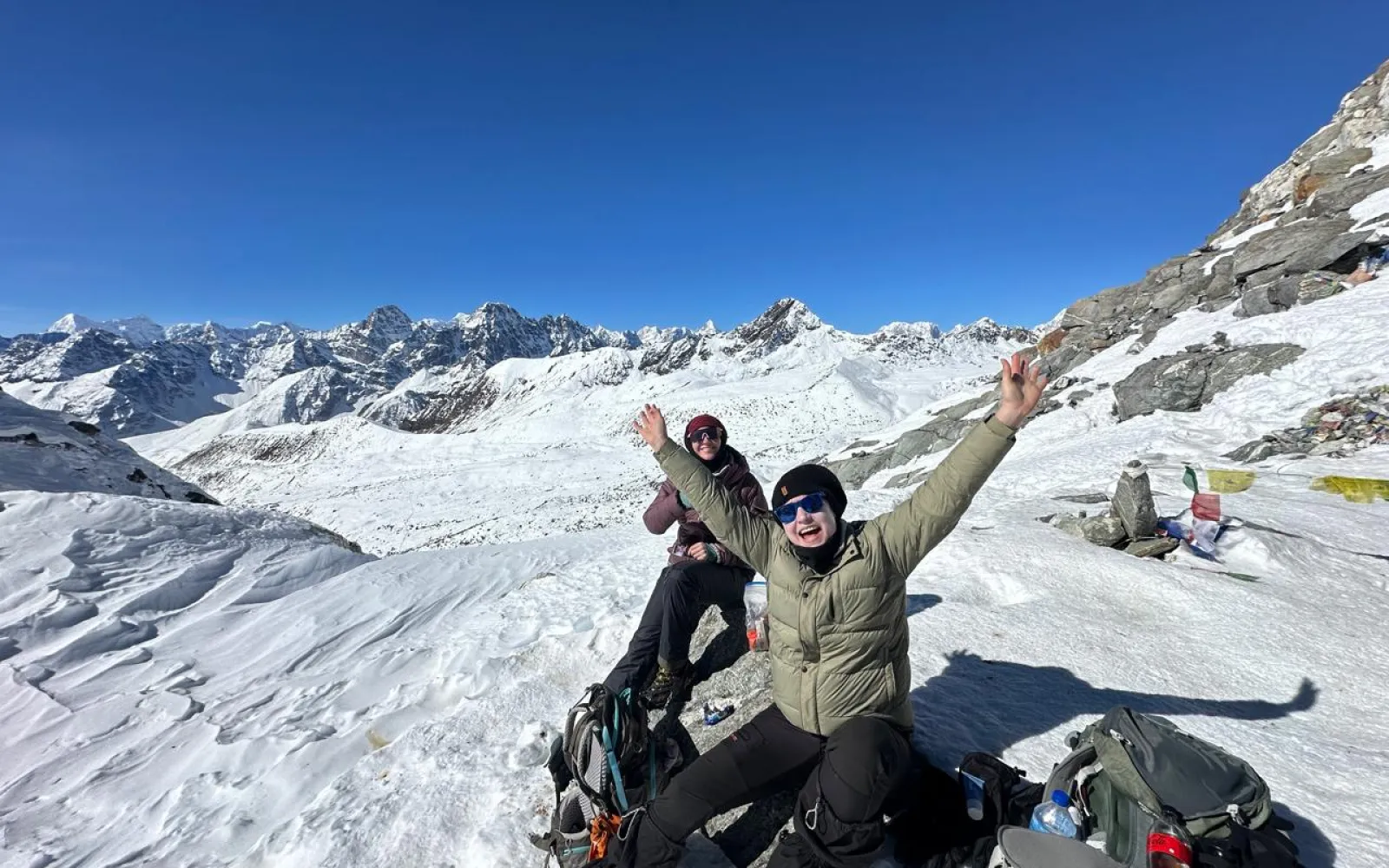
Trekking to the Gokyo Valley, Cho La Pass and Everest Base Camp (EBC) in November is a great option for experienced trekkers. This route includes the beautiful Gokyo Lakes and provides an incredible high altitude experience.
In November, generally the weather in this area is pleasant after the monsoon season. However, temperatures begin to drop. In particular, temperatures will be dropping in Gokyo (4,790m), Dzongla (4,830m), Lobuche (4,910m) and Gorak Shep (5,164m).
In addition to, this route includes some very high altitude sights, with many sights at over 5000m. These include Gokyo Ri (5,357m), Cho La Pass (approx 5,420m), Everest Base Camp (5,364m) and Kala Patthar (5,545m).
However, care must be taken when crossing Cho La Pass. The trail can be difficult due to snow, ice and strong winds. It usually takes between 7 and 9 hours to cross depending on trail conditions and fitness.
Why Gokyo Chola Pass EBC Trek in November?
Astonishingly Clear views
Generally, the trail will be clear in November after the monsoon season.
Dry and Solid trails
With less rainfall, the conditions are more comfortable to walk in.
Fewer cloudy conditions
With fewer clouds, you will be able to see the views clearly in November, compared to summer months.
Cold temperatures
Nights will get increasingly cold in November.
Not ideal for Cho La Pass
Fresh snow and ice in this area may mean that it is unsafe to cross Cho La Pass.
Key Highlights & Altitudes
| Location | Altitude |
| Namche Bazaar | 3,440m |
| Gokyo Village | 4,790m |
| Gokyo Ri | 5,357m |
| Cho La Pass | 5,420m |
| Dzongla | 4,830m |
| Lobuche | 4,910m |
| Everest Base Camp | 5,364m |
| Kala Patthar | 5,545m |
In fact, early November is generally a Good Time to complete This Trek. However, decisions on whether to cross Cho La Pass must be made based on local conditions and weather, including snowfall.
In November, the weather in the Everest region will be generally dry, bright and cold, particularly at high altitudes (over 4,000m). Towards the end of November, temperatures will significantly decrease at Gokyo, Dzongla, Lobuche and Gorak Shep.
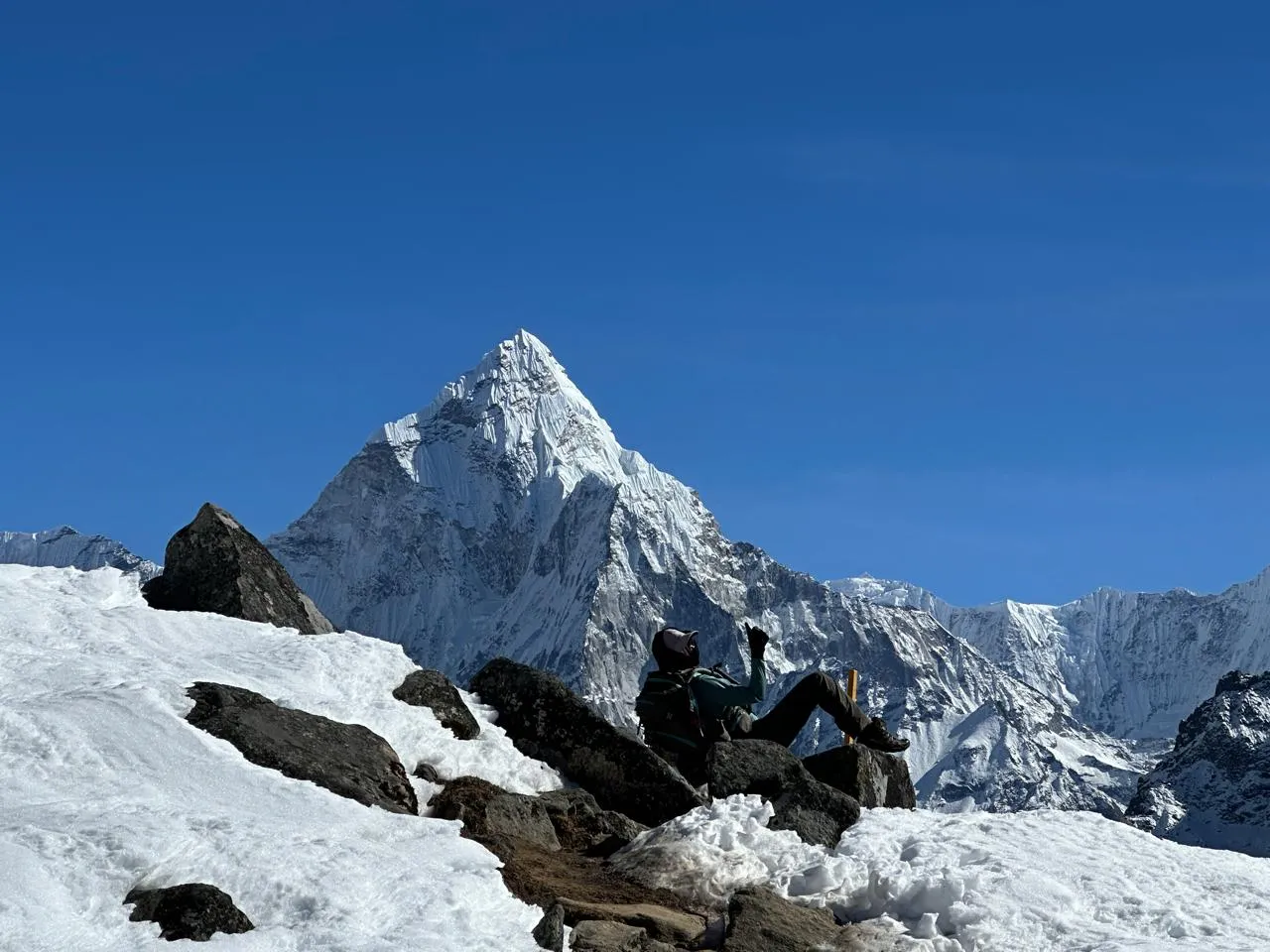
During the days, it can be quite comfortable in direct sunlight. However, within the shaded valleys, temperatures can be very cold. Temperatures in the evenings will often drop below freezing and at Cho La Pass (5,420m) cold conditions will be increased due to strong winds.
Temperature in November
Below is an approximate range of temperatures experienced by Haven Holidays Pvt. Ltd. Team that can be expected in November. This is an indication to help plan and is not a guaranteed temperature for each day.
| Location | Altitude | Day | Night |
|--------|---------|-----|-------|
| Lukla | 2,860m | 10-14°C | 0-4°C |
| Namche Bazaar | 3,440m | 5-10°C | -4-0°C |
| Gokyo | 4,790m | 0-6°C | -10--5°C |
| Dzongla | 4,830m | -2-4°C | -12--7°C |
| Lobuche | 4,910m | -3-3°C | -14--8°C |
| Gorak Shep | 5,164m | -5-1°C | -16--10°C |
Key Weather Conditions in November
Early November:
Temperatures will be generally warmer during the day. Crossing Cho La Pass may be more suitable in this period.
Mid November:
Temperatures will begin to drop more in the mornings. Freezing temperatures will occur at night. Icy conditions on the trail may be noticeable.
Late November:
Snow and ice on the trail may make crossing difficult.
Cho La Pass:
Temperatures will be below freezing. Particularly early in the morning.
Gokyo Lakes:
Lakes will be partially or fully open. However, freezing may be increasingly likely as we progress into winter.
What to expect while doing EBC with Chola Pass Trek in November
Bottles of water may freeze overnight. Icy conditions may also be found on shaded trails, so it is best to begin high altitude walks early.
Likewise, ensure that you have enough warm clothing. Check the local weather forecast to decide if it is suitable to cross Cho La Pass.
Although conditions for trekking in November are good overall, it cannot be guaranteed that conditions will be safe to cross passes. The decision to cross should be made by your guide depending on snowfall, visibility, wind and glacier conditions.
Early November or Late November?
Generally speaking, the best time to complete this route is in early November. However, if You Choose to trek in late November, you may encounter more challenging conditions, due to lower temperatures, shorter daylight hours and the potential for difficult conditions on the high passes.
In early November, the conditions following the monsoon season mean that there is often good visibility across the mountains.
However, it may be very cold in the night and fresh snowfall can occur. It is unlikely that Cho La Pass (5,420m) will be completely free from snow.
In the later part of November, temperatures at Gokyo (4,790m), Dzongla (4,830m) and Lobuche (4,910m) are becoming very cold. Ice can form on exposed areas, rocky ground and glaciers, meaning that crossing Cho La Pass becomes more difficult.
Early November or Late November Conditions
Trekking Conditions | Early November | Late November
Temperatures during the day | Warmer | Colder
Temperatures in the night | Very cold at high altitudes | Often much colder
Snowfall | Possible | Generally increasing
Conditions on Cho La Pass | Often better conditions | More likely to be snowy and icy
Mountain Visibility | Often very good | Can be very good
Number of people on trek | Generally more people | Usually fewer people
Gokyo Lakes | Generally unfrozen | Beginning to freeze in sheltered areas
When to go in November
Early November – Best time to complete the trek.
Mid-November – Possible with warm clothing. Flexible crossing arrangements.
Late November – Possible for experienced trekkers with the right equipment. Conditions can be more challenging due to winter conditions.
If it is possible for you, it is best to complete the trek in early November. However, it is possible to complete it in late November if conditions are carefully considered by guides.
An 18 day trek allows for sufficient acclimatization, the crossing of high passes, and exploring around Everest. This trek begins in Lukla, heading to Namche Bazaar, Dole and Machhermo before reaching Gokyo. From here, you Cross Cho La Pass (5,420m) heading towards Dzongla and Everest Base Camp.
Here, two acclimatization days are included in this trek, in Namche and Gokyo. An additional high altitude viewpoint is provided through Gokyo Ri (5,357m), to allow for acclimatization before the challenging Cho La Pass.
Meanwhile, crossing Cho La Pass usually takes between 7-9 hours depending on snow, ice and speed of walking.
Recommended 18 Day Gokyo EBC Trek
Day | Highlights | Accommodation
1 | Arrive in Kathmandu | Kathmandu
2 |Trek preparation and equipment checking, rest | Kathmandu
3 | Fly to Lukla (2,860m) and trek 7-8km (3-4 hrs)| Phakding (2,610m)
4 | Trek 10-12km (5-6 hrs) | Namche (3,440m)
5 | Acclimatization in the direction of Everest View Hotel |Namche
6 Trek 10-11km (5-6 hrs) Dole (4,038m)
7 |Trek 7-8km (4-5 hrs) | Machhermo (4,470m)
8 | Trek 6-7km (4-5 hrs) | Gokyo (4,790m)
9 | Hike to Gokyo Ri (5,357m) and return to Gokyo, Acclimatization| Gokyo
10 | Cross Ngozumpa Glacier and trek to Thangnak |Thangnak (4,700m)
11 | Cross Cho La Pass (5,420m) and descend to Dzongla| Dzongla (4,830m)
12 | Trek 5-7km (2-3hrs) | Lobuche (4,910m)
13| Visit Everest Base Camp (5,364m) and return to Gorak Shep| Gorak Shep (5,164m)
14| Hike to Kala Patthar (5,545m) and descend to Pheriche| Pheriche (4,371m)
15| Trek to Namche Bazaar| Namche
16| Trek to Lukla| Lukla (2,860m)
17| Fly to Kathmandu| Kathmandu
18| Departure (or extra day)
Important Notes from Haven Holidays Nepal Team
Acclimatization: Two acclimatization days in Namche and Gokyo will help reduce risks at high altitudes.
Cho La Pass: To maximize safety, begin early with an experienced guide so that snow, ice and glacier conditions can be assessed.
Alternative route: If crossing Cho La Pass is unsafe, return to Gokyo and take a longer alternative route.
Delays in flight: Plan for at least 1 extra day, in case of delays in your flight from Lukla.
Walking: Many days of walking will last between 5-8 hours. The days at high altitude may be longer.
Distances and times may vary depending on which route is taken, and individual paces. Overall, 18 days is a guide and times cannot be guaranteed.
Overall, for safety and acclimatization, it is best to prioritize these over completing the itinerary in specific time frames.
This is the most difficult part of the Gokyo Cho La Pass EBC Trek. The trail crosses between Gokyo Valley (Thangnak) and Dzongla, continuing onto the main Everest Base Camp route.
In addition to, steeper, rocky terrain and scree can be found on the trail from Thangnak. When approaching the summit, snow and ice may be present. On the descent to Dzongla, the trail is steep and rocky.
Generally, good conditions can be found in November. However, snowfall, ice and strong winds can make this crossing very dangerous in late November.
Conditions in November
Steep trail from Thangnak.
Crossing the glacier.
Steep and rocky descent to Dzongla.
Freezing Cold.
Visibility can reduce quickly in snow, cloud or strong wind.
Trail Info
Trail Details
Elevation -5420m
Start- Thangnak (4700m)
End- Dzongla (4830m)
Duration of crossing- 7-9 hours
Difficulties- Steep, glacier, ice, rocky
Best time to cross- Early in the morning with a licensed guide.
Precautions
Starting this crossing early in the morning gives more daylight. In icy conditions, wear warm gloves, sunglasses, layers of clothing and microspikes.
Check Weather Conditions.
Follow your guide- They will know the safest route to take over the glacier.
Do not cross in heavy snow, poor visibility or dangerous ice conditions.
Leave extra days in case of delays due to weather.
If conditions are unsafe
If conditions become unsafe, it is best to wait until conditions improve. Alternatively, return back towards Namche and take the longer route (through Tengboche) to Everest Base Camp, thereby avoiding Cho La Pass.
Please note that this may add extra days to this trek. Therefore, safety should be prioritized over completing your original plan in November.
Cho La Pass (5420m) is the most challenging part of the Gokyo Cho La Pass Everest Base Camp Trek. The trail starts at Thangnak (approx 4700m) and ends at Dzongla (approx 4830m). Steeper rocky terrain can be found with glacial terrain throughout.
From Thangnak, the trail becomes steeper with rocky and uneven terrain. Snow/ice can be found near the summit. The descent to Dzongla is rocky, steep and may be slippery.
Conditions in November
Generally good conditions for trekking in November. However, snow may fall and there may be ice in the morning. By starting early in the morning (5.30am – 6.00am) you will have enough light to complete this trail in 7-9 hours.
Conditions on Trail
Trail Section | Elevation | Expected Conditions
Thangnak | 4700m | Rocky
Ascending | 5000m+ | Steep rocky terrain and possibly snowy
Cho La Summit | 5420m | Exposure, cold and possibly icy
Descending to Dzongla | 4830m | Rocky, uneven and possibly slippery
Precautions
Wear insulated waterproof boots with good grip.
Bring microspikes for extra grip on icy terrain.
Wear thermal layers, warm gloves, sunglasses and a waterproof coat.
Follow your expert guide across the glacier.
Do not cross if there is heavy snow, strong winds or poor visibility.
If Conditions Are Not Safe
If snow has fallen or dangerous ice is present and it is unsafe to cross Cho La Pass, it is best to wait for conditions to improve. Alternatively, return back towards Namche and continue on the longer route to Everest Base Camp (via Phortse and Pangboche) to avoid Cho La Pass.
Here, it is extremely important to prioritise safety and not risk crossing Cho La Pass just to complete the itinerary. It is best to leave the final decision to local guides depending on the conditions.
The Gokyo Cho La Pass Everest Base Camp Trek offers some beautiful scenery, including glacial lakes, high viewpoints and famous Everest landmarks. Key highlights include Gokyo Lakes, Gokyo Ri, Ngozumpa Glacier, Cho La Pass, Everest Base Camp and Kala Patthar.
Actually, Gokyo Lakes are located in a beautiful valley between approx 4700m to 5000m. The turquoise colour of the lakes contrasts beautifully with the glaciers, rocky mountains and snow covered peaks of the Himalayas.
In addition to , Gokyo Ri (5357m) provides beautiful panoramic views of Everest (8848.86m), Lhotse (8516m), Makalu (8485m) and Cho Oyu (8188m). The Ngozumpa Glacier, one of the longest glaciers in the Himalayas, also makes this area very special.
Key Highlights
Highlight | Elevation | Experience
Gokyo Lakes | Approx 4700m to 5000m | Beautiful glacial lakes
Gokyo Ri | 5357m | Panoramic views of the Himalayas
Ngozumpa Glacier | Varies | Dramatic Glacial Landscape
Cho La Pass | 5420m | High altitude crossing over glacier
Everest Base Camp | 5364m | Views over the Khumbu Glacier and surrounding peaks.
Kala Patthar | 5545m | Excellent view of Mount Everest
Why grab These Highlights?
Beautiful scenery of glacial lakes in the Himalayas.
Panoramic views of 4, 8000m peaks (depending on conditions).
Dramatic glacial landscape.
Challenging high altitude crossing between 2 popular trekking valleys.
Historic Mountaineering location under the Khumbu Icefall.
Wonderful high altitude views of Everest, Nuptse and Pumori.
Generally good visibility in the mountains in November. However, cloud and snowfall can reduce visibility. Overall, completing this route, visiting Gokyo Lakes and Everest Base Camp makes for one of the most amazing experiences within the Everest region.
7. Challenges, Altitude Sickness and Safety
This trek is very challenging. A good level of fitness and conditioning is required. Long days of walking, steep inclines, rough terrain and altitudes above 5000m will all pose a challenge.
Meanwhile, the most challenging part of this route is crossing Cho La Pass (5,420m). Steep terrain, crossing glaciers and very cold temperatures mean that you must be very careful in this area. In addition, reaching Everest Base Camp (5,364m) and Kala Patthar (5,545m) also poses physical challenges at high altitude.
Altitude Sickness
As you increase altitude, less oxygen is available in the air. Common symptoms of altitude sickness include:
Common symptoms:
Headache
Nausea
Dizziness
Loss of appetite
Excessive tiredness
Important Safety Tips
Ascend gradually.
Allow time to get used to higher altitudes by having rest/acclimatization days in Namche and Gokyo.
Drink plenty of water and eat well.
If you begin to get symptoms of altitude sickness notify your guide.
If symptoms get worse, descend immediately.
Do not ascend with symptoms of altitude sickness.
Even if you have good fitness, altitude sickness can still affect you. Everyone reacts differently to altitude. To avoid altitude sickness, ascend gradually. If symptoms of altitude sickness appear, do not ascend any further.
If symptoms of altitude sickness get worse you should descend. If you are confused, uncoordinated, short of breath at rest, or very weak, you need to seek urgent medical care and may need emergency evacuation.
Fitness and Insurance
Have good stamina by doing regular walks, hill walking and cardio exercises.
Having previous experience of high altitude walking is preferable, but possible with good preparation.
Ensure you have an experienced guide familiar with the Gokyo and Cho La routes.
Ensure your travel insurance includes trekking above 5500m and emergency helicopter evacuation.
Discuss to a medical professional to understand the risks of high altitude and appropriate preventative medication.
It is more important to acclimatize safely and make sensible decisions than being quick.
Do not prioritize completing a certain trekking schedule/summit over your health.
8. Accommodation, Food, Guides and Porters in November
November is a popular time to go trekking, so teahouses can be found along the Gokyo and Everest Base Camp routes. However, in early November, accommodation in Namche, Gokyo, Thangnak, Dzongla, Lobuche and Gorak Shep can be very busy.
Here, accommodation is generally basic and run by local families. As you ascend higher altitudes, accommodation becomes more basic. Hot showers, charging facilities, internet and bottled drinking water may be extra costs.
Accommodation in the Gokyo EBC Trek
| Destination | Elevation | Accommodation Type |
| Namche Bazaar | 3,440m | Comfortable |
| Dole | 4,038m | Basic |
| Machhermo | 4,470m | Small |
| Gokyo | 4,790m | Basic near lakes |
| Thangnak | 4,700m | Simple |
| Dzongla | 4,830m | Limited basic |
| Lobuche | 4,910m | Basic at high altitude |
| Gorak Shep | 5,164m | Very basic |
Food in November
Fresh food is available in teahouses. As you go higher up, there will be fewer options. Common foods include Dal Bhat, Noodles, Fried Rice, Vegetable Soup, Potatoes, Porridge, Eggs and Tibetan Bread.
Dal Bhat – A full meal containing Rice, Lentil Soup and Vegetable Curry.
Noodles and Soup – Easy and warming meals.
Breakfast – Porridge, Eggs, Toast and Pancakes are commonly available.
Hot drinks – Hot tea, Coffee, Lemon drinks and Hot Chocolate can help keep you warm.
Guides and Porters
As November is a busy time to go trekking, it is advisable to plan ahead to get experienced members of trekking staff. An experienced licensed guide in English can help with navigation, acclimatization, weather and decision making around Cho La Pass.
In addition to, using a porter makes the weight of luggage easier to manage on long walking days. However, it is best to place essential clothing, water, snacks and personal items in your daypack.
Services Provided by Haven Holidays
With Haven Holidays Pvt. Ltd, you can have the following services provided on a Gokyo, Cho La Pass and EBC Trek:
1 English speaking licensed guide
1 porter for every 2 people (max 20kg carried)
Wages for porters and guides, food, accommodation and insurance.
Correct permits and first aid.
Sleeping bag and Duffle Bag (Refundable)
Airport transfers, hotel transfers and baggage storage in Kathmandu.
Depending on the lodge, the quality of accommodation, food and extra charges will vary.
Ensure the price of the package matches your final itinerary, group size and inclusions.
It will be more useful to pre-book in smaller lodges in Gokyo, Thangnak and Dzongla in November.
9. Costs, Permits and Transport
The cost of the Gokyo Cho La Pass EBC Trek will depend on the size of the group, duration of the trek, transport, and what is included in the cost. As this is a popular time for trekkers to go on this trek in Autumn, it is advisable to book transport, guides and accommodations in the mountains early.
Here, the main costs to be aware of are flights from Kathmandu, guide costs, porter costs, teahouse accommodation, meals, permit costs and personal expenses. It will be a good idea to budget for hot water, internet, charging, snacks and emergency costs.
Main Costs Factors
Cost Item| Description of Service
Flights to/from Lukla| Flight to and from Lukla ( USD 550)
Guides| Wages, food and accommodation for guides ( USD 35-40 Per day)
Porters| Porters services ( USD 30-35 per day- for two people)
Accommodation | Teahouses ( USD 50-25)
Meals | Breakfast, lunch and dinner ( USD 20-40 per day)
Permits | Entrance fees to National Park and local area ( USD 50-55)
Transport | Airport transfers and possibly transfer to Manthali ( USD 30-40)
Personal | Personal drinks, charging, hot water and tips ( USD 150-300)
Permits Required
Two main permits are required for this trek.
Sagarmatha National Park permit ( Rs. 3000)
Khumbu Pasang Lhamu Rural Municipality fee ( Rs. 3000)
Here, it is important to research these permit costs and requirements in advance. As regulations and costs can change, it is important to confirm how much each permit will cost you. Be sure to have your passport and required documents ready for permit registration.
Permit Costs
For foreign trekkers in 2026/27:
Permit/Entry | Fee Foreign Trekkers | SAARC Trekkers
Sagarmatha National Park | NPR 3,000 | NPR 1,500
Khumbu Pasang Lhamu Rural Municipality | NPR 3,000 | NPR 2,000
Total | NPR 6,000 | NPR 3,500
Note: National Park Permit costs can be found from the Nepal Tourism Board. Local permit costs are based on fees set by the local municipality. It is important to check these costs in advance as local permit costs can vary.
Flights to Lukla in November
In November, due to the peak season in Autumn, flights to Lukla commonly leave Manthali Airport in Ramechhap.
Actually, it has been notified by the Nepal Tourism Board that flights will be diverted to Manthali for autumn 2026 (25 th September – 30 th November). It takes approximately 4-5 hours to drive from Kathmandu to Manthali. From here, it takes approximately 15-20 minutes to fly to Lukla (2,860m).
Kathmandu to Manthali: Arrange private or shared transport early.
Manthali to Lukla: Take scheduled mountain flight. This may be affected by the weather.
Return Flights: Flights from Lukla can be affected by wind, cloud and poor visibility.
Flexibility: Allow flexibility of 1-2 days either side of your international flight.
Important: Do not make international flights immediately after you are expecting to return from Lukla. Even in November, it is possible to experience weather delays to your flight for more than one day.
Comparing Packages
When researching packages, be sure to consider what is included in the trek:
Return flights to Lukla
Transfers in Kathmandu and Ramechhap
Licensed guides and porters
Permits and entrance fees
Teahouse accommodation and meals
Insurance and costs for guides and porters
Sleeping Bag, duffle bags and medical support
In conclusion, do not simply choose the cheapest package. Ensure that all items are included in the package. Check how many people there will be in your group, what accommodation is provided, weight limits for porters and emergency support. Once you are fully satisfied, then only, pay a deposit.
10. Packing List for November Trek to EBC and Chola Pass
As temperatures can be very cold on this trek, it is important to pack the right clothing. In November, temperatures can be very cold at night. Combined with strong winds, snow and icy paths above 4,000m, it is important to be prepared.
Meanwhile, temperatures in Gokyo (4,790m), Dzongla (4,830m), Lobuche (4,910m) and Gorak Shep (5,164m) can be significantly below freezing. To stay warm but still be able to move comfortably during the day, a layering system is ideal.
1. Clothing
Thermal Layers
Thermal top and bottom
Insulated Jacket
Extra warmth for cold mornings and evenings.
Fleece Jacket
Warm jacket for freezing temperatures at altitude.
Waterproof/Windproof Jacket
Waterproof jacket and trousers.
Gloves
Insulated gloves-Pack extra light gloves.
Head wear
Warm woolly beanie, Buff and sunhat.
Socks
Multiple warm wooly socks.
2. Footwear & Trekking Equipment
Trekking Boots
Comfortable, waterproof boots with good support and grip.
Microspikes
Suitable grip equipment in case of icy conditions.
Trekking Poles
Helpful for climbing uphill and descending slippery terrain.
Gaiters
Useful for walking in snow or wet areas.
Sleeping Bag
Choose a sleeping bag with a low temperature rating. For temperatures between -15 and -20 degrees.
3. Personal Items
Sun Protection
Sunglasses, SPF 50+ Sunscreen and lip balm.
Lighting
Reliable head torch and spares.
Hydration
Reusable bottles and purification tablets/filter.
Medical
Personal medication, basic medical kit and blister protection.
Energy
Energy bars, nuts, chocolate and light snacks.
Documents
Passport, travel insurance details and permit details.
November Trek Pack List
Item | Include
Clothing | Thermal Layers, Fleece Jacket, Insulated Jacket, Waterproof Jacket
Accessories | Warm gloves, Woolly Beanie, Buff
Footwear | Trekking Boots, Woolly Socks, Gaiters
Grip | Microspikes
Sleeping | Winter sleeping bag
Protection | Sunglasses, Sunscreen, Lip Balm
Equipment | Trekking Poles, Headtorch, Daypack
Medical | Medical Kit, Personal Medication, Blister protection
Hydration | Bottles, Purification
Food |Energy Bars, Nuts & Chocolate
Important Notes for Cho La Pass in November
As snow and ice may be present on this section of the trek, it is a good idea to have warm gloves, sunglasses, waterproof clothing, grip equipment and snacks in your day pack.
Here, avoid packing too much in your bag as the long walking days can be very demanding at altitude. Ask your guide to double check your packing list based on recent weather and trail conditions.
Although a good packing list will make trekking in November more comfortable, warm and safe, it is very important to follow your guides recommendation on crossing Cho La. No equipment will make an unsafe crossing safe.
11. Conclusion – Should I do the Gokyo Cho La Pass EBC Trek in November?
This trek is ideal for well- conditioned trekkers. With dry weather conditions, relatively predictable conditions, and potentially very good visibility, it is an excellent time to visit the Everest region.
Actually, you will be able to see the beautiful turquoise Gokyo Lakes, Gokyo Ri (5,357m), Cho La Pass (5,420m), Everest Base Camp (5,364m) and Kala Patthar (5,545m).
In addition, crossing the Ngozumpa Glacier and exploring the peaceful Gokyo Valley makes this trip much more varied than the standard Everest Base Camp Trek.
With freezing cold temperatures, high winds and possible snowfall, you must dress appropriately for cold weather. Temperatures are more comfortable in early November.
However, it is still possible to do this trek in late November with appropriate gear and a flexible schedule.
Neverthless, it is extremely important to note that the Cho La Pass may have snow in November. Listen to the advice of your licensed guide and allow extra days in your schedule to accommodate unpredictable weather conditions, unsafe trails and any flight delays from Lukla.
Gokyo Cho La Pass EBC Trek in November with Haven Holidays Nepal
Haven Holidays Pvt. Ltd can provide you with a suitable schedule, licensed English speaking guides, porters, accommodation, permits and transportation. We can also give advice on how to prepare for the season, and what conditions to expect on the trails.
To begin planning your trek in November please get in touch with Haven Holidays. You can contact us at https://www.havenholidaysnepal.com or email [email protected] . or WhatsApp at 977-9851014429.
In conclusion, choose dates that suit you, prepare for high altitude and take in the incredible views of Gokyo and Everest region.
1. Is it a good time to do this trek in November?
Generally, yes! The trails will be dry and you may get great views of the mountains. Temperatures will start to become cooler. Snow may fall and may be present on the high passes (including Cho La Pass).
2. Will Cho La Pass be open in November?
Cho La Pass (approx. 5420m) can be open in November, however it is not guaranteed. If there has been heavy snowfall, or icy conditions, it may be difficult or unsafe to cross. Ask your guide for an update on conditions before heading from Dzongla / Gokyo.
3. Will it snow at Cho La Pass in November?
Snow can fall in November at Cho La Pass, particularly in the second half of the month. Snow and ice may also be present from previous weather systems. Every year can be different, and trekkers should be prepared for winter conditions at Cho La Pass (even if conditions at lower points are dry).
4. How cold is it on the Gokyo to EBC route in November?
Temperatures will be comfortable during the day in the sun, but will become much colder in the mornings and evenings. Temperatures can be very cold at night in Gokyo, Lobuche and Gorakshep, often dropping below freezing. The wind can be very strong and conditions can feel very cold on the pass.
5. Is it better to go Chola Pass in early November than late November?
Generally, early November is a better time to go on this trek. Temperatures will be less extreme and there may be less extreme winter conditions. In late November, temperatures can be very cold at night and more extreme winter conditions may occur. There is also a greater risk of snowfall on Cho La Pass. However, again, this will depend on the weather in any given year.
6. How difficult is Chola Pass in November?
Cho La Pass is a very challenging section of the trek during November. The climb up is steep, and can be rocky, snowy and icy. The descent back down to Dzongla can be very challenging. The high altitude makes this section of trek more difficult. A good level of fitness and acclimatization is important, and you should take things at a steady pace.
7. Should I bring microspikes for Chola Pass Trek in November?
If there is snow or ice on the path, microspikes can be very useful. However, depending on the conditions in the last few days, they may not be required every day. It is a good idea to bring some grip equipment, and ask your guide for advice on when to use them.
8. How long does the Gokyo-Chola-EBC trek take?
Most people take between 16-19 days to complete the Gokyo, Cho La Pass and EBC route, including arrival/ departure and acclimatization days. Depending on where you start from, and how quickly you walk, it may take longer.
As weather conditions and Cho La Pass conditions may cause delays, it is a good idea to allow extra days in your schedule.
9. Is Gokyo-Chola-EBC trek suitable for beginners?
This trek is generally not suitable for complete beginners. Prolonged high altitude walking, challenging ascents and a technical pass crossing (which can be icy) means that good fitness levels should be achieved. You should be aware of the risks of altitude, and follow a well planned acclimatization plan.
10. What if Cho La Pass is closed due to snow?
If heavy snow or ice mean that Cho La Pass is unsafe, your guide may suggest waiting for conditions to improve. In some cases, you may be required to change the route of your trek. In some cases, you may have to retrace your steps back to Dole then to Phortse and Pheriche.
However, you should never attempt to cross Cho La Pass just to stay on schedule. Safety should be your priority, and you should always follow advice from local guides.
Note: In general, November is a good time to go on this trek. However, as Cho La Pass is high up, conditions can change quickly. Be sure to check up to date snowfall, visibility and trail conditions in the area. It is a good idea to allow flexibility in your schedule, and do not guarantee that you will be able to cross Cho La Pass on a certain date.
Our travel experts are ready to assist you with any questions.
Send us a message.Have a question before you book? Send your enquiry below and our travel experts will get back with the required information.