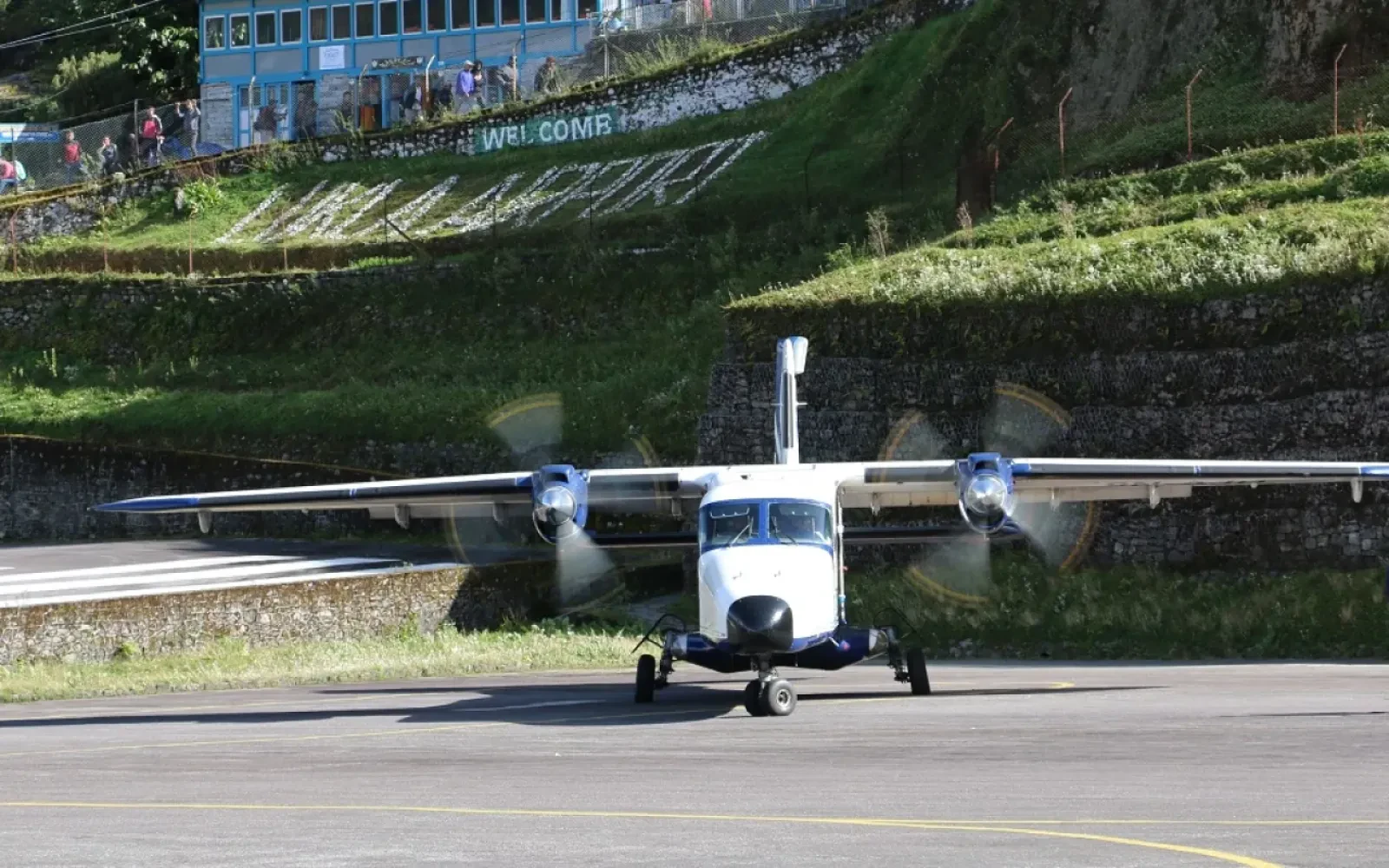
Lukla Flights: Gateway to the Everest Base Camp Trek
Lukla Town, which houses the Tenzing-Hillary Airport, is the principal gateway for hikers traveling to Everest Base Camp (EBC). Lukla flights are operated from two airports of Nepal, Kathmandu and Manthali (Ramechhap). During peak trekking seasons ( Autumn- Sep-Nov) and Spring-Mar-May), flights from Kathmandu to Lukla are routed via Manthali due to jam in air traffic. But, in off-trekking seasons( Winter and Rainy- Dec-Feb and June-Aug) Lukla flights are highly weather-dependent, leading to cancellations and delays.

It is important to know about flight operations, seasonal changes, costing according to the seasons and associated risks for a smooth Everest Base Camp trekking experience. Below is a detailed FAQ covering all the facets of Lukla flights, fares, operations, and possible disruptions.
1. What is the difference between Lukla flights from Kathmandu and Manthali?
Kathmandu to Lukla: The majority of direct flights from Tribhuvan International Airport (TIA) operate during the off-season (June–August and December–February). Flight duration is about 35 minutes.
Manthali to Lukla: During peak seasons (March–May and September–November), flights are rerouted to Manthali Airport in Ramechhap. The drive from Kathmandu to Manthali is 4–5 hours, followed by a 20-minute flight to Lukla.
2. How much do Lukla flights cost?
Kathmandu to Lukla: Approximately USD 220–250 (one-way) for foreign nationals, NPR 11,000–15,000 for Nepalese.
Manthali to Lukla: The Lukla flights from Manthali to Lukla cost USD 170-180. but with additional charges for reaching Manthali (USD 15–25 for shared transport or USD 120–150 for a private jeep).
3. What are the seasonal variations in flight operations?
Spring (March–May): Manthali flights due to high demand. Clear skies but some delay due to wind.
Summer/Monsoon (June–August): Direct flights to Kathmandu, but high cancellation rates due to rain and poor visibility.
Autumn (September–November): Flights operate again from Manthali with good weather, but strong demand.
Winter (December–February): Direct flights from Kathmandu, but fog interruptions and occasional snow at Lukla.
4. How often are Lukla flights delayed or canceled?
Lukla flights are some of the most unreliable flights in Nepal. Approximately 50% of flights are delayed in peak seasons (Autumn and Spring), and monsoon flights are regularly canceled.

5. What is the procedure if my Lukla flight gets canceled or rescheduled?
Passengers can get rescheduled, refunded, or travel by an alternative mode (helicopter, USD 500–600 per person in joint flights) or can take Jeep Ride to Thamdanda or Surke.
6. Are helicopters or Jeep Ride to Thamdanda alternatives for Lukla flights?
Yes, one may charter a helicopter for USD 500–600 per head (group) or USD 2,500–3,000 for chartering. It's a safe bet if one wants to go hurriedly or sees really long waits.
Also, one can easily take jeep ride from Kathmandu to Thamdanda or Surke which costs USD 35-45 on sharing basis.
Lukla Airport, also known as Tenzing-Hillary Airport, is the main gateway for trekkers heading to Everest Base Camp. However, despite its popularity, there are several good reasons not to fly to Lukla.
1. Unreliable Weather and Frequent Cancellations
Lukla is renowned for its fluctuating weather conditions, which often result in delays or cancellations of flights. Fog, strong winds, and sudden cloud cover can make it impossible for flights to arrive or take off. Trekkers may be stuck in either Lukla or Kathmandu for days, wreaking havoc on their schedules and at great inconvenience. Some even miss their international flights due to the delays.
2. High Cost of Flights
A one-way ticket from Kathmandu to Lukla costs around $220-$230 for foreigners; it is one of the most costly flights in Nepal. Moreover, any delay or cancellation of the flight typically incurs extra costs on food and accommodation apart from having other transport to get to the destination. Alternatively, helicopter service is the next best option; helicopters charge more than $500 per person-quite a significant add-on to travel expenses.
3. Safety Issues and Risks of Landing
Lukla Airport is listed as one of the most hazardous airports globally with a short, sloping runway of 527 meters and elevated altitude of 2,846 meters. The approach to Lukla is tricky as it necessitates pilots to navigate through steep valleys and unsteady winds. Even seasoned pilots have been noted to be challenged, and accidents in the past have resulted in loss of lives, making it a highly dangerous option for travelers.
4. Better and More Reliable Alternative Options
Trekkers can opt for safer and more stable alternatives such as flying to Phaplu or Ramechhap and then transferring by jeep with additional days of trekking. Further, one can directly go Thamdanda or Surke from Kathmandu by jeep ride which costs USD 40-45 on sharing basis. This not only enhances acclimatization but also reduces the pressure of having to contend with potential flight cancellations. Overland routes to Thamdanda from Kathmandu offer a better chance of cultural exposure and viewing scenery.
5. Limited Flight Availability and Congestion
Lukla flights are only in the morning because of weather conditions, which creates congestion and a shortage of tickets. Flights are booked well in advance for weeks during high trekking seasons, and it is hard to get a ticket. This logistical issue makes other routes a more viable option.
To have a hassle-free trekking experience, skipping Lukla flights with jeep ride from Kathmandu to Thamdanda would be a smart idea.
To avoid Lukla flights, several options exist. Most trekkers hiking to Everest Base Camp use the jeep drive from Kathmandu to Thamdanda, which takes 14–16 hours (270 km) and costs $35-45 per person in a group jeep or $250–$300 for private rental. From Thamdanda, one has a 4–5 hour walk to Surke and then a further 2–3 hours to Lukla. Also, one can get direct jeep ride from Kathmandu to Surke in fair weather, in the dry months like in Dec, Jan and Feb and March, April and May. From Surke, you can directly head to Phakding without wasting your time to ascend Lukla town.
A second option is taking a helicopter from Kathmandu to Lukla or Surke for $500–$600 per person on a shared flight or $2,500–$3,000 on a private charter and lasts around 45 minutes. An alternative that is more economical is taking a jeep from Kathmandu to Phaplu (8–10 hours, $20–$30 per person) with a 2-day trek to Lukla or directly to Phakding via Surke and Chheplung.
Alternatively, trekking enthusiasts could drive a jeep or bus to Jiri (7–8 hours, $15–$25) and follow the classical Everest Base Camp route, and add on an extra 5–7 days. These itineraries avoid weather postponements and flight cancellations from Lukla.
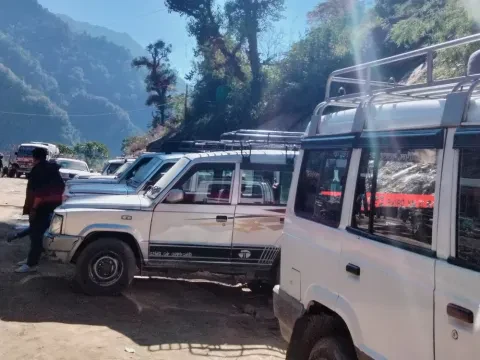
A jeep ride from Kathmandu to Thamdanda or Surke is a crucial part of the trek for travelers going to the Everest region. The distance from Kathmandu to Thamdanda is approximately 265 km, and the ride lasts approximately 14 to 16 hours, depending on road conditions. The drive follows the BP Highway and Sagarmatha Highway, past the towns of Dhulikhel, Khurkot, Ghurmi, Okhaldhunga, and Salleri, before it reaches the challenging mountain roads to Thamdanda or Surke.
It will cost between $350 and $500 in season to hire a private jeep, while a shared jeep ride will cost between $45 and $50 per person. The Salleri to Kathmandu road is mostly blacktopped but with some rough patches. Beyond Salleri, the road is unpaved, steep, and narrow, and the ride can be tough, especially in monsoon time. Landslides and muddy roads can cause delays for the Jeep ride to Thamdanda from Kathmandu, especially, and the ride can be rough.
Some of the common challenges during Kathmandu to Thamdanda Jeep Ride include the unstable climate, which can render the road wet and slippery. Travelers must be ready by taking snacks, water, motion sickness pills, and warm clothing, as the temperature may go down at higher elevations. It is also important to check road conditions beforehand, as heavy rain or snowfall will make the trip impossible.
Jeep ride from Kathmandu to Thamdanda or Surke are not year-round available. It could be cut off by monsoon landslides (June–September) and heavy snows in winter (December–February). Spring (March–May) and autumn (September–November) are the best times to visit with more stable weather.
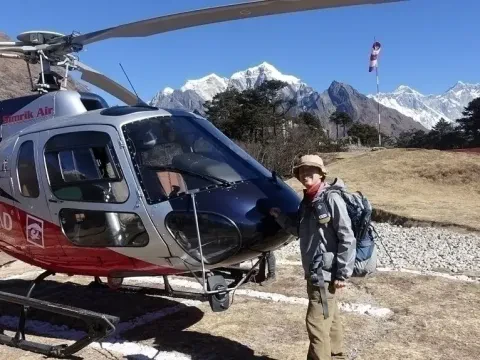
Helicopter ride from Kathmandu to Lukla or Surke is the luxury alternative to the regular Lukla flights, offering a more scenic and safer experience during Everest trekking. Lukla, which has a notoriously short and challenging runway, is sensitive to delay in weather conditions, and hence helicopters become a guaranteed but expensive choice. Surke is a small village located just below Lukla and has a temporary helipad and serves as an alternate landing point, especially when the airspace at Lukla is congested.
The flight time from Kathmandu to Surke or Lukla is around 45 to 50 minutes, depending upon the weather. Helicopters can fly slightly more unstable weather than fixed-wing aircraft and therefore are a popular choice for those who want to save time. From Surke, one can trek up for about an hour to Lukla and resume his Everest trek without wasting any time. Or, from Surke, one doesn’t have to go Lukla, they can directly trek to Phakding via Chheplung and then to Namche.
Multiple helicopter operators provide service on this route, such as Simrik Air, Kailash Helicopter, Manang Air, and Altitude Air. They have both shared and chartered services. A shared flight costs $500–$600 per passenger, and a private charter starts from $2,500 to $3,500, covering a maximum of five people. The price varies based on the season and supply.
Flying by helicopter to Surke or Lukla is one of the best ways of avoiding Lukla flight cancellations and long delays. However, due to the cost, it is beyond the means of most trekkers. However, for those who prefer reliability and a breathtaking bird's-eye perspective, this method is worth the added expense.
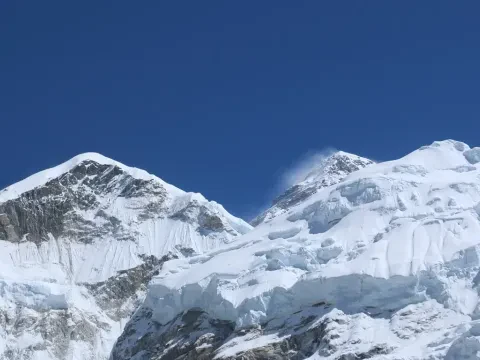
If you do not like to take the Lukla flight and also skip jeep ride to Thamdanda/Surke or direct helicopter to Lukla/Surke from Kathmandu, there are other options to trek up to Everest Base Camp (EBC) by trekking to other trailheads. The most popular overland approaches are Salleri and Jiri routes, both involving long drives from Kathmandu and then multi-day treks to reach Lukla or Phakding before joining the main EBC trail.
This may be done one way by a jeep or bus drive from Kathmandu to Salleri (8-10 hours, 265 km on a tar and dirt surface road). This is a 3-4 day trek to Lukla, with a final day to Phakding where you join the classic EBC trek. This trek is slightly shorter than the Jiri trek and passes through scenic villages like Nunthala and Kharikhola. The trek is straightforward but there are some steep slopes. Costs involve a $20-$30 jeep fare and $15-$20 per day for food and lodging. The best time to pass through this trek is spring (March-May) and autumn (September-November) because monsoons render roads muddy, and winter too might experience snowfall so trekking is tough.
Then again, there's the Jiri trek, comprising a 6-8 hour drive from Kathmandu (187 km) and then 6-7 days of hike to get Lukla which is the most classical EBC trek route. This age-old route is the same old expedition route walked by the legendary climbers, Tenzing Norgay Sherpa and Edmund Hillary, passing through villages like Bhandar, Sete, and Junbesi. While it is longer in duration, the trek offers great views, smaller crowds, and better acclimatization. The Jiri road gets interfered with monsoon landslides occasionally.
Other less-popular routes include trekking from Phaplu (a small airstrip close to Salleri) or a trek from Tumlingtar through the Arun Valley, which can take up to 8-10 days to reach Lukla. These routes are more remote but offer unique landscapes and cultural experiences and still work.
Trekkers who would like to avoid Lukla flights for their Everest trekking have several options. The most economical and comfortable ways to avoid Lukla flight is the Kathmandu to Thamdanda Jeep Ride, which takes 14-16 hours (270 km, $25-$30 per person). It is a 2-day trek from Thamdanda to Lukla via Surke. If you can drive irectly to Surke, you can walk to Phakding in a day without going to Lukla towns.
A helicopter flight from Kathmandu to Lukla or Surke is $500-$600 per person, a more costly but quicker option to avoid regular Lukla flight. A drive to Salleri (8-10 hours, $25-$30, 265 km) followed by a 4-5 day trek to Lukla is another alternative. The Jiri to EBC route (drive: 8-10 hours, $20-$25, 190 km) takes approximately 7 days but is a classic trekking experience. Lastly, flying from Kathmandu to Phaplu ($160, 35 minutes) and then trekking 4-day to Lukla is also an alternative. Among these, the Kathmandu to Thamdanda Jeep Drive is the most preferable one to avoid Lukla flight as it is cost-effective, sure, and avoids the uncertainty of flight cancellations and is hence the most favored mode for Everest Base Camp trekkers.
1. What is the difference between Lukla flights from Kathmandu and Manthali?
Kathmandu flights offer direct convenience but face severe air traffic delays at the capital's busy single runway. Conversely, peak-season flights depart from Manthali Airport in Ramechhap, requiring a five-hour pre-dawn drive from Kathmandu. However, Manthali provides significantly shorter flight times and much higher departure success rates.
2. How much do Lukla flights cost?
A standard one-way fixed-wing flight ticket for international tourists costs approximately $175 to $190 from Manthali Airport. If departing directly from Kathmandu during the off-season, prices generally hover around $220 to $240. Booking through a reputable agency ensures your seat is locked in securely.
3. What are the seasonal variations in flight operations?
During the peak spring and autumn trekking seasons, the government shifts all Lukla flight operations to Manthali to manage air traffic congestion. On the other hand, during the quiet winter and summer monsoon off-season months, flights typically return directly to Kathmandu. Planning around these shifts is vital.
4. How often are Lukla flights delayed or canceled?
Flights are delayed or completely canceled very frequently due to Lukla's notoriously unpredictable alpine weather patterns. Because pilots must fly purely by visual sight rather than automated instruments, even minor valley fog or crosswinds ground all aircraft. Therefore, encountering sudden schedule disruptions is incredibly common.
5. What is the procedure if my Lukla flight gets canceled or rescheduled?
If your flight gets canceled, the airline automatically places you on a first-come, first-served backlog list for the next clear weather window. Alternatively, your trekking agency can immediately help convert your ticket into a shared helicopter flight. Keeping flexible buffer days prevents your itinerary from collapsing.
6. Are helicopters or Jeep rides tos Surke reliable alternatives for Lukla flights?
Yes, both options serve as highly reliable alternatives to bypass the unpredictable fixed-wing plane schedules entirely. While helicopters can fly through much lower cloud ceilings, rugged four-wheel-drive jeeps run consistently regardless of overhead visibility. Consequently, utilizing these alternatives guarantees you reach the Everest trail safely
7.Why People Should Avoid the Lukla Flight?
Unreliable Weather and Frequent CancellationsThe primary reason to avoid the flight is the extreme vulnerability to sudden, severe mountain weather shifts. A single morning of heavy valley fog can instantly strand hundreds of trekkers at the terminal for days. Avoiding the flight eliminates the stress of missing your tight trekking schedule.
High Cost of FlightsStandard plane tickets are quite expensive, and unexpected cancellations can force you to pay for premium helicopter upgrades. Conversely, opting for overland transportation routes dramatically slashes your transit budget. This financial saving allows you to allocate more funds toward better teahouse comforts.
Safety Risks of Tenzing-Hillary AirportLukla Airport is globally famous for its short, steeply inclined runway tucked precariously between a sheer cliff and a solid rock wall. Because there is absolutely zero room for pilot error during landing, the flight carries inherent high-altitude aviation risks. Choosing ground transport provides unmatched peace of mind.
Better and More Reliable Alternative OptionsWith recent road infrastructure developments, alternative paths like the Kathmandu to Surke jeep route have become highly viable options. These ground routes operate daily, regardless of the heavy overhead clouds that ground airplanes. Ultimately, they offer a dependable, stress-free start to your journey.
Limited Flight Availability and Major Terminal CongestionDuring peak seasons, the extreme volume of trekkers creates massive bottlenecks and chaotic crowds at the domestic terminals. Consequently, securing a seat can be incredibly difficult, and waiting areas are frequently packed. Avoiding the flight lets you bypass this frustrating logistical chaos completely.
08. How does the Kathmandu to Thamdanda/Surke Jeep ride work?
This overland journey takes you eastward along the beautiful BP Highway via Salleri before pushing directly to Thamdanda or Surke. The drive covers roughly 325 kilometers and takes approximately 12 to 14 hours of rugged, scenic travel. It connects you straight to the Everest trail on wheels.
09. What can I expect on the Kathmandu to Lukla/Surke Helicopter ride?
Choosing a helicopter flight allows you to soar directly from Kathmandu's domestic airport straight into the heart of the Khumbu region. Because helicopters maneuver effortlessly around localized clouds, they rarely face the same cancellations as commercial planes. It delivers a fast, premium, and stress-free transit experience.
10. Are there sharing options for the Kathmandu to Surke jeep ride?
Yes, budget-conscious travelers can easily purchase individual seats in a shared public jeep departing early morning from Kathmandu. A shared seat costs a reasonable $45 to $50 for the entire distance to the road-head. This collective arrangement makes ground travel exceptionally affordable for solo adventurers.
11. How much does it cost to rent a private jeep from Kathmandu to Surke?
Renting a private, heavy-duty four-wheel-drive jeep typically costs between $300 and $350 for the entire vehicle one-way. This option allows your group to enjoy customized rest breaks, flexible departure times, and significantly more luggage space. It represents the most comfortable overland travel strategy available.
12. How does the jeep ride help with natural altitude acclimatization?
Flying directly to Lukla forces your body to absorb an immediate, abrupt altitude jump to 2,860 meters. Conversely, driving via Salleri and Thamdanda ascends through the rolling hills gradually over a couple of days. This slow upward progression gives your body valuable time to adapt naturally.
13. What are the road conditions like between Salleri and Surke?
While the highway from Kathmandu to Salleri is mostly smooth and asphalted, the final leg to Surke transitions into a rough dirt track. This unpaved mountain road features sharp hairpin turns, rocky stream crossings, and very bumpy terrain. Therefore, utilizing a rugged 4WD vehicle is mandatory.
14. Where do I join the main Everest Base Camp trail after taking the jeep?
After arriving at the Thamdanda or Surke jeep station, you will drop your bags and begin walking on foot. The mountain path climbs gently through scenic villages like Paiya before merging with the classic trail at Chheplung. From this intersection, you continue onward smoothly toward Namche Bazaar.
15. Can I trek all the way from Jiri to avoid the Lukla flight?
Yes, taking a bus to Jiri allows you to hike the legendary "Pioneers' Route" walked by Sir Edmund Hillary in 1953. This historic trail adds about five to seven days of deep cultural trekking before reaching Lukla. It is perfect if you crave absolute solitude and classic adventure.
16. What is the ultimate takeaway for choosing ground transport over flying?
Ultimately, choosing ground transport replaces unpredictable aviation stress with a reliable, culturally rich, and highly scenic road adventure. While the drive is undeniably long and bumpy, it removes weather dependency completely from your schedule. It ensures your dream of seeing Everest begins exactly on time.
Our travel experts are ready to assist you with any questions.
Send us a message.Have a question before you book? Send your enquiry below and our travel experts will get back with the required information.