Everest Base Camp Trek-All the way to the roof of the world.
The Everest Base Camp Trek is the most rewarding adventure in the land of breathtaking landscapes, rich Sherpa Culture, and a lifetime trekking experience right to the foot of the highest mountain in the world, Mount Everest, towering at 8,848.86m above sea level. This legendary trek deep into the heart of the Khumbu region takes you across picturesque villages, high altitude monasteries, and extended glacial landscapes.
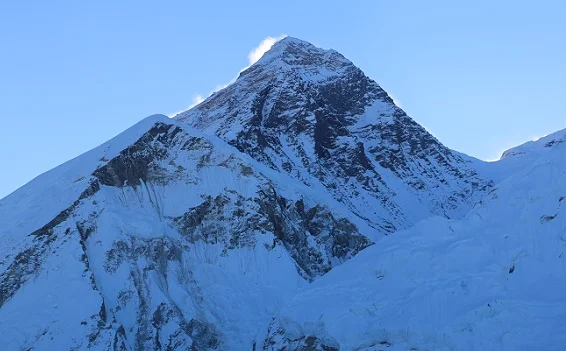
The EBC Trek starts with a fascinating flight to Lukla, the gateway concerning Everest trekking, at an elevation of 2,846m either from Ramechha (Spring and Autumn) or from Kathmandu (Summer and Winter). It winds its way to Namche Bazaar at 3,440 meters, the energetic Sherpa town, and further on to Tengboche at 3,860 meters, Dingboche at 4,410 meters, Lobuche at 4,910 meters, and Gorak Shep at 5,164 meters to finally reach Everest Base Camp at 5,364 meters. Sunrise hike to Kala Patthar at 5,545 meters early in the morning presents unparalleled, up-front views of Everest.
Read Our Blog Posts Related to Everest Base Camp Trek 14 days:
Feel the spiritual aura at Tengboche Monastery Visit one of the highest hotels in the world, the Everest View Hotel Tread on the Khumbu Glacier and experience the renowned Icefall Enjoy local Sherpa hospitality and experience the culture at Namche Bazaar Best Time for Everest Base Camp Trek The best seasons for Everest Trekking are spring-summer (March-May) and autumn-winter (September-November) as during these seasons, the weather remains calm and the view is crystal clear.
EBC Trek - normally takes 12-14 days, moderate to difficult as the altitude is high, and the trekking days are long. Proper acclimatization and physical preparation are necessary: two days: one at Namche and the other at Dingboche.
Flights between Kathmandu and Lukla operate but often face delays in weather conditions. The flights are operated early in the morning in clear skies. Others drive to Phaplu or Jiri to start the trek.
In Spring and Autumn, the Lukla flights are operated from Ramechhap, Manthali and in Winter and Summer, the flights are operated from Kathmandu directly.
Food & Accommodation
Teahouses en route offer basic food like Dal Bhat, momos, noodles, and bakery items. Basic lodges to good, warm, well-equipped teahouses.
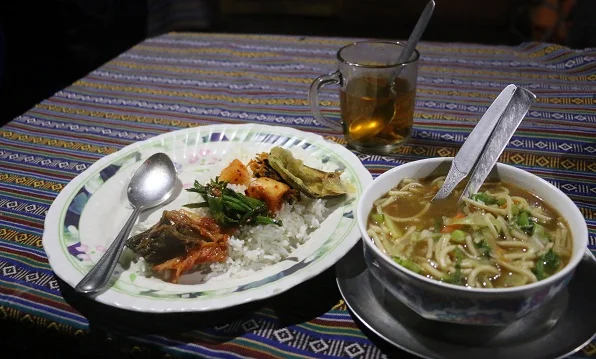
But, these days, trekkers trekking to EBC can get international dishes at Namche and Dingboche as these two towns are modernized with clubs, bars and luxury hotels.
One needs the Sagarmatha National Park Permit and Khumbu Pasang Lhamu Rural Municipality Permit. Hiring a guide and porter enhances the safety and experience but it is not mandatory; solo and independent trekkers can do Everest Base Camp Trek without guide and porter if they feel confident.
Preparation
Cardio training, strength exercises, and altitude awareness are essential. Pack in layers, sturdy boots, and essentials like Diamox for altitude sickness.
The Everest Base Camp Trek is not just a trek; it's an adventurous change in life, right through the heart of the Himalayas !
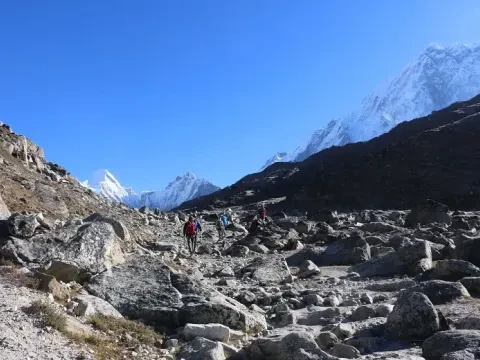
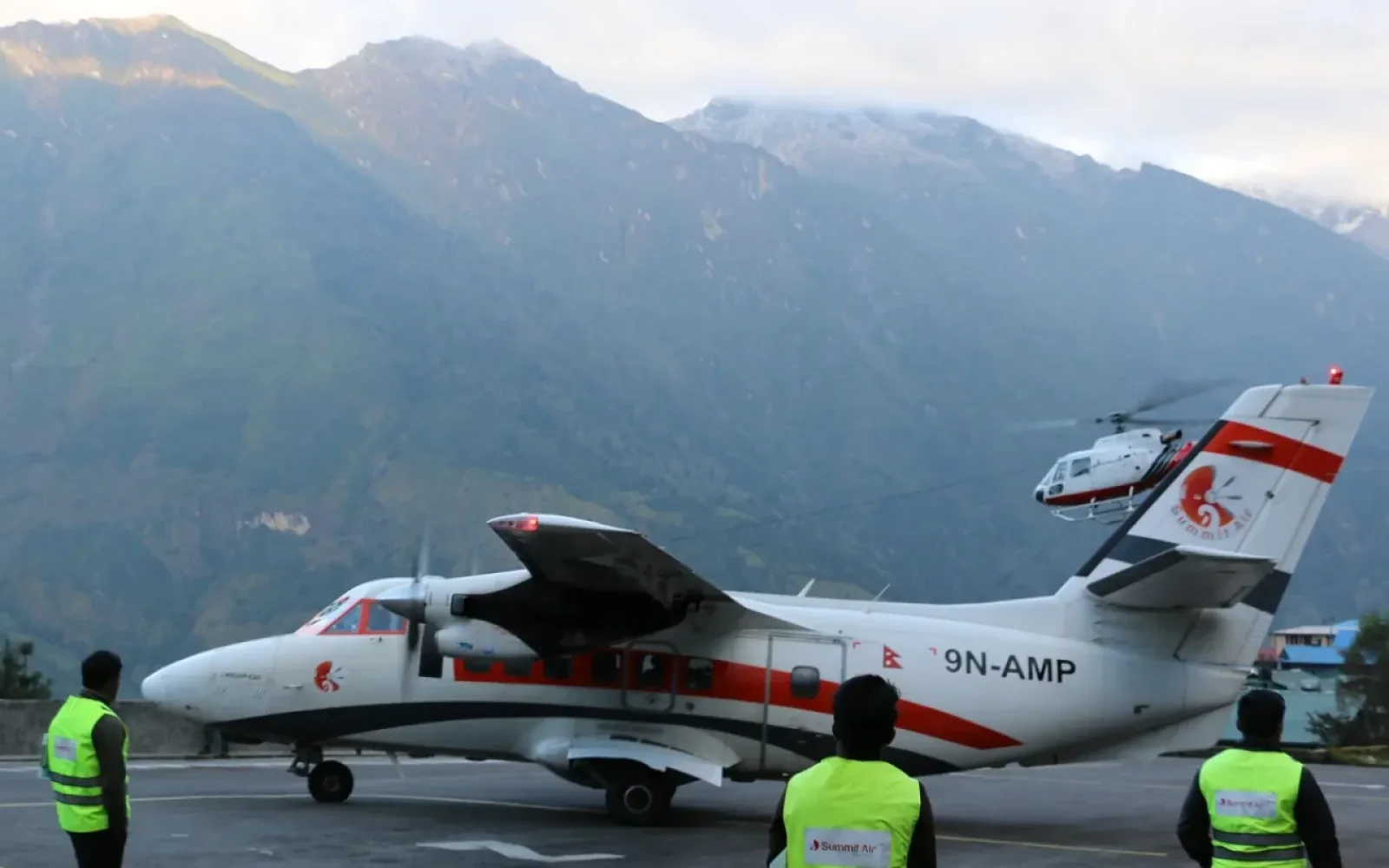
Lukla Airport (2,860m) – One of the Most Fearsome Airports in the World :
Namche Bazaar (3,440m) – The Vibrant Sherpa Hub
Tengboche Monastery (3,867m) – Spiritual Center with Everest Views
Kala Patthar (5,545m) – The Best Panoramic Viewpoint of Everest
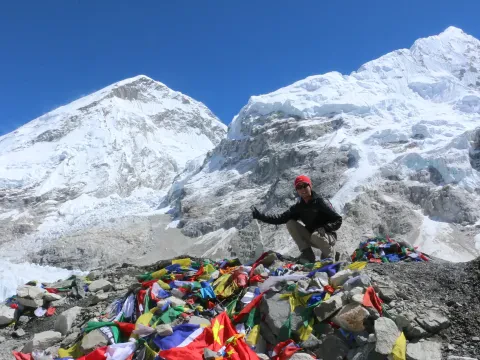
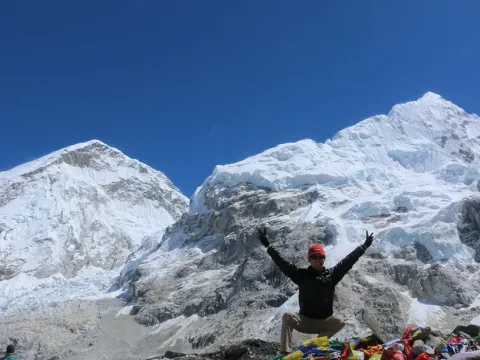
Everest Base Camp (5,364m) – Standing at the Foot of the World's Highest Mountain
Legendary site where climbers make their preparations for the summit push.
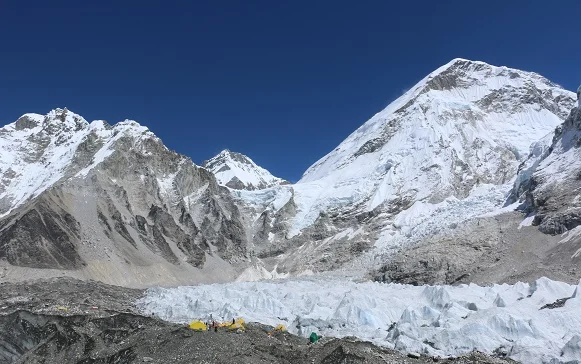
During peak climbing seasons (April-May), colorful expedition tented camps fill the glacier, creating a temporary mountaineering village at Everest Base Camp.
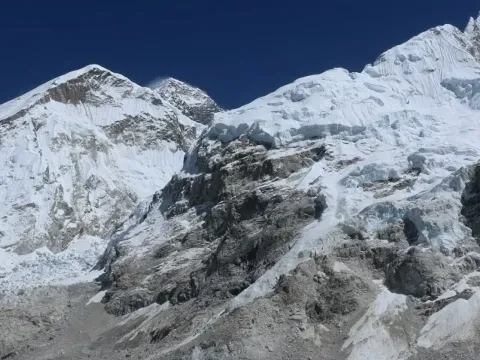
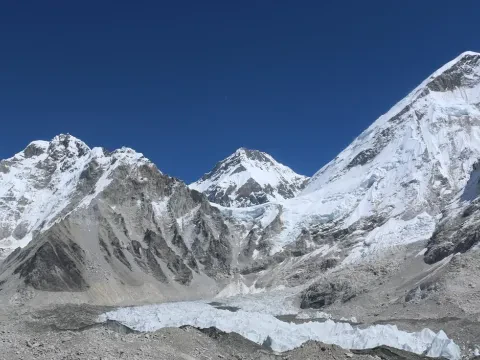
Khumbu Glacier and Icefall (5,000m+) – A Frozen River of Ice
One of the most hazardous parts of Everest for climbers to navigate, in constant movement with deep crevasses.
The Khumbu Icefall is notorious for its towering seracs and frequent collapses, making its passage a very forbidding challenge to climbers en route to the summit.
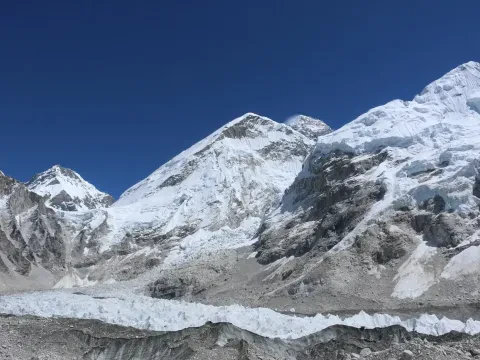
1. Everest Base Camp Elevation – Everest Base Camp, EBC, lies at an elevation of 5,364 meters (17,598 feet) above sea level and presents an unforgettable sight of the Khumbu Icefall and the peaks including Mt. Everest, Pumori, Loa Tse, Nupse all the surrounding around it.
2. Lukla – Most Dangerous Airport: The trek commences with an early morning flight to Lukla 2,846m / 9,337ft, which hosts one of the most dangerous airports in the world because of its short runway, which is 527 meters or 1,729 feet in length, and unpredictable weather.
3. Two Everest Base Camps: There are two base camps for Everest, namely South Base Camp, which is in Nepal and situated at 5,364m, and North Base Camp, which is in Tibet at 5,150m or 16,900ft. The EBC trekking will be to the South Base Camp in Nepal.
4. Kalapatthar – The Best Viewpoint: Kalapatthar, at 5,545m/18,192ft, is the highest point trekkers reach and is the best viewpoint for an all-round panorama of Everest, Nuptse, and the Khumbu Glacier.
5. Trekking Distance – The round-trip trek from Lukla to EBC covers approximately 130 km (81 miles), typically taking 12–14 days. The best EBC Itinerary will be 14 days.
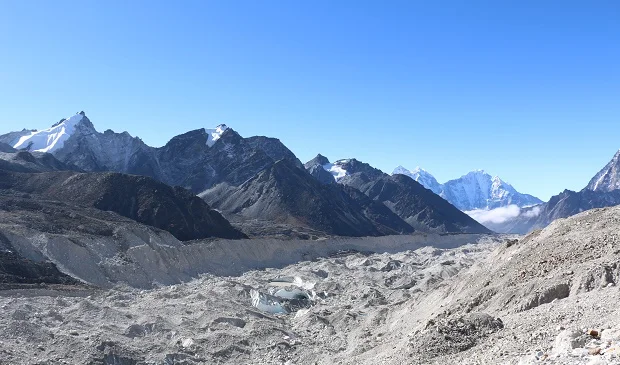
6. Altitude Sickness Risk – As trekkers go above 2,500m (8,200ft), altitude sickness (AMS) becomes a major concern, with symptoms like headaches, nausea, and dizziness. Acclimatization is crucial.
At lest two days acclimatization is needed: one at Namche Bazaar and the other at Dinghboche
7. Namche Bazaar – Sherpa Capital: Namche Bazaar, at 3,440m (11,286ft), is a lively hub full of bakeries, coffee shops, clubs, pubs, luxury hotels and trekking gear stores, with great views of the mountains.
Namche Bazzar has money changers, museums, spa and massage hubs and gardens.
8. Tenzing-Hillary Trail: The trekking route follows the legendary trail that Sir Edmund Hillary and Tenzing Norgay first used in 1953 during the first successful summit of Everest.
9. Teahouse Accommodation: The trekkers are accommodated in simple teahouses along the way; they offer basic rooms, dal bhat, hot tea, and limited WiFi.
However, these days, Namche and Dingboche has luxury suite accommodation and international meals in their menus.
10. Dal Bhat Power: Dal bhat is the staple meal for trekkers, a dish made of rice, lentils, curry, and pickles, and it is an all-you-can-eat kind of food that gives long-lasting energy.
11. The Sherpas: The Mountain Legends: Sherpas are native mountain people and are known for their super endurance, expertise in high altitude climbing, and hospitality.
12. Everest View Hotel - The Highest Luxury Hotel: Located at 3,880m (12,730ft), this hotel offers unparalleled views of Everest while serving coffee, cookies and apple pie.
13. Tengboche Monastery - The Highest Buddhist Monastery: At 3,867m (12,687ft), this monastery hosts daily prayers with a dramatic backdrop of Everest and Ama Dablam in Sagarmatha National Park.
14. Gorak Shep – The Last Human Settlement – The last teahouse stop before EBC is Gorak Shep (5,164m / 16,942ft), a frozen, barren outpost near the Khumbu Glacier located at the base of Kalapattar(5545m).
15. Khumbu Glacier – The Highest Glacier of the world – Everest Base Camp sits beside the Khumbu Glacier, so that it is very frazile, one of the world's highest and most dangerous glaciers, known for its constantly shifting ice.
16. Mystical Yeti Legends – Many Sherpas believe in the Yeti, the Abominable Snowman, with alleged sightings near the Khumbu region, adding to Everest’s mystique. The Yeti’s skulls are kept safely in Khumjung Village and Pangboche.
17. The Hillary Suspension Bridge – The trek features many suspension bridges, but the Hillary Bridge, at 125 meters (410 feet) above the Dudh Koshi River, is the longest and highest bridge in Everest Base Camp Trek.
18. Alternative to Gokyo Lakes: Everest Base Camp trek can be combined with the Gokyo Lakes-4,700-5,000m / 15,420-16,400ft-highest freshwater lakes in Nepal and turquoise-colored via Chola Pass (5420m).
19. Everest Base Camp Trek in Winter: During winter-December, January, and February-the temperature at EBC can reach -20°C (-4°F); hence, it is an extreme adventure.
20. Challenges during Monsoon: Normally, during June, July, and August, the monsoon trekking is tough to walk due to mud, landslides, and leeches, though great scenery of greenery.
21. Best Time of Trekking – The best time for trekking is Spring (March–May) and Autumn (September–November), during which the weather is stable and the mountain scenery is clearly viewed.
22. Trekking Without Guide or Porter – As of April 2023, solo trekking in Nepal has been allowed only with a licensed guide or a registered porter for safety reasons.
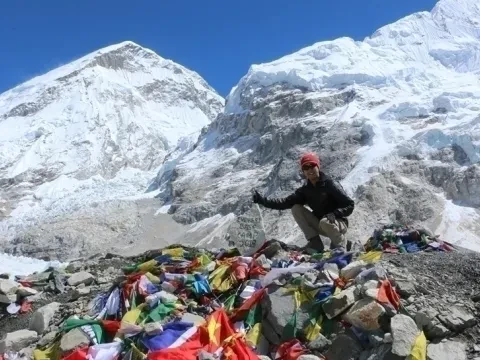
23. Prayer Flags and Mani Stones – Colorful prayer flags and Mani stones bearing engraved Buddhist prayers adorn the trail and are believed to bless the travelers. You need to walk clockwise while walking around Mani walls and monasteries in EBC.
24. Everest Base Camp Has No Fixed Structures: Unlike other base camps, EBC is temporary and set up by climbers during the expedition season, which falls in April and May. The EBC sits just above Khumbu Glacier and it has no firm and solid base to set the teahouses and other settlements on it.
25. Trekkers Experience 50% Less Oxygen: At EBC, oxygen levels are only 50% of what they are at sea level, making breathing difficult. Some people carry bottled oxygen while going to EBC and climbing Kalapattar.
26.Oxygen Bottles on the Trail: Many lodges sell bottled oxygen for trekkers suffering from altitude sickness. If you feel uncomfortable while ascending higher, you can buy oxygen backups on the trail for your EBC trip.
27.Everest Memorials at Thukla Pass : A sad part of the trail, Thukla Pass at 4,830m / 15,846ft, has memorials for those who have died on Everest.
28.Gorakshep Used to be the Original Base Camp Before EBC moved further down the glacier, Gorak Shep was the original Everest Base Camp back in the 1950s.
29. Pheriche – The AMS Recovery Hub – The Himalayan Rescue Association's altitude sickness treatment center is based at Pheriche (4,371m / 14,340ft).
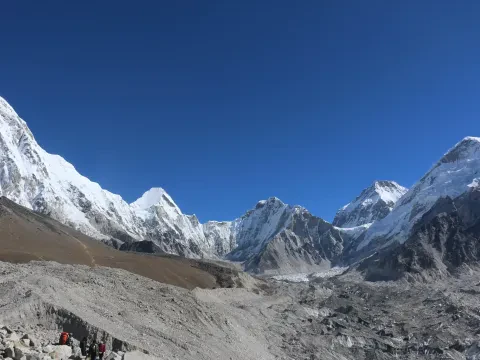
30. No Road Access – Supplies in the Everest region are delivered by yaks, porters from Lukla or choppers, meaning everything is pricier.
31. WiFi at 5,000m! – Many teahouses have WiFi through Everest Link, though its slow and not cheap. You need to pay extrs costs for WI-Fi at Everest Base Camp Trek.
32. Luxury hotels, clubs, pubs and bars above 4000m: Itn’t is exciting to see luxury accommodations, modern clubs and bars at Namche and Dingboche above 4000m where there is no road access? Yes, it is. You will get amazed to see the modern accessories and luxuries of Namche and Dingboche in Everest Base Camp Trek.
33. Sunrise from Kalapatthar, Everest casts a pyramid-shaped shadow on the horizon.
34. Frozen Pipes at High Altitude – The water pipes freeze at an altitude above 4,500m, and hence, lodges use buckets of heated water for washing purposes. Carry enough roll for toilets purposes.
35. No Helicopter Rescue from Base Camp at Night – Those trekkers who are suffering from altitude sickness can only be evacuated by helicopters after the sunrise.
36. Trekking Insurance is a Must – Most of the insurance companies demand high-altitude evacuation coverage up to 6,000m (19,685ft).
37. The World's Highest Bakery – The "World's Highest Bakery" in Lobuche (4,940m / 16,207ft) serves Apple Pie and Coffee to the trekkers who are doing Everest Base Camp.
38 .Difficult sleeping at high altitudes: Low oxygen levels disturb sleep and give many trekkers vivid dreams.
39. The "Everest Sniff": The dry, dusty trail gives rise to a constant sniffly nose, known as the "Everest Sniff."
40. Trekkers burn 3,000-5,000 Calories Daily: Long hikes and altitude stress result in huge energy expenditure.
41. Porters Carry up to 140kg! – Many porters carry huge loads up the trail, earning around $15 per day or just slightly higher. They are doing it for years. You can ask their lovely stories of carrying up to 140-150 kgs.
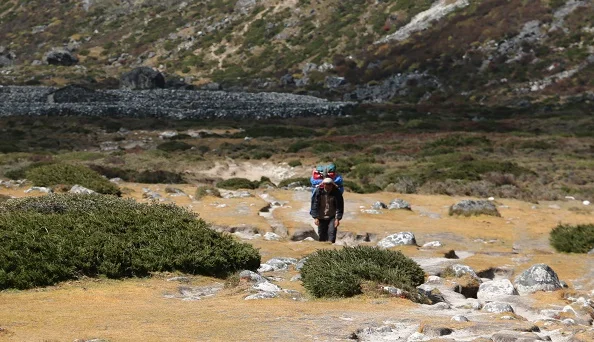
42. Sagarmatha National Park: A UNESCO World Heritage Site, the national park located at the highest elevation of the world, popular for snow leopard, blue sheep and musk deer. The Everest Base Camp Trekking Route entirely lies in Sagarmatha National Park where trekkers can enjoy witnessing a wide diverse species of flora and fauna.
43. Some Trekkers Never Make It to Base Camp – Around 30% of trekkers turn back early due to altitude sickness either from Dingboche or from Lubuche.
44. Climbing Everest Costs Over $50,000 – While trekking is affordable, climbing Everest costs $50,000–$100,000. The permit cost for Everest Climbing has been increased from USD 11000-15000.
45. Puja Ceremony at Everest Base Camp Before Summiting – The climbers perform a Buddhist puja or prayer ceremony at EBC before going to the Everest summit.
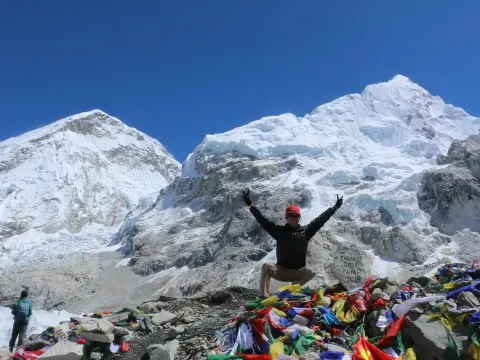
46. Everest Base Camp Marathon – The world's highest marathon starts every May from EBC (5,364m) to Namche (3,440m). IT will be beautiful to observe this legendary Everest Marathon. Anyone interested can participate in this Everest Marathon meeting certain criteria. Need to Make a prior bookings.
47. Trekkers Visit the Everest ER – During the climbing season, there is a small running emergency hospital at EBC that can help the people who are summitting the Everest.
48. Dumje Festival: This is a festival of Sherpa people who are living in Khumbu region of Nepal to offer the prayer to Guru Rimpoche which falls right after two months of Lhosar. It will be beautiful to observe this festival in Lower Khumbu region like at Junbesi during Everest Base Camp Trek.
49. Rainbow Valley on Everest - The death zone above 8,000 meters near the summit of Everest has colorful frozen bodies of fallen climbers.
50.Syangboche Airport is not in operation: Only big choppers carry the food stuff and cargo materials from Kathmandu or from Lukla. Bigger planes cannot operate their flights to Syangboche airport right now.
51. Jeep Ride: Alternative of Lukla Flights : People doing Everest Base Camp Trek can go with Jeep Ride from and to Thamdanda inf they want to avoid Lukla Flights. Even, trekkers can get jeep ride to and from Surke, just below Lukla airport. Soon, the road extension in Khumbu region will meet to Chaurikharka.
52. Lobuche: most altitude sickness prone Jone: Lobuche is the most acute-sickness prone zone in Everest Base Camp Trek. Be careful while staying overnight at Lobuche and while ascending from Lobuche to Gorekhshep.
53. Yeti Skull at Khumjung and Pangboche Village: Trekkers can enjoy seeing Yeti Skull at Khumjung Village and Pangboche Village during their Everest Base Camp Trek if they want.
54. Thame: the oldest monastery in Khumbu Region: Thame is the oldest monstery in Khumbu region as Tengboche. Thame is a day side trip while accmatizing at Namche Bazaar. It is 4 hours walk from Namche bazaar one way. People either choose going up to Hotel Everest View or Thame Monastery.
55. Mani Rimdu Festival: The festival, Mani Rimdu is celebrated in in Khumbu region bu native Sherpa people in November especially at tengboche monastery and its premises. The town Tengboche looks very fascinating with peayer flags and spiritual vibes while celebrating Mani Rimdu Festival in Khumbu region. If you are a spititual seeker, you can find the exact date of Mani Rimdu Festival on Nepali Calendar and plan for Everest Base Camp Trek.
Tengboche Town and Tengboche Monastery are located on the way to EBC in Sagarmatha National Park.
56. Khumbila Mountain: Holy Mountain God of Sherpa: Khumbila Hill is located at an elevation of 5,761m above the sea level. It is located in Khumbu region nearby Khumjung Village overlooking Ama Dablam and Everest. The local Sherpa of Khumbu region regard Khumbila as mountain god and Khumbila has never been climbed; one attempt prior to the 1980s ended when climbers were killed in an avalanche, and there have been no subsequent attempts. It is considered to be sinful act to climb Khumbila Mountain and Sherpa people offer prayer every morning to Khumbila Mountain for blessings and good luck.
You can witness this Khumbila mountain in your Everest Base Camp Trek while having an acclimatization day at Namche Bazaar. Ascend Everest View Hotel and Walk to Khumjung village for Yeti Skull and Khumbila Mountain before heading to EBC.
57. Dingboche: Dingboche is a big town on the Everest Base Camp Trekking Route. It is popular for second day acclimatization during Everest Base Camp Trek. People prepare their climbing trip to Island Peak from Dingboche via Chukkung Village. One can get all kind of facilities like luxury suite accommodation, clubs, pubs, money changers and local lodge accommodation here at Dingboche.
You know one fact that people, even the local Sherpas don’t stay at Dingboche for one month in between June and July. This is the local rule and the law that they have to follow mandatorily. So, if you are planning your Everest Base Camp Trek in June or July, make sure that the loca lodges and teahouse are in operation at Dingboche.
58. Everest Base Camp Can be reached via Kongmala Pass (5545m) via Chukkung valley from Dingboche. If people want more adventurous trek combining with Everest Base Camp, they can go to EBC via Kong Ma La Pass via Chukkung valley.
59. Sagarmatha NEXT: Pollution Control Center at Syangboche : Sagarmatha NEXT is located at Syangboche which promotes sustainable toruism in Khumbu region managing the garbage in entire Sagarmatha National Park and Khumbu area. You can visit its office located at Syangboche village while doing Everest Base Camp Trek.
60. SPCC. Sagarmatha Pollution Control Community: This is an NGO established by local Sherpa people of Khumbu region to protect local Khumbu region and Sagarmatha National Park in 1991. You can see the garbage bins managed by SPCC on Everest Base Camp Trekking route while heading towards EBC and back to Lukla.
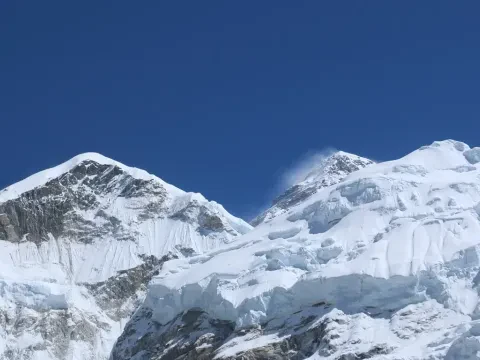
Actually, there are not only 60 facts about Everest Base Camp Trek and the Khumbu region, one can explore more than thousands facts in this grand Khumbu region of Nepal. Several mysteries and myths are still uncovered on Everest Base Camp Trekking Trail.
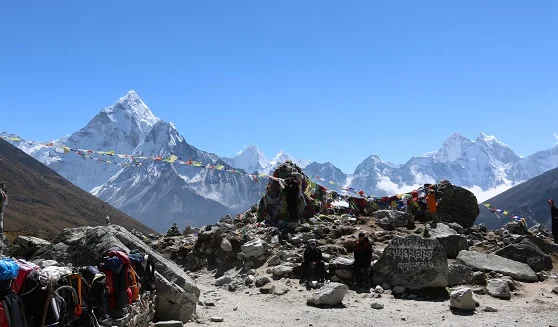
If you are a passionate explorer and want a historical EBC Trek Adventure, you can escavate thousands of exciting and unknown facts about Everest Base Camp Trek; there are several spaces on the trail which are still untouched by the visitors and locals as well.
Why not to venture to EBC to unveil the new and unknown facts about Everest Base Camp, then? Are you ready? Be Prepared well beforehand.
The Himalayas always remain wild, holy and mysterious.
1. Should I know before doing Everest Base Camp Trek?
While you don’t need to know everything, understanding key facts about altitude, weather, and the route makes your trek safer and more enjoyable. Our carefully collected 60 facts cover everything from hidden history to practical tips based on years of guiding experience.
2. Is it true that you cannot see Everest clearly from Base Camp?
Yes, this is one of the most surprising facts. Everest Base Camp sits very close to the mountain, but the summit is partially blocked. The best clear views come from Kala Patthar at 5,545 meters.
3. Why is acclimatization more important than physical fitness on EBC Trek?
Many strong trekkers fail due to poor acclimatization. Our experience shows that proper rest days at Namche and Dingboche matter more than how fit you are. This is one of the most important facts every beginner should know.
4. Are there really two Everest Base Camps?
Yes. There is the South Base Camp in Nepal (5,364m) used by most trekkers and the North Base Camp in Tibet. The Nepali side is far more popular for trekking.
5. Is Lukla really the world’s most dangerous airport?
Lukla Airport is often ranked as one of the most dangerous due to its short, sloped runway surrounded by mountains. This is why many trekkers now prefer the jeep ride alternative to Surke or Thamdanda.
6. What is the biggest myth about Everest Base Camp Trek?
Many people think the trek is extremely difficult. In reality, with proper pacing and acclimatization, even beginners can complete it. Physical fitness helps, but mental preparation and altitude management are more important.
7. How cold does it actually get at Everest Base Camp?
At 5,364 meters, temperatures can drop to -15°C or lower at night, even in spring and autumn. Many trekkers are surprised by how cold it feels despite sunny days.
8. Do porters really carry 100kg on the trek?
Yes, strong Sherpa porters can carry up to 100kg using a traditional head strap (namlo). Their strength and endurance never fail to amaze trekkers.
9. Why do people say “Dal Bhat Power 24 Hour”?
Dal Bhat is the most popular meal on the trek because it gives long-lasting energy and comes with unlimited refills. This simple Nepali dish has powered thousands of successful Everest Base Camp treks.
10. Is Kala Patthar higher than Everest Base Camp?
Yes. Kala Patthar stands at 5,545 meters while Base Camp is at 5,364 meters. This is why most trekkers get their best Everest views from Kala Patthar, not Base Camp itself.
11. How many people trek to Everest Base Camp every year?
More than 40,000 trekkers attempt the Everest Base Camp Trek annually. The number has grown significantly in recent years.
12. What is the real highest point trekkers reach on EBC Trek?
Most people think it is Everest Base Camp, but the highest point is actually Kala Patthar at 5,545 meters. This is an important fact many trekkers don’t know.
13. Are there any hospitals on the Everest Base Camp route?
Yes. The Himalayan Rescue Association Clinic in Pheriche is one of the highest and best high-altitude medical facilities in the world.
14. Do I need to be an experienced trekker to reach Everest Base Camp?
No. With good guidance and proper acclimatization, even first-time trekkers can succeed. This is one of the most encouraging facts about the EBC Trek.
15. Why is the trail called the Everest Base Camp Trek even if Base Camp is not the highest point?
The name comes from the main destination — Everest Base Camp. However, the real highlight for views remains Kala Patthar. This is a common point of confusion for many beginners.
16. Is it true that yaks carry most supplies on the trek?
Yes. Yaks are the main mode of transport for heavy goods above Namche Bazaar. They are perfectly adapted to high altitude and play a vital role in the local economy.
17. What is the “Khumbu Cough”?
Khumbu Cough is a dry, irritating cough many trekkers get due to cold, dry air and dust at high altitude. It is very common above 4,000 meters.
18. How long does it take for the average person to complete the EBC Trek?
Most trekkers complete the round trip in 12 to 14 days. This includes proper acclimatization days and a reasonable pace.
19. Are there any luxury accommodations on the Everest Base Camp route?
Luxury lodges are available only up to Namche Bazaar and Dingboche. Higher up, accommodation is basic but clean and comfortable. This is important to know when planning.
20. Why is Everest Base Camp Trek considered a life-changing journey?
Because it challenges your body and mind, teaches patience and humility, and shows the incredible beauty of the Himalayas and Sherpa culture. Most trekkers return home completely transformed.
Our travel experts are ready to assist you with any questions.
Send us a message.Have a question before you book? Send your enquiry below and our travel experts will get back with the required information.