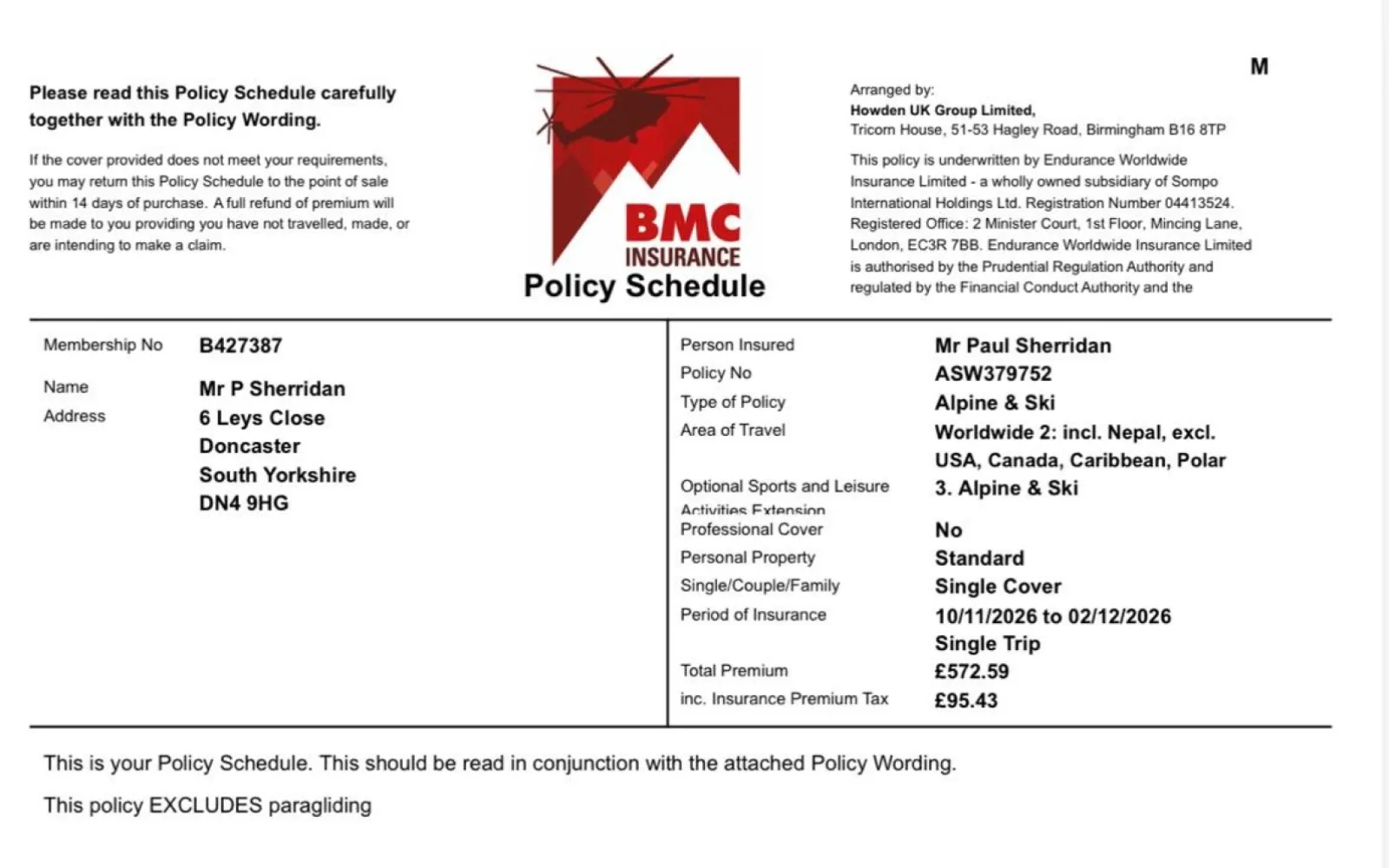
Travel insurance should be part of a trekker’s preparations. It can be used to manage health, accident and disruption issues which may arise on treks.
Issues which can occur on treks include;
Altitude sickness - a person can suffer from Acute Mountain Sickness (AMS) if they ascend too quickly. This can be a serious issue and should be appropriately managed.
Accidents - uneven ground, rocks, snow and ice can all contribute to trekkers falling, twisting and breaking bones.
Weather - sudden changes in weather can bring snow, rain and high winds. Temperature can also become extreme, all of which can affect treks.
Food and/or water poisoning - this can lead to, amongst other issues, diarrhoea and subsequent dehydration.
Other health issues - people may suffer from a variety of health issues including breathing and infectious problems. Specialist medical care may then be required.
Importantly, both novices and more experienced trekkers can be affected by these issues. Although good acclimatization, appropriate gear and a trained guide can all help to minimize the chances of these situations occurring, there is still a risk that specialist medical intervention may be required.
Why is helicopter rescue important during Nepal Trekking?
Often the medical provisions within mountain villages are limited. More advanced health care may therefore be required and so a trekker may need to be transported to a better resourced hospital.
Depending on prevailing weather conditions, together with geographical and operational factors, helicopter rescue may be required. Unfortunately, this can be expensive, particularly in more out of the way regions.
Actually, individuals may be required to personally fund such helicopter rescue if they do not hold suitable travel insurance. Appropriate travel insurance can often be obtained to include high altitude trekking and helicopter rescue.
Is travel insurance needed for smaller treks in Nepal?
Yes, even for smaller treks, travel insurance is highly advised. Although these treks (for example, Ghorepani Poon Hill and Mardi Himal) are not as long, they can still present trekkers with challenging terrain and weather. Health issues can also occur.
Whilst treks may be shorter in length, they can still pose similar health, safety and environmental concerns to longer treks. Hence, it is important to ensure that your travel insurance covers both the highest altitude and activities that you plan to undertake.
Although there is no general legal requirement for foreign trekkers to hold travel insurance in Nepal, particular insurance requirements may apply as a result of permit, restricted area and/or agency booking arrangements.
Here, these can alter so it is essential to research and confirm current regulations prior to travelling. Good trip preparation also involves verifying that your insurance does in fact cover your trek and planned activities.
What should travel insurance for trekking in Nepal include?
Ideal travel insurance for treks in Nepal will ideally provide medical, high altitude and helicopter rescue cover. Nevertheless, different companies offer differing levels of cover. Hence, it is vital to analyze policies thoroughly.
Areas to consider when assessing travel insurance
Overseas trekkers should consider the following features in different travel insurance policies. Ensure that your planned activities and highest trekking altitude are specifically referenced within your policy.
Coverage Type and Inclusions Summary
Coverage Type Should Include
Emergency Medical Doctors, emergency and in-patient medical care
High altitude trekking Trekking at or above your highest planned altitude
Altitude sickness Diagnosis and treatment of AMS and related ailments
Helicopter rescue Helicopter rescue from out-of-the-way trekking regions where medically required
Search and rescue Search and rescue cover (dependent upon policy terms)
Medical repatriation Medical repatriation to your home country
Trip cancellation Compensation for non-refundable costs if you cancel your trip for a covered reason
Trip curtailment Compensation for unused trip costs and supplementary travel costs resulting from a covered trip curtailment
Travel delay Compensation for suitable alternative accommodation, food and transport due to covered travel delay
Baggage and equipment Compensation for lost, stolen or damaged personal items
Personal accident Compensation for designated accidental injuries, disablement and/or fatalities
Emergency support 24 hour access to an emergency support service for medical and travel related issues
Why Is High altitude and helicopter rescue cover important?
Not all travel insurance policies cover high altitude trekking. Some do not even cover mountaineering or high altitude pursuits. Policies can also specify a highest altitude which they will cover.
For example, the Everest Base Camp trek reaches around 5,364 metres in altitude and the Annapurna Base Camp trek reaches around 4,130 metres.
As in many regions, trekking routes are not road accessible. Consequently, helicopter rescue is often an important option. Verify that your policy covers helicopter rescue (where medical reasons so dictate) together with related transport costs.
Is all travel insurance ‘all-risks’?
No. Although policies are often described as ‘all-risks’, there may be exclusions and limitations in relation to altitude, activities and claims. Hence, it is crucial to examine these aspects prior to buying insurance.
Ascension altitude – Ascertain the highest altitude that will be covered.
Trekking – Confirm that your policy includes self and guided trekking together with your particular trek.
Helicopter rescue – Investigate the criteria for when helicopter rescue can be conducted and who has the authority to do so.
Medical exclusions – Analyse exclusions relating to previous and other medical issues.
Maximum cover – Ascertain the highest levels of medical, helicopter rescue and medical repatriation cover available.
Excess/ deductible – Be clear about how much you will need to self-pay before your insurance provides cover.
Emergency contact – Note the 24 hour emergency contact details for your insurance company prior to commencing your trek.
What should be analyzed when selecting travel insurance for Nepal?
Always peruse the entirety of an insurance policy. If there are any areas of uncertainty, discuss these with the insurance company and ask for written clarification.
Above all, ensure that the information which you supply regarding your trek, planned altitude and activities is precise. This will enable you to select appropriate travel insurance for your Nepal trek and will also help avoid potential issues later if you make a claim.
Alongside health considerations, trekkers should consider helicopter rescue in the more isolated areas of Nepal’s Himalayas. Despite some insurance policies stating that they can offer medical rescue, these do not always include helicopter rescue.
Why might a trekker require helicopter rescue?
As trekkers often travel through more secluded areas, access to good roads and medical care can be scarce. Consequently, people may need to be rescued by helicopter and taken to an appropriate hospital for medical care.
Here, popular trekking areas such as Everest, Annapurna, Langtang and Manaslu can all involve situations where a helicopter rescue may be necessary. These include:
- Extreme Acute Mountain Sickness (AMS), High Altitude Pulmonary Edema (HAPE) and/or High Altitude Cerebral Edema (HACE).
- Physical injury such as broken bones, major falls and/or cuts. People may also need rescuing if they are unable to walk safely.
- Critical medical issues such as severe infection, respiratory and/or fluid related disorders and/or other significant health concerns.
- Sudden heart and/or other medical problems.
Factors such as medical requirement, weather, visibility and landing space will influence the feasibility of a helicopter rescue. Furthermore, availability of helicopters can also affect this. People should therefore familiarize themselves with local rescue methods.
Does all travel insurance include helicopter rescue?
No. Certain policies do not cover mountain trekking and/or set a maximum altitude for trekkers. Policies can also have different provisions regarding medical rescue.
When seeking insurance for helicopter rescue whilst trekking in Nepal, ensure that it:
- Covers helicopter rescue in mountainous areas.
- Provides medical rescue.
- Can rescue you at the highest altitude that you intend to trek to.
- Enables you to be taken to suitable medical care.
- Offers additional search and rescue cover (if this is available).
Ensure that you are aware of the maximum level of rescue cover and also the deductible or excess payable. Note that although some policies will offer medical care, they may not cover the costs of helicopter rescue.
What Is medical rescue, search and rescue and medical repatriation?
Knowledge of these terms will help you to determine which helicopter rescue cover is best for your needs.
Medical evacuation and rescue Medical repatriation
Generally, involves the rapid removal of someone from a trekking area to suitable medical care. Structured actions are taken to find and aid someone who is lost or stuck. Typically refers to the transport of someone back to their home country for medical reasons.
Whilst some insurance policies offer medical evacuation, they may not provide cover for unsanctioned search and rescue. Therefore, it is advisable to investigate these separately.
Should you notify your insurer of your intentions to receive helicopter rescue?
Yes. Where possible, inform your insurer’s 24-hour emergency assistance service of your plans for helicopter rescue. They can advise on correct processes, manage medical care and advise on What Is covered.
Whilst some insurers will want evidence such as medical information and documentation, and may need prior authorisation for a rescue to go ahead, never postpone essential, life threatening care for these formalities.
Here, trekking people should also refrain from organizing unsanctioned helicopter rescue. Medical information, rescue details and invoices, together with evidence of communication with your insurer, could all potentially be needed should you make a claim.
Maximum altitude is another key factor to consider when seeking trekking insurance for Nepal. Basic travel insurance policies frequently cap the altitude that can be trekked at either 3,000 or 4,000 metres. Again, this may not be suitable for some of Nepal’s most well-known Himalayan treks.
Why is maximum altitude important?
Insurance should extend to the greatest altitude that you intend to trek to. This should encompass extra viewing points, mountain passes and excursions.
Everest Base Camp for instance is around 5,364 metres and Kala Patthar around 5,545 metres. Thus, if a policy only covers trekkers up to 4,000 metres then it would not be suitable for these areas.
What Altitude Should Your trekking insurance in Nepal cover?
Refer to the table below for an indication of the maximum altitude of various Popular Nepal Treks. Ensure that your insurance covers you for the greatest point on your intended trek, incorporating extra view points and passes.
Approximate maximum altitudes of Popular Nepal Treks
Trekking area | Approximate maximum altitude
Ghorepani Poon Hill | 3,210m
Muldai Viewpoint | 3,637m
Langtang Valley | Kyanjin Gompa 3,870m
Annapurna Base Camp | 4,130m
Mardi Himal Viewpoint | 4,200-4,500m (depending on route)
Everest Base Camp | 5,364m
Kala Patthar | 5,545m
Annapurna Circuit –|Thorong La Pass 5,416m
Manaslu Circuit –|Larkya La Pass Approximately 5,106m
Note: These are approximate figures and can differ slightly depending on the map and descriptions used. Your insurer should analyze your full travel itinerary and the maximum altitude that you intend to trek to.
Is 6,000 metres’ altitude coverage sufficient?
Travel insurance which allows trekkers to go up to 6,000 meters can often be suitable for typical high altitude Nepalese teahouse treks. It can also be suitable for treks to Everest Base Camp, Kala Patthar and various mountain passes.
Nevertheless, in addition to a stated maximum altitude, you need to ensure that your insurance does cover the type of trekking that you will be undertaking, plus medical and helicopter rescue services.
Actually, some policies distinguish between trekking, rock climbing and mountaineering. Consequently, even if your insurance permits trekking to 6,000 metres, it may not extend to rock climbing and/or certain mountain passes.
What should you investigate when seeking high altitude trekking insurance in Nepal?
Ascertain:
- The maximum altitude that is covered.
- The highest point on your travel itinerary, including extra view points and passes.
- Whether your trek is defined as trekking, hiking or mountaineering.
- That your insurance includes cover for treating altitude sickness and for hospital costs.
- That it provides helicopter rescue cover for your intended trekking altitude.
- Information on exclusions such as rock climbing, self-guided trekking and pre-existing medical conditions.
In addition to investigating altitude, altitude sickness and helicopter rescue, the Australian Government’s Smartraveller website also advises travellers to examine these aspects prior to trekking in Nepal.
Ideally, email your full travel itinerary to your insurer prior to your trip. Request formal confirmation that your intended maximum altitude, type of trekking and helicopter rescue are all properly covered.
Should trekking insurance cover altitude illness?
Altitude illness is a significant health issue for trekkers in the Himalayas. Your insurance should therefore cover altitude illness and associated health care and rescue.
What is altitude illness?
Altitude illness is experienced when the body fails to adapt effectively to lower oxygen availability at high altitudes. People of all ages, levels of fitness and previous trekking experience can suffer from altitude illness.
There are three main types of altitude illness:
Acute Mountain Sickness (AMS)
This is the least severe type of altitude illness. Symptoms include headaches, sickness, light-headedness and a poor appetite. People often also feel abnormally lethargic.
High Altitude Pulmonary Edema (HAPE)
Fluid builds up in the lungs and people experience breathing problems, coughing and become weak.
High Altitude Cerebral Edema (HACE)
Brain oedema is a potentially fatal illness. People can become disorientated and suffer from impaired motor function. Levels of consciousness can also be affected.
Actually, AMS can occur if people ascend too rapidly. HAPE and HACE are both medical emergencies and a rapid descent is often essential. In some instances, helicopter rescue may also be required.
It is crucial to recognize the key symptoms of altitude illness. These include:
Intense or increasing headache.
Breathing problems – even when at rest.
Continual vomiting or extreme weakness.
Disorientation, odd behaviour and/or an inability to walk in a straight line.
Low levels of consciousness or an inability to stay conscious.
Importantly, make sure you notify your guide of these symptoms and seek prompt medical help. Do not continue to ascend and avoid waiting for insurance permission before taking emergency steps.
Can travel insurance be used as an alternative to Proper Acclimatization?
Whilst travel insurance offers financial protection, it is not a substitute for effective acclimatization. Trekkers must ascend gradually and build in rest days for acclimatization. They should also adhere to health and safety guidelines.
Ensure that you drink enough, avoid over-exertion and allow time for your body to acclimatize. Take on board your guide’s recommendations and descend at once if severe altitude illness symptoms arise.
When buying altitude illness insurance for a trek in Nepal, ensure that your chosen policy is suitable for your exact trek and for the altitude that you will be travelling to. This is especially important for popular high altitude treks such as Everest Base Camp, Annapurna Circuit and Manaslu Circuit.
How much Does Nepal Trekking Insurance cost?
As with all travel insurance, the price of trekking insurance will depend on a range of factors relating to the individual and their trip.
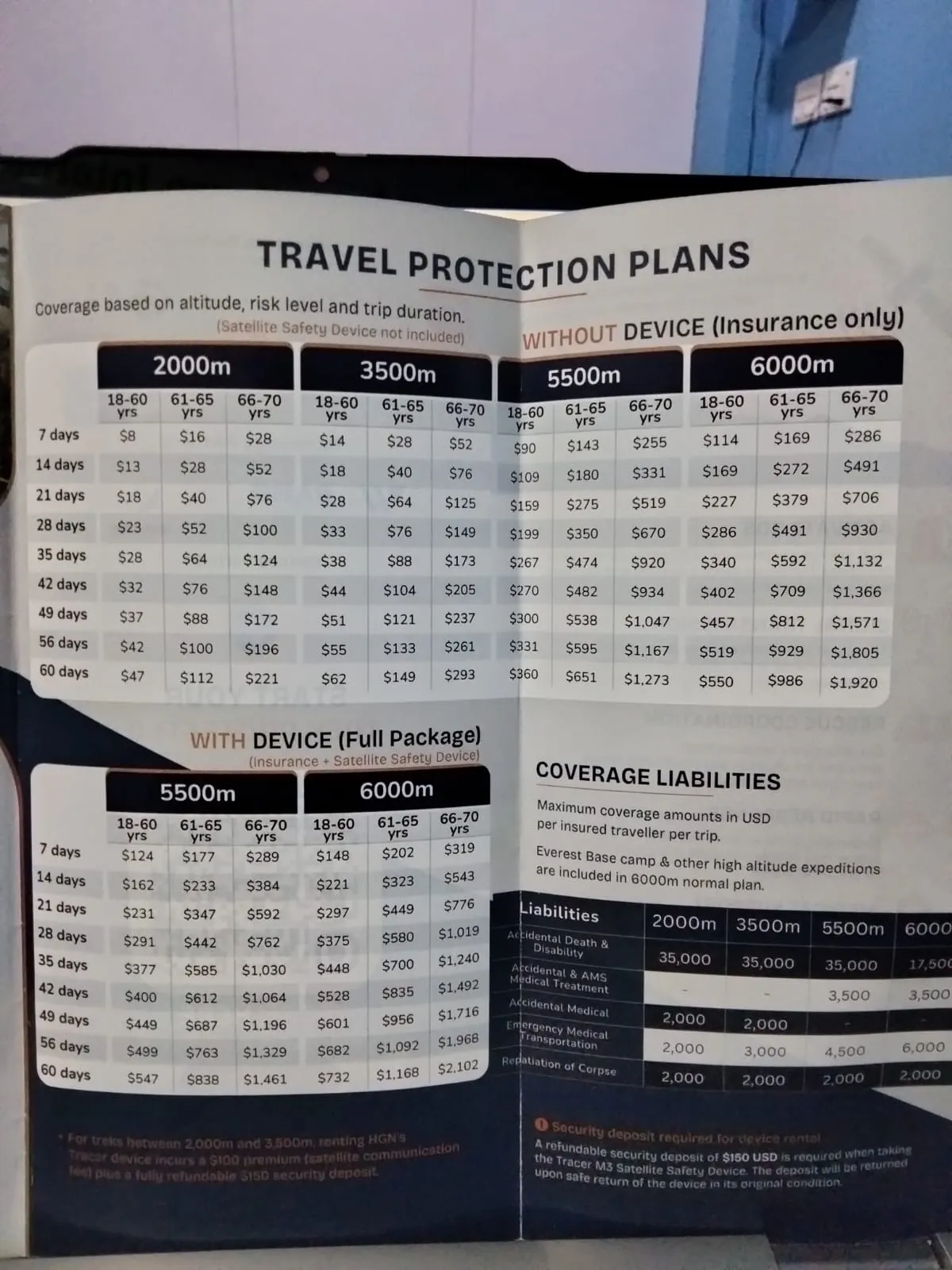
Key factors affecting the cost of Nepal trekking insurance include:
Age
As people age, so too may the cost of insurance as older people are seen as greater medical risk.
Nationality and country of residence
Prices and the availability of insurance can vary between countries and insurance markets.
Length of holiday
Typically, the longer a holiday, the greater the cost of insurance as coverage is for a longer period.
Highest trekking altitude
Insurance for high altitude trekking can be more expensive than standard holiday insurance.
Destination and activities
Remote and mountainous trekking locations and specialist trekking activities can influence costs.
Medical history
Individuals with medical issues may face added charges or may need special insurance arrangements.
Cover options
Benefits such as helicopter rescue, search and rescue and increased medical cover can all add to the cost of insurance.
Here, it is essential that you supply correct information about your travel arrangements so that your insurance is suitable and claims process is not compromised.
Is standard travel insurance Cheaper Than Specialist Trekking insurance?
Standard travel insurance is often more affordable as it may offer cover for general holidays and does not necessarily include specialist mountain activities. However, it may not cover high altitude trekking, helicopter rescue and/or search and rescue.
Whilst specialist high altitude trekking insurance is often more costly, it tends to offer more suitable coverage for Himalayan treks. Crucially, it can provide extra benefits which are not available on standard travel insurance.
Insurance type Typical cover Key point to consider
Basic travel insurance| General health, luggage and travel issues| May not cover high altitude trekking
Standard trekking insurance| Specific trekking pursuits and altitude restrictions| Establish the highest altitude covered
Specialist high altitude insurance| High altitude trekking and enhanced medical cover |Ensure helicopter rescue options and activity details are included
Extended adventure insurance| Selected adventure pursuits including climbing and mountaineering| Specialist climbing may need specific approval
Why can helicopter rescue and mountaineering cover be costly?
As many trekking areas are not easily accessible by road, helicopter rescue can prove expensive. Consequently, insurance policies which provide mountain rescue may be more costly and/or have set restrictions relating to this benefit.
Similarly, mountaineering cover can be more costly than standard trekking insurance. As technical climbing poses differing health and safety concerns to non-technical teahouse trekking, insurance companies may charge more for this type of activity. Only obtain cover for those activities that you actually undertake. Do not pay for benefits that are not relevant to you.
Whilst both a standard Everest Base Camp trek and a technical climbing expedition involve trekking, these should not automatically be regarded as equivalent activities for insurance purposes. Always verify how your insurer categorizes your trip.
Will my insurance cost more if I trek for a longer period?
Usually, yes. As your insurance is for a greater number of days, extended treks tend to incur greater costs. For instance, a 10 day trek may be more affordable than a 30 day Himalayan trek, depending on other aspects of your insurance policy.
As previously mentioned, people with medical issues can also face different insurance implications. Some insurers may seek medical information and/or impose special conditions on coverage.
How do I obtain suitable Nepal trekking insurance at the right price?
Obtain quotes from insurers who provide cover for the activities and altitude that you wish to undertake. However, do not solely select a policy on the basis of price.
Compare the following elements of different policies:
Highest trekking altitude and associated activities.
Maximum allowable medical expenses and hospital care costs.
Helicopter rescue and search and rescue options.
Interference and curtailment cover.
Exclusions for pre-existing medical issues.
Deductibles, claims processes and emergency support.
Although the most competitively priced Nepal trekking insurance may not always be the optimal choice, it is vital to select a policy that is appropriate for your destination, altitude, dates and personal situation.
Note: As with all insurance, costs will vary by insurer, by country of residence and according to the cover provided. Always obtain a personalized quote.
7. Is general travel insurance suitable for trekking?
Whilst general travel insurance may be suitable for holidaying in Nepal, it may not extend to Himalayan trekking. It is important to ensure that your policy includes provisions for trekking, altitude illness and emergency rescue.
General versus trekking insurance
General travel insurance is designed to address common issues that arise on holiday such as medical concerns, lost luggage and cancellation/flight delay. Trekking insurance will additionally provide coverage for mountain-specific concerns.
Here, holidays generally only need general travel insurance to enjoy sightseeing and leisure pursuits in centers such as Kathmandu and Pokhara. However, trekkers travelling to Everest Base Camp and/or across the Thorong La Pass will require high altitude insurance.
General Insurance Vs. Trekking insurance
Aspect| General travel insurance | Trekking insurance
Sightseeing | Usually covered | Usually covered (depending on policy)
Medical issues| Usually covered| Usually covered
Low altitude hiking| Variable (depending on policy)| Often covered
High altitude trekking| Possibly excluded or restricted| Covered (within set limits)
Altitude illness| Possibly excluded| Covered (on suitable policies)
Helicopter rescue| Not always covered| Covered (on suitable policies)
Search and rescue| Often restricted or excluded| Covered (on suitable policies)
Technical climbing| Usually excluded| May need extra specialist insurance
Furthermore, some insurers use the term ‘hiking’ but do not specify what altitudes and types of terrain are covered. Thus, it cannot be assumed that general hiking insurance extends to Himalayan trekking.
Does general hiking insurance suffice for Himalayan trekking?
Not necessarily. Different insurers define ‘trekking’ and ‘hiking’ in varying ways. Some will provide coverage for hiking at altitudes of up to 3,000 metres, for example. Other insurers will provide high altitude coverage, but will categorise this under a specialist ‘trekking’ section.
It is, therefore, important to review the activity, altitude and rescue provisions of your policy, particularly if you are trekking to destinations such as Everest Base Camp, Annapurna Circuit and Manaslu Circuit.
How to ensure that your travel insurance includes provisions for Your Trek
Before purchasing insurance, contact your insurer and share details of Your Trek. Obtain documentation to verify that your planned activities, altitude and rescue provisions are covered by the policy.
Ensure that your policy:
covers the particular trek that you are undertaking;
specifies the maximum altitude for trekking;
includes provisions to treat altitude illness (AMS, HAPE and HACE);
provides for helicopter rescue in out-of-the-way mountainous regions;
covers the costs of search and rescue;
and does not exclude guide support, out-of-the-way regions and/or trekking.
Even if the general information and promotion for a policy suggest that it is suitable, specialist trekking insurance should be obtained if general travel insurance does not evidently provide the right level of coverage for your Himalayan trek.
8. Trekking versus mountaineering insurance
As trekking and mountaineering differ in terms of the mountain activities that they encompass, it is crucial to ascertain which type of insurance is appropriate for your trip depending on whether you are trekking or mountaineering.
What is usually covered by trekking insurance?
Trekking insurance is typically used to provide coverage for non-technical trekking on recognized mountain paths. Many treks in Nepal conform to this description. Again, coverage will vary depending on an insurer’s definition of trekking and the maximum altitude that can be covered.
Common non-technical teahouse treks include:
Everest Base Camp Trek;
Annapurna Base Camp Trek;
Ghorepani Poon Hill Trek;
Mardi Himal Trek;
Langtang Valley Trek; and
Manaslu Circuit Trek (depending on the policy’s altitude and activity definitions).
Although these treks often involve high altitudes and isolated communities, they generally do not necessitate specialist mountaineering equipment. Nonetheless, some insurers distinguish between more challenging and/or high altitude trekking and general hiking.
What is covered by mountaineering insurance?
Mountaineering insurance is intended to address the requirements of more technically orientated mountain pursuits. It may therefore incorporate provisions for specialist equipment and skills. Furthermore, it can extend to mountaineering, glacier traversing and summiting.
Particular mountain pursuits that may necessitate specialist mountaineering insurance are:
rock and/or ice climbing (using ropes and harnesses);
travelling on glaciers and/or on steep snow and/or ice inclines;and
climbing and/or summiting:
recognized trekking mountains; and
high altitude mountains.
Whilst specialist equipment can be an important factor, it is the insurer’s activity definition and the actual nature of the mountaineering that will ultimately determine the most appropriate insurance type.
Is mountaineering insurance required for Island Peak, Mera Peak and Lobuche East?
Climbing these popular Nepalese trekking mountains involves pursuits that may not be sufficiently addressed by general trekking insurance. Thus, climbers should obtain specialist insurance and ensure that it specifically covers their chosen mountain and climbing pursuits.
Island Peak (6,189m)
As well as traversing glaciers, this mountain features technical climbing. Thus, general trekking insurance can not be adequate.
Mera Peak (6,476m)
This mountain requires mountaineering and rescue insurance as it entails high altitude glacier and snow traversing.
Lobuche East (6,119m)
Whilst this mountain contains technical climbing, climbers should ensure that their specialist insurance covers their intended ascent.
How to decide on suitable insurance for a Nepalese mountaineering expedition
Identify the mountain to be climbed, the climbing path and the intended summit altitude. Next, request verification from your insurer that your policy includes provisions for the relevant mountaineering activities and equipment.
Prior to buying insurance, ensure that your policy:
names the mountain and states its summit altitude;
covers glacier traversing and mountaineering;
includes provisions for rope, crampons and ice axes;
provides for the treatment of altitude illness;
and offers helicopter and search and rescue provisions.
Also, verify that it includes medical repatriation and emergency support.
Above all, obtain documentation to verify that your policy is appropriate. Although trekking insurance may extend to 6,000 meters, for instance, this does not necessarily mean that a policy will also provide coverage for technical mountaineering at the same altitude.
9. Appropriate insurance for popular Nepalese treks
The ideal insurance for a particular Nepalese trek will depend on the highest altitude to be reached, together with the nature of the trek and its activities. Hence, it is advisable to compare the altitude and rescue provisions applicable to each destination.
Insurance for Everest Base Camp Trek
The main Everest Base Camp Trek ascends to around 5,364 meters. The optional Kala Patthar viewpoint is at an approximate altitude of 5,545 meters. Thus, if this viewpoint is to be visited, your insurance should extend to both of these altitudes.
Furthermore, your policy should provide for the treatment of altitude illness and helicopter rescue from isolated regions in the Khumbu area. Should Your Trek involve an alternative path and/or mountaineering, separately verify that your policy includes relevant provisions.
Insurance for Annapurna Base Camp Trek
Annapurna Base Camp is at around 4,130 meters. Hence, your insurance should extend to above 4,000 meters. As parts of this trek are in more isolated areas, it is also prudent to verify that your policy provides for medical rescue.
Ensure that your policy includes provisions for altitude illness and for rescue. Again, some areas of the Annapurna Base Camp Trek are not easily accessible by road and medical support is not always readily available.
Insurance for Annapurna Circuit Trek
The Annapurna Circuit traverses the Thorong La Pass, which is at around 5,416 metres. Consequently, your insurance should cover trekking at above this altitude and also provide for the treatment of altitude illness.
As this trek also encompasses isolated mountainous areas, medical rescue is especially important. If you are undertaking further excursions, also verify that your policy extends to the highest altitudes that you plan to reach.
Insurance for Manaslu Circuit Trek
Manaslu Circuit Trek involves crossing the Larkya La Pass at around 5,106 metres. Due to the trek’s inclusion of isolated Himalayan communities, it is important to obtain insurance providing suitable high altitude medical and rescue provisions.
Importantly, verify that your policy offers helicopter and search and rescue provisions together with medical care at the altitude that you will be trekking. In addition, ensure that your insurer does not exclude the particular isolated areas that you will be visiting.
Insurance for Langtang Valley Trek
The primary Langtang Valley Trek ascends to Kyanjin Gompa at around 3,870 meters. However, optional excursions to Kyanjin Ri (4700m approx.} and Tserko Ri ( 4900m approx.) reach much greater altitudes.
Therefore, obtain insurance with an appropriate altitude provision to account for both your main trek and any optional viewpoints. Again, verify that your policy includes medical rescue and altitude illness treatment.
Insurance for Mardi Himal Trek
The Mardi Himal Trek can extend to around 4,200-4,500 meters, depending on the viewpoint and excursion. Thus, rather than merely referencing the name of the trek, it is important to verify that your policy extends to the highest altitude that you plan to reach.
Here, your policy should include high altitude trekking coverage together with medical rescue. Helicopter rescue provisions should also be verified. Further, confirm that your insurer recognizes the particular trekking path and activities as being within its trekking activity scope.
Is specialist insurance needed for Ghorepani Poon Hill Trek?
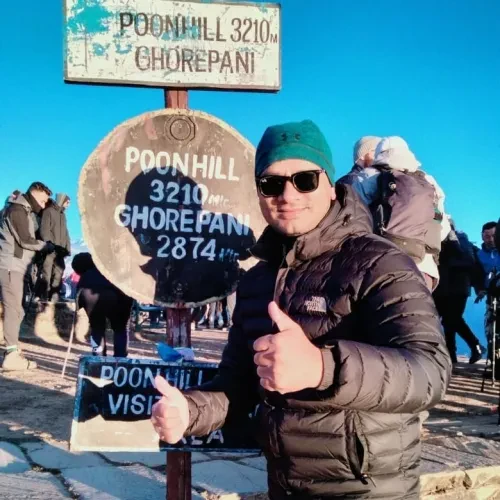
Despite being a shorter and lower altitude trek, Ghorepani Poon Hill still involves reaching around 3,210 metres. Travel insurance should still be obtained which covers hiking or trekking at this maximum altitude.
Even for this relatively brief trek, it is advisable to verify that your policy provides medical, accident and rescue provisions. Indeed, accidents and unanticipated health issues can occur on any mountainous trek.
Key insurance considerations for popular Nepalese treks
Trek Destination | Approximate highest altitude| Key insurance consideration
Ghorepani Poon Hill | 3,210m| Trekking and medical provisions
Mardi Himal | 4,200-4,500m | Altitude and rescue
Langtang Valley | 3,870m (Kyanjin Gompa) | Extra coverage for optional viewpoints ( 4700/4900m approx.)
Annapurna Base Camp | 4,130m | Above 4,000m and rescue
Manaslu Circuit | 5,106m| High altitude and out-of-the-way rescue
Annapurna Circuit | 5,416m | Coverage for Thorong La Pass
Everest Base Camp | 5,364m | High altitude medical provisions and helicopter rescue
Kala Patthar | 5,545m | Extra altitude coverage (if this viewpoint is to be visited)
Note: Altitudes are approximate. Your particular insurance requirements will depend on Your Trek, optional excursions, activity definition and policy terms and conditions.
Ideally, your insurance should be decided upon according to Your Trek details. Before your expedition, email your insurer details of Your Trek and the highest altitude that you will be reaching. Subsequently, obtain documentation which verifies that your policy is suitable.
10. What is not covered by your Nepal trekking Insurance?
Whilst trekking insurance can be highly beneficial, there are areas which it will not cover. It is therefore important to recognized which aspects are not covered so that you can make an informed choice about the most suitable insurance for your Himalayan trek.
Common areas not covered by trekking insurance are:
Trekking at excessive height – An insurer may refuse a claim if you trek higher than is permitted by your insurance.
Activities which require specialist equipment – Standard trekking insurance does not usually cover travel on glaciers, climbing and specialist activities.
Medical issues – There are often medical related exclusions.
Failure to declare medical issues – This can influence whether or not you are able to take out insurance and/or whether a claim can be accepted.
Unapproved helicopter rescue – Some insurance companies insist that you gain approval from their emergency services prior to being rescued by helicopter, where this is possible.
Helicopter use for non-medical purposes – Generally, helicopters are not covered for non-medical reasons such as pleasure, transport or viewing.
Disregarding advice – Claims may be impacted if you knowingly fail to adhere to official and/or insurance guidance.
Alcohol and drug use – Depending on the situation, injuries or incidents relating to alcohol or drug use may not be covered.
Engaging in hazardous activity – Claims can be invalidated if you intentionally partake in risky behavior or fail to follow appropriate safety practice.
Uncovered trip cancellation and delay – Alterations arising from personal choice and/or external factors which are not identified as acceptable by your insurance, may not be eligible for compensation.
Can my trek above the height limit not be covered?
Yes. Should you trek higher than is allowed by your insurance, a claim may be refused. For instance, if your insurance allows trekking up to 4,000 metres, it may not cover travel to Everest Base Camp.
In summary, maximum heights and claim criteria can differ between insurers. Ensure that your highest planned trek point is within the allowed height and consider whether extra viewpoints and mountain passes should be incorporated into your travel plans.
Will I be covered if I am rescued by helicopter without prior insurance approval?
This is not automatically the case. Some insurance companies insist that you gain the approval of their emergency services prior to helicopter rescue. They may also stipulate that medical reports and other evidence is presented and that it is evident that medical rescue is required.
Importantly, never postpone urgent medical rescue in favour of gaining permission. Observe local emergency protocols and endeavor to receive prompt aid. Then, notify your insurance company as soon as practically possible.
Furthermore, it is important to recognise that helicopter usage for non-medical reasons is distinct from medical rescue. Your insurance may cover one of these, but not both.
Is pre-existing medical history covered?
This will depend upon the insurance provider and the information you give them. Some insurers do not cover particular pre-existing medical issues. Other insurance companies will provide cover having carried out medical assessment and/or by charging an increased premium.
Here, always provide honest and accurate medical information when applying for insurance. Should you fail to declare pertinent medical history, this can result in claims being contested and/or refused.
Is all trip cancellation and delay eligible for compensation?
Generally, only particular situations will attract compensation. For instance, medical issues may be acceptable, but self-initiated travel changes may not be. Furthermore, extra hotel accommodation, flight and transport costs must satisfy the insurance company’s criteria. Retain evidence such as booking information and invoices to support any claim.
How can I prevent issues with my trekking insurance?
In conjunction with the promotional material, thoroughly examine your insurance policy. Moreover, request an explanation from your insurance company about any exclusions which may relate to your intended trek.
Prior to commencing your trek, establish:
What to check | Reasons for checking
Maximum height | To verify that your highest trek point is covered
Trekking and climbing | To ensure that your travel relates to approved activity
Medical exclusions | To recognise medical issues and therapies which may not be covered
Pre-existing medical history | To understand both what information should be declared and what cover is available
Helicopter rescue | To ascertain the approval process and what helicopter expenses are covered
Search and rescue | To recognise specific criteria and exclusions
Alcohol and safety | To learn which situations are impacted by these conditions
Cancellation and delay | To establish what situations are eligible for compensation
More importantly, bear in mind that insurance exclusions can differ between companies and even individual policies.
Before you travel, request formal confirmation from your insurance company regarding any potentially relevant exclusions. Ensure that you have easy access to your insurance policy and emergency contact information during your trek.
11. Conclusion: Why is trekking insurance important in Nepal?
Travel insurance is important to provide cover for health, trekking and travel related issues.
Regardless of whether you are walking the Ghorepani Poon Hill, Mardi Himal, Langtang, Annapurna Circuit and/or Everest Base Camp treks; it is important that your insurance provides the correct levels of cover for your particular trek, including the highest point you will be walking at.
Ensure that your insurance includes:
High altitude trekking
Cover for health issues together with altitude related and/or injury related medical treatment.
Helicopter rescue – if medically required.
Search and rescue – where permitted by your insurance.
Medical repatriation – where medically required, to return to your home country.
In addition to, cancellation, curtailment and delay cover.
Review the aspects of your insurance that are not covered and also check how your insurance company will provide emergency support. Ensure that you have your policy number, plus the emergency and support contact details to hand prior to heading off on your trek.
Whilst travel insurance will not stop you having an accident, nor will it prevent altitude illness or bad weather, the right insurance can help to limit the cost of an unforeseen issue.
Plan Your Nepal Trek with Haven Holidays Pvt. Ltd.
At Haven Holidays, we advise all our travelers to adequately prepare for their Himalayan trek. We can guide you on your trek, the likely altitude and other relevant information relating to your trip.
Prior to your departure, consult with your insurance company to ensure that your insurance policy provides the correct level of cover for your trek. For further information and support in relation to both your trip planning and trek, please contact Haven Holidays Pvt. Ltd.
In conclusion, properly prepare for your trek and select the right insurance policy to further enhance your confidence in relation to your Nepal trek.
12. Frequently Asked Questions ( FAQs)
1. Is travel insurance compulsory from Nepal Trekking?
Whilst not compulsory for all treks in Nepal, it is highly advised. In some cases insurance may be required for treks, group tours and climbing. Ensure that you verify the most up-to-date regulations for where you are travelling and that your insurance policy extends to the particular activities and height at which you will be travelling.
2. Can I trek in Nepal without insurance?
Although it may be possible to trek without insurance, this can be potentially costly. Expenses such as medical care, and internal and helicopter evacuation can quickly add up. Having suitable trekking insurance can therefore be a good way of securing financial protection, particularly if trekking in more isolated regions which may not have extensive medical provision.
3. Does my insurance include Nepal helicopter evacuation?
Depending on which company you take out insurance from, this may be included. Ensure that your policy specifically states that helicopter evacuation is covered and that sufficient financial recompense is available for this. Also ascertain if you must first receive permission from your insurer’s emergency services and whether there are height limitations.
4. What heights should my insurance include while trekking in Nepal?
Your policy should cover at least the highest height you intend to trek at. It should also allow for flexibility so that you are covered if your itinerary is altered and/or if helicopter evacuation becomes necessary. For example, Everest Base Camp is around 5,364 metres high and Kala Patthar is around 5,545 metres. Verify the height covered by your insurance.
5. Is altitude illness covered with my insurance while trekking in Nepal?
Many specialized trekking insurance policies do provide cover for medical attention and evacuation relating to altitude illness. Again, however, this is not automatically included. Investigate whether your policy covers acute mountain sickness, high altitude pulmonary oedema and high altitude cerebral oedema. Always heed medical advice and provide accurate information when taking out insurance.
6. How much does Nepal trekking insurance cost?
Costs will depend on a range of factors including age, trip length, destination, height and whether or not you require helicopter evacuation. Although generic travel insurance can sometimes be more affordable, this may not cover high altitude trekking. Thoroughly research different specialist policies and examine aspects such as medical recompense, helicopter evacuation financial limits, excess and exclusions to ensure that you select a suitable policy.
7. Will standard travel insurance allow me to trek to Everest Base Camp?
Not always. Frequently, standard travel insurance does not permit or includes a surcharge for travelling and/or trekking at high- altitudes. As Everest Base Camp is around 5,364 metres high, ensure that your insurance does cover high altitude trekking together with medical and helicopter evacuation.
8. Do I need extra insurance for the Annapurna Circuit?
Whilst it may not be essential to take out further insurance, your current policy must provide cover for the whole of the Annapurna Circuit and the highest point reached. This trek involves passing through Thorong La Pass, which is around 5,416 metres high. Verify that your policy extends to high altitude trekking, together with medical and helicopter evacuation.
9. Is mountaineering insurance needed for Island Peak and Mera Peak?
Given that these climbs present further challenges in terms of both height and technicality compared to standard trekking, it is highly advisable to take out mountaineering insurance. Ensure that your policy specifically covers mountaineering, the highest height to which you will climb and medical and helicopter evacuation. Generic trekking insurance may not cover mountaineering.
10. Is it possible to take out trekking insurance whilst in Nepal?
Some global insurance companies permit people to take out or amend their insurance whilst they are travelling. Yet again, there are often limitations. Furthermore, it will not be possible to retrospectively insure against an event or to insure following medical intervention as this would not constitute valid cover. Ideally, therefore, suitable insurance should be organised prior to commencement of a trip.
11. Does my insurance cover medical care in Kathmandu?
Many extensive trekking insurance policies do offer medical care cover in Kathmandu. Again, there may however be variations in relation to in-patient, out-patient, pre-existing and non-emergency medical treatment and these will be subject to policy limits and exclusions. Ascertain whether your policy provides medical care cover in Nepal and the methods by which medical bills can either be paid for or re-claimed.
12. What steps should I take if I require helicopter evacuation?
Notify your trekking guide that you require evacuation and then promptly access medical aid. Your guide or tour agency should then contact your insurance company’s emergency services, advising them of your location. Ideally they should also comply with any processes set by the company for approval. Ensure that you have your policy and emergency contact details to hand.
Note: There is a wide variation in insurance policies. Therefore, do not assume that all policies include helicopter evacuation, altitude illness or high-altitude trekking cover.
Therefore, we advise you to confirm with your insurance company exactly what cover is available for their particular trek, height, activities and helicopter evacuation. You should also research policy exclusions, pre-existing medical issues, excess and claims processes together with emergency service requirements.
Our travel experts are ready to assist you with any questions.
Send us a message.Have a question before you book? Send your enquiry below and our travel experts will get back with the required information.