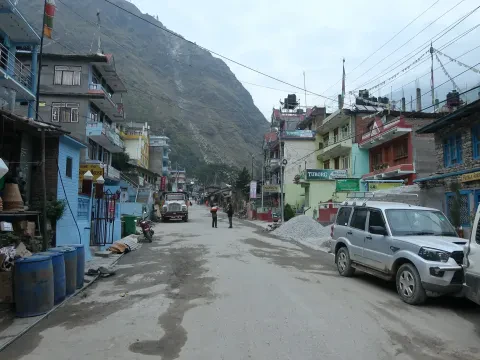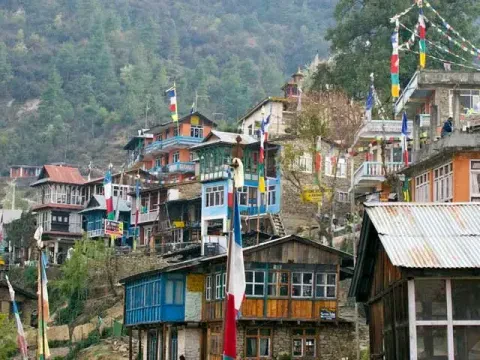
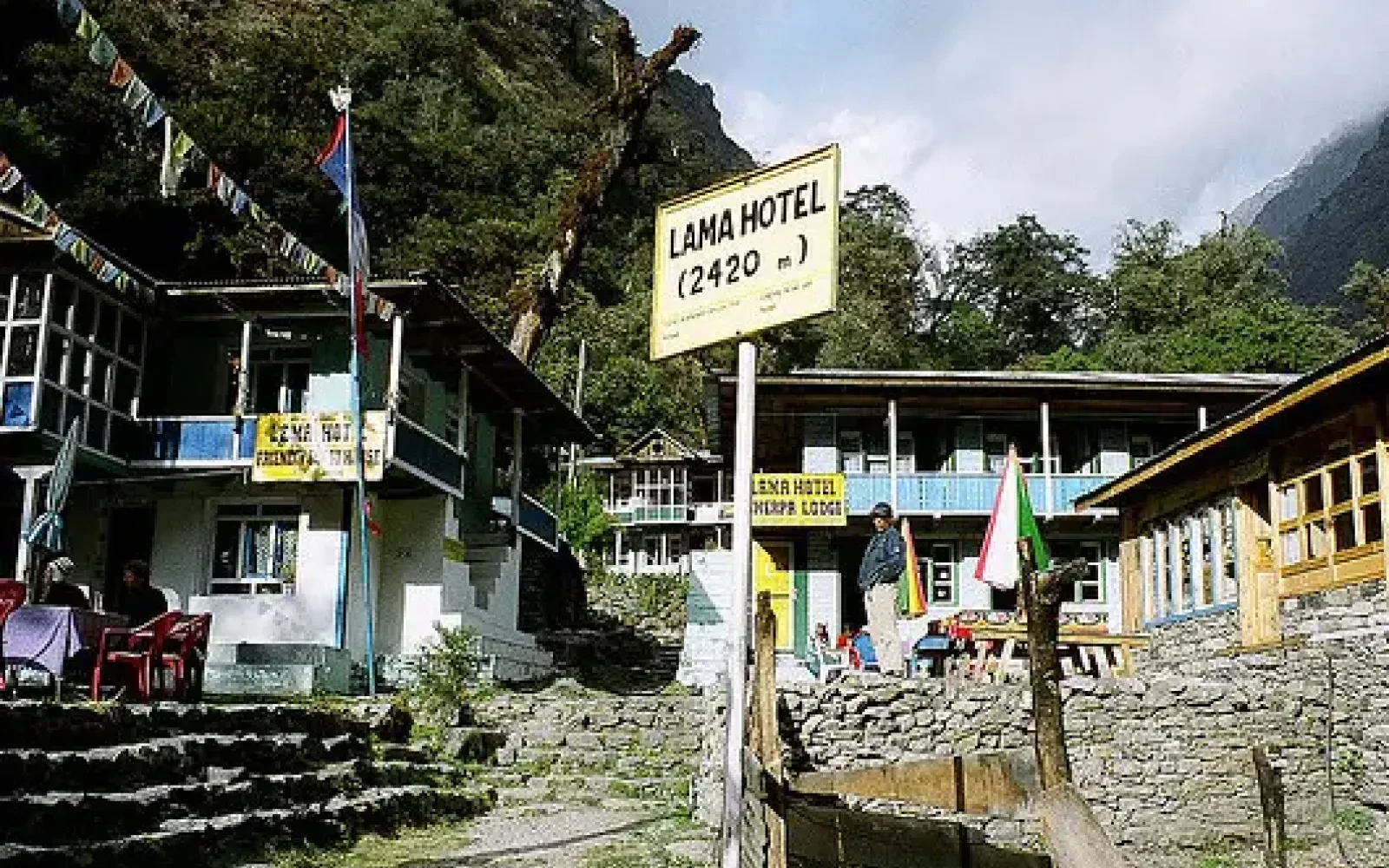
Lama Hotel is a small Nepali settlement in the Langtang Valley in Nepal. It is located at an elevation of around 2470 meters above sea level. The town is a regular resting spot for trekkers in route to Langtang Village and Kyanjin Gompa. Lama Hotel also offers good views of Langtang Lirung, which is 7,227 meters tall. Because of this, it is an important resting spot for acclimatization. The village provides a real Himalayan trek experience in traditional Tamang culture. Trekkers typically stay an overnight here before proceeding higher up into the alpine zones. There are mixed forests of rhododendron, oak, and pine trees in the area. The forests add color to the scenery, especially in the spring.
In addition, Lama Hotel is located in the Langtang National Park, a protected area rich in wildlife and natural beauty. This region is famous for its diverse flora and fauna, including red pandas and Himalayan monkeys. Lama Hotel’s peaceful atmosphere attracts travelers seeking calm and nature. The village offers basic facilities but retains its rustic charm. Tea houses provide food, drinks, and simple accommodations. Despite limited modern infrastructure, the hospitality is warm and welcoming. Most trekkers appreciate the clean mountain air and beautiful mountain views.
Besides, Lama Hotel is also a resting place for trekkers climbing to higher passes such as Ganja La, which is 5,160 meters in height. It also serves as an entry point to surrounding glaciers and alpine meadows. In short, Lama Hotel is a fine blend of nature, culture, and trekking convenience. It is a well-liked resting place in the Langtang trekking route.
Lama Hotel is located in the Langtang Valley, in central Nepal. It sits inside Langtang National Park, a UNESCO-protected area. The village lies at about 3,100 meters above sea level, along the Langtang River. The surrounding terrain includes steep hills covered with dense rhododendron, oak, and pine forests. This forested area supports rich biodiversity and vibrant wildlife species.
Close by Lama Hotel, towering Langtang Lirung stands at 7,227 meters. It presides over the skyline of the valley and is a draw for trekkers and photographers. Ancient glaciers carved out the valley, creating the distinctive U-shaped landscape. Rocky cliffs and waterfalls provide dramatic elements to the landscape around Lama Hotel. All these natural components render the village a picturesque halt for hikers.
To the north, the trail from Lama Hotel ascends to alpine meadows and glacier zones. Trekkers often visit the Langtang Glacier and Ganja La Pass, which stands at 5,160 meters. The scenery shifts from lush forest to naked rocky slopes and sparse vegetation. The seasons bring heavy snow in winter and blooming flora in spring. The shifting landscape offers differences throughout the year.
Besides, the Langtang River provides required water for agricultural and village life in Lama Hotel. The river's volume varies seasonally, with spring meltwaters swelling it. The fact that Lama Hotel is located in a narrow valley gives it a peaceful, sheltered feel. This qualifies it as an ideal stop for acclimatization and additional walking. Its scenery balances natural beauty and ecological value.
In short, the setting of Lama Hotel offers trekkers a unique mix of natural beauty and biodiversity. The presence of high peaks, river valleys, and hill forests makes trekking here a memorable experience. The fact that the village is situated with in Langtang National Park further enhances its appeal to nature lovers. Its geography therefore makes Lama Hotel a must-visit Himalayan destination.
Lama Hotel is accessible only by trekking on foot along the Langtang Valley. Most trekkers begin their trek from Syabrubesi, which is 1,500 meters high. It takes two full days of walking from Syabrubesi to get to Lama Hotel. The trail gradually rises through beautiful rhododendron forests, along the Langtang River, and via some small villages.
Actually, the path to Lama Hotel is well indicated but can become slippery, especially during the monsoon season. Local guides and porters are readily accessible to transport heavy bags. There is no road or motor vehicle that reaches Lama Hotel, and the sole way of reaching this village is by trekking. This inaccessibility allows trekkers a peaceful and natural Himalayan experience.
In winter, there may be thick snowfall along the trail to Lama Hotel that blocks parts of the trail, and it becomes difficult to get there. However, spring, summer, and autumn seasons provide more secure and stable trail conditions. Emergency helicopter evacuation services are available from Syabrubesi if needed, but they are expensive and only for emergency cases. Therefore, trekkers are advised to prepare properly and keep themselves updated on the weather.
From Lama Hotel, trekkers can also go higher up to Langtang Village (3,430 meters) and Kyanjin Gompa (3,870 meters). These high-altitude destinations are visited for panoramic mountain views and cultural exploration. Lama Hotel is a significant gateway for many hikers exploring the Langtang region. Its inaccessibility by any vehicle helps preserve natural beauty and assures a full trekking experience.
Lama Hotel provides basic but regular trekking facilities to trekkers. The village is 2,470 meters above sea level. It has some small tea houses built for trekkers traveling to Langtang. All the lodges provide food, hot drinks, and simple accommodation.
Likewise, the accommodation in Lama Hotel is on twin-sharing basis in rooms with wooden beds and blankets. Attached toilets are a luxury in this region. Toilets are commonly shared in most lodges with cold showers. Hot bucket showers can be had for a nominal charge. Electricity is either solar or generator-run and is primarily for lighting and charging.
Moreover, most tea houses in Lama Hotel serve typical Nepali food like dal bhat. Also served are Tibetan bread, noodles, and eggs. It is freshly cooked food, but the menus are limited due to the remote access. Clean drinking water is available but must be purified or bought as bottled water. Some lodges sell boiled water for refilling bottles.
In fact, wi-Fi is not available in Lama Hotel. Mobile reception is very poor or even nil. Communication here is mostly offline. Walkie-talkies or radios are employed by lodges for communicating with nearby villages. Device charging is possible, but mostly at extra cost. Solar panels don't work effectively on cloudy days, so charging can be slow.
As basic as they are, amenities in Lama hotel serve trekkers well. Everything you need in the way of comfort is provided. Lama Hotel is ideal for overnight accommodation after a long day's trek from Syabrubesi. It offers shelter, sustenance, and warmth amidst the tranquility of a forest setting. The warmth of locals adds to this experience. As you continue to Langtang, such basic services are a necessity of comfort. Lama Hotel is thus an important milestone on the Langtang Valley Trek.
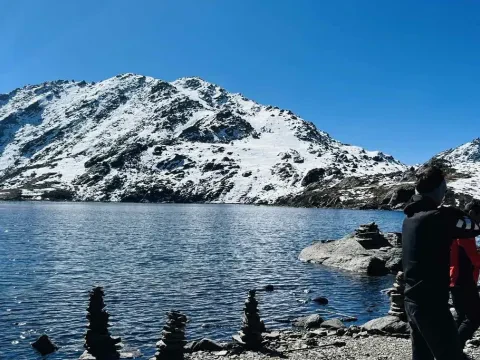
The Lama Hotel offers natural beauty in all its directions. It is situated 2,470 meters above sea level. The village is surrounded by dense oak, pine, and rhododendron forests. Trekkers generally enjoy the peaceful environment and fresh mountain air. The background is filled with the songs of birds and the roar of rushing rivers.
Meanwhile, Langtang River flows parallel to the trail near Lama Hotel. The turquoise water of the river adds beauty to the landscape. You can walk along the river and enjoy scenic views. There are small wooden bridges that cross the stream at different locations. These bridges are ideal for photography.
Similarly, the forest of Lama Hotel is inhabited by animals. Langurs or Himalayan monals can be observed by trekkers. Red pandas can be seen if one is lucky, in the early part of the morning. It lies in Langtang National Park. It is, therefore, ecologically and culturally significant.
Nearby, you witness sunrise views in the midst of forest from Lama hotel. Light seeps through tall trees amazingly. Lama Hotel also offers a great view of distant snow-capped high peaks. Despite being far, peaks like Langtang Lirung (7,227 m) appear in the north. Such peaks become increasingly visible as you go higher.
In brief, Lama Hotel invites trekkers with its natural setting. The riverbank and surrounding forests are a highlight. The peace and quiet offer a welcome break in the middle of the trek. Nature, wildlife, and occasional mountain views make it a memorable experience. It also sets one up for the natural beauty ahead on the Langtang trail. This forest, water, and wildlife combination makes Lama Hotel an outstanding stop. Every visitor finds something special to love here.
Trekkers at Lama Hotel enjoy peaceful walking along forests. The trail offers nature at its best. Most of the trekkers visit here from Syabrubesi or Rimche. They rest here before moving to Langtang Village. The place is ideal for a relaxing day's end.
Meanwhile, Birdwatching is one of the major activities of the trail near Lama Hotel. You can see colorful Himalayan monals. They are the national bird of Nepal and delightful to observe. Other birds fill the forest with soothing sounds. Early morning is the best time for birdwatching.
Likewise, another activity that is popular here in Lama Hotel is photography. The Langtang River runs near it with stunning clarity. Trekkers get themselves photographed on wooden bridges. There are Rhododendron trees that flower in the spring, adding colors. Shots of the forest and misty mornings are extensively taken.
Moreover, some visitors go into the nearby forests gradually to spot wildlife from Lama Hotel. They stroll quietly under thick canopies. Langur monkeys swing in trees above. Red pandas can be spotted if you are quiet. These walks are peaceful and relaxing.
Additionally, trekkers also do stretching or light yoga here in Lama Hotel with cool and peaceful surrounding. Flat open areas near teahouses make this possible. The calming sound of the river adds to a relaxed atmosphere. Breathing exercises here are refreshing and meditative. These pave the way for the next day's trekking.
Briefly, Lama Hotel is compact yet delightful. Trekkers rest, stretch, observe nature, and breathe fresh air. The forest, river, and wildlife all play their part in the adventure. Not action-packed, Lama Hotel soothes your senses. Its activities focus on peace and coexistence with nature. Each step you take becomes lighter and more aware here.
Lama Hotel is famous for its peaceful forest atmosphere. It stands at 2,470 meters elevation. Trekkers stop here on the Langtang Valley Trek. It is a natural midpoint between Syabrubesi and Langtang Village. Its serene atmosphere makes it an excellent retreat.
Also, Lama Hotel is renowned for its serene ambiance. It is engulfed in thick jungle and the Langtang River, which makes it seem secluded. Birds chirp, leaves rustle, and trekkers unwind. After steep climbs, the destination offers relief. Its serenity attracts nature lovers and mindful hikers.
Besides, Lama Hotel is a key overnight stop along Langtang Valley Trek. It allows trekkers to acclimatize to altitude gradually. A rapid ascent can lead to altitude sickness. An overnight here helps with safe acclimatization. It is a planned part of most Langtang Valley Trek itineraries.
Apart from that, the majority of people love Lama Hotel for its wildlife viewing. Langurs and Himalayan birds are standard. Red pandas are seen occasionally, but not frequently. It keeps trekkers alert and interested. It makes every walk around the vicinity worth it.
Apart from this, Lama Hotel is also appreciated for trail access. It connects readily to Rimche and Gumnachok lower down. It also ascends to Langtang Village and Kyanjin Gompa. The trail is well-marked and shaded. Such accessibility makes it perfect for trekkers of all levels.
In short, Lama Hotel is popular for a number of reasons. It's serene, picturesque, and naturally placed. It helps in acclimatization and provides easy access to trails. Its calm forest ecosystem and wildlife viewing possibilities further enhance the charm. For many, it's not a stopover—that's an experience. This quaint village lingers in trekkers' minds long after the trek is completed.
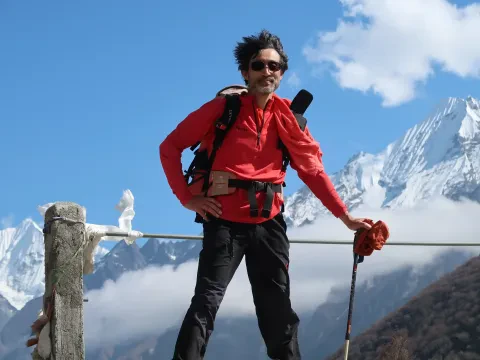
To begin with, Lama Hotel offers simple and clean accommodation. Most tea houses are family-run lodges. They stand at 2,470 meters in thick Langtang forest. They provide simple but comfortable rooms. Wooden beds with foam mattresses are the norm.
Also, there are generally two single beds in a room at local lodges in Lama Hotel. Warm blankets are provided at no charge. The standard is shared bathrooms. There are squat toilets in some, western-style toilets in others. Showers, usually with gas-heated hot water, are provided.
Additionally, most tea houses in Lama Hotel serve fresh local food. The main food here is Dal Bhat. It is made of rice, lentil soup, and vegetables. Menus also include noodles, soups, pasta, and fried rice. There is porridge, pancakes, and eggs for breakfast.
Besides, the dining halls at local lodges in Lama Hotel are warm and cozy. Most have a gas or yak-dung central heater. It is the ideal place to relax in the evening. Trekkers traditionally swap stories and enjoy warm beverages here. Ginger tea and garlic soup are the most popular.
No less important, the cost of accommodation and foods in Lama Hotel are reasonable. Their lodging usually costs NPR 500–800 per night. Food prices are slightly more expensive than at lower elevations. The reason is transportation difficulties and altitude. Porters and animals bring supplies up the trail.
In short, Lama Hotel accommodation is sound and welcoming. Tea houses in this locality offer a safe resting point. They assure warmth, hot food, and a warm welcome. Basic as they are, they serve all trekker needs. Most travelers praise the hospitality they receive. Lama Hotel remains an excellent overnight spot in Langtang.
To begin with, the ideal season to visit Lama Hotel is spring. It lasts from March to May. The season offers moderate weather and rhododendrons in blossom. Skies are mostly clear with little rainfall. Trekkers can enjoy stunning vistas of snow-covered peaks.
Also, the weather is beautiful in spring. The daytime temperature is around 15°C at Lama Hotel. Nights are cold but manageable with blankets. The trail is lush with greenery and flowers. The wildlife is also more easily visible during this season.
Furthermore, autumn is another excellent season to trek to Lama Hotel. It begins in September and continues until November. Monsoon ends, paving the way for clean trails and fresh air. Skies are clear, with views of Langtang Lirung (7,227 m). Weather is consistent and reliable for trekking.
Moreover, autumn day temperatures are as comfortable as in spring. Nights are slightly chilly at Lama Hotel. Tea houses are open and full during the season. Trails are crowded but not busy. Trekkers enjoy safe and scenic conditions.
But, Winter (December to February), on the other hand, is chilly. There is regular snowfall at higher elevations. Lama Hotel gets fewer visitors during this period. The path, however, is serene and peaceful. Well-equipped trekkers are the only ones who choose to visit at that time.
In the same way, monsoon or summer (June to August) is wet. There are slippery and muddy paths. Landslides and leeches are the concerns then. There is low visibility due to rain and clouds. Most trekkers avoid Lama Hotel in summer.
In short, the ideal seasons to trek to Lama Hotel are autumn and spring. These are months of ideal temperatures and landscapes. Trekking is rendered safe, convenient, and rewarding. Lama Hotel is at its best during these seasons with improved facilities. Traveling during these times ensures a memorable Langtang Valley trek.
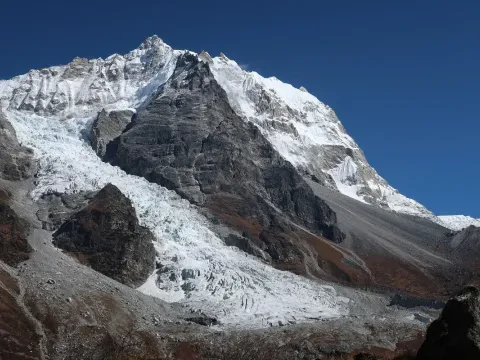
Lama Hotel is located at an elevation of 2,470 meters in Langtang Valley. Because of this elevation, it has a cool and temperate mountainous climate. The climate differs greatly with the alteration of seasons. There are varied experiences for trekkers in different seasons. One should make plans accordingly.
Actually, in spring (March to May), the weather in Lama Hotel is stable and clear. The temperature is warm during the day, 10–15°C. Nights are close to freezing. Rhododendrons are also in bloom on the trail. Skies are mostly blue with little rain.
Likewise, Autumn (September to November) is equally ideal for trekking to Lama Hotel. Temperatures in Autumn in Lama Hotel are cool but pleasant. The air is dry and crisp. Trekkers enjoy excellent views of Langtang Lirung (7,227 m). Rainfall is rare during these months.
But winter (December to February) is cold and severe in Lama Hotel. Temperatures during the day are around 5°C. Nights are below freezing. There may be snow along the trail and hills. Winter treks are undertaken by experienced trekkers only.
But monsoon (June to August) is a period of intense rainfall in Lama Hotel. There are slippery and muddy paths. Landslides and leeches in forested areas are common. The mountains are shrouded in mist on most days. Visibility is usually poor in the summer.
However, each season has its own special attraction. Spring and fall present perfect weather. Winter makes up for isolation and snow-covered landscape. Summer is a green riot but hazardous. The right season ensures a safe and pleasant trek.
In short, Lama Hotel weather is different in different seasons. Prepare for cold nights throughout the year. Check forecasts before trekking. Bring proper gear for unpredictable mountain weather. Knowing the weather enables trekkers to enjoy the Langtang Valley Trail safely and comfortably.
1. What is Lama Hotel in Langtang Valley?
Lama Hotel is a quiet and nice place with a bunch of tea houses at 2,470m inside Langtang National Park. It is a place to stop for the night when you are trekking in Langtang Valley. The place is surrounded by forests and a river, which makes it perfect to rest after a long day of hiking from Syabrubesi.
2. Where exactly is Lama Hotel located?
Lama Hotel is located 2,470 meters in Rasuwa District inside Langtang National Park. It is between Syabrubesi and Langtang Village. The hotel is surrounded by oak, pine and rhododendron forests and the Langtang River, which makes it a beautiful place to be.
3. How do I reach Lama Hotel?
To get to Lama Hotel you must hike for 5-7 hours from Syabrubesi. The trail is 11km long and it takes you through forests, suspension bridges and paths along the river. Lama Hotel is a place to stop and rest before you continue your trek to Langtang Village.
4. What facilities are available at Lama Hotel?
Lama Hotel has comfortable tea house facilities. You can get a room with a bed, and blankets, take a shower, charge your phone and eat delicious meals. The dining halls are cozy. Have heaters, which makes them perfect for relaxing and meeting other trekkers.
5. What are the major attractions near Lama Hotel?
There are nice things to see near Lama Hotel. You can walk through the rhododendron and pine forests, see the Langtang River and its wooden bridges and maybe even spot some wild animals like langurs and red pandas. You can also see some snow-capped peaks like Langtang Lirung.
6. What activities can I do at Lama Hotel?
There are things you can do at Lama Hotel. You can take a walk in the forest, watch birds like the Himalayan monal take pictures of the river and its bridges, spot animals do some light yoga or stretching by the river and just enjoy the peaceful nature around you.
7. Why is Lama Hotel popular among trekkers?
Lama Hotel is popular because it is a quiet place in the forest. It is a place to stop and rest and it helps you get used to the high altitude. The hotel is also located near the river, which makes it perfect for spotting animals. Many trekkers like to stay at Lama Hotel because it's a great place to relax and enjoy nature.
8. What type of accommodation is available at Lama Hotel?
The accommodation at Lama Hotel is simple but nice. You can stay in a family-run tea house with a bed, a foam mattress and warm blankets. Some tea houses also have showers. The rooms are basic but clean. They offer a nice and authentic Himalayan trekking experience.
9. What is the best time to visit Lama Hotel?
The best time to visit Lama Hotel is in the spring (March-May) or in the autumn (September-November). These seasons have weather, and you can see the rhododendrons blooming in the spring or enjoy the clear skies in the autumn. The trails are also safer during these seasons.
10. What is the weather and climate like at Lama Hotel?
The weather at Lama Hotel is cool and temperate. In the spring and autumn, the days are 10-15°C) but the nights can be cold. In the winter it can be very cold and snowy and in the monsoon season it can be rainy and muddy. You must be prepared for weather conditions when you visit Lama Hotel.
11. Is Lama Hotel suitable for beginners?
Yes, Lama Hotel is a place for beginners. The trek from Syabrubesi is not too difficult. The hotel is a great place to stop and rest. The facilities are basic but nice. The atmosphere is peaceful and quiet. It is a place to start your trekking experience in Langtang Valley.
12. Is there wildlife viewing opportunities at Lama Hotel?
Yes, there are wild animals near Lama Hotel. You can spot langurs, monals and maybe even red pandas. If you get up early and take a walk in the forest you can see many birds and animals in their natural habitat.
13. What food is served at Lama Hotel tea houses?
The tea houses at Lama Hotel serve food like Dal Bhat, noodles, soups, pasta, fried rice, pancakes, eggs and porridge. They also serve ginger tea and garlic soup which can help you get used to the altitude. The meals are fresh and hearty. They give you the energy you need for trekking.
14. How difficult is the trek to Lama Hotel?
The trek to Lama Hotel is moderately difficult. You must hike for 5-7 hours through the forest. The trail can be steep in some places. The trail is well-marked and shaded, which makes it easier to walk. You need to be in physical condition, but it is not too difficult for beginners.
15. Do I need permits to visit the Lama Hotel?
Yes, you need a permit to visit Lama Hotel. You need a Langtang National Park Entry Permit and a TIMS card. You can get these permits in Kathmandu or Syabrubesi before you start your trek. They are required for all visitors to the park.
16. Is Wi-Fi or internet access available at Lama Hotel?
There is limited Wi-Fi at some tea houses at Lama Hotel. It can be expensive, and the signal can be weak. It is better to enjoy the surroundings and not use the internet too much during your stay.
17. What should I pack for a stay at Lama Hotel?
You should pack clothes for the cold nights, rain gear, sturdy trekking boots, a headlamp, water purification tablets, snacks, sunscreen, a hat and any medications you need. It is also an idea to bring a sleeping bag liner to make your stay more comfortable.
18. Can I see mountain views from Lama Hotel?
Yes, you can see some mountain views from Lama Hotel. You can see views of snow-capped peaks like Langtang Lirung especially if you walk a bit higher. The views are best during the autumn and spring seasons when the skies are clear.
19. How long do trekkers usually stay at Lama Hotel?
Most trekkers stay at Lama Hotel for one night. It is a place to rest and get used to the high altitude before you continue your trek to Langtang Village. Some trekkers also stay for a day to explore the surrounding area or just to relax.
20. Why choose Lama Hotel for my Langtang Valley trek?
Lama Hotel is a place to stay during your Langtang Valley trek. It is a quiet place in the forest and it offers comfortable tea houses and nice food. The hotel is also located near the river, which makes it perfect for spotting animals. The atmosphere is serene and natural. It is a great place to relax and enjoy the beauty of Langtang Valley.
Our travel experts are ready to assist you with any questions.
Send us a message.Have a question before you book? Send your enquiry below and our travel experts will get back with the required information.