
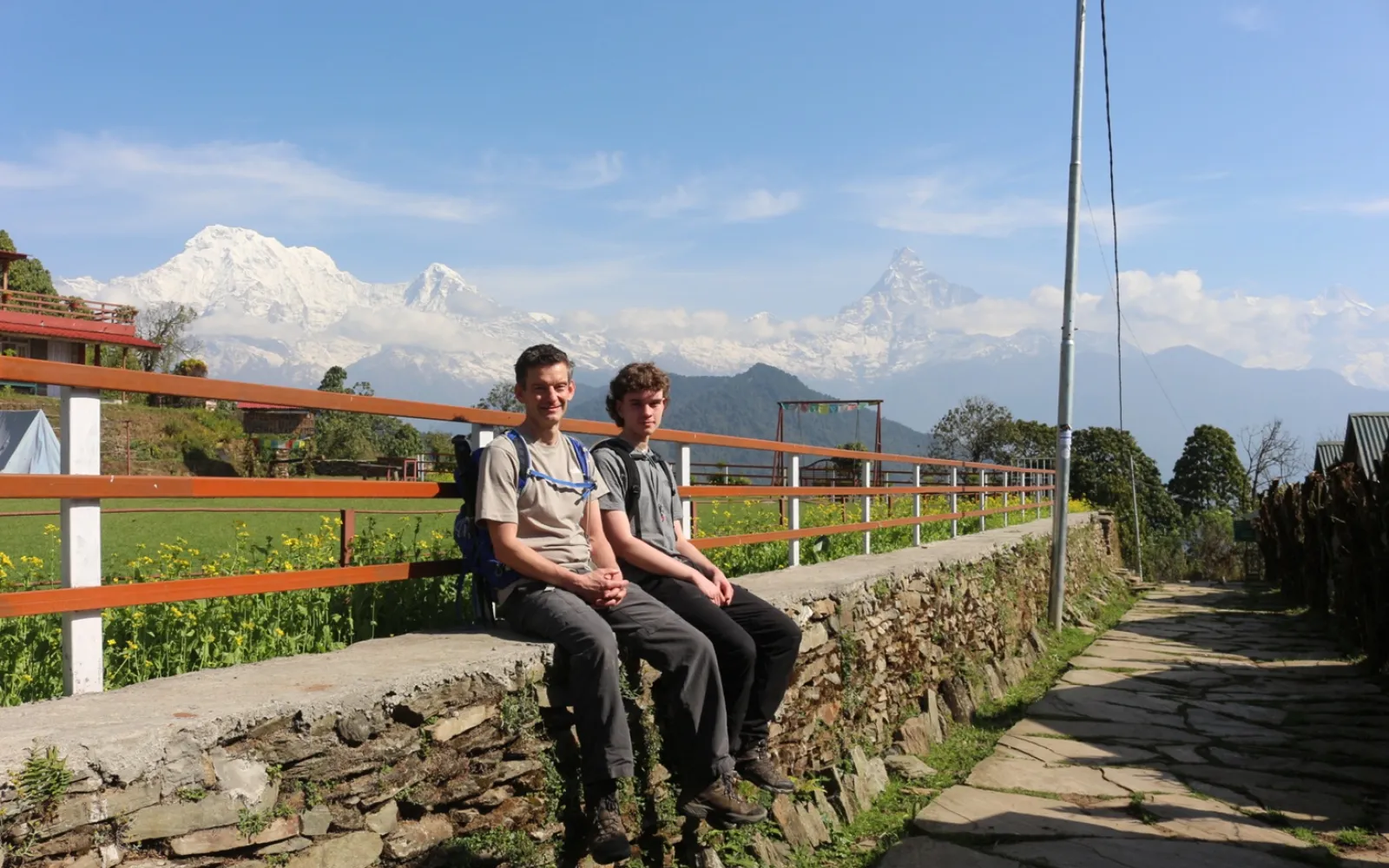
Here, the Mardi Himal Trek Cost and Itinerary overview will help you to plan a short Himalayan experience in Nepal’s Annapurna region.
Actually, this popular trek includes a path of lush forests, narrow ridges and outstanding views of Machhapuchhre, Annapurna South and the surrounding Himalayan peaks.
Additionally, a standard Mardi Himal trekking package usually takes four to five days from Pokhara, depending on the starting point and walking speed.
For a 4-day Mardi Himal Trek 2027, the rough price range is USD 165–320 per person and for a 5-day trip, the estimated cost is USD 195–360. These costs depends on group size and services included in the package.
However, the final Mardi Himal price depends on the group size, transport, accommodation standards, included services and other factors. Guide and porter services, permits, meals and individual or shared transfers can affect the total cost of your Mardi Himal Trek package.
Importantly, this guide covers general 2027 prices, a daily itinerary, the trek difficulty, the best time to visit Mardi Himal, accommodation and essential preparation tips.
Additionally, it will help you to compare Mardi Himal packages and to estimate your personal expenses for the trek.
Mardi Himal Trek at a Glance
Trekking detail| General information
Destination| Annapurna region, Nepal
Starting point| Kande or other mutually agreed trailhead
Main destination| Mardi Himal Base Camp area
Maximum trekking elevation| Around 4,500 m at the upper viewpoint or base camp area, depending on the endpoint
Typical duration| 4–5 days from Pokhara
Estimated 4-day package | USD 165–320 per person
Estimated 5-day package | USD 195–360 per person
Trekking difficulty | Moderate to challenging
Best seasons | Spring and autumn
Main attraction | Close-up views of Machhapuchhre and the Annapurna range
What This Mardi Himal Trek Guide Covers
Mardi Himal Trek cost: Compare Mardi Himal package prices for different services.
Mardi Himal Trek itinerary: Get to know the daily schedule, walking hours and elevation changes.
Accommodation and meals: What to expect during the trek in the mountain teahouses.
Transportation and permits: Essential arrangements before departure.
Safety and preparation: Information about the trek difficulty, recommended fitness level, weather and suitable trekking equipment.
The Mardi Himal Trek cost for a 4-day itinerary is estimated between USD 165–320 per person and for a 5-day trek, the estimated price range is USD 195–360 per person, depending on the group size, included services and accommodation standards.
Generally, budget Mardi Himal packages offer fundamental trekking services while standard packages provide a higher level of comfort and convenience.
However, upgraded packages costs higher around 475 USD and may include all amenities and individual services for an additional fee.
Also, the group size affects the final Mardi Himal cost as shared guide and porter fees, as well as vehicle hire, reduce the final price per person for larger groups. Therefore, solo trekkers may expect to pay a higher price for private guide and driver services.
Actually, the quoted Mardi Himal trek price may not include personal expenses, snacks, bottled drinks, gratuities for the guide and porter, travel insurance or other services. Always clarify the full inclusion/exclusion list with your Mardi Himal trek agency before departure for the 2027 trek season.
Mardi Himal Trek Package Prices for 2027
Package duration | Estimated price per person | Suitable for
4-day budget package | USD 165–220 | Cost-conscious trekkers seeking essential services
4-day standard package| USD 221–275| Travelers wanting a balanced package
4-day upgraded package | USD 276–320 | Travelers seeking additional comfort or private services
5-day budget package | USD 195–260 | Trekkers preferring a slower, economical itinerary
5-day standard package | USD 261–315 | Travelers wanting more flexibility and support
5-day upgraded package | USD 316–360 | Travelers seeking enhanced services and comfort
In fact, these are indicative Mardi Himal cost range estimates for 2027, not Haven Holidays quotations for any specific package level. The exact prices for Mardi Himal Trek 2027 will depend on your chosen itinerary, group size, services and availability.
What Affects the Mardi Himal Trek Price?
Group size: Shared guide, porter and transportation costs reduce the final price per person for larger groups.
Transportation: Shared jeep costs less than a private vehicle for transfer between Pokhara and the trailhead.
Accommodation: Standard teahouse stays and upgraded room options, where available, vary in price.
Guide and porter services: Guide and porter hiring adds to the Mardi Himal cost but offers expert support and assistance.
Meals and permits: Clarify if meals, required conservation permits and other applicable fees are included.
Trek duration: A five-day itinerary generally costs more than a four-day itinerary for extra services and expenses.
Additional Expenses to Include in Your Budget
Personal expense| Budgeting advice
Travel insurance| Choose a suitable coverage for trekking at your maximum altitude
Snacks and drinks| Allow extra money for refreshments along the trail
Tips| Budget separately for your guide and porter
Personal trekking gear| Include clothing, boots and other equipment rentals, if needed
Extra accommodation| Allow for additional nights in Pokhara, if required
Unexpected expenses| Keep a reserve for weather or transportation delays
Here, comparing the full inclusions of different Mardi Himal Trek packages is more important than making choices based solely on Mardi Himal trek prices.
Importantly, before finalizing your Mardi Himal Trek 2027 booking, ask Haven Holidays for an up-to-date quotation, including all the transportation, permits, accommodation, meals, guide and porter services.
The Mardi Himal Trek package inclusions and exclusions vary considerably depending on your chosen itinerary, group size and trekking services.
Before booking a guided Mardi Himal Trek, ask Haven Holidays to confirm each included service in your selected Mardi Himal Trek package.
Here, a standard Mardi Himal Trek package Nepal may include teahouse accommodation, meals during trekking and an English-speaking licensed guide.
Depending on your selection, it may also involve a porter, Annapurna Conservation Area Permit (ACAP) and pre-arranged transport between Pokhara and the trailhead.
In addition, porter services can lighten your load during the Mardi Himal Trek. Where offered as part of your Mardi Himal Trek itinerary, a normal ratio is one-to-two walkers with a combined luggage weight limit of 20 kg, subject to the confirmed porter policy of the company.
On the other hand, not all Mardi Himal Trek packages include private transportation, all meals, personal expenses or additional accommodation. Read the exclusions below carefully before comparing the prices of different trekking companies.
Mardi Himal Trek Package Includes
Service | Description
Accommodation | Teahouse or lodge stays during the trek
Meals Covered | breakfast, lunch and dinner if included
Trekking guide | Certified English-speaking guide if included
Porter | Porter availability, weight limit and ratio
Permits | Necessary ACAP permit and documents
Transportation | Pokhara transfers and trailhead transport
Staff expenses | Guide/porter meals, accommodation, wages and insurance
Safety support | First-aid arrangement and emergency procedures
Company logistics | Trek organization, coordination and relevant taxes
Mardi Himal Trek Excludes
Flights to and from Nepal
Nepal visa and individual travel insurance
Tips to guides, porters and other staff
Trekkers' snacks, drinks, alcohol and extra meals
- Hot showers, Wi-Fi, charging and laundry if charged separately
- Extra hotel accommodation in Pokhara/Kathmandu
- Evacuation, medical treatment and unplanned transportation
- Individual trekking gear and other optional services
In conclusion, Mardi Himal Trek services that are well-documented before departure are those most likely to be fulfilled.
Most importantly, ask Haven Holidays to clarify the final Mardi Himal Trek inclusions and exclusions, porter ratio and transportation options in your written quotation.
The Mardi Himal Trek cost depends primarily on transportation, accommodation, food, guide, porter and permits. A realistic Nepal trekking budget and a comprehensive comparison of Mardi Himal Trek packages are only possible with a clear idea of these expense items.
Here, transportation costs during the Mardi Himal Trek vary considerably depending on the choice of shared or private jeeps, as well as the distance traveled. The price also depends on the starting point, the length of the tour and the provision of transport from Pokhara to the trailhead.
Likewise, accommodation and food expenses for the Mardi Himal Trek are determined by the selected route, the category of teahouses and the meal plan. Simple teahouses are usually cheaper than luxury accommodations, while private rooms and hot showers incur additional costs.
Likewise, guide and porter costs are significant items in a Mardi Himal Trek cost breakdown, especially for solo travelers and small groups of trekkers. A larger number of people in the group can reduce the Mardi Himal Trek expenses for transportation and staff depending on the package.
Mardi Himal Trek Cost Breakdown
Expense category| Description
Transportation| Shared jeep, private vehicle, trailhead transfers
Accommodation| Teahouse, accommodation standard and extra nights
Meals| Covered meal plan and food preferences
Guide services| Guide qualification, daily rate and trek duration
Porter services| Porter availability, load and duration of service
Permits| Necessary permits for conservation areas
Company logistics| Booking organization, staff, insurance and taxes
Personal expenses| Charging, Wi-Fi, hot showers, snacks and drinks
Depending on the season, location, availability and inclusions, the Mardi Himal Trek cost breakdown varies to a considerable extent. For the current prices, it is recommended to request an up-to-date quotation for the Mardi Himal Trek based on your group size and personal preferences.
Mardi Himal Trek Mandatory Expenses
Essential planned costs: Required permits, booked transportation, accommodation and meals on the itinerary
Guided trekking services: Required or optional guide and porter services at the selected price level
Comforts: Private transportation, upgraded accommodation, hot showers and other extras
Personal expenses: Snacks, drinks, charging, Wi-Fi, laundry and gratuities
Contingency budget: Extra funds for unforeseen events and additional accommodation
Furthermore, a low daily cost for the Mardi Himal Trek is not necessarily an indicator of quality. It is worth comparing the complete range of services, safety measures and Mardi Himal Trek inclusions and exclusions before selecting a trekking company.
To obtain an accurate Mardi Himal Trek cost in 2027, request a formal quotation from Haven Holidays for your preferred group size and itinerary. This will give you a realistic overview of the Mardi Himal Trek expenses without hidden costs.
Mardi Himal trek from Pokhara itineraries usually take either 4 or 5 days to complete, with variations based on a person’s preferences about where they want to stay overnight and their preferred fitness level.
Here, both options provide forest trails, mountain ridges and fantastic views of Machhapuchhre and Annapurna ranges.
Meanwhile, Mardi Himal trek from Pokhara can be completed in 4 days if a person is fit or wants a shorter trip and in 5 days if they want to enjoy the views and take things slow. Below is a suggested itinerary for both options:
Recommended Mardi Himal Trek Itinerary
Day | Four-day itinerary| Five-day itinerary
1 |Pokhara – Kande – Forest Camp |Pokhara – Kande – Forest Camp
2| Forest Camp – High Camp| Forest Camp – Low Camp
3| High Camp – Mardi Himal viewpoint/Base Camp area – Low Camp| Low Camp – High Camp
4| Low Camp – Siding – Pokhara| High Camp – viewpoint/Base Camp area – Low Camp
5 –------|Low Camp – Siding – Pokhara
In summary, the above is a sample itinerary, as there are variations of the Mardi Himal trek from Pokhara which include different overnight stops depending on the tour operator, weather and personal preferences.
4-Day vs. 5-Day Mardi Himal Trek
The 4-day Mardi Himal trek from Pokhara usually requires longer walking days and reaching higher altitudes faster than a 5-day trek. This means that it is suitable only for fit people who are used to walking uphill on long days.
In contrast to, the 5-day Mardi Himal trek from Pokhara can include longer walking days as well, so trekkers should not worry about the number of days but rather the altitude they will be acclimatizing to when climbing.
Here, most itineraries for the Mardi Himal trek from Pokhara start in Pokhara and end in Pokhara as well, with the difference being the number of days spent in transit.
In fact, the first day usually involves driving to Kande and the last day is spent driving back from Siding. It is best to plan for more flexibility in the case of road closures and bad weather, and to ask questions about transport options in advance.
The first day of the Mardi Himal trek from Pokhara usually involves driving to Kande, the starting point of the Mardi Himal trek. This drive usually takes 45 minutes to 1.5 hours depending on road conditions.
From there, the trek to Forest Camp takes 5 to 6 hours on average, with the distance covered being between 7 and 10 km, depending on the specific route and a person’s fitness level.
Next, the steep climb from Kande leads to Australian Camp, Pothana and eventually the forested trails of Deurali and Forest Camp, depending on the specific itinerary. Rhododendron forests, shaded trails and spectacular views of the mountains make this a great start to any Mardi Himal trek from Pokhara.
What to Expect on Day 1
Starting point: Pokhara (approximate altitude: 822 m);
Trailhead: Kande (approximate altitude: 1,770 m);
Night stop: Forest Camp (approximate altitude: 2,600 m);
Driving time: Approx. 45 mins – 1 hour 30 mins;
Walking time: 5 – 6 hours (varies depending on the route);
Terrain: Forest trails, stone steps, uphill climbs, uneven ground;
Main sights: Forested trails, mountain views, rhododendron forests.
Importantly, starting early on the first day of the Mardi Himal trek from Pokhara allows one to reach Forest Camp before night falls and enjoy the views.
In addition to, it is important to keep a steady pace on the first day since it sets the tone for the entire trek. Drinking enough fluids and taking breaks on steep parts of the trail are also essential.
Likewise, the teahouses in Forest Camp have a range of amenities on offer, so it is best to ask specific questions if there are any particular concerns. It is important to get a good rest and eat a hearty meal before preparing the gear for the next day.
The second day of the Mardi Himal Trek is devoted to hiking up forested hills towards Low Camp (the overnight stays depend on the selected route) and then possibly High Camp in shorter itineraries.
As the trek progresses, the walking hours increase while the forest vegetation gives way to wider vistas.
Here, the overnight stop depends on the selected Mardi Himal route : if it is a four-day hike, or a five-day program, as well as the walking speed, the weather and the time needed to reach High Camp safely overnight.
Thus, the Forest Camp (at approximately 2,600 metres) is located while hiking takes at least three and up to four hours to reach Low Camp at around 2,970 metres.
Again, continuing towards Badal Danda (around 3,210 metres), the forest disappears at times, giving way to more extended views of the mountains. Those who wish to reach High Camp (around 3,580 metres) need another two to three hours, depending on their walking speed and the weather conditions.
Furthermore, changing scenery opens up as one begins to travel above the forest and Machhapuchhre and the Annapurna massif appear on the horizon.
However, note that open ridges dominate above Low Camp and the trekking hours are longer.
Day 2 Route and Elevation Guide
Route point | Approximate elevation | Typical walking time from
Forest Camp | 2,600 m | Starting point
Low Camp | 2,970 m | 3–4 hours from Forest Camp
Badal Danda | 3,210 m | Around 1–2 hours beyond Low camp
High Camp | 3,580 m |Around 2–3 hours beyond Low Camp
Note: All elevations and walking hours are approximate and subject to change
Day 2 Trek Walking Tips
Keep a steady pace: Regular and unhurried walks up and down, short breaks and sufficient caloric nutrition prevent fatigue and altitude sickness
Drink fluids frequently: Staying properly hydrated while having enough calories helps keep one’s energy up during the ascent
Prepare appropriate clothing and equipment: Bring along some warm clothes, a windbreaker and precipitation gear
Confirm your overnight accommodation: Ask to clarify if you plan to stay either at Low Camp or High Camp overnight
Hike with appropriate footwear: Pay attention to the trail at all times since some parts may turn out to be slippery.
Therefore, trekkers in the four-day Mardi Himal trek will be heading towards High Camp while in the five-day ones, staying overnight at Low Camp is the main goal for the night on Day 2.
Furthermore, keep in mind the weather forecast, the recommendations of your trek leader.
Day 3 is the peak day on the Mardi Himal trek. One leaves High Camp, presumably before dawn, and aims for the best vantage point on Mardi Himal, which overlooks Machhapuchhre. Actually, there are several routes connecting viewpoints, so one should consult with one’s hiking partner or guide about the details of the chosen route.
At around 4200-4250 m on average, the upper viewpoint (High Camp) is about two hours above High Camp.
However, the route there and beyond can be long and tiring, especially for those suffering from high altitude.
Furthermore, rock formations and vegetation make the trail uneven and there are few places to stop for a break.
Once at the viewpoint perched above Himalayas and Annapurna South, one can choose to go further to Mardi Himal Base Camp at about 4500 m.
However, one must know that heading towards the upper ridge involves more risk due to steep slopes, exposed positions and bad weather conditions, so the duration of the walk is variable according to the guide’s discretion.
Furthermore, clear mornings may reveal outstanding views of Machhapuchhre, Himalayas, Annapurna South and even Dhaulagiri, but weather may affect the outlook and higher altitudes are risky in the long term.
Day 3 Route and Elevation Guide
Route point | Approximate elevation | Typical walking time from
High Camp | 3,580 m | Starting point
Upper viewpoint | 4,200 – 4,250 m | 2–3 hours uphill
Mardi Himal Base Camp | Around 4,500 m | approx. 2 hours (depending on the weather conditions and the guide)
Note: Elevations and walking distances are variable depending on the selected route/day.
Essential Safety Tips when Hiking the Upper Ridge
Arrive early in the morning: Time the start of one’s day with departure at dawn after consulting with the guide
Wear proper footwear: Sturdy shoes with good grip provide good safety on the steep slopes
Dress appropriately: Windproof clothing keeps one warm, and mountain weather can change rapidly without warning
Observe altitude effects: Inform the group or the guide if one feels any discomfort
Turn back if needed: The well-being of the group comes first, and reaching the upper point should never take priority over one’s safety
In addition, trekkers should carefully consider the descent back down the way they came or take another trail to the base camps according to the conditions and the guide’s recommendations during Day 3.
Importantly, it is essential to turn around in a timely manner on this day since there are many potential dangers on the upper and exposed part of the ridge.
The Mardi Himal Trek day 4 involves heading back down from Low Camp towards Siding village and returning to Pokhara. Trekkers who reached the upper view point on the third day usually hike down through High Camp and Low Camp, depending on the planned trail.
Actually, Low Camp is located at around 2,970 metres above sea level and Siding is situated around 1,750 m.
Thus, the walk down usually takes between four and six hours and covers about 8-10 km on forest trails, stone stairs and sloped paths.
From Siding, it takes around two to three hours of driving to get back to Pokhara, which is generally 822 metres tall. This depends on the road conditions, the weather and the type of transport you have booked.
While walking down hill can be easy on the knees and ankles, you should also take care when walking on slopes and uneven ground and use trekking poles where needed.
Day 4, Route and Elevation
Route section | Approximate elevation | Estimated duration
Low Camp | 2,970 m | Starting point
Siding village | 1,750 m | 4-6 hours walking
Siding to Pokhara | 1,750 m to 822 m | Around 2-3 hours driving
Note: The distances and durations should be used as indicative only, as they are dependent on the trail, weather and the hiker's fitness level.
Essential Tips for the Downward Trek and the Return to Pokhara
Walk slowly down hills and use trekking poles if needed to keep your knees and ankles safe
Ask if the jeep ride from Siding to Pokhara is included or if there are any extra charges
Leave enough time to get back to Pokhara, as the roads can be rough, wet and there could be delays because of traffic
Bring some water with you on the way down
Don't book a flight or any other important activity straight after finishing the trek, unless it is non-negotiable
Before you leave for your trek, double-check the planned trail and transport with Haven Holidays . A well-planned schedule will ensure a pleasant experience on the Mardi Himal Trek.
The Mardi Himal Trek runs from Pokhara through Kande and the surrounding villages to the mountain ranges. Most of the Mardi Himal itineraries run through Australian Camp and Pothana and head up to the viewpoint, passing through Forest Camp, Low Camp and High Camp.
Meanwhile, the trail sees trekkers walk from around 1,770 metres at Kande (the approximate height of the Pokhara Valley) to about 3,580 metres at High Camp.
Here, people who decide to go up to the viewpoint can expect to walk to between approximately 4,200 and 4,250 metres. Meanwhile, the Mardi Himal Base Camp generally has an elevation of somewhere around 4,500 metres.
Regardless of how many days you decide to do the trek for, you should always confirm the route and overnight stops with your licensed Mardi Himal guide when you arrive in Pokhara.
Mardi Himal Trek Route and Elevation Table
Day Trail section | Approximate elevation | Estimated distance and time | Overnight stop
1 Pokhara to Kande by vehicle; trek via Australian Camp and Pothana towards Forest Camp| 822 m to 2,600 m| Drive: 45-90 minutes; walk: around 7-10 km, 5-6 hours| Forest Camp
2 Forest Camp to Low Camp, Badal Danda and potentially High Camp| 2,600-3,580 m| Around 5-8 km, 4-6 hours, depending on the end point| Low Camp or High Camp
3 High Camp to upper viewpoint and potentially Base Camp; descend afterwards| 3,580 m to 4,200-4,500 m and then descend Viewpoint| around 2-3 hours uphill; Base Camp requires additional time Low| Camp or another planned stop
4 Low Camp to Siding; drive to Pokhara| 2,970 m to 1,750 m and then 822 m| Walk: around 8-10 km, 4-6 hours; drive: 2-3 hours| Pokhara
Here, this table is for illustrative purposes only. A four-day trek usually runs with longer walking days and a five-day trek can generally split the distances up into a more comfortable daily schedule.
Mardi Himal Trek Locations and Elevations
Location | Approximate elevation
Pokhara | 822 m
Kande | 1,770 m
Australian Camp | 2,060 m
Pothana | 1,890 m
Pitam Deurali | 2,100 m
Forest Camp | 2,600 m
Low Camp | 2,970 m
Badal Danda | 3,210 m
High Camp | 3,580 m
Upper viewpoint | 4,200-4,250 m
Mardi Himal Base Camp | Around 4,500 m
Siding | 1,750 m
Note: These heights are approximate, with some slight variations across the different sources.
Route Planning and General Tips
The distances covered on foot are generally different depending on which trail you are on, which overnight stops you are making and whether you intend to walk all the way up to the Mardi Himal Base Camp.
The drives to and from Pokhara are included in the transport costs, but they are not considered walking distances.
The trail gets increasingly steeper above the Forest Camp and the Higher Camps, so you need to plan for extra elevation gain
Double-check your route with a licensed Mardi Himal trekking guide
The Mardi Himal Trek distance and hours of walking depend on which itinerary you follow and how far up the mountain you go.
Here, a registered trekking company and a professional trekking guide can advise you on what the most feasible route on the Mardi Himal from Pokhara is.
Mardi Himal transportation cost depends on the trailhead, mode of transport, and party size as well. A popular option for Mardi Himal is shared jeep or private vehicle from Pokhara to the starting point at Kande.
Meanwhile, itineraries starting at Kande typically offer a private jeep or car for greater flexibility, while sharing a vehicle reduces the overall cost for multiple people.
As an approximate cost estimate, a vehicle can charge around USD 30–50 for some one-way shared or private transfers, although current fares depend on the road condition and time of year.
Meanwhile, the road from Pokhara to Kande usually takes around 45–90 minutes as well, though some itineraries use a different trailhead. Furthermore, trekkers often return via Siding – which may require a separate vehicle ride.
In fact, transportation from Pokhara to Kande takes about 45–90 min on average, while some itineraries return through Siding (typically taking 2–3 hours depending on the road conditions).
Mardi Himal Transportation Options and Estimated Costs
Transport Option | Estimated Costs |Primary Advantages
Shared Jeep | Varies depending on seat availability | Lower cost per person when shared rides are available
Private Jeep | USD 30–50 for some one-way private transfers |Flexible departure and greater luggage space
Private Car | Depends on the road and the number of parties | Comfortable for small groups of travelers
Return Jeep / Siding | Current local fare depends on road conditions | Connects the trail exit to Pokhara
In summary, these are estimated costs and may vary depending on the selected itinerary. To find out exact rates, it is better to double-check current conditions and transport options with your trekking company.
Mardi Himal Transportation Tips
For budget itineraries: Book shared transport only when there is an available seat and a convenient departure time
For larger parties: Compare jeep costs for all members to see which option is more affordable
For flexible schedules: Request a private vehicle if you need a specific departure window
For return journeys: Always confirm the Siding pickup location and road accessibility beforehand
For package itineraries: Ask if both trail access jeeps and the return route are included in the costs
At the end, transportation depends on the chosen Mardi Himal Trek itineraries as well as personal preferences. It is better to double-check both the cost and road conditions for your preferred date and route when inquiring about Mardi Himal permits.
The Mardi Himal Trek requires an Annapurna Conservation Area Permit (ACAP) that is currently NPR 3,000 for foreign nationals and NPR 1,000 for SAARC countries.
In addition to permits, trekkers should also confirm current regulations from the Trekkers’ Information Management System (TIMS) before travelling. The Nepal Tourism Board recommends using a licensed guide and an agency-issued TIMS card for Mardi Himal as well.
While there may be individual tour operators who do not consider this necessary in practice, following local rules is important to avoid problems with authorities. In case of doubt, double-check the current requirements with your trekking agency or the Nepal Tourism Board before your 2027 travel.
Mardi Himal Trek Permit Costs, Requirements and Recommendations
Permit / Requirement |Current Published Information
Annapurna Conservation Area Permit (ACAP) | NPR 3,000 per foreign national, NPR 1,000 for SAARC nationals
TIMS Card – Foreign Nationals | NPR 2,000 according to NTB provisions
TIMS Card – SAARC nationals | NPR 1,000 according to NTB provisions
Additional Licensed Guide | Required by published NTB provisions
In summary, make sure to double-check these requirements and costs before your trek. Official guidelines and fees may change by the time of your 2027 travel.
Required Documents for Mardi Himal Trek
Passport: Bring the passport or the necessary identification as recommended by your agency
Permit Information: Keep the permit details and additional documents accessible
Agency Recommendations: Confirm whether Haven Holidays covers any permit costs
Checkpoint Guidance: Follow the guide instructions at permit checkpoints
Entry Guidelines: Make sure to follow the latest entry requirements for Pokhara
Finally, before booking any Mardi Himal Trek package, ask the travel agency for written confirmation of required permits and expenses. This helps avoid complications at the entry point to the Mardi Himal region.
The Mardi Himal Trek accommodation are mainly made up of modest tea houses and mountain lodges along the route. Most lodges offer simple accommodation such as twin bedrooms, blankets and shared bathrooms.
While some of the tea houses accommodate more comfortable and larger options, at lowland elevation. In higher altitudes, hot shower availability, Wi-Fi and charging devices are generally charged extra and facilities can get sparse.
Meanwhile, one item of meal can cost between USD 2-7 and one night accommodation costs between USD 5-8 on the Mardi Himal Trail.
On the whole, the Mardi Himal food cost tends to depend on the choice of meals, the location of the lodge and any meals included in your chosen package. Teahouse meals offer a variety of choices such as dal bhat, noodles, fried rice, soups, potatoes, eggs, pancakes and hot beverages.
Also, as food and supplies tend to be harder to come by at higher-altitude lodges, menu options prices can vary. Hence, it is advisable that you bring ample amounts of cash with you for any meals or purchases outside of your Mardi Himal package deal. Check if meals are included in your Mardi Himal trekking package.
Note: No luxury accommodation and a wide variety of food items are available on the Mardi Himal Trail.
Typical Accommodation and Food Costs
Expense | What to expect
Teahouse room |Twin bedding in basic rooms, shared bathrooms (USD 5-8)
Meals | Dal bhat, noodles, soups, rice dishes and breakfast (USD 2-7)
Hot showers | Pay extra for hot showers, availability depends on location (USD 2-4)
Wi-Fi | Pay extra for internet connection at some lodges ( USD 2-3 per device)
Device charging | Separate charge for phone charging at higher-altitude lodges ( USD 1-3)
Drinking water | Availability depends on the location of the lodge ( USD 1-2 per liter)
The Mardi Himal lodging cost and food tend to depend on the season, altitude and the specific lodges you will be staying in. Check with your Haven Holidays trekking team for the latest information on prices rather than using budget estimations.
What Your Mardi Himal Trek Package can Cover
Accommodation: Ask about number of overnight stays and if the room price includes any meals.
Meals: Confirm if breakfast, lunch and dinners are included.
Drinking water: Ask if drinking water includes boiled or treated water.
Extra facilities: Set aside money for hot showers, Wi-Fi and charging devices.
Personal spending: Carry Nepalese Rupees for shopping and other personal items at the teashops.
Finally, make sure you budget enough for your Mardi Himal trekking holiday in these mountains. By opting to purchase a package which includes meals and accommodations, you limit the number of unforeseen costs that you may be subject to.
Importantly, prior to departure with Haven Holidays, make sure that you have included all necessary facility costs included in the provided quotation for your Mardi Himal trekking holiday.
The best time to go on the Mardi Himal Trek is usually the months of March to May for spring and September to November for autumn. The conditions are mostly favorable for trekking though mountain views are obscured by clouds, rain, wind or snowfall.
However, you can expect to see blooming rhododendrons carpeting the valleys in spring while the mountain vistas are clearer in the crisp autumn air. Winter has its fair share of white snowcaps with icy conditions around the High Camp area and the viewpoint.
On the contrary, the monsoon season from June to August presents rainy weather and leeches which can obscure mountain views and present slippery conditions on the trail.
Furthermore, during peak season there may be increased demand for accommodations and transport facilities. It is best to arrange and reserve any private transport and book accommodation in advance if visiting during busy periods, especially if you are exploring with a larger group.
Mardi Himal Trek Seasons and Conditions
Season | Months | Typical conditions | Cost considerations
Spring | March – May | Flowering rhododendrons and comfortable trekking period |Higher demand on busy dates
Autumn | September – November | Clear mountain vistas and crisp weather | Crowded trails and fewer accommodation options
Winter | December – February | Cold evenings and snow/ice at higher altitudes | Services may be unavailable on certain days
Monsoon | June – August| Rainclouds and leeches on the trail| Prices may be lower, though demand is limited
Here, the conditions during each season tend to be variable and no month or season is completely dependable for clear mountain views and comfortable trekking conditions.
How the Season Affects Your Trek Budget
Book early in advance for peak seasons, making sure to retain any private guides and vehicle service providers well in advance
Leave some leeway in your travel schedule as weather conditions can be unpredictable
Ensure that you have enough warm clothing and strong footwear for cold winter camp conditions.
Prepare yourself for wet and muddy hillside trails during the monsoon season. Waterproof wear and careful footing is recommended
Make sure to check the current weather conditions with your local guide prior to departure on the specific day’s walking trail.
On the whole, spring and autumn are the popular seasons for the Mardi Himal Trek. You may want to decide on your season of choice based on a combination of weather conditions, trail accessibility and the leeway in your own schedule.
The Mardi Himal Trek is a moderate to challenging grade due to the steep ascent and uneven forest trails with long downhill stretches. Highest viewpoint: approx. 4,200 - 4,250 m; Mardi Himal BC: around 4,500 m
Here, trekkers usually hike for four to seven hours a day depending on the itinerary, overnight stops and weather conditions. Prepare yourself for long walks up the mountainsides, fluctuating temperatures and a lack of comfort at greater heights.
To overcome these challenges, you should start exercising in the months leading up to your trip by walking regularly and climbing stairs.
Further, make sure that your trekking boots are broken in, pack layers of clothing, a rain jacket and sun cream, water purification tablets or filters and a first aid kit.
Because the trek reaches above 3,000 m altitude sickness may occur. Symptoms of altitude sickness are headaches, nausea and dizziness, unusual tiredness or loss of appetite.
If these symptoms occur, stop ascending and consult your trek leader.
Mardi Himal Trek Elevations and Physical Demands
Location| Approx. elevation| Main consideration
Pokhara| 822 m| Starting point and preparation
Kande| 1,770 m| Uphill trekking begins
Forest Camp| 2,600 m| Sustained forest ascent
Low Camp| 2,970 m| Increasing altitude
Badal Danda| 3,210 m| More exposed mountain terrain
High Camp |3,580 m |Cold conditions and altitude effects
Upper viewpoint| 4,200 - 4,250 m |Steep, exposed final ascent
Mardi Himal BC| Around 4,500 m| High-altitude trekking
Note: Elevations given are approximate, actual stopping points depend on the route and conditions.
Essential Mardi Himal Trek Safety Preparation
Improve your fitness: Walk uphill, climb stairs and get used to walking for several hours a day.
Pack suitable gear: Sturdy, broken-in trekking boots, warm layers of clothing, rain-proof clothing, gloves, sun-screen and a head lamp.
Prevent altitude sickness: Ascend slowly and have regular drinks. If altitude sickness occurs, stop ascending and consult your guide.
Carry first aid: Pack any personal medication, treatment for blisters and a basic first aid kit.
Check insurance: Get travel insurance that covers trekking to at least 4,500 m altitude and emergency helicopter rescue.
Follow your guide: If you begin to feel ill, descend to a lower altitude. In case of severe weather conditions or unsafe trail conditions, your guide will determine the best course of action. Always turn back if you feel unsafe.
Finally, when choosing a trekking company make sure that they are registered and can offer the right level of support. The right preparation makes a big difference in comfort, but the safety of the trekker should always come first.
The Mardi Himal Trek vs ABC Trek price comparison depends on the length of the trip, transport, accommodation, meals and guides. The Mardi Himal Trek is popular among walkers who want a short ridge walk, whereas the Annapurna Base Camp (ABC) Trek leads into the Annapurna Sanctuary.
Here, a typical 4-day Mardi Himal Trek costs around USD 165 - 320 per person, five-day packages cost around USD 195 - 360. A 7-day Annapurna Base Camp Trek via Ghandruk may cost around USD 375 - 625 per person, depending on the group size and inclusions.
Thus, Mardi Himal Trek is always cheaper than Annapurna Base Camp. Here, this article ‘ Mardi Himal or Annapurna Base Camp’ can help you decide which one suits you better.
Meanwhile, Mardi Himal reaches an upper viewpoint of around 4,200 - 4,250 m with the Base Camp commonly listed at around 4,500 m. ABC is around 4,130 m with Machhapuchhre Base Camp around 3,700 m.
While the Mardi Himal Trek is commonly shorter, the ABC Trek requires more days of trekking with a number of steep ascents and descents.
Mardi Himal vs. Annapurna Base Camp Trek Comparison
Feature | Mardi Himal Trek | Annapurna Base Camp Trek
Typical duration | 4 - 5 days | Around 7 days via Ghandruk
Estimated package cost | USD 165 - 320 for 4; ; USD 195 - 360 for 5 days | USD 375 - 625 for 7 days
Highest destination | Mardi Viewpoint- 4,200 - 4,250 m; Mardi Base Camp: around 4,500 m| ABC: around 4,130 m
Major stops| Forest Camp, Low Camp, High Camp| Ghandruk, Chhomrong, Deurali, MBC, ABC
Scenery| Ridge walks and close Machhapuchhre views| Mountain sanctuary, panoramic peaks
Physical demands| Steep ascents and exposed upper trails| Longer route with repeated ascents and descents
Transport| Usually Pokhara to Kande Return via Siding| From Pokhara to Ghandruk and return via Jhino
Note: Prices are indicative and not guaranteed quotations. Compare packages with similar transport, food, permits, accommodation, and guide services included.
Why Mardi Himal? Or Why Annapurna Base Camp?
Choose Mardi Himal: If you have fewer days and enjoy ridge walks with great mountain views.
Choose ABC: If you want to explore the Annapurna Sanctuary with more trekking days.
Compare fitness requirements: Both trekking routes require fitness. Neither trek is automatically easier than the other.
Check the price in detail: Make sure that the permits, transport, meals, accommodation, guides and porters are included.
Consider your options: Choose between time, money, scenery and comfort. Mardi Himal offers a shorter trekking experience, and Annapurna Base Camp leads into a greater mountain sanctuary, but it requires more trekking days.
Ultimately, the Mardi Himal Trek offers a shorter trekking experience and Annapurna Base Camp Trek leads into the Annapurna Sanctuary with more trekking days.
Here, ask Haven Holidays for a cost comparison and similar quotations before making your decision based on your time, money and preferences.
Planning your Mardi Himal Trek cost and itinerary is the perfect way to experience the Annapurna region of Nepal, with reduced surprises along the trail. A 4-day Mardi Himal package can cost around USD 165 – 320 for one person, and 5-day Mardi Himal Trek itinerary can be around USD 195 – 360, depending on the services and group sizes.
Here, the classic route usually involves driving to Pokhara to Kande, and trekking through Forest Camp, Low Camp and High Camp with the option to reach an upper viewpoint at around 4,200 – 4,250 metres or head towards Mardi Himal Base Camp at around 4,500 metres.
Importantly, prior to your Mardi Himal Trek package 2027, double check the inclusions of meals, accommodation, transportation, permits, guide and porter services and set aside a personal spending allowance for optional extras such as hot showers, charging and other incidentals.
In addition, determine your preferred route option based on a realistic assessment of fitness, time available and tolerance for high altitude trekking. Booking through a local registered trekking company with a licensed guide can assist with planning and provide insights regarding safety and changing mountain conditions.
Final Mardi Himal Trek Planning Checklist
Budget – compare current pricing for packages and clarify inclusions and exclusions
Itinerary – select a realistic 4 or 5-day itinerary and determine walking hours
Transportation – clarify drop-off and pick-up points, return transfer and additional charges
Permits – confirm current requirements for ACAP and TIMS prior to departure
Accommodation – confirm accommodation options, meals and additional facility charges
Safety – prepare appropriate clothing, trekking gear, altitude considerations and insurance
Booking – request a quotation in writing with cancellation terms and conditions
Finally, Haven Holidays Nepal can assist you to compare itinerary options and clarify services inclusions for your guided Mardi Himal Trek.
Here, contact Haven Holidays for current Mardi Himal Trek price, group discounts and tailored advice prior to making a deposit for your chosen trekking dates.
1. How Much Does Mardi Himal Trek Cost?
The cost of Mardi Himal Trek ranges between USD 195-360 per person for 5 day itinerary through Haven Holidays, depending on the group size, itinerary and inclusions. The packages usually feature a licensed guide, accommodation, permits, transportation and meals, depending on the selected option. Double-check what is included and excluded prior to your trek booking.
2. How Many Days Are Needed for Mardi Himal Trek?
The Mardi Himal Trek typically takes 4-5 days from Pokhara, depending on the variation of the trek route and personal preferences. A 4-day trek is appropriate for moderately fit trekkers with limited free time, whereas multi-day itineraries are more relaxed and allow for extra sightseeing opportunities. Flights are not necessary for this particular route.
3. What Is the Best 4-Day Mardi Himal Trek Itinerary?
The most popular 4-day Mardi Himal trek route includes a drive from Pokhara to Kande, followed by a trek to Forest Camp on Day 1. On Day 2, you will proceed to High Camp through Low Camp and Badal Danda. Day 3 is dedicated to exploring the upper viewpoint and descending to Siding, with the return to Pokhara on Day 4.
4. Is Mardi Himal Trek Suitable for Beginners?
The Mardi trek is appropriate for novice trekkers, provided they are in good fitness and adequately prepared for the challenges ahead. The steep inclines and descents, as well as high altitudes, might prove to be too demanding for less experienced hikers. A 5-day or more itinerary is strongly advised for unpracticed trekkers.
5. How Difficult Is Mardi Himal Trek, and What Is Its Highest Point?
Mardi Himal Trek is a moderate-level adventure trek with steep mountain trails and ridge walking at higher altitudes. The High Camp altitude is around 3,580 meters, and the upper viewpoint is approximately 4,200 to 4,500 meters above sea level, depending on the camp. The actual difficulty of the trek will be determined by weather conditions and individual fitness and acclimatization levels.
6. What Permits Are Required for Mardi Himal Trek?
Only Annapurna Conservation Area Permit is required for foreign trekkers visiting the region. No TIMS is needed recently. Guide and trekking permits should also be arranged through a reliable trekking agency. It is advisable to contact your tour operator to obtain the latest information regarding permit regulations and fees.
7. Do I Need a Guide and Porter for Mardi Himal Trek?
If you are seeking professional assistance, hiring a guide from a certified trekking agency is recommended, as they can help with language barriers, accommodation, and safety. A porter is an optional but helpful addition to the trek, as they can carry some of your gear up and down the mountains. Ensure that your guide is qualified and that the porter is hired and insured as part of the trek package.
8. What Accommodation and Food Are Available During Mardi Himal Trek?
During the trek, you will stay in mountain teahouses and lodges, which offer simple rooms and home-cooked meals. As you approach higher grounds, the available facilities will be more basic. Hot showers and electricity are available at an extra cost and might be unavailable on certain days.
9. What Is Included in Mardi Himal Trek Cost?
Depending on the selected package, the Mardi Himal Trek cost includes guided English-speaking trekking, permits, accommodation in teahouses, meals, transportation to and from Pokhara and other expenses. The service of porter, trekking equipment, travel insurance, alcoholic drinks, and additional hotel stays are usually charged separately. Clarify the inclusions and exclusions before finalizing the booking.
10. What Is the Best Time for Mardi Himal Trek?
The most popular seasons for Mardi Himal Trek are spring (March to May) and autumn (September to November), as the weather is favorable and the landscape is adorned with blooming flowers and clear skies. Winter season is also an option, though it can be cold and snowy above 3,000 m. Monsoon season is not recommended due to wet and slippery trails and reduced visibility.
Our travel experts are ready to assist you with any questions.
Send us a message.Have a question before you book? Send your enquiry below and our travel experts will get back with the required information.