Is Mardi Himal Trek Possible in Winter? Weather, Snow, Safety and Itinerary
The Mardi Himal Trek in the winter offers a different flavour to hiking enthusiasts that are looking for adventure off the beaten track in Nepal's scenic Annapurna region. This medium level trekking experience includes forested paths, challenging mountain slopes awash with snow and outstanding views of Machhapuchhre (Fishtail).
However, December, January and February can see plummeting temperatures, snowfall and icy terrain to contend with on the higher passes and trails above the Forest Camp.
Key Information
Trekking detail | Information
Region | Annapurna, Nepal
Highest commonly reached viewpoint| Mardi Himal Base Camp, approximately 4,500 m
Mardi Himal High Camp | Approx 3,580 m
Forest Camp | Approx 2,600 m
Low Camp | Approx 2,970 m
Trek duration | Usually 4-5 days from Pokhara
Walking distance | Approx 40-50 km round trip (depending on route)
Months of winter | December, January and February
Note: The heights and distances are approximate figures and may vary slightly on different maps, accommodation choices and hiking routes.
What to Expect During the Winter Months
• December - Cold mountain nights, but often clear mountain visibility after the first week with a chance of catching a sunrise view of Machhapuchhre (Fishtail).
• January - Often the coldest month in the Himalayas with potentially more snow and ice on the mountain trails affecting higher passes and mountain viewpoints.
• February - Generally more settled, drier weather than January but still with a risk of colder than expected mornings with the promise the days will progressively get warmer as the month goes on.
• Walking conditions - The forested section of the walking track can be icy with the potential for snowy passes on exposed ridges above the Valley.
• Flexibility - A flexible schedule is the best preparation for changing mountain conditions and any delays or problems during trekking.
In addition, remember to keep an eye on the local mountain conditions, forecast reports from trusted sources and consult an experienced local guide.
This is as to the likely trail conditions and whether they might still be able reach the viewpoint at Mardi Himal High Camp or have to turn back early if the trail above the Valley is risky.
It is possible to do the Mardi Himal Trek in December, January and February, but you must be aware of the dangers of trekking in the winter months, particularly above the altitude of Mardi Himal High Camp (approximately 3,580m).
The Challenges and Realities of the Mardi Himal Trekking Season
Month | Conditions | Advice to Trekkers
December |Cold mountain nights with clear visibility in the mountains; early morning walks for a sunrise view of Machhapuchhre (Fishtail).| Check trail conditions before setting off to walk the upper paths.
January | Challenging cold mountain temperatures, with the snow covered mountain trails above| Valley often slippery or dangerous. Pack warm clothes and check trail conditions.
February | Chilly mornings with the potential of snow showers and then progressively warmer conditions after mid-month.| Check the weather forecast before heading out on the Mountain.
Note: These are general observations by our team during the operation of Mardi Himal Trek; they should not be regarded as forecasts or specific reports of individual trekking routes, conditions or camps.
Essential Facts and Information
• Easy walking options: The Mardi Himal trek in winter can allow access to easier lower altitude routes like the hikes to Forest Camp (around 2,600 m) or Low Camp (around 2,970 m) where conditions are generally good.
• Challenging winter passes: There is potential on routes to the Mardi Himal viewpoint at around 4,200 (above High Camp at around 3,580) for slippery sections with unpredictable snowy and icy patches and drifting snow.
• Exposure at the mountain: Mardi Himal Base Camp at around 4,500 is a popular high camp for Mardi Himal Trek with spectacular views but at the expense of greater exposure to the forces of the mountain in winter.
• Average trekking time: It usually takes about 2-3 hours to walk from High Camp to the Viewpoint and back depending on snow or ice conditions and how quickly you tend to walk.
• Alternate routes and decisions: Changing mountain conditions may dictate turning away from the high mountain viewpoint to avoid walking on unsafe patches of snow-covered ground or poor visibility of ice covered ridges.
Preparations to consider before your trek
Be sure to consult trustworthy local resources lie local trekking company and guides to find how likely it will be to successfully make treks to the top of Mardi Himal High Camp. Also, can check if the mountain conditions are going to allow you to get to the viewpoint or even possibly have to turn back early due to unforeseen difficulties.
3. Mardi Himal winter weather and temperatures by month
The Mardi Himal weather in the winter is usually cold with freezing nights at higher altitudes and varying conditions through December, January and February depending on the elevation, wind, cloud cover, snowfall and the weather pattern that affects the Annapurna region of Nepal.
Mardi Himal Weather and Temperature in Winter
Month | Weather notes | Conditions to expect
December | Generally cold mornings and evenings with potential for snowfall at higher altitudes (10- -5 Degree Celsius) | Clear mountain views during settled weather
January| Often the coolest period, especially at higher altitude camps (8- -8 Degree Celsius) |Increased risk of freezing temperatures and icy mountain trails
February| Generally cold conditions prevail with warmer daytime temperatures ( 15- -2 Celsisu) Possible snowfall, frost and changing visibility
Here, these are general observations by our team during the operation of Mardi Himal Trek in Winter months based on seasonal trends and not guaranteed temperature ranges
Temperature and Weather at Different Elevations
Trekking location | Approximate elevation | Typical considerations for cold season
Kande| 1,770 m | Warmer than the upper trail ( 15-22 Degree Celsius)
Forest Camp | 2,600 m | Cold mountain trails with freezing nights ( 12-8 Degree Celsius)
Low Camp | 2,970 m| Colder mountain nights with potential for frost ( 10- 5 Degree Celsius)
High Camp | 3,580 m | Freezing temperatures and potential for snowfall ( 8- -2 degree celsisu)
Mardi Himal Base Camp| 4,500 m | Extreme cold, wind and potential for snow ( 5- -8 degree Celsius)
How to prepare for Mardi Himal weather conditions in the winter
Check weather forecasts: Get the latest Mardi Himal weather forecast before leaving Pokhara and every morning
Prepare for the cold: Pack thermals, a warm insulated jacket, gloves and a good warm sleeping bag
Allow for changing conditions: Afternoon mountain trails can be surprisingly warm but exposed ridges can be much colder than sheltered valley trails
Plan extra walking time if snow, ice or low visibility makes trail conditions more challenging
Therefore, get the latest Mardi Himal weather forecast before leaving Pokhara in the winter.
4. Snowfall and trail conditions on Mardi Himal in the Winter
Snowfall on Mardi Himal in the winter is possible during December, January and February especially around the high camp at 3,580 m and the Mardi Himal base camp at approximately 4,500 m but the actual amount of snowfall varies from year to year and there are winter periods with generally clear trails.
Mardi Himal snowfall and trail conditions by location
Location| Approximate altitude |Potential trail conditions
Forest Camp| 2,600 m| Damp forest trails with frost and occasional icy stretches
Low Camp| 2,970 m |Cold mornings with potential for patches of ice and snow
High Camp |3,580 m| Snow covered stretches, freezing temperatures and exposed trails
Upper viewpoint| Approximately 4,200 m| Potential for deep snow, strong winds and reduced visibility
Mardi Himal base camp| Approximately 4,500 m |Increasing exposure to snow-covered trails and freezing mountain conditions
Note: These are general suggestions based on seasonal observations by our trekking team and not guaranteed trail conditions at particular times of the year
Common trail challenges during the Mardi Himal trek in winter
• Icy mountain trails – freezing overnight temperatures create ice on damp trails and compacted snow
• Snow-covered mountain trails – fresh snowfall can hide uneven ground and trail hazards such as rocks
• Reduced visibility due to weather on exposed mountain ridge trails
• Changing trail conditions as morning meltwater freezes creating slippery icy stretches
How to prepare for Mardi Himal trail conditions in the winter
Before starting your trek get advice from a local guide on likely Mardi Himal weather and trail conditions. Likewise, ask about snowfall at the Forest Camp, Low Camp, High Camp, and the upper viewpoint trail to Mardi Himal base camp.
Similarly, pack trekking poles and purchase special crampons for icy ridge trails if there has been recent snowfall or freezing overnight temperatures.
Importantly, the average walking time from High Camp towards Mardi Himal base camp is between 3 and 4 hours depending on trail conditions and the route taken.
Therefore, avoid continuing on exposed mountain ridge trails if there is a lot of snow on the ground, potentially dangerous ice, strong winds or reduced visibility.
Mardi Himal Winter Trek Itinerary and Recommended Duration
Most Mardi Himal winter itineraries take between 4 to 5 days from Pokhara, depending on where you start, how fast you walk, and the road conditions.
However, as per our past experiences, I think it is important to note that snowfall, slippery slopes, and road closures may occur in the winter season, so it is always good to have an extra day or two in your Mardi Himal winter itinerary
Recommended Itinerary for the Mardi Himal Trek in Winter
Days | Route and overnight accommodation | Approximate elevation |Walking time
Day 1 | Pokhara – Kande – Forest Camp | Kande: 1,770 m Forest Camp: 2,600 m | 5-7 hours
Day 2 | Forest Camp – Low Camp | Low Camp: 2,970 m | 3-4 hours
Day 3 | Low Camp – High Camp | High Camp: 3,580 m | 3-5 hours
Day 4 | High Camp – Upper viewpoint (if conditions permit), High Camp or Low Camp | Viewpoint: ~ 4,200 | 4-7 hours return
Day 5 | Hike down to Siding then drive back to Pokhara | Siding: ~ 1,750 m | 5-7 hours walking + driving time
Note: All elevations and walking times are approximate and can vary depending on snow and ice conditions and which trail you take on your way down.
Can you do the Mardi Himal trek in 4 days?
You can do the Mardi Himal trek in 4 days if the trails are not closed and the road conditions are good. But keep in mind that a 4-day Mardi Himal trek itinerary leaves you with less margin of space in case of bad weather.
Mardi Himal Winter Trek Itinerary Tips
Where to start your Mardi Himal trek itinerary
Drive to Kande from Pokhara and start hiking from there.
Upper trail: Make sure the snow, wind, and overall conditions are right before attempting the upper trail toward the Mardi Himal viewpoint.
Descent: Once again, make sure to follow the trail down to Siding and then the drive back to Pokhara.
Have an extra day: As mentioned above, it is always good to have an extra day in the winter season, as snowfall and bad weather can change the conditions of the trails rapidly.
Therefore, in my personal experience being in the Mardi Himal Trail several times, I think that a 5-day Mardi Himal trek itinerary is more comfortable than a 4-day Mardi Himal trek itinerary.
And most importantly, always keep in mind that reaching the viewpoint and/or Mardi Himal Base Camp should be optional if the weather conditions are not right for a safe adventure.
Mardi Himal High Camp and Viewpoint Safety in Winter
Since the trail becomes quite exposed above Mardi Himal High Camp, it is good to keep in mind that snowy and icy conditions, as well as high winds and low visibility, could make for a dangerous hike. Here, Mardi Himal High Camp is approximately 3,580 meters above sea level, and the upper viewpoint is about 4,200 meters, and Mardi Himal Base Camp is about 4,500 meters.
What are the dangers of the Mardi Himal trail above High Camp in the winter?
Snow and ice: You should be very cautious of the increased risk of slipping on snow and ice.
Exposure: The trail is quite exposed at these elevations, so you should be prepared for high winds and rapidly changing weather.
Navigation: High winds and snowfall could reduce your visibility on the trail, increasing the chance of getting lost.
Altitude: Since the trail is over 4,000 meters at the upper viewpoint, you should be especially mindful of the effects of altitude.
How to avoid risks on the Mardi Himal trail above High Camp in the winter
Always start early in the morning if the weather forecast looks good, and make sure to bring a local guide with you on your Mardi Himal trek, as they will be the most familiar with the conditions and dangers of the trail. Finally, make sure to bring the right gear, such as sturdy boots and trekking poles.
Note: The Mardi Himal viewpoint trail and the Mardi Himal Base Camp trail are two separate trails, with the Mardi Himal Base Camp trail being higher and further than the Mardi Himal viewpoint trail.
Likewise, it is also important to note that the conditions change rapidly on the mountain, so make sure to turn back or stop before the viewpoint if fresh snowfall, ice, high winds, and/or reduced visibility make continuing up the trail unsafe.
9. What Mountain Views Can You Expect During Winter?
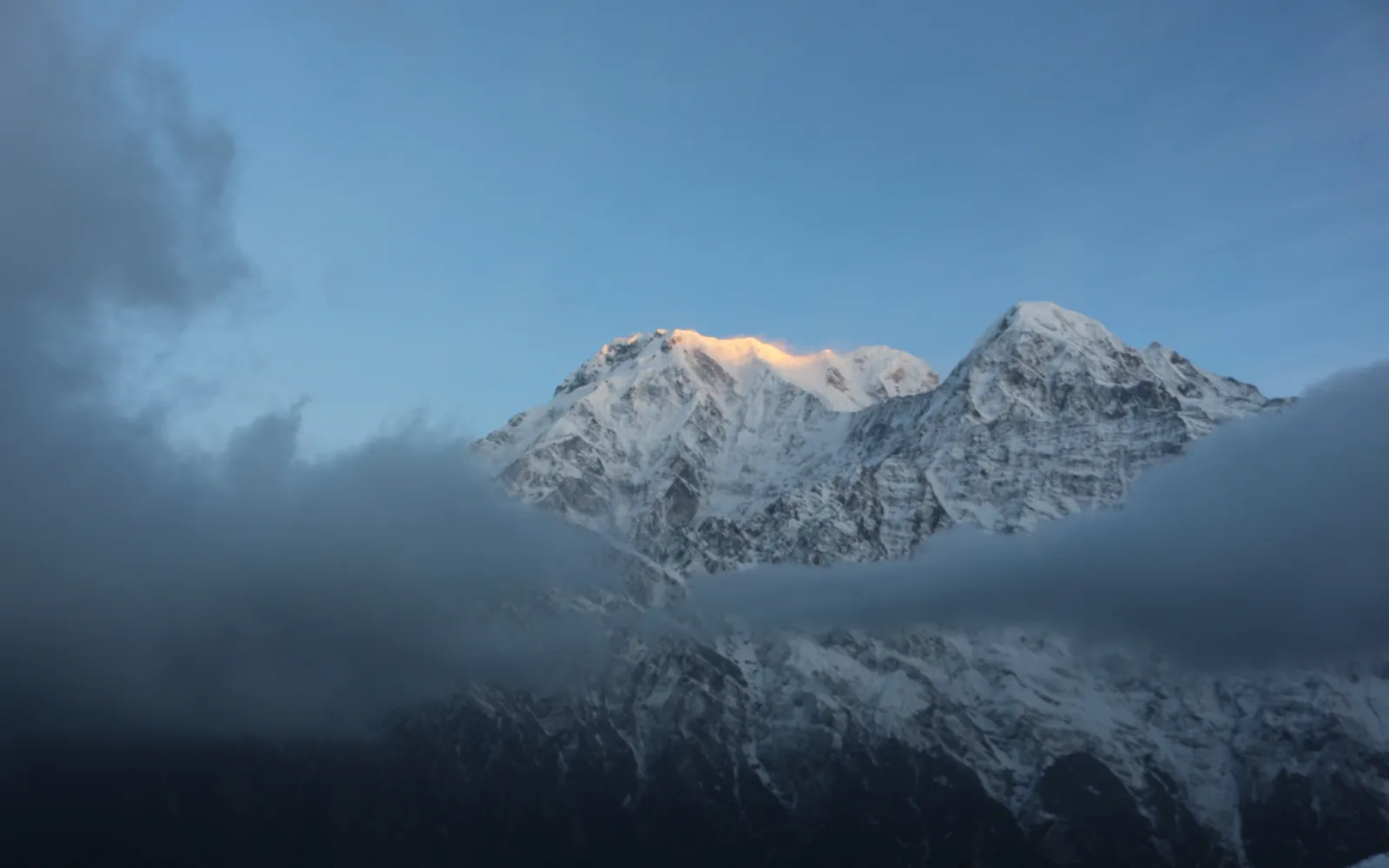
The Mardi Himal winter views could include Machhapuchhre or Fishtail, Annapurna South, and several surrounding Himalayan peaks on a clear day, and cold winter air might produce good visibility on some days, but cloud cover, breezes, snowfall, and haze might reduce the views suddenly.
Mountain Views Along the Mardi Himal Winter Route
Trekking location |Approximate elevation | Potential winter scenery
Forest Camp | 2,600 m | Dense forest and occasional glimpses through the trees
Low Camp | 2,970 m | Forested slopes and emerging views of Machhapuchhre
High Camp | 3,580 m| More extensive mountain panoramas on clear days with good visibility
Mardi Himal viewpoint | Approximately 4,200 m| Views of Machhapuchhre, Annapurna South, and surrounding peaks
Mardi Himal Base Camp | Approximately 4,500 m| High-mountain scenery, possibly with snow-covered slopes
Importantly, the visibility and potential mountain peaks to see on winter Mardi Himal depend on the weather and the trekker’s position on the route.
What Makes Winter Mountain Scenery Special?
• Machhapuchhre: The prominent double summit of Machhapuchhre could present an unforgettable sight on a clear winter’s day.
• Annapurna South: One of the Himalayan peaks rearing over the valley could also be seen from good vantage points further up the trekking route on a clear day.
• Snow-dusted landscapes: After fresh snowfall, ridges and slopes around the trekking route might transform into a snowy wonderland, though it is never guaranteed.
• Winter forests: Below the tree line, trekking around Mardi Himal passes through lovely evergreen forests, which take on different aspects as the day unfolds.
How to Improve Your Chances of Clear Views
It is worth planning to take pictures on days with clear morning weather forecasts, and it is often worth rising early enough to get to a viewpoint while conditions are still good on the day, though you should not risk your safety by rushing to get to the upper viewpoint.
Meanwhile, you should also remember that a fine morning rarely lasts long at the higher elevations. Thus, you should always allow yourself time to enjoy the views.
10. Essential Clothing and Packing List for Mardi Himal in Winter
The Mardi Himal winter packing list should include warm, waterproof clothing and quality hiking boots appropriate for high-mountain trekking in cold weather.
At various points along the Mardi Himal trail, temperatures can drop considerably below freezing point at night and during the mornings on clear days. You should bring items to protect yourself from the cold, rain, snow, and wind.
Essential Winter Trekking Clothes
Clothing item | Purpose
Thermal base layers | Keep the body warm and wick sweat away from the skin
Fleece or warm mid-layer | for insulation during cold winter walks
Insulated down or synthetic jacket | for cold mornings and evenings
Waterproof and windproof jacket | to protect against wind, rain, and snow
Warm trekking trousers | for keeping the legs warm and comfortable
Waterproof trekking boots | for better foot protection and grip
Wool or thermal socks | to keep the feet warm and dry
Insulated gloves, beanie, and neck warmer | for hand, head, and face protection
Essential Winter Trekking Gear
• Navigation and lighting equipment: A headlamp with spares for the batteries and a fully charged mobile phone
• Sun protection: Sunglasses, sunscreen, and lip balm, as ultraviolet rays are more intense at higher altitudes
• Health and emergency items: Any personal medication, a well-stocked first aid kit, and water purification tablets or filters
• Trekking equipment: Trekking poles and microspikes if the track is likely to be icy
• Sleeping equipment: Check with the lodge if the sleeping bags and mattresses are warm enough for winter
How to Prepare Your Winter Gear
You should check the weather forecast and consult your local guide about the likelihood of snow and ice on the Mardi Himal trail before finalizing your packing list.
Similarly, you should also ensure that the boots you bring are well broken in and test your clothing layers to ensure they are warm enough.
Note: Microspikes could be essential on winter Mardi Himal, but crampons require proper training in their use and should only be used when deemed necessary by the local guide, as the Mardi Himal trail is not technically a glaciated route even though it is a high-altitude Himalayan trek.
5. Best Time for Mardi Himal Trek During Winter
The most suitable time for the Mardi Himal Trek in winter tends to be dictated by recent snowfall, temperatures, and visibility. It is worth bearing in mind that December can have good trekking weather, January can be very cold, and February typically has gradually improving conditions with no guarantee of snow-free trails.
Comparing December, January, and February Conditions
Winter month| General conditions| Best planning advice
December| Cold nights but also spells of fine weather and snowfall| Check recent conditions before finalizing plans to trek upper trails
January| Tend to be colder than December, with snow and ice higher up | Allow extra time and prepare for cold nights
February| Days stay cold but get progressively warmer and less snowy| Make sure upper trails are clear of snow but check forecasts
Here, these are general observations during winter months by our expert team relating to the whole season and not specific advice for a particular date or trip.
Factors to be Aware of When Planning a Mardi Himal Trek in Winter
• Reduced hours of daylight – It is essential to start early on winter days, when hours of daylight are much shorter than in summer
• Snowfall – fresh snowfall reduces walking time on steep trails
• Visibility – clear skies make it easier to navigate the narrow ridges and offer more expansive views
• It is wise to leave some flexibility in your plans in case of bad weather or trail conditions
• A local guide may have valuable insights into current and forecast conditions in the mountains
Which Time of Winter Is Ideal for the Mardi Himal Trek?
It can be worth considering whether December offers more appealing trekking conditions than January and February, when snow, ice, and low temperatures can make the trek more difficult.
Later in the month, there can be milder weather, although many trekkers would prefer to travel when there is more time in the day. The high altitude adds to the impact of cold temperatures, and although they are usually lower in February than January, they could still be a concern in February, particularly at night and whenever there is fresh snowfall.
Importantly, the most convenient month for the Mardi Himal Trek in winter is not ideal unless temperatures are relatively high, the trails are clear of snow, and you have some flexibility in your plans.
6. Mardi Himal Winter Trek Difficulty and Fitness Requirements
Snow, ice, and low temperatures combine to turn the Mardi Himal Trek from a gentle grade into a serious challenge during the colder months and narrow the range of options for fresh trekkers.
In addition, the combination of relatively steep sections and the need to deal with ice and snow on exposed upper trails can be a strain on moderately fit beginners.
Mardi Himal Trek Difficulty – Winter Conditions by Section of the Trail
Trekking section | Altitude range | Walking time | Winter trail difficulties
Kande to Forest Camp | 1,770 – 2,600 m | Approximately 5 – 7 hours | More challenging climbs and uneven ground in the forest
Forest Camp to Low Camp | 2,600 – 2,970 m| Approximately 3 – 4 hours| Lower ground mud, frost, and ice
Low Camp to High Camp| 2,970 – 3,580 m| Approximately 3 – 5 hours| Steeper trails, cold conditions, and snowfall
High Camp to upper viewpoint| 3,580 – 4,200 m| Approximately 2 – 3 hours one way| Exposed, challenging ground, and limited visibility on narrow ridges
Note: These approximate times can vary depending on snow conditions and the speed at which you walk.
Requirements Relating to Mardi Himal Trek Difficulty and Fitness
• Fitness requirements – To achieve the most demanding parts of this trek, build up your cardiorespiratory fitness with walks involving steep climbs while practicing walking with a backpack, especially on downward slopes
• Strength training – Pay particular attention to building lower body strength through squats and step-ups
• Equipment considerations – Make sure you have a reliable pair of trekking boots and warm clothes, as well as poles and any other gear that might be useful for dealing with slopes and ground made slippery by ice
• Time management – Allow yourself time to get up early in the morning and complete each of your walks in daylight hours
• Altitude considerations – The High Camp sits at an elevation of approximately 3,580 m, and altitude sickness is always a risk, no matter how well you are trained
Is the Mardi Himal Trek in winter Suitable for Beginners?
It is usually safe for fresh or beginners, assuming that they do not have any significant health conditions and prepared well ,to attempt this trail at this time of year so long as the weather is fine and the trail is clear of ice and snow.
However, it is important to be realistic when assessing how well personal fitness levels will support the demands of the trek.
Even the best prepared beginner cannot control the effects of altitude on the body.
If anything goes wrong, it is vital that you are able to abandon the trek and return to the High Camp to receive appropriate treatment.
Beginner trekkers should definitely take these additional precautions:
1) A local expert ( licensed guide) will be able to advise on the dangers posed by winter conditions, so ask them for information about the likelihood of encountering ice, slips, poor visibility, and cold temperatures.
2) If the snow makes the trail too risky to continue, you must be prepared to stay to the High Camp.
11. Is a Guide Necessary for Mardi Himal Trek in Winter?
Hiring a knowledgeable guide can support a trekker through Mardi Himal in winter, providing information about the current trail conditions, predicting potential weather-related dangers, and finding alternative routes.
While many hikers can manage narrow mountain trails on their own, a local guide might be helpful in making decisions above Low Camp and High Camp.
Possible Advantages of hiring a Guide for Mardi Himal Trek in Winter:
Trail assessment: A local guide could monitor rising snowfields and recommend alternate routes
Weather knowledge: A professional guide can advise on the effects of winter weather
Route guidance: A guide can suggest adjustments to your winter hiking plans
Altitude concerns: An expert can identify life-threatening altitude sickness symptoms
Lodging and food: A professional guide can recommend alternative accommodations and meals in winter
Evacuation information: A guide can advise on contacting local authorities in case of a medical emergency
Guide requirements and winter trekking advices:
Consideration | Practical advice
Guide experience | Choose only those professionals who have previous experience in leading trekking teams in Mardi Himal during winter
Licensing and permits | Make sure the guide has the required permits to accompany groups of people
Current restrictions | Check winter regulations and restrictions before making any commitments
Communication and emergency contingencies| Clarify winter conditions for calling for help and evacuating ill or injured tourists
Trekking agencies | Pay close attention to agencies’ policies in regards to winter guides, personal gear, and emergency protocols
Importantly, a guide can assist in making better decisions for a winter trek, but it is necessary to keep in mind that no professional can ensure your safety on Mardi Himal during severe cold and sudden snowfall.
Therefore, it is essential to keep an alternative plan in case of untimely weather changes and follow the guide’s recommendations in challenging circumstances.
In addition, a trekker must hire a reputable agency that offers reliable communication, transportation, and medical support, and provides specific winter equipment and accommodations.
Most importantly, it should be understood that reaching the viewpoint is not mandatory, and abandoning a dangerous route is a valid decision to keep personal safety in priority.
12. Accommodation, Food and Facilities During Winter
Simple teahouses and mountain lodges provide accommodation and meals for the majority of hikers who choose the Mardi Himal Trek route.
Nevertheless, a trip to this mountain during winter months might limit your choice of stay places and available services due to severe cold and infrequent visitors.
Lodges, teahouses and amenities:
Location | Approximate elevation | Key facilities
Forest Camp | 2,600 m | Simple room accommodation, meals, and shared facilities, some improved facilities are also available
Low Camp | 2,970 m | Lodge-style rooms and dining facilities
High Camp | 3,580 m | Simple mountain lodging and food services
Siding 1,750 m| Village teahouses and simple accommodation, some better facilities are available
Note: All accommodations offer a wide range of services and facilities, depending on the current winter conditions.
Food, room heating and other services:
Available meals: Dal bhat, noodles, soups, rice, potatoes, eggs, and other simple dishes
Room heating: A small stove in a dining facility might be available; however, sleeping bags are strongly recommended for winter nights. It should also be noted that bedroom temperature is typically low in mountain lodges during winter.
Hot shower availability: This amenity is not included in the cost of meals and might be available only at certain teahouses. Hot water is usually produced with solar energy and propane gas during winter months.
Electricity: Electricity is available in most accommodations, but heaters, air-conditioning, and other devices that require a steady power supply might be unavailable. Extra batteries for electronic devices are highly recommended. Internet and phone services may be available at an additional cost.
Drinking water: It is essential to bring water purification tablets or chlorine powder and stay hydrated during a winter trek.
13. Mardi Himal Winter Trek Cost and Budget
The cost of a Mardi Himal winter trek varies with the number of people in a group, transport, accommodation needs, guiding and porter support, and the package being chosen.
However, referring to a previously mentioned price range provided by Haven Holidays, a reasonable budget for a group would be between USD $195 a
nd USD $360.
Mardi Himal Winter Trek Cost
Budgeting factor| Indicative note: Mardi Himal Winter Cost
Budget Trekking Package| USD $195-USD $250 per person
Standard Trekking Package| USD $250-USD $360 per person
Private transportation| Usually adds significantly to the overall cost
Foods and accommodation | Depends on group size and what's included
Guide, Porter, Insurance | Depends on guiding and other charges ( normally the operating company does)
Extra night or days | Adds to overall Expenses
Here, the above winter cost breakdown is an indicative figure, based on the previously mentioned range of prices, and not an officially confirmed quotation for trekking in 2027.
Mardi Himal Winter Trek Booking: Factors Influencing the Final Cost
The following points provide a general idea of how much it might cost for a Mardi Himal trek in winter, and what the main components adding to the final expenditure are:
Group size: The overall cost is usually reduced for a larger party, as expenses are shared between more people.
Transport: The cost of a private vehicle from Pokhara to Kande or Siding back to Pokhara adds significantly to the overall expenditure compared to shared transport.
Guiding: A licensed and insured guide, porter support, and other miscellaneous staff-related costs add up to the overall expenditure for trekking.
Accommodation: The number of people in a group often affects overnight stays, depending on the lodges' occupancy, and the standard of accommodation booked.
Personal expenses: An additional budget should be made for hot drinks, charging devices, hot showers, and small-restaurant meals, if included in a chosen package.
Mardi Himal Winter Trekking Budget Preparation: What to Expect
In addition, it's important to get a clear picture of what's included in a chosen package, and double-check any restrictions.
Importantly, ask the trekking company about extra expenses that clients are responsible for in case of delays, additional overnight stays, or transportation-related issues.
More importantly, asking for a written quotation and ensuring that inclusions and exclusions are transparently laid out is always a wise idea when budgeting for a Mardi Himal trek in winter.
14. Transportation, Permits and Travel Insurance for Winter Trekking
Mardi Himal winter trek always involves a drive from Pokhara to Kande, followed by a multi-day trek through Forest Camp, Low Camp, and High Camp. Travel insurance, permits, and other documents to bring or apply for before departure are worth discussing in more detail below.
Likewise, transport availability and road conditions during wintertime are also worth considering before finalizing a travel itinerary.
Transport and Permit Checklist for Mardi Himal Winter Trek
Item | Description
Drive from Pokhara to Kande | Distance and time duration: approx. 1-2 hrs
Drive from Siding to Pokhara | Distance and time duration: approx. 1-2 hrs
Annapurna Conservation Area Permit (ACAP) Entry fee| NRs. 3,000 for foreigners, NRs. 1,000 for SAARC nationals
Trekkers' Information Management System (TIMS) Required| licensed guide, issued by an agency in Kathmandu
Restricted-area permit | It is not required for a standard Mardi Himal trek
Here, issued by the Nepal Tourism Board, the NPR 3,000 permit fee for ACAP applies to all foreign nationals as well as SAARC (South Asian Association for Regional Cooperation) countries.
Travel Insurance Tips for Winter Mardi Himal Trek
While choosing an insurance plan, the highest altitude a trekking route climbs to should be mentioned, as most policies do not cover journeys of more than 4,500 m.
In addition, it is worth checking if helicopter rescue services and medical assistance are available, and what conditions apply in such cases.
Finally, a potential client should review the documents and contact details provided for making claims, and what limitations apply to repatriation.
What to Do Prior to Mardi Himal Trek in Winter
It is useful to ensure that documents are up to date and that travel insurance policies include all relevant expenses in case of an emergency.
Moreover, the travel agency should be contacted and asked to provide additional documentation in writing confirming travel arrangements.
During winter, mountain passes can close due to snowdrifts, and roads from Pokhara to Kande may be difficult to access or slow because of winter accidents and other incidents. It is wise to contact the agency and arrange for the latest route report before departing for the trip.
Above all, always ensure that adequate insurance covers all activities as a traveler would expect them to do so. If in doubt, always contact the insurance company and explain specific concerns.
15. Common Winter Trekking Risks and Safety Precautions
A safe Mardi Himal winter trekking experience involves understanding potential dangers associated with snow, ice, hypothermia, altitude sickness, exhaustion, poor visibility and the dangers of a high altitude trek above High Camp at around 3,580 m to complete the circuit or ascend to the summit of 4,200 m Mardi Himal.
Risks Involved in Walking Winter Mardi Himal and How to Deal With Them
Common Trekking Related Risks | How to Avoid Them
Icy and slippery conditions| Use appropriate mountain boots and trekking poles
Heavy snowfall on the mountain path| Check daily snowfall and weather forecasts before climbing higher
Hypothermia, Shivering, feeling disoriented or experiencing impaired coordination | Wearing extra woolly clothing layers, seeking shelter or requesting emergency assistance
Altitude sickness at 3,580m and beyond above base camp Headache, vomiting, dizziness and feeling tired | Stop climbing and consult professional trekking advisers
Poor visibility due to snow or icy conditions | Follow a certified mountain trekking guide and avoid walking along any ridgelines
Trekking exhaustion Weakness, tiredness and impaired coordination | Take regular breaks and eat healthily during a winter trek
Staying Safe While Trekking Mardi Himal in Winter
While trekking Mardi Himal in the cold season it is advisable to ensure one is aware of and prepared for risks encountered at various stages of the mountain trail. This includes the dangers posed by cold temperatures, heavy snowfalls, altitude and other trekking related safety concerns.
Trek in suitable weather conditions after consulting forecasts and snowfall reports.
Ensure that cold temperatures and wet conditions do not result in hypothermia by wearing dry clothing and protecting fingers and toes.
Be mindful of altitude sickness and the symptoms it presents for anyone trekking above 3,500 meters.
If any of the symptoms associated with altitude sickness persist or hinder normal body functions and coordination it is advisable to immediately descend the mountain.
Should any symptoms of hypothermia develop while mountain trekking in the cold season one must immediately seek emergency assistance.
If one experiences shortness of breath at rest, impaired coordination or feelings of confusion while trekking Mardi Himal in winter it is essential that one descends to the lowest possible altitude and seeks emergency treatment.
Do not try to ascend higher than recommended or reach the viewpoint simply because the weather is clear.
16. Conclusion: Plan a Safe Mardi Himal Trek in Winter
The Mardi Himal Trek in Winter is a fantastic challenge if conditions are favourable enough to get to the top of 4,200m Mardi Himal or at least the viewpoint at 4,200 m.
However, cold season hikes demand careful preparation because of temperatures, ice and snow on the Mardi Himal mountain trail.
Book winter Mardi Himal Trek packages at Haven Holidays Nepal and we will assist our clients in choosing the right tour dates and durations between December and February.
Ensure that mountain walking boots or shoes are worn and brought in sturdy footwear to trekking Mardi Himal in winter.
Importantly, it is advisable to plan a minimum of 5 days mountain trekking itinerary and allow extra time for unpredictable icy winter conditions.
Most importantly, it is important to remain flexible and turn back if harsh weather prevails on the Mardi Himal mountain trail.
Get a Guided Mardi Himal Winter Trekking Package from Haven Holidays Nepal
We can assist you in booking a hiking holiday in Nepal or custom designed winter trekking packages to Mardi Himal with suitable transport and accommodation.
Here, prior to making any deposits to Haven Holidays Nepal, please request updated tour costs, itinerary options and current on the ground mountain trail conditions from our experienced local mountain trekking experts in Nepal.
Importantly, climbing above 3,580 m to camp at the viewpoint near 4200 m or 4,500 m high Base Camp is optional and not guaranteed. Here, we strongly advise arranging your travel schedule flexibly while trekking in the high Annapurna region in the winter months to enable you to return to lower altitudes if unexpected weather develops.
Contact Haven Holidays Nepal today for more information on itinerary options, tour costs or winter mountain trekking advice for Mardi Himal or other mountain treks in Nepal.
Frequently asked questions ( FAQs)
1. Can Beginners Do Mardi Himal Trek in Winter?
Many of the Mardi Himal winter trekking itineraries are more challenging than summer due to the snow on the trail, the ice and snow on the rock face, below freezing temperatures and reduced daylight hours.
I’d say that beginners with a good level of fitness can manage the Mardi Himal trek in winter weather, so long as they take things slowly and don’t try to push up the mountain.
2. Does It Snow on Mardi Himal in December?
The Mardi Himal trek in December does get snowfall, although the amount can vary greatly from year to year. Snow tends to fall at elevations of around 3,000 – 3,500m and above, but there can be clear days too. There can be fresh snowfall on the upper part of the Mardi Himal trail and the wind and freezing temperatures can create ice on the rocks and trail. You should check the snow conditions before you head out from Pokhara
3. Is January Too Cold for Mardi Himal Trek?
January tends to be one of the coldest months for the Mardi Himal winter trek, with night time temperatures in High Camp dropping to around -10C, and potentially colder during spells of bad weather. You’ll definitely need good thermal clothing, insulated gloves, a good sleeping bag for winter trekking and a contingency plan if the temperatures drop below what you can manage.
4. Can I Reach Mardi Himal Base Camp in Winter?
The Mardi Himal Base Camp trail can be reached in winter, but it depends on the snow conditions, visibility and whether the ridge above High Camp is accessible due to snow and ice. It’s important that your guide knows the conditions on the day and is prepared to turn around before the viewpoint, if the trail becomes too icy or snowy to manage.
5. Are Teahouses Open During Mardi Himal Winter Trek?
Teahouses do tend to be open on the Mardi Himal trail during winter, but it does depend on the snow conditions in the upper parts of the trail. Many of the tea houses stay open year round – but the ones near High Camp may shut during very cold snaps or heavy snowfalls. You should check with your local trekking agency about accommodation availability and have an alternative accommodation in your head, in case of unexpected winter weather.\
6. Do I Need Crampons or Microspikes for Mardi Himal in Winter?
Depending on the snow conditions, crampons or microspikes may be needed for the Mardi Himal winter trek, if there are icy patches on the rocks and trail above High Camp. Microspikes are more likely to be used on regular trail surfaces, whereas crampons are better suited to steep icy rock faces – but you need to have the right footwear to use crampons and make sure that there isn’t any unstable ice that you could fall on. You should always follow the advice of your local mountain guide and only attempt exposed icy sections if you know how to manage them.
7. How Many Days Are required for Mardi Himal in Winter?
Most people allow 4 or 5 days for the Mardi Himal winter trek from Pokhara, but I think that it’s worth allowing an extra day in case of bad weather and icy conditions on the trail above High Camp. If you’re only allowing 2 or 3 days for the Mardi Himal trek from Pokhara, you might not have time to turn around if the snow makes the trail unsafe or impossible to navigate.
8. Is Mardi Himal Safer Than Other Annapurna Treks in Winter?
I wouldn’t say that the Mardi Himal trek is safer than any other Annapurna ridge walk in the winter months – it really depends on the snow conditions, ice and trail exposure and your own level of experience, fitness and equipment. Be aware that the ridge walks, particularly on the Mardi Himal trail, can be hazardous if you’re not fully prepared for the winter weather and know how to navigate icy rock faces.
9. What Is the Best Month for Mardi Himal Winter Trekking?
December, January and February can all be months for Mardi Himal winter trekking, but the conditions can be very different in each of these months. December can be cold with clear skies, January particularly cold and February still have good snow cover. It’s better to base your departure date on snow reports and general weather forecasts rather than expecting clear skies and safe trail conditions on the Mardi Himal upper ridge.
10. Can I Book a Guided Mardi Himal Winter Trek from Pokhara?
You can book a Mardi Himal winter trek from Pokhara with a licensed trekking company, who will provide a guide, permits, teahouse accommodation, food and transportation, depending on the package that you choose. It’s always best to ask about the winter equipment that will be provided, the availability of accommodation at High Camp and the contingency plan if the trail becomes too icy or snowy to continue.
Our travel experts are ready to assist you with any questions.
Send us a message.Have a question before you book? Send your enquiry below and our travel experts will get back with the required information.