
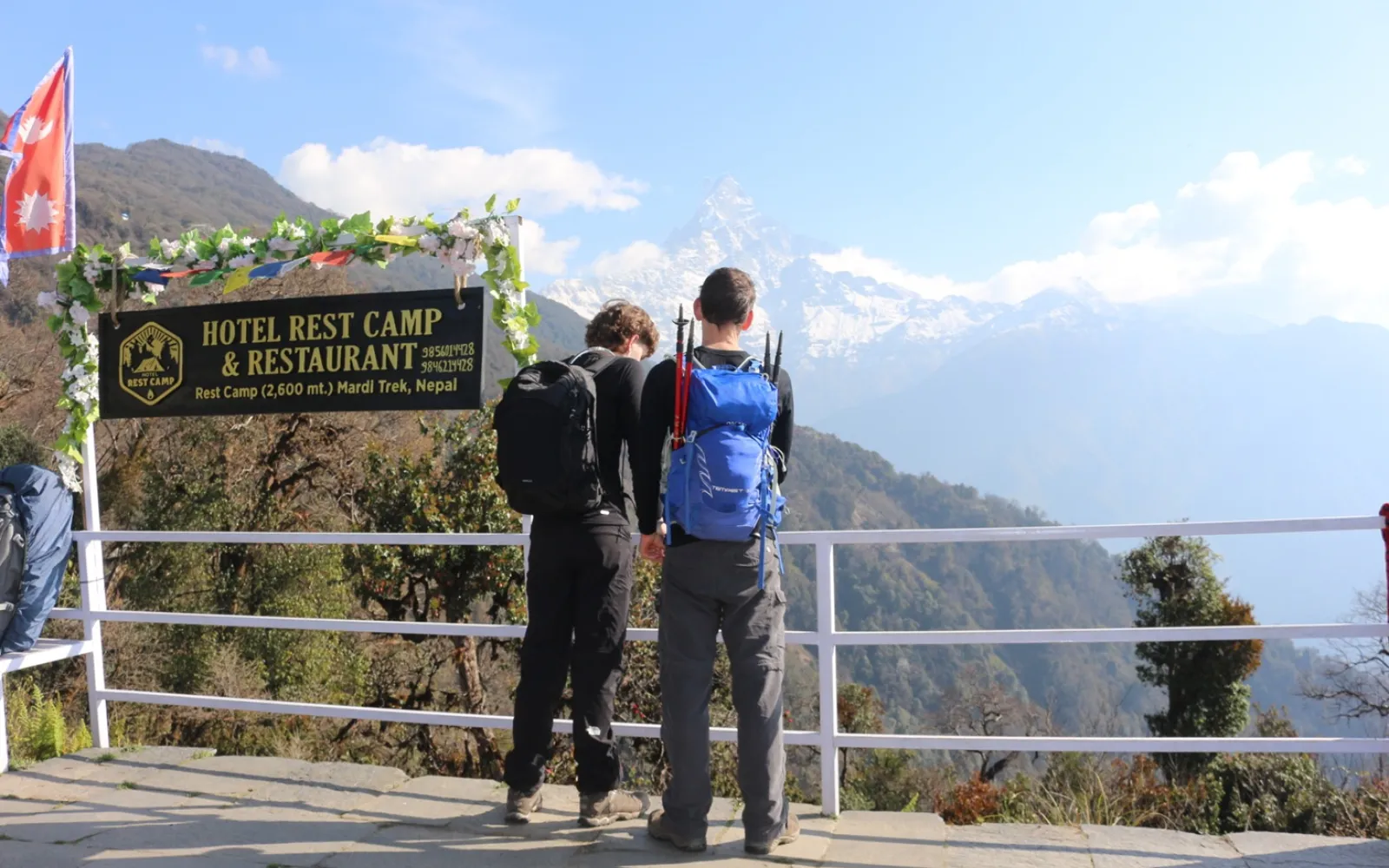
The Mardi Himal Trek Packing List is essential as it can prepare an individual for the varying climate and challenges of trekking in Nepal’s Annapurna region.
Meanwhile, the Mardi Himal trail leads through forests, stairs of stones, narrow strips of mountain trails, steep inclines, and finally an exposed part of the ridge that provides a fantastic viewpoint at roughly 4,200–4,250 metres above sea level.
In addition, a sudden drop in temperature occurs at High Camp which is a camping area around 3,580 metres, especially during morning walks. Consequently, appropriate clothing, footwear, and safety equipment are vital for a successful and comfortable trek.
Things to Consider When Packing for Mardi Himal Trek
Season – A light jacket is perfect for spring and autumn, while heavier clothes are required in winter.
Duration – For a 4- or 5-day trek, packing several sets of apparel, personal care items and enough supplies is advisable.
Luggage – A porter can carry a large duffel bag if hired, while a daypack will contain daily necessities.
Trail – Sturdy and broken-in trekking boots, waterproof jackets and trousers, and waterproof hiking boots are mandatory.
Weight – The key rule is to pack the most essential items first and leave non-essentials at home.
Therefore, a Mardi Himal packing list is critical for a safe and enjoyable trek while preventing many difficulties that can arise from inadequate equipment or inappropriate clothing.
Here, below is a detailed list of items that are necessary for the Mardi Himal Trek.
Packing for the Mardi Himal Trek involves preparing clothing, safety equipment, and comfort items. In addition, trekkers must be ready to brave the morning chills, strong sunshine during the day, sudden rainfall, and long walks along the trekking trail that spans up to five days.
Packing Checklist for Mardi Himal Trek
This short but comprehensive trekking packing list should be used before leaving Pokhara. Additionally, quantities may vary depending on the season and duration of the trek.
Pre-trek checklist
Backpack and Luggage
20-30L daypack
Duffel bag (if porter is hired)
Clothing
Shirts – moisture-wicking t-shirts, long-sleeved thermal tops
Thermal layers – fleece and down jacket
Waterproof Jacket and Trousers – warm hat, sun-hat, gloves
Footwear – trekking boots, hiking socks, camp shoes
Safety and Health
Headlamp with extra batteries, personal medication and first aid, sunscreen and sunglasses
Hydration
Water Bottle and water purification tablets
Personal Items
Toiletries and quick-drying towel, power bank with charger
Documents
Passport, permits and insurance details
Packing List with Recommended Quantities and Descriptions
Essential Gear | Recommended Quantity | Why You Need It
Trekking shirts | 2-3 sets | Comfortable while walking
Thermal layers | 1-2 sets | Warmth at higher altitudes
Trekking trousers | 2 pairs | Mobility and changing weather
Warm jacket | 1 Set |Light weight but keeps you warm
Waterproof jacket and trousers | 1 set | Protection from the rain
Trekking socks| 3-4 pairs| Avoid moisture build-up
Water bottle| 1-2 litres| Drinking water throughout the day
Headlamp| 1 set| A reliable source of light
Optional Comfort Items for Mardi Himal Trek
Trekking poles – ideal for steep descents and rough terrain
Gaiters – protect the lower leg from the elements
Energy snacks – to keep you going throughout the trek
Eye mask and ear plugs – for a good night’s sleep
In addition to, hiring a local guide and a porter is recommended as they have the correct gear for the challenging and provide security.
Furthermore, it is essential to double-check with Haven Holidays Pvt. Ltd about the availability of certain items for hire or purchase.
Finally, individual medication, necessary documents, layers of warm clothing, and emergency items should always be packed in a daypack.
You will need appropriate warm and lightweight clothing for the Mardi Himal Trek, including protection from the wind and rain. The Mardi Himal route climbs from Kande at around 1,770 metres up to High Camp at 3,580 metres, where temperatures may drop considerably overnight.
Furthermore, layers of clothing can be added or removed as needed while trekking, or when at mountain lodge accommodation. Rather than a single thick jacket, think about a combination of clothing layers.
Clothing Required for the Mardi Himal Trek
Clothing Items | Recommended Quantity | Main purpose
Moisture-wicking T-shirts | 2-3 sets | Shirts absorb sweat
Thermal base layers | 1-2 sets | Warmth at high altitude
Fleece or insulated mid-layer | 1-2 sets| Warmth
Down or insulated jacket| 1 set| Protection from cold mornings and evenings
Waterproof Jacket| 1 set| Protection from wind and rain
Waterproof trousers | 1 set| For wet weather
Trekking trousers| 2 Sets| Pairs of walking trousers
Underwear | 4-5 sets| Daily underwear changes
Trekking socks | 3-4 sets| Moisture management and comfort
Warm hat and gloves | 1 Set| Protection from cold temperatures
Sun hat or cap | 1 set| Protection from the sun
Lodge clothes| 1 Set | Comfortable clothing
Clothing for Different Seasons
• Spring (March to May): Breathable T-shirts, fleece, warm jacket, and waterproof clothing.
• Autumn (September to November): Similar to spring, but with additional insulation for cooler mornings and evenings.
• Winter (December to February): Additional thermal clothing and protection from cold temperatures, including snowfall.
• Monsoon (June to August): Waterproof clothing and quick-drying layers.
In addition, opt for lightweight, quick-drying clothing that can be layered for warmth or removed as necessary.
Importantly, always have your warm jacket and waterproof coat handy, as it can get quite chilly on exposed ridges and when walking at higher altitudes, particularly in the mornings.
Appropriate footwear will be required for the Mardi Himal Trek. Well-fitting trekking boots will be important on the ascent to High Camp at 3,580 metres and the upper viewpoint at over 4,200 metres.
Meanwhile, this is particularly the case in wet weather conditions, including monsoon and winter snowfall. It is important to wear well-fitting, comfortable, waterproof or water-resistant trekking boots with a good grip, and to break them in prior to the trek.
Footwear Required for the Mardi Himal Trek
Footwear Items | Recommended Quantity | Description
Trekking boots | 1 pair | Boots offer the best protection and comfort
Moisture-wicking socks | 3-4 pairs | Socks help keep feet dry and reduce blistering
Spare pair| 1 additional pair of socks | A spare pair of socks will always come in handy
Lightweight lodge shoes or sandals | 1 pair |Comfortable shoes or sandals for wearing in the lodge
Gaiters | 1 pair | Optional, but can add protection from rocks and snow
Choosing the Right Trekking Boots
• Fit: Ensure that the boots fit comfortably, allowing for some extra space if descending on steep slopes.
• Traction: Deep treads on the sole of the boot help to grip rough, uneven and muddy surfaces.
• Water-proof: Waterproof boots help to keep feet dry in wet weather conditions, although they will eventually soak up water in prolonged wet conditions.
• Ankle support: Mid or high boots can offer additional ankle support, which may be beneficial on rocky terrain. However, choose a boot that is comfortable for you.
• Socks: Choose a pair of moisture-wicking trekking socks and inspect your feet for any signs of hotspots that could lead to blisters.
• Break them in: Rather than walking on rough terrain in brand new boots, spend a few days breaking them in ahead of the trek.
Further Footwear Considerations and Advice
As well as a pair of comfortable trekking boots, you may want to invest in a pair of lightweight shoes or sandals to wear in the mountain lodge accommodation. Avoid bringing extra pairs of footwear unless absolutely necessary.
If you are planning on trekking in winter, then it is a good idea to check snow conditions ahead of time and ask a local guide for advice about the best form of traction for the conditions.
When choosing a pair of boots, think about comfort and fit rather than brand image or cost. Comfortable footwear will make the trek more enjoyable and safer.
It is critical to pack warm clothing for the Mardi Himal Trek as temperatures can drop significantly at higher altitudes. As a result, it is a good idea to bring cold-weather gear for the High Camp and morning hikes to the viewpoints.
In addition, exposed ridges can be quite chilly due to the howling winds before sunrise. Therefore, you need a good insulated jacket, thermal layers and warm gloves to keep you comfortable during such conditions.
Essential Cold-Weather Gear for Mardi Himal Trek
Recommended item | Purpose
Insulated jacket | Keeps you warm during cold mornings, evenings and viewpoint hikes
Thermal base layers | Retain body heat and wick away moisture
Fleece or mid-layer | Extra insulation during cold weather and breaks
Warm trekking gloves | Warm hands during cold weather and hikes
Waterproof outer gloves | Extra protection during wet and snowy conditions
Warm beanie |Keeps ears and head warm during cold mornings
Neck warmer or buff | Warms the neck and face during cold weather
Waterproof jacket and trousers | Protects against rain, snow and wind
Warm trekking socks | Kept feet warm during cold mornings
Tips for Picking Cold-Weather Gear for Mardi Himal Trek
• Pick a good insulated jacket – A down or synthetic insulated jacket will keep you warm around the High Camp (3,580 metres).
• Pack warm trekking gloves – It is advisable to pack warm gloves and even waterproof outer gloves for the Mardi Himal Trek, particularly during the winter months or if there is a chance of snow.
• Layer up smartly – Wear a moisture-wicking base layer, a fleece layer and a padded insulated outer layer depending on the temperature.
• Pack waterproof gear – A waterproof jacket keeps you dry on the exposed ridges during unpredictable weather conditions.
• Adjust clothing during the hike – Remove a layer if you feel too warm and put it back on during breaks to avoid getting cold.
• Pack warm winter gear – In case of snow or freezing conditions during winter, double-check that you have packed thick gloves, warm socks and extra layers.
As always, it is a good idea to double-check the weather forecast before heading to Mardi Himal. Ask your trekking guide about the likely conditions and ensure that your packing list for Mardi Himal keeps you warm but does not overload you with too much gear, either.
Picking the right backpack size for the Mardi Himal Trek ensures that you can pack all the essential gear for the trek comfortably. However, the size of the daypack you need for day hikes differs from the larger bag that a porter may carry.
Here, the average hiker only needs a 20 to 30-litre daypack for the Mardi Himal Trek. At the same time, a larger duffel bag (or two) is used to pack extra warm clothing and other items carried by a porter, depending on the package.
Recommended Backpack and Luggage for Mardi Himal Trek
Recommended item| Quantity or size| Purpose
Daypack| 20–30 litres| Packs water, snacks, spares, camera gear and personal items
Duffel bag (normally offered by Compay)| Common size: 50–70 litres| Extra clothing and items carried by a porter
Waterproof backpack cover| 1set | Protects the daypack from wet weather
Waterproof dry bags | 2–3 sets| Keeps extra clothing and personal items dry
Reusable water bottle| 1–2 sets| Stashing water during day hikes
Small valuables pouch| 1 set| Carrying cash, credit cards, medication and other small items
Tips for Picking the Right Backpack for Mardi Himal Trek
• Pick a comfortable daypack – Ensure that the shoulder straps, waist belt and back panel are well-padded for comfort and stability.
• Pack day essentials in the daypack – Stash water, snacks, sun cream, rain jacket, warm layers and personal medication in the daypack for easy access during the hike.
• Keep your gear dry and protected – Use waterproof covers and waterproof dry bags to pack clothing, camera gear and personal electronics.
• Stash valuables in a small pouch – Keep your passport, cash, valuables and any crucial medication in a small pouch on your person at all times.
• Pack your porter bag smartly – Stash heavier items towards the bottom and protect clothing from getting damp.
• Double-check the luggage allowance – Ask your tour operator about the luggage policy and porter ratio before the trek.
• Avoid overpacking – Stick to a few versatile clothing items and only pack the essential gear for the trek.
What Is the Porter luggage weight limit for Mardi Himal Trek?
The porter luggage allowance for the Mardi Himal Trek depends on the package you pick and the number of trekkers sharing a porter. Some tour/trek operators offer porter services for two trekkers, with a luggage weight limit of around 20 kg.
Therefore, double-check the luggage allowance and porter ratio with your tour operator before finalising your booking. In the meantime, keep the weight in your daypack to a minimum and ensure that the main bag has enough items for the trek but is not overloaded, either.
If you need help confirming the right size of the rucksack, porter luggage allowance and other gear for the Mardi Himal Trek, we at Haven Holidays can help. We can also advise on the best clothing and equipment for the Mardi Himal Trek depending on the time of the year.
Appropriate toiletries facilitate personal hygiene while camping during Mardi Himal Trek. Given inconsistent facilities at mountain lodges, prepare easily transportable personal hygiene items.
In addition, a personal first-aid kit facilitates minor treatments during daily treks. Although the walking guide carries group first-aid supplies, keep personal medical necessities in daypack.
Essential Toiletries, Personal Hygiene and First-Aid Supplies
Item | Recommended Quantity | Purpose
Toothbrush and toothpaste | 1 set | Daily oral hygiene
Biodegradable soap | 1 small bottle | Washing hands and body at suitable facilities
Hand sanitizer | 1 small bottle | Sanitizing hands in the absence of soap and water
Tissues and toilet paper | 1-2 small packs | Toiletries where supplies are limited
Quick-drying towel | 1 set | Drying after washing
Sunscreen and lip balm | 1 each | Protection against sun exposure and dry air
Blister plasters or blister dressings | Several Sets| Protecting hotspots and minor foot blisters
Antiseptic wipes and small dressings | A few | Cleaning and treating minor wounds according to the package instructions
Personal medication | As prescribed | Managing existing medical conditions
Small waste-disposal bags | Several | Disposing used tissues and personal waste until appropriate disposal facilities are available
Menstrual products | As needed | Managing menstrual hygiene
Small handwashing supplies | 1 set | Maintaining hand hygiene before meals and after toileting
Pro Packing Tips
• Pack easily transportable toiletries: Consider using travel-sized items to minimize bulk and weight.
• Carry blister treatments: Well-fitted boots and prompt treatment of hotspots prevent painful blisters.
• Bring personal medication: Pack prescribed drugs in their original packing and follow the healthcare professional’s instructions.
• Prepare for menstrual hygiene: Carry menstrual products and securely pack used items in bags where bin facilities are unavailable.
• Dispose personal waste appropriately: Follow the local lodge directions and carry waste until appropriate disposal facilities are available.
• Keep personal first-aid supplies in daypack: Accessible pack stashing facilitates readily available treatment of minor injuries.
• Discuss personal medical needs with a healthcare professional before trekking: Chronic medical needs, current medication and fitness to trek at altitude requires professional evaluation.
Note: A basic first-aid kit is not intended for managing complex medical concerns. The walking guide’s group first-aid kit, personal medication and appropriate travel insurance offer different forms of preparation for trekking.
Appropriate water bottle facilitates easy access to drinking water throughout the walking day. However, water sources, lodge facilities and bottled water costs vary along the trek route.
Consequently, bring a reusable water bottle or hydration bladder that is suitable for cold weather conditions.
Additionally, carry a water filter, purification tablets or another appropriate water purification method to ensure access to safe drinking water.
Essential Water and Snack Supplies
Item | Recommended choice | Purpose
Reusable water bottles | Two bottles with suitable capacity | Carrying drinking water throughout the day
Insulated bottle | Optional, particularly in cold weather | Keeping water from freezing
Hydration bladder | Optional | Convenient water carrying during walking
Water filter | Reliable filter suitable for local water conditions | Removing specified contaminants according to the package instructions
Water purification tablets or drops | Appropriate product |Treating water according to the package instructions
Energy bars | Several | Providing convenient energy during walking breaks
Nuts and seeds | Small portions | Providing energy-dense, easily transportable snacks
Dried fruit | One small bag | Source of carbohydrates for the trail
Chocolate or other preferred snacks | As needed | Providing easily accessible, portable snacks during long walking days
Electrolyte sachets | Optional | Replenishing electrolytes when appropriate, particularly after heavy sweating
Other Pro Tips
• Choose suitable water bottles: Use strong, reusable water bottles with secure caps. Additionally, protect hydration bladder tubes from freezing in winter conditions.
• Treat untreated water before use: Use a water filter, appropriate purification tablets or boiling to ensure removal of contaminants.
• Follow water treatment instructions: Pay particular attention to recommended contact time and restriction on water flow rate.
• Ask about water facilities at lodge: Confirm availability and cost of boiled, filtered or bottled water in advance.
• Pack easily transportable energy snacks: Energy bars, nuts and dried fruits provide easily accessible energy during walking days.
• Carry accessible personal snack stash: Store a small supply of snacks in daypack rather than main luggage.
• Take regular sips: Drink regularly throughout the day and adjust water intake according to individual needs, exertion and weather conditions.
• Avoid overestimating the role of hydration: Although adequate hydration is important, it is not a preventative measure or treatment for altitude sickness.
How Much Water Should I Carry on Mardi Himal Trek?
The amount of water depends on walking duration, weather conditions, exertion and availability of safe refill points.
Here, always carry sufficient water for the next day walking and replenish at verified, safe water points.
Importantly, ask your guide about estimated water expenses and available refill points before heading to the next lodge. Individual hydration needs vary depending on fitness level, individual health and acclimatization to altitude.
However, persistent headache, nausea, dizziness or unusual fatigue at altitude should not be dismissed as dehydration.
While it is always a good idea to bring along your mobile phone and camera to document your experience, you might find that charging facilities are either unavailable or come at an extra cost at certain lodges.
Therefore, make sure to pack a reliable headlamp, phone and power bank, along with the appropriate charging cables.
Additionally, remember to keep your devices, including the power bank, protected from cold temperatures and moisture.
Essential Electronics for Mardi Himal Trek
Item | Recommended quantity |Purpose
Headlamp| 1 set | Provides hands-free light, especially useful at night or before sunrise
Spare batteries or charging cable | 1 set | Keeps your headlamp functioning
Mobile phone | 1 set| Facilitates communication, navigation and photography
Power bank 10,000–20,000 mAh| 1 set| Used for recharging your phone and other devices
Charging cables | 1 set |Used for charging your phone, power bank and other devices
Wall charger | 1 set| Used for charging devices at accommodations that offer electricity
Waterproof pouch or dry bag| 1-2 sets | Keeps your devices protected from moisture
Camera and spare batteries| Optional| Ideal for taking photos of the breathtaking views
Binoculars | Optional | Enables you to get a better view of the mountains
Offline maps | Download before departure| Facilitates navigation if you do not have access to mobile data
Tips for Using Electronics on Mardi Himal Trek
• A trusted headlamp: Make sure to bring a headlamp that you trust to provide sufficient light, especially at night or before sunrise, and a set of spare batteries or a charging cable.
• Reliable power bank: Invest in a quality power bank with a capacity of 10,000–20,000 mAh that will be sufficient for most people, depending on their needs.
• Electricity availability: Confirm with your accommodation and trekking agency whether electricity will be available and if there are any costs involved.
• Cold temperatures: Keep spare batteries and your power bank protected from cold temperatures by storing them in a waterproof pouch or inside your clothing.
• Moisture: Store your devices, including the power bank, in waterproof pouches or dry bags, especially if there is a forecast of rain or snow.
• Limit use of phones: Switch off mobile data and reduce screen brightness to conserve battery power when you do not need it.
• Prepare maps and other information: Download any relevant information, such as maps, accommodation details or emergency numbers, before departure, in case you do not have access to data.
• Camera equipment: If you are planning on bringing a camera, make sure to include spare batteries and a waterproof pouch or case.
Finally, it is advisable to avoid relying solely on electricity at your accommodation and bring along a fully charged headlamp and power bank.
By ensuring that you have all the required documents in order before departure, you will avoid any unwanted inconveniences or expenses.
In addition, it is a good idea to carry some Nepalese currency with you in case there are no card facilities at certain accommodations, and to invest in travel insurance, as emergency medical and helicopter evacuations can be expensive.
Documents, Permits, Cash and Travel Insurance for Mardi Himal Trek
Item | What to prepare | Why it matters
Passport or other valid identification | Original identification and secure digital copy | Used for identification purposes
Trekking permits | Confirm the permits you are required to obtain | Ensure that you have the required permits before departure
Annapurna Conservation Area Permit (ACAP)| Arrange and confirm the documents you are required to obtain before departure | The Mardi Himal route is within Annapurna Conservation Area
Travel insurance policy | Policy documents and emergency contact number| Verify insurance coverage in case of an emergency evacuation
Emergency evacuation coverage | Confirm the altitude stated on your insurance policy and evacuation terms |Clarify terms, coverage, restrictions, claims procedure and authorisation
Booking confirmation | Printed or offline digital copy | Helps to confirm your booking and what it includes
Nepalese currency | Small change and enough to cover incidentals | Some accommodations might not accept card payments
Emergency contacts | Guide, trekking company, travel insurance and other emergency contacts | Accessible in case of an emergency
Digital documents | Offline digital copy of your documents |Store them securely on your phone in case of loss or damage to the original documents
Tips for Documents, Permits and Travel Insurance
• Identification documents: Make sure to bring along your passport or other valid identification and have a digital copy stored securely on your phone.
• Trekking permits: Ask your trekking agency to confirm the documents you are required to obtain and bring along the originals and a digital copy.
• Currency: It is advisable to budget for some incidentals in cash in case certain accommodations do not accept card payments.
• Travel insurance: Make sure your travel insurance covers trekking at the altitude specified on your permit.
• Emergency evacuation: Confirm the altitude stated on your insurance policy and review the evacuation terms, restrictions, claims procedure and authorisation process with your insurance provider.
• Store documents securely: Store digital copies of all your important documents, such as your travel insurance policy and visa, offline on your phone.
• Keep emergency numbers separate: Store emergency numbers separately from your other contacts in case you cannot access your phone’s contact list.
• Protect your documents: Keep your passport and other important documents in a waterproof pouch or a secure location when it is not required.
What Permits Do I Need to Trek Mardi Himal?
As Mardi Himal is within the Annapurna Conservation Area, trekkers are usually required to obtain an Annapurna Conservation Area Permit (ACAP).
Importantly, make sure to confirm the latest permit rules and regulations and associated costs before departure, as these can change.
Regarding TIMS Card, the rules keep changing and make sure that you do need or do not need it before you depart onto the trail.
In addition, find out if any other permits or documentation are required for your specific itinerary. A registered trekking agency can assist you with this and provide you with the relevant documents during the trek.
Finally, use this Mardi Himal travel checklist to prepare your documents, cash and insurance before departing for Pokhara.
These seasons are the most popular ones for climbing Mardi Himal because of the generally pleasant weather. Yet, be prepared for cold mornings and evenings as well as sudden showers at High Camp and the viewpoint.
Hence, the Mardi Himal seasonal packing list for spring and autumn should feature warm clothing, comfortable trekking boots, and waterproof wear and gear.
Mardi Himal Essential Packing List for Spring and Autumn
Item | Recommended gear | Why you need it
Base layers | Moisture-wicking tops and thermal layers | To keep sweat away and retain body heat
Trekking pants | Lightweight and quick-drying trekking trousers |For comfort on long walking days
Fleece or mid-layer | One fleece jacket | To add insulation on chilly mornings and breaks
Insulated jacket | Jacket with down or synthetic filling | To stay warm around High Camp and early start hours
Waterproof jacket | Breathable waterproof shell | To stay dry and protected from the wind
Waterproof trousers | Light rain trousers | Extra protection on wet days
Trekking boots | Comfortable trekking boots with a good grip | To withstand the forest track, rocky areas, and steep slopes
Trekking socks | Three or four pairs of trekking socks | For comfort and to prevent sweat buildup
Gloves and beanie |One pair of warm gloves and one beanie | To keep extremities warm on cold mornings
Sun protection | Sunglasses, sunblock, and a sun hat | To protect against strong UV radiation at higher altitudes
Rain protection | Backpack cover and waterproof bags| To keep clothes and electronics dry
Evening wear | Warm woolen socks and fleecy layers| To stay comfortable in mountain lodge accommodation
Mardi Himal Packing Tips for Spring and Autumn
• Layer up: A light base layer, a mid-layer fleece, and an insulated jacket will keep you warm on chilly evenings and mornings while allowing you to stay cool on bright days.
• Be prepared for October: Although October days are generally warm, it gets cold at night and on early morning hikes, especially around High Camp.
• Pack for April: Spring sun warms up the slopes, but there is still a possibility of chilly days with winds and showers.
• Stay dry: A waterproof jacket and a backpack cover will keep you dry on occasional rainy days
• Break in your boots: To avoid blisters and soreness on the forest track and rocky slopes make sure your trekking boots are broken in before the hike
• Dress warmly: On pre-dawn hikes, gloves, a beanie, and aneck warmer will keep you warm
• Protect yourself from the sun: Even on cloudy days, the sun can be quite strong above the tree line, so do not forget the sunblock, sunglasses, and a sun hat.
• Check the weather forecast: See what the forecast says for the hiking dates and talk to the local guide about the upper slope weather conditions
Also, avoid packing according to the Pokhara valley temperature as the higher altitude means much colder mornings and evenings. A Mardi Himal seasonal packing list helps you stay warm on dark, cold winter days and cool on bright summer mornings.
The monsoon and winter season require careful preparations since the weather is changeable, and the mountain can be quite unforgiving.
Thus, the winter Mardi Himal packing list will focus on keeping you warm, and the gear for the monsoon season will be all about keeping dry. Yet, adequate equipment will not turn hazardous conditions into safe ones, so be prepared to adjust your plans depending on the weather.
Mardi Himal Trekking Packing List for Winter and Monsoon
Item | Winter trekking | Monsoon trekking
Base layers | Thermal tops and bottoms | Moisture-wicking base layers
Insulated jacket | Warmer down or synthetic filled jacket | Light jacket with insulation for cold, rainy days
Waterproof jacket |Waterproof and windproof jacket | Waterproof breathable jacket
Waterproof trousers| Thermal or insulated trousers if it freezes | Light waterproof rain trousers
Gloves | Warm insulated gloves and outer protection | Light gloves that dry quickly
Headwear |Warm beanie and neck warmer | Sun hat and light headgear
Trekking boots | Waterproof boots with a good grip | Water-resistant boots with a reliable grip
Socks | Warm trekking socks and spares | Quick-drying trekking socks and spares
Traction gear | If there is snow or ice, bring some traction devices | Usually not necessary unless there is ice
Backpack protection | Waterproof cover and dry bags | Waterproof cover and dry bags for electronics
Gaiters | Deep snow or wet conditions require them |Mostly not necessary
Extra supplies | Warm layers and handwear | Quick-drying clothes and extra socks and waste bags
Mardi Himal Trek Gear for Winter
• Insulate yourself: Pack extra warm layers, a filled jacket, thick socks, and warm gloves to keep you insulated from the cold.
• Be prepared for snow: Check if the path is clear of snow and ice before you think about any traction devices.
• Exposed skin is your enemy: A warm beanie, neck warmer, and gloves will keep you warm on cold pre-dawn hours.
• Pack some warm clothes: Carry an extra set of warm clothes and dry socks in case of getting caught in a sudden shower
• Double-check the High Camp and Upper viewpoint road condition: Ask the local guide if the road to the Upper viewpoint is clear before attempting to go there.
• Leave nothing to chance: Heavy snow, ice, and reduced visibility might cancel your plans for the Upper viewpoint hike
Mardi Himal Trek Gear for Monsoon
• Stay dry: Pack a good-quality rain jacket, waterproof trousers, and a waterproof backpack cover
• Good boots are a must: Although the trails are slippery on rainy days, waterproof and grippy trekking boots will keep you safe from the cold and protect your feet from injuries.
• Pack quick-drying clothes: Extra pairs of quick-drying trekking socks and light clothing are always a good option for rainy days
• Keep electronics safe: Store your phone, camera, documents, and power banks in waterproof bags
• Carry extra supplies: In rainy weather, carry an extra pair of clothes and socks and some snacks. Also, bring extra waste bags for wet weather
• Watch out for the trail: On rainy days, the trails can be slippery and hazardous. Also, there is a possibility of landslides on steep slopes.
• Always consult with the local guide: Before heading out on a rainy day, talk to the guide and double-check the road condition and avoid risky areas
Is Mardi Himal Trek risky in Monsoon and Winter?
Generally, snow and ice on winter slopes and rainy monsoon days can make the trail slippery and increase the risks of injuries.
Therefore, always consult the local guide about the road condition and be prepared to change your plans if the weather looks hazardous.
The things that you leave home without are just as important as the items on a lightweight trekking packing list. Mardi Himal Trek involves steep climbs, uneven paths and long slopes that can be tiresome when you have too much weight on your back.
For this reason, it is essential to stick to the most critical items on a packing list for Mardi Himal Trek.
Here is a list of the things that you should not bring the Mardi Himal Trek:
Items to Avoid Packing for Mardi Himal Trek
Item to avoid | Why it is unnecessary| A good alternative
Heavy leisure wear| It is not comfortable to trek in and adds to your overall weight| Lightweight trekking wear
Too many warm jackets| Several are unnecessary and will occupy too much space| One good insulating jacket and a layered system
Many pairs of casual shoes| Extra pairs of shoes are a burden in terms of weight| One pair of trekking shoes and some comfortable lodge shoes
Heavy toiletries| Full-size toiletries are unnecessary and will occupy too much space| Travel size toiletries
Several gadgets| These take up space and require extra battery power | One smartphone, power bank and essential accessories
Too many books and entertainment items| These are a burden in terms of weight and are rarely needed| A compact e-reader or downloaded entertainment
Unnecessary valuables | These are a target for theft and occupy unnecessary weight space| Essential valuables stored safely and securely
Too many snacks| Extra snacks occupy space and are seldom needed| Lightweight snacks and provisions
Unnecessary camping equipment | Accommodation is normally provided, so this is an unnecessary weight |One you confirm accommodation arrangements
Unnecessary specialist equipment | The weather and trail conditions rarely demand this level of preparation | Consult the forecast with your guide
Tips for Reducing Backpack Weight on the Mardi Himal Trek
• Go for multipurpose clothing – Pack clothing that can be worn throughout the trek, including during walks, chilly mornings and evenings in the lodge
• Use travel size toiletries – Do not overpack toiletries and only bring what you need
• Limit gadget packing – Only bring along the essential gadgets that you will need during the trek
• Do not overpack shoes – Trekking shoes and lodge shoes are sufficient during the Mardi Himal Trek
• Avoid unnecessary valuables – Only bring along essential valuables and store them in a secure place
• Confirm whether accommodation, meals, transport and trekking equipment are provided – This will reduce the number of items that you should pack
• Weigh down your backpack – Check what you have packed before departure and remove any unnecessary items
• Do not compromise on safety equipment – Do not remove essential warm clothing, rain gear, a headlamp, medication or water purification tablets just to save on weight
What Should I Bring Even When Packing Light?
Although a light pack is essential for the Mardi Himal Trek, you should still bring essential items that can keep you safe and comfortable throughout the adventure.
Here is a list of the critical items that you should bring along:
• A waterproof jacket and raincover for your backpack
• An insulating jacket, warm gloves and layers for chilly evenings and mornings
• Comfortable trekking boots with a good grip
• A headlamp with spares or a reliable charging arrangement
• Drinking water and a means of purifying or boiling it
• Any medication that you might need as well as blister plasters
• Your smartphone, emergency contacts and travel insurance details
• Sunscreen, snacks and some form of identification
Finally, ensure that your bag is light enough to navigate the challenging Mardi Himal Trek terrain. You can do this by reducing the weight of your pack to a reasonable amount that you can comfortably carry on steep slopes. Avoid removing critical safety equipment just to lighten your pack.
When trekking with a guide and porter, you can leave some of your gear with the porter so that you only carry a small bag with you.
However, porter ratios and luggage weight allowances differ between trekking companies and packages. Porter service should also be confirmed before departure.
What Should I Bring in My Daypack and Porter Bag?
Item | Daypack or porter bag? | Why?
Drinking water | Daypack | Keep your water supply easily accessible and within reach
Snacks and energy bars | Daypack | Carry some extra energy in case you need it
Waterproof jacket |Daypack | Keep a jacket handy in case of rain showers
Warm jacket and gloves | Daypack | Keep some fleeces handy for cold weather and when resting
Personal medication | Daypack | Do not leave your medication behind
Passport, cash and valuables| Daypack| Keep your passport, cash and valuables secure
Phone and power bank| Daypack| Keep your smartphone and its power source with you
Headlamp| Daypack |A headlamp may be required if you arrive at the lodge late in the day or set off early in the morning
Spare clothing| Usually, the porter bag| Keep spare clothing for when you need to change
Toiletries and lodge clothes| Usually, the porter bag| Keep your toiletries and lodge wear together
Extra footwear| Usually, the porter bag| Light shoes may come in handy at the lodge
Sleeping bag, if needed| Depends on the package| Confirm whether it will be provided or not
Practical Tips for Packing With a Guide and Porter
• Keep your daypack relatively light – Carry water, snacks, a waterproof jacket, warm clothes, medication and personal valuables in your daypack
• Leave the porter bag for lesser-used items – If your package includes a porter, pack less frequently used items, such as spare clothing in your porter bag
• Ask about the porter ratio – Inquire about the ratio of trekkers to porters in your trekking package
• Confirm the weight allowance – Ask what the luggage weight allowance is and whether it is per person or per bag
• Pack a lightweight main bag – A duffel bag or backpack that you can easily carry is ideal, especially if the porter is carrying it
• Keep your essentials within reach – Ensure that your passport or valuables are not in a bag that you cannot easily access during the walk
• Keep your documents and electronics dry – Use dry bags to keep electronics, documents and clothing dry
• Be prepared for changing conditions – You should always have enough clothing and supplies to keep you warm, dry or fed without relying on what is in your main bag
What Is the Porter Weight Limit for Mardi Himal Trek?
Porter weight limit depends on the ratio of clients to porters and the weight limit that the trekking company allows.
For instance, a common ratio is 1 porter for every 2 trekkers with a luggage weight limit of 20 kg.
On the other hand, the 20 kg luggage weight limit for 2 trekkers and 1 porter should not be taken as a rule of thumb. Always ask for the weight limit and porter ratio that applies to your package.
In addition, confirm whether staff expenses and insurance are included in your package.
Why I Should Hire a Guide and Porter for the Mardi Himal Trek
A professional guide will ensure that you have a good route, make bookings and know the way even when the trail is not clearly marked.
In addition, a porter will carry some of your gear so that you can trek more comfortably.
Before finalizing your booking, confirm that the trekking company offers a professional guide and clearly explain porter services.
Moreover, always bring enough supplies with you in your daypack to ensure that you are self-sufficient during the walk.
Finally, smart packing allows trekkers and porters to enjoy the Mardi Himal Trek without having to carry an unreasonable amount of weight. Always pack reasonably and leave non-essentials behind.
You should avoid common Mardi Himal Trek packing mistakes to remain comfortable throughout the journey.
But, many people forget to think about cold weather, rain protection and safety equipment when preparing.
So, examine every item before leaving Pokhara and make sure your gear is appropriate to the time of year and the planned itinerary. Thoughtful preparation will help you to avoid unnecessary discomfort and problems during Mardi Himal Trek.
Common Mardi Himal Trek Packing Mistakes
Packing mistake | Why it causes problems | How to avoid it
Wearing untested trekking boots | New boots can cause blisters and foot pain | Break in your boots before departure
Underestimating cold weather | High Camp and morning hikes can be very cold |Pack thermal layers, warm gloves and insulated jacket
Leaving rain protection behind | Rain wet trails can be uncomfortable and dangerous | Carry a waterproof jacket and backpack cover
Packing too many clothes | Heavy luggage makes climbing and descending more tiring | Choose lightweight, multipurpose clothing
Forgetting a headlamp | Walking in darkness at early hours can be challenging | Carry a headlamp plus spare batteries or charging plan
Ignoring personal medication | Medicines may not be available along the trail | Pack your prescribed medicines and personal supplies
Forgetting water treatment | Untreated drinking water may contain harmful microorganisms | Carry a suitable filter, treatment or water boiled
Depending entirely on a porter | You may not have access to essential items during walks | Keep water, medication, rainwear and warm layers in your daypack
Carrying unsuitable footwear |Poor grip can increase the risk of slipping on wet or uneven trails | Choose comfortable boots with good grip
Ignoring travel insurance | Emergency treatment and evacuation can be expensive | Confirm suitable trekking and emergency evacuation coverage
Packing without checking the forecast | Your gear may be inappropriate for the current mountain conditions |Review the forecast and consult your guide before departure
Forgetting documents and cash | Remote lodges may not accept cards, and identification may be requested |Carry identification, permit information and sufficient Nepalese rupees
Tips for Avoiding Trekking Preparation Mistakes in Nepal
• Try your trekking boots: Walk on uneven paths before departure to examine the comfort, fitting and grip of your boots
• Test your clothes: Make sure your layers, fleece, insulated jacket and waterproof shell are compatible
• Check your backpack: Adjust the shoulder straps and waist belt and test your bag with expected luggage
• Test your headlamp: Examine the battery power and charging plan for your headlamp before departure
• Review your medical supplies: Pack your personal medication, blister dressings and basic wound-care products
• Prepare safe drinking water: Confirm how you will treat water during your trek and follow product instructions
• Check your documents: Keep identification, insurance details, booking information and relevant permit arrangements organised
• Confirm porter arrangements: Clarify luggage weight allowance and keep water, medication, rainwear and warm layers in your daypack
• Review the weather: Ask your guide about cold temperatures, rain, snow and the safety of the upper route
• Avoid last-minute packing: Prepare your gear several days before departure to examine missing items and unnecessary weight
Final Pre-Departure Checklist for Mardi Himal Trek
Use this list before leaving Pokhara to confirm that your essential gear is ready
Mardi Himal gear checklist
Comfortable, broken-in trekking boots and suitable socks
Layered clothing, insulated jacket and warm gloves
Waterproof jacket, rain trousers and backpack cover
Daypack, main luggage and waterproof dry bags
Reusable water bottles and water-purification supplies
Snacks, toiletries and basic first-aid supplies
Personal medication and emergency contact details
Headlamp, phone, power bank and charging cables
Passport or accepted identification and permit arrangements
Travel insurance covering planned trekking altitude and eligible evacuation
Sufficient Nepalese rupees for personal expenses
Confirmed itinerary, guide arrangements and porter weight allowance
Updated weather forecast and advice on trail conditions
Reset checklist
Finally, remember that the right gear is only one element of trekking safety. Examine your fitness, follow your guide's advice and be prepared to change plans if mountain conditions become hazardous.
A complete Mardi Himal Trek Packing List will help you to prepare for varying temperatures, steep trails and unpredictable mountain weather.
Meanwhile, focus on comfortable trekking boots, layered clothing, waterproof protection, a suitable backpack, drinking water and essential personal medication.
In addition, make sure your Mardi Himal Trek gear is appropriate to the season, itinerary and the most recent forecast. Spring and autumn still require warm layers, but winter and monsoon may demand additional protection depending on trail conditions.
Final Tips for Mardi Himal Trek Preparation
• Check your equipment: Test your boots, backpack, headlamp and clothing before travelling to Pokhara
• Prepare for changing weather: Carry rainwear, warm layers and reliable sun protection
• Keep safety essentials accessible: Store medication, water, snacks and emergency contacts in your daypack
• Confirm your documents: Check identification, permit arrangements and suitable travel insurance
• Clarify luggage arrangements: Confirm the porter ratio, weight allowance and package inclusions before departure
• Check trail conditions: Ask your guide about the weather, upper-route conditions and any necessary itinerary changes
• Choose professional support: A registered trekking company and licensed guide can help to clarify equipment needs, logistics and current trail conditions
For a more organized trip, Haven Holidays Nepal can help you to prepare for a guided Mardi Himal Trek with appropriate packing advice and itinerary information.
In conclusion, contact our team to discuss your travel dates, trekking duration, package inclusions and equipment requirements before departure
1. What Should I Pack for the Mardi Himal Trek?
Your Mardi Himal Trek Packing List should feature layered clothing, well-broken-in trekking boots, a waterproof jacket, warm gloves, a sleeping bag, headlamp, sunscreen and water bottle. Pack personal medications, water treatment supplies and a small first aid kit. Bring clothing that suits the length of the trek, season and what your trekking package includes.
2. How Many Clothes Do I Need for a 4-Day Mardi Himal Trek?
For a 4-day Mardi Himal Trek Packing List, bring two or three tshirts for a base layer, two pairs of trekking pants, three or four trekking socks, thermal underwear and warm midlayer. Pack a down jacket, waterproof outer shell and extra pairs of underwear. Layering your clothing provides flexibility as temperatures change.
3. Do I Need a Sleeping Bag for Mardi Himal Trek?
Yes, a sleeping bag for Mardi Himal Trek is recommended as teahouse rooms gets chilly at higher altitude, especially around the High Camp. Aim for a -10C bag as a minimum, although you may want to bring something rated for colder temperatures depending on the season. You can rent a bag in Pokhara.
4. Are Trekking Boots Necessary for Mardi Himal?
Yes, good quality, well-fitted Mardi Himal Trek boots with a good grip are advisable for navigating the steep trails, stairs and uneven ground. Waterproof boots will keep your feet dry in wet conditions while supportive boots reduce strain on your ankles when walking downhill. Break in your boots before the trek and bring trekking socks and some camp shoes.
5. How Big Should My Backpack Be for Mardi Himal Trek?
A 20-30 litre daypack should be adequate when a porter carries your main bag. It should hold your water, snacks, warm clothes, waterproof jacket, sunscreen, medication and valuables. With a trekking partner, consider a larger pack (35-50 litres) if you are packing it yourself rather than using a porter.
6. Do I Need Crampons for Mardi Himal Trek?
Full crampons for mountaineering are not typically needed on Mardi Himal Trek, however Mardi Himal Snow gear such as microspikes can be useful during the winter months or after fresh snowfalls if the trail gets icy. Ask your guide about current conditions and do not attempt to use crampons or similar equipment unless you know how to fit and walk in them.
7. Can I Buy or Rent Trekking Gear in Pokhara?
Yes, you can both buy and rent most types of gear from shops around Lakeside, Pokhara. Sleeping bags, down jackets and trekking poles are commonly available for rent as well as duffel bags to pack your clothes in. While renting can be handy, be sure to bring your own boots, socks and personal items. Inspect any rented gear for damage before heading off on your trek.
8. What Should I Pack for Mardi Himal Trek in Winter?
Your Mardi Himal Trek Winter packing list should include thermal tshirts, a warm down jacket, insulated gloves, a woollen hat, waterproof outer shell and a good quality sleeping bag for cold weather. Microspikes may be necessary for icy sections. Bring extra batteries and keep your phone and other electronics warm. Research snow conditions and consider postponing the trek if there has been recent heavy snowfall.
9. Can a Porter Carry All My Luggage on Mardi Himal Trek?
A porter can carry your main bag but luggage allowances are tight and depend on your trekking company. Haven Holidays usually builds in around 20kg per porter for two people, so be sure to pack light and check with your trekking company what their policy is. Store your water, snacks, warm clothes, medication, valuables and waterproof gear in your daypack.
10. What Essential Items Should I Keep in My Daypack?
Essentials to keep in your Mardi Himal Trek daypack include water, snacks, waterproof jacket, warm layer, sunscreen, sunglasses, headlamp, medication and mobile phone. Keep your passport or other important documents and emergency contact details in an easily accessible pocket. Pack extra water purification tablets or filters in case you need to treat water along the trail.
Our travel experts are ready to assist you with any questions.
Send us a message.Have a question before you book? Send your enquiry below and our travel experts will get back with the required information.