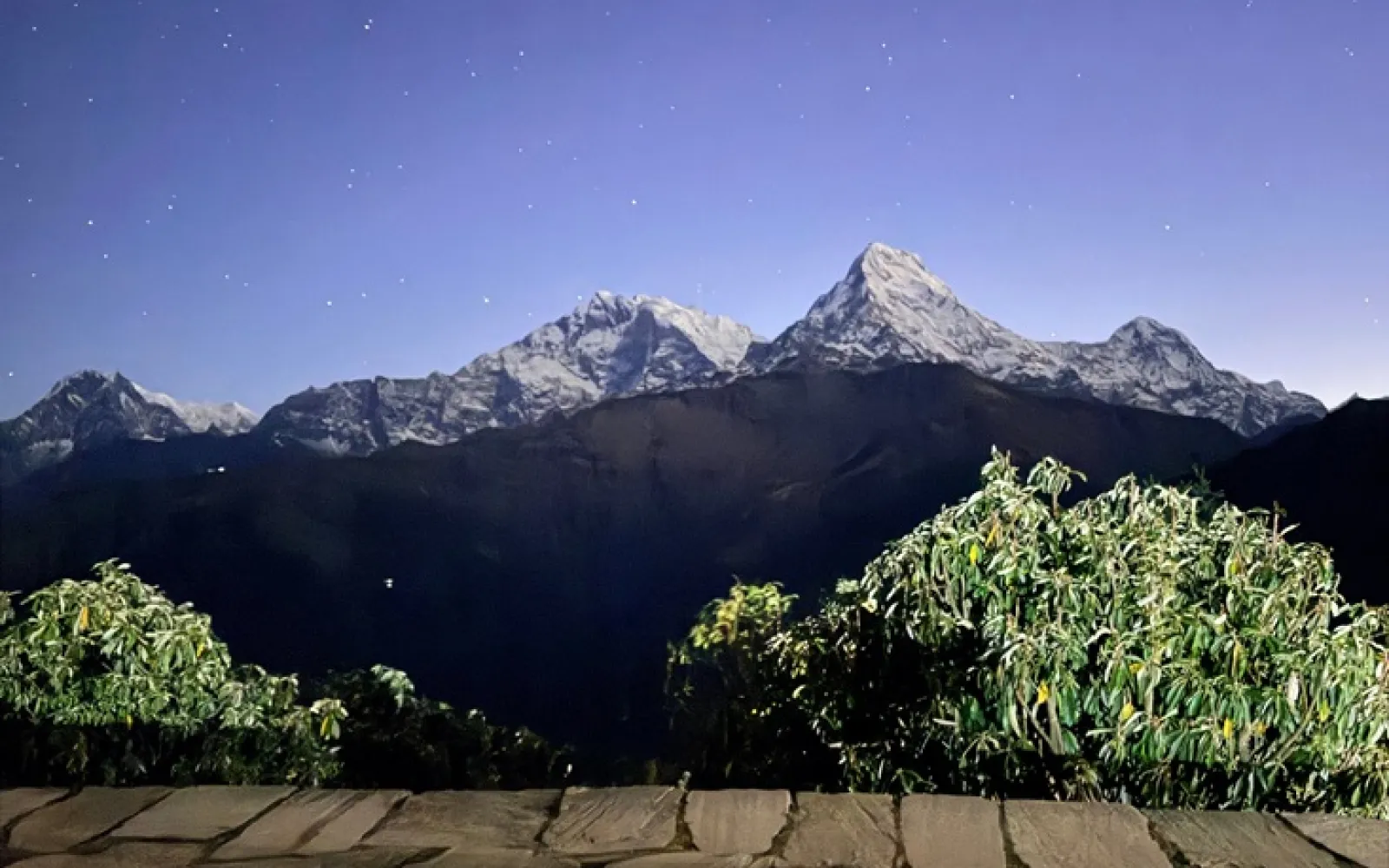
Yes, you can go trekking in Nepal in the off-season. There is a range of treks available from the sub-tropical foothills to the valleys of the Himalayas which exceed 5000m.
While spring (March-May) and autumn (September-November) are the most popular times to go trekking, you can still go trekking in the winter (December-February) and monsoon (June-September).
In addition, you won’t have as many people on the trails, the weather can be a bit unpredictable. However, you will find that the treks will be more peaceful in the villages and you will have more flexibility with accommodation.
Importantly, the main factor to consider when trekking in the off-season is whether your chosen route is at a high altitude and the effect of the weather. While you can go trekking to lower altitude routes such as Ghorepani Poon Hill (3210m) in the winter, you will need to consider the effect of the snow. Upper Mustang and parts of Dolpo will also have less rain due to being in the rain shadow.
However, high altitude passes, remote routes and viewpoints may not be accessible due to heavy snow, high winds and landslides. You will need to consider the weather forecast, road access, availability of lodges, permits and emergency plans.
Overall trekking in Nepal in the off-season is a feasible option if you choose the right destinations and make the necessary preparations.
Things to Consider during Off-Season Trekking in Nepal
Cold weather in the winter or heavy rain in the monsoon.
Higher altitude routes will require careful acclimatisation and extra precautions with the weather.
Snow and landslides could cause problems with roads, flights and mountain routes.
Some teahouses could be closed or have limited services.
Ensure you check local conditions and have experienced guides for remote or challenging routes.
There are 4 distinct trekking seasons in Nepal. Knowing what the seasons are will help you choose the right destinations and realistic itineraries.
Here, the main peak seasons are spring and autumn. Spring (March-May) has mild weather, blooming rhododendrons and the trails will be more accessible. Autumn (September-November) will also have less rain and clearer views of the mountains.
Similarly, Summer will coincide with the Southwest Monsoon so there will be heavy rainfall (June-September). Many areas will have muddy trails, leeches, landslides and cloudy mountain views.
However Upper Mustang, Upper Manang and some areas of Dolpo will have less rain due to being in the rain shadow of the Himalayas.
In addition to, Winter (December-February) will be colder and there could be snow. However lower altitude treks can still be a good option.
Trekking Seasons in Nepal
Season | Months | General Trekking Conditions
Spring | March-May | Mild weather, blooming rhododendrons, favourable conditions.
Summer/Monsoon | June-September | Heavy rainfall, leeches, slippery trails, landslides.
Autumn | September-November| Generally favourable conditions, clear mountain views, busy trails.
Winter| December-February| Cold weather, snow, icy high altitude trails.
Peak Season vs Off-Season
Peak season: Spring and Autumn will have better conditions for popular Himalayan routes.
Off-season: Winter and Monsoon will have less people on the trails but you will need to be more careful with your chosen destinations. There will be more demand in the peak season but some lodges may be closed in the off-season.
Actually, Autumn and Spring will have better mountain views. High passes may be challenging in the winter. Lower altitude routes may be affected by the monsoon rains.
Important differences between areas
Conditions will vary greatly depending on the altitude and area you are trekking in. The temperatures will drop roughly 6 degrees for every 1000m gained (Nepal Tourism Board). Around 80% of the annual rainfall falls during the monsoon.
High Himalayas: Routes above 4000m will have higher risk of freezing temperatures, snow and blocked mountain passes.
Mid Hills: Lower altitude routes will generally be a better option in the winter. However the trails can be slippery due to the monsoon.
Rain Shadow: Upper Mustang, Upper Manang and Dolpo will have much less rain during the monsoon due to their location.
Meanwhile, Upper Mustang is a good option for trekking in the monsoon but shouldn’t be recommended for the winter. The Nepal Tourism Board warns that the weather can be extreme and there are strong winds.
Here, it is important to use the terms winter and monsoon throughout the rest of the article. Lower altitude routes are generally more feasible in the winter while rain shadow areas are very useful in the monsoon. There is no guarantee that the trails will be accessible or the accommodation open in either season.
Trekking during the winter months in Nepal is possible. Lower and moderate altitude treks will be ideal, however the temperature will get increasingly cold with altitude and treks in the high Himalayas will be more challenging between December to February.
Generally, you will find it cold in the mornings and evenings. At altitudes over 3000m it can be very cold at night. There can also be snowfall in the mountains and ice on the trails increasing the risk of slipping. Conditions can still be nice during the day in sheltered valleys.
However strong winds and unpredictable weather can mean extra preparation is needed.
In contrast to, lower altitude treks will be some of the Best Treks to do in the winter months. Ghorepani Poon Hill (3210m) is a popular trek. You will walk uphill for around 45-60 mins from Ghorepani to the 3210m viewpoint.
Similarly, Lower Mardi Himal treks can also be undertaken if conditions allow. Lower Annapurna village treks and cultural treks around traditional Himalayan villages can also be done.
But, higher altitude treks such as Everest Base Camp (5364m) and Manaslu Circuit (Larkya La Pass 5106m) can be more challenging during the winter. Heavy snowfall, freezing temperatures and closed passes can occur.
Weather and Trekking Conditions
Month| General Conditions| Trekking Notes
December| Cold mornings and freezing nights| Lower altitude treks will be more practical
January| Often the coldest month of the winter| Snowfall and icy trails may occur on higher treks
February| Getting warmer towards end of month| Conditions will improve but snowfall can still occur on high altitude treks
Note: This is a general overview of conditions for each season experienced by Haven Holidays Nepal Teal in the field. Temperatures and snowfall will depend on the altitude and local weather conditions.
Recommended Off-Season Treks in Nepal
Ghorepani Poon Hill Trek (3210m) – This is a moderate trek with views of sunrise in the Himalayas from Poon Hill and traditional villages. Snowfall can occur on the upper trails.
Lower Mardi Himal Trek – The lower trails will be more peaceful and quiet. However higher camps and viewpoints will need to be considered carefully due to the weather.
Ghandruk Village Trek (around 1940m) – A cultural trek with traditional Gurung villages and views of the Annapurna mountains.
Bandipur Village Walks (around 1030m) – Lower altitude walks with cultural experiences.
Key Issues during Off-Season Trek in Nepal
Freezing temperatures – It will be very cold at night above 3000m.
Snowfall – Heavy snow can occur covering the trails.
Icy trails – Ice can cause you to slip. This can be worse in the early mornings.
Limited accommodation – Some remote teahouses will be closed or have limited facilities.
Transport issues – Snow can cause issues with mountain flights.
Preparations for Winter Trekking in Nepal
You will need suitable equipment and plan your itinerary carefully when going on a winter trek. You should prepare for freezing temperatures and possible snowfall.
Wear warm clothing – Thermal layers, fleeces, insulated down jackets, gloves and warm hats.
Wear waterproof trekking boots with good grip. Gaiters can be useful on snowy trails.
Allow extra days for snowfall, transport issues and unpredictable weather.
Check that there will be accommodation available and heating available at the lodges.
Check for snowfall reports and local advice for any exposed or snowy trails.
In summary, overall trekking in the winter can be a rewarding experience in Nepal if you choose the right altitude and prepare for the cold.
Trekking during the monsoon months in Nepal is possible. Monsoon will generally occur between June to September. This means heavy rainfall can occur throughout much of the country.
Actually, lower hills and popular trekking areas will have frequent showers, cloudy skies and muddy trails. Leeches will be common in the humid forests. Roads can become damaged due to landslides. Visibility in the mountains can also be less predictable due to frequent cloud cover.
Here, rain shadow areas will be some of the best areas to trek during the monsoon months. Upper Mustang, In fact, Upper Manang and some areas of Dolpo will have significantly less rainfall due to the Himalayan mountains blocking the rain. This means trekking conditions are generally better than the southern slopes of the Himalayas during the summer months.
However, rain shadow areas are not completely free from the monsoon. Localised rainfall, strong winds, river crossings and road issues can occur. It is important to check the local weather forecasts, transport, accommodation and trail conditions.
Weather and Trekking Conditions
Month | General Conditions | Trekking Notes
June | Monsoon begins throughout much of Nepal| Increasing rainfall and slippery trails
July| Generally heavy rainfall| Leeches, landslides and transport issues
August| Continued rainfall (sometimes heavy)| Poor visibility and unstable trails
September| Monsoon begins to fade| Conditions will improve however rainfall can still occur.
Recommended Treks for Summer
Upper Mustang Trek (around 3000-3840m) – This is a restricted area with amazing dry landscapes, ancient monasteries and traditional Tibetan influenced villages. Due to it being a rain shadow area it will be one of the Best Treks to do during the monsoon.
Upper Dolpo Trek (around 3600-5350m) – This is a remote area with stunning high altitude landscapes, traditional villages and Phoksundo Lake. Due to the remote trails and high passes experienced guides will be required and careful preparation.
Upper Manang Trek (around 3500-4000m) – The northern area of Annapurna will have less rainfall during the monsoon. However individual treks and high passes will need to be checked for local conditions.
Nar Phu Valley Trek (around 3500-5320m) – This is a restricted area with remote villages and high altitude landscapes. This will depend on the rainfall, road access and conditions at Kang La Pass.
Key Issues during Summer Trekking in Nepal
Heavy rainfall – Frequent rainfall can cause muddy and slippery trails. This can be worse at lower altitudes (under 3000m).
Landslides – Mountain roads and trekking approaches can become unstable after long periods of rainfall.
Leeches – Leeches will be common in humid forests. This will be worse around Annapurna and other lower altitude areas.
Poor mountain visibility – Frequent cloud cover can cause poor visibility in the mountains. This can be worse in the afternoons.
Transport issues – Landslides and poor visibility can cause delays on the roads and domestic flights.
River crossings – Water levels can rise making streams and rivers more difficult to cross.
Preparations
Wear waterproof clothing – A good waterproof jacket, trousers, rain cover for your backpack and dry bags.
Wear waterproof trekking boots with good grip and suitable socks.
Carry salt or suitable protection against leeches. This will be useful on forested trails.
Allow extra days for landslides, road closures and transport issues.
Talk to experienced guides and check for up to date weather and trail reports.
5. Best Off Season Treks in Nepal
The Best Treks to do in the off-season will depend on the weather, altitude and location. You will want to choose an area that will be suitable for your specific season.
Meanwhile, Ghorepani Poon Hill and some of the lower Annapurna trails are a great option in the winter.
Here, Ghorepani Poon Hill reaches an altitude of 3210m and will typically take between 4-5 days to trek.
Likewise, Ghandruk and other village trails within the lower Annapurna region are a good option for those looking for a cultural trek at a relatively low altitude. However, snow can fall and there can be icy sections of the trail.
Moreover, Mardi Himal can be a great option for those looking for an off-Season Trek. However, the higher areas can be quite cold. The view point reaches around 4250m and the base camp reaches around 4500m meaning that the higher sections can be difficult due to snow and ice.
In addition to, Upper Mustang and some of the Dolpo routes are a better choice for those looking to trek in the monsoon.
Similarly, Upper Mustang is located in the rain shadow of the Himalayas meaning that you will get relatively dry landscapes. The altitude ranges between approx 3000m and 3840m. Some of the Dolpo routes can also be trekked in the summer. However, they are quite remote so you will need to be careful with permits and high passes.
More importantly, the Kathmandu Valley and surrounding hills can be a good option for a short off-Season Trek.
Best Off Season Treks in Nepal
Trekking Destination| More Suitable Off Season| Altitude/ Notes
Ghorepani Poon Hill| Winter| 3210m/ Cold mornings and possible snow
Mardi Himal| Winter (with preparation)| 4500m/ Snow and ice at higher altitudes
Lower Annapurna Villages| Winter (depending on conditions) |1900m - 2500m/ Local trail and accommodation conditions
Upper Mustang| Monsoon| 3000m - 3840m/ Restricted area permits and windy conditions
Dolpo| Summer/Monsoon| Varies depending on route/ Remote, permits and high passes
Kathmandu Valley Hills| Winter and good monsoon days| 1400m - 2700m/ Rain, visibility and trail conditions
Choosing the Right Off Season Trek
Winter: Ghorepani Poon Hill, Ghandruk and suitable lower Annapurna village trails.
Winter Adventure: Mardi Himal if conditions and accommodation are suitable.
Monsoon: Upper Mustang and some Dolpo itineraries with reliable local arrangements.
Shorter holiday: Kathmandu Valley, Shivapuri, Nagarkot and surrounding village trails.
Experienced Trekkers: Remote routes like Upper Mustang, Upper Mananag Tsum Valley and Upper Dolpo in the summer. Ensure you have the correct permits, weather and transport.
Most importantly, it is important to note that just because a trail is open does not mean it is suitable to trek during the off-season.
Here, Upper Mustang can be a great option during the monsoon but can get very cold with strong winds during the winter. Ghorepani Poon Hill is a more practical option during the winter than during the constant rain of the monsoon.
6. Pros and Cons of Trekking in Nepal in the Off Season
There are many pros to trekking in the off-season. However, there is more preparation required. The weather can be unpredictable and there will be less facilities available.
Meanwhile, some of the main pros to trekking in the off-season include less people visiting the popular areas of Nepal. This means you will get a more peaceful trek with less people in the villages and on the trails. During the winter you will also get snowy mountain views. During the monsoon the lower hills will be green.
However, there are also many cons to trekking in the off-season. The weather can be unpredictable with rain, snow and poor visibility. Some teahouses may be closed. There can be landslides, blocked mountain passes and flight disruptions.
Pros and Cons Summary
Advantages | Disadvantages
Fewer people on many routes| Unpredictable weather
More peaceful villages and trails| Possible snow and heavy rain
Different and Distinct landscapes depending on season| Less visibility on the mountains
More flexibility with accommodation in some areas| Fewer lodges in remote areas
More flexibility with travel arrangements| Possible road and flight disruptions
Snowy winter views and green monsoon views| Some trails and high passes may be inaccessible.
Main Pros of Off Season Trekking in Nepal
More peaceful trails.
Snowy Himalayas in the winter and lush green hills in the monsoon.
More flexibility with accommodation.
Discover traditional villages and landscapes.
Main Cons of Off Season Trekking in Nepal
Unpredictable weather.
Less facilities as some lodges may get closed due to cold and snowfall
Safety issues with landslides, avalanches, icy trails and snowy passes.
Not always cheaper as you will still need permits, guides and transport.
Overall, if you can find a destination that will benefit you more than the issues then trekking in the off-season can be a great option. Choose a destination that will be suitable, have reliable local guides and be safe.
7. Off Season Trekking Costs, Accommodation and Guides
The cost of off season trekking in Nepal depends on the location you are trekking to, how long you are trekking for, the amount of people in your group, and what is included.
Although there may be more flexibility with some lodges during the off season, the price may not be reduced.
Meanwhile, your main costs when trekking will be permits, guides, porters, accommodation, food and transport. Guide costs will generally range between $30 to $40 USD per day and porter costs will range between $25 to $30 USD per day. Teahouse accommodation costs can range from $5 to $15 USD per night.
Off Season Trekking Cost in Nepal
Below are the price ranges for some popular trekking packages. These will vary depending on how many people are in your group, how long you are trekking for, what transport you are using and what is included.
Trekking Package| Duration| Price per person (USD)
Ghorepani Poon Hill| 3-5 Days| $195-$355
Mardi Himal| 4-5 Days| $195-$360
Annapurna Base Camp| 5-6 days| $375-$625
Langtang Valley Trek| 7-8 days| $195-$315
Everest Base Camp| 16 Days| $595-$2150
Note: These are the price ranges that have been given by Haven Holidays Pvt. Ltd. But, there is no guarantee that you will get a discount during the off season. Please check the most up to date prices through our team.
Off Season Trekking Costs and Preparations
Trekking Permits- Costs vary depending on the conservation area and any restrictions in place.
Guides & Porters- Check what the daily cost is, what insurance is in place and what is included.
Accommodation- Some lodges may not be open.
Food & Drinks- Prices generally increase the higher up you go.
Transport- Delays may occur due to the weather.
Equipment- Winter clothing and protection from snow and icy tracks may increase costs.
During the off season trekking in Nepal, it is important to check what accommodation and guides are available.
Importantly, ensure you know what lodges are open, what food is available and if you have experienced guides. Local guides will help with checking the weather, finding alternative routes and changing your itinerary.
8. Safety Tips and Essential Items for Off Season Trekking in Nepal
During the off season you will need to prepare a little more as the weather and tracks can change quickly. Choose your equipment depending on where you are going, how high up you are and what time of year you are travelling.
Importantly, during the winter months you will need warm clothing and protection from snow and icy tracks. Pack thermal clothing, insulated down jacket, waterproof trekking boots, warm gloves and a woolly hat. Microspikes may help on icy areas.
In addition to, during the monsoon months you will need reliable waterproof items. Pack quick dry clothing, waterproof trousers and appropriate trekking boots. Pack dry bags and a rain cover for your backpack. Leech protection will be useful on humid forest tracks.
Essential Items (Winter & Monsoon)
Item | Winter | Monsoon
Clothing| Thermal clothing, Insulated Jacket| Quick dry clothing
Outerwear| Windproof & Waterproof Jacket| Waterproof Jacket & Trousers
Footwear| Warm Trekking Boots & Microspikes |Waterproof Boots with good grip
Accessories |Warm Gloves, Hat & Neck Warmer| Rain Cover for Backpack & Dry Bags
Protection| Sunscreen & Sunglasses| Leech Protection & Insect Repellent
Sleeping Bag| Warm Dry| Sleeping Bag
Safety Tips & Essentials from Our Team
Check the forecast for the area you are travelling to. Check the weather as it can change.
Ask local guides if there will be snow, landslides, river crossings and road access.
Ensure you know what accommodation is open.
Pack basic medical items, any personal medication and altitude sickness prevention items.
Pack a torch, power bank and emergency contact details.
Pack water purification tablets.
Have enough Nepali cash before boarding onto the trail
Allow extra days for domestic flights and difficult road journeys.
When to Alter/Cancel Your Trek
If there is heavy snowfall, landslides or unsafe river crossings do not continue. If there is severe weather do not complete any high altitude exposed areas. Follow the advice of your local guides.
Overall, with the right equipment, experienced guides and flexible itineraries your trek will be safer.
9. Conclusion – Is off-season trekking in Nepal Worth It?
If you know where to go and how to prepare, then trekking in Nepal during the off-season is very much worth it. There are many great opportunities to trek during the winter and monsoon seasons.
Here, trekking in Nepal during the winter is generally best for low altitude routes. Ghorepani Poon Hill, Ghandruk and some of the village treks in the Annapurna region provide some wonderful options for winter trekking. You will need to put some extra preparation in for Mardi Himal.
Likewise, Monsoon trekking in Nepal is best for rain shadow areas in the Himalayas. Upper Mustang and some routes in Dolpo and Upper Manang provide some great opportunities to trek in some drier areas.
However, you will need to be prepared for the remote access, high passes and changing weather.
Actually, popular high altitude routes can be tricky due to the snow, heavy rain, landslides and disruption to transport. It is important that you check what the current conditions are like on the trails, availability of accommodation, permits and transport.
Overall, decide which destination you would like to trek during the off-season. With experienced local guidance, the right equipment and flexible itinerary, you can enjoy some of the beautiful mountains and traditional villages of Nepal.
Plan Your Off-season trek in Nepal with Haven Holidays
Haven Holidays Pvt. Ltd can help you decide which routes to take during the winter and monsoon seasons. Moreover, we have a local trekking team who can help with experienced licensed guides, permits, accommodation and planning your itinerary around the season.
If you are interested in trekking Ghorepani Poon Hill during the winter or Upper Mustang during the monsoon we can help you plan a realistic trip.
Thus, contact us to discuss your off-season trekking plans and find the right Himalayan adventure for you.
10. Frequently Asked Questions ( FAQs)
1. Can I trek in Nepal during the off-season?
Yes, you can trek in Nepal during the off-season. If you plan your trip to a suitable destination and are prepared for the conditions, you can trek during the winter months on some of the lower altitude routes. During the monsoon months it is generally easier to trek in the rain shadow areas such as Upper Mustang, parts of Dolpo and Manang. Always ensure that you are aware of the conditions on the route and transport.
2. What months are considered the off-season in Nepal for trekking?
The main off-season months are the winter months (December to February) and the monsoon months (June to August). These months are not ideal for many of the popular trekking routes due to the cold temperatures, snowfall and heavy rain. However there are some destinations that can be trekked.
3. What are the best trekking routes to trek during the off-season?
During the winter months you can trek some of the lower routes such as parts of the Ghorepani Poon Hill, Kathmandu Valley and parts of Helambu. During the monsoon months Upper Mustang is a popular option due to it being in the rain shadow. Parts of Dolpo and Manang can be trekked with the correct planning.
4. Can I trek in Nepal during the monsoon?
Yes, you can trek during the monsoon months. You will have to be more flexible with your destination. Many areas suffer from heavy rain causing landslides, muddy trails, leeches and disrupted roads. Upper Mustang, parts of Dolpo and Manang generally suffer from less rain. Ensure you are aware of the weather conditions, road access and trail conditions.
5. What routes can I trek in Nepal during the winter?
Lower altitude routes such as Ghorepani Poon Hill, parts of Kathmandu Valley and parts of Helambu can be trekked during the winter. Some higher routes can be trekked by experienced trekkers. Conditions can be affected by snowfall, icy trails and closed lodges. Ensure you are aware of the conditions.
6. Is Upper Mustang good to trek during the monsoon?
Yes, Upper Mustang is one of the best places to trek during the monsoon months. It is in the rain shadow of the Annapurna and Dhaulagiri ranges so generally suffers from less rain than the south and east of the country. However you may experience wind, dusty conditions, disrupted roads and occasional rain.
7. Is it cheaper to trek in Nepal during the off-peak months?
Some areas may be cheaper to trek during the off-peak months. There may be less people visiting so you may have more flexibility with your accommodation. However, you will still have to pay for restricted area permits, guides, transport and private vehicles. Some remote destinations may actually be more expensive due to less transport and supplies.
8. Are teahouses/lodges open during the off-season in Nepal?
Many teahouses will be open along accessible trekking routes. However some lodges in remote and high altitude areas may be closed during the winter and monsoon months. Services may be limited especially if there are less people visiting. It is best to contact your accommodation and local trekking agency.
9. Do I need a guide for off Season Trekking in Nepal?
A licensed guide is very useful during the off-season. Due to the changing weather, snow, poor visibility and disrupted trails it can be harder to plan your route. Foreign trekkers must adhere to the current guide and permit regulations in Nepal. Ensure you are aware of the latest requirements for the area you wish to trek. Requirements vary depending on the route.
10. What should I pack for off season trekking in Nepal?
For winter trekking pack thermals, insulated jacket, warm gloves, hat, thick socks and suitable trekking boots. For monsoon trekking pack waterproofs, waterproof backpack cover, quick drying clothes and good grip footwear. Pack sun protection, head torch, personal medication and a good way to keep in contact.
Note: Not all trekking routes in Nepal can be trekked during the off-season. During the winter months high passes and upper trails can be affected by the conditions. During the monsoon months roads, bridges and walking routes can be affected by the rain. For 2027 departures ensure you are aware of the latest conditions for local access, lodges, weather and permit requirements.
Our travel experts are ready to assist you with any questions.
Send us a message.Have a question before you book? Send your enquiry below and our travel experts will get back with the required information.