Actually, Swayambhunath’s story goes way back, tangled up in old Nepali legends. People used to say the Kathmandu Valley was nothing but a huge lake. Right in the middle, a lotus flower popped up, and from it came a mysterious, self-born light. Then, Bodhisattva Manjushri, who showed up from China, noticed this strange light. He sliced open the southern hill with his sword, letting the water flow out. Suddenly, the valley was dry and ready for people to live in. That lotus? It became the Swayambhunath stupa. Before this, the lake was home to serpents like Karkotaka, and Buddhas and celestial beings would come here for ritual baths. That’s why the place is called “Swayambhu” — it means self-existent. For a lot of people, the site stands for enlightenment at its purest, and it pulls in pilgrims from all over. Actually, Swyombhunath Stupa is one of the most popular world heritage sites of Nepal for Kathmandu Day Tour.
Now, there’s real history behind it, too. The stupa’s roots go back to the 5th century CE, when King Vrsadeva kicked things off. His great-grandson, King Manadeva, finished building the stupa around 460 AD. Way earlier, in the 3rd century BCE, Emperor Ashoka visited and put up a temple here, though that vanished over time. Stone inscriptions back all this up. In 1349, Muslim invaders damaged the place, but the locals fixed it. In 1505, Yogin Sangye Gyaltsen added that iconic spire. Then, in 1614, the 6th Shamarpa built shrines in four directions. The site got a big makeover in 1750. Finally, in 1979, UNESCO named Swayambhunath a World Heritage Site, recognizing its unique value. So, Swayambhunath stands at the crossroads of legend and history, a sacred landmark that still draws people in.
Key Mythological Elements of Swayambhunath Origin:
| Period | Event |
|---|---|
| 3rd century BCE | Emperor Ashoka visits and builds a temple. |
| Early 5th century CE | King Vrsadeva founds the site. |
| 460 AD | King Manadeva constructs the main stupa. |
| 1349 | Damaged by Muslim invaders; repaired by King Saktimalle Bhalloka. |
| 1505 | Yogin Sangye Gyaltsen adds wheel and spire. |
| 1614 | 6th Shamarpa builds shrines in four directions. |
| 1750 | Major renovation and consecration by Kagyu lamas. |
| 1979 | UNESCO World Heritage Site designation. |
Restorations and Influences:
| Figure | Contribution |
|---|---|
| Manjushri | Drained lake, made site accessible. |
| King Manadeva | Built stupa in 460 AD. |
| Emperor Ashoka | Visited and erected early temple. |
| Padmasambhava | Added structures later. |

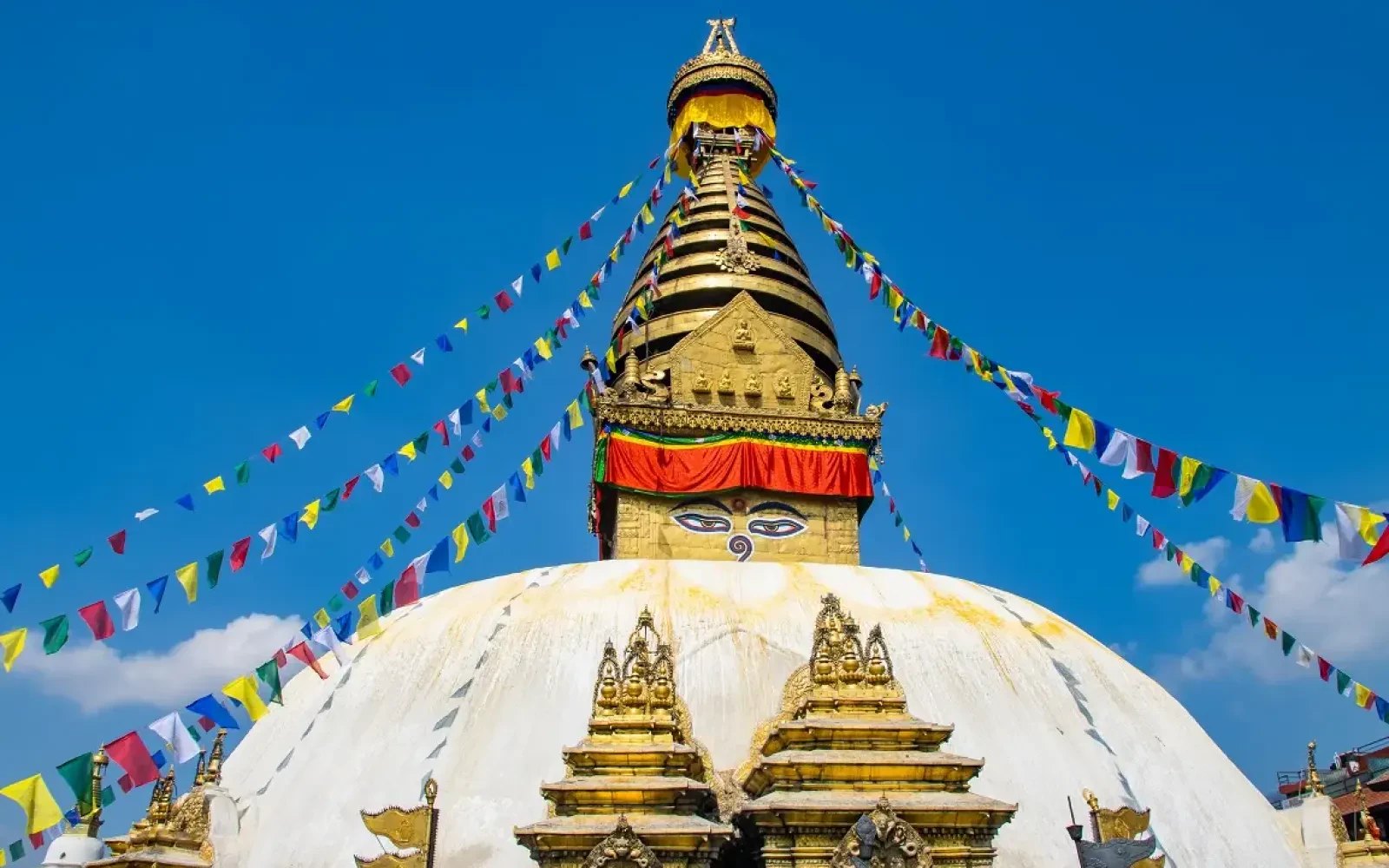
Here, Swayambhunath Stupa stands out as one of Kathmandu’s most recognizable landmarks. Perched on a hill 1,450 meters above sea level, it catches your eye with its white dome and a golden spire that shoots 36 meters into the sky. Buddha’s watchful eyes look out from all four sides, keeping an eye on everything below. Colorful prayer flags flap in the breeze, and rows of prayer wheels invite people to spin them as they walk by. You’ll see monkeys everywhere, which is why most folks call it the “Monkey Temple.” Every day, people circle the stupa, lost in their prayers. From the top, you get sweeping views across the valley. Around the main stupa, you’ll find shrines and statues that blend both Buddhist and Hindu traditions, bringing different cultures together in one peaceful place.Likewise, there’s a lot that draws people here. If you start from the east, you’ll climb 365 steps to reach the top. Smaller stupas and monasteries dot the area, adding to the sense of history. The Harati Temple, dedicated to the goddess of protection, sits nearby. Right in front, a massive Vajra symbolizes strength that never breaks. About 500 monkeys live here, and they’re treated as sacred. During festivals like Buddha Jayanti, crowds gather for rituals, chanting, and celebration. Some of the artifacts go all the way back to the Licchavi period, so you’re standing in the middle of real history. UNESCO recognized Swayambhunath as a World Heritage Site, and it’s easy to see why—it’s a place where history, nature, and spiritual devotion all come together.
Architectural Highlights:
| Component | Description |
|---|---|
| Dome | Represents the world; white-painted, 20-30 meters diameter. |
| Spire | 13 golden rings, umbrella at top; total height 36 meters. |
| Eyes | Painted on cube; nose as question mark, symbolizing unity. |
| Steps | 365 eastern stairs; alternative paths from other sides. |
| Monasteries | Tibetan and Newar styles; house monks and artifacts. |
Cultural and Natural Highlights
| Attraction | Feature |
|---|---|
| Panoramic Views | Overlooks city; best at sunrise or sunset. |
| Monkeys | Interact safely; feed them respectfully. |
| Rituals | Join circumambulation or observe chants. |
| Museums | Nearby display ancient artifacts. |
| Shops | Sell souvenirs like prayer flags. |
Actually, Swayambhunath Stupa stands as a powerful symbol of enlightenment. For Buddhists, it’s the sacred spot where Adi-Buddha appeared on his own. Hindus come too, worshiping deities like Harati. Every day, pilgrims from both religions climb the hill, circle the stupa, spin prayer wheels, and perform their rituals. There’s this sense of unity—different traditions finding common ground in the same place. Old legends even connect Swayambhunath to the wisdom of Manjushri, adding another layer to its spiritual pull. People come here to find peace, ask for blessings, or just soak up the atmosphere.

At dawn, monks fill the air with chants, and during festivals, the whole place feels charged with energy. Swayambhunath really brings Nepal’s religious mix to life. Meditation seekers and spiritual travelers from all over the world find their way here. It’s become a hub for cultural exchange, a meeting point that keeps community bonds strong through shared devotion.
But Swayambhunath isn’t just about religion—it’s a living piece of heritage. The Newar community keeps old traditions alive here, while Tibetan refugees have woven in their own customs. As you walk around, you’ll spot artifacts and art from the Licchavi era, reminders of just how deep its roots go. UNESCO lists it as a World Heritage Site, which is no surprise. The stupa shapes local festivals like Losar, and even the monkeys wandering around are seen as sacred guardians. Artists love the sweeping views from the hilltop; it’s a spot that inspires creativity as much as faith. School groups come for history lessons, and conservationists work hard to protect its ancient structures. Swayambhunath stands as a guardian of Nepal’s rich, varied culture. It teaches visitors about tolerance and respect between faiths. In the end, this stupa isn’t just a monument—it’s a source of pride and a bridge to the world.
Key Religious Symbols at Swayambhunath:
| Event | Description |
|---|---|
| Buddha Jayanti | Celebrates Buddha's birth; lamps and processions at full moon in May. |
| Losar | Tibetan New Year; dances and prayers in February. |
| Daily Kora | Circumambulation around stupa (1,400 m elevation); performed at dawn and dusk. |
| Gunla | Newari festival; music and fasting in August. |
| Maha Shivaratri | Hindu night vigil; offerings to Shiva in March. |
Cultural Influences:
| Aspect | Example |
|---|---|
| Shared Deities | Hindus worship Vajrayogini as Buddhist goddess. |
| Rituals | Joint offerings during festivals like Dashain. |
| Architecture | Stupa (1,400 m) incorporates chaityas and toranas from both traditions. |
| Community | Newari and Tibetan monks collaborate on maintenance. |
| Symbolism | Eyes of Buddha watch over unified devotees. |
If you want the best experience at Swayambhunath, go early in the morning. Before most people show up, the place feels almost sacred. Monks chant as the sun peeks over the hills, and that first golden light hits the spire just right. Flags flutter, birds are already awake, and you’ll see devotees starting their kora, circling the stupa in quiet concentration. The air feels cool and fresh, which definitely helps when you’re climbing those 365 steps. From the top, Kathmandu Valley looks crystal clear. Mornings here just feel peaceful—photographers love the colors, and you’ll spot a few joggers squeezing in a workout. Honestly, if you’re after some calm, this is your moment. You dodge the midday heat and get a real sense of the place.

But late afternoon has its own magic. By then, the crowds have thinned out, and sunset throws a warm glow over everything. The monkeys get livelier, and the sound of evening prayers carries through the air. Down in the valley, lights start to twinkle while the stupa gets wrapped in incense smoke and the clang of bells. The climb feels easier when it’s cooler, and you might see families having a picnic or artists sketching the view. It’s a great time to just soak in the atmosphere, especially as daylight fades. Sunsets here really stick with you.
Advantages of Morning Visits:
| Time Slot | Benefits |
|---|---|
| 5-8 AM | Golden sunrise; peaceful prayers at stupa (1,400 m). |
| 4-6 PM | Sunset hues; evening rituals with fewer people. |
| Midday (Avoid) | Heat and crowds peak; less enjoyable climb. |
| Night | Limited access; but city lights visible if open. |
| Rainy Hours | Slippery steps; check weather forecasts. |
Reasons to Choose Afternoon:
| Factor | Morning vs. Afternoon |
|---|---|
| Crowds | Low (early) vs. Moderate (late). |
| Temperature | Cool (15-20°C) vs. Mild (18-22°C). |
| Light Quality | Rising sun vs. Setting sun. |
| Activities | Chants vs. Incense rituals. |
| Elevation Impact | Fresher air at 1,400 m both times. |
Actually, the activities at Swayambhunath Stupa include seeking divine blessing and taking in scenic views. Pilgrims ascend the 365 stone steps to sit atop the hill situated at 1, 400m. Pilgrims walk clockwise to pagoda and spin prayer wheels on the downhill. Observers enjoy the breathtaking sights of Kathmandu valley and the one of a kind panoramic view of the far-reaching mountains of Langtang(7, 234m) in the distance. Observation of fun monkeys roaming freely is followed by lighting of butter lamps and attaining blessing. Thus Swayambhunath grounds provide inspiration to awe. Trail of photographers is covered in hues of sunrise/ sunset. Browsing market stalls take it to treasure gifts. In conclusion, activity at Swayambhunath grounds cultivate amazement and calm feeling.
Moreover, activities at Swayambhunath have involvement with culture and tradition during a visit. Activities include going through monks fast chanting of sutra at monastery, exploring the lesser shrines like the Harati Temple, observing the locals performing ritualistic offerings with flowers and incense, participating in tranquil meditation at every inch of stupa, humbling interaction with the holy apes, and relaxing in tea stalls after climbing to the summit, where magnificent views enchants the mind to treat the mind at large with Rajasthani sights to observe. In conclusion, Swayambhunath and her diversity of thoughts provides a life-altering experience.

Primary Activities at Swayambhunath
| Activity | Description |
|---|---|
| Sunrise/Sunset Viewing | Capture golden light over Kathmandu from hilltop (1,400 m). |
| Circumambulation (Kora) | Join pilgrims in clockwise circuit around main stupa. |
| Prayer and Offerings | Light butter lamps or incense at shrines. |
| Explore Shrines | Visit Harati Temple and directional Buddha statues. |
| Photography | Shoot stupa eyes, flags, and monkey interactions. |
| Shopping | Buy prayer flags, incense, or mantra stones from stalls. |
Additional Experiences:
When you visit Swayambhunath, a little respect goes a long way. People always take off their shoes before heading into the temple buildings. As you walk around the stupa, go clockwise—locals call this kora, and it matters here. Don’t climb on any of the sacred structures; that’s a big no. Watch out for the monkeys. They’re clever, and they’ll swipe things if you’re not careful. Dress modestly—shoulders and knees covered—so you’ll blend in with the pilgrims. Keep your voice down, especially near any rituals. It’s not just about following rules; it’s about keeping the place special for everyone. Don’t feed the monkeys, either. They get aggressive, and nobody wants that. If you’re taking photos, try not to point your camera right at people while they’re worshipping.
Likewise, a bit of cultural awareness helps, too. Spin the prayer wheels only to the right—never the other way. Locals really don’t like it when people spin them backwards. If you see monks or people praying, give them space and keep things quiet. Don’t litter; the place is beautiful, and everyone wants it to stay that way. If there’s an entry fee (it’s 200 rupees for foreigners), pay it. And if you see prayer flags that have fallen, don’t touch them. Just let them be. Swayambhunath sits up at 1,400 meters, so take your time on the steps—they can be tough. All these little things add up to a better visit, for you and for everyone else.
Key Dos at Swayambhunath:
| Rule | Reason |
|---|---|
| No feeding monkeys | Prevents aggressive behavior and maintains sacred status. |
| No climbing stupa | Preserves religious structures from damage. |
| Clockwise movement only | Aligns with Buddhist tradition for merit. |
| No loud noises | Respects ongoing prayers and meditation. |
| No photos of rituals without permission | Avoids intrusion on personal devotion. |
| Buy entry ticket (if applicable) | Supports site maintenance (foreigners NPR 200). |
Key Don'ts:
Meanwhile, Swayambhunath Stupa imposes entry tickets in most cases. Officials asks fee at counters established near barrows to the entranced. Immigration determines fee for respective foreign citizen. Standard fee at present is NRs 200. For foreign visitors from SAARC nations fee is NRs 50. Nepali citizens can access the property by paying no money. Admission of site is free for kids with under 10 years age. Lesser fee created to meet up the expenses and preservation of archaeology. For entry, ticket counters are available at summit of 365 stairs and car park. Fee surely helps visitors to cross the site easily. Tourists are given a ticket at 1400 m high point of the hill. To sum up, rather reasonable fee can enable easier heritage exploration.
Actually, entry fee for Swyombhunath differs in respect of the country of national. Officials maintain positive discrimination policy. Allowances for visitors from foreign countries are relatively higher to contribute more for conservation. Visitors from SAARC block get slight discounts. Local residents and tiny children pay no fee. Paid in cash, some sources record validity of rate changes, but current rate is unchanged. Hence, pilgrimages should organize finances to withstand this. This hilltop holds Swayambhunath Monastery high from the Kathmandu Valley. In short, these structured ticket and entry fee price list can reasonably run tourism with heritage conservation.
Entry Fee Categories:
| Category | Fee (NPR) |
|---|---|
| Foreign Tourists | 200 |
| SAARC Nationals | 50 |
| Nepali Citizens | Free |
| Children Below 10 | Free |
| Payment Method | Cash preferred at counters |
Additional Notes on Fees:
| Site | Foreign Fee (NPR) |
|---|---|
| Swayambhunath Stupa | 200 |
| Boudhanath Stupa | 400 |
| Pashupatinath Temple | 1,000 |
| Bhaktapur Durbar Square | 1,800 |
If you visit Swayambhunath, you’ll spot hundreds of rhesus macaques all over the place. Locals see these monkeys as sacred—almost like guardians of the stupa. Old stories even say they’re connected to Manjushri’s disciples. You’ll find monkeys everywhere: climbing the stupa, hanging out on rooftops, weaving through the crowds. People usually don’t mind. Honestly, the monkeys bring a lot of energy to the hill. They scavenge for food on their own, and watching them play is part of the experience. Somehow, they just fit right in. The monkeys really do add something special to the atmosphere.

That said, you’ve got to be careful around them. These monkeys aren’t shy—they’ll snatch food, sunglasses, anything shiny. Even just looking one in the eye can set them off. Make any fast move, and they might get aggressive. So, hang on to your stuff, keep your bags zipped, and definitely don’t feed them. Give them some space and they’ll mostly leave you alone. There are about 500 monkeys up there, and as long as you stick to a few simple rules, you’ll have a safe and memorable visit.
Facts About the Monkeys:
| Tip | Reason |
|---|---|
| Do not feed monkeys | Prevents aggression and dependency on human food. |
| Avoid direct eye contact | Seen as challenge; reduces attack risk. |
| Secure bags and valuables | Monkeys grab sunglasses, jewelry, phones quickly. |
| Do not smile or bare teeth | Mimics aggression signals to monkeys. |
| Keep food hidden | Avoids snatching; no visible snacks or drinks. |
| Stay calm, no sudden moves | Prevents startling them into defensive actions. |
Additional Visitor Guidelines:
| Behavior | Recommended Response |
|---|---|
| Approaching for food | Show empty hands calmly; back away slowly. |
| Snatching items | Do not chase or scream; let go if possible. |
| Aggressive posture | Avoid confrontation; move away quietly. |
| Baby monkeys nearby | Keep extra distance; mothers protect fiercely. |
Getting from central Thamel to Swayambhunath Stupa is pretty simple. It’s only about 3 or 4 kilometers to the west, so you’ve got choices—walk, grab a taxi, hop on a bus, whatever works for you. The stupa itself sits high up on a hill, about 1,400 meters above sea level, looking out over Kathmandu Valley and even the distant Langtang peaks. Most people reach the base pretty quickly, but then come the 365 steps up to the top. Still, it’s doable for just about anyone, no matter your budget. Locals and tourists walk this route every day.
Likewise, you’ve got different ways to get there. Taxis are quick—maybe 10 or 15 minutes if the roads are clear. If you’d rather walk, it takes about half an hour, maybe a bit longer if you stop to look around. Buses are super cheap and run regular routes, and if you’re into ride-sharing apps, Pathao works well too. Traffic can get heavy, especially later in the day, so mornings are usually smoother. The short distance makes it easy to explore, and you get some nice views along the way. Bottom line: getting to Swayambhunath from Thamel is easy, comfortable, and gives you plenty of options.
Main Transportation Options from Thamel:
| Mode | Time |
|---|---|
| Walking | 10-15 min |
| Ride-Sharing Apps | 10-15 min |
| Local Bus/Microbus | 20-30 min |
Tips for Reaching the Stupa:
Distance and Time Breakdown:
What is Swayambhunath Stupa?
Swayambhunath is one of Nepal’s oldest and most revered Buddhist stupas, located on a hilltop in Kathmandu.
Why is Swayambhunath called the Monkey Temple?
It is popularly known as the Monkey Temple because many monkeys live around the temple complex.
Where is Swayambhunath Stupa located?
Swayambhunath is located on a hill in the western part of Kathmandu, offering views over the Kathmandu Valley.
How old is Swayambhunath Stupa?
Swayambhunath is believed to have a history dating back more than 2,000 years, making it one of the oldest Buddhist sites in Nepal.
Why is Swayambhunath important to Buddhists?
It is an important Buddhist pilgrimage site and is associated with the sacred origins and spiritual history of Kathmandu Valley.
Is Swayambhunath only a Buddhist religious site?
No. Swayambhunath is also respected by Hindus, reflecting Nepal’s long tradition of religious and cultural harmony.
What is the meaning of Swayambhunath?
The name Swayambhunath is commonly interpreted as “self-existent” or “self-arisen.”
What can visitors see at Swayambhunath?
Visitors can see the main stupa, prayer wheels, Buddha images, shrines, monasteries, temples, prayer flags, and traditional religious artwork.
How many steps are there to Swayambhunath Stupa?
The main eastern staircase has around 365 steps, leading visitors up the hill to the stupa complex.
How long does it take to visit Swayambhunath?
Most visitors spend about 1–2 hours exploring the stupa, shrines, viewpoints, and surrounding area.
What is the best time to visit Swayambhunath?
Early morning and late afternoon are excellent times for pleasant weather, fewer crowds, and beautiful views.
Can you see the Kathmandu Valley from Swayambhunath?
Yes. The hilltop location provides panoramic views across Kathmandu Valley on clear days.
Is Swayambhunath a UNESCO World Heritage Site?
Yes. Swayambhunath is part of the Kathmandu Valley UNESCO World Heritage Site.
What do the Buddha’s eyes on the stupa represent?
The large eyes are commonly understood as the Buddha’s wisdom and compassionate awareness, watching over the four directions.
What does the nose-like symbol between the Buddha’s eyes represent?
It is a traditional representation of the Nepali numeral one, symbolizing unity or the oneness of all things.
Are there monkeys at Swayambhunath?
Yes. Monkeys are commonly seen around the complex, which is why the site is widely called the Monkey Temple.
What should visitors wear at Swayambhunath?
Modest clothing is recommended because Swayambhunath is an active religious and pilgrimage site.
Can tourists take photographs at Swayambhunath?
Photography is generally permitted in many outdoor areas, but visitors should respect signs and avoid photographing restricted religious activities or ceremonies without permission.
How do you get to Swayambhunath from central Kathmandu?
Swayambhunath can be reached by taxi, private vehicle, or on foot from parts of central Kathmandu. The main staircase leads directly up to the hilltop complex.
Why should Swayambhunath be included in a Nepal tour?
Swayambhunath combines Buddhist spirituality, ancient architecture, Kathmandu Valley views, religious art, and local culture, making it one of the most memorable cultural attractions in Kathmandu.
Our travel experts are ready to assist you with any questions.
Send us a message.Have a question before you book? Send your enquiry below and our travel experts will get back with the required information.