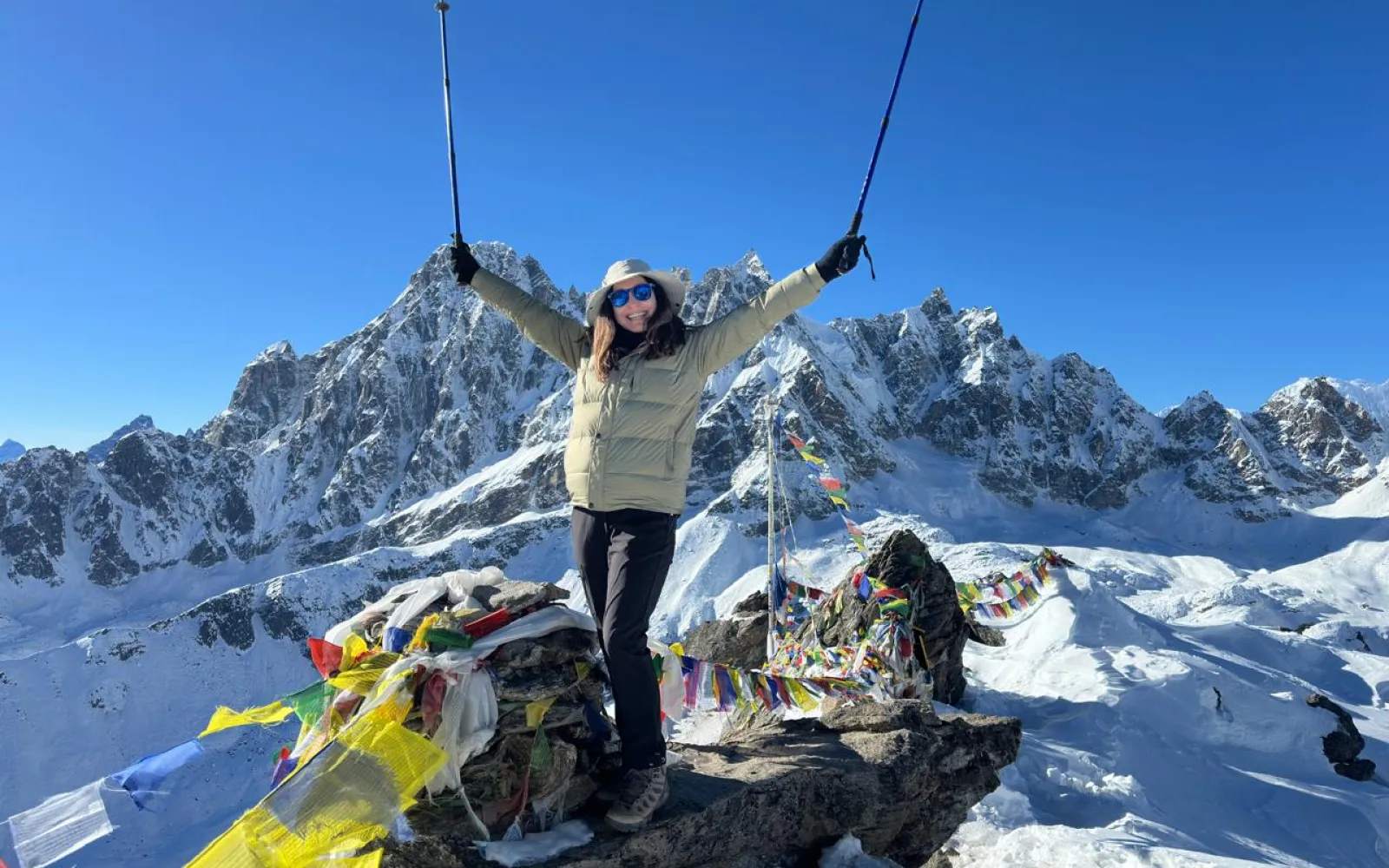
Trekking in Nepal in December can be a great experience if the right routes are chosen. The trails will be less busy, very dry, and peaceful in the mountain villages.
Actually, it tends to be very cold in December. You may get great views over the Himalayas in clear morning conditions. However, temperatures rapidly drop after sunset. Snowfall can occur, making trails icy. In addition, daylight hours reduce.
Depending on the exact time of travel in December, trekking in different regions of Nepal can be very different. At the start of December, there is greater flexibility with choosing high altitude treks. However, care must be taken in choosing routes in late December.
In order to have a comfortable trek in December, consider trekking to Ghorepani Poon Hill (3,210m), Ghandruk (1,940m) or Helambu. If well prepared and experienced, Mardi Himal (4,500m viewpoint), Annapurna Base Camp (4,130m) and Everest Base Camp (5,364m) can be possible.
Importantly, care must be taken on high altitude routes as freezing conditions, snowfall and changing trail conditions can make treks challenging. It is very important to check up to date weather conditions, availability of accommodation and trail conditions in the area before departure.
Quick Facts about Trekking in Nepal in December
Factor | December Conditions
Season | Beginning of Winter
Weather | Generally dry, sunny and cold
Mountain Views | Mostly clear, depending on time of day (best in mornings)
Snowfall | Possible at higher altitudes above 3000m
Trail Conditions | Generally dry, with possible ice and snow
Crowds | Fewer people than October/November
Best Short Treks | Poon Hill, Ghandruk, and Helambu
Challenging Treks | Mardi Himal, ABC, EBC and Langtang
Main Challenges | Freezing temperatures at night, Shorter days with possible snowfall.
Why Trek in Nepal in December?
Relatively less busy
Crisp morning air and mostly clear mountain views.
Pleasant walking temperatures on low altitude treks.
Peaceful mountain villages.
Flexible choice of treks.
Off-Season Low Costs
Here, from low altitude village walks to challenging Himalayan treks, December can be a great time to go trekking in Nepal.
As long as trekkers are aware of the limitations of December and have chosen the right routes, having flexible itineraries and experienced local guides can make the trip more enjoyable and safe.
Generally, the weather in December is dry, sunny and cold. Depending on the region and altitude, temperatures can vary significantly. Lower valley areas will be comfortably warm during the day.
However, freezing temperatures are becoming more common across high altitude trekking areas in December.
Actually, the general temperature ranges in the Kathmandu Valley during winter are 2°C to 12°C. During winter, average maximum temperatures in Kathmandu and Pokhara are 19.3°C and 20.3°C.
However, temperatures drop significantly with increased altitude. In Namche Bazaar (3,440m), temperatures in December are approximately 7°C in the day and -7°C at night.
In Dingboche (4,410m), Lobuche (4,910m) and Gorak Shep (5,164m), the weather becomes increasingly extreme in December. Therefore, trekkers can expect extremely cold nights, potential snowfall and icy terrain. This will be more likely on shaded paths.
Average Temperature and Conditions in December
Region | Altitude | General Conditions in December
Kathmandu Valley | 1,400m | Winter: Max 19.3°C, Min 3°C
Pokhara | 822m | Winter: Max 20.3°C, Min 7.7°C
Ghorepani | 2,860m | Cold. Possibly freezing at night.
Namche Bazaa | 3,440m | Approximately 7°C in day, -7°C at night.
Dingboche | 4,410m | Very cold. Night temperatures can be below -10°C.
Lobuche | 4,910m | Very cold throughout much of the day.
High Camp Areas | Varies | Very cold, Very windy (wind chill), Icy Terrain
Note: Temperatures listed are the real experiences experienced by our team in the field. In Kathmandu and Pokhara temperatures are averages in winter. In Namche Bazaar temperatures are estimates for December. In the higher altitude trekking areas, less reliable long term data is available.
Key Weather Considerations
Sunny Days, Cold Nights
During the day, trekking can be pleasant. However, temperatures drop very quickly once the sun sets. Warm sleeping clothes and insulated coats are essential.
Possible Snowfall
Snowfall is possible at Mardi Himal High Camp, Annapurna Base Camp and high points on the Everest Trek. However it is not guaranteed. Amount and timing of snow depends on specific weather conditions.
Icy Pathways
In freezing temperatures, paths, steps and river crosses in shady areas can become very slippery. Walking poles and sturdy non-slip boots are important on routes above 3000m.
Windy and Cold Due to Wind Chill. Less Daylight Hours
On exposed ridge walks and mountain viewpoints, temperatures can feel much colder due to wind chill. In December, daylight hours are reduced. Therefore, to allow enough daylight, it is best to start treks early. Overnight locations should be reached before afternoon temperatures drop.
Unpredictable Weather in Mountains
Even in clear mornings, conditions can deteriorate quickly at higher altitudes. Sudden snowfalls, high winds and bad visibility can occur. It is important that trekkers check local weather forecasts and follow experienced guides.
Different Route Weather Considerations
Poon Hill (3,210m): Generally good to trek in December. However, be prepared for very cold mornings.
Mardi Himal (4,500m viewpoint): Can be done with winter gear. However snow and ice mean parts of the higher routes may not be accessible.
Annapurna Base Camp (4,130m): Must be prepared for very cold temperatures. Possible snowfall close to sanctuary.
Everest Base Camp (5,364m): A challenging trek in winter. Appropriate clothing, acclimatisation and flexibility is required.
Langtang Valley (Kyanjin Gompa, 3,870m): Cold conditions and possible snow means careful planning is needed. Check current accessibility.
Overall, December is a great time to trek in Nepal, providing many great experiences from low to mid altitude. However, much more preparation is needed on higher altitude destinations in December as conditions become increasingly extreme.
In general, trekking in early December will be more favorable than in late December. Many popular trekking routes will be open and teahouses will still operate in early December.
Meanwhile, snowfall may occur at higher altitudes, nights will be very cold, and steep sections of the routes may be harder to traverse due to frozen conditions.
Furthermore, during the coldest periods of December, some remote lodges may be closed by their owners. They may move to villages at lower altitudes.
As such, trekkers should double check availability of accommodation in late December, particularly in High Camp, Dingboche and other remote villages.
Early December Trekking Conditions vs Late December Trekking Conditions
Early December (1 st – 15 th )| Late December (16 th -31 st )
Cold weather| Colder (particularly at nights)
Snowfall may occur at higher altitudes| Snowfall becomes a bigger concern
Some high altitude routes open| More ice and snow problems in high altitudes
Accommodation availability generally better| Some remote accommodation can be closed
Less busy than in Autumn |Generally quiet on long routes
Suitable routes Specific high and medium altitude routes| Lower and medium altitude routes
Which Part of December to go trekking?
Early December
Generally ,a good option to go trekking in early December, with Mardi Himal, Annapurna Base Camp and Everest Base Camp being popular choices. However, if there is heavy snowfall, conditions can be unpredictable in early December.
Late December
Lower altitude treks such as Ghorepani Poon Hill (3210m), Ghandruk (~1940m) and Helambu are more suitable choices. However, Pokhara and certain short treks may become busier in late December (Christmas and New Year).
Overall, depending on the altitude, the amount of snow in recent weather, and availability of accommodation, you should plan your trek accordingly. Flexibility and expert local knowledge is important in both early and late December.
4. Best Treks in Nepal in December
Generally, lower altitude treks, mid altitude viewpoints and specific high altitude treks are good choices in December. However, depending on snowfall, sleeping altitude, availability of accommodation and trekkers’ experience, different routes may be more suitable.
Meanwhile, beginners may find it more suitable to trek Ghorepani Poon Hill, Ghandruk, Helambu and Australian Camp. However, more experienced trekkers may wish to try Mardi Himal, Pikey Peak, Langtang, Annapurna Base Camp and Everest Base Camp with extra preparation.
Best Treks in December (duration, height, difficulty)
Trek Duration | Max Altitude | Difficulty
Ghorepani Poon Hill | 4-5 days | 3210m | Easy-Moderate
Ghandruk Trek | 2-4 days | 1940m | Easy
Mardi Himal Trek| 4-6 days |4500m| Moderate-Challenging
Everest Panorama| 7-9 days| 3860m| Moderate
Pikey Peak| 5-7 days |4065m| Moderate
Langtang Valley| 7-10 days| 3870m (Tserko Ri 4984m)| Moderate-Challenging
Annapurna Base Camp| 7-10 days| 4130m |Moderate-Challenging
Everest Base Camp| 12-14 days| 5364m (Kala Patthar 5545m)| Challenging
Helambu| 5-7 days |3600m| Easy-Moderate
Mohare Danda| 5-7 days |3300m |Moderate
Note: The durations given are approximate, excluding international travel in/out. Difficulty and altitude depend on the specific route and itinerary.
1. Ghorepani Poon Hill Trek (Best for beginners)
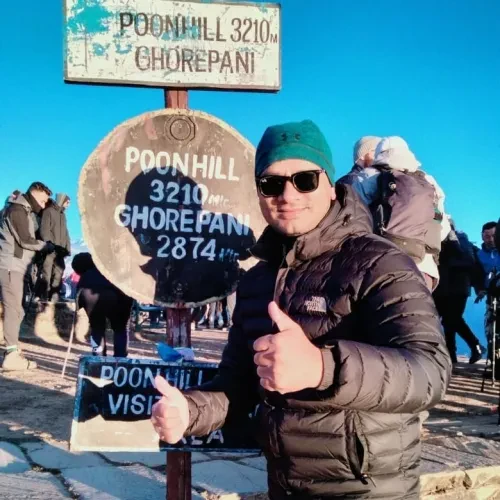
The Ghorepani Poon Hill Trek is a good trekking option in December. It can be completed in 4-5 days, and offers a panoramic view of Annapurna, Dhaulagiri and Machhapuchhre.
Here, Ulleri, Ghorepani and Tadapani are passed during this trek. The main problem in Winter are the cold mornings and potential frost.
2. Ghandruk Trek (Best for short holidays in winter)
This trek is good for seeing mountainous landscapes without reaching extreme heights. Ghandruk is approximately 1940m, and can be reached with a 2-4 day walking trip from Pokhara.
Here, traditional Gurung houses, local culture and a view of Annapurna South make this route appealing during quieter wintertime.
3. Mardi Himal Trek (Best for Close Mountain Views)
This trek can be completed in 4-6 days, reaching High Camp (3580m) and a high viewpoint of between 4200m-4500m. The narrow ridges offer stunning views of Machhapuchhre and the Annapurna range.
Actually, snowfall, strong winds and icy paths can cause problems in the higher parts of this trek. As such, extra care should be taken in late December.
4. Everest Panorama Trek (Best for views in the Everest region)
This is a shorter alternative to Everest Base Camp. The trek can be completed in approximately 7-9 days, with common stops at Namche Bazaar (3440m) and Tengboche (3860m).
During this trek, you will pass through Sherpa villages, Tengboche Monastery and beautiful mountainous views. This route does not reach the extreme heights of Everest Base Camp.
5. Pikey Peak Trek (Best for a quieter experience in the Himalayas)
This trek can be completed in 5-7 days. The trek reaches a summit of approximately 4065m, offering wide panoramic views of the Himalayas (including views of Everest when visibility is good).
However, mornings can be very cold on this trek. In winter, you should be prepared for snowfall and icy paths.
6. Langtang Valley Trek (Best for mountainous and cultural treks)
The Langtang Valley Trek can take between 7-10 days. Kyanjin Gompa (3870m) is reached during this trek. If weather, snowfall and fitness conditions allow, Tserko Ri (4984m) can also be attempted.
However, due to flooding on 26 th August 2026, traditional routes around Syabrubesi have been disrupted. On 3 rd November, the Nepal Logistics Cluster stated that road connections were operating towards Dhunche. However, trekkers should confirm what the exact starting point will be, and how they will be transported to the trailhead before departure.
7. Annapurna Base Camp Trek (Best for high altitude sanctuary)
The Annapurna Base Camp Trek can be completed in 7-10 days. At 4130m, you get close views of Annapurna I, Machhapuchhre and the surrounding mountainous landscape.
However, trekkers should consider snowfall and risk of avalanches in Deurali and around the upper sanctuary in December. Appropriate equipment and flexible accommodation should be considered for this trek.
8. Everest Base Camp Trek (Best for experienced trekkers in Winter)
The Everest Base Camp Trek can take between 12-14 days. Everest Base Camp (5364m) can be reached, or alternatively Kala Patthar (5545m). During the trek, you pass through Namche Bazaar, Tengboche, Dingboche (4410m) and Lobuche (4910m).
Although this can be a suitable trek in early December, trekkers must carefully plan as the nights can be very cold. Lodges may be closed and flights to Lukla may be disrupted. This is a more challenging trek in late December, and generally not suitable for inexperienced high altitude trekkers.
9. Helambu Trek (Best for low altitude walking in Winter)
The Helambu Trek is a good option in winter. It can be reached from close to Kathmandu, and traditional Tamang and Hyolmo cultures can be seen. The trek can be completed in 5-7 days, passing through Chisapani, Kutumsang and Tharepati, reaching around 3600m.
With flexible itineraries, trekkers can enjoy views of the foothills of the Himalayas, without reaching extreme altitudes.
10. Mohare Danda Trek (Best for peaceful views of Annapurna)
The Mohare Danda Trek can be completed in 5-7 days. It reaches around 3300m. Local community guesthouses, forested paths and panoramic views of Annapurna and Dhaulagiri make this a good option in winter.
However, trekkers should check if guesthouses are operational, and be prepared for very cold mornings around the viewpoint.
Other short treks to consider:
Dhampus and Australian Camp – 2-3 days, Australian Camp at approx. 2060m.
Panchase Trek – 3-4 days, reaching approx. 2517m.
Annapurna Foothills – Traditional villages and mountainous views can be seen along low altitude routes.
Ghandruk and Tadapani – Flexible 3-4 day trek for village and forest walking.
High altitude treks to be cautious of
Some popular high altitude treks within the Himalayas are less suitable in December.
Trek | Max Pass | Considerations in December
Annapurna Circuit | Thorong La (5416m) | Snow and dangerous conditions on pass.
Manaslu Circuit | Larkya La (5106m) | Extremely cold and potentially closed pass.
Everest 3 Passes | Kongma La (5535m)| Heavy snowfall, ice and risk of avalanches.
Everest- Gokyo Trek |Cho La crossing |5420m | Slippy ice/snow conditions.
Recommendation from Haven Holidays Team
To have a more comfortable time trekking in December, we suggest Poon Hill, Ghandruk, Helambu and Mohare Danda. However, if you are considering Mardi Himal, ABC, Langtang and EBC, please consider your experience, recent conditions and accommodation availability.
To create a personalized itinerary for you, Haven Holidays Pvt. Ltd can advise on the best options for you, depending on when you are travelling in December, and what you want to get out of your winter trek.
Yes, snowfall can occur in some parts of Nepal in December. However, snowfall varies between locations and may only occur in higher mountainous regions. Low altitude villages may be dry in December.
As trekkers increase in altitude snow becomes more likely. This may be experienced in high camps, viewpoints and high passes. However, snowfall will depend on incoming weather patterns, temperature and terrain.
Here, Ghandruk (1940m) and lower Annapurna treks are generally easier in December. However, Ghorepani (2860m), Poon Hill (3210m) and Mardi Himal High Camp (3580m) could be very cold with occasional snowfall and icy paths.
In addition to, snowfall can also occur in Namche Bazaar (3440m), Tengboche (3860m) and Dingboche (4410m). However, significantly colder conditions occur in higher destinations such as Lobuche (4910m), Gorak Shep (5164m) and Everest Base Camp (5364m).
Typical weather conditions in popular trekking destinations in December
Location (m) | Typical conditions in December
Ghandruk (1940m) | Generally easy, Very cold in early mornings.
Ghorepani (2860m) | Possible frost and snow.
Poon Hill (3210m) | Possible snow, Icy early morning paths.
Mardi Himal High Camp (3580m) | Possible snow, Frozen upper paths.
Namche Bazaar (3440m) | Cold, Occasional snowfall.
Tengboche (3860m) | Very cold, Possible snowfall.
Dingboche (4410m) | Very cold, Possible snowfall.
Lobuche (4910m) | Extremely cold, Possible snow.
High Passes (5000m+) | Potentially hazardous snow and ice conditions.
Note: These conditions are experienced by Haven Holidays Pvt. Ltd. Team during the operation of the treks. However, they do not represent exact amounts of snowfall in specific locations. Condition may change.
Impact of snow in December treks
1. Snow on higher trails
Snow can collect on ridges, steep terrain and viewpoints. This can make hiking around Mardi Himal High Camp, Annapurna Base Camp and upper regions of Everest more challenging.
2. Icy terrain
Snow may melt in the day but freeze at night. This can create very icy conditions on shaded stone steps, narrow paths and river crossings in early morning hikes.
3. Difficult navigation
Snowfall can lead to difficulty navigating as trail markers may be covered in snow. In addition, strong winds, cloud cover and snowfall may reduce visibility, particularly on ridges and high passes.
4. Difficulty crossing high passes
Snowfall can make crossing Thorong La (5416m), Larkya La (5106m) and Cho La (5420m) dangerous. Therefore, trekkers should never assume that these passes will be open throughout December.
Tips for a safe trek in snow in December
Wear waterproof walking boots with good support and grip.
If icy conditions are expected wear microspikes or other support to aid grip.
Walking poles can help with balance on icy descents.
Wear warm clothing such as insulated gloves, thermal clothing and a waterproof outer layer.
Have offline maps.
Stick to known trails with the guidance of an experienced guide.
Check recent snowfall, visibility and trail conditions before beginning higher sections of trekking.
Although there may be snow in the Himalayas in December, snow is not guaranteed. Choose a destination based on recent weather and trail conditions to ensure your trek is safe.
6. Is trekking in Nepal in December challenging?
Trekking in Nepal in December can be more challenging than in Autumn due to cold conditions, possible snowfall and reduced daylight. However, difficulty in trekking depends on altitude, trail conditions, distance travelled in one day and your level of experience.
Meanwhile, beginners will find easier treks in lower altitude destinations such as Ghandruk, Poon Hill and Helambu. However, treks in Mardi Himal, Annapurna Base Camp and Everest Base Camp require greater preparation as snow, ice and cold nights can create challenging conditions.
Challenging conditions for trekking in December in Nepal
1. Very cold early mornings and nights
Very cold temperatures can occur at high altitudes. In particular, very cold conditions can occur at Dingboche (4410m) and Lobuche (4910m). It is important to wear warm clothing, have warm sleeping conditions and sleeping bags.
2. Snowy and icy paths
Snow may fall along steep paths. In addition, frost may form overnight, creating icy conditions. Waterproof boots, walking poles and microspikes may be required on certain sections of the trail.
3. Reduced daylight
There are fewer hours of daylight in December. Therefore, trekkers should begin early on their treks. Avoid arriving at remote destinations in darkness.
4. Very cold due to Wind Chill
Exposed ridges and viewpoints can be very cold due to wind chill. Variable weather conditions in high altitude areas can make trekking uncomfortable and increase the risk of exposure.
5. Reduced services at accommodation
Some remote tea houses may reduce the services they provide or close in winter. In particular, this may occur in higher altitude areas. Confirm that you will have the correct accommodation, food and heating for overnight stays on each section of trekking.
6. Delayed transport
Flights to Lukla and transport to trailheads in mountainous regions may be delayed in winter. Allow extra days in your schedule. Avoid departing to international destinations straight after completing a trek.
Difficulty of popular treks in December
Trek | Difficulty in December | Main concerns
Ghandruk | Easy | Cold early mornings
Poon Hill (3210m) | Easy-Moderate| Frosty and icy steps
Helambu | Easy-Moderate | Cold in upper areas
Mardi Himal (4500m Viewpoint) | Moderate-Challenging | Snowy conditions and exposed ridges
ABC (4130m) | Moderate-Challenging | Snowy conditions and risk of avalanche
EBC (5364m) | Challenging |Altitude and extreme cold
Manaslu Circuit |Challenging | Snowy conditions at Larkya La
Annapurna Circuit | Challenging | Snowy Conditions at Thorong La Pass
Tips for a safe trek in winter
Choose appropriate routes. If you are a beginner, choose lower altitudes to avoid excessive exposure to extreme conditions. Allow sufficient acclimatization.
Likewise, ensure you allow enough acclimatisation days on high altitude treks. Be aware of altitude sickness. If you experience headaches, nausea, dizziness and unusual tiredness, particularly above 2500m, seek help.
If you have a licensed local guide they can assess changing weather conditions, trail safety and accommodation availability. Ensure you have travel insurance. Check that your insurance includes high altitude trekking and emergency helicopter rescue at the highest altitude you plan to reach.
Importantly, allow extra days in case of snowfall, flight delays and unexpected changes to your route.
Tips for high altitude treks in winter
Just because you are fit, it does not mean that a high altitude trek in winter (particularly with snow and ice on exposed sections) will be safe. You must assess real conditions and be willing to turn back if conditions become dangerous.
In addition to, never attempt to cross Thorong La, Larkya La or Cho La simply because they are on your itinerary. Whether or not these passes can be crossed depends on current snowfall, weather conditions, stability of snow and experienced local opinions.
If you choose appropriate routes and prepare for the conditions, trekking in December can be very enjoyable. If trekking to higher altitude destinations, it is essential to have experienced guides, allow sufficient acclimatization and allow flexible itineraries.
7. Accommodation, Food, Guides and Costs in December
Accommodation and trekking services can be found on popular trekking routes in December, however, availability in more remote high altitude areas may be restricted. As such it is important to double check accommodation for overnights (especially in areas above 3000m).
Here, teahouses will typically offer twin rooms, blankets and shared bathrooms. The dining area may be heated using a wood or yak dung stove. However, bedrooms are generally not heated. Hot showers, internet and charging may also be restricted in higher altitudes.
In extremely cold conditions, some lodge owners will move to lower altitude villages. Therefore, it is very important to double check accommodation availability in Mardi Himal High Camp, Dingboche and other remote locations.
Food and Accommodation
Typical foods served in teahouses in December are:
Traditional: Dal bhat, Vegetable Curry and Rice
Hot: Noodles, Soup, Potatoes and Tibetan Bread
Breakfast: Oats, Eggs, Pancakes and Toast
Drinks: Tea, Coffee, Ginger Lemon Honey and Hot Chocolate
Prices for food and accommodation increase the higher you trek, as food has to be transported to remote villages. Hot showers, charging, bottled drinks and snacks may also incur additional costs.
Costs
Item | Cost Notes
Trekking package | Varies depending on location, duration and group size.
Accommodation | Varies depending on lodge ( USD 5-25)
Food and Drinks | Typically increases in price with altitude ( USD 2-8)
Guides (licensed) | Double check availability and insurance ( USD 30-40).
Porters | Double check luggage allowance and staff ( USD 25-30) insurance.
Transportation | Varies on sharing and Private, Allow for delays in transport.
Permits | Varies depending on location ( USD 25-75)
Personal expenditure | Hot showers, charging, snacks and extra drinks ( USD 2-15)
Haven Holidays Nepal Services
Haven Holidays Pvt. Ltd provide well organised treks. Depending on the package chosen, you will be provided with:
A Licensed English speaking guide.
Porter service (typically 1 porter per 2 trekkers).
Permits and conservation fees.
Accommodation and food depending on inclusions.
Transportation and airport transfers (if included).
Medical support and staff insurance.
Refundable sleeping bag and duffle bag.
Please check the price of a December trek with Haven Holidays directly for accurate information. Prices depend on the route, group size, transportation and inclusions.
8. What to Pack for Trekking in Nepal in December
To stay comfortable and warm during treks in December, it is important to pack warm, water proof clothing and sturdy footwear. Although it may be comfortable in the day time, temperatures can get extremely cold in the mornings and evenings (especially above 3000m).
Meanwhile, it is best to wear multiple layers of clothing. If you are trekking to Annapurna Base Camp or Everest Base Camp, you will need warmer equipment than if you are trekking in Ghandruk or Poon Hill.
Items to Pack for trekking in Nepal in December
1. Warm Clothing
Thermal tops and bottoms x2.
Fleece Jacket.
Insulated Jacket (for freezing temperatures).
Waterproof Jacket.
Trousers.
Thermal Socks (3/4 pairs).
2. Warm Footwear and Accessories
Trekking Boots (waterproof with good ankle support and grip).
Gloves (insulated and light pair).
Hat (warm for cold winds).
Buff (to keep warm on face/neck).
MicroSpikes (in case of icy conditions).
Trekking Poles (provide more stability on steep/slippery terrain).
3. Other Equipment
Item | Reason
Sleeping Bag | Appropriate for the temperature of overnights.
Sunglasses | Protection from bright sunlight and glare from snow.
Sun Cream | SPF 30-50.
Headtorch | For early start times and later in the evening.
Bottled Water | Enough water.
First Aid Kit| Basic medical items and personal medications.
Power Bank | Extra charge for items.
Dry Bags | To protect clothing/equipment from getting wet.
4. Differences in items to pack depending on location
Ghandruk/Poon Hill: Standard warm clothing, warm gloves and appropriate trekking boots.
Mardi Himal: Extra warm layers, warm sleeping bags and grip equipment for icy conditions.
Annapurna Base Camp: Extra warm layers of clothing and protection from freezing temperatures at night.
Everest Base Camp: High quality warm items, appropriate sleeping bag, warm gloves and extra batteries.
More importantly, be sure to protect electrical items and batteries from extreme cold. Batteries may not work as well in cold temperatures. Pack essential items in easily accessible waterproof bags. Also, be sure to check the temperature rating of your sleeping bag.
Most importantly, sleeping bags and duffle bags are included in standard trekking packages with Haven Holidays (refundable).
9. Safety Measures during Trekking in Nepal in December
To ensure a safe trek in Nepal in December, it is important to be well prepared, understand current conditions and make sensible decisions. Despite being a great time to trek in Nepal’s mountains, colder temperatures, snowfall and reduced daylight can make treks more challenging.
Meanwhile, ensure you have the latest weather information and conditions for the specific route. Ask your guide for information on recent snowfall, icy terrain and accommodation in overnight locations, especially for more remote, high altitude treks.
Safety Tips for Nepal Trekking in December
Check weather conditions
Check the weather conditions in the area. Ask experienced guides for any snow, wind or closure of trails.
Walk early in the day
Walk early in the day so that you can arrive at overnight accommodations before it gets too cold and visibility becomes poor.
Reduce daily distances
Due to steep ascents, icy ground and slippery descents, reduce the distances walked in a day. Do not rush to complete long distances as trekking can be slower in cold conditions.
Check availability of accommodation
It is advisable to contact accommodation in remote overnight locations, such as Mardi Himal High Camp or top villages of Everest. In very cold conditions, some accommodation may reduce services or be closed.
Pack essentials
Ensure you bring enough water, energy foods, warm clothing, a torch and basic medical items. Bring a fully charged mobile phone and power bank in case of emergencies.
Altitude sickness
Everyone is susceptible to altitude sickness above 2500m. Increase ascent gradually, allow time to acclimatise and do not continue ascending if symptoms get worse.
Avoid dangerous conditions
If there is heavy snowfall, strong winds, or reduced visibility do not continue in exposed areas. If there has been heavy snowfall on high passes, do not cross these unless advised by experienced local guides.
Walk with a qualified local guide
Walking with a licensed guide can help identify changing conditions, alternative routes and suitable accommodation. This is especially useful on remote treks and in snowy, high altitude areas.
Ensure appropriate insurance
Ensure that your insurance covers up to the highest altitude that you will be trekking to, and emergency helicopter rescue if required. Be aware of what is not covered in the policy as some may not cover high altitude trekking or rescue costs.
Important transport notes
Domestic Flights
Fog can cause disruptions to flights in Kathmandu and mountain airports in winter. If possible allow an extra one or two days (especially if departing internationally).
Flights to Lukla
Depending on whether you are departing from Kathmandu or Manthali, confirm where your flight departs from. If departing from Manthali, the drive from Kathmandu usually takes between 4 to 5 hours (depending on conditions).
Road transport
Before heading out to your trek routes, check road conditions. Weather conditions in winter can cause disruptions to journey times.
Emergency checklist for treks in winter
Check weather conditions and recent conditions on the route.
Confirm accommodation.
Wear plenty of warm clothing and bring enough water.
Have emergency contacts and insurance information to hand.
Inform your guide of any health issues.
Allow extra time in case of transport delays.
If conditions become unsafe, turn back.
Here, the Best Treks to do in December are those that allow flexibility in the itinerary. By using experienced local guides, appropriate acclimatization and sensible decisions in bad weather conditions, unnecessary risks for treks in winter can be reduced.
10. Christmas and New Year in Nepal in December
December is a great time to combine Christmas and New Year in Nepal. International tourists can enjoy less busy trekking routes in the mountains, and festive events in Kathmandu and Pokhara.
In Kathmandu, Thamel becomes very busy during Christmas, with many festive events in restaurants, hotels and other tourist businesses. In Pokhara, there are many festive visitors in the Lakeside area, with many restaurants, live music and special events for New Year.
Despite the festive events taking place, conditions in the mountains remain the same. You must be prepared for very cold temperatures, potential snowfall and reduced daylight, especially above 3000m.
Best combinations of holidays in December
Combination of Holidays | Duration | Highlights
Kathmandu & Poon Hill | 7-9 days | Cultural experiences & Sunrise from Mountains
Pokhara & Ghandruk | 4-6 days | Traditional Gurung culture & Views of Annapurna
Kathmandu & Mardi Himal | 8-10 days | Cultural experiences & Trekking
Kathmandu & Everest Panorama | 10-12 days | Sherpa culture & Views of Everest Region
Pokhara & Chitwan | 5-7 days | Activities in lakeside & Wildlife experiences
Best Treks in Nepal for Christmas & New Year
Ghorepani Poon Hill – This 4-5 day walk is ideal for a short mountain trek. From 3210m you can enjoy panoramic views of Annapurna and Dhaulagiri (weather permitting).
Ghandruk – This 2-4 day walking holiday gives traditional Gurung culture and mountain views, without having to go to extremely high altitudes. It is ideal for families and people with limited time.
Mardi Himal – This 4-6 day trek is suitable for well prepared trekkers wishing to get close views of Machhapuchhre and Annapurna. However, parts of this trek at high altitude could be icy/snowy in late December.
Tamu Lhosar (Gurung New Year)
Tamu Lhosar is a celebration of the New Year in Gurung culture. It is usually celebrated at the end of December. It includes traditional costumes, cultural displays, music, dancing and community events.
Meanwhile, it can be enjoyed in Pokhara and Gurung villages in the Annapurna region. However, the exact date depends on the calendar so it should be confirmed for the year you plan to visit.
December Trekking in Nepal Booking Tips
Book accommodation in advance in Kathmandu and Pokhara to get popular places.
Book domestic flights and transport in advance.
Choose a route that is suitable. If you have limited time in winter, Poon Hill or Ghandruk is a good option.
Allow flexibility in your plans. Extra days may be needed in case of delays to flights due to weather conditions.
Dress appropriately in the cold, even if participating in festive events.
Overall, Christmas and New Year is a great time to experience Nepalese culture and mountainous landscapes.
However, consider the conditions in the mountains when choosing where to trek, as just because it is a holiday does not mean conditions will be favourable.
11. Conclusion: Is Trekking in Nepal in December Worth it?
Trekking in Nepal in December can be a great choice. Quiet paths, generally dry weather, peaceful mountain communities, and fresh air mean that it can be a very pleasant time of year to go on a trek.
In addition, clear views of the Himalayas may be possible.
However, temperatures in the mountains can get very cold, and snow is possible. Pathways will be icy, and days will be shorter. Some remote tea houses may reduce the services they provide, or may be closed completely.
Therefore, it is very important to plan accommodation in higher altitude areas.
Importantly, Ghorepani Poon Hill (3,210m), Ghandruk (approx. 1,940m), Helambu and other low altitude treks are great choices for comfortable treks in winter. They allow you to enjoy beautiful mountain landscapes, without having to stay at very high altitudes.
Likewise, Mardi Himal (4,500m view point), Langtang Valley (3,870m), Annapurna Base Camp (4,130m) and Everest Base Camp (5,364m) can also be possible to trek to with the correct preparation.
However, appropriate kit for the winter conditions must be worn, acclimatization should be done gradually, and up to date information must be known regarding snowfall and accommodation.
Generally speaking, it is easier to do high altitude treks in early December, and lower and medium altitude treks in late December. However, Thorong La (5,416m) and Larkya La (5,106m) should not be considered reliable treks to do in December, as heavy snowfall can make them dangerous or inaccessible.
Choose the Right Trek in December with Haven Holidays
Haven Holidays Pvt. Ltd. offer local trekking holidays, with licensed guides. Transportation and planning can be arranged. We can help you choose the best options for trekking in December, based on your experience, amount of time, and desired locations.
Whether you want to do a short trek to Poon Hill, a relaxed break in Ghandruk or a challenging trek to Everest Base Camp, proper preparation is key.
Get up to date prices for our December treks, as well as recent conditions on the treks, arrangements for accommodation and experienced local support by contacting Haven Holidays Nepal.
Have an amazing time exploring the Himalayas in Nepal in winter.
Frequently Asked Questions (FAQs)
1. Is it good to trek in Nepal in December?
Yes! It is possible to go trekking in December in Nepal. It tends to be quieter on most routes. However, in higher altitudes it can get very cold and some mountain routes may be affected by snowfall.
2. How cold is it in December in Nepal?
Depending on the altitude, it can be different. In lower altitude villages near Pokhara, the temperatures can be pleasant during the day. However, it will be cold in the mornings and evenings. In higher altitudes, temperatures will often drop below zero after sunset. In places such as Everest Base Camp and other high altitude villages, it will be very cold.
3. Will it be snowy in December in Nepal?
Yes! In higher altitudes (above 3000m) and in high altitude Himalayan regions it can snow in December. Depending on the altitude, location and weather pattern, there may be varying amounts of snow. During early December it may be relatively easy to trek in some areas. However, snow can fall later in the month and make higher routes slippery and difficult to navigate.
4. What are the best treks in December in Nepal?
Ghorepani Poon Hill, Ghandruk, certain lower Mardi Himal treks and Helambu are good options. These treks have great mountain views and are not too extreme. Higher altitude treks, such as Everest Base Camp and Annapurna Base Camp, can be done, however more preparation for winter conditions is required.
5. Are there any easy treks in Nepal for beginners in December?
Yes, Ghandruk and Ghorepani Poon Hill treks can be ideal for beginners. As these are lower altitude treks, they are a better option than more demanding high altitude treks. Wear warm clothing, appropriate footwear and have sufficient fitness. Avoid difficult snowy sections unless you have enough support.
6. Can I do the Everest Base Camp Trek in December?
Yes. However, it is a more difficult trek due to very cold temperatures, snowfall and shorter days. Some tea houses may be open, although with reduced services, particularly in higher altitude areas. It is important to be well prepared for winter conditions, allow for acclimatisation, be flexible with your travel dates and have good local support.
7. Can I do the Annapurna Base Camp Trek in December?
Yes. However, due to cold temperatures and snowfall, conditions may be difficult in higher areas around Deurali and Machhapuchhre Base Camp. Conditions can be very changeable, so it is important to check recent conditions of the trail and be flexible. Wear warm sleeping gear and appropriate winter footwear.
8. Are tea houses open in December in Nepal?
On popular trekking routes in December many tea houses will be open. However, in higher or less busy areas some tea houses may be closed. In very cold conditions, services can be limited. To be sure, check accommodation on your route. If visiting remote villages or staying in high altitude overnight accommodation, check in advance.
9. Is it better to trek in early December rather than late December?
Generally early December is a better time to trek. Temperatures are not as extreme and there may be less snow affecting some routes. In late December, nights get much colder and there is a higher chance of winter conditions in higher altitudes. Trail conditions will depend on the weather each year.
10. What should I pack for trekking in Nepal December?
Thermal base layers, fleeces, warm down jacket, waterproofs, insulated gloves, warm hat and thick socks. Well fitting and grippy boots are essential. Trekking poles and microspikes may be useful on icy terrain. For higher altitude treks, a correctly rated sleeping bag and extra insulation is required.
Note: Weather conditions can be very different in lower foothill routes compared to higher altitude routes. Before booking a route, check recent snowfall, trail accessibility, tea house availability and transport conditions. Do not assume that Everest Base Camp or Annapurna Base Camp treks can be done throughout the whole month.
Our travel experts are ready to assist you with any questions.
Send us a message.Have a question before you book? Send your enquiry below and our travel experts will get back with the required information.