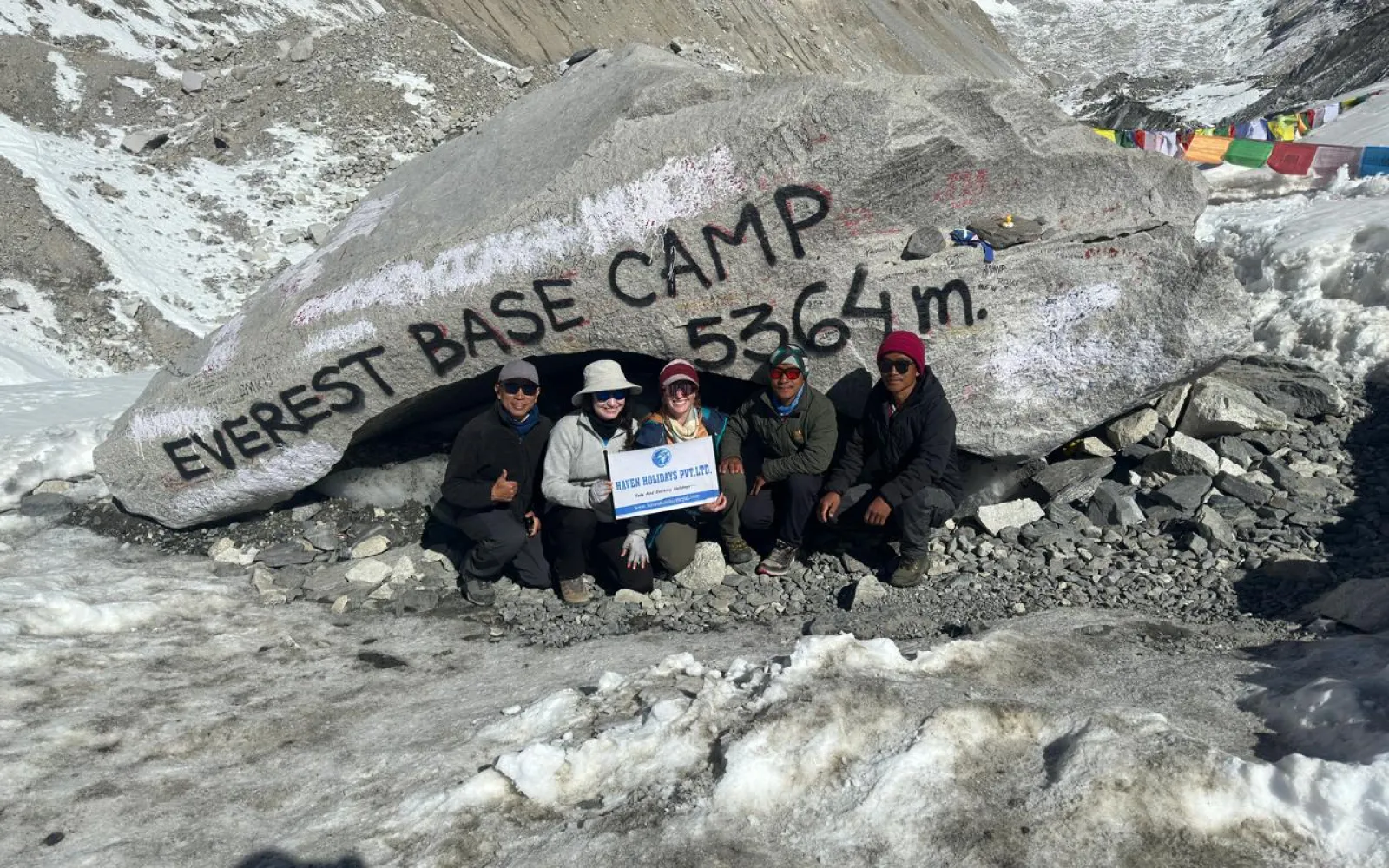
The Everest Base Camp Trek is a challenging and highly enjoyable trek in the scenic Khumbu region of Nepal. It follows a typical trail, which ascends to Everest Base Camp (5,364m), and includes traditional Sherpa communities, hanging bridges and awe-inspiring Himalayan scenery.
Whilst trekking to Everest Base Camp, people need to consider various factors such as distance travelled, sleeping and food provisions and altitude.
Furthermore, trekkers must contend with fluctuating mountain weather. The trail can be difficult to navigate and there are often inclines and rocky areas. From Namche Bazaar (3,440m) onwards the terrain is also at a high altitude.
Employing a local trekking guide therefore enables trekkers to benefit from improved organization, as well as increased comfort and knowledge.
Actually, guides can effectively plan itineraries and advise on good places to stay. They can also provide information about local culture. Importantly, they can assess trekkers’ health and detect early signs of altitude illness.
Whilst a guide can be extremely beneficial to both new Himalayan trekkers and overseas visitors to Nepal, they cannot avoid the occurrence of altitude illness and adverse weather. Likewise, whilst a guide can minimize risk, they are unable to entirely prevent all trekking related issues.
Nonetheless, they can facilitate good decision making, and effective communication and response in emergencies.
Below are key reasons for employing a guide to assist with the Everest Base Camp Trek. Advantages include improved organization, provision of suitable places to stay and enhanced knowledge, plus improved safety and environmentally friendly trekking.
A guide can improve the organization of a trek by arranging transport and managing a person’s walking program. Furthermore, as the trek can be impacted by, for example, flight availability, weather and trail accessibility, an experienced guide can effectively handle these factors.
Transport is a key organisational element for the Everest Base Camp Trek. Typically, people fly from Kathmandu (around 1,400m) to Lukla (2,860m). This flight lasts for around 30-40 minutes. Occasionally, however, Ramechhap Airport is used for flights to Lukla.
Where Manthali Airport (around 474m) is used for flights, a road transfer is also needed. The drive from Kathmandu usually takes 4-5 hours, although this will depend on traffic and road quality. Mountain flying can also be affected by weather and visibility and so flights can sometimes be delayed or cancelled.
In addition to, a local guide or trekking agency can effectively arrange transport to and from airports and relay flight information. They can then also advise on and implement alternative options if required.
Common Transport Options :
Note: Flight times and airports differ depending on the airline, season and weather.
It is key to effectively plan walking program for a comfortable trek. Typically, the trek from Lukla (2,860m) to Everest Base Camp (5,364m) and back is around 130km. Most people undertake the trek over 12-14 days, with key acclimatization days included.
Actually, an experienced guide will tailor a person’s walking program according to altitude, trail characteristics and personal fitness. For instance, the walk from Lukla to Phakding generally lasts 3-4 hours. Usually, however, the trek from Dingboche (4,410m) to Lobuche (4,910m) is longer, at 5-6 hours.
In addition to, guides can also advise on good locations for lunch and evening accommodation. Further, they can modify walking programs to take into account weather, tiredness and/or health. Thus, trekkers can enjoy a more sensible walking program and avoid rushing on key acclimatization days.
| Trekking section | Approx. elevation | Walking time |
|---|---|---|
| Lukla - Phakding | 2,860m - 2,610m | 3-4 hours |
| Phakding - Namche Bazaar | 2,610m - 3,440m | 5-7 hours |
| Namche - Tengboche | 3,440m - 3,860m | 5-6 hours |
| Tengboche - Dingboche | 3,860m - 4,410m | 5-6 hours |
| Dingboche - Lobuche | 4,410m - 4,910m | 5-6 hours |
| Lobuche - Gorakshep | 4,910m - 5,164m | 3-4 hours |
However, walking times will depend on a person’s walking speed, prevailing weather and trail conditions together with rest periods.
In addition to transport, permission is another key organizational element for the Everest Base Camp Trek. People require authorization to walk in Sagarmatha National Park, and also within the Khumbu Pasang Lhamu Rural Municipality. Overseas trekkers should also investigate current information about guide and TIMS permissions prior to their trek.
Actually, foreigners must pay NPR 3,000 for Sagarmatha National Park permission. SAARC nationals are charged NPR 1,500 and Nepali nationals NPR 100. The Nepal Tourism Board states that these are individual entry fees.
As well as the national park permission, the local municipality also charges an entry fee. Hence, trekkers should plan for both of these. A registered trekking agency can both arrange and confirm relevant permissions.
| Permission/Information | Reason for requirement |
|---|---|
| Sagarmatha National Park entry permission | To enter the national park |
| Khumbu Pasang Lhamu entry fee | To enter the local municipality |
| TIMS card (where relevant) | For registration and safety information for trekkers |
| Licensed trekking guide | For professional guidance in accordance with trekking regulations |
How Trekking Agencies Can Help ?
| Requirement | Foreigners | SAARC nationals |
|---|---|---|
| Sagarmatha National Park | NPR 3,000 | NPR 1,500 |
| Khumbu Pasang Lhamu Trek Card | NPR 3,000 | NPR 2,000 |
| TIMS card | NPR 2,000 | NPR 1,000 |
Note: Fees are taken from information provided by the Nepal Tourism Board and Khumbu Rural Municipality. Please check current fees prior to trekking.
Important Information: The Nepal Tourism Board indicates that a licensed trekking guide and a TIMS card (provided by a trekking agency) are both mandatory for the Everest Base Camp Trek.
Consequently, overseas trekkers should ensure that they obtain these from a government-registeredtrekking agency.
Local guides support trekkers with their accommodation and food choices on the Everest Base Camp Trek. Particularly in the peak trekking seasons (spring and autumn) there is increased demand for teahouses. Guides also possess knowledge of lodge accommodation, food and pricing in the various villages.
Local guides will often book accommodation for trekkers on the Everest Base Camp Trek. Popular places to stay are Phakding (2,610m), Namche Bazaar (3,440m), Tengboche (3,860m), Dingboche (4,410m) and Lobuche (4,910m). They are also aware of which lodges provide good quality, and appropriate, accommodation and facilities including bathrooms.
Whilst village accommodation varies in quality, lower villages tend to provide more extensive facilities. Higher villages however, have more basic bedrooms and shared bathrooms.
During peak trekking periods (October/ November and March/ May) rooms can sometimes be in short supply due to high numbers of trekkers. Local guides can therefore ensure that trekkers obtain appropriate accommodation and will liaise with lodge owners where possible.
Typical Everest Base Camp Accommodation :
How guides support accommodation :
It is essential that trekkers maintain good energy levels throughout the Everest Base Camp Trek. Both classic Nepalese and international food can be obtained from teahouses.
However, as altitude increases so does the reduction in variety of food. Guides can advise trekkers on food and suggest appropriate food choices.
Actually, Dal bhat, a favorite food choice, includes rice, lentils and vegetables. Additional carbohydrate sources are also often eaten.
Other favored foodstuffs include noodles, fried rice, potatoes, porridge and pasta. Eggs and Tibetan bread are also eaten. Garlic soup and hot drinks are frequently available but it is not advisable to believe that this soup prevents altitude illness.
Common Trek Foods and Their Key Nutritional Elements :
High Altitude Food Advice :
Local guides can relay specific Dietary Needs to lodge owners and kitchen personnel. This is of particular benefit to those who are vegetarian, vegan and/or gluten free. Guides can also advise trekkers on food issues and suggest suitable food options.
Whilst in more outlying mountain villages, it may not always be possible to obtain highly specialised food. Furthermore, lodges differ in their kitchens, ingredients and cooking techniques.
Moreover, people with severe allergies or stringent dietary requirements should therefore notify their trekking agency of these prior to their trip. Suitable spare food and essential medication should also be taken.
Dietary Needs and Related Issues :
How guides support specific Dietary Needs :
Hiring a guide eases stress for trekkers as they are supported in many areas. People can thus devote greater attention to the surrounding environment and to their trekking experience. Support is provided for navigation, as well as for accommodation and time planning.
Local guides are knowledgeable about the primary track and villages on the Everest Base Camp Trek. They know how to navigate between key points such as Lukla (2,860m), Phakding (2,610m), Namche Bazaar (3,440m), Dingboche (4,410m) and Gorakshep (5,164m). This local knowledge enables guides to show trekkers key points along the track and suitable places to rest and stay.
Although the main trekking track is well known, new tracks may be encountered and environmental factors can also cause uncertainty. Guides ensure trekkers adhere to their intended travel plan and prevent them from straying from course. They also organize trekkers’ accommodation, food and departure times. Thus, trekkers are not required to personally expend as much time and effort on these areas.
Areas where guides support planning :
Throughout a person’s trek on the Everest Base Camp Trail, alterations to original plans can sometimes arise. Flight cancellations (particularly to and from Lukla from Kathmandu or Manthali), track problems, personal unwellness and/or limited accommodation can all influence a traveler’s plans.
Importantly, an experienced local guide can effectively support trekkers in adapting their plans.
Actually, poor weather can cause flight cancellations to and from Lukla. In addition, heavy snowfall and/or arduous track conditions can influence trekking times around Lobuche (4,910m) and Gorakshep (5,164m).
In addition to, local guides liaise with local businesses, lodge owners and trekking agencies. They then organize revised plans taking into account prevailing weather conditions, together with safety and service availability.
Common Circumstances that can Influence Travel Plans and How Guides can Provide Assistance ?
Situation Guide Support :
The Importance of Local Support :
Engaging a guide enables trekkers to more fully immerse themselves in their experience. Rather than expending so much time on organizational matters, people can then better appreciate the mountainous environment, villages and culture.
Furthermore, guides are able to convey information relating to Sherpa culture, Buddhist monasteries and Himalayan mountaineering history.
Alongside spectacular views of Everest, Lhotse, Nuptse and Ama Dablam, trekkers can investigate Namche Bazaar and visit Tengboche Monastery. They can also take photographs of traditional villages.
Likewise, guides can further provide information on local culture and advise trekkers on how to appropriately interact with villagers. Hence, trekkers can obtain a greater level of knowledge and cultural enrichment from their trek.
Aspects of the Trek that you can Experience :
Generally, by employing a guide trekker are able to reduce the amount of time they dedicate to organization related tasks and so can more fully experience the Khumbu area.
Nonetheless, self-preparation is still crucial. This includes purchasing suitable insurance, ensuring good physical health and devising an appropriate acclimatization program.
A local guide for the Everest Base Camp Trek provides cultural knowledge that goes beyond ordinary sightseeing. Actually, the Khumbu Valley is home to Sherpa communities, ancient Buddhist traditions and distinctive Himalayan lifestyles.
Therefore, travelling with an experienced local guide helps visitors understand the region's history, religious heritage and everyday customs. Moreover, guides can explain cultural details that international visitors might otherwise overlook.
Sherpa culture is an important part of the Everest region's identity and Himalayan mountaineering history. Sherpa communities have longstanding connections with mountain agriculture, trade, tourism and high-altitude expeditions.
Furthermore, their knowledge of Himalayan terrain and mountaineering has contributed significantly to Everest exploration.
In addition to, a local guide can explain traditional livelihoods, family customs, hospitality and community values. Along the route, trekkers encounter Sherpa settlements such as Namche Bazaar (3,440m), Khumjung (3,790m) and Pangboche (approximately 3,985m).
Each village offers opportunities to understand local lifestyles and mountain traditions. Additionally, guides can explain how tourism, education and changing economic opportunities influence modern Sherpa communities.
Cultural Experiences You Can Understand Better :
Buddhist heritage is visible throughout the Everest Base Camp trekking route. One of its most important religious landmarks is Tengboche Monastery (approximately 3,860m), overlooking the surrounding Himalayan mountains. It is an important center of Tibetan Buddhist practice and community life in the Khumbu region.
Along the trail, trekkers also encounter prayer flags, mani walls, chortens and prayer wheels. These religious features carry spiritual meanings connected with Buddhist beliefs and prayers.
Moreover, local guides explain appropriate behavior around monasteries and sacred structures. For example, visitors should walk clockwise around mani walls, chortens and prayer wheels. They should also ask permission before photographing religious ceremonies or individuals.
| Cultural feature | Religious significance |
|---|---|
| Prayer flags | Carry prayers and auspicious wishes |
| Mani walls | Contain sacred Buddhist mantras |
| Chortens | Represent Buddhist spiritual teachings |
| Prayer wheels | Used during devotional practices |
| Monasteries | Centres of Buddhist learning and worship |
A local Everest trekking guide can introduce stories and historical details that ordinary guidebooks may overlook. Their knowledge helps visitors understand the development of mountain tourism, traditional trade routes and the history of Himalayan expeditions.
Furthermore, guides often have personal connections with communities throughout the Khumbu region.
For example, Namche Bazaar developed as an important trading center connecting Himalayan communities and Tibet.
Similarly, Tengboche Monastery has played an important role in the region's Buddhist religious life. Guides can explain these connections while visiting villages and historical landmarks.
Consequently, trekkers gain a deeper understanding of the places they encounter.
Local Stories and Experiences Worth Discovering :
A cultural experience on the Everest Base Camp Trek becomes more meaningful when visitors understand local perspectives. Therefore, choosing a knowledgeable local guide supports cultural appreciation and respectful interactions throughout the journey.
Safety is one of the most important benefits of hiring a guide for the Everest Base Camp Trek. The route reaches 5,364m at Everest Base Camp, where reduced oxygen levels place additional stress on the body.
Moreover, changing weather, steep trails and altitude-related illnesses require careful attention throughout the journey. An experienced guide helps monitor trail conditions, recognize potential warning signs and coordinate appropriate assistance.
However, professional guidance does not replace medical advice or eliminate high-altitude risks.
An experienced Everest trekking guide understands the region's terrain and common mountain hazards. The route includes steep uphill sections, rocky paths, suspension bridges and exposed trails.
Furthermore, snow, ice, rain and strong winds can affect walking conditions, particularly around Lobuche (4,910m) and Gorakshep (5,164m).
More importantly, local guides understand seasonal trail conditions and advise trekkers on appropriate walking techniques. They can recommend suitable footwear, careful foot placement and safe distances between trekkers.
Additionally, they help identify slippery sections and potentially hazardous areas. Consequently, trekkers can make better decisions while navigating unfamiliar mountain terrain.
| Trail hazard | Recommended safety measure |
|---|---|
| Steep uphill sections | Maintain a slow, consistent pace |
| Rocky and uneven paths | Wear supportive trekking boots |
| Slippery trails | Walk carefully and use trekking poles |
| Snow and ice | Follow local trail advice and avoid unsafe sections |
| Suspension bridges | Maintain distance and avoid overcrowding |
| Poor visibility | Follow the guide and avoid walking alone |
How Guides Improve Trail Safety :
Altitude sickness is a major health concern during the Everest Base Camp Trek. Acute Mountain Sickness (AMS) can develop when trekkers ascend above approximately 2,500m without sufficient acclimatization. The risk increases with rapid ascent, although individual susceptibility varies considerably.
Here, common AMS symptoms include headaches, nausea, dizziness, fatigue and reduced appetite. These symptoms often develop within several hours after reaching a higher sleeping altitude.
Therefore, experienced guides encourage trekkers to report discomfort early rather than hide their symptoms. They also monitor changes in behavior, walking ability and general physical condition.
However, guides cannot independently diagnose altitude illness or replace qualified medical professionals. Their role involves recognizing possible warning signs, stopping further ascent and arranging medical assessment when necessary. This support is particularly important in remote villages where immediate medical facilities may be limited.
| Symptom | What trekkers may experience |
|---|---|
| Headache | Persistent or unusual head pain |
| Nausea | Feeling sick or vomiting |
| Dizziness | Light-headedness or unsteadiness |
| Fatigue | Unusual tiredness or weakness |
| Reduced appetite | Difficulty eating normally |
| Poor sleep | Difficulty sleeping at altitude |
Important Medical Warning: Confusion, difficulty walking straight and unusual drowsiness can indicate high-altitude cerebral oedema (HACE). Breathlessness at rest, persistent coughing and severe weakness can indicate high-altitude pulmonary oedema (HAPE). Both conditions require urgent medical assistance and descent.
Proper acclimatization allows the body to adjust gradually to reduced oxygen levels at higher elevations. Therefore, a sensible Everest Base Camp itinerary includes gradual elevation gains and planned acclimatization days. Common resting destinations include Namche Bazaar (3,440m) and Dingboche (4,410m).
Likewise, an experienced guide helps maintain a comfortable walking pace and avoid unnecessary altitude gains. The CDC recommends limiting sleeping-altitude increases to approximately 500m daily above 3,000m. It also recommends an additional acclimatization night for every 1,000m of sleeping-altitude gain.
Furthermore, guides encourage adequate hydration, regular meals and sufficient rest. They also help identify when trekkers need additional recovery time. However, even a carefully planned itinerary cannot completely prevent altitude sickness.
| Destination | Elevation | Acclimatization purpose |
|---|---|---|
| Namche Bazaar | 3,440m | Initial planned acclimatization |
| Dingboche | 4,410m | Further adjustment before higher elevations |
| Lobuche | 4,910m | Gradual progression towards Gorakshep |
| Gorakshep | 5,164m | High-altitude overnight stop |
Knowing when to stop ascending is essential for safe high-altitude trekking. Continuing towards higher elevations despite worsening AMS symptoms can lead to serious complications. Therefore, an experienced guide helps recognize concerning changes and communicate with the trekking agency or medical professionals.
For mild AMS, trekkers should not ascend further until symptoms resolve. However, worsening symptoms, severe headaches or suspected HACE and HAPE require urgent medical assessment. Descent is the primary treatment for serious altitude illness, while supplemental oxygen may provide additional support when available.
More importantly, guides can coordinate emergency communication, arrange available transportation and assist with helicopter evacuation when medically necessary.
Nevertheless, evacuation depends on weather, visibility, aircraft availability and landing conditions. Therefore, suitable trekking insurance covering high-altitude helicopter evacuation remains essential.
| Warning sign | Appropriate response |
|---|---|
| Worsening headache and nausea | Stop ascending and seek medical advice |
| Repeated vomiting | Arrange prompt medical assessment |
| Confusion or unusual behavior | Suspect serious altitude illness and initiate emergency response |
| Difficulty walking straight | Treat as a possible HACE emergency |
| Breathlessness at rest | Suspect possible HAPE and arrange urgent assistance |
| Severe weakness or deterioration | Stop trekking and seek medical help |
Emergency Support Provided by Local Guides :
Important Safety Reminder: A guide improves safety through observation, local knowledge and emergency coordination, but cannot guarantee protection against altitude illness. Here, trekkers should also obtain medical advice before departure, carry suitable insurance and follow a medically appropriate acclimatization schedule.
Access to emergency services is an important benefit of using a qualified guide. As well as isolated communities, the Everest region and the Everest Base Camp Trek can present difficult terrain and there is limited medical provision outside large villages.
Meanwhile, qualified guides can therefore facilitate emergency care and communication. However, the ability to access emergency services will also be affected by location, weather and conditions.
Immediate Medical Aid
Medical emergencies can occur at any point on the Everest Base Camp Trek. Typical issues include altitude illness, falls and ankle problems together with dehydration and extreme fatigue. Difficult terrain and high altitude can also complicate the management of even small injuries.
In addition to, guides can offer initial medical aid as part of their qualification and with associated medical tools. They can analyze and analyze a situation and advise someone how to rest and then communicate with medical services.
Likewise, they can also liaise with trekking companies and locate medical services. However, specialist medical analysis is required in addition to basic care for major injuries and for suspected altitude illness.
Common Trekking Medical Issues and Guide Assistance
Emergency | Guide Assistance
Altitude illness | Identify symptoms and organize medical analysis
Falls and injuries | Deliver skilled medical aid and organize additional aid
Dehydration | Advise on fluid intake and organize medical analysis
Extreme fatigue | Cease trekking and analyses situation
Breathing issues | Organize emergency medical aid
Minor cuts/abrasions | Offer basic medical aid
Guide Assistance in Medical Emergencies
Carry out situation analysis
Offer medical aid
Communicate with medical services
Liaise with trekking company
Arrange extra medical aid
Co-ordinating Medical Aid and Helicopter Evacuation
Helicopter evacuation is an important form of emergency aid in the Everest region. Generally, it is used where an individual requires medical aid which is not available locally.
Here, qualified guides can then liaise with trekking companies, helicopter and insurance aid services.
For instance, people suffering from severe altitude illness may need to be rapidly evacuated and then treated in hospital. Guides can convey an individual’s location and medical status to those coordinating the rescue.
Similarly, guides will also assist in organizing documentation and communicate with an insurance service. Helicopter evacuation is, however, impacted by weather, visibility, helicopter availability, landing suitability and authorization.
Key Influences on Helicopter Evacuation
Factor | Influence
Weather | Adverse weather can affect helicopter flight safety
Visibility | Pilots need good visibility to fly
Altitude | Aircraft have altitude constraints
Location | Different locations offer differing access for helicopter landings
Helicopter availability | Helicopter rescue is affected by helicopter availability
Medical status | Medical urgency is analyzed when deciding on evacuation
Pre-Trek Information for Trekkers
Ensure you have suitable high altitude and helicopter evacuation insurance.
Carry relevant insurance information together with emergency contact details.
Inform your trekking company of any specific medical needs.
Ensure you have your insurers’ emergency aid contact detail and your trekking company contact details to hand.
Understand how medical evacuation costs will be charged and re-imbursed.
More importantly, it is not always the case that travel insurance will cover high altitude trekking and helicopter evacuation. Hence, prior to a trek, trekkers should research the highest altitude which is covered, together with medical and evacuation re-imbursal provisions.
Communication and Co-ordination
Communication can be difficult in some areas of the Everest Base Camp Trek. Mobile and internet provision also differs between villages and in some places along the route.
Consequently, a qualified local guide can be of great assistance in communicating with a trekking company and emergency services.
Likewise, mobile networks, telephone services at accommodation and/or satellite communication can all be utilized by guides to communicate. They can then relay details of an individual’s location and emergency to relevant parties.
In addition, local knowledge of medical services and rescue procedures can avoid superfluous delays.
Guide Communication in Emergencies
Mobile networks
Trekking company liaison
Emergency service communication
Local medical services knowledge
Group communication – advising others on emergency procedures
Key Contacts and Medical Services
Organization/service | Location/service description
Himalayan Rescue Association | Seasonal aid post at Pheriche.
Everest ER | Seasonal medical service near Everest Base Camp.
Local medical services | Selected villages in Khumbu.
Trekking company | Emergency coordination and logistical support.
Insurance aid service | Rescue authorization and insurance coordination.
8. How Guides Contribute to Responsible Tourism in the Everest Region
Using a local guide can facilitate responsible tourism in the Everest region. As mentioned previously, the Khumbu region is highly reliant on tourism for economic activity.
Therefore, selecting a responsible trekking company and qualified local guide can ensure more favorable distribution of tourism related revenue.
Furthermore, guides can advise tourists on how to appropriately interact with local people and the natural environment.
Meanwhile, local guides can advise international tourists on how to correctly engage with the Khumbu region’s culture and religion.
For example, they can advise upon the correct way to interact with monasteries, prayer wheels, mani walls and chortens. They can also advise on local culture which may otherwise be unknown to tourists.
Actually, tourists should circumnavigate mani walls and chortens in a clockwise direction. People should not handle religious items without permission.
Moreover, asking permission to take photographs of local people is a respectful way to recognize their privacy and cultural preferences.
Responsible Behavior in Cultural Contexts
Cultural context | Advice
Monasteries | Adhere to local advice and dress appropriately
Prayer wheels | Rotate them in a clockwise direction where appropriate
Mani walls | Circumnavigate them in a clockwise direction
Religious events | Behave discreetly and do not cause disruption
Local people | Obtain permission to take photographs
Private residences | Respect people’s privacy and gain permission to enter
Encouraging Environmentally Responsible Behavior
Tourists can engage in environmentally responsible behavior which helps to protect the delicate Himalayan environment. The Everest region contains diverse natural environments including mountains, woodland and rivers.
In fact, qualified guides can therefore advise trekkers on how to practice environmentally responsible behavior.
Importantly, the Sagarmatha Pollution Control Committee (SPCC) is involved in various waste management schemes throughout the Khumbu region.
In fact, these include waste collection points, village based waste collection and waste control along the trekking route. The SPCC also works to further environmental protection in key trekking villages.
Easy Methods for Practicing Environmentally Responsible Behavior
Remove waste and return it to suitable waste collection points.
Use re-usable water bottles and refill them in appropriate locations.
Stay on set trekking routes to avoid damaging plant life.
Do not feed or interfere with local wildlife.
Utilize local waste disposal methods at accommodation and within communities.
Conserve water and electricity in mountain accommodation.
Benefits of Environmentally Responsible Behavior
Environmentally responsible behavior | Benefit
Reusable water bottles | Less single-use plastic waste
Suitable waste disposal | Ensures cleanliness of both trekking routes and villages
Controlled trekking routes | Preserves delicate plant life
Wildlife protection | Minimizes interference with natural environments
Water and electricity conservation | Assists in the conservation of scarce local resources
Ensuring Ethical Treatment of Porters and Trekking Staff
As well as being environmentally responsible, responsible tourism also involves ethically treating those who assist trekkers – for example, porters. Porters carry both essential and personal items along challenging terrain and to high altitude areas.
Thus, it is important that porters are appropriately paid, and that their workload, clothing and insurance are suitable.
Actually, a responsible trekking company should ensure that the porters it employs are adequately shod, clothed for the prevailing weather and provided with meals and sleeping arrangements.
Likewise, they should also be insured and not be overloaded beyond the company’s defined weight limits and ethical guidelines.
Importantly, the Kathmandu Post has reported that there are on-going concerns relating to the weight that porters are expected to carry, together with issues concerning the quality of their clothing and insurance provision.
Ethical Porter Treatment
Ethical treatment requirement | Ethical practice
Appropriate pay | Pay porters in a clear and fair manner
Weight | Adhere to reasonable and defined weight guidelines
Clothing | Provide suitable clothing for prevailing weather conditions
Shoes | Offer appropriate trekking shoes
Meals | Supply enough high quality and warm food and drink
Sleeping arrangements | Ensure suitable sleeping provisions
Insurance | Provide suitable accident and medical insurance
How Trekkers Can Encourage Ethical Porter Treatment
Ascertain the weight that is carried by each porter.
Confirm that trekking staff have suitable insurance.
Ensure that porters have appropriate clothing and shoes.
Select trekking companies with clear pay practices.
Deal with guides and porters in a professional manner throughout.
Here, letting you know the fact that Haven Holidays Pvt. Ltd. employs one porter for every two trekkers. There is a maximum total client baggage weight limit of 20kg. In addition to porter pay, this package also includes food, medical provisions and insurance.
Generally, using a local guide through a responsible trekking company will facilitate more ethically sound tourism.
However, it is important for trekkers to investigate the ethical treatment of employees.
9. How can you prevent trekking scams by hiring a guide?
Using a guide through a trekking company can assist and prevent problems for trekkers. As tourists may not be aware of local pricing and provision including transport and mountain lodges, a guide can therefore ensure that people understand what is provided.
Here, it is still imperative that tourists ensure that they are using a trustworthy trekking company and that contracts are in place.
Actually, a good trekking company will provide a contract for trekkers which will detail what is and is not provided. This will also include information regarding payment, together with details of cancellation and refund procedures.
Thus, people should also ensure that they are made aware of what guide and porter services are provided together with transport provision. Undertaking these steps can aid prevention of incorrect provision and subsequent issues.
What to check before booking
Company registration – whether the company is registered and has relevant tourism accreditations.
Company contact details – including its website together with email and telephone contact.
Trekking experience – the company’s experience of arranging Everest treks.
Customer reviews – real customer testimonials.
Contract details – including the trekking daily programme, together with timings.
Payment – details of initial and final payments together with accepted payment methods.
Cancellation – information regarding refund and cancellation fees.
Booking tips
Ensure the company is appropriately registered and accredited.
Compare independent customer reviews.
Secure a contract detailing provision.
Make payments via the company and obtain receipts.
Ensure the trekking company can effectively communicate with you prior to travel.
Avoiding incorrect pricing and hidden fees
It is important to understand the price of an Everest Base Camp Trek. Whilst some trekking companies may provide cheaper packages, these often fail to fully cover food, transport and/or permits.
Hence, in order to avoid issues, people should compare the full provisions of different trekking packages.
Whilst some packages will provide transport (both air and land) together with permits and guide and porter services, others will charge for these elements separately. Extra costs can also incur for re-booking flights, and for personal items together with hot water, electricity and extra nights’ accommodation.
Hence, it is good practice to obtain detailed cost information so that people can effectively budget.
Typical Everest Base Camp costs includes
Transport – air or land travel between Kathmandu and Lukla.
Permits – Sagarmatha National Park and Khumbu permits.
Guide – daily pay and provision of food, lodgings and insurance.
Porter – porter fees and weight capacity together with insurance.
Lodging – hotels in Kathmandu and mountain lodges.
Food – trekkers’ morning, afternoon and evening meals.
Emergency assistance – insurance and evacuation provision.
Enquiries to make prior to payment
Price – is this an individual or group rate?
Transport – does this include internal air travel and airport transportation?
Food – is all food for trekkers provided?
Permits – are both required permits for the Everest area provided?
Guide and porter provision – are food, lodgings and insurance provided for these personnel?
Extra costs – are personal expenditures and supplementary nights covered?
Knowing provision and making decisions
Local expertise enables trekkers to recognize the provision of transport, lodges and other services. A competent guide can also interact with local organizations and effectively convey information regarding provision, pricing and functioning.
Likewise, a guide with Khumbu region knowledge can advise trekkers upon alternative provision if required.
In fact, prices and provision of lodges will differ for Namche Bazaar, Dingboche and Lobuche. Transport costs can also fluctuate depending on season and prevailing conditions.
Hence, guides can advise trekkers regarding local provision. Nonetheless, alongside using a guide, it is still essential to ensure that you are using a trustworthy trekking company and to confirm pricing and contracts.
Ways guides prevent issues
Conveying local pricing.
Investigating local provision (including transport and lodging).
Assisting with communication with local bodies.
Providing alternative provision where required.
10. What should you consider when hiring a trekking guide?
It is important to select an appropriate guide. Ideally, they will have suitable accreditations, high altitude trekking experience and good communication skills.
Furthermore, good knowledge of first aid and local mountain information is crucial. People should therefore analyse a range of aspects when selecting a guide.
Selecting a licensed and experienced guide
A licensed guide has both expert knowledge and experience. Prospective trekkers should investigate a guide’s license together with their experience of the Khumbu trekking area.
In addition to, experience of high-altitude treks is also valuable as it allows guides to appreciate how trekkers should ascend and acclimatize together with typical high mountain issues.
Key areas to analyze
License – ensure the guide has the correct license.
Experience – enquire about their experience of Everest Base Camp treks.
Altitude awareness – establish their knowledge of acclimatization and high-altitude issues.
Local knowledge – favorably select guides who know the Khumbu village area together with seasonal conditions.
Analyzing communication and local knowledge
Good communication skills enable trekkers to comprehend information such as program details and health advice. As many tourists will not be familiar with Nepalese culture, an English-speaking guide can be especially advantageous.
Locally, guides can also convey information about Sherpa culture, Buddhism and Himalayan geography.
Considerations for communication and local knowledge
Confirm that the guide can competently communicate in your language of choice.
Enquire about their experience of sharing local cultural information.
Ascertain their knowledge of the Everest trekking area.
Select somebody who can lucidly respond to your queries.
Investigating first aid skills and emergency response
As guides often work in isolated mountainous areas, good first aid skills are a valuable accreditation. People should also enquire whether their guide is trained in first aid and is able to recognize typical symptoms of Acute Mountain Syndrome (AMS).
Further, they should investigate their understanding of how to seek emergency assistance, refer people for medical attention and manage evacuation procedures.
First aid and emergency response questions
Is the guide trained in first aid?
Can they recognize typical AMS symptoms?
Are they aware of when it is appropriate to descend and/or seek medical advice?
Can they liaise with the trekking company in an emergency?
Are adequate communication facilities in place?
Analyzing a guide’s provision, duties and costs
Analyzing a guide’s role is valuable in preventing issues. People should also ascertain whether a guide is charge per day or whether this is incorporated within an overall package.
Further, they should investigate if food, lodgings, insurance and transport are provided.
Areas to analyze
Guide charge – is this a daily rate or is this included within a package?
Guide’s lodging – who covers the cost of the guide’s accommodation?
Guide’s food – is this provided?
Guide’s insurance – is this suitable?
Transport – is airport and trek transport provided?
Number of trekkers – how many people will the guide be guiding?
Program flexibility – can the program be adapted in response to circumstances?
Emergency assistance – what emergency facilities are in place?.
To summarize, seek a guide who is licensed, has local knowledge, communicates well and acts responsibly. Ensure that you also analyze a guide’s provision and costs with your trekking company prior to deposit payment.
Prior to booking, you need to chew the program, provision and guide information provided by Haven Holidays Pvt. Ltd. for a well-structured guided Everest Base Camp Trek.
11. Conclusion – Is it worth hiring a guide for Everest Base Camp Trek?
Yes, there are many advantages of employing a qualified guide for your Everest Base Camp Trek. In addition to a guide’s navigational skills, they have further expertise in dealing with high altitude and any unforeseen issues.
In addition to, guides are also able to share their local knowledge of the Khumbu area and so enable tourists to appreciate the culture, environment and local people.
In summary, there are various benefits of employing a qualified guide. These include a range of services such as transport, accommodation, food, a set daily program and trekking permits.
Also, guides can then share valuable cultural knowledge and are also able to recognize the signs of altitude sickness. Further, they can arrange suitable emergency back up.
Moreover, knowledge of the local area also promotes ethical and improved practices relating to both the mountain people and trekking personnel.
Although a qualified guide can be highly beneficial, they are unable to remove all the inherent dangers that are associated with mountain trekking.
Hence, it is essential to ensure that you employ a competent, experienced and trustworthy guide via a well known trekking company. You should also make sure that you have suitable travel insurance, know how to acclimatize and are aware of what is encompassed within your trek package.
If you are planning an Everest Base Camp Trek, Haven Holidays Pvt. Ltd. can provide a guided trek. Our qualified local guides have expert knowledge of the Khumbu area, mountain routes and local culture.
Please contact us to advise us of your favored dates, group size and the program you like. We will then be able to assist you in identifying the most fitting guided Everest Base Camp Trek for your Himalayan trip.
Visit our Haven Holidays website to find further information on our Everest Base Camp Treks.
Frequently Asked Questions (FAQs)
1. Do I need to hire a guide for Everest Base Camp Trek?
Foreign trekkers are required to employ a qualified guide from a recognized trekking agency in accordance with Nepal’s trekking guidelines. Furthermore, a guide can offer expert advice, local knowledge and additional provision as well as aid in ensuring trekkers’ safety.
2. Can I trek to Everest Base Camp without a guide?
According to Nepal’s current trekking guidelines, foreign trekkers are not allowed to trek without a guide. Employing a qualified guide from a recognized trekking agency will also facilitate the organization of, for example, permits, lodgings and transport. Always check current trekking guidelines prior to travel as these may alter.
3. How much does it cost to hire a guide for Everest Base Camp Trek?
On average, a qualified English speaking trekking guide can be hired in Nepal for around USD 35-40 per day. This figure will depend upon a guide’s level of qualification, experience and language ability together with the season. Please note this is just for the guide and does not represent all-inclusive costs. Ensure that you are clear as to whether your guide’s fee covers additional elements such as food, lodging, transport and staff costs alongside your guide.
4. Is it beneficial to hire a guide if I am a novice trekker?
Yes. A guide can be highly beneficial to novice trekkers. As well as offering expert navigation advice, they can help to organize a trekking schedule and acclimatization and can facilitate interaction with local lodges. Moreover, a guide can further aid novices by minimizing organizational issues and supporting good decision making in fluctuating weather and/or health related circumstances.
5. How does a guide help me during Everest Base camp Trek?
Whilst navigation is one function of a trekking guide, their role is far broader. They can advise on a trek, make organizational arrangements for trekkers (for instance, for food and lodging) and observe trekkers’ health. In addition, guides can impart local culture information and also support communication and incident management in unforeseen circumstances.
6. Can I hire an English speaking guide for Everest Base Camp Trek?
Foreign tourists can employ an English-speaking guide for a trek to Everest Base Camp via a recognized trekking agency in Nepal. Levels of English ability can differ. Therefore, it is advisable to investigate a guide’s language skills, as well as their trekking experience and qualifications. Good communication skills will facilitate both an individual’s guide organization and safety related conversations.
7. Can a guide help to avoid altitude illness during Everest Base Camp Trek?
Although no guide can fully ensure that altitude illness is avoided, they can work to minimize its occurrence. An experienced guide can identify early signs of altitude illness, encourage good acclimatization and will not allow trekkers to ascend if they are not feeling well. Should severe altitude related symptoms occur, a guide can also support trekkers in organizing medical evaluation and/or descent.
8. How does a trekking guide differ to a porter?
Whilst a trekking guide directs a trek and offers expert navigation and safety advice and makes organizational provisions, a porter’s main function is to transport trekkers’ belongings and trekking gear between villages. Although some porters may have considerable trekking experience, this is not a substitute for a qualified guide’s role.
9. Should I hire a personal guide or undertake a group guided trek for Everest Base Camp?
Compared to a group guided trek, a personal guide allows for greater freedom, individualized care and control over a trekker’s speed of walking and organization. Conversely, trekking in a guided group can be more economical and can enable trekkers to socialize with others. This will largely depend on your financial resources, favored travel approach and requirement for personalization.
10. Is it safe to trek to Everest Base Camp with a local guide?
Whilst a competent local guide can boost safety by offering expert navigation, health and weather information and supporting incident management, they are unable to wholly eliminate the inherent dangers of high altitude trekking. These may include altitude illness and variations in mountainous environments. Ensure that your guide is qualified and implement prudent acclimatization and safety procedures.
11. Should I give a tip to my trekking guide?
It is common to tip a guide in Nepal. However, this is not obligatory. Generally, the level of tip will be influenced by the number of days that you are trekking, the standard of service received and your level of contentment. Investigate typical tipping practice from your trekking agency so that you can effectively plan for this prior to your journey.
12. When should I book my Everest Base Camp Trek guide?
Ideally, a guide should be booked several weeks, if not months, in advance. Particularly if you are travelling in spring or autumn. Booking in good time allows for thorough examination of a guide’s credentials and for in-depth discussion regarding and confirmation of a trek. Although last minute guide bookings can sometimes be made, during peak periods the availability of guides can be more restricted.
Note: The figure of around USD 35-40 per day is only a general indication of a guide’s fee. It does not represent an exact cost and is not inclusive of all elements of an all-inclusive guided trek. Please check the present guide fee and precisely which guide related costs are encompassed within Haven Holidays’ package in order to issue a specific quotation.
Our travel experts are ready to assist you with any questions.
Send us a message.Have a question before you book? Send your enquiry below and our travel experts will get back with the required information.