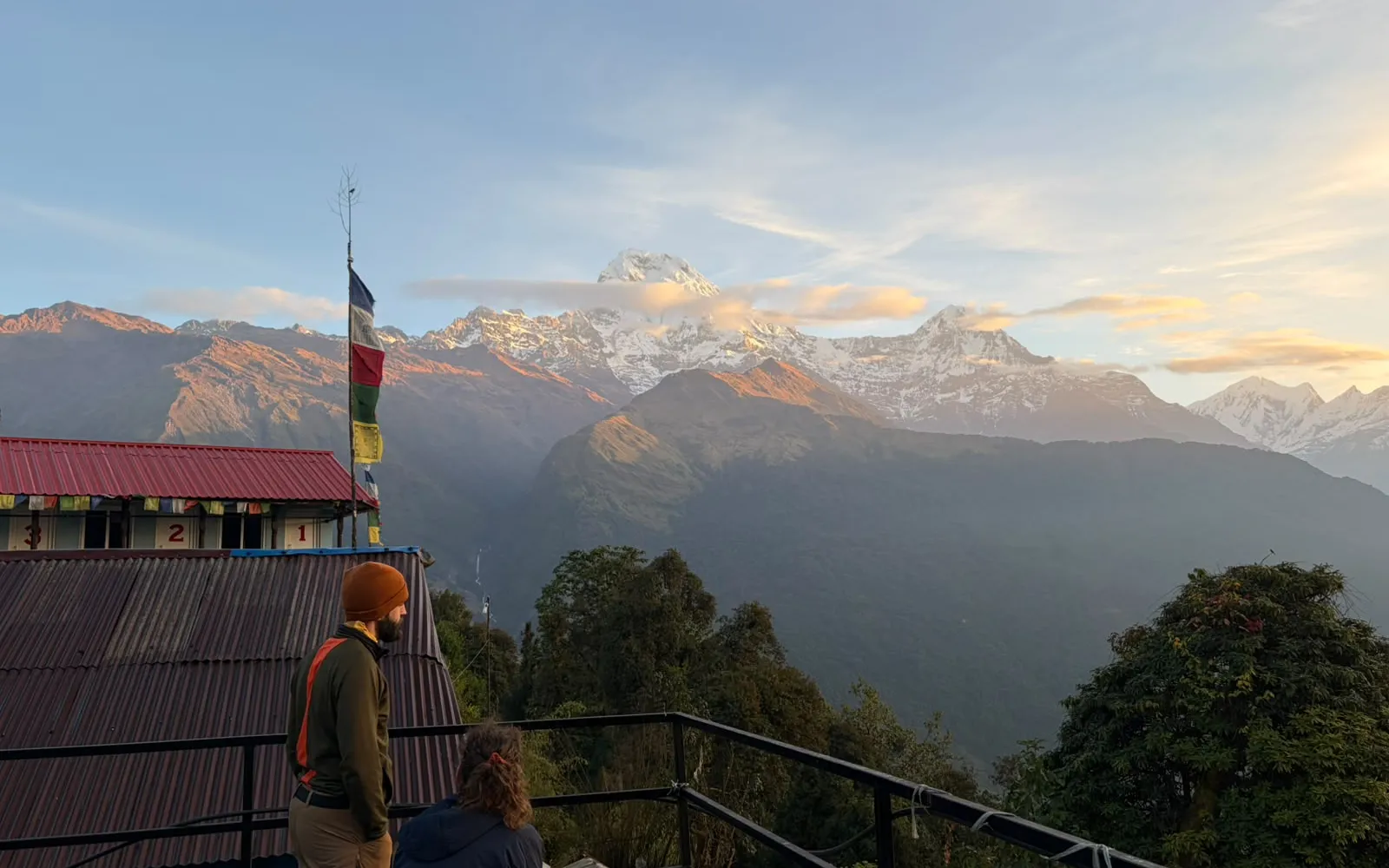
Yes! There are plenty of treks you can do in the Himalayas in the winter months of December, January and February. However, it is important to consider the altitude, snowfall, trail difficulty and your experience level when choosing where to go.
Moreover, you will find the trails are much quieter and you will enjoy the crisp mountain air and snow-covered scenery. However, the cold nights, icy paths, less daylight and potential snowfall can make the higher altitude treks difficult.
Winter Mountain Temperatures in Nepal
Temperatures in Nepal can vary a lot as the altitude has a huge impact on the weather. The average temperature drops by approximately 6 degrees every 1000m increase in altitude.
Temperatures in Nepal in Winter Summary
Location | Altitude (Approx.) | Average Winter Day Temperatures
Pokhara | 822m | 15-21°C
Ghorepani | 2860m | -3-10°C
Namche Bazaar | 3440m | -4-8°C
Dingboche | 4410m | -10-4°C
Gorakshep | 5164m | -15-0°C
Note: These are just a general guidelines experienced by our team in the field while operating the treks in Nepal in winter months to help with planning. Temperatures can drop much lower at night especially at higher altitudes.
Winter Weather Differences month-wise
December will generally be dry with the lower altitude trails being easy to manage. Nights will start to get very cold.
January will usually be the coldest month. Frost will be more prevalent and higher altitude areas may experience heavy snowfall.
February will gradually see more daylight but snowfall can still occur.
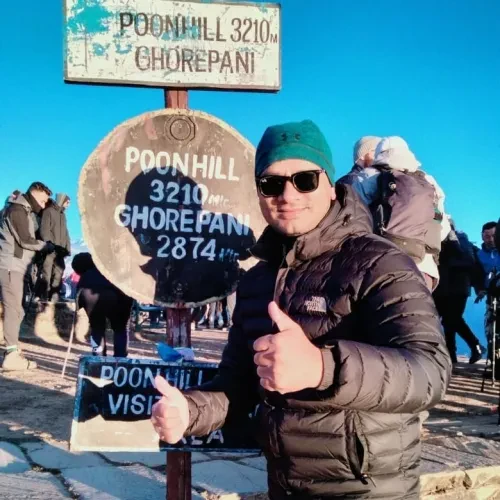
Therefore, this means that many trekkers will find it practical to trek to Poon Hill, Ghandruk and Helambu. However, treks such as Mardi Himal, Annapurna Base Camp and Everest Base Camp will require more preparation and up to date weather checks.
In general Nepal has cold and dry winters between December and February. However, temperatures can vary depending on what altitude you are trekking at.
Here, lower altitude areas will be pleasant to trek in during the day as it will be sunny. However, temperatures will drop quickly once the sun goes down, especially above 3000m.
Average Temperatures in Popular Himalayan Areas in Winter
Below are average temperatures for some of the popular areas in the Everest region. These are just a general guide and actual temperatures can vary depending on snowfall, wind and weather patterns.
Winter Temperature Variations as per winter months
Location & Altitude | December| January| February
Lukla (2786m) |11.1/-0.5 | 8.3/-2.9 | 8.9/-1.6
Namche (3450m) | 7.6/-7.1 | 6.9/-8.5 | 6.4/-6.5
Tengboche (3857m) | 6.0/-7.5 | 3.7/-9.7 | 4.0/-9.7
Dingboche (4410m) | 3.2/-13.4 | 1.0/-15.3 | 1.5/-14.2
Note: These are the average temperatures experienced by our team during the winter months in above mentioned placed for the day and night.
General Weather Feature during winter months in Nepal
Cold mornings and evenings – Often temperatures will drop below freezing above 3000m.
Snowfall – Western weather patterns can cause fresh snow to fall. This is more likely to occur above 3500m.
Icy Trails – Shady trails, frozen rivers and steep areas can be very icy throughout the day.
Wind Chill – Open ridges and mountain passes can feel much colder.
Less Daylight – You will want to start trekking early. Try not to walk unnecessarily in the late afternoon.
Temperature Differences during winter months in Nepal
Generally, villages at lower altitudes (1000-2000m) will have more pleasant temperatures. However higher altitude villages will have long periods of freezing temperatures and more snowfall (above 4000m).
Therefore, always check the Department of Hydrology and Meteorology for the forecast. Also speak to your local guides. Do not assume that a popular trekking route will be accessible after heavy snowfall.
In conclusion, the average temperature mentioned above and the real trail temperatures may vary. So, it’s better to accompany an experienced local guide for your winter trekking in Nepal for safety and for better experience.
Trekking in Nepal in winter will be different depending on the month of December, January and February. The colder months will affect the trekking routes. However, the temperature, snowfall and trail conditions will change.
1. December
December will be the start of the colder months. The lower and mid-level routes will generally be fine to trek, however the temperatures will start to drop below freezing at night.
Temperatures: Approximately 5-18C during the day (1500-3000m) and -5C-5C at night.
Snowfall: There may be some snowfall in higher areas above 3000-3500m.
Trails: Generally, the lower trails will be accessible, however the stone steps may become icy if they are in the shade.
Best Winter Routes in Nepal: Ghandruk, Ghorepani Poon Hill, Helambu and Australian Camp.
2. January
January is generally the coldest month to trek in Nepal. This will mean that the trails will be icy, there will be more snowfall and some lodges may be temporarily closed around the open mountain villages.
Temperatures: Approximately 3-15C during the day (1500-3000m) and -8C-3C at night.
Snowfall: There may be some heavy snowfall above 3000m.
Trails: Icy trails and snowy areas will make the ascent more difficult.
Best Routes: Ghandruk, Poon Hill, Helambu and lower Annapurna foothills.
3. February
February will start to get longer days and the temperatures will improve. However, there may still be freezing nights and fresh snow. The higher trails may be icy.
Temperatures: Approximately 5-17C during the day (1500-3000m) and -6C-4C at night.
Snowfall: There may still be snowfall in higher areas, especially with the western weather.
Trails: The lower trails will generally be more comfortable. However, the higher viewpoints may be snowy.
Best Routes: Poon Hill, Ghandruk, Helambu and well-planned Mardi Himal routes.
Winter Weather Comparison
Conditions | December | January | February
Cold | Yes | Generally the coldest | Slowly improves
Long daylight | No | Shortest day | Slowly improves
Snowfall | Moderate | Generally the most | Yes
Lower trails | Generally ok | Generally ok | Generally ok
Higher trails | Getting colder | More snow and ice issues| Variable
Here, the temperatures and weather conditions are approximate and will depend on the altitude (1500m-3000m).
When to Trek in Nepal in winter?
December – Good option if you want to enjoy less busy routes and the lower routes will be generally ok.
January – Best option if you are an experienced trekker looking to embrace the colder temperatures and possibly some route changes.
February – A good option if you want to enjoy slowly improving conditions, especially in the latter half.
Ultimately, it will depend on the altitude, route and weather conditions. Please check the latest weather reports, lodge availability and route conditions.
There are a variety of treks available in Nepal during the winter months. However, they should be considered based on the altitude, snowfall, accommodation and trail access.
Best Winter Trekking Routes Comparison
Route | Days | Altitude | Difficulty
Ghorepani Poon Hill| 4-5 days| 3210m| Easy-Moderate
Ghandruk | 2-4 days| 1940m | Easy
Mardi Himal | 5-7 days | 4200-4500m| Moderate-Challenging
Helambu | 5-7 days | 3600m | Moderate
Everest Panorama | 7-9 days | 3860m | Moderate
Langtang Valley | 7-9 days | 3870m | Moderate-Challenging
Importantly, the duration and altitude will depend on where you start from and what route you take and what viewpoints you decide to take.
Now, let’s see each winter trekking routes in detail one by one:
1. Ghorepani Poon Hill Trek (3210m)
Poon Hill is one of the easiest options to trek in the Annapurna region during the winter months. The 4-5 day trek includes forest trails, traditional villages and a popular sunrise viewpoint.
Main Route: Nayapul-Ghandruk or Ulleri-Ghorepani-Poon Hill.
Winter Issue: Stone steps and shaded forest areas may be affected by snow and ice.
2. Ghandruk Trek (1940m)
Ghandruk is a shorter trek with traditional Gurung houses and beautiful Annapurna mountain views. It is a lower altitude so good if you want to enjoy more comfortable winter conditions.
Duration: Approximately 2-4 days.
Winter Issue: Cold mornings, occasional frosts and icy stone trails.
3. Mardi Himal Trek (4200-4500m)
Mardi Himal gives you great views of the Machhapuchhre and Annapurna range. However, the ridge and viewpoint will be much more challenging after snowfall.
Duration: Approximately 5-7 days.
Winter Issue: Icy trails, exposed ridges and possible closure of upper routes.
4. Helambu Trek (3600m)
Helambu is a great option to trek near Kathmandu during the winter months. The villages, forests and mountain viewpoints will make for a rewarding trek. No flights are required.
Duration: Approximately 5-7 days.
Winter Issue: Snow around Tharepati and limited accommodation in the higher villages.
5. Everest Panorama Trek (3860m)
The Everest Panorama Trek offers views of Everest, Ama Dablam and surrounding Himalayan peaks. The trek will generally finish at Tengboche.
Duration: Approximately 7-9 days.
Winter Issue: Freezing nights, flight disruptions in Lukla and possible snowfall.
6. Langtang Valley Trek (3870m)
Langtang Valley offers stunning mountain views, Tamang culture and access to Kyanjin Gompa. However, the floods in August 2026 have caused disruptions to normal road access through Rasuwa. Please ensure you confirm the access route.
Duration: Approximately 7-9 days.
Winter Issue: Heavy snowfall, freezing conditions and transport disruptions.
Other Short and Challenging Options
Dhampus and Australian Camp (2060m) – A short 2-3 day trek in the foothills near Pokhara.
Annapurna Base Camp (4130m) – A challenging trek. Please ensure you consider the snow and avalanche risk, especially around Deurali.
Everest Base Camp (5364m) – A challenging high altitude trek. Winter gear, acclimatisation and flexibility will be required.
Annapurna Circuit (Thorong La 5416m) – Pass may be unsafe or inaccessible after heavy snowfall.
Manaslu Circuit (Larkya La 5106m) – Pass may be closed due to snow build-up and lodge availability.
Important Tips from Haven Holidays Nepal Team
Poon Hill, Ghandruk, Helambu and some of the foothill treks will generally be the best options. However, please check the weather and wear appropriate clothing. If you are going to higher destinations please ensure you confirm with local expert guides.
Important Note: The floods in Langtang Valley on the 26th August 2026 have caused damage to key road links around Syabrubesi. Although the logistics report from the 3rd November confirms road access to Dhunche via an alternative corridor, this does not confirm normal vehicle access to Syabrubesi. Please confirm the actual access route.
Also, consider that the higher mountain passes may be blocked by snow, especially Larkya La (5106m). Do not guarantee specific winter crossings without local confirmation.
In conclusion, Poon Hill and Ghandruk will be the best winter treks in Nepal for beginner trekkers. Likewise, Mardi Himal, Langtang, ABC and EBC should be considered as optional with extra planning and current route consideration.
5. How difficult is trekking in Nepal in Winter?
Trekking in Nepal can be more challenging in winter than during spring and autumn months. Depending on the height of the trek, amount of snowfall, how far you are walking each day and your trekking experience.
Main Challenges of Trekking in Nepal in Winter
Cold temperatures
One of the main challenges of trekking in Winter is the cold temperatures. In Nepal, above 3000 meters the temperature can often be below freezing at night. Higher up the temperature can drop below -15 degrees.
Low altitude (1000m to 2000m) – generally not too cold during the day but cold in the mornings and evenings.
Mid altitude (2000m to 3500m) – freezing at night. Occasional frost.
High altitude (3500m to 5000m) – freezing for long periods. Can get very cold due to wind.
Snow
In a short period of time your trekking route can be transformed into a snowy landscape. This makes walking along stone steps, frozen streams and slick forest paths more likely to cause falls and injury.
Wear proper trekking boots.
Use trekking poles to help keep balanced.
Use the correct traction equipment.
Less daylight
In Winter there will be less daylight than during Spring and Summer. You should try to start early and not get caught out on exposed viewpoints or unknown routes after dark.
Altitude sickness
Altitude sickness can be a serious issue in any season. If you are ascending quickly above 3000m you are more likely to suffer from altitude sickness. This is especially true if you are ignoring the rules around acclimatizing.
Know the signs of altitude sickness – headaches, nausea, dizziness and unusual tiredness.
Allow enough time to acclimatise on high altitude routes.
Descend immediately if you are suffering from severe altitude sickness.
Teahouse closures
Some family run teahouses may close during January and February due to low numbers of visitors. Water can be frozen, heating limited and food choices limited above 3000m.
High Passes and getting lost
Heavy snowfall can cause problems with finding your way as markers can be covered in snow. High passes like Thorong La (5416m) and Larkya La (5106m) can become inaccessible.
How to reduce the risks
Choose routes that match your fitness and trekking experience.
Hire a local expert guide.
Check the availability of teahouses and route conditions.
Wear warm layers, bring a good sleeping bag and winter essentials.
Be flexible with your itinerary and allow extra days for bad weather.
Never attempt a high pass covered in snow if the locals advise against it.
However, as long as you choose the right routes and prepare properly, you can enjoy trekking in Winter. However, if the weather, snow or locals advise against it then you should change your itinerary.
6. Pros and Cons of Trekking in Nepal in Winter
Trekking in Nepal during Winter can provide an alternative experience of the Himalayas. Although it can be more challenging due to the cold, there are some great low altitude routes which provide peaceful trekking routes and stunning mountain views.
Pros of Trekking in Nepal in Winter
Fewer people
Generally, you will find fewer people trekking in popular Himalayan destinations. This can make viewpoints, village routes and some teahouses feel more peaceful.
Peaceful mountain villages
With fewer people you can enjoy the traditional mountain villages. You can enjoy the local hospitality and culture.
Crisp mountain air
On a good day the cold air can provide great visibility. However, the weather can cause cloud, snow and reduced visibility of the Annapurna, Langtang and Everest mountains.
Nice walking conditions
On sunny afternoons you can enjoy nice walking conditions around Ghandruk, Dhampus and lower Annapurna foothills. This is perfect for those who like shorter walks and do not want to be out in the extreme cold for long.
Peaceful and great photography
Occasionally there will be snow causing stunning landscapes. This can provide great opportunities for photography.
Less Costly Packages: Since winter trekking in Nepal is off-season trekking in Nepal and can ask for discount. Normally, the local trekking companies are ready to offer their clients discounted off-season cost.
Cons of Trekking in Nepal in Winter
Freezing nights
The temperature can drop significantly below freezing at higher altitudes. Teahouses may be basic with limited heating. Water pipes and outside taps can freeze.
Snow
Fresh snow can cover walking routes causing dangerous icy sections. Steep stone steps and exposed ridges will need extra care and the correct equipment.
Fewer teahouses
Some mountain teahouses may be closed during the quietest weeks of Winter. This may mean you need to adjust how much you are walking each day or change where you are staying.
Flight and road delays
Poor visibility, snow and bad weather can cause delays to domestic flights and mountain roads. Be flexible with your schedule and allow extra days for travel.
Inaccessible high altitude routes
Heavy snowfall can cause upper viewpoints and high passes to become inaccessible. This can affect challenging routes like Mardi Himal, Annapurna Base Camp, Everest Base Camp and Annapurna Circuit.
Pros and Cons of Trekking in Nepal in Winter
Pros | Cons
Fewer people trekking | Freezing nights
Peaceful mountain villages | Possible teahouse closures
Crisp air | Unpredictable visibility
Stunning snowy landscapes | Icy and snowy routes
Nice low altitude walking | Less daylight
Fewer people at popular viewpoints | Flight and road delays
Peaceful photography | Restricted access to high altitude
Less Costly Packages| May not have people join the group
Is Trekking in Nepal in Winter Worth it?
Overall, trekking in Nepal in Winter can be a rewarding experience if you choose the right routes and prepare for the changing mountain conditions.
Generally, low altitude destinations like Poon Hill, Ghandruk and Helambu will provide more practical options than challenging high altitude passes.
Likewise, February can provide better conditions towards the end of the month. However, the weather can be unpredictable.
In conclusion, choosing the correct altitude, checking local conditions and being flexible with your itinerary will ensure you have a successful trekking experience.
Note: Pack right and reliable cold gear, check weather conditions and hire local expert guide for your winter trekking in Nepal.
7. Accommodation, Food & Guiding Costs for Winter Treks in Nepal
The main accommodation for treks in Nepal during winter are family-run teahouses, lodges and guesthouses. Not all will be open on popular routes and some mountain lodges at high altitudes may have reduced facilities or may not be open during January & February.
1. Teahouses
Popular treks such as Ghorepani, Ghandruk and Namche will have accommodation. However, remote villages and high altitude areas may have less availability.
Blankets – Most teahouses will have blankets available. You may wish to bring your own sleeping bag.
Heating – Some teahouses will have heating in the dining room (wood burners etc).
Showers – May be available depending on water and heating.
Charging & WiFi – May be available but may be limited or chargeable.
2. Food
Most teahouses will have standard meals available. Dal bhat, vegetable soup, noodles, potatoes, eggs and hot drinks are commonly available.
3. Local Guides & Porters
Booking a local guide with a license will help with navigation and safety during winter. An experienced guide will be able to tell how much snow is falling, changes to the trail and will be able to plan your walking for the day.
In addition to, porters will make long walks during the winter easier by carrying your heavy trekking bags. Haven Holidays will usually organise porters depending on your chosen package and the number in your group.
4. Costs
Costs will depend on the length of the trek, number of people, transport, accommodation and what is included. As you go higher, food and accommodation can become more expensive as you need to transport items to remote villages.
Haven Holidays Nepal Package Prices for Winter
Trek Package | Duration | Package Price (USD)
Ghorepani Poon Hill | 3 days | $95-$215
Mardi Himal | 4 days| $195-$360
Typical Inclusions & Exclusions
Inclusions – All necessary permits, transport, teahouse accommodation, licensed English-speaking guide, meals, agreed porters and staff insurance.
Staff Costs – Guide & porter wages, meals, accommodation and any allowances.
Exclusions – Flights, visa, travel insurance, personal items, drinks, snacks, tips, showers & charging.
For other routes please ask for a current quote from Haven Holidays. Please also check if porters have been organized, what meals are included and what transport will be.
8. What To Pack For Winter Treks In Nepal?
It is important to pack the right items for your winter trek to ensure you stay comfortable and safe in the Himalayan regions of Nepal. What you need to take will depend on how high you will be trekking, how much snow you expect, how cold it will be at night and what route you are taking.
1. Warm Clothing
Wearing layers will help you to stay at a comfortable temperature. Thermal layers, a fleece and warm down jacket would be ideal.
Thermal top & bottom
Fleece jacket/ warm layer
Down Jacket
Waterproof & windproof outer
Warm trek pants
Woollen hat, scarf & insulated gloves
Thick woollen socks
2. Waterproof Clothing & Trekking Boots
Wearing the correct footwear will help to keep you protected. Choose waterproof trekking boots with ankle support and good grip.
Waterproof jacket & trousers
Trekking boots
Gaiters for snow
Microspikes for icy trails
Lightweight camp shoes
3. Sleeping Bag
A sleeping bag will help to keep you warm in basic mountain lodges. Choose a sleeping bag with the correct temperature rating for the lowest temperature you expect at night.
Winter sleeping bag
Trekking poles
Comfortable rucksack with rain cover
Headtorch with extra batteries
Reusable bottles or insulated flask
Personal toiletries & quick dry towel
4. Sun Protection & Water
During the winter, the sun can be quite strong at higher altitudes due to increased UV. It is important to protect your skin and eyes.
Sunglasses (UV protection)
Sunscreen (SPF 30-50)
Lip balm (sun protection)
Water purification tablets/filter
Insulated flask
5. First Aid & Emergency Items
Having some basic first aid and emergency items will help you with any small issues. Take any personal medication with you and speak to a health professional about any precautions to take at high altitudes.
Personal first aid kit & prescription medication
Blister treatment & basic plasters
Personal ID & insurance details
Power bank & charging cables
Emergency contact details
Whistle & small repair kit
Important Winter Trek Packing List
Packing Category Essentials
Warm Clothing Thermals, Fleece & Down Jacket
Outerwear Waterproof Jacket & Trousers
Footwear Trekking Boots & Warm Socks
Winter Protection Gloves, Hat & Gaiters
Sleeping Bag Appropriate Sleeping Bag
Navigation Headtorch, Phone & Power Bank
Sun Protection Sunglasses & Sunscreen
Safety First Aid & Personal Medication
Water Bottles & Purification
Important Tips from Haven Holidays Pvt. Ltd. Team
Try to not packing too much as it will make you work harder. If you are going on a higher route such as Mardi Himal, Langtang & Everest Base Camp, check how much snow you expect and how cold it will be at night.
9. Safety Tips for Trekking in Winter in Nepal
There are a few things to consider when trekking in Nepal during the winter months. Despite many low altitude trekking routes being open, there can be potential hazards that arise such as snowfall, low temperatures and variable trail conditions.
Check Weather Forecast
Before your trek begins, check the weather forecast. This can be done by speaking with local guides, lodge owners and authorities.
Ensure snowfall and temperature changes are known.
Ask about recent trail conditions and snowfall.
Ensure that there will be accommodation at the locations you plan to stay overnight.
Listen to local advice about any closed or unsafe sections.
Start Trekking Earlier
Winter days are shorter, so ensure you leave early enough to reach your next accommodation before dark.
Plan for reasonable distances each day.
Allow extra time for icy and steep sections.
Avoid unfamiliar trails after dark.
Ensure you have a head torch.
Have a Licensed Local Guide
Actually, having a local trekking guide will help you identify any changes in trail conditions and potential local weather issues. This is especially helpful when trekking on snowy trails, remote trails and less popular winter trails.
Pack Winter Essentials
Ensure you have enough water, healthy snacks, warm clothing and emergency essentials to keep you safe from the cold.
Wear thermals and insulated jackets.
Wear waterproof gloves and good quality trekking boots.
Use trekking poles on icy sections.
Have a first aid kit and personal medication.
Ensure your water source remains unfrozen.
Be Aware of Altitude Sickness
Here, altitude sickness can occur at any time of the year. It is more likely to happen above 2,500m. Common symptoms include; headaches, nausea, dizziness, unusual tiredness and lack of appetite.
Ascend slowly and allow yourself to acclimatise.
Do not increase your altitude if experiencing symptoms.
Descend if symptoms worsen.
Seek emergency medical help if symptoms are severe.
If you become confused, unable to walk in a straight line and short of breath, you could be suffering from severe altitude illness. Descend immediately and seek emergency medical help.
Avoid Hypothermia and Frostbite
Long periods of time in freezing temperatures can cause dangerous injuries. Hypothermia affects your whole body whilst Frostbite affects exposed skin and tissue.
Wear dry warm clothing.
Ensure your fingers, toes, ears and nose are covered.
Be aware of numbness, unusual shaking and lack of coordination.
Seek immediate medical help if you suspect frostbite or hypothermia.
Avoid Trekking in Unsafe Conditions
Importantly, heavy snowfall can cause poor visibility and strong winds. This can make even familiar mountain trails dangerous. Never attempt to reach a viewpoint or high pass to complete your itinerary.
Avoid trekking if visibility is poor.
Avoid crossing snowy passes without local permission.
Listen to your guide and local safety advice.
Choose a safer option.
Allow Extra Days and Ensure You Have the Right Insurance
Here, flights to Lukla can be affected by the weather and transport can be affected in the mountainous areas. Allow extra days for any delays. Ensure you have travel insurance that covers the altitude you are trekking to and helicopter evacuation in an emergency.
Winter Trekking Safety Checklist
Safety Requirement | Recommended Action
Weather | Check updated forecast daily
Trail | Check recent local conditions
Trekking | Plan to arrive before dark
Guide | Hire local licensed guide
Clothing | Pack appropriate insulated clothing
Altitude | Ascend slowly
Emergency | Pack first aid and contact details
Insurance | Ensure correct altitude and helicopter cover
Itinerary | Allow extra travel days
Overall, trekking in the winter can be made safer by being flexible and understanding your own limitations. Most importantly, listen to the weather and local safety advice.
10. Best Time to Trek in Winter in Nepal – December, January or February?
The best time to go trekking in Nepal during the winter months will depend on where you are going, how high you are trekking and how cold you like it. December, January and February all offer great options for trekking but will have different temperatures, snowfall and trail conditions.
December
December offers great opportunities to trek on many low altitude and some mid altitude routes. Overall the weather will be fairly stable during the early winter months. However temperatures will drop significantly at higher altitudes.
Temperature – Approximately 5-18°C between 1500-3000m. Night temperatures will be colder.
Snowfall – Possible above 3000-3500m, especially during weather changes.
Trail – Many low altitude routes will be open. Shaded areas may be icy.
Best for – Poon Hill, Ghandruk, Helambu and some Mardi Himal itineraries.
January
January is usually the coldest month in the Himalayan trekking areas of Nepal. This means you will have to be more cautious of freezing temperatures, snowfall and temporary closure of accommodation at higher altitudes.
Temperature – Approximately 3-15°C between 1500-3000m. Often freezing at night.
Snowfall – Higher altitudes can receive large amounts of snowfall during western weather changes.
Trail – Snowy trails and icy sections. Upper viewpoints may be inaccessible.
Best for – Ghandruk, Poon Hill, Dhampus, Australian Camp and low Helambu routes.
February
February will see gradually longer days and possibly warmer temperatures during the latter part of the month. However, you may still experience snowfall and freezing temperatures, especially on exposed ridges and higher settlements.
Temperature – Approximately 5-17°C between 1500-3000m. Nights will be cold.
Snowfall – Possible at higher altitudes, especially during passing western weather systems.
Trail – Low altitude routes will often be more comfortable. Upper trails may be icy.
Best for – Poon Hill, Ghandruk, Helambu and carefully considered Mardi Himal itineraries.
Nepal Winter Trekking Comparison
Month | General Conditions | Best for
December | Cold nights, Possibly clear days, Increasing snowfall at altitude| Poon Hill, Ghandruk, Helambu and some higher routes.
January| Usually the coldest, More concern about snow and ice| Poon Hill, Ghandruk, Dhampus and lower Annapurna routes.
February| Gradually longer days, Possibly warmer afternoons| Poon Hill, Ghandruk, Helambu and Mardi Himal (with trail checks).
Importantly, Temperatures and weather conditions are experienced by Haven Holidays Team in the field for planning purposes between 1500-3000m. However, actual temperatures may vary depending on location, altitude, exposure and weather.
Which Month to Choose?
December – If you prefer early winter conditions and would like to consider some mid altitude routes.
January – If you prefer quieter low altitude trails and can cope with colder mornings and nights.
February – If you would prefer gradually longer days and possibly warmer conditions.
Overall Observation
February is often a good choice if you are looking for improving conditions at lower and mid altitudes. December can offer great opportunities and January can still be a good choice if you are well prepared and choose the right routes.
Most importantly, there is no guarantee that you will have clear mountain views during any of the winter months. Choose your destination based on current snowfall, trail conditions, accommodation availability and your trekking experience.
11. Conclusion: Is Winter Trekking in Nepal Worth It?
Yes. If you are looking for a more peaceful mountain trek and can prepare for the cold, then winter trekking can be a good option. Despite the cold nights, potential snowfall and shorter days, there are great treks available in the Himalayas.
Moreover, the peaceful villages, fresh mountain air and potentially clear mountain views make it a great time to visit. Just ensure you pick the right location to trek based on altitude and recent weather.
Best Options for Winter Trekking in Nepal:
Ghorepani Poon Hill – This is a 4-5 day trek that reaches 3210m. The views of Annapurna and Dhaulagiri are beautiful.
Ghandruk – Shorter trek which is great for culture. You will pass through traditional Gurung villages and it is generally a good option for winter.
Helambu – This is a convenient trek near Kathmandu. You will trek through forests, mountain villages and culture.
Mardi Himal – This is a more challenging trek. Snowfall can occur and the higher parts of the trail will be icy so extra preparation is required.
Langtang Valley – This is a great option to visit in the Himalayas. Just ensure that you check the latest information on road access and conditions in the higher parts of the valley.
However, Annapurna Base Camp (4130m) and Everest Base Camp (5364m) require more preparation, including acclimatisation and appropriate winter gear. High passes such as Thorong La (5416m) and Larkya La (5106m) can become inaccessible due to heavy snowfall.
Check Latest Information Before Your Trek
Ensure you check the latest weather forecasts, recent trekking reports and mountain lodge availability. You should also have some flexible days as snowfall can cause issues with flights and road transport.
Overall, the best treks to do in the winter are those that are realistic. If you can prepare well, with experienced guides and the correct gear then you can have some amazing experiences in the mountains of Nepal in the winter.
Here, our local trekking team can help you to choose the right treks to do in the winter. We can provide licensed English speaking guides, accommodation, transport and permits.
Thus, get in touch with us to discuss where you would like to go and we can provide you with an itinerary for your winter trek based on current conditions on the treks and your experience.
In conclusion, Haven Holidays Pvt. Ltd. Team recommend you doing either Ghorepani Poon Hill or Mardi Himal Trek during winter months.
12. Frequently Asked Questions (FAQs)
1. Can I trek in Nepal in winter?
Yes, as long as you go to the right place and prepare for the cold weather you can have a great time trekking in Nepal in winter. Generally, trails will be much quieter and villages will be very peaceful. On good days you will also get great views of the mountains. However, it can get very cold and with snow and icy trails high altitude treks can be more challenging.
2. What is the best month to go trekking in Nepal in winter?
December is often a good month to go trekking in Nepal in winter. Early winter can allow access to many popular lower and mid altitude treks. January can be colder and February can be a bit better with temperatures slowly rising (especially in the second half of the month). Conditions can vary each year so it’s best to look up the forecast and trail conditions.
3. What are the best treks in Nepal to do in winter?
A few good treks to try in winter are Ghorepani Poon Hill, Ghandruk and lower Mardi Himal treks. Helambu and some trekking routes in Kathmandu Valley are also great. These treks will give you great mountain views without having to go to very high altitudes. Upper Mardi Himal and high altitude treks will require more careful planning as snow and ice can be an issue.
4. Will it snow during winter trekking in Nepal?
Yes, it can snow in winter. Higher altitude treks and those in the Himalayan regions will be more likely to receive snow. Mardi Himal, Annapurna and Everest treks can all receive snow in December, January and February. However, this isn’t guaranteed and some treks won’t receive snow. Heavy snow can also cause trails to become blocked.
5. Can I go trekking in Nepal in winter as a beginner?
Yes you can! Go on shorter and lower altitude treks like Ghandruk, Ghorepani Poon Hill or parts of Helambu. Make sure you are fit, wear warm clothing and plan a realistic itinerary. Avoid high altitude and challenging treks in harsh winter conditions.
6. Can I trek in Nepal in January?
Yes, you can trek in Nepal in January as long as you are going on a trek that suits your level and current weather conditions. However, it can get very cold at night and snow can cause issues. There may also be less accommodation available. Make sure to check the local conditions and keep your itinerary flexible. Avoid high passes in unsuitable weather.
7. Are teahouses open during trekking in Nepal in winter?
Many popular trekking routes will still have teahouses open in winter. However, they may not be available in quieter villages and higher altitude areas. Some lodges may also be closed due to low numbers, harsh cold weather and difficult access. Check that you have accommodation available especially if you are going to remote areas or high altitude.
8. Do I need a guide for my winter trekking in Nepal?
As a foreign trekker you should book a licensed trekking guide through a registered trekking agency in Nepal. In winter a guide can be very useful as snow, ice and changing weather can make it harder to decide which routes to take. They can also help you to check local trail conditions and book accommodation.
9. What should I pack for winter trekking in Nepal?
Thermal base layers, fleeces or insulated layers, warm down jacket, waterproofs, gloves, warm beanie and appropriate trekking trousers. Pack warm socks and sturdy trekking boots. If there is ice on the trail trekking poles and appropriate grip devices can be useful. Make sure to pack appropriate clothing for the trail and temperatures.
10. Can I do the Everest Base Camp Trek in winter?
Yes, you can but it will be much colder and more challenging. Temperatures can drop well below freezing and snow or strong winds can cause issues. It is important to have the correct winter gear, acclimatise, have flexible travel dates and have experienced local support.
Note: Conditions can vary greatly between low altitude areas and high altitude treks. Make sure to check current snowfall, trail access, accommodation and transport before publishing or confirming any winter itineraries. Do not guarantee that any treks or teahouses will be open.
Our travel experts are ready to assist you with any questions.
Send us a message.Have a question before you book? Send your enquiry below and our travel experts will get back with the required information.