
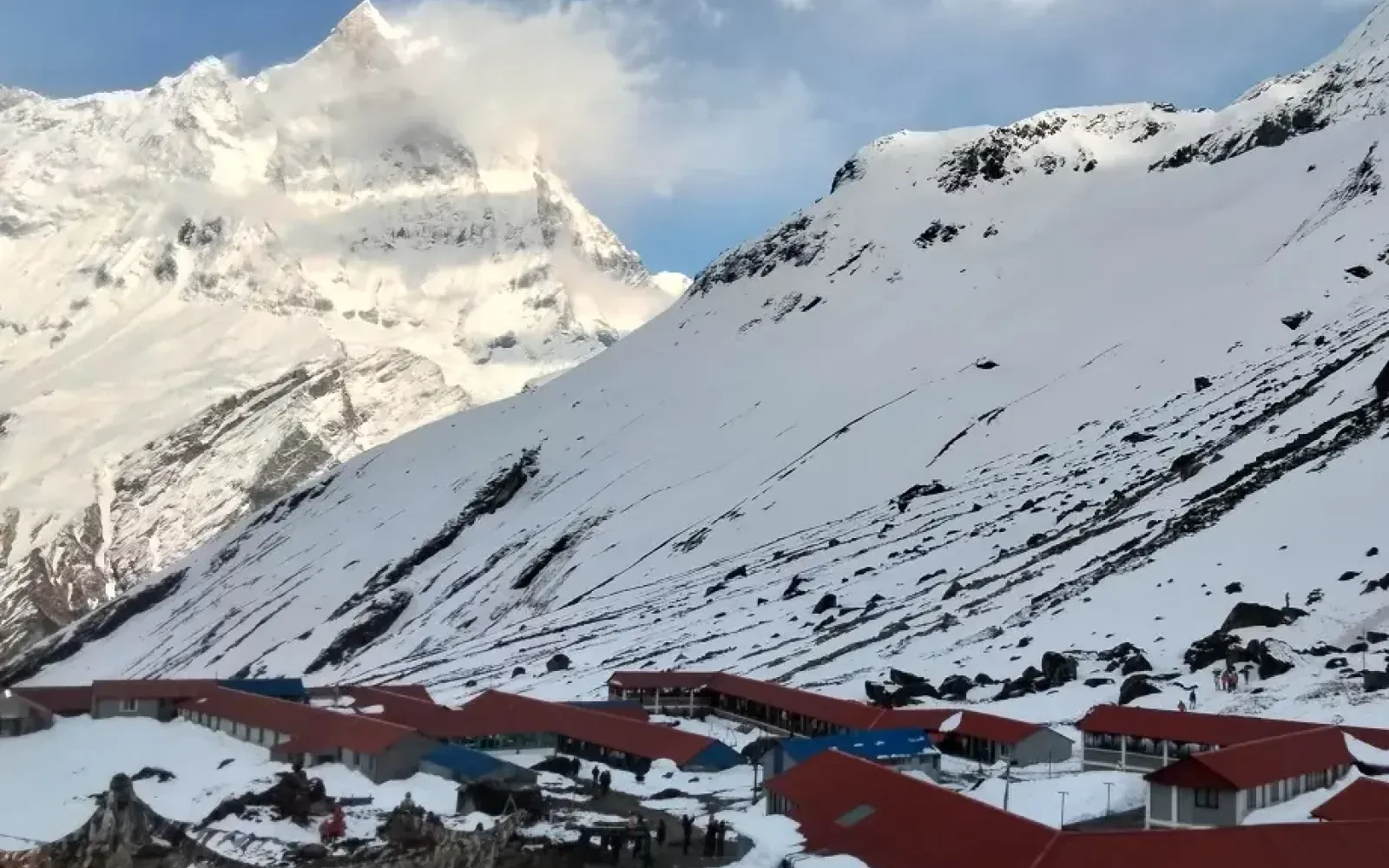
Meanwhile, the Annapurna Base Camp (ABC) trek via Jhino Danda (1,780 m / 5,840 ft) provides a quiet and less crowded trek. Trekkers can take a jeep ride from Pokhara to Jhino Danda, which takes approximately 3–4 hours. The public jeep costs NPR 1,000–1,500, while the private jeep costs NPR 7,000–10,000. There are also buses available from Pokhara to Jhino Danda for NPR 500–700 for people who want to travel more economically. From the time the trekkers arrive, they are welcomed by the thick terraced fields and tiny villages that enrich the cultural experience.
Moreover, the Jhino Danda route is also famous for natural hot springs along the route, near the trekking path. Trekkers can soak in warm waters with surrounding views of hills and forests after days of long walking. The springs help in easing sore muscles, a requirement for multi-day treks. The route passes through Gurung and Magar villages, and trekkers are able to learn about village life. Villagers are welcoming and often share stories, food, and tea, which provides authenticity to the trek.
Furthermore, the trek from Jhino Danda to Chhomrong (2,170 m / 7,119 ft) is approximately 12 kilometers. Trekkers take a gradual ascent, allowing easier acclimatization. Along the way, the trail winds through dense rhododendron forests and bamboo jungles. The route offers good views of Annapurna South (7,219 m / 23,684 ft) and Machapuchhre (6,993 m / 22,943 ft). As it is, photography hobbyists can capture great mountain scenery images while experiencing moderate trek difficulty.
Additionally, the trekking continues from Chhomrong to Himalaya Hotel (2,920 m / 9,580 ft), which is approximately 7 kilometers. This section is a mix of ups and downs with picturesque views. Teahouses along this trail provide hot food, comfortable rooms, and resting places. Although fewer trekkers use this path compared to the Ulleri path, the peaceful surroundings make it appealing. There are Himalayan giants like Hiunchuli (6,441 m / 21,129 ft) and Annapurna I (8,091 m / 26,545 ft) looming large, making for a stunning backdrop.

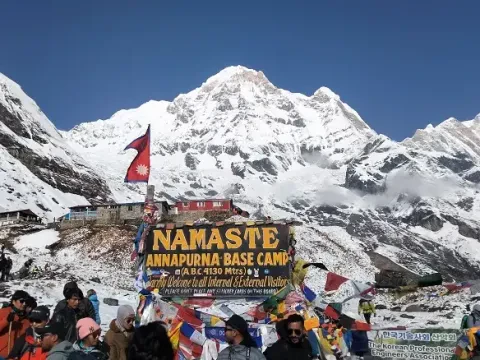
Then, a trek of some 6 kilometers from Himalaya Hotel to Annapurna Base Camp (4,130 m / 13,550 ft). Although challenging with the height gained, trekkers are helped by the gentle rise and acclimatization of the last couple of days. Panoramas of Machapuchhre (6,993 m / 22,943 ft), Annapurna South (7,219 m / 23,684 ft), and Annapurna I (8,091 m / 26,545 ft) meet the trekker at every bend. The ABC campsite provides a 360-degree breathtaking view of surrounding peaks, ideal for sunrise or sunset photography.
Additionally, the Jhino Danda path is the shortest ABC trek from Pokhara. The jeep ride reduces trekking time significantly compared to the Ulleri path. Therefore, trekkers with fewer days can complete it in 7–8 days. Typical itineraries include Pokhara to Jhino Danda, Jhino Danda to Chhomrong, Chhomrong to Himalaya Hotel, Himalaya Hotel to ABC, and back the same way. Flexibility allows trekkers space to adjust their pace based on experience and physical condition.
Additionally, the path is less commercialized, with fewer teahouses that are crowded. Visitors who want isolation, cultural experience, and natural hot springs prefer this path. Moderate difficulty, gradual inclines, and picturesque scenery contribute to safety and enjoyment. Trekkers also get to see genuine Nepalese hospitality, which is usually lacking on more crowded trails.
In brief, the Annapurna Base Camp trek via Jhino Danda is a scenic, tranquil, and culturally revealing journey. Due to jeep and bus accessibility from Pokhara, natural hot springs, gradual trail gradients, and stunning mountain vistas, this route is perfect for trekkers seeking a tranquil experience. The trek provides a combination of adventure, photography, and village-life experience that is as rewarding as any ABC trekking adventure in Nepal.
First and foremost, the Annapurna Base Camp trek via Ulleri (2,070 m / 6,791 ft) is also one of the most visited routes due to its mythological sunrise views and developed facilities. Trekkers can start from Pokhara and drive to Nayapul and then to Ulleri via jeep, which costs NPR 7,000–10,000 for private journeys and NPR 1,000–1,500 for shared journeys. Alternatively, Pokhara–Nayapul- Ulleri buses are NPR 500–700. But, if you choose to do the trek then climbs steeply up Ulleri village, famous for its stone steps, which total more than 3,000 steps. This challenging start rewards trekkers with stunning mountain views and cultural experience.
Moreover, the trail passes through Ghorepani (2,850 m / 9,350 ft), a trekkers' hub for the Poon Hill sunrise viewpoint. The detour to Poon Hill (3,210 m / 10,531 ft) offers panoramic sunrise views of Annapurna I (8,091 m / 26,545 ft), Dhaulagiri (8,167 m / 26,795 ft), and Machapuchhre (6,993 m / 22,943 ft). Most trekkers time their climb to witness early morning sunrises, so it is one of Nepal's most photographed spots. Teahouses at Ghorepani offer food, warm lodging, and social interaction with fellow trekkers.
Besides, the trek continues from Ghorepani to Chhomrong (2,170 m / 7,119 ft) and onwards to Himalaya Hotel (2,920 m / 9,580 ft). The approximately 15-kilometer distance includes gradual ups and short downs. Scenery is dominated by glimpses of Annapurna South (7,219 m / 23,684 ft) and Hiunchuli (6,441 m / 21,129 ft). The path is more crowded than Jhino Danda but has the upside of uniform teahouse facilities and trail signs.
Additionally, the hike from Himalaya Hotel to Annapurna Base Camp (4,130 m / 13,550 ft) follows the same route as Jhino Danda. Trekkers face the same altitude challenges, but acclimatization from previous gains reduces the threat of altitude sickness. The summit offers breathtaking 360-degree views of Machapuchhre, Annapurna I, and surrounding peaks. The route suits trekkers who prefer scenic viewpoints and social trekking atmospheres.

Subsequently, the Ulleri route to ABC covers a longer distance to ABC, approximately 40 kilometers including the Poon Hill detour. Trekkers typically spend 8–10 days completing the journey, depending on pace. Despite the longer distance, well-developed trail facilities and frequent rest stops improve comfort. The stone steps of Ulleri remain a key challenge, testing endurance and leg strength. Trekkers benefit from clear trail markings and readily available teahouses.
Besides, the Ulleri trail provides traditional sunrise photography that fascinates global trekkers. Poon Hill sunrise is among Nepal's most photographed landscapes. Even though the trail is busier, it also enables social interactions and sharing trekking experiences with overseas tourists. There exist a number of teahouses, warm food, and local staff guidance.
Moreover, the Ulleri trail also exposes trekkers to Nepalese culture since there are villages along the route. The villagers welcome visitors with tea and cultural stories. The trekking route winds through forests, rivers, and terraced fields, showcasing different ecosystems. Combined with mountain views, the trek is a combination of adventure, culture, and photography.
Lastly, the Annapurna Base Camp trek via Ulleri is a popular, scenic, and social trekking experience. Jeep and bus access from Pokhara, challenging stone steps, iconic Poon Hill sunrise, and well-established teahouses suit it ideally for first-time trekkers and photography enthusiasts. The longer distance and elevation earlier on make it a challenging but rewarding physically demanding experience. Ulleri remains the trail of choice for those seeking classic mountain scenery and active social interaction along the trail.
Here, the Jhino Danda (1,780 m / 5,840 ft) and Ulleri (2,070 m / 6,791 ft) trails are compared by trekkers in planning the Annapurna Base Camp (ABC) trek. Both trails culminate at ABC (4,130 m / 13,550 ft) but provide a different experience. Jhino Danda is shorter, less crowded, and has natural hot springs, while Ulleri is busier and goes over Poon Hill (3,210 m / 10,531 ft). Both trails start with the transfer from Pokhara. A group jeep from Pokhara to Jhino Danda is NPR 1,000–1,500, or a private jeep is NPR 7,000–10,000. Thus, a jeep to Ulleri via Nayapul is NPR 7,000–12,000 private and NPR 1,000–1,500 shared. Buses are available to both starting points for NPR 500–700.
Additionally, landscape changes significantly along the two routes. Jhino Danda has serene village trails, tiered fields and rhododendron forests. Ulleri has steep stone steps, Poon Hill views, and forest trails. Annapurna South (7,219 m / 23,684 ft), Machapuchhre (6,993 m / 22,943 ft), and Hiunchuli (6,441 m / 21,129 ft) loom over vistas down both routes. But Ulleri is more dramatically viewed in the first half due to steep ascents and ridge views. Jhino Danda provides gentle ascents, so hikers have the capacity to appreciate the views without undue effort.
Also, difficulty levels differ. Ulleri trail involves walking over over 3,000 stone steps in close succession, and it demands strong legs and stamina. Jhino Danda offers gentler slopes and rolling hills instead. Both trails converge at Chhomrong (2,170 m / 7,119 ft) before Himalaya Hotel (2,920 m / 9,580 ft) and ABC. Acclimatization is generally less strenuous for hikers on the Jhino Danda path since elevation gain is gradual. Ulleri demands initial effort but rewards trek members with sunrise vistas.
Also, crowd numbers and facilities vary. Ulleri is heavily trekker-traveled from around the globe, with numerous teahouses, food, and social engagement. Jhino Danda has fewer travelers, with the possibility for solitude and peaceful nights. Teahouses on Jhino Danda offer limited facilities but excellent local service. Both trails have hot meals and lodgings, but Ulleri has more business-style accommodations.
Next, each way is differentiated by unique features. Jhino Danda has natural hot springs ideally situated after an exhausting hike. Ulleri features stone stairs, a required test of stamina for hikers. The sunrises on Poon Hill provide photo opportunities never to be forgotten by Ulleri trekkers. Jhino Danda emphasizes an untroubled experience with exposure to culture in Gurung and Magar villages.

Also, distance and time differ. Jhino Danda to ABC is 25 kilometers, covered in 3–4 days. Ulleri to ABC is around 40 kilometers, with Poon Hill, covered in 4–5 days. Jeep or bus travel shortens initial trekking distances, and both are possible for varying degrees of physical fitness.
In addition, accommodation and food options influence choices. Ulleri’s higher popularity ensures reliable meals, hot showers, and more teahouses. Jhino Danda has fewer facilities, emphasizing authenticity and quiet nights. Trekkers should book during peak seasons, as Ulleri can become crowded. Both routes offer Nepalese cuisine, including dal bhat, momo, and tea.
Finally, the Jhino Danda and Ulleri trekking routes provide distinctive ABC experiences. Jhino Danda is quieter, shorter, with hot springs, while Ulleri has stone steps, sunrise over Poon Hill, and group trekking. Choice depends on solitude preferences, views, difficulty level, and cultural interaction. Both routes converge at Chhomrong, which allows access to ABC's panoramic 360-degree range of mountain scenery. Budget, physical fitness, and desired experience ultimately determine the route.
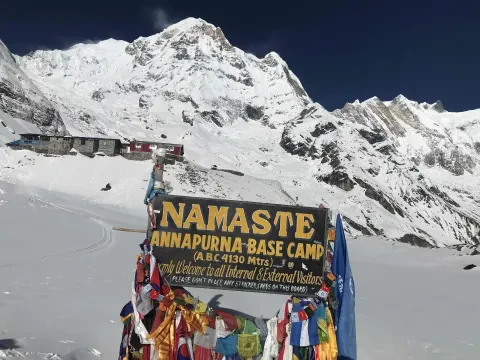
Thus, the choice of best route to Annapurna Base Camp (ABC) (4,130 m / 13,550 ft) is a matter of scenery, difficulty, and experience preference. Alternatives are via Jhino Danda (1,780 m / 5,840 ft) or Ulleri (2,070 m / 6,791 ft). Both routes start close to Pokhara with jeep and bus transport options. Jhino Danda shared jeeps cost NPR 1,000–1,500 and private jeeps NPR 7,000–10,000. Private jeeps via Nayapul to Ulleri are NPR 10,000–12,000 and shared NPR 1,000–1,500. Buses to both destinations are cost-effective, NPR 500–700.
Additionally, the Jhino Danda route is ideal for trekkers seeking solitude and cultural exposure. The trek passes through Gurung and Magar traditional villages, rice terraces, and rhododendron forest. Trekkers relax in natural hot springs of Jhino Danda after long walks. Climbs are gradual, allowing acclimatization to higher altitudes such as Chhomrong (2,170 m / 7,119 ft) and Himalaya Hotel (2,920 m / 9,580 ft). The trek is about 25 kilometers to ABC, normally covered in 3–4 days.
Similarly, the Ulleri route is also popular due to Poon Hill (3,210 m / 10,531 ft) sunrise scenery. The trail has stone steps that are steep in the initial section, challenging physical stamina. Ghorepani (2,850 m / 9,350 ft) is a highlight with many teahouses and social amenities. Climbers ascend to Poon Hill from Ghorepani, with breathtaking views of Annapurna South (7,219 m / 23,684 ft), Machapuchhre (6,993 m / 22,943 ft), and Dhaulagiri (8,167 m / 26,795 ft). This journey takes approximately 40 kilometers to ABC, typically 4–5 days.
In addition, the two trails converge at Chhomrong and continue to Himalaya Hotel and ABC. The final section to ABC is identical, offering unending views of surrounding peaks. Machapuchhre, Annapurna I (8,091 m / 26,545 ft), and Hiunchuli (6,441 m / 21,129 ft) occupy the horizon. Consequently, trekkers reach ABC with a satisfactory 360-degree panorama, be it their preferred starting route.

Apart from that, crowd and difficulty levels dictate the best route. Jhino Danda has a peaceful and moderate ascent, perfectly suitable for beginners. Ulleri is steep and busy but perfect for photographers and social hikers. The trails both have reliable teahouses to offer food and accommodation. Duration, altitude gain, and effort differ but both provide safe and rewarding treks with good acclimatization.
Besides, special attractions distinguish the two trails. Jhino Danda is unique with hot springs, villages, and peaceful trail. Ulleri offers Poon Hill sunrise, stone-step climbs, and panoramic views. Both tours rely on whether peace or famous photo spots are more important. Jeep or bus drives from Pokhara provides both trails for varying budgets and timetables.
Also, itinerary alternatives are not fixed. Normal Jhino Danda treks would include Pokhara–Jhino Danda, Jhino Danda–Chhomrong, Chhomrong–Himalaya Hotel, Himalaya Hotel–ABC, and the return trip on the same route. The Ulleri path will typically have Pokhara–Nayapul–Ulleri, Ulleri–Ghorepani, Ghorepani–Poon Hill, Poon Hill–Chhomrong, Chhomrong–Himalaya Hotel, Himalaya Hotel–ABC. The time would be 7 to 10 days depending upon pace, acclimatization, and sightseeing detours.
Finally, the best itinerary to ABC is a function of trekker preferences. Jhino Danda is perfect for solitude, gentle climbs, and relaxation at hot springs. Ulleri is perfect for adventure-seekers craving difficult climbs, sunrise on famous Poon Hill, and communal trekking. Each of the two routes joins together at ABC with fantastic mountain scenery and memories. Budget, schedule, and style of trekking ultimately determine the preferred itinerary.
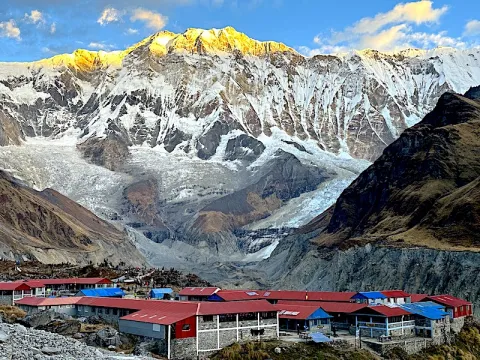
Here, trekkers planning the Annapurna Base Camp (ABC) (4,130 m / 13,550 ft) trek compare the Jhino Danda (1,780 m / 5,840 ft) and Ulleri (2,070 m / 6,791 ft) routes. Both trails converge at Chhomrong (2,170 m / 7,119 ft) and proceed to Himalaya Hotel (2,920 m / 9,580 ft) and ABC. Route choice determines distance, vistas, congestion, and trekking grade. Jeep rides from Pokhara open both trails, with shared jeeps to Jhino Danda NPR 1,000–1,500 and private ones NPR 7,000–10,000. To Ulleri via Nayapul, shared jeeps are NPR 1,000–1,500, and private ones NPR 10,000–12,000. Buses travel to both destinations for NPR 500–700, offering economy alternatives.
Actually, the Jhino Danda route is also shorter, approximately 25 kilometers from the start to ABC, and Ulleri is about 40 kilometers with the Poon Hill (3,210 m / 10,531 ft) sidetrip. Gradual slopes of Jhino Danda are less difficult to acclimatize to. Trekkers walk through rhododendron forest, woodland, and peaceful villages. Alternatively, Ulleri has early trail stone stairs that climb steeply and challenge endurance and leg strength. The trail passes through Ghorepani (2,850 m / 9,350 ft) and Poon Hill, offering traditional sunrise vistas of Annapurna South (7,219 m / 23,684 ft), Machapuchhre (6,993 m / 22,943 ft), and Dhaulagiri (8,167 m / 26,795 ft).
Furthermore, crowds and infrastructure differ. Ulleri is busier with more populated trails and better-appointed teahouses. Jhino Danda receives fewer tourists and provides a serene environment. Meals and lodging are available on both trails but emphasize authenticity and host culture on Jhino Danda. The nearby hot springs add a unique relaxation experience. Soaking is an option for trekkers after trekking, creating more comfort and recuperation.
Also, the difficulty comparison is in Jhino Danda's favor for moderate trekkers. Ulleri demands early hardship with the steep ascent, but the reward is panoramic mountain scenery. Both trails eventually meet on the main ABC trail from Chhomrong, and thus exposure at higher altitudes is identical. Trekkers from Jhino Danda have gradual acclimatization, reducing the risk of altitude sickness. Ulleri trekkers face steep elevation gain but enjoy beautiful sunrise views.
Besides, scenery along both treks is interesting but varied. Jhino Danda provides serene village landscapes, green valleys, and forests. Ulleri provides a dramatic ridge courses and distant mountain views. Annapurna South (7,219 m / 23,684 ft), Hiunchuli (6,441 m / 21,129 ft), and Machapuchhre (6,993 m / 22,943 ft) are visible on both treks. Poon Hill provides the classic photo opportunity exclusive to Ulleri trekkers.
Also, itinerary and logistical flexibility work to Jhino Danda's advantage for a shorter trek. Typical itineraries are Pokhara–Jhino Danda, Jhino Danda–Chhomrong, Chhomrong–Himalaya Hotel, Himalaya Hotel–ABC, and return by the same route. Ulleri itineraries can include Pokhara–Nayapul–Ulleri, Ulleri–Ghorepani, Ghorepani–Poon Hill, Poon Hill–Chhomrong, Chhomrong–Himalaya Hotel, Himalaya Hotel–ABC. From 7 to 10 days depending on the pace, acclimatization, and side excursions.

Also, cultural immersion is not the same. Jhino Danda provides exposure to Gurung and Magar villages with real Nepalese experiences. Ulleri has villages but is more touristy due to heavy trekker traffic. Both treks provide Nepalese food, tea houses, and bare minimum amenities. Advance accommodation booking is necessary during peak season, especially for Ulleri.
Finally, choosing the best trail is a question of priorities for Annapurna Base Camp Trek’s success. Jhino Danda is suitable for hikers seeking calmness, hot springs, and moderate difficulty. Ulleri is ideal for thrill-seekers, photographers, and social trekkers. Both trails converge at ABC, guaranteeing stunning mountain scenery regardless of which path is followed. Both routes present different experiences in total, with the decision depending on physical ability, timing, and taste.
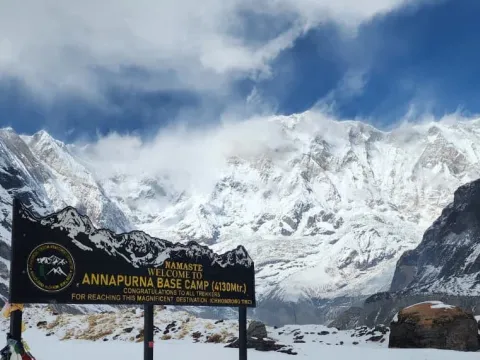
Meanwhile, the Jhino Danda hot springs trek is a deviation of the Annapurna Base Camp (ABC) (4,130 m / 13,550 ft) trek. It begins with a jeep ride from Pokhara to Jhino Danda (1,780 m / 5,840 ft) and is 3–4 hours. Shared jeeps cost NPR 1,000–1,500, and private jeeps cost NPR 7,000–10,000. Buses cost NPR 500–700 and are a better budget option. Jhino Danda is renowned for its natural hot springs, located just near the main trekking trail. The hot springs provide a soothing atmosphere for tired muscles and are a popular choice among trekkers wanting to relax.
Further, the Jhino Danda to Chhomrong trek (2,170 m / 7,119 ft) is approximately 12 kilometers long. The slope is slight, which allows trekkers to acclimatize without any hindrance. There are rhododendron woods, bamboo thickets, and terraced villages along the way, all contributing to scenery variety. Annapurna South (7,219 m / 23,684 ft) and Machapuchhre (6,993 m / 22,943 ft) loom above, providing stunning panorama views to trekkers. From Chhomrong, trekkers trek to Himalaya Hotel (2,920 m / 9,580 ft) and ABC (4,130 m / 13,550 ft), all with gradual climbs and loads of teahouse luxury.
Also, the hot springs are a unique feature of this trail. Trekkers can soak in hot mineral water at Jhino Danda before embarking on the climb. This relaxes muscle tension, reduces soreness, and overall enhances trekking comfort. The springs are nearby village lodgings to walk to, providing convenience. The hot springs at Jhino Danda are different from the Ulleri trail, which lacks hot springs.
Secondly, the trek is based on cultural immersion. The villages along the path are populated by Gurung and Magar inhabitants. Trekkers have the opportunity to intermingle with the locals, witness traditional farming, and enjoy home-cooked meals. Hostility is one of the greatest attractions, since families are likely to invite trekkers for snacks and tea. The path promises authentic village experiences, unlike the commercial Ulleri path.
Furthermore, difficulty and logistics make this route suitable for moderately experienced trekkers. Steady ascents rule out early fatigue, and teahouse accommodations are standard along the way. The entire distance from Jhino Danda to ABC is approximately 25 kilometers, commonly completed over 3–4 days. Jeep and bus travel from Pokhara offer flexibility for short-term or extended itineraries. Added rest and relaxation come in the form of hot springs, easily accessible by trekkers before tackling the climb to higher terrain.
In addition, scenery completes the experience. Terraced fields, forests, and river crossing create a diversified trekking landscape. Himalayan views of Annapurna I (8,091 m / 26,545 ft), Hiunchuli (6,441 m / 21,129 ft), and Machapuchhre (6,993 m / 22,943 ft) encircle the topography. Serene mornings and less used trails create chances for meditation, photography, and wildlife sightings. The hot springs area offers peaceful surroundings, perfect for relaxation before climbing the higher altitude.
Finally, the Jhino Danda hot springs trek provides relaxation, cultural exposure, and scenic hiking. Moderate in difficulty, combined with an accessible jeep or bus ride from Pokhara and authentic villages, makes this course viable for trekkers of every skill level. Hot springs provide unparalleled ease and thrill not found on Ulleri or Poon Hill treks. In general, this trek is suited for individuals who want to have a rejuvenating, culturally rich, and picturesque Annapurna Base Camp trekking experience.
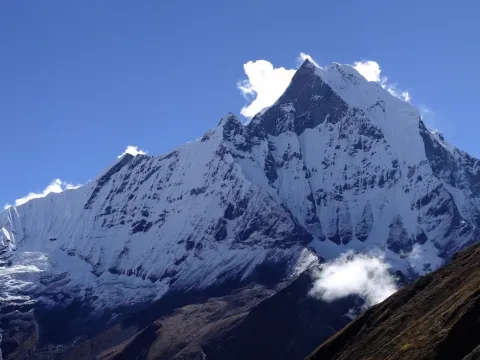
Thus, the Ulleri stone steps trek is a prominent trail for the Annapurna Base Camp (ABC) (4,130 m / 13,550 ft) trek. The trek begins from Pokhara with a jeep ride to Nayapul, which takes around 1.5–2 hours. Shared jeeps cost NPR 500–1,000, and private jeeps cost NPR 5000–7,000. Buses from Pokhara to Nayapul are NPR 500–700. From Nayapul, the trekkers begin ascending steep stone staircases to Ulleri village (2,070 m / 6,791 ft). These stairs are over 3,000 and form the first challenging section of the trek.
Further, the Ulleri stone steps provide a physical workout that acquaints trekkers with high altitudes. The ascent is through dense rhododendron woods and terraced fields. Annapurna South (7,219 m / 23,684 ft) and Hiunchuli (6,441 m / 21,129 ft) tower over the woods, motivating hikers. The route is clearly marked, and numerous teahouses lie along the route for rest and refueling. Tea, snack foods, and local cuisine are served, which bring energy to the ascent.
Furthermore, the stone steps trek connects with Ghorepani (2,850 m / 9,350 ft), the base camp for Poon Hill (3,210 m / 10,531 ft). Trekkers typically take an early morning short trek to Poon Hill to observe sunrise over Annapurna I (8,091 m / 26,545 ft), Dhaulagiri (8,167 m / 26,795 ft), and Machapuchhre (6,993 m / 22,943 ft). Stone steps prepare trekkers for more strenuous physical activities. The challenging portion is well worth the effort when breathtaking views are ultimately attained.
Also, the Ulleri stone steps trek is renowned for social trekking. Multiple trekkers begin together, and hence it is an inspiring environment. Teahouses in Ghorepani and Ulleri accommodate more than a single group, further encouraging interaction. Compared to the farther-off Jhino Danda trail, Ulleri offers a social affair, ideal for solo trekkers and photographers. Mountain views, colorful forest, and cultural encounters combine to make the trail worthwhile.
Apart from this, the trail continues from Ghorepani to Chhomrong (2,170 m / 7,119 ft) and Himalaya Hotel (2,920 m / 9,580 ft), and continues on to ABC. Though the stone stairs are for just the initial segment, they set the pace and build stamina for the rest. Gradually rising and steep sections follow so the trekkers can recuperate from the hard beginning. The trail provides uninterrupted views of Machapuchhre (6,993 m / 22,943 ft), Annapurna South (7,219 m / 23,684 ft), and surrounding summits.
Furthermore, accommodation and logistics in Ulleri are convenient. Shared or separate jeeps from Pokhara make it convenient to reach Nayapul. Teahouses near the stone steps trails provide accommodation, hot food, and hot drinks. There are unlimited photography and sightseeing opportunities. Trekkers can enjoy village life while viewing cultural and natural scenery.
Apart from that, the trek to Ulleri stone steps also offers iconic photo shoots. Sunrises on Poon Hill, valley views, and sweeping ridges make it a premium photo-shoot ABC trail. Stone steps in themselves appear on different trekking websites and social media posts. Due to the all-natural scenery, physical activity, and well-trodden trail, it's ideal for travelers.
Finally, the trek via the Ulleri stone steps provides a scenic, demanding, and culturally rewarding ABC route. The trek can be accessed via Jeep or bus from Pokhara, strenuous climbs, dawn views of Poon Hill, and the luxury of teahouse facilities. This trek is most suitable for adventure, photography, and social treks. The stone steps are physical tests but also milestones towards spectacular views and cultural encounters.
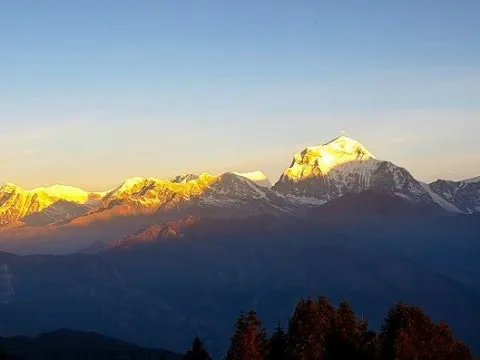
Mainly, the shortest route to Annapurna Base Camp (ABC) (4,130 m / 13,550 ft) begins with a jeep ride from Pokhara to Jhino Danda (1,780 m / 5,840 ft). The jeep ride takes around 3–4 hours, reducing trekking distance significantly. Shared jeeps cost NPR 1,000–1,500, and private jeeps NPR 7,000–10,000. Buses are also available at a charge of NPR 500–700. Trekkers with limited time can use this route to come to ABC effectively with still getting natural beauty and culture.
Moreover, the Jhino Danda trail is about 25 kilometers to ABC. Climbing is gradual and facilitates moderate amounts of fitness. Trekkers traverse terraced farmland, rhododendron forest, and traditional Gurung and Magar villages. The trail is less crowded compared to the Ulleri trail, giving seclusion and authentic village experiences. There are hot springs surrounding Jhino Danda that contribute relaxation and recovery, a difference experienced on shorter or busier trails.
Furthermore, trekkers proceed from Jhino Danda to Chhomrong (2,170 m / 7,119 ft) on gentle trails. Annapurna South (7,219 m / 23,684 ft), Machapuchhre (6,993 m / 22,943 ft), and Hiunchuli (6,441 m / 21,129 ft) dominate the skyline. The trail consists of ups and downs with mild descends, which is easy for trekkers to stroll at their own pace. Teahouses along the route provide hot meals, clean rooms, and resting places.
Additionally, the section between Chhomrong and Himalaya Hotel (2,920 m / 9,580 ft) is about 7 kilometers. The trekker gets moderate altitude gains, pretty mountain landscapes, and regular trails. The track is less crowded, so it is easy for arrangements to be made at any lodging. Photographers have unobstructed views of Annapurna South and Machapuchhre, while culture enthusiasts have interactions with locals villagers.
Likewise, the final climb of 6 kilometers from Himalaya Hotel to ABC comes next. While a challenging climb due to high altitude, pre-acclimatization allows the climb to be relatively easy. Snow trail and rock trail are the experiences of trekkers providing a wonderful experience. Panoramic views of Annapurna I (8,091 m / 26,545 ft), Dhaulagiri (8,167 m / 26,795 ft), and Machapuchhre dominate the horizons at ABC. Campsite is an awe-inspiring 360-degree view of the mountains ideal for sunrise and sunset photography.
Also, the shortest route saves trekking days without a compromise on experience. Regular itineraries allow for 7–8 days of completion, jeep access, acclimatization, and exploration of ABC. The pace can be customized depending on fitness level as well as weather conditions by the trekkers. Slow climbs, hot springs, and moderate distances provide a comfortable walk.
Moreover, Jhino Danda trail is also about cultural encounter and relaxation. Nepalese villages along the path offer authentic food, Nepali tea, and encounters with Nepalese families. Less crowded paths equate to peaceful nights and uninterfered nature landscape. The jeep ride from Pokhara allows for early departure and convenience for individuals under tight schedules.
In addition, the hike is logistically convenient. Jeep and bus services from Pokhara cut down time and energy expenses. Overnight halts are suitable with the available accommodation along the way. Teahouses offer food, accommodations, and local guidance. The trail combines adventure, culture, and beauty well.
Finally, the shortest approach via Jhino Danda is appropriate for trekkers who seek efficiency, comfort, and beauty. Jeep or bus accessibility from Pokhara, gentle slopes, rice terraces, and hot springs make it highly convenient. It ensures safe acclimatization with a complete view of Annapurna South, Machapuchhre, and Annapurna I. The trek combines adventure, human contact, and nature, and hence the trekkers receive a very satisfying experience.
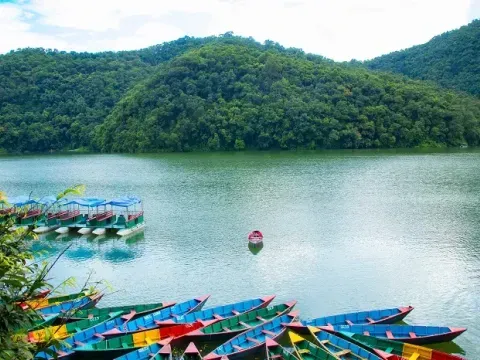
Meanwhile, planning the Annapurna Base Camp (ABC) (4,130 m / 13,550 ft) trek means selecting an itinerary that balances pace, acclimatization, and scenery. Preferred starting points are Jhino Danda (1,780 m / 5,840 ft) and Ulleri (2,070 m / 6,791 ft). Jeep and bus trips from Pokhara allow early starts. A shared jeep to Jhino Danda NPR 1,000–1,500, private jeeps NPR 7,000–10,000. To Ulleri via Nayapul, private jeeps NPR 10,000–12,000, shared ones NPR 1,000–1,500. Buses can be found for NPR 500–700. These options impact time, budget, and physical condition planning.
Also, a 7-day Jhino Danda trek is ideal for trekkers who are short on time. Day one includes Pokhara–Jhino Danda jeep journey and short acclimatization hike. Day two includes Jhino Danda to Chhomrong (2,170 m / 7,119 ft) through terraced fields and village tracks. Day three is from Chhomrong to Himalaya Hotel (2,920 m / 9,580 ft) through moderate ascents with views of Machapuchhre (6,993 m / 22,943 ft) and Annapurna South (7,219 m / 23,684 ft). Day four is from Himalaya Hotel to ABC (4,130 m / 13,550 ft), with panoramic mountain views. Two days, five and six, are allowed for the return descent through Chhomrong and Jhino Danda. Day seven concludes with jeep or bus travel to Pokhara.
Similarly, an 8–10-day itinerary via Ulleri is designed for trekkers who enjoy Poon Hill (3,210 m / 10,531 ft) sunrise views. Day one is Pokhara–Nayapul jeep or bus travel, and then hike to Ulleri (2,070 m / 6,791 ft) with overnight. Day two is ascending stone steps to Ghorepani (2,850 m / 9,350 ft). Day three is a dawn hike to Poon Hill for sunrise and return to Ghorepani. Day four proceeds to Chhomrong, day five to Himalaya Hotel, and day six to ABC. Descents on days seven to nine follow the same path, with room for rest or photography. This path is longer due to additional distance and altitude gain.
Besides, treks can be customized based on trekking interests. Adventure trekkers may include day trips such as Annapurna Sanctuary, hot springs at Jhino Danda, or village visits on the Ulleri trail. Photographers like to prioritize sunrise at Poon Hill, scenic valleys, and mountain views. Culture enthusiasts can include overnight stays at nearby villages for more local experiences.
Additionally, safety and acclimatization considerations dictate itinerary design. Gradual height gain through Jhino Danda allows trekkers to acclimatize to altitude before reaching ABC. In In fact, Ulleri is steeper initially, requiring controlled pace and early starts. Both routes provide sufficient rest and modest daily distances to avoid altitude sickness. Teahouses provide food, lodging, and advice from local staff.
Additionally, transport logistics influence the efficiency of the itinerary. Jeep rides to Jhino Danda save time and miles trekking, whereas Ulleri can take bus or jeep to Nayapul. Schedules for jeep rides are flexible to cater to early morning starts in order to have more daylight hours for hiking. Prices differ, and trekkers can opt for budget or private depending on preference.
Furthermore, itineraries must factor in weather and season. Spring (March–May) and autumn (September–November) offer clear skies, mild temperatures, and ideal trekking conditions. Monsoon or winter may require modifications, e.g., shorter daily hikes or extra rest days. Planning ahead ensures safe and pleasant trekking experiences.
Finally, ABC trek itineraries offer flexibility, scenic exposure, and cultural interaction. Brief itineraries via Jhino Danda are ideal for limited time, whereas longer Ulleri itineraries prioritize Poon Hill sunrise and social trekking. Both itineraries include accommodation, meals, and trekking support. Selecting the right itinerary offers optimal acclimatization, photography, and adventure, making the Annapurna Base Camp journey memorable.
Here, it is essential to know the distance between Jhino Danda (1,780 m / 5,840 ft) and Annapurna Base Camp (ABC) (4,130 m / 13,550 ft) to prepare for the trek. The total trekking distance is approximately 25 kilometers, making it one of the shortest ABC treks. A jeep ride from Pokhara to Jhino Danda saves time and energy on the trek. The public jeeps cost NPR 1,000–1,500, and private jeeps cost NPR 7,000–10,000. Buses also operate for NPR 500–700. This convenience makes Jhino Danda the preferred starting point for trekkers with fewer days.
Moreover, the trek from Jhino Danda to Chhomrong (2,170 m / 7,119 ft) is approximately 12 kilometers. The ascent is gentle, passing through terraced fields, villages, and forests of rhododendron. Annapurna South (7,219 m / 23,684 ft) and Machapuchhre (6,993 m / 22,943 ft) loom over the horizon, offering panoramic views to trekkers. Teahouses along the way act as rest areas, meal points, and lodging, making the climb comfortable.
Also, from Chhomrong to Himalaya Hotel (2,920 m / 9,580 ft), trekkers hike about 7 kilometers. The path involves moderate uphill treks and scenic downhill hikes, with views of Hiunchuli (6,441 m / 21,129 ft) and surrounding valleys. The trail is less crowded compared to the Ulleri route, offering tranquility and acclimatization. Trekking time for this section typically takes 3–4 hours depending on fitness levels and weather.
Lastly, the final section from Himalaya Hotel to ABC is approximately 6 kilometers. Trekkers ascend gradually to reach the Annapurna Sanctuary, going over glaciers, moraines, and rocky terrain. There is significant height gain, but gradual acclimatization in earlier days removes risk of high altitude sickness. The scenery is dominated by Machapuchhre, Annapurna I (8,091 m / 26,545 ft), and Annapurna South, with excellent photography possibilities.
Also, the total height gain from Jhino Danda to ABC is approx. 2,350 meters (7,710 ft). Moderate daily distances and gradual ascents make the trek feasible for moderately experienced trekkers. Natural hot springs at Jhino Danda provide relief, reducing muscle fatigue before the climb. Compared to Ulleri, the Jhino Danda route saves approximately 15 kilometers, hence is time-saving.
In addition, logistic ease adds to this route's popularity. Bus or jeep access from Pokhara enables early morning starts and adaptable itineraries. Standard ABC treks from Jhino Danda last 7–8 days, encompassing climb, acclimatization, and descent. The trail mixes adventure, culture, and exposure to scenery effectively. Villages on the trail offer immersive experiences, such as Nepalese food, tea, and hospitality.
Also, trekkers see diverse landscapes along the 25-kilometer path. Terraced fields, forests, rivers, and village tracks create visual interest. Machapuchhre, Annapurna South, Hiunchuli, and Annapurna I mountain peaks tower over vistas. Wildlife and local flora offer natural diversity. That the distance is moderate, the scenery is lovely, and the cultural experience is high makes Jhino Danda to ABC one of the most enjoyable routes.
Finally, knowledge of the Jhino Danda to ABC distance helps with itinerary planning, pacing, and logistics. Its relatively short 25-kilometer distance, gradual altitude gain, jeep and bus access from Pokhara, natural hot springs, and teahouse facilities combine to make for a leisurely trekking experience. It is ideal for trekkers who have fewer days to spare, average physical fitness, or a preference for less crowded, scenic, and culturally engaging trails. Overall, this route successfully balances accessibility, adventure, and breathtaking mountain scenery.
Here, the Ulleri to Annapurna Base Camp (ABC) (4,130 m / 13,550 ft) distance is a key factor in planning a trek. From Ulleri (2,070 m / 6,791 ft), it is ascending over 3,000 stone steps initially. Jeep rides from Pokhara to Nayapul take 1.5–2 hours, with shared jeeps NPR 1,000–1,500 and private cars NPR 10,000–12,000. Buses are also available for NPR 500–700. From Nayapul, trekkers trek to Ulleri, the gateway to Poon Hill (3,210 m / 10,531 ft) and ultimately ABC.
Besides, the total trekking distance from Ulleri to ABC via Poon Hill is approximately 40 kilometers. The longer route includes stone-step ascents, Ghorepani (2,850 m / 9,350 ft), Poon Hill summit, Chhomrong (2,170 m / 7,119 ft), Himalaya Hotel (2,920 m / 9,580 ft), and the final ABC segment. The gradual and steep ascents of this route offer a well-balanced experience of trekking with challenging and moderate sections. Annapurna South (7,219 m / 23,684 ft), Machapuchhre (6,993 m / 22,943 ft), and Dhaulagiri (8,167 m / 26,795 ft) have majesty over sweeping vistas along the route.
Also, the stone-step path segment from Ulleri to Ghorepani provides early trekking challenge. Dense rhododendron forest, village paths, and cultivation fields form scenery diversity. Teahouses en route have hot meals, lodging, and resting places. Early-morning hikes to Poon Hill provide sunrise views of Annapurna, Dhaulagiri, and Machapuchhre for better photography opportunities. This segment is also ideal for acclimatization before higher elevations.
Also, between Ghorepani and Chhomrong, trekkers trek around 12 kilometers on mixed ascents and descents. There are rivers, suspension bridges, and village encounters to offer cultural immersion in this section. The relaxed tempo here helps in recovering from the previous steeper climbs. Himalaya Hotel lies 7 kilometers ahead with reliable teahouse lodges with food and hot drinks. This phase is ideal for resting before the final push to ABC.
Besides, the final section from Himalaya Hotel to ABC is about 6 kilometers long. Steep as it may be, pre-acclimatization reduces altitude sickness. Trekkers cross glaciers, boulder fields, and open valleys, with great views of Annapurna I (8,091 m / 26,545 ft), Machapuchhre, and Hiunchuli (6,441 m / 21,129 ft). The overall climb from Ulleri (2,070 m / 6,791 ft) to ABC is about 2,060 meters (6,759 ft). Daily distances range from 6–12 kilometers, and hence the hike is feasible in 8–10 days.
Besides, logistics control the efficiency of trekking. Jeep or bus travel from Pokhara to Nayapul facilitates early starts and reduces trekking time. Lodges and teahouses at Ulleri, Ghorepani, Chhomrong, and Himalaya Hotel are comfortable. The pace may be varied or rest days inserted based on weather, physical condition, or sightseeing desires. Spring and autumn are optimal in terms of weather and temperature depending on the season.
Furthermore, this trek provides natural and cultural exposure. Villages along the route shed light on Gurung and Magar traditions. Forest trails, stone bridges, and terraced fields provide diverse trekking scenery. Sunrise at Poon Hill and panoramic peaks are major attractions, attracting shutterbugs globally. This combination of nature, culture, and physical activity results in Ulleri to ABC via Poon Hill being a rewarding trek.
Finally, Ulleri to ABC is long but scenic and iconic. Distance of approximately 40 kilometers with diverse landscapes, stone-step ascents, Poon Hill sunrise, and expansive peaks assures a memorable experience. Jeep or bus transportation from Pokhara, regular teahouse overnight stays, and gradual acclimatization choices make it a safe and wonderful trek. Generally, Ulleri via Poon Hill is ideal for adventure seekers, photographers, and social trekkers seeking long, scenic treks to ABC.
To begin with, whether to start from Jhino Danda (1,780 m / 5,840 ft) or Ulleri (2,070 m / 6,791 ft) for the Annapurna Base Camp (ABC) (4,130 m / 13,550 ft) trek depends on many considerations. Both trails converge at Chhomrong (2,170 m / 7,119 ft) and then proceed to Himalaya Hotel (2,920 m / 9,580 ft) and ABC. Trekking distance, difficulty, scenery, crowd, cultural immersion, and logistics decide. Jeep transport from Pokhara renders both accessible. Jhino Danda shared transport through shared jeeps costs NPR 1,000–1,500 and private jeeps NPR 7,000–10,000. For Ulleri, a private jeep is NPR 10,000–12,000, shared NPR 1,000–1,500, and for buses, it is NPR 500–700.
Also, the important things to be considered are distance and duration. Jhino Danda offers a shorter route of around 25 kilometers to ABC, completed in 7–8 days with acclimatization. Ulleri, via Poon Hill (3,210 m / 10,531 ft), is around 40 kilometers and 8–10 days. Those with limited time or reasonable physical capacity prefer to take Jhino Danda because there are shorter distances and less steep climbs. Ulleri suits those who want long trekking experiences, sunrise photography, and panoramic views.
In addition, difficulty and terrain also differ widely. Jhino Danda goes through moderate climbs, terraced fields, and village trails, so it is easier on the legs. Ulleri offers steep stone steps at the beginning of the trek, testing endurance and stamina. The two trails converge at Chhomrong before the final challenging section to ABC. The Jhino Danda trail is preferable for less experienced trekkers or families, while Ulleri offers adrenaline-seekers an early physical test and improved vistas.
Also, scenery and highlights vary. Jhino Danda features peaceful forest trails, villages on the slope, and natural hot springs, ideal for unwindings. Ulleri features Poon Hill sunrise, viewpoint mountain scenery of Annapurna South (7,219 m / 23,684 ft), Machapuchhre (6,993 m / 22,943 ft), and Dhaulagiri (8,167 m / 26,795 ft). Photography is superior along Ulleri, but peace and cultural experience are superior on Jhino Danda.
Moreover, accommodation and crowd volume determine experience. Ulleri is quite visited, and trails and teahouses are busier. Jhino Danda is less busy, providing solitude and real village experiences. Teahouses along every trail provide food, accommodation, and resting facilities. Hot springs near Jhino Danda offer a unique wellness advantage. Budget trekkers may find Jhino Danda more suitable for being less crowded due to lower teahouse prices.
Likewise, cultural immersion is important in both paths. Jhino Danda passes through Gurung and Magar villages with the chances of experiencing indigenous ways of life. Ulleri offers village interactions too but is more commercialized due to heavy trekking traffic. Food, hospitality, and indigenous customs spice up both paths. Trekkers can taste dal bhat, momo, and tea and observe local traditions.
Additionally, logistics and flexibility work to the advantage of Jhino Danda for a time-saving hike. Bus or jeep travel from Pokhara shortens distances, and gradual climbs enhance acclimatization. Ulleri is a more and longer challenging alternative but rewards with iconic vistas and Poon Hill photo shoots. Both routes are seasonally safe in spring and autumn but are vulnerable to weather effects along the trail.
Lastly, Jhino Danda and Ulleri are compared to reveal obvious differences. Jhino Danda is shorter, quieter, less strenuous, has hot springs, and offers true cultural experiences. Ulleri is longer, physically demanding, has sunrise at Poon Hill and Himalayan mountain range views, and is ideal for photographers and people-focused trekkers. Lastly, the best trekking route varies based on trekking intentions, fitness, time available, and preference for peace and quiet or iconic views. Both routes ensure safe, scenic, and rewarding treks to Annapurna Base Camp.
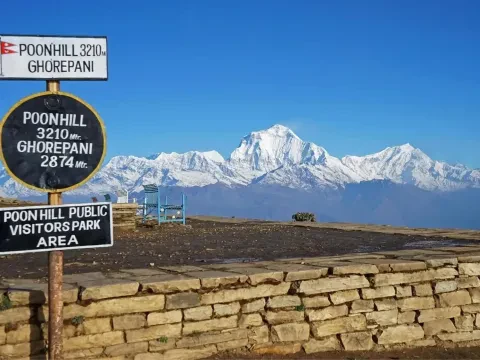
Here, comparison between the task and terrain of the Annapurna Base Camp (ABC) (4,130 m / 13,550 ft) hike via Jhino Danda (1,780 m / 5,840 ft) and Ulleri (2,070 m / 6,791 ft) is warranted for tourists. The two paths converge later at Chhomrong (2,170 m / 7,119 ft) and go on to Himalaya Hotel (2,920 m / 9,580 ft) before reaching ABC. Jeep trips from Pokhara to Jhino Danda are 3–4 hours with shared cost NPR 1,000–1,500 and private jeeps NPR 7,000–10,000. Ulleri is accessible on private jeeps at NPR 10,000–12,000 and shared at NPR 1,000–1,500. Bus to both the points is NPR 500–700.
Additionally, difficulty comparison suggests Jhino Danda as an easy trek. The ascent is gradual with gentle rises through terraced farm land and forest. Total distance from Jhino Danda to ABC is about 25 kilometers. Muscle fatigue reduction and relaxation are offered by hot springs along the way. Ulleri begins with physically strenuous rocky stone steps, though. Early elevation gain gives challenges to trekking groups but conditions them for higher altitudes. Total distance from Ulleri via Poon Hill (3,210 m / 10,531 ft) to ABC is about 40 kilometers, which takes 8–10 days.
Besides, Jhino Danda offers peaceful scene of rhododendron forests, streams, and peaceful villages. Annapurna South (7,219 m / 23,684 ft), Machapuchhre (6,993 m / 22,943 ft), and Hiunchuli (6,441 m / 21,129 ft) are viewed along the trek. Peacefulness of the trail offers photography, meditation, and wildlife watching. Ulleri, however, provides the panoramic movie shots like Poon Hill sunrise, which features Dhaulagiri (8,167 m / 26,795 ft), Annapurna I (8,091 m / 26,545 ft), and surrounding peaks. The populated trails provide a more social trekking experience.
Secondly, trail infrastructure affects trekking experience. Jhino Danda is less frequented by trekkers and thus quieter paths and less complicated arrangements of lodging. Ulleri is busy and busier teahouses, especially in peak season. Both treks provide meals, tea, and lodgings, but Jhino Danda prioritizes authenticity, and Ulleri is more touristy. Hot springs near Jhino Danda enhance the value of the trekking experience, offering exclusive wellness opportunities that Ulleri does not have.
Moreover, acclimatization factors favor Jhino Danda. The gradual increase in altitude allows trekkers to acclimatize comfortably with less chance of altitude sickness. Ulleri compels rapid elevation gain on the initial day, requiring early tempo and stamina. Both routes converge at Chhomrong before the final stretch to Himalaya Hotel and ABC, where elevation concerns are more even. Effective acclimatization ensures a safe and pleasurable trek.
And also, scenic highlights are distinct. Jhino Danda offers tranquil village landscapes, hills, forests, and gentle mountain views. Ulleri offers breathtaking panoramas, sunrise over Poon Hill, and traditional photo opportunities. Annapurna South, Machapuchhre, Dhaulagiri, and Hiunchuli come into view on both trails, but Ulleri is all about massive horizon and sunrise photography. Jhino Danda is all about genuine nature and peaceful watching.
Additionally, trekking logistics contribute to perceived difficulty. Transportation by jeep or bus from Pokhara reduces overall distance so Jhino Danda is accessible even for modest hikers. Additional stamina is required in Ulleri due to initial steep climbs. Daily treks on both trails range from 6–12 kilometers but the elevation gain is significantly different. This makes Jhino Danda accessible for easy trekking and Ulleri accessible for adventure seekers.
Finally, difficulty and scenery compared reveals definite advantages. Jhino Danda has moderate difficulty, serene scenery, typical villages, and hot springs. Ulleri has steep ascents, vast mountain scenery, sunrise at Poon Hill, and sociable trekkers. The choice depends on fitness, time available, interest in photography, and suitability to trek alone or with others. Both options provide safe, scenic, and rewarding journeys to Annapurna Base Camp.
To begin with, comparing Annapurna Base Camp (ABC) (4,130 m / 13,550 ft) starting points, Jhino Danda (1,780 m / 5,840 ft) vs Ulleri (2,070 m / 6,791 ft) via Poon Hill (3,210 m / 10,531 ft), helps in effective planning for trekkers. Jeep rides from Pokhara make both accessible. Jeeps shared to Jhino Danda cost NPR 1,000–1,500 and private jeeps NPR 7,000–10,000. Private jeeps to Ulleri cost NPR 10,000–12,000, shared cost NPR 1,000–1,500, and buses to either cost NPR 500–700. Starting point is decided on the basis of distance, difficulty, scenery, crowd, and flexibility of itinerary.
Also, from Jhino Danda offers the shortest approach to ABC, approximately 25 kilometers. The trek starts with a gentle rise through terraced villages, rhododendron forest, and serene valleys. Hot springs along the way offer relief. Jeep or bus transportation reduces initial trekking time and is ideal for time-constrained trekkers. Accommodation along the route is quieter, and teahouses offer food, accommodation, and local hospitality.
Also, Annapurna Base Camp Trek from Ulleri via Poon Hill, it is around 40 kilometers. The initial climb has over 3,000 stone steps, which try one's patience. The trek passes through Ghorepani (2,850 m / 9,350 ft), Poon Hill sunrise (3,210 m / 10,531 ft), Chhomrong (2,170 m / 7,119 ft), and Himalaya Hotel (2,920 m / 9,580 ft) before ABC. Scenic highlights include Annapurna South (7,219 m / 23,684 ft), Machapuchhre (6,993 m / 22,943 ft), Dhaulagiri (8,167 m / 26,795 ft), and Hiunchuli (6,441 m / 21,129 ft). The trek is ideal for photography and social trekking.
Moreover, difficulty comparison is appropriate for Jhino Danda for moderately able trekkers. Gradual ascents give more acclimatization and less physical stress. Ulleri has steep early ascents with demands on stamina and early pacing. Both merge at Chhomrong before the final section to ABC. Acclimatization is easier on Jhino Danda, with Ulleri making it difficult from the start but providing Poon Hill views.
Additionally, crowd sizes differ. Jhino Danda trails are less populated, with isolation and authentic village experiences. Ulleri is popular, therefore more trekkers, thus more trekkers in teahouses in peak season. Both starting points have meals, accommodation, and trek assistance, but Jhino Danda emphasizes local authenticity and silence.
Besides, scenic and cultural attractions vary. Jhino Danda offers terraced fields, rivers, rhododendron forests, and hot springs. Ulleri features Poon Hill sunrise, sweeping mountain views, and steep ridge trails. Annapurna South, Machapuchhre, and Dhaulagiri are visible along both routes, but Ulleri features sweeping horizons, while Jhino Danda features peaceful and cultural experiences.
Moreover, itinerary flexibility differs. Jhino Danda accommodates shorter treks within 7–8 days, while Ulleri requires 8–10 days. Trekkers enjoy flexibility to push harder or take it easy based on physical fitness, weather, or camera needs. Jeep or bus travel from Pokhara makes both trails more flexible.
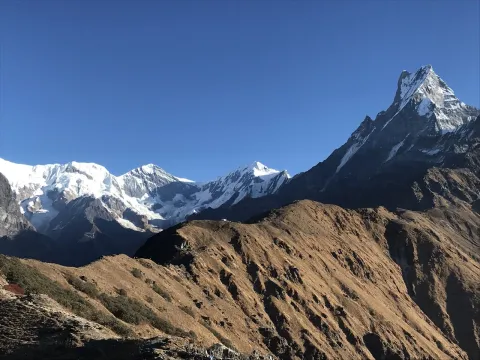
Here, the Annapurna Base Camp (ABC) (4,130 m / 13,550 ft) trek via Jhino Danda (1,780 m / 5,840 ft) offers various advantages to trekkers. Pokhara jeep services render the starting point accessible, which is a 3–4 hour journey. There are both private jeeps for NPR 7,000–10,000 and public jeeps for NPR 1,000–1,500. Buses are available for NPR 500–700. The trek is shorter, approximately 25 kilometers to ABC, which is suitable for trekkers with limited time or average physical condition to complete the trek comfortably.
Also, among the greatest positives is gradual altitude gain. The trek ascends gradually through terraced fields, rhododendron forests, and peaceful villages. The gradual ascent makes it easier to acclimatize and reduces the risk of altitude sickness. Trekkers pass through Chhomrong (2,170 m / 7,119 ft) and Himalaya Hotel (2,920 m / 9,580 ft) to reach ABC. The moderate grading makes this an excellent trek for families, novices, and those seeking a less strenuous trek.
Besides, the trail also provides peaceful and less crowded trails. Compared to Ulleri, which is busier due to Poon Hill tourism, Jhino Danda is a less busy trekking trail. Villages along the route make cultural experiences possible in their real forms, where trekkers have the opportunity to live with Gurung and Magar communities. Locally owned teahouses provide food, shelter, and knowledge about Nepalese culture, tradition, and livelihood. Peaceful trails contribute to the overall trekking experience.
Furthermore, Jhino Danda is renowned for natural hot springs, a wonderful bonus. Trekkers can relax and relieve the stress on muscles after a day's trekking. Hot springs help in recovery and provide a wellness factor that no other routes offer. Coupled with short daily distances, this makes the trek comfortable and enjoyable, particularly for those less accustomed to high-altitude trekking.
Also, the scenic views on this route are breathtaking. Annapurna South (7,219 m / 23,684 ft), Machapuchhre (6,993 m / 22,943 ft), and Hiunchuli (6,441 m / 21,129 ft) are visible from points along the trail. Rivers, terraced fields, and wooded valleys provide ongoing scenic interest. The less crowded nature of the trail ensures obstruction-free photography and uninterrupted sunrise or sunset viewing.
Besides, logistical convenience is a great advantage. Travel by jeep or bus from Pokhara saves time and mileage on the trek and allows early morning departures. Teahouses at Jhino Danda, Chhomrong, and Himalaya Hotel provide accommodation, food, and local information. This route allows trekkers to maintain shorter itineraries, typically 7–8 days, making this ideal for short-time travelers.
Besides, Jhino Danda provides a safe trekking environment. Moderate daily distances, gradual ascents, and small groups reduce stress and fatigue. Hot springs and well-defined trails provide safety and comfort. The route is accessible to trekkers of all experience levels, ensuring a rewarding and safe trekking experience.
Also, the trekking offers environmental and cultural immersion. Trekkers witness local agriculture, traditional houses, and forest ecosystems. Witnessing mountain flora and fauna and meeting villagers while witnessing local life make the trekking experience more enriching. Jhino Danda provides adventure with unadulterated cultural exposure, which is more satisfying than more popular routes.
Finally, the advantages of trekking ABC via Jhino Danda are brief distance, moderate difficulty, tranquility, hot springs, culture, and logistical convenience. Jeep and bus connectivity from Pokhara, peaceful trails, traditional villages, and panoramic mountain views offer highly satisfying trekking experience. This is an ideal route for moderate fitness trekkers, families with children, beginners, and those who desire comfort and cultural experience without compromising on the adventure of ABC conquest.
Here, trekking to Annapurna Base Camp (ABC) (4,130 m / 13,550 ft) via Ulleri (2,070 m / 6,791 ft) has definite merits and demerits. Jeep or bus travel from Pokhara to Nayapul takes 1.5–2 hours and then to Ulleri takes another 2 hours. Shared jeeps cost NPR 1,000–1,500, and private jeeps cost NPR 10,000–12,000 to Ulleri. Buses are available for NPR 500–700. Ulleri is a popular gateway to ABC, particularly for Poon Hill (3,210 m / 10,531 ft) sunrise and mountain vista fans.
Furthermore, one of the main strengths of Ulleri is its legendary Poon Hill sunrise. Trekkers ascend early morning from Ghorepani (2,850 m / 9,350 ft) to see Annapurna South (7,219 m / 23,684 ft), Machapuchhre (6,993 m / 22,943 ft), and Dhaulagiri (8,167 m / 26,795 ft). Panoramic mountain views provide unforgettable photo opportunities. The stone steps along the route provide a physical challenge that conditions trekkers for higher altitudes and provides a feeling of achievement.
Additionally, Ulleri provides scenic diversity. Stone steps, terraced villages, rhododendron forests, and rivers create visually interesting scenery. The trek passes through Chhomrong (2,170 m / 7,119 ft) and Himalaya Hotel (2,920 m / 9,580 ft) to reach ABC. Hiunchuli (6,441 m / 21,129 ft) and Annapurna South vistas are frequent. The trafficked trail makes it simple for trekkers to socialize, so it is ideal for photography groups and solo trekkers who desire companionship.
In addition to, the route has well-developed trail infrastructure. Teahouses on the stone-step part provide meals, accommodation, and rest. It is simple to check Annapurna trekking permits along this route. The availability of teahouses ensures comfort for the challenging initial ascents. The route is quite safe for spring and autumn trekking seasons.
However, ABC trek via Ulleri has several cons. The steep stone steps at the start are exhausting, challenging the physical fitness of trekkers with average health. Early steep ascents are draining and require careful pacing. Trail congestion, particularly in high seasons, takes away the sense of remoteness and might render teahouse reservations difficult. Mileage per day is higher, extending the trekking duration to 8–10 days.
Additionally, fewer relaxation opportunities are present than in Jhino Danda. There are no hot springs, and the early challenging climb can be exhausting. Individuals looking for moderate treks or wellness-oriented experiences might find Ulleri less appealing. While the views are breathtaking, ongoing physical exertion might restrict pleasure for certain trekkers.
The best part is, logistics demand careful planning. Jeep or bus rides from Pokhara reduce distances but require early starts to avoid crowded trails. Teahouses may get busy too; advance booking is recommended. Pacing daily is essential not to lose pace, particularly when climbing the stone steps and further beyond to Chhomrong and Himalaya Hotel.
Additionally, the trail provides excellent photo opportunities but needs physical conditioning. Rock steps, sunrise at Poon Hill, and panorama peaks are some of the highlights. Cultural exposure can be provided by interacting with the villagers, but the focus lies in physical achievement and visual reward. The trail is ideal for adventurers, photographers, and social trekkers who are ready for challenging ascents.
Finally, the pros of ABC trek via Ulleri include sunrise at Poon Hill, panoramic mountain views, scenic variety, social trekking, and well-established teahouses. The cons include steep early climbs, crowding, longer distances, no hot springs, and physical exertion. Trekking this route depends on fitness level, adventure desire, photography goals, and comfort with challenging climbs for world-class Himalayan views.
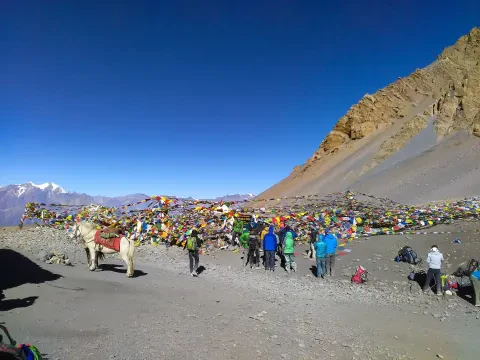
Therefore, whether to choose the Jhino Danda (1,780 m / 5,840 ft) or Ulleri (2,070 m / 6,791 ft) route for the Annapurna Base Camp (ABC) (4,130 m / 13,550 ft) trek requires careful consideration of distance, effort, scenery, logistics, and trekking goals. Jeep and bus transportation from Pokhara are additional convenience measures. Shared jeeps to Jhino Danda cost NPR 1,000–1,500 and private jeeps NPR 7,000–10,000. For Ulleri, personal jeeps cost NPR 10,000–12,000, shared ones NPR 1,000–1,500, and buses NPR 500–700. The choice affects the overall trekking time, acclimatization, and experience.
Second, the Jhino Danda trail offers the shortest walking distance to ABC, approximately 25 kilometers. Gradual ascents over terraced farms, rhododendron forest, and serene villages offer easy acclimatization. Hot springs along the way provide special relaxation. Meals, lodging, and cultural experience in teahouses are available. The moderate rating is suitable for beginners, families, and time-constrained trekkers. Jeep transport reduces trekking distance by half and allow early departures, maximizing itinerary flexibility.
And so is Ulleri route via Poon Hill, which is around 40 kilometers. The initial climb has over 3,000 stone steps to Ghorepani (2,850 m / 9,350 ft), Poon Hill sunrise (3,210 m / 10,531 ft), and Chhomrong (2,170 m / 7,119 ft) prior to Himalaya Hotel (2,920 m / 9,580 ft) and ABC. Steep initial ascents make it physically demanding, but extensive views of Annapurna South (7,219 m / 23,684 ft), Machapuchhre (6,993 m / 22,943 ft), and Dhaulagiri (8,167 m / 26,795 ft) reward trekkers with classic Himalayan landscapes. Jeep or bus travel from Pokhara alleviates overall trekking fatigue.
Moreover, difficulty comparison frames Jhino Danda as easier and more accessible. Gradual altimeter gain diminishes fatigue and risk of altitude sickness. Ulleri, with steep early ascents, proves endurance but provides satisfactory experiences for explorers and photographers. Both routes converge at Chhomrong prior to the final stretch to ABC, where terrain and altitude gain are equal. Trekking duration varies: Jhino Danda is typically 7–8 days, while Ulleri is 8–10 days due to increased distance and sightseeing stops.
Additionally, differences in scenery are noteworthy. Jhino Danda features tranquil valleys, rivers, forest trails, terraced fields, and hot springs, providing seclusion and genuine village life. Ulleri offers Poon Hill sunrise drama, Himalayan vistas, and a friendly trekking atmosphere. Photographers may prefer Ulleri, while others who appreciate seclusion and culture may prefer Jhino Danda. Both routes offer excellent views of Machapuchhre, Annapurna South, Hiunchuli (6,441 m / 21,129 ft), and nearby summits.
Besides, convenience of logistics is a deciding point. Jeep and bus transportation from Pokhara allow early starts and more flexible schedules. Jhino Danda provides a shorter, more moderate hike with less crowd and easier teahouse bookings. Ulleri requires more stamina, careful timing, and advance arrangements for busy trails, but provides longer trekking duration and sunrise on Poon Hill. Both alternatives provide safe, well-marked trails and secure accommodations.
Also, environmental and cultural exposure differs. Jhino Danda emphasizes local impacts, village interaction, and traditional Nepalese cuisine. Ulleri also offers cultural exposure but focuses on scenic aspects, sunrise photography, and social trekking. Environmental differences along both routes include forests, rivers, terraced fields, and Himalayan peaks. Jhino Danda offers peaceful observation opportunities, while Ulleri emphasizes social trekking experiences.
Personal preference also comes into play here. Trekkers with limited time, moderate stamina, or a taste for hot springs and loneliness will choose Jhino Danda. Adventure seekers, photography enthusiasts, and social trekkers looking for wide views and Poon Hill sunrise will choose Ulleri. Weather-wise, both treks are best during the spring and autumn seasons.
Finally, considering all the aspects—distance, challenge, scenery, logistics, and cultural immersion—the ABC trek via Jhino Danda is best for moderate trekkers seeking a shorter, peaceful, and authentic experience with hot springs. The Ulleri trail is ideal for adventure seekers, photographers, and social trekkers seeking longer treks, Poon Hill sunrise, and Himalayan panoramic views. Both routes converge in the final approach to Annapurna Base Camp (4,130 m / 13,550 ft), with promise of unforgettable views of Machapuchhre (6,993 m / 22,943 ft), Annapurna South (7,219 m / 23,684 ft), and surrounding mountains. In the end, the best route depends on fitness, trekking goals, time, and the need for solitude over the familiar scenery. Both routes offer a choice of safe, scenic, and unforgettable Annapurna Base Camp trekking experience.
1. Which route is better for Annapurna Base Camp Trek, Jhino Danda or Ulleri?
The Annapurna Base Camp Trek via Jhino Danda and the Annapurna Base Camp Trek via Ulleri are both great.. They are different. The Jhino Danda route is easier on your knees because you walk down slowly. You also get to see the hot springs. On the hand the Ulleri route has a lot of stone steps and is very steep. So many people like the Jhino Danda route because it is more comfortable.. Some people like the Ulleri route because it is a classic Annapurna Base Camp Trek.
2. Is the Annapurna Base Camp Trek via Jhino Danda easier than via Ulleri?
Yes the Annapurna Base Camp Trek via Jhino Danda is easier for people. You do not have to climb a staircase like you do on the Ulleri route. The path is also not as steep. That is why beginners and older people often choose the Jhino Danda route.. You still need to be in good shape because both routes meet up with the main Annapurna Base Camp trail.
3. How many stone steps are there on the Ulleri route?
The Ulleri route is famous for its stone staircase. You have to climb than 3,000 stone steps from Tikhedhunga to Ulleri. This can be very hard on your first day of trekking.. Some people like the challenge. If you take your time and drink plenty of water it is not so bad.
4. Does the Jhino Danda route include springs?
Yes the Jhino Danda route has hot springs near the Modi Khola River. Many people visit the springs after they come down from the Annapurna Base Camp. The warm water helps your muscles and joints feel better. This is a thing about the Jhino Danda route that makes it very popular.
5. Which route offers mountain views, Jhino Danda or Ulleri?
Both routes have mountain views. On the Ulleri route you can see Annapurna South and Hiunchuli when you are climbing. On the Jhino Danda route you can see the valley and the river. Since both routes go through Ghorepani and Chhomrong you can see the Himalayan mountains no matter which route you choose.
6. Can beginners choose the Annapurna Base Camp Trek via Jhino Danda?
Yes beginners can choose the Annapurna Base Camp Trek via Jhino Danda. This route is more comfortable because it does not have many steep stairs. You also get to see villages, forests and hot springs without getting too tired.. You still need to get ready for the trek because the Annapurna Base Camp is very high up. 4,130 Meters above sea level. The Annapurna Base Camp Trek via Jhino Danda is a choice, for beginners who want to see the beautiful Annapurna Base Camp.
7. Which route has accommodation facilities?
Both the Jhino Danda route and the Ulleri route have really good places to stay. The Ulleri route has a lot of lodges because people have been stopping there for a time. The Jhino Danda route also has guesthouses and restaurants. So people who are trekking can expect to have rooms, food from the local area and basic things they need on both routes. It is an idea to book a place to stay ahead of time during the spring and autumn seasons.
8. Is the trekking distance different between the Jhino Danda route and the Ulleri route?
The total distance people walk is the same.. The daily walking experience is different. The Ulleri route is really steep. People have to walk up a big hill in a short distance. The Jhino Danda route is not as steep. People walk up the hill more slowly. So a lot of people who are trekking feel less tired when they walk on the Jhino Danda route even though they walk the total distance.
9. Which route is best during the monsoon season?
People like the Jhino Danda route during the monsoon season. The trail does not have many slippery stone steps as the Ulleri route. Also people can soak in the springs after walking in the rain.. People have to be careful on both routes because the rain can make the trails muddy and there can be more leeches in the forest.
10. Can I combine both the Jhino Danda route and the Ulleri route, in one Annapurna Base Camp Trek?
Yes a lot of people walk on both the Jhino Danda route and the Ulleri route to see things. One common way to do it is to walk up on the Ulleri route and the Ghorepani route then walk down on the Chhomrong route and the Jhino Danda route. So people who are trekking can see landscapes, villages and trails. Walking on both routes gives people a complete Annapurna Base Camp trekking experience and they do not have to walk on the same trails twice.
Our travel experts are ready to assist you with any questions.
Send us a message.
The cost of Annapurna Base Camp Trek is usually between USD 550 to 1000 per person. This price includes things like permits, a place to stay, food, transportation, a guide and someone to carry your bags. We have been doing this for a time so we make sure you know exactly what you are paying for. We do not hide any fees. We want you to have an fun and safe trip.
Have a question before you book? Send your enquiry below and our travel experts will get back with the required information.