[{"name":"Everest Base Camp Helicopter Tour","duration":"1","image_url":"https:\/\/www.havenholidaysnepal.com\/storage\/trip-galleries\/1\/thumb_6cd53005d75a86e373d31419d1b14d78.webp","offer_price":1195,"url":"https:\/\/www.havenholidaysnepal.com\/trips\/everest-base-camp-helicopter-tour"},{"name":"Everest Mountain Flight","duration":"1","image_url":"https:\/\/www.havenholidaysnepal.com\/storage\/trip-galleries\/4\/thumb_3b0b4f1d6f72b0ad224daf4752f2c6e0.jpg","offer_price":285,"url":"https:\/\/www.havenholidaysnepal.com\/trips\/everest-mountain-flight"},{"name":"Everest Short Trek","duration":"9","image_url":"https:\/\/www.havenholidaysnepal.com\/storage\/trip-galleries\/5\/thumb_BXPP3621.JPEG0.02033800 1727957098.webp","offer_price":995,"url":"https:\/\/www.havenholidaysnepal.com\/trips\/everest-short-trek"},{"name":"Gokyo Valley Trek","duration":"12","image_url":"https:\/\/www.havenholidaysnepal.com\/storage\/trip-galleries\/6\/thumb_10bc469b14731f23d3ce84a7092ad53f.jpg","offer_price":1195,"url":"https:\/\/www.havenholidaysnepal.com\/trips\/gokyo-valley-trek"},{"name":"15 days Annapurna Base Camp Trek","duration":"15","image_url":"https:\/\/www.havenholidaysnepal.com\/storage\/trip-galleries\/7\/thumb_87d1533bc45faf070990aef0579e4be4.jpg0.81855100 1728285496.webp","offer_price":785,"url":"https:\/\/www.havenholidaysnepal.com\/trips\/15-days-annapurna-base-camp-trek"},{"name":"Nepal Pilgrimage Tour","duration":"14","image_url":"https:\/\/www.havenholidaysnepal.com\/storage\/trip-galleries\/8\/thumb_02c3bcf2ad2e8a4c1703e90ae747b5f1.jpg","offer_price":1475,"url":"https:\/\/www.havenholidaysnepal.com\/trips\/nepal-pilgrimage-tour"},{"name":"UNESCO World Heritage Site Tour","duration":"10","image_url":"https:\/\/www.havenholidaysnepal.com\/storage\/trip-galleries\/9\/thumb_unesco-world-heritage-site-Lumbani-temple-buddhists-hindus-kathmandu-nepal0.36988600 17347617740.93089500 1737469667.webp","offer_price":715,"url":"https:\/\/www.havenholidaysnepal.com\/trips\/unesco-world-heritage-site-tour"},{"name":"Island Peak Climbing","duration":"16","image_url":"https:\/\/www.havenholidaysnepal.com\/storage\/trip-galleries\/11\/thumb_Island peak0.53947000 1734692503.webp","offer_price":2495,"url":"https:\/\/www.havenholidaysnepal.com\/trips\/island-peak-climbing"},{"name":"Upper Mustang Trek","duration":"18","image_url":"https:\/\/www.havenholidaysnepal.com\/storage\/trip-galleries\/12\/thumb_upper mustang 7 Oct-2024.jpg0.95398900 1728286166.webp","offer_price":2995,"url":"https:\/\/www.havenholidaysnepal.com\/trips\/upper-mustang-trek"},{"name":"Annapurna Circuit Trek","duration":"16","image_url":"https:\/\/www.havenholidaysnepal.com\/storage\/trip-galleries\/15\/thumb_tibetan-flags.jpg0.04843900 1728289138.webp","offer_price":985,"url":"https:\/\/www.havenholidaysnepal.com\/trips\/annapurna-circuit-trek"},{"name":"Gosainkunda Lake Trek","duration":"10","image_url":"https:\/\/www.havenholidaysnepal.com\/storage\/trip-galleries\/16\/thumb_5A8083B3-C007-41A8-853F-D0C37C97D235_1_105_c.jpeg0.52581200 1731845258.webp","offer_price":595,"url":"https:\/\/www.havenholidaysnepal.com\/trips\/gosainkunda-lake-trek"},{"name":"Zip-lining in Pokhara and Dhulikhel","duration":"1","image_url":"https:\/\/www.havenholidaysnepal.com\/storage\/trip-galleries\/18\/thumb_215f765e2ebc995dd5c800b4bfdbacc3.jpg","offer_price":82,"url":"https:\/\/www.havenholidaysnepal.com\/trips\/zip-lining-in-pokhara-and-dhulikhel"},{"name":"Annapurna Heli Tour","duration":"1","image_url":"https:\/\/www.havenholidaysnepal.com\/storage\/trip-galleries\/19\/thumb_d71a6bbb9fd4da8d1b567a5cdbdec85d.jpg","offer_price":555,"url":"https:\/\/www.havenholidaysnepal.com\/trips\/annapurna-heli-tour"},{"name":"Paragliding in Pokhara","duration":"1","image_url":"https:\/\/www.havenholidaysnepal.com\/storage\/trip-galleries\/20\/thumb_de788d2dd9726783431f882c007efae1.jpg","offer_price":65,"url":"https:\/\/www.havenholidaysnepal.com\/trips\/paragliding-in-pokhara"},{"name":"Ultra-Flight in Pokhara","duration":"1","image_url":"https:\/\/www.havenholidaysnepal.com\/storage\/trip-galleries\/21\/thumb_e27a9fb572a5c21611bb2a3c18e4b8f0.jpeg","offer_price":175,"url":"https:\/\/www.havenholidaysnepal.com\/trips\/ultra-flight-in-pokhara"},{"name":"Sarangkot Hiking","duration":"1","image_url":"https:\/\/www.havenholidaysnepal.com\/storage\/trip-galleries\/22\/thumb_100ef822fea19987166c6c1366215f15.jpg","offer_price":55,"url":"https:\/\/www.havenholidaysnepal.com\/trips\/sarangkot-hiking"},{"name":"Mera Peak Climbing","duration":"18","image_url":"https:\/\/www.havenholidaysnepal.com\/storage\/trip-galleries\/24\/thumb_d16ae3895f678cf26ffbf2455f541fb5.jpg0.31883400 1732617790.webp","offer_price":2475,"url":"https:\/\/www.havenholidaysnepal.com\/trips\/mera-peak-climbing"},{"name":"Lower Dolpo Trek","duration":"18","image_url":"https:\/\/www.havenholidaysnepal.com\/storage\/trip-galleries\/26\/thumb_Dolpo Galary - 1.JPG0.37725200 1727939952.webp","offer_price":2995,"url":"https:\/\/www.havenholidaysnepal.com\/trips\/lower-dolpo-trek"},{"name":"Nagarkot Sunrise\/Sunset Tour","duration":"1","image_url":"https:\/\/www.havenholidaysnepal.com\/storage\/trip-galleries\/27\/thumb_5147a5532644283a380f2e86f3857c13.jpg0.17748000 1728488108.webp","offer_price":30,"url":"https:\/\/www.havenholidaysnepal.com\/trips\/nagarkot-sunrise-sunset-tour"},{"name":"16 day Everest Base Camp Trek","duration":"16","image_url":"https:\/\/www.havenholidaysnepal.com\/storage\/trip-galleries\/28\/thumb_IMG_4311.JPG0.64984800 1727942213.webp","offer_price":1695,"url":"https:\/\/www.havenholidaysnepal.com\/trips\/16-day-everest-base-camp-trek"},{"name":"Ghorepani Poon Hill trek with Jungle Safari and Trishuli River Rafting -13 days","duration":"13","image_url":"https:\/\/www.havenholidaysnepal.com\/storage\/trip-galleries\/29\/thumb_Ghorepani Poon hill.jpg0.48460800 1728281439.webp","offer_price":795,"url":"https:\/\/www.havenholidaysnepal.com\/trips\/ghorepani-poon-hill-trek-with-jungle-safari-and-trishuli-river-rafting--13-days"},{"name":"Mardi Himal Trek","duration":"12","image_url":"https:\/\/www.havenholidaysnepal.com\/storage\/trip-galleries\/30\/thumb_s1.jpg0.62112600 1728200721.webp","offer_price":795,"url":"https:\/\/www.havenholidaysnepal.com\/trips\/mardi-himal-trek"},{"name":"Langtang Valley Trekking","duration":"10","image_url":"https:\/\/www.havenholidaysnepal.com\/storage\/trip-galleries\/31\/thumb_IMG_4702.JPG0.84916500 1727958504.webp","offer_price":685,"url":"https:\/\/www.havenholidaysnepal.com\/trips\/langtang-valley-trekking"},{"name":"Real Adventure Tour in Nepal","duration":"9","image_url":"https:\/\/www.havenholidaysnepal.com\/storage\/trip-galleries\/32\/thumb_ebd1b8cc78d90abe8b9003dd9a2f25bf.jpg0.82151300 1728213516.webp","offer_price":695,"url":"https:\/\/www.havenholidaysnepal.com\/trips\/real-adventure-tour-in-nepal"},{"name":"Luxury Tour in Nepal","duration":"10","image_url":"https:\/\/www.havenholidaysnepal.com\/storage\/trip-galleries\/33\/thumb_8574e61b252b18676b042caf30d830df.jpg","offer_price":1675,"url":"https:\/\/www.havenholidaysnepal.com\/trips\/luxury-tour-in-nepal"},{"name":"Luxury Everest Panorama Trek With EBC Heli Sightseeing","duration":"8","image_url":"https:\/\/www.havenholidaysnepal.com\/storage\/trip-galleries\/34\/thumb_URZL2397.JPEG0.01209600 1728027820.webp","offer_price":2395,"url":"https:\/\/www.havenholidaysnepal.com\/trips\/luxury-everest-panorama-trek-with-ebc-heli-sightseeing"},{"name":"13 day Everest Base Camp Trek with Helicopter","duration":"13","image_url":"https:\/\/www.havenholidaysnepal.com\/storage\/trip-galleries\/35\/thumb_IMG_4292.JPG0.70131500 1728029276.webp","offer_price":2095,"url":"https:\/\/www.havenholidaysnepal.com\/trips\/13-day-everest-base-camp-trek-with-helicopter"},{"name":"Manaslu Circuit Trek","duration":"16","image_url":"https:\/\/www.havenholidaysnepal.com\/storage\/trip-galleries\/36\/thumb_Mt Manaslu 03-Oct-2024.jpg0.65804900 1727938470.webp","offer_price":1055,"url":"https:\/\/www.havenholidaysnepal.com\/trips\/manaslu-circuit-trek"},{"name":"Kanchenjunga Base Camp Trek","duration":"21","image_url":"https:\/\/www.havenholidaysnepal.com\/storage\/trip-galleries\/37\/thumb_Kanchanjunga Trek -!.jpg0.54744400 1727938497.webp","offer_price":2275,"url":"https:\/\/www.havenholidaysnepal.com\/trips\/kanchenjunga-base-camp-trek"},{"name":"Ganesh Himal and Sing-La Trek","duration":"14","image_url":"https:\/\/www.havenholidaysnepal.com\/storage\/trip-galleries\/38\/thumb_Ganesh Himal slider-1.jpg0.43764500 1727937722.webp","offer_price":1775,"url":"https:\/\/www.havenholidaysnepal.com\/trips\/ganesh-himal-and-sing-la-trek"},{"name":"Island Peak Climb with Everest Base Camp Trek","duration":"21","image_url":"https:\/\/www.havenholidaysnepal.com\/storage\/trip-galleries\/39\/thumb_2be428730fe83525bc85a010564f99de.jpg","offer_price":2750,"url":"https:\/\/www.havenholidaysnepal.com\/trips\/island-peak-climb-with-everest-base-camp-trek"},{"name":"Students' Adventure Tour in Nepal","duration":"12","image_url":"https:\/\/www.havenholidaysnepal.com\/storage\/trip-galleries\/41\/thumb_a926d22fbfe08cba271c41ac289b3fd2.jpg","offer_price":995,"url":"https:\/\/www.havenholidaysnepal.com\/trips\/students-adventure-tour-in-nepal"},{"name":"7 Day Poonhill Trek","duration":"7","image_url":"https:\/\/www.havenholidaysnepal.com\/storage\/trip-galleries\/42\/thumb_6196bd69036473293a2c24cc21ed57d7.jpg0.10880600 1728205378.webp","offer_price":555,"url":"https:\/\/www.havenholidaysnepal.com\/trips\/7-day-poonhill-trek"},{"name":"7 Days Annapurna Base Camp Trek","duration":"7","image_url":"https:\/\/www.havenholidaysnepal.com\/storage\/trip-galleries\/43\/thumb_IMG_2214.JPG0.08204900 1728202033.webp","offer_price":355,"url":"https:\/\/www.havenholidaysnepal.com\/trips\/7-days-annapurna-base-camp-trek"},{"name":"3 days Poonhill Trek","duration":"3","image_url":"https:\/\/www.havenholidaysnepal.com\/storage\/trip-galleries\/44\/thumb_Poon hill.jpg0.60816600 1731412954.webp","offer_price":165,"url":"https:\/\/www.havenholidaysnepal.com\/trips\/3-days-poonhill-trek"},{"name":"Poon Hill Luxury Trek with Chitwan-12 days","duration":"12","image_url":"https:\/\/www.havenholidaysnepal.com\/storage\/trip-galleries\/45\/thumb_Poom hill.jpg0.52074500 1730180532.webp","offer_price":1175,"url":"https:\/\/www.havenholidaysnepal.com\/trips\/poon-hill-luxury-trek-with-chitwan-12-days"},{"name":"Everest Luxury Trek-7 days","duration":"7","image_url":"https:\/\/www.havenholidaysnepal.com\/storage\/trip-galleries\/46\/thumb_ACRX9330.JPEG0.93236200 1728031275.webp","offer_price":2195,"url":"https:\/\/www.havenholidaysnepal.com\/trips\/everest-luxury-trek-7-days"},{"name":"Hindu Pilgrimage Tour in Nepal-10 days","duration":"10","image_url":"https:\/\/www.havenholidaysnepal.com\/storage\/trip-galleries\/47\/thumb_a94bf96a4d31decb419f6f828a3280d2.jpg","offer_price":995,"url":"https:\/\/www.havenholidaysnepal.com\/trips\/hindu-pilgrimage-tour-in-nepal-10-days"},{"name":"Everest Base Camp Short Trek-12 days","duration":"12","image_url":"https:\/\/www.havenholidaysnepal.com\/storage\/trip-galleries\/48\/thumb_IMG_4311.JPG0.52680100 1727945154.webp","offer_price":995,"url":"https:\/\/www.havenholidaysnepal.com\/trips\/everest-base-camp-short-trek-12-days"},{"name":"Everest Base Camp Hike 12 Days","duration":"12","image_url":"https:\/\/www.havenholidaysnepal.com\/storage\/trip-galleries\/49\/thumb_IMG_4260.JPG0.51729100 1728061234.webp","offer_price":1295,"url":"https:\/\/www.havenholidaysnepal.com\/trips\/everest-base-camp-hike-12-days"},{"name":"11 Days Everest Base Camp Trek","duration":"11","image_url":"https:\/\/www.havenholidaysnepal.com\/storage\/trip-galleries\/50\/thumb_IMG_4249.JPG0.21392500 1727946959.webp","offer_price":1055,"url":"https:\/\/www.havenholidaysnepal.com\/trips\/11-days-everest-base-camp-trek"},{"name":"6 Days Annapurna Base Camp Trek","duration":"6","image_url":"https:\/\/www.havenholidaysnepal.com\/storage\/trip-galleries\/51\/thumb_6 days Abc.jpg0.58185400 1728200798.webp","offer_price":285,"url":"https:\/\/www.havenholidaysnepal.com\/trips\/6-days-annapurna-base-camp-trek"},{"name":"Annapurna Base Camp Trek","duration":"8","image_url":"https:\/\/www.havenholidaysnepal.com\/storage\/trip-galleries\/52\/thumb_IMG_2214.JPG0.29415700 1729487656.webp","offer_price":585,"url":"https:\/\/www.havenholidaysnepal.com\/trips\/annapurna-base-camp-trek"},{"name":"Everest Base Camp Trek with Helicopter Fly Out 10 Days","duration":"10","image_url":"https:\/\/www.havenholidaysnepal.com\/storage\/trip-galleries\/53\/thumb_IMG_4328.JPG0.52056600 1728058444.webp","offer_price":1875,"url":"https:\/\/www.havenholidaysnepal.com\/trips\/everest-base-camp-trek-with-helicopter-fly-out-10-days"},{"name":"Everest Base Camp Trek 14 Days","duration":"14","image_url":"https:\/\/www.havenholidaysnepal.com\/storage\/trip-galleries\/54\/thumb_Everest Base Camp Trek 14 days Oct 3 2024.JPG0.43202700 1727939745.webp","offer_price":1335,"url":"https:\/\/www.havenholidaysnepal.com\/trips\/everest-base-camp-trek-14-days"},{"name":"ABC Trek with Poonhill 11 Days","duration":"11","image_url":"https:\/\/www.havenholidaysnepal.com\/storage\/trip-galleries\/55\/thumb_ABC with fishtail.JPG0.21441100 1728277965.webp","offer_price":555,"url":"https:\/\/www.havenholidaysnepal.com\/trips\/abc-trek-with-poonhill-11-days"},{"name":"Muldai Hill Trek 9 Days","duration":"9","image_url":"https:\/\/www.havenholidaysnepal.com\/storage\/trip-galleries\/56\/thumb_7efee59f0a8c6817c8255bd2b9f3539d.jpeg0.19479300 1728213091.webp","offer_price":675,"url":"https:\/\/www.havenholidaysnepal.com\/trips\/muldai-hill-trek-9-days"},{"name":"Mardi Himal Trek 6 days","duration":"6","image_url":"https:\/\/www.havenholidaysnepal.com\/storage\/trip-galleries\/57\/thumb_slider 1.jpeg0.36909700 1728184981.webp","offer_price":590,"url":"https:\/\/www.havenholidaysnepal.com\/trips\/mardi-himal-trek-6-days"},{"name":"Mardi Himal Trek 7 days","duration":"7","image_url":"https:\/\/www.havenholidaysnepal.com\/storage\/trip-galleries\/58\/thumb_slider1.jpg0.61666600 1728206414.webp","offer_price":620,"url":"https:\/\/www.havenholidaysnepal.com\/trips\/mardi-himal-trek-7-days"},{"name":"Mardi Himal Trek 8 Days","duration":"8","image_url":"https:\/\/www.havenholidaysnepal.com\/storage\/trip-galleries\/59\/thumb_sli1.jpg0.38569100 1728206631.webp","offer_price":695,"url":"https:\/\/www.havenholidaysnepal.com\/trips\/mardi-himal-trek-8-days"},{"name":"14 Days Manaslu Trek","duration":"14","image_url":"https:\/\/www.havenholidaysnepal.com\/storage\/trip-galleries\/60\/thumb_sunrise-mt-manaslu-during-manaslu-circuit-larke-pass-trekking-himalaya-nepal (1)0.81855800 1738673284.webp","offer_price":885,"url":"https:\/\/www.havenholidaysnepal.com\/trips\/14-days-manaslu-trek"},{"name":"Dhampus-Sarangkot Trek with Chitwan 8 days","duration":"8","image_url":"https:\/\/www.havenholidaysnepal.com\/storage\/trip-galleries\/61\/thumb_Sarangkot Bhangyang.jpg0.75461400 1728210333.webp","offer_price":790,"url":"https:\/\/www.havenholidaysnepal.com\/trips\/dhampus-sarangkot-trek-with-chitwan-8-days"},{"name":"7 Days Golden Triangle Tour","duration":"7","image_url":"https:\/\/www.havenholidaysnepal.com\/storage\/trip-galleries\/62\/thumb_311ce1d117ee0ba75402a7c301bcdf830.73532400 1739179809.webp","offer_price":845,"url":"https:\/\/www.havenholidaysnepal.com\/trips\/7-days-golden-triangle-tour"},{"name":"Annapurna Circuit Trek 12 days","duration":"12","image_url":"https:\/\/www.havenholidaysnepal.com\/storage\/trip-galleries\/63\/thumb_IMG_20161024_092237.jpg0.57796600 1728289938.webp","offer_price":695,"url":"https:\/\/www.havenholidaysnepal.com\/trips\/annapurna-circuit-trek-12-days"},{"name":"Everest Base Camp Budget Trek 16 Days","duration":"16","image_url":"https:\/\/www.havenholidaysnepal.com\/storage\/trip-galleries\/64\/thumb_IMG_4423.JPG0.92579200 1728144669.webp","offer_price":958,"url":"https:\/\/www.havenholidaysnepal.com\/trips\/everest-base-camp-budget-trek-16-days"},{"name":"Poonhill Budget Trek 7 Days","duration":"7","image_url":"https:\/\/www.havenholidaysnepal.com\/storage\/trip-galleries\/65\/thumb_5be067852d0c5228d6f3155bc425c6b5.jpg","offer_price":395,"url":"https:\/\/www.havenholidaysnepal.com\/trips\/poonhill-budget-trek-7-days"},{"name":"Annapurna Base Camp Budget Trek 8 Days","duration":"8","image_url":"https:\/\/www.havenholidaysnepal.com\/storage\/trip-galleries\/66\/thumb_Pokhara.jpg0.16188000 1728212001.webp","offer_price":375,"url":"https:\/\/www.havenholidaysnepal.com\/trips\/annapurna-base-camp-budget-trek-8-days"},{"name":"The Real UNESCO Seven World Heritage Tour in Kathmandu 4 days","duration":"4","image_url":"https:\/\/www.havenholidaysnepal.com\/storage\/trip-galleries\/67\/thumb_Baudha Stupa.JPG0.63906900 1728201021.webp","offer_price":380,"url":"https:\/\/www.havenholidaysnepal.com\/trips\/the-real-unesco-seven-world-heritage-tour-in-kathmandu-4-days"},{"name":"Everest Base Camp Jeep Ride with Helicopter Return","duration":"14","image_url":"https:\/\/www.havenholidaysnepal.com\/storage\/trip-galleries\/68\/thumb_788ee5b63a6efb6f3c3d048b4270daca.JPG","offer_price":1995,"url":"https:\/\/www.havenholidaysnepal.com\/trips\/everest-base-camp-jeep-ride-with-helicopter-return"},{"name":"Annapurna Base Camp Jeep Ride with Helicopter Return 7 days","duration":"7","image_url":"https:\/\/www.havenholidaysnepal.com\/storage\/trip-galleries\/69\/thumb_abc jeep.jpg0.10280600 1728204064.webp","offer_price":1455,"url":"https:\/\/www.havenholidaysnepal.com\/trips\/annapurna-base-camp-jeep-ride-with-helicopter-return-7-days"},{"name":"Everest Base Camp Trek","duration":"15","image_url":"https:\/\/www.havenholidaysnepal.com\/storage\/trip-galleries\/70\/thumb_Everest Base Camp Trek 3 oct- 2024.JPG0.58445300 1727941472.webp","offer_price":1375,"url":"https:\/\/www.havenholidaysnepal.com\/trips\/everest-base-camp-trek"},{"name":"7 UNESCO World Heritage Tour Kathmandu 2 days","duration":"2","image_url":"https:\/\/www.havenholidaysnepal.com\/storage\/trip-galleries\/72\/thumb_Bhaktipur 3.jpg0.05559600 1728201496.webp","offer_price":150,"url":"https:\/\/www.havenholidaysnepal.com\/trips\/7-unesco-world-heritage-tour-kathmandu-2-days"},{"name":"Day Tour to UNESCO Heritage Sites","duration":"1","image_url":"https:\/\/www.havenholidaysnepal.com\/storage\/trip-galleries\/73\/thumb_228A1018.jpg0.79892500 1728199793.webp","offer_price":55,"url":"https:\/\/www.havenholidaysnepal.com\/trips\/day-tour-to-unesco-heritage-sites"},{"name":"Golden Triangle Tour in Nepal","duration":"8","image_url":"https:\/\/www.havenholidaysnepal.com\/storage\/trip-galleries\/74\/thumb_f54139cf9100f00015ffe0400687e946.webp","offer_price":588,"url":"https:\/\/www.havenholidaysnepal.com\/trips\/golden-triangle-tour-in-nepal"},{"name":"Everest Base Camp Honeymoon Tour by Helicopter with Pokhara","duration":"7 days","image_url":"https:\/\/www.havenholidaysnepal.com\/storage\/trip-galleries\/76\/thumb_RJTL7517.JPEG0.40261600 1731499989.webp","offer_price":9999,"url":"https:\/\/www.havenholidaysnepal.com\/trips\/everest-base-camp-honeymoon-tour-by-helicopter-with-pokhara"},{"name":"Yoga and Meditation Retreat Tour in Nepal","duration":"10 days","image_url":"https:\/\/www.havenholidaysnepal.com\/storage\/trip-galleries\/77\/thumb_decf8e33-6617-4400-9df0-63bf75509adf.JPG0.51948300 1731574810.webp","offer_price":2575,"url":"https:\/\/www.havenholidaysnepal.com\/trips\/yoga-and-meditation-retreat-tour-in-nepal"},{"name":"Chisapani-Nagarkot Trek","duration":"3","image_url":"https:\/\/www.havenholidaysnepal.com\/storage\/trip-galleries\/78\/thumb_0b64dfceaeab48ac36d685476bdebafb.webp","offer_price":165,"url":"https:\/\/www.havenholidaysnepal.com\/trips\/chisapani-nagarkot-trek"},{"name":"Chitwan Jungle Safari Tour","duration":"2","image_url":"https:\/\/www.havenholidaysnepal.com\/storage\/trip-galleries\/79\/thumb_IMG_1696.JPG0.28467800 1733054554.webp","offer_price":175,"url":"https:\/\/www.havenholidaysnepal.com\/trips\/chitwan-jungle-safari-tour"},{"name":"Kailash Overland Tour","duration":"16","image_url":"https:\/\/www.havenholidaysnepal.com\/storage\/trip-galleries\/80\/thumb_PA2605230.68496700 1735818657.webp","offer_price":2495,"url":"https:\/\/www.havenholidaysnepal.com\/trips\/kailash-overland-tour"},{"name":"4 nights 5 days Bhutan Tour","duration":"5","image_url":"https:\/\/www.havenholidaysnepal.com\/storage\/trip-galleries\/81\/thumb_PB0508470.23069500 1735828937.webp","offer_price":1265,"url":"https:\/\/www.havenholidaysnepal.com\/trips\/4-nights-5-days-bhutan-tour"},{"name":"Everest Base Camp Trek Without Flying","duration":"16","image_url":"https:\/\/www.havenholidaysnepal.com\/storage\/trip-galleries\/82\/thumb_308b054484eddc042e092e1ae2ae5586.webp","offer_price":685,"url":"https:\/\/www.havenholidaysnepal.com\/trips\/everest-base-camp-trek-without-flying"},{"name":"Everest Base Camp Trek by Land","duration":"16","image_url":"https:\/\/www.havenholidaysnepal.com\/storage\/trip-galleries\/83\/thumb_8f0f2784a3ae7343d193b64fe8d47c96.webp","offer_price":675,"url":"https:\/\/www.havenholidaysnepal.com\/trips\/everest-base-camp-trek-by-land"},{"name":"Everest Base Camp Trek by Jeep","duration":"16","image_url":"https:\/\/www.havenholidaysnepal.com\/storage\/trip-galleries\/84\/thumb_f82b3acdfc933bc3e0197624c001b0a6.webp","offer_price":675,"url":"https:\/\/www.havenholidaysnepal.com\/trips\/everest-base-camp-trek-by-jeep"},{"name":"Everest Base Camp Trek without Lukla Flight","duration":"16","image_url":"https:\/\/www.havenholidaysnepal.com\/storage\/trip-galleries\/85\/thumb_2d0acc76dc958e3122a3745074989914.webp","offer_price":675,"url":"https:\/\/www.havenholidaysnepal.com\/trips\/everest-base-camp-trek-without-lukla-flight"},{"name":"Langtang Valley Trek","duration":"7","image_url":"https:\/\/www.havenholidaysnepal.com\/storage\/trip-galleries\/86\/thumb_a845db06c5feada1478e8aed659fce97.webp","offer_price":195,"url":"https:\/\/www.havenholidaysnepal.com\/trips\/langtang-valley-trek"},{"name":"Everest Base Camp Trek with Gokyo Lake","duration":"17","image_url":"https:\/\/www.havenholidaysnepal.com\/storage\/trip-galleries\/87\/thumb_c6aa32f7654f2eda78134bc84ac70b79.webp","offer_price":1885,"url":"https:\/\/www.havenholidaysnepal.com\/trips\/everest-base-camp-trek-with-gokyo-lake"},{"name":"Everest Three Passes Trek","duration":"19","image_url":"https:\/\/www.havenholidaysnepal.com\/storage\/trip-galleries\/88\/thumb_db5364eaab56f5755da55868f8ca4258.webp","offer_price":1735,"url":"https:\/\/www.havenholidaysnepal.com\/trips\/everest-three-passes-trek"},{"name":"Annapurna Base Camp Trek From Pokhara","duration":"5","image_url":"https:\/\/www.havenholidaysnepal.com\/storage\/trip-galleries\/89\/thumb_49c813cf1054ff06108963924a78ee88.webp","offer_price":255,"url":"https:\/\/www.havenholidaysnepal.com\/trips\/annapurna-base-camp-trek-from-pokhara"},{"name":"Sarangkot Sunrise Tour from Pokhara","duration":"1","image_url":"https:\/\/www.havenholidaysnepal.com\/storage\/trip-galleries\/90\/thumb_932d995b8fb702634a23e8f9a0432c6e.webp","offer_price":35,"url":"https:\/\/www.havenholidaysnepal.com\/trips\/sarangkot-sunrise-tour-from-pokhara"},{"name":"Langtang Valley Trek-8 days","duration":"8","image_url":"https:\/\/www.havenholidaysnepal.com\/storage\/trip-galleries\/91\/thumb_81d3d0a6979c9ed01f65d5ade53820b2.webp","offer_price":250,"url":"https:\/\/www.havenholidaysnepal.com\/trips\/langtang-valley-trek-8-days"},{"name":"Manaslu Circuit Trek 12 days","duration":"12","image_url":"https:\/\/www.havenholidaysnepal.com\/storage\/trip-galleries\/92\/thumb_d8251bbef0c8a246a02bda5c150a27c2.webp","offer_price":675,"url":"https:\/\/www.havenholidaysnepal.com\/trips\/manaslu-circuit-trek-12-days"},{"name":"2 Days Poon Hill Trek","duration":"2","image_url":"https:\/\/www.havenholidaysnepal.com\/storage\/trip-galleries\/93\/thumb_9d8fa8f60767538857d6c7cb3a7fee8b.webp","offer_price":135,"url":"https:\/\/www.havenholidaysnepal.com\/trips\/2-days-poon-hill-trek"},{"name":"Upper Mustang Jeep Tour","duration":"6","image_url":"https:\/\/www.havenholidaysnepal.com\/storage\/trip-galleries\/94\/thumb_9a3098a6c860b87ad3339773ef5435b9.webp","offer_price":1095,"url":"https:\/\/www.havenholidaysnepal.com\/trips\/upper-mustang-jeep-tour"},{"name":"Tsum Valley Trek","duration":"11","image_url":"https:\/\/www.havenholidaysnepal.com\/storage\/trip-galleries\/95\/thumb_704a6a1eb293553827633dbd8ad7d22c.webp","offer_price":775,"url":"https:\/\/www.havenholidaysnepal.com\/trips\/tsum-valley-trek"},{"name":"Mardi Himal Trek from Pokhara","duration":"4","image_url":"https:\/\/www.havenholidaysnepal.com\/storage\/trip-galleries\/96\/thumb_c92e9ee49c2564a11c7a9ba593439efc.webp","offer_price":295,"url":"https:\/\/www.havenholidaysnepal.com\/trips\/mardi-himal-trek-from-pokhara"},{"name":"4 Days Poon Hill Trek","duration":"4","image_url":"https:\/\/www.havenholidaysnepal.com\/storage\/trip-galleries\/97\/thumb_c349e182edd0858f3e3409d945f0d2ec.webp","offer_price":215,"url":"https:\/\/www.havenholidaysnepal.com\/trips\/4-days-poon-hill-trek"},{"name":"Poon Hill Sunrise Jeep Tour from Pokhara","duration":"2","image_url":"https:\/\/www.havenholidaysnepal.com\/storage\/trip-galleries\/98\/thumb_509875052b16f6f9156db386e3592eb8.webp","offer_price":260,"url":"https:\/\/www.havenholidaysnepal.com\/trips\/poon-hill-sunrise-jeep-tour-from-pokhara"},{"name":"Muktinath Jeep Tour from Pokhara","duration":"3","image_url":"https:\/\/www.havenholidaysnepal.com\/storage\/trip-galleries\/99\/thumb_1651790cb7422703fe86d472a35d4f90.webp","offer_price":255,"url":"https:\/\/www.havenholidaysnepal.com\/trips\/muktinath-jeep-tour-from-pokhara"},{"name":"Ghorepani Poon Hill Trek from Pokhara","duration":"5","image_url":"https:\/\/www.havenholidaysnepal.com\/storage\/trip-galleries\/100\/thumb_27fa62452af4ea8e08544aaa035cc446.webp","offer_price":295,"url":"https:\/\/www.havenholidaysnepal.com\/trips\/ghorepani-poon-hill-trek-from-pokhara"},{"name":"Ghandruk, Poon Hill, Muktinath and Upper Mustang Tour","duration":"7 days","image_url":"https:\/\/www.havenholidaysnepal.com\/storage\/trip-galleries\/101\/thumb_a7dd15032cd9693005233b1df7dc63d3.webp","offer_price":685,"url":"https:\/\/www.havenholidaysnepal.com\/trips\/ghandruk-poon-hill-muktinath-and-upper-mustang-tour"},{"name":"Nar Phu Valley Trek with Annapurna Circuit","duration":"16 days","image_url":"https:\/\/www.havenholidaysnepal.com\/storage\/trip-galleries\/102\/thumb_21f5af1d6f698a6898b64413bcc19c69.webp","offer_price":1395,"url":"https:\/\/www.havenholidaysnepal.com\/trips\/nar-phu-valley-trek-with-annapurna-circuit"},{"name":"Poon Hill-Jhino Danda Hot Spring Trek","duration":"4","image_url":"https:\/\/www.havenholidaysnepal.com\/storage\/trip-galleries\/103\/thumb_b1a8563edaf102468aab613332282c6c.webp","offer_price":215,"url":"https:\/\/www.havenholidaysnepal.com\/trips\/poon-hill-jhino-danda-hot-spring-trek"},{"name":"Annapurna Base Camp Trek with Helicopter Return","duration":"4","image_url":"https:\/\/www.havenholidaysnepal.com\/storage\/trip-galleries\/104\/thumb_928d650987e2db5f449127b41966da53.webp","offer_price":895,"url":"https:\/\/www.havenholidaysnepal.com\/trips\/annapurna-base-camp-trek-with-helicopter-return"},{"name":"Annapurna Circuit with Tilicho Lake Trek","duration":"10","image_url":"https:\/\/www.havenholidaysnepal.com\/storage\/trip-galleries\/105\/thumb_a8c9d8bf4041c0fa676d6c239abfd24c.webp","offer_price":615,"url":"https:\/\/www.havenholidaysnepal.com\/trips\/annapurna-circuit-with-tilicho-lake-trek"}]
Introduction to Bhutan: The Last Shangri-La and Why Visit
Bhutan, the Last Shangri-La, is calling right now. Plan a trip that centers around Bhutan’s unique concept of Gross National Happiness, untouched Himalayan landscapes, and an ancient Buddhist tradition. This article will give you an idea of why visiting Bhutan right now is so sensible.
Actually, Bhutan is still a haven for tourists all over the world. In all activities, you will get a glimpse of happiness as a philosophy that guides each and every Bhutan tour. The moment you enter this pristine mountain kingdom, you feel an instant calmness. The culture opens up immediately.
Meanwhile, Tourism is well-managed so that you get to experience what makes Bhutan unique. In almost all tours, you will be accompanied by a trusty guide. You will roam around Paro (2,250 m) and enjoy stunning views. You will also take safe routes to spot Gangkhar Puensum (7,570 m).
Likewise, people are interested in Bhutan today due to the ease of accessibility, which has never been better, coupled with the high standard of services that have been consistently maintained. You get friendlier budgets with lower charges without compromising on the quality of services, and the best reason of all is the quest for true happiness, which everyone is trying to find today. Families as well as solo travelers are quick to book their tours.
Moreover, the high-altitude charm of Bhutan is what attracts adventure enthusiasts, who return year after year with the promise of trekking around the majestic Jomolhari peak, which touches 7,326 m, with expert guidance, allowing them to breathe in the cool air as they ascend the peak, an ideal combination of culture and adventure that leaves the traveler feeling refreshed.
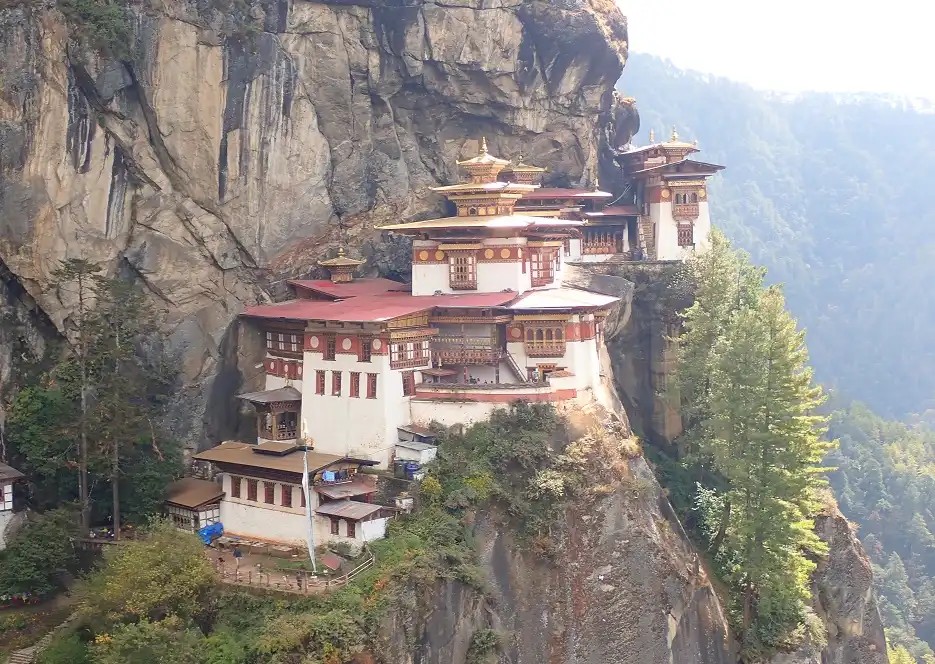
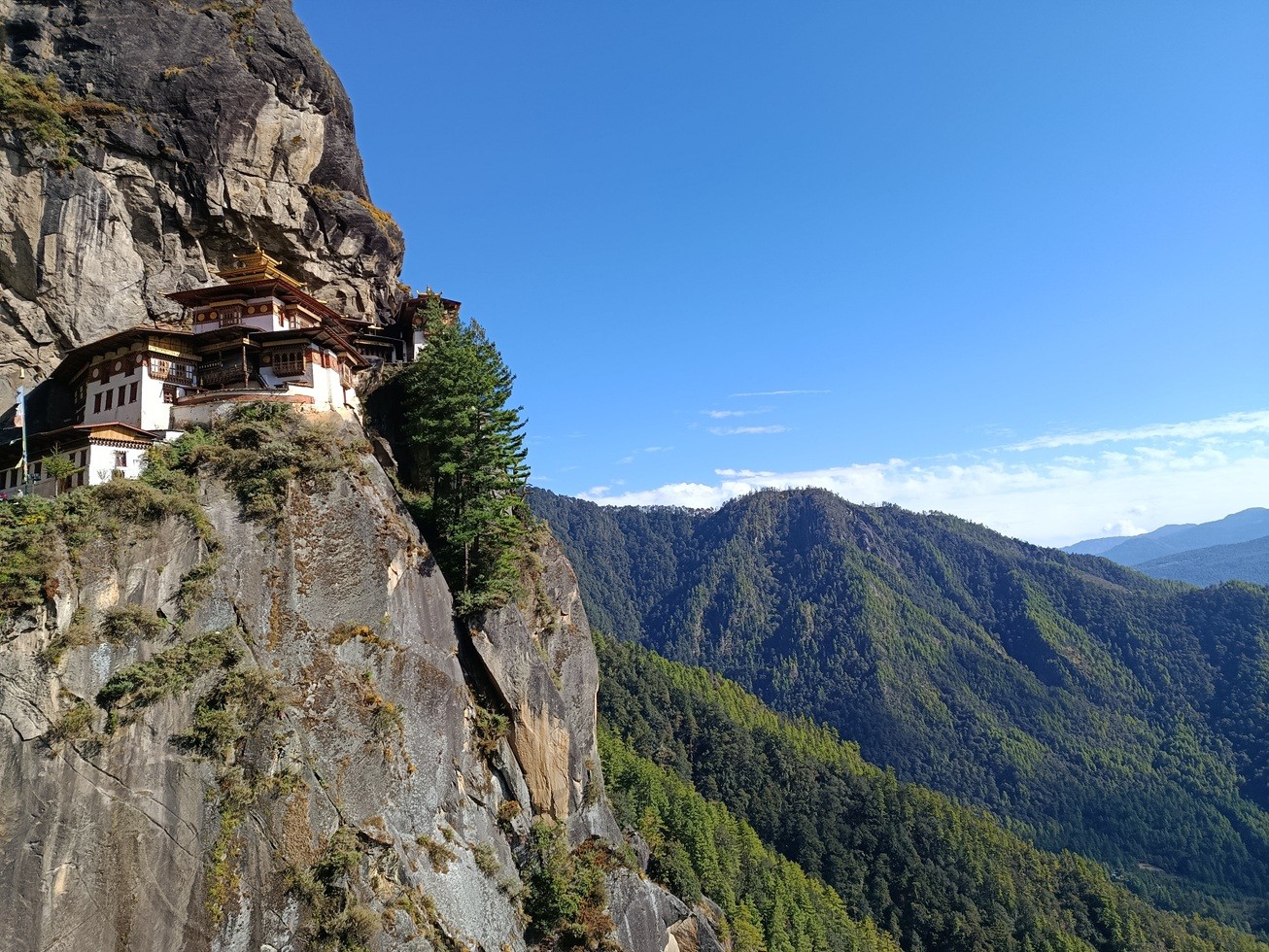
Tiger’s Nest Monastery: Bhutan’s iconic Taktsang Monastery clings to a dramatic cliff above the Paro Valley, offering one of the country’s most spectacular cultural and scenic highlights.
With every festival, the Buddhist spirit of Bhutan is on full display, with monks welcoming the visitors with open arms at the monasteries, and the traveler learning the traditions along the way, participating with respect in the rituals, making the cultural immersion the highlight of the tour.
In fact, the Gross National Happiness of Bhutan is an aspect that resonates with people across the globe, with the leadership of the country focusing on the well-being of their citizens as the measure of success, which is reflected in the lives of the people, making the Bhutan tours an education in the quest for happiness that stays with the traveler long after they leave the country.
Key Reasons to Visit Bhutan :
Experience Gross National Happiness in real time
Explore pristine Himalayas like Gangkhar Puensum (7,570 m)
Join authentic Bhutan tours with cultural depth
Benefit from sustainable and controlled access
Create memories in Paro (2,250 m) and beyond
Understanding Bhutan’s Unique Tourism Policy: High Value, Low Impact
Explore the unique tourism policy of Bhutan, which is centered around high value, low impact tourism. Learn about the Sustainable Development Fee, the visa process, and guided tours, and utilize this guide as a means of easily booking your Bhutan tours.
From the onset, Bhutan follows its unique policy of high value, low impact tourism, with strict regulations that guide the process. The regulations require that tourists undertake guided tours with licensed tour agencies, paying the Sustainable Development Fee in advance without any hassle.
Here, the visa process remains as simple as before, with tourists applying online or through tour agencies, submitting their applications, and receiving quick approvals. The tourist then makes a one-time payment of forty dollars as the visa fee, making the entry process smooth for foreign visitors.
Actually, the Sustainable Development Fee is utilized to address some of the key needs of the Bhutanese population, with adults paying a fee of a hundred dollars per night, going towards the education and health of the people. In this way, high value, low impact tourism is promoted, with the tourist feeling that they are contributing to the betterment of the environment.
Likewise, the guided tours in Bhutan are aimed at ensuring the safety of the tourist at every step, with the tourist receiving daily insights into the culture of the people from the tour guide. The tourist is then able to explore the location, including Thimphu, which is at an altitude of 2,350 m, with a sense of responsibility, with the tour group size remaining limited.
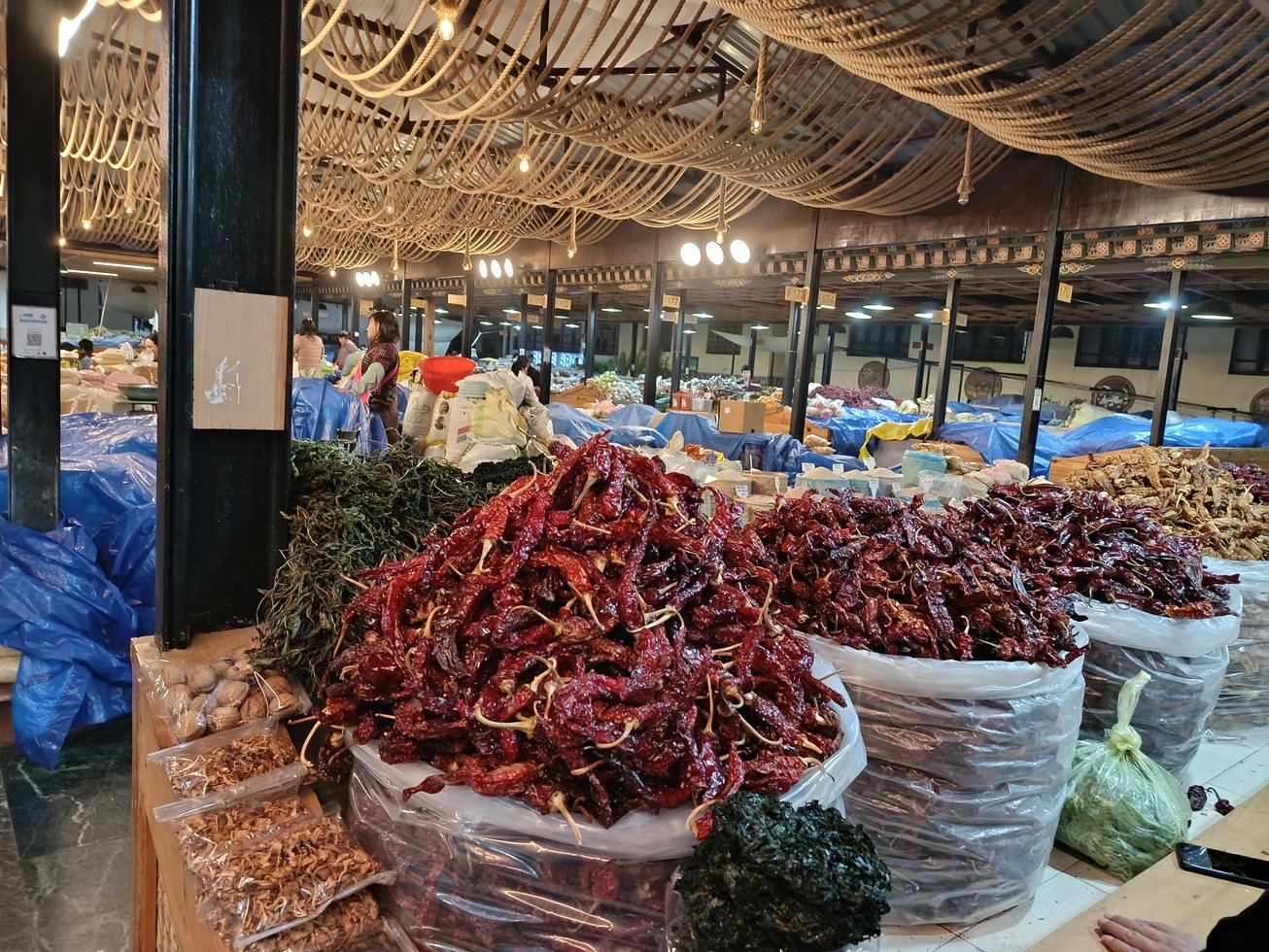
Local Market in Bhutan: Explore Bhutan’s vibrant local markets, where fresh produce, and everyday Bhutanese culture come together.
In fact, the policy is designed to ensure that the location is not overrun with tourists, promoting the concept of mass tourism, which is not the case in Bhutan.
Here, the costs of the Bhutan tour are clear, with the Sustainable Development Fee going towards the conservation of the environment, with the tour packages including the cost of food, transport, and the services of expert tour guides.
Aspect
Details
Benefit to Travelers
Sustainable Development Fee
$100 per night (adults)
Funds conservation and culture.
Bhutan Visa Process
$40 one-time via operator
Quick and secure approval.
Guided Tours Requirement
Mandatory with licensed guides
Safe, authentic experiences.
High Value Low Impact
Limited groups, quality focus
Pristine environment preserved.
Bhutan Tourism Policy at a Glance :
Visa & Entry Requirement for Bhutan
Let’s take a look at the visa requirements for Bhutan, including e-Visas, passport validity, the Sustainable Development Fee (SDF), and exemptions. To ensure a smooth entry into Bhutan, tourists should book Bhutan tours with licensed tour operators.
Here, the visa requirements for Bhutan are simple and straightforward for all tourists. Tourists can easily apply for e-Visas, and required documents are submitted through licensed operators. The e-Visas are processed within five working days. In summary, Bhutan’s visa & entry requirements look simple and secure.
Likewise, the validity of the passport should be at least six months beyond the intended departure date. Tourists should ensure that they have valid passports prior to filling out the e-Visa application. The application is quickly filled out by scanning copies, after which verification is processed without any delays. In this way, Bhutan’s visa & entry requirements are processed without any hassles.
In fact, the Sustainable Development Fee (SDF) is another significant part of the overall Bhutan tourism cost. Adults pay $100 per night, while children between six and twelve years old pay $50 per night.
Moreover, tourists belonging to specific countries are exempted under Bhutan’s visa & entry requirements. The countries include India, Bangladesh, and the Maldives. These tourists do not need to apply for Bhutanese visas but instead obtain special permits on arrival. The SDF charges are reduced.
However, all tourists, whether local or international, should book Bhutan tours with licensed operators. These operators are experts in handling e-Visas, providing all the required support to tourists throughout the entire process. Tourists can focus on enjoying their Bhutan tours without any concerns.
Best Time to Visit Bhutan: Weather and Seasons Breakdown
If you’re planning your trip for Bhutna, here’s how things look. Spring festivals, autumnal blue skies, rain showers during summers, and crane migrations during winters—what more could you ask for in an ideal Bhutan tour plan?
Actually, Spring provides an opening for perfect touring conditions. From March to May, flowers bloom across Bhutan’s landscapes. The Paro Festival (at an altitude of about 2,250 meters) is accessible during spring. Rhododendrons also add colors to the surroundings of Thimphu (at an altitude of about 2,350 meters). This is why spring tops the list of many tourists’ wish lists for Bhutan.
Likewise, Bhutan Tour in Autumn offers the best and clearest views. From September to November, tourists can enjoy comfortable and pleasant days for exploring Bhutan. The Thimphu Tshechu Festival takes place during autumn. The Jomolhari mountain (7,326 meters) also offers clear and sharp views during autumn. In general, autumn is considered the best time for visiting Bhutan.
Moreover, Bhutan Tour in Summer offers greenery, but it comes with rain. The monsoon months are June, July, and August, with heavy rains. Still, the forest in Bumthang (2,600 m) remains green, and it remains alive for those willing to brave the rain. Budget travelers and those who enjoy greenery will find summer a viable option.
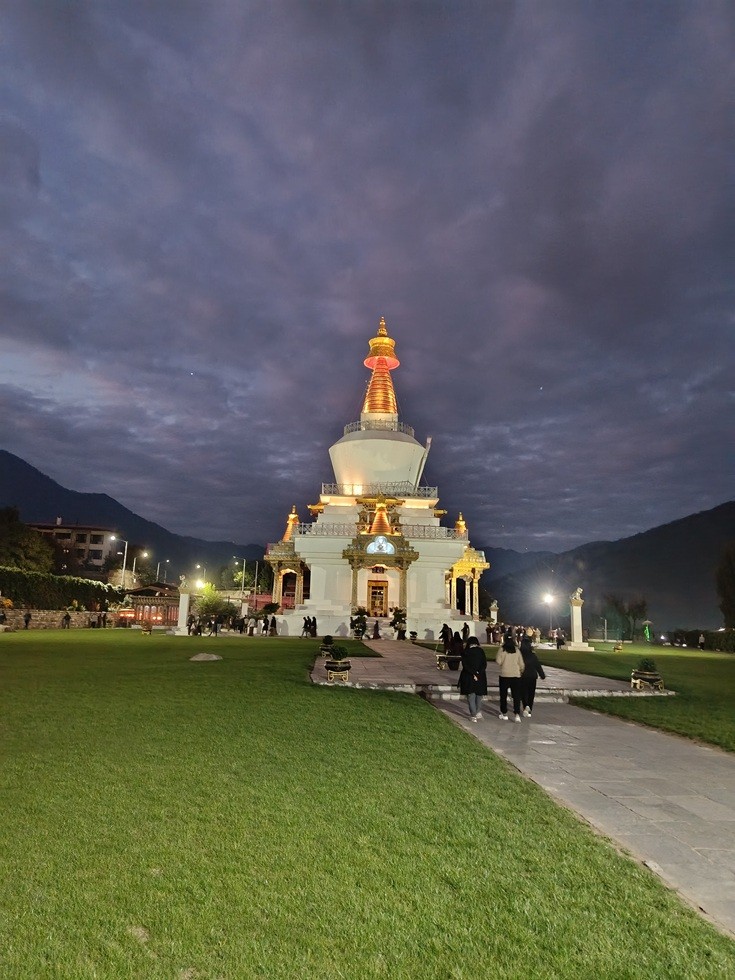
Memorials in Bhutan: Peaceful memorial sites reflecting Bhutan’s Buddhist traditions, cultural heritage, and deep respect for remembrance and spirituality.
Further, Bhutan Tour in Winter offers a quiet, almost magical silence. Winter, from December to February, offers snowfall in higher altitudes, and crane migrations in Phobjikha Valley (3,000 m) are clear. The monasteries are quiet, making it a great option for those seeking Bhutanese peace.
Here, Peak autumn falls in October and November, with clear skies for hiking to places such as Gangkhar Puensum (7,570 m). The festivals make it a great time, with many international travelers visiting Bhutan in these months.
Meanwhile, March and April are the peak months for spring, with blossoming flowers, Paro Tshechu, and pleasant temperatures in Thimphu (around 2,350 m). It is a great time for families, with people planning ahead for these events, ensuring that the magical feeling of spring in Bhutan is never forgotten.
Seasonal Weather Guide for Bhutan Tours :
Spring (March–May): Blooms and festivals in Paro (2,250 m)
Autumn (September–November): Clearest skies, ideal for Jomolhari (7,326 m) treks
Summer (June–August): Lush but wet around Bumthang (2,600 m)
Winter (December–February): Quiet crane views in Phobjikha (3,000 m)
Top Destinations and Must-See Attractions in Bhutan
During a Bhutan tour, you will want to make sure you visit the top destinations, such as Paro Taktsang, or Tiger’s Nest, Punakha Dzong, Buddha Dordenma in Thimphu, Dochula Pass, Phobjikha Valley, and the Bumthang Valleys. These are the must-see attractions for an unforgettable Bhutan tour.
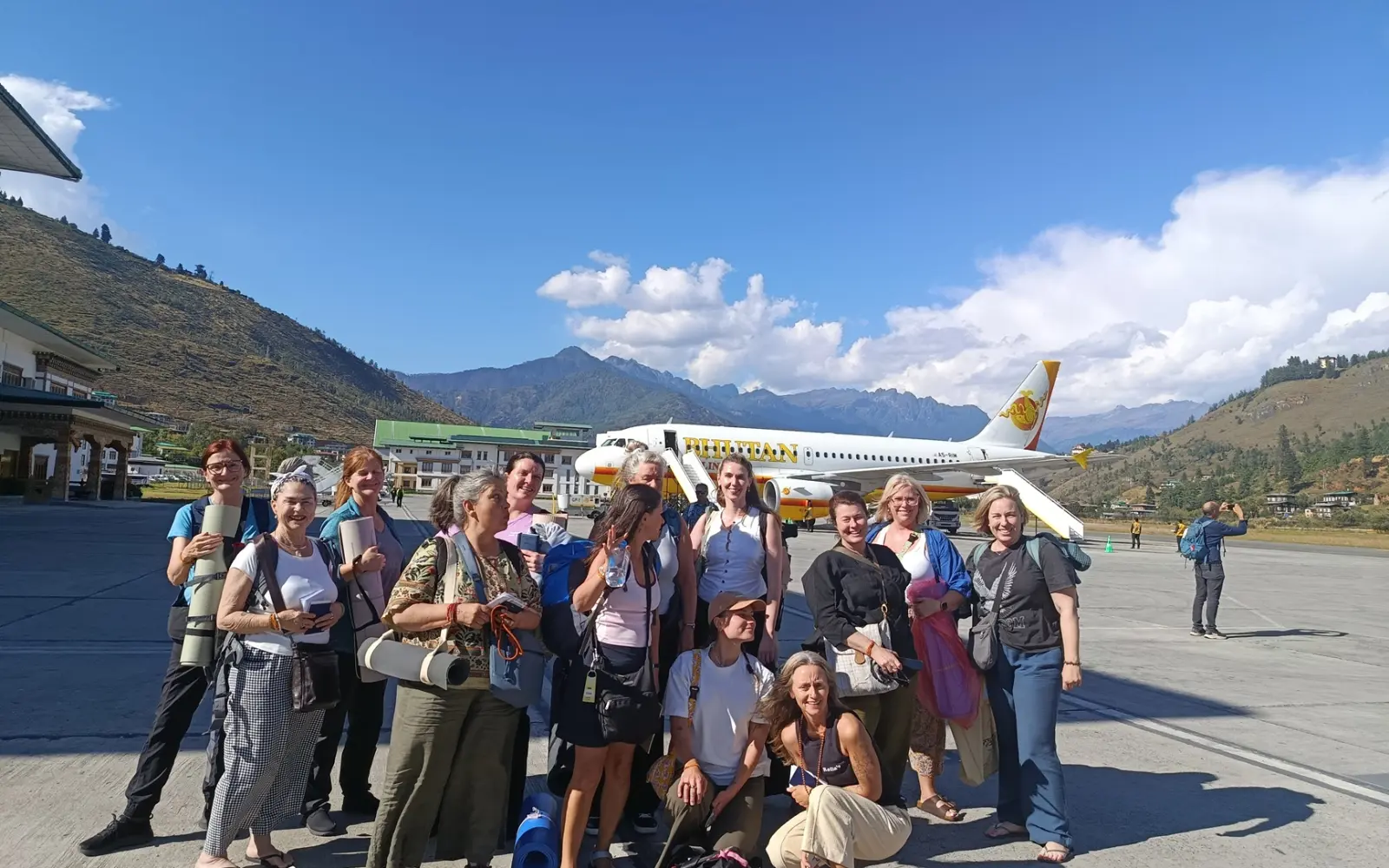
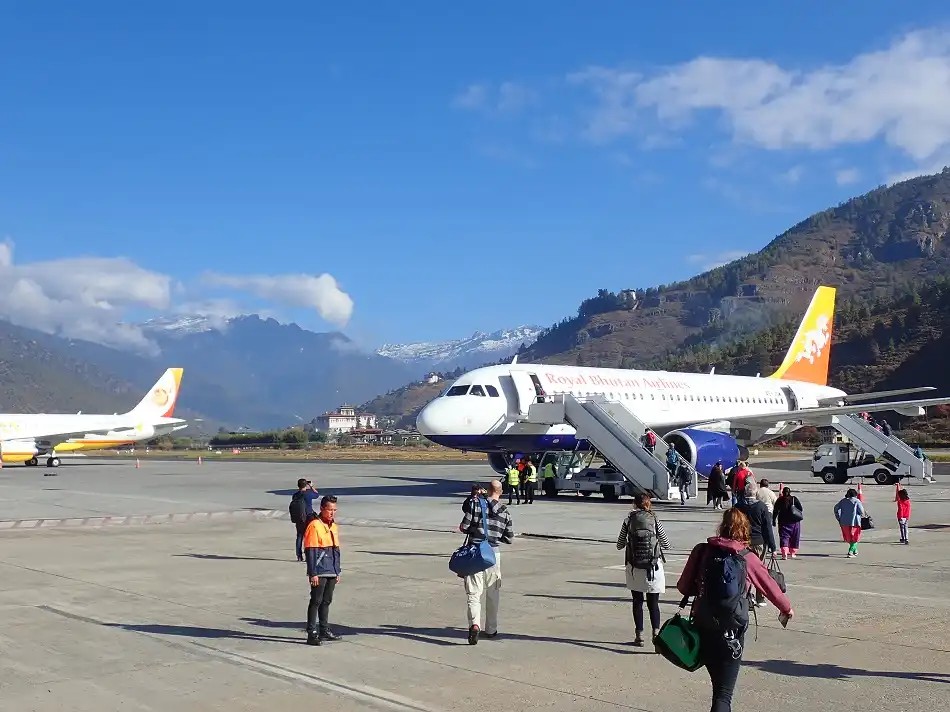
Paro International Airport: Aircraft taxiing on the airport runway at Paro, surrounded by Bhutan’s dramatic Himalayan mountain landscape.
Actually, Paro is the gateway for almost all Bhutan tours, and the trek up to Paro Taktsang, or Tiger’s Nest Monastery, reaches as high as 3,120 meters. The views of the valley floor are stunning as you ascend, and the monastery perched on the cliffside is the centerpiece of the trek, introducing visitors to the spirituality of Bhutan.
Likewise, Punakha is another enthralling destination, especially because of the historic architecture set amidst the juniper trees at 1,200 meters, where the two rivers meet. Crossing the traditional cantilever bridge is a favorite part of the Bhutan tour, and walking in the gardens of the fortress is another reason why Punakha Dzong is a top destination in Bhutan tours.
Moreover, Thimphu is a great introduction to modern Bhutan, and the Buddha Dordenma is perched on a hilltop at around 2,600 meters, offering stunning views and a serene walk around the colossal bronze Buddha. This is a great example of old and new Bhutan, making it a great addition to any Bhutan tour.
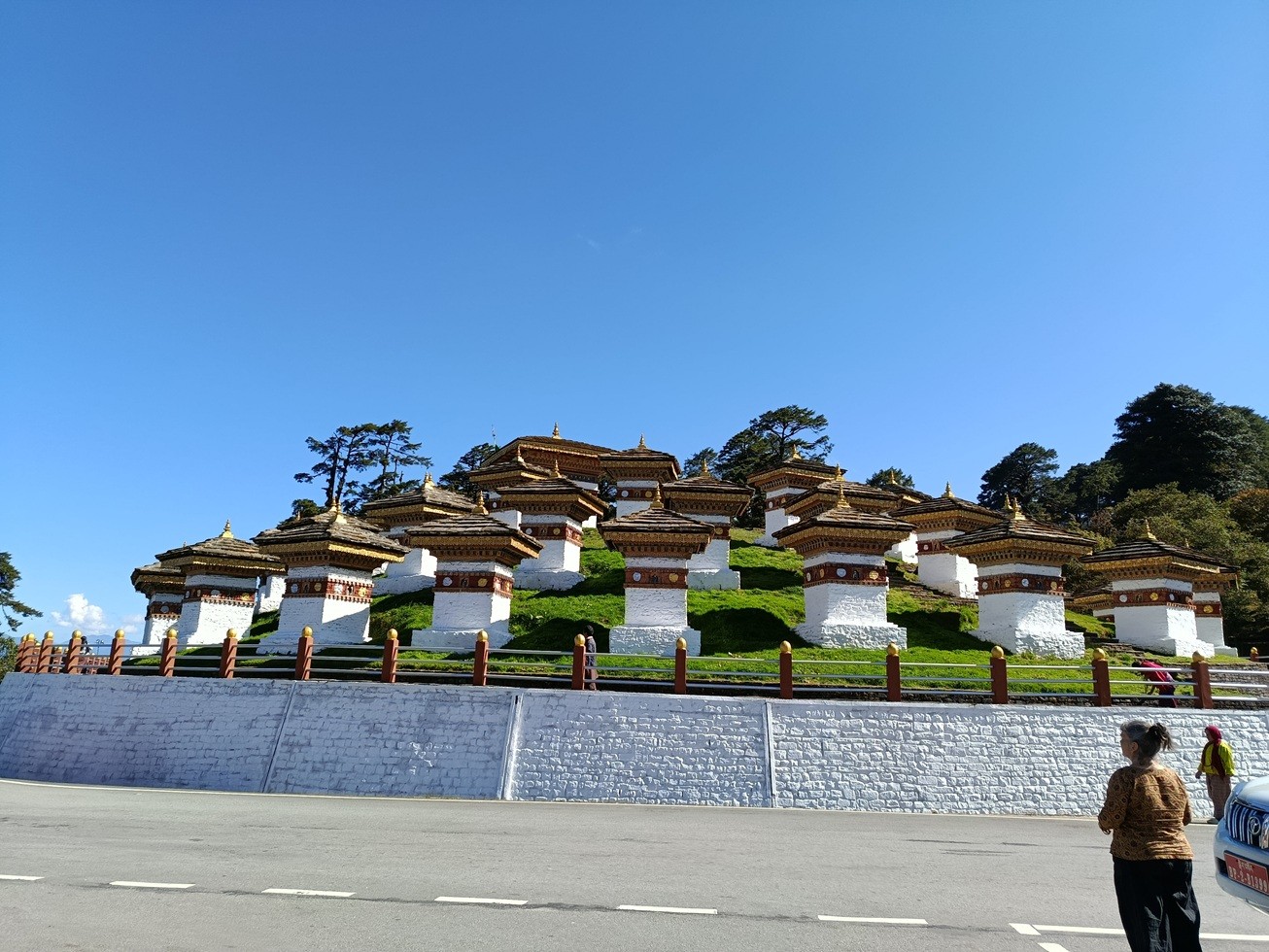
Further, Dochula Pass offers travelers stunning views of the Himalayas, and at 3,100 meters, you can see all 108 chortens, as well as views of the snow-capped peaks on clear days. This is a great natural attraction along the drive from Thimphu to Punakha, perfect for great photographs.
Additionally, Phobjikha Valley is another attraction in Bhutan, especially because of the beauty of the seasons. In crane season, the area around Gangtey (3,000 meters) is almost magical as you visit the ridge-top monastery of Gangte Goemba.
Finally, the Bumthang Valleys are a great addition to any Bhutan tour, especially because of the spirituality and culture you can experience as you visit the ancient temples in the Jakar region (2,580 meters). This is a great way to experience the Bhutanese way of life, especially in the rural areas.
Must-See Attractions in Bhutan Tours :
Paro Taktsang (Tiger's Nest) at 3,120 m – Iconic hike.
Punakha Dzong at 1,200 m – Historic fortress beauty.
Buddha Dordenma in Thimphu at 2,600 m – Massive statue views.
Dochula Pass at 3,100 m – 108 chortens panorama.
Phobjikha Valley (Gangtey) at 3,000 m – Crane migration spot.
Bumthang valleys at ~2,600 m – Ancient spiritual heart.
Major Highlights and Experiences: What Makes Bhutan Special
Meanwhile, Bhutan tours would be an experience that would be filled with moments that would be remembered for a lifetime, as the journey would be through the major highlights and experiences that Bhutan has to offer, such as Tiger’s Nest, tshechus, black-necked cranes, dzongs, monasteries, and the concept of Gross National Happiness.
Moreover, Tiger’s Nest, for instance, would be an experience that would immediately get the adrenaline flowing, as the trek to Paro Taktsang (3,120m) would be through rough terrain, twisting through prayer flags and pine trees, culminating in the monastery that is perched in the mouth of the tiger-shaped mountain, an experience that would be quite rewarding.
Actually, Tshechus, on the other hand, would be the experience that would brighten up the year, as people gather in Bhutan to witness the colorful dance and rituals of the Paro Tshechu or Thimphu Tshechu, while the locals would be busy entertaining the guests with music.
Likewise, black-necked cranes would be another experience that would be quite thrilling, as the cranes migrate to the Phobjikha Valley (3,000m) in November, and the visitors would get to witness the quiet elegance of these cranes as they inhabit the wetlands.
In fact, Dzongs would be another experience that would be quite captivating, as the travelers would get to visit the fort-monasteries such as Punakha Dzong, marveling at the intricate carvings and paintings inside, as the dzongs would be the symbols of the strength of Bhutan in the past.
Lastly, the monasteries would be the experience that would provide the travelers with the daily dose of spirituality, as the visitors would get to visit the secluded monastery and get to meet the monks, as well as participate in the prayers, an experience that would provide the travelers with the inner peace that they would be looking for, as well as an understanding of the Buddhism that the people of Bhutan follow.
Tiger’s Nest and Green Valley: The iconic Tiger’s Nest Monastery overlooks the lush green landscapes of Paro Valley, showcasing Bhutan’s remarkable blend of spiritual heritage and Himalayan scenery.
And, of course, the Gross National Happiness would be the experience that would be in the heart of everything, as the people of Bhutan would be more concerned with happiness than material possessions, and the visitors would be able to feel the kindness that the people of Bhutan possess.
Key Experiences That Make Bhutan Special :
Tiger's Nest trek – Adventurous spiritual hike.
Tshechus festivals – Colorful masked dances.
Black-necked cranes – Rare wildlife migration.
Dzongs and monasteries – Architectural and spiritual gems.
Gross National Happiness – Unique life philosophy in action.
Bhutanese People and Culture: Warm Hospitality, Living Traditions
Meanwhile, Bhutan tours offer the chance to experience the warmth of Bhutan through its people and culture. The Bhutanese people are known for their open hearts, gentle smiles, and traditional culture, largely influenced by Buddhism. Community spirit is strong, and ancient traditions are preserved to provide visitors with an experience of the true pulse of the country.
Actually, Bhutanese hospitality greets you as soon as you arrive in Bhutan. The people are genuinely warm and welcoming, and your neighbors may even offer you some tea or food just because you are there! It makes it very easy to form connections, and you feel right at home as soon as you arrive.
Likewise, Buddhism plays an important role in the daily life of the Bhutanese people. Many Bhutanese begin their day with altars in their homes, and the monks guide the people through the villages with their teachings and blessings. It is the unsaid spirit of the Bhutanese people.
Similarly, traditional wear gives rise to an air of quiet pride, with the knee-length gho for men, neatly tied around the waist, and the elegant ankle-length kira for women, elegantly wrapped around the body. These are common sights in offices, schools, and functions, showcasing the country's heritage in the best possible way, easily noticeable for the visiting tourist.
In fact, community values are also centered around harmony and cooperation, with people coming together during the season of harvesting and festivities, as well as the close relationships that bind the people together, keeping the fabric of society in perfect condition, especially in the rural areas that the visiting tourist may venture into.
Furthermore, ancient customs and traditions are preserved with utmost care, with the people engaging in intricate craftsmanship in the form of fabric and wood, as well as the passing on of folklore, songs, and dance to the coming generations, keeping the ancient traditions of Bhutan vibrant in the present day, enhancing the experience of the visiting tourist.
All in all, Bhutanese culture, in the final analysis, represents the perfect blend of tradition and gentle development, with the people's respect for nature and elderly citizens providing valuable lessons for the visiting tourist in the best possible way, in a calm and peaceful environment, with the people and culture being the essence of the Bhutan tour.
Bhutanese Culture Highlights :
Warm hospitality – Friendly welcomes and shared meals
Buddhist influences – Daily prayers and compassionate living
Traditional dress – Gho for men, kira for women
Community values – Strong support and harmony
Preserved ancient customs – Textiles, dances, and folklore
Festivals & Events: When to Plan Your Trip for Tshechus
Design your Bhutan tour around the highlight tshechus. Get a feel of Paro Tshechu, Thimphu Tshechu, Punakha Drubchen, and Jambay Lhakhang Drup with their masked dances and spiritual energy.
Actually, Paro Tshechu is held in the spring season in Paro (2,250 m), with large crowds attending to witness the fantastic cham dances that purify and bless. The atmosphere is lively and uplifting, making it an ideal choice for your Bhutan tour.
In the autumn season, Thimphu Tshechu is held in Thimphu for three to five days in September or October at 2,350 m. The display of giant thangka, masked dances, and family get-togethers create a convivial atmosphere. It is one of the most popular festivals in Bhutan.
Here, Punakha Drubchen is held in February or March in Punakha (1,200 m), with warrior dances and sacred rituals by monks to ward off evil spirits. It is a great cultural experience.
Likewise, Jambay Lhakhang Drup is held in October or November in Bumthang (2,600 m), with night fire dances. The masked dances with sacred flames create a mesmerizing display, generating a spiritual atmosphere.
In all tshechus, one can see beautiful masks, themes associated with gods or demons, and dances with music, laughter, and blessings. These festivals strengthen community bonds and add depth to your Bhutan tour.
To sum up, to get the best out of your Bhutan tour, plan your trip in advance. Book your hotel rooms in advance because they tend to get filled up quickly. It is better to arrive a day prior to get a good spot. A tshechu can add great depth to your Bhutan tour.
Major Bhutan Festivals and Best Months :
Paro Tshechu – March/April, Paro (2,250 m)
Thimphu Tshechu – September/October, Thimphu (2,350 m)
Punakha Drubchen – February/March, Punakha (1,200 m)
Jambay Lhakhang Drup – October/November, Bumthang (2,600 m)
Bhutanese Cuisine: Must-Try Dishes and Food Experiences
Actually, Bhutanese cuisine is a must-try on your tours, with signature Bhutanese dishes like ema datshi, red rice, momos, kewa datshi, and jasha maru. Get to know more about Bhutanese food, including spiciness, vegetarian food, and food experiences that await tourists.
Likewise, Ema Datshi is Bhutan’s national dish, consumed by Bhutanese on a day-to-day basis. The dish is a fiery mix of chilies and cheese, served hot with red rice. The dish is a must-try on all Bhutan tours, as it is a culinary highlight that food lovers should not miss.
Meanwhile, Red Rice is a standout dish because of its nutritional value and nutty taste. Grown in high-altitude regions like Paro, Bhutan (about 2,250 m), this rice is grown on soft land with a pleasant texture when cooked. Red Rice is a healthy carbohydrate-rich food that is Bhutanese through and through.
Similarly, momos are dumplings that Bhutanese chefs prepare with great skill, either steamed or deep-fried with a mix of veggies or meat. These dumplings are enjoyed with a tomato-based spicy sauce. Momos are a comforting food that tourists can enjoy on Bhutan tours.
Furthermore, Kewa Datshi is a comforting dish that tourists will love because it has potatoes, cheese, and mild chilies. The dish is Bhutanese through and through because it is served hot with red rice. Kewa Datshi is a mild dish that is a must-try on Bhutan tours, especially for vegetarians.
In fact, Jasha Maru is a dish that tourists will love because it has chicken prepared with chilies. The dish is Bhutanese through and through because it is prepared with fresh herbs that add more aroma to the dish. Jasha Maru is a must-try on Bhutan tours because it is a dish that meat lovers will not want to miss.
Must-Try Bhutanese Dishes- Guide :
Ema datshi – National chili cheese stew
Red rice – Nutty whole-grain staple
Momos – Steamed or fried dumplings
Kewa datshi – Potato and cheese delight
Jasha maru – Spicy chicken curry
Accommodation Options in Bhutan: From Luxury to Authentic Homestays
In Bhutan tours, you have a lot of options for places to stay, depending on what you prefer. There are luxury hotels in Paro and Thimphu, mid-range guesthouses, traditional homestays, farm stays, and basic lodges in remote areas.
Here, let us take the luxury hotels first, for those who prefer the finer things in life. In Paro (at an elevation of 2,250 m) and Thimphu (at an elevation of 2,350 m), these hotels offer spa services, fine dining, and stunning views of the mountains. If luxury is what you are after, then these hotels are for you, as the trip will be effortless.
Actually, mid-range guesthouses are another type of accommodation in Bhutan, which offers great value for money. These are located near the popular attractions, thus offering convenience at affordable prices. This type of accommodation is perfect for Bhutan tours, as it offers great value for money.
Likewise, homestays in Bhutan are traditional, as they allow visitors to stay in traditional Bhutanese homes. This type of accommodation offers great value for money, as visitors get the opportunity to stay in traditional Bhutanese homes, share meals, and sleep on traditional Bhutanese beds. Homestays are located in traditional Bhutanese villages such as Punakha (at an elevation of 1,200 m), thus offering visitors the opportunity to stay in traditional Bhutanese homes.
Farm home-stays are another type of accommodation in Bhutan, which offers great value for money. This type of accommodation offers visitors the opportunity to stay in traditional Bhutanese homes, as they are located in traditional Bhutanese villages such as Bumthang (at an elevation of 2,600 m).
For those on adventurous Bhutan tours, there are basic lodges, which are located near popular attractions such as the Jomolhari base (7,326 m).
Accommodation Types in Bhutan Tours :
Luxury hotels – Premium resorts in Paro (2,250 m) & Thimphu (2,350 m).
Traditional homestays – Authentic family cultural immersion.
Farmstays – Rural organic living experiences.
Basic lodges – Simple options for remote treks.
Currency, Payments, and Daily Costs in Bhutan
When traveling Bhutan, one should be aware of the currency used in Bhutan. The official currency is known as Bhutanese Ngultrum. The Bhutanese currency is pegged to the Indian Rupee. While traveling Bhutan, one should know that US Dollars are widely accepted in tourist areas, hotels, tour operators, and shops. One can easily pay with US Dollars as well as use them as tips or spend on souvenirs.
Here, ATMs are available in prominent cities like Thimphu, situated 2,350 meters above sea level, and Paro, situated 2,250 meters above sea level. One can withdraw Bhutanese currency using a Visa or MasterCard. There is a fixed cost that is applicable on a day-to-day basis. The Sustainable Development Fee (SDF), applicable till August 2027, is $100 per night. The SDF is applicable to all international travelers.
Actually, there is a one-time visa fee applicable when one enters Bhutan. The fee is $40, applicable to all travelers as it is required to obtain an e-Visa. The cost is fixed, applicable to all tourists.
Mainly, the Bhutanese currency is easily handled by tourists. The costs that one has to pay on a day-to-day basis include SDF, meals, transport, and tour guides. The extra costs include shopping. The Bhutanese currency is easily handled by tourists. One should always plan to make finances smooth and hassle-free.
Item
Details
Notes for Travelers
Bhutanese Ngultrum
Pegged 1:1 to INR
Official currency
US Dollar Acceptance
Widely accepted in tourism
Preferred for payments
ATMs/Cards
Available in Thimphu (2,350 m), Paro (2,250 m)
Withdraw Ngultrum
Sustainable Development Fee SDF
$100/night (adults)
Until Aug 2027
Visa Fee
$40 one-time
Non-refundable
Bhutan Currency and Costs Overview :
How Much Does a Bhutan Tour Cost? A Budget Snapshot
Are you planning a Bhutan tour? If that’s the case, here’s the lay of the land: the daily package, the Sustainable Development Fee, the flight, and the balance between budget and luxury options are just some of the determinants of the overall tour cost. Well, here are some realistic numbers that could guide your Bhutan tour.
Actually, the base of the overall tour cost is the daily package, which usually ranges between $180 and $300+ per person per night, including a guide, transport, food, and lodging. The tour package varies according to the size of the group, with the overall tour cost decreasing as the group size increases.
Likewise, the Sustainable Development Fee is another key aspect of the overall tour cost, which is not likely to vary much in the coming year. The fee is mandatory, with international visitors paying $100 per night in addition to the tour package.
Similarly, the cost of flight tickets depends on the location from which the flight is taking off. In most cases, people fly into Bhutan via the Paro Airport, which is at an altitude of 2,250 meters, from major cities in Asia. The flight tickets, which are usually return tickets, may cost anywhere between $500 and $1,500.
Moreover, budget travel is a good idea as it helps in keeping the expenses low by staying in mid-range accommodations and traveling in groups, thus avoiding any additional expenses that may occur during the tour.
For people looking for luxury, the tour may prove to be expensive, as the hotels in Thimphu, which is at an altitude of 2,350 meters, may charge as much as $500 per day, along with the facilities that they provide.
To sum it all up, the key to a successful tour of Bhutan is the correct estimation of the expenses that may occur during the tour. The Bhutan tour may cost anywhere between $2,000 and $4,000 per person for a seven-day tour, including the SDF, full packages, and flight tickets, thus making the tour a memorable one with the correct emphasis on sustainability.
Bhutan Tour Cost Breakdown :
Daily package rates – $180–$300+ per person (guide, transport, meals).
Sustainable Development Fee SDF – $100/night impact.
Flight costs – $500–$1,500 round-trip.
Budget travel – Standard options for affordability.
Luxury travel – Premium packages $500+ daily.
Getting Around Bhutan: Transportation, Guides, and Itineraries
If you are planning Bhutan tours, you will realize that one thing is constant: Paro International Airport is your gateway to Bhutan, while domestic flights get you quickly to various pockets such as Bumthang and Trashigang. Drukair and Bhutan Airlines operate a few reliable flights, ensuring that reaching Bhutan quickly is not a problem.
For tourists, private transport with a licensed driver is a must. The company will provide a comfortable SUV or car, with a guide always on board to ensure that your journey is both enjoyable and informative. This is perfect Bhutan tourism, as it is low-impact tourism with a high value.
Meanwhile, the Bhutan landscape is beautiful, with mountains all around. The Bhutan highways are winding, with elevation changes and sharp turns. The main highways are in good condition, with prayer flags fluttering by as you drive through Bhutan. Patience is required when driving through Bhutan, with a little motion sickness remedy helpful on long drives.
Actually, sample itineraries are available, taking anywhere from five to ten days. If this is your first time in Bhutan, a five-day itinerary is perfect, with Paro Taktsang, Thimphu, and Punakha Dzong on the agenda. The Bhutan tours are not rushed, with each day having minimal travel.
If your Bhutan tour is for a week or more, then seven to ten days is perfect. In this period, you can explore the central regions of Bhutan. Your journey will take you from Paro (2,250 m), then to Thimphu (2,350 m), followed by Punakha (1,200 m), then to Bumthang. The ten-day Bhutan tour is perfect, with Dochula Pass (3,100 m) added.
Summing up, Bhutan tour is all about mixing flights with private transport, with a knowledgeable guide ensuring that your journey is smooth. Getting around Bhutan is not a problem, thanks to licensed operators that make planning your route easy.
7-Day Extended: Add Phobjikha Valley (3,000 m) and Dochula Pass (3,100 m).
10-Day Comprehensive: Include Bumthang valleys (2,600 m) spiritual sites
Private vehicles drivers guides – Mandatory for all routes
Practical Tips for First-Time Visitors: What to Pack and Expect
Here, some practical tips and advice on what to pack and what to expect during a first visit to Bhutan, in an informal and conversational style:
As a first-timer in Bhutan, altitude is one of the first factors that must be taken care of. In Bhutan, altitude varies between 2250 meters in Paro and mountain passes that are over 3000 meters. Acclimatization occurs over time with sufficient rest and drinking a lot of water. Thus, altitude sickness is an important factor. It is advisable that one be prepared with a plan in case of altitude sickness, as recommended by a doctor.
While visiting monasteries and other religious sites in Bhutan, one must dress modestly. It is important that one wears clothes that cover their shoulders and knees while visiting Dzongs and monasteries. Long pants and long-sleeved shirts are advisable. Once inside the sacred precincts of the monastery, one must also remember to remove their shoes and hats. Dressing modestly is important in ensuring that one’s visit to the monastery is smooth and hassle-free.
Stupa in Bhutan: A peaceful Buddhist stupa reflecting Bhutan’s deep spiritual heritage, set against the country’s beautiful green valleys and mountain scenery.
While in Bhutan, one must also be mindful of the photography restrictions. It is important that one ask permission before taking photographs of people and inside temples. Photography during prayer sessions and photographs of monks are strictly prohibited. These are important tips that must be remembered in ensuring that one’s visit to the sacred precincts of the temples in Bhutan is smooth and hassle-free.
Likewise, eco-friendly practices are an important part of any visit to Bhutan. Thus, one must be mindful of using a bottle and reducing plastic use. These are important tips that must be remembered in ensuring that one’s visit to Bhutan is smooth and hassle-free.
While in Bhutan, one must be mindful of their health. Thus, one must pack their medication and be prepared. In addition, one must drink bottled water and eat only cooked food. These are important tips that must be remembered in ensuring that one’s visit to Bhutan is smooth and hassle-free.
Overall, eco-friendly practices are important in ensuring that one’s visit to Bhutan is smooth and hassle-free.
Practical Tips for First-Time Bhutan Visitors :
Altitude – Acclimatize slowly, stay hydrated at 2,250 m+
Modest dress code – Cover shoulders/knees for monasteries dzongs
Eco-friendly travel – Reduce plastic, support locals
Health precautions – Pack meds, drink bottled water
Final Thoughts: Planning Your Bhutan Tours and How It Changes You
Plan your Bhutan tour with the valuable information from Bhutan tours Companies. The experience will work its magic, and you will be drawn into the country for an experience that will change you.
Actually, Bhutan tours provide travelers with valuable take-home experiences. Travelers get a feel of the Gross National Happiness philosophy, see the pristine Himalayas, and experience Buddhist culture at close proximity. The experience becomes an educational tour on how to live life more mindfully, turning into an experience you will always cherish.
In addition, planning early for your Bhutan trip also gives you access to prime dates during peak seasons. The peak seasons of October/November and March/April get booked fast. The experience becomes more enjoyable when you work with licensed tour operators. They will help you navigate the Sustainable Development Fee, making your Bhutan experience more enjoyable.
Likewise, Bhutan’s magic has an individual impact on all travelers. The experience allows you to slow down and enjoy the peaceful valleys and monasteries. The experience also allows you to experience Bhutanese hospitality and culture. The experience changes your perspective and priorities on what success and happiness mean.
Moreover, the Land of the Thunder Dragon always fills one with awe and wonder. Thunderstorms rage across the breathtaking landscapes of Paro (2,250m) and Punakha (1,200m). Hiking to Paro Taktsang (3,120m) rejuvenates your spirits, and the high-altitude experiences at Dochula Pass (3,100m) make one feel like attaining spiritual enlightenment. Embracing this sacred country instills inner peace within oneself.
In fact, sustainable tourism helps maintain the pristine beauty of Bhutan for future travelers to enjoy. Every tourist contributes to the country through the Sustainable Development Fee but also engages in environmentally friendly activities every day. Therefore, Bhutan tourism follows the principles of high-value and low-impact tourism, which gives one the feeling of having made a positive change.
In conclusion, planning your Bhutan trip unlocks the door to self-transformation. Book your Bhutan tour with reliable tour guides and get ready to immerse yourself in the concept of Gross National Happiness and the breathtaking beauty of Bhutan. The Land of the Thunder Dragon opens its doors with open arms to welcome you—a journey of self-transformation begins with one brave step.
Why Bhutan Changes You – Key Takeaways :
Gross National Happiness philosophy – Redefines success and well-being
Pristine Himalayas and Buddhist culture – Inspire peace and mindfulness
Warm Bhutanese hospitality – Builds deep human connections
Paro Taktsang (3,120 m) trek – Symbolizes personal achievement
Sustainable Development Fee contribution – Supports meaningful preservation
FAQs To Support the "Bhutan Tours: A Complete Visitor’s Guide”
1. Do I Need a Visa for Bhutan Tours? Yes, most people traveling to Bhutan need a visa.. If you are from India you can enter Bhutan with a valid passport or voter ID card. Usually your Bhutan tour operator arranges the visa before you arrive. So the process is simple and hassle-free. It is always best to give your documents for smooth travel planning.
2. What Is the Best Time to Visit Bhutan? The best time to visit Bhutan is during spring and autumn, it is similar like Nepal. The weather is clear and comfortable during these months. Also the mountain views are often amazing. In spring you get to see colorful rhododendron flowers blooming. In autumn there are cultural festivals. So these seasons give you a mix of scenery, culture and trekking opportunities.
3. How Many Days Are Enough for a Bhutan Tour? A Bhutan tour usually takes 3N / 4D, 4N / 5D, 5N / 6D, 9N to 10 days and till to 16 days. This time allows you to visit destinations comfortably. For example you can visit Thimphu, Paro and Punakha without rushing.. If you have more time you can have deeper cultural experiences and go for scenic hikes. So choosing the duration depends on what you want to see and do.
4. Is Bhutan a Travel Destination? Yes, Bhutan is considered a premium travel destination. The cost includes your stay, transportation, guide services and government fees. So you get value and organized experiences. Yes prices may seem higher than in neighboring countries.. Bhutan’s unique culture, safety and environmental protection policies make it worth the investment for many visitors.
5. What Are the Top Places to Visit in Bhutan? Some top places to visit in Bhutan are Thimphu, Paro, Punakha and Bumthang. Each place has its unique culture and natural attractions. For example Paro is famous for the Tiger’s Nest Monastery. Punakha is known for its dzong and valleys. So visiting regions gives you a complete Bhutan travel experience.
6. Is Tiger’s Nest Monastery to Hike? The hike to Tiger’s Nest Monastery is moderately challenging. Most people complete it in four to six hours. The trail climbs steadily. It is well maintained. So people, with fitness can usually manage the trek. Taking breaks and walking slowly makes the experience much more enjoyable.
7. Can I Travel Alone in Bhutan? Most people who visit Bhutan from countries have to book their trip to Bhutan through a tour company that is allowed to operate in Bhutan. So you cannot really travel completely on your own in Bhutan but solo people allowed to go there. This way you will have a car to take you places a hotel to stay in and someone to show you around Bhutan. This means that when you travel to Bhutan you will have an easy time and you will learn a lot about the people and customs of Bhutan.
8. What Money Do People Use in Bhutan? The money that people use in Bhutan is called Ngultrum. You can also use Rupees in many places in Bhutan. Big hotels and shops also take credit cards.. It is a good idea to have some cash with you when you go to places that are far away from cities. So it is always an idea to have different ways to pay for things.
9. Is Bhutan a Safe Place for Tourists? Bhutan is a safe place to visit. There is not crime and the people are very friendly. The government of Bhutan also makes sure that tourists are safe. So people who visit Bhutan usually feel safe when they walk around cities, villages and places that're important for the culture of Bhutan.. You should still be careful like you would in any other place you visit.
10. What Should I Take With Me to Bhutan? What you pack when you go to Bhutan depends on what time of year you go and what you plan to do. You should always take shoes, clothes that you can wear in layers something to protect you from the sun and any medicine you need. The weather, in Bhutan can change quickly in the mountains. So you should take clothes that will keep you clothes that will keep you cool. If you pack the things you will have a great time when you travel to Bhutan.