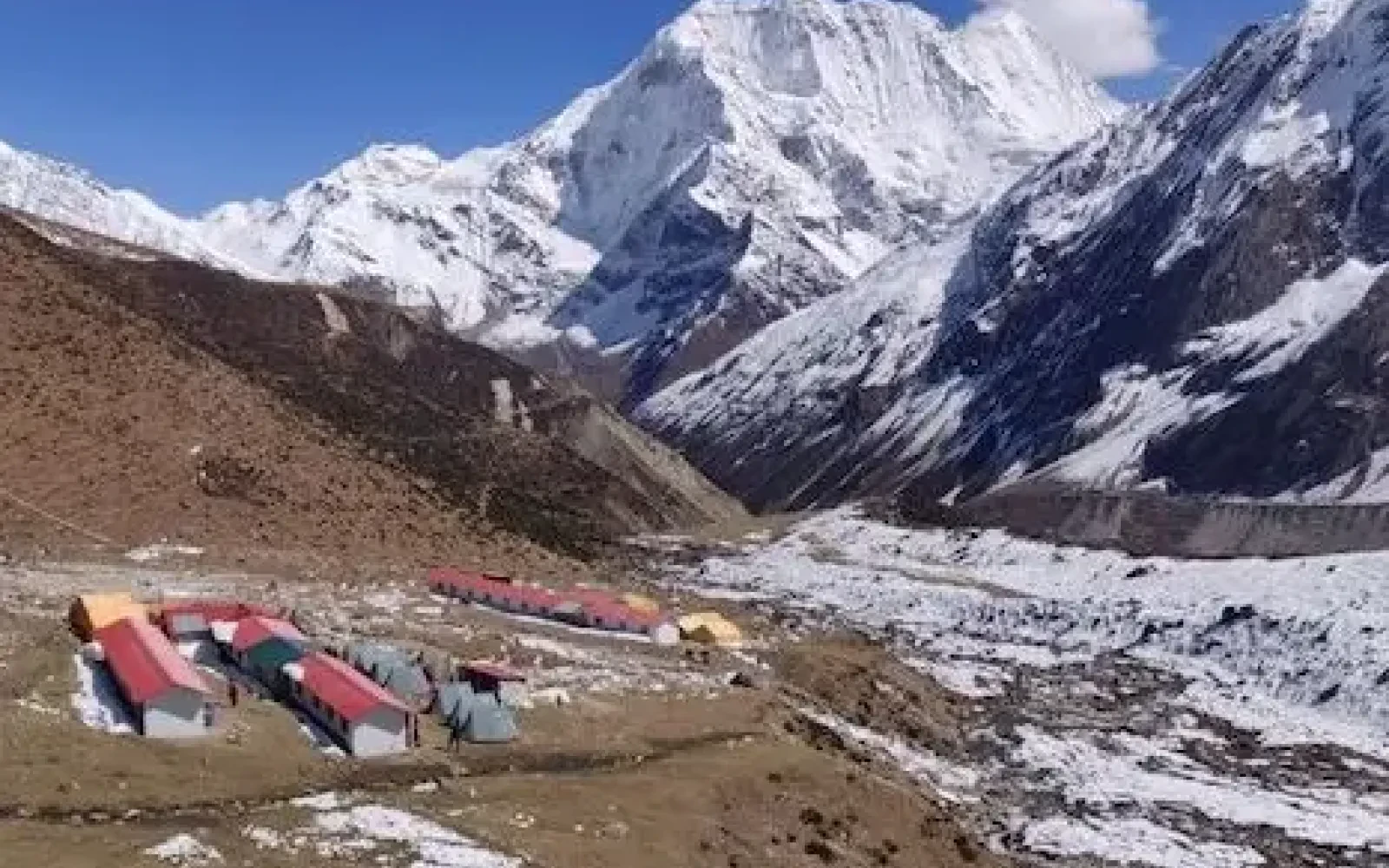
Dharamsala is a high altitude shelter on the Manaslu Circuit Trek. It lies at around 4,460 meters of height above sea level. In fact, Dharmasala is also known as Larke Phedi, the bottom of LarkePass. It is the final overnight shelter before crossing Larke Pass (5,106 meters). Because of this, Dharamsala is a key component of every trekker's journey.
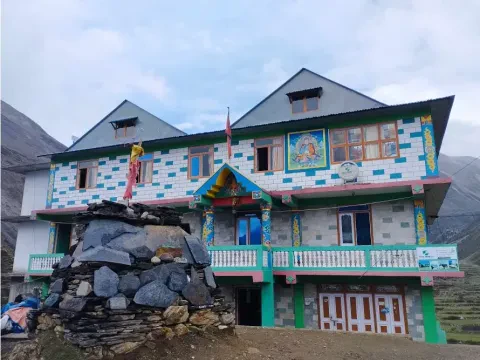
Actually, the Dharmasala village is not a typical one, it’s very basic with a few teahouses. It was built specifically for trekkers in contrast to other Manaslu villages. It has a couple of stone lodges and tent houses. Most trekkers arrive in the afternoon from Samdo (3,875 m) and leave early the following morning. Trekkers overnight here, have hot meals, and sleep before traversing the long pass. The evening is generally windy and cold even in spring and autumn.
Moreover, Dharamsala lies in a broad, barren valley with tall mountains surrounding it. Snow-covered ridges at the crest of the ridgeline. The air is thin, and the temperature tends to fall below freezing point. Therefore, acclimatization is necessary before staying here. Most trekkers take an acclimatization day off in Samdo.
Despite its modest facilities, Dharamsala is unique. It's at the edge of human settlement. It's where valleys give way to forests and snowy peaks take over. The silence, thin air, and snow breeze give a unique atmosphere. In short, Dharamsala is more than an overnight stop. It's a symbolic gateway to the most challenging and high-altitude part of the Manaslu Circuit.
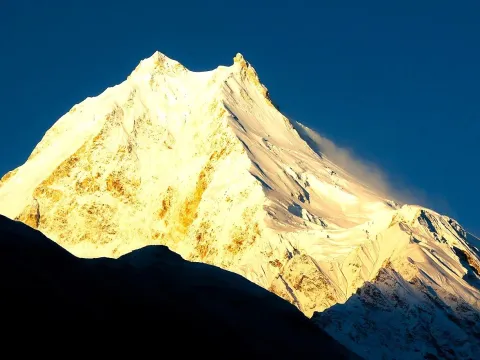
Dharamsala lies in the Gorkha District of northern Nepal along Manaslu Circuit Trail. It is an altitude of approximately 4,460 meters. The place is also known as Larke Phedi, "base of Larke." It is the final camp prior to the Larke Pass, which lies at 5,106 meters. The area is cold, dry, and windy due to its elevation.
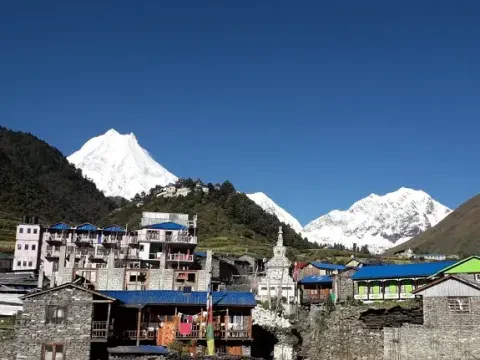
In fact, Dharamsala lies within Manaslu Conservation Area, which is ringed by the lofty peaks of the Himalayas. To the east lies Naike Peak (6,210 m). Behind it stands Larke Peak (6,249 m) and Himlung Himal (7,126 m). Snow lies there for the greater part of the year. The landscape consists of rocky ridges, glacier streams, and scree slopes.
Moreover, the camp of Dharmasala is approximately 3–4 hours of climbing hike from Samdo (3,875 m). The path ascends gradually via yak meadows and rocky moraine. On clear weather, the scenery extends to Manaslu North (7,157 m) and far-off Tibetan mountains. There are no trees or fields here unlike the low villages.
Here, the weather patterns change very quickly in Dharamsala. Snowfall is possible even during spring or autumn. Cold nights and hard wind test the mettle of trekkers. Due to its location and altitude, Dharamsala is subjected to rockfalls as well as avalanche-prone areas around it.
Briefly, Dharamsala is in a rough but beautiful part of the Manasla region. Its location under towering Himalayan summits makes it dramatic and unforgettable. Hence, it is a significant and motivating place on the Manaslu Circuit.
You can only access to Dharamsala on foot. It has no roads and no airports nearby. Trekkers trek to it for almost 3–4 hours from Samdo (3,875 m). The trail is mainly ascending but not steep. It passes through yak pastures and dry alpine meadows. As one ascends to higher altitude, one walks slowly and tires easily.
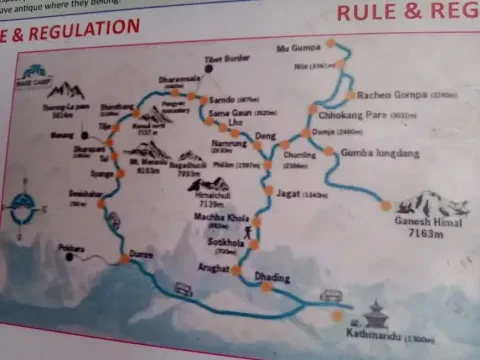
Actually, the trek to Dharamsala is part of the Manaslu Circuit Trek. The trekkers typically begin from Soti Khola (710 m) or Machhakhola (869 m). They then walk along the valley of Budhi Gandaki River. It takes 9–10 days from the start to reach Dharamsala. The trek passes through villages like Jagat, Deng, Namrung, Lho, Samagaon, and Samdo.
In fact, there is no motor road to Dharamsala. Helicopter evacuation is possible in emergencies but not scheduled helicopter service. Weather could be a hindrance as well. Snow and fog will delay movement, especially at early mornings or late afternoons. Trekkers then should consider forecasts before crossing Larke Pass (5,106m).
Additionally, due to the height at 4,460 meters, trekkers have to acclimatize prior to reaching there at Dharmasala. Many of them overnight an additional day at Samdo to rest. This avoids altitude sickness while crossing the pass. Oxygen is scarce here, and cold winds render walking more difficult. Nevertheless, the trail is well marked and frequently used.
In brief, Dharamsala is distant village in Manaslu region before Larke Pass and can be reached only by trekking. Its distance is one of the things that make it popular and challenging. Good planning and physical fitness are therefore required for the individuals traveling there.
Facilities in Dharmasala are highly basic and primitive. The location is at an elevation of 4,460 meters in a harsh alpine climate. Unlike lower villages, Dharamsala was built specifically for the purpose of providing shelter to trekkers only, before crossing Larke Pass (5,106m). No full-time inhabitants live there. It is a Manaslu Circuit trek’s only seasonal settlement.
In fact, there are two to three teahouses or lodges at Dharamsala. They are stone, wood, and tarpaulin buildings. The rooms are very simple. They mostly have wooden beds and thick blankets. Rooms have no heating. Down jackets or sleeping bags are what the trekkers sleep in. In relation to Samagaon or Namrung, the comfort here is minimal but functional.
Likewise, toilets in Dharmasala are simple and usually in the exterior of the main buildings. Hot showers are not the norm. Washing water is freezing cold and in short supply. Power comes from solar panels. But it is usually too low to run equipment. Likewise, power Wi-Fi does not exist and there is effectively no mobile signal.
Moreover, food in Dharmasala is consumed in a shared mess tent. Food is plain and hot—dal bhat, noodle soup, or Tibetan bread. Garlic soup, coffee, and tea are the favorites. Trekkers are energized and warmed by such foods. Prices are more here since it is difficult to get goods transported. Porters and yaks transport goods from Samdo.
Similalrly, there are no shops, pharmacies, or medical facilities in Dharmasala. Trekkers will have to provide themselves with their own supplies, including snacks, medication, and water purification tablets. Guides typically carry first-aid kits for safety reasons.
All in all, Dharamsala offers just enough to get by. While comfort is minimal, it provides a safe and sheltered point of origin before attempting the pass. Therefore, despite its shortcomings, Dharamsala is a valuable stop on the Manaslu trekking journey.
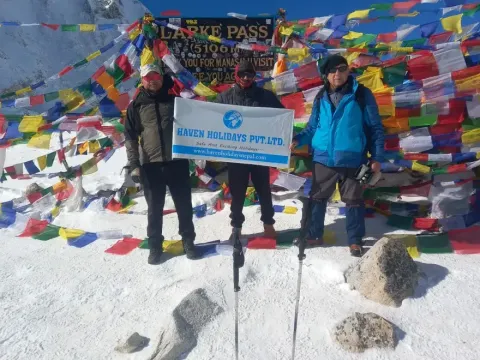
Dharamsala has extremely few teahouse facilities. Situated at an altitude of 4,460 meters, it is the penultimate stop before entering Larke Pass (5,106 m). The region is not a village but a trekking camp area. Hence, the sparsely available shelters here are present only to facilitate the trekkers.
In fact, there are two or three teahouses in Dharamsala. The lodges are of stone, wood, and sometimes tarpaulin. The rooms are very basic. Beds have thin mattresses and thick blankets. There is no heating. Because of the extremely cold climate, all the trekkers sleep in down jackets or sleeping bags.
Likewise, the toilets in Dharmasala are usually outside and very primitive. Most are squat toilets and shared. There are no en-suite facilities. There is hot water at best, rarely. Showers are not recommended due to the cold. The water is handled with care, and the pipes freeze every night.
Actually, power supply in Dharmasala is solar-powered and very sparse. Charging phones or headlamps might even be impossible. Compared to lower villages like Samagaon or Namrung, there is no mobile signal or internet. So, Dharamsala is only survival-comforted.
Moreover, there is a communal dining room in every teahouse in Dharmasala. These are more inviting and lively in the evening. These include dal bhat, soup, noodles, and tea. Garlic soup is also employed as a lot of altitude prevention. The prices are higher than usual, as commodities arrive by yak or porter from Samdo (3,875 m).
More importantly, it is not a sure that a teahouse booking is confirmed beforehand. During the high season, rooms get booked. Tents could be where the latecomers sleep. Guides help make beds in the early mornings.
In general, Dharamsala teahouses are basic but essential. Comfort is minimal, but it provides warmth, food, and shelter before the high pass. Therefore, all Manaslu Circuit trekkers rely on these lodges to rest before the trek ahead.
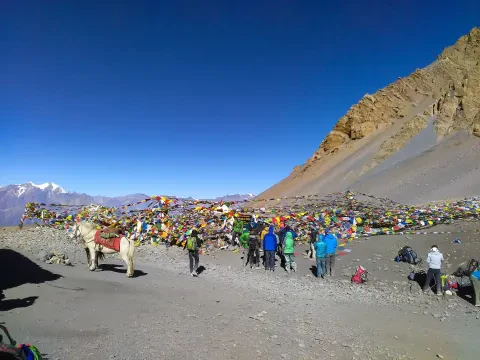
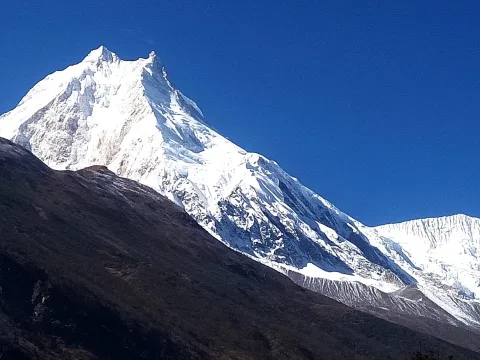
Nestled amidst pristine Himalayan vistas, Dharamsala is located at an altitude of 4,460 meters in a large, open valley below Larke Pass (5,106m). The town's main attraction is the vast mountain vistas. Trekkers have 360-degree views of snow-capped peaks and dry landscapes.
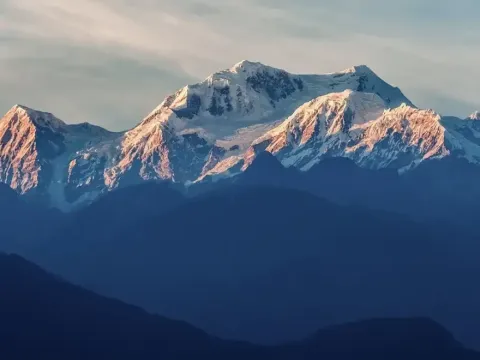
North, over the Dharmasala valley, lies Larke Peak (6,249 m). Himlung Himal (7,126 m) shows in the distance on clear mornings. Manaslu North (7,157 m) also is visible from summit spots in part. These peaks are backdrop for arguably one of the most stunning mornings on the trek.
Moreover, sunrise and sunset are beautiful here in Dharmasala. The ridges and the glacial slopes are painted golden with color. Because of the thin atmosphere and high elevation, the sky is mostly crystal clear. This renders Dharamsala great for stargazing on transparent evenings.
Nearby Dharmasala, the Larke route features interesting geology. Glacial moraines, frozen streams, and fields of scree characterize the landscape. Trekkers usually walk behind the lodges along a ridge in the afternoon. This brief acclimatization trek has even finer views of the approach to the pass.
Additionally, wildlife is rare at this altitude but still present at Dharmasala. You have a view of Himalayan blue sheep or alpine birds. But wind and chill usually keep animals hidden by day.
Dharamsala, culturally, is less developed than Samagaon or Lho. There are no villages and no monasteries. However, its remoteness gives it the feeling of spirituality. The silence and emptiness here leave an indelible mark.
Briefly, Dharamsala is picturesque because of its unspoiled natural beauty and hilly landscape. It is the final destination before one of Nepal's most famous high passes.
Dharamsala is neither a stay nor sightseeing place. It stands at a height of 4,460 meters and serves only one major purpose—to acclimatize individuals to pass over the Larke Pass (5106 m). As a result, rest of other activities here encourages rest, recovery, and acclimatization.
Actually, the main activity to do in Dharmasala is acclimatization trekking during Manaslu Circuit Trek. Trekkers can hike around the surrounding hills in the afternoon. A short hike behind the teahouses enhances oxygen flow and acclimatizes the body for high altitudes. The walks offer magnificent views of Larke Peak (6,249 m) and neighboring glaciers.
Similarly, sunrise and sunset watching is a favorite activity here. The valley becomes bright with golden light as the sun rises over the snowy ridges. The environment is peaceful and serene. Thus, most trekkers seize moments of contemplation here prior to their most challenging day of trekking.
Likewise, gear up for Larke Pass is also required in Dharamsala. Trekkers restuff rucksacks, wear layers, and gear up for the pre-dawn crossing. Everyone eats a full meal and goes to bed early. Wake up times are generally between 3 to 4 AM for crossing.
Also, some trekkers doing Manaslu circuit Trek enjoy photography here. Light, shadow, and obvious cut contours of the Himalayas are good for photography. Clear sky generally shows stars and moonlight on snow.
In fact, there are no temples or markets to go to here in Dharmasala. Getting to know fellow trekkers over the evening meal is the norm. Advice, planning, and stories are shared before the ordeal of the next day.
In conclusion, Dharamsala is for acclimatization and rest and preparation. Its high elevation and remote location mean that there is little to do, but each activity serves a purpose. Therefore, this short stay is essential to the success of the trek.
Dharamsala is popular owing to its unique position and function. It is situated at 4,460 meters, directly beneath the challenging-to-cross Larke Pass (5,106 m). Most trekkers take a rest stop here before conquering the Manaslu Circuit Trek's highest point. Because of that, Dharamsala is an integral part of any successful Manaslu trek.
Actually, the village Dharmasala offers basic shelter in an unfriendly terrain of the mountains. It is not like other settlements, as it only accommodates trekkers. That makes it special and important. It provides sustenance, heat, and respite. That function alone makes it memorable.
Additionally, trekkers love Dharamsala for its landscape as well. Mountains like Larke Peak (6,249 m), Manaslu North (7,157 m), and Himlung Himal (7,126 m) surround the area. The isolated valley's landscape stays in mind. It is discovered to be more dramatic than lower forested villages by most.
Moreover, the serene and quiet atmosphere of Dharmasala is a beacon of nature lovers. There are no shops, no roads, and no distraction. Stone shelters, cold winds, and enormous mountains are all that remain. This is why some people find Dharamsala spiritually strong. It becomes a place of reflection in front of the pass.
In addition to, another factor behind popularity of Dharmasala is the sharing experience. Trekkers from all over the world collect here. They all prepare for the same challenge that awaits them. This provides a unique bonding and collective zeal.
In short, Dharamsala is not just a stopover—it is a spot. It is a transitional point between two regions, two climatic conditions, and two worlds. Trekkers rest here before departing the Manaslu valley for the Marsyangdi side. Accordingly, its topography, landscapes, and usefulness make it one of the most important spots on the Manaslu Circuit.
1. What is Dharmasala in the Manaslu Circuit Trek?
The Manaslu Circuit Trek has an important stop called Dharmasala. Dharmasala is also known as Dharamsala or Larke Phedi. It is the big stop before you cross Larke Pass which is 5,106 meters high. Dharmasala is at 4,460 meters. This is where you get used to the altitude before you cross the pass the next day.
2. Where is Dharmasala located geographically?
Dharmasala is in an area called the Gorkha district in Nepal. It is in the Manaslu Conservation Area. The area is very beautiful with mountains and snow all around. You can see the Larke Pass from here.
3. How do I reach Dharmasala on the Manaslu Circuit?
To get to Dharmasala you have to walk from a place called Samdo. It takes about 4 to 5 hours to get. You follow a path that was used by Tibetan traders. This path goes past a place called Larke Bazaar. You need to have a guide and the right papers to walk on this path.
4. What is the altitude of Dharmasala?
Dharmasala is at a high altitude of 4,460 meters. This is why it is a place to stop and get used to the high altitude before you cross Larke Pass.
5. Is Dharmasala the last stop before Larke Pass 5,106 m?
Yes, Dharmasala is the place you stop before you cross Larke Pass. People usually wake up early around 3 or 4 in the morning to start their walk to the pass. They try to cross the pass and get to the side to a place called Bimthang on the same day.
6. What facilities are available in Dharmasala?
There are not facilities in Dharmasala because it is in a very remote area. You can find places to stay, like teahouses and they have basic food. There are no banks or internet facilities. The toilets are also shared.
7. What teahouses and lodges are available in Dharmasala?
There are a simple teahouses and lodges in Dharmasala. They have rooms with two beds and warm blankets. They also have a room where you can eat. The food is simple and local. It is an idea to book a place to stay before you get there.
8. What are the major attractions in and around Dharmasala?
The area around Dharmasala is very beautiful. You can see the mountains and the Larke Glacier. Many people like to take pictures of the scenery. It is also very quiet and peaceful in the evening.
9. What activities can I do in Dharmasala?
There are a thing you can do in Dharmasala. You can go for a walk to get used to the high altitude. You can also. Eat well to get ready for the pass crossing. Many people like to take pictures of the scenery. Some people also like to walk a bit towards the pass to see the view.
10. Why is Dharmasala so popular among Manaslu trekkers?
Dharmasala is a popular stop for people walking the Manaslu Circuit Trek. This is because it is the stop before you cross the challenging Larke Pass. It is a place to rest and get ready, for the pass crossing. Many people are excited to cross the pass and see the scenery on the other side.
11. Can solo trekkers now visit Dharmasala and cross Larke Pass 5,106 m?
Yes, the rules in Nepal have changed. Now solo trekkers can visit Dharmasala. Cross Larke Pass 5,106 m. They can get a Manaslu Restricted Area Permit. They still have to book with a trekking agency and go with a guide who has a license.
12. Is a guide mandatory to trek to Dharmasala and Larke Pass 5,106 m?
Yes, you have to have a guide with you when you trek to Dharmasala and cross Larke Pass 5,106 m. This is a rule for the Manaslu Circuit. You cannot trek by yourself even though the rules changed in 2026.
13. How difficult is the trek from Dharmasala to Larke Pass 5,106 m?
The trek from Dharmasala to Larke Pass 5,106 m is very tough. It is steep and long. It takes around 5 to 6 hours to climb up. The air is thin. It can be snowy. You have to get used to the altitude at Dharmasala and start your trek early in the morning.
14. What is the best season to stay at Dharmasala and cross Larke Pass 5,106 m?
The best time to visit Dharmasala and cross Larke Pass 5,106 m is in the spring. From March to May. In the autumn. From September to November. The weather is better. You can see everything clearly. It is also safer because there is snow.
15. What should I pack specifically for a night in Dharmasala?
You should pack a sleeping bag that can keep you warm in very cold temperatures. You also need a jacket, warm clothes, a headlamp and extra batteries. Do not forget to pack water purification tablets, snacks and medicine for altitude sickness. It can get very cold at night in Dharmasala.
16. Are there any medical facilities available in Dharmasala?
No there are no facilities in Dharmasala. You have to carry your first-aid kit and make sure you are used to the high altitude. If something goes wrong you can only get help if you go to a place and get a helicopter.
17. How long do trekkers usually stay in Dharmasala?
Most people stay in Dharmasala for one night. They. Get used to the high altitude before they cross Larke Pass 5,106 m the next morning. Some people stay a night to get more used to the high altitude.
18. What permits are required to reach Dharmasala?
You need to get a permit. The Manaslu Restricted Area Permit, the Manaslu Conservation Area Permit and the Annapurna Conservation Area Permit. You have to get these permits through a trekking agency and go with a guide.
19. Is Wi-Fi or mobile network available in Dharmasala?
Yes, you can use the internet in Dharmasala. Sometimes it is not due to weather or technical. You should tell your family what you are doing before you leave Samdo because it is hard to communicate from Dharmasala.
20. Why should I choose Haven Holidays Nepal for my Dharmasala and Larke Pass 5,106 m experience?
Haven Holidays Nepal is a choice because they have experienced guides and they can help you with everything. They make sure you have a comfortable trip, to Dharmasala and Larke Pass 5,106 m
Our travel experts are ready to assist you with any questions.
Send us a message.Have a question before you book? Send your enquiry below and our travel experts will get back with the required information.