
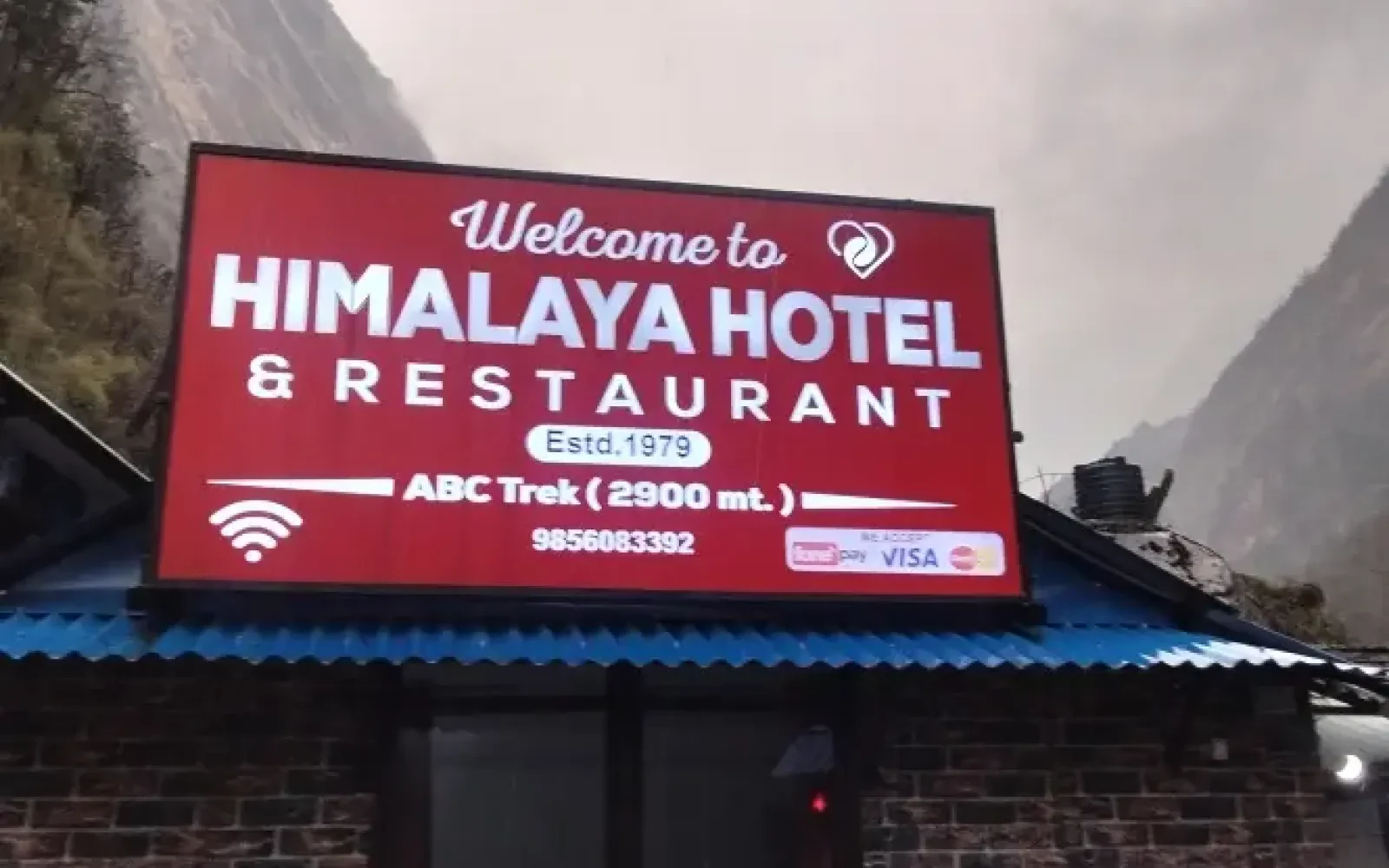
Himalaya is a small village on the Annapurna Base Camp trek. It lies at an altitude of approximately 2,900 meters. The village lies between Dovan and Deurali and is a key stopping point for trekkers before the difficult climb ahead. Trekkers rest here to acclimatize and absorb the serene mountain atmosphere.
Moreover, Himalaya is encircled by dense woods of rhododendron, oak, and bamboo. The lush forest provides a cool and peaceful environment. Trekkers enjoy the fresh air and peaceful ambiance after tiring days of trekking along ABC Trail.
Similarly, the village offers stunning views of neighboring peaks, including Annapurna South (7,219m), Machhapuchhre (6,993m), and Hiunchuli (6,441m). These giant peaks surround the landscape and inspire awe in tourists.
Moreover, relative to lower villages like Chhomrong, Himalaya is less commercialized and less populated. This renders a true trekking experience more likely. The serene environment of the village makes it ideal to rest and prepare for the next part of the trail to Deurali, MBC and ABC.
Additionally, Himalaya also offers some few tea houses and lodges offering warm food, hot showers, and cozy rooms. These facilitate the recovery and comfort of trekkers at this altitude.
In summary, Himalaya is a serene mountain village at 2,900 meters. Its natural scenery, strategic position, and quiet atmosphere make it a popular place to stop on the Annapurna Base Camp trek. Trekkers tend to remember Himalaya because of its beautiful vistas and relaxing ambiance.
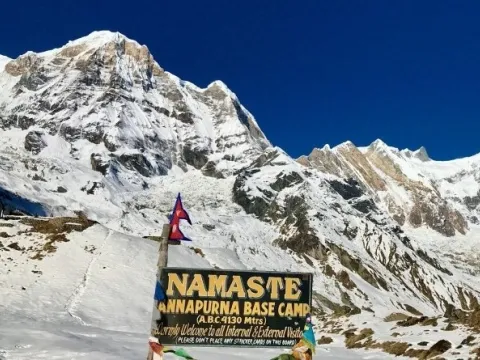
Himalaya village sits at approximately 2,900 meters altitude. It is situated in the Modi Khola valley of the Annapurna Conservation Area. The village finds itself between Dovan (2,600m) downhill and Deurali (3,230m) uphill. The trail between the villages follows through dense forest and steep slopes.
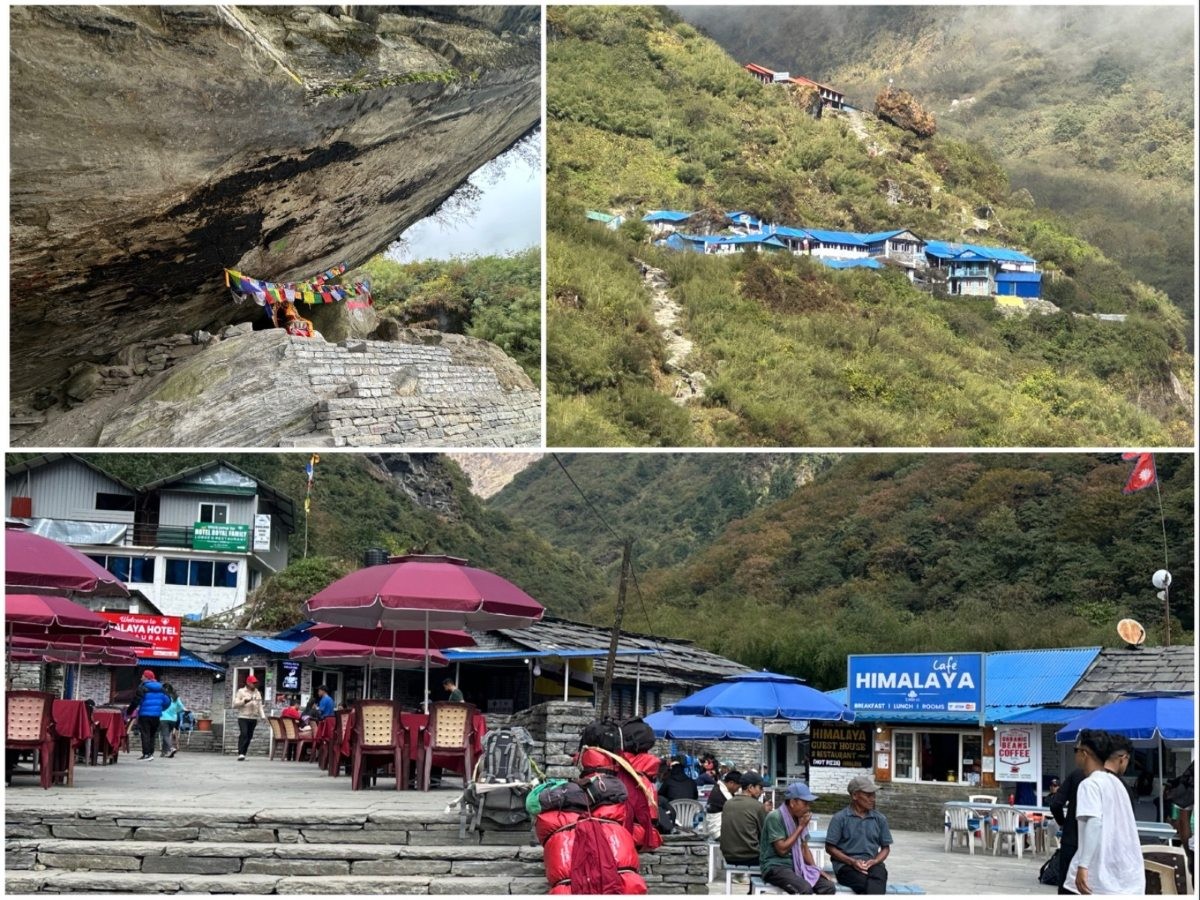
Further, Himalaya is encircled by thick rhododendron, bamboo, and oak forests. The rich vegetation creates a humid and cool microclimate. Himalayan forests are home to a rich variety of Himalayan birds, including the stunning monal pheasant.
Himalaya village is accessed only by trekking on the Annapurna Base Camp trail. There are no roads or vehicle access. Trekkers usually arrive in Himalaya by trekking up from Dovan, a trip taking approximately 1.5 to 2 hours depending on speed and weather.
Furthermore, the route from Dovan to Himalaya is well-maintained and easy to follow. The trekking route passes along dense rhododendron and oak forests. The path is slippery and steep in some parts, especially during the monsoon season. Wooden bridges and stone steps assist in safe crossing of steep and stream areas.
Similarly, trekkers from Himalaya proceed upwards to Deurali (3,230m) and Machhapuchhre Base Camp(3700m). The following part is more inclined and tougher, so Himalaya is a perfect resting place. The path is still narrow but accessible for people with all types of walking capacities.
Unlike more touristy towns like Jhino Danda and Ghandruk, Himalaya does not have motorable roads. The goods and supplies are transported by porters, mules, or yaks. This absence of vehicles maintains the village's peaceful environment and natural setting.
In case of emergency, the trekkers must descend to Chhomrong or Dovan to access medical assistance. Helicopter evacuation is possible but is dependent on weather and permission for landing, which could be challenging due to forest cover and steep slopes.
Briefly, Himalaya is only reached on foot on a well-maintained path. The absence of roads preserves its natural beauty and peacefulness. Its proximity to Dovan and Deurali makes it a central resting place for trekkers who need rest and acclimatization.
Himalaya village offers trekkers on Annapurna Base Camp trek simple but comfortable stays. There are a few tea houses and lodges that offer basic accommodation, hot food, and essential services.
Meanwhile, most of the lodges in Himalaya have wooden sleeping quarters with beds, mattresses, and blankets. They are cozy and designed to retain heat when cold. Some of the lodges have hot showers, but these come at a fee. The showers use gas or solar heated water when in stock.
Besides, the lodges at Himalaya offer local Nepalese meals such as dal bhat, noodles, and momos. Hot drinks such as tea, coffee, and ginger lemon honey are sought after after tiring days of trekking. Food is nutritious and energizing to meet energy demands.
Unlike larger villages like Ghandruk, Himalaya has no shops or ATMs. Trekkers must carry necessary items like snacks and toiletries from lower villages. Mobile phone signal is weak or non-existent. Wi-Fi may be available in some lodges but typically is unreliable.
Moreover, toilets in Himalaya are generally shared and simple, often squat type. Western-style toilets are occasionally offered by some lodges, but they are not many. Clean drinking water is after purification or boiling. Bottled water is for sale but costly at this high altitude.
Also, there is no hospital facility at Himalaya. Small first-aid can be provided by lodge owners, but serious health issues require descent to Chhomrong or Pokhara. Helicopter evacuation can be arranged either from Pokhara or Kathmandu but it depends on weather.
In brief, Himalaya provides simple amenities like shelter, food, and water. While simple, the lodgings are comfortable and allow trekkers to sleep well. The peaceful village atmosphere adds to its fame as a starting point along the Annapurna Base Camp trek.
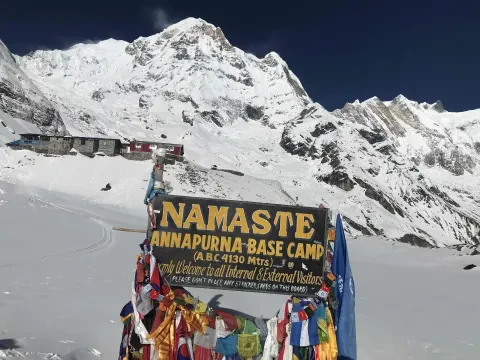
Himalaya village is encircled by fertile natural surroundings, hence a serene destination on the Annapurna Base Camp trek. One of the principal attractions is the dense oak, rhododendron, and bamboo forest that encircles the village. In spring, the forests erupt into colors, which attracts nature lovers.
Also, the village Himalaya is nearby the Modi Khola river valley, which lends an air of tranquility to it. The meandering water of the river provides a calming background noise to the trekkers staying in Himalaya.
Similarly, from Himalaya, the trekkers have partial glimpses of prominent mountain peaks like Annapurna South (7,219m), Machhapuchhre (6,993m), and Hiunchuli (6,441m). These mountains motivate the trekkers and enhance the overall trekking experience.
Compared to the more businesslike villages like Ghandruk and Ghorepani, Himalaya is serene and less crowded. This creates a chance to connect very much with nature. The serenity of the forests and the river water form a calming environment.
Additionally, birdwatching is prevalent around Himalaya. Himalayan monals, pheasants, and more inhabit the forests. The early morning and late evening hours are best for spotting wildlife.
In summary, the key attractions of Himalaya are its dense forests, running stream, mountain scenery, and variety of birds. The beauty of nature makes the village a cool and peaceful resting place along the Annapurna Base Camp trek.
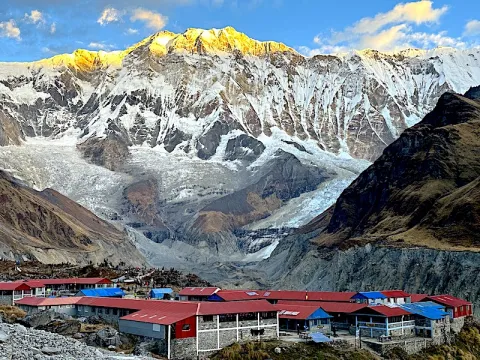
Himalaya accommodates trekkers with a variety of relaxing and nature-based activities. Mainly, the activity is resting and acclimatizing before the steep climb of Deurali and upper camps. Trekkers enjoy the peaceful, cool environment to recharge.
Also, most visitors have short nature walks through the Himalaya village. These routes encircle bamboo, rhododendron, and oak forests. In springtime, the blooming rhododendrons add beautiful colors for these walks.
Likewise, trekker who are on ABC Trail enjoy another activity here in Himalaya is bird watching. Forests are inhabited by the Himalayan monal, pheasants, and other native Himalayan species of birds. Wary trekkers glimpse the dense birds darting between the forest.
Moreover, there is plenty of scope for photographers in Himalaya village, with the backdrop of dense forest, flowing Modi Khola river nearby, and views of snow-capped peaks in the distance. Soft morning and evening light offers the best times to take quality photographs.
Additionally, contrary to more populated villages like Ghorepani, Himalaya is still peaceful and serene. Trekkers take advantage of the time to meditate, write journals, or just appreciate the mountain climate. River and forest sounds contribute to the serene ambiance.
Similarly, some lodges here at Himalaya also offer cultural enlightenment about Gurung customs. Guests can interact with local hosts and gain insight into mountain living, which enhances the trekking experience.
Briefly speaking, Himalaya offers relaxation, forest trekking, bird watching, photography, and cultural exchange. Its peaceful atmosphere is a good place to relax, on the Annapurna Base Camp trek.
Even the village Himalaya is built on terraced land along the hill side. The hard earth ground and winding path require sturdy construction of houses and lodges. Stairs and stone walls assist trekkers in navigating the village.
At a contrast to lower elevations, Himalaya is cooler in temperatures. Summers aren't warm, and winters bring a patch of frost and snow. The altitude calls for acclimatization on overnight stays by trekkers.
Additionally, Himalaya offers distant vistas of notable peaks like Annapurna South (7,219m), Machhapuchhre (6,993m), and Hiunchuli (6,441m). The unrestricted vistas of the mountains offer inspiration and beauty for trekkers.
In short, Himalaya is a mountainous high-altitude village within the Modi Khola valley. Being on the Annapurna Base Camp trek and natural environment, it is a major stopover for trekkers. Its geography lends itself to diverse wildlife and stunning mountain scenery.
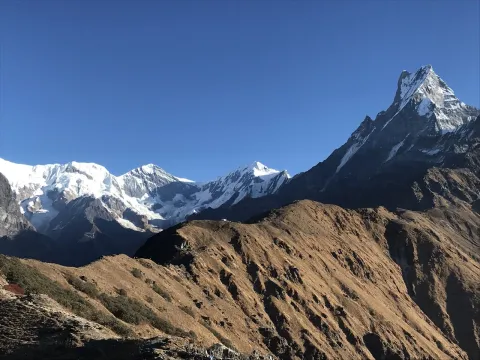
Himalaya is trekkers' favorite destination for a multitude of very sound reasons. First, it offers a peaceful and tranquil environment at around 2,900 meters above sea level. Trekkers utilize Himalaya as a resting ground to relax and recharge. This is important before the steep climb thereafter to Deurali and higher camps.
Moreover, there exists a thick jungle of rhododendron, oak, and bamboo encircling the Himalaya village. The jungle is pleasant to walk in and healthy to inhale. One can never experience hurry or throng in Himalaya as in other crowded villages. Most trekkers love to be in peace as it gives them a time to connect with nature peacefully.
Similarly, Himalaya's location on the Annapurna Base Camp trekking route makes it an easy destination. Trekkers utilize this village to acclimatize adequately and prepare for the challenging parts of the route. Himalaya's lodges offer hot meals, warm rooms, and hot showers, a welcome relief at this altitude.
As opposed to tourist-oriented and commercialized locations, Himalaya still has the feel of a genuine mountain village. There are no cars or roads available here, keeping it intact with nature and serene. Tourists tend to appreciate the local culture that is real and simplicity of mountain dwellings.
Apart from that, the area of Himalaya is rich with wildlife, which is mostly birds like the Himalayan monal and other pheasants. Photography and birdwatching are preferred hobbies. Natural surroundings are rewarding and lovely, and many trekkers like it.
To sum up, Himalaya is popular due to its serene environment, strategic position, natural landscape, true culture, and complete wildlife. All these elements together make it a favorite of trekkers on the Annapurna Base Camp trek.
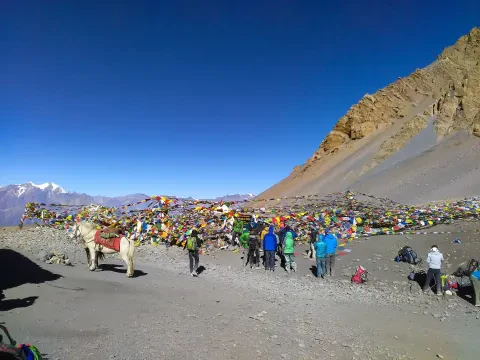
Himalaya boasts with a number of popular lodges that host trekkers on the trek to Annapurna Base Camp. The lodges offer comfortable lodging, hot food, and necessary services required for a comfortable stay at high altitude.
Actually, a popular lodge among trekkers in Himalaya village is Hotel Himalayan Guest house and restaurant, with neat rooms and friendly staff. Trekkers appreciate the comfortable beds, hot shower facilities, and charging facilities. The lodge serves the traditional Nepali foods of dal bhat, momos, and noodles, which reenergize.
Similarly, Hotel Deurali in Himalaya offers comfortable rooms and a warm atmosphere. It is very famous for its peaceful atmosphere and hospitable owners. The lodge serves healthy food and warm blankets, which are ideal to unwind with after a long day of trekking.
It is another favorite spot to stay for foods and accommodation in Himalaya is Hotel Royal Family and Restaurant, that is neat and offers good service. It comes with hot shower facilities and device charging points. The staff is reported to be courteous and attentive to visitors' needs.
In contrast to larger villages, Himalaya features minimal lodges but more on the quality than quantity side. Solar power is the mode of choice to provide light and power devices for most lodges. Wi-Fi is not standard but occasionally provided for an additional small fee.
In addition, the lodges provide boiled or filtered drinking water, a necessity at high altitude. Hot showers are extra but appreciated by trekkers after a long day.
Therefore, Himalaya Guest House & Restaurant, Hotel Himalaya & Restaurant, and Hotel Royal Family & Restaurant are the main lodges of Himalaya. They have clean rooms, quality food, and warm hospitality. The lodges make Himalaya a warm and cozy destination to visit during the Annapurna Base Camp trek.
1. Where is Himalaya village located on the Annapurna Base Camp Trek?
Himalaya is a small mountain village located at approximately 2,900 meters (9,514 feet) in the Annapurna Conservation Area. It lies between Dovan and Deurali on the Annapurna Base Camp (ABC) trail and serves as a popular overnight stop before the climb toward Machhapuchhre Base Camp and Annapurna Base Camp.
2. Why is Himalaya village popular among trekkers?
Himalaya is famous for its peaceful atmosphere, dense rhododendron, bamboo, and oak forests, comfortable teahouses, and beautiful mountain surroundings. It offers trekkers an ideal place to rest and prepare for the higher-altitude sections of the Annapurna Base Camp Trek.
3. What is the altitude of Himalaya village?
Himalaya village sits at an elevation of approximately 2,900 meters (9,514 feet) above sea level. The altitude provides cooler temperatures, lush forests, and a perfect resting point before ascending to Deurali and Annapurna Base Camp.
4. How far is Himalaya from Dovan?
The trek from Dovan to Himalaya usually takes about 1.5 to 2 hours. The trail follows beautiful forest paths, stone staircases, wooden bridges, and the scenic Modi Khola River through the Annapurna Conservation Area.
5. How long does it take to reach Deurali from Himalaya?
Most trekkers need about 1.5 to 2 hours to walk from Himalaya to Deurali. The trail gradually climbs through forests before entering alpine terrain with impressive views of the surrounding Himalayan peaks.
6. What accommodation is available in Himalaya village?
Himalaya offers several traditional teahouses and mountain lodges with basic but comfortable twin-sharing rooms, warm blankets, hot meals, and friendly local hospitality for trekkers on the ABC trail.
7. What food is available in Himalaya?
Most teahouses serve dal bhat, fried rice, noodles, soups, momos, potatoes, pasta, pancakes, eggs, tea, coffee, and hot drinks such as ginger-lemon-honey tea to keep trekkers warm and energized.
8. Are hot showers available in Himalaya?
Yes. Several lodges provide hot showers for an additional fee. Water is usually heated using gas or solar systems, depending on availability and weather conditions.
9. Is Wi-Fi available in Himalaya village?
Some lodges offer Wi-Fi services for an extra charge, although the connection may be slow or unreliable because of the remote mountain location. Mobile network coverage is also limited.
10. Can I charge my electronic devices in Himalaya?
Yes. Most teahouses offer charging facilities for phones, cameras, and power banks for a small fee. Carrying your own power bank is still recommended.
11. What mountains can be seen from Himalaya village?
Trekkers can enjoy views of Annapurna South, Machhapuchhre (Fishtail), Hiunchuli, and surrounding forested hills. The scenery becomes even more spectacular as you continue toward Deurali and Annapurna Base Camp.
12. What wildlife can be seen around Himalaya?
The forests around Himalaya are home to Himalayan monals, pheasants, langur monkeys, and many native bird species. Spring is especially rewarding for birdwatching and wildlife photography.
13. Is Himalaya village suitable for acclimatization?
Yes. Many trekkers use Himalaya as a comfortable overnight stop to rest before climbing to higher elevations. Although it is not a formal acclimatization stop, spending the night helps your body adjust gradually.
14. Is there road access to Himalaya village?
No. Himalaya is accessible only on foot. Supplies are transported by porters, mules, and yaks, helping preserve the peaceful and natural environment along the trail.
15. Are there medical facilities in Himalaya?
There are no hospitals or health posts in Himalaya. Lodges may provide basic first aid, but serious medical emergencies require evacuation or descent to lower villages.
16. What is the best season to visit Himalaya village?
Spring (March to May) and autumn (September to November) are the best seasons. Spring offers blooming rhododendron forests, while autumn provides crystal-clear skies and outstanding Himalayan mountain views.
17. Why do trekkers stay overnight in Himalaya?
Himalaya offers a convenient resting point before the more demanding climb to Deurali, Machhapuchhre Base Camp, and Annapurna Base Camp. Comfortable lodges, warm meals, and peaceful surroundings make it an ideal overnight stop.
18. What makes Himalaya different from other villages on the ABC trail?
Unlike larger villages such as Chhomrong or Ghandruk, Himalaya is quieter, less commercialized, and surrounded by dense forests, giving trekkers a more peaceful and authentic mountain experience.
19. Can beginners stay in Himalaya during the ABC Trek?
Yes. Himalaya is a popular overnight destination for beginners because the day's trek is manageable, the village has comfortable teahouses, and it provides a good place to prepare for higher elevations.
20. Why should I visit Himalaya village on the Annapurna Base Camp Trek?
Himalaya combines beautiful forests, peaceful surroundings, warm mountain hospitality, comfortable lodges, rich wildlife, and excellent access to the upper Annapurna Sanctuary. It is one of the most memorable and relaxing villages along the Annapurna Base Camp Trail.
Our travel experts are ready to assist you with any questions.
Send us a message.Have a question before you book? Send your enquiry below and our travel experts will get back with the required information.