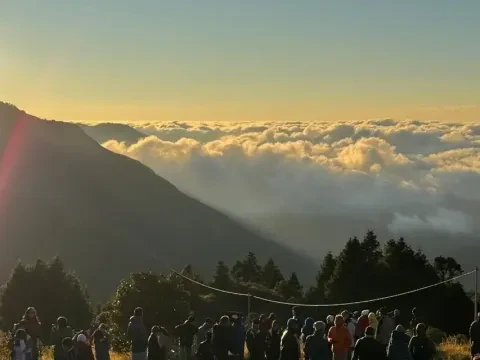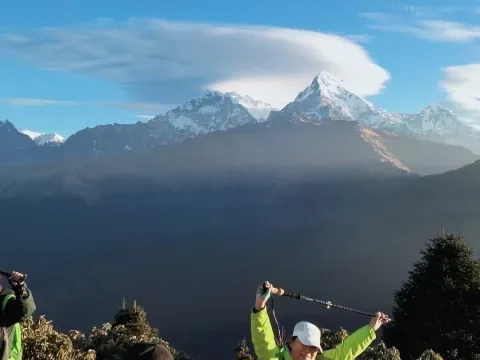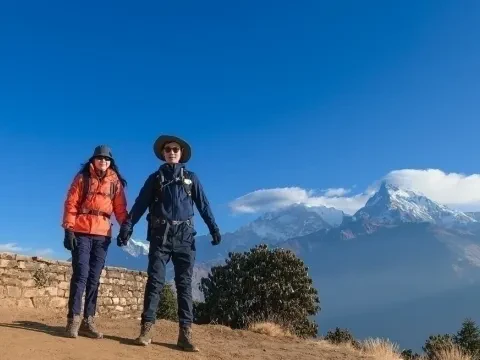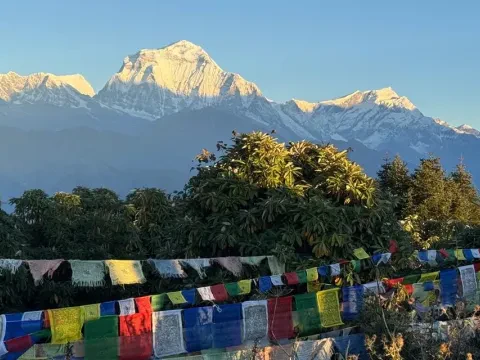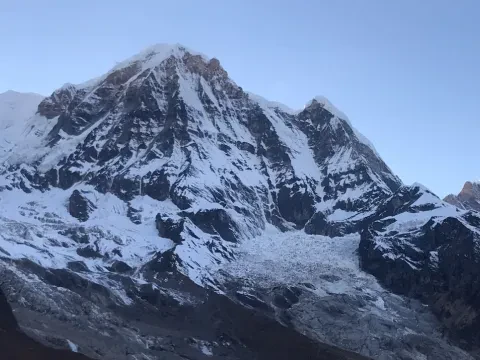
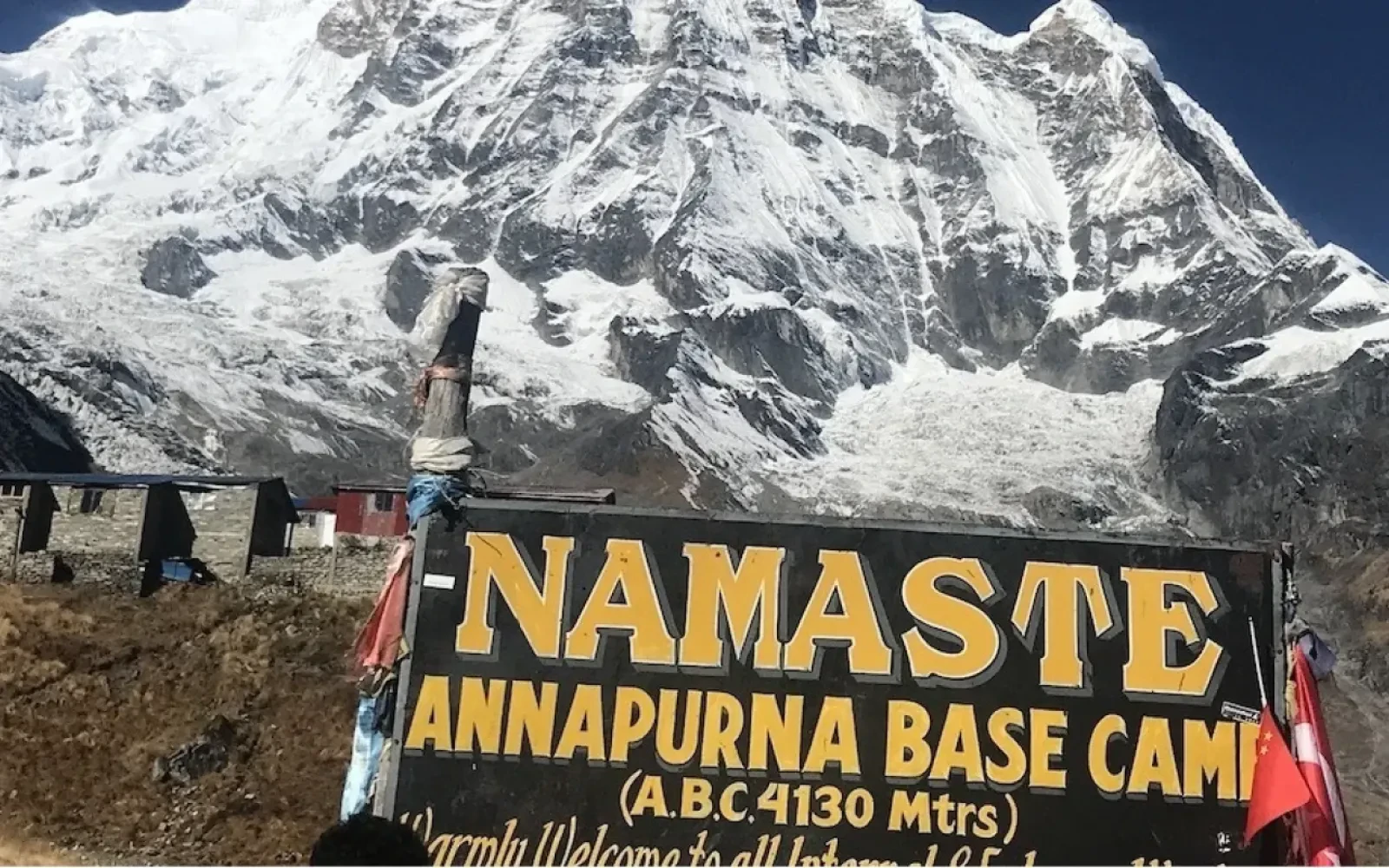
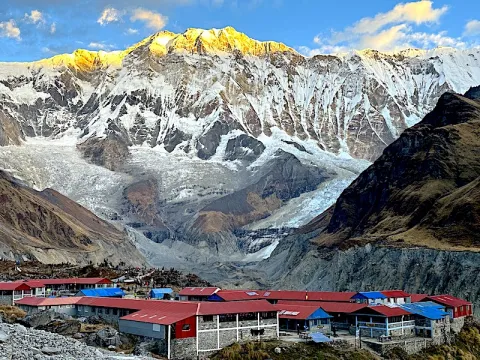
The Annapurna Base Camp Trek is one of the most popular and moderately strenuous treks in Nepal in Annapurna region. It offers spectacular views of some of world's highest mountain peak including Annapurna I (8,091m), Machapuchare (6,993m), Hiunchuli (6,441m), and Dhaulagiri (8,167m). The trek gets you right in the midst of the Annapurna range for breathtaking vistas along with an exploration into the Nepalese culture and lifestyle of the local people residing on the trail.
The Annapurna Conservation Project protects the Annapurna Base Camp Trekking trail and Annapurna Conservation Area. The project protects both nature and culture of the region.
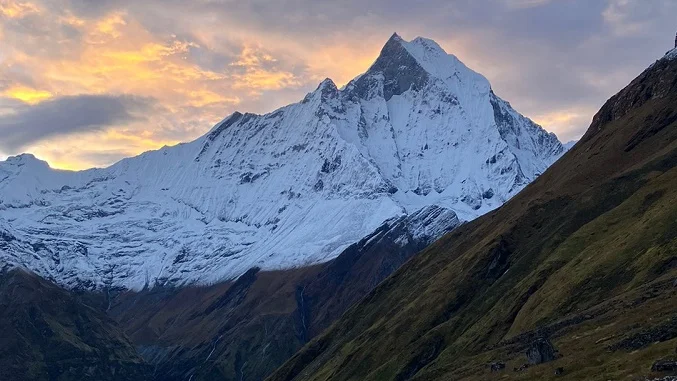
Key highlights of Annapurna Base Camp Trek include the Machapuchare Base Camp at 3,700m and Annapurna Base Camp at 4,130 meters above sea level, surrounded by towering mountains inlcduing Annapurna South and Machhapuchhre. You can Explore vibrant villages like Ghandruk, Chhomrong, and Jhinu Danda, famous for its natural hot springs. Terraced fields, rhododendron forests, diverse species of flora and faunas in Annapurna Conservation Area and waterfalls enhance ABC Trek to be more fascinating and exciting trip for the lifetime.
Tea-houses on the trail offer excellent local hospitality, with meals as basic as dal bhat, noodles, momos, pizza and pancakes during Annapurna Base Camp Trek. Accommodation in ABC Trek is basic, with shared rooms and cozy common areas.
During Spring( Mar-May) and Autumn( Sep-Nov), the accommodations in ABC Trek can be difficult to find as the thousands of internal and international trekkers flock on the Annapurna Base Camp Trekking Trail.
The best time to go trekking to ABC would be spring-March to May, and autumn-September to November, when the skies are clear and the temperatures moderate. ABC Trek is suitable for trekkers with a reasonable (good) level of fitness; steep ascents and descents.
No any technical skills of hiking are required for Annapurna Base Camp Trek. Even the beginners who are in good health condition and have the stamina of hiking 6 hours at higher elevations like above 3000m, can easily conquer ABC Trek in Nepal.
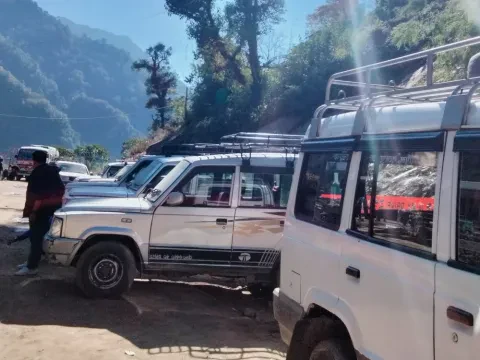
For Annapurna Base Camp Trekking, trekkers will be needing Annapurna Conservation Area Permit and a TIMS card. Trekkers can begin at Nayapul, from which there is road transportation available from Pokhara and end here or at Jhinu Danda. Optionally, trekkers who are doing ABC Trekking can directly drive to and from Jhino Danda (Hot Spring) as the Annapurna Base Camp Jeep Ride connects Pokhara to Jhino and back.
The ABC Trek takes 7-12 days with proper trekking gear, a first-aid kit, and hydration essentials. Transportation for Annapurna Base Camp Trek includes flights or buses from Kathmandu to Pokhara and a private vehicle or bus to Nayapul and jeep for Jhino Danda and back to Kathmandu. The Annapurna Base Camp Trek promises a lifetime of memories amidst nature's grandeur.
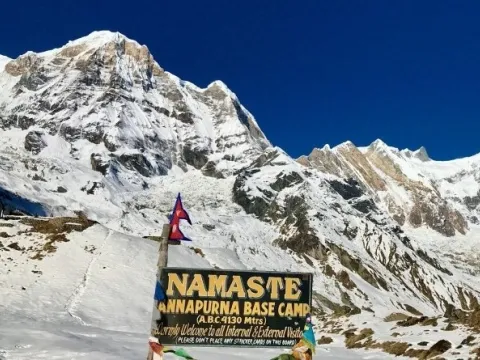
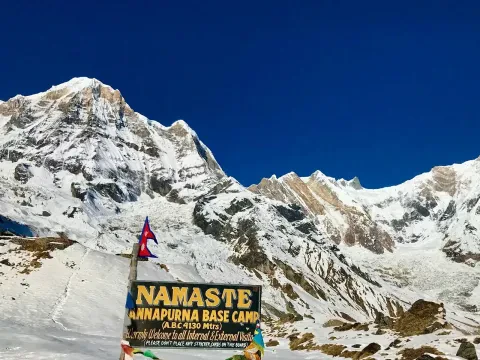
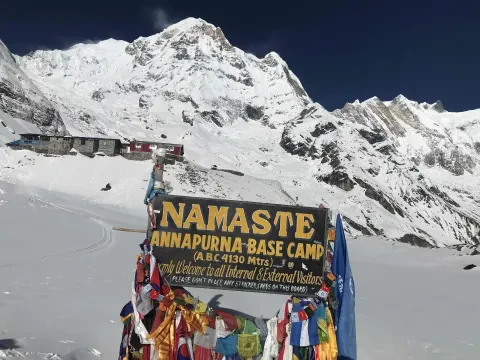
Annapurna Base Camp is a moderately difficult trekking in Nepal in Annapurna region. It starts with a trek up to lush forests and then to alpine meadows with a very fascinating view of the Annapurna range including alluring Machhapuchhre. The maximum altitude that this trek reaches is at the Annapurna Base Camp itself, which is 4,130 meters or 13,550 feet; hence, it, may, sometimes, give one altitude sickness, but acclimatization with slow pace could help to manage this issue.
The Annapurna Base Camp trekking trails are well-maintained but involve steep ascents and descents, particularly between Ghorepani and ABC ( If you are trekking to ABC via Poonhill and Ghorepani). The total trekking duration of ABC Trek is typically 7-12 days, covering approximately 115-120 kilometers (71-75 miles) depending on the route taken.
The average Walking hours in ABC trekking is about 5-7 hours per day (approximately 10-15 km = 6-9 miles) on this trek of varying difficulties. Basic varieties of accommodation can be found along the ABC Trek route, usually teahouses providing basic facilities with shared bathrooms. Basic hot meals like dal bhat, noodle soup, and Tibetan bread are available from the local taverns.

Facilities on the ABC Trek are simple, but amply adequate for most trekkers, hot showers powered by cooking gas or solar energy mostly available with extra cost like Rs 250; electricity in most villages; and a few tea-houses offer slow-access Wi-Fi. This trek is also quite possible for moderately fit people to accomplish, which includes correct acclimatization rest days with right pacing and right gain of elevation.
There are a few reasons why Annapurna Base Camp Trek is considered to be moderately difficult. Moderate Ascents and Descents, moderate hiking distance and hours a day, moderate elevations, moderate accommodations and foods at local lodges, guesthouses and less or moderate risks of altitude sickness and moderate rescue possibilities make ABC Trek moderately difficult trek in Nepal. Now, let’s discuss these all points individually in details.
The ABC trek is graded as moderately difficult because of the moderately varied terrain and altitudes. The trail features a mix of gradual ascents and steeper descents, with sections that challenge trekkers physically.
Trek from Nayapul to Tikhedunga (1,540) ( if you are using the trail via Poon hill): The initial ascent is gentle, but it becomes more pronounced toward Tikhedunga, especially while approaching Tikhedhunga.

Note: One can escape this section of walk by Poon Hill Jeep ride these days from Pokhara to directly Ulleri or Banthanti.
Tikhedhunga to Ghorepani (2,860 m)
Ascending"stone staircase" of Ulleri, which is all 3,000 steps up. This stretch gets quite exhausting because of the continuous steep ascend and also its long length. It minimum takes 2-3 hours to ascend from Tikhedhunga to Ulleri.
This ascent won’t really become difficult and challenging for the trekkers after they are used to and they find them moderate ultimately.
The path is alright thereafter, with reasonable up rises through rhododendron forests. Well and even paths but might get tiresome with the higher altitude gain gradually while approaching Nangethanti and Lower Ghorepani.
Ghorepani to Poon Hill (3,210 m): It's a short but steep climb up to Poon Hill for breathtaking views but hard because of the high altitude. It takes at least 1.30 hrs to climb Poon Hill from Ghorepani. One has to climb with torch light and water bottle with some light snacks for Poon Hill. The following descent is relatively easy; further on, the path gets steeper towards Tadapani via Thample Danda.
Tadapani to Chhomrong (2,170 m): The trek alternates between ascents and descents, with sections that are more demanding, especially the rocky trail descending to Chhomrong.
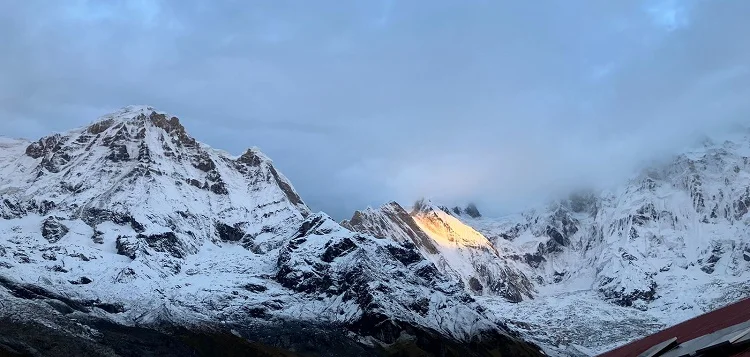
Chhomrong to Annapurna Base Camp (4,130 m): The final push involves significant elevation gain, with moderate ascents through forests and pastures, followed by steeper sections toward the Annapurna Base Camp. The descent back to lower altitudes is demanding, especially as you pass through varied terrains and steep stone steps that can be tiring giving pains in your legs.
The combination of ascents, descents, and high-altitude conditions makes the trek moderately challenging.
During rainy( Jun-Aug) and Winter months( Dec-Feb), Annapurna Base Camp Trek turns to be more challenging as the heavy snowfall and heavy rainfall occur on the trail.
The ABC Trek ranks as moderately difficult because of its moderate distance of hiking and elevation gain every day and the hours spent walking per day. Usually, trekkers walk an average distance of 10-12 km each day, depending on the stage of the trek. The daily walking duration is about 5-7 hours, with progressive difficulty as the altitude also increases.
Every day, trekkers will start off their Annapurna Base Camp Trek in the morning after a warm breakfast, walking for a few hours before having lunch around midday, usually in a local teahouse. Lunch breaks generally last 45 minutes to 1 hour, to give time to rest, hydrate, and refuel for the afternoon's trek ahead. The terrain of the trek varies throughout, with some days having more up-and-down steep sections, while others have more gradual inclines.
On the whole ABC trek of about 115-130 km, depending on the route taken, the trekkers go up through varied landscapes-from lush subtropical forests to alpine meadows-before reaching the base camp at an altitude of 4,130 meters (13,550 feet). Normally, the trek ABC Trek spans around 7 to 10 days in total, with the ascent to ABC being a highlight at the end of the journey. Rest days are not really necessary but usually taken at places like Chhomrong or Machapuchare Base Camp for acclimatization, which is not mandatory but necessary for a safe and enjoyable trek to ABC.
The ABC trek is graded as moderately difficult, suitable for trekkers with good physical fitness, though previous trekking experience is recommended but not mandatory.
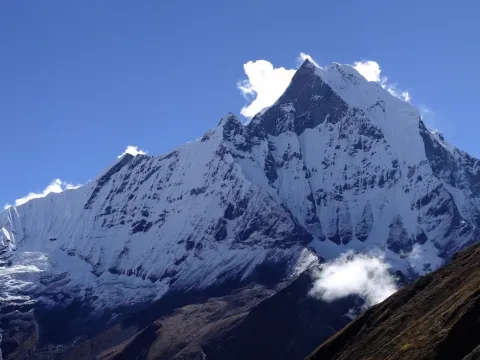
The Annapurna Base Camp is a moderately difficult trekking package in the Annapurna Conservation Area of Nepal that offers the best Annapurna Mountain scenery and local cultural experience of the region. This trek usually starts from Nayapul, which is at an altitude of 1,070 meters (3,510 feet), or begins at Jhino Danda these days, and it goes up to the base camp, the highest point of this trek, at 4,130 meters (13,550 feet).
This is an undulating walk that elevates through varied elevations. The trek route traverses several villages, heavy forests, and terracing fields. Elevations range between 1,070 m/3,510 feet at Nayapul to its peak at Annapurna Base Camp at an altitude of 4,130 meters. On their route, the trekkers pass by some places called Tikhedhunga 1,540 meters Ghorepani 2,850 meters Deurali 3,230 meters. There are noticeable ascents and descents; the steep climb from Tikhedhunga to Ulleri itself at 2,050 meters calls for negotiating over 3,000 stone steps.
Actually, there is no threat of altitude sickness until you reach 3000m in ABC Trek.
The trek gradually ascends through lush forests, with rhododendron trees providing shade and scenic views in Annapurna Consevvation Area. As trekkers get closer to ABC, the terrain becomes more rugged, with an increase in altitude, leading to a noticeable change in vegetation. Descents, especially from Deurali to Bamboo (2,310 meters) and from ABC back to Pokhara, can be challenging, requiring careful footing.
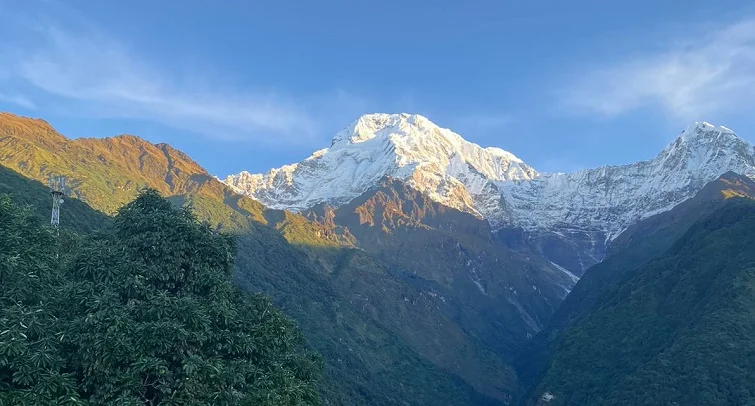
Although not technically difficult, the ABC trek is moderately difficult because of the continuous ups and downs, altitude gain, and sometimes rugged terrain-ideal for fit and determined trekkers.
Gaining highest elevation like 4130 is considered to be a moderate elevation while talking about trekking trips in the Himalayas. Only going above 5000m in the Himalayas is taken as difficult and challenging. Therefore, ABC Trek is taken as a moderate hiking in Annapurna region.
Annapurna Base Camp is considered a moderate trek for which accommodation and board are available in teahouses (local lodges) on the way. These are basic hotels along the way that offer a basic shelter facility to trekkers. The rooms usually contain just a simple wooden bed with a blanket, and the walls might be thin, so one can expect cool nights. Some of the lodges have shared bathrooms, even though facilities may vary per altitude. At higher altitudes, the rooms may be a bit basic, and heating might be limited.
Actually, one cannot have a wide variety of meals and luxury accommodations on Annapurna Base Camp Trekking Trail. They are moderate and basic but still satisfactory.
As to food, it is all Nepali food with less international option. Breakfast usually includes porridge, eggs, toast, or pancakes, while lunch and dinner consist of staple foods like dal bhat, noodle soup, momo, and simple vegetable curries. While there are options like pasta, potatoes, and fried rice, meals are generally vegetarian, as meat is limited on the trail, particularly at higher elevations due to the challenges of transportation. Tea, coffee, and hot chocolate are abundant to warm up with. The accommodation and food along the ABC trek are comfortable and adequate, offering realistic mountain exposure without the expectation of luxury amenities to native trekkers who plan to enjoy the scenery.
The Annapurna Base Camp trek is a moderately difficult trek with a maximum elevation of 4,130 meters (13,550 feet). The risk of altitude sickness is low but real on this trek. Altitude sickness occurs when the body cannot cope with the reduced oxygen levels at high altitude, and its symptoms include headaches, dizziness, nausea, and tiredness.
The ABC trek entails a lesser risk of altitude sickness as it is a progressive altitude gain that gives one's body ample time for acclimatization. Starting from Pokhara at approximately 820 meters (2,690 feet), the trek goes right through lower altitudes up to high altitude slowly, thus helping reduce the possibilities of altitude sickness compared with faster ascents.

However, altitude sickness can still occur, and the most prone zone on the ABC trek is typically between 3,000 meters (9,840 feet) and 4,000 meters (13,120 feet), especially if trekkers push too hard or don't take proper rest days between Durali and Annapurna Base Camp. The most critical area for altitude sickness is close to the Annapurna base camp, at 4,130 meters (13,550 feet), where the oxygen level drops notably. The symptoms are more frequent in individuals who ascend rapidly with not enough rest days.
One has to be very careful while ascending above Durali to Machhapuchhre Base Camp and finally to ABC with the issue related to acute mountain sickness. But, it is not vey risky as the elevation is moderate, the highest elevation is 4130 that is ABC.
To prevent it, trekkers must take their time, drink a lot of water, and take rest days. The symptomatic person should go down to lower altitudes and seek medical help if needed.
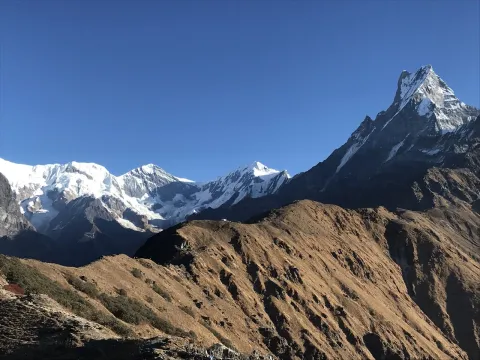
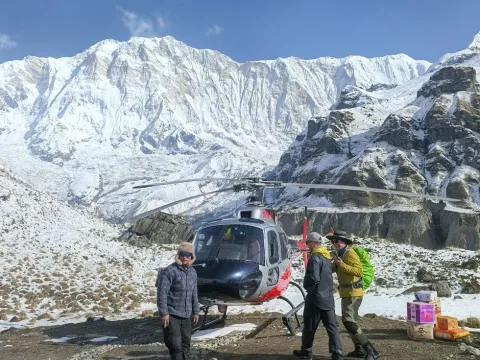
In Annapurna Base Camp, the rescue options available vary from the severity of the situation to the location of the trekker. Sick or injured trekkers usually rely on porters for rescue as they may be able to carry them on a stretcher or support them while walking for minor issues. Helicopter rescues, for the more serious, are arranged in various places on the ABC trek, like Annapurna base camp and other nearby areas. Of course, weather and conditions can make this quite hard at times.
Horses are another form of evacuation in Annapurna Base Camp areas when the terrain is suitable, at least between lower altitudes, such as Jhino Danda and more accessible places closer to Pokhara. The horses can therefore help transport a sick or injured trekker to the location where road access would be possible.

However, in higher and more remote areas, like Deurali or within the rugged Himalayan terrain, rescue operations may be difficult due to a lack of accessible paths, extreme weather conditions, and limited infrastructure. Trekkers in these areas may have to rely on porters or wait for a helicopter rescue, which can take longer due to logistical challenges.
Proper preparation, acclimatization, right pacing, right trekking equipment and awareness of emergency options are crucial for trekkers on ABC Trekking route.
Moderate Walking distance ( Sometimes longer and tough hours) ( average 8-12km per day), moderate walking hours (5-7 hrs. a day), possibility of evacuation and rescue moderately, moderate foods and accommodation at local lodges located on the ABC Trekking Trail, moderate possibility of getting altitude sickness and requiring moderate stamina to ascend ABC (4130m) make Annapurna Base Camp Trek Moderately difficult. Actually, the ABC Trek is moderately difficult in the sense that, sometimes, beginners find it very challenging and truly difficult while ascending the steep stone steps of Jhino to Choomrong and while approaching to ABC via MBC(3700m).
Therefore, a level of fitness and preparation is required for Annapurna Base Camp Trek. If you do so, even the beginners can accomplish this adventure to ABC successfully without any difficulties on the trail up and down.
1. Is Annapurna Base Camp Trek suitable for people who're new to trekking?
Yes Annapurna Base Camp Trek is okay for beginners if they are fairly fit. If you train properly and take your time you can make it to the base camp. Our guides are very experienced. They make sure you are safe and comfortable on the trail. They help you get used to the altitude and support you all the way. Lots of people who are trekking for the time complete Annapurna Base Camp Trek every year with our help.
2. How long does it take to complete Annapurna Base Camp Trek?
The classic Annapurna Base Camp Trek takes around 7 to 12 days. Most people like to take 8-10 days so they can walk at a pace and get used to the high altitude. You will walk for 5-7 hours every day. We plan the trip so you can enjoy it without feeling rushed.
3. What is the highest point on Annapurna Base Camp Trek?
The highest point is Annapurna Base Camp which's at 4,130 meters. We walk uphill slowly which makes the trek fairly challenging. If you drink plenty of water walk slowly. Rest when you need to your body will get used to the high altitude. Our team checks on your health every day to make sure you are safe and having a time on Annapurna Base Camp Trek.
4. How hard is Annapurna Base Camp Trek?
Annapurna Base Camp Trek is fairly hard. You do not need to know how to climb. You need to be able to walk for several hours every day. The trails are nice the lodges are comfortable. The views are great. If you prepare well and have a guide Annapurna Base Camp Trek is an amazing adventure.
5. What kind of fitness level do you need for Annapurna Base Camp Trek?
You need to be fairly fit to do Annapurna Base Camp Trek. It helps if you exercise regularly like walking or running and if you have legs. You should be able to walk for 5-7 hours every day with a backpack. We can give you tips on how to get ready, for Annapurna Base Camp Trek based on our experience guiding people on this trip.
6. How hours do you walk per day on ABC Trek?
You walk five to seven hours per day on the Annapurna Base Camp Trek. The Annapurna Base Camp Trek has a pace that allows time to enjoy the views and rest. The trails on the Annapurna Base Camp Trek have stone steps and gentle paths. Our guides set a rhythm so you can trek happily without getting exhausted on the Annapurna Base Camp Trek.
7. Is the risk of altitude sickness on Annapurna Base Camp Trek?
The risk of altitude sickness is moderate on the Annapurna Base Camp Trek because the maximum elevation on the Annapurna Base Camp Trek is 4,130 meters. We follow the ascent rules and the climb high sleep low strategy on the Annapurna Base Camp Trek. Our guides carry medicines. Monitor symptoms closely for your safety on the Annapurna Base Camp Trek.
8. What is the best time to do Annapurna Base Camp Trek?
The best time to do the Annapurna Base Camp Trek is during the spring and autumn seasons. The Annapurna Base Camp Trek is great during these seasons because the skies are clear the weather is stable. The temperatures are comfortable. These seasons are good for the Annapurna Base Camp Trek because they offer views and safer trails for moderate difficulty trekking on the Annapurna Base Camp Trek. The spring season on the Annapurna Base Camp Trek is from March to May. The autumn season on the Annapurna Base Camp Trek is from September to November.
9. What kind of accommodations are available on ABC Trek?
The Annapurna Base Camp Trek has teahouse lodges that provide comfortable rooms with attached or shared bathrooms. The meals on the Annapurna Base Camp Trek are fresh and nutritious. The facilities on the Annapurna Base Camp Trek get better as we gain experience with thousands of trekkers on the Annapurna Base Camp Trek. We choose the available options for restful nights on the Annapurna Base Camp Trek.
10. What should I pack for Annapurna Base Camp Trek?
You should pack trekking boots, layered clothing, a rain jacket, a sleeping bag liner, a headlamp and personal medicines for the Annapurna Base Camp Trek. A 40-liter daypack works well for the Annapurna Base Camp Trek. Our detailed packing list for the Annapurna Base Camp Trek is based on trek experience and it ensures that you carry only the essentials for comfort and safety, on the Annapurna Base Camp Trek.
11. Do I need a guide and porter for the Annapurna Base Camp Trek?
Yes we really think you should have a guide and a porter if you want. They will help keep you safe show you the way. Tell you about the local culture on the trails. The guides will take care of all the planning and organization so you can just enjoy your trek. Having this support will make your journey much easier and more reliable.
12. How long is the Annapurna Base Camp Trek?
The Annapurna Base Camp Trek is 110 km round trip. Each day you will walk a distance. The trails are well looked after. Go through forests, villages and mountains which is really nice. We make sure our plans are balanced so you get rest when you need it.
13. What is the weather like on the Annapurna Base Camp Trek?
The weather is usually good during the times to visit, with warm days and cool nights. The mornings are often clear which is great for seeing the mountains. We keep an eye on the forecast every day. Change our plans if we need to. We have lots of experience so we can help you stay comfortable in the changing weather in the Himalayas.
14. How much does the Annapurna Base Camp Trek cost?
The Annapurna Base Camp Trek costs between USD 700 and 1200 per person. The price depends on how many people're in your group and what services you want. The cost includes permits, guides, places to stay and food. We are clear about our prices. Offer great value and support.
15. How do I prepare for the Annapurna Base Camp Trek?
You should train for 6-8 weeks before you go. Do exercise like walking uphill and build up your strength. Try walking with a backpack. Get slowly. We have helped lots of people prepare for this trek. We can give you tips to help you feel confident and ready, for the challenge.
16. Is the water safe to drink on the Annapurna Base Camp Trek?
I think it is an idea to drink treated or boiled water that you can get at the teahouses. If you have a water purifier or tablets that is even better. Drinking water is very important to stay healthy and have lots of energy on the Annapurna Base Camp Trek. You have to be careful with the water you drink.
17. Is the Annapurna Base Camp Trek a trip for a solo female traveler?
The Annapurna Base Camp Trek is a trip for solo female travelers. Many women do this trip by themselves every year. Our guides, who are men and women will help you the time. The trails are used by a lot of people and the local people are very friendly.
18. What happens if I need help on the Annapurna Base Camp Trek?
If you need help you can get a helicopter to take you to a place. Most of the time we have phone signal so we can call for help. Our team always carries an aid kit and a special phone that works from anywhere. We plan everything carefully to prevent accidents.
19. Can I take my kids on the Annapurna Base Camp Trek?
If your kids are old enough like 12 or 14 years old and they are fit they can come on the Annapurna Base Camp Trek with you. We can make a plan that is slower and easier for families. The Annapurna Base Camp Trek is a trip for families because the trails are not too hard and you can learn about the local culture. We always think about the safety of everyone in the family.
20. Why should I choose Haven Holidays Nepal for my Annapurna Base Camp Trek?
Haven Holidays Nepal is a choice for the Annapurna Base Camp Trek because we have a lot of experience. We give you a plan that is just for you and our guides are very good at their job. We want to make sure you have a time and see some amazing views, on the Annapurna Base Camp Trek. A lot of people have done the Annapurna Base Camp Trek with us. They are very happy.
Our travel experts are ready to assist you with any questions.
Send us a message.Have a question before you book? Send your enquiry below and our travel experts will get back with the required information.