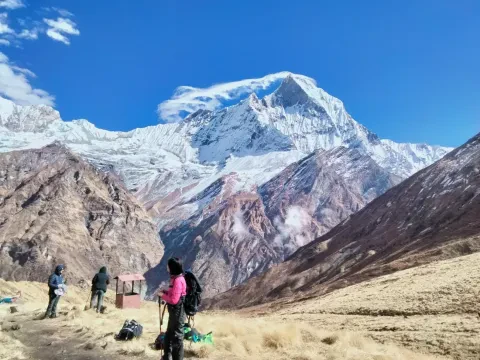
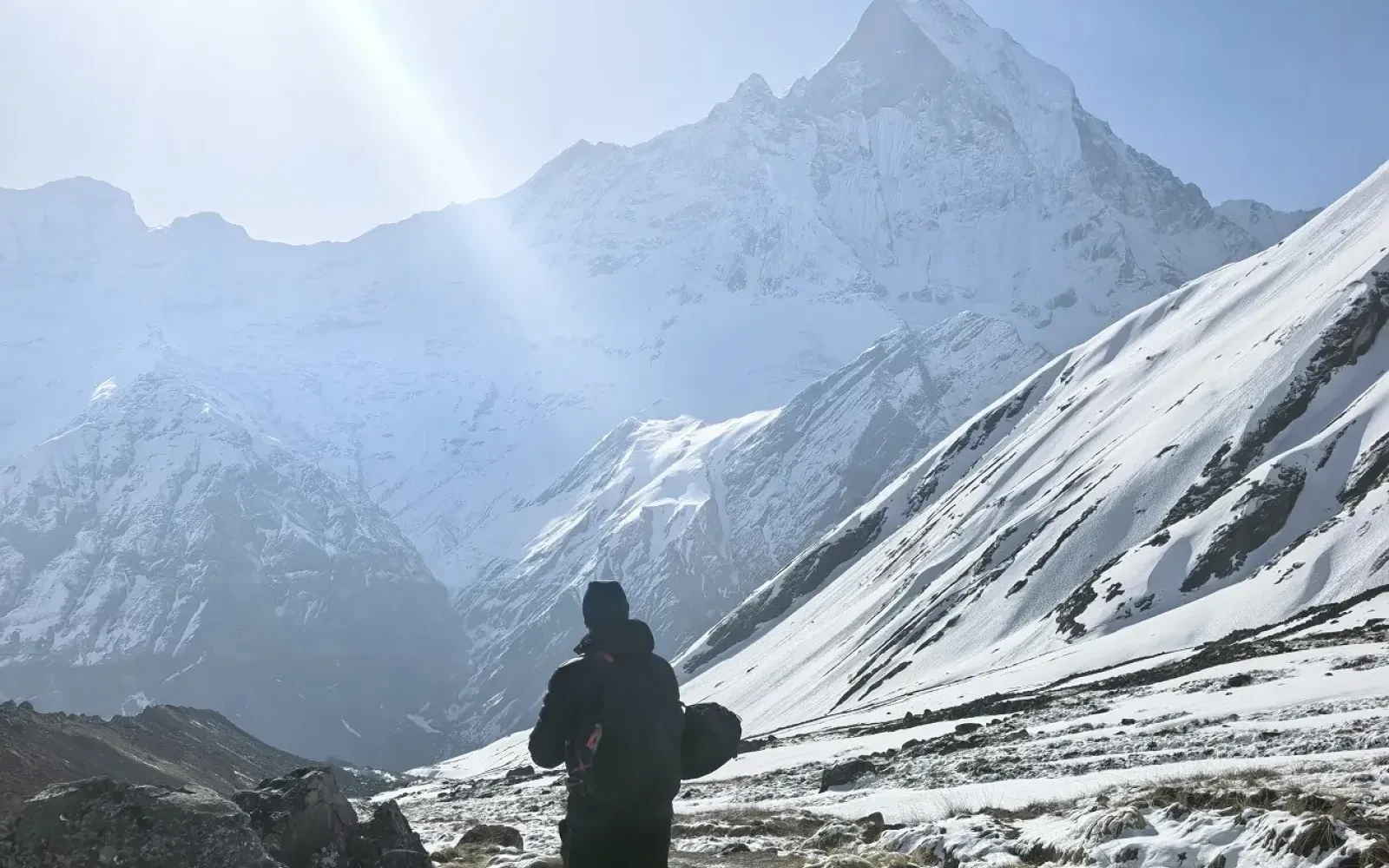
Here, let’s be honest—if you’re heading out on the Annapurna Base Camp Trek, you’re chasing those unbeatable Himalayan views. This isn’t just another walk in the woods. Out here, mountains just explode out of the ground, shooting up over green valleys and thick forests. Every day, the scenery shifts. One moment, you’re winding through rhododendron forests with rivers rushing at your side. The next, you’re climbing higher, catching your breath as snow-capped peaks loom overhead.
Likewise, you’ll pass through villages where locals greet you with a smile and a cup of tea. Wildlife and plants on the trail pops up when you least expect it. And those sunrise moments—when the mountains turn gold and clouds swirl around the summits? Those stick with you. Step by step, the trail pulls you deeper into the Annapurna Sanctuary, right to its heart. The panoramas here are unreal. Sure, the elevation gain tests your legs and lungs, but the reward? Absolutely worth it.
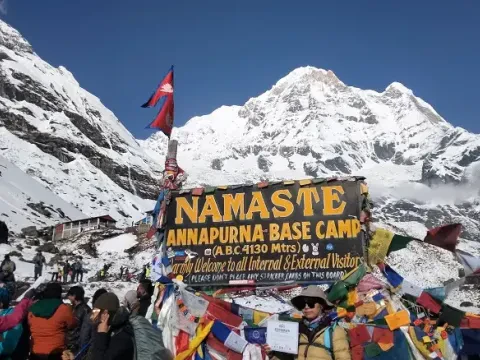
Mainly, you start Annapurna Base Camp Trek in Pokhara, down at 827 meters, and push all the way to Annapurna Base Camp at 4,130 meters. Along the way, you’re treated to views of Annapurna I (8,091 meters) and a whole lineup of giants. The trek ties all these wild landscapes together—you never get bored. Yeah, it’s tough. But that’s part of the deal. Stay prepared, look after yourself at altitude, and you’ll come away with stories—and memories—that last. This trek packs the Himalayas’ best into one unforgettable journey.
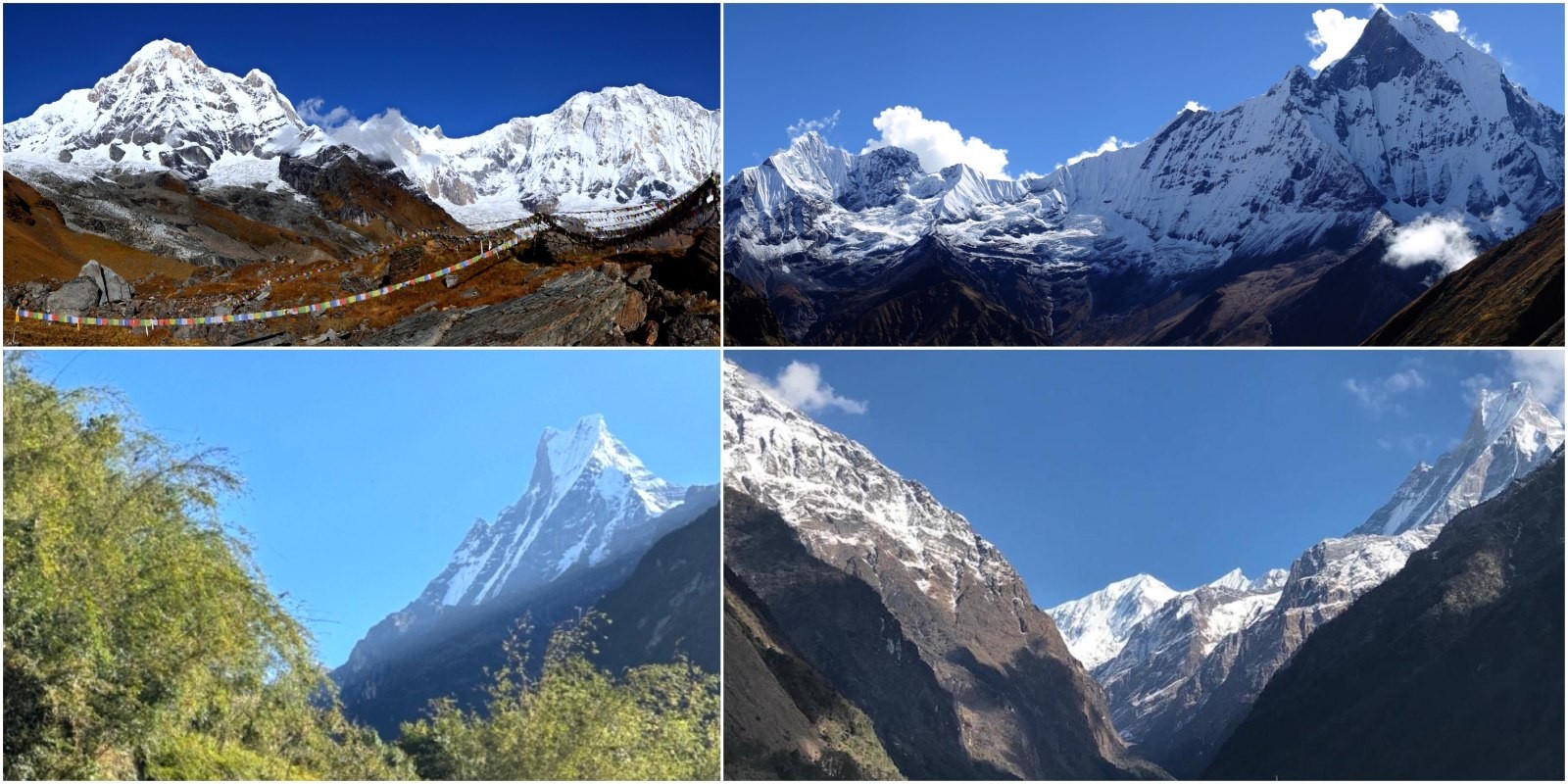
Major Mountains Views on the Annapurna Base Camp Trek:
| Viewpoint | Elevation | Mountains Visible | Description |
|---|---|---|
| Poon Hill | 3210m | Annapurna South (7219m), Dhaulagiri (8167m) | Sunrise spot with panoramic ranges. |
| Chhomrong | 2170m | Annapurna South (7219m), Hiunchuli (6441m) | Village views over terraced fields. |
| Deurali | 3230m | Machhapuchhre (6993m), Gangapurna (7455m) | Gateway to sanctuary with glacial sights. |
| MBC | 3700m | Machhapuchhre (6993m) close-up | Base for Fishtail peak admiration. |
| ABC | 4130m | Annapurna I (8091m), full sanctuary | 360-degree Himalayan amphitheater. |
Additional Facts on Trek Elevations and Views:
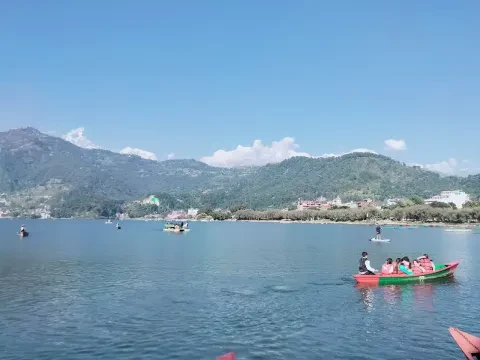
Here, everything about ABC Trek starts in Pokhara, sitting at 827 meters, right by the calm Phewa Lake. The city itself feels relaxed, but if you wake up early, the mountains tease you—just the tops peeking through the morning haze. You head out, winding your way toward Nayapul at 1,070 meters. The road twists through lush, rolling hills. Every now and then, you catch a flash of a snowy summit. It’s hard not to feel your excitement build. Villages pop up along the way, kids waving, rivers charging along far below. The city fades fast, and suddenly you’re surrounded by fields and forest. There’s this sense that everything is connected—hills, water, people, all part of the bigger picture. This is your gateway. It sets the mood for what’s coming.
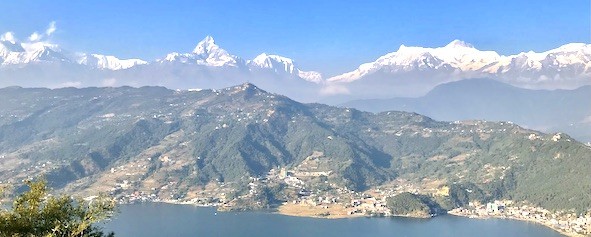
Actually, the drive from Pokhara to Nayapul takes about an hour or two, but you barely notice the time. Annapurna South shows up first, tall and solid at 7,219 meters. Machhapuchhre, with its sharp, iconic shape, follows close behind. Somewhere along the way, Hiunchuli appears, standing at 6,441 meters. When you finally reach Nayapul, the real trek begins. You cross bridges over the Modi Khola, step onto rocky paths, and suddenly the valley opens up beneath you. Birds call from the trees. Sunlight filters down in patches. You feel awake, alert—ready. These first sights make you want to keep moving. The Annapurna Range waits, and somehow, it feels like it’s welcoming you in.
But, people can begin their Annapurna Base Camp Trek directly from Ulleri or from Jhino Danda. One can get jeep ride from Pokhara to Ulleri and Jeep or bus from Pokhara to Jhino Danda and can begin the trek if they want.
Initial Mountains Seen from Pokhara and Drive:
| Location | Elevation | Views Offered | Distance from Pokhara |
|---|---|---|
| Pokhara | 827m | Annapurna range over lake | Starting point |
| Sarangkot | 1592m | Panoramic Annapurna, optional side | 10km north |
| Naudanda | 1440m | First clear peaks during drive | 20km west |
| Nayapul | 1070m | Valley and initial hills | 42km total drive. |
Facts on Gateway Section:
Up there at Poon Hill, 3210 meters high if you are going ABC via Poon Hill, trekkers wait as the sky begins to change. Golden light spills over the mountains, one peak after another catching the glow. Snow-covered summits stand still while the world below stirs awake. Before dawn breaks fully, hikers are already settled in place, quiet and watching. Then slowly, near the edge of sight, colors bloom - first soft pink, then bold orange stretching sideways. Energy fills every step of the path. Beauty of the sunrise ties into far-off peaks through soft links. Poon Hill stands out along the way because of that. People stand close, yet silence holds most of the space. Memories stay sharp long after it ends.
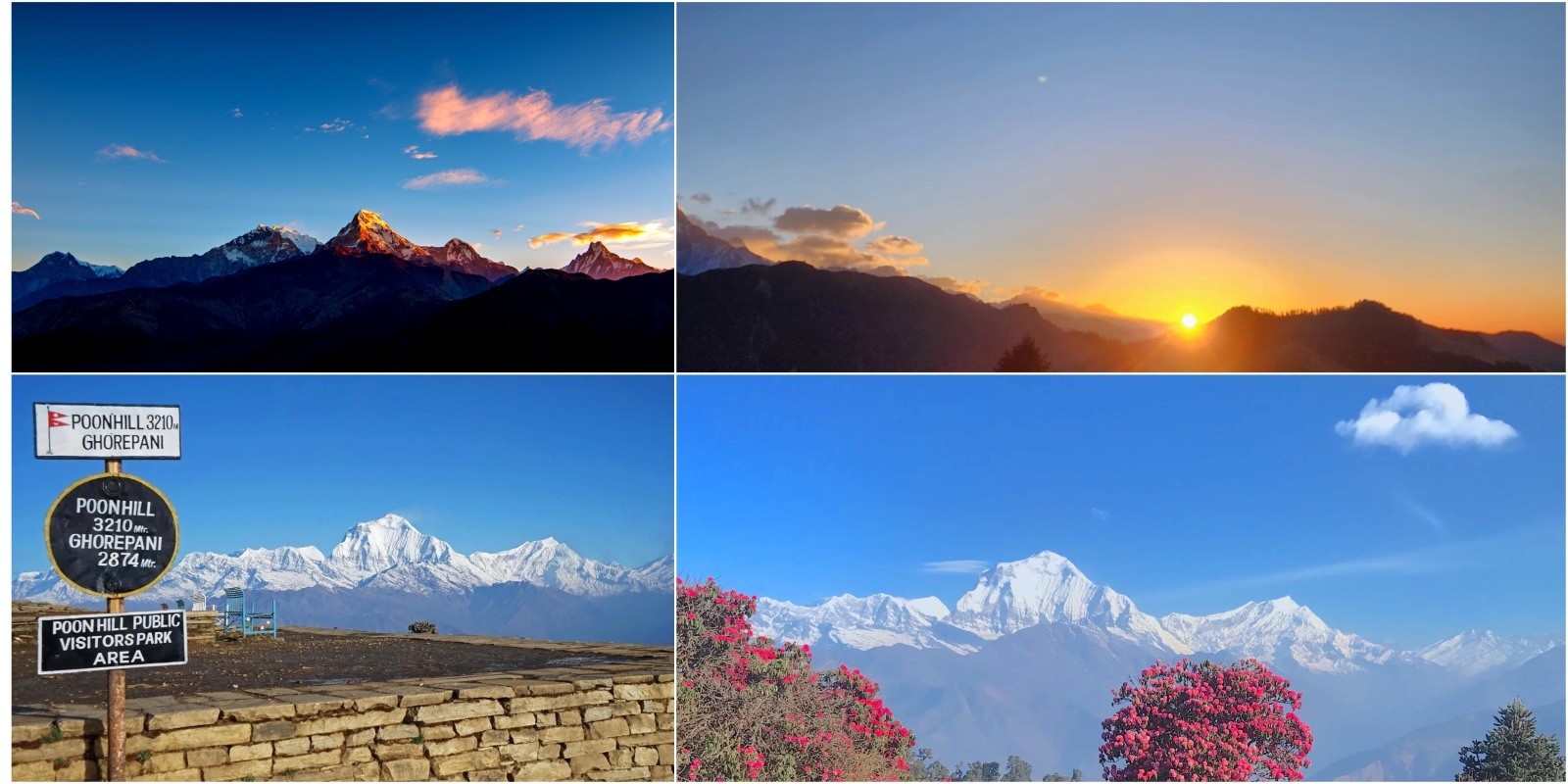
From Poon Hill, sitting high at 3210 meters, a sweep of Himalayan peaks spreads out below. Not far off, Annapurna South rises sharp at 7219 meters. To the west, Dhaulagiri claims the sky at 8167 meters tall. Over toward the east, Annapurna I lifts its massive form to 8091 meters. A shape rises - Machhapuchhre at 6993 meters shows its edge. Not far behind, Nilgiri stands tall among seven thousanders. When skies clear, more than thirty summits come into sight. Along the trail, rhododendrons line the way like walls of color. As dawn spreads, bird voices fill the air. A red glow climbs the horizon, catching the lens just right. Worth every cold step taken before dawn.
Major Peaks Visible from Poon Hill Sunrise:
| Aspect | Details | Elevation/Notes |
|---|---|---|
| Viewpoint | Poon Hill | 3210m – Short 45-min climb from Ghorepani (2860m) |
| Best Time | Autumn/Spring | Clear skies enhance colors and visibility |
| Sunrise Time | Around 6 AM | Arrive 30-45 min early for spot |
| Visible Ranges | Annapurna & Dhaulagiri | Over 30 peaks in 360° view |
| Additional Sights | Rhododendron forests below | Bird-watching opportunities |
Facts Supporting the Sunrise Experience:
Further, you reach Tadapani (2630m) by weaving through thick forests, and suddenly the trees give way—there it is, Machhapuchhre (6993m), soaring right in front of you. The trail twists through rhododendrons and old oaks, sunlight slipping through the leaves and washing the peaks in gold. Hikers always stop here; it’s impossible not to. One moment you’re surrounded by green silence, the next, the mountains burst into view. Tadapani has a calm, almost meditative energy, but these mountain vistas? They strike you with real force. When sunset hits, the peaks glow warm and deep, and somehow your tired legs feel lighter.
Moreover, from this ridge, Machhapuchhre stands bold and close, almost within reach. Annapurna South (7219m) looms massive, while Annapurna III (7555m) floats behind, a little more elusive. The forest frames all of it—gnarled trunks and mossy undergrowth in the foreground, jagged snow far above. On clear days, you catch every sharp ridge and icy shadow. It’s a solid reward after the long descent from Poon Hill (3210m). Birds chatter, monkeys rustle in the branches, and the whole place feels alive, but not crowded. There’s a perfect tension: the quiet strength of nature, the rush of seeing mountains up close. Tadapani pulls you in with that intimacy, and honestly, it’s hard to leave.
Key Mountains Emerging from Tadapani Ridgelines:
| Location/Aspect | Elevation | Primary Views | Description |
|---|---|---|
| Tadapani Village | 2630m | Machhapuchhre (6993m), Annapurna South (7219m) | Ridge-top teahouses with open panoramas. |
| Ridgeline Paths | 2600-2700m | Annapurna III (7555m), Hiunchuli (6441m) | Forest-framed emerging peaks. |
| Sunset Spot to Tadapani | 2,660m | Machhapuchhre (6993m) glow | Warm light on fishtail silhouette. |
| Nearby Trail To Chhomrong | 2,150m | Annapurna South (7219m) | Continuing descent reveals more. |
Additional Facts on Forested Perspectives:
Here, walking along the Modi Khola Valley really wakes you up. The river thunders through tight gorges, and before you know it, Annapurna South towers overhead at 7,219 meters, with Hiunchuli standing guard at 6,441. The trail sticks right beside the water, sometimes cutting so close you can feel the spray from waterfalls dropping nearby. Suspension bridges pop up often—it almost feels like you’re skipping over the river’s energy. The whole scene just keeps building as you go. Sunlight glints off the glacial water, and those mountains seem to move with you, always close.
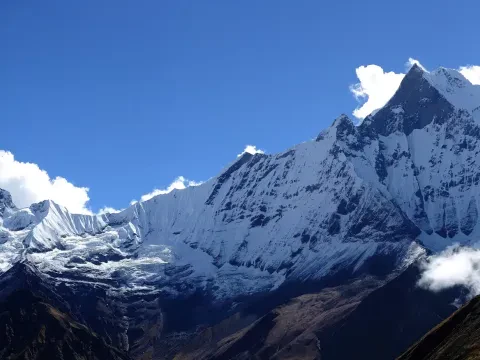
From Chhomrong, at 2,170 meters, the Modi Khola leads trekkers straight toward the heart of the sanctuary. Annapurna South grabs your attention to the south, while Hiunchuli holds the east. The river doesn’t let up, either—it echoes through the narrowest spots, bouncing off stone and forest. You leave terraced fields behind, trading them for thick woods along the banks. With every uphill step, the peaks loom larger, and the whole journey turns into a mix of sound and sight—rushing water, birds overhead, bright flashes of rock and snow. By the end of the valley, the anticipation for what’s next is almost electric.
Major Peaks Revealed Along Modi Khola Valley:
| Location | Elevation | Peaks Visible | Description |
|---|---|---|
| Chhomrong | 2170m | Annapurna South (7219m), Hiunchuli (6441m) | Village overlook above Modi Khola. |
| Sinuwa | 2340m | Annapurna South (7219m), Hiunchuli (6441m) | Entry to denser valley views. |
| Bamboo | 2310m | Hiunchuli (6441m), Annapurna South (7219m) | Riverside teahouses with river sounds. |
| Dovan | 2600m | Closer Hiunchuli (6441m), Machhapuchhre (6993m) | Upper valley narrowing. |
Facts on Modi Khola Valley Section:
Here, step onto the bamboo trail and you’ll find yourself slipping into a world of shadow and green. Rhododendron branches knit together overhead, building a leafy tunnel that twists upward under your boots. Every so often, Gangapurna (7455m) slips into view—just a flash of snow and sky through the trees. Sunlight breaks in now and then, dropping little pools of gold onto the mossy ground. The air feels cool and damp, almost fresh enough to taste.
In fact, it’s quiet here along the trail, except for the birds. You hear them, but they stay hidden. The peace is real, but there’s this gentle buzz of anticipation every time the forest parts and you catch another glimpse of distant peaks. The bamboo gives way, opens for a second, and you remember why you’re climbing.
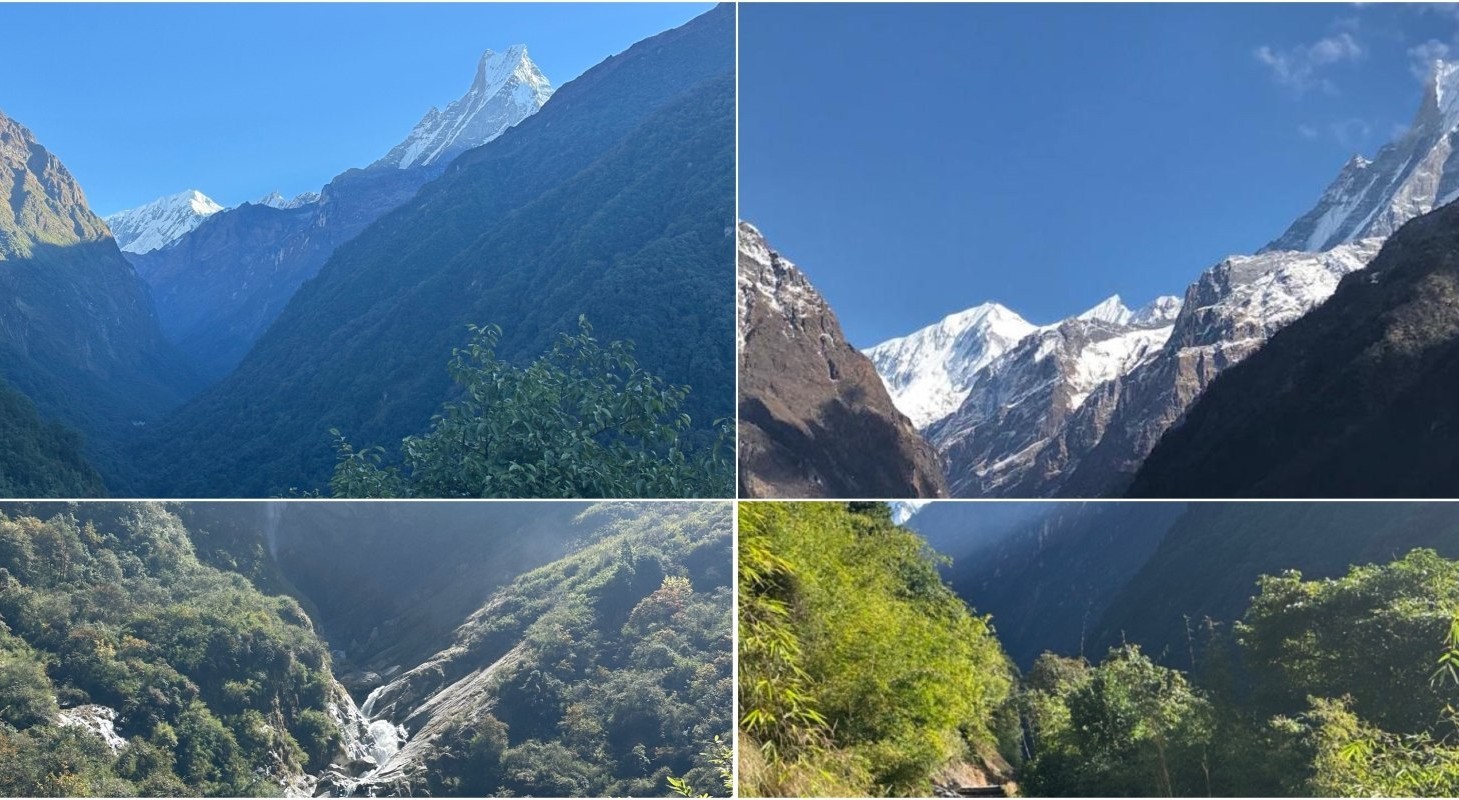
From Bamboo (2310m) up to Dovan (2600m) and higher, the forest rules all over the trail. Bamboo and rhododendron everywhere, with only the occasional clearing to break things up. Gangapurna appears again—just a tease—framed by soft, filtered light. The trail narrows, sometimes turning into a set of rough steps, and every now and then, you spot a patch of flowers fighting for space. In spring, they’re everywhere, adding bursts of color to the green. The higher you go, the more the forest thins, until suddenly you step out into the open and the whole mountain world is laid out ahead.
Key Mountains Glimpsed in Bamboo/Rhododendron Sections:
| Section | Elevation Range | Primary Forest Type | Glimpses/Highlights |
|---|---|---|
| Sinuwa to Bamboo | 2340m to 2310m | Bamboo, rhododendron | Initial subtle peaks. |
| Bamboo to Dovan | 2310m to 2600m | Dense bamboo groves | Gangapurna (7455m) peeks. |
| Dovan to Himalaya | 2600m to 2900m | Rhododendron transition | Increasing mountain reveals. |
| Forest paths overall | 2300m-3000m | Mixed dense canopies | Filtered light on peaks. |
Additional Facts on Bamboo Trail Areas:
Actually, Deurali sits at 3,230 meters, and honestly, it just hits different. When trekkers roll in, the valley suddenly opens up, and the whole western face of the Annapurna massif feels like it’s right there in your lap. The peaks tower over you—Annapurna South, bold and broad; Machhapuchhre, dramatic and sharp; Hiunchuli off to the east, balancing the skyline. Glaciers catch the sunlight and throw it back at you. The alpine meadows blend right into sheer rock walls, so you’re stuck between green softness and raw stone.
Likewise, there’s a charge in the air here at Deurali while ascending from Bamboo and Himalaya. The wind feels colder, fresher, like you’ve crossed some invisible border. This isn’t just another stop—it’s the moment the mountains get personal. Every step through Deurali’s open trails, you’re surrounded by giants, and the scale of it all finally sinks in. By the time you leave, you’re not just walking to the sanctuary—you’re ready for it.
Major Peaks in Close-Up from Deurali Overlook:
| Location | Elevation | Key Views | Description |
|---|---|---|
| Deurali | 3230m | Annapurna South (7219m) western face, Machhapuchhre (6993m) | Alpine meadow overlook, valley gateway. |
| Nearby trails | 3200-3300m | Hiunchuli (6441m), Gangapurna (7455m) | Open sightlines to massif walls. |
| Toward MBC | Ascent from 3230m | Closer Annapurna massif profiles | Transition to dramatic faces. |
Facts Supporting Deurali's Dramatic Overlook:
Actually, there’s something unreal about reaching Machhapuchhre Base Camp at 3,700 meters. You look up, and there it is—the Fishtail, Machhapuchhre itself, cutting right into the sky. When the golden hour hits, the whole peak glows. It’s hard not to stop and just stare. People pull out their cameras, trying to grab a bit of that magic—though honestly, no photo really does it justice.
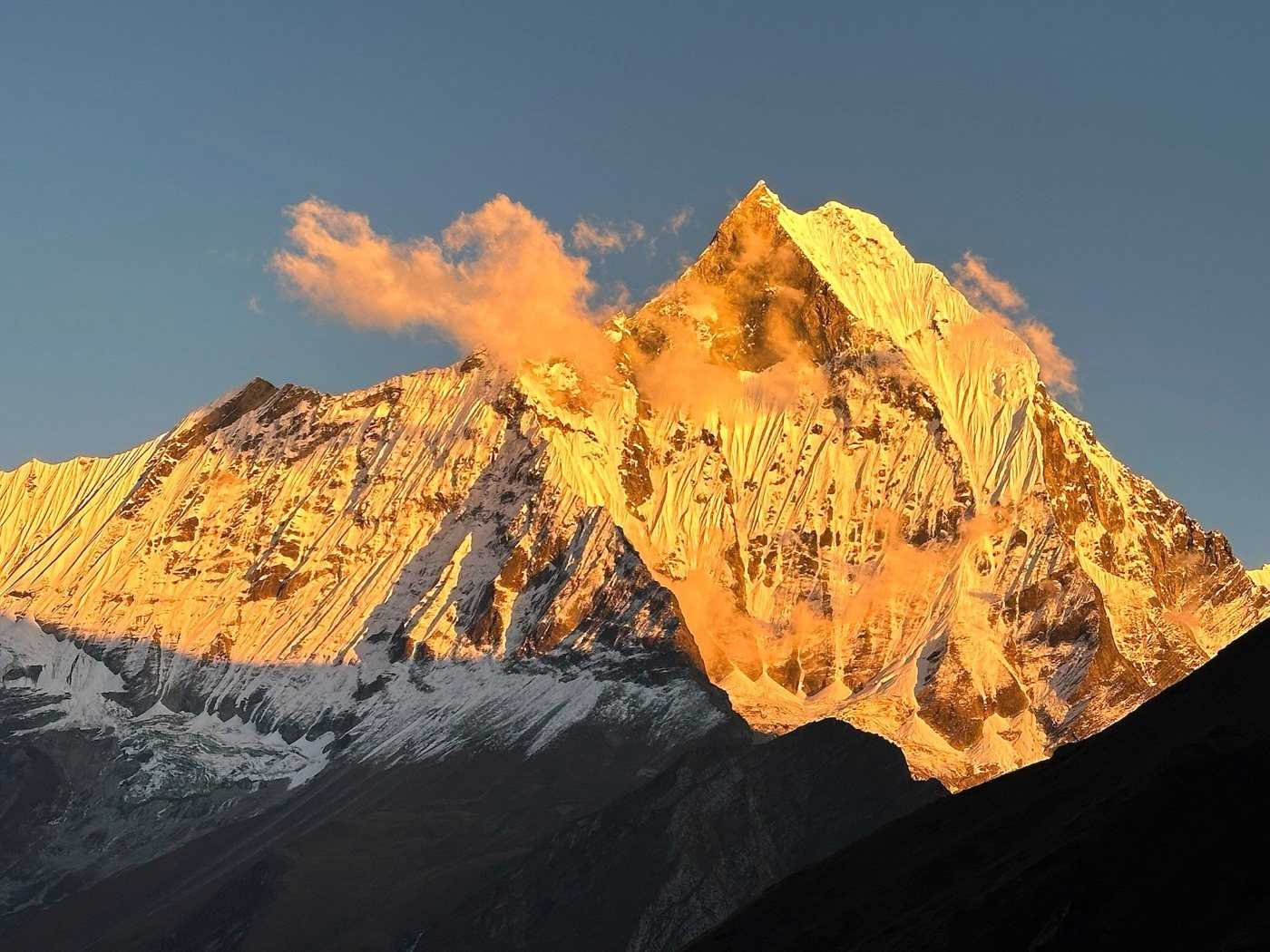
In fact, the Machhapuchhre Base camp sits right beneath the mountain, so you feel close enough to touch it. Machhapuchhre’s twin summits rise up, sharp and sacred. To either side, Annapurna III and Gangapurna stand watch. You turn around, and you get this wild, 360-degree view—peaks everywhere, shadows shifting as the light changes. Sometimes it’s all fiery reds at sunset, sometimes it’s soft gold, but every time, it feels special. There’s this calm that settles over the camp, like the mountain’s letting you in on a secret. After the climb, golden hour at MBC isn’t just a reward—it’s what you came for.
Key Mountains and Views at Machhapuchhre Base Camp:
| Aspect | Elevation | Primary Feature | Description |
|---|---|---|
| Machhapuchhre Base Camp | 3700m | Machhapuchhre (6993m) Fishtail | Direct base views, golden light magic |
| Camp area | 3700m | Gangapurna (7455m), Annapurna III (7555m) | 360° silhouettes in sunset glow |
| Golden hour spots | 3700m | Fishtail in crimson/orange hues | Sunset often more spectacular than sunrise |
| Toward ABC | Ascent to 4130m | Enhanced Fishtail profile | Short walk for varied lighting. |
Additional Facts on MBC Magic:
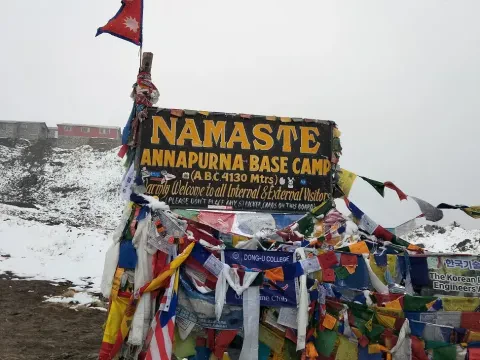
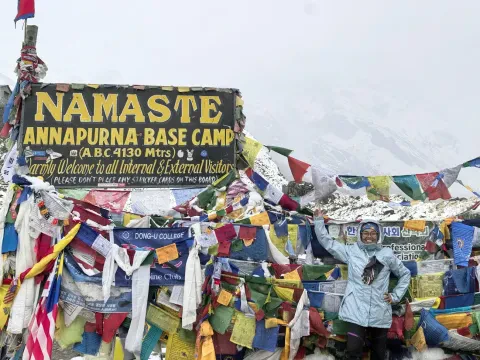
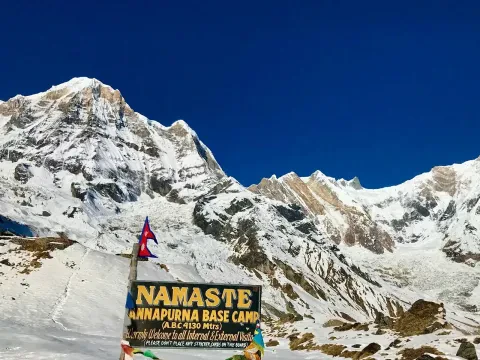
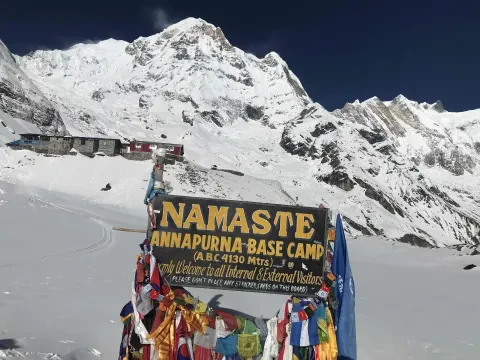
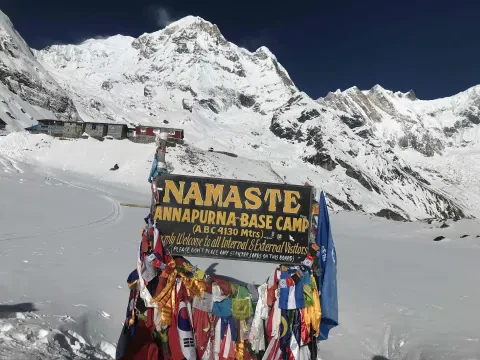
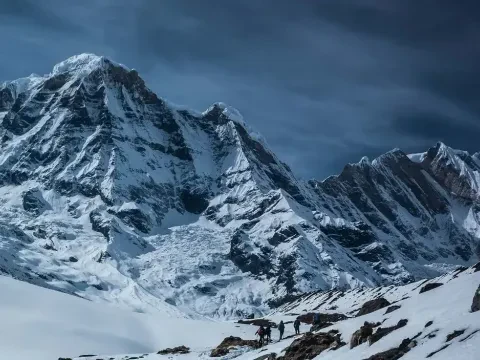
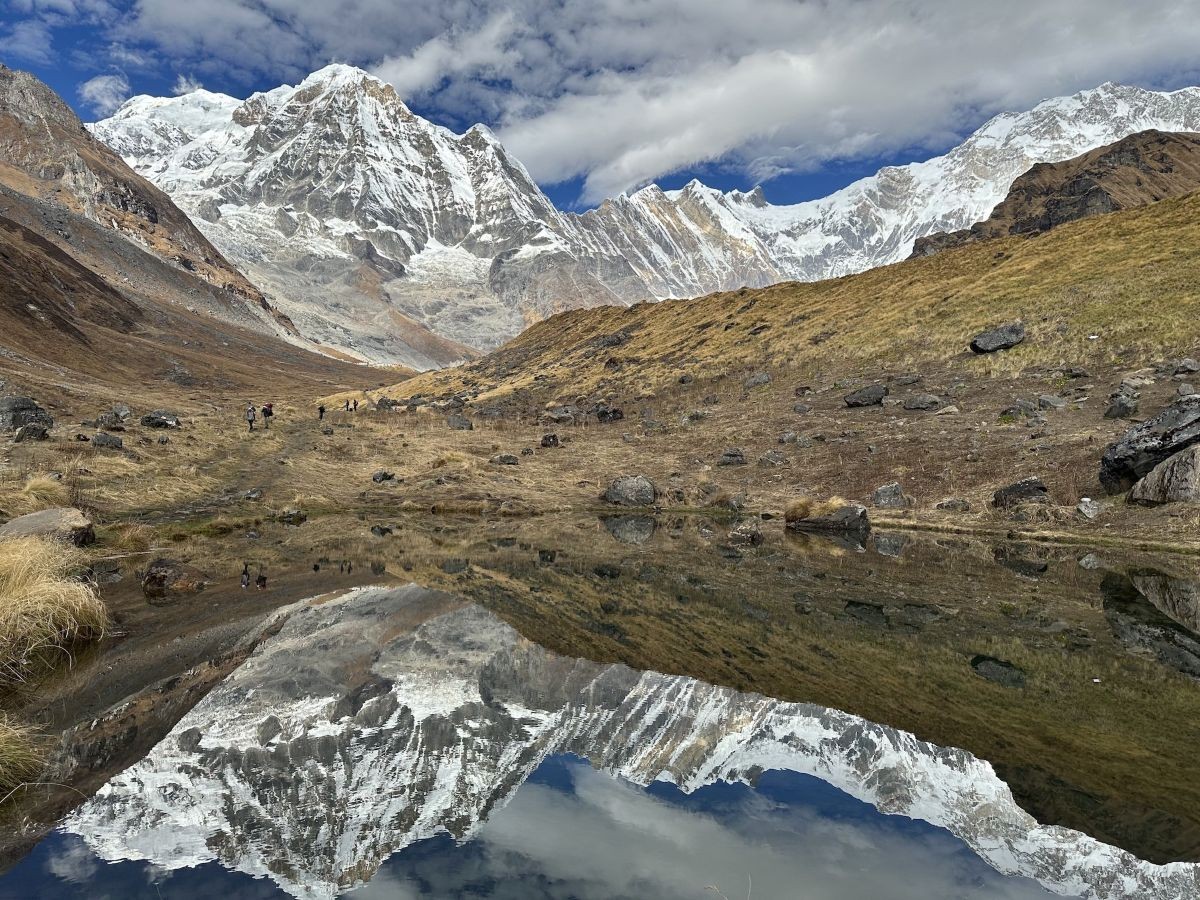
Here, you finally make it to Annapurna Base Camp, perched at 4,130 meters. This is what you came for—the heart of the Himalayas, peaks everywhere you turn. Annapurna I towers above the north side, impossible to miss, while the rest of the Annapurna giants wrap around you in a perfect, snow-capped circle. Sunlight hits the glaciers and the whole place just glows. Standing there, you feel like you’ve stepped into a hidden amphitheater built by the mountains themselves. Every direction pulls your eyes to something bigger, wilder, more beautiful.
Honestly, reaching ABC feels like hitting the high note of the Annapurna Base Camp trek. The sense of achievement is real, and the view? It stays with you. Annapurna I is right in your face—8,091 meters of pure presence. Annapurna South stands guard to the south, and Machhapuchhre’s iconic fishtail slices the skyline with its sacred, untouched peak. Gangapurna and Annapurna III fill in the rest of the circle, sealing you into this wild, open basin. The scale here is hard to grasp until you see sunrise or sunset—the light changes everything, turning the whole arena golden or rose. It’s both vast and strangely personal, like the mountains are letting you in on a secret. Every step to get here pays off the moment you arrive.
Major Summits Surrounding Annapurna Base Camp:
| Direction | Primary Peak | Elevation Notable Feature |
|---|---|---|
| North - Annapurna I | 8091m | Massive south face, glacier basin |
| South - Machhapuchhre | 6993m | Iconic fishtail shape, sacred peak |
| Southwest - Annapurna South | 7219m | Sharp pyramid profile |
| West - Gangapurna | 7455m | Snowy ridge and lake views |
| East - Annapurna III | 7555m | Rugged connecting ridges |
| Southeast - Hiunchuli | 6441m | Steep rocky face. |
Facts on ABC Apex Experience:
Actually, finishing the Annapurna Base Camp Trek, most people walk away with their heads—and hearts—full. The whole route feels like a parade of mountain masterpieces, each view stacking on the last, turning simple curiosity into flat-out awe. At first, those peaks just peek at you from a distance, but as you get closer, they tower above, impossible to forget. Trekkers don’t just snap a few photos—they carry home memories in full color, stitched together into one big, epic story.
Moreover, this trek doesn’t just offer pretty scenery. It’s got everything. Poon Hill(3210m) glows at sunrise. Tadapani(2630m) and the riverside paths build the drama, and when you finally reach MBC(3700m) and ABC(4130m), you’re right up close, surrounded by giants. Every stretch brings something new—a shift in light, a surprising view, the sheer scale of it all. All those moments blend together, shaping the way you see mountains, maybe even the world. By the end, you get why people want to come back, or at least sit quietly and remember. The Himalayas leave their mark, and those sights stick with you for good.
Signature Mountain Masterpieces of the Trek:
| Stage | Key Viewpoint | Elevation | Highlight Memory |
|---|---|---|
| Gateway | Pokhara to Nayapul | 827m–1070m | First teases of range. |
| Mid-trek | Poon Hill | 3210m | Sunrise over Dhaulagiri & Annapurna. |
| Forested | Tadapani | 2630m | Emerging Machhapuchhre ridgeline. |
| Valley | Modi Khola | 2200m | Riverside Annapurna South &Hiunchuli. |
| Upper | Deurali–MBC | 3230m–3700m | Close massif faces & fishtail. |
| Apex | ABC | 4130m | 360° towering surround. |
Lasting Impact and Facts:
1. What are the major mountains that you can see on the Annapurna Base Camp Trek?
The Annapurna Base Camp Trek is really amazing because you get to see a lot of mountains. You will see Annapurna I which's 8,091 meters tall Annapurna South which is 7,219 meters tall Machhapuchhre which is 6,993 meters tall Hiunchuli which is 6,441 meters tall Gangapurna which is 7,455 meters tall and Dhaulagiri which is 8,167 meters tall. These big mountains come into view as you walk from Poon Hill to the sanctuary. You will see villages and cool landscapes that will make your trip unforgettable. Our team is very good at making sure you are safe while you enjoy the views.
2. Which mountains can you see from Poon Hill when the sun comes up?
Poon Hill is 3,210 meters tall. It is a great place to watch the sun come up. When the sun rises you will see Dhaulagiri, Annapurna South, Annapurna I, Machhapuchhre, Nilgiri and Hiunchuli looking golden. You can see than 30 mountains from here. The trees below are really colorful which makes the view even better. We think you should get to Poon Hill early so you can get a spot and see everything clearly.
3. How do the views of Machhapuchhre change as you walk on the Annapurna Base Camp Trek?
Machhapuchhre is a cool mountain that you can see from a lot of places on the trek. At first it looks small from Pokhara. The start of the trail.. As you get closer to Tadapani you can see it better. When you get to Machhapuchhre Base Camp which's 3,700 meters tall you can see the mountain really clearly. The views of Machhapuchhre from the Annapurna Base Camp Trek are really beautiful. A lot of people think they are magical.
4. What do you see when you get to Annapurna Base Camp?
Annapurna Base Camp is 4,130 meters tall. It is surrounded by really big mountains. You can see Annapurna I, Gangapurna, Annapurna III, Hiunchuli and Machhapuchhre from here. The glaciers sparkle in the sun which makes everything look really cool. Our team knows the Annapurna Base Camp Trek well and we think this is the best part of the trip.
5. When is the best time to see the mountains on the Annapurna Base Camp Trek?
The best time to see the mountains clearly is in the autumn which's from September to November or in the spring which is from March to May. The sky is clear. You can see the mountains really well during these times. The weather is also stable. There are not many clouds. We think you should check the weather forecast before you go and bring clothes so you can enjoy the views.
6. Can you see Annapurna I and Annapurna South from the trail?
Yes you can see Annapurna I and Annapurna South from the trail. Annapurna I looks really big from Deurali and Annapurna South looks really cool from Ghandruk, Poon Hill and Chhomrong. Our guides think these views are really special and they will make your trip more exciting. The mountains look really close and big from the trail which will make you want to keep walking.
7. Why is Deurali a place to see the mountains?
Deurali is 3,230 meters tall. It is a great place to see the mountains. You can see Machhapuchhre and Annapurna South from here. The glaciers are really cool. Our team thinks Deurali is a place to stop and look at the mountains before you keep walking to the Annapurna Base Camp.
8. How good are the views from Machhapuchhre Base Camp?
Machhapuchhre Base Camp is 3,700 meters tall. It is a really cool place to see the mountains. You can see Machhapuchhre clearly from here and it looks golden in the sun. You can also see Gangapurna and Annapurna III from here. Our team thinks Machhapuchhre Base Camp is one of the places to see the mountains, on the Annapurna Base Camp Trek.
9. Which mountains can you see from Tadapani and Chhomrong?
The mountains you can see from Tadapani are really beautiful. You can see Machhapuchhre, Annapurna South and Annapurna III from there. These mountains look great against the trees behind them. Chhomrong is another spot. From Chhomrong you can see Annapurna South and Hiunchuli above the Modi Khola.
These are places to stop and look around during your trek. We have been guiding people for a time so we know the best spots. You can see the culture and the big mountains at the same time.
10. What do you need to know about seeing Dhaulagiri on the ABC Trek?
Dhaulagiri is a big mountain. It is the highest mountain in the world. You can see it clearly from Poon Hill at sunrise. It looks really big. Adds a lot to the view. We think it is one of the mountain views in Nepal. You can see Dhaulagiri and the Annapurna range together which is really beautiful.
11. Can you see the mountains around you on the trek?
Yes you can. Annapurna Base Camp is the place to see the mountains all around you. You can see the sanctuary from there. There are great spots too like Poon Hill. Our team plans the trek so you can see the views. We want to help you appreciate how big and beautiful the Himalayas are.
12. How do the forest sections of the trek show you the mountain views?
The forest is very dense in some places. There are a lot of rhododendron and bamboo trees.. Then you come out of the forest and see the mountains. It is a surprise. You can see peaks like Gangapurna and Machhapuchhre. As you go higher there are trees so you can see more of the mountains. This makes the trek very exciting.
13. At what height can you see the views of the Himalayas?
The best views are from up. Places like Deurali, MBC and ABC are great. You can see the mountains clearly from there.. You need to be careful and get used to the high altitude first. We make sure you are safe and healthy so you can enjoy the views.
14. Is Annapurna Base Camp a trek for beginners who want to see the mountains?
Yes it is. The trek is not too hard. There are tea houses where you can rest. We have a lot of experience so we can help you have an fun trek. Many people have done this trek with us. Loved it. You can do it too.
15. How can you take photos of the mountains on the ABC Trek?
You should bring a camera and extra batteries. A polarizer is also an idea. The best time to take photos is during the hours at Poon Hill, MBC and ABC. It is cold in the morning so dress warmly. Our guides know a lot about photography so they can give you tips, on how to take photos of the Himalayas.
Our travel experts are ready to assist you with any questions.
Send us a message.Have a question before you book? Send your enquiry below and our travel experts will get back with the required information.