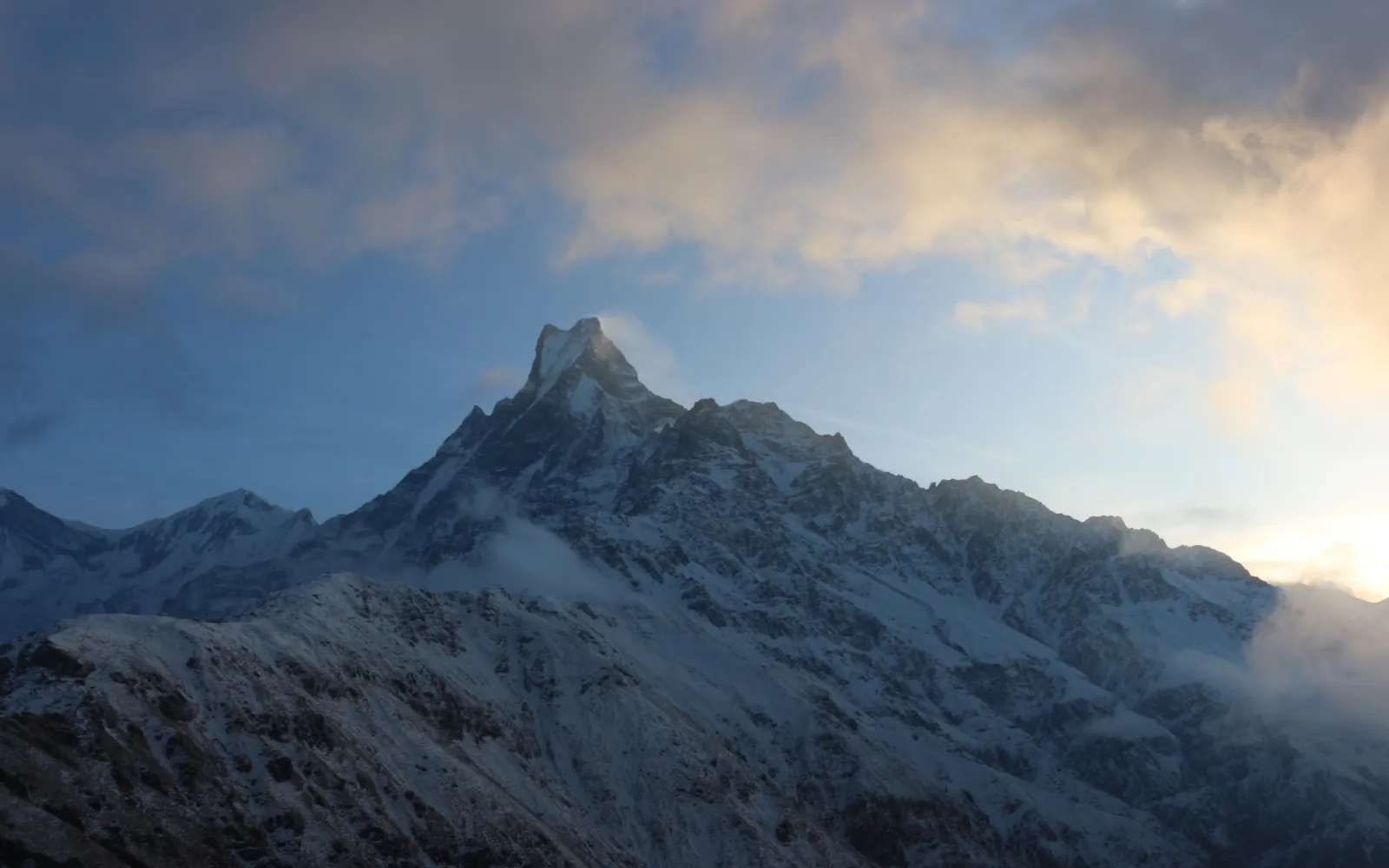
Yes, the Mardi Himal Trek can be done in January if you have the right equipment and an experienced local guide. January is however the coldest month of winter in Nepal so you will need to be prepared for snow, icy trails and cold temperatures.
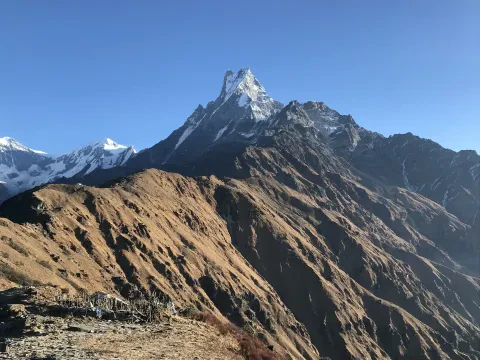
Actually, the Mardi Himal Trek is located in the Annapurna region of Nepal. You will hike along beautiful forest paths, peaceful mountain ridges and get up close to some fantastic views of Machhapuchhre, Annapurna South and Hiunchuli. The trek passes through many different camps including Forest Camp (2550m), Low Camp (2970m), Badal Danda (3210m) and High Camp (3550m).
| Trek Location | Elevation |
|---|---|
| Kande | 1770m |
| Forest Camp | 2550m |
| Low Camp | 2970m |
| Badal Danda | 3210m |
| High Camp | 3550m |
| Upper Viewpoint | 4200m |
| Mardi Himal Base Camp | 4500m |
Importantly, there will be less people on the trails and you may get great views of the mountains due to clearer conditions. However, the upper ridge can be challenging due to snow and icy conditions.
What to Expect during Mardi Trek in December ?
In conclusion, you should put your safety first. With the right planning you can have a great Mardi Himal Trek in January.
January is the coldest month with temperatures dropping significantly above 3500m. The daytime can be very pleasant with sun but temperatures drop significantly after sunset and before sunrise.
Meanwhile, temperatures will drop the higher up you go. The wind will make it feel much colder on the open areas such as Badal Danda and High Camp. You will often get great mountain views in the mornings however it can be cloudy in the afternoons and there may be some snow.
The temperatures below are approximate and are not exact averages for each day. They can vary depending on snow, wind, sun and elevation.
| Trek Location | Elevation | Day Temperature | Night Temperature |
|---|---|---|---|
| Kande | 1770m | 8 - 15° | C 0 - 6°C |
| Forest Camp | 2550m | 5 - 10°C | -2 - 2°C |
| Low Camp | 2970m | 3 - 8°C | -5 - 0°C |
| Badal Danda | 3210m | 1 - 7°C | -7 - -2°C |
| High Camp | 3550m | -5 - 5°C | -12 - -6°C |
| Upper Viewpoint | 4200m | -5 - 0°C | -15 - -10°C |
Generally, you should start early and give yourself plenty of time. You will need warm layers, insulated gloves, a winter sleeping bag and appropriate footwear.
Actually, the Upper Viewpoint (4200m) and Mardi Himal Base Camp (4500m) are two different destinations. How far you get will depend on how much snow there is, icy conditions, visibility and safety of the trail as judged by the guide.
Importantly, check the most up to date trail conditions and availability of accommodation.
Important Facts to Note about Mardi Himal Trek :
For more authentic information, please visit us at our blog post Mardi Himal Trek in Winter.
Yes, there is a possibility of snowfall on the Mardi Himal Trek in January. This will tend to be at the highest point of the trek, around High Camp (3550m), upper ridge and Mardi Himal Viewpoint (approx 4200m). However, it will not always snow and will depend on the year and the weather.
Generally, the higher you go up the trek the colder it will be. During the colder winter months, snow can fall on the exposed areas above High Camp creating snowy trails, ice and slippery areas.
| Trekking Location | Altitude | Possibility of Snow in January |
|---|---|---|
| Kande | 1770m | Unlikely |
| Forest Camp | 2550m | Occasionally (when it is cold) |
| Low Camp | 2970m | Possible |
| Badal Danda | 3210m | Possible |
| High Camp | 3550m | More likely |
| Upper Viewpoint | 4200m | More likely |
| Mardi Himal Base Camp | 4500m | More likely |
Here, snowfall during January can affect the walking on the trail. The upper ridge can become covered with snow. New snow can cover tracks making it harder to find your way.
Things to Consider When there is Snowfall :
Importantly, do not expect to have snow all the way along the trail. It may only be at the higher points and the forest will be mostly dry.
In conclusion, snowfall during winter can create stunning views but how far you go will depend on your safety. You should only go as far as you can based on the conditions of the trail. You should aim to reach the viewpoint or Base Camp based on the conditions of the trail.
The route of the Mardi Himal Trek during January will be the same as other seasons however the weather can affect the walking conditions. You will generally trek from Kande (1770m) through Australian Camp, Forest Camp (2550m), Low Camp (2970m), Badal Danda (3210m) and High Camp (3550m).
Here, the trail can be quite varied with stone steps, forest trails, steep ascents and exposed mountain ridges. The lower areas of the forest may be fairly dry. However, the higher areas can be difficult due to snowfall and freezing conditions.
The distances below are an authentic guide experienced by Haven Holidays Team in the field. However, the actual distance will depend on the trail you choose, lodge and starting point.
| Trail Section | Altitude | Approximate Distance | Time to Walk |
|---|---|---|---|
| Kande to Forest Camp | 2550m | 8-10km | 5-6 hours |
| Forest Camp to Low Camp | 2970m | 3-4km | 2-3 hours |
| Low Camp to High Camp | 3550m | 5-6km | 3-4 hours |
| High Camp to Upper Viewpoint | 4200m | 3-4km | (return) 3-5 hours |
| High Camp to Mardi Himal Base Camp | 4500m | Beyond viewpoint | 2-3 hours (or more depending on conditions) |
Note: These are guanine guidelines from our team. Snow, ice, fitness and trail conditions can all affect the time taken to walk.
Kande to Forest Camp (1770m to 2550m)
The trail will start with forest trails, stone steps and gentle ascents through Australian Camp and Deurali. Generally the trail will be fairly comfortable however it can get quite frosty and occasionally snowy.
Forest Camp to Low Camp (2550m to 2970m)
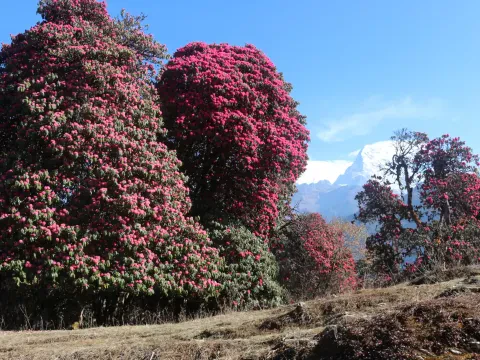
The trail will start to get steeper with thick rhododendron and oak forest. There will be less snow but the ground will be icy, leaves will be damp and the stone steps will be slippery.
Low Camp to High Camp (2970m to 3550m)
The trail will get steeper again as you head above the forest. However, the exposed areas will be windy, colder and more likely to have snow and ice.
High Camp to Mardi Himal Viewpoint (3550m to 4200m)
The exposed ridge will get quite narrow with steep areas. If there has been fresh snowfall, icy trails and poor visibility it may not be safe to reach the viewpoint.
Pack right winter gear and apply safety measures
Manage accommodation prior to the trekking begins formally
If you are trekking from Pokhara you should check what transport will be available. Kande is around 25-30km from Pokhara and will take around 45-60 minutes to drive depending on the traffic and road conditions.
In addition to, ensure you have suitable transport and check with your trekking company what the starting point will be. If you are going in winter an experienced local guide from Haven Holidays Pvt. Ltd can check the conditions of the trail and alter the itinerary if needed.
In conclusion, the lower areas may be accessible however you will need to be careful on the upper ridge. Your guide should ensure that you have safe trekking conditions and not push you to reach the top of High Camp.
The Mardi Himal Trek is generally considered to be an easy to moderate trek. However, with the weather during January, the upper routes can become more challenging. While the lower routes in the forest will still be easy to walk, the higher routes will be challenging due to snow, ice, cold and strong winds.
As you will reach High Camp (3550m), Mardi Himal Viewpoint (~4200m) and Mardi Himal Base Camp (~4500m) you will want to ensure you are fit enough, have the right equipment and allow yourself enough time to get used to the increasing altitude.
During January there will be a few extra challenges to overcome, particularly on the upper routes after Low Camp (2970m). The weather can also be quite unpredictable meaning you may find it challenging to walk quickly, see where you are going and get up to higher altitudes.
May have problems with right accommodation as most of the lodges are closed due to cold and snow
Altitude sickness is an important point to consider when trekking to Mardi Himal as you will be walking above 4000m. If your body doesn’t adapt to the lower levels of oxygen available at higher altitudes you can get acute mountain sickness (AMS).
Here, common symptoms of AMS include headaches, nausea, dizziness, fatigue and loss of appetite. You shouldn’t continue ascending if you begin to feel any symptoms and should descend.
Important Altitude Tips :
| Item | Purpose |
|---|---|
| Insulated Down Jacket | Keep you warm |
| Thermal Base Layers | Keep you warm in freezing temperatures |
| Waterproof Trekking Boots | Provide extra protection on snowy paths |
| Microspikes | Provide extra grip on icy surfaces |
| Trekking Poles | Provide extra stability when ascending and descending |
| Warm Gloves & Hat | Keep your hands and head warm |
| Winter Sleeping Bag | Keep you warm during freezing nights |
| Headlamp | Useful for early starts. |
Mardi Himal can be attempted by beginners who are reasonably fit as long as they have an experienced licensed guide. However, first time winter trekkers should not try to attempt the upper viewpoint alone.
Overall, how difficult the Mardi Himal Trek is in January will depend on the weather, snow, your fitness and how prepared you are. It isn’t essential to reach the viewpoint and it is more important to ensure you return safely.
A 5-day Mardi Himal Trek itinerary from Pokhara is a great option for January as you will be able to ascend slowly and have plenty of time to trek in the winter conditions. This itinerary will also include staying overnight in Forest Camp, Low Camp and High Camp before descending to Siding.
While you could attempt this trek in 4 days if you are experienced and fit, the winter conditions can make shorter itineraries challenging. Therefore, if you are a beginner or a first time winter trekker you should allow extra flexibility.
This itinerary follows the traditional route of Kande, Forest Camp, Low Camp and High Camp. However, whether you can visit the upper viewpoint will depend on the current weather, safety of the path and availability of accommodation.
| Day and Route | Time | Overnight |
|---|---|---|
| 1. Pokhara – Kande (1770m) – Australian Camp – Deurali – Forest Camp (2550m) | 5-6hrs | Forest Camp |
| 2. Forest Camp – Low Camp (2970m) | 2-3hrs | Low Camp |
| 3. Low Camp – Badal Danda (3210m) – High Camp (3550m) | 3-4hrs | High Camp |
| 4. High Camp – Upper Viewpoint (~4200m) if safe – Descend to Low Camp | 5-8hrs | Low Camp |
| 5. Low Camp – Siding (~1750m) – Pokhara | 3-5hrs walking +drive (2-3 hrs) | Pokhara |
Note: Times are approximate and can increase significantly due to snow, ice, fitness and weather.
Day 1: Pokhara – Kande – Forest Camp (2550m)
You will drive for approx. 25-30km to reach Kande – this should take around 45-60minutes. From here you will walk through Australian Camp and Deurali. You will then follow forest paths to reach Forest Camp – this should take around 5-6 hours.
Day 2: Forest Camp – Low Camp (2970m)
You will continue to ascend through rhododendron and oak forests. This route is fairly sheltered however you will need to be careful as the ground will be frozen and the leaves will be slippery.
Day 3: Low Camp – High Camp (3550m)
You will continue to follow the increasingly exposed route to High Camp via Badal Danda. You can relax in the afternoon and ensure you drink plenty of water. Speak to your guide to find out the latest weather conditions on the upper ridge.
Day 4: High Camp – Mardi Himal Viewpoint – Low Camp
If possible you can try to get to the Upper Viewpoint (~4200m) early in the morning – this should take around 3-5hrs return. However, if there has been fresh snowfall, strong winds, ice and/or poor visibility you may not be able to visit the viewpoint and should descend straight to Low Camp.
Day 5: Low Camp – Siding – Pokhara
You will descend back through the forest paths to Siding village (~1750m). From here you can organise a suitable local vehicle to return to Pokhara.
Important Tips for Your January Mardi Himal Itinerary :
A 4 day itinerary may be suitable for experienced trekkers who are fit and have previous high altitude experience. However, in general a 5 day itinerary is more practical for January as there will be less daylight, snow and icy paths.
Here, we would recommend being flexible with your itinerary. Most importantly, the best Mardi Himal Trek itinerary in January is one that allows you to acclimatise to the altitude, stay in suitable accommodation overnight and return to Pokhara comfortably.
Packing appropriate winter clothing is important for the Mardi Himal Trek during January as temperatures can drop below freezing. You will want to pack warm clothing, waterproofs and good footwear.
As temperatures can be very cold at High Camp (3550m) and Upper Viewpoint (4200m) especially in the early mornings. You will want to pack enough warm clothing to keep you warm on the walk up to the viewpoint.
| Item | Recommended | Reason |
|---|---|---|
| Base Layers | Thermal tops and bottoms | To keep you warm |
| Middle Layers | Fleece jacket and warm trousers | To keep you warm |
| Outer Layers | Warm insulated jacket and waterproof | To keep you warm, wind and rainproof |
| Gloves | Warm insulated gloves and liner gloves | To keep your hands warm |
| Headgear | Woolly hat and neck warmer | To keep you warm |
| Footwear | Waterproof trekking boots with good grip | To give you good support and protection |
| Socks | Warm wool socks | To keep your feet comfortable |
| Traction | Microspikes if needed | To help you get a good grip on icy paths |
| Walking Poles | Trekking poles | To help with balance on steep paths |
| Sleeping Bag | Winter sleeping bag | To keep you extra warm at night |
| Sun Protection | Sunglasses and sun cream | To protect your eyes from the strong mountain sun |
| Lighting | Headtorch and extra batteries | To help with early starts |
| Hydration | Water bottle and purification items | To keep hydrated |
| Medication | Any personal medication and a first aid kit | To help with any common medical issues. |
Thermal Base Layers
Moisture wicking thermal tops and bottoms. Avoid wearing cotton as it will hold moisture and take longer to dry.
Fleece and Insulated Jacket
A fleece jacket will keep you warm during the day and a warm down jacket during the evening and early morning. This will be particularly important around High Camp and on the open ridge.
Waterproof Jacket and Trousers
A waterproof jacket will protect you from any snow, wind and unexpected rain. Choose breathable waterproof clothing as you will likely be sweating whilst walking uphill.
Warm Gloves, Hat and Neck Warmer
Wear insulated gloves, woolly hat and neck warmer to keep your exposed skin warm. You can also pack an extra pair of lightweight gloves.
Footwear & Winter Equipment ;
Sunglasses with UV protection and high SPF sun cream :
During the early morning you will want to wear thermals, insulated jacket, warm gloves and appropriate headwear. Pack your water, headtorch, snacks and traction items in your day pack so they are easy to access.
In addition to, it is important to pack warm, waterproof clothing, footwear and safety items to ensure you have the right Mardi Himal Trek Packing List for January.
When planning your Mardi Himal Trek you will want to consider the accommodation, food and guide. There are teahouses available along the route however some higher up may have limited services or be closed during the harsh winter months.
Generally, you will stay at Forest Camp (2550m), Low Camp (2970m) and High Camp (3550m). However it is always good to confirm the availability of accommodation.
There are basic teahouses and mountain lodges available along the route. The higher up the route the simpler the facilities will be, especially during the coldest months.
| Accommodation Location | Altitude | Facilities |
|---|---|---|
| Forest Camp | 2550m | Basic rooms, blankets and shared facilities. |
| Low Camp | 2970m | Basic rooms, eating area and basic toilets. |
| Badal Danda | 3210m | Limited mountain lodge facilities. |
| High Camp | 3550m | Basic rooms, eating area and limited facilities. |
Important Notes for Accommodation in January :
Along the Mardi Himal route you will have traditional Nepalese food and familiar trekking food. The mountain lodges will cook the food based on what is available.
Typically you will have :
In conclusion, make sure you have enough safe drinking water and purification items. Hot food and drinks will help keep you comfortable during the cold January days.
During January it is a good idea to hire an experienced and licensed trekking guide. The snow and ice can change the conditions on the upper route. A porter will also help carry your heavy luggage so you can walk comfortably.
| Staff | Cost per Day |
|---|---|
| Experienced Trekking Guide | $35-$40 |
| Porter | $25 |
Important Notes for Guide & Porter :
The Mardi Himal Trek cost in January depends on how long you are trekking for, how many people are in your group, transport and what services you choose. Haven Holidays Pvt. Ltd. have published the following indicative prices and is subject to change.
| Package Length | Indicative Price per Person |
|---|---|
| 4 Day Mardi Himal Trek | $165-$320 |
| 5 Day Mardi Himal Trek | $195-$360 |
Here, the 4 Day Mardi Himal Trek Pokhara package will also show you how much it costs per person depending on how many people are in your group :
| Group Size | 4 Day Package Cost |
|---|---|
| 1 Person | $320 |
| 2-4 People | $255 |
| 6-10 People | $205 |
| 12-16 People | $165 |
In conclusion, these prices are published on the website so make sure to confirm the actual cost for your departure date and what services you are choosing.
Before booking make sure you check what is included in the package.
Confirm the following with your trekking company:
| Item | Considerations |
|---|---|
| Hot Drinks | Tea, coffee and hot chocolate. |
| Charging | Mobile phone, camera and power bank. |
| Hot Showers | May have to pay extra at the lodge. |
| Snacks | Chocolate, biscuits and energy bars. |
| Equipment | Sleeping bags, gloves and microspikes. |
| Tips | Personal tips for guides and porters. |
| Insurance | Travel and high altitude trekking insurance. |
When choosing a Mardi Himal trekking package for January it is important to choose one with reliable guide services, confirmed accommodation and appropriate transport. Ask for written confirmation of your food, permits, porter and emergency support.
Importantly, you can compare the different itineraries and services on Haven Holidays Mardi Himal Trek from Pokhara.
In conclusion, the best Mardi Himal Trek package for January will have appropriate winter support, clear pricing and flexibility with changing weather conditions.
Yes, Mardi Himal Trek in January can be a great trek for well-prepared trekkers who enjoy exploring the mountains in winter. However, it is one of the coldest months in Nepal, and therefore the trekking conditions may not be as easy as in the spring and autumn seasons.
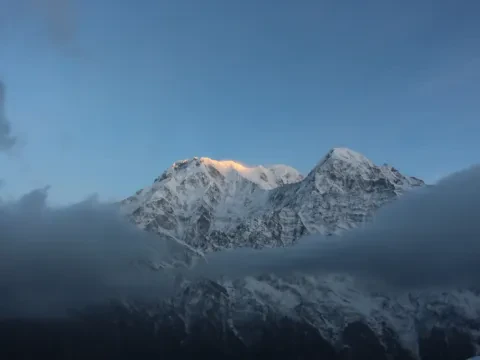
Overall, January can be a great time to trek as you’ll find peaceful trails, fresh mountain air, and possibly great mountain views of the Annapurna range. Occasionally there will be snowfall which will create some wonderful winter scenery around High Camp (3550m) and the upper ridge.
Although it can be colder there are some great reasons to go trekking during January :
You’ll need to be well prepared as the weather can be very changeable in the mountains. The trekking conditions will be more challenging above Low Camp (2970m).
Whilst you can trek to lower sections you’ll need to consider if you want to go to the upper ridge.
Here are some important tips to follow:
If you’re looking for a guided trek during the winter months Haven Holidays can provide organised trekking packages to Mardi Himal from Pokhara. Our local trekking team can assist you with finding licensed guides, accommodation and transport.
Meanwhile, our guides will check the weather and trail conditions and will advise if you can go to the upper viewpoint. However, we cannot guarantee you’ll be able to reach Mardi Himal Viewpoint/Base Camp as safety is a priority and depends on the real conditions of the snow, ice and visibility.
Overall, January is a great time to go on the Mardi Himal Trek if you enjoy peaceful trails, snowy mountain views and an adventurous trek.
As long as you have the correct preparation, flexible schedule and local expert guides you can enjoy the Annapurna mountains.
Therefore, plan your Mardi Himal Trek in January with Haven Holidays Pvt. and enjoy the peaceful beauty of the Nepalese winter mountains.
Important Note from Haven Holidays Team: Conditions can vary from year to year. Always check you have accommodation at High Camp, there has not been much snow and the upper sections are accessible. Don’t guarantee trekkers will be able to visit the Mardi Himal Viewpoint or have clear mountain views. Even with a well planned itinerary.
Yes, you can go on the Mardi Himal Trek in January if the weather, snow and trail conditions are favourable. The lower sections of the trek are generally accessible however the upper parts may be affected by snow and ice. Always check the local conditions and go with a licensed guide.
January can be a rewarding time to go on the Mardi Himal Trek if you are an experienced and well prepared trekker. You will enjoy the peaceful trails and beautiful mountain views. However the temperature can be quite cold compared to Autumn and Spring. There may also be snow and icy sections. This is not ideal for those who don’t like very cold temperatures or want to have a set time to view the viewpoints.
Yes. There can be snow around the High Camp and upper section of the trail. The amount of snow can vary from year to year. Some times there may not be much snow. Fresh snow can make the steep parts of the trail slippery. Always check the latest trail conditions.
The temperature can be quite cold at Mardi Himal High Camp (approx 3580m). During the day it can be around freezing point and at night it can get quite cold reaching -10 degrees and below during cold periods. This is just an approximation. You will need warm layers and a warm sleeping bag.
Beginners who are fit can go on the Mardi Himal Trek in January. However, it can be quite challenging due to the winter conditions. You will have to climb up steep sections, it will be quite cold at night and there may be icy trails. Go with a flexible itinerary and licensed guide.
You may be able to visit Mardi Himal Viewpoint in January if the weather, snow and trail conditions are favourable. However there may be ice, high winds and heavy snow making the upper sections unsafe. There is no guarantee you will be able to visit. Always listen to your guide and if conditions are bad turn back.
There are many teahouses along the Mardi Himal route however some may be closed or offer limited services. This can be quite unpredictable at the higher points such as the High Camp. Book your accommodation in advance and take plenty of warm clothing.
Yes. Foreign trekkers will need to book a licensed guide for the Mardi Himal route. A registered trekking agency can book you a guide. Having a guide in January can be very helpful as they can check the snow conditions, help with icy sections and can be flexible with your itinerary.
A 5 day itinerary from Pokhara is a good option for January. This allows you to walk at a more relaxed pace and can be flexible. If you are fit a 4 day trek may work for you however extra days can be helpful if there is snow affecting the upper sections.
Thermal base layers, fleece, warm down jacket, waterproofs, insulated gloves, winter hat and thick socks. Well fitting trekking boots with good grips, trekking poles, sunglasses, sun cream and a head torch. Microspikes may be useful.
Our travel experts are ready to assist you with any questions.
Send us a message.Have a question before you book? Send your enquiry below and our travel experts will get back with the required information.