[{"name":"Everest Base Camp Helicopter Tour","duration":"1","image_url":"https:\/\/www.havenholidaysnepal.com\/storage\/trip-galleries\/1\/thumb_6cd53005d75a86e373d31419d1b14d78.webp","offer_price":1195,"url":"https:\/\/www.havenholidaysnepal.com\/trips\/everest-base-camp-helicopter-tour"},{"name":"Everest Mountain Flight","duration":"1","image_url":"https:\/\/www.havenholidaysnepal.com\/storage\/trip-galleries\/4\/thumb_3b0b4f1d6f72b0ad224daf4752f2c6e0.jpg","offer_price":285,"url":"https:\/\/www.havenholidaysnepal.com\/trips\/everest-mountain-flight"},{"name":"Everest Short Trek","duration":"9","image_url":"https:\/\/www.havenholidaysnepal.com\/storage\/trip-galleries\/5\/thumb_BXPP3621.JPEG0.02033800 1727957098.webp","offer_price":995,"url":"https:\/\/www.havenholidaysnepal.com\/trips\/everest-short-trek"},{"name":"Gokyo Valley Trek","duration":"12","image_url":"https:\/\/www.havenholidaysnepal.com\/storage\/trip-galleries\/6\/thumb_10bc469b14731f23d3ce84a7092ad53f.jpg","offer_price":1195,"url":"https:\/\/www.havenholidaysnepal.com\/trips\/gokyo-valley-trek"},{"name":"15 days Annapurna Base Camp Trek","duration":"15","image_url":"https:\/\/www.havenholidaysnepal.com\/storage\/trip-galleries\/7\/thumb_87d1533bc45faf070990aef0579e4be4.jpg0.81855100 1728285496.webp","offer_price":785,"url":"https:\/\/www.havenholidaysnepal.com\/trips\/15-days-annapurna-base-camp-trek"},{"name":"Nepal Pilgrimage Tour","duration":"14","image_url":"https:\/\/www.havenholidaysnepal.com\/storage\/trip-galleries\/8\/thumb_02c3bcf2ad2e8a4c1703e90ae747b5f1.jpg","offer_price":1475,"url":"https:\/\/www.havenholidaysnepal.com\/trips\/nepal-pilgrimage-tour"},{"name":"UNESCO World Heritage Site Tour","duration":"10","image_url":"https:\/\/www.havenholidaysnepal.com\/storage\/trip-galleries\/9\/thumb_unesco-world-heritage-site-Lumbani-temple-buddhists-hindus-kathmandu-nepal0.36988600 17347617740.93089500 1737469667.webp","offer_price":715,"url":"https:\/\/www.havenholidaysnepal.com\/trips\/unesco-world-heritage-site-tour"},{"name":"Island Peak Climbing","duration":"16","image_url":"https:\/\/www.havenholidaysnepal.com\/storage\/trip-galleries\/11\/thumb_Island peak0.53947000 1734692503.webp","offer_price":2495,"url":"https:\/\/www.havenholidaysnepal.com\/trips\/island-peak-climbing"},{"name":"Upper Mustang Trek","duration":"18","image_url":"https:\/\/www.havenholidaysnepal.com\/storage\/trip-galleries\/12\/thumb_upper mustang 7 Oct-2024.jpg0.95398900 1728286166.webp","offer_price":2995,"url":"https:\/\/www.havenholidaysnepal.com\/trips\/upper-mustang-trek"},{"name":"Annapurna Circuit Trek","duration":"16","image_url":"https:\/\/www.havenholidaysnepal.com\/storage\/trip-galleries\/15\/thumb_tibetan-flags.jpg0.04843900 1728289138.webp","offer_price":985,"url":"https:\/\/www.havenholidaysnepal.com\/trips\/annapurna-circuit-trek"},{"name":"Gosainkunda Lake Trek","duration":"10","image_url":"https:\/\/www.havenholidaysnepal.com\/storage\/trip-galleries\/16\/thumb_5A8083B3-C007-41A8-853F-D0C37C97D235_1_105_c.jpeg0.52581200 1731845258.webp","offer_price":595,"url":"https:\/\/www.havenholidaysnepal.com\/trips\/gosainkunda-lake-trek"},{"name":"Zip-lining in Pokhara and Dhulikhel","duration":"1","image_url":"https:\/\/www.havenholidaysnepal.com\/storage\/trip-galleries\/18\/thumb_215f765e2ebc995dd5c800b4bfdbacc3.jpg","offer_price":82,"url":"https:\/\/www.havenholidaysnepal.com\/trips\/zip-lining-in-pokhara-and-dhulikhel"},{"name":"Annapurna Heli Tour","duration":"1","image_url":"https:\/\/www.havenholidaysnepal.com\/storage\/trip-galleries\/19\/thumb_d71a6bbb9fd4da8d1b567a5cdbdec85d.jpg","offer_price":555,"url":"https:\/\/www.havenholidaysnepal.com\/trips\/annapurna-heli-tour"},{"name":"Paragliding in Pokhara","duration":"1","image_url":"https:\/\/www.havenholidaysnepal.com\/storage\/trip-galleries\/20\/thumb_de788d2dd9726783431f882c007efae1.jpg","offer_price":65,"url":"https:\/\/www.havenholidaysnepal.com\/trips\/paragliding-in-pokhara"},{"name":"Ultra-Flight in Pokhara","duration":"1","image_url":"https:\/\/www.havenholidaysnepal.com\/storage\/trip-galleries\/21\/thumb_e27a9fb572a5c21611bb2a3c18e4b8f0.jpeg","offer_price":175,"url":"https:\/\/www.havenholidaysnepal.com\/trips\/ultra-flight-in-pokhara"},{"name":"Sarangkot Hiking","duration":"1","image_url":"https:\/\/www.havenholidaysnepal.com\/storage\/trip-galleries\/22\/thumb_100ef822fea19987166c6c1366215f15.jpg","offer_price":55,"url":"https:\/\/www.havenholidaysnepal.com\/trips\/sarangkot-hiking"},{"name":"Mera Peak Climbing","duration":"18","image_url":"https:\/\/www.havenholidaysnepal.com\/storage\/trip-galleries\/24\/thumb_d16ae3895f678cf26ffbf2455f541fb5.jpg0.31883400 1732617790.webp","offer_price":2475,"url":"https:\/\/www.havenholidaysnepal.com\/trips\/mera-peak-climbing"},{"name":"Lower Dolpo Trek","duration":"18","image_url":"https:\/\/www.havenholidaysnepal.com\/storage\/trip-galleries\/26\/thumb_Dolpo Galary - 1.JPG0.37725200 1727939952.webp","offer_price":2995,"url":"https:\/\/www.havenholidaysnepal.com\/trips\/lower-dolpo-trek"},{"name":"Nagarkot Sunrise\/Sunset Tour","duration":"1","image_url":"https:\/\/www.havenholidaysnepal.com\/storage\/trip-galleries\/27\/thumb_5147a5532644283a380f2e86f3857c13.jpg0.17748000 1728488108.webp","offer_price":30,"url":"https:\/\/www.havenholidaysnepal.com\/trips\/nagarkot-sunrise-sunset-tour"},{"name":"16 day Everest Base Camp Trek","duration":"16","image_url":"https:\/\/www.havenholidaysnepal.com\/storage\/trip-galleries\/28\/thumb_IMG_4311.JPG0.64984800 1727942213.webp","offer_price":1695,"url":"https:\/\/www.havenholidaysnepal.com\/trips\/16-day-everest-base-camp-trek"},{"name":"Ghorepani Poon Hill trek with Jungle Safari and Trishuli River Rafting -13 days","duration":"13","image_url":"https:\/\/www.havenholidaysnepal.com\/storage\/trip-galleries\/29\/thumb_Ghorepani Poon hill.jpg0.48460800 1728281439.webp","offer_price":795,"url":"https:\/\/www.havenholidaysnepal.com\/trips\/ghorepani-poon-hill-trek-with-jungle-safari-and-trishuli-river-rafting--13-days"},{"name":"Mardi Himal Trek","duration":"12","image_url":"https:\/\/www.havenholidaysnepal.com\/storage\/trip-galleries\/30\/thumb_s1.jpg0.62112600 1728200721.webp","offer_price":795,"url":"https:\/\/www.havenholidaysnepal.com\/trips\/mardi-himal-trek"},{"name":"Langtang Valley Trekking","duration":"10","image_url":"https:\/\/www.havenholidaysnepal.com\/storage\/trip-galleries\/31\/thumb_IMG_4702.JPG0.84916500 1727958504.webp","offer_price":685,"url":"https:\/\/www.havenholidaysnepal.com\/trips\/langtang-valley-trekking"},{"name":"Real Adventure Tour in Nepal","duration":"9","image_url":"https:\/\/www.havenholidaysnepal.com\/storage\/trip-galleries\/32\/thumb_ebd1b8cc78d90abe8b9003dd9a2f25bf.jpg0.82151300 1728213516.webp","offer_price":695,"url":"https:\/\/www.havenholidaysnepal.com\/trips\/real-adventure-tour-in-nepal"},{"name":"Luxury Tour in Nepal","duration":"10","image_url":"https:\/\/www.havenholidaysnepal.com\/storage\/trip-galleries\/33\/thumb_8574e61b252b18676b042caf30d830df.jpg","offer_price":1675,"url":"https:\/\/www.havenholidaysnepal.com\/trips\/luxury-tour-in-nepal"},{"name":"Luxury Everest Panorama Trek With EBC Heli Sightseeing","duration":"8","image_url":"https:\/\/www.havenholidaysnepal.com\/storage\/trip-galleries\/34\/thumb_URZL2397.JPEG0.01209600 1728027820.webp","offer_price":2395,"url":"https:\/\/www.havenholidaysnepal.com\/trips\/luxury-everest-panorama-trek-with-ebc-heli-sightseeing"},{"name":"13 day Everest Base Camp Trek with Helicopter","duration":"13","image_url":"https:\/\/www.havenholidaysnepal.com\/storage\/trip-galleries\/35\/thumb_IMG_4292.JPG0.70131500 1728029276.webp","offer_price":2095,"url":"https:\/\/www.havenholidaysnepal.com\/trips\/13-day-everest-base-camp-trek-with-helicopter"},{"name":"Manaslu Circuit Trek","duration":"16","image_url":"https:\/\/www.havenholidaysnepal.com\/storage\/trip-galleries\/36\/thumb_Mt Manaslu 03-Oct-2024.jpg0.65804900 1727938470.webp","offer_price":1055,"url":"https:\/\/www.havenholidaysnepal.com\/trips\/manaslu-circuit-trek"},{"name":"Kanchenjunga Base Camp Trek","duration":"21","image_url":"https:\/\/www.havenholidaysnepal.com\/storage\/trip-galleries\/37\/thumb_Kanchanjunga Trek -!.jpg0.54744400 1727938497.webp","offer_price":2275,"url":"https:\/\/www.havenholidaysnepal.com\/trips\/kanchenjunga-base-camp-trek"},{"name":"Ganesh Himal and Sing-La Trek","duration":"14","image_url":"https:\/\/www.havenholidaysnepal.com\/storage\/trip-galleries\/38\/thumb_Ganesh Himal slider-1.jpg0.43764500 1727937722.webp","offer_price":1775,"url":"https:\/\/www.havenholidaysnepal.com\/trips\/ganesh-himal-and-sing-la-trek"},{"name":"Island Peak Climb with Everest Base Camp Trek","duration":"21","image_url":"https:\/\/www.havenholidaysnepal.com\/storage\/trip-galleries\/39\/thumb_2be428730fe83525bc85a010564f99de.jpg","offer_price":2750,"url":"https:\/\/www.havenholidaysnepal.com\/trips\/island-peak-climb-with-everest-base-camp-trek"},{"name":"Students' Adventure Tour in Nepal","duration":"12","image_url":"https:\/\/www.havenholidaysnepal.com\/storage\/trip-galleries\/41\/thumb_a926d22fbfe08cba271c41ac289b3fd2.jpg","offer_price":995,"url":"https:\/\/www.havenholidaysnepal.com\/trips\/students-adventure-tour-in-nepal"},{"name":"7 Day Poonhill Trek","duration":"7","image_url":"https:\/\/www.havenholidaysnepal.com\/storage\/trip-galleries\/42\/thumb_6196bd69036473293a2c24cc21ed57d7.jpg0.10880600 1728205378.webp","offer_price":555,"url":"https:\/\/www.havenholidaysnepal.com\/trips\/7-day-poonhill-trek"},{"name":"7 Days Annapurna Base Camp Trek","duration":"7","image_url":"https:\/\/www.havenholidaysnepal.com\/storage\/trip-galleries\/43\/thumb_IMG_2214.JPG0.08204900 1728202033.webp","offer_price":355,"url":"https:\/\/www.havenholidaysnepal.com\/trips\/7-days-annapurna-base-camp-trek"},{"name":"3 days Poonhill Trek","duration":"3","image_url":"https:\/\/www.havenholidaysnepal.com\/storage\/trip-galleries\/44\/thumb_Poon hill.jpg0.60816600 1731412954.webp","offer_price":165,"url":"https:\/\/www.havenholidaysnepal.com\/trips\/3-days-poonhill-trek"},{"name":"Poon Hill Luxury Trek with Chitwan-12 days","duration":"12","image_url":"https:\/\/www.havenholidaysnepal.com\/storage\/trip-galleries\/45\/thumb_Poom hill.jpg0.52074500 1730180532.webp","offer_price":1175,"url":"https:\/\/www.havenholidaysnepal.com\/trips\/poon-hill-luxury-trek-with-chitwan-12-days"},{"name":"Everest Luxury Trek-7 days","duration":"7","image_url":"https:\/\/www.havenholidaysnepal.com\/storage\/trip-galleries\/46\/thumb_ACRX9330.JPEG0.93236200 1728031275.webp","offer_price":2195,"url":"https:\/\/www.havenholidaysnepal.com\/trips\/everest-luxury-trek-7-days"},{"name":"Hindu Pilgrimage Tour in Nepal-10 days","duration":"10","image_url":"https:\/\/www.havenholidaysnepal.com\/storage\/trip-galleries\/47\/thumb_a94bf96a4d31decb419f6f828a3280d2.jpg","offer_price":995,"url":"https:\/\/www.havenholidaysnepal.com\/trips\/hindu-pilgrimage-tour-in-nepal-10-days"},{"name":"Everest Base Camp Short Trek-12 days","duration":"12","image_url":"https:\/\/www.havenholidaysnepal.com\/storage\/trip-galleries\/48\/thumb_IMG_4311.JPG0.52680100 1727945154.webp","offer_price":995,"url":"https:\/\/www.havenholidaysnepal.com\/trips\/everest-base-camp-short-trek-12-days"},{"name":"Everest Base Camp Hike 12 Days","duration":"12","image_url":"https:\/\/www.havenholidaysnepal.com\/storage\/trip-galleries\/49\/thumb_IMG_4260.JPG0.51729100 1728061234.webp","offer_price":1295,"url":"https:\/\/www.havenholidaysnepal.com\/trips\/everest-base-camp-hike-12-days"},{"name":"11 Days Everest Base Camp Trek","duration":"11","image_url":"https:\/\/www.havenholidaysnepal.com\/storage\/trip-galleries\/50\/thumb_IMG_4249.JPG0.21392500 1727946959.webp","offer_price":1055,"url":"https:\/\/www.havenholidaysnepal.com\/trips\/11-days-everest-base-camp-trek"},{"name":"6 Days Annapurna Base Camp Trek","duration":"6","image_url":"https:\/\/www.havenholidaysnepal.com\/storage\/trip-galleries\/51\/thumb_6 days Abc.jpg0.58185400 1728200798.webp","offer_price":285,"url":"https:\/\/www.havenholidaysnepal.com\/trips\/6-days-annapurna-base-camp-trek"},{"name":"Annapurna Base Camp Trek","duration":"8","image_url":"https:\/\/www.havenholidaysnepal.com\/storage\/trip-galleries\/52\/thumb_IMG_2214.JPG0.29415700 1729487656.webp","offer_price":585,"url":"https:\/\/www.havenholidaysnepal.com\/trips\/annapurna-base-camp-trek"},{"name":"Everest Base Camp Trek with Helicopter Fly Out 10 Days","duration":"10","image_url":"https:\/\/www.havenholidaysnepal.com\/storage\/trip-galleries\/53\/thumb_IMG_4328.JPG0.52056600 1728058444.webp","offer_price":1875,"url":"https:\/\/www.havenholidaysnepal.com\/trips\/everest-base-camp-trek-with-helicopter-fly-out-10-days"},{"name":"Everest Base Camp Trek 14 Days","duration":"14","image_url":"https:\/\/www.havenholidaysnepal.com\/storage\/trip-galleries\/54\/thumb_Everest Base Camp Trek 14 days Oct 3 2024.JPG0.43202700 1727939745.webp","offer_price":1335,"url":"https:\/\/www.havenholidaysnepal.com\/trips\/everest-base-camp-trek-14-days"},{"name":"ABC Trek with Poonhill 11 Days","duration":"11","image_url":"https:\/\/www.havenholidaysnepal.com\/storage\/trip-galleries\/55\/thumb_ABC with fishtail.JPG0.21441100 1728277965.webp","offer_price":555,"url":"https:\/\/www.havenholidaysnepal.com\/trips\/abc-trek-with-poonhill-11-days"},{"name":"Muldai Hill Trek 9 Days","duration":"9","image_url":"https:\/\/www.havenholidaysnepal.com\/storage\/trip-galleries\/56\/thumb_7efee59f0a8c6817c8255bd2b9f3539d.jpeg0.19479300 1728213091.webp","offer_price":675,"url":"https:\/\/www.havenholidaysnepal.com\/trips\/muldai-hill-trek-9-days"},{"name":"Mardi Himal Trek 6 days","duration":"6","image_url":"https:\/\/www.havenholidaysnepal.com\/storage\/trip-galleries\/57\/thumb_slider 1.jpeg0.36909700 1728184981.webp","offer_price":590,"url":"https:\/\/www.havenholidaysnepal.com\/trips\/mardi-himal-trek-6-days"},{"name":"Mardi Himal Trek 7 days","duration":"7","image_url":"https:\/\/www.havenholidaysnepal.com\/storage\/trip-galleries\/58\/thumb_slider1.jpg0.61666600 1728206414.webp","offer_price":620,"url":"https:\/\/www.havenholidaysnepal.com\/trips\/mardi-himal-trek-7-days"},{"name":"Mardi Himal Trek 8 Days","duration":"8","image_url":"https:\/\/www.havenholidaysnepal.com\/storage\/trip-galleries\/59\/thumb_sli1.jpg0.38569100 1728206631.webp","offer_price":695,"url":"https:\/\/www.havenholidaysnepal.com\/trips\/mardi-himal-trek-8-days"},{"name":"14 Days Manaslu Trek","duration":"14","image_url":"https:\/\/www.havenholidaysnepal.com\/storage\/trip-galleries\/60\/thumb_sunrise-mt-manaslu-during-manaslu-circuit-larke-pass-trekking-himalaya-nepal (1)0.81855800 1738673284.webp","offer_price":885,"url":"https:\/\/www.havenholidaysnepal.com\/trips\/14-days-manaslu-trek"},{"name":"Dhampus-Sarangkot Trek with Chitwan 8 days","duration":"8","image_url":"https:\/\/www.havenholidaysnepal.com\/storage\/trip-galleries\/61\/thumb_Sarangkot Bhangyang.jpg0.75461400 1728210333.webp","offer_price":790,"url":"https:\/\/www.havenholidaysnepal.com\/trips\/dhampus-sarangkot-trek-with-chitwan-8-days"},{"name":"7 Days Golden Triangle Tour","duration":"7","image_url":"https:\/\/www.havenholidaysnepal.com\/storage\/trip-galleries\/62\/thumb_311ce1d117ee0ba75402a7c301bcdf830.73532400 1739179809.webp","offer_price":845,"url":"https:\/\/www.havenholidaysnepal.com\/trips\/7-days-golden-triangle-tour"},{"name":"Annapurna Circuit Trek 12 days","duration":"12","image_url":"https:\/\/www.havenholidaysnepal.com\/storage\/trip-galleries\/63\/thumb_IMG_20161024_092237.jpg0.57796600 1728289938.webp","offer_price":695,"url":"https:\/\/www.havenholidaysnepal.com\/trips\/annapurna-circuit-trek-12-days"},{"name":"Everest Base Camp Budget Trek 16 Days","duration":"16","image_url":"https:\/\/www.havenholidaysnepal.com\/storage\/trip-galleries\/64\/thumb_IMG_4423.JPG0.92579200 1728144669.webp","offer_price":958,"url":"https:\/\/www.havenholidaysnepal.com\/trips\/everest-base-camp-budget-trek-16-days"},{"name":"Poonhill Budget Trek 7 Days","duration":"7","image_url":"https:\/\/www.havenholidaysnepal.com\/storage\/trip-galleries\/65\/thumb_5be067852d0c5228d6f3155bc425c6b5.jpg","offer_price":395,"url":"https:\/\/www.havenholidaysnepal.com\/trips\/poonhill-budget-trek-7-days"},{"name":"Annapurna Base Camp Budget Trek 8 Days","duration":"8","image_url":"https:\/\/www.havenholidaysnepal.com\/storage\/trip-galleries\/66\/thumb_Pokhara.jpg0.16188000 1728212001.webp","offer_price":375,"url":"https:\/\/www.havenholidaysnepal.com\/trips\/annapurna-base-camp-budget-trek-8-days"},{"name":"The Real UNESCO Seven World Heritage Tour in Kathmandu 4 days","duration":"4","image_url":"https:\/\/www.havenholidaysnepal.com\/storage\/trip-galleries\/67\/thumb_Baudha Stupa.JPG0.63906900 1728201021.webp","offer_price":380,"url":"https:\/\/www.havenholidaysnepal.com\/trips\/the-real-unesco-seven-world-heritage-tour-in-kathmandu-4-days"},{"name":"Everest Base Camp Jeep Ride with Helicopter Return","duration":"14","image_url":"https:\/\/www.havenholidaysnepal.com\/storage\/trip-galleries\/68\/thumb_788ee5b63a6efb6f3c3d048b4270daca.JPG","offer_price":1995,"url":"https:\/\/www.havenholidaysnepal.com\/trips\/everest-base-camp-jeep-ride-with-helicopter-return"},{"name":"Annapurna Base Camp Jeep Ride with Helicopter Return 7 days","duration":"7","image_url":"https:\/\/www.havenholidaysnepal.com\/storage\/trip-galleries\/69\/thumb_abc jeep.jpg0.10280600 1728204064.webp","offer_price":1455,"url":"https:\/\/www.havenholidaysnepal.com\/trips\/annapurna-base-camp-jeep-ride-with-helicopter-return-7-days"},{"name":"Everest Base Camp Trek","duration":"15","image_url":"https:\/\/www.havenholidaysnepal.com\/storage\/trip-galleries\/70\/thumb_Everest Base Camp Trek 3 oct- 2024.JPG0.58445300 1727941472.webp","offer_price":1375,"url":"https:\/\/www.havenholidaysnepal.com\/trips\/everest-base-camp-trek"},{"name":"7 UNESCO World Heritage Tour Kathmandu 2 days","duration":"2","image_url":"https:\/\/www.havenholidaysnepal.com\/storage\/trip-galleries\/72\/thumb_Bhaktipur 3.jpg0.05559600 1728201496.webp","offer_price":150,"url":"https:\/\/www.havenholidaysnepal.com\/trips\/7-unesco-world-heritage-tour-kathmandu-2-days"},{"name":"Day Tour to UNESCO Heritage Sites","duration":"1","image_url":"https:\/\/www.havenholidaysnepal.com\/storage\/trip-galleries\/73\/thumb_228A1018.jpg0.79892500 1728199793.webp","offer_price":55,"url":"https:\/\/www.havenholidaysnepal.com\/trips\/day-tour-to-unesco-heritage-sites"},{"name":"Golden Triangle Tour in Nepal","duration":"8","image_url":"https:\/\/www.havenholidaysnepal.com\/storage\/trip-galleries\/74\/thumb_f54139cf9100f00015ffe0400687e946.webp","offer_price":588,"url":"https:\/\/www.havenholidaysnepal.com\/trips\/golden-triangle-tour-in-nepal"},{"name":"Everest Base Camp Honeymoon Tour by Helicopter with Pokhara","duration":"7 days","image_url":"https:\/\/www.havenholidaysnepal.com\/storage\/trip-galleries\/76\/thumb_RJTL7517.JPEG0.40261600 1731499989.webp","offer_price":9999,"url":"https:\/\/www.havenholidaysnepal.com\/trips\/everest-base-camp-honeymoon-tour-by-helicopter-with-pokhara"},{"name":"Yoga and Meditation Retreat Tour in Nepal","duration":"10 days","image_url":"https:\/\/www.havenholidaysnepal.com\/storage\/trip-galleries\/77\/thumb_decf8e33-6617-4400-9df0-63bf75509adf.JPG0.51948300 1731574810.webp","offer_price":2575,"url":"https:\/\/www.havenholidaysnepal.com\/trips\/yoga-and-meditation-retreat-tour-in-nepal"},{"name":"Chisapani-Nagarkot Trek","duration":"3","image_url":"https:\/\/www.havenholidaysnepal.com\/storage\/trip-galleries\/78\/thumb_0b64dfceaeab48ac36d685476bdebafb.webp","offer_price":165,"url":"https:\/\/www.havenholidaysnepal.com\/trips\/chisapani-nagarkot-trek"},{"name":"Chitwan Jungle Safari Tour","duration":"2","image_url":"https:\/\/www.havenholidaysnepal.com\/storage\/trip-galleries\/79\/thumb_IMG_1696.JPG0.28467800 1733054554.webp","offer_price":175,"url":"https:\/\/www.havenholidaysnepal.com\/trips\/chitwan-jungle-safari-tour"},{"name":"Kailash Overland Tour","duration":"16","image_url":"https:\/\/www.havenholidaysnepal.com\/storage\/trip-galleries\/80\/thumb_PA2605230.68496700 1735818657.webp","offer_price":2495,"url":"https:\/\/www.havenholidaysnepal.com\/trips\/kailash-overland-tour"},{"name":"4 nights 5 days Bhutan Tour","duration":"5","image_url":"https:\/\/www.havenholidaysnepal.com\/storage\/trip-galleries\/81\/thumb_PB0508470.23069500 1735828937.webp","offer_price":1265,"url":"https:\/\/www.havenholidaysnepal.com\/trips\/4-nights-5-days-bhutan-tour"},{"name":"Everest Base Camp Trek Without Flying","duration":"16","image_url":"https:\/\/www.havenholidaysnepal.com\/storage\/trip-galleries\/82\/thumb_308b054484eddc042e092e1ae2ae5586.webp","offer_price":685,"url":"https:\/\/www.havenholidaysnepal.com\/trips\/everest-base-camp-trek-without-flying"},{"name":"Everest Base Camp Trek by Land","duration":"16","image_url":"https:\/\/www.havenholidaysnepal.com\/storage\/trip-galleries\/83\/thumb_8f0f2784a3ae7343d193b64fe8d47c96.webp","offer_price":675,"url":"https:\/\/www.havenholidaysnepal.com\/trips\/everest-base-camp-trek-by-land"},{"name":"Everest Base Camp Trek by Jeep","duration":"16","image_url":"https:\/\/www.havenholidaysnepal.com\/storage\/trip-galleries\/84\/thumb_f82b3acdfc933bc3e0197624c001b0a6.webp","offer_price":675,"url":"https:\/\/www.havenholidaysnepal.com\/trips\/everest-base-camp-trek-by-jeep"},{"name":"Everest Base Camp Trek without Lukla Flight","duration":"16","image_url":"https:\/\/www.havenholidaysnepal.com\/storage\/trip-galleries\/85\/thumb_2d0acc76dc958e3122a3745074989914.webp","offer_price":675,"url":"https:\/\/www.havenholidaysnepal.com\/trips\/everest-base-camp-trek-without-lukla-flight"},{"name":"Langtang Valley Trek","duration":"7","image_url":"https:\/\/www.havenholidaysnepal.com\/storage\/trip-galleries\/86\/thumb_a845db06c5feada1478e8aed659fce97.webp","offer_price":195,"url":"https:\/\/www.havenholidaysnepal.com\/trips\/langtang-valley-trek"},{"name":"Everest Base Camp Trek with Gokyo Lake","duration":"17","image_url":"https:\/\/www.havenholidaysnepal.com\/storage\/trip-galleries\/87\/thumb_c6aa32f7654f2eda78134bc84ac70b79.webp","offer_price":1885,"url":"https:\/\/www.havenholidaysnepal.com\/trips\/everest-base-camp-trek-with-gokyo-lake"},{"name":"Everest Three Passes Trek","duration":"19","image_url":"https:\/\/www.havenholidaysnepal.com\/storage\/trip-galleries\/88\/thumb_db5364eaab56f5755da55868f8ca4258.webp","offer_price":1735,"url":"https:\/\/www.havenholidaysnepal.com\/trips\/everest-three-passes-trek"},{"name":"Annapurna Base Camp Trek From Pokhara","duration":"5","image_url":"https:\/\/www.havenholidaysnepal.com\/storage\/trip-galleries\/89\/thumb_49c813cf1054ff06108963924a78ee88.webp","offer_price":255,"url":"https:\/\/www.havenholidaysnepal.com\/trips\/annapurna-base-camp-trek-from-pokhara"},{"name":"Sarangkot Sunrise Tour from Pokhara","duration":"1","image_url":"https:\/\/www.havenholidaysnepal.com\/storage\/trip-galleries\/90\/thumb_932d995b8fb702634a23e8f9a0432c6e.webp","offer_price":35,"url":"https:\/\/www.havenholidaysnepal.com\/trips\/sarangkot-sunrise-tour-from-pokhara"},{"name":"Langtang Valley Trek-8 days","duration":"8","image_url":"https:\/\/www.havenholidaysnepal.com\/storage\/trip-galleries\/91\/thumb_81d3d0a6979c9ed01f65d5ade53820b2.webp","offer_price":250,"url":"https:\/\/www.havenholidaysnepal.com\/trips\/langtang-valley-trek-8-days"},{"name":"Manaslu Circuit Trek 12 days","duration":"12","image_url":"https:\/\/www.havenholidaysnepal.com\/storage\/trip-galleries\/92\/thumb_d8251bbef0c8a246a02bda5c150a27c2.webp","offer_price":675,"url":"https:\/\/www.havenholidaysnepal.com\/trips\/manaslu-circuit-trek-12-days"},{"name":"2 Days Poon Hill Trek","duration":"2","image_url":"https:\/\/www.havenholidaysnepal.com\/storage\/trip-galleries\/93\/thumb_9d8fa8f60767538857d6c7cb3a7fee8b.webp","offer_price":135,"url":"https:\/\/www.havenholidaysnepal.com\/trips\/2-days-poon-hill-trek"},{"name":"Upper Mustang Jeep Tour","duration":"6","image_url":"https:\/\/www.havenholidaysnepal.com\/storage\/trip-galleries\/94\/thumb_9a3098a6c860b87ad3339773ef5435b9.webp","offer_price":1095,"url":"https:\/\/www.havenholidaysnepal.com\/trips\/upper-mustang-jeep-tour"},{"name":"Tsum Valley Trek","duration":"11","image_url":"https:\/\/www.havenholidaysnepal.com\/storage\/trip-galleries\/95\/thumb_704a6a1eb293553827633dbd8ad7d22c.webp","offer_price":775,"url":"https:\/\/www.havenholidaysnepal.com\/trips\/tsum-valley-trek"},{"name":"Mardi Himal Trek from Pokhara","duration":"4","image_url":"https:\/\/www.havenholidaysnepal.com\/storage\/trip-galleries\/96\/thumb_c92e9ee49c2564a11c7a9ba593439efc.webp","offer_price":295,"url":"https:\/\/www.havenholidaysnepal.com\/trips\/mardi-himal-trek-from-pokhara"},{"name":"4 Days Poon Hill Trek","duration":"4","image_url":"https:\/\/www.havenholidaysnepal.com\/storage\/trip-galleries\/97\/thumb_c349e182edd0858f3e3409d945f0d2ec.webp","offer_price":215,"url":"https:\/\/www.havenholidaysnepal.com\/trips\/4-days-poon-hill-trek"},{"name":"Poon Hill Sunrise Jeep Tour from Pokhara","duration":"2","image_url":"https:\/\/www.havenholidaysnepal.com\/storage\/trip-galleries\/98\/thumb_509875052b16f6f9156db386e3592eb8.webp","offer_price":260,"url":"https:\/\/www.havenholidaysnepal.com\/trips\/poon-hill-sunrise-jeep-tour-from-pokhara"},{"name":"Muktinath Jeep Tour from Pokhara","duration":"3","image_url":"https:\/\/www.havenholidaysnepal.com\/storage\/trip-galleries\/99\/thumb_1651790cb7422703fe86d472a35d4f90.webp","offer_price":255,"url":"https:\/\/www.havenholidaysnepal.com\/trips\/muktinath-jeep-tour-from-pokhara"},{"name":"Ghorepani Poon Hill Trek from Pokhara","duration":"5","image_url":"https:\/\/www.havenholidaysnepal.com\/storage\/trip-galleries\/100\/thumb_27fa62452af4ea8e08544aaa035cc446.webp","offer_price":295,"url":"https:\/\/www.havenholidaysnepal.com\/trips\/ghorepani-poon-hill-trek-from-pokhara"},{"name":"Ghandruk, Poon Hill, Muktinath and Upper Mustang Tour","duration":"7 days","image_url":"https:\/\/www.havenholidaysnepal.com\/storage\/trip-galleries\/101\/thumb_a7dd15032cd9693005233b1df7dc63d3.webp","offer_price":685,"url":"https:\/\/www.havenholidaysnepal.com\/trips\/ghandruk-poon-hill-muktinath-and-upper-mustang-tour"},{"name":"Nar Phu Valley Trek with Annapurna Circuit","duration":"16 days","image_url":"https:\/\/www.havenholidaysnepal.com\/storage\/trip-galleries\/102\/thumb_21f5af1d6f698a6898b64413bcc19c69.webp","offer_price":1395,"url":"https:\/\/www.havenholidaysnepal.com\/trips\/nar-phu-valley-trek-with-annapurna-circuit"},{"name":"Poon Hill-Jhino Danda Hot Spring Trek","duration":"4","image_url":"https:\/\/www.havenholidaysnepal.com\/storage\/trip-galleries\/103\/thumb_b1a8563edaf102468aab613332282c6c.webp","offer_price":215,"url":"https:\/\/www.havenholidaysnepal.com\/trips\/poon-hill-jhino-danda-hot-spring-trek"},{"name":"Annapurna Base Camp Trek with Helicopter Return","duration":"4","image_url":"https:\/\/www.havenholidaysnepal.com\/storage\/trip-galleries\/104\/thumb_928d650987e2db5f449127b41966da53.webp","offer_price":895,"url":"https:\/\/www.havenholidaysnepal.com\/trips\/annapurna-base-camp-trek-with-helicopter-return"},{"name":"Annapurna Circuit with Tilicho Lake Trek","duration":"10","image_url":"https:\/\/www.havenholidaysnepal.com\/storage\/trip-galleries\/105\/thumb_a8c9d8bf4041c0fa676d6c239abfd24c.webp","offer_price":615,"url":"https:\/\/www.havenholidaysnepal.com\/trips\/annapurna-circuit-with-tilicho-lake-trek"}]
The Ghorepani Poon Hill Trek is a short but picturesque Himalayan experience in Nepal's Annapurna region. The Poon Hill trekking starts from Ulleri at an altitude of 2,050 meters and continues through forest, villages, and rhododendron slopes. The Ghorepani Poon Hill treks finishes in the scenic Gurung village of Ghandruk at an altitude of 1,940 meters. The loop trek from Nayapul to Ghandruk has a total distance of about 45 kilometers. You can undertake the Ghorepani Poonhill trek within four or five days with around 18–22 hours of cumulative hiking time.
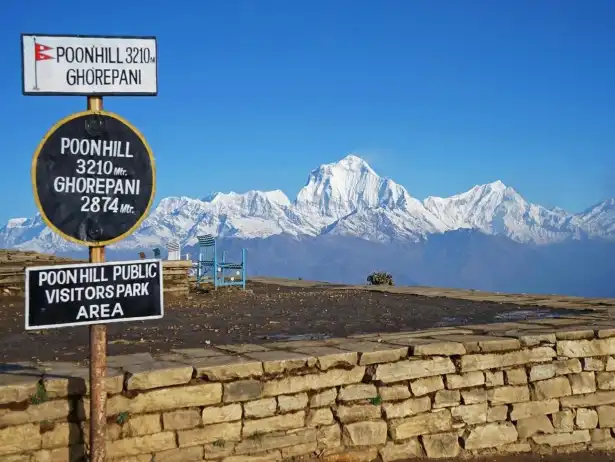
The Poon Hill Hike is famous for sunrise over Dhaulagiri (8,167m), Annapurna I (8,091m), Annapurna South (7,219m), Hiunchuli (6,441m), and Machapuchare (6,993m). Poon Hill, standing at 3,210 meters, is the highest of the Poon Hill hike and the best vantage point. Stone steps with a sharp incline, suspension bridges, and inclining forest trails make up the route. The toughest section is between Tikhedhunga and Ulleri, with the ascent of over 3,000 steep stone steps which you can skip with a jeep ride from Pokhara to Ulleri or Banthanti. The jeep drive to Ulleri from Pokhara is around 2.30 hrs. You can enjoy this jeep drive from Pokhara to Banthanti/Ulleri in late Autumn, Spring and Winter but not in rainy.
The Poon Hill hiking is moderately difficult and suitable for novices with good level of physical health. Ghorepani Poon Hill Trek follows lush oak and rhododendron forests, particularly vibrant in spring in Annapurna Conservation Area. Poon Hill Trail conditions are well-maintained with some muddy patches after rain in June, July and August. Villages along the trail, such as Banthanti (2,250m), Ghorepani, Tadapani, Ghandruk and Deurali (2,960m), feature cozy teahouses. The foods on Poon Hill Trek includes dal bhat, momos, noodles, and pancakes. Clean but simple rooms with shared facilities are common during Ghorepani Poon Hill Trek for the accommodation.
A jeep drive from Pokhara to Ulleri shortens the first day of the Poon Hill trek. When you get back from the trek, a return jeep from Ghandruk to brings you back to Pokhara. Spring (March-May) and autumn (September-November) are the best times for the Poon Hill Trek. These seasons have good weather and best visibility of the mountains including Annapurna and Dhaulagiri.
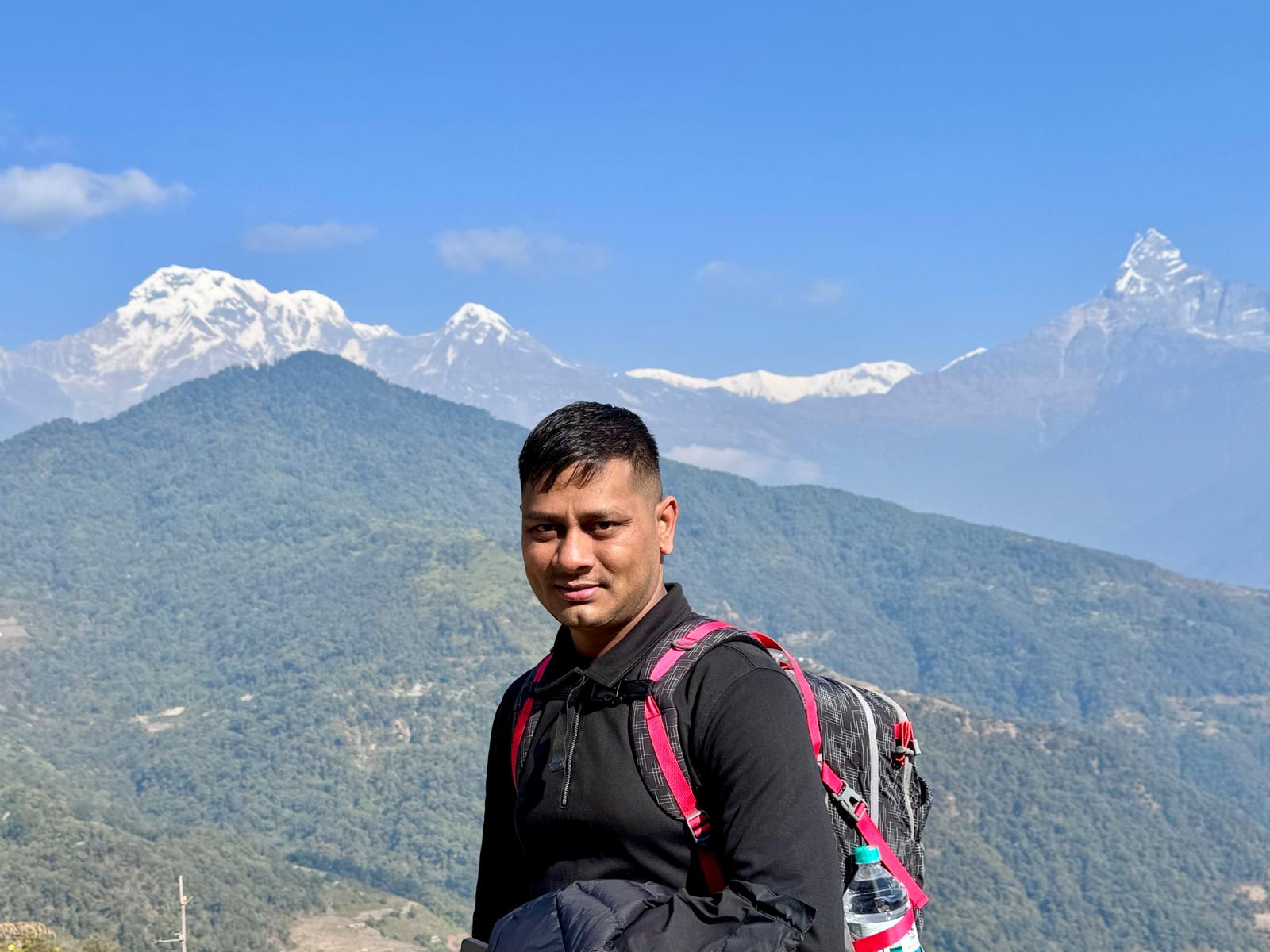
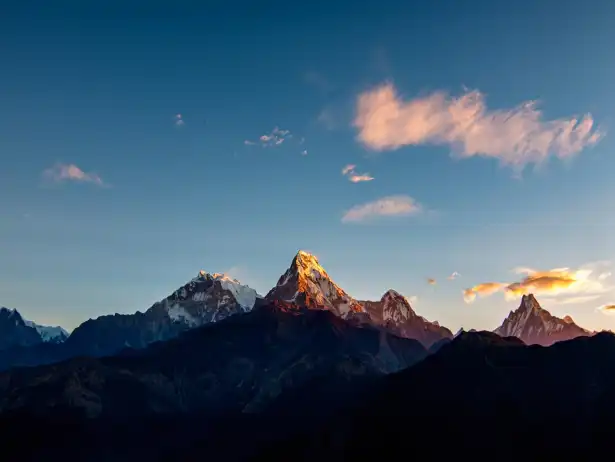
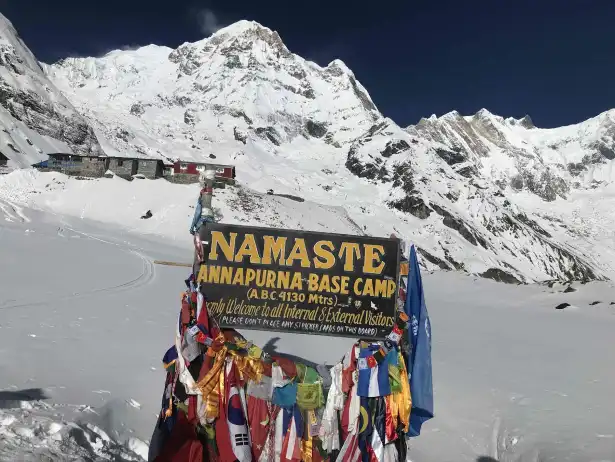
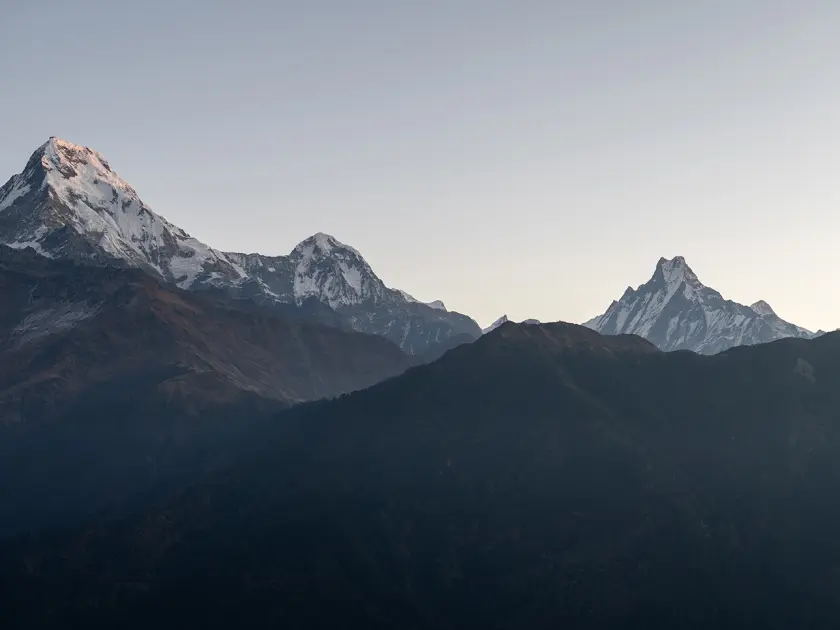
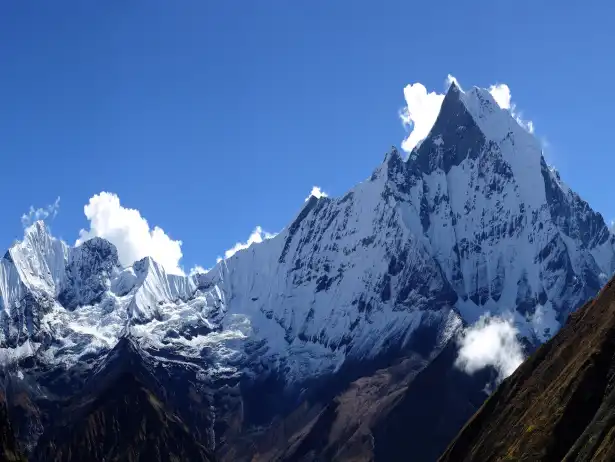
Annapurna South (7,219 m) and Baraha Shikhar (Fang) (7,647 m) create one of the most spectacular mountain panoramas in the Annapurna region. These iconic snow-capped peaks are among the highlights of the Ghorepani Poon Hill, Mardi Himal, and Annapurna Base Camp treks, offering unforgettable Himalayan views.
To do the Ghorepani Poon Hill Trek, you need an Annapurna Conservation Area Permit (ACAP) and a TIMS card. Both are mandatory. A guide offers extra support to your trekking activity, especially for navigation and insider knowledge. Having a porter helps with carrying your pack, which improves your Poon Hill Trek experience. The Poon Hill trekking experience provides nature, culture, and stunning Himalayan scenery in one great adventure.
The Ghorepani Poon Hill Trek in Autumn is rewarding with stunning views of local villages, landscapes and clear mountain scenery. Autumn is the best season for trekking in Nepal and also for Poon Hill Trek since the weather is stable.
Poon Hill Trek in September is starting with greenery and new trails after the monsoon. The temperature in Poon Hill Trek in September ranges between 10°C to 20°C during the day. It becomes cold at night, even below 5°C at high altitudes like in Ghorepani and Poon Hill.
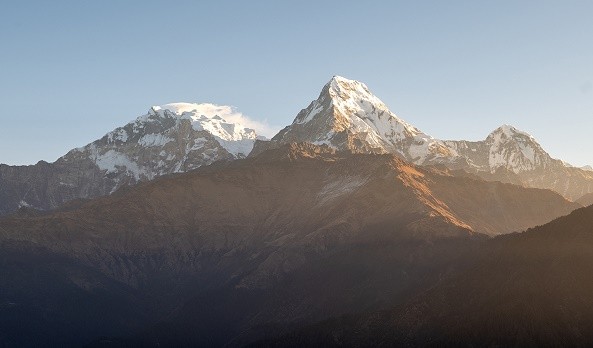
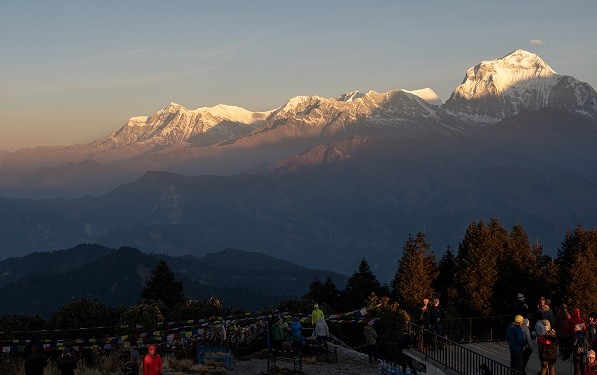
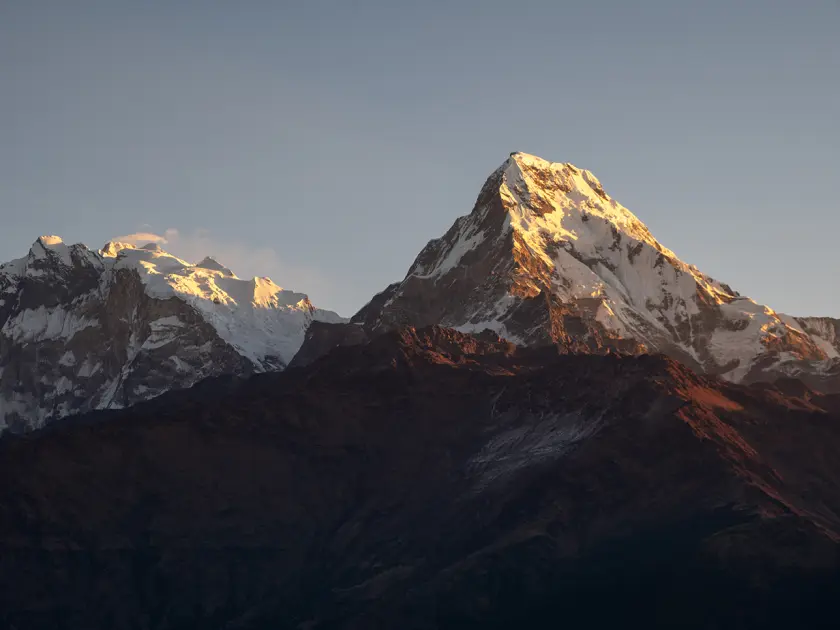
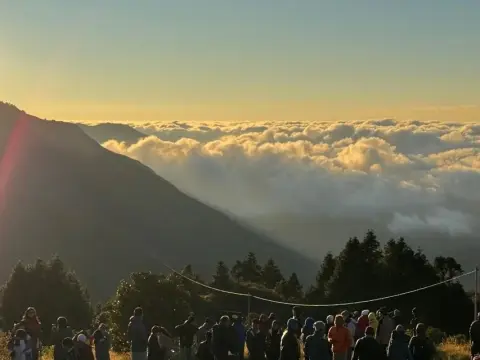
The golden sunrise - the first light of day paints the majestic peaks in warm golden hues—one of the most unforgettable highlights of the Poon Hill Trek.
September is given with rare rains in early morning of the month of Autumn. However, September mornings are generally clear. Trekkers catch a glimpse of Annapurna South (7,219m), Dhaulagiri (8,167m), and Machapuchare (6,993m) astonishingly during their Poon Hill Trek in Autumn.
Poon Hill Trek in October is peak season for this trek. It is warm, with temperature ranging from 8°C to 18°C in Poon Hill Trek in October. Skies are clear and there is excellent visibility all round the trek in October.
The mountains in Autumn especially in October appear to be sharp and majestic against the dark blue horizon. Rhododendron forests are lush green, and the paths are colorful with blooming wildflowers in Ghorepani Poon Hill Hiking in Autumn.
You pass through villages like Tikhedhunga (1,540m), Ghorepani (2,874m), and Tadapani (2,630m). Poon Hill viewpoint at 3,210 meters offers a 360-degree view at sunrise.
October brings festive mood in Nepal and you even can experience during your Poon Hill Trekking. You will be able to see Dashain and Tihar festival celebrations among the local Gurung and Magar villages. You will be shown warm hospitality by the villagers with traditional food and songs especially in Ghorepani, Tadapani and Ghandruk.
Poon Hill Trek in November brings colder nights, dropping to 0°C or even below. Daytime in November in Poon Hill Trekking is still warm at 12°C to 16°C. Weather in November in Ghorepani Poon Hill Trek is dry and skies are crystal clear.
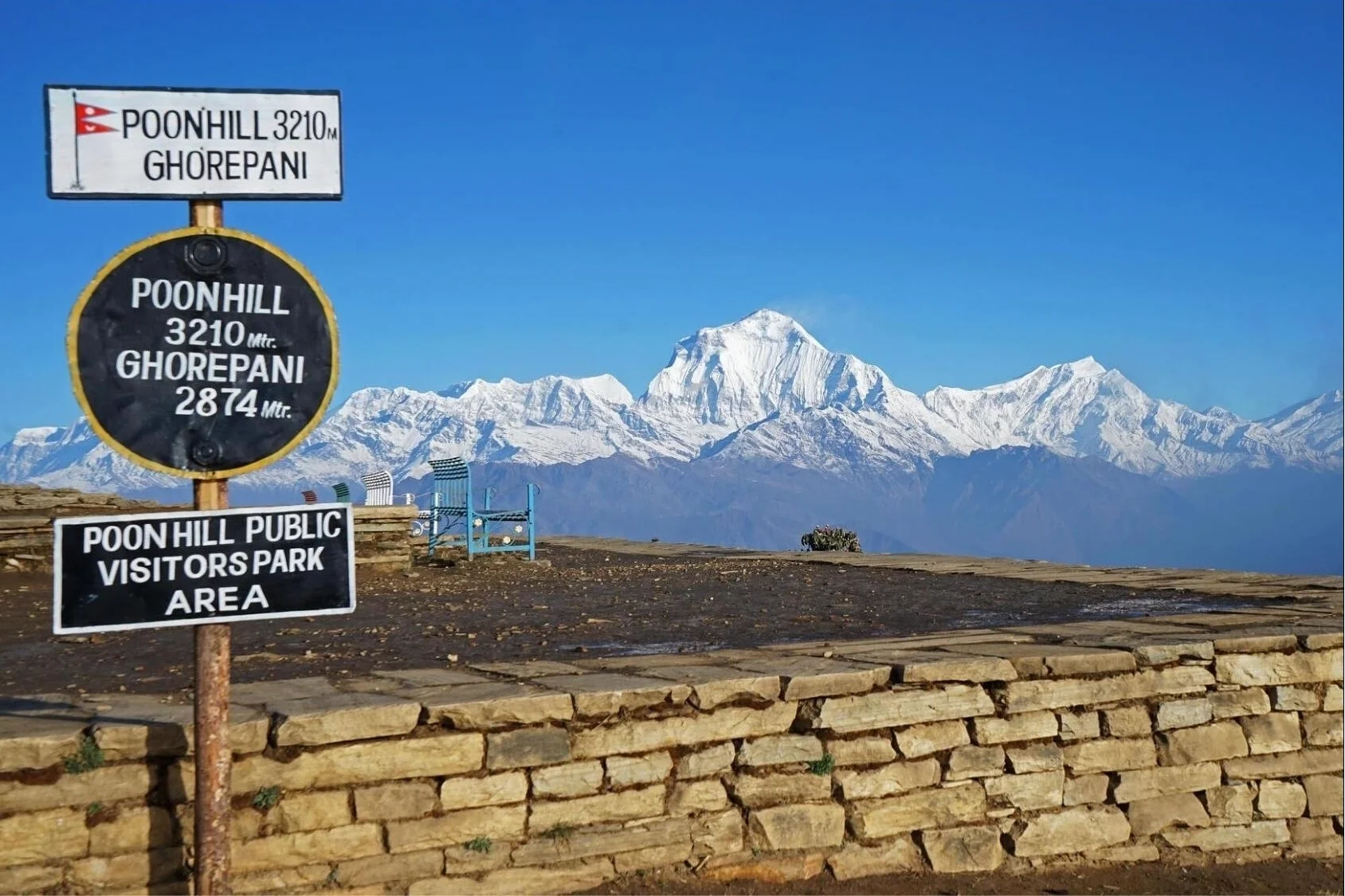
The first golden sunrays light up the magnificent Dhaulagiri Range from Poon Hill, creating one of Nepal's most spectacular Himalayan sunrise panoramas. The glowing snow-capped peaks and crisp mountain air make this an unforgettable highlight of the Ghorepani Poon Hill Trek.
Langurs, Himalayan monals, and barking deer can be sighted in dense forests of Annapurna Protected Area, the largest conserved area of the world. Vultures and eagles ride the valleys of Ulleri and Banthanti during your Ghorepani Poon Hill Trek in November.
Tea houses in the villages offer small rooms with blankets for your Poon Hill Trekking in Autumn. Dining rooms offer Dal Bhat, momos, thukpa, pancakes, and apple pie. You can opt for local millet roti as well as yak cheese.
Charging facilities as well as hot showers are commonly found in the lodges in Ghorepani, Tadapani and ghandruk village during your Poon Hill Trekking. Wifi is easily accessible at usual stops like Ghorepani and Ghandruk for free.
Ghorepani Poon Hill trekking starts from Pokhara (827m) after tourist bus ride(5-6 hrs) and a short domestic flight(30 minutes). A jeep or bus takes you to Nayapul (1,070m) or Hile (1,430m) or Ulleri or Banthnati. The roads in Autumn are dry and accessible.
Autumn roads provide clear weather, depth of culture, and natural beauty in the Ghorepani Poon Hill Trek. It will be the best for experienced trekkers and nature lovers both.
Poon Hill Trek (September to November) in Autumn is a beautiful Himalayan trek that combines rich natural beauty, cultural diversity, and panoramic mountain views of Annapurna, Dhaulagiri and Machhapuchhre. Autumn offers the finest skies, crisp air, and comfortable temperatures—ideal weather for Poon Hill trekking. Located in Nepal's Annapurna region, the Ghorepani trek goes through lush rhododendron forests, traditional Gurung and Magar villages, and hillside terraces. The crowning touch is the sunrise at Poon Hill (3,210 m), where the trekkers are rewarded with panoramic views of snow-capped mountains like Annapurna I (8,091 m), Dhaulagiri (8,167 m), and Machapuchare (6,993 m). The beauty of the Autumn season, festive atmosphere, and safe trail conditions make Autumn the best time for this short Poon Hill but stunning trek.
1. Scenic Sunrise from Poon Hill (3,210 m)
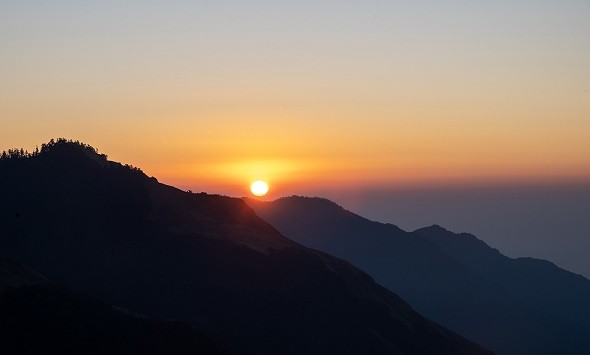
Poon Hill is the finest viewing point in the Annapurna region. Reaching an altitude of 3,210 meters, it provides one of Nepal's most spectacular sunrise experiences. By Autumn, the skies are always crystal clear after the monsoon, ensuring flawless views. As sun rises on the eastern skyline, the first light lands on a spectacular line of Himalayan giants—Dhaulagiri (8,167 m), Annapurna I (8,091 m), Annapurna South (7,219 m), Hiunchuli (6,441 m), Nilgiri (7,061 m), and the fishtail summit Machapuchare (6,993 m). The drama of golden light upon the snow-covered peaks is breathtaking and a photographer's dream. The panoramic drama is also supplemented by the serene post-monsoon weather and fewer clouds than any other time of the year. At the top, the 360-degree view is uninterrupted, and this experience becomes a memory to cherish for all the trekkers if they trek to Poon Hill in Autumn months(Sept. Oct. and Nov). Autumn's clarity elevates Poon Hill sunrise to an experience of a lifetime in the Himalayas of Annapurna, Dhaulagiri and Machhapuchhre.
Autumn offers the most consistent climatic conditions to the Annapurna region including Poon Hill. With the lowest rainfall and unbroken blue sky, daytime temperatures vary from 10°C to 20°C at lower elevations and at places such as Ghorepani (2,874 m) nights are slightly cold but bearable (5°C to 0°C). Post-monsoon winds are dust-free and dry, thereby enhancing long-distance vision and rich color on the trekking route. The oak and rhododendron woods between Ulleri (2,050 m) and Deurali (2,960 m) are particularly rich in autumn color. Trail conditions are also most secure—no leeches, no slippery mud, and less chance of flight delays or weather interruptions. Lodges are in full operation in Autumn months, and facilities are reliable. Neither summer monsoon nor winter snow, but the autumn allows unrestricted trekking and opportunistic planning. All these contribute to making the Poon Hill trek easy, secure, and picturesque during this time.
3. Vibrant Landscapes and Forests
Autumn paints the landscapes on the Poon Hill trek into a stunning tapestry. From Banthanti (2,210 m) to Ghorepani (2,874 m), the path goes through thick forests of rhododendron, oak, and maple trees. Post-monsoon flora is in complete bloom, and blue skies accentuate the color contrast between golden sun-kissed hills and snowy peaks. Golden rice paddies in rice terraces along the way near Tikhedhunga (1,540 m) and Ulleri are ripe for harvesting, giving trekkers a glimpse of Nepal's farming cycles. Forest floors are studded with fallen autumn leaves, and wildflowers still linger at the edge of the trail. As you climb up to Deurali Pass (3,090 m), breathtaking views unfold, merging verdant valleys below with glittering peaks above. The clearness and hue of Autumn amplify the natural beauty of the trail, establishing postcard-like scenery at every turn during Ghorepani Poon Hill Trek.
4. Vibrant Local Culture and Holiday Atmosphere
Autumn is also festival time in Nepal. Major Hindu festivals like Dashain and Tihar fall during the months of October and November, adding an additional cultural dimension to the Ghorepani Poon Hill trek. As for you pass through Gurung and Magar settlements like Ghandruk (1,940 m) and Tadapani (2,630 m), you will notice villagers decorating houses, kite-flying, and celebratory feasting while listening to music, dancing, and local delicacies. Guesthouses and trails are garlanded with marigold flowers and lit with oil lamps during Tihar, giving a warm, friendly atmosphere to the trek. People in villages are bubbly, and trekkers usually find themselves indulging in local fare or joining celebrations. Cultural experiences are optimal this time of the year, and Autumn's open weather also makes the atmosphere full of community and tradition. The Poon Hill trek in Autumn is greater than a workout—it's exposure to Nepali life and spirit at its brightest.
Ghorepani Poon Hill trek with Jungle Safari and Trishuli River Rafting -13 days | 13 days
5. Panoramic Views of the Annapurna and Dhaulagiri Massifs
Few short hikes offer such majestical Himalayan views as the Poon Hill trail. The Poon Hill view itself (3,210 m) is legendary, but along the route—particularly from viewpoints close to Deurali (3,090 m), Gurung Hill (3,150 m), and Tadapani (2,630 m)—you have an ever-present panorama of giant peaks. The Annapurna Massif, including Annapurna I (8,091 m), Annapurna South (7,219 m), Hiunchuli (6,441 m), and Machapuchare (6,993 m), dominates the eastern horizon. To the west, the Dhaulagiri range, which contains Dhaulagiri I (8,167 m) and Tukuche Peak (6,920 m), makes up the sweeping vista. In Autumn, the visibility can be more than 100 kilometers, and the crisp air brings every peak sharply against the sky. These views are not just reserved for Poon Hill—but they are revealed along the entire trek, so short hikes daily are rewarded by stunning Himalayan vistas in your Poon Hill Trek in Autumn.
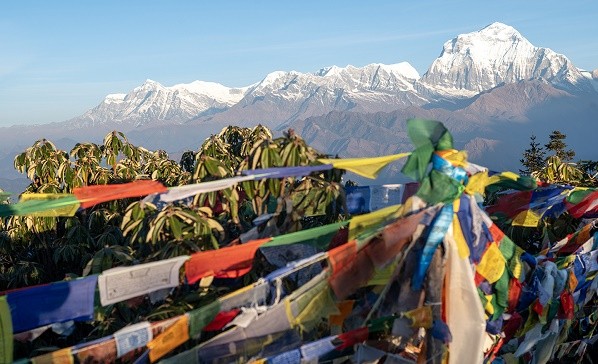
Colorful Buddhist prayer flags flutter at Poon Hill as the first golden rays of sunrise illuminate the majestic Dhaulagiri Range, creating one of the most iconic and breathtaking Himalayan panoramas in Nepal.
Why autumn is considered to be the best time for Poon Hill Trek?
The season of autumn is the most appropriate time for Poon Hill Trek due to pleasant weather. Skies remain bright, offering imposing vistas of Himalayas in Autumn months: September, October and November.
The altitude of Poon Hill stands at 3,210m and offers an amazing view of sunrise. Poon Hill's trekkers from here watch Dhaulagiri (8,167m), Annapurna I (8,091m), Annapurna South (7,219m), Machhapuchhre (6,993m), and Nilgiri (7,061m) with magnificent sunrise in your Poon Hill Trek in November.
The Poon Hill trek begins at Nayapul at 1,070 meters or optionally from Ulleri after a jeep ride from Pokhara directly. Ghorepani at 2,874 meters is a beautiful halt before reaching the top.
The months, September to November, autumn or fall, has the season of reliable weather condition for Poon Hill Trek. It rains hardly at all, and the weather is mild with no snowfall.
The trails are less slippery and dry during Autumn months. This offers safer trekking conditions to all the trekkers during Poon Hill Hiking.
Forest along the Poon Hill trail glows with post-monsoon vegetation in Annapurna conservation Area. The rhododendron, oak, and pine forests are also at their best in Autumn months during Ghorepani Poon Hill Trekking.
Cultural interactions are lively during the period of Autumn. Locals celebrate Dashain and Tihar festivals, providing an insight into Nepali culture in October and November.
The visibility during Ghorepani Poon Hill Trek is excellent throughout autumn. The mountain ranges appear sharp and majestic against the blue skyline.
Autumn sunrise from Poon Hill is the best. Golden hues over snow-capped peaks including Dhaulagiri, Annapurna and Machhapuchhre are memories to treasure.
Teahouses are in full working condition during this peak season- Autumn. Trekkers are offered warm hospitality and fresh local foods in September, October and November.
Wildlife sightings increase during the post-monsoon season- Autumn. Monkeys, Himalayan tahrs, and even birds become visible along the Ghorepani Poon Hill Trekking trail in Autumn.
Autumn avoids summer heat and winter chill during Poon Hill Trek. The mid-range climate suits trekkers of all ages.
Postcard-perfect views and village vistas also encourage good photography in Poon Hill Trek in Autumn. Every viewpoint offers a great backdrop with scenery.
Overall, autumn provides the best combination of weather, scenery, culture, and safety for the Poon Hill Trek.
What is the weather like in September in Poon Hill?
Poon Hill Trek in Early September is still wet from rains of the monsoon . Skies are overcast with usual afternoon showers.
Temperatures in Poon Hill Trek in Spetember at lower altitudes range between 18°C to 25°C during the day. Nights get cool to 12°C.
Daytime temperatures in September at Ghorepani and Poon Hill is around 15°C. Temperatures descend to around 5°C to 8°C at night.
Poon Hill Trek in Mid-September has less rain and clearer weather. Mornings are bright with occasional showers in the evening.
Poon Hill Trekking Trail conditions in Mid September improve but remain muddy in patches. Leeches still lurk in damp forest patches in Ghorepani Poon Hill Trek in mid October.
At the end of September in Poon Hill Trek, rains cease completely. Skies turn mostly clear with stunning mountain views.
Daytime temperatures in late September in lower villages are up to 20°C. Nights drop to 10°C or slightly lower.
Ghorepani and Poon Hill days temperatures in late September rises up to 16°C. The temperature in Poon Hill in late September morning drops as low as 3°C early.
Snow would be unlikely to occur in September. Rain dictates early month but becomes the exception later.
Landslides blocking the trails mid-September do not happen. Road transportation to Nayapul proceeds without major delay.
Trails stay green and green all round the September. Waterfalls flow high on the way early September in Poon Hill Trek.
Bring high-ankle waterproof footwear for Poon Hill Trek in September. Bring leech repellent along with fast-drying clothes.
Pack a poncho or rain jacket for Poon Hill Trekking in early September. Pack layers for chilly mornings at Poon Hill.
Use trekking poles on slippery sections. Bring a headlamp and a power bank in your daypack.
Leave early for sunrise views from Poon Hill. Expect hot days and cold nights mixed and you may not expect jeep ride from Pokhara to Ulleri or Banthanti due to continuous rainfall in early September. Prepare to walk from Hile or Birethanti to Ulleri and then to Banthanti if you plan your Poon Hill Trek in early September.
During early October, Poon Hill trek weather is quite clear and pleasant. The blue sky offers great mountain views and few chances of rain.
The daytime temperature in early October in Poon Hill Trek in lower altitudes like Nayapul and Tikhedhunga is around 15°C to 25°C. The night is cold, dropping down to around 10°C.
Daytime temperatures in Ghorepani and Poon Hill in early October can be 5°C to 15°C. Nights fall to 0°C or below.
Mid-October has the most reliable and clear trekking weather for Ghoreapni and Poon Hill. There is minimal rainfall, and clarity is excellent.
Temperatures in Poon Hill Trek are very similar to early October but start cooling slightly. It is coolish in the morning at Ghorepani, especially in pre-dawn conditions.
Late October brings cold mornings and evenings higher up in Poon Hill Trek. Sunshine persists on the days, with frost appearing in the shade areas.
The Poon Hill trail in October is extremely unlikely to have any snow. Rain showers occur seldom and normally briefly.
Traveling to the trailhead in October is effortless. Roads from Pokhara to Nayapul and then to Ulleri and Banthanti are dry and passable with no mud and rocks to block.
The Pon Hill Trekking trail is dry and firm right throughout October. Stepping stones and forest paths give good traction.
Pack warm clothes for higher altitudes, Ghorepani and Poon Hill, especially gloves and a beanie. Dress in layers to adjust easily.
Carry rain protection, just in case it rains in October but not really. A poncho or light rain jacket works well.
Wear good trekking shoes with grip for your Ghorepani Poon Hill Trek in October. The steps to Ulleri and the steps down to Banthnati can be steep and tiring.
Start hikes in October early to enjoy the clearest skies. Sunrise at Poon Hill is cold but unforgettable in October.
Bring a headlamp, water bottles to refill, and some cash. There are no ATMs on the trail after Pokhara. There are a few at Ghandruk but not really reliable.
What is the weather like in Poon hill in November?
In early November, Poon Hill is cloud-free and chilly. The weather is dry with minimal rain.
Temperature in Poon Hill Trek in early November ranges from 10°C to 20°C at lower elevations like Nayapul. Mornings and evenings at Ghorepani and Poon Hill are -2°C to 5°C.
Mid-November experiences chilly mornings and evenings during Ghoreapni Poon Hill Trek. Sunny days and minimal clouds prevail.
Skies remain mostly clear until mid-November. Wind picks up at higher elevations.
Late November gets cold, especially at Poon Hill in the morning. You may get frost or light snow.
Snow is improbable but possible over 2,800 meters towards the end of the November month. Rain remains improbable during November.
Trekking trails are dry and well-defined throuoguht November month. There are autumn leaves blowing off trees, offering wide mountain views.
Steps become slippery with morning frost near Ghorepani in November. Trekking poles help with traction and stability.
Transport in November is uneventful. Nayapul roads are open, and buses operate normally. The jeeps are available easily from Pokhar ato Ulleri/Banthanti and Ghandruk back to Pokhara.
Flights to Pokhara are less delayed as weather is stable in November. Pre-early reservations guarantee improved timings.
Pack warm clothing for cold nights if you plan to trek to Poon Hill in November. Pack thermals, down jacket, gloves, and wool hat.
Pack day wear with wicking properties. Pack a good sleeping bag that can tolerate -5°C.
Wear sunglasses and sunscreen for strong UV radiation. Sun glows strongly from frost and clear blue skies in November at Poon Hill.
Start hikes early for better visibility and safety in November. Sunsets at 5:30 PM are early.
Condition yourself for 5–6 hours of hiking a day. Stay hydrated and take it slow on inclining trails and you will beautifully enjoy your Poon Hill trekking in November.
The Poon Hill trek in autumn is among the most appealing and rewarding treks of Nepal. Several trekkers want to trek the Poon Hill Trek in October, Poon Hill trek in September, or Poon Hill trek in November because of pleasant weather and blue sky. Autumn is the post-monsoon season, with excellent visibility and picturesque landscapes. This short trek offers expansive vistas of Annapurna and Dhaulagiri ranges, especially from Poon Hill at sunrise. Autumn also offers rich cultural encounters, flowers in bloom, and dry trail conditions. It's ideal for beginners and veterans alike, with a perfect blend of nature and culture.
Benefits of Poon Hill Trek in Autumn
1. Finest Weather Conditions :
Weather in Autumn is perfect for Ghorepani Poon Hill trekking. Skies are mostly clear throughout the season.
Poon Hill trek in September begins with sporadic showers but becomes lovely soon.
The most consistent month is October with crisp air and virtually zero rainfall.
November is dry, and cool mornings with good days, ideal for walking long distances.
Day temperatures in Autumn in Poon Hill Trek range between 15–20°C in lower altitudes.
Evening temperatures fall to 0–5°C in higher altitudes like Ghorepani.
Humidity is low, hence the trek is sweatless and easy.
You barely wear rain gear except in early September.
Mountain views remain unobstructed and clear on most days.
Landslide or icy trail risk is very negligible.
Autumn brings the safest and most beautiful time for this trek.
2. Crystal Clear Mountain Views :
Autumn brings amazing visibility of the Annapurna and Dhaulagiri ranges in Poon Hill Trek.
You get to view peaks like Machapuchare, Annapurna South, and Hiunchuli clearly.
October brings the best views after monsoon washes off dust and fog.
Sunrise at Poon Hill in autumn is especially breathtaking and people-oriented.
November mornings provide snow-covered peaks shining in golden light.
The clear visibility provides phenomenal photography during the day.
There is less atmospheric moisture, so colors in photographs are more vivid.
Clouds seldom get in the way of the view during autumn daylight.
The clarity makes your experience of the Himalayan landscape more enjoyable.
Each turn on the path provides postcard-perfect vistas of nature.
3. Dense Flora and Fauna :
Autumn is the time for flowering plants and greenery after the monsoons.
Rhododendrons start early budding in November forests.
You see wild orchids, magnolias, and ferns along the routes.
Forests are abuzz with chirping birds and fluttering butterflies.
September is most colorful vegetation due to recent showers.
You are able to spot Himalayan langurs and deer in denser forests.
Ghorepani and Tadapani forests are densely packed with variety.
Natural sounds replace noise pollution, offering peacefulness and quiet.
Leeches and insects disappear in autumn months.
The atmosphere is vibrant yet safe and embracing.
4. Colorful Cultural Festivals :
Autumn coincides with Nepal's grand festivals.
You can observe Dashain during late September or early October.
October also marks Tihar, the festival of light.
Oil lamps and flowers are used to adorn homes and temples in villages.
Locals treat trekkers with affection during these festivities.
Festive music, dances, and food add a special flavor to your Ghorepani Poon Hill trekking.
You get to relish sel roti, yomari, and dal bhat made at home.
Guesthouses prepare special food on festival days.
It's the perfect time to discover Gurung and Magar culture.
Festivals add joy and meaning to each destination along your trek.
5. Excellent Food and Accommodation Facilities :
Autumn is peak season; lodges are fully equipped for trekkers during Poon Hill Trekking.
Menues are varied, with Nepali, Indian, and Western cuisine.
Expect warm meals like soups, pasta, and fresh dal bhat.
Guesthouses are kept well-stocked due to good weather and road access.
Solar heaters translate into hot showers in most tea houses.
Rooms are cozy and clean, and charging points and blankets are usually provided.
You can pre-book your stay in most of the lodges in autumn.
Phone reception and Wi-Fi are more reliable in autumn.
The quality of food is higher with frequent deliveries in dry weather.
You get consistent hospitality while doing the Poon Hill trek.
Poon Hill Trek in Autumn is one of the most popular short treks in Nepal, offering fantastic views of Annapurna and Dhaulagiri ranges. September to November experiences clear blue skies, peaceful weather, and lush rhododendron forests embracing trekkers on the trek. Autumn Ghorepani Poon Hill Trek also falls during significant festivals like Dashain and Tihar, enhancing cultural experience. However, this peak season demands cautious planning with heavy traffic, limited teahouse availability, and unstable temperatures. From gear to permits and accommodations, prudent planning ensures a safe and enjoyable trek in the beautiful but busy Autumn season in Nepal.
Autumn offers warm days and chilly nights on the Poon Hill trek in Autumn.
During September, days Temperature range from 15°C to 20°C but drop to around 5°C at night. Nights even drop below freezing by November, especially in Ghorepani. Dress in layers in order to acclimatize to varying temperatures. Thermal unders garments, fleece, and a down jacket are essentials. Lightweight but warm sleeping bags with sub-zero ratings are essentials. Gloves, caps, and neck gaiters prevent one from losing heat. Protect yourself from intense midday sun with UV-blocking sunglasses and a cap. Insulating clothes also help if you’re caught in unexpected weather changes. Being temperature-ready improves sleep, energy, and trekking performance. Avoid cotton clothes; they hold moisture. Choose quick-drying and breathable fabrics. Check weather forecasts for updates. The clear blue skies one enjoys while trekking in November during the Ghorepani Poon Hill do not guarantee warmth, especially from sunrise at Poon Hill where it is coldest. Without any insulation, the morning's view experience will likely become uncomfortable rather than being spectacular.
2. Book Accommodation Well in Advance
The Ghorepani Poon Hill trek in Autumn has maximum visitations. Lodges get filled up instantly.
Especially in October, the crowds are maximum due to holidays and best weather. Not booking rooms could result in sleeping in dining halls or walking an extra distance to find accommodation. Teahouses at Ghorepani, Ulleri, and Tadapani are the hardest hit. Call teahouses directly or book through trekking agencies to ensure a room. Some lodges also offer online booking. Booking in advance means good rooms, attached bathrooms, and hot blankets. Group trekkers are known to book multiple rooms well in advance. If trekking solo, reach lodges prior to 3 p.m. for improved chances. Pack a light sleeping bag in the event that rooms must be shared or one is forced to sleep in a tent. Be courteous to lodge owners—their favorite clients are frequently those who have made reservations. Spur of the moment, the high volumes of trekkers on the Poon Hill trek during October make lodging chaotic. Planning ahead guarantees comfort after exhausting day hiking.
3. Start Trekking Early in the Morning
Start early in order to avoid afternoon clouds and grab good spots at viewpoints and lodges.
For the Poon Hill trek in Autumn, mornings are usually best for skies. Afternoon haze or cloud can ruin mountain vistas. The sunrise view from Poon Hill requires an early hike starting at about 4:30 a.m. Pack a headlamp and warm clothing for this dark, cold hike. On the trek, early morning departures allow you to reach ahead of groups to lodges and pre-empt room congestion. Trail sections get congested, especially between Ghorepani and Tadapani. Early trekking avoids congestion and offers peaceful forest walks. It also spares you the sun and dehydration. Early departures in November allow you to avoid icy trail sections that become slippery in the shade. You will also get more time to unwind at your destination. During Autumn, this practice significantly improves the experience of the Ghorepani Poon Hill trek, with improved weather, scenery, and comfort during the trek.
Weather in September in Poon Hill Trek is still making the transition from monsoon. Prepare for occasional rain showers.
October and November are usually dry, but Poon Hill trek in September can still experience residual rains. Carry a waterproof jacket and backpack cover to stay dry. Ponchos can also be handy. Sudden showers can turn trails muddy and slippery, especially in forested sections near Ghorepani. Trekking poles help with balance in such conditions. Wind can pick up near ridge lines and open areas like Poon Hill. Windproof layers help prevent chills. Avoid heavy umbrellas—they’re impractical. Store electronics and documents in ziplock bags or dry sacks. Wet gear forms blisters and enhances hypothermia at high altitudes. Rain or wind shouldn't stop you from having the trek, but you must prepare to remain safe and dry. The Autumn season trek on Ghorepani Poon Hill is a joy to witness and comfortable, but irregular weather conditions—early Autumn in particular—still demand caution and equipment readiness.
5. Consume Lots of Water and Filter the Water
Clean drinking water is required but not always conveniently available or safe. Prepare ahead.
On the Poon Hill trek in Autumn, bottled water is available in lodges and teahouses but expensive and ecologically unsuitable. Tap water or spring water are common but not to be ingested raw. Pack a refillable container and purification tablets, chlorine drops, or UV purifier. SteriPens are good and fast. In peak months like October, most people can use water sources, increasing the risk of contamination. Drink 2–3 liters a day to prevent headaches and fatigue due to altitude. Dehydration is common from sun exposure and constant physical exertion. Bring electrolyte powders or rehydration salts to replenish lost minerals. Avoid drinking caffeinated drinks in excess—those dehydrate. If you plan in advance to self-purify your water, you do not waste money and do no damage to the environment. Also, it makes it easier to ensure you will never be low on safe drinking water on a longer day's walking. It's a great practice in protecting your health doing the Poon Hill trekking during Autumn.
6. Acclimatize Your Body beforehand
Train body endurance and leg muscles for the hilly ascent and descents of Ghorepani Poon Hill trekking.
Though considered a moderate trek, daily elevation gains and long stair sections can exhaust unprepared trekkers. Start training at least a month before. Include uphill walking, cardio workouts, squats, and long hikes with a loaded backpack. Focus on stamina, not speed. You’ll walk 4–6 hours daily, often on steep stone steps, especially near Ulleri. Strengthen knees and ankles with resistance training to avoid joint pain. In Autumn, pleasant weather may make trekking look easy, but the body still labors at altitude. Stretch daily on the trek to reduce soreness. Being fit also enables you to acclimatize to altitude changes without exhaustion. Most people underestimate this short trek, but physical fitness makes a big difference. You'll enjoy nature more and not tire yourself out. A fit body ensures a pleasant experience of Poon Hill in September, with soggy trails, and in November, with icy weather increasing the energy demand.
7. Carry Enough Cash During Trek
There are no ATMs on the route after Pokhara. Carry lots of Nepalese rupees before the start of the trek in Pokhara.
Lodges, tea houses, and shops only provide change in cash. In Autumn, prices rise due to high demand. Be ready to pay extra for food, lodging, hot showers, and charging gadgets. Having extra money while on the Ghorepani Poon Hill trek in November is convenient and comfortable. Withdraw money in Pokhara or Kathmandu. Budget NPR 3000–4000 per day. Take small denomination notes so it is convenient to make change. Most teahouses will not have the ability to provide change for large notes. Cash is also handy for tipping guides and porters at the completion of the trek. Don't rely on electronic transactions—rarely do they work in remote regions. Keep your cash safely in your back pack or money belt. Out of cash can leave you without meals or lodging in remote places. Financial preparedness prevents undue stress and a smooth experience while doing the Poon Hill trek in Autumn.
8. Prepare for and Have Respect For Crowds on the Trail
Autumn is high trekking season in Nepal and in Poon Hill Area. Trails and lodges are filled with trekkers from all corners of the globe.
The Poon Hill trek in October is the busiest. Prepare for groups, independent trekkers, and school groups. Be polite and patient with other trekkers when using queue systems at lodges and when placing orders for meals. Get up early to miss the bathroom queues and raucous common areas. Reserve meals in advance at lodges to prevent delays. Keep quiet hours quiet. When photographing or yielding on the trail, yield to climbers. Porters and guides also deserve respect and trail space. Be courteous and take turns in crowded dining areas and start friendly conversations. Crowds are part of the Autumn experience, especially during Dashain and Tihar festivals. Enjoy the social scene—it adds to the adventure. Organization helps you avoid frustration, though. Understanding the rhythm of peak season makes the Autumn trek to Ghorepani Poon Hill a more comfortable and less tension-inducing activity.
9. Be aware of trail and itinerary options
Be familiar with routes, elevations, and walking hours each day during Poon Hill Trekking in Autumn.
A standard Ghorepani Poon Hill trek during Autumn is started at Nayapul/ Ulleri/ Banthanti and terminated at Ghandruk or the reverse thereof. Key halts are Tikhedhunga, Ulleri, Ghorepani, Tadapani, and Ghandruk. Walking hours daily are 4–6 hours. Trails have many stone staircases and forested sections. Knowing trail conditions enables you to regulate your pace and choose rest stops accordingly. Daylight hours are shortened by November sunsets—get an early start to finish before dusk. There's patchy mobile reception—bring offline maps like Maps.me or a real trail map. Most hikers take 4–5 days to walk the loop. Guides help navigate and provide local information. During September, trails may still be slippery from recent rains—use poles and good boots. Clear planning prevents confusion and overexertion. Knowing your itinerary helps manage food, energy, and time better. You’ll walk confidently and enjoy the beauty of the Poon Hill trek in Autumn with less worry.
Check if the jeep ride to Ulleri/Banthanti are available or not before you board on the trail while doing Poon Hill Trek in Autumn.
10. Get Required Permits in Advance
Permits are mandatory. Don’t start the trek without them.
You need two permits: TIMS (Trekkers' Information Management System) and the Annapurna Conservation Area Permit (ACAP). Obtain them at the Nepal Tourism Board office in Kathmandu or Pokhara. Unpermitting treks will incur fines or be sent back. Keep them handy for inspections along the trail. Bring photocopies and digital copies. TIMS is NPR 2000 for individual trekkers and NPR 1000 for group trekkers. ACAP is NPR 3000 per person. Allow offices to close early, so plan in advance. Long lines are the norm in Autumn—get permits a day in advance. Proper documents avoid delays and legal problems. Guides will usually do this for you, but double-check. Always keep permits in a waterproof bag. Now, with all permits in hand, your September trek to Ghorepani Poon Hill or November trek to Poon Hill is hassle-free, and you can focus on the trail and views.
The Poon Hill Trek in autumn welcomes you with clear blue skies and golden forests. September, October, and November offer consistent weather and breathtaking Himalayan scenery for Ghorepani Poon Hill Trek. Cool mornings and nights and warm days make trekking extremely enjoyable.
Day temperatures in Poon Hill Trek in Autumn are 10–20°C and nighttime temperatures 0–10°C. Trails are dry, firm, and covered with rhododendron and oak leaves. You'll trek under serene skies and sunsets galore.
Local teahouses stay open and well-stocked until fall. Cozy food, hot beds, and friendly hosts at every step in Autumn. Shelter, food, and heat are hardly in short supply.
Average crowds can be encountered during your Poon Hill Trek in Autumn, especially in peak October. Book teahouses and transportations well in advance to avoid delay. Shared jeeps and buses to Nayapul are still ordinary and routine.
Pack clothing in layers for changing temperatures and sudden chills during Ghorepani Poon hill Trek in Autumn months: September, October and November. Carry a headlamp, rain poncho, and trekking poles for extra support. Acclimatize your body with trekking and cardio in advance.
Do the Poon Hill Trek in autumn: September, October and November. for stunning sunrises over Dhaulagiri and Annapurna. Trek past villages of harvest festivity and local festivals. Discover why autumn is Nepal's most magical trekking season with Ghorepani Poon Hill Trek.
1. What makes autumn the time to do the Poon Hill Trek? The Poon Hill Trek is great in autumn because the weather is really nice. The sky is clear. You can see the mountains really well after the rainy season. We have been taking people on this trek for a time and we know that they like the warm days and cool nights. You can see Annapurna and Dhaulagiri clearly which makes for amazing sunrises at Poon Hill.
2. What is the weather like when you do the Poon Hill Trek in autumn? When you do the Poon Hill Trek in autumn the days are nice and mild. The temperature is around 10 to 20 degrees Celsius. At night it gets a bit cooler. The sky is usually clear. It does not rain much. This makes it perfect for walking. The trails are dry. You can see really well. You can trust that the weather will be good so you can hike safely. Have a good time.
3. Is the Poon Hill Trek good for beginners in autumn? Yes the Poon Hill Trek is great for beginners in autumn. The trek is not too hard. You walk for around 4 to 6 hours a day. Our team is very experienced. They will help you get used to the high altitude. They will also support you so you can walk confidently. Enjoy the beautiful rhododendron forests and the views of the Himalayas.
4. What is the usual plan for the Poon Hill Trek in autumn? The usual plan for the Poon Hill Trek is to start from Pokhara and walk to Tikhedhunga and Ghorepani. Then you go to Poon Hill to watch the sunrise. The clear weather in autumn makes every step of the way nice. We have taken people on this trek and we know how to make it a great experience. We make sure you walk at a pace and stay in comfortable teahouses.
5. How hard is the Poon Hill Trek? The Poon Hill Trek is not too hard. You walk on steps and trails, in the forest. The highest point is Poon Hill, which's 3,210 meters high. If you are prepared most people can do it easily. Our guides are very experienced. They will help you walk at a safe pace especially when you are climbing to the viewpoint.
6. Do I need a guide or someone to carry my bag for the Poon Hill Trek in autumn? You do not have to have a guide. It is a good idea. A guide can help keep you safe and tell you about the area. Someone to carry your bag can make your walk easier. We have been doing treks in this area for a time so we can provide good support. This means you can just enjoy the Poon Hill Trek without worrying about anything.
7. What permits are required for the Poon Hill Trek? To go on the Poon Hill Trek you need to have the Annapurna Conservation Area Permit and a TIMS card. Our team will take care of all the paperwork for the Poon Hill Trek so you can get ready without any stress. This way you can enter the conservation area easily during your autumn trip to the Poon Hill Trek.
8. What should I pack for the Poon Hill Trek in autumn? For the Poon Hill Trek in autumn pack clothes that you can wear in layers for the mornings a good down jacket, trekking boots a rain cover and sunglasses. Do not forget to include a headlamp, water purification and snacks for the Poon Hill Trek. Based on what we know this list will keep you comfortable and ready for the weather conditions in the highlands during the Poon Hill Trek.
9. How high is the Poon Hill. Is altitude sickness a risk? The Poon Hill is 3,210 meters high. There is a chance of getting altitude sickness on the Poon Hill Trek but it can happen. We advise you to climb drink a lot of water and listen to your body during the Poon Hill Trek. Our guides are very experienced. They keep a close eye on everyones health to make sure the Poon Hill Trek is safe and fun for all.
10. When is the best time in autumn for the Poon Hill Trek? The best time to go on the Poon Hill Trek in autumn is usually October because the days are warm and the skies are clear. The beginning of November is also a time because there are fewer people on the Poon Hill Trek. Based on our years of experience with the Poon Hill Trek we can help you choose the dates for the Poon Hill Trek so you can enjoy the best views and be comfortable during the peak autumn season on the Poon Hill Trek.
11. What kind of views can I expect on the Poon Hill in autumn? On the Poon Hill in autumn you will see clear and wide views of the Annapurna South, the Machapuchare and the Dhaulagiri. The air in autumn is very clear which makes the views even better on the Poon Hill. We have seen trekkers on the Poon Hill Trek who were amazed by the beautiful sunrise and we make sure this happens every year on the Poon Hill Trek.
12. Where do I stay during the Poon Hill Trek? During the Poon Hill Trek you will stay in teahouses that have rooms and shared facilities. The food is freshly made. We have been working with the lodges for a long time so we can make sure you have a clean and warm place to stay on the Poon Hill Trek, which is especially important for a good nights sleep when it is cooler in autumn on the Poon Hill Trek.
13. Is the Poon Hill Trek safe for female trekkers? Yes the Poon Hill Trek is generally safe for female trekkers. Many women go on the Poon Hill Trek every season. We think it is an idea to join a small group or hire a guide you can trust for the Poon Hill Trek. Our teams are very experienced. They respect the local culture so they can provide you with reliable support and respect throughout your journey, on the Poon Hill Trek.
14. What food is available during the Poon Hill Trek? The Poon Hill Trek has teahouses that serve good food like Nepali food, Tibetan food and Western food. You can get meals like dal bhat, momos and pancakes. There are a lot of options for people who do not eat meat. We make sure the food is clean and good so you have a lot of energy for your walks on the Poon Hill Trek.
15. How much does the Poon Hill Trek cost? If you want to do the Poon Hill Trek for 7 days from Kathmandu it will cost around $400 to $700 per person. The cost of the Poon Hill Trek depends on how many people're in your group and what services you want. We are honest about how much the Poon Hill Trek costs. We include good guides and permits in the price.
16. What is the best way to reach the starting point of the Poon Hill Trek? You can. Drive to Pokhara and then take a jeep to Nayapul or Tikhedhunga. Our team will help you get to the starting point of the Poon Hill Trek in a way. This way you can just focus on your autumn trek on the Poon Hill Trek.
17. Can children or elderly people join the Poon Hill Trek? Yes children and elderly people can do the Poon Hill Trek if they are in shape. Many families do the Poon Hill Trek in autumn because the weather is stable. We will help you go at a pace that's good for you and your family on the Poon Hill Trek.
18. Is there WiFi or mobile network on the Poon Hill Trek? You can get a network in some villages on the Poon Hill Trek but it is not very strong. You can get WiFi at teahouses on the Poon Hill Trek if you pay a money. We think it is an idea to download maps on your phone before you go on the Poon Hill Trek so you can still use them when you need to.
19. What is the best sunrise experience at Poon Hill? If you get to the viewpoint at Poon Hill before the sun comes up you will see a beautiful sight with golden light on the snow peaks. Autumn is a time to see this on the Poon Hill Trek. Our guides will help you get to the viewpoint at the time so you can see this amazing sight on the Poon Hill Trek.
20. Why choose Haven Holidays Nepal for the Poon Hill Trek in autumn? We know a lot about the Poon Hill Trek and we want to help people have a time while also being kind to the environment. We will keep you safe. Make sure you have a real experience, on the Poon Hill Trek. Our guides are experienced and we care about your comfort so you will really enjoy your time on the Poon Hill Trek with us.