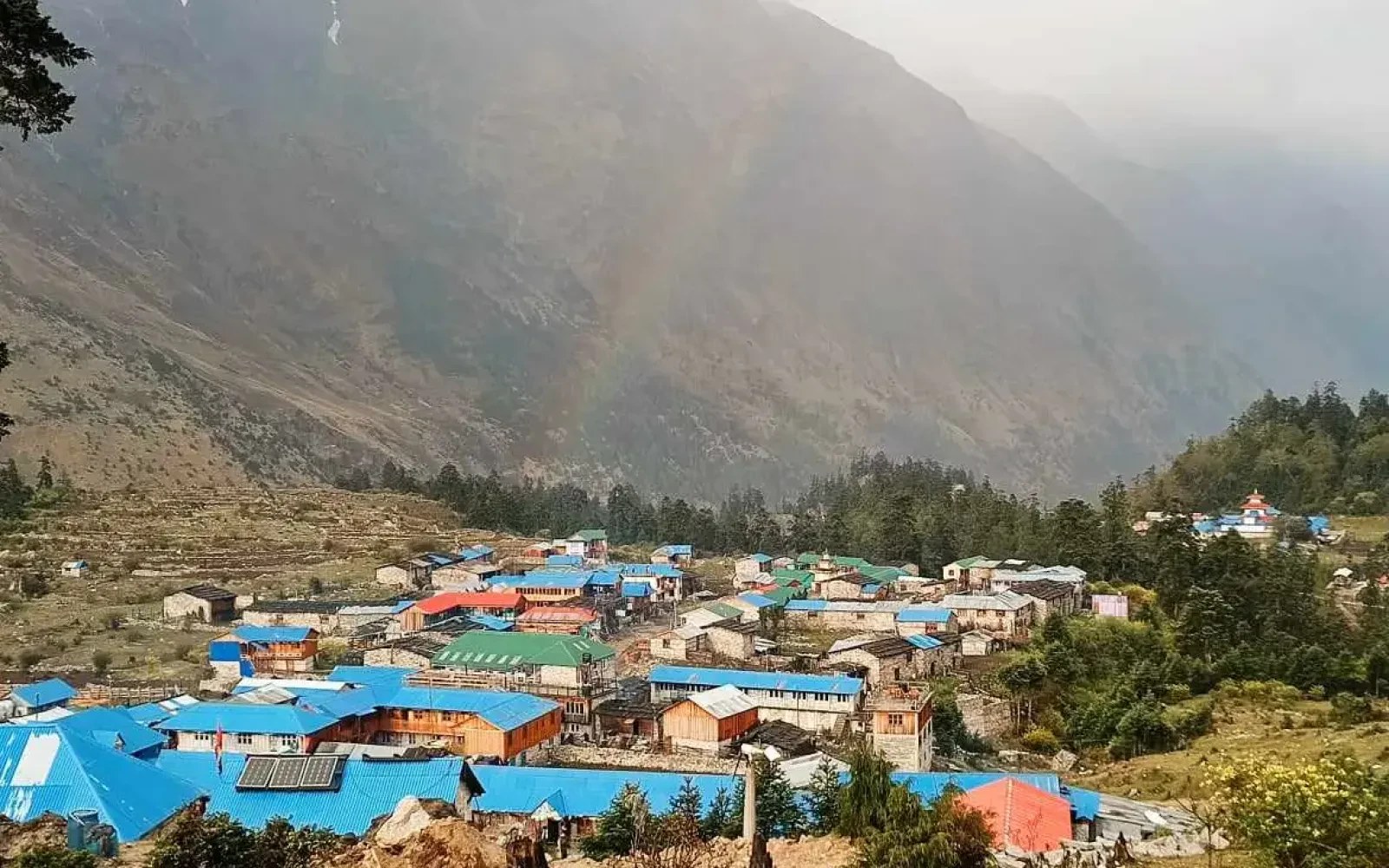
Embark on Manaslu Circuit Trek from Lho Gaon (3,180m) and witness the sunrise over Mt. Manaslu (8,163m). Bask in the light of the Himalayas, and look forward to a journey in Nepal. This is a Nepal experience.
Quick highlights to enhance the morning sights:
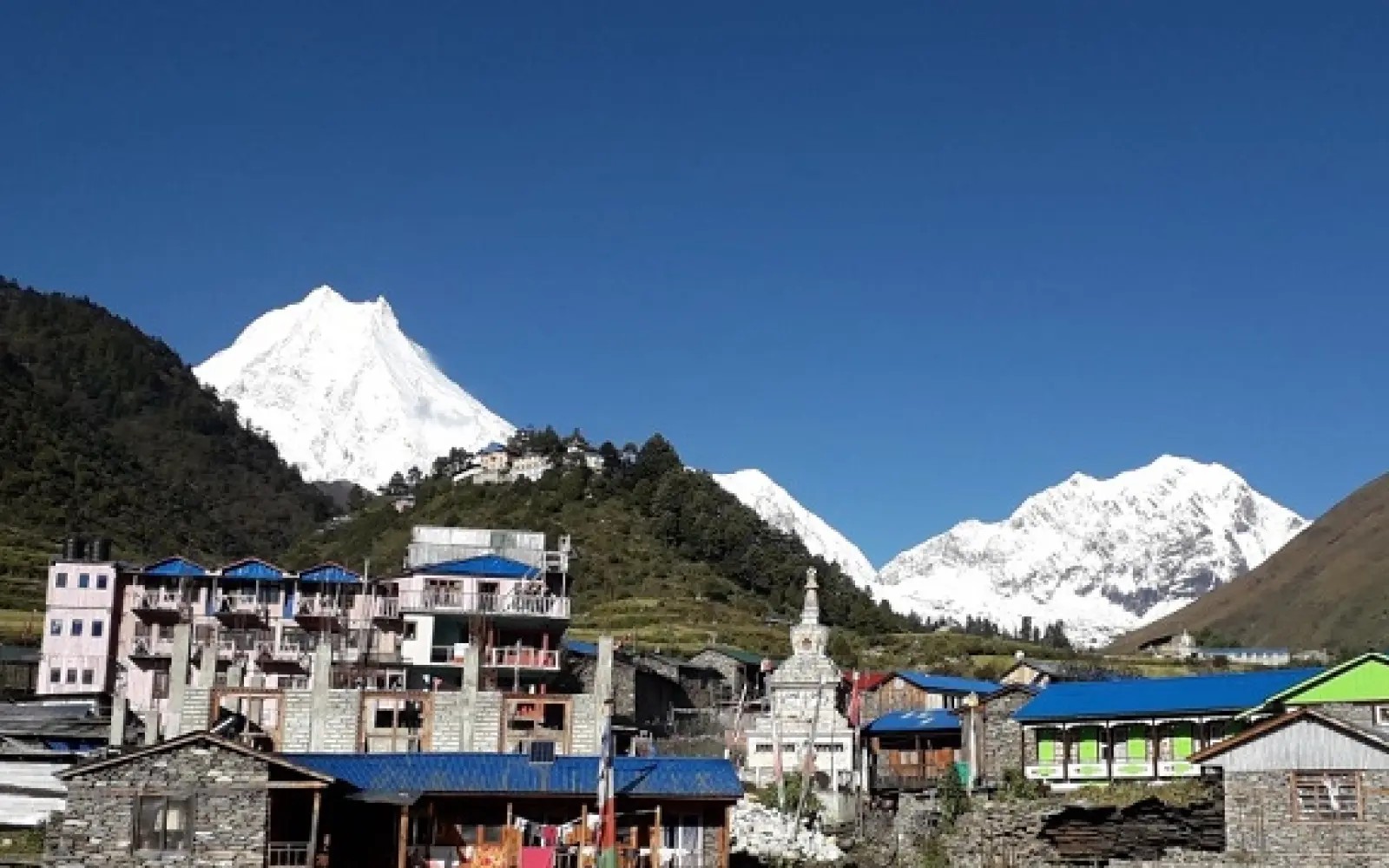
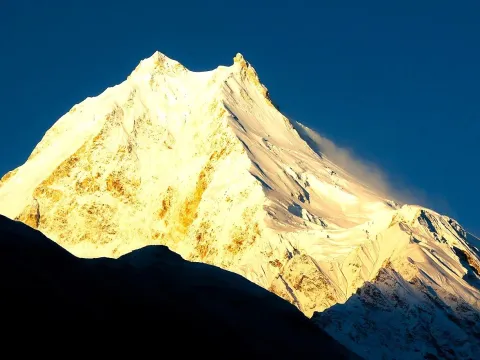
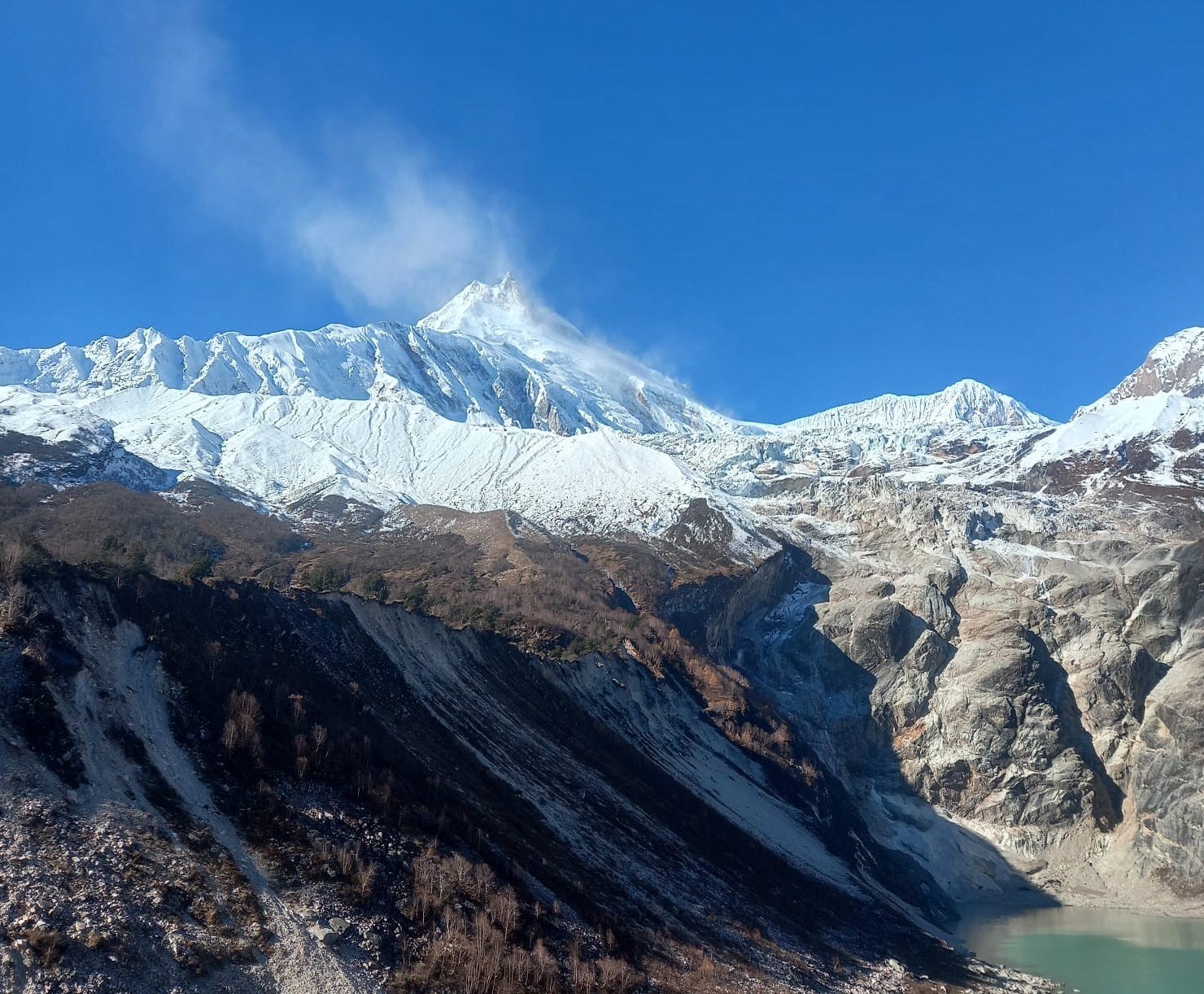
Here, the day begins at Lho Gaon (3,180m) with early birds wanting to catch the dawnlight on Mount Manaslu (8,163m). Just step out from the tea houses and witness the sun burst out on the snowy peak, which instantly makes the moment magical. This early light is what gives all of us the push to begin the trek for the day on the Manaslu Circuit.
To begin with, the gold slant of the sun’s rays on the large slopes of Mount Manaslu entices photography enthusiasts as well as nature admirers to take panoramic shots of the eighth-highest peak of Nepal from nearby spots. This Sunrise establishes a deep connect with the Himalayan landscape.
Further, the locals also have anecdotes about Manaslu, which add to the morning's cultural ambiance with such tales during breakfast. The guides also point out other giants that encircle the region, such as Himal Chuli with a height of 7,893m, as well as Ngadi Chuli towering at 7,871m. The morning atmosphere also influences the day's event.
Likewise, the cool air invigorates the soul as the gear is packed for the journey to Samagaon (3,520m). Tea in their hands, trekkers observe the change of colors as Manaslu's face awakens, thus making this activity a special moment for trekkers on this journey.
Moreover, the songbird melody drifts in over the village, adding another soundtrack to the dawn in Lho Gaon (3,180m). Couples on the trek hike off, readjusting their backpacks, eager for the easy section that stretches out before them.
Additionally,
In fact, light of morning spills out over the ancient mani stones by the path out of the village, exposing what had been hidden in the darkness. Trekkers pause to turn the prayer wheels, praying for good fortune as they set out into the path. "Spiritual vibrations reverberate through the air as trekkers begin their journeys."
Soon, they all assemble at the trailhead, buzzing with excitement about the sights that await them past Lho Gaon at 3,180 meters. They discuss their plans for the day, acclimatization, pacing, and safety, keeping their sights fixed on the realities of high-altitude hiking.
Saying their goodbyes to Lho Gaon, the morning scene is painted in their minds, inspiring them with a continued passion for the adventures that lie along the Manaslu Circuit route. Leaving with quiet majesty, they are left with the memory of Himalayan grandeur.
Easy hike between Lho Gaon (3,180m) and Samagaon (3,520m) through the Manaslu Circuit, through alpine meadows and mani walls. Experience easy walking, learn about cultures, and get spectacular views for your ultimate Nepal trekking experience.
Key features follow in quick succession to help put the trail into one's mind's eye:
| Feature | Description |
| Alpine Fields | Open meadows with wildflowers and yaks, offering gentle walking on Manaslu Circuit Trek. |
| Mani Walls | Ancient stone structures with prayers, passed traditionally for cultural immersion in Nepal hiking. |
| Shyala Village (3,500m) | Midpoint rest area with tea shops and Tibetan architecture, aiding acclimatization. |
| Elevation Gain | Gradual 340m ascent over 8-10km, ensuring easy trail experience with stunning views. |
Here, trekkers embark on a leisurely journey through Lho Gaon to Samagaon, with a backdrop of rich, mountainous meadows. They move at a leisurely pace, taking in the surroundings and the fresh and crisp mountain air, which is typical of this region during the Manaslu Circuit Trek.
Now, the trail begins with moving through meadows that have seasonal wildflowers. Tiny streams run through the trail and finally drain into the Budhi Gandaki River, filling the atmosphere with the cool splash of water with every stride.
Along the way, mani walls carved with Buddhist prayers line up on either side of the corridor. Passersby get to view them on the right-hand side, which is respectful to local culture, thereby deepening the traveler's exposure to culture during the trek in Nepal.
Likewise, the trail has a gentle slope, and one rises approximately 340 meters through the journey. There one can notice that the yaks graze in the alpine meadows, and thus the entire landscape feels alive on the Manaslu journey. At the middle of the way sits Shyala village, at an altitude of 3,500 meters, offering small rest stops with tea shops. Guides point out the Tibetan influences on the architect here, which helps the trekkers get in touch with the heritage aspects of this area.
Beyond that, the wider fields stretch ahead with pine and fir giving way, and there are glimpses of Ganesh Himal at 7,422 meters. The photographic members of the group click away at the changing scenes; otherwise, the easy trail keeps the trek visually busy.
Along the mani walls, stone chortens stand at sacred spots. The meaning of these various symbols is shared by porters as one treks, weaving in a spiritual thread for the day.
In fact, this route is manageable with a distance of about 8 to 10 kilometers, which leaves much space for breaks. Hydration is something you almost do out of habit as a result of the altitude effects; thus, health care remains on schedule while you head upwards toward Samagaon at 3,520 meters.
Ridges create little overlooks where one can turn back toward Manaslu's massive flank, while conversations about alpine flora-like rhododendrons-add a further educational layer to the day.
As Samagaon comes into view, a sense of satisfaction will grow amongst the group. It’s been a rewarding day on an easy section, and anticipation will build for what’s to come in Nepal.
In order to incorporate the riverside ambiance, here are the essential characteristics in brief:
Let’s imagine a trek to Budhi Gandaki along the Manaslu Circuit, which would begin in Lho Gaon (3,180m) and then progress to Samagaon (3,520m).
Imagine trails along river banks, mesmerizing Himalayan views, and a rejuvenating Nepal trek.
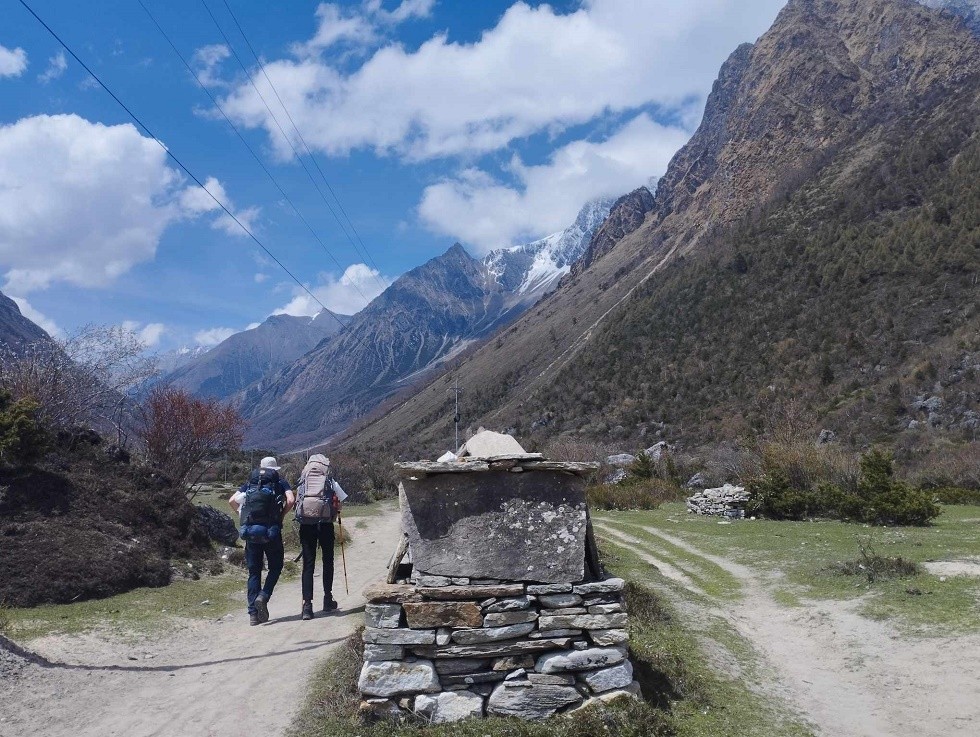
Now, trekkers continue to push forward as they exit Lho Gaon, moving along a serpentine route that clings to the riverbank. This is accompanied by the same sound that has been ever-present – the gushing river, symbolizing the ever-energetic Manaslu Circuit.
Here, the trail begins to descend slightly and runs parallel to the Budhi Gandaki River again. A cool mist rises from the rapids not far away, caressing the faces of the trekkers on this Nepalese adventure.
Likewise, suspension bridges cross the river at various points, tempting you to traverse with care as you gaze at the blue waters below. Such bridges enhance safety as you enjoy an element of adventure along the trail.
In the course of the trek, glimpses of far-off mountains appear, including Manaslu (8,163m) itself, occasionally glimpsed in the distance. Trekkers stop to photograph where the river and its tributaries meet, turning the entire journey into a walk through a gallery of landscape.
Moreover, local fishermen fish calmer parts of the Budhi Gandaki River, and their sustainable practices are shared with the group by guides. This cultural information can be helpful in enriching the riverside section of the Nepal Trek.
Ascent settles into a gentle pace alongside the pounding river, and the erosion patterns etched from the passage of time are notable, providing geological interest for the viewer in this section of Manaslu.
In fact, at the crossing points on the Budhi Gandaki River, prayer flags unfurl in the wind and trekkers operate prayer wheels for good blessings; both add to a natural soundtrack that combines prayer and treks into one activity. Religious undertones are interwoven with treks to make every step of the way a ritual in itself.
Alongside the riverbank, a trail zigzags, turning up landmassed corners of pebbled shorelines for brief cooling breaks. People wade through cold water to cool off, refreshing souls as much as legs. Brief cooling breaks enhance morales along this Nepal trail.
A bit farther on, the Budhi Gandaki narrows, forced through rock gorges. Rock outcroppings are slippery, and the pace remains fast and demanding. The changing character of the terrain keeps the Manaslu Circuit interesting and diverse.
As Samagaon appears at an altitude of 3,520 meters, the presence of the river mitigates slightly. The rigorous riverbank section ends as a transition to an easier pattern begins. Taking the trail along the Budhi Gandaki River leaves a mark of unforgettable experiences on the journey through the Himalayas.
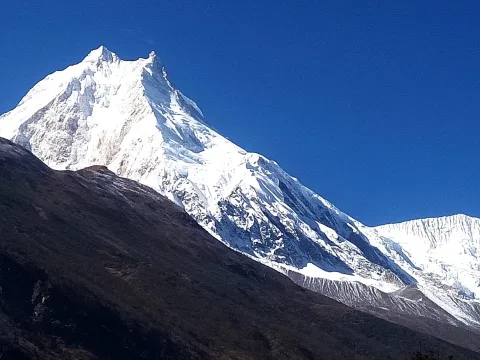
Find forest expanses of pine, juniper, and rhododendron trees during the Manaslu Circuit Trek to Samagaon (3,520m). Get lost in the evergreen Himalayan forests and peaceful trails of Nepal for a nature getaway to cherish.
To help form a better mental image of these forest scenes, below is a brief list of some of the key elements involved:
Here, trekkers move into dense forests after crossing the riverside part of the trekking route to get to Samagaon (3,520m). The forests are made up of pine, juniper, and rhododendrons, indicating high biodiversity in this area along the Manaslu Circuit Trek.
To begin with, towering pine trees pattern the initial forest corridors. The hikers breathe in the piney air as they walk through a bed of needles, thus heightening the Nepal trekking experience.
Then comes the juniper shrubs amidst the pine trees. Guides also teach them to be used medicinally. Even a walk becomes learning about plants in these ranges.
Additionally, the unique of colored blooms come along with rhododendron flowers in the spring. The trekkers halt to enjoy the red to pink flowers displayed along the route, adding a splash of color to the Manaslu adventure.
Likewise, the forest canopy protects the travelers from the sun, in addition to which, birds, including pheasants, call from the top of the junipers, adding to the diversity of the trek with occasional glimpses of wildlife.
In the mixed areas where pine and rhododendron trees grow together, tunnels are created by nature, encouraging trekkers to take photos with the sunlight shining through the trees’ leaves, thus promoting harmony and calmness among these trees in the forests of Nepal.
Actually, there are ancient juniper trees that nowadays are like silent sentinels passingby. The characters discover the significance of these trees to incense in Tibet during the journey through the forest.
Now, rhododendron forests indicate higher terrain closer to Samagaon (3,520m). Bees are buzzing around while pollinating flowers, which is another ecologically intriguing aspect of the Manaslu Circuit.
Besides, the trail enters further and further into the pine groves, with log jams serving as natural benches for a rest break. Nature and comfort mingle seamlessly with the Himalayan trekking journey.
As the forest thins, mountain ranges come into view, and the trail widens to broad, airy expanses. Overall, the stretches of country carved by pine, juniper, and rhododendron foliage hold some of the most tranquil moments that the country has to offer.
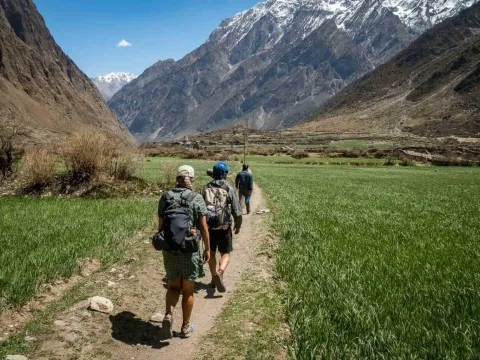
Experience a gradual ascent from Lho Gaon (3,180m) to Samagaon (3,520m) in the Manaslu Circuit Trek, which is easy, scenic, and offers breathtaking views of the Himalayas. It is acclimatization fit for all.
For greater acclimatization, these are the best tips:
During this part of your journey, you will ascend gradually from Lho Gaon to Samagaon through ascend of approximately 340 meters over an 8-10 km stretch, climbing to an altitude of 3,520m after starting off from an altitude of 3,180m at Lho Gaon.
Here, the trail begins with a gentle ascent through varied terrain, and trekkers are thus able to maintain a constant pace with no sign of tiredness. The trail avoids steep ascents, and thus a person's body is given time to acclimate to the elevation.
In fact, guides remind everyone to have regular breaks and maintain hydration levels. Drinking plenty of water makes the gradual climb even more effective.
Further, the trail is conducive to rolling hills rather than steps. This allows good conversation flow and sustains high team spirits. A good pace also enhances team building on this Manaslu trek.
Moreover, the porters carry the heavy loads, which will enable you to carry a light bag for the day’s hike and enable you to enjoy the views as well as conserve energy for the long day in the Himalayas.
Likewise, short uphill contours of elevation follow flat zones, and the relieved traveler scans the horizon for the onset of slight altitude problems. These identified issues ensure a smooth and safe ascension.
Similarly, the pace of the day is such that whether you are a beginner oder an experienced trekker, you can adjust to it. The guide adjusts the pace according to the capability of the trekkers so that all reach the camp at Samagaon (3,520m) refreshed. The view of Manaslu (8,163m) on the trail propels trekkers to walk at a consistent pace without hurrying to stop for photographs.
Meanwhile, the final approach to Samagaon is a gentle one. There is time to linger in the village before resting. In short, the day prepares one for a good rest before the climb to come.
In fact, this is an example that symbolizes responsible high-altitude hiking, as it prepares trekkers for more difficult adventures that lie in the future. Overall, the systematic increase in altitude and steady pace make the day of the Manaslu Circuit Trek feel satisfying.
For easier peak identification, here’s a brief rundown on what you’re looking at:
Here, the first glimpses of Samdo Peak and Naike Peak emerge as trekkers get closer to Samagaon on the Manaslu Circuit. After leaving Lho Gaon, trekkers enter wider valleys as the rugged peaks loom against the sky signaling yet another exciting experience ahead. In front lie Samdo Peak and Naike Peak standing out majestically at 6,335m and 6,211m respectively.
Likewise, Naike Peak is noticeable for its rugged ridges and appears clearly in the vicinity of Manaslu (8,163m). Samdo Peak appears in the distance, and its snow-covered ranges seem to be basking under the sun as one embarks on a Nepal trek.
Such peaks define the approach to Samagaon (3,520m) and raise questions about their position within the relief of the Manaslu Range, which thus further emphasizes the Himalayan scale. Once the weather clears, details of the glaciers on the summit of Naike Peak are visible, and trekkers are seen taking in the light sources.
In conclusion, this is the beginning of the Nepal trekking adventure that has made this scenery an unforgettable experience.
As you get close to Larke La Pass, the sight of Samdo Peak at 6,335m emerges on the horizon, foretelling what to expect next. Its majesty brings a certain inspiration to trekkers to climb to such an elevated area. The surrounding area brings some more peaks to view, including the addition of Himalchuli at 7,893m to the landscape composition. Featured within the view will be the placement of Samdo Peak that makes this section of the Manaslu Circuit easily identifiable due to its distinctive silhouettes.
Then, soon after, is the appearance in the distance of the village of Samagaon, at 3,520m elevation: giants peer down from above, and so too begin to dawn the compensations of this day scenically. The initial glimpse is an encouragement to explore further.
Such encounters indicate an approach towards alpine regions, signifying the beginning of acclimatization days. Overall, the first glimpse of Samdo Peak and Naike Peak, measuring 6,335 meters and 6,211 meters, enhances the Manaslu Circuit Trek experience.
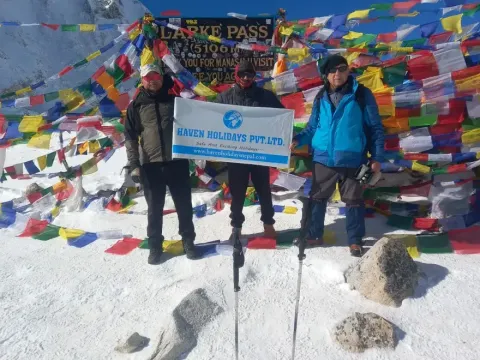
To you, a brief snapshot of the landscape shift:
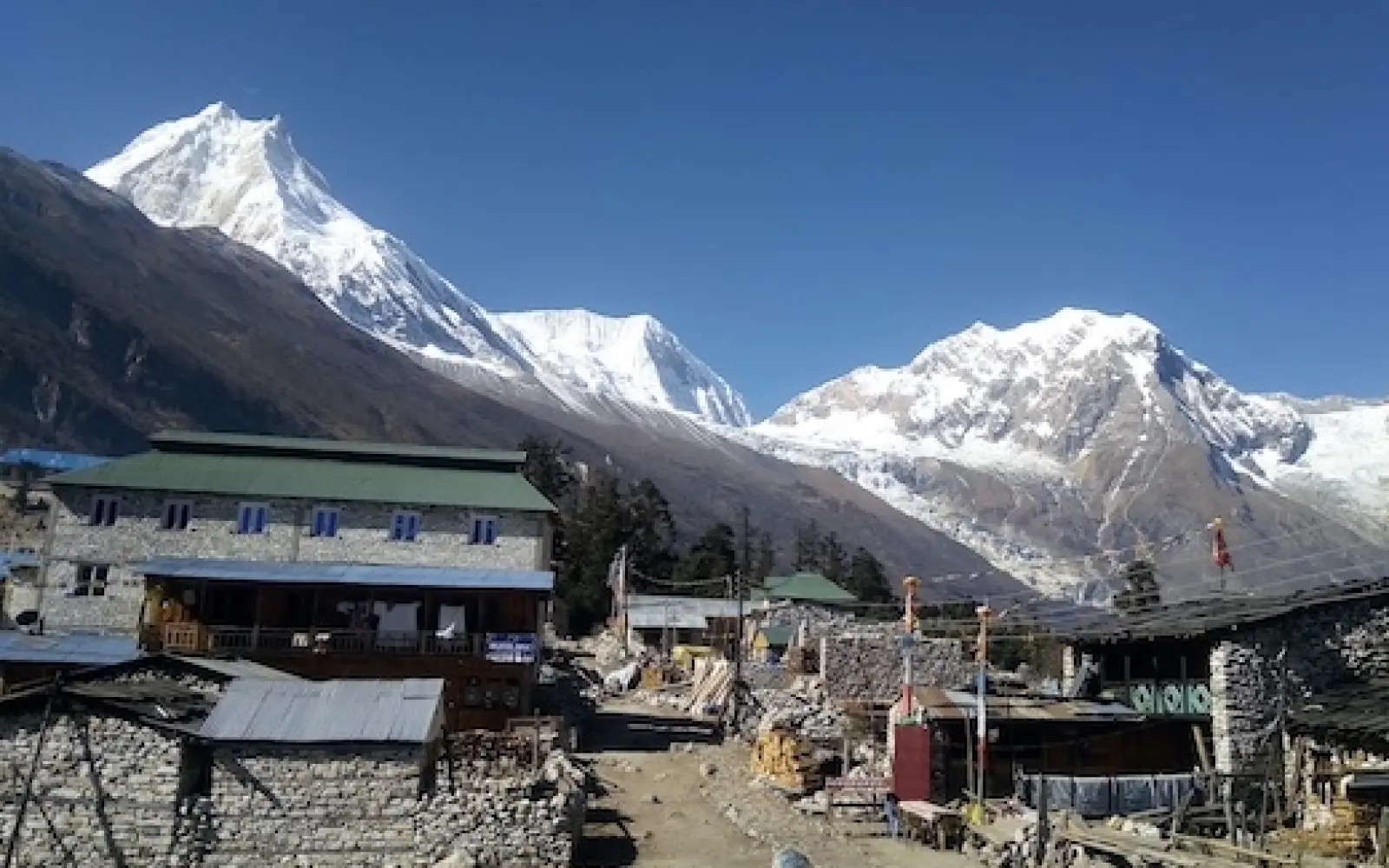
As you approach the Shyala village junction, at an altitude of 3,520 meters, you’ll notice a marked change in the surroundings. The treks now shift from dense forests to valleys and suddenly present you with a picturesque view of the Himalayas. It is definitely an unforgettable experience on your Manaslu Circuit Trek.
From the trees, one is led to wide meadows bounded by high peaks. The transition opens up breathtaking vistas of the mountain of Manaslu itself standing at 8,163 meters high.
Actually, Shyala is situated in a wide glacial valley, with mountain peaks like the Himal Chuli (7,893 m) and Ngadi Chuli (7,871 m) looming over it. This landscape enhances the beauty of the trekking route in Nepal.
As you forge ahead, there are ridges and streams around the intersection points, with glimpses of ranges crowned with snow, such as Ganesh Himal (7,422m). The ever-changing environment invokes a sense of wonder in participants on the Manaslu trek.
Now, vegetation becomes sparse, giving way to alpine pasture as you ascend. Guides explain the transition due to altitude as you hike, educating those who hike the ways of the Himalayan environment.
At the crossing, there are resting places where trekkers can relax, sit on wooden benches, sip tea, and admire the changing scenery. In this instance, a pause heightens the pleasure of the changing scenery.
As you approach the turning to reach the village of Shyala at 3,520 meters, prayer flags wave over the trail, signaling a peaceful turning point. People pause to take a photo of the opening valley below and with it come memories of this portion of the Manaslu Circuit trek.
Moreover, yaks graze on fields which emerge abruptly, and trekkers observe traditional herding methods. This melds culture and geography, as every aspect of this experience adds value to the trek.Likewise, the route drops slightly, then ascends again to Samagaon at 3,530m. Peaks line up across the horizon, especially Peak 29 (Ngadi Chuli, 7,871m). The mountain presents an invigorating sight that heightens the promise of spectacular landscapes yet to come.
Specifically, it marks an entry into a harsher, higher region, gearing up trekkers for what awaits in Samagaon, which offers an expansive view. Indeed, the geographical shift in and around Shyala village marks a shift in the trekking experience on the Manaslu Circuit Trek.
Here, entering a broad valley under the face of Manaslu, just as you are about to reach Samagaon (3,530m) on the Manaslu Circuit Trek. The view is dominated by glaciers that fill the horizon, green meadows, and the natural beauty of the Himalayas ranges, making Nepal a paradise for treks.
The following key point information table can help:
And then, with a swift traverse across the ridges at Shyala (3,520m), the trekkers descend into this vast valley, entering the spectacular hold of Manaslu’s northern wall (8,163m). The view has a grip on all the trekkers undertaking this journey. It seems ruggedly cinematographic.
In fact, it first begins with relatively broad trails through extensive pasture fields, which line the valley sides and bottom. Then, looking vertically above, you can view glaciers and icefalls of the north face, and you’ll realize why you get such unforgettable experiences in this valley of the Himalayas.
At the center of this landscape is the settlement of Samagaon (3,530m), where its stone-clad houses mingle with yaks grazing. The serene feel that pervades this destination highly contributes to immersing oneself in Nepal treks.
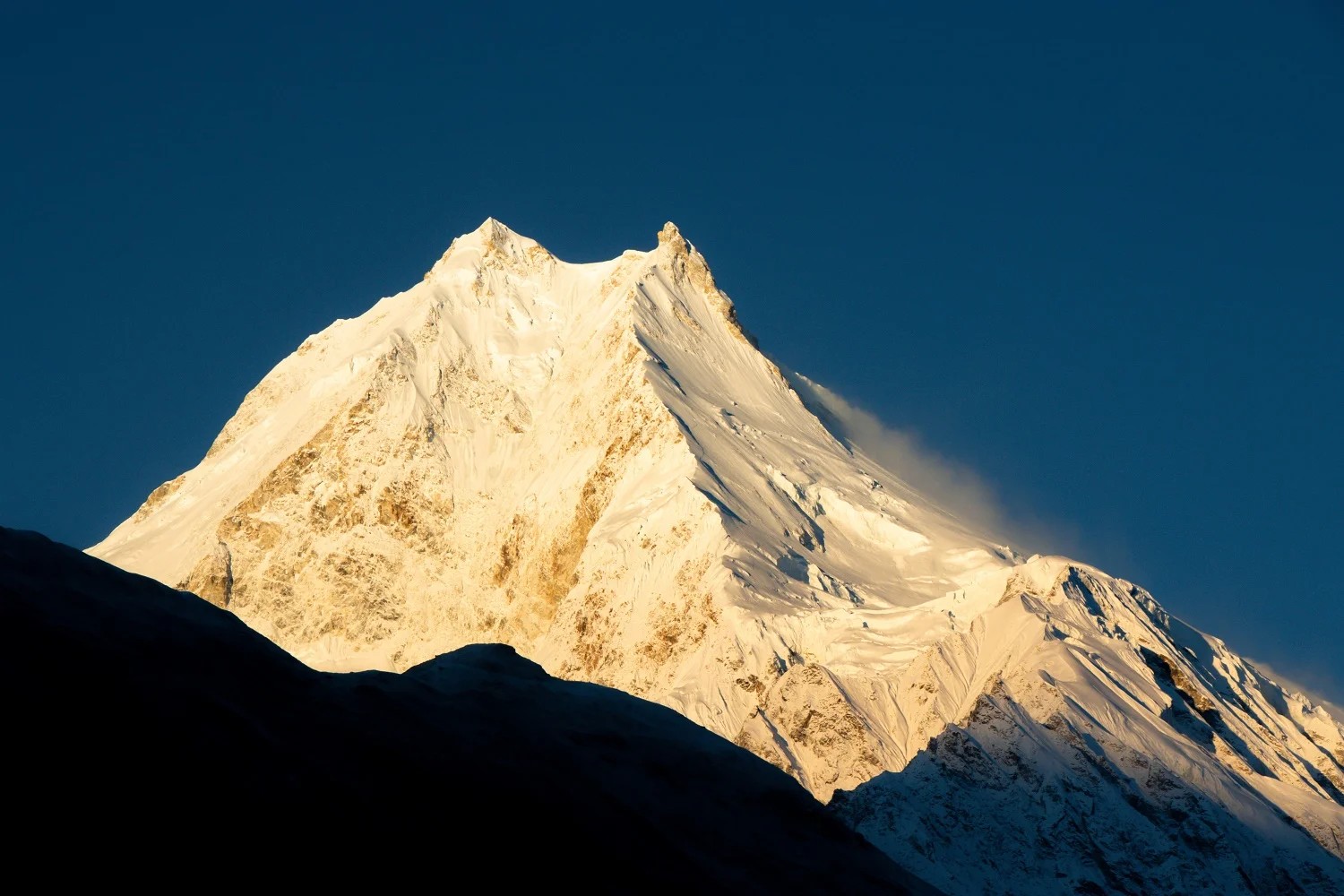
In the previous picture, the distinctive peak of the Manaslu North Face (8,163m) pierces the ridges, encouraging photographers to click away at the mountain’s enormity from the open ground. To be that close to the mountain heightens the thrill associated with the Manaslu expedition.
Likewise, pecks surrounding the region, such as Naike Peak which is 6,211 meters high, enclose the valley’s sides, whereas guides show examples of glacial streams passing through meadows. The broad valley transforms into a living painting of dynamic Alpine ecology.
Moreover, the trail then gradually becomes level as it passes into open grassy meadows where trekkers walk and enjoy stunning views. Unwinding is the key at this Himalayan basin.
At the same time, the Pungyen Glacier starts to flow its meltwater into a valley below, which gives trekkers their first glimpse of its origin, near the northern face. Such natural phenomena add to the adventure experience at Manaslu Circuit.
Meanwhile, Tibetan-style architecture is scattered all over the open valley, with mani walls and chortens dotted along the route. Diversity in culture is inextricably entwined with the magnificence of nature.
Then, Birendra Lake reflects the adjacent face of Manaslu (8,163m) itself. Side trips offer further clues to valley lore, broadening the purview of the available prizes.
Finally, the trek ends at Samagaon (3,530m), which presents an ideal viewpoint for the north face. Overall, the broad valley below the north face of Manaslu exemplifies the grandeur of the Manaslu Circuit Trek.
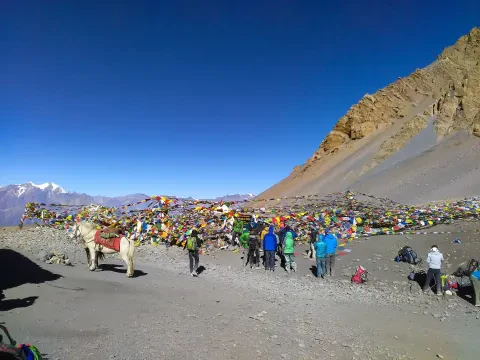
Enter Samagaon (3,530m) on Manaslu Circuit Trek to immerse in Tibetan culture, ancient monasteries, and traditional stone houses. Discover spiritual Himalayan village life and authentic Nepal trekking heritage for unforgettable adventures.
To support cultural exploration, here are key attractions:
Here, trekkers finally get to Samagaon, which's 3,530 meters above sea level after they go down into the big valley below Manaslu, which is really tall at 8,163 meters. They walk on paths with old stone houses on both sides. When they arrive at Samagaon on the Manaslu Circuit Trek they get to experience the culture of the Tibetan people, on the Manaslu Circuit Trek.
Similarly, the village is full of stone houses with many stories. These stone houses are what you see the most in the village. People who live there build the stone houses with roofs so they can handle the heavy snow that falls. The stone houses and the way they are built show that the Tibetan style of building is very strong in this part of Nepal where people like to go trekking. The village is a spot for Nepal trekking and you can see the Tibetan influence, in the stone houses.
Further, the prayer flags in Samagaon are really colorful. They wave back and forth between the stone houses. People who live in Samagaon spin these prayer wheels every day because they want to get blessings. When you visit Samagaon you can feel the Samagaon culture. It is very spiritual. The Samagaon culture is, around you when you are walking around and looking at things.
In fact, the old monasteries like KargyuChholing are really something to see. Monks are inside these places saying prayers in rooms with statues of Guru Rinpoche. When you visit these places during your Manaslu adventure you get to know more, about the culture of Manaslu. The Manaslu adventure is a time to learn about this culture.
Furthermore, Ribung Gompa is on a hill. It looks over the village. People who like to trek can walk up paths to visit Ribung Gompa. When you are at Ribung Gompa you can see Manaslu which is really high at 8,163 meters. This makes the experience, at Ribung Gompa very special and peaceful. Ribung Gompa is a serene monastery.
Next, Pungyen Gompa is located near Pungyen Gompa on a ridge. People who like to hike often go to Pungyen Gompa for a visit because Pungyen Gompa is very important to the past. Visiting the monastery is a part of seeing the Tibetan Buddhist heritage of Samagaon and learning about Tibetan Buddhist heritage, at Samagaon.
Here, people walk by walls that have prayers written on them when they enter a place. The locals go around these mani walls in a clockwise direction because that is what they have always done. So the trekkers do the thing, which shows that they respect the Samagaon culture and the people who live there. The Samagaon culture is really important, to the people who live in Samagaon.
In fact, women in chuba dresses are weaving wool outside the stone houses. The daily life scenes of the trek are really captivating. You see children playing with the yak herds in the pastures. The Himalayan trek is full of scenes like these with women, in traditional chuba dresses and children and yak herds all around.
Now, the teahouses have butter tea and food from the area. The guides tell stories about the history of Nubri Valley. This makes the time, in Samagaon really special because you get to learn about the culture at 3,530 meters.
In the evening the lights come on in the windows of the stone houses. This makes everything feel warm and cozy like time's standing still. When you walk into Samagaon, which's really high up, at 3,530 meters you get to see a great mix of the local culture old monasteries and stone houses and that is what makes it such a special part of the Manaslu Circuit Trek, a really big highlight of the whole trip the Manaslu Circuit Trek.
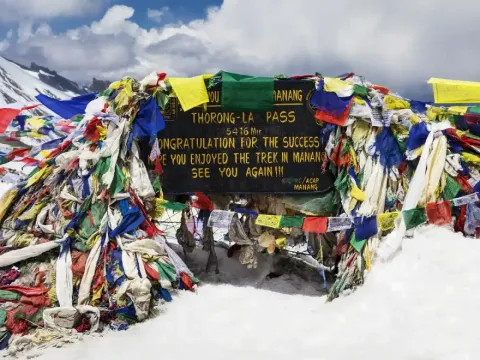
Conclude your day in Samagaon (3,530m) with acclimatization feel and profound mountain silence on Manaslu Circuit Trek. Embrace rest, Himalayan peace, and altitude adjustment for safe Nepal trekking progression.
As the day comes to a close in Samagaon, which's at an elevation of 3,530 meters trekkers on the Manaslu Circuit Trek settle into teahouses. The Manaslu Circuit Trek is really helping them now. They are feeling the effects of getting used to the high altitude on the Manaslu Circuit Trek. It is very quiet in the evening. The Manaslu Circuit Trek is surrounded by a deep silence that you can only find in the mountains, on the Manaslu Circuit Trek.
First our bodies need to get used to the elevation of 3,530m by taking it easy and resting. When we dothis hikers will start to feel like they can breathe better. They will have more energy.
Here, proper acclimatization, to the 3,530m elevation really helps reduce the risks that people face on the stages of Nepal trekking.
Likewise, the sunset makes the Manaslu north face look really beautiful in colors. People stand at the edge of the village. Watch this in complete quiet. The Manaslu mountain is so quiet that it helps people feel peaceful inside when they are, on an adventure. The Himalayan adventure is a time to see the Manaslu mountain and feel the peace it brings.
Moreover, the only sounds you can hear are the yak bells in the distance. There are no cars or anything to disturb the peace. This is what makes the end of the day nice in Samagaon (3,530m). The calmness of Samagaon is really something at the end of the day, in Samagaon.
Meanwhile, the stars come out clearly in the thin air. People who are trekking will sit outside the teahouses at night all wrapped up in blankets and they will look at the stars. The big sky makes the quiet of the mountains feel even quieter. The stars and the mountain silence are really something to experience. The mountain silence is very peaceful. The stars make it feel even more special.
As night falls the monastery chants start to fade. People who live in the village go to their stone houses to sleep early. The village becomes completely quiet which helps people sleep deeply and that is good for getting used to the place. The monastery chants are not heard anymore. The quiet of the village helps with sleeping deeply for acclimatization, to the monastery and the village.
As the day comes to a close the air is filled with the smell of juniper incense. This smell is really nice. The people who are there think about all the things they saw and did that day. They learned a lot about the culture. The quiet time helps them feel more at ease. It is good for the participants. The mental rest is also very good for the participants. It helps the participants feel better after a day of walking and doing things. The mental. The physical rest work well together, for the participants.
So the guides talk about what people can do the day like going on hikes to Birendra Lake. The people who are going on the trek make sure to drink a lot of water and eat garlic soup to help them deal with the altitude. This way the people who are doing the Manaslu trek can be safe while they are walking. The guides want to make sure that everyone is ready, for the Manaslu trek.
After that the deep silence makes people want to write in a journal or meditate. The mountains around Samagaon are really beautiful. Many people feel a connection to them. The mountains are very high at Samagaon which's 3,530m. So people use the evenings to get ready, for the tough days that are coming up.
Additionally, sleep comes easily when it is really quiet. This means trekker may say " I have gotten used to the mountains of the Himalayas. At the end of the day in Samagaon, which's 3,530 meters high I get to enjoy the peaceful silence of the mountains and I get the rest I need on the Manaslu Circuit Trek. The Manaslu Circuit Trek is a place to rest and the mountain silence, in Samagaon is really nice".
1. What is the distance and duration of the trek from Lho Gaon to Samagaon?
The trek from Lho Gaon to Samagaon is about 8 to 10 kilometers. Usually takes 5 to 6 hours. It is 340 meters up from Lho Gaon at 3,180 meters to Samagaon at 3,530 meters. This part of the Manaslu Circuit trek is one of the most scenic days. You have plenty of time to enjoy the views.
2. What are the highlights when leaving Lho Gaon in the morning?
Leaving Lho Gaon early in the morning is great. You get to see a sunrise over Manaslu, Himal Chuli and Ngadi Chuli. The air is cool. You see prayer flags and mani walls. It is peaceful and locals are often around sharing stories. The peaks look golden in the morning light.
3. Is the walk from Lho Gaon to Samagaon for beginners?
The walk from Lho Gaon to Samagaon is good for beginners. You walk on paths through alpine meadows and quiet slopes. It is a climb. The trail has walls and you see mountains all the time. There are no climbs. It helps build confidence on the Manaslu Circuit.
4. Will I walk along the Budhi Gandaki River on this day?
Yes, you follow the Budhi Gandaki River. You see misty rapids and cross suspension bridges. There are reflections of Manaslu. It is refreshing and scenic. Then the trail goes through forests and open valleys.
5. What kind of forests will I pass through from Lho Gaon to Samagaon?
You go through pine, juniper and rhododendron forests. They give you shade and smell good. In spring there are flowers. It feels like walking through a tunnel. This is on the way, to Shyala and Samagaon.
6. How difficult is the altitude gain from Lho Gaon to Samagaon?
The climb is quite easy. You go up 340 meters over 8 to 10 kilometers. This slow and steady pace helps your body get used to the altitude before you climb even higher on the Manaslu Circuit.
7. When do I get the first views of Samdo Peak and Naike Peak?
You see Samdo Peak (6,335m) and Naike Peak (6,211m) for the time near Shyala. These big peaks stand out against the backdrop of the bigger Manaslu (8,163m). It means you are getting close to a valley.
8. What changes in landscape near Shyala Village?
The trail changes near Shyala Village. You go from forests to open fields where yaks graze. There are also prayer flags waving in the wind. You can see Manaslu (8,163m) and other peaks around you.
9. What makes the valley below Manaslu North Face special?
The valley below Manaslu North Face (8,163m) is very wide and open. There are fields streams from glaciers and huge icefalls. This view is amazing. Takes you straight to Samagaon. It is one of the views on this trek.
10. What can I expect when entering Samagaon (3,530m)?
Samagaon is a village. The houses are made of stone like in Tibet. There are prayer flags and old monasteries like Kargyu Chholing and Pungyen Gompa. The village feels rich in culture. You see people with yaks. They are friendly, to visitors.
11. Is Samagaon a good place for acclimatization?
Yes, Samagaon is a place to get your body used to the high altitude. When you arrive at Samagaon, which's 3,530 meters above sea level you can take some time to rest and get ready for the higher mountains ahead on the Manaslu Circuit. You can also visit the monastery. Go for short walks.
12. What is the evening atmosphere like in Samagaon?
The evenings in Samagaon are very quiet and peaceful. You can hear the sound of yak bells and the chanting from the monastery in the distance. It is a time to watch the sunset on Manaslu, which is 8,163 meters tall. The sky is full of stars at night. You feel very calm after a long day of walking.
13. Can solo trekkers join this Lho Gaon to Samagaon section?
Yes, solo trekkers can now do this part of the trek. The rules in Nepal have changed for 2026. Now solo trekkers can get a Manaslu Restricted Area Permit. You have to book your trek through a registered trekking agency and they will give you a licensed guide. You cannot trek alone without a guide.
14. Do I need a guide for the trek from Lho Gaon to Samagaon?
You need a guide for the whole Manaslu Circuit, including the part from Lho Gaon to Samagaon. Even if you are trekking alone you have to have a guide with you. The guide will help keep you safe and make sure you follow the rules. They also know the area well.
15. What permits are required for this trek segment?
You need to have the Manaslu Restricted Area Permit, the Manaslu Conservation Area Permit and the Annapurna Conservation Area Permit. Your registered trekking agency will take care of all these permits for you. The new rules, for 2026 say that solo trekkers can get the Manaslu Restricted Area Permit if they have a guide.
16. When is the best time to trek from Lho Gaon to Samagaon?
The best time to trek from Lho Gaon to Samagaon is during the spring season from March to May. The autumn season from September to November. These times are great because you get to see Manaslu, which's 8163 meters high and the rhododendron flowers are in bloom. The weather is also very stable during these times. This makes the trek really easy. The views of the valley are amazing.
17. Is Lho Gaon to Samagaon day good for photography?
Yes, this day is perfect for photography. You get to see Manaslu, which's 8163 meters high in the morning and then you walk through forest tunnels and see the wide valley and the Shyala meadows. You also get to see the culture of the people in Samagaon. The light is dramatic. The scenery is very diverse which makes for great photographs.
18. What should I carry for this trekking day?
You should carry water, around 3 to 4 liters and some snacks. Do not forget to take sunscreen, a hat and a rain jacket. It is also an idea to take trekking poles and wear layers of clothes because the temperature can change. If you have a camera and binoculars, you can enjoy the views of Manaslu, which's 8163 meters high even more.
19. Can I do a side trip on the way to or from Samagaon?
Yes, you can. Many people visit Pungyen Gompa. Go for a short hike to Birendra Lake from Samagaon. These side trips are not very difficult. They add to the cultural and natural beauty of your trek.
20. How does this day prepare me for crossing Larke Pass 5106 m?
This day is easy and scenic. You gain altitude gradually which helps your body get used to the higher elevation. You also get to rest and acclimatize in Samagaon, which builds your strength and confidence. This helps you prepare for the challenging parts of the trek that are higher up, like crossing Larke Pass, which is 5,106 meters high on the Manaslu Circuit.
Our travel experts are ready to assist you with any questions.
Send us a message.Have a question before you book? Send your enquiry below and our travel experts will get back with the required information.