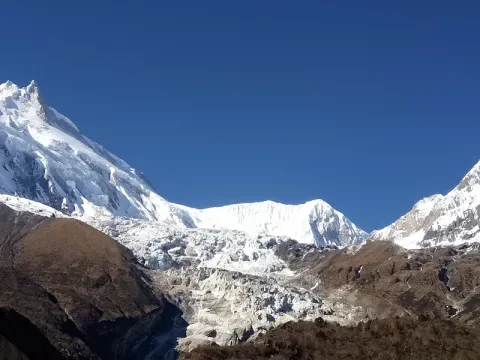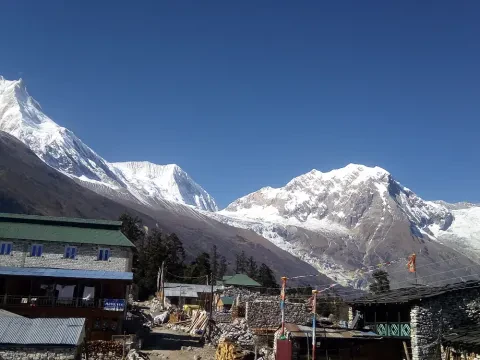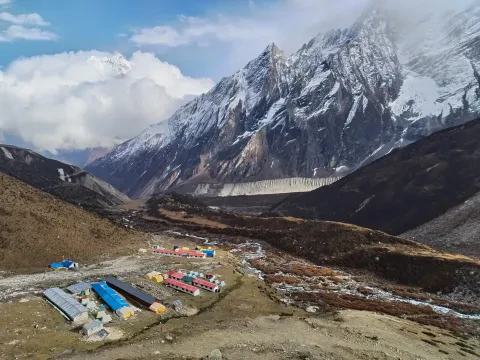
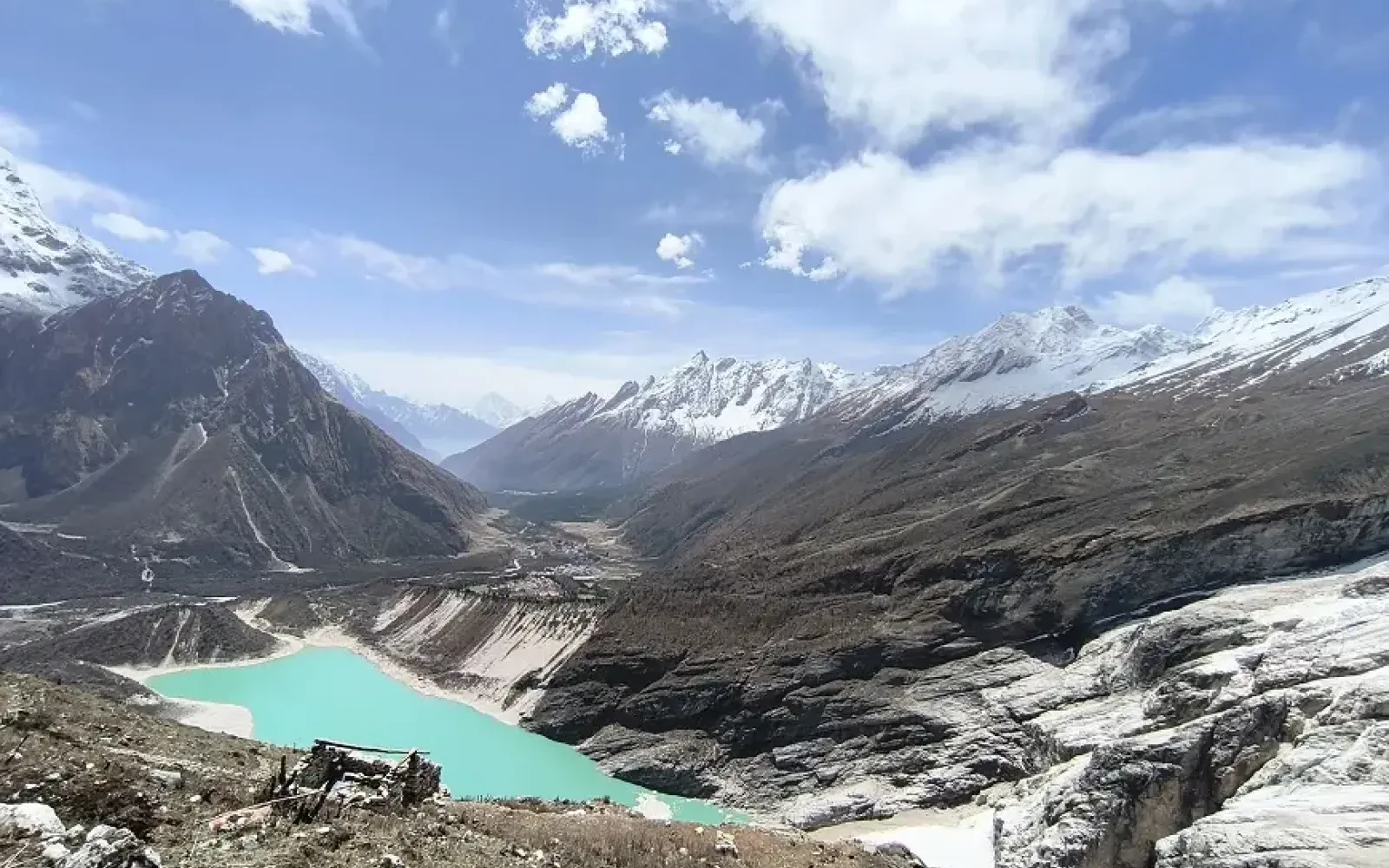
The Manaslu Circuit Trek is a remote and rugged circuit of Mount Manaslu (26,781 ft / 8,163 m), the world's eighth-highest mountain. This Off-the-beaten-path trekking begins at Machhakhola (2,950 ft / 900 m) after an 8–10 hour rough jeep or bus ride from Kathmandu. The Manaslu trek ends at Dharapani (6,102 ft / 1,860 m), where trekkers take their return to Kathmandu through Besisahar by jeep/car or bus ride. The whole distance of trekking from Machhakhola to Dharapani is approximately 110 miles (177 km).
Manaslu Circuit trekking takes you along lush forests, deep river gorges, alpine pastures, and Tibetan villages in Manaslu Conservationa Area. The Manaslu Circuit trail passes through major stops like Jagat (4,429 ft / 1,350 m), Namrung (8,628 ft / 2,630 m), Lho (10,498 ft / 3,200 m), and Samagaon (11,482 ft / 3,500 m), the gateway to Manaslu Base Camp (16,732 ft / 5,100 m). Splendid views of Manaslu, Himalchuli (25,896 ft / 7,893 m), Ngadi Chuli (25,095 ft / 7,681 m), and Ganesh Himal (24,350 ft / 7,422 m) hold the horizon in awe during Manaslu Cirucit trekking.

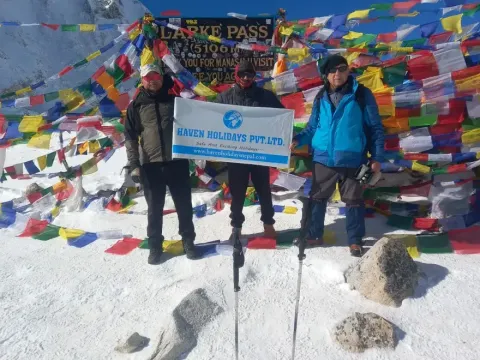
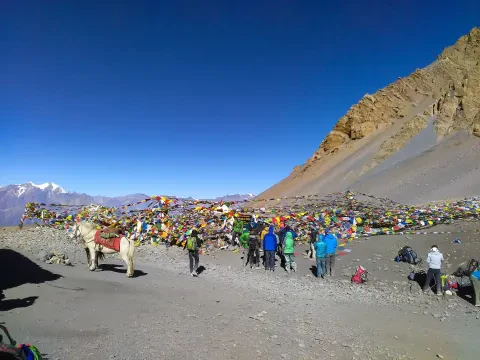
The highest elevation of the Manaslu Cirucit trek is Larke Pass (5,106 m / 16,752 ft). This part of the trek is the most challenging, with steep climbs, wind exposure, and long walking times. The trail surface varies from rocky trails and suspension bridges to steep, single-track trails. The difficulty level of Manaslu Circuit is strenuous based on altitude and long walking hours.
The Manaslu hike usually lasts 14–16 days, acclimatization included. Trekkers walk 6–8 hours per day, 6–10 miles (10–16 km) per day. The entire walking time of the Manaslu Circuit round trip is about 100–120 hours.
Meals and accommodation on the Manaslu Trek include basic teahouses with dal bhat, noodles, soups, and hot drinks. Lodges along the Manaslu Cirucit Trail become increasingly rustic with increasing altitude but are still satisfactory and friendly.
March to May and September to November are the best trekking seasons to Manaslu Circuit, with blue skies, magnificent mountain views and stable weather.
Trekkers need Manaslu Restricted Area Permit, Manaslu Conservation Area Permit (MCAP), and Annapurna Conservation Area Permit (ACAP) for Manaslu circuit Trekking. There must be a licensed guide for the Manaslu Circuit Trek. A porter is optional but helpful, especially on high passes and longer days. Hiring Guide and Porter is highly recommended for Manaslu Circuit Trek.
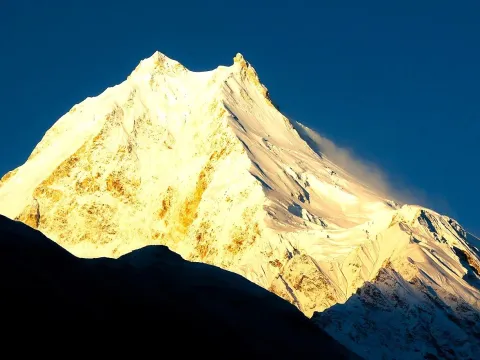
Manaslu Base Camp Trek is best for travelers who are looking for peace, culture, and scenic Himalayan views with true adventure trekking in Nepal.
Acclimatization in Manaslu Circuit Trek plays a significant role in preventing altitude sickness. Most trekkers acclimatize at either Namrung (2,630 m) or Lho (3,180 m), while Samagaon (3,530 m) is mostly used by the trekkers. Most individuals have one extra day in Samagaon before ascending to higher altitudes like Larke Pass(5106m). Ascent gradually allows the body to conform to lower amounts of oxygen.
Samagaon is situated at the base of Mt. Manaslu (8,163 m), the world's eighth highest peak. Two nights are spent at Samagaon for proper acclimatization during Manaslu Circuit Trek. Local areas are explored to boost oxygen adaptation. A regular trek while acclimatizing at Samagaon is to Manaslu Base Camp (4,800 m) or Birendra Lake (3,650 m).

Manaslu Circuit trek daily working is 6–7 hours in average. It has beautiful views of Manaslu and surrounding peaks along the trail. Birendra Lake trek from Samagaon is 2–3 hours and less demanding. Both treks ( Manaslu Base Camp and Birendra Lake Walk) acclimatize without putting additional strain.
Best acclimatization in Manaslu Circuit Trek avoids Acute Mountain Sickness (AMS) at heights above 3,000 meters. Trekkers also rest, hydrate, and eat healthy food. They explore Buddhist monasteries and interact with Nubri locals. Acclimatization days add security and cultural richness to the Manaslu trek.
Manaslu Circuit Trek is high altitude with over 5,000 meters. Acclimatization and gradual ascent are required and must to prevent altitude sickness. Manaslu Trek includes steep climb, remote trails, and passes like Larke (5,106 m). Acclimatization helps your body get used to it and makes your journey safer, more enjoyable while offering stunning views of Manaslu (8,163 m) and other peaks.
Prevents Acute Mountain Sickness (AMS)
AMS can begin above 2,500 m in mountainous areas. Samagaon (3,530 m) is ideal for safe acclimatization in Manaslu Cirucit Trek.
Boosts Physical Performance at Altitude
Lower oxygen causes you to move more slowly above 3,000 m altitude. Acclimatization boosts endurance before crossing Larke pass (5,106 m).
Enables Safer Ascent of Larke Pass
Larke pass is challenging with thin air and snow. Acclimatization in Dharamsala (4,460 m) gets you ready physically or at Samagaon either.
Enables Exploration of High Villages like Samdo (3,875 m) and Samagaon(3530m)
Remaining longer in Samdo acclimatizes to thin air. It also introduces you to breathtaking Manaslu and Pang Phuchi scenery. Samagaon allows you go to Manaslu Base Camp and Pungen Gumpa.
Reduces Risk of Trek Disruption or Evacuation
AMS symptoms can force trekkers to descend or evacuate. Proper acclimatization in Manaslu Cirucit Trek prevents emergencies in remote locations.
Enhances Enjoyment of Mountain Scenery and Trails
Acclimatization enables you to trek with fewer AMS symptoms and fatigue. Enjoy clear vistas of Manaslu, Himalchuli, and Ngadi Chuli.
Develops Mental Readiness for High Pass Challenges
Gradually adapting and ascending makes your confidence and body stronger. You'll approach high passes with better focus and endurance.
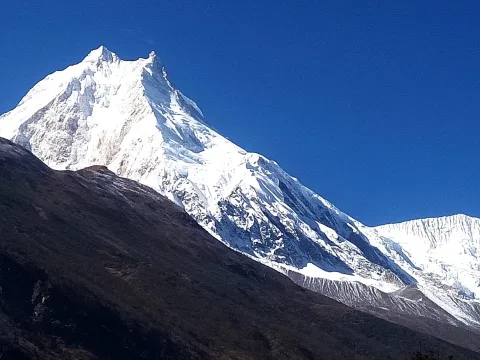
The best acclimatization during the Manaslu Circuit Trek will be at Samagaon, which stands at 3,530 meters. Trekkers typically take a complete rest day here in order to get used to rising altitude before venturing higher. Effective acclimatization at Samagaon is important in order to lower the risk of altitude sickness, particularly prior to crossing the Larke Pass at an altitude of 5,106 meters.
Samagaon features numerous short treks ideal for acclimatization in Manaslu Circuit Trek. The most popular trekking is to Pungyen Gompa at 4,050 meters. The scenic trek provides excellent views of Manaslu and neighboring peaks. The Manaslu trek traverses yak grass and alpine areas, providing natural and cultural exposure. It involves approximately 4–5 hours round trip and can be done as an ideal half-day trek.
Another fantastic acclimatization trek from Samagaon is to Manaslu Base Camp at 4,800 meters. More challenging and steeper, it still rewards trekkers with wonderful glacier views and proximity to the massive Manaslu. It's 6–7 hours round trip. Trekkers must weigh their energy levels and weather conditions before taking this on. Done slowly and carefully, it acclimatizes the body to the higher altitudes effectively.
Another choice with an easier distance, although slightly lower elevation, is the walk up to Birendra Tal, at a height of 3,650 meters while acclimatizing at Samagaon. A 45-minute journey from Samagaon brings us to this glacial lake. The quiet lake gives an easy incline and beautiful views reflecting Manaslu. Ideal for trekkers looking for light acclimatization together with stunning beauty around them.
During your acclimatization day at Samagaon, stay active by walking and avoiding long naps. Drink plenty of water and eat nutritious meals to support your body’s adjustment. Avoid alcohol and smoking to prevent dehydration and altitude-related complications.
Acclimatization in Samagaon acclimatizes your body to thin air step by step. Multi-grade hikes are adjustable as per your physical fitness and comfort. Each decision presents a chance to taste Manaslu's rich culture and electrifying landscapes. Rest day is not just for health—it enriches the overall trekking experience. Proper acclimatization in Samagaon offers a safer and more comfortable crossing of Larke Pass.
1. Best Altitude for Acclimatization (3,530 m / 11,581 ft)
Samagaon is located at the ideal altitude for acclimatization before ascending to the higher elevations like Samdo (3,860 m) and Dharmashala (4,460 m). Living at this mid-high elevation gives the body time to acclimatize to lower oxygen levels, lessening the likelihood of altitude sickness. Trekking from Lho (3,180 m) to Samagaon offers a progressive increase without a sudden rise. An extra night here enables your body to generate red blood cells to transport oxygen efficiently—critical prior to crossing over the Larke Pass (5,106 m). Avoiding altitude gain of more than 500 m/day, Samagaon is a tactical resting point.

2. Excellent Side Hikes for Active Acclimatization
Samagaon has excellent side trips that allow "climb high, sleep low" acclimatization. Perhaps the most popular day hike from Samagaon is to Manaslu Base Camp at 4,800 m / 15,748 ft, paving the way for the higher reaches of the trek. Another is serene Pungyen Gompa at 4,050 m / 13,287 ft, offering both altitude acclimatization and beautiful views of the surrounding peaks. These day hikes expose your body to the higher altitudes for a brief period before descending back down to the safer sleeping altitude in Samagaon. This process significantly increases acclimatization and reduces the risk of Acute Mountain Sickness (AMS) before continuing towards the Larke pass region.
3. Proximity to Mount Manaslu (8,163 m / 26,781 ft)
Samagaon lies at the base of Mount Manaslu, the 8th highest mountain in the world. The village is located in a wide glacial valley with stunning views of Manaslu, Naike Peak (6,211 m), Himalchuli (7,893 m), and Ngadi Chuli (7,871 m). The grand landscape nearby Samagaon not only affords visual satisfaction but also heralds the thin-air condition of high-altitude acclimatization. The scenic natural scenery also entices trekkers to stay longer for extra days, which tallies with the acclimatization requirement. The longer period spent in high mountain settings benefits the body by acclimatizing better before climbing higher camps.
4. Improved Facilities and Rest Opportunities Available
Compared to higher camps like Samdo or Dharmashala, Samagaon offers more comfortable teahouses, better food variety, and medical support. You’ll find relatively better accommodation, cellular reception, and even hydro-powered electricity. These amenities ensure that trekkers can rest, hydrate, eat well, and monitor health—key factors in proper acclimatization. In contrast to Dharmashala, which is basic and at a higher, riskier altitude, Samagaon allows trekkers to acclimatize physically and mentally in a safer environment. Adequate rest and nutrition significantly improve acclimatization, reducing the strain of altitude fluctuations in the days to come.
5. Cultural and Spiritual Calm Facilitating Recovery
Samagaon is a richly cultural Tibetan Buddhist village with ancient monasteries like Pungyen Gompa and prayer wheels and chortens as a part of life. The calm, meditative environment minimizes stress and anxiety—both of which are known to impede acclimatization. Strolling about with the locals, going to monasteries, and observing traditional rituals encourages slow movement and mindfulness, allowing your body time to naturally acclimatize. Unlike higher, more remote places, Samagaon's blend of cultural immersion and natural calm allows for balanced recovery, both physically and mentally, and is the ideal spot to acclimatize to altitude.
Samagaon is the most popular acclimatization stop on the Manaslu Circuit Trek. However, trekkers can also acclimatize in other lovely and culturally significant villages along Manaslu Circuit Trail if they want to move further than Samagaon. Syala, Samdo, and Namrung are excellent alternatives. These villages are at strategic elevations and offer varied landscapes, traditions, and day hikes. Acclimatization is required for adjusting to high altitudes and avoiding AMS (Acute Mountain Sickness). Spending an additional day in such locations helps the body adjust gradually. The following are detailed descriptions of Syala, Samdo, and Namrung as acclimatization points, along with reasons and activities that make each location stand out.
1. Syala (3,500 meters)
Syala is situated in a breathtaking position amidst high Himalayan peaks along Manaslu Cirucit Trekking Trail. The village provides serene views and is located just ahead of Samagaon. The altitude is perfect for gradual acclimatization prior to climbing higher. Trekkers prefer Syala as quieter and less crowded than Samagaon.
You can take short hikes to surrounding ridges for mountain views from Syala. Hike to Pung Gyen Monastery for a spiritual and scenic hike. The area has lush vegetation and yak grazing pastures. From Syala, you get close views of Manaslu, Himalchuli, and Ngadi Chuli.
Acclimatizing at Syala during Manaslu Circuit Trek gives the body time to stabilize before climbing further. Its tranquil atmosphere is suited for rest and recovery. Surroundings of a local village may be observed and friendly locals visited. On clear mornings, the photographer can get dramatic sunrise shots facing Manaslu.
Acclimatizing in Syala during Manaslu Circuit Trek enables trekkers to enjoy solitude, slow down pace, and avoid altitude issues. It is peaceful relief from congestion-filled treks at Samagaon. It is an enriching acclimatization location due to its culture and environment.
2. Samdo (3,860 meters)
Samdo is a windswept village near the Tibetan border. It is located beyond Samagaon and serves as a strategic stop for acclimatization in Manaslu Circuit trek. Samdo was built by Tibetan refugees and manifests deep Tibetan culture. It consists of Tibetan houses, dry arid landscapes, and sweeping mountain views.
Acclimatization at Samdo prepares trekkers for Larke Pass, which is higher. Trek all day towards Samdo Ri viewpoint. This short but uphill trek gives you panoramic views of Manaslu, Simnang Himal, and the Tibetan plateau.
Another satisfying day hike goes along the ancient Tibetan trade route. It does not go to Tibet but provides a glimpse into ancient trade existence. Observe herds of blue sheep in the hills surrounding Samdo.
An additional night here at Samdo avoids altitude sickness before crossing 5,100 meters at Larke Pass. The 3,860-meter elevation provides gradual acclimatization.
Samdo's cultural separation, rugged beauty, and proximity to vistas render it ideal for acclimatization. Trekkers are able to socialize with villagers, rest comfortably, and acclimatize mentally and physically.
3. Namrung (2,630 meters)
Namrung is a stone village in the lower part of the Manaslu region. It offers dense forest, fertile ground, and Buddhist culture. It is lower than Syala and Samdo but also worthwhile for early acclimatization.
Namrung is a favorable height for those trekkers who ascend rapidly from villages below. It provides rest before ascending high in a steep incline. Trekkers can visit its beautiful monastery and trek short trails to nearby viewpoints.
The nearby Gompa is intricately decorated with prayer wheels, murals, and ancient stone work. You can mingle with Tibetan-origin villagers and taste their barley-based meals.
Acclimatizing here at Namrung allows you to acclimatize in advance before reaching the higher alpine zone. Its natural beauty and cultural diversity offer considerable interaction. Photographers prefer misty dawns and golden light on forest and stone walls.

While not as commonly used for acclimatization, Namrung is best suited for those with flexible schedules. The peaceful village and rich culture make it a special stop. Acclimatizing here gives a good grounding for the upper part of the trek.
Actually, people rarely go with Namrung for early acclimatization. If you want to acclimatize here at Namrung, you will have luxury stay with better meals and accommodation.
| Day | Route | Elevation (m) | Distance (km) | Duration (hrs) | Notes |
| 1 | Kathmandu → Machhakhola (Drive) | 870 | 160 km | 8–10 hrs | Jeep drive via Dhading/Machhakhola Khola |
| 2 | Machhakhola → Jagat | 1,340 | 22 km | 6–7 hrs | Gradual ascent, check post at Jagat |
| 3 | Jagat → Deng | 1,860 | 21 km | 6–7 hrs | Picture-perfect trail through Philim |
| 4 | Deng → Namrung | 2,630 | 20 km | 6–7 hrs | Buddhist villages begin |
| 5 | Namrung → Lho | 3,180 | 11 km | 4–5 hrs | Short day, gain elevation gradually |
| 6 | Lho → Samagaon | 3,530 | 14 km | 5–6 | Elongated Mani walls, first close views of Manaslu |
| 7 | Acclimatization in Samagaon | 3,530 | 12 km | 5-6 hrs | Hike to Pungyen Gompa or Manaslu Base Camp |
| 8 | Samagaon → Samdo | 3,865 | 16 km | 4–5 hrs | Short day to facilitate further acclimatization |
| 9 | Acclimatization in Samdo | 3,865 | 3 km | 1-2 hrs | Hike to Samdo Ri (~5,000 m) or Tibet viewpoint
|
| 10 | Samdo → Dharamsala | 4,460 | 11 km | 4–5 hrs | Prepare for the Larke pass |
| 11 | Dharamsala → Larke pass → Bimthang | 5,106 / 3,590 | 24 km | 8–10 hrs | Tough and long day over high pass |
| 12 | Bimthang → Tilije | 2,300 | 26 km | 6–7 hrs | Back into green forest area |
| 13 | Tilije → Dharapani → Besisahar | 760 | 35 km | 6–8 hrs | Trek to Dharapani then jeep to Besisahar |
| 14 | Besisahar → Kathmandu (Drive) | 1,400 | 175 km | 6–8 hrs | Return Kathmandu via Prithvi Highway |
Acclimatization is necessary and must on the Manaslu Circuit Trek to avoid altitude sickness and to stay safe. The Manaslu Circuit trek reaches high altitudes fast, and therefore planned acclimatization rest stops enable the body to acclimatize.
The best acclimatization in Manaslu Circuit Trek is Sama Gaun (3,530 m). Trekkers typically camp there one night extra. This village is about 80 km from the beginning of the trek and takes about 6–7 days to get there. From Sama Gaun, people ascend to Manaslu Base Camp (4,800 m) or Pungyen Gompa (4,000 m). It takes 6–8 hours for a day trip round-trip and is perfect for acclimatization.
The next major stop for acclimatization in Manaslu Trek is at Samdo (3,875 m), just 17 km and a day's walk from Sama Gaun. Trekkers prefer to spend an extra night here. One's popular trek is to Samdo Ridge (4,500 m) and back in 4–5 hours.
These acclimatization treks during Manaslu Circuit Trek follow the "climb high, sleep low" rule. They bypass AMS and acclimatize for Larke Pass (5,106 m). Proper acclimatization guarantees a safer, more enjoyable trek.
1. What is the best acclimatization strategy for the Manaslu Circuit Trek?
The best way to get used to altitude on the Manaslu Circuit Trek is to go up slowly. You should have a rest day at Samagaon which's 3,530m high. On this rest day you can hike to Birendra Tal or Manaslu Base Camp. Then sleep back in Samagaon. This helps your body get used to the altitude and reduces the risk of getting sick.
2. Is acclimatization mandatory for the Manaslu Circuit Trek?
Yes, it is very important to get used to altitude on the Manaslu Circuit Trek. This is because you will be going up to over 5,000m at Larke pass which's 5106m high. If you don't get used to the altitude you might get sick. A good plan should include a rest day at Samagaon to help your body adjust.
3. Why is Samagaon the best place for acclimatization in Manaslu Circuit Trek?
Samagaon is good for getting used to high altitude because it is at 3,530m and has good facilities. From here you can hike to Manaslu Base Camp or Pungyen Gompa. Then sleep back in Samagaon. This helps your body get used to the altitude.
4. What are the symptoms of poor acclimatization on Manaslu Circuit Trek?
If you don't get used to altitude on the Manaslu Circuit Trek you might get headaches feel sick, dizzy, tired or have trouble breathing. These symptoms can be serious. Might lead to problems like AMS or HAPE/HACE. This is why it's very important to get used to the altitude.
5. Can solo trekkers join the Manaslu Circuit Trek?
Yes, you can do the Manaslu Circuit Trek. Nepal has changed the rules. Now you can get a permit even if you are trekking alone. However, you must book through a registered trekking agency. Have a licensed guide with you.
6. How many acclimatization days are recommended for Manaslu Circuit Trek?
Most people need 1-2 rest days to get used to altitude on the Manaslu Circuit Trek. Usually, one rest day is at Samagaon. Some plans might include a rest at Samdo. This helps your body get used to the altitude.
7. What side hikes are best for acclimatization at Samagaon?
Some good hikes to get used to altitude from Samagaon are to Manaslu Base Camp, which is about 4,800m high or to Birendra Tal. These hikes help your body get used to the altitude.
8. What are alternatives to Samagaon for acclimatization in Manaslu Circuit Trek?
Yes, there are places to get used to high altitude on the Manaslu Circuit Trek besides Samagaon. You could stay a night at Lho or Namrung to get used to high altitude earlier. You could have a rest day at Samdo which is 3,860m high.
9. How long does the Manaslu Circuit Trek with proper acclimatization take?
The Manaslu Circuit Trek with proper acclimatization takes about 14-18 days. This includes a rest day at Samagaon. Going up slowly. If you try to do it on time you might get sick.
10. Do I need a guide for Manaslu Circuit Trek even as a solo traveler?
Yes, you need a guide for the Manaslu Circuit Trek even if you are trekking alone in 2026. You must book through a registered trekking agency. Have a licensed guide with you. This helps keep you safe and makes sure you have the permits.
11. What permits are required for Manaslu Circuit Trek?
You need the Manaslu Restricted Area Permit, Annapurna Conservation Area Permit and a TIMS card. In 2026 solo travelers can get the Restricted Area Permit on their own. You must use a registered agency and a licensed guide. Authorized operators can process the permits.
12. Is the Manaslu Circuit Trek suitable for beginners with good acclimatization?
Yes, if you have an acclimatization plan, especially at Samagaon you can do the Manaslu Circuit Trek. It's moderately difficult, culturally rich. It has great scenery. Just make sure to ascend to safely reach the Larke pass at 5,106 meters.
13. How does weather affect acclimatization on Manaslu Circuit Trek?
The best weather for acclimatization is in spring (March to May) and autumn (September to November) with skies and stable conditions. The monsoon season brings rain and leeches while winter brings snow that can make passes like the Larke pass difficult. Proper rest days are crucial.
14. What should I pack specifically for acclimatization days on Manaslu?
Pack layered clothing, a sleeping bag, trekking poles, a water filter, snacks, sunscreen, a headlamp and altitude medication (like Diamox after consulting a doctor). These items will help you stay comfortable during rest days and side hikes at places like Samagaon before ascending to the Larke pass.
15. Can I add extra acclimatization days to my Manaslu Circuit Trek itinerary?
Yes, most agencies can customize your itinerary with days at Samagaon or other villages. Adding acclimatization days makes the trek safer and more enjoyable for those concerned about reaching the Larke pass or adjusting to high altitudes.
16. What is the highest point on Manaslu Circuit Trek and its challenges?
The Larke pass at 5,106 meters is the point. It has climbs, possible snow and thin air. Good acclimatization at Samagaon is crucial to cross it and enjoy the Himalayan views.
17. How does Manaslu Circuit Trek compare to Annapurna Circuit in terms of acclimatization?
The Manaslu Circuit Trek is more remote and less crowded than the Annapurna Circuit with altitude challenges. Samagaon is a spot for acclimatization with excellent side trips. Both treks require pacing before high passes.
18. What food and hydration tips help with acclimatization on Manaslu?
Drink plenty of water (3-4 liters eat carbohydrate-rich meals and avoid alcohol. Local dal bhat provides energy. Good nutrition during acclimatization days at Samagaon helps your body adapt before sections like the Larke pass.
19. Are there medical facilities for altitude issues during Manaslu Circuit Trek?
There is medical support in larger villages like Samagaon but advanced care is limited. It's essential to carry a first-aid kit and have descent plans. Strong acclimatization practices are the prevention against problems before crossing the Larke pass.
20. Why choose a package with best acclimatization for Manaslu Circuit Trek?
Packages that focus on acclimatization, particularly at Samagaon offer safer and more successful journeys with experienced guides, proper pacing and support. They ensure you enjoy the scenic beauty while minimizing risks up, to the Larke pass.
Our travel experts are ready to assist you with any questions.
Send us a message.Have a question before you book? Send your enquiry below and our travel experts will get back with the required information.