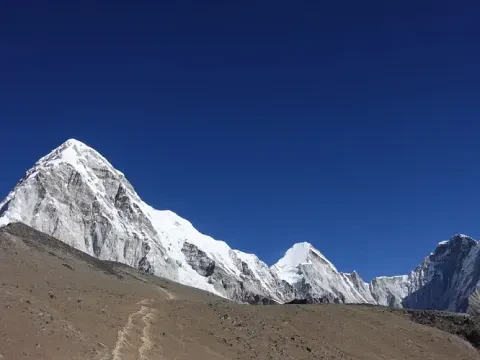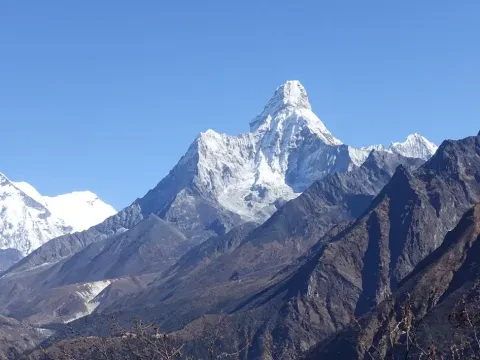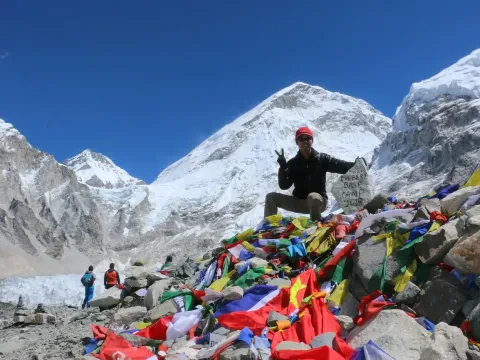
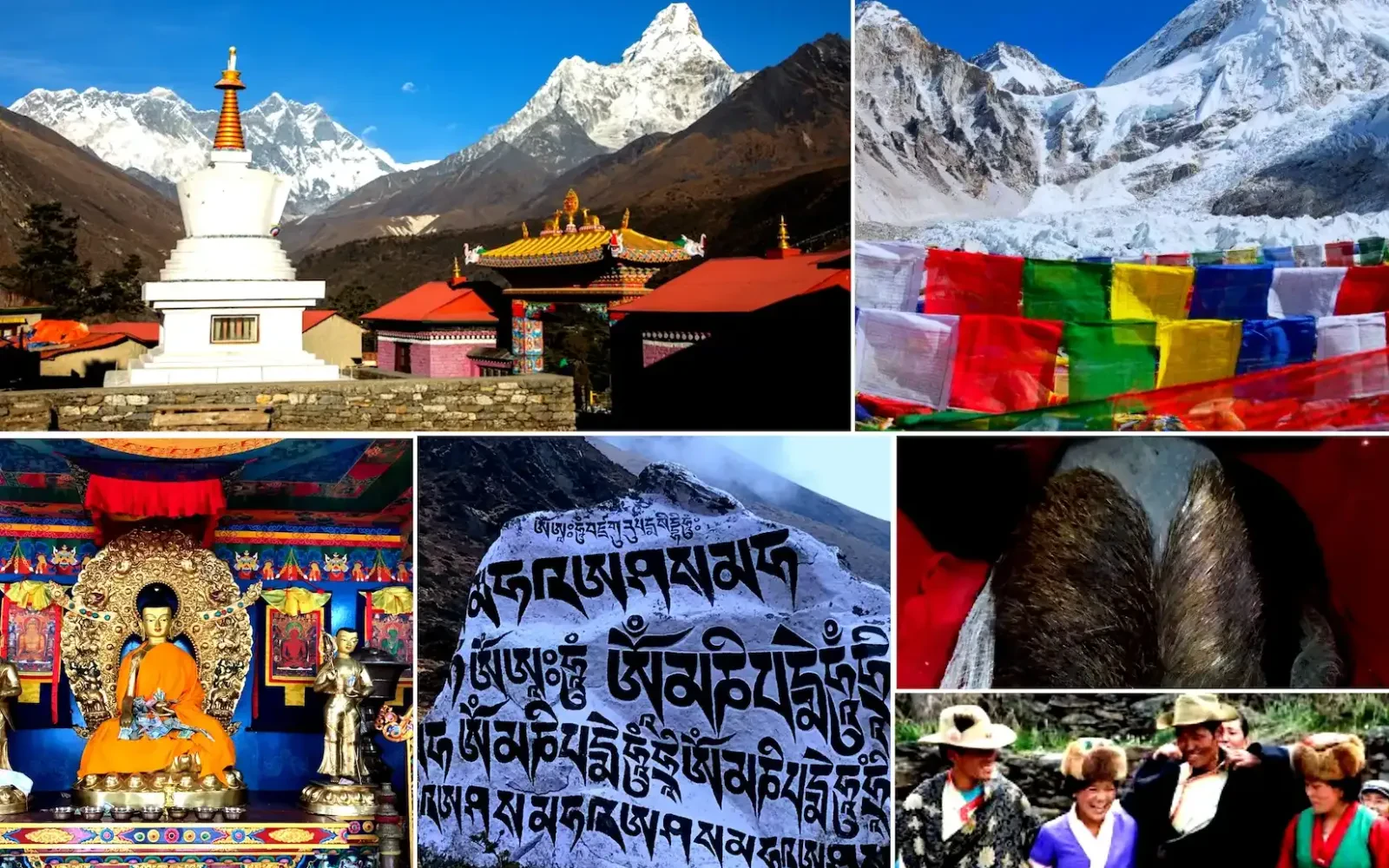
In the Everest Base Camp Trek, explorers navigate a cultural richness woven from Sherpa customs and Himalayan spiritualties. Visitors learn about The practices that characterize Mount Everest's (8,848m) neighborhoods, such as prayer flags fluttering in the mountain breeze. Regional festivals like Mani Rimdu foster communal relationships and spread spiritual teachings. Thus, the entire expedition exposes how Sherpa customs, Everest Base Camp Trek, and Himalayan traditions work harmoniously.
In addition, Sherpa guides take travelers through Himalayan villages that have Tibetan Buddhist influence, reinforcing their mountaineering strength. They recount tales of Everest (8,848m) summit, which the Sherpa call Chomolungma, Mother of the World. Furthermore, archives like Tengboche Monastery (3,860m) provide tranquil spaces to connect with Sherpa traditions and Himalayan ways of life. Consequently, travelers acquire the knowledge of Sherpa customs, Tibetan Buddhism, and high Himalayan living.
Furthermore, mani stones inscribed with sacred symbols decorate pathways which promote spiritual protection and balance with the natural world. Trekkers meet yak keepers who have managed to sustain their lives in spectacular environments. Therefore, the route educates visitors about native customs and life approaches that have endured millennia. As a result, mani stones, Yak founding habits, and cultural connections become central to the allure of Everest Base Camp Trek.
Also, festivals such as Dumje observe Sherpa identity with songs, dances, and good wishes, drawing travelers from distant regions. These celebrations enhance the community's unity in extreme environments like Everest Base Camp (5,364m). Hence, visitors see how long-standing traditions quickly evolve to form contemporary tourism attractions while maintaining tradition. At the same time, Sherpa gatherings, high altitude customs, and the Dumje festival draw the eyes of enlightenment visitors.
Besides, prayer wheels operated by locals bring blessings for safe trekking experiences. This custom derives from Nyingmapa Buddhism, affecting countless aspects of existence and architecture. Therefore, the journey uncovers many layers of spirituality that transcend the physical environment. In conclusion, prayer wheels, Nyingmapa Buddhism, and spiritual customs set the tone of the whole trek.
Likewise, Sherpa by nature are most hospitable at teahouses where traditional dishes such as dal bhat and butter tea are served. Travelers share information about Bon religion stems, having piggybacked their cohabitation with Buddhism. Consequently, these interactions promote the expedition's cultural preservation. So, Sherpa by nature, dal bhat, and Bon religion contribute colorful spices to each trekker's trek.
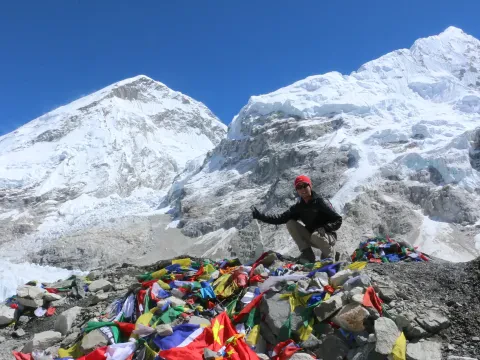
Furthermore, the mountains seem embedded in the cultural palette, as local stories place them as sacred grounds. Trekkers can observe Himalayan pashas such as Himalayan tahr that support eco-centric values. As a result, sustainable approaches are promoted by local actors. In summary, the combination of biodiversity, Hiramaya, and Himalayan tahr temperaments act together to make the Everest Base Camp trek more colorful.
Additionally, trek costs for Everest Base Camp usually range from $1,200 to $2,500 while granting permits and recruiting guides. Plans to preserve reasonable budgets yield access to authentic experiences and assurances of safety. In consequence, advance preparations result in a new kind of cultural appreciation. Therefore, trek fees, permits, and authentic sensations sustain meaningful journeys.
Also, Namche Bazaar (3,440m) is the center for local artifacts that are sold on the markets. This place allows trekkers to interact with artisans who focus on sharing their iconic handicraft artisanship. Resultingly, the experience becomes more meaningful. All summed up, Namche Bazaar, indigenous artisanship, and handicraft artisanship form the most important parts in the narrative.
Finally, the trekkers finish at Everest base camp, where mountaineers' sleeping areas are reminiscent of Sherpa climbing history. One remembers the feats of Tenzing Norgay with awe, as the destination caries Indian cultural and physical significance together. Therefore, the endpoint portrays background stories with impressive history. All in all, base camp, Tenzing Norgay, and mountain clime history paint the broader backdrop.
Key Cultural Aspects
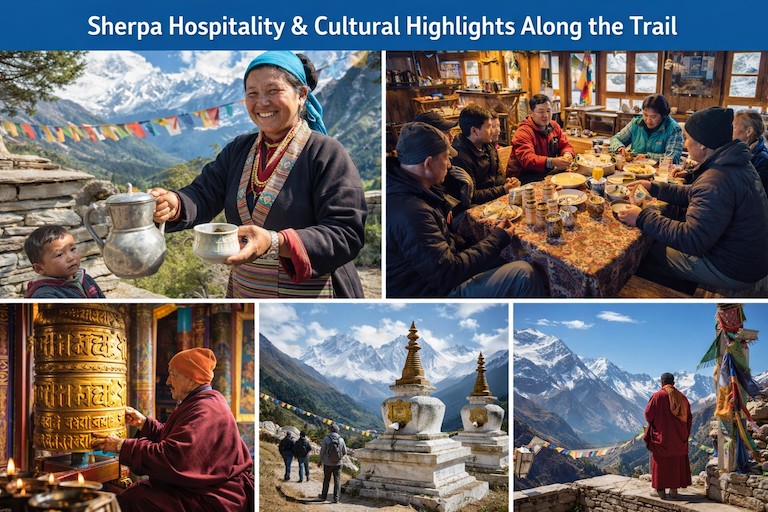
Exploring Sherpa everyday protocols influenced by Nyingmapa Buddhism. Stay inquisitive about how Benedict monks connect to daily events following Nyingmapa Buddhism practices, and participants will make meaningful discoveries.
Discover Phakding 2,610m on Everest Base Camp Trek and its first Buddhist monuments, prayer wheels, and Sherpa culture to enhance Himalayan experience.
The basket of Buddhist exuberance:
As the trekkers arrive at Phakding 2,610m, where people get first sights of Buddhist monuments and prayer wheels on Everest Base Camp Trek in Nepal. At the Dudh Koshi River, trekkers cross suspension bridges stringed with bright-colored prayer flags. Besides, these hold a mystical purview of the area. Therefore, Phakding village, Buddhist monuments and prayer wheels set the tone for cultural solemnities.
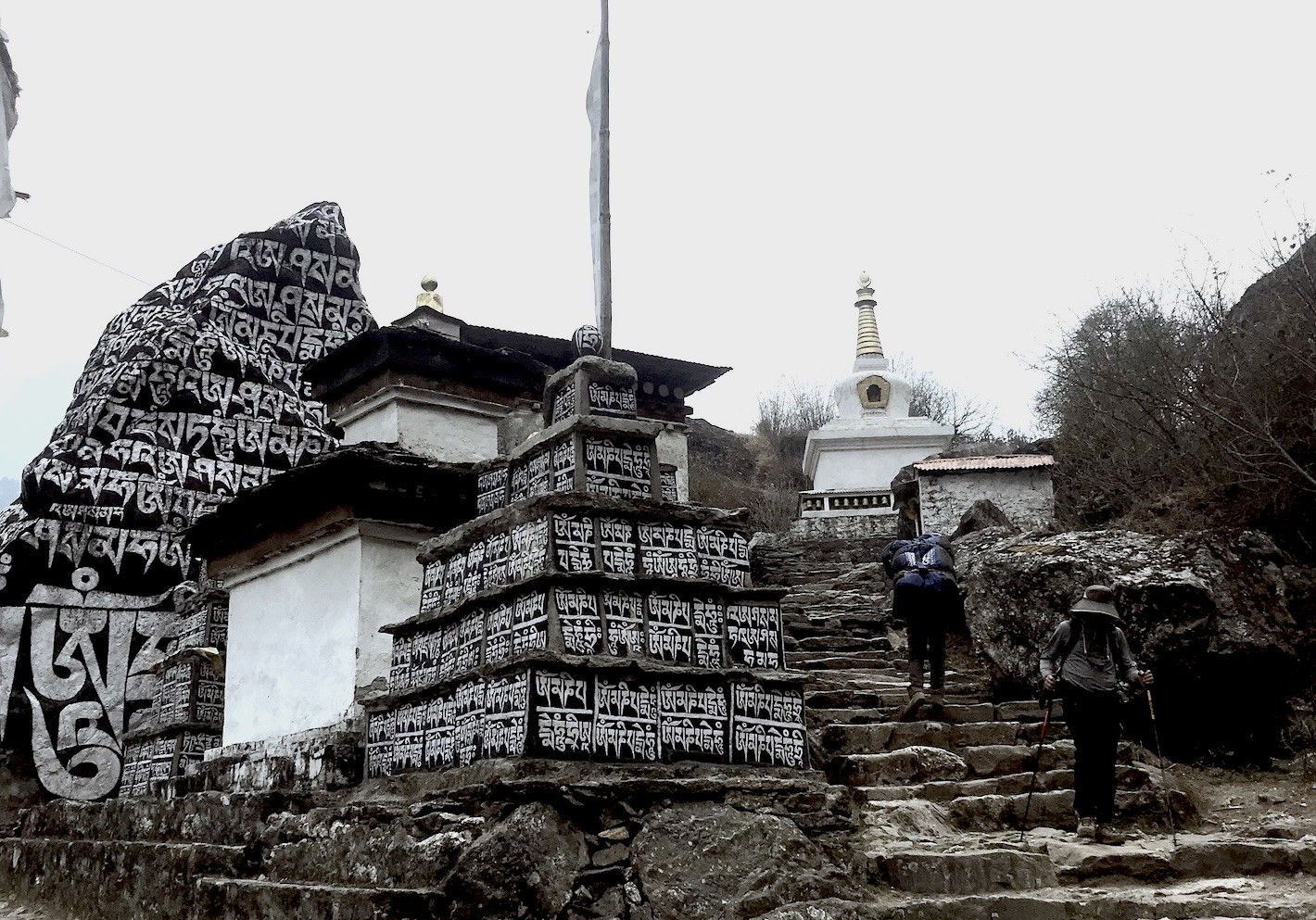
In addition, the Rimijung Monastery is a notable feature, where visitors can watch age-old rites. Monks preserve sacred mementos with Tibetan Buddhist!s influence. Likewise, spinning prayer wheels here calls for meri blessings for the future trek. As a result, Rimijung Monastery, Tibetan Buddhist and sacred artifacts magnify the trek!s spiritual setting.
Similarly, mani stones are haphazardly planted along the roads, inscribed with prayer lines for brilliance and harmony. Trekkers mingle with Sherpas who give accounts of high-altitude trekking!s expectations. Hence, such interactions foster reverence for unswerving customs. As a result, mani stones, Sherpa tales, and high-altitude customs underscore the first trekking day.
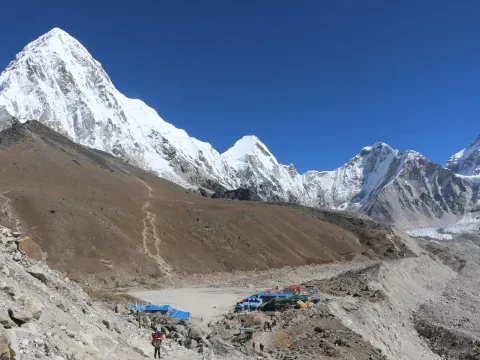
Furthermore, the height of Phakding (2,610m) helps easy adaptation following Lukla (2,860m). Outlooks towards Thamserku (6,608m) fill trekkers with surprise in vivid rhododendron woods. Thus, nature blends with sights of sacred relics. Finally, the setting is a gentle opening for newcomers. At last, village altitude, Thamserku peak and rhododendron woods invent welcoming portal.
Also, stopping at top-notch teahouses offers many break-abouts- tea made of tsampa and buttermilk serve for fellow exchanges. Surfers discover Bon!s presence in local lifestyles. Therefore, rest stops display hospitality of Everest community. Hence, teahouses, buttermilk and Bon!s presence work into warm experiences.
Moreover, another landmark here is the Hillary Suspension Bridge, which rocks to the fast percolating waters of the waterway, representing good adventures! Courage! Luggage is carried by porters who shout out prayers. Consequently, the bridge marks a subtle passage into profound Sherpa economy!. The result is Hillary Bridge, porter’s loads and Sherpa economy! presence amplify adrenaline.
Aside from such, the prices for Phakding overnight stay varies from $ 5-10 per night inclusive of simple meals. The cost of park entry is relevant from Monjo (2,835m). Thus, budget can facilitate greater plans for transit. In this respect, Phakding accommodation, park entry costs and cheap options help make for greater expeditions.
Importantly, prayer flags whirl in the fresh urban air with spells to the blissful heavenly world. Passers-by engage mani stones with mantras inscribed to bring good karma for the trek. This shoot such practices back to the Nyingma element of Buddhism. In the long run, the prayer flags, mani stones and Nyingma penchant inhaled breathe over all thoughts of peacefulness.
In addition, the 3-4 hour uphill trek (with some downward trails) from Lukla climbs through chortens. These commemorate deities and mountaineers. The symbols awe the onlookers with mountain tribute. On the whole, the Lukla trek, chortens, stupas and mountain devotion breed synoptic appreciation.
Moreover, Sherpa guides disclose the worth of the relics, making the narration more engrossing. Sightseers take shots of detailed remembrances on stones. Thus, guides preserve oral expressions. Eventually, guides, worth of relics and oral expressions develop intercourses in trek.
The sacred image in Phakding
Investigate how mani stones help from the way, emphasizing solemnity of mind. These symbols develop a connection of the trek to extensive spiritualism. In addition, they point towards a transformational trek.
Explore the UNESCO listed Sagarmatha National Park, which plays a key role conserving biodiversity of Everest region and preservation of Sherpa way of life. Entry fee structures and other tips for trekkers explained.
Elements of Preservation:
| Aspect | Description | Significance |
| Biodiversity | Home to snow leopards, red pandas, Himalayan tahrs, and over 1,000 plant species. | Protects endangered species and maintains ecological balance in Everest region. |
| Sherpa Heritage | Includes villages, monasteries like Tengboche (3,860m), and festivals such as Mani Rimdu. | Preserves cultural traditions and promotes community involvement in conservation. |
| Entry Fees: Foreigners | NPR 3,000; SAARC: NPR 1,500; Nepalis: NPR 100 at Monjo (2,835m). | Funds maintenance, wildlife monitoring, and sustainable tourism initiatives. |
| Conservation Programs | Anti-poaching efforts, waste management, and eco-friendly projects in buffer zones. | Ensures long-term protection of UNESCO World Heritage Site's natural and cultural assets. |
| Flora and Fauna | Rhododendrons, pines, impeyan pheasants, and musk deer across altitudes up to 8,848m. | Enhances trekking experiences while highlighting the park's rich environmental diversity. |
Enter the Sagarmatha National Park, which, by the 1970s, has established itself as major contributor to conserving biodiversity rich Everest region and Sherpa nomadic life. Officially established as park in 1976, it stretches from 2,845 m in the south, northwards to Everest (8,848 m), covering the world’s highest point, Mount Everest. Additionally, the UNESCO have declared it as a World Heritage Site in 1979. Hence, Sagarmatha Park, conservation of biodiversity and Sherpa way of life sum up the main idea.
In addition, diverse species of flora grow in different altitudes: rhododendron, pine, etc. In addition, animals such as endangered snow leopards and red pandas are amazing visitors to this park. Moreover, Himalayan tahr roams freely across rocky slopes. Therefore, unique flora, snow leopards and red pandas are amazing attractions.
In addition, the traditional settlements of Sherpas have been set up here in the park area. Monasteries within this park, such as Temephu and Tengboche set up along with Sherpa festivals of Mani Rimdu, allow community members to retain contemporary way of life. Therefore, Sherpa settlements, monasteries and Mani Rimdu retain their way of life. As a result, they attained sustainability.
In addition, the management plan and conservation projects protect this parks from human violence: demolishing forest cover and illegal poaching. The forest guards maintain the wildlife habitats and monitor the park efficiently. Hence, the specific management tips and monitoring the park also support the policymakers in policy implementation period.
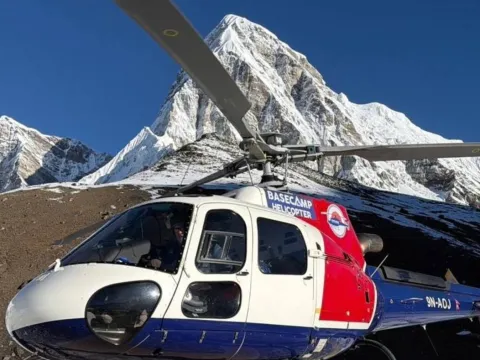
Meanwhile, the entry fee structure for individual trespassers is accommodated; foreigners are charged with NPR 3,000 (USD 25), while SAARC nationals are required NPR 1,500 and Nepali residents have to pay only NPR 100. Nevertheless, permits of entry should be obtained from the Monjo (2,835 m) control. Therefore, the entry fee structure and point of access encourage the pandemic to pass through this park.
Additionally, over 1,000 different types of plant species and 200 varieties of birds are found here. Trekkers can observe the impeyan pheasant freely in the lush forest. Consequently, wide varieties of plants, animals and bird species support trekking routes.
Furthermore, firstly, the Nepalese view mountain as holy place. They consider the summits as sacred places of deities, gods and goddess. Secondly, impeyan pheasants, a fabulous bird in the forest too inspire the trekkers. As a result, their sacred place and lake, and their mythological story support the trekkers.
Furthermore, the settlement surrounding the park, i.e. Buffer zone sit along with eco-friendly farming which reduces the Tinchuley waste from trekking. Consequently, these practices reduce negative impacts on environment.
Besides this, the vulnerable species like muskdeer observed in the high altitudes symbolize their fragility. Their presence and appropriate conservation method monitor in high altitudes creates global awareness among the people. Therefore, muskdeer and its symptoms support the park.
In addition, the glacial melts in the rivers (i.e. Dudh Koshi) feed into the various ecological habitats and nurture life. The hydro-power projects balance ecological services. As a result, glacial melts and hydro-power project creates understanding regarding essence of life.
Conservation in Sagarmatha Discover the ways in which visiting climbers can directly support local community based projects that protect habitats and mitigate threats. These initiatives also involve local Sherpa communities in planning processes. In addition, they guarantee the sustainability of the park.
Walkthrough Namche Bazaar(3,440m),the lively Sherpa Capital and commercial Center on Everest Base Camp Trek, buildings, market, community, scenic view for incredible adventure experience in Nepal.
Major attractions in Namche Bazaar:
| Attraction | Description | Significance |
| Weekly Markets | Bustling stalls with handicrafts, yak products, and Tibetan goods. | Reinforces Namche Bazaar as a trading hub and Sherpa capital in Everest region. |
| Viewpoints | Panoramas of Mount Everest (8,848m) and Ama Dablam (6,812m). | Provides acclimatization and stunning Himalayan views for trekkers. |
| Cafes and Lodges | Offer local and Western foods, rooms at $10-20/night. | Blends comfort with cultural immersion in vibrant Sherpa life. |
| Syangboche Airstrip | Scenic flights over peaks like Kongde Ri (6,187m) at $200-300. | Adds adventure options to the trading hub experience. |
| Nearby Villages | Access to Khumjung (3,780m) with Hillary School and forests. | Expands exploration of Sherpa heritage and natural beauty. |
Explore Namche Bazaar (3,440m), a buzzy Sherpa Capital and significant commercial Center in Everest region. Trekkers reach here after a steep walk-up from Phakding (2,610m).Find a lively amphitheater shaped town and weekly market for both Sherpa and other trekkers. Moreover, Namche Bazaar, Sherpa Capital and Commercial Center pump with an energetic mind.
In addition, colorful stalls selling trekking equipment, handicrafts and fresh vegetables from the lower valleys. Sherpa’s trading yak cheese and potatoes to keep age-old relayed systems for ever-long service. Moreover, Tibetan traders cross borders to swap items. As a consequence, vibrant stalls, trekking equipment and Tibetan traders have prominent place for trade purpose.
Additionally, elevation of markets (3,440m) necessitates acclimatization stay on Everest Base Camp Trek. Visitors visit viewpoints like Everest View Hotel (3,880m).Participants look at Ama Dablam (6,812m) and Mount Everest (8,848m). As a consequence, such views leave awe-inspiring feeling. Therefore, altitudinous green settings, acclimatization days, Ama Dablam and awe-inspiring views augmented the visit.
Furthermore, cafe and bakery promote apple pie with espresso that need western touch with neighbor’s delicious flavor. Trekkers reload with tea, coffee and chat. As a result, social scene in cafes and bakery promotes relationship creation. In fine, net cafes, bakery dishes, apple pie and social scene counters modernized preference. You even can find Irish Pub here which is considered to be the highest pub of the world.
Furthermore, old Sherpa houses with stonewall and prayer rooms depict resilient cultural symbol. Families engaged with tourists on lodges costing 10-20 dollars per night. At last, Sherpa homes, stonewalls and lodge costing contribute to the local economy. Summarily, Sherpa houses, stonewalls and lodge costing depict authentic look.
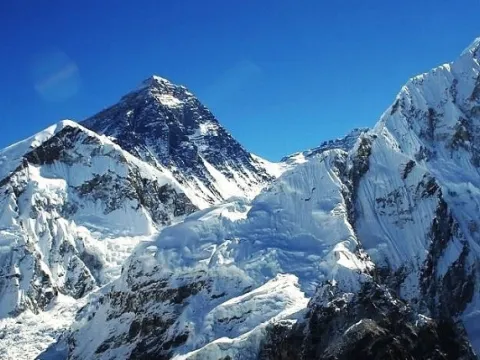
Moreover, the Saturday Market loads with vendors from Tibet and Nepal, showcasing jewelry and garment products. Bargain systems obtain pashmina shawls at the lowest cost. As a result, such event demonstrates cultural interaction. By the same token, Saturday Market, Tibet vendors and pashmina shawls take lead for trade.
Furthermore, Syangboche Airstrip (3,780m) provides scenic flights over Kongde Ri (6,187m).However, helicopter tours pay 200 to 300 dollars. Therefore such feat adds more adventure option. Likewise, Syangboche Airstrip, scenic flight and helicopter tours support full-fledge adventure.
In addition, internet cafes for 5 dollars an hour and dispense cash by ATMs. Thus, transport logistics are arranged comfortably. End result, internet cafes, ATM punch and trek arrange logistics.
Moreover, Khumjung Village (3,780m) nearby departs toward Hillary School and forest areas. Therefore, side trips account for more interaction with nature and culture endowments. In conclusion, Khumjung Village, Hillary School and forest diversity offer additional feat.
Similarly, Sherpa festivals for example Losar observe New Year by singing and dancing. Visitors participate in masked plays. In this way, local values stay immortalized. As a result, Sherpa festivals, Losar and masked plays hold attention of people.
Cultural and Commercial Traditions at Namche,
Find out how Sherpa traditional value frame blends with tourism that make the people prosperity maintaining their culture to link unchanged tradition of yesteryear with modern living environment.
Discover Sherpa Culture Museum and learn about Sherpa’s history and long lasting tradition. Located in Namche Bazaar (3,440m), the museum exhibits documents of their everyday life, religious practices and mountaineering heritage. Entry requires USD 5 that will go to preservation of Sherpa culture. So, Sherpa museum, mountaineering and Sherpa heritage exhibits allure inquisitive trekkers.
Moreover, exhibits have old farming tools like butter churn and weaving looms showing the self-sustenance of Sherpa community. The visitors also get to know about Sherpa migration from Tibet several hundred years ago. In addition, the centuries-old attires show their woolen dresses to sustain in high altitude region. As a result, ancient farming tools, migration from Tibet and high altitude woolen attires magnify their resources.
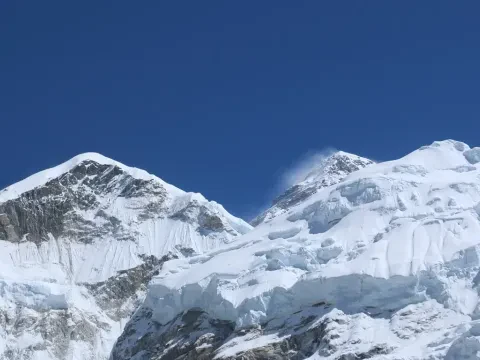
In addition, mountaineering pictures in the museum showcase the legacy of Sherpa learned from famous climbers like Tenzing Norgay who had ascended Everest (8,848m) in 1953. Gears used in expeditions reveal their heroism. The strenuously raised mounted images are sure to motivate upcoming climbers. As a consequence, mountaineers legacy, Tenzing Norgay and expedition gears touch one’s soul.
Likewise, Tibetan Buddhism displays prayer beads, thangka paintings and monks’ cloths that they still follow passionately. Such components reveals the impact of Buddhist culture in their daily life. Therefore, Tibetan Buddhism, prayer beads and thangka paintings help to learn about their long cherished tradition. Finally, Tibetan Buddhism, prayer beads and thangka paintings aid in a deep understanding of religious tradition.
Similarly, traditional medicines exhibit different herbs like yarsagumba which were used to treat altitude sickness while eating Sherpa recipes help learn to keep healthy in high altitude. Hence, traditional medicine, yarsagumba herbs and health items depict their intelligent solutions. Hence, traditional medicines, yarsagumba herbs and health-related exhibits promote health consciousness.
Moreover, the exhibits of folklores represent that the beliefs of Sherpa people are somehow related to fear of the unknown creature Yeti. Footprints guides all to bring the myth to life. In this way, folklore exhibits, Yeti myths and beliefs of Sherpa excite visitors’ imagination. Then again, festivals like Dumje involve ritual dances and video clips helped in recording community event. Therefore, Dumje, ritual dance and video footage play vital role in keeping young generation culture wise.
Likewise, mountaineering exhibitions display ropes, ice axes with recorded expedition teams. The management presents stories of women in Everest trails. In this vein, they publicize equality in the field of high altitude expedition. As a result, mountaineering, ice axes and stories of female mountaineers tell about equality.
Eventually, there are interactive areas that allow visitors to try on Sherpa cloaks or spin prayer wheels. Guides provide exclusive stories. Thus, interaction offered the opportunity of human interaction. Finally, the proximity to Sagarmatha National Park directly relates Sherpa culture and environment conservation. The exhibits introduce eco-practices. As a result, Sagarmatha park, eco-practices and conservation awareness echoes.
Mountaineer icons at the Museum,
Follow the trail of mountaineering heroes like Tenzing Norgay. Before you know it you're catching the bug. Explore where the ancestors of mountaineering add to history.
Old monasteries, Yeti relic & Sherpa traditions await in Khumjung Village (3,790m), exploring Himalayan treks in Everest area.
Popular highlight of Khumjung Village:
Yeti relics & old monasteries welcome trekkers in Kyumpjung Village (3,790m) amidst Everest region. Sherpas safeguard this tranquil dwelling close to mountain-top sanctum Mount Khumbila (5,761m). Additionally, the community reveals ancient habits. Consequently, Kyumpjung Village, old monasteries & Yeti relic beckon explorers universally.
Besides, Kyumpjung Monastery contains the coveted Yeti scalp, dating for three centuries that resided in transparent enclosure. The Abbot pruses this antiquity that they think can nullify malevolence. As such, whanting 4 rupees in offers lets explorers gaze upon the Brown-glazed carousel. Thus, Kyumpjung Monastery, Yeti scalp & protective relics excite foreigners.
Furthermore, the religious sanctums reveal venerable Buddhist scriptures & Buddha Sakyamuni statues. Believers admire Sakyamuni icons of Nyingmapa clan. So, this reveals the domination of Tibetan Buddhism. To illustrate, Buddhist scriptures, Buddha Sakyamuni &Nyingmapa tribe introduces spiritual boon.
Likewise, Edmund Hillary founded Hillary School in 1961 which teaches kids of local area. Trekkers visit this orbit to learn of its compassion projects. Therefore, a place of learning symbolizes long interludes. Consequently, Hillary School, dedication to community, & charity projects motivates admiration.
Additionally, village height 3,790 meters facilitates potato culture & yak grazing among Azalea trees. Community treasure Sherpa traditions via yajnas & festivities. Therefore, daily residing amid nature. As a fact, altitude, farmland & folk traditions backs steady scene.
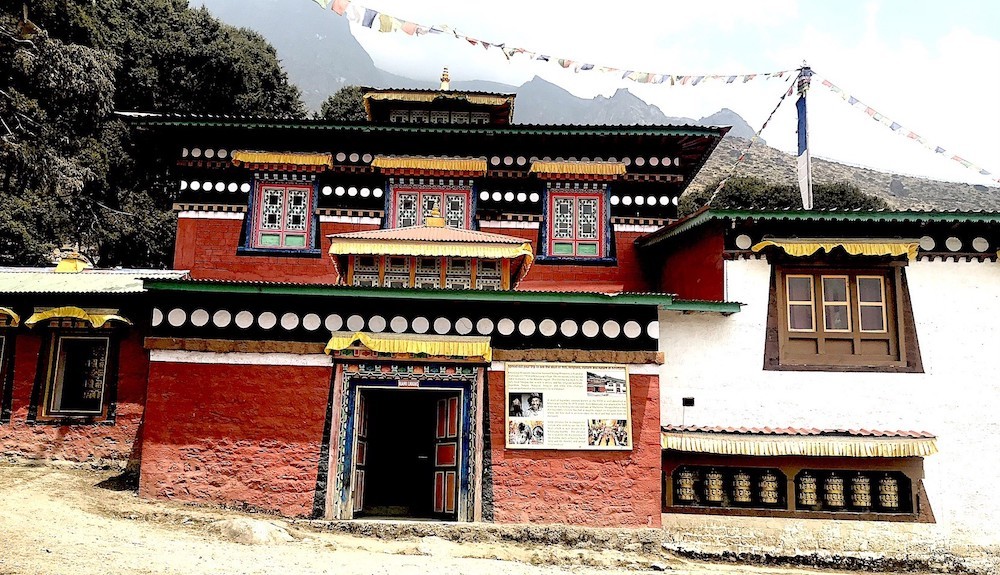
In addition, Namche Bazaar (3,440m) available paths reach Kyumpjung in about 1-2 hours. Pilgrims walk past stupa & prayer walls. Therefore, trekking meanders among traditions. In conclusion, Namche routes, prayer stations & cultural escape elevates trekking.
Furthermore, entry fees to religious sanctums remain reasonable, at about 100 rupees. Cost of accommodations in rest-houses ranges from 5-10 US dollars a day. So, financial efficiency makes traveling compatible. So, sanctum entry, rest-houses & funds availability make travel easily convenient.
Incidentally, the Yeti sagas are associated with the Himalayan fantasies, attracting adventurers. Hillary's 1960 expedition added to its credibility. From this, Chinese links increase epics. Consequently, Himalayan stories, Yeti adventures & expeditions activate substantiation.
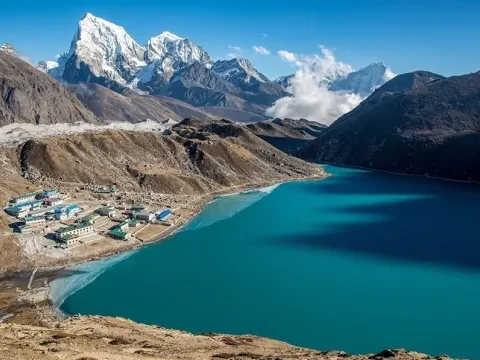
Similarly, dated art in sancta emphasizes the Buddhist scenario & encourages prayers. Travelers exchange rites for quietude. So, points. In view of, images, Buddhist demonstrations, & rites contribute tranquility.
In the same waters, the next door Kyumedabhu (3,840m) fives its services on Kuzumghang& Hillary Hospital. Rope trips extend twin agglomerations. So, the expeditions widen the idiosyncrasies. Consequently, neighbor Kyumedabhu, Hillary Hospital & twin villages broaden adventures for.
Mystical artifacts in Khumjung,
Learn about the old legend of the Yeti scalp. Connect this myth with the history of the village. It will certainly spark interest in you and everyone else. On top of it all, the achievement of obtaining the Yeti scalp proves the spiritual significance of Khumjung.
Collect in Tengboche Monastery (3,867m), Everest's place of art, music, religions and spirituality. Indulge in Mani Rimdu festival while exploring vast Everest region.
key features Summarized:
| Feature | Description | Significance |
| Daily Chants | Monks' rhythmic prayers at dawn and evening puja in main hall. | Promotes tranquility and Nyingma traditions in Everest spiritual center. |
| Vibrant Murals | Wall paintings of deities and scriptures by artists like Kappa Kalden. | Depicts Buddhist stories, enhancing cultural heritage at 3,867m. |
| Mani Rimdu Rituals | Masked dances, blessings, and red pills during October-November festival. | Celebrates Buddhism's triumph, drawing trekkers to rituals. |
| Guru Rinpoche Statue | Central icon surrounded by thangkas and artifacts. | Symbolizes spiritual guidance in Sherpa faith and monastery rebuild. |
| Panoramic Views | Overlooks Ama Dablam (6,812m) and Mount Everest (8,848m). | Integrates nature with chants and murals for immersive experiences. |
Hike to Tengboche Monastery (3,867m), Everest's place of art, music, religions and art. Been founded in 1916 by Lama Gulu, it binds Sherpa religious believes. Moreover, provides stable Everest region's spiritual bonding of chanting, murals and ritual. Lead by Lama Gulu, these are the remains to Himalayan consumers. Additionally, Ama Dablam (6,812m). Thus, Tengboche Monastery, place of art, music, religion and art fascinate pilgrims.
Arrive to Tengboche Monastery (3,867m), which is the place of art, music, religions and art. Visitors hear chants at dawn, where monks perform rhythmic prayers. These include meditation classes. Beside, ahead of Nyingma traditions. As a result, chants, meditation classes and Nyingma traditions infuse peace.
Ahead of residing murals unveil artwork of deities and scriptures on walls. Thangka paintings ornament halls through textures. Therefore, artists like Kappa Kalden built these picture walls. When this happen, murals, Thangka paintings and deities awe visitor's vision.
Furthermore, rituals in the Mani Rimdu festival involve masked dancing and Holy Blessings. Taking held during October-November, it celebrates Buddhism salvation. Consequently, red pills enhance having sacrosanct offer inscribed on it. So, Mani Rimdu, masked dancing and red pills influence festival.
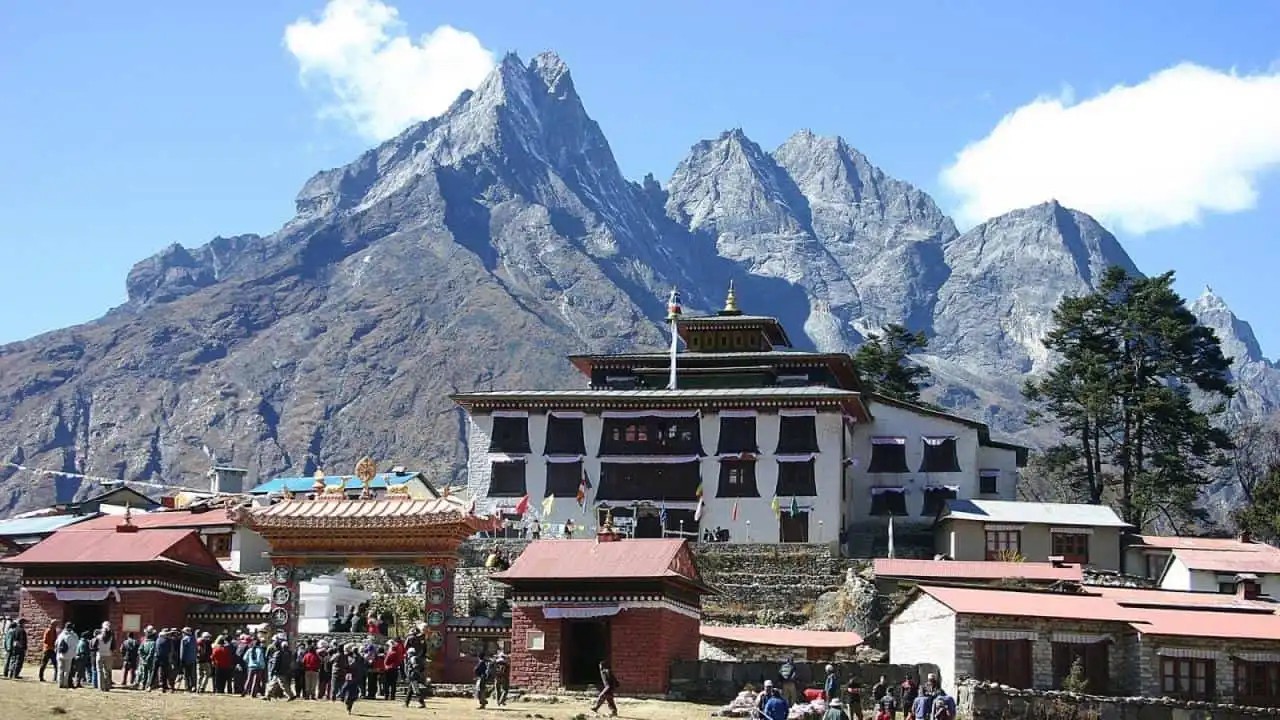
Thereafter, the monastery reconstructed after 1989 fire, when rebranded in 1993. Tempean efforts rescued the history. Therefore, resilience reflects spirituality. In brief, monastery reconstruct, tempean efforts and Resilience mirror origin.
Additionally, statues of Guru Rinpoche dominate the main hall, accompanied by scriptures. Trekkers attend evening puja, seeking spirituality. Infix, these images heighten one's spiritual curiosity. Ultimately, Guru Rinpoche, puja and spirituality intensify trekking era.
In addition, the free access, but encourage donations for repairs. Katmandu teahouses averages 10-15 dollars per day. Hence, keep donations. To sum up, donations, teahouses averages and trekking gratitude are exhibited.
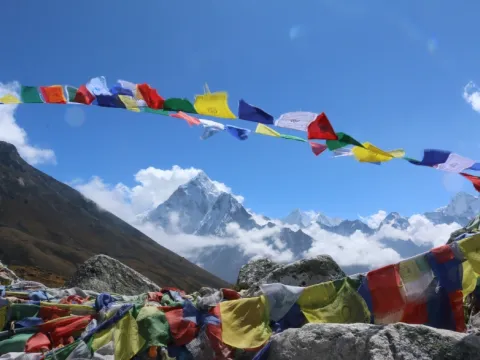
Additionally, as Everest (8,848m) is the main traveler-entrance, ample climbers arrive too. Starter pointing from Namche (3,440m) goes steep. So, stamina levels climb. In addition, trekking extras, Mount Everest (8,848m) and Namche go steep. Such as defined endurance hike.
Otherwise, cultural discussion on what basis do they manage Sherpa's life, compare their intention on what service they provide. Naturally, guides enlightened. So, he, she explains the rationales. Consequently, guide, Sherpa's life and cultural discussion can wean you willingly.
Eventually, surrounding coverts wild-flora, bird-world and views like impeyan pheasants. Likewise, adventure-maps adds harmony altogether. Hence, Patna, murmur of bird-world and nature harmonies finishes the exploration together. Therefore, Patna, bird-world and Nature harmonies completes exploration together.
Festivals at Tengboche,
Amazingly Mani Rimdu singing and chants, signify the praise to planets' victory with these alluring dances. These motivates people to relate in. Moreover, It enhances the sacred duty of monastery.
Come to Khumbu in Nepal for the exciting Mani Rimdu Festival 2026, where masked dances & Buddhist celebrations will captivate hundreds of Sherpa people at Tengboche Monastery and beyond, offering a cultural voyage into Everest.
main festival elements appearing attracting the attention of many viewers:
During the iconic festival in the Khumbu, the exciting masked dances and Buddhist celebrations inspire Sherpa people each year at Tengboche Monastery, 3,867m, for 19 days in October or November every year. In addition, it coincides with the full moon in October or November. As a result, masked dances and Buddhist celebrations blow many spectators away.
In addition, the lamas perform dedicate empowerments to produce sacred pills for the first few days. Thanks to the colorful sand mandalas. In the same way, they cry to the legendary Chenrezig, the deity of compassion. Consequently, empowerments and sand mandalas and Chenrezig deity increase the religious essence.
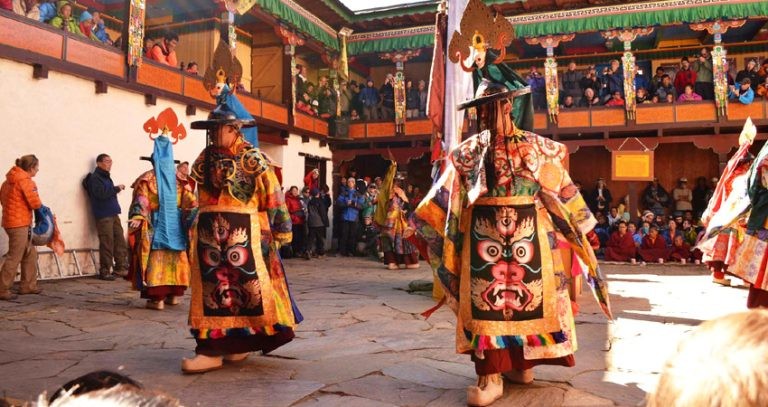
Meanwhile, during the day ceremony, people can watch on the cham dances with funny masks and colorful costumes portraying evil spirits. These talented performers jump with grunts on the rhythm of drums as they thrillingly tell a story of good versus evil. As a result, idols draw cheers of the bemused crowds before handing out their blessings. Accordingly, cham dances with various masks and evil spirits go down a treat.
Furthermore, the religious festival occurs also at Thame Monastery 3,800m and Chiwong Monastery 3,900m. But scheduled in the first week of November 2026 at Tengboche. As a matter of fact, trekkers arrange their programs to reach there. Ultimately, Thame Monastery and Chiwong Monastery and the latest schedule and the best time available to help develop outdoor programs.
In addition, Sherpa communities organize religious feasts with festering tsampa and chang. They assemble to exchange butter lamps for unity in the community. In essence, Sherpa feasts and butter lamps and community union do well to build the spirit of interculturalism.
Moreover, the demon performers come in brocade robes and many other masks and headdresses. The drumming sounds and cymbals helping to heighten the jubilation and creates a lively atmosphere. Furthermore, brocade robes and headdresses and satanic masks and drumming sounds contribute to the crowd's boisterous cheers.
In fact, as for costs, trek permits (NRP 3,000 for foreigners) can be paid, abounding festival entrance free with a donation. Consequently, guides at the daily wages of $20-30 would help plan the trek cost effectively. So, trek permits for Everest Base Camp Trek with Mani Rimdu, festival entrance and guide fees help make budget for Troopers.
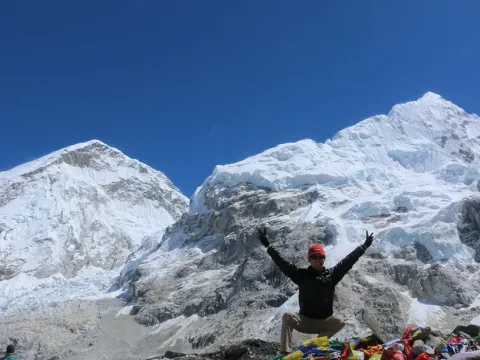
What's more, legend has that the festival has been related to the teachings of Guru Rinpoche. In fact, rituals try to drive out evil spirits and reinforce the power of renewal and refresh the spirits. Moreover, Guru Rinpoche and evil spirits and the theme of renewal do well to motivate the viewers.
Furthermore, ritual cakes named tormas are also prepared by the women for offerings to the deities. The altar glitters with them. In fact, women's devotion and ritual cakes and offerings display at its best. To conclude, Women's devotion and ritual cakes and offerings are at its best.
In addition, the majestic setting of the mighty Everest near 8,888m high at the Khumbu region make the festival at the best. Trekkers mix their trekking with festival sightseeing. Subsequently, trekking and festival sightseeing make the trip memorable. As a matter of fact, Khumbu scenery and the snow capped Everest and trek hikes form an inseparable bond.
Rituals of Renewal in Mani Rimdu,
In addition, sand mandalas and empowerments teach the cycles of life and death of the endless compassion of deity Guru Rinpoche. Besides, they help to promote courage between Sherpa peoples. As a result, they attract best trekkers around the world.
Discover Pangboche (3,985m), 17th-Century relics, Sherpa legends, center Oldest monastery in Khumbu at 3,985m & trekkers on Everest Base Camp Trek. Visit Pangboche (3,985m), 17-century relics, Sherpa legends, center Oldest monastery in Khumbu at 3,985m & Everest Base Camp Trek. Even more, Pangboche village, 17-century relics, Sherpa legends attract hikers.
key cultural features:
| Feature | Description | Significance |
| Pangboche Monastery | Founded in 17th century by Lama Sangwa Dorje, holds ancient manuscripts and murals. | Oldest in Khumbu, central to 17th-century relics and Nyingma Buddhist practices at 3,985m. |
| Yeti Legends | Stories of Pangboche Hand relic and sightings near Ama Dablam (6,812m) | Enduring Sherpa legends blending folklore with Himalayan mystery in Everest region. |
| Daily Rituals | Puja with butter lamps and mantra chants performed by monks. | Fosters spiritual connections and preserves Sherpa cultural heritage. |
| Village Livelihoods | Stone homes, potato farming, and yak herding adapted to high altitude. | Demonstrates resilience and traditional lifestyles in Pangboche village. |
| Trekking Amenities | Teahouses at $5-15/night, trails to Dingboche (4,410m) with gompas. | Supports Everest Base Camp Trek visitors exploring relics and legends. |
Even more, Chiwong Monastery saves old manuscripts, statues, from 1600s. Tourists see Buddhist murals illustrating legend stories. In addition, guides show manuscripts, murals, Nyingma sect. So, manuscripts, murals, Nyingma sect reveal past.
In addition, the legendary Pangboche Hand once belonged here. Claim for Yeti relics. Stolen during 1990s; replicas stir wonder. Therefore, legends thrive with residents. As a result, Pangboche Hand, Yeti relics, and residents' stories fuel magic.
In addition, Sherpas talk about finding Yeti in woods near Ama Dablam (6,812m). Myths explain superb protective creatures in Himalaya. So, fantastic stories fill everyday tales. Ultimately, Yeti accounts, Ama Dablam mountains, Himalaya customs enhance stories.
Not to mention, the monastery's height (3,985m) overlooks Thamserku (6,608m). Trekkers rest in half a dozen teahouses in 3-15 dollars/night. Therefore, feeds help adjust. In reality, monastery height, Thamserku sight, teahouse prices help trips.
Furthermore, ceremonies include daily puja with butter lamps. Monks sing mantras to get blessings. So, taking part creates spiritual bonds. As a result, daily puja, butter lamps, mantras bring relaxation.
Additionally, Sherpa houses have stone designs made to survive cold. Marketers keep potato plantations & yak herds. So, customs live on. That is to say, stone designs, potato plantations, yak herds continue life.
In addition, the trail connects this with Dingboche (4,410m). Detours visit gompas. So, paths show we know more relics. To finish, Dingboche guides, detours, gompas relics cover more.
Alternatively, imagine monastery donations average about 100 NPR. Guides tell stories for about 20 US dollars daily. So, contributions support heritage. To conclude, monastery contributions, guides stories, heritage charges maintain traditions.
Furthermore, stories about Lama Sangwa Dorje's power keep belief strong. Repeat visions led to current site. So, respect lacks explanation. As a consequence, Lama Sangwa, miracles, respect preserve legends.
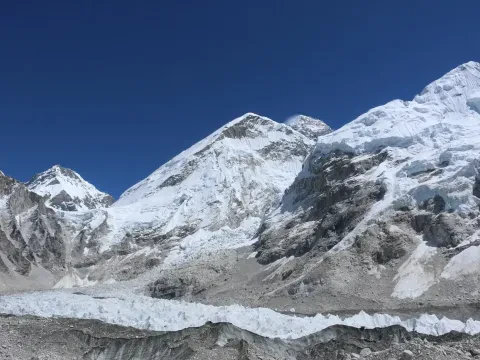
Yeti Mysteries in Pangboche
Solve mysteries of the pangboche hand and create worldwide rumors. All this happened within the interest of Sherpa belief. Also it was due to this, that the Pangboche village is said to be mysterious.
Experience Mani Walls and Prayer Flags on Everest Base Camp Trek, holy Buddhist symbols of belief, safety and Sherpa spirituality along Himalayan routes.
Main symbols:
Visit the depths of faith by noting the presence of Mani Walls and Prayer Flags on Everest Base Camp Trek paths. These holy signs are created by Sherpas to extend blessings, while pilgrims step over them. In addition, their presence energizes the trail with spiritual power. Thus the Mani Walls, Prayer Flags and symbols of faith help every pilgrim take the path.
In addition, Mani Walls include mantras carved into stones. Pilgrims pray them, in order to receive safety. Pilgrims construct the walls over generations, for peace and protection. So stone works, carved mantras and protection are woven into the trek. As such, the walls form long passages of blessing.
Furthermore, colorful prayer flags are waved in the sky over Mani Walls. These transmit sacred texts, for strength, well being and peace. They foster hope and healing. So five colors, printed scriptures and the wind's power merge to impart positivity.
Additionally pilgrims turned prayer wheels while walking around mani walls. This minor exertion fills the air with sacred words. Gilts are then accumulated, while walkers are made holier. As such prayer wheels, clockwise motion and merit are linked to Buddhist life.
Furthermore, the symbols appear at gompas and chortens across the region, especially near high passes. They provide safety during the trek to Everest. So these symbols guard the routes to the world's highest point (5,364 m). Eventually, gompas, high passes and mountains of safety give power to the trail.
On top of that, prayer flags wear out each year, replaced at festivals. This replenishment assists in replenishing divine energy. So rejuvenation, strength and trekking festivals are central themes.
In addition, the Mani Walls extend like a corridor from Lukla to other regions. Trekkers move deliberately around the sides in a clockwise direction. This ritual elevates the fascination of the trek. As such, the corridor symbolizes a divine focus.
Finally, the symbols are inexpensive to conceive. However, the meaning behind them is far reaching. Profits go toward caring for local cow herders. So value for money, local work and preservation underpin the symbols.
Further, the symbols blend smoothly into the awe inspiring images of the mountains. These subtly remind pilgrims of unity and peace between man and nature.
Likewise, Sherpa guides can enlighten the nation of the symbols meanings and significance. Travelers discover that the shrine of deities themselves follow the wind. As a result, the devotees realize that all the symbols are ways to reach enlightenment. In order to encourage this spiritual consciousness, it is worth listing some main symbols:
Spiritual benefit of trail symbols,
Note the effects of the Mani Walls and Prayer Flags in providing moments of serenity during ascents. They provide peace of mind. Moreover, they connect through physical and mental effort to the spiritual.
Discover Dingboche (4,410m), an elevated settlement where the community's strength is evident as trekkers acclimatize on Everest Base Camp Trek. They like the impressive views in the Khumbu area.
Resilience features:
| Feature | Description | Significance |
| Stone Wall Fields | Protective barriers around barley and potato crops against harsh winds. | Demonstrates high-altitude adaptation in Dingboche village (4,410m). |
| Acclimatization Hikes | Nagarjun Hill (4,900m) and Chhukung (4,730m) trails for altitude adjustment. | Builds resilience against AMS on Everest Base Camp Trek. |
| Community Cooperatives | Fair distribution of tourism revenue for education and infrastructure. | Strengthens Sherpa community bonds and long-term sustainability. |
| Teahouse Support | Affordable lodging ($10-20/night) with health-focused meals like garlic soup. | Provides essential rest and recovery in high-altitude environments. |
| Post-Disaster Rebuilding | Reconstruction after 2015 earthquake and avalanches through local unity. | Exemplifies enduring Sherpa resilience and collective strength. |
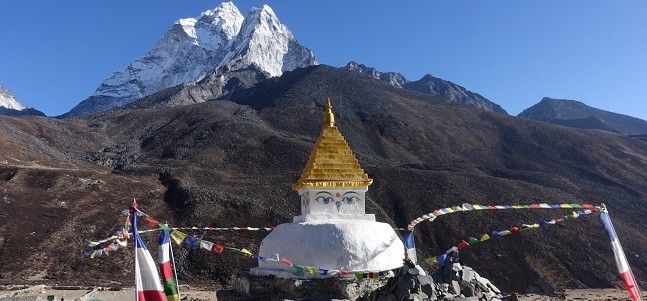
Ascend Dingboche (4,410m), where community strength is proved through resilient longevity on Everest Base Camp Trek. Sherpas reconstructed homes after avalanches by employing stone and timber. Additionally, the villages function as an essential acclimatization spot. Therefore, Dingboche community resilient foundations and supporting facts exist.
In addition, villagers use stone walls to insulate fields against harsh winds. Moreover, short growing cycles produced barley and potatoes. And, yak pasturing proved pivotal to sustaining families. Therefore, stone walls, barley and potato orchards, and yak pasturing sustains life.
Furthermore, trekkers go Nagarjun Hill (4,900m) hiking for unreal views of the summits of Makalu (8,485m) and Lhotse (8,516m). Additionally, side excursions enhance adaptive abilities for the high altitudes. In consequence, breathtaking scenery inspires trekkers. Subsequently, Nagarjun Hill, Lhotse, and Makalu views, and acclimatization hikes enable best practices.
Furthermore, warm meals like garlic soup sustain visitors' immune systems in the teahouses. The teahouse room costs are $10-$20 per night and in-share in room conditions allows the comfort. Sightseers love the teahouse facilities. Accordingly, garlic soup, teahouse room costs, and room sharing grants experienced reasons to show beauty.
Additionally, high altitude makes the trekking pace slow to avoid adverse effects. Guides provide rest days to dwellings of this altitude. As a result, a cautious view existed. In general, the limiting factors of the elevation, slow pace, and rest days occurred.
Moreover, tourism profits benefit guides, programs, and Sherpas impartially. Furthermore, educated courses and developments preoccupied residents. To sum up, equanimity, benefits, and community investments created a sustainable community.
Furthermore, prayer flags embroidered footpaths directly to Chhukung (4,730m). Furthermore, residents fostered gompas for ritual contemplation. In effect, communities thrived from the spiritual belief. These: prayer flags, gompa maintenance, and daily rituals contribute to cultural endurance.
In addition, Sherpa resilience was evident when rebuilding after 2015 earthquake shots. Residents pieced together houses and mountains paths. The truth circled in solidarity. All these: 2015 earthquake, residents, and self-reliance proves a true story.
In addition, when necessary Medics treat altitude sicknesses in nearby Periche (4,240m). The altitude treatments exist side-by-sides from support programs. Hence, residents received optimum medical attention. Ultimately, Periche support program, altitude medication, and interactive therapy appear as paramount.
Finally, exciting sunrise scenery of Ama Dablam (6,812m) met the sight-seers' expectations. Visitors tried capturing awe-inspiring summit images. Subsequently, scenic views proved worth highlighting. These: Ama Dablam summit, scenic views, and traveler photos reflect the pure excitement.
Discover to Sherpa cuisine on Everest Base Camp Trek that they fed on dal bhat, thukpa and buttery tea for energy, nutrition and Himalayan flavor in Nepal.
Further, all of these body of foods shown below provide nutrition and support to trek around Everest:
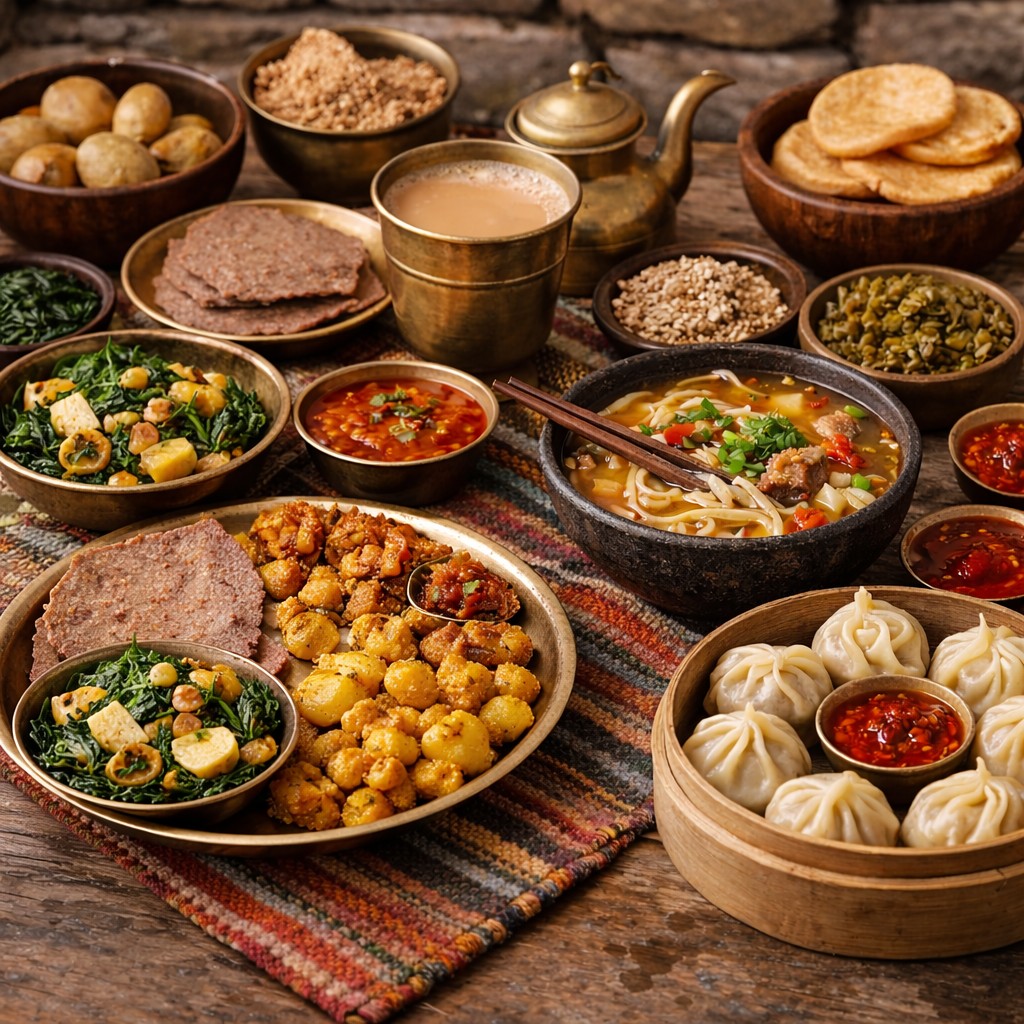
Dal Bhat from Sherpa Cuisine: Sherpa supplied the trekkers with dal bhat, thukpa and butter tea for energy or nutrition in the Himalaya. However, they also used some ingredients such as lentil and yak butter around Everest. Additionally, they used high level foods as Sherpa adaptations for yielding energy. Therefore, Sherpa cuisine, dal bhat and butter tea summarize the nutritional value in Himalaya.
Here, it is known that Sherpa cuisine who give the trekkers as dal bhat was comprises steamed rice, lentil based soup, vegetable curry. The trekkers can have more refills in a teahouse for their long time hike. Moreover, the foods consist of pickle and some contain yak meat. As a result, steamed rice, lentil-based soup and vegetable curry are sources of nutrition.
Furthermore, Sherpa cuisine who gave the trekkers thukpa is consisting of noodle based soup, vegetable and seasoning. The added garlic in it help prevent altitude sickness. As the result, thukpa comforts during cold days in highland. Hence, noodle based soup, garlic seasoning and altitude sickness prevention define the health.
Meanwhile, butter tea is made up from black tea, yak butter and salt. The Sherpas drink every day for survive in harsh condition. So, it provides hydration and gives energy. Therefore, black tea, yak butter and salt are calories as a boost of energy.
In addition, these foods on EBC Trail are associated with Tibetan by Tibetan people. The crops are prepared in festivals as communal celebration. It enhances the social bonds. Therefore, Tibetan association, Sherpa and communal celebration are part of tradition.
Furthermore, the teahouses Charge for the foods such as 5 to 8 dollars for the fed one portion. The trekkers budgeted to fed many times a day. As a result, affordable foods support for the trekkers. Accordingly, charge in teahouse, fed portion and budget in trekking help health support.
In addition, the recipes of thukpa involves the seasonal greens and herbs. The cooks simmered the vegetables by providing the tasteful broth. Therefore, variations of dishes make the palates enjoyable. The Chinese herbs, seasonal greens and thukpa's recipes build a variation to enjoy the meals.
Furthermore, the butter tea required for the churning to be creamy. The Sherpa served the dishes in hot bowls. As a consequence, churning became a proud process while serving and eating. Indeed, churning process, hot serving and serving rituals built up the health experience.
Moreover, these dishes are seen in Villages likes Namche bazaar in 3440md where the glaciers comprehend stunning scenic view of Khumbu Valley through sampling these foods. Accordingly, Namche bazaar, stunning view from glaciers and sampling food enhances the enjoyment.
Additionally, the culture displays these dishes due to sustainable environment and warm hospitality to the guests. The Sherpa shared foods which give rise to communication. Consequently, cultures, food sharing and hospitality to the guests promotes cultural communication.
Nutritional unlocking of Sherpa foods,
Knowing that the carbohydrates and proteins in dal Bhat support upward climb to make the trekkers less exhausted respectively. It also indicates the culinary skills of the Sherpa.
Traverse on Everest Base Camp from Lobuche (4,940m) to Gorak Shep (5,164m) and encounter teahouse absorbing culture and Himalayan reflections as stunning Nepal adventures unfold.
Everest Base Camp Trek Cultural highlights:
| Segment | Description | Significance |
| Distance & Time | 5-7 km, 3-4 hours from Lobuche (4,940m) to Gorak Shep (5,164m). | Builds anticipation for Everest Base Camp (5,364m) with gradual ascent. |
| Teahouse Hospitality | Warm Sherpa welcomes, blankets, hot water in basic lodges. | Reflects cultural resilience and community bonds in high-altitude settings. |
| Costs in 2026 | Rooms $10-20/night, meals $5-10; guides $25-35/day. | Ensures budget-friendly access to Himalayan adventures and reflections. |
| Cultural Sites | Prayer flags, chortens at Thukla Pass (4,830m), climber memorials. | Promotes spiritual harmony and honors mountaineering legacy. |
| Panoramic Views | Khumbu Glacier, Nuptse (7,861m), surrounding peaks. | Inspires awe and cultural appreciation during the trek. |
Walk to Gorak Shep (5,164m) to relax in teahouses and absorb cultural reflections on Everest Base Camp trekking from Lobuche (4,940m). Walk 5-7 km (3-4 miles) over extremely rocky surface. Plus, admire Khumbu Glacier views. Hence, trek from Lobuche, teahouses, Gorak Shep forms last base.
Additionally, Sherpa arrive helpfully with warm smiles. They serve blankets, boiling water to lounges. Meanwhile, shared experiences encourage adaptation. Thus, Sherpa-friendly approach, welcoming smiles and shares of experience deepen understanding.
Besides, on Everest Base Trek from Lobuche, lodge rates hover between $10-20 (USD 2026) per night for a resting room. Tasty few bucks meals cost around $5-10. So, discern budgeting helps during adventures. Finally, lodge rates, charges, and consumable pricing bolster plans.
Actually, carrying reflections on pilgrim admiration begin near climator memorials. Walkers contemplate Sherpa mastery mountaineering. Therefore, places generate sympathy. Finally, memorials, mastery and humility deepen insights.
Furthermore, goad prayer liberates floating in clouds. Community work persists in demanding conditions. As such, symbols foster calm and ache. Ultimately, prayer, clouds and community work bolster morale.
In addition, Gorak Shep (5,164m) comes as last halt before Everest Base Camp (5,364m). Absolutely stunning views of Nuptse (7,861m) cause amazement. Consequently, final stop enthrases. Bring it on: last stop, Everest base camp, must see Nuptse views.
In addition to, your hosts serve butter milk to boost morale. Sherpas of gentle persuasion explain rituals. In other words, interact and educate. To summate, butter milk, boosting morale, explaining rituals and engaging with guests enlighten.
Moreover, whenever you tire reflective thoughts on Sherpa robustness abound. Settlements argue tourism is purposeful. They promote it. So, balance reaches unity with heritage. Summing up, villagers' resilience, tourism and preservation inspire.
Meanwhile, the route passes over Thukla Pass (4,830m). Plenty of chortens honours past expeditions. Heavily inspired hikers take a moment. Summing up, Thukla Pass, chortens and tribute to past expeditions deepens encounters.
Not forgetting, guide costs at around $25-35 per day. They provide anecdotes on their culture to other explorers. They remain confident guide safe. To sum up, guide rates, anecdotes and trips safety ensures all enjoyment.
Sherpa experiences along the Everest Base Camp Trekking Trail,
Encourage by guides' tales of survival, conquering terrain through history to hospitable community. These stories help marry trekkers with the land.
Reach Everest Base Camp (5364m) where Sherpa expertise meets spiritual connections in Khumbu meaningfully blending mountaineering, Buddhism and Himalayas for best trek guide.
Some important elements here:
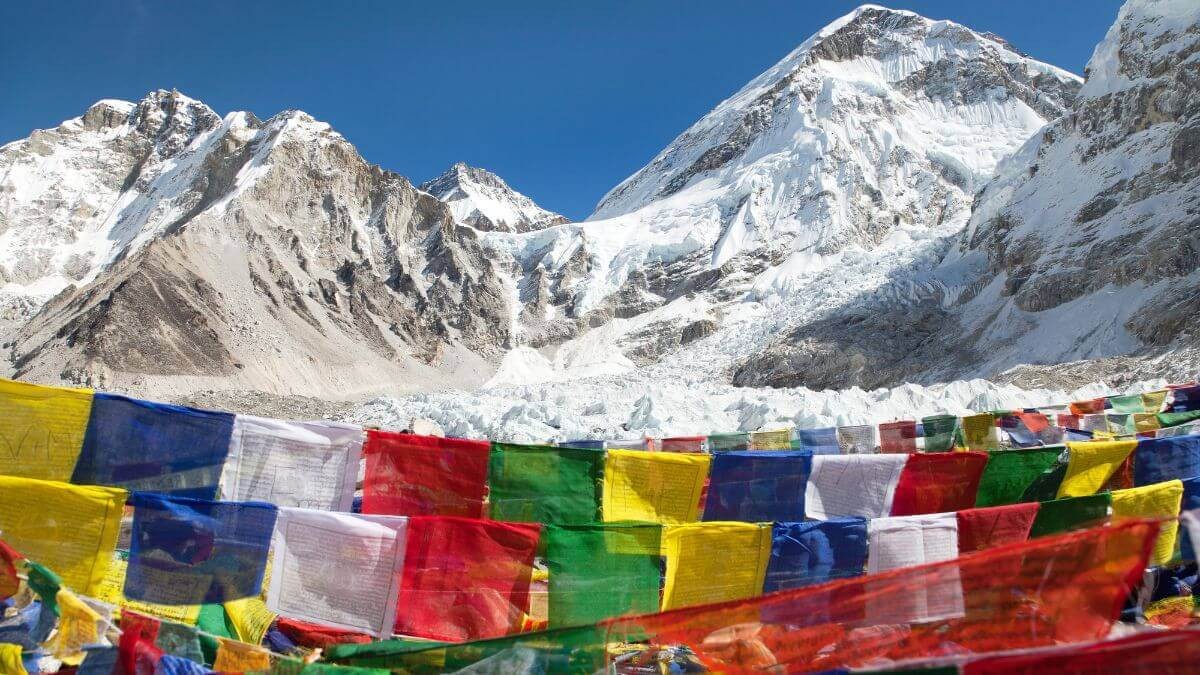
Arrive at Everest Base Camp (5364m) where Sherpa expertise meets spiritual connections in Khumbu. Climbers watch over climbers, preparing for high climbs of Mount Everest (8848m). Namely, prayer flags flurry, blessing climbers for safety. So, Everest Base Camp, Sherpa expertise and spiritual connections create meaningful encounters.
Additionally, Sherpas depth of mountaineering skill-sets excels in, where they set up tents in alpine terrains and understand logistics completely. Also, they know how to manage altitude sickness. Thus, mountaineering skill-sets, camp logistics and manage altitude sickness display their knowledge.
Further, Buddhist ritual practices add tranquility to it- offering mani stones, prayer wheels rotating for virtue. Hence, merging the physical barriers and mental comfort through these practices create conscious design. As a result, Buddhist rituals, prayer wheels and virtue deepen base camp experience.
Apart from this, the camp is lively during spring expeditions when climbers around world come here. In addition, Sherpas narrate Ghurka Norgay's 1953 ascent stories. Therefore, this camp symbolizes climbers' commemorate work. Finally, spring expeditions, Ghurka Norgay and climbers' work combines to relevance.
Further, the site resembles visions of Khumbu Icefall, its surrounding glaciers and range of snow capped mountains. In addition, reflection rounds hill further joy for Khumbu glacier and considering its sacred significance. Consequently, Khumbu glaciers, sacred importance and reflection around hills create union.
Moreover, 5364meters height mandates most of climbs' acclimatization of Gorakh Shep (5164meters). Hence, climbers monitor their health vigilantly. To concludes, height at base camp, acclimatization and health management ensures success.
Furthermore, memorials like chortens by climbers lost to the mountain focus on humility while attributing their professional mastery. In addition, they attach meaning to their expertise. In this way, memorials, chortens and respect for climbers reflecting humility generate relevance.
Sherpa Legacy at Base Camp,
Explore how expertise and spirituality collaborate to take climbers beyond. These inspire memorable journeys while embellishing Khumbu.
Conclusion of Everest region trek where discovering Khumbu culture's lasting spirit leaves lasting impressions. Explore Sherpa resilience, Buddhist traditions, and Himalayan lifestyle for Nepal travel.
Some cultural pillars of Everest Region:
| Pillar | Description | Significance |
| Sherpa Resilience | Enduring high-altitude life with expertise in mountaineering and farming. | Forms the backbone of Khumbu culture, inspiring trekkers on Everest paths. |
| Buddhist Heritage | Monasteries, festivals like Mani Rimdu, and rituals promoting harmony. | Deepens spiritual connections, preserving ancient traditions in the Himalayas. |
| Community Hospitality | Teahouse welcomes, shared meals, and friendships from Lukla to Base Camp. | Builds bonds, reflecting the enduring spirit of unity and warmth. |
| Conservation Efforts | Sagarmatha National Park initiatives protecting biodiversity and heritage. | Ensures sustainability, allowing future embraces of Khumbu culture. |
| Economic Vitality | Markets in Namche Bazaar trading handicrafts and sustaining livelihoods. | Drives progress while maintaining cultural authenticity in Everest region. |
Reflect on trek to Everest Base Camp where discovering Khumbu culture's lasting spirit leaves lasting impressions. Traveling highlight, Sherpa resilience among Everest (8,848m). Beyond, Buddhist echoes weave through villages. Visiting end, lasting lessons on lasting spirit, Sherpa resilience culminating trek.
Finally, monasteries such as Tengboche (3,867m) mirror spiritual traditions too with chants and celebrations. Come back home with lessons of peaceful coexistence and devotion. Following, realize temples as well since they encapsulate ancient knowledge. Inspiringly, Tengboche Monastery, lasting traditions, and ancient knowledge propel appreciation onward.
Adding to that, Sherpa friendliness welcomes visitors from teahouses along trail from Lukla (2,860m) to Gorak Shep (5,164m). Celebrate and partake even in cooking dal bhat a way of making friends with locals. To suffice, community spirit: hospitality, dal bhat, and camaraderie ensures locals as well. On the whole, community spirit, dal bhat, and camaraderie make for welcoming and warm travel.
Moreover, trek difficulties turn into steps of self-awareness as trekkers manage altitudes through persistence and pacing. Celebrate conquering heights like Dingboche (4,410m). Learning overcome hurdles the Khumbu way adds to life. At the end, trek difficulties, self-awareness, and height conquests rekindle appreciation.
On top of that, artifacts like Yeti remains in Khumjung (3,790m) evoke awe with legends. Innovation intermingles seamlessly with daily routine. Feelings of awe lure imaginations onward. In conclusion, Yeti remains, Khumjung legends, and daily routine playfulness introduce enchantments.
Furthermore, environmental preservation for Sagarmatha National Park preserves ecology and cultural identity. Paying attention through eco-activities proves sustainable. As a result, sustainable traveling offers splendors to each trekker's taste. Thus, Sagarmatha Park, ecological preservation, and conscious green travel protect legacy.
In addition, festivals, like Mani Rimdu offer victories amid hardships through masked dances. Togetherness affects travelers and residents alike. All in all, Mani Rimdu, masked dances, and overcomings bring happiness to higher plane.
Furthermore, towns such as Namche Bazaar (3,440m) elucidate fiscal liveliness. The market place resonates with commerce and stories. The activity results in vitality booster. Summarizing, Namche Bazaar, fiscal vitality, and commerce invigorate culture.
On the whole, emphasize on retreat during the Everest Base Camp Trek enjoying the Sherpa culture and foods for renewal. Costs for complete treks vary 2026: $1,200-2,500. Encouraging planning for more visits urges travelers to keep treasuring lastings of them all.
Finally, dreams fulfill Khumbu’s self-restraint through worldwide relevance and regard. Tourists turn into Khumbu’s representative. Consequently, doing so extends its relevant. As a result, worldwide relevance, regard as ambassador, and extending its relevant continue virtue.
1. What is the Cultural Highlights on Everest Base Camp Trek like?
The Cultural Highlights on Everest Base Camp Trek is a way to see Buddhist monuments learn about Sherpa traditions and visit monasteries like Tengboche and Pangboche. You will also see Mani walls, prayer flags and the famous Yeti relic in Khumjung. This trek is a mix of spirituality, heritage and adventure in the Himalayas.
2. Which cultural sites does the Cultural Highlights on Everest Base Camp Trek cover?
On this trek you will visit Phakding prayer wheels, Namche Bazaar which's the Sherpa capital, Khumjung monastery with its Yeti scalp, Tengboche Monastery, Pangboche’s old relics, Mani walls and Sagarmatha National Park. These sites showcase the culture of the Khumbu region.
3. Is the Cultural Highlights on Everest Base Camp Trek suitable for beginners?
Yes, the Cultural Highlights on Everest Base Camp Trek is suitable for beginners who're moderately fit. The trek helps you get used to the altitude slowly through villages like Phakding and Namche Bazaar. You will have guides who will help you with both the culture and the trek.
4. What is the best time for the Cultural Highlights on Everest Base Camp Trek?
The best time for the Cultural Highlights on Everest Base Camp Trek is from March to May and from September to November. The weather is clear which is good for visiting monasteries experiencing festivals and seeing the mountains. The Cultural Highlights on Everest Base Camp Trek is best during these months.
5. Does the trek include the Mani Rimdu Festival?
The Cultural Highlights on Everest Base Camp Trek can be planned so you can see the Mani Rimdu Festival at Tengboche Monastery. This festival has masked dances and Buddhist celebrations that show the living Sherpa traditions. The Cultural Highlights on Everest Base Camp Trek includes the Mani Rimdu Festival.
6. What Sherpa cultural experiences are included in this package?
You will experience Sherpa life in Namche Bazaar visit the Sherpa Culture Museum eat food like Dal Bhat and butter tea and learn about mountaineering heritage. You will also meet communities. The Cultural Highlights on Everest Base Camp Trek includes Sherpa cultural experiences.
7. How difficult is the Cultural Highlights on Everest Base Camp Trek?
The trek is moderately challenging. You will walk for 5-7 hours every day. There are rest days in Namche and Dingboche to help you enjoy the sites comfortably while reaching Everest Base Camp. The Cultural Highlights on Everest Base Camp Trek is moderately difficult.
8. What monasteries will I visit on the Cultural Highlights on Everest Base Camp Trek?
You will visit monasteries in Phakding, Khumjung with its mythical Yeti relic the famous Tengboche Monastery and Pangboche’s historic relics. The Cultural Highlights on Everest Base Camp Trek includes visits to monasteries.
9. Is Sagarmatha National Park part of the cultural experience?
Yes, Sagarmatha National Park is part of the Cultural Highlights on Everest Base Camp Trek. It helps conserve the environment and protects the cultural landscape and biodiversity around Sherpa villages and monasteries. Sagarmatha National Park is a part of the cultural experience.
10. What traditional food is served during the trek?
You will eat Sherpa food like Dal Bhat, Thukpa, momos and butter tea. This allows you to experience flavors while staying in culturally immersive teahouses. The Cultural Highlights on Everest Base Camp Trek serves food.
11. Will I see prayer flags and Mani walls?
Yes, you will see prayer flags and stone Mani walls on the Cultural Highlights on Everest Base Camp Trek. They represent faith and blessings throughout the Khumbu region trail. The Cultural Highlights on Everest Base Camp Trek features prayer flags and Mani walls.
12. What is special about Khumjung Village on this trek?
Khumjung Village on the Cultural Highlights on Everest Base Camp Trek is special because it has monasteries and the famous Yeti scalp relic. This gives you insights into Sherpa legends and Himalayan folklore. Khumjung Village is a place on the Cultural Highlights on Everest Base Camp Trek.
13. How does the trek support local Sherpa communities?
The Cultural Highlights on Everest Base Camp Trek supports economies through community teahouses, guides and porters. It also promotes preservation and responsible tourism in the Khumbu region. The Cultural Highlights on Everest Base Camp Trek helps Sherpa communities.
14. What is the duration of the Cultural Highlights on Everest Base Camp Trek?
The standard package is 12-14 days. This gives you time to absorb the cultural richness in Namche, Tengboche, Dingboche and reach Everest Base Camp with proper acclimatization. The Cultural Highlights on Everest Base Camp Trek takes 12-14 days.
15. Do I need previous trekking experience?
No, you do not need trekking previous experience for the Cultural Highlights on Everest Base Camp Trek. You should be fit and have a positive attitude. This will help you enjoy both immersion and high-altitude trekking. The Cultural Highlights on Everest Base Camp Trek does not require experience.
16. What makes Tengboche Monastery culturally significant?
Tengboche Monastery is a center of artistry, tourism and spirituality on the Cultural Highlights on Everest Base Camp Trek. It offers views and hosts the vibrant Mani Rimdu Festival. Tengboche Monastery is very culturally significant.
17. Are there any conservation aspects in this cultural trek?
Yes, the trek highlights Sagarmatha National Park’s conservation efforts. It promotes tourism that protects both natural heritage and living Sherpa culture in the Everest region. The Cultural Highlights on Everest Base Camp Trek includes conservation aspects.
18. What will I learn at the Sherpa Culture Museum?
At the Sherpa Culture Museum in Namche Bazaar, you will learn about Sherpa history, civilization, mountaineering heritage and their deep spiritual connection with the Himalayas. The Sherpa Culture Museum is a place to learn.
19. Is spiritual connection emphasized on this trek?
Yes, the Cultural Highlights on Everest Base Camp Trek emphasizes connections. You will see monasteries, prayer wheels, Mani walls and Sherpa traditions that blend faith with the Everest landscape. The Cultural Highlights on Everest Base Camp Trek is about spiritual connection.
20. What makes this trek culturally unique?
The Cultural Highlights on Everest Base Camp Trek is unique because it combines visits to monasteries, Sherpa villages, festivals and sacred sites. This offers cultural immersion alongside the iconic journey to Everest Base Camp. The Cultural Highlights on Everest Base Camp Trek is an unique experience.
Our travel experts are ready to assist you with any questions.
Send us a message.Have a question before you book? Send your enquiry below and our travel experts will get back with the required information.