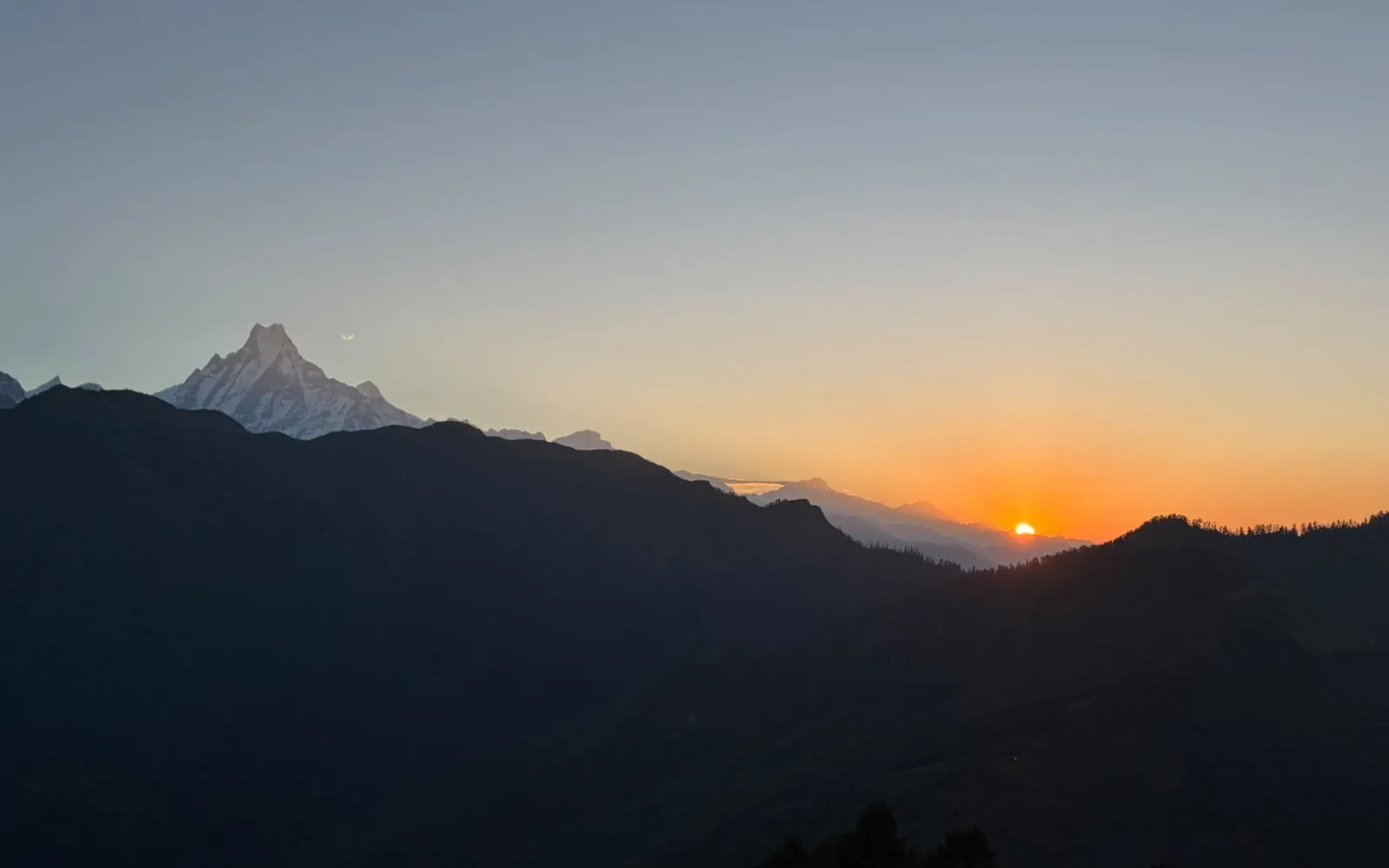
Yes, you can trek the Ghorepani Poon Hill Trek All Year Round with different mountain conditions depending on which season you visit. This is a popular short trek in the Annapurna region. Along the route you will see stunning Himalayan views, traditional villages and rhododendron forests.
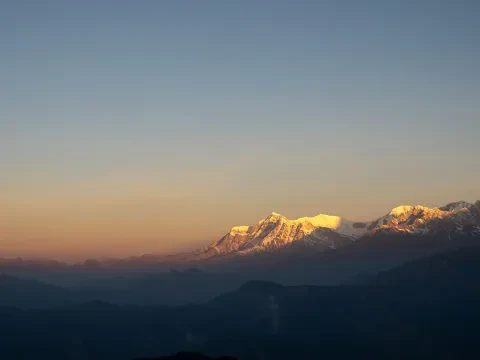
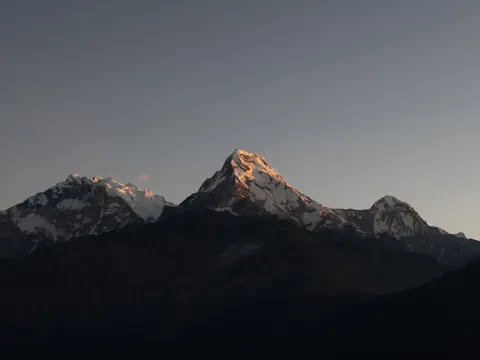
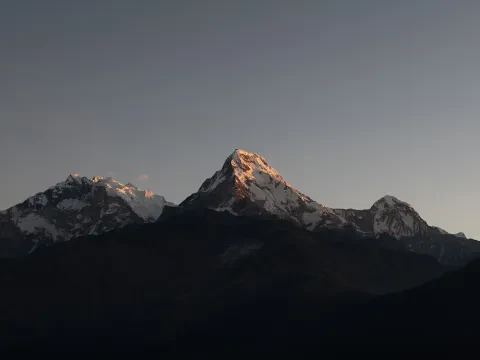
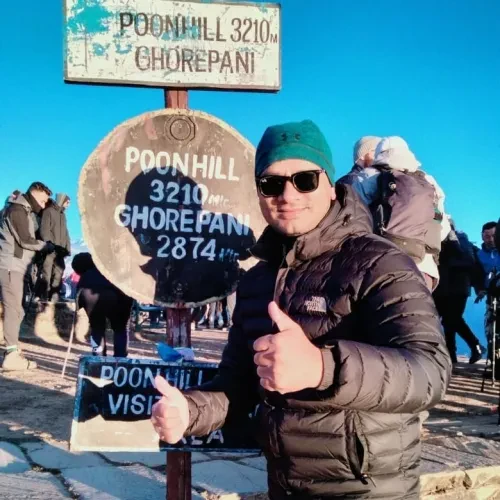
Meanwhile, the trek will take you to one of the easiest viewpoints in the Himalayas in Nepal to Poon Hill, at an elevation of 3,210 metres. You will enjoy panoramic views of some of the highest peaks in the world including Dhaulagiri (8,167m), Annapurna I (8,091m), Annapurna South (7,219m) and Machhapuchhre (6,993m).
Typically, this trek can be completed in 4-5 days depending on your starting point and how quick you walk. You will walk a distance of approx 35-45km. The route will take you through Tikhedhunga (1,540m), Ulleri (approx 2,050m), Ghorepani (approx 2,860m or 2,874m), Tadapani (2,630m) and Ghandruk (1,940m).
Here, the best times to trek are typically during the spring and autumn months. During March and April you will see lots of beautiful rhododendron trees. During October and November you will typically have clear skies and nice daytime temperatures.
During the winter it can be quite a peaceful trek with possible snowfall. During the monsoon you will have more rain, cloud and slippery paths. Depending on your interests, weather preferences and flexibility you can choose the best time to go.
| Information | Details |
|---|---|
| Destination | Annapurna region, Nepal |
| Highest Viewpoint | Poon Hill (3,210m) |
| Elevation of Ghorepani | Approx 2,860m or 2,874m |
| Typical Duration | 4-5 days |
| Approximate Distance | 35-45km |
| Main Starting Point | Nayapul or Hile |
| Best Times to Go | Spring and Autumn |
| Accommodation | Mountain Tea Houses |
Reasons to Go on the Poon Hill Trek All Year Round :
However, conditions can be quite different throughout the year. Before going on your trek it is worth checking the local weather, trail conditions and availability of accommodation.
The Ghorepani Poon Hill Trek has quite varied weather throughout the year. The temperatures will vary depending on how high you are, how much rain there is, how cloudy it is and the wind conditions.
Typically, the lower villages near Nayapul (1,070m) will be warmer than Ghorepani (2,860m/2,874m). However, at Poon Hill (3,210m) the temperatures will be colder in the mornings with stronger winds and possible snow during the winter months.
Below is a table showing an indication of what the temperatures will be like during each month around 2,310m. These are just averages and can vary.
| Month | Day | Night | General Conditions |
|---|---|---|
| January | 11°C | 1°C | Cold, possible snow |
| February | 13°C | 1°C | Cold, improving |
| March | 16°C | 3°C | Mild, start of spring |
| April | 19°C | 8°C | Nice, blooming flowers |
| May | 21°C | 11°C | Warm, some rain |
| June | 23°C | 14°C | Start of monsoon |
| July | 22°C | 16°C | Lots of rain |
| August | 22°C | 16°C | Rainy and cloudy |
| September | 21°C | 15°C | Less rain |
| October | 18°C | 10°C | Generally clear and mild |
| November | 16°C | 6°C | Cool and relatively dry |
| December | 13°C | 3°C | Cold, possible snowfall |
Note: These are averages based on climate data from our Haven Holidays team experience. Actual temperatures can vary depending on the height and daily weather conditions.
Key Weather Conditions :
Temperatures will typically get colder the higher up you go. It is worth packing warm layers, waterproofs and good shoes.
Note: The temperatures shown below are for around 2,310m experienced during the operation of the trip by Haven Holidays Pvt. Ltd. Team. This is not an exact figure for Ghorepani or Poon Hill. The higher up you go the colder it will be. Be prepared for freezing temperatures in the mornings during the winter.
Most importantly, always check the latest local weather forecast before leaving Pokhara. The mountain views, snow and rain can change quite quickly.
During the spring months March, April and May the Poon Hill Trek in Nepal provides beautiful sights. Not only are the temperatures perfect for trekking but the forests are full of colour and the views of the Himalayas are amazing. Throughout the month the Annapurna region gets progressively warmer and the rhododendron trees bloom along the trekking routes.
Here, March and April are some of the most beautiful months to trek in Ghorepani Poon Hill. The region around Ghorepani (2860-2874m), Banthanti (approx 2210m) and Tadapani (2630m) are covered in rhododendrons, the national flower of Nepal. The forests look amazing with the flowers in bloom.
During the day the temperatures are generally pleasant however the mornings and evenings can be quite cold at higher altitudes. March can often be quite chilly or have some snowfall. May is warmer and can sometimes be quite humid.
However, Spring is not always perfect with some cloud cover, mist or rain throughout the afternoons. Starting early will help you get the most out of the mountain views.
| Month | Day Temperature | Night Temperature | Conditions |
|---|---|---|---|
| March | 14-18°C | 2-6°C | Cool mornings and lots of spring flowers |
| April | 17-21°C | 6-10°C | Pleasant weather and lots of colour in the forests |
| May | 19-23°C | 9-13°C | Warmer weather and some rain |
Things to consider when trekking in spring :
Overall, April is a very beautiful time to go on the Ghorepani Trek. If you love rhododendron forests and the pleasant temperatures then this is the season for you. However, March and May can also provide a rewarding experience with the right preparation.
During the summer months, the Ghorepani Poon Hill Trek experiences the monsoon season in Nepal. This means there will be frequent rain, humid conditions and cloudy mountain views. Whilst it is possible to trek during June, July and August the conditions are generally not as predictable.
Throughout the summer months there will be a lot of rainfall in the foothills of Annapurna. In July and August there will be lots of rain around the stony steps in Ulleri (approx 2050m), forest trails in Banthanti and towards Ghorepani (2860-2874m). This can make the trails slippery and muddy.
Here, July and August can also be a bit more challenging on the Poon Hill Trek. There will be lots of leeches in the wet forest areas. There can also be localised landslides, rock falls and road closures due to heavy rainfall.
However, the area can look beautiful during the monsoon season. With lots of waterfalls, fresh greenery and fewer international trekkers. Whilst there will often be cloud cover over the Annapurna and Dhaulagiri ranges there can still be some nice mountain views during the clear mornings.
If you are planning to trek in Annapurna during the monsoon season it is important to be flexible with your travel dates. Before starting your trek you should check the conditions of the trails, road access and weather.
| Month | Day Temperature | Night Temperature | Conditions |
|---|---|---|---|
| June | 19-23°C | 12-15°C | Increasing rain |
| July | 19-22°C | 14-16°C | Heavy monsoon rain |
| August | 19-22°C | 14-16°C | Wet, humid and cloudy |
Note: Approximate temperatures around Ghorepani and trekking altitudes experienced by Haven Holidays Pvt. Ltd. Team. Actual temperatures will depend on how much rain, altitude and weather.
Things to pack for Poon Hill Trek in Monsoon :
If you love seeing lush greenery and quieter mountain trails then this could be a Good Time to go. However, July and August are generally not recommended as there will be constant rain affecting your safety, comfort and views.
If you decide to trek during the summer months then having an experienced local guide can help you with route choices and changing trail conditions. Haven Holidays Pvt. Ltd can help with planning your trip around the seasons, booking accommodation and licensed trekking guides.
Autumn is generally considered to be one of the best times to go on the Ghorepani Poon Hill Trek. The weather is pleasant and there are clearer skies.
Likewise, the trekking locations are also nice with great views of the Himalayan mountains. As the monsoon has finished, the amount of rain begins to reduce. Everything around you will look fresh and green.
Importantly, October and November are popular times to do the Poon Hill Trek. The days are generally nice and warm and the views are clearer. On clear mornings you will get great views of Dhaulagiri (8167m), Annapurna I (8091m), Annapurna South (7219m) and Machhapuchhre (6993m) from Poon Hill (3210m).
Actually, September can still have some monsoon rain, especially in the first few weeks. However, as the month goes on conditions become more consistent. This will vary depending on the year.
In fact, Autumn is a busy time in Nepal as there are lots of festivals happening such as Dashain and Tihar. The villages and cities will be very busy and full of life.
However, you may find that transport, shops and other services will run differently during the busy festival times. It is important to book essential things in advance.
| Month | Day Temperature | Night Temperature | Conditions |
|---|---|---|---|
| September | 17-21°C | 11-15°C | Improving, some rain |
| October | 15-19°C | 7-11°C | Generally clear and pleasant |
| November | 12-17°C | 3-8°C | Cool, dry and clear |
Note: These temperatures are approximate and experienced by Haven Holidays Pvt. Ltd. Team in the field and will vary depending on your location and the weather.
Things to Consider :
Overall, October is a great time to go on the Ghorepani Trek. If you want clear mountain views and pleasant walking conditions then this is a great time to go.
Most importantly, November can be a quieter time towards the end of the month. However, the temperatures will start to get colder.
You can go on the Ghorepani Poon Hill Trek in the winter months of December, January and February. However, the temperatures will be colder and there may be some snowfall. The trails will generally be quieter compared to the busy autumn months. You will experience peaceful villages and beautiful mountain views on clear days.
Here, December will start to get colder around Ghorepani (2860-2874m) and Poon Hill (3210m). January will generally be the coldest month with freezing temperatures at night. There may be some snowfall in the higher parts of the forest.
Actually, Poon Hill can look beautiful in January. Especially if there has been fresh snowfall around Ghorepani and the surrounding hills.
However, the snow and ice can make the stone steps, forest trails and open parts of the trail very slippery especially in the early mornings.
Likewise, February will start to get warmer with longer days. However, it will still be quite cold in the mornings and there may be some snowfall. Be prepared for changing conditions.
Importantly, the mornings can be very clear giving you great views of Dhaulagiri, Annapurna and Machhapuchhre.
However, there may be some snowfall, cloud and strong winds which can affect your sunrise experience. You cannot guarantee clear mountain views.
| Month | Day Temperature | Night Temperature | Conditions |
|---|---|---|---|
| December | 10-14°C | 0-4°C | Cold, some snowfall |
| January | 9-12°C | -2-2°C | Coldest, may be icy |
| February | 11-15°C | 0-4°C | Getting warmer, some snowfall |
Note: These temperatures are approximate, experienced and can be colder during cold periods.
Check how much snowfall there will be and what the conditions will be like on the trails. Ask local guides or teahouses if there are any icy parts and how to walk safely.
Pack trekking poles to help with balance on the steep stone steps.
Be careful when starting your sunrise hike especially if the temperature is below freezing.
Allow extra time in case you are walking slower due to snow or icy conditions.
Overall, winter can be a great alternative. December and February can be quite manageable. However, January will generally require more consideration with the cold temperatures.
The best time to go on the Poon Hill Trek is usually between March to May and October to November. Each month will have different benefits depending on the amount of rain, temperatures, how clear the mountain scenery will be and how the terrain will be.
Here, Spring months will provide beautiful rhododendron forests. March and April are particularly great times to go on this trek. Autumn months will provide clearer mountain views, pleasant temperatures and the paths will be fairly dry.
Likewise, September can also be a great month to go on this trek. However early September can still be quite wet with monsoon rains and cloudy. December, January and February would be good months to go on this trek if you are prepared for the winter. June, July and August will require more flexibility due to the amount of rain.
Overall, it depends on your personal preferences, how much time you have and how flexible you can be with the weather. October and April are particularly great months to go on this trek. However the mountain views cannot be guaranteed at any time of year.
| Month | Weather | Mountain Views | Path Conditions | Recommendation |
|---|---|---|---|---|
| January | Very cold and dry | Often good | Often snowy and icy | Suitable if prepared for winter |
| February | Cold and gradually warming | Usually improving | Mostly dry with some snow | Good if prepared |
| March | Spring weather | Usually good | Usually dry | Highly recommended |
| April | Pleasant and colourful | Usually good with some haze | Usually favourable | Excellent choice |
| May | Warm and humid | Possible afternoon cloud | Mostly dry with some rain | Good with flexibility |
| June | Monsoon season | Often cloudy | Wet and slippery | Not recommended |
| July | Heavy rain | Often poor | Muddy, leeches and landslides risk | Usually not recommended |
| August | Wet and humid | Often cloudy | Slippery and muddy | Not recommended |
| September | Improving after monsoon | Gradually improving | Drier conditions | Good, especially later in the month |
| October | Usually clear and pleasant | Often excellent | Mostly dry and favourable | Highly recommended |
| November | Cool and fairly dry | Often excellent | Usually favourable | Highly recommended |
| December | Cold and gradually becoming winter | Often good on clear days | Possible snow and ice | Suitable if prepared |
Best Months for Different Preferences :
Recommendations by Season :
Overall, October is often the best month to go on the Ghorepani Poon Hill Trek. April is also an excellent choice due to the rhododendron views. However the weather will vary each year so it is important to check the local forecast.
The Ghorepani Poon Hill Trek is a well established trek with great mountain paths, stone steps and forest paths. It is suitable for beginner trekkers but the steep inclines and declines require good preparation.
Here, the classical route begins from Nayapul (approx. 1070m) or Hile (approx. 1430m) depending on road access. From here trekkers will walk through Birethanti, Tikhedhunga (1540m), Ulleri (approx. 2050m) and Ghorepani (2860-2874m).
Actually, bvetween Tikhedhunga and Ulleri there are thousands of stone steps to climb which can be quite a tough section. From Ghorepani trekkers will then climb up to Poon Hill (3210m) at an early morning. They will then descend back down to Tadapani (2630m) or Ghandruk (1940m).
Likewise, the trek usually takes between 4-5 days to complete and trekkers will walk between 35-45km depending on where they begin and finish their trek. However road extensions can change the distance walked.
| Trek Location | Approximate Altitude | Path Description |
|---|---|---|
| Nayapul | 1070m | Road access |
| Hile | 1430m | Village Road Access |
| Tikhedhunga | 1540m | Riverside village with stone steps ( Road Access if you want) |
| Ulleri | 2050m | Steep stone steps ( Road Access if you want) |
| Banthanti | 2210m | Forest paths with mountain views ( road access during dry months) |
| Ghorepani | 2860-2874m | Mountain village with teahouses |
| Poon Hill | 3210m | Sunrise and Himalayan views |
| Tadapani | 2630m | Forest paths |
| Ghandruk | 1940m | Traditional Gurung village |
Path Conditions by Season
Essential Items to Pack for Poon Hill Trek :
Preparation by Season :
Spring/Autumn – Pack light layers, comfortable boots and warm clothing.
Monsoon – Pack waterproof items and extra socks as your clothes may get wet from the long rain.
Winter – Pack thermal items, gloves and appropriate footwear.
All Seasons – Pack drinks, sun protection, personal medication and basic first aid.
Important Things to Consider :
Allow enough time to walk up and down the steep stone steps and early morning climb to Poon Hill.
Use trekking poles where required.
Consider hiring a licensed local guide to help with the path, accommodation and safety depending on the season.
Note: One can get an access to Ulleri or Banthanti directly from Pokhara during dry seasons ( Autumn and Spring) with Ulleri Jeep Ride from Pokhara.
Overall, by preparing for this trek it will be more comfortable throughout the year. By wearing the correct clothing, having good footwear and up to date path information you will enjoy this beautiful trek through the Annapurna.
If you need help with seasonal arrangements, licensed guides and accommodation please use Haven Holidays Pvt.
In conclusion, the Ghorepani Poon Hill Trek can be done any time of the year. Spring and Autumn seasons are generally the best times. Winter can be cold and snowy whereas extra care must be taken during the monsoon season.
The Ghorepani Poon Hill Trek is a great trek to go on all year round. You will be treated to a variety of landscapes and mountains throughout the various seasons, such as vibrant rhododendron forests during the spring and crystal clear mornings in the mountains during the autumn.
In general, the best time to go on the Poon Hill Trek is during the spring (March-May) and autumn (September-November). During the spring months you will attract nature lovers due to all the beautiful flowers in bloom. In October and November you will also get great views of the mountains and relatively dry trails.
During the winter months you will have more peaceful trails, peaceful villages and possibly some snowfall around the area of Ghorepani (2860-2874m). However, you will need to be prepared for very cold mornings, potentially icy trails and cold temperatures at Poon Hill (3210m).
If you go during the monsoon months (June-August) you will get beautiful green landscapes and less people but you will also get regular rainfall which can make the trails slippery and less clear in the mountains. It is important to be flexible with your itinerary, wear waterproof clothing and keep up to date with the trails.
Best Time to go on the Poon Hill Trek :
Ultimately, it depends on what you are looking for, when you are able to go and what weather you prefer. Before going check the local weather, road and trail conditions. Pack appropriate clothing for the season.
If you are planning to go on this beautiful Annapurna adventure we can help you with licensed trekking guides, accommodation, transport and seasonal support. Get in touch with our team to plan your Ghorepani Poon Hill Trek in Nepal.
Yes, you can do the Ghorepani Poon Hill Trek All Year Round. There is no climbing or mountaineering equipment required. However, the weather will change depending on what season you are visiting. Generally spring and autumn are the most comfortable. Extra preparation is required for winter and monsoon.
April and October are two of the best months to do the Ghorepani Poon Hill Trek. April will have flowers in bloom and beautiful rhododendron forests. October will generally have pleasant temperatures. March, May and November are also great months.
Yes, you can visit Poon Hill during the monsoon season (June, July & August). However, there will often be a lot of rain which can cause the stone steps and forest paths to become very slippery. There may also be clouds covering the mountains. Leeches are more common in wet areas. You should take waterproof clothing and flexible travel times.
Yes, December, January and February are great months to visit Ghorepani and Poon Hill during the winter. The paths will generally be quieter and you may have clear mornings. However, the temperatures can get very cold. It can get below freezing, especially in the early morning. The upper path may also be affected by snow/ice. Make sure to take warm clothing and appropriate footwear.
Yes, it can snow at Ghorepani and around Poon Hill. This is mainly during the winter months. It can vary from year to year. After snowing the stone steps and open areas may become icy. Check the local path conditions before heading up for sunrise.
The temperatures can vary greatly depending on the season and time of day. Generally during spring and autumn the temperatures will be mild during the day. During winter the early mornings can be very cold. Monsoon will be warmer but humid and wet. As Poon Hill is around 3,210 metres high you should take warm layers..
Autumn (October & November) often gives great views of the mountains. Spring can also give amazing views. However, the views can be affected by clouds, wind and changing weather. If you can get to the viewpoint before sunrise you have a better chance of seeing the mountains. However, you cannot guarantee the views.
Yes, the Ghorepani Poon Hill Trek is suitable for many beginners. The path follows well known village paths and will not reach extreme altitudes. Spring and autumn are generally the easiest time for beginners. Winter can be cold and icy. Monsoon can be slippery. Consider taking a guide.
Most people will take between 4-5 days from Pokhara to complete the Ghorepani Poon Hill Trek comfortably. A popular route is Tikhedhunga/Ulleri, Ghorepani, Poon Hill, Tadapani and Ghandruk. Your timings may vary depending on where you start from, how fast you walk and what route you take.
During spring and autumn take comfortable trekking clothes, a warm jacket, waterproof and strong footwear. During winter take thermal clothing, gloves, a warm hat and a good insulated jacket. During monsoon take a waterproof jacket, trousers, rain cover for your rucksack and quick dry clothes. Take sun protection and personal medication.
Note: Poon Hill is around 3,210 metres high. Although it is considered an easy short trek, the long stone steps, uphill and downhill paths and early morning trek can be tiring. We recommend you pick a season that suits you based on your fitness, preference for weather and how cold/rainy you like it.
Our travel experts are ready to assist you with any questions.
Send us a message.Have a question before you book? Send your enquiry below and our travel experts will get back with the required information.