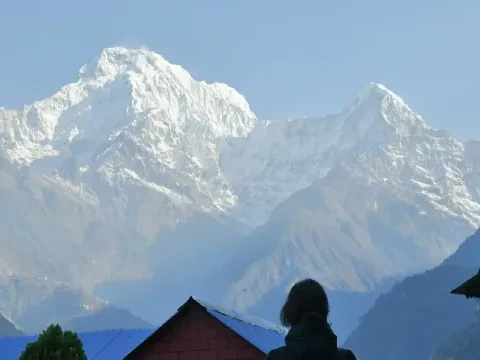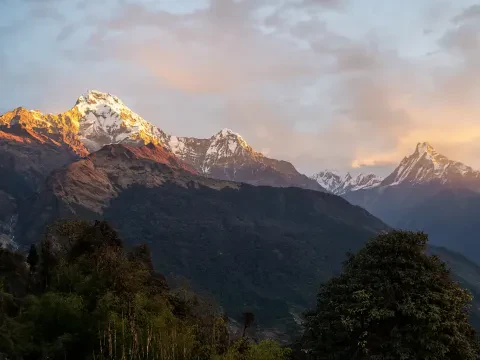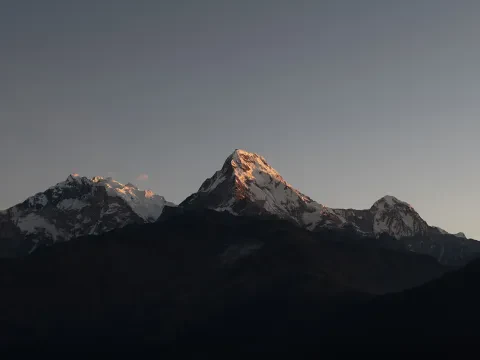
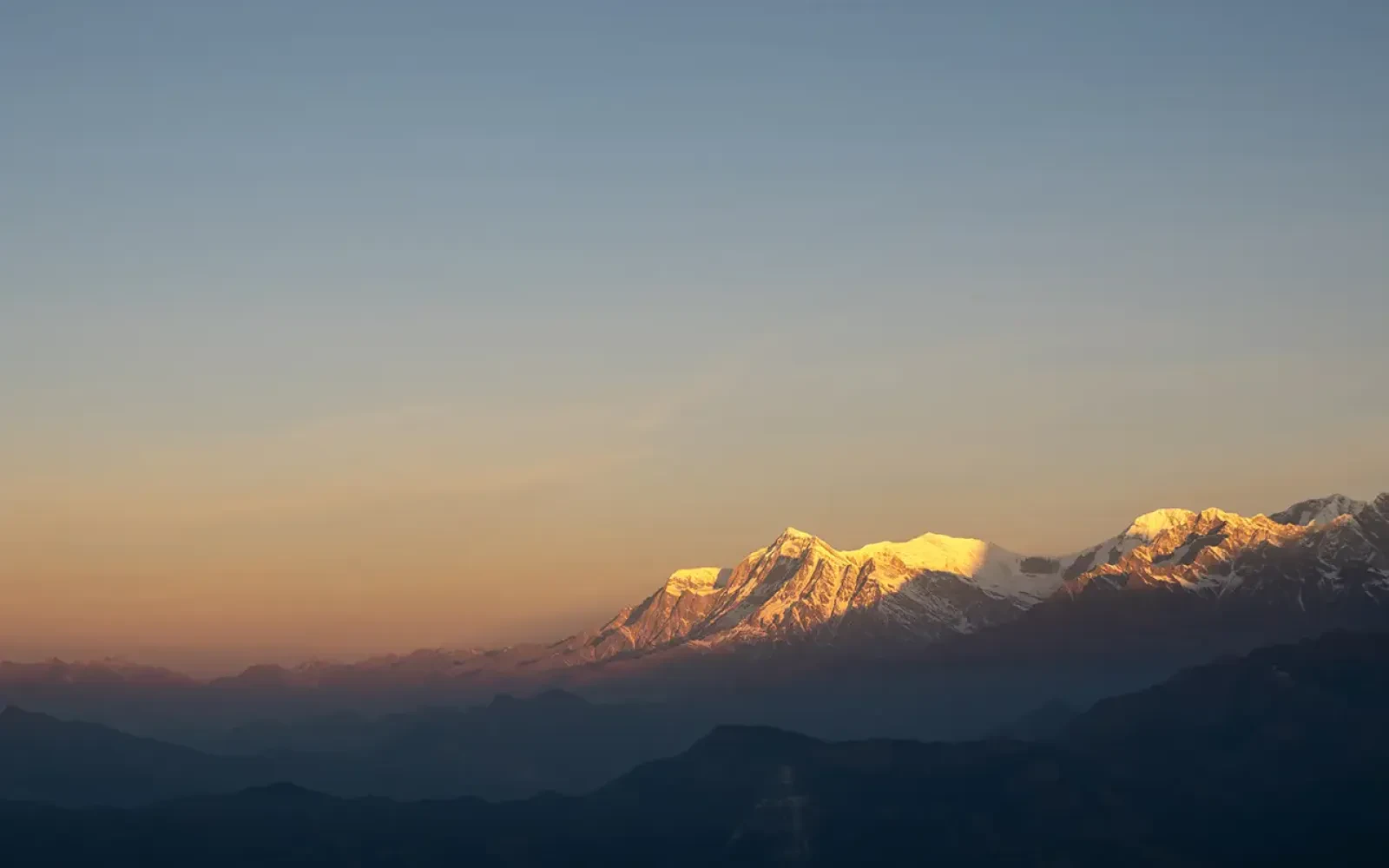
The Ghorepani Poon Hill Trek 2027 offers a short Himalayan adventure with outstanding mountain and sunrise views near Pokhara.
Meanwhile, it combines mountain landscapes, traditional villages, waterfalls, rhododendron forests, and comfortable teahouse stays.
Moreover, its highest point only reaches around 3210 meters, which is accessible for many first-time trekkers.
| Elevation / m | Main Points of Interest |
|---|---|
| Pokhara 822 | Main start/end destination |
| Nayapul 1070 | Traditional road access point |
| Ulleri 2050 | Mountain village and trail section (jeep accessible from Pokhara) |
| Ghorepani 2860 | Main overnight village |
| Poon Hill 3210 | Himalayan sunrise viewpoint |
| Tadapani 2630 | Forest village with mountain views |
| Ghandruk 1940 | Traditional Gurung village |
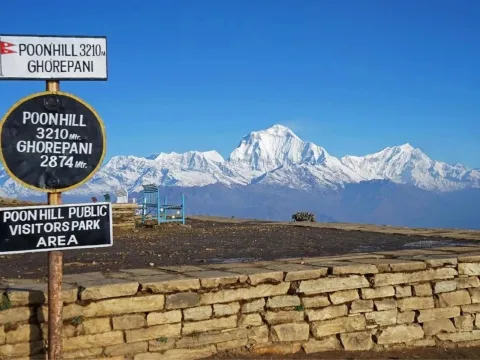
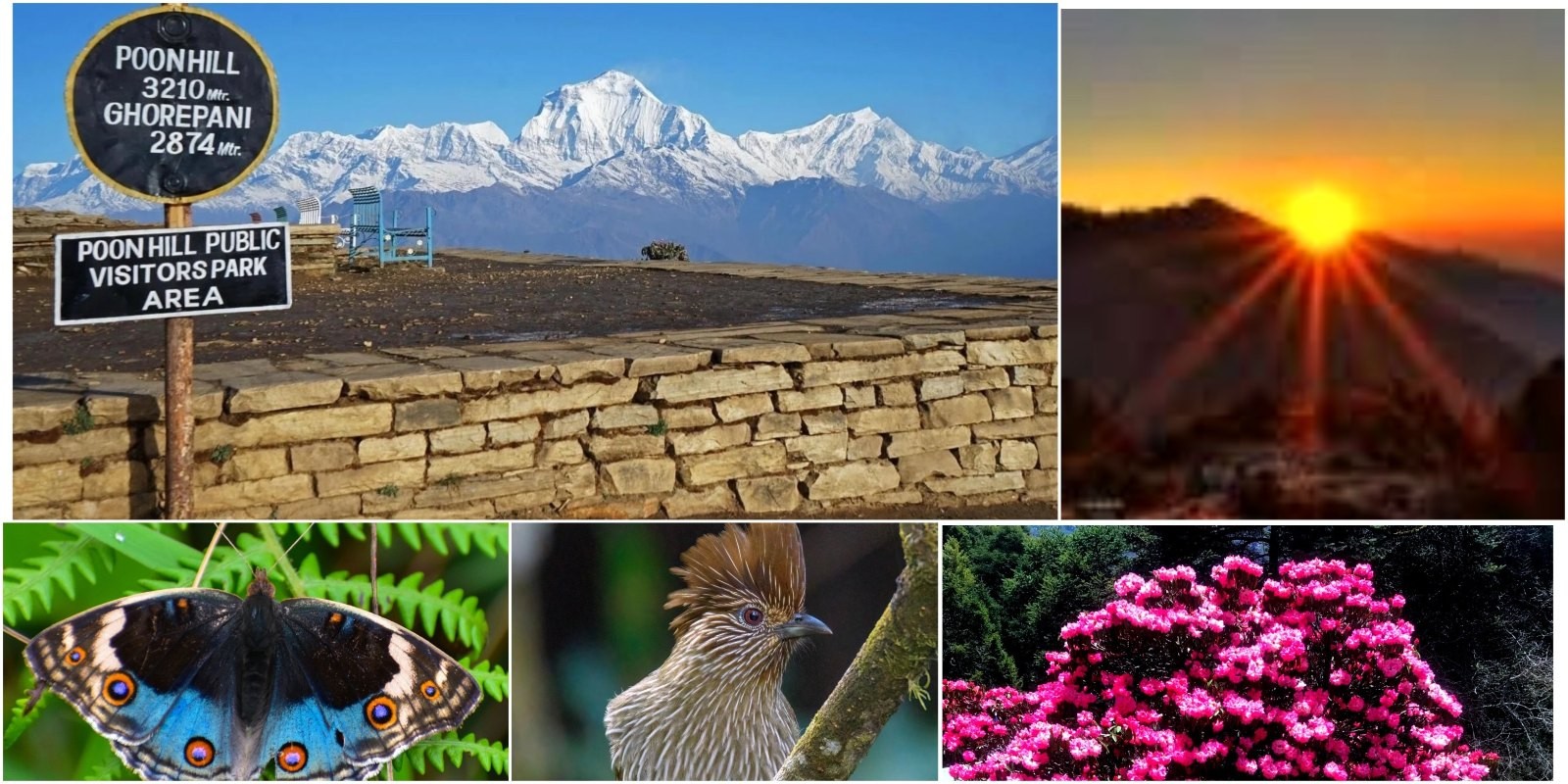
Poon Hill peak reaches around 3210 meters above sea level. This viewpoint is the main highlight of the Ghorepani Poon Hill Trek. Moreover, its morning sunrise views showcase iconic views of the Annapurna and Dhaulagiri ranges.
On a clear day, you might see:
Therefore, the morning walk from Ghorepani village at 2860 meters becomes one of the highlights.
As you start climbing the trek from the lower hills around 1000 meters from Nayapool, you will see forests of rhododendron, oak, and bamboo trees. Moreover, the blooming rhododendron forests in spring create a memorable scenic experience.
While autumn months offer clear mountain views, the weather generally stays mild throughout the trekking season.
In fact, the Poon Hill trek route passes through several Himalayan villages set at different elevations :
Hence, the elevation changes create a variety of landscapes and experiences.
The main Ghorepani Poon Hill Trek can be fitted into a 3-5 day trip.
A short trek version offers this elevation profile:
Pokhara (822 m) → Ulleri (2050 m) → Ghorepani (2860 m) → Poon Hill (3210 m) → Tadapani (2630 m) → Ghandruk (1940 m) → Pokhara (822 m)
Hence, you might enjoy a Himalayan viewpoint without doing a high-altitude long trek.
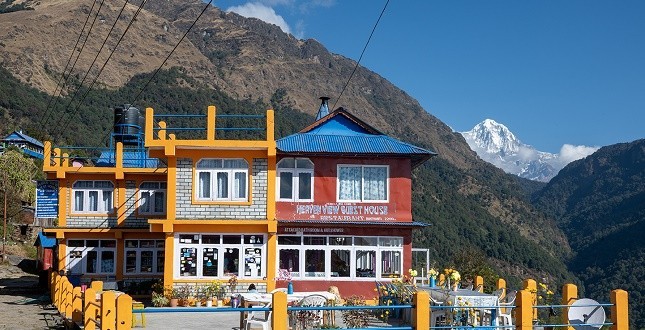
There are plenty of teahouses and mountain lodges along the trail. Ghorepani at 2860 m, Tadapani at 2630 m, and Ghandruk at 1940 m offer a range of accommodation options.
You might find:
However, teahouse comforts still differ significantly, and city hotel standards should not be expected.
Poon Hill mountain trek attracts many people due to its relative accessibility. Hence, mountain tourists should promote responsible trekking and minimize environmental impacts.
Responsibility highlights include:
In 2027, Poon Hill trek will likely see higher visitor numbers, and every tourist should leave the mountains better than finding them.
The mountain trail and sunrise viewpoint at Poon Hill see thousands of visitors annually. Hence, a higher number of trekkers in 2027 will surely create more crowds.
Likewise, peak season months usually experience higher occupancy rates at budget teahouses. While Tadapani at 2630 m, Ghorepani at 2860 m, and Poon Hill at 3210 m might get busier, some trail sections stay less crowded. A pre-dawn start at sunrise might help you avoid the crowds at the viewpoint.
The main reasons for the Poon Hill mountain trek in 2027 include:
Ghorepani Poon Hill Trek 2027 will provide a perfect mix of comfort, culture, adventure, and natural beauty.
The 2027 trekking season will likely see improvements along the route. Better teahouse services, responsible tourism, and trail development will shape the overall experience.
However, the trek will not see full-scale urbanization, and traditional Himalayan authenticity will remain.
| Elevation / m | Main 2027 Highlights |
|---|---|
| Pokhara 822 | Improved transport and tourism infrastructure |
| Nayapul 1070 | Better access road to the trekking trail |
| Ulleri 2050 | Stone steps and trail upgrades |
| Ghorepani 2860 | Better teahouse services and facilities |
| Poon Hill 3210 | Organized sunrise viewpoint experience |
| Tadapani 2630 | Improved mountain lodge accommodations |
| Ghandruk 1940 | Better lodging and cultural tourism |
The Ghorepani Poon Hill trek route offers a variety of trail surfaces as you climb from the lower valleys to the 3210-meter viewpoint. You might encounter stone stairs, rhododendron forests, village streets, and road crossings.
While some road construction may affect traditional trekking values, 2027 upgrades will likely see:
Hence, the overall trekking conditions will improve, although road development might change some views and experiences.
Lodging options will remain one of the highlights of the Poon Hill trek. Ghorepani, Tadapani, and Ghandruk villages stay popular among trekkers due to their accessibility and teahouse comforts.
Elevation Village / Costs Accommodation Highlights :
Here, private teashop rooms, hot shower facilities, and dining options will be available. However, overall accommodation comfort should not be compared to city hotel standards.
As the Poon Hill trek sees more tourists, dining options will continue to improve. Popular trek villages offer diverse food choices that cater to different diets.
Common menu items include:
Moreover, popular teahouse dining areas provide more vegetarian options. However, small village lodges like in Tadapani will see fewer food variety choices.
The increased interest in the Poon Hill trek will lead to better access to fundamental facilities.
These might include:
However, such comforts often come at an additional cost. Hence, make sure to carry some Nepalese currency for personal expenses.
Increased 2027 tourism will likely bring higher environmental and social responsibilities.
Responsible trekking highlights:

The Poon Hill trek will likely see higher visitor numbers in 2027. The increasing popularity directly impacts the overall trek experience.Meanwhile, peak season months usually see higher teahouse occupancy rates. While Poon Hill at 3210 m gets crowded at sunrise, some trail sections stay less busy.
Crowded areas might include:
Nevertheless, an early morning start and off-season timing (Winter and Monsoon) might help you avoid large crowds and enjoy the trek.
Despite the 2027 improvements, the Poon Hill trek retains its core values. You will still enjoy:
Hence, the Poon Hill Trek 2027 will provide a balanced mix of upgrades and authentic Himalayan experiences.
| Opportunities | Challenges |
|---|---|
| Better teahouse facilities | Higher accommodation costs |
| Improved trail infrastructure | Some road development changes |
| More food variety options | Increased commercialization |
| Better connectivity | Limited digital detox experiences |
| Increased services | More visitor traffic |
Likewise, Ghorepani Poon Hill Trek 2027 will likely elevate the overall trekking experience. The upgrade highlights include improved services, trail maintenance, and visitor management. At the same time, the Poon Hill trek offers memorable Himalayan landscapes, village culture, and sunrise views.
Yes. Trekkers can expect to see improving facilities on the Ghorepani Poon Hill Trek 2027. The trek is already one of the most developed short trekking routes in Nepal, and there are established teahouses and lodges in the main villages.
Facilities can vary between different lodges, however. Therefore, better facilities should be seen as more choice and availability rather than universal improvement.
| Facility | Ghorepani – 2,860 m | Tadapani – 2,630 m | Ghandruk – 1,940 m |
|---|---|---|
| Twin rooms | Yes | Yes | Yes |
| Private rooms | Available | Available | Widely available |
| Attached bathroom | Available in some lodges | Limited | Available in many lodges |
| Hot shower | Available | Available | Widely available |
| Wi-Fi | Available | Available | Available |
| Electricity | Available | Available | Available |
| Charging | Available | Available | Available |
| Dining rooms | Yes | Yes | Yes |
| Varied meals | Good choice | Moderate choice | Good choice |
As with other facilities, what's available depends on the specific lodge and season, so room and bathroom facilities should be confirmed as part of the booking process.
Attached bathrooms are available in some teahouses in Ghorepani and Ghandruk. Some lodges offer hot showers attached to private rooms, or shared shower facilities in other accommodations.
Here, Ghorepani is at about 2,860 meters, and Ghandruk is around 1,940 meters. Therefore, Ghandruk generally has more variety of accommodation options due to being a larger and more developed village.
However, these facilities should be double-checked as availability can fluctuate during busy seasons (Spring and Autumn).
As with other facilities, food variety should be better at established teahouses as growing tourist interest means larger and more varied menus at popular villages.
You can generally find:
Therefore, food variety is likely to be greater than on isolated high-altitude treks, but smaller teahouses may still have a limited menu.
This is another major improvement for the Poon Hill Trek 2027, as jeeps can now provide direct access toward Ghorepani. The road passes through Ulleri and Banthanti before reaching Ghorepani depending on current road conditions.
Here, the jeep option to Ghorepani from Pokhara directly shortens the first walking day. Therefore, the short three-day itinerary becomes a realistic option for time-constrained trekkers.
However, road conditions can vary due to weather and other factors, therefore the road access should be confirmed with your trekking operator before departure.
| Traditional approach | Short 2027 approach |
|---|---|
| Pokhara → Nayapul | Pokhara → Ulleri/Banthanti by jeep |
| Longer first walking day | Shorter first walking day |
| More time on lower trail | More time around Ghorepani |
| Usually longer itinerary | Suitable for 3-day itinerary |
| More walking distance | Less walking distance |
In conclusion, the change doesn't remove the trekking aspect, but allows you to start higher in the mountains and spend more time around Ghorepani, Poon Hill, Tadapani, and Ghandruk.
Overall, the 2027 experience can be summarized as follows:
Therefore, the Ghorepani Poon Hill Trek 2027 offers a good combination of Himalayan views and modern trekking comforts.
For the itinerary, I would suggest the 3-day version as the ideal short trek, while including the elevations and estimated walking times.
The best Ghorepani Poon Hill Trek itinerary for 2027 is the 3-day Poon Hill circuit from Pokhara. It utilizes jeep access toward the higher trailhead near Ulleri or Banthanti, shortening the first day of walking.
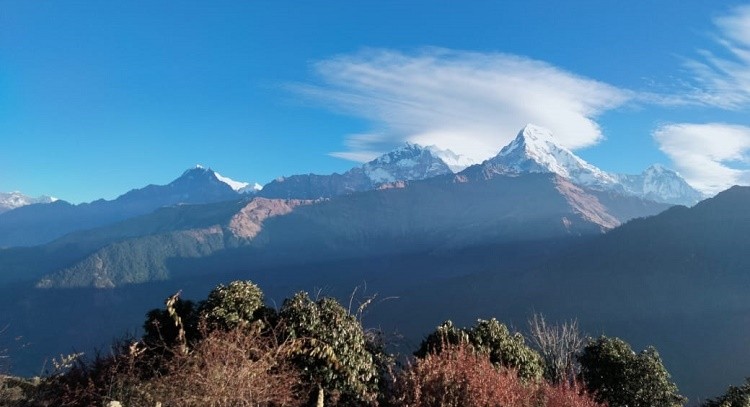
Here, the route then goes Ghorepani → Poon Hill → Tadapani → Ghandruk, before returning to Pokhara by jeep. It provides the main highlights without making the trek unnecessarily long.
| Day | Route | Elevation | Activity |
|---|---|---|
| Day 1 | Pokhara → Ulleri/Banthanti → Ghorepani | Pokhara 822 m → Ghorepani 2,860 m | Jeep + trek |
| Day 2 | Ghorepani → Poon Hill → Tadapani | Poon Hill 3,210 m → Tadapani 2,630 m | Sunrise + trek |
| Day 3 | Tadapani → Ghandruk → Pokhara | Tadapani 2,630 m → Ghandruk 1,940 m | Trek + jeep |
Pokhara (822 m) → Ulleri (around 2,050 m) → Banthanti (around 2,250 m) → Ghorepani (around 2,860 m)
Here, the journey starts with a scenic drive from Pokhara toward Ulleri. Depending on road conditions, the jeep can proceed toward Banthanti before starting the trekking part of the itinerary.
From the trailhead, you trek through rhododendron and oak forests. Stone steps and mountain villages also appear on the way to Ghorepani.
Estimated walking time: 4-5 hours depending on the jeep distance and pace.
You spend the night at a teahouse in Ghorepani, so you can get a good rest before the next day's sunrise hike.
Ghorepani (2,860 m) → Poon Hill (3,210 m) → Ghorepani → Tadapani (2,630 m)
Day two is an early start to see the sunrise from Poon Hill at 3,210 meters. It's one of the main attractions of the trek, and the view extends for a spectacular panorama of the Himalayas on clear days.
After enjoying the sunrise, you return to Ghorepani for breakfast. Then, you continue toward Tadapani through rhododendron and oak forests, with some ups and downs along the way.
Tadapani (2,630 m) → Ghandruk (1,940 m) → Pokhara (822 m)
The last trekking day starts with a scenic passage through forest trails toward the Gurung village of Ghandruk. It's around 1,940 meters above sea level, and provides traditional Gurung village atmosphere and views of the Annapurna range.
Likewise, you can explore the village and have lunch before returning to Pokhara by jeep. Depending on road conditions and traffic, the drive generally takes several hours.
You arrive in Pokhara in the afternoon or evening, having completed the three-day Poon Hill circuit. A current 3-day route from Tadapani to Ghandruk and then by jeep to Pokhara is utilized by trekking operators as well.
| Advantage | Why it matters |
|---|---|
| Direct jeep access | Conserves trekking time |
| Short duration | Good for limited holidays |
| Poon Hill sunrise | Includes the main attraction |
| Maximum altitude | Only 3,210 m |
| Teahouse stays | Comfortable mountain accommodation |
| Ghandruk visit | Adds cultural experience |
| Pokhara return | Convenient finish |
| Balanced route | Combines jeep and trekking |
Likewise, the elevation gain also works well within the short itinerary. You start at Pokhara (822 m), climb toward Ghorepani (2,860 m), achieve the highest point at Poon Hill (3,210 m), and then descend toward Ghandruk (1,940 m).
Three days can be enough if you utilize the higher jeep access. However, the itinerary is quite demanding as you combine transportation with longer trekking days.
It is best for trekkers who:
If you prefer a slower pace and more village exploration, a 4-5 day Poon Hill Trek itinerary would be more relaxing.
Therefore, as a result of this analysis, I would recommend the 3-day itinerary from Pokhara → Ulleri/Banthanti → Ghorepani → Poon Hill → Tadapani → Ghandruk → Pokhara as the combination of time, scenery, comfort, and experience for the Poon Hill Trek 2027.
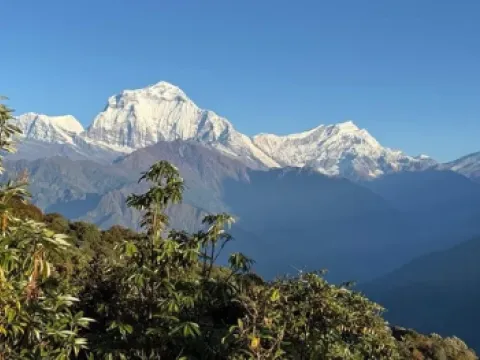
The best seasons for Ghorepani Poon Hill Trek 2027 are spring and autumn. March to May has blooming flowers and great trekking conditions, and September to November usually has the clearest mountain views.
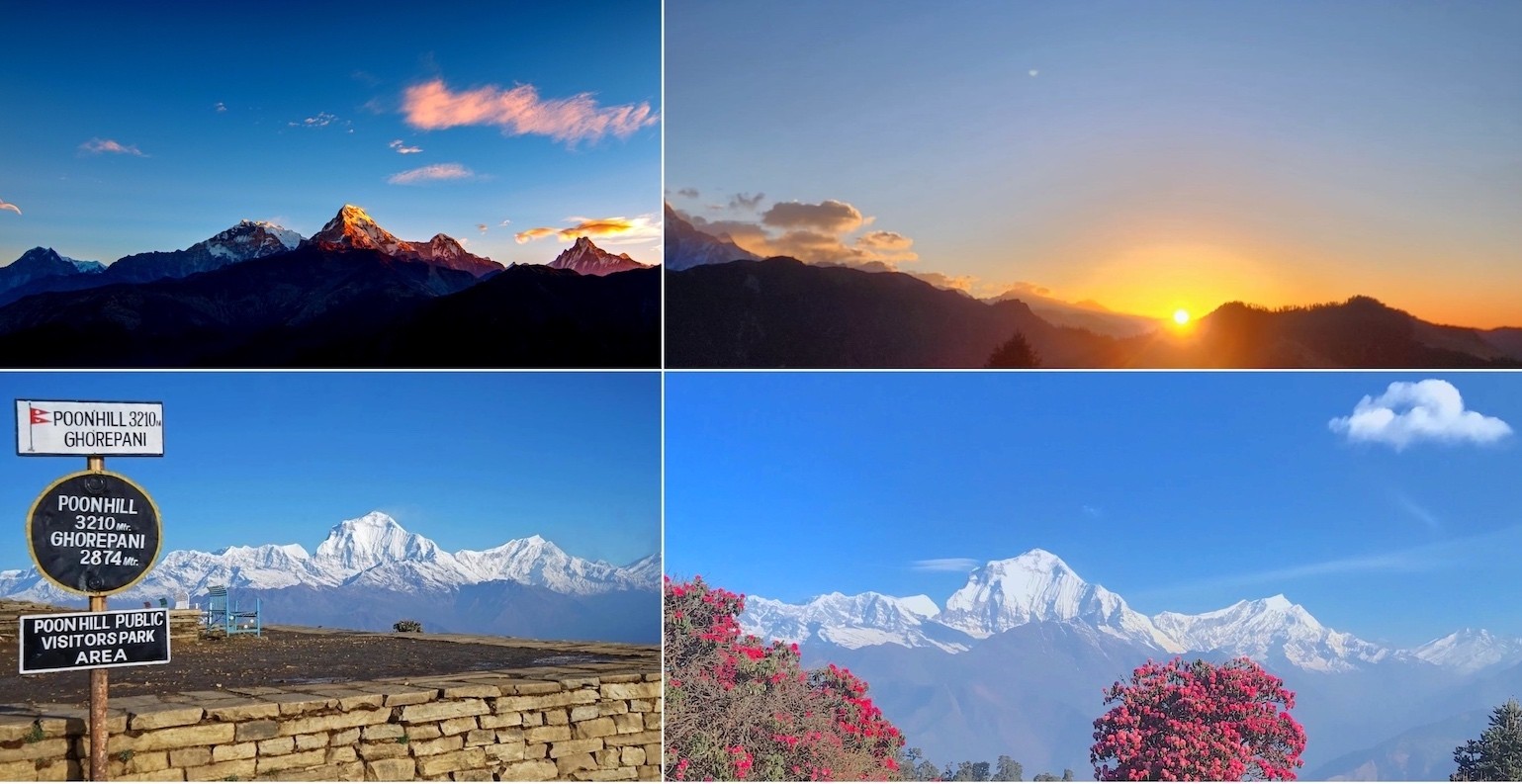
Meanwhile, Poon Hill is 3210 meters while the highest point at Ghorepani is only around 2860-2874 meters above sea level. That means it gets quite a bit colder up around the hill than Pokhara at 822 meters.
| Month | Trekking Conditions | Mountain Views | Overall Rating |
|---|---|---|
| March | Pleasant and improving | Good- Excellent | Excellent |
| April | Very comfortable | Excellent | Excellent |
| May | Warm at lower elevations | Good to very good | Very good |
| June | Increasing rain | Often cloudy | Fair |
| July | Wet and slippery | Limited | Fair |
| August | Wet and humid | Often cloudy | Fair |
| September | Improving conditions | Good to very good | Very good |
| October | Stable and clear | Excellent | Excellent |
| November | Cool and generally dry | Excellent | Excellent |
| December | Cold mornings | Often clear | Very good |
March, April, and May are excellent months for visiting this area. Conditions improve as the season progresses with warmer temperatures and colorful rhododendron forests around Ghorepani and Tadapani.
These are the reasons why Spring is appealing season for hiking if you want:
Here, I think April is especially nice due to awesome flowers and greenery, water falls, mountains, and good temperature conditions.
The months of September, October, and November are also very good with improving weather after the monsoon season. Views of the mountains can be exceptionally sharp and clear.
Here, I would say it is a particularly good season if you want :
Likewise, I think October is often the best month for most people who want the clearest mountain views. But keep in mind that the trails and tea houses can be quite busy.
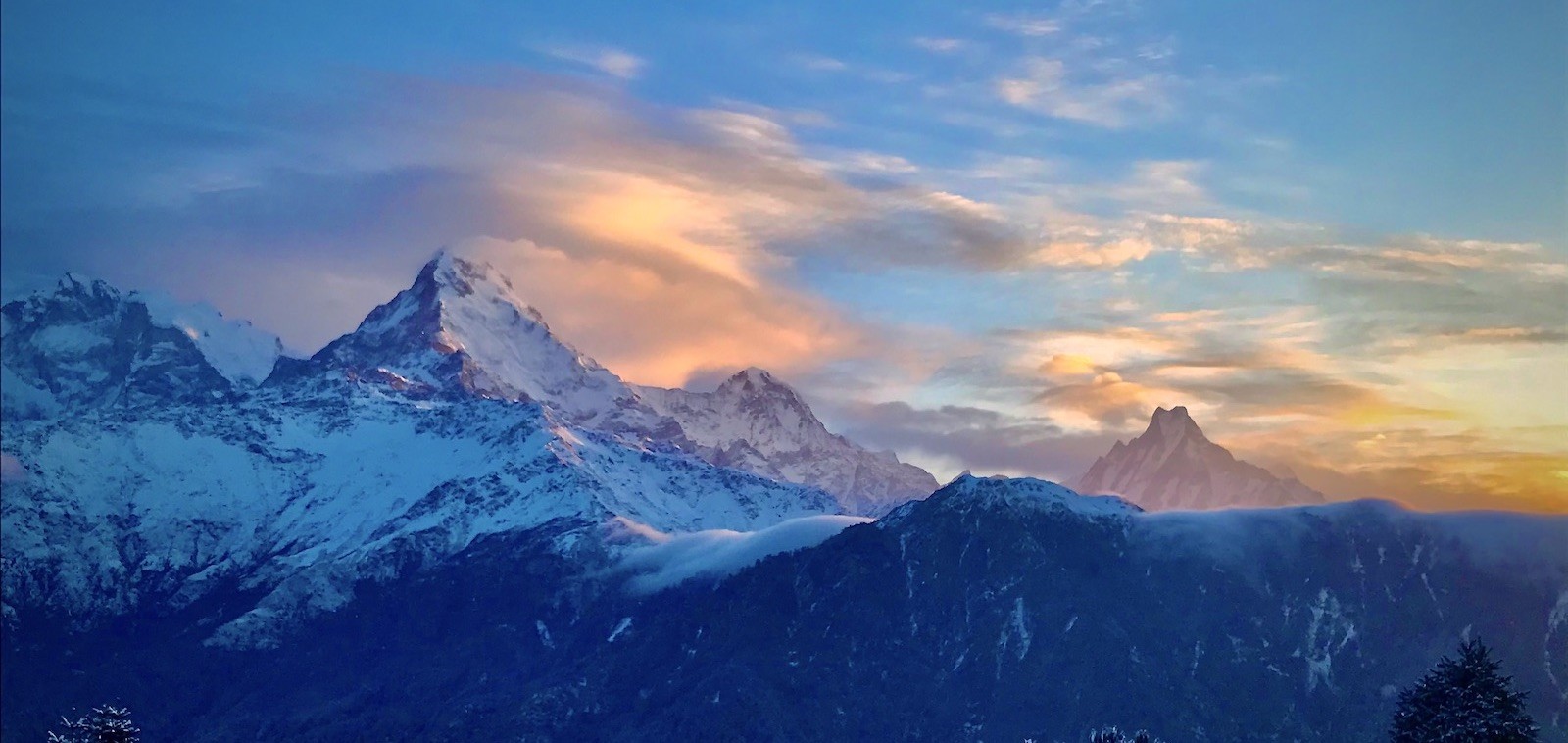
Yes you can and I highly recommend it if you are interested in experiencing fewer crowds and colder conditions. The months of December, January, and February are considered winter in the area. Mornings and evenings will be quite chilly, especially around Ghorepani at nearly 2860 meters and Poon Hill at 3210 meters.
However, I am also recommending the season for :
However, you should bring some warm clothes like long-sleeve t-shirts, sweaters, a warm jacket, and a hat. You might also want to bring some extra layers on top of your base layers.
And make sure to bring a good pair of hiking shoes or boots since the ground can sometimes be quite slippery on higher trails during the winter months. You should also expect some snow or ice on the higher parts of the trail. The best time to see snow is usually between February and April.

Yes you can, but it might not be ideal unless you are looking for specific conditions. June, July, and August are the monsoon months with daily rains, slippery trails, cloudy conditions, and leeches on the forested parts of the trail.
The benefits of visiting during this time are :
However, the main downside is the possibility of cloudy conditions that hide most mountain views. You might also want to keep in mind that leeches can be a problem on some parts of the trail. Another concern is slippery trail conditions due to the rain and the potential for landslides.
| Your Priority | Recommended Month |
|---|---|
| Best overall weather | October |
| Clear views of the mountains | October - November |
| Rhododendron flowers | March - April |
| Fewer crowds of people | March or November |
| Warm conditions during spring | April - May |
| Quieter trekking in the winter | December - February |
| More green trees and plants | June - August |
| Fewer chances of rain | October - November |
Here, as per my past experiences, I personally claim that October and November would be the best months for most people considering the Ghorepani Poon Hill Trek 2027.
But if seeing rhododendron flowers is more important to you, then I would suggest planning your trip for March or April instead.
Nevertheless, I also opine that the choice really depends on what your priorities are. You might want to keep in mind your preferences about weather, flowers, crowds, water falls, rainbow on the trail and teahouse availability when making your final decision.
The Ghorepani Poon Hill Trek 2027 is not a difficult trek requiring expert-level mountain climbing skills, but there are still some specific things that you should consider before making any final decisions.
Meanwhile, you should prepare yourself for days with lots of walking up and down, walking on stone steps, changing weather conditions, and an early morning trek to Poon Hill at 3210 meters.
Moreover, Ghorepani, the highest overnight camp on the trail, is around 2860-2874 meters. Tadapani is about 2630 meters and Ghandruk is around 1940 meters.
You should be in generally good health and have sufficient stamina for walking tours. The trail has many steps, especially around Ulleri, and you should be prepared to walk for several hours per day.
If you do not exercise very often, you should probably start doing some physical activities around 4-6 weeks before your trip.
Moreover, some good activities include brisk walking, climbing stairs, hiking, biking, running, and doing some lower-body strength exercises such as squats, lunges, calf raises, and core workouts.
By exercising regularly, you will give your body sufficient time to adjust to the demands of the Ghorepani Poon hill trek 2027. That way, you should avoid overexertion and injuries.
You will not need a huge amount of gear for short 3-day itineraries but make sure to bring the appropriate clothing and equipment for the weather conditions.
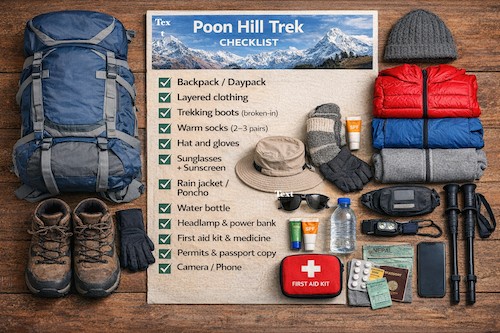
| Category | Things you might want to pack |
|---|---|
| Clothing | T-shirts, trekking pants/trousers, fleece, warm jackets |
| Rain protection | Waterproof jacket and trousers |
| Footwear | Durable and broken-in trekking shoes or boots |
| Warm clothes | Glove, warm hat, thermal wear |
| Sun protection | Sunscreen, sunglasses, sun hats |
| Trekking equipment | Daypack, trekking poles, headlamps |
| Hydration | Water bottles (preferably reusable ones) |
| Personal items | Toiletries, medicines, first aid kit |
| Electronics | Mobile phone, power banks, headlamps |
| Documents | Passport, insurance, permits and their copies |
Importantly, a headlamp is a crucial piece of equipment because you will need to walk up to Poon Hill before sunrise on your final day. Good trekking shoes or boots are also important since you will be walking on many stone steps.

Since Poon Hill Sunrise Hike starts before dawn, you should prepare your clothes and gear the night before. That means having your headlamp, warm clothes, gloves, and hat within easy access.
Likewise, you should also probably bring a water bottle, camera, trekking poles, and a light snack with you when you leave your overnight camp to ascend Poon Hill.
Here, you might also want to leave early enough that you can get a good spot for watching the sunrise, especially if it is a busy season.
Poon Hill is not an extremely high altitude, but it still has enough elevation to cause some altitude-related problems for some people. The highest altitude on Poon Hill is 3210 meters, so some people might experience altitude sickness.
In fact, it is believed that there won’t be any kind of altitude related problems below 3500m and Poon Hill is below it.
However, I think the best way to prepare yourself is by walking comfortably on a regular basis. That means eating healthy foods, staying well-hydrated, limiting alcohol consumption, and getting a good amount of sleep.
As per our past experiences, no trekkers had altitude issues that affected their Poon Hill Trek. But, you may have some minor issues like dizziness, lightheadedness, stomach issues and tiredness. There are not the symptoms of acute mountain sickness; these are very common in the mountain.
For this, you don’t need any medicine. And do not forget to share your problems to your guide.
Also, I would also strongly advise against ignoring any altitude-related problems. Inform your trek leader or guide if you are feeling too sick and be ready to descend if necessary.
Poon Hill weather varies depending on the time of year. Make sure that you bring sufficient clothing for the expected weather conditions.
| Season | Things you might want to pack |
|---|---|
| Spring | Light layers, warm jackets, and rain protection |
| Summer/Monsoon | Waterproof jacket, rain covers, quick-dry clothing |
| Autumn | Light layers of clothing and rain protection |
| Winter | Warm clothing including a down jacket, gloves, and a warm hat |
Even though it will probably be a lot warmer during the day in spring, it will still be chilly enough around Poon Hill at 3210 meters for you to want a warm jacket or sweater.
Yes, you should since the trail can often be quite slippery during the rainy season. The roads can also sometimes be slippery and prone to landslides.
I would suggest bringing
Make sure that you have enough cash for paying teahouses, eating meals, and any other miscellaneous expenses.
Some teahouses even offer :
Always carry a little extra money in case you need to pay for :
Likewise, you might also want some cash for laundry, snacks, drinks, and tips. I would not recommend carrying large amounts of cash with you, but you should also not count on credit cards or other electronic payment methods.
You should definitely consider booking some of your accommodation in advance, especially if you are planning to travel during the busy seasons of spring and autumn. The most popular teahouses can fill up very quickly during those times of the year.
It might also be worth it to book in advance if you want :
Here, that is especially true since you will probably want to spend most of your time at Ghorepani or Ghandruk on the short three-day itineraries.
More importantly, I would definitely recommend getting your documents in order before you leave for Nepal. You should make sure to bring all of the following things with you.
| Documents | Your passport, Nepal Visa or information about your visa |
|---|---|
| Health/Travel Insurance | Your travel insurance with you or a copy of it |
| Flights | Your flight details |
| Trek booking | Your trek booking confirmation |
| Other things | Emergency contact information, copies of your important documents, and digital copies of all of the above |
Most importantly, your travel insurance should specifically mention coverage for trekking at the highest altitude of your itinerary and any possible emergency evacuations.
Here, make sure that you have all of your documents and information readily available in case of an emergency.
The best way to prepare for Ghorepani Poon Hill trek is by limiting your risk factors such as altitude sickness or extreme weather conditions. That means getting in shape, buying the right clothing and gear, and making sure that you have enough money with you. I also suggest that a little extra preparation goes a long way. Specifically, I recommend the following things.
4-6 weeks before your trek :
2-3 weeks before your trek :
1 week before your trek :
Before your trek :
As the Ghorepani Poon Hill Trek 2027 runs through the Annapurna Conservation Area, trekkers need the Annapurna Conservation Area Permit (ACAP) before entering the area.
The TIMS (Trekkers' Information Management System) card has also been linked to the Annapurna region trekking.
However, the current information suggests that the TIMS rules and enforcement on the Ghorepani route have changed. Thus, trekkers should confirm the current TIMS rule before the departure in 2027.
| Permit | Required for 2027? | Purpose |
|---|---|---|
| ACAP Permit | Yes | Entry to Annapurna Conservation Area |
| TIMS Card | Confirm the current rule | Trekker registration and management |
| Restricted Area Permit | No | Poon Hill is not a restricted area trek |
| Local Entry Fee | May apply | Depends on the current rules |
Here, the ACAP permit is the key conservation-area permit for the route. The current operator information lists the foreign-national ACAP fee at NPR 3,000, although trekkers should confirm the official rate before their 2027 departure.
The permit is commonly checked around the Birethanti entry point. Thus, it is advised to carry your passport and permit details during the trek.
Also, the permits are checked at lower Ghorepani by Nepal Army checkpost before entering main Ghorepani village.
If you book with a trekking company, the operator can normally arrange the required permits before your departure. It makes the process more straightforward and less stressful.
No. The Ghorepani Poon Hill route is not a restricted-area trek. Thus, you do not need a special restricted-area permit like trekkers need for Upper Mustang or the Manaslu restricted area.
Trekking permit rules can change before the season. Thus, it is best to check the latest rules before your departure in 2027.
You should confirm :
In the case of a package trek, ask your operator to clarify which permits and government fees are included in the package price.
The Ghorepani Poon Hill Trek 2027 provides relatively comfortable teahouse accommodation in comparison with many longer Himalayan treks. The main villages have established lodges, dining rooms, and modern conveniences.
However, the accommodation quality varies between the villages. In general, Ghorepani and Ghandruk provide more choice and comforts, whereas Tadapani is a more basic experience.
| Place | Elevation | Accommodation Level | Typical Facilities |
|---|---|---|
| Ghorepani | 2,860–2,874 m | Better developed | Private/twin rooms, some attached bathrooms, hot showers, Wi-Fi, charging |
| Tadapani | 2,630–2,700 m | Basic to moderate | Twin rooms, shared bathrooms, dining room, basic hot shower |
| Ghandruk | 1,940 m | Better developed | Private rooms, some attached bathrooms, hot showers, Wi-Fi, charging |
| Poon Hill | 3,210 m | Viewpoint only | No accommodation |
Ghorepani has the most lodges, whereas Ghandruk also provides a wide choice. Tadapani is smaller, and thus the facilities are generally more basic.
Yes, the better lodges in Ghorepani and Ghandruk can provide private rooms with attached bathrooms. Hot showers are also available at many established teahouses, although they may involve additional costs.
However, attached bathrooms should not be expected at all lodges. Thus, if you specifically want a private attached room, make sure to request it when booking.
For the 2027 trek, you can specifically ask for:
Ghorepani at approximately 2,860–2,874 meters is one of the better-developed overnight stops on the route. The village has numerous lodges as most trekkers stay here before the early morning hike to Poon Hill.
You can generally expect:
Thus, Ghorepani is a good place to request a better room.
Tadapani at around 2,630–2,700 meters is smaller than Ghorepani and Ghandruk. Thus, the accommodation is generally more basic.
You can expect :
Here, the facilities are generally adequate for one night's stay, although you should not expect the same standard of accommodation as at larger villages.
Ghandruk is at around 1,940 meters and is one of the larger villages on the route. It has a greater choice of lodges and homestay-style accommodation.
Better lodges can provide :
Thus, Ghandruk can provide another comfortable overnight stop before returning to Pokhara.
Food is one of the easiest parts of the Poon Hill Trek. Established teahouses provide a choice of Nepali and international-style meals.
Common dishes include:
Mainly, Dal bhat remains one of the most satisfying meals, as it includes rice, lentils, vegetables, and curry.
| Food Category | Ghorepani | Tadapani | Ghandruk |
|---|---|---|
| Dal bhat | Excellent availability | Available | Excellent availability |
| Noodles | Available | Available | Available |
| Pasta | Available | Available | Available |
| Momos | Available | Usually available | Available |
| Pizza-style meals | Some lodges | Limited | Some lodges |
| Breakfast choices | Good | Basic to moderate | Good |
| Hot drinks | Wide choice | Basic choice | Wide choice |
| Snacks | Good | Basic | Good |
Yes, generally. Ghorepani and Ghandruk have more developed lodges and thus more choice of food.
Actually, the availability can still vary between lodges and seasons. Thus, do not expect a city-style restaurant menu at every teahouse.
The accommodation and food experience can be summarized simply:
Thus, the Ghorepani Poon Hill Trek 2027 should provide a comfortable teahouse experience, even if it does not require luxury trekking facilities.
If you want attached bathrooms and hot showers, book suitable lodges in Ghorepani and Ghandruk, especially during the spring and autumn seasons.
The price of the Ghorepani Poon Hill Trek in 2027 will depend on the itinerary, group side and the level of services. A short 3-day Poon Hill trek can cost around USD 95–215 per person with Haven Holidays Nepal.
Here, this range includes the trekking services guide, permits, accommodation, transport and breakfast. The 4- and 5-day options cost more because of the additional days of trekking and services.
| Trek Option | Estimated Cost Per Person | Main Services |
|---|---|---|
| 3-Day Poon Hill Trek | USD 95–215 | Guide, permits, accommodation, transport, breakfast |
| 4-Day Poon Hill Trek | Higher than 3-day ( USD 265- 355) | More nights, meals, facilities and trekking time |
| 5-Day Poon Hill Trek | Higher than 4-day (USD 355-425) | More nights, meals, facilities and village experiences |
| Private Comfort Option | USD 435–555 | Private jeep, better accommodation and more services |
Here, the price will depend on group size, season, level of accommodation and transport. A private tour will always cost more than a group departure.
The USD 95–215 range is aimed at those who want a short, practical Himalayan trek.
The standard inclusions can vary, but they generally cover:
Important: It's always good to confirm the inclusions for your specific package before you book.
A longer itinerary means more nights of accommodation and guide services. It also gives more time to explore the villages, forests, viewpoints and enjoy the local culture at a relaxed pace.
Meanwhile, the longer packages can also offer more comfort and more choices of accommodation and meals. You also have time to spend more days in places like Ghorepani, Tadapani, or Ghandruk.
Thus, 4- or 5-day Poon Hill trek Itinerary is a good balance if comfort and relaxation matter more than the lowest price option.
Those who want more comfort can opt for a private Poon Hill trekking package around USD 435–555. This usually offers a private jeep, more comfortable accommodation and additional services during the trek.
Here, a private jeep also provides more flexibility with departure times and routes. But road conditions can change, so the exact road route should always be confirmed before departure.
The package usually doesn't include all your personal expenses. So you should also budget for:
In fact, your final Poon Hill trek budget will therefore depend on your personal preferences and the specific package you choose.
The Poon Hill Trek is a relatively cheaper Himalayan trek because of its short duration and proximity to Pokhara. It also doesn't require a mountain domestic flight, unlike the Everest Base Camp Trek.
For 2027, the USD 95–215 range is a reasonable estimate for the short 3-day Haven Holidays package, and those who want to upgrade their comfort can extend their itinerary or opt for a private tour.
Here, a comparison of the inclusions offered by different packages will therefore help you choose the right Poon Hill trek for your needs.
Packing for the Ghorepani Poon Hill Trek 2027 should be simple and practical. There is no need for heavy expedition equipment as Poon Hill only reaches 3,210 meters.
However, the trek involves steep stone steps, cold mornings and rain, as well as unpredictable mountain weather.
Therefore, it's best to pack light but be prepared for different conditions.
| Category | What to Pack | Recommended Amount |
|---|---|
| Trekking clothes | Quick-dry T-shirts | 2-3 |
| Trekking pants | Lightweight trekking trousers | 2 |
| Base layers | Thermal top and bottom | 1 set |
| Warm layer | Fleece or warm sweater | 1 |
| Insulated jacket | Down or warm jacket | 1 |
| Rain protection | Waterproof jacket and trousers | 1 set |
| Underwear | Quick-dry underwear | 4-5 pairs |
| Socks | Trekking socks | 3-4 pairs |
| Footwear | Broken-in trekking shoes or boots | 1 pair |
| Camp footwear | Sandals or light shoes | 1 pair |
| Headwear | Sun hat and warm beanie | 1 each |
| Gloves | Lightweight warm gloves | 1 pair |
| Sunglasses | UV-protection sunglasses | 1 |
| Backpack | Comfortable daypack | 25-35 L |
| Trekking poles | Adjustable trekking poles | 1 pair |
| Headlamp | Headlamp with spare batteries | 1 |
| Water | Reusable water bottles | 1.5-2 L capacity |
| Personal care | Toiletries and quick-dry towel | 1 set |
| Sun protection | Sunscreen and lip balm | 1 each |
| Health | Personal medicines and first-aid items | As needed |
| Electronics | Phone, charger and power bank | 1 each |
| Documents | Passport, permits and insurance copies | 1 set |
Use the layering principle instead of bringing too much thick clothing. Likewise, pack breathable shirts for daytime, a fleece for cooler periods and a warm insulated jacket for nights in Ghorepani and the early Poon Hill sunrise.
Similarly, a waterproof shell is also recommended as there can be occasional rainfalls outside the monsoon season.
Here, your footwear should be comfortable and broken in as Ulleri and other stone steps can be challenging, and trekking poles help with the climb and descent.
A headlamp is essential as the Poon Hill hike starts before sunrise. Also bring warm gloves, a beanie and an insulated jacket as the view point can be quite cold before sunrise.
Importantly, pack a reusable water bottle and a small daypack. You can also bring a power bank as charging options can vary between lodges. A rain cover protects your backpack from sudden weather changes.
A sleeping bag is useful, especially during colder months. A three-season sleeping bag provides extra warmth in Ghorepani and higher villages.
However, your specific need will depend on the season and the accommodation options.
For spring and autumn, a lighter sleeping bag might be sufficient for many trekkers, while a warmer option is recommended in winter. You can also rent a sleeping bag in Kathmandu or Pokhara.
Note: A sleeping is not really needed for Ghorepani Poon Hill trek as the teahouses provide you enough blankets for nights. But, if you consider extra comfort and neatness, you can carry one.
Even if the forecast is clear, bring a waterproof jacket as mountain weather can be unpredictable. Also pack a backpack rain cover or waterproof liner to keep your clothes and electronics dry. In case of monsoon trekking, bring waterproof trousers and additional dry bags.
Do not pack unnecessary heavy equipment as the trek is relatively short and a teahouse trek. You do not need camping tents, cooking equipment, climbing gear or excessive food supplies. Instead, use the local lodges and restaurants.
Smart Packing Tips for 2027 :
If you are booking the Ghorepani Poon Hill trek with Haven Holidays Nepal, enquire about gear rental options before departure to reduce the amount of equipment you need to bring from home.
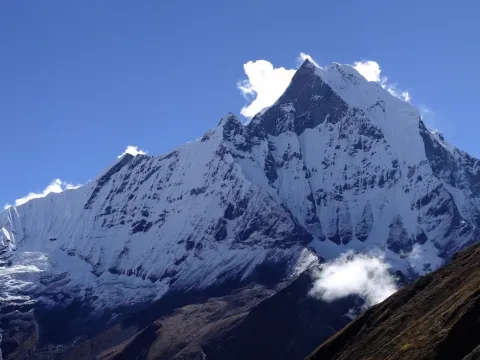
Yes, the Ghorepani Poon Hill Trek will be worth it in 2027 as it offers mountain scenery, sunrise views, forests, villages and Himalayan culture within just a few days of trekking.
Moreover, the maximum elevation of 3,210 meters makes it much more accessible compared to longer high-altitude treks like Everest Base Camp, Annapurna Base Camp and Manaslu Circuit.
More importantly, the trek is ideal for travelers with limited time in Nepal. You can start from Pokhara and complete a short 3-5 day route. You will be able to experience Ghorepani, Poon Hill, Tadapani and Ghandruk.
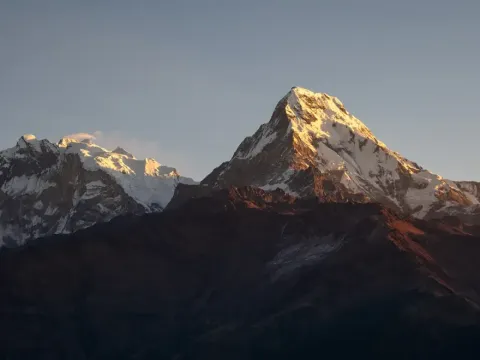
Here, the main attraction of the Poon Hill trek is the view from Poon Hill at sunrise. On a clear morning, you can see Dhaulagiri, Annapurna I, Annapurna South, Hiunchuli and Machhapuchhre. Therefore, this trek offers a spectacular Himalayan viewpoint that does not require a long expedition.
However, 2027 might also bring more visitors and further road development. Some villages are becoming better connected, while teahouses improve their facilities. Therefore, travelers should expect greater convenience, but also a more developed trekking environment.
Overall, the Ghorepani Poon Hill Trek 2027 presents a compelling option for travelers seeking a short Himalayan adventure. It may not offer the remote wilderness of longer treks, but it combines scenery, culture, comfort and accessibility very well.
With the right season, sensible packing and a well-planned itinerary, Poon Hill can still be one of the most rewarding short treks to do in Nepal in 2027.
1. How much does Ghorepani Poon Hill Trek cost in 2027?
The cost of the Ghorepani Poon Hill Trek 2027 can range from approximately USD$95 to USD$215 for a 3-day trek depending on what type of services are included.
But, longer 4 or 5-day itineraries may cost more as they allow for more walking time, better accommodation options and additional services. A private jeep or any other private transfers can add to the overall cost as well.
2. What is the best itinerary for Ghorepani Poon Hill Trek 2027?
The best itinerary for the Ghorepani Poon Hill Trek 2027 depends on how much walking you are prepared to do (or not do) and how much time you have available. If you have limited time, a 3-day option would be best. If you want a more leisurely experience, try 4 or 5 days. A typical multi-day trek will run from Pokhara, stop at Ulleri or Banthanti, Ghorepani, Poon Hill, Tadapani or Ghandruk and return to Pokhara.
3. Is Ghorepani Poon Hill Trek suitable for beginners in 2027?
Ghorepani Poon Hill Trek 2027 is a great beginners hike if you are reasonably fit. As it reaches Poon Hill at 3,210 meters, you should not expect to find any technical climbing challenges here. Because there are quite a lot of stone steps and inclines, beginners might want to opt for a slower-paced trek.
4. How many days does Ghorepani Poon Hill Trek take?
The Ghorepani Poon Hill Trek can be done in 3 - 5 days, depending on how much distance you want to cover per day. A 3-day itinerary is the fastest and most efficient way to see the main sights, while 4 or 5-day itineraries give you extra walking time for the various villages, viewpoints, photography and general leisure. The entire Ghorepani-Poon Hill route is classified by the Nepal Tourism Board as a multi-day trekking experience.
5. What is the best month for Ghorepani Poon Hill Trek 2027?
The best time to go on a Ghorepani Poon Hill Trek 2027 is generally in March - May for rhododendron blooms and pleasant trekking weather. Autumn months tend to have great views of the mountains as well. Winter months are cold and can get quite chilly at higher altitudes especially if there is snow. Monsoon season has more rain and cloudy days which can be a problem if you are planning on trekking.
6. What can I see during a Ghorepani Poon Hill Trek 2027?
On a Ghorepani Poon Hill Trek 2027 you will see beautiful views of the Annapurna and the Dhaulagiri mountain ranges, mainly from sunrise on a clear day from Poon Hill. You will pass through villages of Gurung and Magar people, rhododendron forests, terraced hillsides and traditional mountain villages. Poon Hill is also famous for the viewpoints and sunrise views of the Himalayas.
7. How difficult is Ghorepani Poon Hill Trek?
Ghorepani Poon Hill Trek is an easy to moderate Himalayan trek that does not require any technical climbing skills, although some steep sections can be tiring to walk up and walk down. Stone steps in the area around Ulleri can be especially challenging. Because the Poon Hill reaches an altitude of about 3,210 meters, having reasonable fitness and good pace is important.
8. Do I need a guide for a Ghorepani Poon Hill Trek in 2027?
According to current Nepal Tourism Board regulations for treks in Nepal, Poon Hill-ABC Trek is among the ones that require a guide and a TIMS card issued by a trekking agency. The regulations for trekking in Nepal can change before 2027 so make sure to check what the requirements are when the time comes. Having a trekking agency book your tour can also make things easier for you when it comes to permits, guides, accommodation and transportation.
9. Can I do Ghorepani Poon Hill Trek with a private jeep in 2027?
While a private jeep can make getting from Pokhara to the trailhead (Ulleri/Ghandruk) more convenient, the cost of such tour is generally higher than if you were to share transportation with others. You can have more flexibility, comfort and control over your departure and arrival times.
10. Is Ghorepani Poon Hill Trek worth it in 2027?
A trek to Ghorepani Poon Hill in 2027 is a worthwhile experience if you want to have a shorter Himalayan adventure without having to commit to a longer high-altitude trek. Not only will you get to enjoy the wonderful views of mountains, sunrise, traditional villages, forests and hillsides within 3-5 days, but you will also find it easier to combine a tour with a Pokhara tour or another trip to Nepal.
Here, you can combine your Poon Hill Trek with paragliding and Chitwan Safari Tour.
Our travel experts are ready to assist you with any questions.
Send us a message.Have a question before you book? Send your enquiry below and our travel experts will get back with the required information.